
Transport your taste buds to France with these 33 best French recipes for dinner.
Whether you're planning a cozy night at home or a sophisticated dinner party, these recipes bring elegance and rich flavors to your table.
Explore iconic dishes like coq au vin, beef bourguignon, and ratatouille.
Each recipe highlights the art of French cooking, emphasizing fresh ingredients, balanced flavors, and careful preparation.
Pair your meal with a classic baguette and a glass of wine to complete the experience.
With options ranging from hearty stews to light quiches and decadent gratins, there's something for every occasion.
These recipes are simple enough for everyday dinners yet refined enough for special celebrations.
33 Best French Recipes for Dinner - Delicious and Elegant

33. Coq au Vin Blanc — French Chicken in White Wine
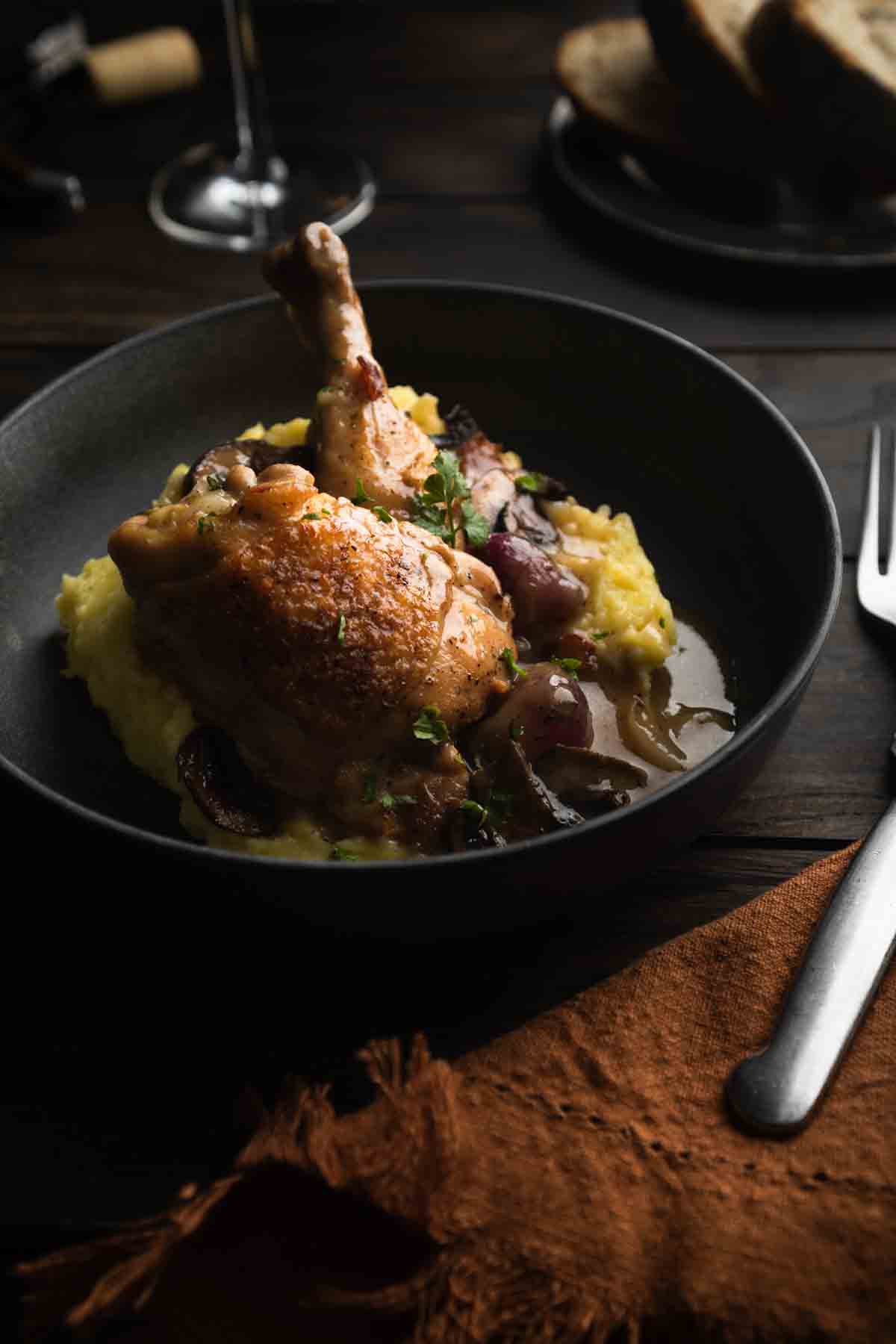
A refined and deeply comforting French classic — chicken pieces braised in dry white wine with pearl onions, mushrooms, garlic, and fresh thyme until completely tender and the sauce is glossy, aromatic, and elegant. The white wine version of the famous coq au vin has a lighter, more delicate character than the red wine original, making it perfect for spring and summer entertaining. A beautiful dish alongside our easy chicken recipes and slow-cooked dinner ideas.
Ingredients:
- 1 whole chicken, cut into 8 pieces (or 4 lbs bone-in chicken thighs)
- 2 cups dry white wine (Burgundy Aligoté or any good dry white)
- 1 cup chicken broth
- 8 oz cremini mushrooms, sliced
- 1 cup pearl onions, peeled
- 4 cloves garlic, minced
- 3 tablespoons butter, divided
- 2 tablespoons olive oil
- 2 tablespoons all-purpose flour
- 2 sprigs fresh thyme
- 2 bay leaves
- Salt and white pepper, to taste
- Fresh parsley, for garnish
Instructions:
- Season the chicken pieces generously with salt and white pepper. Heat 1 tablespoon each of butter and olive oil in a large Dutch oven over high heat. Brown the chicken in batches until deeply golden on all sides — about 8 minutes. Remove and set aside.
- In the same pot, add the pearl onions and cook 3 minutes until lightly golden. Add the mushrooms and cook 5 minutes. Add the garlic and cook 1 minute. Sprinkle the flour over and stir 1 minute to cook out the raw flour taste.
- Pour in the white wine and bring to a boil, scraping up all the browned bits. Add the chicken broth, thyme sprigs, and bay leaves. Return the chicken to the pot, skin-side up.
- Reduce heat to low. Cover and braise for 35–40 minutes until the chicken is completely cooked through and the sauce has reduced to a glossy consistency. Remove the thyme and bay leaves. Swirl in the remaining 2 tablespoons of cold butter for richness and gloss. Taste and adjust seasoning. Serve garnished with fresh parsley over mashed potatoes or with crusty bread.
32. Bouillabaisse — Classic French Seafood Stew

Marseille's greatest gift to the world — a magnificent saffron-perfumed broth of fish stock, tomatoes, fennel, and Provençal aromatics filled with multiple varieties of fresh fish and shellfish, traditionally served in two courses: first the broth ladled over croutons spread with rouille, then the fish and shellfish. One of the greatest soups in all of French cuisine. See more great seafood ideas in our baked fish recipes and healthy shrimp recipes.
Ingredients:
- 1 lb firm white fish fillets (sea bass, halibut, or monkfish), cut into chunks
- 1 lb shrimp, shell-on
- ½ lb clams or mussels, scrubbed
- 1 (14 oz) can crushed tomatoes
- 1 large fennel bulb, thinly sliced
- 1 large onion, diced
- 4 cloves garlic, minced
- 1 large pinch saffron threads, steeped in ¼ cup warm water
- 1 cup dry white wine
- 4 cups fish or seafood broth
- Zest and juice of 1 orange
- 1 teaspoon smoked paprika
- ¼ cup good olive oil
- Salt and pepper, to taste
- Rouille: ½ cup mayo + 2 cloves garlic (minced) + 1 teaspoon smoked paprika + lemon juice
- Toasted baguette slices, for serving
Instructions:
- Make the rouille: whisk together mayo, garlic, smoked paprika, and lemon juice. Set aside. Toast the baguette slices until golden and crispy.
- Heat olive oil in a large pot over medium heat. Sauté the fennel and onion for 8 minutes until softened. Add the garlic and cook 2 minutes. Add the crushed tomatoes, smoked paprika, and orange zest. Cook 5 minutes.
- Add the white wine and cook 3 minutes. Add the fish broth, saffron water, and orange juice. Bring to a boil, then reduce to a simmer. Cook 15 minutes to develop the broth. Season generously.
- Add the fish and cook 3 minutes. Add the shrimp, clams, and mussels. Cover and cook 5 minutes until the shellfish open and the shrimp are pink. Discard unopened shellfish. Serve the broth first over rouille-spread croutons, then the seafood.
31. Ratatouille — French Provençal Vegetable Stew

Provence's most famous and beloved vegetable dish — eggplant, zucchini, bell peppers, and tomatoes slowly cooked in olive oil with garlic and herbs de Provence into a deeply flavourful, jammy Provençal stew that is extraordinary hot, warm, or at room temperature. One of the finest examples of French vegetable cooking and a wonderful vegetarian dinner that showcases summer produce at its most beautiful.
Ingredients:
- 1 large eggplant, diced into 1-inch cubes
- 2 medium zucchini, diced
- 1 red bell pepper, diced
- 1 yellow bell pepper, diced
- 1 large onion, diced
- 4 cloves garlic, minced
- 4 ripe tomatoes, diced (or 1 can crushed tomatoes)
- ¼ cup good olive oil
- 1 teaspoon herbes de Provence
- 1 teaspoon fresh thyme
- 2 bay leaves
- Salt and pepper, to taste
- Fresh basil, for serving
Instructions:
- Salt the diced eggplant and rest 30 minutes to draw out bitterness. Pat dry. This step makes a significant difference in the finished flavour.
- Heat 2 tablespoons of olive oil in a large, wide pot over medium-high heat. Sauté the eggplant for 5 minutes until golden and slightly softened. Remove and set aside. In the same pot, sauté the zucchini 3 minutes and remove.
- Add remaining oil. Cook the onion and peppers for 8 minutes until softened. Add garlic and cook 2 minutes. Add the tomatoes, herbes de Provence, thyme, and bay leaves. Cook 10 minutes until the tomatoes break down.
- Return the eggplant and zucchini to the pot. Stir gently to combine. Reduce heat to low, cover, and cook for 20–30 minutes until all vegetables are completely tender and the stew is rich and unified. Remove bay leaves. Season generously. Scatter fresh basil over the top. Serve warm or at room temperature.
30. French Quiche Lorraine
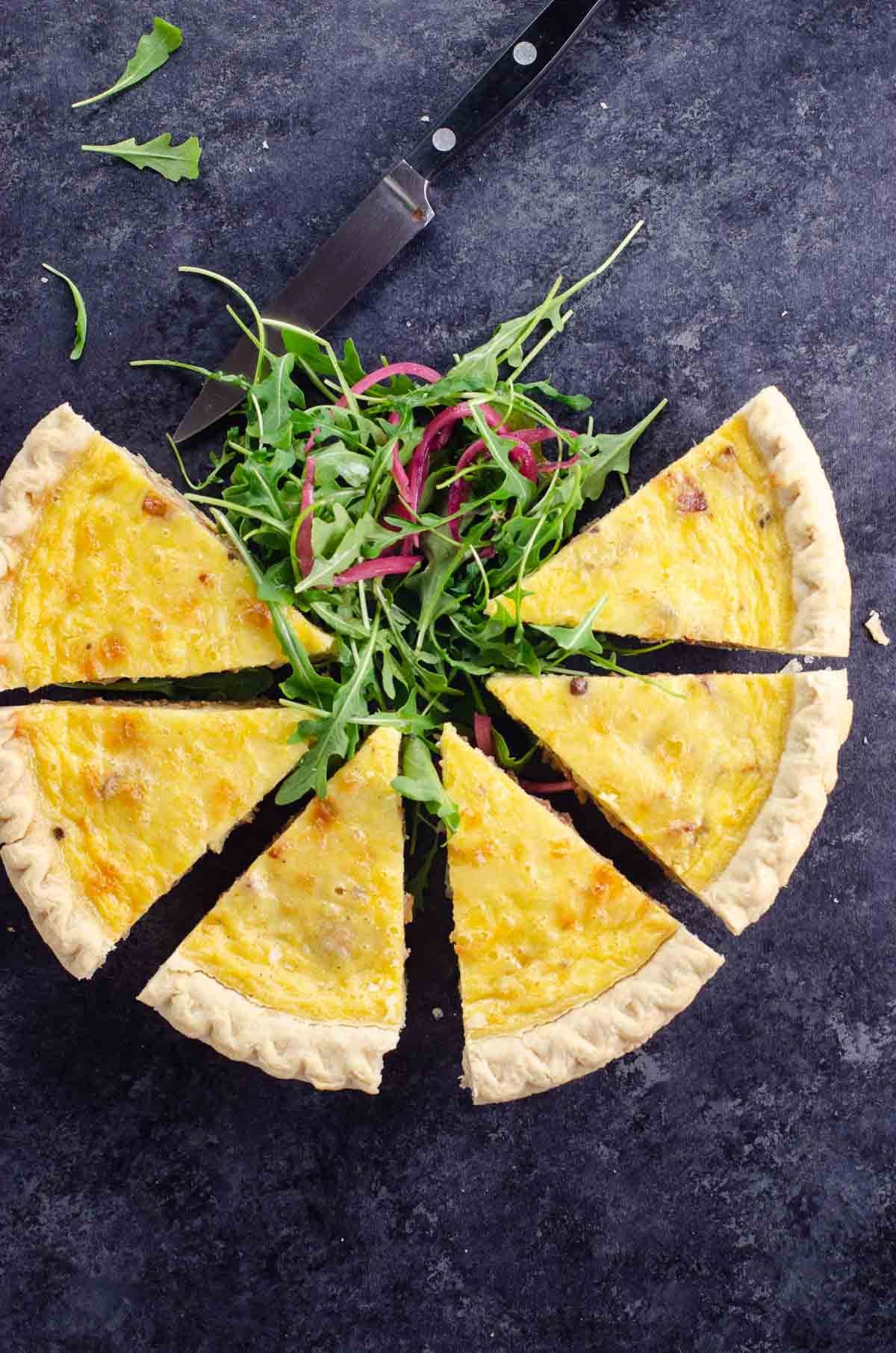
The most famous tart in all of French cuisine — a perfectly crispy, buttery shortcrust pastry shell filled with a silky, rich egg and cream custard with lardons (bacon) and Gruyère cheese, baked until just set with the characteristic slight wobble in the centre. Quiche Lorraine is the original and definitive version — simple, perfectly balanced, and deeply satisfying for brunch, lunch, or dinner. A perfect companion to our best brunch recipes.
Ingredients:
- 1 sheet store-bought shortcrust pastry (or homemade — 1¼ cups flour + 6 tablespoons cold butter + 2–3 tablespoons ice water)
- 6 oz bacon lardons or diced bacon
- 4 large eggs
- 1 cup heavy cream
- ½ cup whole milk
- 1 cup Gruyère cheese, shredded
- ¼ teaspoon nutmeg
- Salt and white pepper, to taste
Instructions:
- Preheat oven to 375°F. Roll out the pastry and press into a 9-inch tart tin with a removable bottom. Line with parchment and fill with baking weights or dried beans. Blind bake for 15 minutes. Remove weights and bake 5 more minutes until the base is lightly golden and dry.
- Cook the bacon in a dry skillet over medium heat until just golden but not crispy — the bacon will finish cooking in the oven. Drain on paper towels.
- Whisk together the eggs, cream, and milk until smooth. Season with salt, white pepper, and nutmeg — be generous with the seasoning.
- Scatter the bacon and half the Gruyère over the pastry base. Pour the egg custard over — fill to just below the rim. Scatter the remaining Gruyère on top. Bake for 30–35 minutes until the custard is set at the edges but still has a very slight wobble in the centre. Rest 10 minutes before slicing. Serve warm or at room temperature.
29. Slow Cooker Beef Bourguignon
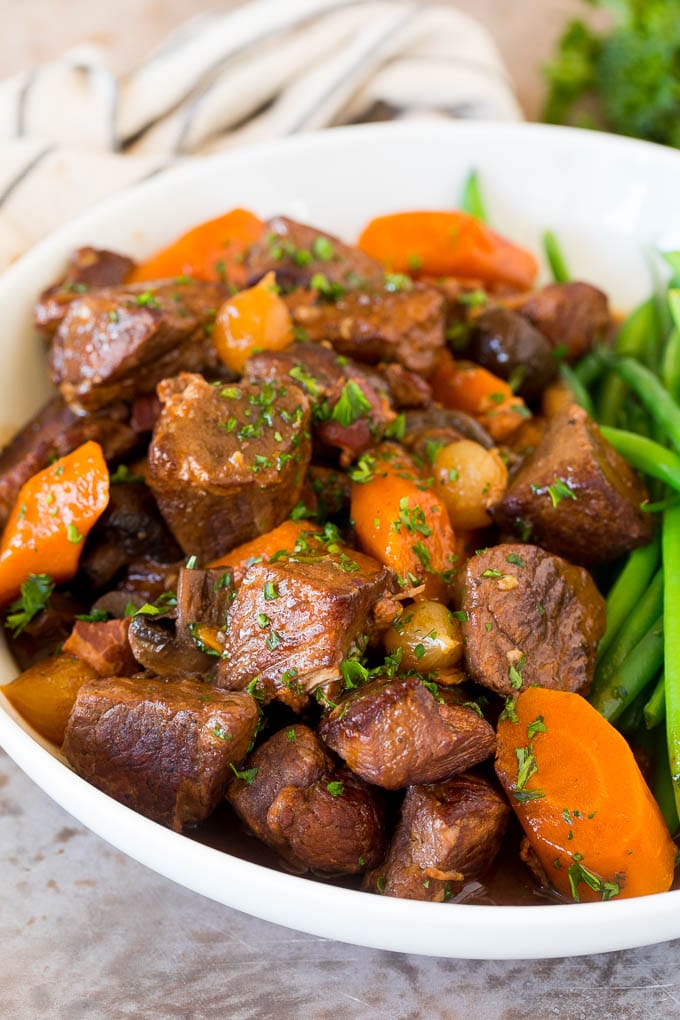
Julia Child's most beloved dish made beautifully effortless in the slow cooker — beef chuck braised all day in Burgundy red wine with pearl onions, mushrooms, lardons, and a bouquet garni until the beef is completely fall-apart tender and the sauce is deeply rich and glossy. One of the greatest beef dishes ever created. A magnificent slow-cooker meal alongside our best crockpot recipes.
Ingredients:
- 3 lbs beef chuck, cut into 2-inch cubes
- 1 bottle (750ml) good Burgundy or Pinot Noir
- 1 cup beef broth
- 6 oz bacon lardons
- 1 cup pearl onions, peeled
- 8 oz cremini mushrooms, quartered
- 2 large carrots, sliced into rounds
- 4 cloves garlic, minced
- 2 tablespoons tomato paste
- 3 tablespoons all-purpose flour
- 2 sprigs fresh thyme, 2 bay leaves, 1 sprig rosemary (tied together)
- 3 tablespoons butter
- Salt and pepper, to taste
- Fresh parsley, for garnish
Instructions:
- Season the beef generously with salt and pepper and dust with the flour. Cook the bacon in a skillet until crispy. Remove. Brown the beef in the bacon fat in batches over very high heat — 8 minutes per batch. Transfer to the slow cooker.
- Sauté the pearl onions in the same skillet for 3 minutes. Add garlic and tomato paste and cook 2 minutes. Add the wine and broth, scraping up all the browned bits. Pour over the beef in the slow cooker.
- Add the carrots, bacon, herb bundle. Cover and cook on LOW for 8–9 hours or HIGH for 4–5 hours until the beef is completely tender.
- In the final 30 minutes, sauté the mushrooms in butter until golden and add to the slow cooker. Remove the herb bundle. Taste and adjust seasoning. If the sauce needs thickening, ladle some into a saucepan and reduce. Serve over buttered egg noodles, mashed potatoes, or with crusty bread, garnished with parsley.
28. Croissant French Toast Bake
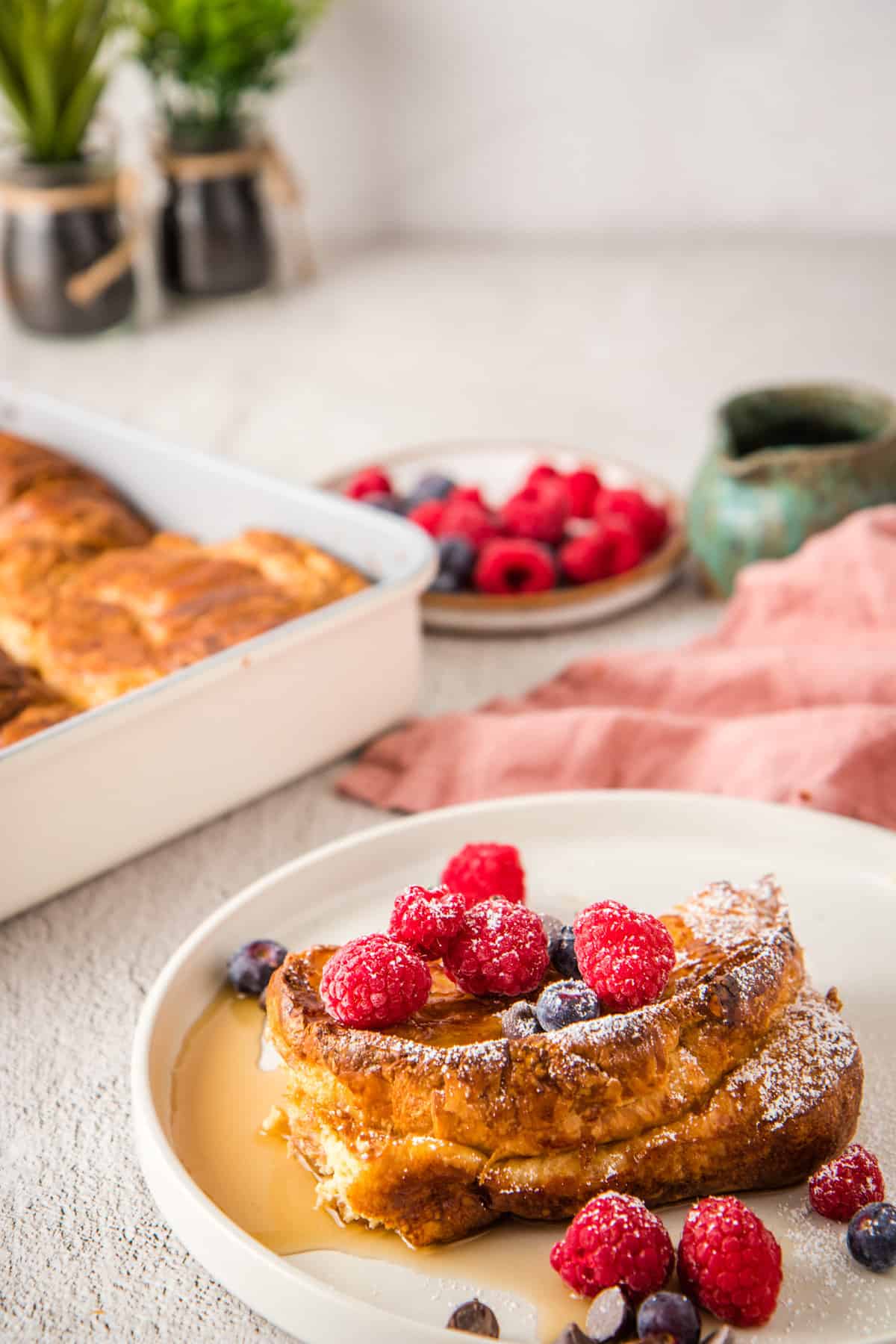
The most indulgent and spectacular French toast casserole — buttery, flaky croissants soaked overnight in a rich vanilla custard of eggs, cream, and milk, baked until the top is puffed and golden while the interior remains soft and custardy. A breakfast casserole that feels like a special occasion every time. An extraordinary brunch dish alongside our best brunch recipes and overnight French toast casserole.
Ingredients:
- 6 large croissants (day-old is ideal), torn into large pieces
- 6 large eggs
- 2 cups whole milk
- 1 cup heavy cream
- ⅓ cup sugar
- 2 teaspoons vanilla extract
- 1 teaspoon cinnamon
- Pinch of salt
- Powdered sugar and maple syrup, for serving
- Optional: fresh berries and whipped cream
Instructions:
- Grease a 9x13-inch baking dish. Arrange the torn croissant pieces in the dish, scattering them so there is some variety in height and texture.
- Whisk together the eggs, milk, cream, sugar, vanilla, cinnamon, and salt until completely smooth. Pour evenly over the croissants. Press down gently so every piece begins to absorb the custard.
- Cover with plastic wrap and refrigerate overnight — or at least 4 hours. This soaking time is essential for the custard to fully penetrate the croissants.
- Preheat oven to 350°F. Remove from the refrigerator 30 minutes before baking. Bake uncovered for 40–45 minutes until puffed, golden, and the custard is completely set with no liquid remaining. Rest 10 minutes. Dust with powdered sugar and serve with maple syrup and fresh berries.
27. Pressure Cooker Beef Bourguignon
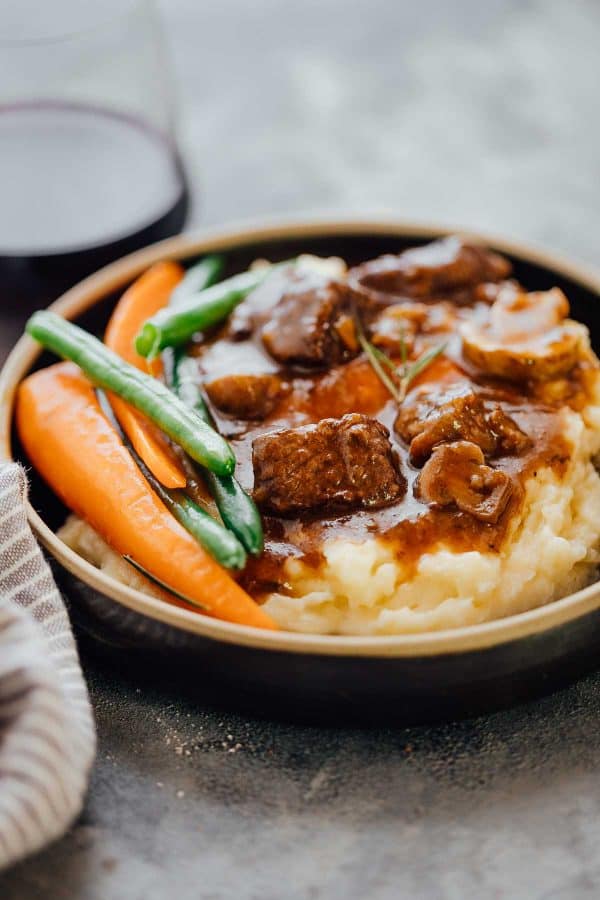
All the extraordinary depth and complexity of the classic Beef Bourguignon achieved in a fraction of the time — using a pressure cooker or Instant Pot to achieve in 45 minutes what traditionally takes 3 hours of braising. The beef becomes fall-apart tender, the wine reduces into a deeply savoury sauce, and the result is genuinely indistinguishable from the long-cooked version. A perfect weeknight approach to a weekend-worthy dish. See more Instant Pot recipes.
Ingredients:
- 2 lbs beef chuck, cut into 2-inch cubes
- 1½ cups Burgundy or good Pinot Noir
- 1 cup beef broth
- 4 oz bacon, diced
- 8 oz mushrooms, quartered
- 1 cup pearl onions
- 2 large carrots, sliced
- 3 cloves garlic, minced
- 2 tablespoons tomato paste
- 2 tablespoons flour
- Fresh thyme and bay leaves
- 2 tablespoons butter
- Salt and pepper, to taste
Instructions:
- Set the pressure cooker to Sauté mode. Cook the bacon until crispy. Remove. Season the beef and dust with flour. Brown in batches in the bacon fat over high heat. Remove and set aside.
- Sauté the pearl onions 2 minutes. Add garlic and tomato paste and cook 1 minute. Add the wine, scraping up the browned bits. Add broth, carrots, bacon, beef, thyme, and bay leaves.
- Seal the pressure cooker. Cook on HIGH pressure for 35 minutes. Allow natural pressure release for 15 minutes, then release remaining pressure.
- Meanwhile, sauté the mushrooms in butter in a skillet until golden. Open the pressure cooker, add the mushrooms, and stir. If the sauce needs thickening, set to Sauté mode and simmer uncovered for 5–10 minutes until reduced. Taste and season. Serve over mashed potatoes or egg noodles.
26. French Onion Soup
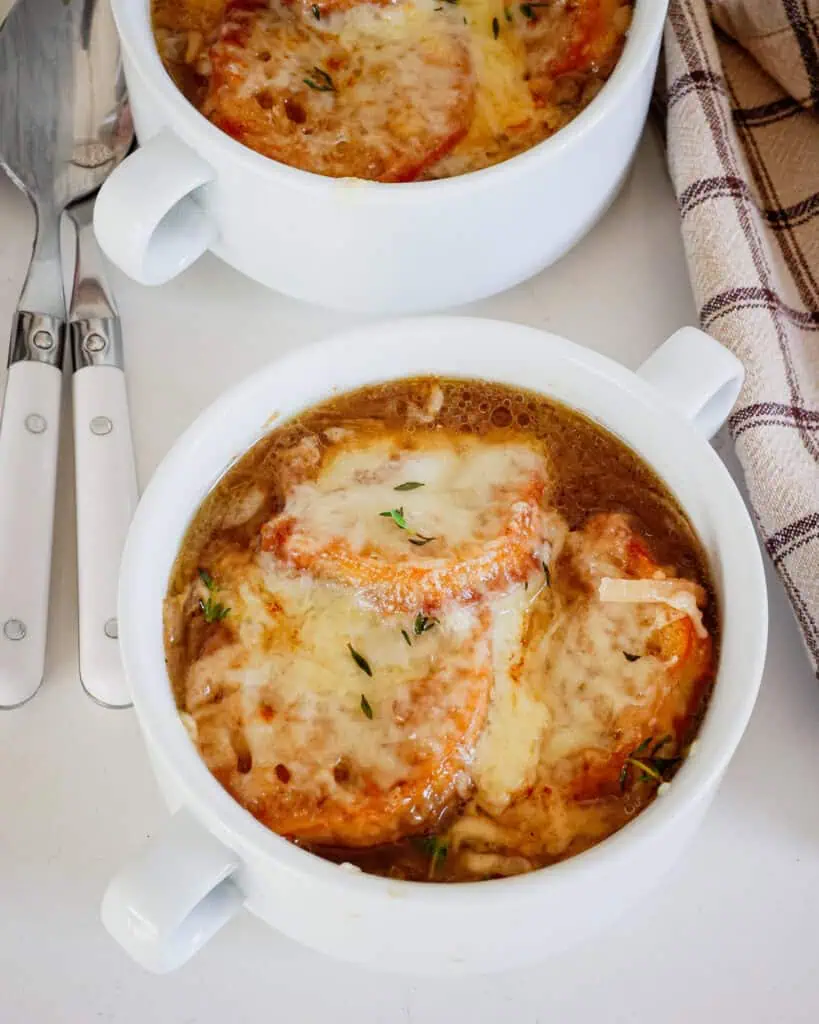
The greatest soup in all of French cuisine — deeply caramelised onions in a rich beef broth with dry white wine and thyme, ladled into oven-proof bowls over baguette croutons, blanketed with Gruyère, and broiled until the cheese is golden and bubbling. The patience required for properly caramelising the onions (45 minutes minimum) is entirely justified by the result. Also see our own easy French onion soup recipe.
Ingredients:
- 3 lbs yellow onions (about 5 large), thinly sliced
- 4 tablespoons butter
- 1 tablespoon olive oil
- 1 teaspoon sugar
- ½ cup dry white wine or dry sherry
- 4 cups good beef broth
- 1 cup chicken broth
- 2 sprigs fresh thyme
- 2 bay leaves
- Salt and pepper, to taste
- 8 thick baguette slices, toasted
- 1½ cups Gruyère, shredded
Instructions:
- Melt butter with olive oil in a large, heavy-bottomed pot over medium heat. Add all the sliced onions and sugar with a pinch of salt. Cook over medium-low heat, stirring every 5–8 minutes, for 45–60 minutes until the onions are deeply golden, jammy, and reduced to about a quarter of their original volume. The colour should be a deep amber — not just translucent.
- Add the white wine and cook 3 minutes until evaporated. Add both broths, thyme, and bay leaves. Bring to a simmer and cook 20 minutes. Remove thyme and bay leaves. Season generously.
- Preheat the broiler. Ladle the soup into oven-proof bowls placed on a baking sheet. Place 1–2 toasted baguette slices on top of each bowl. Cover completely with shredded Gruyère — be generous.
- Broil for 3–5 minutes until the cheese is completely melted, bubbly, and golden in spots. Watch carefully — it can go from perfect to burnt quickly. Serve immediately — the cheese will continue to set as it sits.
25. Duck Breast with Orange Sauce (Canard à l'Orange)
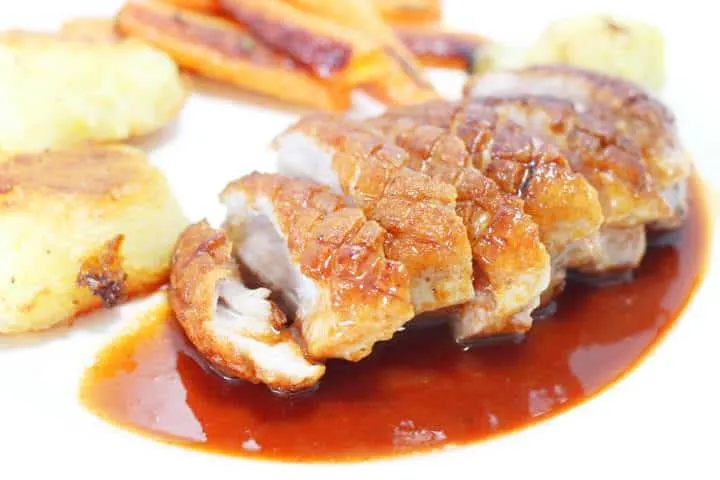
France's most iconic duck dish — duck breast rendered until the skin is shatteringly crispy and the fat is rendered golden, then rested to a perfect pink medium-rare and served with a bright, slightly bitter orange sauce made from the duck drippings, orange juice, orange zest, and a touch of Grand Marnier. The contrast of the rich, gamey duck with the bright citrus sauce is one of the great flavour combinations in French cuisine. A showstopper dinner party main.
Ingredients:
- 2 duck breasts (magret de canard)
- Salt and pepper, to taste
- Orange sauce: juice of 3 oranges + zest of 1 orange, 2 tablespoons Grand Marnier or Cointreau, 1 tablespoon sherry vinegar, 1 tablespoon honey, ½ cup chicken broth, 1 tablespoon cold butter
Instructions:
- Score the duck breast skin in a close crosshatch pattern — cut through the fat but not into the meat. Season generously with salt and pepper. Place skin-side down in a cold, dry skillet (no oil needed). Turn heat to medium-low and cook for 15–18 minutes without moving, allowing the fat to render slowly until the skin is deeply golden, crispy, and the fat has largely melted away.
- Flip and cook the flesh side for 3–5 minutes for medium-rare (130–135°F internal temperature). Rest on a board for 8 minutes — this is critical for a juicy result.
- Make the sauce: drain all but 1 tablespoon of duck fat from the skillet. Add the sherry vinegar and let it sizzle. Add the orange juice, orange zest, Grand Marnier, honey, and chicken broth. Simmer over medium heat for 5–8 minutes until reduced by half and glossy.
- Remove from heat and whisk in the cold butter until emulsified. Taste and season. Slice the duck breast diagonally into thin slices. Fan on a plate. Spoon the orange sauce over. Serve immediately.
24. Crêpes Suzette

One of France's most dramatic and beloved classic desserts — thin, delicate crêpes folded in an orange butter sauce made with fresh orange juice, orange zest, sugar, and Grand Marnier, then flambéed tableside in a blaze of blue flame. The theatrical presentation and the extraordinary caramelised orange flavour make Crêpes Suzette one of the most impressive desserts in the French repertoire. A spectacular finish to any dinner party.
Ingredients:
- Crêpe batter: 1 cup flour, 2 large eggs, 1¼ cups whole milk, 1 tablespoon melted butter, 1 teaspoon sugar, pinch of salt — whisk smooth and rest 30 minutes
- Suzette sauce: 4 tablespoons butter, ¼ cup sugar, juice and zest of 2 oranges, juice and zest of 1 lemon, 3 tablespoons Grand Marnier or Cointreau, 2 tablespoons brandy or cognac (for flambéing)
Instructions:
- Make the crêpes: heat a lightly buttered 8-inch skillet over medium-high heat. Pour a small ladle of batter and tilt immediately to coat the pan in a thin, even layer. Cook 1 minute until set, then flip and cook 30 seconds more. Stack on a plate. Makes about 12 crêpes.
- Fold each crêpe in quarters to form triangles. Set aside.
- Make the sauce: melt butter in a large, wide pan. Add sugar and cook until it just begins to caramelise lightly. Add orange juice, lemon juice, and both zests. Stir until the sugar dissolves into the citrus juice. Add Grand Marnier and stir.
- Add the folded crêpes to the sauce, turning each to coat. Arrange in a single layer. To flambé: add the brandy to the pan and immediately tilt to ignite with a long match or lighter. Let the flames die naturally — they will go out in 30–60 seconds. Serve immediately, spooning the sauce generously over the crêpes.
23. Madeleines with Lemon Curd

France's most literary biscuit — the madeleine, immortalised by Proust, is a small shell-shaped sponge cake with a characteristic golden hump, delicately flavoured with lemon zest and vanilla, served here with a bright, silky homemade lemon curd for dipping. The key to the perfect madeleine hump is resting the cold batter before baking. Utterly delightful with afternoon tea. A wonderful addition to our easy baking ideas.
Ingredients:
- ¾ cup all-purpose flour
- ½ teaspoon baking powder
- Pinch of salt
- 2 large eggs, room temperature
- ½ cup sugar
- Zest of 1 lemon
- 1 teaspoon vanilla extract
- 6 tablespoons butter, melted and cooled, plus extra for the pan
- Lemon curd: 3 egg yolks, ¼ cup sugar, juice of 2 lemons, zest of 1 lemon, 4 tablespoons cold butter — cook in a double boiler until thick, strain, cool
Instructions:
- Make the lemon curd: whisk together egg yolks, sugar, lemon juice, and zest in a heatproof bowl. Set over a pot of barely simmering water. Stir constantly for 8–10 minutes until thick enough to coat a spoon. Remove from heat and whisk in cold butter one piece at a time. Strain through a sieve. Press plastic wrap directly onto the surface and refrigerate.
- Make the madeleine batter: whisk the eggs, sugar, lemon zest, and vanilla together for 3 minutes until pale and slightly fluffy. Sift in the flour, baking powder, and salt. Fold gently. Fold in the cooled melted butter until just incorporated. Cover and refrigerate the batter for 1 hour — this rest creates the signature hump.
- Preheat oven to 425°F. Generously butter and flour the madeleine pan. Fill each shell cavity ¾ full with the cold batter.
- Bake for 10–12 minutes until the characteristic hump has formed, the edges are golden, and the centres spring back when touched. Cool in the pan for 5 minutes, then unmould onto a wire rack. Serve warm with the lemon curd for dipping. Best eaten within 2 hours of baking.
22. Baked Sole Fillet the Mediterranean Way
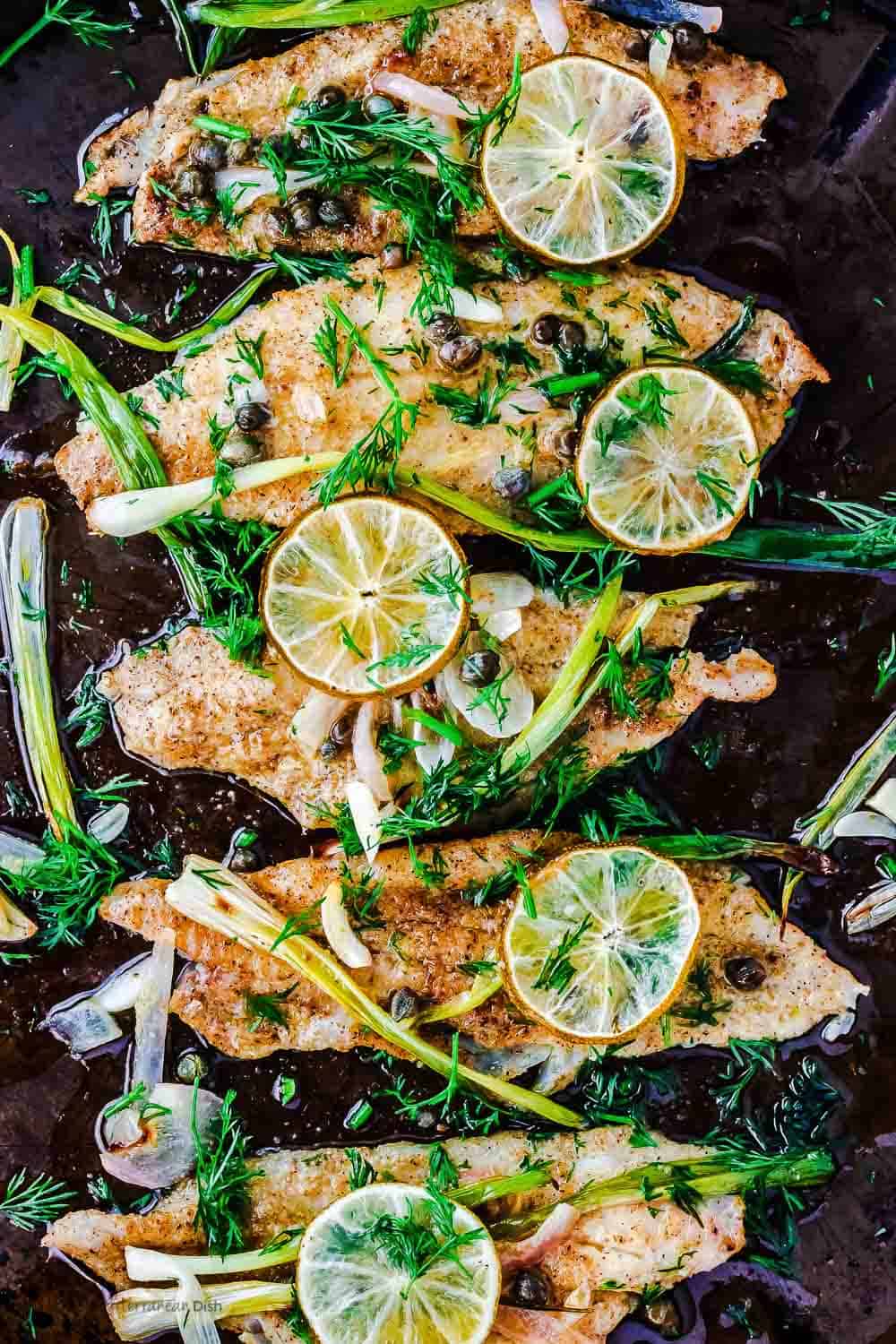
A beautifully simple, healthy, and elegant way to prepare sole — delicate fillets baked briefly with capers, garlic, lemon, fresh herbs, and a drizzle of good olive oil in the Mediterranean style. Ready in 20 minutes and utterly light and flavourful. The simplicity of this dish is its genius — the quality of the fish and olive oil carries everything. A wonderful addition to our baked fish recipes.
Ingredients:
- 4 sole fillets (about 6 oz each)
- 3 tablespoons good extra-virgin olive oil
- 4 cloves garlic, thinly sliced
- 2 tablespoons capers, drained
- Juice and zest of 1 lemon
- ¼ cup dry white wine
- 2 tablespoons fresh parsley, finely chopped
- 1 teaspoon dried oregano
- Salt and white pepper, to taste
- Lemon wedges and extra parsley, for serving
Instructions:
- Preheat oven to 400°F. Pat the sole fillets completely dry with paper towels. Season lightly on both sides with salt and white pepper.
- Combine the olive oil, garlic, capers, lemon juice, lemon zest, white wine, parsley, and dried oregano in a small bowl.
- Arrange the fillets in a single layer in a baking dish. Pour the lemon-caper mixture evenly over the fillets.
- Bake for 10–12 minutes — sole is very thin and cooks extremely quickly. The fish is done when it flakes easily with a fork and is completely opaque. Do not overbake. Serve immediately with lemon wedges and extra fresh parsley, with crusty bread to absorb the sauce.
21. Salmon en Papillote with Lemon and Herbs
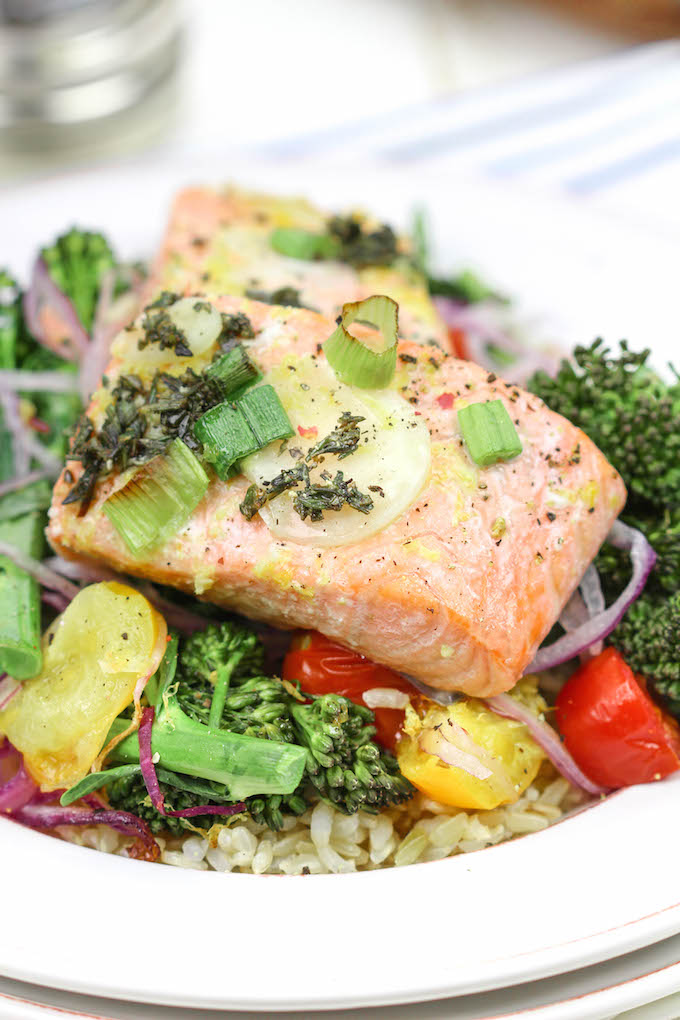
A classic and effortlessly elegant French cooking technique — salmon fillets placed on a bed of vegetables and herbs, drizzled with lemon and a splash of wine, sealed in a parchment paper parcel, and baked so the fish steams in its own aromatic juices until perfectly moist, tender, and infused with herb flavour. No pots to clean, no watching required, and the presentation of the sealed parcels at the table is always impressive. See our best salmon recipes.
Ingredients:
- 4 salmon fillets (about 6 oz each), skin-on
- 2 medium zucchini, thinly sliced into rounds
- 1 cup cherry tomatoes, halved
- 4 sprigs fresh dill
- 4 sprigs fresh thyme
- 1 lemon, thinly sliced
- 4 tablespoons dry white wine (1 tablespoon per parcel)
- 4 tablespoons olive oil (1 tablespoon per parcel)
- Salt and pepper, to taste
Instructions:
- Preheat oven to 400°F. Cut 4 large rectangles of parchment paper — each about 15 inches long. Fold each in half and open flat.
- On one half of each parchment piece, arrange a layer of zucchini slices and cherry tomatoes. Place a salmon fillet on top. Season with salt and pepper.
- Place 2–3 lemon slices, a sprig of dill, and a sprig of thyme on top of each fillet. Drizzle with 1 tablespoon of olive oil and 1 tablespoon of white wine.
- Fold the parchment over the fish and seal by making tight, overlapping folds along the edges to create a completely sealed parcel — no gaps. Place on a baking sheet and bake for 12–15 minutes until the parcels have puffed from the steam inside. Place on plates and let guests cut open their own parcels at the table.
20. Classic French Cassoulet

The great slow-cooked masterpiece of Languedoc — white beans slowly braised with duck confit, Toulouse sausage, pork belly, and tomatoes until the beans are completely creamy, the meats are fall-apart tender, and a golden, crunchy breadcrumb crust forms on top. Cassoulet is a weekend project of extraordinary reward and one of the greatest peasant dishes in all of French cooking. A spectacular recipe alongside our Sunday dinner ideas.
Ingredients:
- 2 cups dried white beans (navy or haricot), soaked overnight and drained
- 2 duck confit legs
- 4 Toulouse sausages or good pork sausages
- 6 oz pork belly or bacon, cut into chunks
- 1 (14 oz) can crushed tomatoes
- 1 large onion, diced
- 4 cloves garlic, minced
- 1 cup chicken or duck broth
- 2 bay leaves, 2 sprigs thyme
- 1 cup fresh breadcrumbs
- 3 tablespoons olive oil
- Salt and pepper, to taste
Instructions:
- Cook the soaked beans in fresh salted water for 45 minutes until just tender but not mushy. Drain and reserve. Brown the sausages in a large Dutch oven. Remove. Brown the pork belly. Remove. Sauté the onion and garlic for 5 minutes.
- Add the tomatoes, broth, bay leaves, and thyme. Return the pork belly. Add the drained beans. Bring to a simmer, cover, and cook over low heat for 45 minutes.
- Add the sausages and duck confit legs (shredding the meat slightly). Stir gently and taste for seasoning. Transfer to a large ovenproof cassole or Dutch oven if not already in one.
- Preheat oven to 325°F. Mix breadcrumbs with olive oil and scatter generously over the surface. Bake uncovered for 1.5–2 hours. The breadcrumbs will form a golden crust — break it and push it into the cassoulet every 30 minutes to reform. The finished cassoulet should have a thick, golden crust and the beans should be completely creamy. Serve directly from the pot.
19. Tarte Tatin

One of the most famous desserts in French history — an upside-down caramelised apple tart created accidentally at the Hôtel Tatin in the Loire Valley. Apples are cooked directly in butter and sugar in a cast iron skillet until deeply caramelised and jammy, then covered with pastry and baked, then dramatically inverted onto a plate to reveal the glistening, amber-caramelised apples. Served warm with crème fraîche or vanilla ice cream. A legendary dessert alongside our best apple desserts.
Ingredients:
- 6–8 firm baking apples (Granny Smith or Braeburn), peeled, cored, and quartered
- ½ cup (1 stick) unsalted butter, cut into cubes
- ¾ cup sugar
- 1 teaspoon vanilla extract
- 1 sheet store-bought puff pastry, thawed
- Crème fraîche or vanilla ice cream, for serving
Instructions:
- Preheat oven to 375°F. Melt the butter in a 10-inch oven-proof skillet over medium heat. Add the sugar and cook, stirring occasionally, until the sugar dissolves and turns a deep golden amber caramel — about 8–10 minutes. Add vanilla and remove from heat.
- Arrange the apple quarters tightly in the caramel, standing them upright in concentric circles — pack them very tightly as they will shrink considerably. Return to medium heat and cook for 20–25 minutes until the apples are very tender and the caramel is deep amber and bubbling.
- Roll the puff pastry into a circle slightly larger than the skillet. Lay it over the apples, tucking the edges down around the apples inside the pan.
- Bake for 25–30 minutes until the pastry is deeply golden and puffed. Cool for 5 minutes — not longer. Place a large plate over the skillet and in one confident motion, invert. If any apple pieces have shifted, rearrange them gently. Serve immediately warm with crème fraîche or vanilla ice cream.
18. Pan-Seared Foie Gras
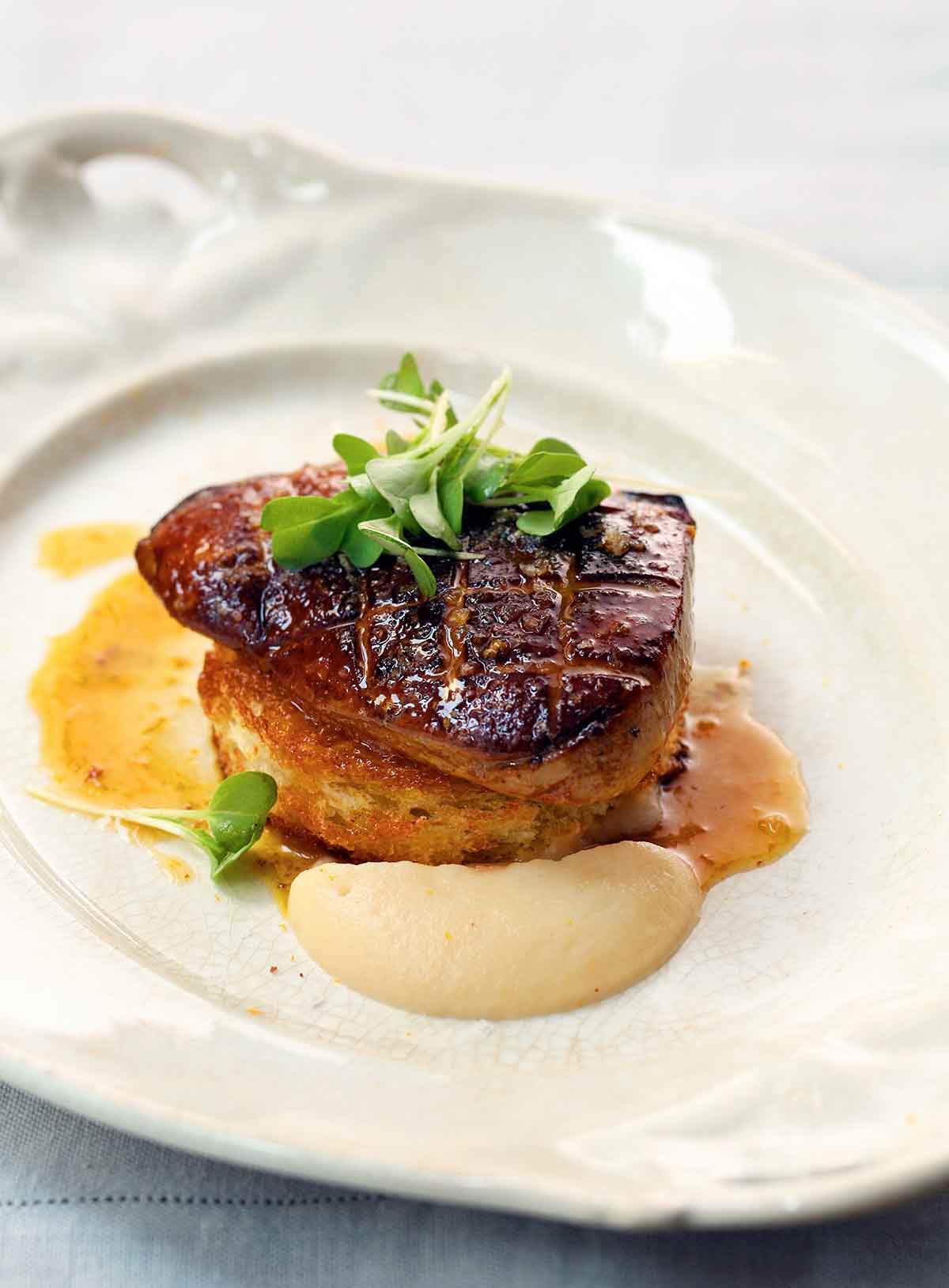
The most luxurious ingredient in French cuisine — a thick slice of fresh duck foie gras seared in a screaming-hot dry pan for just seconds per side to create a shatteringly golden, caramelised crust while the interior stays buttery and melting. Served on a brioche toast with a simple sauce of Sauternes wine and caramelised onion or fresh figs. A transcendent dining experience and the pinnacle of French fine dining. A spectacular appetizer for very special occasions.
Ingredients:
- 4 thick slices fresh grade-A duck foie gras (about 2 oz each, ¾-inch thick)
- Salt and white pepper, to taste
- 4 slices brioche, toasted
- Simple sauce: 2 tablespoons Sauternes or sweet wine + 1 tablespoon balsamic vinegar + 1 tablespoon cold butter — reduce until syrupy
- Fresh figs, fleur de sel, and microgreens, for garnish
Instructions:
- Remove the foie gras from the refrigerator 15 minutes before cooking. Score one side lightly in a crosshatch pattern. Season generously with salt and white pepper on both sides. Have everything else ready before you begin — foie gras cooks extremely fast.
- Make the sauce: combine Sauternes and balsamic vinegar in a small saucepan. Simmer until reduced by half. Remove from heat and whisk in the cold butter. Set aside.
- Heat a dry cast iron pan over maximum heat until it is intensely hot and just beginning to smoke. Place the foie gras slices scored-side down. Sear for 30–45 seconds without moving until a golden crust forms. Flip and sear the other side for 30 seconds.
- Remove immediately to a plate lined with paper towels to drain for 5 seconds. Place on the toasted brioche. Drizzle with the sauce. Finish with a pinch of fleur de sel and microgreens. Serve immediately — foie gras must be served the moment it is seared.
17. Moules Marinières — Steamed Mussels with Lemon Dijon
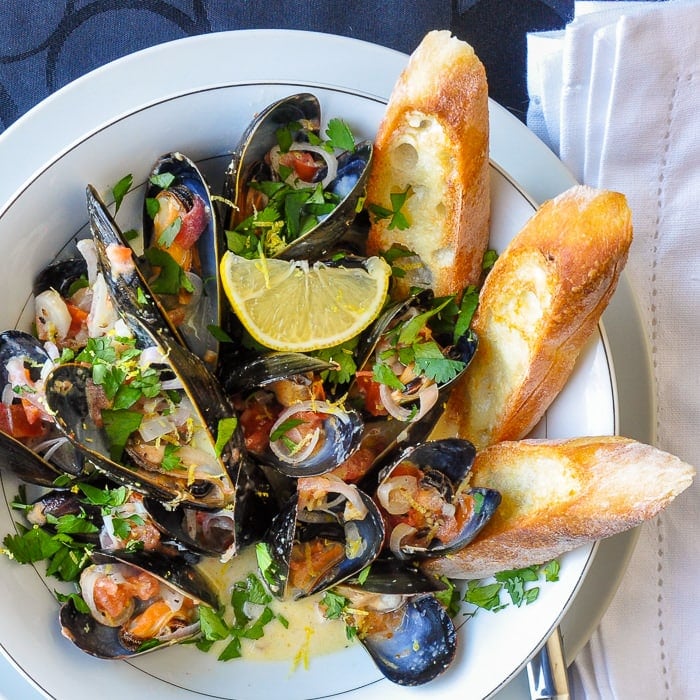
One of the most beloved and elegant simple French seafood dishes — fresh mussels steamed in white wine with shallots and garlic, finished here with a bright lemon Dijon sauce that lifts the natural sweetness of the mussels beautifully. Ready in 15 minutes, endlessly impressive, and always served with crusty bread for dipping in the extraordinary broth. A wonderful dish alongside our best seafood recipes.
Ingredients:
- 3 lbs fresh mussels, scrubbed and debearded
- 3 shallots, finely minced
- 4 cloves garlic, minced
- 1 cup dry white wine
- 2 tablespoons Dijon mustard
- Juice and zest of 1 lemon
- 3 tablespoons butter
- ½ cup heavy cream
- Fresh parsley and chives, finely chopped
- Salt and pepper, to taste
- Crusty French bread, for serving
Instructions:
- Discard any mussels that are open and do not close when tapped firmly — these are dead and unsafe. Melt butter in a large pot over medium heat. Add the shallots and cook 3 minutes until softened. Add the garlic and cook 1 minute.
- Add the white wine. Bring to a boil. Add all the mussels at once. Cover tightly and cook over high heat for 4–5 minutes, shaking the pot once or twice, until all the mussels are opened.
- Remove the mussels with a slotted spoon — discard any that have not opened. Strain the cooking liquid through a fine sieve to remove any grit.
- Return the strained liquid to the pot over medium heat. Whisk in the Dijon mustard, lemon juice, lemon zest, and cream. Simmer 3 minutes until slightly reduced. Taste and season. Return the mussels to the pot and toss to coat. Scatter fresh herbs over the top. Serve immediately in large bowls with crusty bread.
16. Rillettes — French Pork Spread

A deeply rustic and utterly delicious French charcuterie staple — pork shoulder and pork belly slow-cooked for hours in lard and white wine with aromatics until completely fall-apart tender, then shredded and packed into ramekins with the cooking fat to set into a rich, spreadable, intensely savoury meat paste. Served at room temperature with cornichons, Dijon mustard, and baguette, rillettes are a cornerstone of the French charcuterie board. A perfect appetizer.
Ingredients:
- 1½ lbs pork shoulder, cut into 2-inch cubes
- 8 oz pork belly, cut into chunks
- ½ cup lard or duck fat
- ½ cup dry white wine
- 4 cloves garlic, smashed
- 2 bay leaves
- 3 sprigs fresh thyme
- ½ teaspoon quatre épices (or a mix of nutmeg, cloves, ginger, and white pepper)
- Salt, to taste
- Cornichons, Dijon mustard, and baguette, for serving
Instructions:
- Place all the pork in a heavy pot with the lard, white wine, garlic, bay leaves, thyme, quatre épices, and salt. Add just enough water to barely cover the meat. Bring to a very gentle simmer.
- Cover and cook over the lowest possible heat for 3–4 hours until the pork is completely fall-apart tender and the fat is liquid and clear. There should be very little liquid remaining — mostly fat.
- Remove the bay leaves and thyme sprigs. Using two forks, shred the pork into fine threads directly in the pot. Stir vigorously into the fat to create a spreadable consistency. Taste and season very generously — rillettes should be bold.
- Pack tightly into sterilised ramekins or jars, pressing down to remove air pockets. Pour a thin layer of the melted fat over the top to seal and preserve. Refrigerate for at least 24 hours before serving — the rillettes need to set and the flavours to develop. Remove from the fridge 30 minutes before serving. Serve with cornichons, mustard, and baguette slices.
15. Pain Perdu — Classic French Toast

The French original that inspired the beloved American breakfast — "pain perdu" (lost bread) was created to use up stale bread by soaking thick slices in a rich egg and milk custard flavoured with vanilla and orange flower water, then frying in butter until deeply golden and caramelised with a crispy exterior and custardy interior. The French version is thicker, richer, and more custardy than the American. A wonderful breakfast alongside our best morning breakfast ideas.
Ingredients:
- 4 thick slices stale brioche or pain de mie (at least 1 inch thick — stale bread is essential)
- 3 large eggs
- ½ cup whole milk
- ¼ cup heavy cream
- 2 tablespoons sugar
- 1 teaspoon vanilla extract
- 1 teaspoon orange flower water (optional but traditional)
- 3 tablespoons butter
- Powdered sugar, maple syrup, or fresh berries, for serving
Instructions:
- Whisk together the eggs, milk, cream, sugar, vanilla, and orange flower water until smooth.
- Place the bread slices in a shallow dish. Pour the custard over and let soak for at least 3 minutes per side — the bread should absorb the custard deeply. Press down gently to help it absorb. Stale bread absorbs better than fresh without falling apart.
- Melt butter in a large skillet over medium heat until foaming. Add the soaked bread slices — do not crowd the pan. Cook for 3–4 minutes per side until deeply golden and caramelised. Resist the urge to move them before the crust forms.
- Serve immediately — pain perdu is best eaten the moment it comes from the pan, dusted with powdered sugar. Serve with maple syrup, crème fraîche, or fresh berries.
14. Roasted Beef Tenderloin

The most elegant and impressive roast for special occasions — a whole beef tenderloin seasoned with herbs and seared to develop a deep crust, then oven-roasted to a perfect pink medium-rare throughout. The tenderloin requires no carving skill — simply slice into medallions at the table for a showstopping presentation. Served with a rich red wine reduction, this is the definitive French celebration roast. A spectacular dish for our best beef tenderloin ideas.
Ingredients:
- 2–3 lb centre-cut beef tenderloin, trimmed of silver skin and tied at intervals with kitchen twine
- 2 tablespoons olive oil
- 3 cloves garlic, minced to a paste
- 2 tablespoons fresh thyme, finely chopped
- 1 tablespoon fresh rosemary, finely chopped
- 1 tablespoon coarse sea salt
- 1 teaspoon black pepper
- 2 tablespoons butter
- Red wine reduction: 1 cup red wine + 1 cup beef broth + 2 shallots (minced) — simmer until reduced by ¾, whisk in 2 tablespoons cold butter
Instructions:
- Remove the tenderloin from the fridge 1 hour before cooking. Combine olive oil, garlic, thyme, rosemary, salt, and pepper. Rub all over the tenderloin. Preheat oven to 425°F.
- Heat a large oven-safe skillet over very high heat with the butter. Sear the tenderloin on all sides — turning every 30 seconds — for 6–8 minutes total until deeply browned on all surfaces.
- Transfer the skillet to the oven. Roast for 15–20 minutes until a thermometer inserted in the thickest part reads 125°F for medium-rare. Rest on a board, loosely tented with foil, for 10 minutes — the temperature will rise to 130–135°F during resting.
- Meanwhile, make the red wine reduction. Remove the kitchen twine and slice the tenderloin into 1-inch medallions. Arrange on a serving platter. Drizzle with the red wine reduction and serve immediately.
13. Niçoise Salad

The great composed salad of the French Riviera — a beautiful arrangement of good-quality oil-packed tuna, blanched haricots verts, halved cherry tomatoes, niçoise olives, anchovy fillets, hard-boiled eggs, and baby potatoes, all dressed with a bold Dijon vinaigrette. Every component is prepared separately and arranged artfully on a platter — a salad that is as beautiful as it is delicious. A perfect dish alongside our best salad recipes.
Ingredients:
- 2 (5 oz) cans good oil-packed tuna, drained and flaked
- 4 large eggs, hard-boiled and halved
- 1 lb small waxy potatoes, boiled and halved
- 8 oz haricots verts (thin French green beans), blanched 3 minutes
- 1 cup cherry tomatoes, halved
- ½ cup niçoise or kalamata olives
- 8 anchovy fillets (optional)
- 4 cups butter lettuce or mixed greens
- Dijon vinaigrette: 1 tablespoon Dijon mustard + 2 tablespoons red wine vinegar + 6 tablespoons good olive oil + 1 shallot (minced) + salt and pepper — whisk together
Instructions:
- Prepare all components: hard-boil the eggs (9 minutes, then ice bath), boil the potatoes until just tender, blanch the green beans until bright green and crisp-tender, and make the vinaigrette.
- While still warm, dress the potatoes and green beans separately with a little vinaigrette — they absorb dressing much better warm.
- Arrange the greens on a large platter. Arrange each component separately in groups rather than tossing: tuna in the centre, eggs, potatoes, green beans, cherry tomatoes, and olives in distinct sections around the tuna. Lay anchovy fillets over the tuna if using.
- Drizzle the vinaigrette generously over the entire salad. Season with additional salt and pepper. Serve immediately — the components should be at room temperature, not cold from the refrigerator.
12. Easy Crème Brûlée
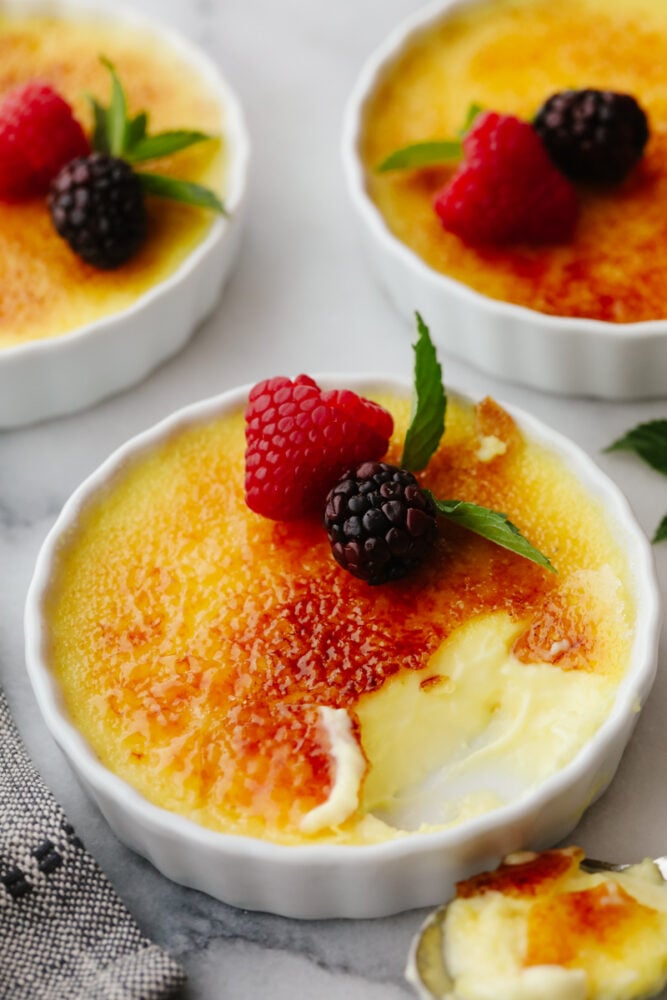
One of the most iconic and deeply satisfying French desserts — a silky, vanilla-perfumed egg yolk and cream custard baked in a water bath until perfectly set, then chilled and finished with a layer of sugar caramelised with a kitchen torch into a thin, shattering caramel crust. The theatrical crack of the spoon through the caramel surface is one of the great pleasures of French dining. Also see our own crème brûlée recipe.
Ingredients:
- 6 large egg yolks
- 2 cups heavy cream
- ⅓ cup sugar, plus 4 tablespoons for caramelising
- 1 vanilla bean, split and scraped (or 2 teaspoons vanilla extract)
- Pinch of salt
Instructions:
- Preheat oven to 325°F. Heat the cream with the vanilla bean and scraped seeds (or vanilla extract) in a saucepan over medium heat until just steaming — do not boil. Remove the vanilla pod.
- Whisk together the egg yolks, sugar, and salt until pale and slightly thickened. Gradually pour the warm cream into the egg mixture while whisking constantly — add it slowly to prevent scrambling the eggs. Strain through a fine-mesh sieve into a pitcher.
- Pour into 4–6 ramekins set in a deep baking pan. Fill the pan with hot water to halfway up the sides of the ramekins. Bake for 35–40 minutes until the custard is set at the edges but still wobbles slightly in the centre like set jelly — not liquid. Remove from the water bath and cool to room temperature, then refrigerate for at least 4 hours.
- When ready to serve, blot any condensation from the surface with a paper towel. Scatter 1 tablespoon of sugar evenly over each custard. Using a kitchen torch, caramelise the sugar in slow, even circular motions until completely melted and deeply amber. Let the caramel harden for 1 minute before serving.
11. Galette des Rois — French King Cake

France's most beloved January tradition — a spectacular puff pastry tart filled with rich, buttery almond cream (frangipane), baked until deeply golden and flaky, with a hidden ceramic figure (fève) baked inside. Whoever finds the fève in their slice becomes king or queen for the day and wears the paper crown that accompanies the galette. Eaten across France throughout January for Epiphany. A stunning dessert alongside our best cake recipes.
Ingredients:
- 2 sheets good-quality puff pastry
- Frangipane filling: ½ cup (1 stick) butter (softened), ½ cup sugar, 2 large eggs, 1 cup almond flour, 1 teaspoon vanilla extract, 1 tablespoon rum or amaretto, pinch of salt
- 1 egg yolk mixed with 1 tablespoon milk, for egg wash
- 1 dried bean or ceramic fève, to hide inside
Instructions:
- Make the frangipane: beat the softened butter and sugar until pale and fluffy. Add the eggs one at a time, beating well. Add the almond flour, vanilla, rum, and salt. Mix until smooth. Refrigerate 30 minutes.
- Preheat oven to 400°F. Roll both puff pastry sheets into 11-inch rounds. Place one round on a parchment-lined baking sheet.
- Spread the frangipane over the pastry base, leaving a 1-inch border all around. Press the fève into the frangipane (away from the centre). Brush the border with egg wash. Place the second pastry round on top and press the edges firmly to seal. Fold and crimp the edge decoratively.
- Brush the top entirely with egg wash. Using a sharp knife, score a decorative pattern on the surface — spirals, diamond, or rosette — without cutting through the pastry. Refrigerate 15 minutes. Bake for 30–35 minutes until deeply golden and puffed. Cool 15 minutes before serving warm.
10. The Best Chocolate Mousse
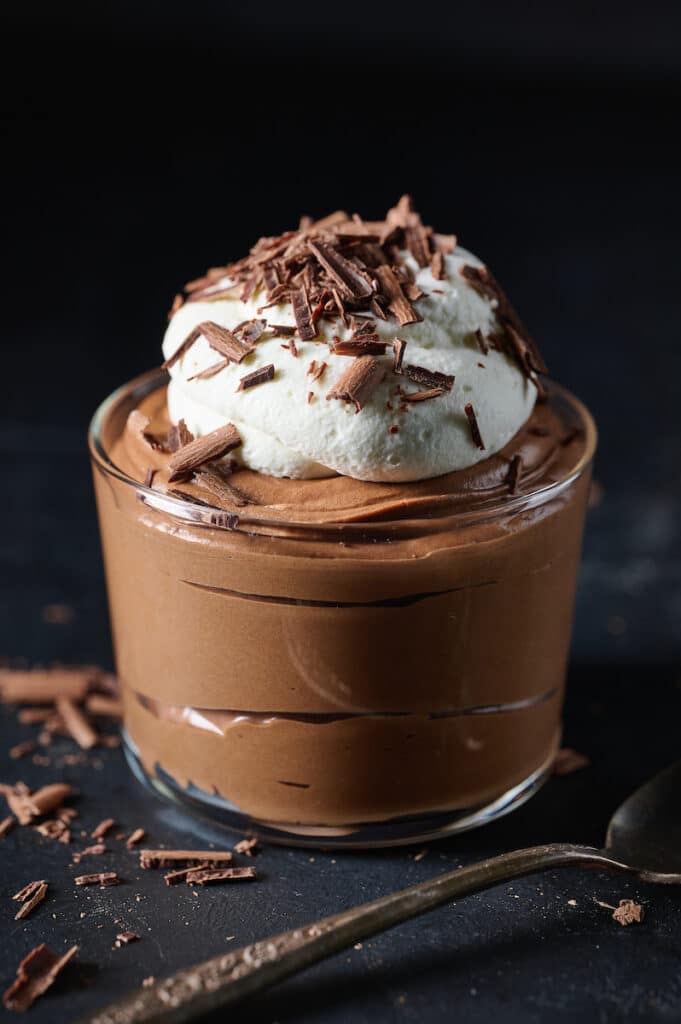
The definitive French dessert in its most perfect form — dark chocolate melted and folded with whipped egg whites and whipped cream into an impossibly light, airy, intensely chocolatey mousse that sets in the refrigerator into something both luxurious and ethereally light. This is one of the few desserts where the simplicity of the ingredient list directly reflects how extraordinary the result can be. Also see our own perfect chocolate mousse recipe.
Ingredients:
- 8 oz good-quality dark chocolate (70% cacao), finely chopped
- 4 large eggs, separated
- 2 tablespoons sugar, divided
- 1 cup cold heavy cream
- 2 tablespoons strong brewed coffee or espresso
- Pinch of salt
- Whipped cream and chocolate shavings, for serving
Instructions:
- Melt the chocolate with the coffee in a double boiler over barely simmering water, stirring until smooth. Cool to room temperature — this is critical. If the chocolate is too hot, it will deflate the egg whites.
- Whisk the egg whites with a pinch of salt until foamy. Add 1 tablespoon of sugar and continue whisking to firm peaks — not stiff and dry. In a separate bowl, whip the cream with the remaining tablespoon of sugar to soft peaks.
- Stir the egg yolks into the cooled melted chocolate one at a time. Fold in one third of the egg whites to lighten the mixture. Fold in the remaining egg whites gently in two additions — use a large rubber spatula and fold from the bottom up, preserving the air. Fold in the whipped cream in two additions with the same gentle technique.
- Divide among individual serving glasses or bowls. Refrigerate for at least 2 hours or overnight. Serve topped with a small spoonful of whipped cream and chocolate shavings.
9. Brioche Bread
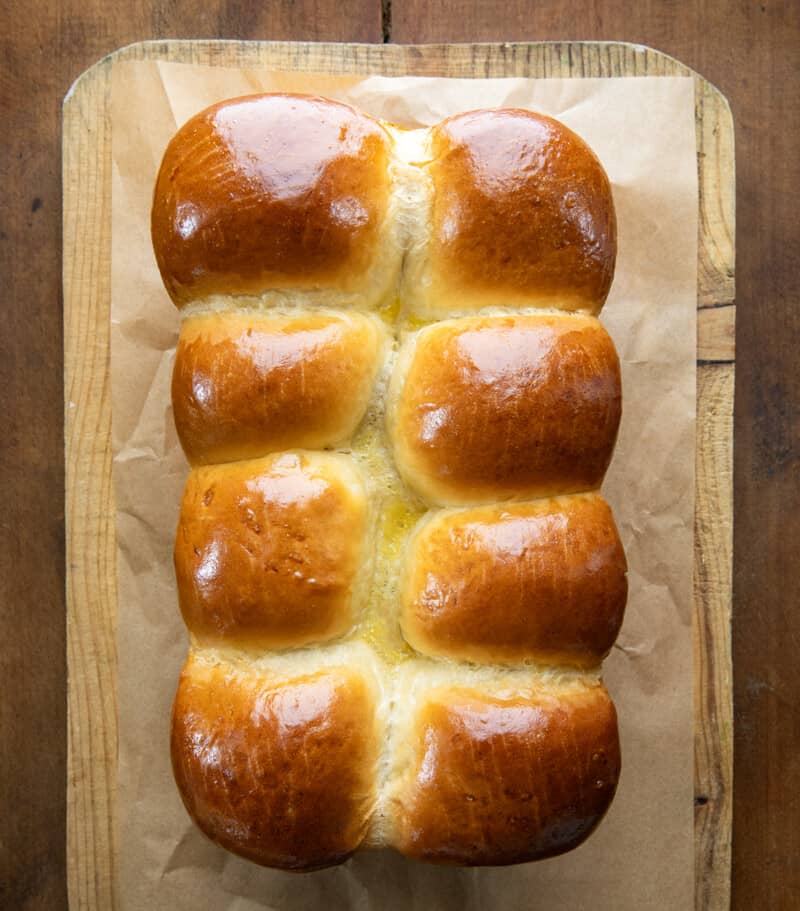
France's most magnificent enriched bread — a yeasted dough enriched with an extraordinary amount of butter and eggs to produce a bread of incomparable softness, richness, golden colour, and tender crumb. Brioche is the bread of celebration and indulgence in France, eaten for breakfast, used for French toast, stuffed with chocolate, or served alongside foie gras. The long, cold proof overnight develops both flavour and structure. A masterpiece alongside our best bread recipes.
Ingredients:
- 3 cups all-purpose flour
- 2¼ teaspoons instant yeast
- 3 tablespoons sugar
- 1 teaspoon salt
- 4 large eggs, at room temperature
- ¼ cup warm milk
- 1 cup (2 sticks) unsalted butter, cut into cubes and softened to room temperature
- 1 egg yolk + 1 tablespoon milk, for egg wash
Instructions:
- Combine flour, yeast, sugar, and salt in a stand mixer with the dough hook. Add the eggs and warm milk. Mix on medium speed for 5 minutes until a smooth, elastic dough forms.
- With the mixer running on medium-low, add the softened butter one cube at a time — wait until each cube is fully incorporated before adding the next. This takes 15–20 minutes of patient, continuous mixing. The dough will be soft, silky, and pull away cleanly from the bowl sides when ready.
- Transfer to a lightly oiled bowl, cover with plastic wrap, and refrigerate overnight — at least 8 hours. The cold, slow rise develops extraordinary flavour and makes the dough much easier to handle.
- The next day, shape the cold dough into a loaf or individual rolls. Place in a buttered 9x5-inch loaf pan. Cover loosely and proof at room temperature for 2–3 hours until puffed and nearly doubled. Brush gently with egg wash. Bake at 375°F for 30–35 minutes until deeply golden. Cool 20 minutes before slicing.
8. Beef Wellington

The most spectacular and impressive meat dish in the French-British fine dining tradition — a whole beef tenderloin coated in a savoury mushroom duxelles and wrapped in puff pastry, baked until the pastry is deeply golden and the beef inside is a perfect pink medium-rare. The dramatic slice at the table to reveal the layered interior always creates a moment of genuine awe. A showpiece dish for the most special occasions. A centrepiece for any dinner party.
Ingredients:
- 2 lb beef tenderloin, centre-cut, trimmed
- 2 tablespoons Dijon mustard
- 12 oz cremini mushrooms, very finely chopped in a food processor
- 3 shallots, finely minced
- 3 cloves garlic, minced
- 2 tablespoons butter
- 2 tablespoons dry sherry or Madeira
- 6 oz thin-sliced prosciutto or Parma ham
- 1 sheet puff pastry, cold
- 1 egg yolk + 1 tablespoon cream, for egg wash
- Salt and pepper, to taste
Instructions:
- Season the tenderloin and sear in a very hot oiled skillet on all sides until deeply browned — about 6 minutes. Cool completely. Brush all over with Dijon mustard. Make the duxelles: cook the mushrooms, shallots, and garlic in butter over high heat, stirring constantly, for 15 minutes until all moisture has evaporated and the mixture is very dry and dark. Add the sherry and cook until dry. Season generously. Cool completely.
- Lay a large sheet of plastic wrap on the counter. Arrange the prosciutto slices in a slightly overlapping rectangle wide enough to wrap the tenderloin. Spread the mushroom duxelles in a thin, even layer over the prosciutto. Place the mustard-coated tenderloin at the bottom edge and roll the plastic wrap tightly to form a cylinder. Twist the ends tightly and refrigerate for 30 minutes.
- Preheat oven to 425°F. Unroll the puff pastry on a lightly floured surface. Remove the plastic from the beef roll and place at the bottom of the pastry. Roll up tightly, sealing the ends by pressing firmly. Place seam-side down on a parchment-lined baking sheet. Brush with egg wash. Score the top decoratively if desired. Refrigerate 15 minutes.
- Bake for 25–30 minutes until the pastry is deeply golden and the beef registers 125°F for medium-rare. Rest 10 minutes before slicing into thick rounds at the table. The dramatic reveal is part of the dish.
7. French Lemon Tart — Tarte au Citron
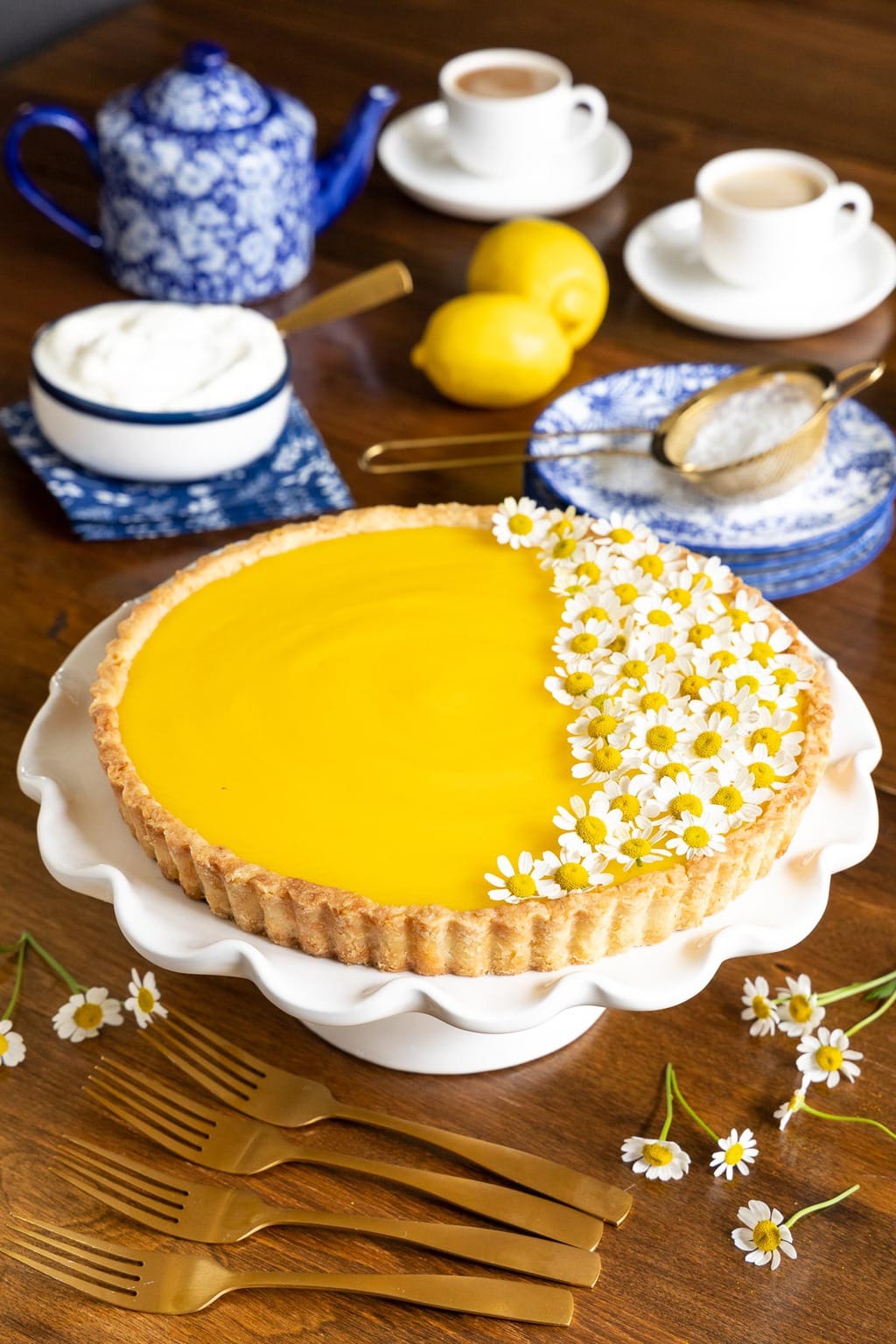
One of the most perfectly balanced desserts in French pastry — a crisp, buttery shortcrust pastry shell filled with an impossibly silky, bright, intensely lemony curd that is simultaneously tart and sweet. The classic French lemon tart relies on excellent lemons and good technique rather than elaborate decoration — a perfectly smooth, glossy surface is the mark of a great tarte au citron. A beautiful dessert alongside our best lemon desserts.
Ingredients:
- Pâte sablée (shortcrust): 1¼ cups flour, 6 tablespoons cold butter, 3 tablespoons powdered sugar, 1 egg yolk, 2–3 tablespoons ice water, pinch of salt
- Lemon filling: 4 large eggs, 1 cup sugar, juice of 4 large lemons (about ¾ cup), zest of 2 lemons, ½ cup (1 stick) butter (cut into cubes)
Instructions:
- Make the pastry: pulse flour, butter, sugar, and salt in a food processor until it resembles breadcrumbs. Add the egg yolk and ice water gradually until the dough just comes together. Flatten into a disc, wrap, and refrigerate 1 hour. Roll out and line a 9-inch tart tin. Blind bake at 375°F for 15 minutes with weights, then 8 minutes without until golden and dry. Cool completely.
- Make the lemon curd filling: whisk the eggs and sugar in a heavy saucepan over medium-low heat until combined. Add the lemon juice and zest. Cook, stirring constantly with a wooden spoon, for 8–10 minutes until the curd thickens and coats the spoon. Do not boil.
- Remove from heat and strain through a fine-mesh sieve into a bowl. Whisk in the cold butter cubes one at a time until completely smooth and emulsified. Pour immediately into the cooled tart shell.
- Cool to room temperature, then refrigerate for at least 2 hours until completely set. Serve at room temperature — remove from the fridge 20 minutes before serving for the best texture.
6. Chocolate Soufflé
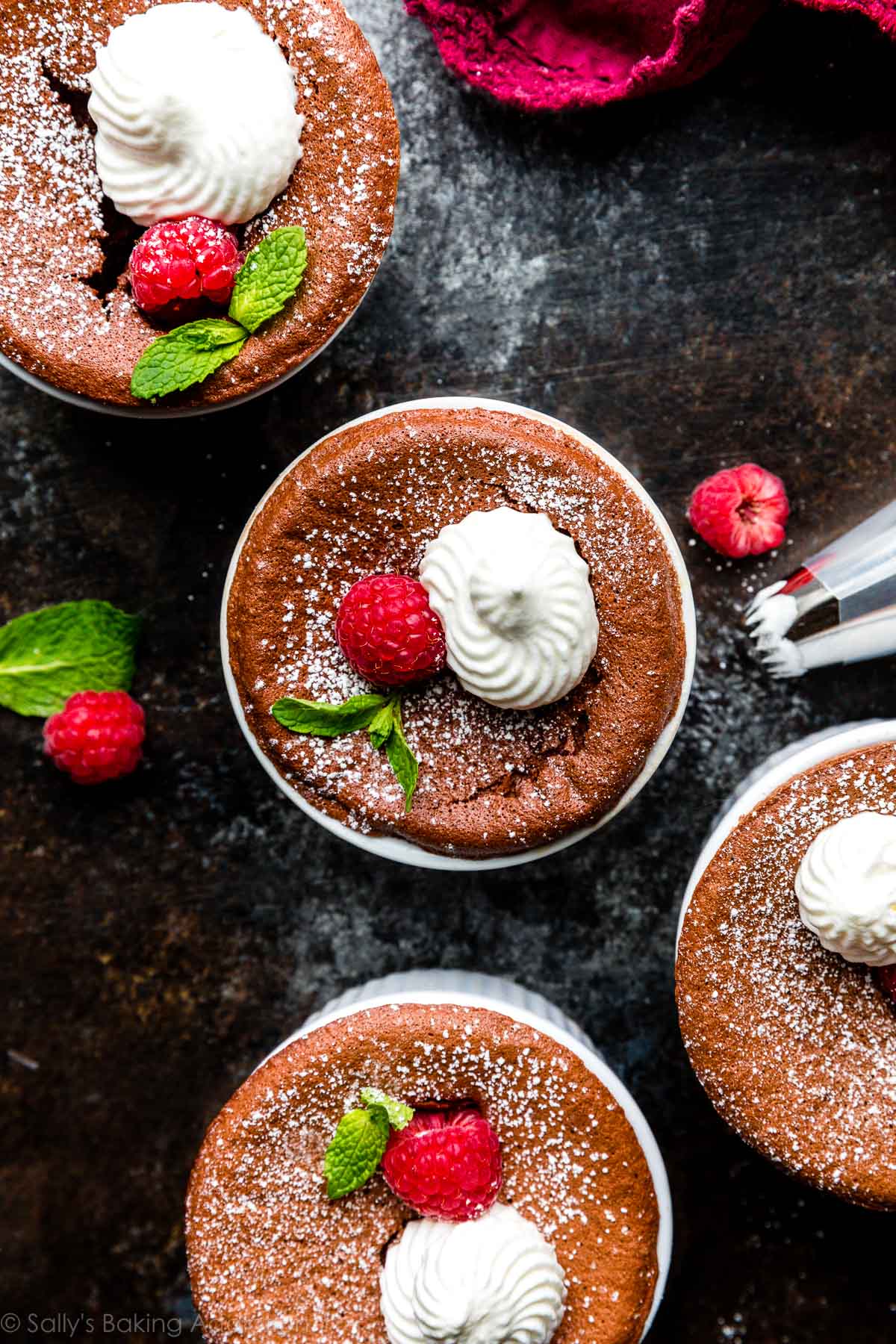
The most technically dramatic and exhilarating dessert in French cuisine — a rich dark chocolate base folded with whipped egg whites and baked until it rises dramatically above the ramekin into a tall, quivering, perfectly set yet ethereally light chocolate cloud. Served immediately from the oven before it deflates, with a scoop of vanilla ice cream melting into the centre when opened at the table. The perfect soufflé is one of the most impressive things to serve at a dinner party. See our best dessert ideas.
Ingredients:
- 6 oz good dark chocolate (70%), chopped
- 3 tablespoons butter, plus extra for greasing
- 4 large eggs, separated
- ½ cup sugar, divided, plus extra for coating
- 2 tablespoons flour
- ¼ cup whole milk
- Pinch of cream of tartar
- Powdered sugar and vanilla ice cream, for serving
Instructions:
- Preheat oven to 375°F. Butter 6 ramekins generously and coat the insides completely with sugar — tap out any excess. The butter and sugar coating is essential for the soufflé to rise evenly up the sides.
- Melt the chocolate with the butter in a double boiler until smooth. Whisk in the flour, milk, and ¼ cup of the sugar. Cool slightly. Stir in the egg yolks one at a time.
- Beat the egg whites with cream of tartar until foamy. Gradually add the remaining ¼ cup sugar and beat to firm (not stiff) peaks. The whites should be glossy and hold their shape.
- Fold one third of the egg whites into the chocolate base to lighten it. Fold in the remaining whites in two additions — gently and quickly to preserve the air. Divide among the prepared ramekins, filling to just below the rim. Run your thumb around the inside rim to create a clean edge — this helps the soufflé rise straight. Bake 12–13 minutes until risen and the top is set but the centre still wobbles slightly. Dust with powdered sugar and serve immediately.
5. Pissaladière — Provençal Onion Tart

Nice's most beloved savoury tart — a thick, focaccia-like yeasted dough base topped with an extraordinary mound of deeply caramelised onions cooked for nearly an hour until sweet and jammy, finished with a lattice of anchovy fillets and niçoise olives. The name comes from "pissala" — the anchovy paste that is traditional in the original. Eaten warm or at room temperature as a snack, starter, or lunch across the French Riviera. A wonderful companion to our best appetizer ideas.
Ingredients:
- Dough: 2 cups flour, 1 teaspoon instant yeast, ½ teaspoon salt, ¾ cup warm water, 3 tablespoons good olive oil — knead 8 minutes, rise 1 hour
- 3 lbs yellow onions, thinly sliced
- ¼ cup good olive oil
- 3 cloves garlic, minced
- 1 teaspoon fresh thyme
- 1 bay leaf
- 16–20 anchovy fillets
- ½ cup niçoise olives
- Salt and pepper, to taste
Instructions:
- Make the caramelised onion topping: heat olive oil in a large pot over medium-low heat. Add all the onions, garlic, thyme, bay leaf, and a pinch of salt. Cook, stirring every 5 minutes, for 45–55 minutes until the onions are deeply golden, completely soft, and reduced to a quarter of their original volume. Season and cool. Remove bay leaf.
- Make the dough and let it rise for 1 hour. Preheat oven to 425°F. Press the dough into a greased 13x9-inch baking pan, stretching to the edges. Let rest 15 minutes.
- Spread the caramelised onions generously over the dough surface, pressing down slightly.
- Arrange the anchovy fillets in a diagonal lattice pattern over the onions. Press the olives into the gaps between the anchovy lines. Drizzle with a little extra olive oil. Bake for 20–25 minutes until the edges of the dough are golden and the onion topping is fragrant and slightly caramelised at the edges. Cool 10 minutes and serve warm or at room temperature.
4. Gratin Dauphinois — French Potato Gratin
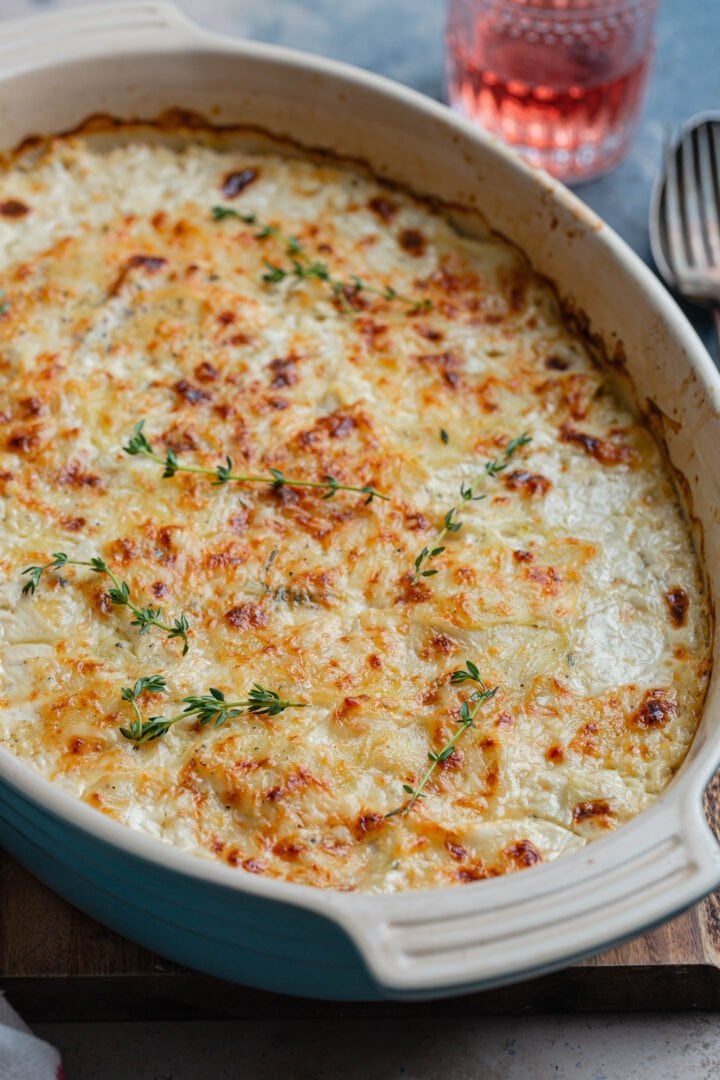
The most indulgent and celebrated potato dish in French cuisine — thinly sliced potatoes layered in a gratin dish rubbed with garlic, covered in a mixture of cream, milk, and Gruyère, and baked until the top is golden and bubbling and the potatoes are completely tender and have absorbed the cream into a velvety, decadent gratin. Gratin Dauphinois accompanies roasts, chops, and any main course that deserves the finest potato side dish in existence. Also try our scalloped potatoes.
Ingredients:
- 2½ lbs Yukon Gold or waxy potatoes, peeled and very thinly sliced (⅛ inch thick — a mandoline is ideal)
- 2 cups heavy cream
- 1 cup whole milk
- 2 cloves garlic — 1 smashed for rubbing the dish, 1 minced for the cream
- ¼ teaspoon nutmeg
- 1 cup Gruyère, shredded
- 3 tablespoons butter
- Salt and white pepper, to taste
Instructions:
- Preheat oven to 350°F. Rub a 9x13-inch baking dish with the smashed garlic clove, then butter it generously. Warm the cream and milk in a saucepan with the minced garlic, nutmeg, salt, and white pepper until just steaming. Taste — the cream should be well-seasoned.
- Layer the potato slices in the buttered dish in overlapping rows, seasoning lightly between layers with salt and pepper.
- Pour the warm seasoned cream mixture evenly over the potatoes. Press down gently so the potatoes are submerged. Scatter the Gruyère evenly over the top. Dot with the remaining butter.
- Cover tightly with foil and bake for 45 minutes. Uncover and bake for 30–40 more minutes until the top is deeply golden and bubbling and the potatoes are completely tender when pierced with a knife — there should be no resistance. Rest 15 minutes before serving — this allows the gratin to set slightly for cleaner serving.
3. Pan Bagnat — French Niçoise Sandwich

Nice's legendary picnic sandwich — "pan bagnat" means "bathed bread" and describes a round crusty roll rubbed with garlic and olive oil, filled with all the components of a Niçoise salad (tuna, hard-boiled egg, tomatoes, anchovies, olives, radishes, and basil), then weighted and pressed for at least an hour so the vinaigrette soaks into every layer. The longer it presses, the better it tastes. The ultimate French picnic food and a wonderful recipe for our best picnic sandwiches.
Ingredients:
- 4 round crusty rolls or 1 large round sourdough loaf
- 2 (5 oz) cans good oil-packed tuna, drained
- 3 hard-boiled eggs, sliced
- 2 large ripe tomatoes, thickly sliced
- 8 anchovy fillets
- ½ cup niçoise olives, pitted
- 4 radishes, thinly sliced
- 1 cup fresh basil leaves
- 1 clove garlic, halved
- Vinaigrette: 4 tablespoons olive oil + 1 tablespoon red wine vinegar + 1 teaspoon Dijon + salt and pepper
Instructions:
- Slice the rolls in half. Rub the cut surfaces of both halves with the garlic clove. Drizzle the bottom halves generously with olive oil.
- Whisk together the vinaigrette. Layer the bottom half of each roll: tuna, sliced egg, tomato slices, anchovy fillets, olives, radishes, and fresh basil. Drizzle the vinaigrette over the filling.
- Place the top half on firmly. Wrap each sandwich very tightly in plastic wrap or parchment.
- Place a heavy board or pot on top of the wrapped sandwiches. Weight for at least 1 hour at room temperature — or refrigerate for up to 4 hours with the weight. The pressing compresses everything together and allows the vinaigrette to soak into the bread. Serve at room temperature for the best flavour.
2. Gougères — French Cheese Puffs

Burgundy's legendary cheese-flavoured choux puffs — the same light, airy pâte à choux used for éclairs and profiteroles, but seasoned with Gruyère, Dijon mustard, and a pinch of cayenne, piped into small balls and baked until hollow, golden, and irresistibly crispy on the outside with an airy, cheesy interior. Gougères are the definitive aperitif snack of France, always served with Champagne or Burgundy wine. An extraordinary party appetizer.
Ingredients:
- 1 cup water
- 6 tablespoons butter, cut into cubes
- ½ teaspoon salt
- 1 cup all-purpose flour
- 4 large eggs
- 1½ cups Gruyère, finely shredded (reserve 2 tablespoons for topping)
- 1 teaspoon Dijon mustard
- ¼ teaspoon cayenne pepper
- ¼ teaspoon black pepper
Instructions:
- Combine water, butter, and salt in a saucepan over medium heat. Bring to a full boil. Remove from heat and add all the flour at once. Stir vigorously until a smooth dough forms that pulls away from the sides of the pan. Return to medium heat and stir constantly for 2 minutes to dry out the dough slightly.
- Transfer to a bowl or stand mixer. Cool for 5 minutes. Add the eggs one at a time, beating well after each — the dough will look broken at first but will come together. Beat until smooth and glossy after each addition. Stir in 1 cup of the Gruyère, Dijon, cayenne, and black pepper.
- Preheat oven to 425°F. Line two baking sheets with parchment. Transfer the dough to a piping bag with a large round tip. Pipe 1.5-inch rounds, leaving 2 inches between each. Alternatively, drop by heaped tablespoons. Sprinkle the reserved Gruyère over each.
- Bake for 20–22 minutes until deeply golden, puffed, and hollow-sounding when tapped on the bottom. Do not open the oven for the first 15 minutes — the steam is what creates the hollow interior. Serve immediately warm — gougères are at their absolute best fresh from the oven.
1. Traditional French Ratatouille Niçoise

The authentic Niçoise version of this Provençal classic — each vegetable (eggplant, zucchini, peppers, tomatoes) cooked separately in olive oil to preserve its individual character before being combined and slow-simmered together into a unified, deeply flavourful Provençal stew. This separate-cooking technique is the key difference from the simpler stewed version and results in a more complex, nuanced ratatouille. Serve as a light main or as a side alongside grilled meats. A magnificent vegetarian dinner.
Ingredients:
- 1 large eggplant, diced and salted 30 minutes
- 2 medium zucchini, diced
- 2 red bell peppers, diced
- 1 yellow bell pepper, diced
- 1 large onion, diced
- 4 ripe tomatoes, diced
- 4 cloves garlic, minced
- ½ cup good olive oil, divided
- 1 teaspoon herbes de Provence
- 1 sprig fresh rosemary
- 4 fresh basil leaves + extra for serving
- Salt and pepper, to taste
Instructions:
- Cook each vegetable separately: pat dry the salted eggplant and sauté in 2 tablespoons of olive oil until golden — 5 minutes. Set aside. Sauté the zucchini 3 minutes until lightly golden. Set aside. Sauté both bell peppers 5 minutes. Set aside. Sauté the onion 8 minutes until completely soft and golden.
- In the same pot with the onion, add the garlic and cook 1 minute. Add the diced tomatoes and cook 10 minutes until they break down into a sauce. Season well with salt, herbes de Provence, and fresh rosemary.
- Add all the separately cooked vegetables back to the pot. Stir gently to combine. Tear the basil leaves and stir through.
- Cover and cook over the lowest possible heat for 30 minutes, stirring gently once or twice, until all the vegetables are completely unified but still hold their shape slightly. Taste and season generously — ratatouille should be very well seasoned. Remove the rosemary sprig. Scatter fresh basil over the top. Serve at room temperature or warm — it is even better the next day.
FAQs
What are the most essential techniques to learn for French home cooking?
French cooking is built on a foundation of techniques that, once mastered, unlock the entire cuisine. The most important is learning to make a proper sauce from pan drippings — deglazing with wine and reducing to a glossy sauce is the difference between a good and an extraordinary French dish. Caramelising onions properly (at least 45 minutes, not 10) is fundamental to French onion soup, pissaladière, and Zwiebelkuchen. Learning to make a proper roux and béchamel opens up gratins, soufflés, and crêpes. Mastering the braising technique — browning meat deeply, building a liquid base, and cooking at the lowest possible simmer for hours — is the key to coq au vin, bourguignon, and cassoulet. For pastry, learning to make pâte sablée (shortcrust) and choux pastry opens up tarts, madeleines, gougères, and éclairs. Perhaps most importantly, learning to taste constantly and season aggressively throughout cooking rather than only at the end is the single most transformative French kitchen habit.
How do I achieve the perfect crème brûlée texture?
Three things determine whether a crème brûlée is perfectly silky or disappointingly eggy. First, the cream-to-egg ratio matters enormously — use only egg yolks (no whites) for the richest, silkiest result, and ensure the ratio of cream is generous rather than reduced. Second, the water bath (bain-marie) is non-negotiable — it ensures the custard cooks gently at an even temperature without the eggs curdling or scrambling. The water level should reach halfway up the ramekins. Third, the correct baking time is crucial — the custard is done when the edges are set but the centre still wobbles when shaken, like set jelly rather than liquid. It will continue to set as it cools and chills. Overbaked crème brûlée has an unpleasant grainy, eggy texture — when in doubt, pull it from the oven slightly earlier than you think necessary.
What is the difference between Ratatouille and Confit Byaldi?
Traditional Ratatouille Niçoise (as in recipe #1) is a stew — the vegetables are cooked separately then combined and simmered together into a unified, somewhat rustic dish. Confit Byaldi, which became widely known through the Pixar film Ratatouille, is a very different dish — thinly sliced vegetables arranged in concentric overlapping circles over a tomato sauce base, drizzled with olive oil, covered in parchment, and slow-baked until the vegetables are completely tender and glossy. Confit Byaldi is more visually dramatic and produces a more refined, separately textured result where each vegetable retains its distinct character. The traditional ratatouille produces a richer, more savoury, unified stew that is arguably more deeply flavoured. Both are wonderful — the traditional version is the everyday dish and the confit version is the special-occasion showpiece.
What wine should I drink with these French dishes?
French food and French wine are inseparable — the regional wines were developed specifically to complement the regional foods. Coq au Vin Blanc pairs naturally with the same dry white wine used in the cooking — a Burgundy Aligoté or Chablis. Beef Bourguignon calls for Burgundy Pinot Noir. Bouillabaisse traditionally accompanies a crisp, mineral Provence rosé or a Cassis Blanc. Quiche Lorraine pairs beautifully with Alsatian Riesling or Pinot Gris. Duck with Orange sauce sings alongside a Sauternes or a rich Vouvray. Gougères are inseparable from Champagne or Crémant de Bourgogne. For those without access to specific French wines, the guiding principle is simple: pair rich, braised meat dishes with full-bodied reds, delicate fish dishes with crisp whites, and pastries and desserts with sweet wines like Sauternes or Banyuls.
Share This Post!
If you loved these authentic French recipes, share this post with every food lover in your life! Pin it, share it on Facebook, or send it to whoever is ready to bring the elegance and beauty of French cuisine into their kitchen. 🥐🍷🇫🇷





Comments
No Comments