
The request for a sugar-free cobbler came from my mother-in-law, who monitors her blood sugar carefully and had stopped eating desserts at family gatherings as a result. I made her this one. She ate it and then asked for the recipe, which she specifically said she wanted to make herself and not have made for her. I consider that the most sincere form of recipe endorsement — the request to be taught rather than to be served.
Sugar-free baking requires honest reckoning with what sugar actually does in a recipe beyond sweetness. Sugar provides moisture retention, structure, browning through caramelisation, and a specific texture in pastry. Removing it entirely and replacing it with nothing produces a flat, pale, dry result. The approach in this recipe is to replace refined sugar with natural sweeteners — maple syrup and honey in the filling, honey and a small amount of powdered erythritol or monk fruit sweetener in the topping — each of which brings its own flavour while providing some of the functional properties of sugar.
The almond flour topping is the specific choice that makes this cobbler different from a standard recipe with sugar swapped out. Almond flour produces a topping that is naturally crumblier and nuttier than a wheat flour biscuit, with a golden rather than white colour from the natural oils in the almonds. It pairs particularly well with the tartness of blackberries — the nuttiness of the almond topping is a complementary flavour, not just a substitute.
Saad ate this without awareness that it was made without sugar. Zainab asked why the topping was a different colour. I said it was almond flour. She accepted this and ate it anyway, which is the incremental progress I have made with her regarding unfamiliar ingredients.
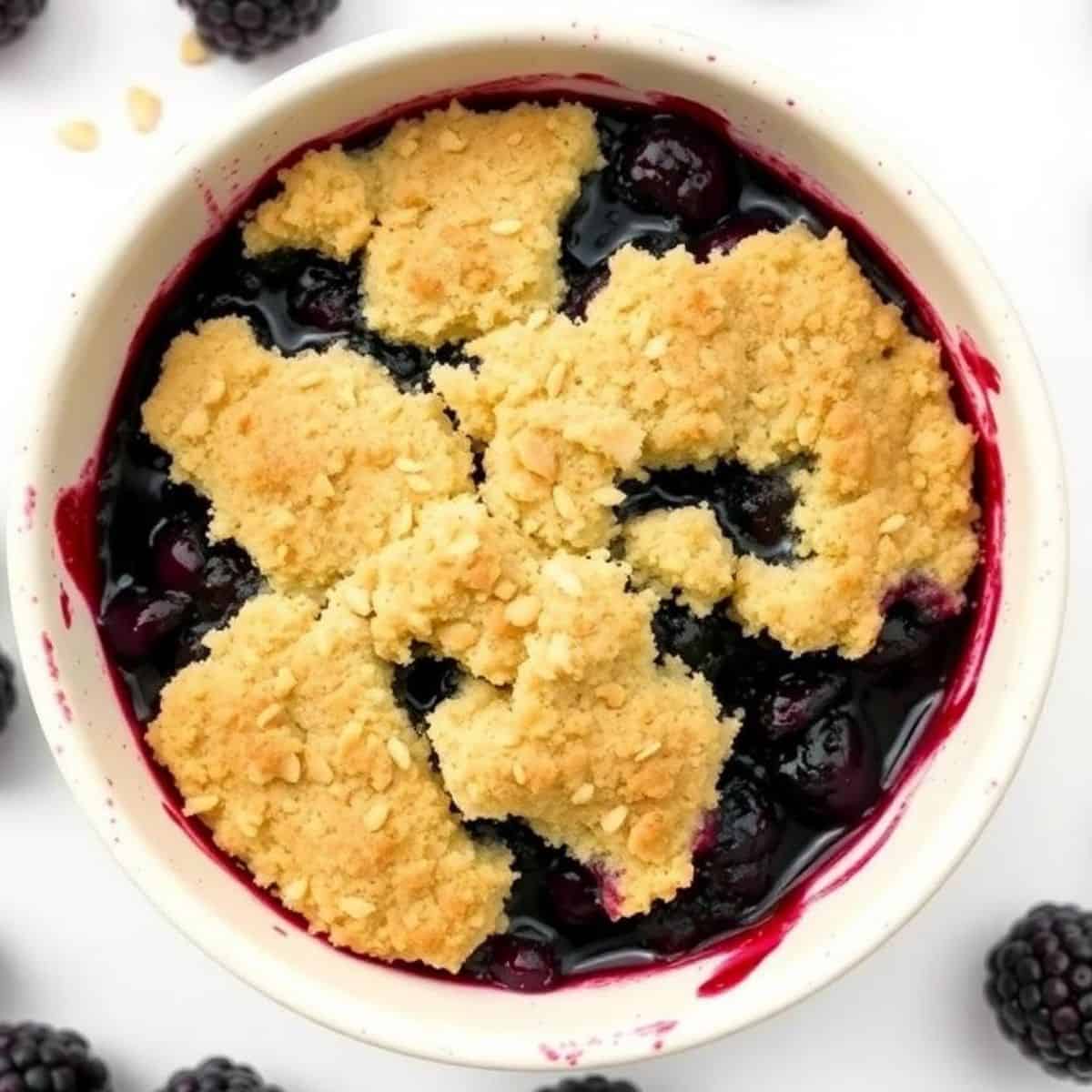
Why You'll Love This Recipe
- No refined sugar — sweetened only with maple syrup and honey: The blackberry filling is sweetened with pure maple syrup and the topping with honey and a small amount of erythritol or monk fruit sweetener — both natural, both lower on the glycaemic index than refined sugar. The result is a dessert that tastes genuinely sweet without the blood sugar spike of a standard cobbler.
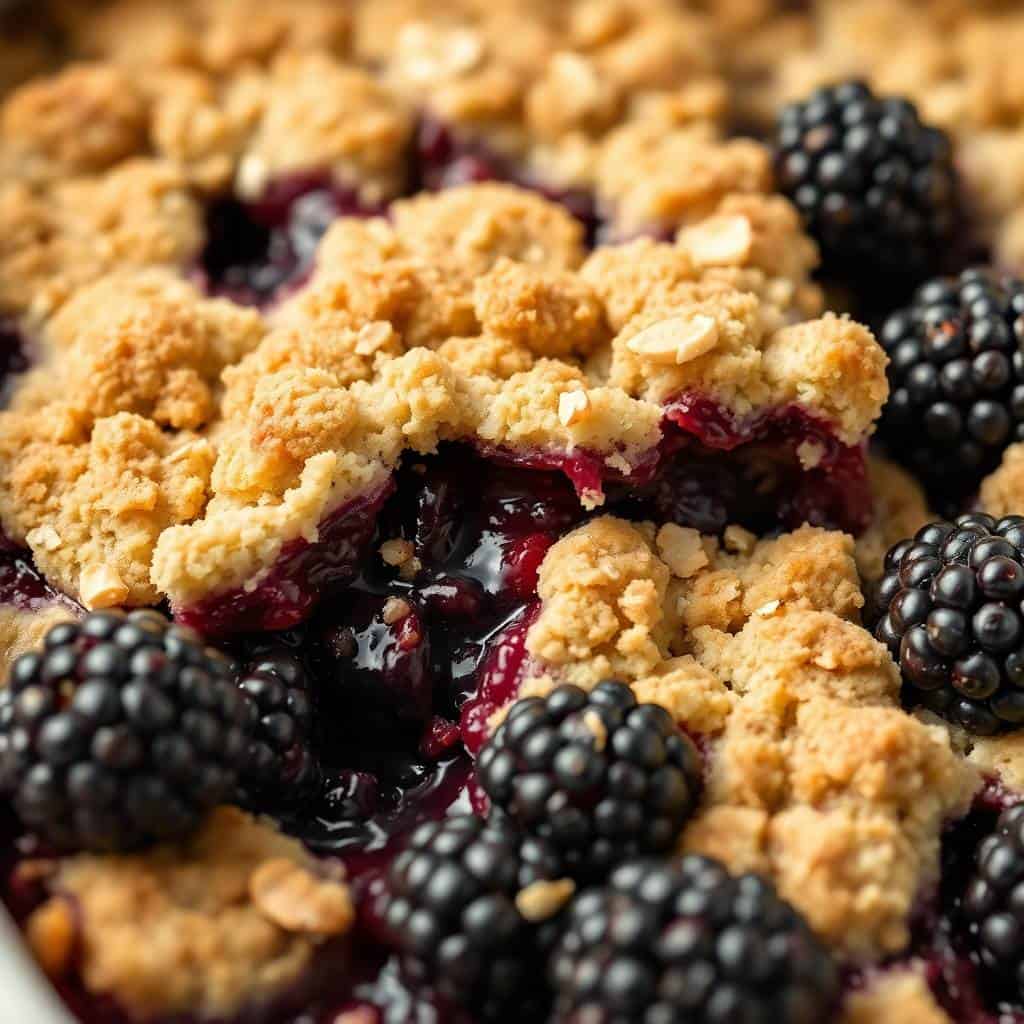
- Almond flour topping is crumbly, golden, and nutty — not a compromise: Almond flour does not simply replicate wheat flour with sugar removed. It produces a topping with a golden colour from natural almond oils, a slightly crumblier texture, and a nuttiness that complements the tartness of blackberries specifically. This is a case where the substitute has qualities the original does not.
- Blackberries are the ideal fruit for sugar-free baking — their tartness benefits from natural sweeteners: Highly sweet fruits like mango or ripe peach can taste cloying with natural sweeteners. Blackberries are tart enough that their flavour is enhanced rather than overwhelmed by maple syrup and honey, and the natural acidity provides the contrast that makes the sweetness feel earned rather than flat.
- Naturally lower in carbohydrates than a standard cobbler: A traditional cobbler topping uses all-purpose flour and granulated sugar — both high-carbohydrate ingredients. The almond flour topping in this recipe replaces both with a naturally lower-carbohydrate alternative. The filling's maple syrup and honey contain fructose rather than pure glucose and have a lower glycaemic impact than table sugar in the same quantity.
- Works with frozen blackberries — available year-round: Fresh August blackberries produce the best result. Frozen blackberries (thawed and drained) produce a filling that is slightly more liquid but equally flavourful. The frozen version allows this recipe to be made in any month.
Ingredients
- For the blackberry filling:
- 700g (approximately 5 cups) fresh blackberries — or frozen blackberries, thawed overnight in the fridge and drained in a colander for 30 minutes before use
- 3 tablespoons pure maple syrup (Grade A or B — Grade B has a stronger flavour that stands up better to blackberries)
- 1 tablespoon honey
- 2 tablespoons arrowroot powder or cornstarch — the thickening agent that produces a glossy, jammy filling rather than a watery one
- 1 tablespoon fresh lemon juice — brightens the blackberry flavour and prevents the filling from tasting flat
- 1 teaspoon lemon zest
- ½ teaspoon ground cinnamon
- ¼ teaspoon ground cardamom (optional — adds a floral complexity that pairs well with blackberries)
- Pinch of fine salt
- For the almond flour topping:
- 1½ cups (150g) blanched almond flour — use blanched (skin-removed) almond flour, not almond meal. Almond meal has visible brown flecks from the skin and a coarser texture that produces a less refined topping. Bob's Red Mill Super-Fine or Anthony's are reliable brands
- 3 tablespoons honey
- 3 tablespoons cold unsalted butter, cut into 1cm cubes — the butter must be cold for the topping to be crumbly rather than paste-like
- 2 tablespoons erythritol or monk fruit sweetener (powdered, not granulated) — OR substitute an additional 2 tablespoons of honey if you prefer a purely natural sweetener without any sugar alcohol. Note: granulated erythritol produces a slightly gritty topping; powdered dissolves more smoothly
- 1 teaspoon pure vanilla extract
- ½ teaspoon ground cinnamon
- ¼ teaspoon fine salt
- ½ teaspoon baking powder — provides a small amount of lift in the topping so it bakes up slightly light rather than dense
Directions
- Step 1: Preheat the oven and prepare the baking dish. Preheat the oven to 190°C/375°F with a rack in the centre position. Lightly butter a 23x23cm (9x9 inch) ceramic or glass baking dish, or a similar-sized oval or round baking dish with at least 5cm sides — the filling bubbles vigorously during baking and needs the height. Set aside while you prepare the filling.
- Step 2: Make the blackberry filling and taste before baking. Combine the blackberries, maple syrup, honey, arrowroot powder, lemon juice, lemon zest, cinnamon, cardamom if using, and salt in a large bowl. Toss gently until every blackberry is coated and the arrowroot powder is fully dissolved into the liquid — no white powder should be visible. Taste a blackberry with a small amount of the syrup on it. The filling should taste pleasantly tart-sweet: the blackberries' natural tartness should be present and counterbalanced but not overwhelmed by the sweetness. If the blackberries are very tart, add 1 more tablespoon of maple syrup. If they are already quite sweet (ripe August blackberries often are), you may reduce the maple syrup by 1 tablespoon. Pour the filling into the prepared baking dish, spreading the blackberries in an even layer.
- Step 3: Make the almond flour topping — keep the butter cold throughout. Combine the blanched almond flour, erythritol or monk fruit sweetener (if using), cinnamon, salt, and baking powder in a medium bowl. Stir with a fork until all dry ingredients are mixed evenly — almond flour can clump, so press any lumps apart. Add the cold butter cubes. Using your fingertips, work the cold butter into the almond flour mixture by rubbing the butter and flour between your thumb and fingers quickly — you want to keep the butter cold, so work fast and use only your fingertips rather than your full palm. The mixture is done when it resembles coarse, damp sand with pea-sized lumps of butter visible throughout. Do not work it until completely smooth — the lumps of butter are what create the crumbly, biscuit-like texture rather than a paste. Add the honey and vanilla extract. Stir briefly with a fork — the honey will make the mixture clump into irregular pieces, which is exactly right.
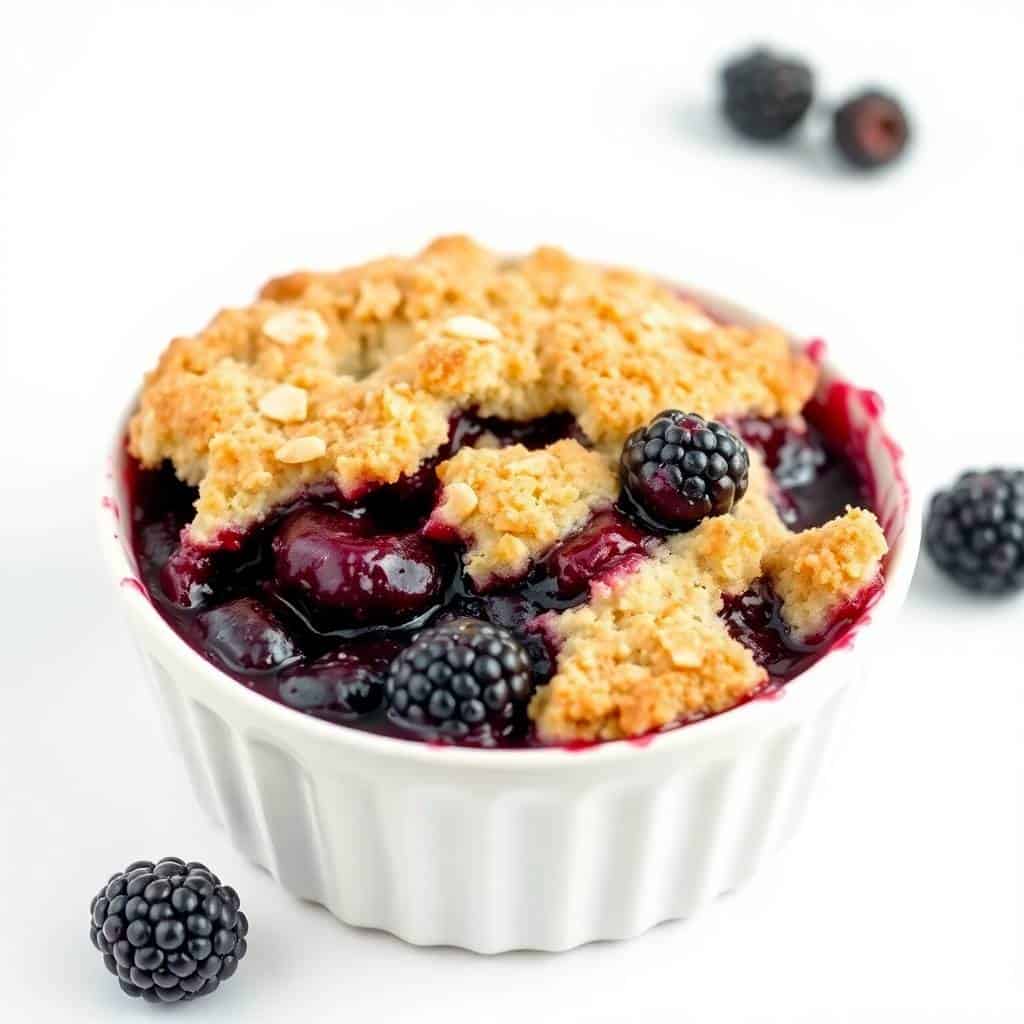
- Step 4: Distribute the topping over the blackberry filling. Drop spoonfuls of the almond flour topping over the blackberry filling in irregular clusters, covering most of the surface but deliberately leaving gaps — approximately 30% of the filling should be visible through the topping. These gaps allow the blackberry filling to bubble up through the topping during baking, creating the characteristic cobbler appearance of purple-stained topping edges and bubbling fruit. Do not press the topping flat or spread it evenly — irregular mounds of topping are correct. Sprinkle an extra pinch of cinnamon over the topping surface if desired.
- Step 5: Bake 30 to 35 minutes — watch the colour carefully. Place the baking dish on a rimmed baking sheet (the blackberry filling will bubble over the rim of the dish onto the oven floor if there is no catch). Bake at 190°C/375°F for 30 to 35 minutes. Check at 25 minutes: the topping should be golden-brown and the filling visibly bubbling at the edges. If the topping is becoming very dark before the 30-minute mark (almond flour browns faster than wheat flour because of its natural oil content), tent loosely with a piece of foil for the remaining baking time. The cobbler is done when the topping is uniformly golden (not pale in the centre), the filling is bubbling vigorously — not just at the edges but through the gaps in the topping as well — and the filling looks thick and jammy rather than thin and watery. Remove from the oven.
- Step 6: Rest 15 minutes before serving — the filling needs time to set. The arrowroot-thickened blackberry filling continues to set as it cools. If you serve the cobbler immediately from the oven, the filling will be liquid and will run across the plate. After 15 minutes of resting, the filling gels to a scoopable, jammy consistency that holds its shape in the serving spoon. After 30 minutes, it holds cleanly. Serve warm with full-fat Greek yogurt (a natural, lower-sugar accompaniment than ice cream or whipped cream), with a dollop of unsweetened whipped cream, or with vanilla ice cream if the occasion permits the indulgence.
Tips for Success
- Use blanched almond flour, not almond meal — the difference is significant. Blanched almond flour is made from almonds with the skins removed, producing a fine, pale, consistent flour that bakes into a smooth, golden topping. Almond meal is made from whole almonds including the skin, producing a coarser, speckled flour with a slightly bitter edge. In a cobbler topping, almond meal produces a grainier, denser result. If your bag says 'almond meal' rather than 'almond flour,' the result will be acceptable but noticeably coarser.
- Keep the butter cold — cold butter is what produces crumble, not paste. Warm or room-temperature butter mixes too completely with the almond flour, producing a paste that bakes into a flat, dense layer rather than a crumbly topping. Work quickly with cold butter from the fridge, using only your fingertips, and stop as soon as the mixture resembles damp sand with visible butter pieces. If the butter feels warm, refrigerate the mixture for 10 minutes before adding honey and vanilla.
- Taste the filling before baking and adjust sweetness. Every batch of blackberries varies in sweetness and tartness. Taste the filling with the syrup before it goes into the oven — you cannot adjust sweetness after baking. The correct balance: clearly tart from the blackberries, clearly sweet from the maple syrup, with a lemon brightness from the lemon juice. Flat or cloying are both correctable at this stage.
- The topping browns faster than wheat flour — tent with foil if needed. Almond flour's natural oils cause it to brown more quickly than wheat flour at the same temperature. Check at 25 minutes. If the topping is already deep golden-brown before the filling is bubbling vigorously, place a loose foil tent over the dish for the remaining baking time. The filling needs to be fully bubbling — not just warm — to indicate the arrowroot has fully gelatinised.
- Rest before serving — 15 minutes minimum. Arrowroot-thickened fillings set as they cool. Serving immediately produces a liquid filling that runs everywhere. The rest period is functional, not just polite — give the filling 15 minutes to develop a scoopable consistency.
Variations
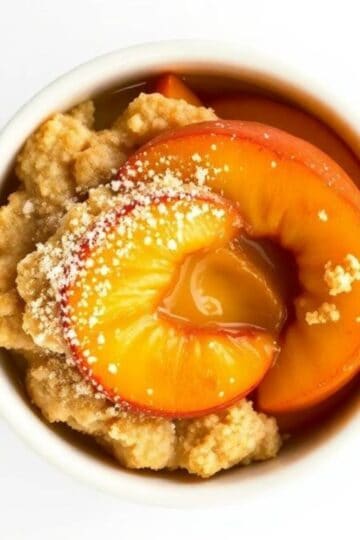
- Peach version: Replace blackberries with 700g of peeled, sliced ripe peaches. Reduce maple syrup to 2 tablespoons (peaches are naturally sweeter than blackberries). Add ¼ teaspoon of ginger with the cinnamon. The topping is identical.
- Mixed berry version: Use 350g blackberries and 350g blueberries. Reduce lemon juice to 2 teaspoons — blueberries are less tart than blackberries. The mixed berry filling is particularly good with full-fat Greek yogurt.
- Vegan version: Replace butter with solid coconut oil (used cold from the fridge, not melted). Replace honey with pure maple syrup throughout. The vegan version is slightly denser but still produces a good crumble topping.
- Crispier topping version: Add 3 tablespoons of unsweetened shredded coconut and 2 tablespoons of pumpkin seeds to the almond flour topping mixture. The coconut toasts in the oven and the seeds add crunch that persists even after the cobbler cools.
- Individual ramekins (for portion control): Divide the filling among 6 individual 200ml ramekins. Top each with approximately 3 tablespoons of topping. Bake at 190°C/375°F for 22 to 25 minutes — individual ramekins cook faster than a large dish. The individual format is useful for serving people with different dietary preferences at the same table.
How to Serve
Serve warm — not hot — in deep bowls with a generous dollop of full-fat Greek yogurt, unsweetened coconut cream, or a small scoop of vanilla ice cream. The tartness of the Greek yogurt against the sweet-tart cobbler is a particularly good combination. A dusting of extra cinnamon over the yogurt completes the presentation. This cobbler reads as a dessert sophisticated enough for a dinner party and accessible enough for a Tuesday.
How to Store
Store cooled leftover cobbler covered in the baking dish in the refrigerator for up to 3 days. The topping softens slightly overnight as it absorbs moisture from the filling — to restore crispness, reheat individual portions in the air fryer at 180°C/350°F for 5 to 6 minutes, or in the oven at 190°C/375°F for 10 minutes. Do not microwave the topping — it becomes soft and loses its texture. Freeze individual portions (filling plus topping together) in sealed containers for up to 2 months. Thaw overnight and reheat in the oven.
Related Recipes You Might Like
If you loved this recipe, here are a few more from the site:
- 29 Easy Blackberry Recipes Sweet and Savory — the complete blackberry recipe collection for the season
- 35 No-Bake Summer Desserts — more summer desserts that stay in the dessert spirit
- No-Bake Protein Peanut Butter Cups — another refined sugar-free dessert option
- 23 Best Fresh Peach Recipes — the peach version of this cobbler is also on the site
- Protein Brownie Batter Dip with Greek Yogurt — another dessert made with Greek yogurt as the base
Frequently Asked Questions
Can I use granulated erythritol instead of powdered?
You can, but powdered is strongly preferred. Granulated erythritol retains some grittiness even after baking because it does not dissolve as completely as powdered at moderate baking temperatures. Powdered erythritol (also called icing erythritol or confectioner's erythritol) dissolves fully into the topping and produces a smooth, non-gritty result. If you only have granulated, use the food processor to grind it to a powder before using in the topping.
Is this cobbler suitable for diabetics?
I am not a medical professional or dietitian and cannot give medical dietary advice. What I can say about the ingredients: this cobbler uses no refined sugar and sweetens exclusively with maple syrup, honey, and erythritol — all of which have a lower glycaemic index than table sugar. The almond flour topping is lower in carbohydrates than wheat flour. Anyone managing diabetes or blood sugar should consult their healthcare provider or a registered dietitian about what specific foods are appropriate for their individual situation.
Can I make this cobbler ahead of time?
Yes — the unbaked cobbler (filling in the dish with the topping scattered over) can be assembled, covered with cling film, and refrigerated for up to 24 hours before baking. Bake directly from the fridge, adding 5 minutes to the baking time. The baked cobbler keeps in the fridge for 3 days. For a dinner party, assemble the day before, refrigerate, and bake 45 minutes before serving — the cobbler will be at its best an hour out of the oven.
Why did my almond flour topping turn out dense rather than crumbly?
Three causes: the butter was too warm when worked into the flour (warm butter mixes too thoroughly and produces a paste rather than crumble), the topping was pressed flat rather than dropped in rough mounds (pressing removes the air pockets that make it crumbly), or the honey was added before the butter was properly incorporated (honey's stickiness binds the flour into a dense mass if added too early). Solution: work with fridge-cold butter, move quickly, drop the topping in rough mounds, and add the honey only after the butter and flour look like coarse crumbs.
What is the difference between arrowroot and cornstarch in this recipe?
Both thicken the blackberry filling by the same mechanism — they gelatinise in hot liquid and create a glossy, jammy consistency. Arrowroot produces a slightly clearer, more transparent gel with a brighter colour. Cornstarch produces a slightly more opaque gel with a more neutral flavour. In this recipe, arrowroot is preferred because it does not interfere with the natural colour of the blackberries (which are already a deep purple). Either works without significantly affecting the taste or quality of the finished cobbler.
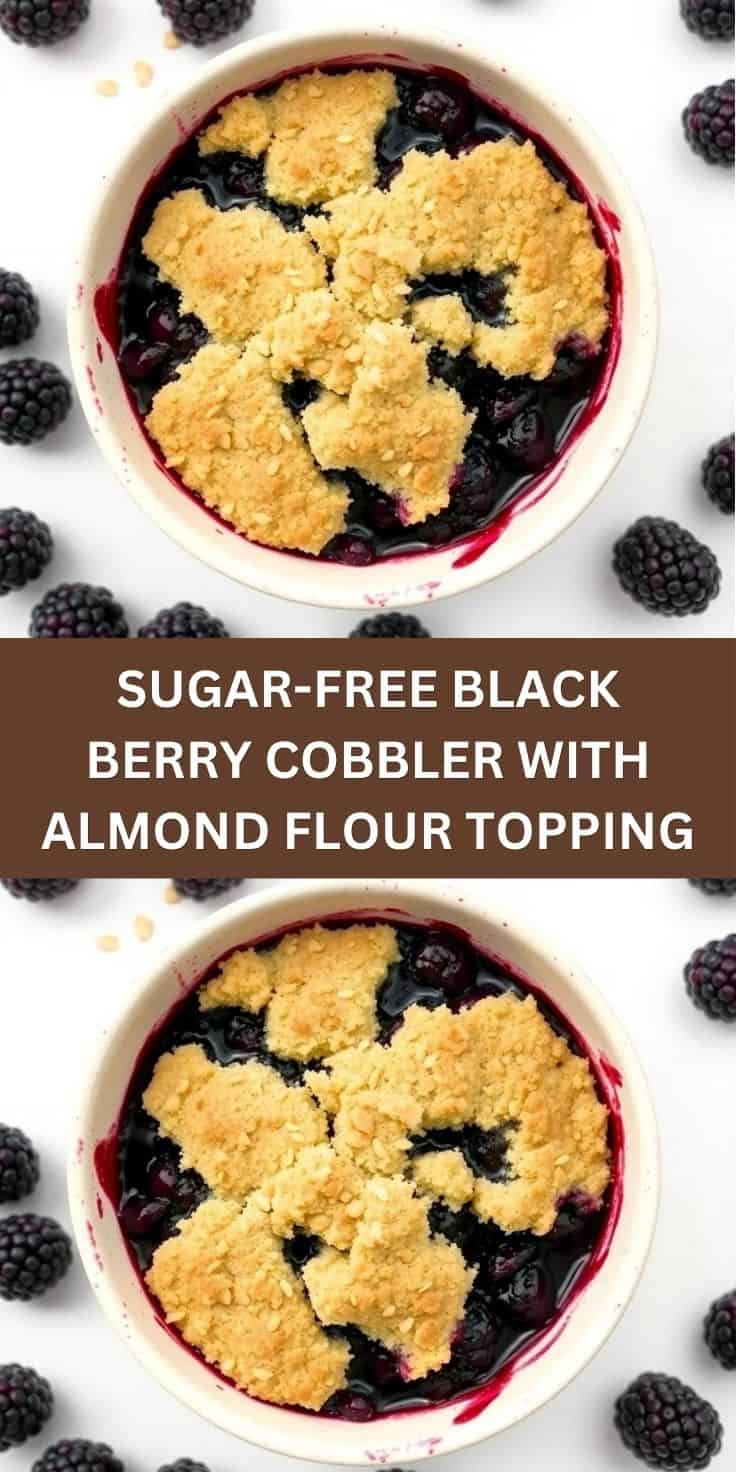
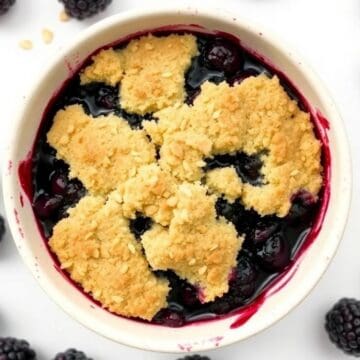
SUGAR-FREE BLACKBERRY COBBLER WITH ALMOND FLOUR TOPPING
Equipment
- 8x8-inch baking dish
- Large mixing bowl
- Medium mixing bowl
- Fork or pastry cutter
- Measuring Cups and Spoons
Ingredients
For the Blackberry Filling:
- 5 cups fresh or frozen blackberries
- ⅓ cup granulated sugar-free sweetener
- 1 tablespoon fresh lemon juice
- 1 teaspoon lemon zest
- 1 teaspoon vanilla extract
- 2 tablespoons cornstarch
- ½ teaspoon ground cinnamon
For the Almond Flour Topping:
- 2 cups fine almond flour
- 2 tablespoons coconut flour
- ¼ cup granulated sugar-free sweetener
- 1 teaspoon baking powder
- ¼ teaspoon salt
- ⅓ cup unsalted butter, melted
- 2 large eggs
- ¼ cup unsweetened almond milk
- 1 teaspoon vanilla extract
Instructions
Prepare the Oven
- Preheat the oven to 350°F (175°C). Lightly grease an 8x8-inch baking dish.
Make the Blackberry Filling
- In a large bowl, gently toss the blackberries with the sugar-free sweetener, lemon juice, lemon zest, vanilla extract, cornstarch, and cinnamon until evenly coated.
Add the Filling to the Dish
- Pour the blackberry mixture into the prepared baking dish and spread it into an even layer.
Mix the Dry Topping Ingredients
- In a medium bowl, whisk together the almond flour, coconut flour, sugar-free sweetener, baking powder, and salt.
Add the Wet Ingredients
- Add the melted butter, eggs, almond milk, and vanilla extract. Stir until a thick, scoopable batter forms.
Top the Cobbler
- Drop spoonfuls of the almond flour topping evenly over the blackberry filling. It does not need to completely cover the fruit.
Bake
- Bake for 30–35 minutes, until the blackberry filling is bubbling and the topping is lightly golden and set.
Cool and Serve
- Let the cobbler cool for at least 10 minutes before serving so the filling can thicken. Serve warm on its own or with sugar-free whipped cream.
Notes
- Choose a Sweetener You Like: Monk fruit, erythritol blends, or allulose can work, but sweetness and browning may vary.
- Fresh or Frozen Berries: Frozen blackberries work well without thawing, though they may need a few extra minutes of baking.
- Almond Flour Texture: Use fine blanched almond flour rather than almond meal for a softer, more tender cobbler topping.
- Lower-Carb Option: For fewer carbs, replace the cornstarch with a small amount of xanthan gum or another low-carb thickener.
- Storage: Refrigerate cooled leftovers in an airtight container for up to 4 days and reheat gently before serving.


Comments
No Comments