
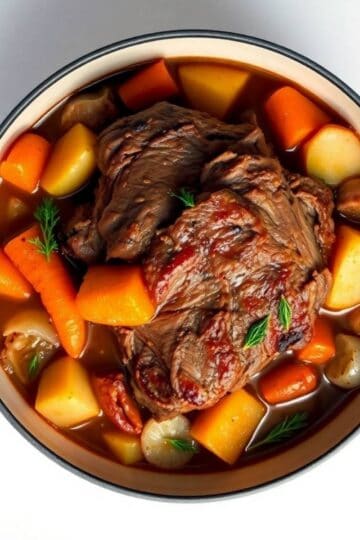
Tuesday nights are my chaos nights. One kid has homework, one has something else going on, my husband gets home late, and I have about zero energy left to stand at the stove. This crockpot beef stew is what I cook on Tuesday nights — and honestly, on a lot of other nights too. I put everything in the pot in the morning and by dinnertime the whole house smells like something I spent hours on, even though I spent maybe twenty minutes of actual work.
This is my take on a Pioneer Woman–style beef stew, which means it's straightforward, hearty, and not trying to be fancy. I use chuck-cut stew meat from whatever's on sale at Walmart or Costco, basic vegetables, a can of diced tomatoes, and Worcestershire sauce — that's really the secret weapon in the broth. I always brown the beef first in a hot skillet before it goes into the crockpot. I know the recipe says it's optional, but I tried skipping it once and I could taste the difference. Five extra minutes, genuinely worth it.
My husband is the one who first asked me to make a slow cooker stew. He grew up eating something similar and always described it with this nostalgic look on his face. The version I landed on after a few tries is the one he says tastes closest to what he remembers. Saad won't touch it — he's going through a phase where he only wants pasta — but Zainab has asked for this two weeks in a row, which in kid terms means it's officially a keeper. If you want another cozy beef dinner that comes together without much effort, my cabbage beef bake is another one my family keeps circling back to.
One thing to know going in: this stew gets better the next day. The broth thickens slightly overnight and the flavors settle into each other in a way they haven't quite finished doing right out of the pot. If you can make it the night before and reheat it, do that. If not, still great — just even better as leftovers.

Why You'll Love This Recipe
- The broth gets genuinely deep and rich: Slow cooking for 7–8 hours does something to beef and vegetables that you just can't fake with a quick stovetop simmer. The Worcestershire sauce and tomato paste dissolve into the broth and create this savory, almost caramel-dark flavor. The first time I made it I lifted the lid after about six hours and just smelled it — and I knew it was going to be good before I even tasted it.
- Real hands-off cooking: Once everything's in the crockpot, you're done until dinner. I usually assemble it before I drop the kids at school and it's ready when we get home. There are no sauces to whisk, no timing anything precisely, no hovering over the stove. That matters a lot on a weekday.
- Affordable ingredients that actually deliver: Stew beef is one of the cheaper cuts you can buy, and it's genuinely the right choice here — the long cook time breaks down all that collagen and makes it fork-tender. You're also using potatoes, carrots, celery, and a couple of pantry staples. This is not an expensive dinner to make, especially if you're feeding four or five people.
- Leftovers are even better: I make a double batch when I have time because this stew disappears fast — and whatever's left in the fridge the next day tastes noticeably richer. The broth thickens slightly, the beef soaks up more flavor, and honestly day-two stew is something I look forward to.
- Works with what you have: I've made this with russet potatoes, Yukon golds, and sweet potatoes. I've used baby carrots instead of sliced regular ones. I've thrown in frozen peas at the end when I had them. The base recipe is flexible enough to work around whatever's in your fridge without the stew falling apart.
Ingredients
- 2 lbs beef stew meat, cut into cubes (chuck is ideal — it gets the most tender)
- 4 medium potatoes, diced (russet or Yukon gold both work)
- 3 carrots, sliced
- 2 celery stalks, chopped
- 1 medium onion, diced
- 3 cloves garlic, minced
- 3 cups beef broth
- 1 can (14.5 oz) diced tomatoes
- 2 tablespoons tomato paste
- 2 tablespoons Worcestershire sauce
- 1 teaspoon dried thyme
- 1 teaspoon dried rosemary
- 1 teaspoon salt
- ½ teaspoon black pepper
- 2 tablespoons olive oil (for browning)
- 2 tablespoons flour, optional (for thickening — use cornstarch instead to keep it gluten-free)
Directions
- Step 1: Brown the beef — Heat olive oil in a heavy skillet over medium-high heat until it shimmers. Season the beef with salt and pepper, then sear it in batches until browned on all sides — about 3–4 minutes per side. Don't crowd the pan or the beef will steam instead of brown. Transfer to the crockpot when done.
- Step 2: Load the vegetables — Add the potatoes, carrots, celery, onion, and garlic into the crockpot on top of the beef. Try to cut everything to a similar size so it cooks evenly — I aim for roughly 1-inch pieces across the board.
- Step 3: Add the broth and seasonings — Pour in the beef broth and diced tomatoes, then add the tomato paste, Worcestershire sauce, thyme, and rosemary. Give it a gentle stir to combine. Don't worry if it looks thin at this point — it will thicken as it cooks.
- Step 4: Slow cook — Cover the crockpot and cook on LOW for 7–8 hours or HIGH for 4–5 hours. LOW is my preference whenever I have the time — the beef comes out noticeably more tender and the broth develops more flavor. HIGH works fine if you're short on time, just check the beef with a fork before serving.
- Step 5: Thicken if needed — If you want a thicker stew, whisk 2 tablespoons of flour (or cornstarch) into ¼ cup of cold water until smooth, then stir it into the stew. Leave the lid off and cook for another 20 minutes on HIGH. I usually skip this step because the broth is already flavorful enough for me, but my husband prefers it thicker.
- Step 6: Taste and serve — Taste the broth and adjust salt and pepper as needed. Remove any bay leaves if you added them. Ladle into bowls and serve hot.

Tips for Success
- Don't skip browning the beef: I know it's listed as optional, but I've made this both ways and the difference is real. Browned beef adds a depth to the broth that you just can't get otherwise — it's the Maillard reaction creating flavor compounds that slow cooking alone doesn't produce. Takes five extra minutes and one skillet. Worth it every time.
- Cut everything to a similar size: My first few attempts had some potato chunks turning to mush while others were still firm. Uniform pieces — roughly 1 inch — mean everything finishes cooking at the same time. I use a regular chef's knife and don't stress about making it perfect, just reasonably similar.
- Cook on LOW when you can: HIGH setting technically works, but LOW gives you more tender beef and a better-developed broth. If I'm home on a Sunday I always go LOW for 8 hours. If it's a workday and I'm cutting it close on time, I'll use HIGH — but LOW is the version I prefer.
- Resist opening the lid: Every time you lift the lid, the crockpot loses heat and adds 20–30 minutes to your cook time. I learned this after checking on it three times during my first attempt and ending up with chewy beef because I kept extending the cook. Set it and genuinely leave it alone.
- Always taste before serving: Slow cooker recipes can sometimes end up slightly under-salted because the broth reduces differently depending on your crockpot. I taste right at the end and almost always add another pinch of salt. It makes a noticeable difference in how the flavors come through.
Variations
- Add a splash of red wine: Pour in about ½ cup of any dry red wine — whatever you'd actually drink — along with the broth. It adds a slightly deeper, more complex flavor to the broth without making it taste like wine. My husband likes this version best for weekend cooking when there's no rush.
- Add mushrooms for extra heartiness: Throw in a cup of sliced cremini or button mushrooms when you add the other vegetables. They soak up the broth and add a meaty, earthy element that makes the stew feel even more substantial. This is my go-to variation when I want to stretch the recipe a little further.
- Herb-forward version: Double the thyme and rosemary, and add a sprig of fresh rosemary directly into the pot while it cooks. Remove it before serving. It makes the whole stew smell more fragrant and gives it a slightly more rustic, countryside flavor. This is close to how I'd make it if I were cooking for guests.
- Frozen veggie shortcut: If you're really short on time, frozen peas or green beans can go in during the last 30–45 minutes of cooking. They don't need nearly as long as fresh vegetables. I've done this on mornings when I ran out of time to chop — the stew still comes out great.
- Serve it Pakistani-style: In Pakistan, a slow-cooked beef stew like this would almost always go over rice rather than with bread. Try serving it over plain basmati rice and add a teaspoon of cumin seeds toasted in butter on top. It's not traditional in either direction — it's just a good combination that works in my kitchen.
Serving and Storage
Serving
Serve this stew hot, straight from the crockpot. It's substantial enough to be a full meal on its own, but we usually put something on the side for soaking up the broth. Crusty bread is the most obvious choice — a French baguette or any bakery loaf from Walmart or Trader Joe's works. Biscuits are great too if you want something Southern-feeling. My husband eats his with a big spoonful of mashed potatoes in the bowl, which sounds excessive but is actually wonderful. For a lighter option, plain rice does the job. If you're looking for a starter to serve alongside, my cheese and spinach stuffed pastry is something I've made alongside this for a Sunday dinner and it worked really well.
Storage
Let the stew cool to room temperature, then transfer to an airtight container and refrigerate for up to 4 days. The broth will gel in the fridge — that's totally normal, it just means you have good gelatin from the beef. Reheat on the stovetop over medium-low heat, adding a splash of water or broth if it's gotten too thick. For freezing, this stew freezes well for up to 3 months. I freeze it in individual portions so I can pull out exactly what I need. Potatoes can get slightly grainy after freezing — it doesn't bother me, but if you're bothered by texture changes, pull out the potatoes before freezing and add fresh ones when you reheat.

Frequently Asked Questions
Can I use frozen vegetables in this stew?
Yes, but don't add them at the beginning or they'll turn to mush. Add frozen vegetables during the last 45–60 minutes of cooking on LOW, or the last 20–30 minutes on HIGH. Frozen peas, green beans, and corn all work well this way.
Can I skip browning the beef?
You can, and the stew will still be good. But browning adds a layer of flavor to the broth that slow cooking alone doesn't create. I've made it both ways — browned is noticeably better. If you're truly pressed for time, skip it. But if you have five extra minutes, use them.
What cut of beef works best for this recipe?
Chuck roast or pre-cut beef stew meat (which is usually chuck anyway) is your best option. It has enough fat and connective tissue to become genuinely tender after a long slow cook. Leaner cuts like round or sirloin don't break down as well and can end up dry and chewy — I made that mistake once and it was disappointing.
How do I thicken the stew if the broth is too thin?
Whisk 2 tablespoons of flour or cornstarch into ¼ cup of cold water until there are no lumps, then stir it into the stew during the last 20–30 minutes of cooking with the lid off. Cornstarch works just as well as flour and keeps it gluten-free. The broth thickens naturally as it cools too, so don't over-thicken while it's still hot.
Can I make this stew ahead of time?
Yes, and honestly it's better that way. You can prep all the vegetables and cube the beef the night before, store everything in the fridge in the crockpot insert, then just drop the insert into the base and turn it on in the morning. The finished stew keeps in the fridge for 4 days and the flavor genuinely improves after a night of resting.

PIONEER WOMAN’S CROCKPPOT BEEF STEW RECIPE
Ingredients
- 2 lbs beef stew meat cut into cubes
- 4 potatoes diced
- 3 carrots sliced
- 2 celery stalks chopped
- 1 onion diced
- 3 cloves garlic minced
- 3 cups beef broth
- 1 14.5 oz can diced tomatoes
- 2 tablespoons tomato paste
- 1 teaspoon dried thyme
- 1 teaspoon dried rosemary
- 1 teaspoon salt
- ½ teaspoon black pepper
- 2 tablespoons Worcestershire sauce
- 2 tablespoons olive oil
- 2 tablespoons flour optional, for thickening
Instructions
Brown the Beef (Optional but Recommended):
- Heat olive oil in a skillet over medium-high heat. Season beef with salt and pepper, then brown on all sides. Transfer to crockpot.
Add Vegetables:
- Add potatoes, carrots, celery, onion, and garlic into the crockpot.
Add Broth and Seasoning:
- Pour in beef broth, diced tomatoes, tomato paste, Worcestershire sauce, thyme, and rosemary. Stir gently to combine.
Slow Cook:
- Cover and cook on LOW 7–8 hours or HIGH 4–5 hours, until beef is tender.
Thicken (Optional):
- If you want a thicker stew, mix flour with ¼ cup water, then stir into stew and cook 20 minutes more.
Serve:
- Serve hot with bread, biscuits, or mashed potatoes.
Notes
- Make Ahead: Prep all ingredients the night before and store in fridge.
- Flavor Boost: Add a splash of red wine or a bay leaf while slow-cooking.
- Serving Suggestions: Perfect with crusty bread, cornbread, or a simple salad.
- Allergy-Friendly Options: Gluten-free if you skip flour or use cornstarch.
- Storage Tips: Refrigerate up to 4 days; freeze up to 3 months.
This stew has become one of those recipes I don't really think about anymore — I just make it. The crockpot does everything, the ingredients are cheap enough that I keep them stocked without thinking, and it feeds my family with leftovers still in the pot. That's a rare combination. What I like most about it is that it tastes like effort even when it isn't. My husband always compliments it on the nights I've done the least.
If you're new to slow cooking and want to build some confidence with the crockpot, this is a good place to start. There's not much that can go wrong — you're not tempering eggs or timing anything precisely. The biggest mistakes I've seen (and made) are skipping the browning step and cutting vegetables unevenly. Avoid those two things and you'll be fine. And if you enjoy sticking with the beef theme on your cooking rotation, my cabbage beef bake is another one that's become a regular around here — different texture, same kind of satisfying.
Make it on a Sunday and you've got dinner sorted for at least two nights of the week. That's the kind of cooking I can get behind. 🥣🍞❤️
If you liked this, here are some other recipes worth trying:




Comments
No Comments