
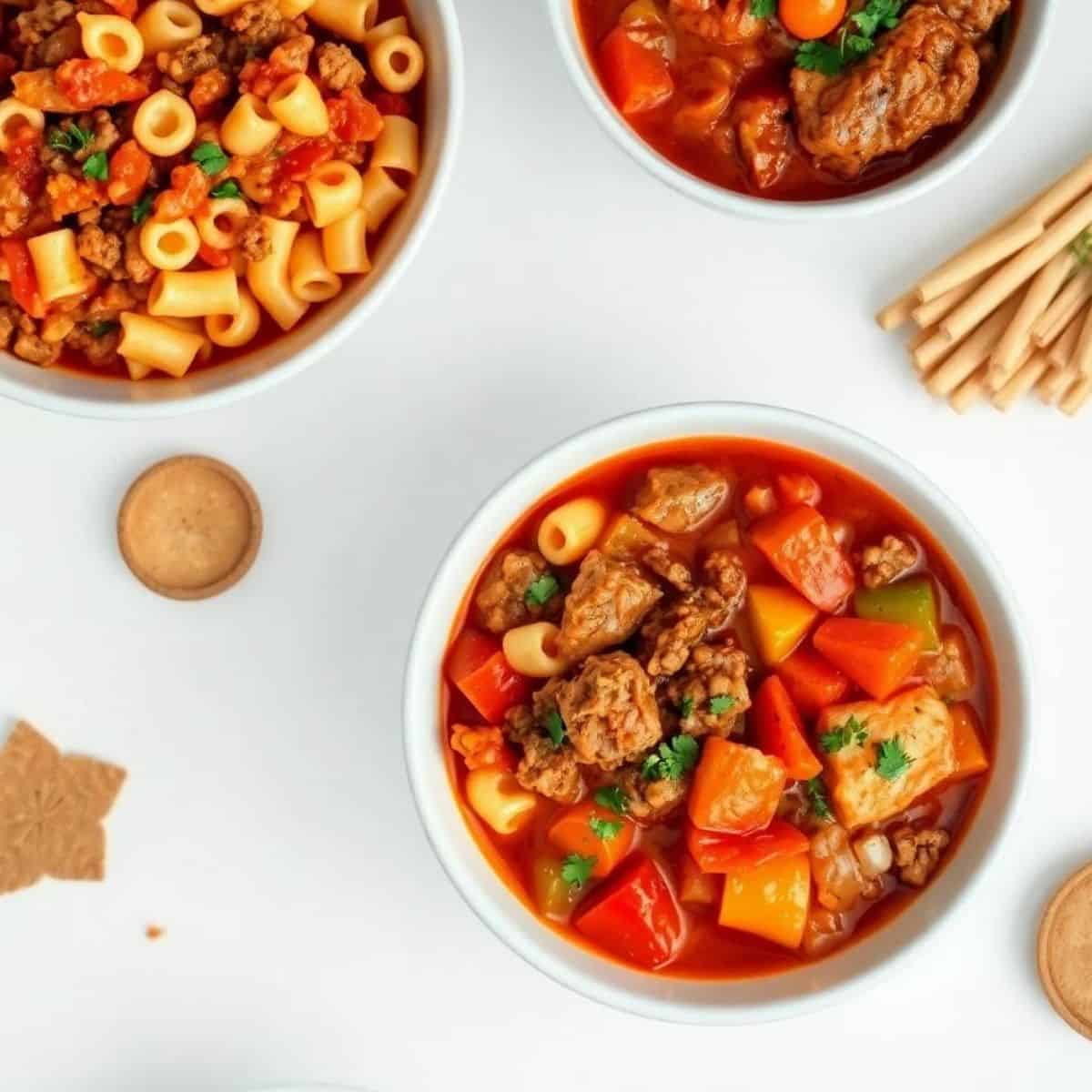
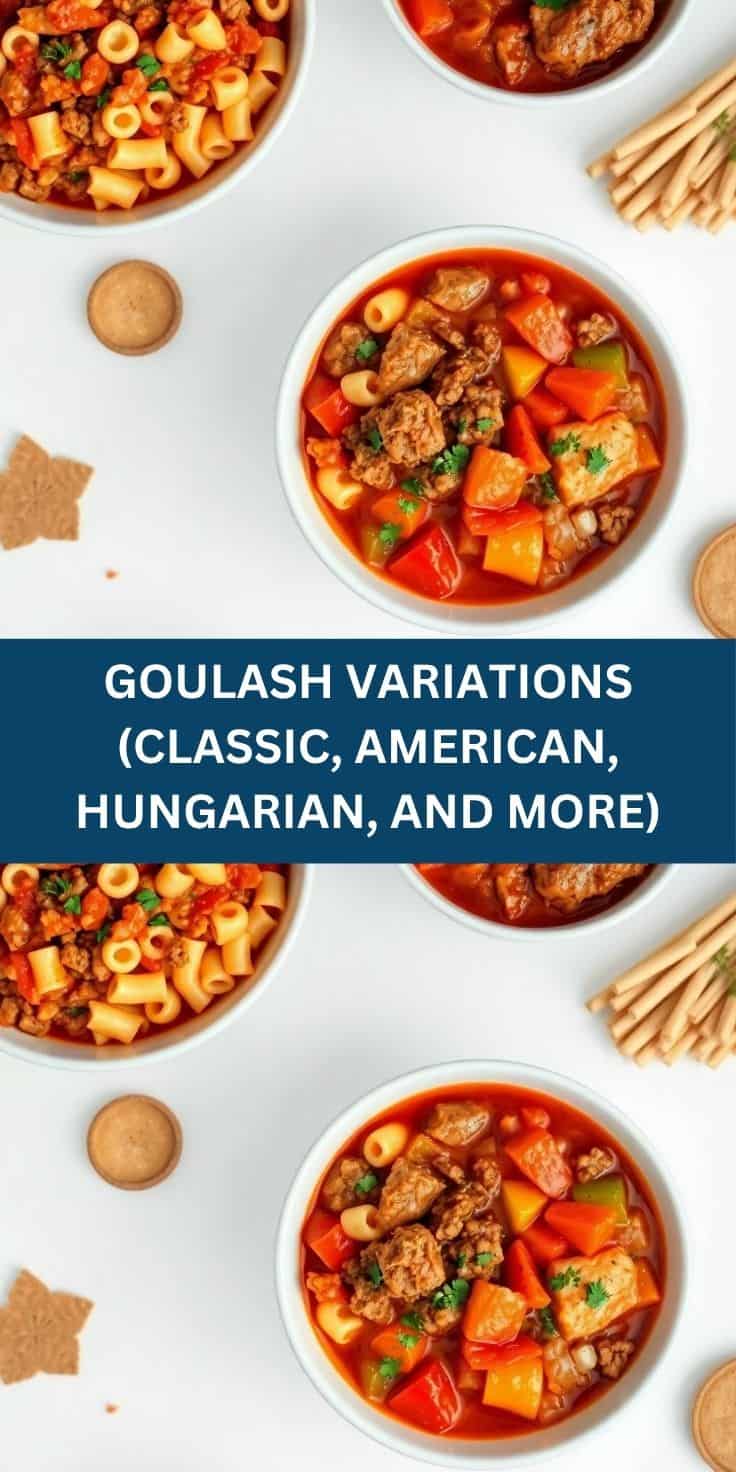
Few dinner conversations reveal a more passionate divide than the word goulash — for some it means the classic American skillet dinner of ground beef, macaroni, and tomato sauce that was on the table every Tuesday night of childhood; for others it means the deeply spiced, paprika-forward Hungarian stew of tender beef and vegetables that is one of Europe's most beloved comfort foods; for still others it means a slow-cooked, wine-enriched braise that takes an afternoon and fills the house with a smell that makes coming home genuinely exciting. All of them are right. Goulash is one of those rare recipe names that spans multiple genuinely distinct cooking traditions, and every tradition produces something worth knowing well and making often.
This post covers five genuinely different goulash variations that represent the full range of what goulash can be — the classic American one-pot ground beef and macaroni dinner that feeds a family in 30 minutes; an authentic Hungarian goulash with the correct paprika quantity and technique that transforms beef and vegetables into something deeply complex; a slow cooker version for the hands-off weekday approach; an Instant Pot version for fall-apart tender beef in under an hour; and a vegetarian mushroom goulash that delivers every bit of the depth and comfort of the original without any meat. Every version is genuinely its own recipe with its own character, its own audience, and its own occasions — and every version is something I come back to with genuine enthusiasm.
This post also covers the technique foundations that make each version genuinely outstanding — why the paprika must never touch a hot, dry pan in the Hungarian version, how to build depth in the American version beyond a basic meat sauce, and why the slow cooker approach benefits significantly from a brief stovetop searing step in the morning before the long low cook. Master these principles and every goulash you make will taste genuinely extraordinary.
Let's cook the most satisfying goulash of your life!
WHY YOU WILL LOVE THIS RECIPE
- Five Completely Different Goulash Experiences Under One Post: American skillet goulash, Hungarian beef goulash, slow cooker goulash, Instant Pot goulash, and vegetarian mushroom goulash — each is genuinely its own recipe with its own flavor profile, its own technique, and its own best occasion. Understanding all five gives you a complete mastery of the goulash format that covers every weeknight need, every weekend cooking project, and every dietary preference at your table.
- The American Version Is the Fastest Satisfying Weeknight Dinner Available: One skillet, 30 minutes, ground beef, elbow macaroni, tomato sauce, and cheese — the American skillet goulash is the weeknight dinner that fills the table with something genuinely warm and genuinely beloved from the most minimal investment of time and effort. It is also one of the most economical dinners per serving that produces this level of satisfaction, which makes it one of the most practically useful recipes in any family's rotation.
- The Hungarian Version Is the Most Deeply Flavored Beef Stew in European Cooking: Authentic Hungarian goulash with the correct quantity of genuinely good Hungarian sweet paprika — a full 3 tablespoons — produces a broth that is one of the most complex and most satisfying comfort food preparations available. Paprika is not a garnish in this recipe; it is the dominant flavor and it must be used in the quantities that Hungarian tradition specifies to produce the result that made this dish famous across two continents.
- Every Version Improves Significantly the Next Day: Like all deeply seasoned, long-cooked dishes, every goulash variation in this post tastes better 24 hours after cooking as the spices continue developing and the flavors integrate and deepen. This makes every version an outstanding meal prep recipe — cook on Sunday, serve Monday through Wednesday, and eat genuinely better food on day two than on cooking day itself.
- Feeds a Crowd Economically from One Pot: Every goulash variation here serves 6–8 people generously from a single pot or skillet with an ingredient cost that is among the most efficient in the dinner category. Ground beef goulash is one of the most economical dinners per serving that tastes genuinely satisfying. Hungarian beef goulash uses chuck which becomes more tender the longer it cooks and feeds eight people from 2 pounds of the most affordable braising cut available.
- The vegetarian diet Version Is for Everyone Who Thought Goulash Wasn't for Them: The mushroom goulash variation produces a result that is genuinely, completely satisfying for both vegetarians and committed meat eaters — the combination of three different mushroom varieties, smoked paprika, sweet paprika, and a rich tomato broth creates a depth of flavor and a meaty, substantial character that makes the absence of beef genuinely imperceptible to most guests. This is the variation that most consistently produces the response: "I can't believe there's no meat in this."
THE KEY TECHNIQUE PRINCIPLES
Never bloom paprika in a dry, hot pan: Hungarian paprika — the defining ingredient of authentic goulash — contains natural sugars that burn instantly in a dry, hot pan and turn bitter in seconds. Paprika must always be added to a pan that contains some fat (oil, butter, or rendered meat fat) and always over reduced rather than high heat. The fat protects the paprika from burning while the brief heat blooms its essential oils and develops its flavor. This is the single most important technique principle in Hungarian goulash and the most commonly violated one — bitter, burned paprika is the most common reason authentic Hungarian goulash tastes disappointing rather than extraordinary.
Use genuinely good Hungarian sweet paprika: The paprika sold in supermarket spice aisles is frequently stale, low-quality, and insufficiently sweet and complex to produce authentic Hungarian goulash flavor. Good Hungarian sweet paprika from a specialty or Eastern European market is a different ingredient entirely — it is bright red, fragrant when the tin is opened, and has a genuine sweetness and complexity that grocery store paprika lacks. For Hungarian goulash specifically, the quality of the paprika is the most impactful single ingredient investment possible.
Build the American version beyond the basic: Standard American goulash recipes call for browning ground beef and adding tomato sauce — this produces something edible but flat. The version in this post adds Worcestershire sauce, beef broth, bay leaves, garlic, and a finish of sharp cheddar that transforms the basic ground beef pasta into something genuinely satisfying and genuinely distinctive. The Worcestershire sauce specifically is the ingredient that most elevates the American version beyond the generic.
VARIATION 1: CLASSIC AMERICAN SKILLET GOULASH
INGREDIENTS
- 1.5 lbs ground beef (80/20)
- 2 cups elbow macaroni, uncooked
- 1 large onion, diced
- 1 green bell pepper, diced
- 4 cloves garlic, minced
- 1 can (28 oz) crushed tomatoes
- 2 cups beef broth
- 2 tablespoons Worcestershire sauce
- 1 tablespoon tomato paste
- 1 teaspoon each: smoked paprika, italian seasoning, garlic powder
- 2 bay leaves
- Salt and black pepper
- 1.5 cups sharp cheddar, shredded from a block
- Fresh parsley for serving
DIRECTIONS
- Step No.1: Brown ground beef in a large, deep skillet or Dutch oven over medium-high heat, breaking into crumbles, for 7–8 minutes until deeply golden. Drain excess fat, leaving 1 tablespoon in the pan. Add onion and bell pepper and cook 5 minutes until softened. Add garlic, tomato paste, smoked paprika, Italian seasoning, and garlic powder and cook 2 minutes until the paste darkens and the spices are fragrant.
- Step No.2: Add crushed tomatoes, beef broth, Worcestershire sauce, and bay leaves. Stir to combine thoroughly, scraping up any browned bits from the pan bottom. Season generously with salt and pepper. Bring to a boil.
- Step No.3: Add dry elbow macaroni directly to the pot. Stir to submerge completely. Return to a simmer, reduce heat to medium, and cook covered for 12–15 minutes, stirring every 4 minutes to prevent sticking, until the macaroni is al dente and has absorbed most of the liquid. The mixture should look thick and saucy — if too dry, add a splash of beef broth.
- Step No.4: Remove bay leaves. Taste and adjust seasoning — this dish needs assertive salt and pepper. Remove from heat and stir in 1 cup of shredded cheddar until melted. Scatter remaining cheddar across the surface, cover for 2 minutes until melted. Serve immediately topped with fresh parsley.
VARIATION 2: AUTHENTIC HUNGARIAN GOULASH
INGREDIENTS
- 2.5 lbs beef chuck, cut into 1.5-inch cubes
- 3 tablespoons genuine Hungarian sweet paprika — this is the defining ingredient and the correct amount
- 1 teaspoon smoked paprika
- 2 large onions, roughly diced — Hungarian goulash uses a large quantity of onion that nearly dissolves into the broth
- 2 red bell peppers, diced
- 3 tomatoes, roughly chopped, or 1 can (14 oz) diced tomatoes
- 3 cloves garlic, minced
- 2 cups beef broth
- 3 tablespoons neutral oil or lard
- 1 teaspoon caraway seeds (optional but traditional)
- 2 bay leaves
- 1 teaspoon dried marjoram
- Salt and black pepper
- Egg noodles or spaetzle and sour cream for serving
DIRECTIONS
- Step No.1: Heat oil in a large, heavy-bottomed pot or Dutch oven over medium-high heat. Season beef cubes generously with salt and pepper. Sear in batches of 6–8 pieces, without touching, for 3–4 minutes per side until deeply mahogany on all surfaces. Remove and set aside. Reduce heat to medium.
- Step No.2: Add onions to the pot and cook slowly, stirring frequently, for 10–12 minutes until deeply golden and almost caramelized — the onions should be substantially reduced in volume and deeply sweet. Add garlic and bell peppers and cook 4 more minutes. Remove the pot from heat entirely or reduce to the lowest possible setting.
- Step No.3: Add both paprikas to the onion mixture while the heat is off or very low — stir continuously for 30–60 seconds until the paprika coats every onion piece and smells deeply fragrant and sweet, not acrid or bitter. Add 2 tablespoons of beef broth immediately to stop any potential burning and stir to incorporate. This is the most critical technique step in Hungarian goulash.
- Step No.4: Return seared beef to the pot. Add tomatoes, remaining beef broth, caraway seeds, bay leaves, and marjoram. Bring to a boil, then reduce to the gentlest possible simmer. Cover and cook for 1.5–2 hours until the beef falls apart completely when pressed and the broth has thickened and deepened to a rich, deeply red color.
- Step No.5: Remove bay leaves. Taste and adjust salt aggressively — Hungarian goulash needs significant salt at the end. Serve over egg noodles or spaetzle with a generous spoonful of cold full-fat sour cream placed directly on top of each portion — the sour cream is not optional in authentic Hungarian goulash, it is a fundamental component that balances the paprika's sweetness with cool, tangy dairy richness.
VARIATION 3: SLOW COOKER GOULASH
Use the Hungarian goulash ingredient list with these modifications — sear the beef and build the paprika-onion base in a skillet as described above, then transfer everything to the slow cooker and add broth. Cook on LOW for 7–8 hours or HIGH for 4–5 hours. The slow cooker produces beef that is extraordinarily tender and a broth that has had 8 hours to develop and deepen. Add a cornstarch slurry (1 tablespoon cornstarch dissolved in 2 tablespoons cold water) to the slow cooker in the final 30 minutes if thicker broth is desired. For the American version in the slow cooker: cook the meat sauce on LOW for 6–7 hours, then add macaroni and cook on HIGH for 30 minutes until tender. Find more slow cooker inspiration in our slow cooker recipes.
VARIATION 4: INSTANT POT GOULASH
For the Hungarian version in the Instant Pot: use the Sauté function to sear beef and build the paprika-onion base exactly as described above, then seal and pressure cook on HIGH for 35 minutes with a 15-minute natural pressure release. The result is genuinely fall-apart tender beef in under an hour. For the American skillet goulash version: brown beef and aromatics using the Sauté function, add all remaining ingredients except macaroni, seal and pressure cook on HIGH for 5 minutes with quick release, then set to Sauté, add macaroni, and cook uncovered 8–10 minutes until pasta is tender. For more Instant Pot ideas see our beef stew variations.
VARIATION 5: VEGETARIAN MUSHROOM GOULASH
Replace beef chuck with 2 lbs of mixed mushrooms — cremini, shiitake, and portobello — cut into large, 1.5-inch pieces. Replace beef broth with vegetable broth. Keep the full 3 tablespoons of Hungarian sweet paprika and the same technique of blooming paprika in fat over low heat. Add 1 can of drained kidney beans or chickpeas for protein and body. The mushrooms provide the most convincingly meaty character of any vegetable through their natural umami content and their ability to develop deeply browned surfaces when seared in batches in a hot pan before being added to the broth. The searing step is as important for the mushroom version as for the beef version — flat, pale mushrooms produce a thin, underdeveloped goulash, while deeply golden, caramelized mushrooms produce a broth that is rich and satisfying. Serve over egg noodles with sour cream or dairy-free sour cream. Find more vegetarian ideas in our vegetarian dinner recipes.
TIPS FOR SUCCESS
- The Paprika Rule Is Absolute for Hungarian Goulash: Paprika added to a hot, dry surface burns in seconds and produces a bitter, harsh flavor that ruins the entire pot. The fat must be present before the paprika goes in, and the heat must be reduced to medium-low or completely off at the moment the paprika is added. Stir continuously for the full 30–60 seconds and add a splash of liquid immediately — this is the irreplaceable technique step that separates genuinely outstanding Hungarian goulash from a disappointing one, and it cannot be rushed or skipped.
- Use the Correct Quantity of Paprika: Many goulash recipes call for 1–2 teaspoons of paprika — this produces a lightly colored, lightly flavored dish that is not remotely what authentic Hungarian goulash tastes like. Authentic Hungarian goulash uses 3 full tablespoons of sweet paprika per 2.5 pounds of beef — the paprika is not a seasoning in the background, it is the primary flavor of the dish. Trust the quantity. If 3 tablespoons seems like too much, understand that Hungarian sweet paprika at the correct quantity produces sweetness and warmth rather than heat, and that the dish will not taste aggressively spicy — it will taste deeply, satisfyingly flavored in a way that smaller quantities never achieve.
- Cook the Onions Long Enough in the Hungarian Version: Traditional Hungarian goulash calls for slowly cooking the onions for 10–12 minutes until they are deeply golden and nearly dissolved — this extended cooking transforms the onions from a textured vegetable component into a flavor-rich, nearly liquid base that enriches the entire broth. Onions cooked for only 4–5 minutes produce a dish that tastes noticeably more raw and less complex than the long-cooked version. The onion quantity in Hungarian goulash is also significantly larger than most Western recipes — two full large onions for 2.5 pounds of beef is the correct traditional ratio.
- Add Pasta Directly to the American Version — No Pre-Cooking: The macaroni in American skillet goulash cooks directly in the tomato-beef broth rather than being cooked separately and added — this produces macaroni that absorbs the surrounding flavor throughout its cooking time rather than simply being coated on the outside. Pasta cooked in seasoned broth tastes fundamentally different from pasta cooked in plain water and combined with sauce afterward — it tastes of the dish from the inside out in a way that makes the American goulash significantly more satisfying and more cohesive.
- The Sour Cream Service Is Not Optional for Hungarian Goulash: Sour cream served alongside or on top of Hungarian goulash is not a garnish — it is a fundamental component of how the dish is meant to be eaten. The cold, tangy dairy cools the heat of the hot stew, balances the sweetness and richness of the paprika broth, and adds a creamy element that completes the dish in a way that makes it more satisfying than the goulash alone. Every authentic Hungarian goulash recipe specifies sour cream at serving and the dish genuinely tastes incomplete without it.
- Make Both Versions the Day Before for the Best Flavor: Both American and Hungarian goulash taste demonstrably better the day after cooking — the spices in the American version develop and deepen overnight, the paprika in the Hungarian version integrates more completely into the broth, and the beef becomes even more tender through its overnight rest in the cooking liquid. For the American version stored overnight, the macaroni absorbs most of the liquid — add a cup of beef broth when reheating and stir to reconstitute the saucy consistency. Find more make-ahead ideas in our meal prep collection.
SERVING AND STORAGE
Serving
American skillet goulash serves directly from the skillet in deep bowls, topped with shredded cheddar, fresh parsley, and optionally a spoonful of sour cream. Hungarian goulash is served over egg noodles, spaetzle, or crusty bread in deep bowls with a generous spoonful of cold sour cream on top and fresh parsley scattered generously. Both versions pair with a simple green salad or roasted vegetables for a complete meal. The Hungarian version pairs exceptionally well with our funeral potatoes for a genuinely comfort-food-forward dinner.
Storage
Both goulash versions store refrigerated in airtight containers for up to 4 days and freeze for up to 3 months. The American version's pasta absorbs all the broth overnight — add beef broth (approximately 1 cup) when reheating and stir to reconstitute the sauce. The Hungarian version reheats beautifully with a splash of broth over low heat on the stovetop — microwave reheating can toughen the beef slightly and is less ideal. For freezing, the Hungarian beef goulash freezes excellently; the American pasta version is better stored without the pasta for freezing (freeze the meat sauce, then add freshly cooked macaroni when reheating).
FAQ
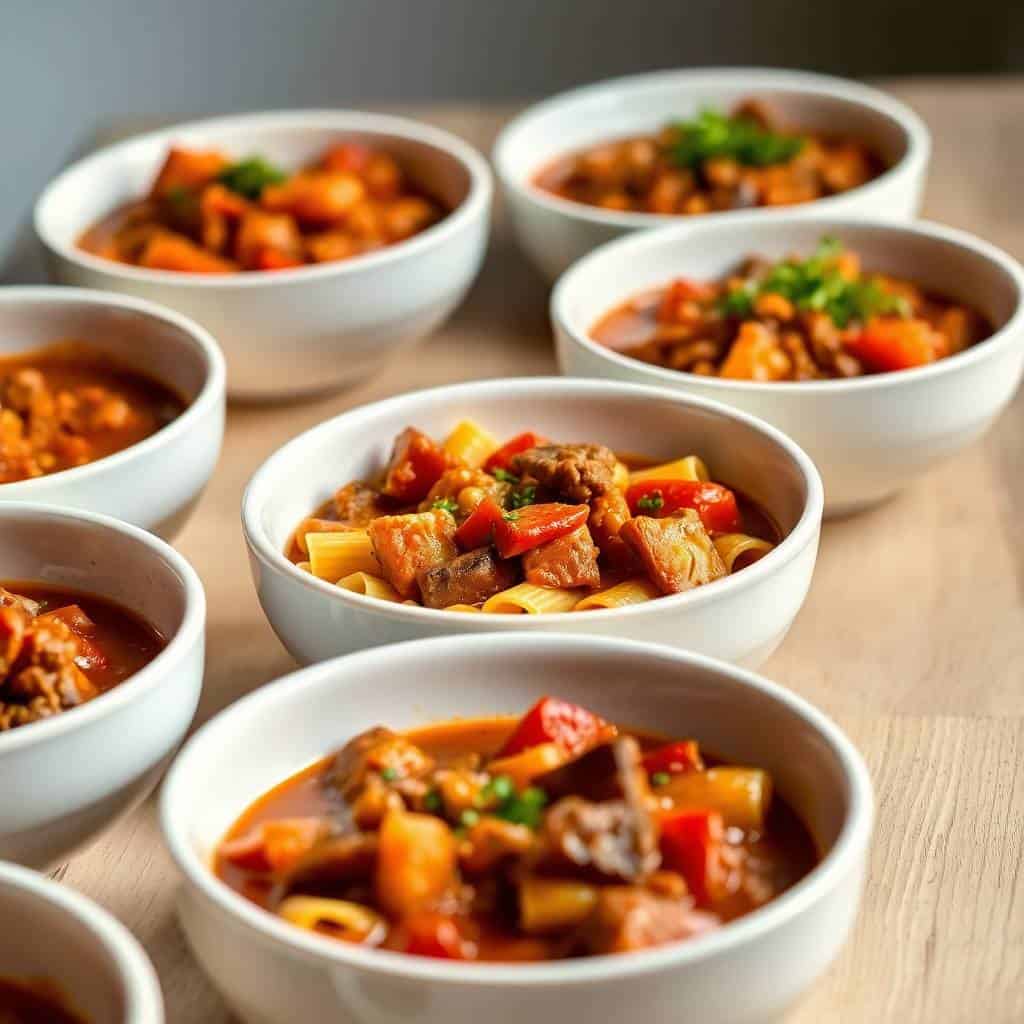
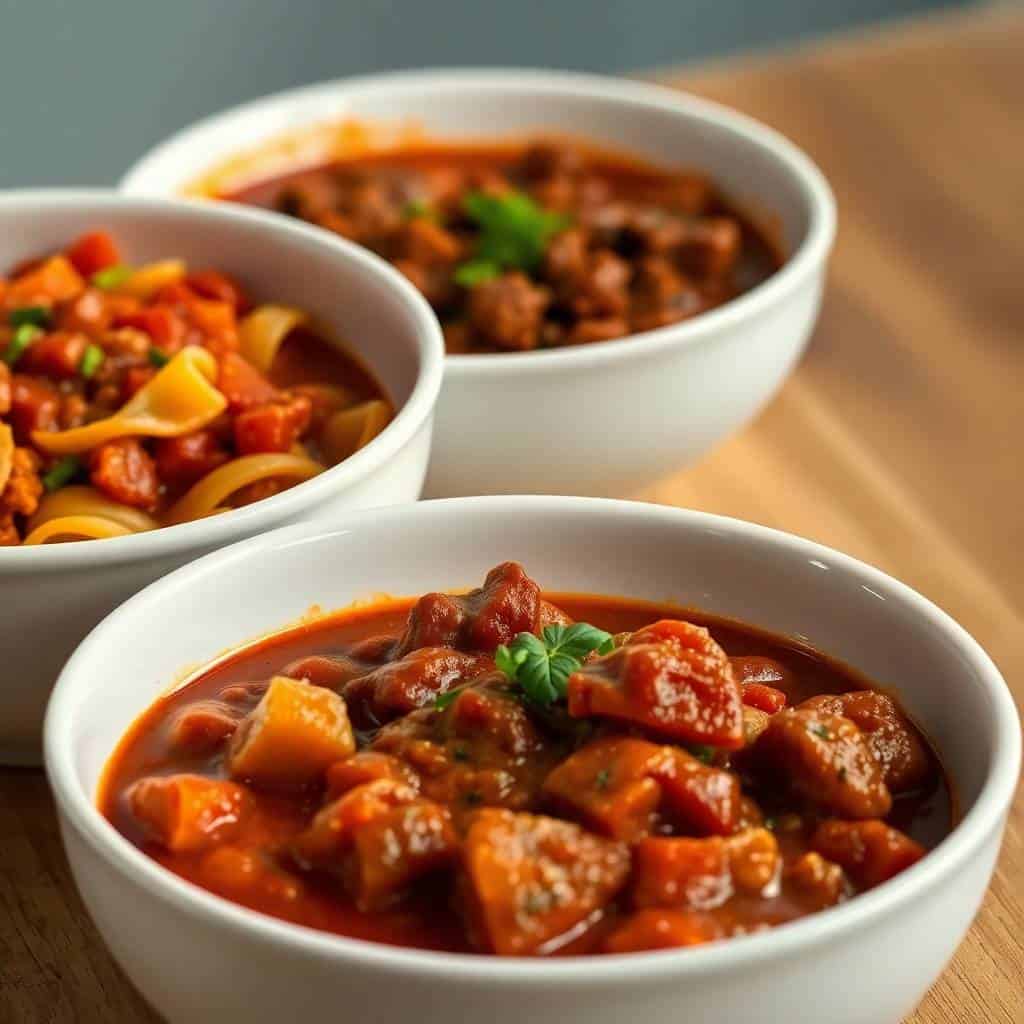
American goulash and Hungarian goulash are genuinely different dishes that share only a name and a general spirit of being hearty, one-pot comfort food. American goulash is a skillet pasta dish — ground beef, elbow macaroni, tomato sauce, and cheese cooked together in one pan. It is quick (30 minutes), economical, and family-friendly. Hungarian goulash is a slow-braised beef stew — chuck beef, massive quantities of sweet paprika, onions, bell peppers, and broth cooked for 2+ hours into a deeply spiced, rich stew served over egg noodles with sour cream. The flavor profiles are completely different: American goulash tastes of tomato, beef, and melted cheese; Hungarian goulash tastes primarily of paprika, deeply braised beef, and tangy sour cream. Both are genuinely outstanding in their own category.
Hungarian sweet paprika (édesnemes) is the correct and only appropriate paprika for authentic Hungarian goulash. It has a bright red color, a genuinely sweet and complex flavor, and an aroma that fills the kitchen the moment the container is opened. Grocery store generic paprika is a poor substitute — it is frequently stale, low in essential oils, and lacks the sweetness and complexity that makes Hungarian goulash distinctive. Look for genuine Hungarian sweet paprika at Eastern European grocery stores, specialty food stores, or online. The Szeged and Pride of Szeged brands are widely respected and available internationally. Adding smoked paprika alongside — up to 1 teaspoon for every 3 tablespoons of sweet paprika — adds depth without changing the fundamental character.
Both versions are outstanding made-ahead dishes — they genuinely improve over 24 hours of refrigeration as the flavors develop and integrate. For Hungarian goulash: cook completely, cool, and refrigerate for up to 3 days. Reheat gently with a splash of broth. The paprika flavor deepens significantly overnight and the beef becomes even more tender through the extended rest in its cooking liquid. For American skillet goulash: the pasta absorbs most of the liquid overnight and the dish becomes quite thick. Reheat with 1 cup of beef broth stirred in over medium heat, stirring frequently, until the sauce reconstitutes to its original consistency. Both versions freeze well for up to 3 months.
The most traditional and most appropriate serving accompaniment for Hungarian goulash is egg noodles or spaetzle (German-style tiny dumplings) — both have enough textural substance to hold up against the rich broth and enough neutral flavor to let the paprika goulash dominate. Crusty bread for soaking up the paprika broth is the second most classic accompaniment. Sour cream is mandatory at the table — place a dollop directly on top of each serving. A simple cucumber salad dressed with vinegar and a pinch of sugar (the classic Eastern European cucumber salad) provides the fresh, acidic counterpoint that balances the richness of the goulash beautifully. Avoid strongly flavored or heavily seasoned sides that compete with the paprika flavor.
Hungarian sweet paprika in large quantities produces a dish that is warm and deeply flavored but not spicy in the heat sense — sweet paprika is genuinely sweet, fruity, and complex rather than hot. Most people who try authentic Hungarian goulash for the first time are surprised by how warming rather than fiery it tastes even at 3 tablespoons of paprika. For a spicier version, add 1 teaspoon of hot Hungarian paprika (erős pista) or a teaspoon of cayenne alongside the sweet paprika — this adds genuine heat while preserving the fundamental sweet paprika character. American goulash at standard seasoning levels is very mild with only smoked paprika as a heat element. The vegetarian mushroom version can be made to any heat level by adjusting paprika types.
These goulash variations give you a completely different dinner experience depending on your schedule, your mood, and your audience — from the fastest family weeknight dinner to one of the most deeply flavored stews in European cooking.
These goulash variations give you a completely different dinner experience depending on your schedule, your mood, and your audience — from the fastest family weeknight dinner to one of the most deeply flavored stews in European cooking.
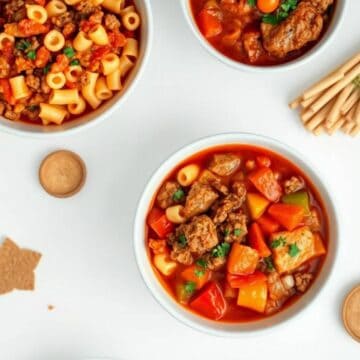
Goulash Variations: Classic, American, Hungarian, and More
Equipment
- Large pot or Dutch oven
- Wooden Spoon
- Cutting board
- Knife
Ingredients
For Classic American Goulash
- 2 tablespoons olive oil
- 2 pounds ground beef
- 1 large yellow onion, diced
- 4 cloves garlic, minced
- 1 can (28 ounces) crushed tomatoes
- 2 cups beef broth
- 8 ounces elbow macaroni, uncooked
- 1 red bell pepper, diced
- 2 teaspoons paprika
- 1 teaspoon dried oregano
- 1 teaspoon salt
- ½ teaspoon black pepper
- ¼ cup fresh parsley, chopped for garnish
For Hungarian Goulash
- 3 tablespoons olive oil
- 2 pounds beef chuck, cut into 1-inch cubes
- 2 large yellow onions, diced
- 4 cloves garlic, minced
- 3 tablespoons Hungarian paprika sweet or hot as preferred
- 2 cups beef broth
- 1 cup red wine, optional
- 2 medium potatoes, cubed
- 2 medium carrots, sliced
- 1 red bell pepper, chopped
- 2 bay leaves
- 1 teaspoon caraway seeds optional but traditional
- 1 teaspoon salt
- ½ teaspoon black pepper
- ¼ cup sour cream for serving
Common to All Versions
- to taste salt and pepper for final adjustment
Instructions
Classic American Goulash Instructions
- Heat olive oil in a large skillet over medium-high heat. Add ground beef and cook, breaking it apart with a spoon, until browned, about 5 minutes. Drain excess fat if needed.
- Add diced onion to the beef and cook for 3 minutes until softened. Stir in minced garlic and cook for another minute until fragrant.
- Sprinkle paprika and oregano over the beef mixture and stir well to coat everything evenly, cooking for 1 minute to bloom the spices.
- Pour in crushed tomatoes and beef broth, stirring well. Add the diced red bell pepper. Bring the mixture to a simmer.
- Add the uncooked elbow macaroni directly to the pot and stir to combine. Reduce heat to medium and simmer for 10 to 12 minutes, stirring occasionally, until the pasta is tender and has absorbed most of the liquid.
- Season with salt and pepper to taste. Serve hot, garnished with fresh parsley. This version comes together in under 35 minutes and feeds a family of six beautifully.
Hungarian Goulash Instructions
- Heat olive oil in a large heavy-bottomed pot or Dutch oven over medium-high heat. Working in batches to avoid overcrowding, brown the beef cubes on all sides, about 3 minutes per side. Set browned beef aside on a plate.
- Add diced onions to the pot and cook for 5 minutes, stirring occasionally, until they begin to caramelize and soften. Add minced garlic and cook for 1 minute more.
- Reduce heat to medium and sprinkle Hungarian paprika over the onions and garlic. Stir constantly for 1 to 2 minutes, allowing the paprika to bloom and release its flavor - this step is essential to authentic Hungarian goulash.
- Return the browned beef to the pot along with any accumulated juices. Pour in beef broth and red wine if using. Add bay leaves and caraway seeds. Bring to a gentle simmer, then reduce heat to low. Cover and cook for 1 hour, stirring occasionally.
- Add cubed potatoes, sliced carrots, and chopped red bell pepper to the pot. Continue simmering uncovered for another 45 minutes to 1 hour, until the beef is very tender and the vegetables are cooked through. The sauce should be rich and slightly thickened.
- Remove bay leaves. Taste and adjust seasoning with salt and pepper. Serve in deep bowls with a dollop of sour cream stirred into each serving. This slow-cooked version requires patience but rewards you with deeply satisfying flavor.
Tips for All Variations
- For American goulash, feel free to add frozen peas or corn in the last few minutes of cooking if you want extra vegetables.
- For Hungarian goulash, browning the beef properly in the first step creates a deeply flavorful foundation - do not skip this step or rush through it.
- The paprika is the soul of goulash. Hungarian paprika has much more prominence than the American version. If you cannot find Hungarian paprika, use regular paprika but increase the amount and add a pinch of smoked paprika for depth.
- Both versions can be made ahead and reheated gently on the stovetop. In fact, many cooks believe goulash tastes even better the next day after the flavors have melded overnight.
Notes

Comments
No Comments