
A deeply satisfying bowl of beef stew is one of the most universally beloved comfort foods in existence — tender, fall-apart beef in a rich, thick broth with vegetables that have absorbed every bit of the surrounding flavor over hours of slow cooking. It is the recipe that makes the house smell extraordinary from the moment it starts cooking, that improves over 24 hours in the refrigerator, and that produces the kind of satisfied silence at the dinner table that only genuinely great comfort food achieves. I have made beef stew more times than I can count across every method and every flavor direction, and the six variations in this post represent the absolute best of everything I have learned about this recipe over years of refining it.
What makes this collection genuinely useful is that it covers every practical approach to beef stew rather than just one — the classic stovetop braise for Sunday afternoons when you have 3 hours and want the most deeply developed result; the slow cooker version for Monday mornings when you need dinner handled before the day begins; the Instant Pot version for weeknights when you want fall-apart beef in under an hour; a red wine variation that achieves the depth of a French boeuf bourguignon; a Guinness and stout variation with a deep, slightly bitter malty richness; and a healthy vegetable-forward version that is lighter but no less satisfying than the classic preparation. Every version uses the same fundamental principles of great beef stew, just applied through different equipment and flavor directions.
This post also covers the technique details that separate genuinely extraordinary beef stew from merely adequate beef stew — the searing step that cannot be skipped, the deglazing technique that captures all the flavor from the pan bottom, the vegetable timing that prevents mushy carrots, and the thickening approach that produces a glossy, coating broth rather than a thin, watery one. Master these principles once and every variation becomes effortless.
Let's make the best beef stew of your cooking life!

WHY YOU WILL LOVE THIS RECIPE
- Six Genuinely Different Stew Experiences from One Base Recipe: Classic stovetop, slow cooker, Instant Pot, red wine, Guinness, and vegetable-forward — each variation produces a distinctly different flavor profile and a distinctly different practical experience while using the same fundamental ingredient list and the same core technique. Understanding one variation gives you immediate fluency in every other, which means this post effectively teaches six recipes while only requiring you to learn one set of underlying principles.
- The Recipe That Genuinely Improves With Time: Beef stew made the day before and reheated the next day is measurably better than the freshly made version — the collagen from the beef continues dissolving into the broth overnight, the vegetable flavors permeate the broth more completely, and the fat rises to the surface where it can be skimmed for a cleaner, richer result. This make-ahead quality makes beef stew one of the most valuable recipes in any entertaining repertoire — make it Saturday, serve it Sunday, and spend Saturday evening accepting compliments instead of stirring.
- The Most Practical Meal Prep Recipe Available: One large pot of beef stew provides 6–8 servings that reheat perfectly, freeze beautifully for up to 3 months, and taste better at every subsequent reheating. It is the meal prep recipe that most efficiently converts one cooking session into multiple genuinely satisfying meals, which makes it the single most valuable recipe in any busy household's cold-weather rotation.
- The Technique Section Makes Every Version Better: This post covers the foundational technique of great beef stew in enough detail that even a first-time stew maker can produce an extraordinary result — why searing is non-negotiable, how to deglaze properly, when to add vegetables, how to thicken the broth, and what the visual indicators of correctly cooked beef actually look like. These technique details apply to every variation and to every future stew you ever make.
- Works for Every Occasion from Weeknight to Dinner Party: The Instant Pot version produces genuinely impressive beef stew in 60 minutes total — fast enough for a midweek dinner. The slow cooker version requires 10 minutes of morning preparation and produces something special by dinner time. The red wine version is sophisticated enough for a dinner party centerpiece. The range across these six variations covers every stew occasion from the most casual to the most special.
- The House Smells Like Everything Good About Winter: Few cooking experiences match the slow accumulation of beef stew aroma in the house over 2–3 hours of simmering — the deepening savory-sweet smell of caramelizing aromatics, browned beef, red wine, and herbs creates an atmosphere that makes every person who walks through the door feel immediately welcome and immediately hungry. Beef stew is the recipe that most reliably makes a house feel like a home on cold days.
THE FOUNDATION — KEY TECHNIQUE PRINCIPLES
Searing is non-negotiable: Every beef stew variation in this post begins with searing the beef in batches over high heat until each piece develops a deep, caramelized, mahogany crust on all surfaces. Unseared beef in a stew produces gray, flat-flavored meat swimming in a thin, pale broth. Properly seared beef contributes enormous flavor from the Maillard reaction — the hundreds of new flavor compounds created by browning that cannot be replicated any other way — and the fond (browned bits) left in the pan after searing is the flavor foundation of the entire stew. Never skip searing. Never crowd the pan. Never stir during the first 3–4 minutes — undisturbed contact with the hot pan is what creates the crust.
Deglaze thoroughly: After searing the beef and sautéing the aromatics, add liquid to the pot and immediately scrape up every bit of the browned fond from the bottom using a wooden spoon or silicone spatula. This deglazing step dissolves all the concentrated, caramelized flavors into the broth — a properly deglazed pot produces a broth that is significantly richer and more complex than one where the fond was left behind.
Add vegetables in stages: Root vegetables added at the beginning of a 2.5-hour braise will be complete mush by the time the beef is tender. For the best result, add potatoes and carrots in the last 45–60 minutes of cooking — they need enough time to become tender but not so much time that they dissolve into the broth. Delicate vegetables (peas, fresh herbs, spinach) go in only in the final 5–10 minutes.
The beef is ready when it falls apart at pressure, not time: The only reliable indicator that braised beef is done is texture — it should offer no resistance when pressed with a fork or tongs and should fall apart easily into tender shreds. Timing varies based on the cut, the size of the pieces, and the heat level. Always test texture rather than following a timer exclusively.
INGREDIENTS — CLASSIC BASE RECIPE
- 2.5 lbs beef chuck roast, cut into 1.5-inch cubes — chuck is the only correct cut for beef stew. Its high collagen content dissolves during braising into gelatin that thickens the broth and coats the beef in a glossy, silky way that leaner cuts cannot replicate
- 3 tablespoons all-purpose flour, for dredging — creates the crust on the beef during searing and thickens the broth during cooking
- 2 tablespoons neutral oil with high smoke point
- 1 large onion, roughly chopped
- 4 cloves garlic, minced
- 2 tablespoons tomato paste — caramelized in the pot before liquid is added, contributes sweetness and depth
- 2 tablespoons Worcestershire sauce
- 2 cups beef broth, good quality
- 1 cup red wine or additional beef broth
- 3 medium carrots, cut into 1-inch pieces
- 3 medium Yukon Gold potatoes, cut into 1-inch cubes — Yukon Gold holds its shape better than Russet through long braising
- 2 stalks celery, sliced
- 2 sprigs fresh thyme or ½ teaspoon dried
- 2 bay leaves
- Salt and coarse black pepper
- Fresh parsley for serving
DIRECTIONS — THE 6 VARIATIONS
Variation 1: Classic Stovetop Beef Stew
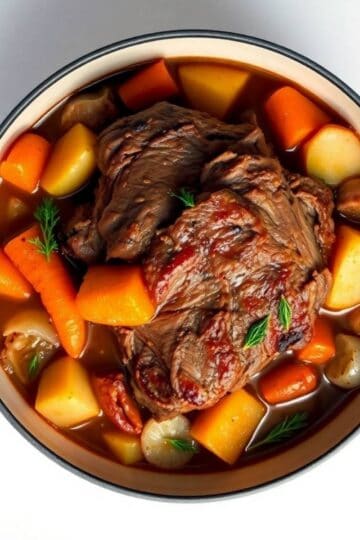
The original and the benchmark — a stovetop braise in a heavy Dutch oven that produces the most deeply developed, most complex beef stew possible through a low, slow, gentle simmer that no other method fully replicates. This is the Sunday stew, the dinner party stew, and the stew that makes every other version feel like a well-executed approximation. The 2.5–3 hours of gentle simmering allow the beef collagen to dissolve completely, the wine to reduce and concentrate, and the vegetables to achieve perfect tenderness without mushiness.
- Step No.1: Season beef cubes generously with salt and pepper. Toss with flour until lightly coated. Heat oil in a large Dutch oven over high heat until shimmering. Sear beef in batches of 6–8 pieces — never crowd the pan. Cook without moving for 3–4 minutes until deeply mahogany on the first side. Turn and sear all remaining surfaces. Remove seared beef and set aside. Total searing time: 15–18 minutes across all batches.
- Step No.2: Reduce heat to medium. Add onion and celery to the pot with the remaining fat and cook 5–6 minutes until softened. Add health benefits of garlic and tomato paste and cook 2–3 minutes, stirring, until the paste darkens and smells caramelized. Add wine and scrape every bit of the browned fond from the pot bottom — this is the flavor that makes the stew extraordinary. Add beef broth and Worcestershire. Return seared beef to the pot. Add thyme and bay leaves. Bring to a boil.
- Step No.3: Reduce heat to the lowest possible simmer — the liquid should barely tremble with occasional small bubbles breaking the surface. Cover and cook for 1.5 hours, checking occasionally to maintain the simmer. The beef should be beginning to yield but not yet completely tender.
- Step No.4: Add carrots and potatoes. Cover and continue simmering for 45–60 more minutes until the beef falls apart completely when pressed and the vegetables are completely tender. Remove bay leaves and thyme stems.
- Step No.5: Taste and adjust seasoning very generously — stews require significantly more salt after long cooking than the amount added initially. The broth should be thick, glossy, and coating rather than thin and watery. If it needs thickening, mix 1 tablespoon cornstarch with 2 tablespoons cold water and stir in, simmering 5 minutes. Serve in deep bowls with fresh parsley and crusty bread.
Variation 2: Slow Cooker Beef Stew
The version for busy households — spend 15 minutes in the morning searing the beef and building the base, transfer to the slow cooker, and come home to one of the best stews you have ever eaten without any additional attention required during the day. The slow cooker's extended low heat produces beef that is extraordinarily tender and a broth that has had 8 hours to develop and deepen. The only critical morning investment is the searing step — slow cooker beef stew made without searing is flat, gray, and genuinely disappointing compared to the seared version.
- Step No.1: Sear floured, seasoned beef in batches in a skillet over high heat until deeply browned on all sides. Transfer to the slow cooker. In the same skillet, sauté onion and celery, add garlic and tomato paste, cook 2 minutes, deglaze with wine, and pour everything into the slow cooker.
- Step No.2: Add beef broth, Worcestershire, thyme, and bay leaves to the slow cooker. Stir to combine. Do not add potatoes or carrots yet — added at the start they will be completely dissolved by cooking time.
- Step No.3: Cook on LOW for 7–8 hours or HIGH for 4–5 hours. For the best result, add carrots and potatoes 2 hours before the end of cooking time if on LOW, or 1.5 hours before the end on HIGH.
- Step No.4: Remove bay leaves and thyme stems. If broth is thinner than desired, mix 1 tablespoon cornstarch with 2 tablespoons cold water, stir into the stew, replace lid, and cook on HIGH for 15–20 more minutes until thickened. Season generously and serve.
Variation 3: Instant Pot Beef Stew
Fall-apart tender beef in under an hour — the Instant Pot version uses pressure to achieve in 35 minutes of cook time what the stovetop achieves in 2.5 hours of simmering. The result is genuinely exceptional: deeply flavored, tender beef in a rich broth that tastes like it cooked all day. The searing step is done using the Instant Pot's sauté function, making this a genuine one-vessel recipe with minimal cleanup.
- Step No.1: Set Instant Pot to Sauté on High. Add oil and sear floured, seasoned beef in batches until deeply browned. Remove beef. Sauté onion and celery in remaining fat, add garlic and tomato paste, cook 2 minutes.
- Step No.2: Add wine and deglaze thoroughly — scraping up every bit of fond from the pot bottom is essential. Instant Pot will display a burn warning if fond is left on the bottom. Add beef broth, Worcestershire, thyme, bay leaves, and all vegetables including carrots and potatoes. Return seared beef. Stir to combine.
- Step No.3: Seal lid and set to Manual/Pressure Cook on HIGH for 35 minutes. Allow natural pressure release for 15 minutes, then quick release remaining pressure. The beef will be completely tender and falling apart.
- Step No.4: Remove bay leaves. If broth needs thickening, set to Sauté mode and simmer 5–10 minutes uncovered, or add cornstarch slurry. Season very generously — pressure cooking dilutes seasoning slightly and more salt is almost always needed at the end. Serve immediately.
Variation 4: Red Wine Beef Stew (Boeuf Bourguignon-Style)
A full bottle of dry red wine — Burgundy, Côtes du Rhône, or any full-bodied red — replaces most of the beef broth and produces a stew of extraordinary depth and elegance. Pearl onions and mushrooms replace potatoes and celery for a more authentically French preparation. This is the dinner party beef stew, the celebration stew, and the stew that makes people set down their forks and say something genuinely appreciative. Use the classic stovetop method with these modifications: increase wine to a full bottle (750ml), add 6 oz thick-cut bacon lardons rendered before searing the beef, add 8 oz cremini mushrooms sautéed separately until golden and added in the last 30 minutes, and add 1 cup pearl onions (frozen, thawed) alongside the carrots. The sauce can be strained and reduced separately for an even more elegant, glossy result. Find more French-inspired recipes in our French onion chicken soup collection.
Variation 5: Guinness and Stout Beef Stew
One can of Guinness stout replaces the wine — the dark, malty, slightly bitter stout contributes a complexity and depth that is fundamentally different from the wine version, with a roasted, almost coffee-like undertone that makes the broth deeply satisfying. Add 1 tablespoon brown sugar to balance the stout's bitterness, 1 tablespoon Dijon mustard for additional savory depth, and include parsnips alongside carrots for a more traditional Irish-inspired preparation. The Guinness stew is the most robustly flavored of all the variations and the one that most naturally pairs with mashed potatoes or soda bread alongside. Use the classic stovetop method, substituting Guinness for wine and adding brown sugar and Dijon to the broth base. Find more warming stew inspiration in our hearty soup recipes.
Variation 6: Vegetable-Forward Lighter Beef Stew
A lighter version that increases vegetable volume significantly while reducing beef quantity — use 1.5 lbs beef rather than 2.5 lbs and add parsnips, turnips, sweet potato, and leeks alongside the standard carrots and potatoes for a stew that is more vegetable-forward, more colorful, and genuinely lighter in caloric density without any reduction in satisfaction or flavor. The sweet potato adds natural sweetness and body to the broth. Finish with a handful of fresh spinach stirred in at the very end and a squeeze of lemon juice to brighten the entire stew. This version is the choice for health-conscious cooking that doesn't want to sacrifice the comfort food experience. Find more healthy dinner ideas in our healthy gluten-free dinners.
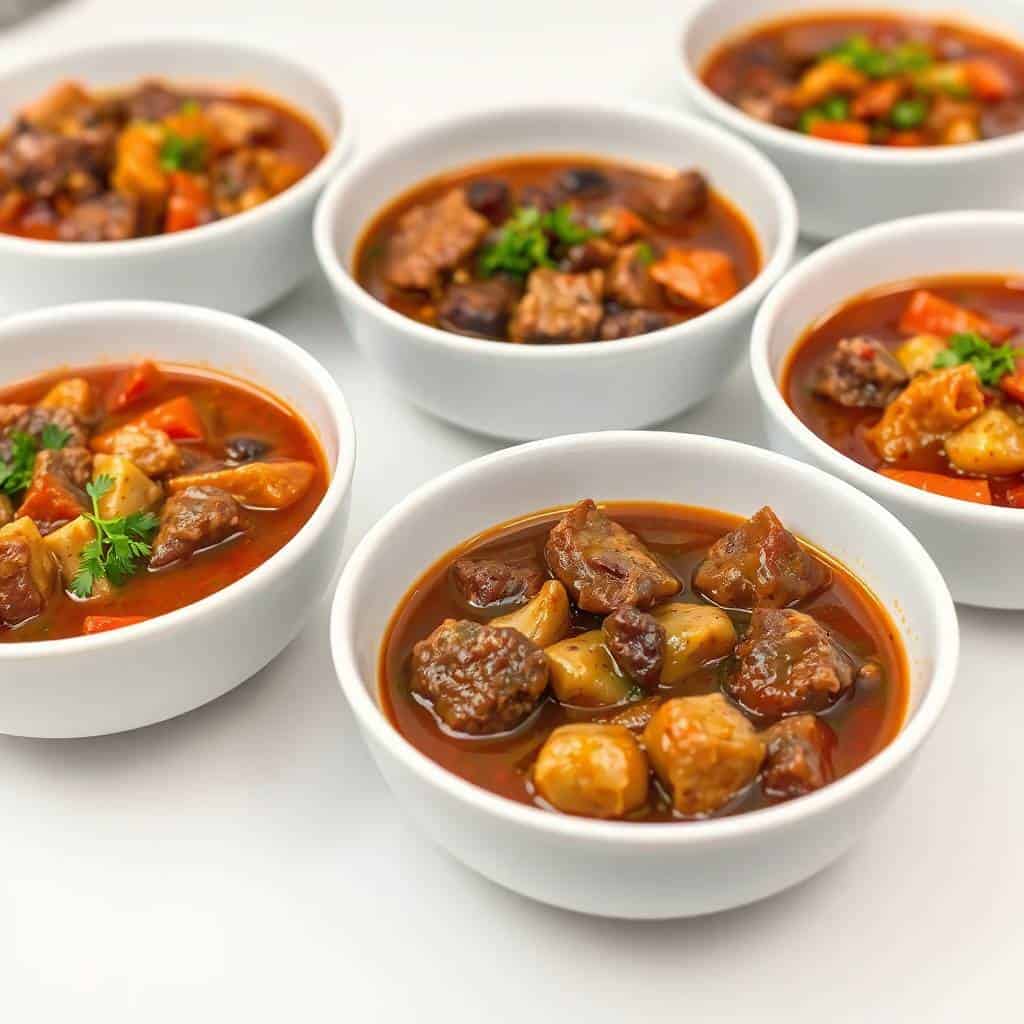
TIPS FOR SUCCESS
- Use Beef Chuck — No Substitutions: Beef chuck is the only cut that produces genuinely great beef stew. Its high collagen content transforms during braising into gelatin that thickens the broth naturally, coats every piece of beef in a silky layer, and produces the characteristic richness that makes great stew so satisfying. Leaner cuts like round, sirloin, or stew beef labeled without a specific cut designation produce dry, chewy, flavorless stew regardless of how long they cook. Buy a chuck roast and cut it yourself — pre-cut "stew beef" is often lean trim that will disappoint.
- Pat the Beef Completely Dry Before Searing: Surface moisture on the beef creates steam that prevents the Maillard reaction from occurring — wet beef steams rather than sears, producing gray, stewed meat rather than the deeply browned crust that is the most important flavor contribution in the entire recipe. Pat every piece of beef thoroughly dry with paper towels immediately before seasoning and dredging, and ensure the oil is genuinely hot and shimmering before the first piece goes in.
- The Simmer Must Be Gentle: A stovetop beef stew that boils rather than simmers produces tough, rubbery, dry beef that shreds unpleasantly rather than yielding in tender, intact pieces. Collagen converts to gelatin only at specific low temperatures maintained over long periods — high heat denatures the daily protein needss before the collagen has time to convert, producing tough meat in thin broth. The liquid should barely tremble throughout the entire cooking time. If you can hear the stew cooking loudly, the heat is too high.
- Make It the Day Before for the Best Possible Result: Beef stew made one day ahead and reheated gently the next day is genuinely better than fresh stew in every measurable way — the fat rises and can be skimmed for a cleaner result, the flavors deepen and integrate more completely, and the beef becomes even more tender through the overnight sitting in its cooking liquid. This make-ahead improvement is not a consolation for advance preparation — it is a genuine quality upgrade that experienced stew cooks specifically plan for.
- Season in Stages and Season Aggressively at the End: Season the beef before searing, season the aromatics while sautéing, season after adding broth, and taste and season again aggressively at the very end of cooking. Long-braised dishes lose salt perception over cooking time — a stew that tasted adequately seasoned at the beginning of cooking will taste flat and underseasoned after 2.5 hours. The final seasoning adjustment is the most impactful single step in the entire recipe and it is the step most commonly skipped or understated.
- Serve Over or Alongside Something That Absorbs the Broth: The broth of a great beef stew is arguably the most valuable component of the entire dish — a genuinely great beef stew broth is rich, glossy, deeply savory, and deserves something specifically designed to capture and deliver it. Creamy mashed potatoes, egg noodles, crusty bread, buttered rice, or polenta are all outstanding pairing vehicles. Serving beef stew as a standalone bowl without something to absorb the broth wastes the most flavorful component of the entire preparation. Find perfect pairing ideas in our funeral potatoes recipe.
SERVING AND STORAGE
Serving
Serve beef stew in deep, wide bowls that can hold the broth. Warm the bowls in the oven at 200°F for 5 minutes before serving — cold bowls drop the stew temperature immediately and the stew cools before it can be eaten. Garnish with fresh flat-leaf parsley, a crack of black pepper, and a drizzle of the best olive oil you have for an elevated finish. Serve crusty bread, mashed potatoes, or egg noodles alongside specifically for broth absorption. Have extra bread available at the table — the broth always runs out before the bread.
Storage
Beef stew stores refrigerated in an airtight container for up to 4 days — it improves over the first 24–48 hours and is genuinely at its best on day two. Reheat gently over low heat with a splash of beef broth to loosen the thickened broth — high heat reheating toughens the beef slightly. For freezing, cool completely, portion into individual serving containers, and freeze for up to 3 months. Thaw overnight in the refrigerator and reheat gently. Potatoes can become slightly grainy after freezing — for stew specifically intended for the freezer, substitute turnips or parsnips for the potatoes, which freeze significantly better.
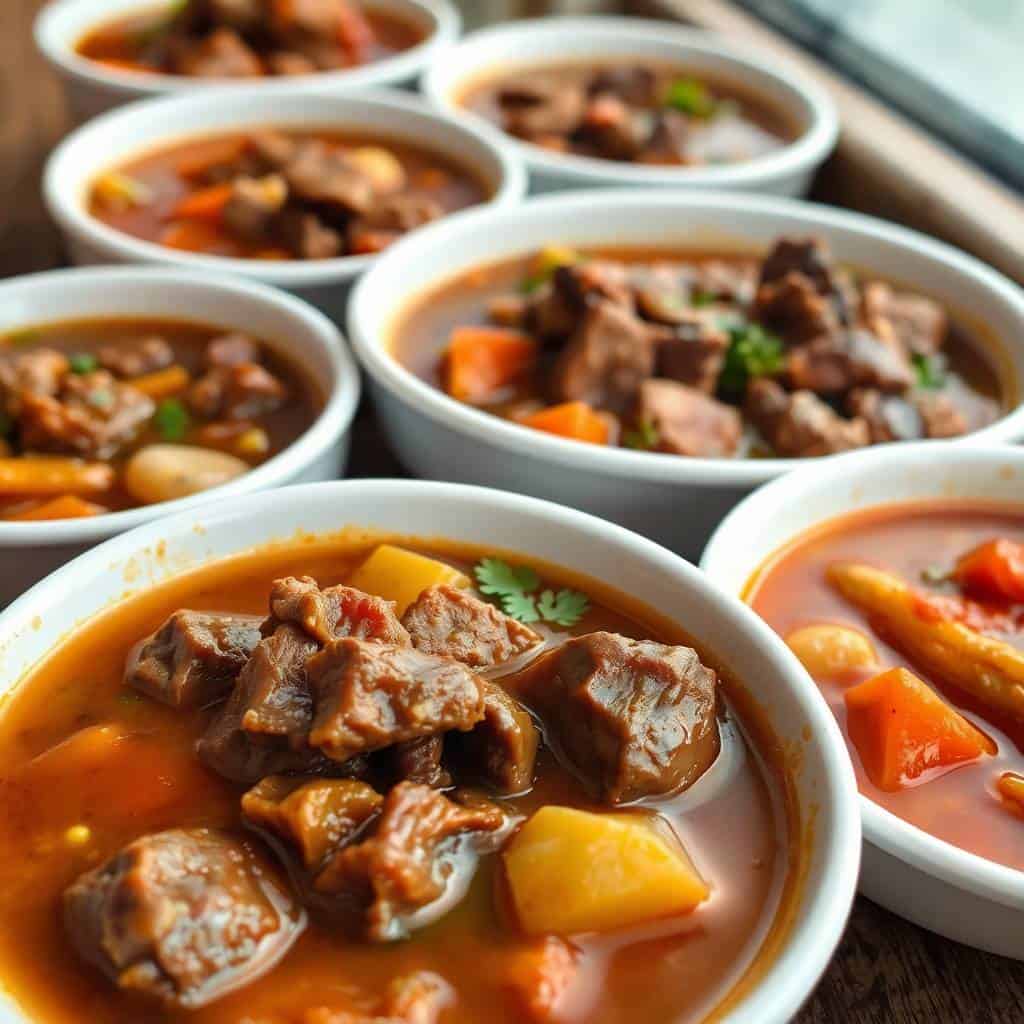
FAQ
Beef chuck is the best and only truly correct cut for beef stew — its high ratio of collagen to muscle fiber produces the characteristic tenderness and rich, glossy broth that defines great beef stew. Chuck has enough fat and connective tissue that it becomes progressively more tender over 2–3 hours of gentle braising rather than toughening. Other cuts that work well include chuck eye roast, blade roast, and short rib meat. Avoid lean cuts like round, sirloin, or pre-packaged stew beef of unspecified origin — they lack the collagen needed to enrich the broth and produce dry, chewy results regardless of cooking time. Buy a 3-pound chuck roast and cut it into 1.5-inch cubes yourself for the best flavor and most consistent texture throughout the stew.
Tough beef stew is almost always caused by one of three things: the wrong cut of beef, boiling rather than simmering, or not cooking long enough. Lean beef toughens during braising because it lacks collagen — use chuck. Boiling rather than simmering denatures the muscle proteins faster than the collagen can convert to gelatin, producing tough, dry beef — the liquid must barely tremble throughout. Not cooking long enough means the collagen hasn't had time to fully dissolve — if the beef still has any resistance when pressed, it needs more time regardless of what the clock says. The solution for tough beef stew that has been cooked long enough is almost always cooking it longer on lower heat — tough becomes tender with time and patience.
There are four reliable methods for thickening beef stew broth: dredge the beef in flour before searing — the flour creates a light coating that disperses into the broth during cooking and thickens it naturally; mix 1 tablespoon cornstarch with 2 tablespoons cold water to form a slurry and stir into the simmering stew, cooking 5 minutes until thickened; mash 2–3 of the cooked potato pieces against the side of the pot with a fork — the starchy mashed potato thickens the surrounding broth naturally; or simmer the stew uncovered for 15–20 minutes at the end of cooking to reduce the broth by evaporation. All four methods produce different textures — the cornstarch slurry produces the most glossy, restaurant-style result.
Beef stew freezes excellently for up to 3 months — the beef and broth survive freezing and thawing with almost no quality loss. The one component that doesn't freeze perfectly is potato, which becomes slightly grainy and crumbly after thawing due to the starch structure breaking down during freezing. For stew specifically intended for the freezer, substitute parsnips, turnips, or sweet potato for the potatoes — all three freeze significantly better and maintain their texture through the freeze-thaw cycle. Alternatively, leave potatoes out of the stew, freeze the base, and add freshly cooked potatoes when reheating. Cool stew completely before freezing, portion into individual serving containers, and label with the date. Thaw overnight in the refrigerator and reheat gently over low heat.
The primary difference between beef stew and beef soup is the ratio of liquid to solids and the consistency of the broth. Beef soup has a thin, broth-based liquid with solid ingredients submerged in it — the broth is the primary vehicle and the solids are secondary. Beef stew has a thick, reduced, coating broth where the liquid barely covers the solid ingredients and is as much of the main event as the beef and vegetables — a properly made beef stew is thick enough that a spoon leaves a visible track through the surface. Stew is also typically cooked significantly longer than soup, producing more tender beef and a more concentrated, deeply reduced broth. The thickening methods and the ratio of liquid to solids are the practical indicators that separate the two categories.
These beef stew variations give you a genuinely different stew experience for every occasion, every schedule, and every flavor preference — master the searing technique and the rest follows naturally no matter which method you choose.
Try the Guinness variation first if you've never made a stout beef stew — it is the most robustly flavored and most satisfying of all six versions on a cold evening. Serve alongside our funeral potatoes for the ultimate comfort food pairing, or pair with our goulash for a complete Eastern European comfort food repertoire. 🥩🍲✨
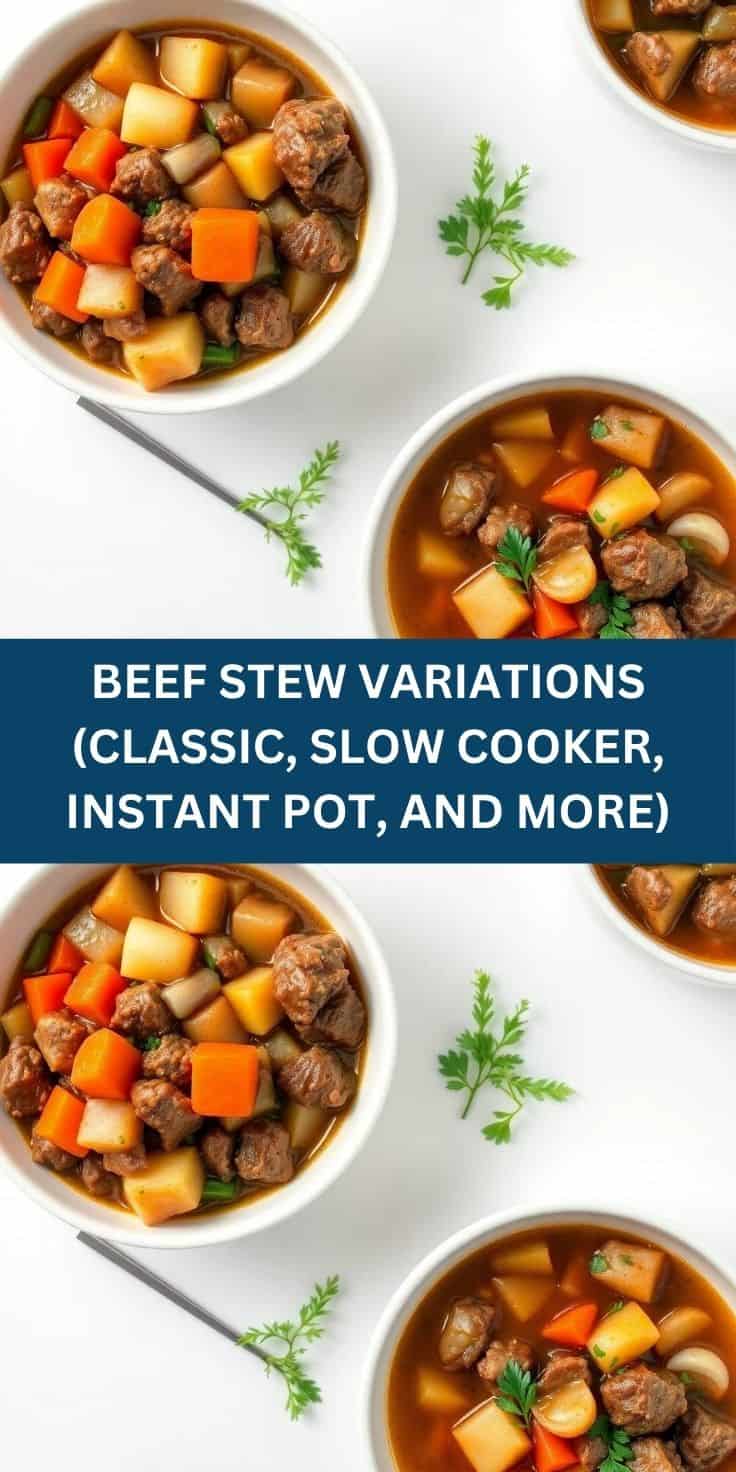
BEEF STEW VARIATIONS (CLASSIC, SLOW COOKER, INSTANT POT, AND MORE)
Equipment
- Large Dutch oven or slow cooker or Instant Pot
- Large skillet
- Cutting board
- Wooden Spoon
Ingredients
Beef Base:
- 2 ½ lbs beef chuck cut into cubes
Vegetables:
- 3 carrots sliced
- 4 potatoes cubed
- 2 stalks celery chopped
- 1 onion diced
- 3 garlic cloves minced
Broth & Seasoning:
- 4 cups beef broth
- 2 tablespoon tomato paste
- 1 tablespoon Worcestershire sauce
- 2 bay leaves
- 1 ½ teaspoon salt
- 1 teaspoon black pepper
- 1 teaspoon paprika
- 1 teaspoon thyme
Thickener (Optional):
- 2 tablespoon cornstarch
- 2 tablespoon water
Instructions
Brown Beef:
- Heat oil in a large pot or Dutch oven. Brown beef cubes on all sides, then remove and set aside.
Sauté Aromatics:
- In the same pot, sauté onion and garlic until fragrant.
Build Stew Base:
- Stir in tomato paste, Worcestershire sauce, beef broth, bay leaves, and seasonings.
Add Ingredients:
- Return beef to pot and add carrots, potatoes, and celery.
Cook (Choose Method):
- Simmer on stovetop for 2–2.5 hours, cook in slow cooker on LOW for 7–8 hours, or pressure cook in Instant Pot for 35 minutes with natural release.
Thicken (Optional):
- Mix cornstarch and water, stir into stew, and simmer until thickened.
Serve:
- Remove bay leaves and serve hot with bread or rice.
Notes
- Chuck roast gives the best tender texture.
- Stew tastes even better the next day.
- Add peas or mushrooms for variation.



Comments
No Comments