
When my nephew graduated from high school last spring, my sister-in-law called me three days before the party in full panic mode. The bakery she'd ordered the cake from had double-booked, the backup bakery wanted $180 for what she described as "a cake the size of a phonebook," and she was about to cancel the dessert table entirely. I told her to drive to my house, we'd make one together that afternoon, and it would cost her $25 and an evening of frosting. She left two days later with a sheet cake that fed 45 people and looked like it came from a real bakery.
Graduation cakes don't need to be elaborate. They need to be big enough to feed everyone, sweet enough to feel like a celebration, and not so fussy that you spend the day of the party assembling them instead of enjoying them. A sheet cake checks every box. One pan, one frosting layer, simple decoration on top — and you can do all the work the day before. By the time graduates and their families arrive, your cake is sitting on the table looking like you spent a fortune.
This recipe makes a full half-sheet cake (18×13 inches), which is the standard size that feeds 30-40 people depending on how generously you cut the slices. It uses buttermilk for tenderness, real vanilla for flavor, and a simple American buttercream frosting that holds up at room temperature for hours — important because graduation parties often sit on a table for the whole afternoon. The kids in my family have requested this cake for birthdays, graduations, end-of-school celebrations, and "just because it's a Saturday" for years.
A practical note before the recipe. Sheet cakes are dramatically more forgiving than layer cakes. There's no leveling, no stacking, no crumb coat, no frustration over uneven layers. If you've never made a celebration cake before and you're nervous about it, this is the format to start with. Mine has cracked, sunken slightly, and even been a little underbaked at the edges, and it has still always tasted great with enough frosting on top. Frosting is the great equalizer.
Why You'll Love This Recipe
- It genuinely feeds 30+ people from one pan: A standard half-sheet cake cut into 2½×2-inch squares yields about 40 slices. Cut more generously for a smaller crowd, or smaller for more guests — the math works either way. No second batch to bake, no awkward two-cake situation on the dessert table. One pan, one frosting, done.
- Costs about $25 to make at home: Bakery half-sheet cakes run $80-150 for the same size. Even a Costco half-sheet (which is genuinely good) is $30. Making it yourself with grocery-store ingredients comes in under $25, and you can decorate it to match the school colors or graduate's specific celebration. The cost savings alone justify the time.
- Buttermilk makes the cake tender, not just sweet: Buttermilk is the secret ingredient most American sheet cakes skip. The acidity tenderizes the gluten in the flour and reacts with the baking soda for extra rise — the result is a cake that's soft, plush, and stays moist for 2-3 days. Cakes made with whole milk taste fine the day you make them and dry out by day two. Buttermilk cakes stay tender longer, which matters when you're making it the day before a party.
- The buttercream holds at room temperature for hours: American buttercream (butter + powdered sugar + vanilla + milk) is the right frosting for party cakes specifically because it doesn't melt or sweat at room temperature the way whipped cream or Swiss meringue does. The cake can sit on a buffet table for the entire afternoon without anything going off. This matters more than most home bakers realize — fancy frostings fail at outdoor parties in late spring.
- Bake the day before, frost the morning of: This recipe is genuinely a 24-hour split. The cake bakes for 30 minutes, cools completely (about 2 hours), and then sits wrapped on the counter overnight — and tastes BETTER the next day because the crumb sets. Frosting takes 30 minutes the morning of the party. You walk into the celebration with a fresh-looking cake and no morning-of stress.
Ingredients
- For the Vanilla Buttermilk Sheet Cake:
- 3 cups all-purpose flour
- 2½ cups granulated sugar
- 1 tablespoon baking powder
- ½ teaspoon baking soda
- 1 teaspoon salt
- 4 large eggs, room temperature
- 1½ cups buttermilk, room temperature
- 1 cup neutral oil (canola, vegetable, or sunflower)
- ½ cup unsalted butter, melted and slightly cooled
- 2 tablespoon pure vanilla extract
- 1 tablespoon white vinegar (helps the rise)
- For the American Buttercream Frosting:
- 2 cups (4 sticks / 1 lb) unsalted butter, softened to room temperature
- 8 cups powdered sugar (about 2 lbs), sifted
- 3-4 tablespoon heavy cream or whole milk
- 2 tablespoon pure vanilla extract
- ½ teaspoon salt
- Gel food coloring (for school colors, optional)
- For Decoration (optional but recommended):
- Fresh berries (strawberries, raspberries, blueberries)
- Sprinkles in school colors or graduation theme
- Mini graduation cap toppers (Amazon or party stores)
- Edible flowers or fresh mint
Directions
- Step 1: Prep your pan the right way. Heat oven to 350°F. Use a standard half-sheet pan (18×13 inches, also called a jelly roll pan). Grease the pan generously with butter or non-stick spray, then line the bottom with parchment paper cut to fit. Grease the parchment too. This two-stage greasing is what keeps the cake from sticking — single-greased pans cause heartbreak at the moment you try to flip the cake out.
- Step 2: Whisk the dry ingredients separately. In a large bowl, whisk together flour, sugar, baking powder, baking soda, and salt until evenly combined. Whisking instead of just stirring distributes the leaveners properly throughout the flour — uneven leavening causes patchy rise where some parts of the cake puff up and others stay dense.
- Step 3: Combine the wet ingredients. In a separate bowl, whisk eggs until pale and slightly foamy. Add buttermilk, oil, melted butter, vanilla, and vinegar. Whisk until smooth and combined. The mixture will look slightly separated — that's fine.
- Step 4: Combine wet and dry gently. Pour the wet mixture into the dry. Whisk until just combined, scraping the bottom of the bowl to catch any pockets of flour. Do NOT overmix — overmixed cake batter develops gluten and gives you a tough, dense cake. A few small lumps are fine.
- Step 5: Pour and smooth. Pour the batter into the prepared half-sheet pan. Use an offset spatula or butter knife to spread it evenly to all four corners. Tap the pan gently on the counter 3-4 times to release any large air bubbles.
- Step 6: Bake until just set. Bake on the middle rack for 28-32 minutes until the top is lightly golden and a toothpick inserted in the center comes out with a few moist crumbs (not wet batter). Start checking at 25 minutes — oven temperatures vary. Underbaking is much worse than slightly overbaking here.
- Step 7: Cool completely before frosting. Let the cake cool in the pan on a wire rack for at least 2 hours, or overnight wrapped in plastic wrap. Frosting a warm cake melts the buttercream and turns it into a glossy mess. The cake must be completely room temperature.
- Step 8: Make the buttercream. Beat softened butter in a stand mixer with the paddle attachment on medium-high for 3-4 minutes until pale and fluffy. Reduce speed to low, gradually add sifted powdered sugar one cup at a time. Once incorporated, add heavy cream, vanilla, and salt. Beat on medium-high for 3-4 more minutes until fluffy and spreadable. Add gel food coloring now if using.
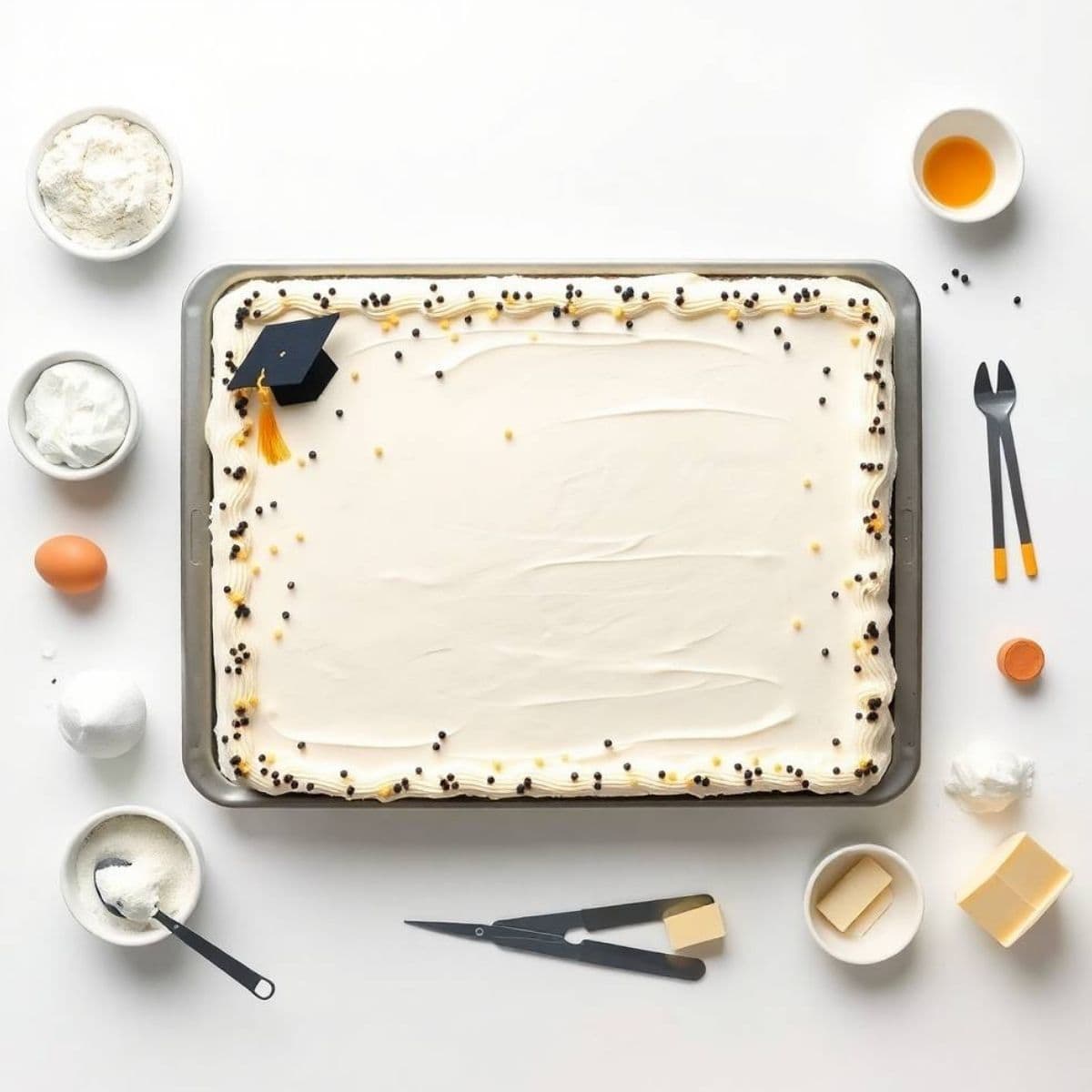
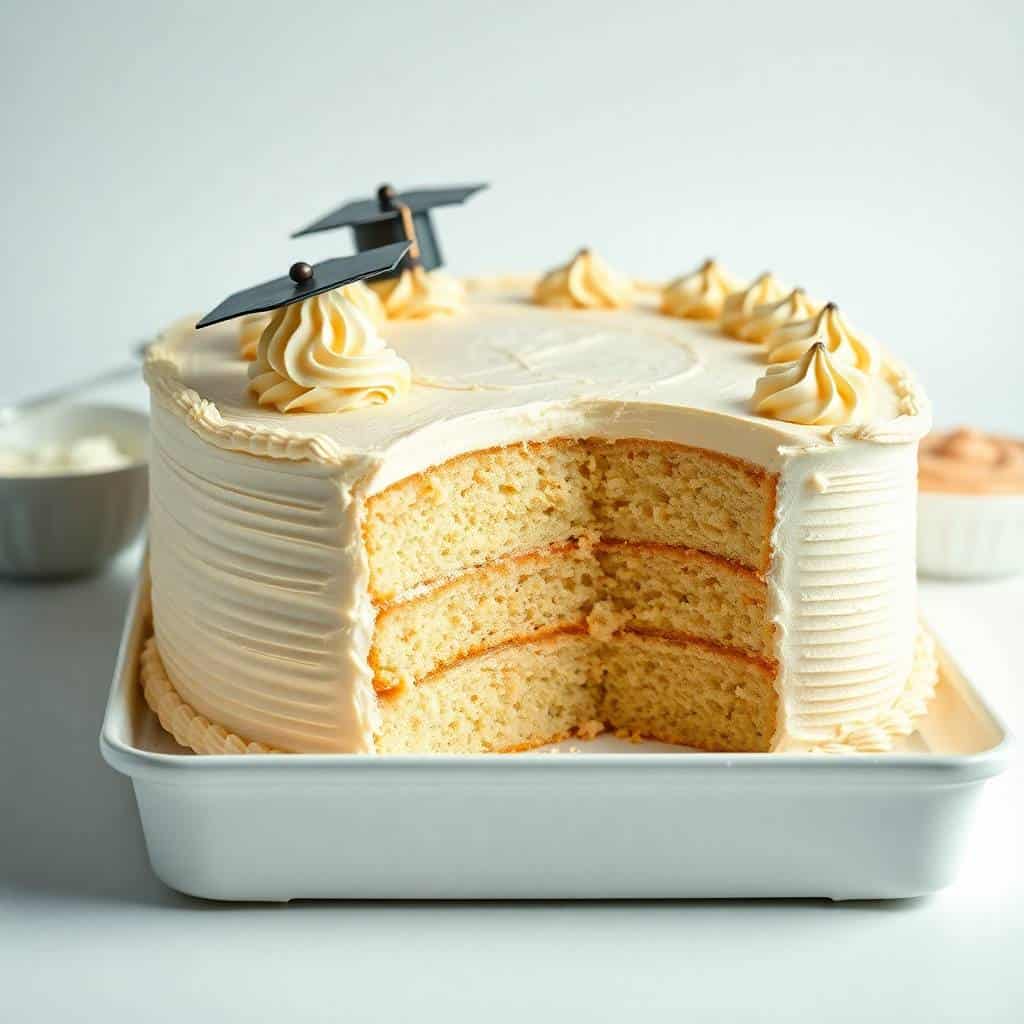
- Step 9: Frost the cake. Spread buttercream evenly across the top of the cooled cake using an offset spatula. Don't worry about being precise — sheet cakes look best with rustic, slightly textured frosting. Use the back of a spoon or the spatula tip to create swirls and texture. Decorate with berries, sprinkles, graduation toppers, or piped buttercream borders.
Tips for Success
- Use room-temperature eggs and buttermilk. Cold ingredients cause the butter and oil to seize up in the batter, leading to a denser, less even crumb. Take eggs and buttermilk out of the fridge 30-45 minutes before starting. If you forgot, place eggs in warm water for 5 minutes and microwave buttermilk in 10-second bursts until it feels lukewarm.
- Sift the powdered sugar for smooth buttercream. Powdered sugar from the bag has lumps and clumps that won't dissolve completely into butter. A 30-second sift through a fine-mesh strainer gives you silky-smooth buttercream with no gritty lumps. This is the difference between professional-looking frosting and homemade-looking frosting.
- Don't overbeat the buttercream at the end. Beat on medium-high until fluffy, then stop. Over-beaten buttercream develops air pockets that make it look pocked and cratered on the cake. If yours gets bubbly, beat on the LOWEST speed for 2-3 minutes to push air out before frosting.
- Adjust frosting consistency with cream. Too thick? Add a teaspoon of heavy cream at a time. Too thin? Add ½ cup more sifted powdered sugar. The right consistency holds soft peaks when you lift the spatula — firm enough to spread cleanly but soft enough to swirl easily.
- Skip the gel food coloring if you've never used it. Gel coloring is concentrated and a little goes a very long way. Start with the tip of a toothpick dipped in gel, mix thoroughly, then add more if needed. Liquid food coloring waters down buttercream and won't give you the saturated school colors you want for graduation décor.
Variations
- Chocolate sheet cake version: Replace ½ cup of flour with ½ cup of unsweetened cocoa powder. Add an extra ¼ cup of buttermilk to compensate for cocoa's dryness. Keep everything else the same. Pair with chocolate buttercream (add ¾ cup cocoa powder to the buttercream recipe) for a chocolate-on-chocolate party cake.
- Lemon sheet cake: Add 3 tablespoons fresh lemon zest and 2 tablespoons fresh lemon juice to the wet ingredients. Reduce vanilla to 1 tablespoon. Top with lemon buttercream (add 2 tablespoon lemon juice and 1 tablespoon lemon zest to the frosting). Bright, summery, perfect for spring graduations.
- Funfetti version for younger graduates: Fold ¾ cup rainbow sprinkles into the batter at the very end. Use additional sprinkles on top of the frosted cake. The kids' graduation party version. Use jimmies (the long thin sprinkles), not nonpareils — nonpareils bleed color into the batter.
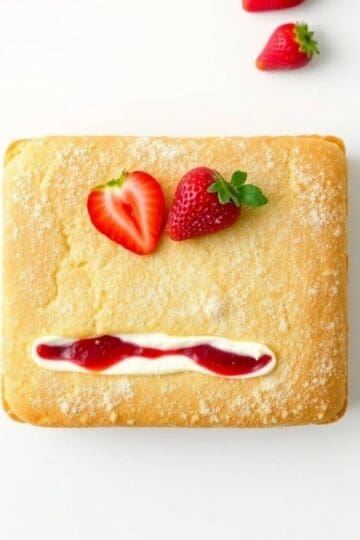
- Strawberry layer between cake and frosting: Cut the cake horizontally in half (carefully) to create two thin layers. Spread strawberry jam between them before frosting. Strawberries-and-cream sheet cake style. Great if your graduate or the family has a favorite-fruit preference.
- School color theme: Divide the buttercream into 2-3 portions and tint each with gel food coloring matching the graduating school's colors. Pipe alternating dollops or stripes across the cake for an instant school-spirit decoration. Add a piped "Class of [Year]" in white or black gel icing on top.
How to Serve
Serve the sheet cake at room temperature for the best flavor and softest texture. Cold cake straight from the fridge tastes dense and the buttercream stiffens; room-temperature cake is plush and the frosting is creamy. Plan to take the cake out of the fridge 1-2 hours before serving. Cut with a sharp knife dipped in hot water and wiped between cuts — this gives you clean, professional-looking slices without dragging frosting through the cake. For a graduation party buffet, pre-cut about half the cake into squares displayed on a platter, and leave the other half intact for guests to cut their own slices as they want.
How to Store
Store the frosted cake covered loosely with plastic wrap or a large cake dome at room temperature for up to 2 days. The buttercream creates a moisture barrier that keeps the cake fresh. After 2 days, transfer to the fridge for up to 5 days (bring to room temperature before serving). Unfrosted cake layer freezes beautifully — wrap tightly in plastic wrap, then foil, and freeze for up to 3 months. Thaw in the fridge overnight, then frost the morning of the party. This is the longest make-ahead option if you're planning a graduation a few weeks out.
Related Recipes You Might Like
If you loved this sheet cake, here are a few more party-friendly recipes from the site that pair beautifully with graduation celebrations or any spring-summer gathering:
- 33 Easy Lunch Recipes — finger foods and sandwiches for the graduation buffet table
- 35 Easy Dip Recipes — appetizers and dips to round out the party menu
- Freezer-Friendly Grilled Chicken Fajita Bowls — meal-prep dinners for the busy weeks leading up to graduation
- 27 Best Chicken Thigh Recipes — main-dish ideas for a graduation lunch or dinner party
- 15 Best Burger Toppings — if you're doing a backyard graduation cookout instead
Frequently Asked Questions
How many people does a half-sheet cake actually feed?
A standard half-sheet cake (18×13 inches) cut into 2½×2-inch squares yields about 40 slices. For a graduation party, this feeds 30-40 people generously. If you cut smaller (2×2 inch pieces), you can stretch it to 48 servings. For a smaller crowd of 15-20 people, cut larger (3×3 inch slices) so everyone gets a substantial piece. The same recipe also works in a 9×13 pan for half the yield — about 20 servings.
Can I make this graduation sheet cake ahead of time?
Yes — and it's actually better if you do. Bake the cake 1-2 days before the party, let it cool completely, then wrap it tightly in plastic wrap and store at room temperature. The buttermilk in the recipe keeps the cake moist for 2-3 days. Frost the morning of the party for the freshest-looking buttercream. For longer make-ahead, the unfrosted cake freezes for up to 3 months wrapped tightly. Thaw overnight in the fridge before frosting.
What if I don't have buttermilk?
Make a buttermilk substitute by combining 1½ cups whole milk with 1½ tablespoons white vinegar or lemon juice. Stir and let sit for 5 minutes until slightly curdled. The substitute won't be quite as tangy or thick as real buttermilk, but it gives you the acidity needed to react with the baking soda. Greek yogurt thinned with milk (¾ cup yogurt + ¾ cup milk) is an even better substitute if you have it on hand.
How do I decorate the graduation cake to match school colors?
Divide the buttercream into 2-3 portions and tint each with gel food coloring (not liquid) to match the school's colors. Start with the tip of a toothpick dipped in gel, mix thoroughly, then add more for deeper color. Pipe alternating dollops or stripes across the cake for school-spirit decoration. Add piped "Class of [Year]" lettering in contrasting color, edible gold sprinkles, fresh berries, or mini graduation cap toppers from Amazon. Keep décor simple — over-decorated cakes look amateur.
Can I make this recipe in a 9×13 pan instead?
Yes. Halve all the cake and frosting ingredients (a 9×13 pan holds about half the volume of a half-sheet pan). Bake time will be roughly the same — 28-32 minutes — but start checking at 25 minutes. A 9×13 yields about 15-20 servings, perfect for a smaller graduation gathering. If you're doing a smaller party, this is actually the better format because a sparsely-filled half-sheet cake looks awkward at a small celebration.
Why is my buttercream too sweet?
American buttercream is by nature very sweet — it's mostly powdered sugar. To tone down the sweetness without changing the structure, increase the salt to 1 teaspoon and add an extra tablespoon of vanilla. For a less-sweet alternative, replace 2 cups of powdered sugar with 2 cups of softened cream cheese for a cream cheese buttercream. The cream cheese adds tang that balances the sugar. Or try Swiss meringue buttercream as an alternative — it's less sweet but more technique-heavy and doesn't hold up as well at room temperature.
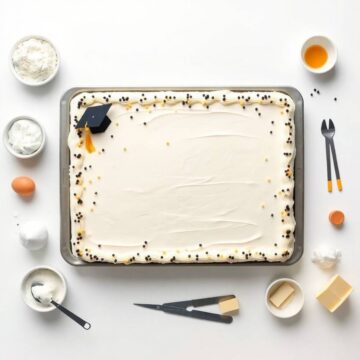
EASY GRADUATION SHEET CAKE RECIPE THAT FEEDS 30+ GUESTS FROM ONE PAN
Equipment
- Half sheet pan (13x18 inch)
- Mixing bowls
- Electric mixer
- Spatula
- Cooling rack
Ingredients
For the Sheet Cake:
- 3 ½ cups all-purpose flour
- 2 ½ cups granulated sugar
- 1 ½ tablespoons baking powder
- 1 teaspoon salt
- 4 large eggs
- 2 cups whole milk
- 1 cup unsalted butter, melted
- 2 teaspoons vanilla extract
For the Frosting:
- 1 cup unsalted butter, softened
- 4 cups powdered sugar
- 3 tablespoons heavy cream
- 1 teaspoon vanilla extract
- food coloring (optional)
For Decoration:
- sprinkles
- graduation-themed toppers
Instructions
Prepare Pan
- Preheat oven to 175°C (350°F). Grease and line a 13x18-inch sheet pan.
Mix Dry Ingredients
- Whisk flour, sugar, baking powder, and salt in a large bowl.
Add Wet Ingredients
- Add eggs, milk, melted butter, and vanilla. Mix until smooth and lump-free.
Bake Cake
- Pour batter into pan and bake for 30–35 minutes or until a toothpick comes out clean.
Cool Cake
- Let cake cool completely before frosting.
Make Frosting
- Beat butter until fluffy. Add powdered sugar, cream, and vanilla until smooth and spreadable.
Decorate Cake
- Spread frosting evenly over cooled cake. Add sprinkles and graduation toppers.
Notes
- Party Size: Easily serves 30–40 guests depending on slice size.
- Flavor Options: Add lemon or almond extract for variation.
- Make Ahead: Bake cake a day before and frost before serving.
- Storage: Keep covered at room temperature for 2 days or refrigerated up to 5 days.
- Decoration Tip: Use school colors for themed graduation design.

Comments
No Comments