
There's a specific kind of cold that settles over the kitchen in late fall — the kind where you want something bubbling on the stove all afternoon. That's when I make this beef stew. I've been making some version of it for years, and I've messed it up enough times to know exactly where it goes wrong. The first time I tried it, I didn't sear the beef in batches — I just dumped it all in the pot at once and wondered why the meat looked gray and sad. Lesson learned.
What makes this version work is the combination of red wine, tomato paste, and Worcestershire sauce building the base before anything else goes in. That deglaze step — scraping up all the brown bits after the wine hits the pan — is doing more flavor work than it looks like. I also add the potatoes later in the cook so they don't turn to mush. Small things, but they matter. If you want another rich, slow-cooked soup for cold weather, my Easy French Onion Soup is worth making on the same weekend.
My husband is the one who pushed me to make this regularly. He grew up eating stew with bread, and that's still how he eats it — bowl of stew, crusty roll on the side. Saad ignores the vegetables the first few times but eventually came around to the carrots. Zainab, on the other hand, will eat the whole bowl and ask if there's more. I usually make a big batch on Sunday so we have leftovers Monday — the second-day stew is genuinely better than the first.
One practical thing before you start: this takes about 2 to 2.5 hours total, so it's a weekend recipe or a day when you're home. You're not standing over it the whole time — most of that is hands-off simmering — but you do need to be around. The wine is optional but I'd encourage you to use it if you have a bottle open. It's not fancy; I usually use whatever red is sitting on the counter.
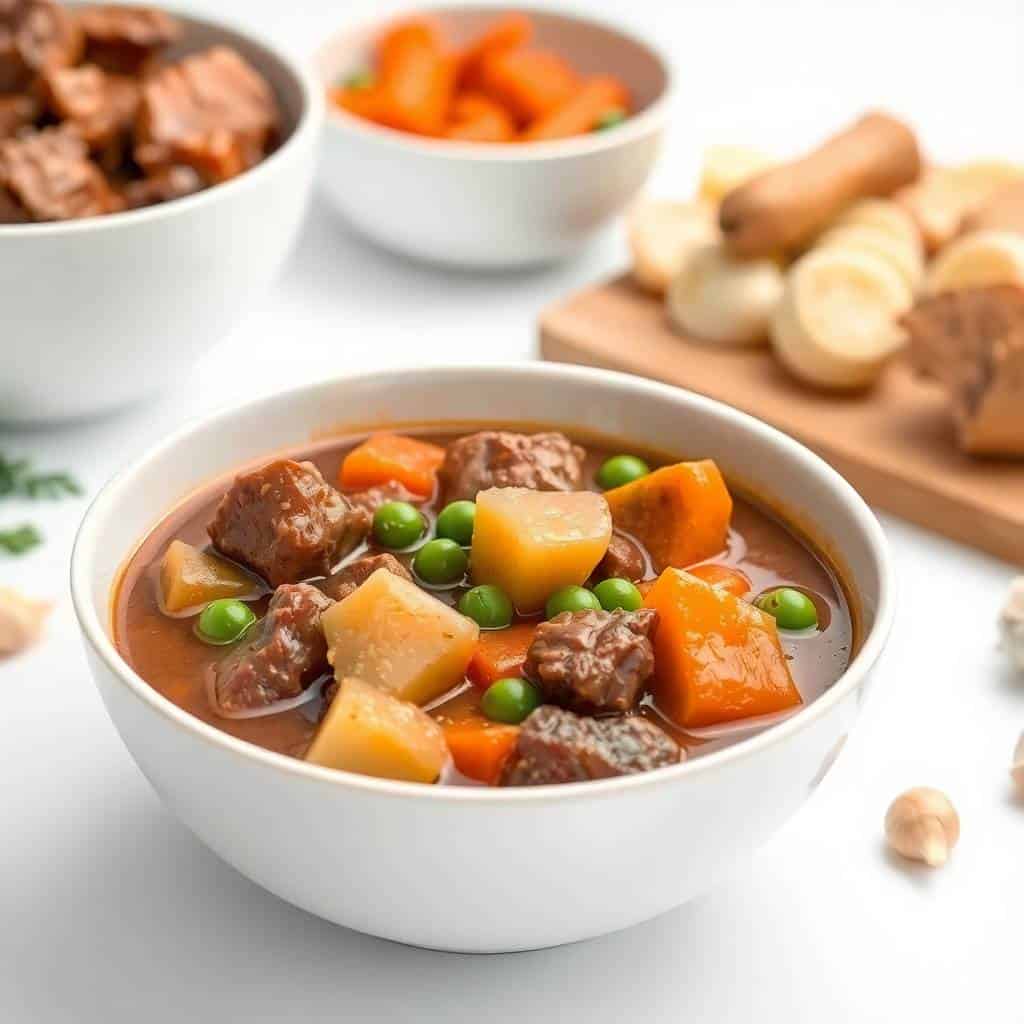
Why You'll Love This Recipe
- One pot, real cleanup relief: Everything happens in a single Dutch oven or heavy pot — the sear, the sauté, the simmer. I hate doing dishes after a long cook, so this matters to me. There's no roasting pan, no separate saucepan, nothing else to scrub. The pot does all the work.
- The leftovers are genuinely better: I know people say this about a lot of stews, but it's actually true here. The broth thickens overnight, the beef softens further, and the whole thing tastes more cohesive. I make a double batch specifically so there's enough for Monday dinner without any extra effort.
- Chuck roast is cheap and it works perfectly: This isn't a recipe that requires expensive beef. Chuck roast — which you can find at any Walmart, Costco, or regular grocery store — breaks down beautifully over a long simmer. I usually spend around $10–12 on the beef for a pot that feeds four adults comfortably with leftovers.
- Freezer-friendly in a real way: I portion this into freezer containers after it cools and it keeps for up to 3 months. On a night when I have nothing planned, I pull out a container, reheat it low and slow, and serve it with bread. It doesn't taste like it came from the freezer — it tastes like I cooked that afternoon.
- Flexible with what's in your fridge: I've made this with parsnips instead of potatoes, with mushrooms thrown in, without the celery when I didn't have any. The core recipe holds together even when you swap things around. It's the kind of base that accommodates whatever root vegetables are sitting in your crisper drawer.
Ingredients
- 2 lbs beef chuck, cut into 1-inch cubes
- 3 tablespoons olive oil
- 1 large onion, chopped
- 3 cloves garlic, minced
- 3 carrots, sliced
- 3 potatoes, diced (Yukon Gold hold their shape best)
- 2 celery stalks, sliced
- 3 tablespoons all-purpose flour
- 4 cups beef broth
- 1 cup red wine (optional — use extra broth if skipping)
- 2 tablespoons tomato paste
- 2 teaspoons Worcestershire sauce
- 2 bay leaves
- 1 teaspoon dried thyme
- Salt and black pepper, to taste
- 2 tablespoons fresh parsley, chopped (for garnish)
Directions
- Brown the beef: Season beef cubes generously with salt and pepper. Heat the olive oil in a large pot or Dutch oven over medium-high heat. Brown the beef in batches — don't crowd the pan or it'll steam instead of sear. Each batch takes about 3–4 minutes. Remove and set aside.
- Sauté the aromatics: In the same pot, add the onion, garlic, carrots, and celery. Cook over medium heat until softened, about 5–6 minutes. Scrape up any bits left from the beef as you stir — that's flavor you don't want to leave behind.
- Add flour: Stir in the flour and cook for about 1 minute, stirring constantly. This cooks out the raw flour taste and helps the stew thicken as it simmers.
- Deglaze: Pour in the red wine (or extra broth if skipping the wine) and scrape the bottom of the pot firmly. All those browned bits lift off and dissolve into the liquid — this step is where a lot of the flavor comes from, so don't rush it.
- Simmer the stew: Add the beef broth, tomato paste, Worcestershire sauce, bay leaves, thyme, and the browned beef back into the pot. Bring to a boil, then reduce heat to low, cover, and simmer for 1.5 hours.
- Add the potatoes: Stir in the diced potatoes and continue cooking, covered, for another 30–40 minutes until the beef pulls apart easily and the potatoes are fork-tender. Adding them later keeps them from going mushy.
- Finish: Remove the bay leaves. Taste and adjust salt and pepper. Ladle into bowls and top with fresh parsley before serving.
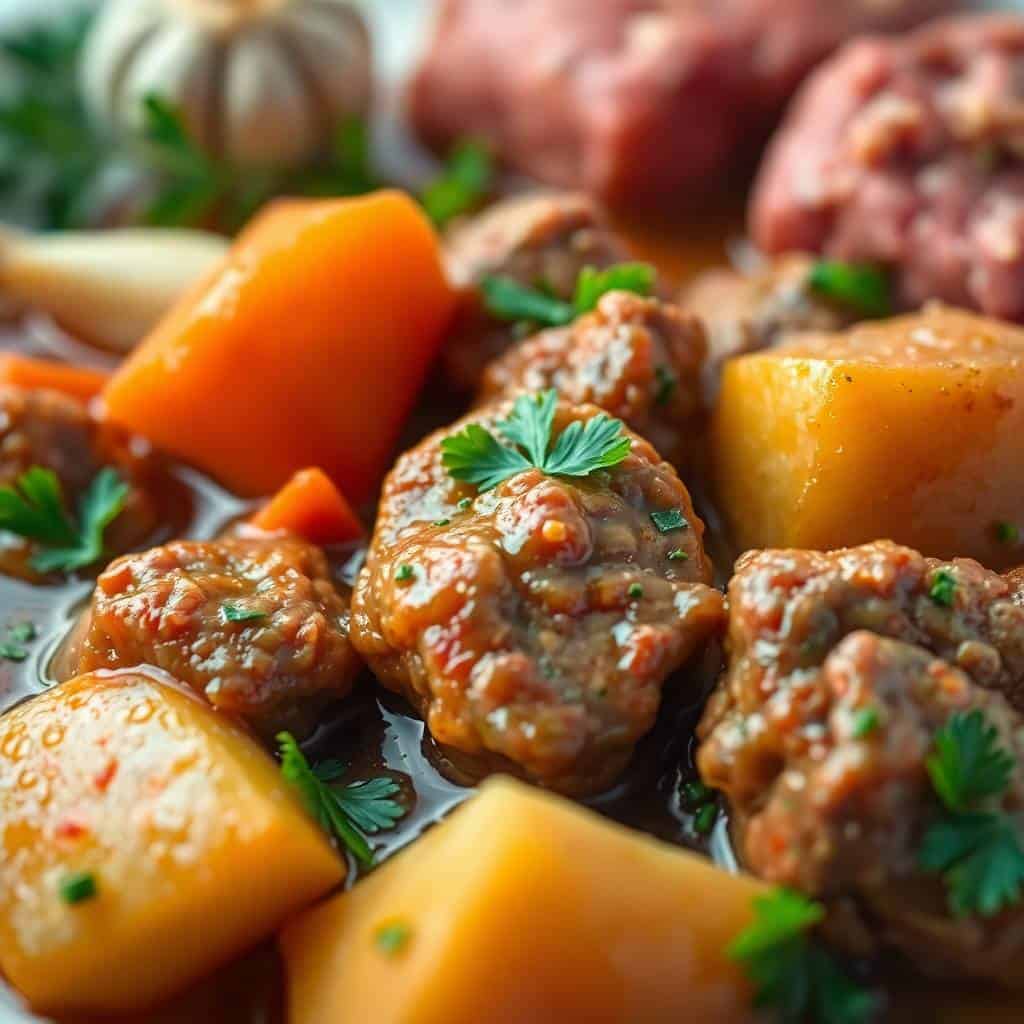
Tips for Success
- Brown the beef in batches, every time: I know it's tempting to just throw it all in at once and save time — I did that the first time and ended up with gray, steamed meat in a watery broth. When you crowd the pan, the beef drops the pan temperature and releases water instead of caramelizing. Do two or three batches. It adds maybe 10 minutes and makes a real difference to the final flavor.
- Don't skip the deglaze: After the wine goes in, work your wooden spoon along the bottom of the pot. Those stuck-on brown bits — called fond — are concentrated flavor, and the wine lifts them right off. If you skip the wine, use a splash of broth to do the same thing. Either way, don't leave that layer sitting there.
- Keep the heat low once it's simmering: I've rushed this before when I had somewhere to be, and the beef came out chewy instead of tender. Low and slow is not optional for chuck roast. If the liquid is bubbling aggressively, turn it down. A gentle, lazy simmer is what you want for the full hour and a half.
- Add potatoes late: If you add them at the beginning with everything else, they'll be falling apart by the time the beef is ready. I stir them in after the first 1.5 hours of simmering and give them 30–40 more minutes. They come out tender but still holding their shape.
- Taste the broth before you serve: The salt level of beef broth varies a lot by brand — some are quite salty, others are almost bland. I always taste at the end and adjust. Sometimes it needs more salt, sometimes a crack of black pepper, sometimes a tiny splash of Worcestershire to sharpen it up. Don't assume the seasoning from the beginning is still right after two hours of cooking.
Variations
- Slow cooker version: Sear the beef and sauté the aromatics on the stovetop first — don't skip those steps even for the slow cooker, they matter for flavor. Then transfer everything to your slow cooker and cook on low for 7–8 hours or high for 4–5 hours. Add the potatoes halfway through so they don't go to mush. This is how I make it when I want dinner waiting for us after a school run.
- Add mushrooms: Sauté a cup of sliced cremini or button mushrooms with the onions and carrots. They add an earthy depth that works really well with the red wine base. I do this version when I have mushrooms that need using up — it stretches the stew further too.
- Swap in sweet potatoes: Replace the regular potatoes with an equal amount of sweet potatoes, cut slightly larger so they hold up better. They add a gentle sweetness that balances the savory broth nicely. Add them at the same stage as regular potatoes — they take about the same time to cook through.
- Use beer instead of wine: A dark beer — Guinness or any stout — makes a great substitute for the red wine. The stew comes out a little deeper, slightly malty, with more body in the broth. My husband actually prefers this version. Use the same amount (1 cup) and deglaze the same way.
- Gluten-free: Skip the flour in step 3 and instead make a cornstarch slurry (1 tablespoon cornstarch mixed with 1 tablespoon cold water) and stir it into the stew in the last 15 minutes of cooking. It thickens the broth just as well and nobody will notice the difference.
Serving and Storage
Serving
We serve this in deep bowls with a thick slice of crusty bread on the side for soaking up the broth — that's my husband's non-negotiable. It also works beautifully spooned over mashed potatoes if you want something even more filling. If you're making a full meal of it, a simple green salad on the side balances out the richness. For dessert on a cold night, something warm and sweet like Pumpkin Cinnamon Rolls or Banana Bread Cinnamon Rolls is exactly what I reach for.
Storage
Let the stew cool completely before transferring to airtight containers. It keeps in the refrigerator for up to 4 days — and as I mentioned, day two is genuinely better. For the freezer, portion it into individual or family-sized containers and freeze for up to 3 months. Reheat on the stovetop over low heat, adding a splash of broth if it's thickened too much. I don't recommend microwaving from frozen — thaw overnight in the fridge first.

Frequently Asked Questions
Can I make this beef stew ahead of time?
Yes, and honestly I recommend it. The broth thickens and the flavors settle overnight in a way they don't right off the stove. Make it the day before, cool it completely, refrigerate it, and reheat gently on the stovetop before serving. It takes maybe 15 minutes to warm through properly.
Can I skip the red wine?
Yes. Just use an extra cup of beef broth instead. The wine adds a layer of depth that's hard to fully replicate, but the stew is still very good without it. If you want some of that flavor without alcohol, a tablespoon of balsamic vinegar added with the broth gets you closer.
My stew broth is too thin — how do I fix it?
Mix 1 tablespoon of cornstarch with 1 tablespoon of cold water until smooth, then stir it into the simmering stew. Give it 5–10 minutes and it'll thicken up. You can also just remove the lid and let it simmer uncovered for 15–20 minutes to reduce naturally — that's what I usually do first.
What's the best cut of beef for stew?
Chuck roast, without question. It has enough fat and connective tissue to break down during the long simmer into something genuinely tender. Lean cuts like sirloin or round go tough in a stew — I learned that early on. Stick with chuck. It's also usually the most affordable option, which doesn't hurt.
Can I freeze this stew?
Absolutely. Cool it completely first, then freeze in airtight containers for up to 3 months. The potatoes may soften a little more after freezing and reheating, which doesn't bother most people — but if texture is important to you, you could leave the potatoes out of the batch you're planning to freeze and add freshly cooked ones when you reheat it.

BEEF STEW RECIPE
Ingredients
- 2 lbs beef chuck cut into 1-inch cubes
- 3 tablespoons olive oil
- 1 large onion chopped
- 3 cloves garlic minced
- 3 carrots sliced
- 3 potatoes diced
- 2 celery stalks sliced
- 3 tablespoons all-purpose flour
- 4 cups beef broth
- 1 cup red wine optional, can use extra broth
- 2 tablespoons tomato paste
- 2 teaspoons Worcestershire sauce
- 2 bay leaves
- 1 teaspoon dried thyme
- Salt and black pepper to taste
- 2 tablespoons fresh parsley chopped (for garnish)
Instructions
- Brown Beef: Season beef with salt and pepper. Heat olive oil in a large pot and brown beef in batches. Remove and set aside.
- Sauté Veggies: In the same pot, add onion, garlic, carrots, and celery. Cook until softened.
- Add Flour: Stir in flour and cook 1 minute to coat.
- Deglaze: Pour in red wine (if using) and scrape up browned bits.
- Simmer Stew: Add beef broth, tomato paste, Worcestershire sauce, bay leaves, thyme, and browned beef. Bring to a boil, then reduce heat to low. Cover and simmer 1 ½ hours.
- Add Potatoes: Stir in potatoes and cook an additional 30–40 minutes until beef and vegetables are tender.
- Finish: Remove bay leaves, adjust seasoning, and garnish with parsley before serving.
Notes
- Make Ahead: Stew tastes even better the next day as flavours deepen.
- Slow Cooker Option: Cook on low for 7–8 hours or high for 4–5 hours.
- Thicker Stew: Add a cornstarch slurry (1 tablespoon cornstarch + 1 tablespoon water) if you prefer a thicker broth.
- Serving Suggestions: Serve with crusty bread, biscuits, or over mashed potatoes.
This is the kind of recipe I come back to every fall without even thinking about it. The house smells incredible while it's cooking — that slow simmer of beef and wine and thyme fills every room — and by the time we sit down to eat, everyone's already at the table asking when it'll be ready. I've made it on rainy Sundays, on the first cold day of the year, and on the weekend after a long week when I needed something that required very little decision-making.
It's also one of those recipes I'd confidently make for guests without stressing about it. It scales up easily — I just use a bigger pot — and it can sit on the lowest heat with the lid slightly ajar while people are still arriving. If you're the kind of person who likes to have a cozy soup ready to go too, my Easy French Onion Soup is another one that works on the same kind of slow, unhurried afternoon.
If you make this, let the stew rest for 10 minutes before you serve it. I always want to ladle it out the second it's done, but those few minutes off the heat make a difference to how everything settles together. Top with the parsley, set out the bread, and that's genuinely all you need. 🥘🍞❤️
If you liked this, you might also enjoy these from the site:
- Easy French Onion Soup — another slow, savory pot that's worth every minute
- Pumpkin Cinnamon Rolls — what I make for dessert on stew nights in fall
- Banana Bread Cinnamon Rolls — warm, soft, and exactly right after a heavy dinner
- Easy Cheese Ham Pastry — a quick savory bite that works as a side or a snack
- Homemade Chocolate Turtles — for when you want something sweet to finish the meal




Comments
No Comments