
I made this roast beef for the first time on a cold Sunday afternoon when I had a 3-pound sirloin in the fridge and no real plan. I mixed garlic, fresh rosemary, olive oil, and a little Dijon into a paste, rubbed it all over the beef, and put it in the oven. When I pulled it out an hour later and cut into it — the smell alone had my husband walking into the kitchen asking what was happening. That was about two years ago, and this roast has been on our table more times than I can count since.
What I like about this method is the two-temperature approach: high heat first to build a crust, then lower heat to bring the inside to the right temperature without drying it out. The herb paste does a lot of the work — it sticks to the beef, caramelizes in the oven, and gives you that dark, fragrant crust on the outside while the inside stays pink and juicy. I always use a meat thermometer. No guessing, no cutting into it to check and losing all the juices. Just a thermometer and patience.
My husband loves this with mashed potatoes and whatever pan juices collect at the bottom of the roasting pan. He'll pour those drippings over everything. If I'm making this for a bigger occasion — like Father's Day, which is when I usually go all out on a proper roast — I'll pair it with a few sides and make it a whole spread. I've got a roundup of meat lover recipes for Father's Day if you need ideas for what to serve alongside something like this.
One thing I'll say upfront: don't skip the resting step. I did that once — pulled the roast, sliced right into it because I was impatient — and the juices ran everywhere and the slices were drier than they should have been. Now I tent it with foil and wait the full 15 minutes no matter how hungry everyone is. It genuinely makes a difference.
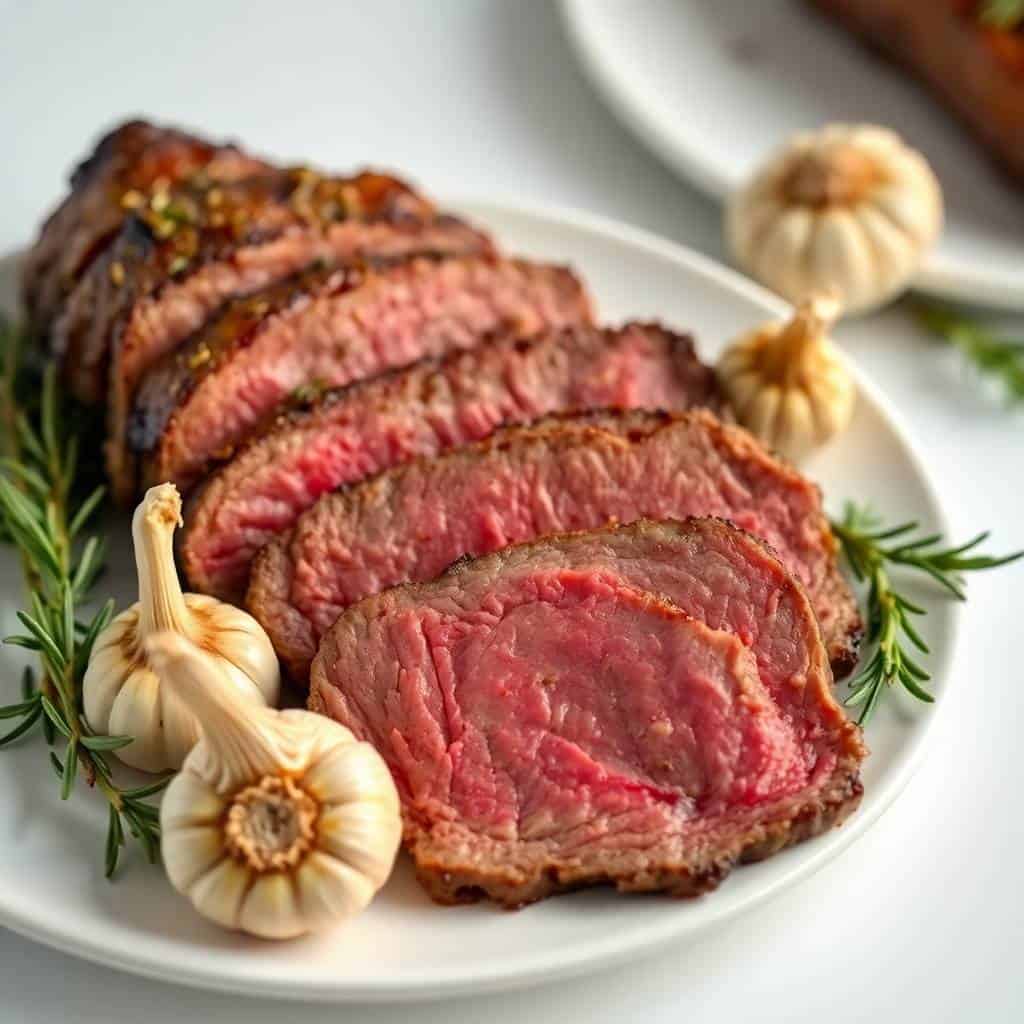
Why You'll Love This Recipe
- The herb crust is everything: Fresh rosemary and garlic mixed into a paste and rubbed all over the beef creates a crust that's dark and fragrant and slightly crisp on the edges. It's not just a coating — it actually seasons the beef as it roasts. I've tried dried rosemary in a pinch and it works, but fresh gives you something noticeably better.
- It works with several cuts of beef: I've made this with sirloin most often, but also with eye of round when I wanted something leaner, and once with a rump roast because that's what was on sale. The method holds up across all of them. Just adjust your roasting time based on the weight and your preferred doneness.
- Five ingredients, no fuss: Garlic, rosemary, olive oil, salt, pepper — that's the core of it. The Dijon mustard is optional but I like it because it helps the paste stick and adds a very subtle tang that you don't really taste in the final dish but somehow makes it feel more complete. Nothing here requires a trip to a specialty store.
- The leftovers are genuinely good: Cold roast beef sliced thin on bread with a little mustard — that's a lunch I actually look forward to. I also chop up the leftovers and stir them into a quick beef and vegetable soup the next day. The rosemary flavor holds up even after reheating, which not everything does.
- It's forgiving once it's in the oven: After you season the beef and get it into the oven, there's very little to do except check the temperature toward the end. I've used this time to make sides, set the table, or honestly just sit down for twenty minutes. As long as you use a thermometer and let it rest, it's hard to mess up the core result.
Ingredients
- 3 to 4 lbs beef roast (sirloin, rump, or eye of round)
- 3 tablespoons olive oil
- 4 cloves garlic, minced
- 2 tablespoons fresh rosemary, finely chopped (or 1 tablespoon dried, in a pinch)
- 1 teaspoon salt
- ½ teaspoon black pepper
- 1 teaspoon Dijon mustard (optional but recommended)
Directions
- Step 1: Preheat the oven — Set your oven to 450°F (230°C) and let it fully preheat while you prep the beef. High heat at the start is what builds that crust on the outside, so don't rush this step or skip it.
- Step 2: Make the herb paste — In a small bowl, combine the olive oil, minced garlic, chopped rosemary, salt, pepper, and Dijon mustard if using. Stir it all together until it forms a thick paste. It should be spreadable but not runny.
- Step 3: Dry and season the beef — Pat the roast dry with paper towels — this is important because moisture on the surface will steam the beef instead of sear it. Rub the herb paste all over every side of the roast, pressing it in firmly so it sticks.
- Step 4: Roast at high heat — Place the beef on a roasting rack in a pan and put it in the oven at 450°F for 15 minutes. You'll see the paste start to color and a crust begin to form. This is what you want.
- Step 5: Lower the heat and finish roasting — Reduce the oven temperature to 325°F (160°C) and continue roasting for about 45 to 60 minutes, or until your meat thermometer reads 135°F (57°C) for medium-rare or 145°F (63°C) for medium. The exact time depends on your roast's size and your oven, so check the temperature rather than going purely by time.
- Step 6: Rest before slicing — Remove the roast from the oven, tent it loosely with foil, and let it rest for 15 minutes. The internal temperature will continue to rise a few degrees as it rests, and the juices will redistribute throughout the meat. Slice thin and serve.
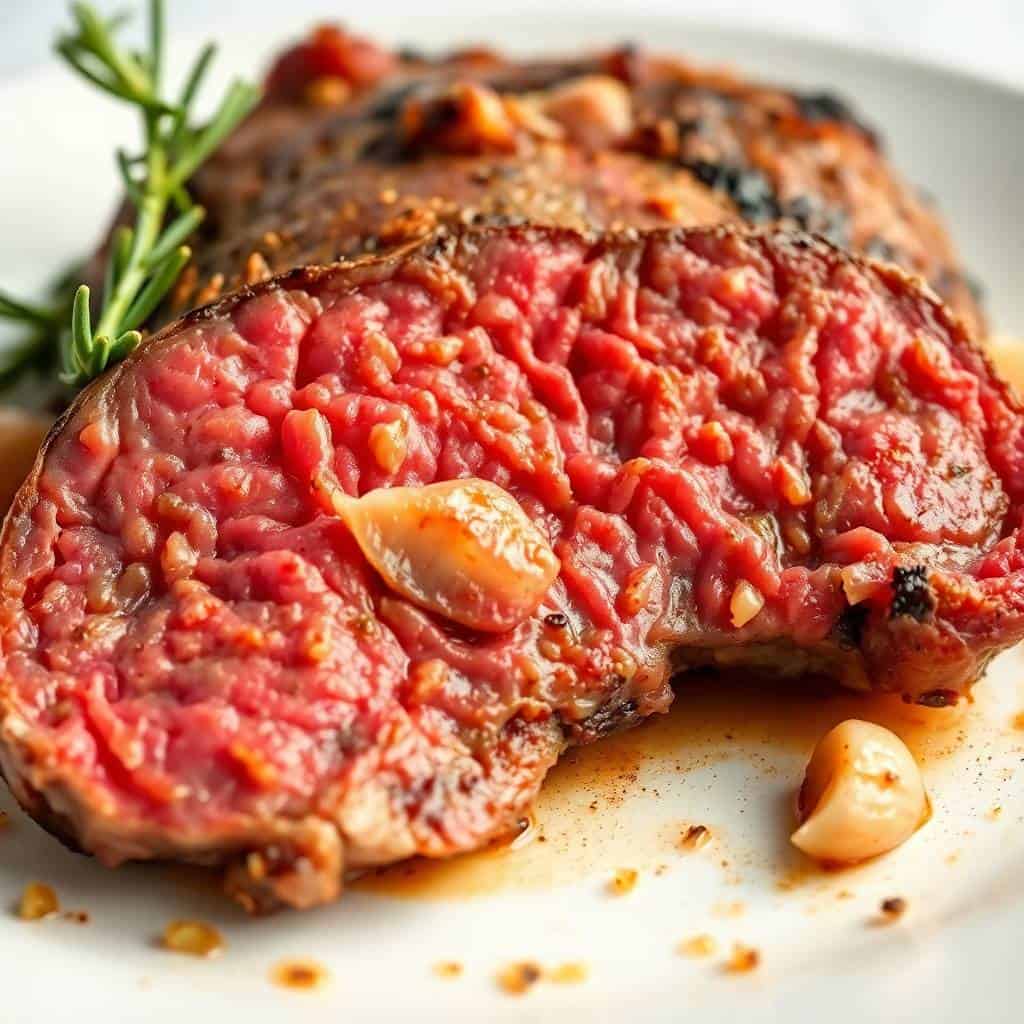
Tips for Success
- Use a meat thermometer, not a timer: Every oven is slightly different, and every roast is a different shape. The first time I made this I went by time alone and pulled it at what the recipe said — it was overcooked. A basic instant-read thermometer (I use a cheap one I picked up for under $15) removes all the guessing. Aim for 135°F for medium-rare or 145°F for medium, and pull it a few degrees before your target since it rises as it rests.
- Let the beef come to room temperature before roasting: I take mine out of the fridge about 30 to 45 minutes before it goes in the oven. Cold meat straight into a hot oven means the outside cooks faster than the inside, and you can end up with an unevenly cooked roast. This small step makes a noticeable difference.
- Don't skip drying the beef: Pat it dry with paper towels before applying the herb paste. I used to skip this and wonder why my crust wasn't as dark and crisp as I wanted. Surface moisture creates steam, and steam is the enemy of a good sear. A dry surface plus high heat equals the crust you're after.
- Use a roasting rack if you have one: Elevating the beef lets hot air circulate underneath it and prevents the bottom from sitting in its own drippings, which can make that side steamy and soft. If you don't have a rack, just prop the roast on a bed of roughly chopped onion — it works fine and the onion adds flavor to the pan juices.
- Add a splash of broth to the pan: I pour about half a cup of beef broth into the bottom of the roasting pan before it goes in the oven. It stops the drippings from scorching on the pan, and by the time the roast is done, you have a small amount of concentrated pan juice that you can spoon over the sliced beef. Nothing fancy — just a lot of flavor.
Variations
- Add thyme or sage to the paste: Rosemary is the backbone here, but mixing in a teaspoon of fresh thyme or a few chopped sage leaves gives the crust more complexity. I do this when I have both in the fridge and want something a little more layered. Thyme in particular pairs really naturally with beef.
- Make it spicy: Add half a teaspoon of smoked paprika and a pinch of red pepper flakes to the herb paste. It doesn't make the roast overtly spicy — it just adds a warmth in the background that my husband really likes. He actually started requesting this version over the original.
- Season it the night before: If you have time, rub the herb paste on the beef, wrap it tightly, and refrigerate it overnight. The salt draws into the meat and the flavors go deeper. The next day, let it come to room temperature before roasting as usual. This is my go-to when I'm making it for a celebration and want to do as little work as possible on the day.
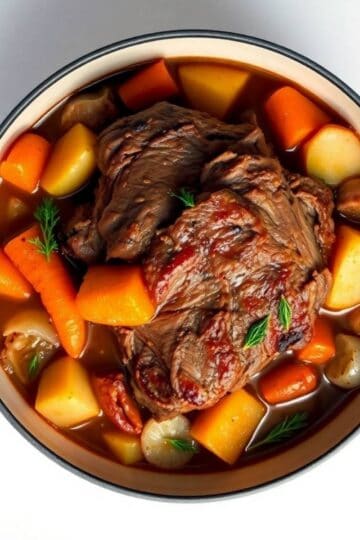
- Roast vegetables in the same pan: I'll throw quartered potatoes, chunky carrots, and halved onions into the roasting pan around the beef. They cook in the drippings and get soft and golden by the time the roast is done. It turns this into a one-pan dinner, which is always welcome on a busy Sunday.
- Slow cooker version: If you want something almost hands-off, rub the herb paste on the beef and cook it in a slow cooker on low for 6 to 8 hours. You won't get the same herb crust, but the beef will be fall-apart tender — almost a different dish entirely. I do this version on days when I know I won't have time to monitor the oven. It also works well shredded over rice or stuffed into something like birria-style tacos if you're feeling creative with leftovers.
Serving and Storage
Serving
Slice the rested roast thin — a sharp knife makes this much easier. I serve it with whatever pan juices collected in the bottom of the roasting pan spooned over the top, which keeps the slices from looking dry on the plate. Mashed potatoes are the go-to in our house, but roasted vegetables, crusty bread, or a simple green salad all work well alongside it. If you're serving this for a celebration, a small jug of the pan drippings on the table lets people pour their own.
Storage
Store leftover slices in an airtight container in the refrigerator for up to 4 days. To reheat without drying it out, I place the slices in a covered pan with a splash of broth over low heat — just until warmed through. Cold leftovers sliced thin for sandwiches are honestly one of the best parts of making this roast. If you want to freeze it, slice it first and freeze in a single layer before transferring to a freezer bag. It keeps well for up to 2 months; thaw overnight in the fridge before reheating.
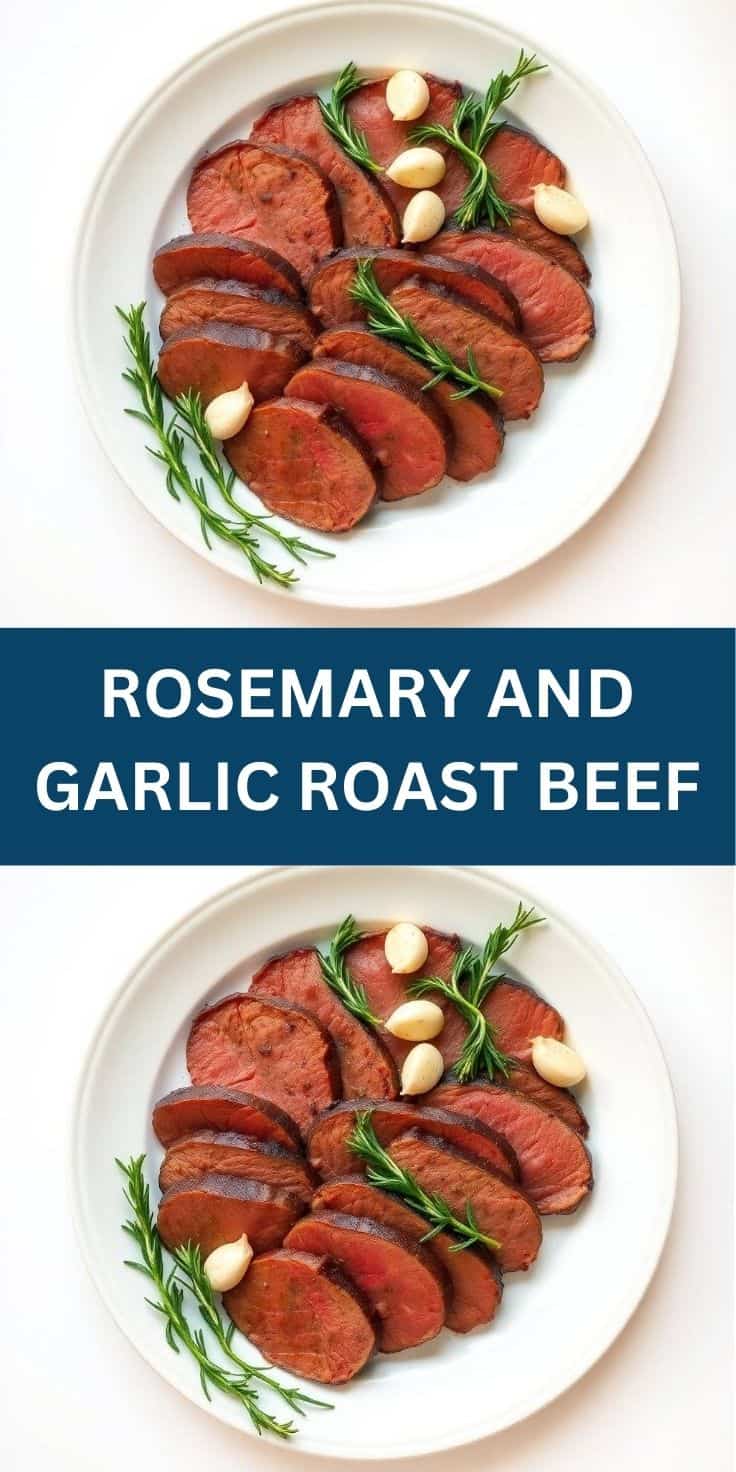
Frequently Asked Questions
Can I use dried rosemary instead of fresh?
Yes, dried rosemary works, but use only 1 tablespoon instead of 2 — dried herbs are more concentrated. The texture of the crust will be slightly different since dried rosemary doesn't meld into a paste as smoothly as fresh, but the flavor is still good. I keep fresh rosemary growing on my windowsill specifically for this recipe, but dried has saved me more than once.
What's the best internal temperature for roast beef?
For medium-rare, pull the roast at 130 to 135°F (54 to 57°C) — it will rise a few degrees while resting. For medium, aim for 140 to 145°F (60 to 63°C). Anything above 160°F starts getting into well-done territory, which is fine if that's your preference, but the beef will be noticeably firmer and less juicy. I always go medium-rare in my house.
Can I make this roast ahead of time?
You can season the beef with the herb paste up to 24 hours in advance and keep it covered in the fridge. Take it out 30 to 45 minutes before roasting so it comes to room temperature. The overnight seasoning actually improves the flavor — the salt draws into the meat and the herbs have more time to do their thing. I do this whenever I'm making it for a dinner that I need to go smoothly.
Can I freeze leftover roast beef?
Yes. Slice it first, freeze flat on a baking sheet until solid, then transfer to a freezer bag. It keeps for up to 2 months. Thaw overnight in the fridge and reheat gently in a covered pan with a splash of beef broth. It won't have the same crust texture once frozen, but it's still good — I use the thawed leftovers in soups, rice dishes, or sandwiches rather than serving them as a standalone roast.
Do I need a roasting rack?
No, but it helps. A rack lets air circulate under the beef so the bottom doesn't steam. If you don't have one, place the roast on a layer of roughly chopped onions and carrots in the pan — they prop it up, add flavor to the drippings, and you can eat them as a side. I've done this plenty of times and it works perfectly fine.
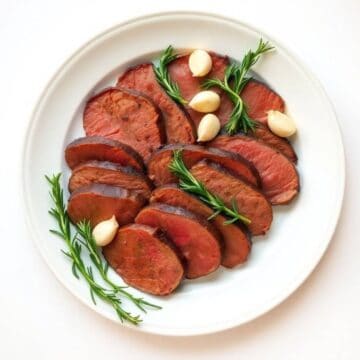
ROSEMARY AND GARLIC ROAST BEEF
Ingredients
- 3 to 4 lbs beef roast rump or sirloin
- 3 tablespoons olive oil
- 4 cloves garlic minced
- 2 tablespoons fresh rosemary chopped
- 1 teaspoon salt
- ½ teaspoon black pepper
- 1 teaspoon Dijon mustard optional
Instructions
Prepare the Oven and Roast:
- Preheat oven to 375°F (190°C).
Make the Herb Rub:
- In a small bowl, combine olive oil, garlic, rosemary, salt, pepper, and Dijon mustard if using.
Season the Beef:
- Rub the mixture all over the beef roast. Place it on a roasting pan or rack.
Roast the Beef:
- Cook in the preheated oven for about 1 hour 15 minutes, or until the internal temperature reaches 135°F (57°C) for medium-rare. Adjust time for desired doneness.
Rest and Serve:
- Remove from oven, cover loosely with foil, and let rest for 15 minutes before slicing.
Notes
- Make Ahead: Prepare the herb rub and season the beef up to a day in advance, refrigerate covered.
- Customising the Flavour: Add thyme or oregano to the herb rub for more aroma.
- Serving Suggestions: Serve with roasted vegetables, mashed potatoes, or a fresh green salad.
- Allergy-Friendly Options: Naturally gluten-free and dairy-free.
- Storage Tips: Store leftovers in an airtight container in the fridge for up to 3 days. Reheat gently.
This rosemary garlic roast beef has become one of those recipes I come back to again and again — not because it's complicated, but because it's reliable in a way that matters. The herb paste takes five minutes to mix, the oven does the heavy lifting, and the result is a roast that smells incredible, looks impressive on the table, and tastes exactly how you want a Sunday roast to taste. Saad barely touches beef most of the time, but he'll always take a slice of this one.
I usually make this on a Sunday when I want to cook something that feels like an occasion without actually being difficult. The prep is short, the hands-off time in the oven is long enough that I can get other things done, and the leftovers carry us through Monday lunch. If you're planning a bigger spread, the Father's Day meat lover recipes post has ideas for sides and other mains that go well with a table built around roast beef.
If you try this, I hope it becomes one of those dependable recipes in your rotation too. And if you're looking for something sweet to round out the meal, my Pineapple Paradise Cake is a good one to follow a hearty roast — light enough that nobody will complain they're too full. 🥩🌿✨
If you liked this recipe, here are a few more worth checking out:
- 17 Meat Lover Recipes for Father's Day — a full roundup built around big, satisfying mains
- Birria Tacos with Consommé (Slow-Cooked Beef, Crispy Tortillas) — another beef recipe worth the time investment
-
{"@context":"https://schema.org","@type":"Article","headline":"ROSEMARY AND GARLIC ROAST BEEF","description":"This Rosemary and Garlic Roast Beef is juicy, flavour-packed, and perfect for holidays or special dinners with minimal prep and bold taste.","datePublished":"2025-05-24T20:13:07+00:00","dateModified":"2026-05-03T21:25:28+00:00","author":{"@type":"Person","name":"Sana Umer","url":"https://forfoodiefriends.com/about/","description":"Self-taught home cook with 10+ years of kitchen experience. Mom of two who develops every recipe in her own kitchen.","jobTitle":"Recipe Developer & Food Blogger","image":"https://forfoodiefriends.com/wp-content/uploads/sana-umer-author-photo.jpg"},"publisher":{"@type":"Organization","name":"For Foodie Friends","url":"https://forfoodiefriends.com/","logo":{"@type":"ImageObject","url":"https://forfoodiefriends.com/wp-content/uploads/forfoodiefriends-logo.png"}},"mainEntityOfPage":{"@type":"WebPage","@id":"https://forfoodiefriends.com/rosemary-and-garlic-roast-beef/"},"image":"https://forfoodiefriends.com/wp-content/uploads/2025/05/ROSEMARY-AND-GARLIC-ROAST-BEEF.jpg"}





Comments
No Comments