
My husband doesn't really love skillet dinners — except for this one. The first time I made this garlic butter steak and potatoes, he came back for seconds without saying a word, which in our house is the highest possible compliment. It's been on regular rotation ever since.
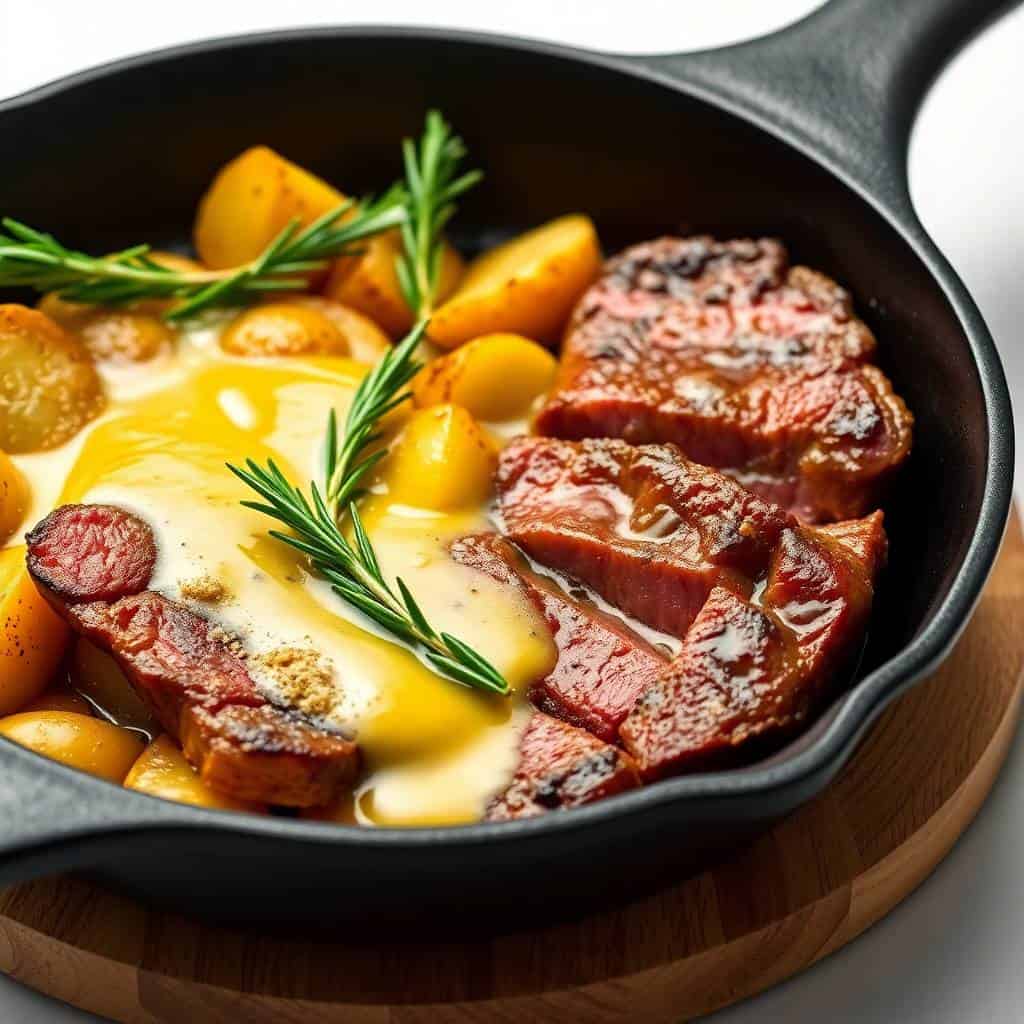
What makes this work is the order of operations. You cook the steak first, pull it out to rest, then build the garlic butter in the same pan with all those good browned bits still in there. The potatoes go in and soak up everything. By the time the steak goes back in, the whole skillet smells like something you'd pay money for at a restaurant. I've tried doing it the other way — potatoes first — and the garlic burns before the potatoes are done. Learn from my mistake.
This is the kind of dinner I pull out on a weeknight when I don't have a plan and I need something real on the table fast. It takes about 30 minutes start to finish, uses one pan, and I almost always have everything on hand. If you want something that pairs well alongside, my Meat & Potato Casserole uses a similar flavor base if you're in a heartier-dinner mood — but honestly, this skillet stands completely on its own.
One thing to set expectations on: get your skillet properly hot before the steak goes in. Not warm, not medium — hot enough that the oil shimmers. That's what gives you a real sear and a brown crust, not a grey steamed surface. A cheap cast iron or any heavy stainless skillet works perfectly. You don't need anything fancy.
Why You'll Love This Recipe
- One pan, real cleanup: Everything cooks in a single heavy skillet, which means when dinner is done, cleanup is one pan and a cutting board. On nights when I've already used every pot I own making other things, this is the recipe I reach for. No strainer, no baking sheet, no extra saucepan — just one pan and a wooden spoon.
- The garlic butter does all the heavy lifting: Three tablespoons of butter and six cloves of garlic sounds like a lot, but this is where all the flavor lives. The butter picks up the browned steak bits from the bottom of the pan, and by the time the potatoes have cooked in it, they taste like something that took twice the effort. I tried cutting back to two tablespoons of butter once to be healthier. I didn't do that again.
- Done in 30 minutes: The steak takes about 8 minutes total, the potatoes take 10-12, and the rest is just assembly. I can have this on the table faster than it takes to order takeout and wait for it. On the nights when I haven't thought about dinner until 6pm, this is what saves me.
- Works with whatever steak you have: Ribeye gives you the most flavor because of the fat marbling, but sirloin is cheaper and still great here. I've even used flat iron steak when it was on sale at Walmart and it worked fine. The garlic butter is forgiving — it makes most cuts taste better than they'd be on their own.
- Naturally gluten-free: There's no flour, no sauce from a packet, nothing hidden. If someone at your table eats gluten-free, this works without any modifications. Just double-check that your steak isn't pre-marinated in anything — some grocery store cuts come that way.
Ingredients
- 1 lb ribeye steak (or sirloin — both work well)
- 1 lb baby potatoes, halved (about 2 cups)
- 3 tablespoons unsalted butter
- 6 cloves garlic, minced
- 1 tablespoon olive oil
- 1 teaspoon dried rosemary
- 1 teaspoon dried thyme
- Salt and pepper, to taste
- Fresh parsley, chopped, for garnish (optional but worth it)
Directions
- Season the steak: Pat the steak dry with a paper towel — this matters more than people think. Wet steak steams instead of sears. Season both sides generously with salt, pepper, rosemary, and thyme. Let it sit for 5 minutes while your pan heats up.
- Sear the steak: Heat the olive oil in a large heavy skillet over medium-high heat until the oil shimmers and just starts to smoke at the edges. Add the steak and don't touch it for 3-4 minutes. Flip once, cook another 3-4 minutes for medium-rare. Pull the steak out and set it on a cutting board to rest — don't skip the rest, it's what keeps it juicy.
- Build the garlic butter: Turn the heat down to medium. Add the butter to the same skillet. Once it melts, add the minced garlic and cook for about 1 minute, stirring, until it smells fragrant. Don't walk away here — garlic goes from golden to burnt fast, and burnt garlic is bitter.
- Cook the potatoes: Add the halved baby potatoes cut-side down into the garlic butter. Cook for 10-12 minutes, stirring occasionally, until the potatoes are golden on the outside and tender when you poke them with a fork. If your skillet is crowded, the potatoes will steam instead of brown — cook in two batches if needed.
- Bring it together: Slice or return the steak to the skillet with the potatoes. Spoon the garlic butter over everything and let it cook together for 2-3 more minutes. Scatter fresh parsley on top and serve straight from the pan.
Tips for Success
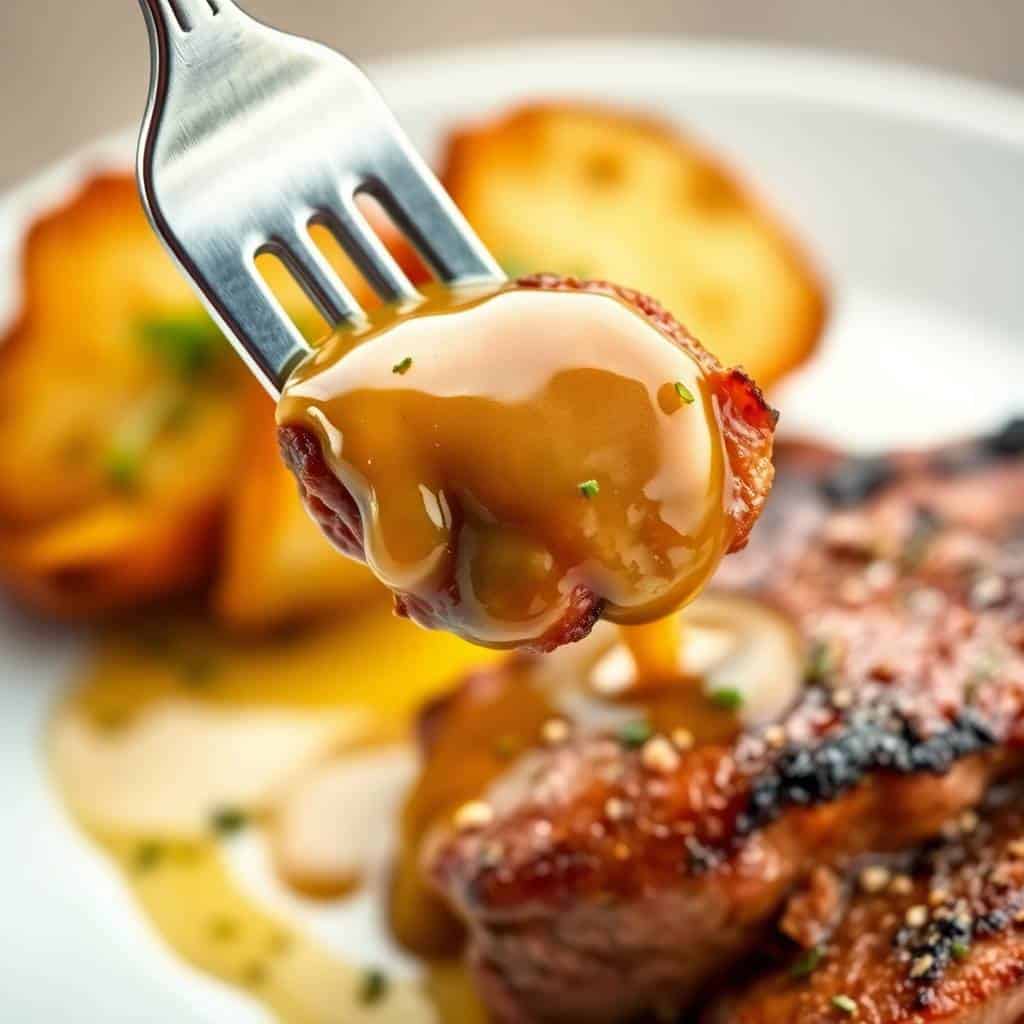
- Dry your steak before it hits the pan: I used to skip this step and wonder why my sear looked grey instead of brown. Moisture on the surface of the meat creates steam, and steam prevents browning. A quick press with a paper towel takes ten seconds and makes a real difference in the crust you get.
- Don't crowd the potatoes: This is the mistake I made the first three times. When the potatoes are touching each other in the pan, the steam gets trapped and they turn soft instead of crispy. If your skillet is a standard 10-inch, cook the potatoes in two batches, or use a 12-inch pan if you have one. It adds a few minutes but the texture is completely different.
- Let the steak rest before slicing: Five minutes on the cutting board is enough. If you cut into it the second it comes off the heat, all the juices run out onto your board instead of staying in the meat. I set a timer because I'm impatient and would otherwise skip this every time.
- Watch the garlic closely: Medium heat, not high, once you add the butter. Garlic burns in under a minute on a hot pan and the whole dish takes on a bitter taste that you can't fix. If you're nervous, take the pan off the heat for 30 seconds before adding the garlic — the residual heat is enough to cook it gently.
- Use fresh parsley if you have it: Dried parsley at the end adds almost nothing. Fresh parsley, on the other hand, gives the whole dish a little brightness that cuts through the richness of the butter. I keep a small bunch in my fridge most weeks — it's cheap and it makes a visible difference on top.
Variations
- Add mushrooms and peppers: Slice up some cremini mushrooms and half a bell pepper and throw them in with the potatoes. They cook in about the same time and the mushrooms especially absorb the garlic butter beautifully. This is actually how I make it when I want the pan to stretch to feed more people — the vegetables bulk it up without needing a second steak.
- Spicy garlic butter: Add half a teaspoon of red pepper flakes to the butter when you add the garlic. My husband does this to his portion every single time. It doesn't make the dish fiery, just gives it a low background heat that works really well with the richness of the butter. If you love shrimp cooked this way too, my Spicy Garlic Parmesan Grilled Shrimp uses a similar flavor profile.
- Steak quesadilla remix: If you have leftover steak and potatoes the next day, slice the steak thin and use it to fill quesadillas with some cheese and sliced onion. It reheats well this way and the flavors are even better the second day. I have a full recipe for Loaded Steak Quesadillas if you want to go that route.
- Lemon and herb finish: Squeeze half a lemon over the pan right before serving and add a small handful of fresh thyme. It lifts the whole dish and makes it feel lighter, which is nice in summer when heavy butter sauces feel like a lot. The lemon doesn't overpower anything — it just brightens it up.
- Swap steak for chicken thighs: Boneless skinless chicken thighs work here if steak isn't in the budget. They need a few extra minutes on each side — about 5-6 minutes — but the garlic butter treatment is just as good. This is honestly how I make it mid-month when the grocery budget is tight. The method is identical, just adjust your cook time until the chicken is cooked through.
Serving and Storage
Serving
This skillet is a complete meal on its own, but if you want to round it out, a simple green salad works well — something with a light vinaigrette to cut through the butter. In Pakistan I'd probably serve something like this with flatbread to scoop up all the pan juices, and honestly that's not a bad idea here either. If you want a second side, my Root Beer Baked Beans are a surprisingly good companion for a heartier weekend plate. Serve straight from the skillet if you want to save on dishes.
Storage
Leftovers keep in an airtight container in the fridge for up to 3 days. To reheat, skip the microwave if you can — it makes the potatoes rubbery. A few minutes in a skillet over medium heat with a tiny knob of butter gets everything back to close to how it started. The steak will cook a little more on reheat, so just warm it through, don't leave it too long. I wouldn't freeze this one; the potatoes go mealy after freezing and thawing.
Frequently Asked Questions
Can I use a different cut of steak?
Yes — ribeye is my first choice because the fat marbling keeps it tender, but sirloin, flat iron, or strip steak all work fine. Flank steak works too, but it needs to be sliced against the grain after resting or it'll be chewy. The one thing I'd avoid is a very thin-cut steak (under ½ inch) — it'll overcook before you get a decent sear on it.
Can I use regular potatoes instead of baby potatoes?
Absolutely. Just cut them into roughly 1-inch chunks so they cook at the same rate. Yukon Gold potatoes are my backup when I don't have baby potatoes — they have a buttery texture that works really well here. Russets work too but they're a little starchier and can break apart if you stir too much.
Can I make any of this ahead of time?
The potatoes can be par-boiled ahead — just boil them for 5 minutes until barely tender, then finish them in the skillet when you're ready to cook. The steak is best cooked fresh; reheated steak loses a lot. If you're prepping for a dinner party, you can have everything measured and ready, then the actual cook time is under 20 minutes.
How do I know when the steak is done without cutting into it?
The easiest way is a cheap instant-read thermometer — medium-rare is 130-135°F (54-57°C) in the center. If you don't have one, the finger test works: a medium-rare steak feels similar to the fleshy part of your palm just below your thumb when relaxed. I use a thermometer because I always second-guess myself otherwise, and they cost around $10 at any grocery store or on Amazon.
Can I add other vegetables to the skillet?
Yes, and I often do. Sliced mushrooms and bell peppers go in with the potatoes and cook in about the same time. Spinach or kale can be added in the last 2 minutes — they wilt fast. Zucchini works too but slice it thickly or it turns to mush. Just don't overcrowd the pan or everything steams instead of getting any color.
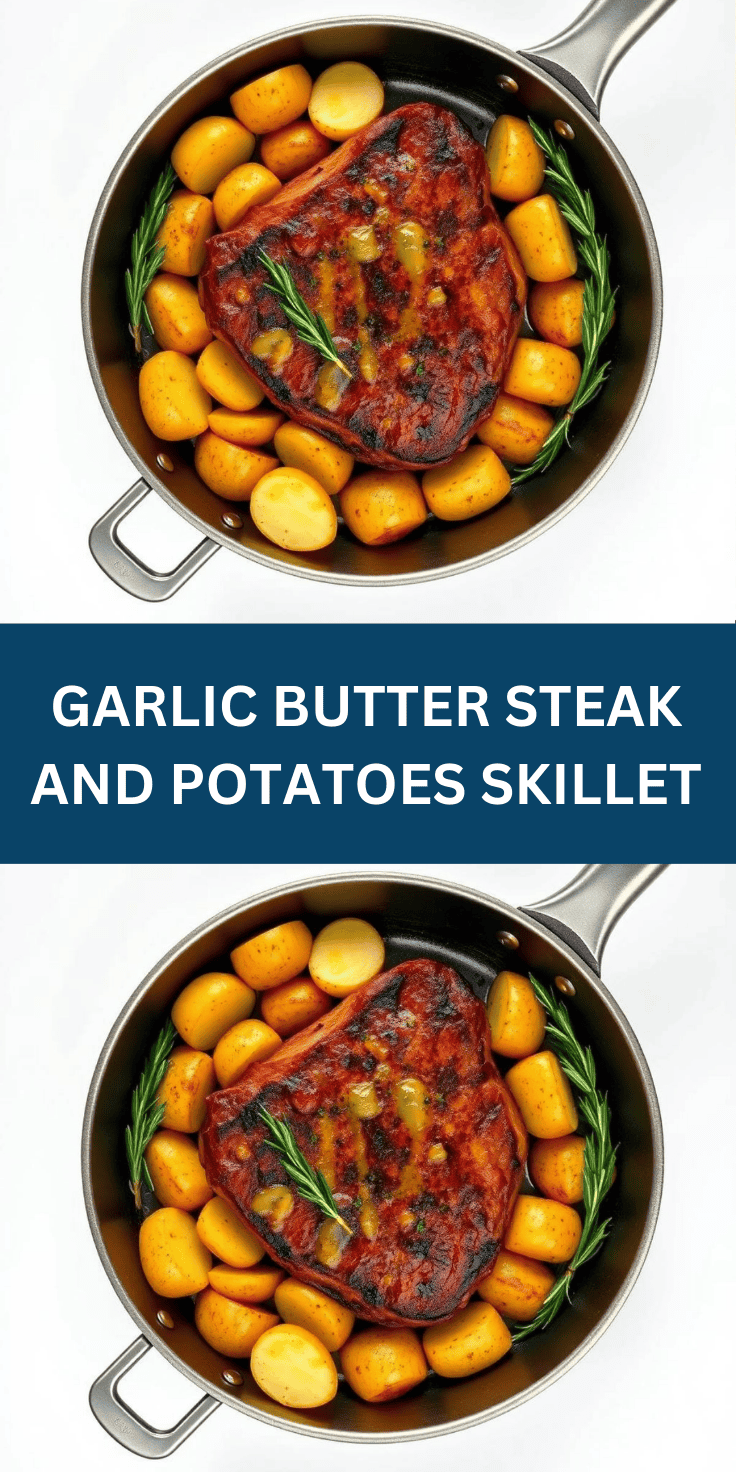
GARLIC BUTTER STEAK AND POTATOES SKILLET
Ingredients
- 1 lb ribeye steak or your preferred cut
- 1 lb baby potatoes halved
- 3 tablespoons butter
- 6 cloves garlic minced
- 1 tablespoon olive oil
- 1 teaspoon dried rosemary
- 1 teaspoon dried thyme
- Salt and pepper to taste
- Fresh parsley chopped (for garnish)
Instructions
- Season both sides of the steak generously with salt, pepper, rosemary, and thyme.
- In a large skillet, heat olive oil over medium-high heat. Add the steak and sear for 3–4 minutes per side, until browned and cooked to your liking. Remove from the skillet and set aside.
- In the same skillet, add butter and minced garlic. Cook for 1 minute until fragrant.
- Add halved baby potatoes to the skillet, cut side down. Cook for 10–12 minutes, stirring occasionally, until golden brown and tender.
- Return the steak to the skillet with the potatoes and cook for an additional 2–3 minutes, allowing everything to come together and heat through.
- Garnish with fresh parsley and serve hot.
Notes
- Make Ahead: While this recipe is best served fresh, you can prepare the potatoes in advance by boiling them, then searing them in the skillet when ready to cook.
- Customizations: Add vegetables like bell peppers, onions, or mushrooms to the skillet for extra flavour.
- Storage Tips: Store leftovers in an airtight container in the refrigerator for up to 3 days. Reheat in the skillet for the best results.
- Allergy-Friendly: This recipe is naturally gluten-free, but ensure your steak is not marinated in any gluten-containing sauces.
This is the dinner I make when I want something that feels like an effort without actually being one. Thirty minutes, one pan, and the whole family is quiet at the table — which, with two kids and a husband who all have opinions about food, is the real measure of success in my house. Saad asked me twice in one week if we could have "the steak potatoes" again, which told me everything I needed to know.
What I keep coming back to is how much flavor you get from so few ingredients. Butter, garlic, herbs, a good piece of steak — nothing exotic, nothing you need a specialty store for. Everything I use here I pick up at any regular grocery store. The technique does most of the work: a hot pan, a proper sear, not overcrowding the potatoes. Once you've made it once, you'll have it memorized.
If you have leftover steak the next day, use it for my Loaded Steak Quesadillas — thin-sliced with cheese and peppers in a hot skillet. It's one of my favorite ways to make leftovers feel intentional rather than like an afterthought. And if you're planning a full spread, the Best Homemade Salsa alongside this on the table is never a bad idea.
Make it once and you'll understand why it keeps showing up on our table. The pan basically cleans itself with the satisfaction of how fast dinner came together. 🥩🧄✨
If you liked this recipe, here are a few more you might want to try:
- Loaded Steak Quesadillas with Peppers and Melted Cheese (Crispy Skillet Dinner)
- Meat & Potato Casserole
- Spicy Garlic Parmesan Grilled Shrimp with Lemon-Herb Aioli
- Root Beer Baked Beans (Sweet, Smoky & Crowd-Pleasing)
- Cream Cheese Chicken




Comments
No Comments