
The smell of honey and warm spices hitting a hot oven is what gets everyone in my house moving toward the kitchen. Ham is one of those dishes I didn't grow up cooking — in Pakistan, it wasn't part of our table — but after moving and building a life where Christmas and Easter meant feeding a crowd, I had to figure it out. It took me a few holiday seasons to land on a glaze that actually caramelizes properly instead of just pooling in the pan.
What makes this version work is the two-stage approach: you roast covered first, low and slow, to keep the meat from drying out, then you crank the heat and baste repeatedly for that lacquered, sticky crust. The glaze itself is straightforward — honey, brown sugar, Dijon, butter, apple cider vinegar, and warm spices. Nothing fancy. But the order and timing of how you apply it is everything. The Dijon is the ingredient people are most tempted to skip, and please don't — it cuts the sweetness and gives the glaze actual depth.
My husband loves this with dinner rolls and a simple vegetable on the side. If you're putting together a full holiday spread, my Best Ever Cranberry Sauce is genuinely one of the easiest things you can make and it pairs beautifully with the sweet glaze here. I usually make this for Christmas and Easter, but honestly I've made it for a regular Sunday in February just because a big bone-in ham is cheap and the leftovers carry us through half the week.
One thing to know going in: this recipe takes about two hours total, and most of that is hands-off time in the oven. The active work — making the glaze, scoring the ham, basting — takes maybe 20 minutes across the whole cook. Set a timer for your basting intervals and you're fine.

Why You'll Love This Recipe
- That caramelized crust: The final 20–30 minutes uncovered at high heat is where the magic happens. Basting every 10 minutes builds up layer after layer of glaze until the outside is deeply golden, slightly sticky, and pulls away from the bone in the most satisfying way. I've tried skipping some of those basting rounds when I was busy with other sides — it shows. Don't skip them.
- The leftovers are genuinely worth planning for: I always buy a slightly bigger ham than I think I need because leftover honey glazed ham is one of the most useful things to have in your fridge after a holiday. It goes into egg scrambles the next morning, sandwiches for lunch, soups and casseroles for days after. I make a double batch of glaze so I have extra to drizzle over reheated slices.
- Mostly hands-off cooking: The covered roasting phase is about an hour and a half of just letting the oven do its job. That's the time I use to prep sides, set the table, or make Christmas Punch if it's a holiday. The active attention only comes in at the very end.
- Pantry ingredients, nothing obscure: Honey, brown sugar, Dijon, butter, apple cider vinegar, cinnamon, cloves — everything here comes from a regular grocery run. No specialty store needed. I've picked up all of these in one trip at Walmart or Costco without any issue.
- Works for any holiday table: I've served this for Christmas, Easter, and once just for a big family dinner in late January when we needed something that felt celebratory. It works because it looks impressive even though the technique is genuinely straightforward once you've done it once.
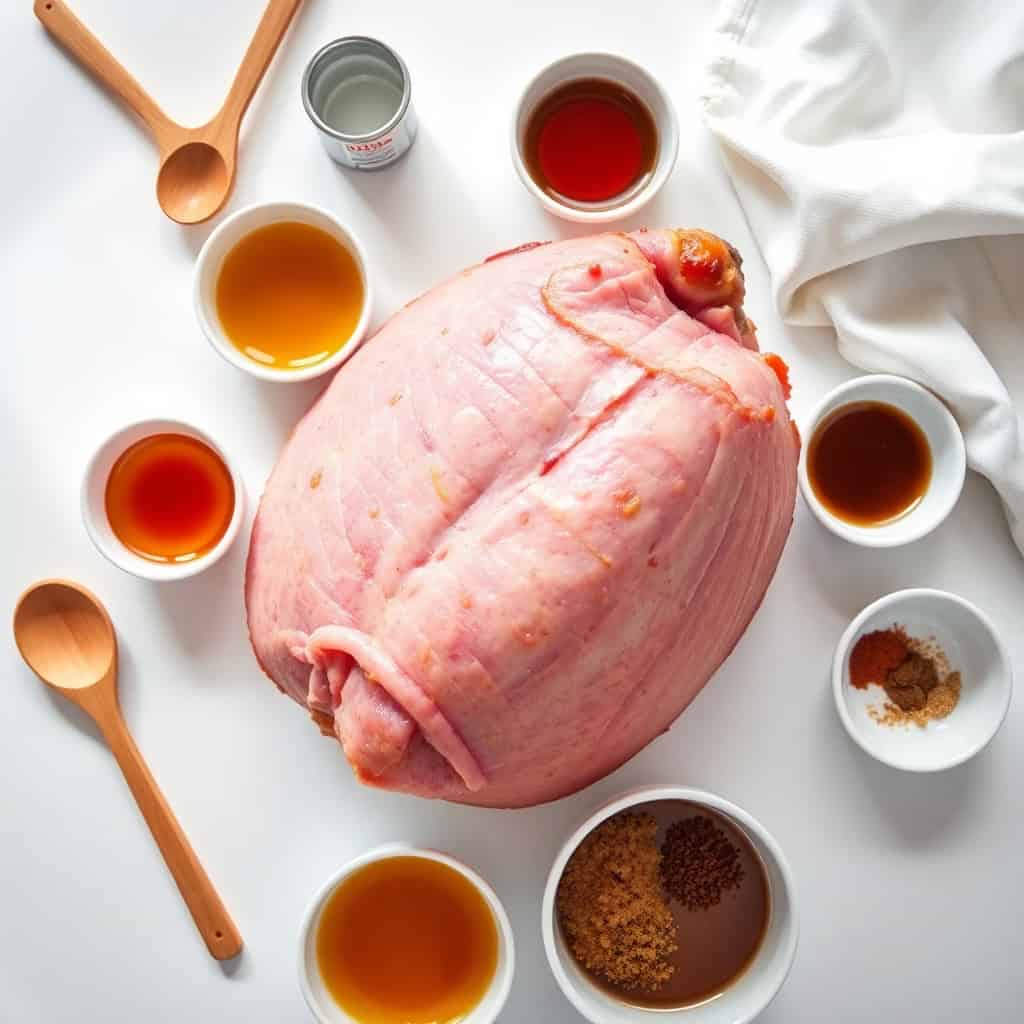
Ingredients
- 1 fully cooked spiral-cut bone-in ham (8–10 lbs)
- ½ cup honey
- ½ cup brown sugar, packed
- ¼ cup unsalted butter, melted
- ¼ cup Dijon mustard
- 2 tablespoons apple cider vinegar (or fresh orange juice works too)
- 1 teaspoon ground cinnamon
- ½ teaspoon ground cloves
- ½ teaspoon black pepper
- ½ cup water (for the bottom of the roasting pan)
Directions
- Preheat the oven: Set your oven to 325°F (163°C). Line a large roasting pan with foil — and I mean really line it well — and place a roasting rack inside. The foil isn't optional here; the glaze drips and burns onto bare pans and you will be scrubbing for a long time otherwise. I learned that the first time I made this.
- Prepare the ham: Remove the ham from its packaging and pat it dry with paper towels. Place it cut-side down on the roasting rack. If the surface isn't already scored, use a sharp knife to make shallow diagonal cuts in a crosshatch pattern across the top. This lets the glaze get down into the meat instead of just sitting on top. Pour ½ cup of water into the bottom of the pan — this creates a bit of steam and helps keep the ham moist during the long first roast.
- Make the honey glaze: In a small saucepan over medium heat, combine the honey, brown sugar, melted butter, Dijon mustard, apple cider vinegar, cinnamon, cloves, and black pepper. Stir constantly and let it simmer for 3–4 minutes until smooth and slightly thickened. It should coat the back of a spoon. Remove from heat — it will continue to thicken as it cools.
- First glaze and covered roast: Brush about half the glaze generously over the ham, getting it into those scored cuts as much as you can. Cover the pan loosely with foil and roast at 325°F for 1.5 hours. Baste with the pan juices every 30 minutes — set a timer so you don't forget. The covered time is what keeps the interior juicy.
- Uncover, glaze again, and caramelize: Remove the foil. Increase the oven temperature to 400°F (204°C). Brush the remaining glaze all over the ham generously. Return to the oven uncovered and bake for another 20–30 minutes, basting every 10 minutes with whatever glaze and drippings are pooling in the pan. This is the stage that builds the crust — stay close to the oven. If you want extra crispiness on the very outside, switch to broil on high for the last 2–3 minutes, but watch it every single second because the sugar goes from perfect to burnt faster than you'd think.
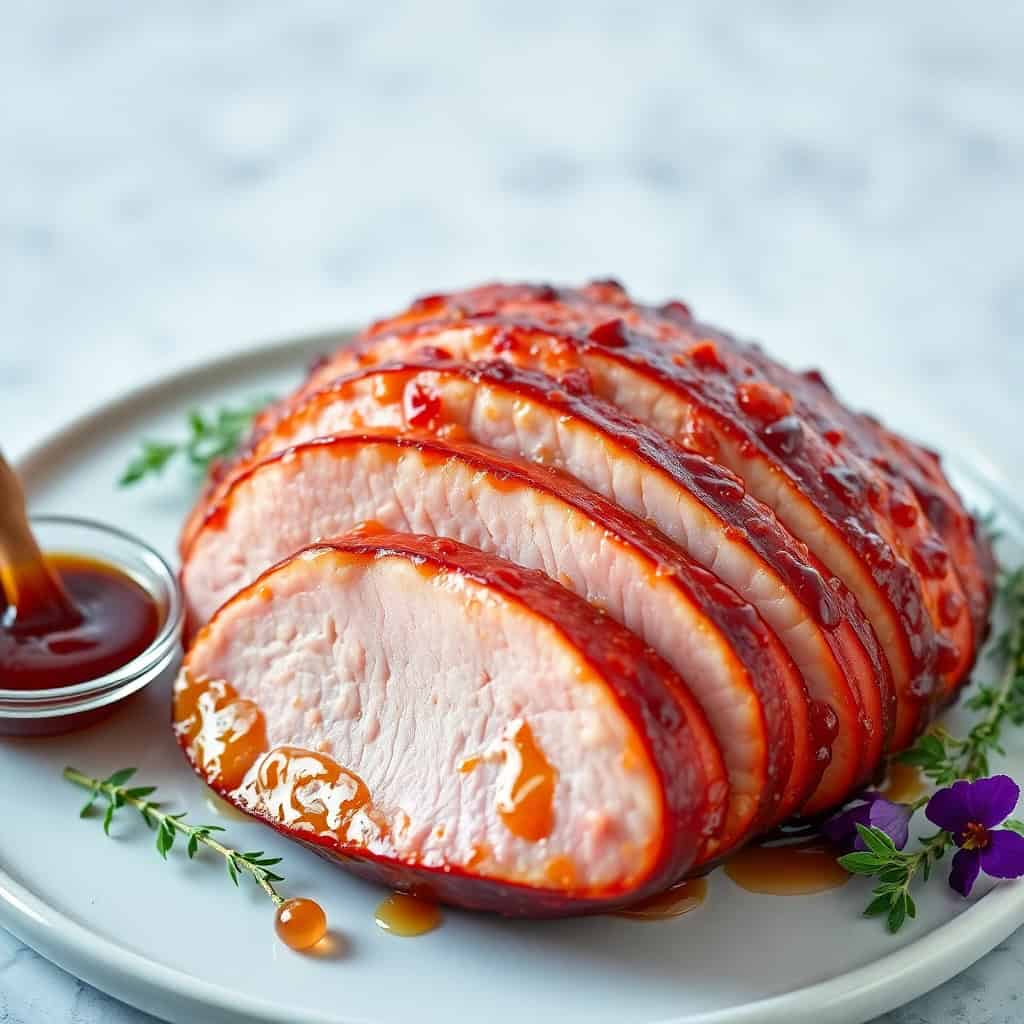
- Rest and serve: Once the ham reaches an internal temperature of 140°F (60°C), pull it out and brush on any last bit of remaining glaze. Let it rest for 10–15 minutes before slicing — this is not optional. Cutting straight in causes all the juices to run out immediately. Serve warm with extra glaze drizzled over the sliced pieces.
Tips for Success
- Score the ham before glazing: If your spiral ham isn't already scored across the top, take two minutes to do it yourself. Shallow diagonal cuts in a crosshatch pattern give the glaze somewhere to go during roasting — instead of running off the surface, it seeps into the meat. Every slice ends up flavored all the way through, not just on the outside edge.
- Use a meat thermometer: I have a cheap instant-read thermometer I bought for about $12 and it is one of the most-used tools in my kitchen. With a ham this large, guessing by time alone isn't reliable. Pull it at 140°F internal — that's the target for a fully cooked ham that's been reheated properly. Going higher dries it out.
- Don't rush the resting time: Ten to fifteen minutes feels like forever when you have a table full of people and everything else is ready. But I've cut into ham too early and watched the juice just run straight out onto the cutting board. That's all the moisture you were trying to preserve during the long roast. Let it sit.
- Baste on a timer: The every-10-minutes basting during the final uncovered phase is what builds the lacquered crust. If you get distracted by side dishes and miss a round, the glaze dries instead of building up in layers. I set my phone timer so I don't lose track. Those three basting rounds make a visible difference on the surface.
- Make extra glaze: The recipe makes enough to glaze the ham during cooking, but I always make a slightly bigger batch — maybe 1.5x — so I have warm glaze to drizzle over slices at the table. Warm glaze over a platter of sliced ham looks and tastes much better than dry slices. You can reheat it gently in the same small saucepan with a splash of water to loosen it back up. These Cornmeal Popovers with Herb Honey Butter are great alongside for soaking up any extra glaze on the plate.
Variations
- Maple glazed ham: Swap the honey for an equal amount of pure maple syrup. The flavor is a bit earthier and less floral than honey, with a slightly deeper sweetness that caramelizes beautifully. This is my second favorite version — my husband actually prefers it this way, so I alternate between the two depending on the occasion.
- Spicy honey glaze: Add ½ teaspoon of cayenne pepper to the glaze along with the other spices. It doesn't make the ham spicy exactly — it just cuts through the sweetness and adds a gentle warmth that makes the flavor more interesting. I wouldn't serve this version to young kids, but adults tend to love it.
- Orange honey glaze: Replace the apple cider vinegar with fresh orange juice and stir in 1 teaspoon of orange zest. The citrus brightens the whole glaze and makes it smell incredible in the oven. This version is particularly good at Easter — something about the citrus feels right in spring.
- Brown sugar bourbon ham: Stir 2 tablespoons of good bourbon into the glaze before simmering. The alcohol cooks off but leaves a smoky, slightly woodsy depth that makes the glaze taste more complex. This is not a version I make when the kids are the main audience, but for an adult holiday dinner it is genuinely excellent.
- Pineapple glazed ham: Add ¼ cup of pineapple juice and a couple of tablespoons of crushed pineapple to the glaze. The tropical sweetness pairs naturally with ham and gives the glaze a slightly different texture. This isn't traditional in my family but I know it's a classic American combination — it works, and the kids actually love it.
Serving and Storage
Serving
Slice the ham and arrange it on your largest platter. Drizzle warm extra glaze over the top right before it hits the table — it keeps the surface shiny and adds flavor to every slice. This ham pairs well with mashed potatoes, roasted vegetables, dinner rolls, and cranberry sauce. If you're building out a full holiday spread, my Best Ever Cranberry Sauce is a five-minute side that balances the sweetness here really well. For drinks, a big batch of Christmas Punch on the table alongside this ham is a combination I've come back to every holiday season.
Storage
Store leftover ham in an airtight container in the refrigerator for up to 5 days. To reheat, wrap slices in foil and warm in a 300°F oven for 10–15 minutes — this keeps them from drying out. Individual slices can also be microwaved on medium power, covered with a damp paper towel, in 30-second bursts. To freeze, wrap cooled ham tightly first in plastic wrap, then in a layer of foil, and freeze for up to 3 months. Thaw overnight in the refrigerator before reheating. Frozen ham works particularly well shredded into soups or scrambled into eggs where the texture change matters less.

Frequently Asked Questions
Can I use a boneless ham instead of bone-in?
Yes, boneless ham works fine with this exact glaze and method. The main difference is cooking time — boneless hams heat through faster, so start checking the internal temperature earlier than the recipe suggests and pull it at 140°F. The scoring, glazing, and basting process stays the same. Boneless is also much easier to carve if you're serving a crowd that isn't comfortable around a big bone.
How do I keep the ham from drying out?
Two things help here: keeping it covered with foil for most of the roasting time, and putting water in the bottom of the pan. The foil traps steam and the water prevents the drippings from scorching and drying out the environment in the pan. Only uncover for the final 20–30 minutes when you're building the crust. Basting regularly during both phases also keeps the surface from drying out between glaze applications.
Do I have to use Dijon mustard?
The Dijon adds a tangy depth that keeps the glaze from being one-dimensionally sweet — it's doing real work in there. That said, yellow mustard or whole grain mustard both work as substitutes if that's what you have. If you genuinely dislike mustard, leave it out and add an extra tablespoon of apple cider vinegar to maintain some of that acidic balance. The glaze will still caramelize well either way.
What's the best way to reheat leftover glazed ham?
Wrap the portion you want to reheat tightly in foil and put it in a 300°F oven for 10–15 minutes. The foil creates a little steam pocket that keeps the meat from drying out. For single slices, a microwave on medium power covered with a damp paper towel in 30-second increments works well. I usually drizzle a spoonful of reserved glaze over reheated slices — it brings them back to life quickly.
Can I freeze leftover honey glazed ham?
Yes. Wrap cooled leftover ham in plastic wrap first, then cover it in a layer of foil, and freeze for up to 3 months. Thaw overnight in the refrigerator before reheating. The texture after freezing and reheating isn't quite the same as fresh — it can get a bit more crumbly — so I use frozen ham in soups, egg dishes, or casseroles rather than trying to serve it as slices again.

This isn't a dish I grew up with, and I won't pretend it's authentic to any particular tradition — it's just a really solid, reliable honey glazed ham that I've made enough times now to know exactly what works. The glaze is simple, the technique is repeatable, and the result every time is a ham with a genuinely beautiful crust and juicy interior that carries a holiday table without any stress on my end.
If you have leftover ham a day or two later, Zainab likes cold slices straight from the fridge in a sandwich, which is not glamorous but is genuinely good. I use the rest in egg scrambles or a simple soup with whatever vegetables need using up. A big bone-in ham for the price you pay at Costco is honestly one of the better value holiday investments I make all year.
If you're building out a full holiday dinner around this, the Best Ever Cranberry Sauce is a five-minute addition that I always have on the table alongside this ham. And if you need a showstopping no-bake dessert to finish the meal, my Christmas Fudge with Chocolate and Candy Cane is the kind of thing that disappears before dinner is even fully cleared.
This is the ham I come back to every holiday season, and once you've made it once, I think you'll understand why. 🍯🎄✨
If you liked this, you'll probably enjoy these too:
- Best Ever Cranberry Sauce — a five-minute side that belongs on every holiday table
- Cornmeal Popovers with Herb Honey Butter — great for soaking up glaze and pan drippings
- Christmas Punch — the drink I make every time this ham is in the oven
- Christmas Fudge with Chocolate and Candy Cane — no-bake, makes a great edible gift
- Garlic Herb Salmon with Asparagus and Potatoes — for when you want a one-pan dinner that's just as easy but a bit lighter



Comments
No Comments