
Sheet pan dinners get a bad reputation for being boring, but this one earns its place in my regular rotation. Salmon, baby potatoes, and asparagus all roast together in one pan while garlic herb butter ties everything into something that tastes like you put in a lot more effort than you actually did.
The trick that makes this work is staggering the cook times. Potatoes need a head start — about 15 to 20 minutes before the salmon goes in. I made the mistake of adding everything at once the first time I made this, and I ended up with overcooked fish and half-raw potatoes. Not great. Now I roast the potatoes first, push them to the side, then add the salmon and asparagus. Everything finishes at the same time and nothing gets ruined.
My husband eats this without complaint, which in our house is a win — he's more of a biryani person. I've also been making this on nights when I don't feel like cooking something elaborate but still want the table to look like I did. If you like the idea of easy dinners that don't taste like you phoned it in, my one-pan garlic sausage alfredo rigatoni follows a similar logic.
One thing to set expectations on: the salmon won't have a crispy crust the way it would if you seared it in a skillet. It's a roasted salmon — flaky, tender, and coated in that garlic butter — not pan-seared. If you're okay with that, this dinner comes together in under 40 minutes with one pan to wash.
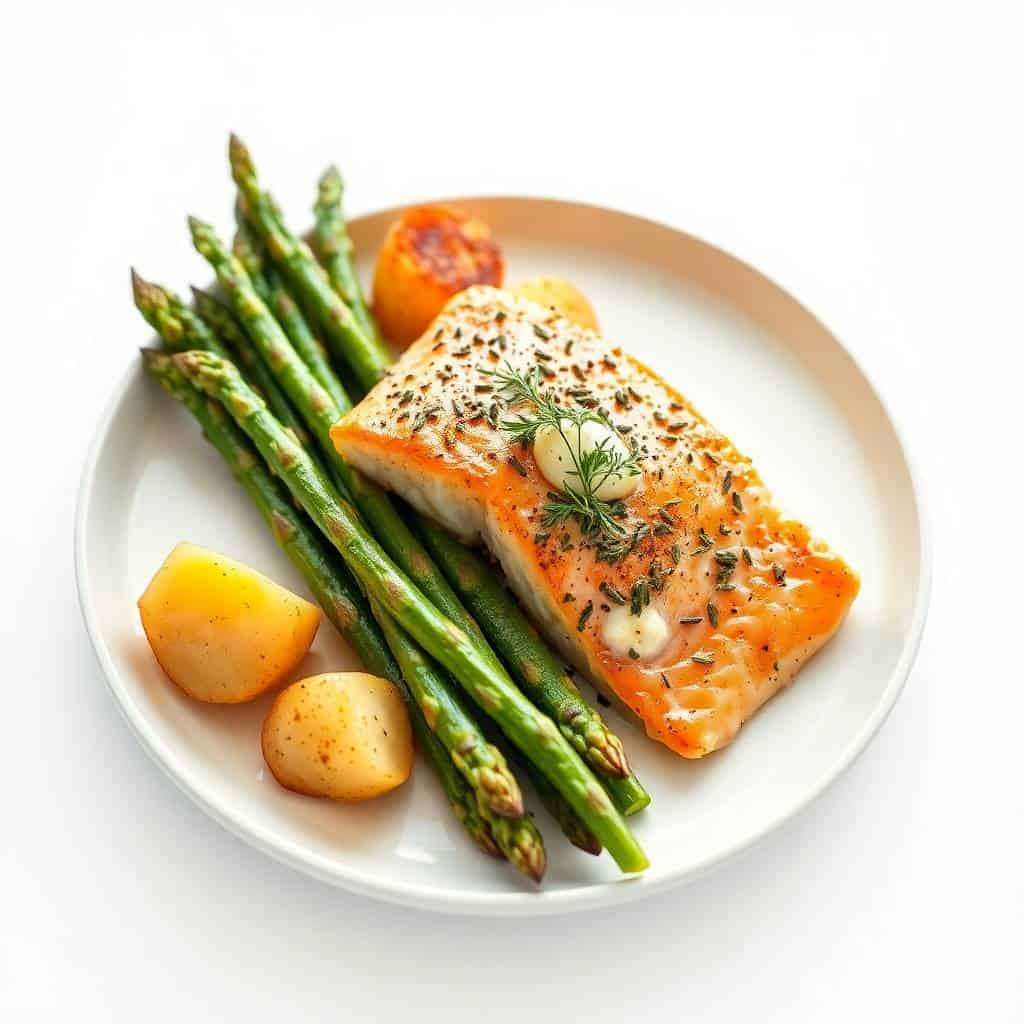
Why You'll Love This Recipe
- One pan, minimal cleanup: Everything — potatoes, asparagus, salmon — goes on the same sheet pan. I line it with foil, and when dinner is done, I fold the foil up and toss it. There have been nights where I washed exactly zero dishes after this meal, and I'm not even ashamed of it.
- Real garlic butter flavor that goes into everything: The butter and garlic don't just sit on top of the salmon — they pool on the pan and baste the potatoes and asparagus too. By the end, every component has absorbed some of that flavor, which is why this doesn't taste like separate ingredients just cooked near each other.
- It's a complete dinner on one tray: Protein, starch, vegetable — all on one pan. I don't need to make a side salad or cook rice separately. On chaotic weeknights, that matters more than I expected it to when I first started making this.
- Flexible with what you have: Asparagus not in season? Broccoli works. Don't have fresh parsley? Skip it — the dried thyme and Italian seasoning carry the flavor on their own. I've made this with whatever was in the produce drawer and it's always come out fine.
- Done in under 40 minutes: The potatoes roast for 15 minutes on their own, then everything else goes in for another 12 to 15. You're looking at roughly 35 to 40 minutes start to finish, including the prep. That's a real weeknight dinner timeline.
Ingredients
- 4 salmon fillets
- 1 lb (450g) baby potatoes, halved
- 1 bunch asparagus, woody ends trimmed
- 3 tablespoons olive oil, divided
- 3 tablespoons butter, melted
- 4 garlic cloves, minced
- 1 tablespoon lemon juice (fresh or bottled both work)
- 1 teaspoon Italian seasoning
- 1 teaspoon dried thyme
- Salt and black pepper, to taste
- Lemon slices and fresh parsley, for garnish
Directions
- Preheat the oven: Set your oven to 400°F (200°C) and line a large baking sheet with parchment paper or foil. The lining isn't optional if you want easy cleanup — the butter will caramelize on the pan and become a nightmare to scrub otherwise.
- Start the potatoes: Toss halved baby potatoes with 1 tablespoon of olive oil, a good pinch of salt and pepper, and half the minced garlic. Spread them cut-side down on the pan — cut-side down is what gives you that golden surface. Roast for 15 minutes.
- Make the garlic herb butter: While the potatoes roast, mix together the melted butter, remaining 2 tablespoons of olive oil, the rest of the garlic, lemon juice, Italian seasoning, and thyme. Season with salt and pepper. This is the sauce that does most of the flavor work.
- Add the salmon and asparagus: Pull the pan out after 15 minutes. Push the potatoes to one side. Lay the salmon fillets and asparagus spears on the pan. Spoon the garlic herb butter over the salmon and drizzle the rest over the asparagus. Don't skip coating the asparagus — it gets a little bitter if it roasts dry.
- Roast everything together: Return the pan to the oven and bake for 12 to 15 more minutes, until the salmon flakes easily when pressed with a fork and the asparagus is tender with a little color on the tips. The salmon is done when it reaches an internal temperature of 145°F — I keep a cheap instant-read thermometer for this because I've overcooked salmon enough times to know I can't eyeball it reliably.
- Finish and serve: Squeeze fresh lemon over everything right before serving and scatter some chopped parsley on top. Let the salmon rest for a minute or two on the pan before plating — it holds together better that way.
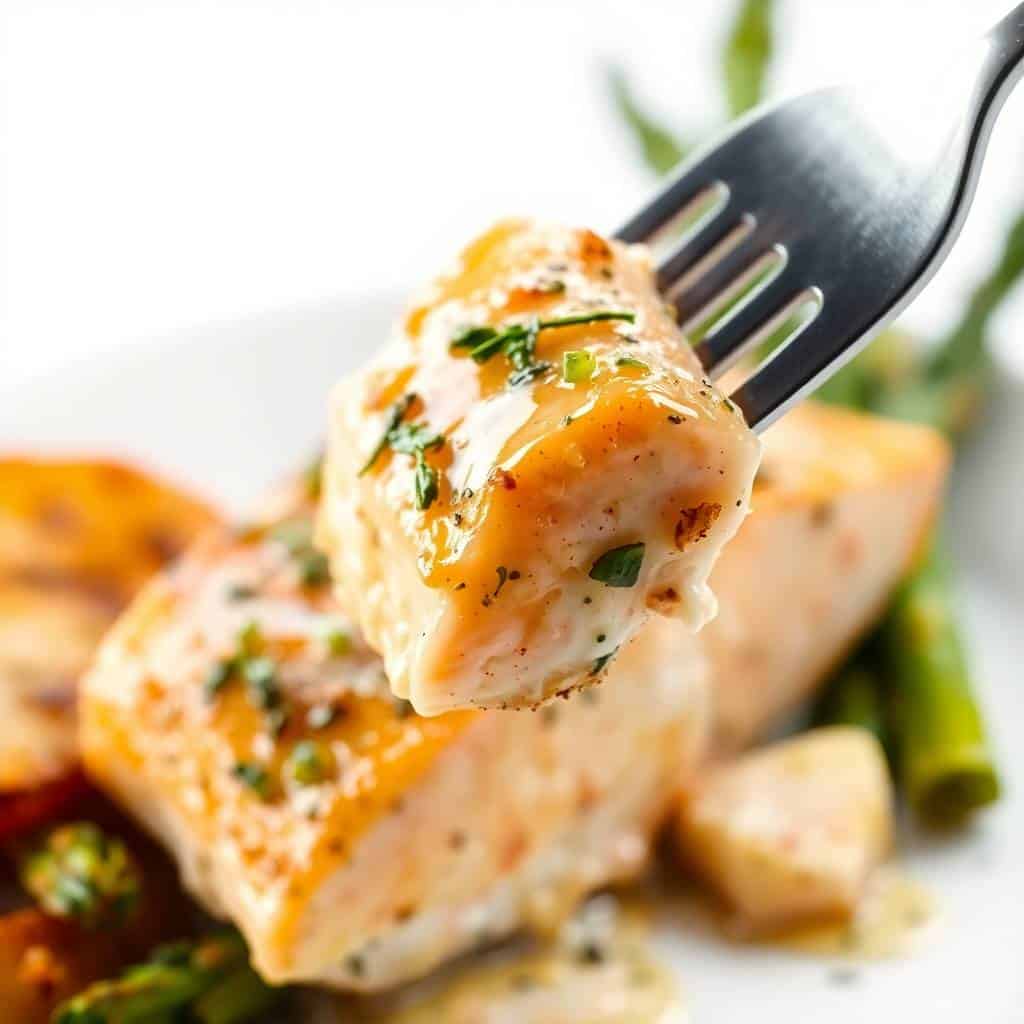
Tips for Success
- Give the potatoes a head start — every time: I cannot stress this enough. If you put everything on the pan at once, you will either have raw potatoes or dry salmon. The 15-minute head start for the potatoes is what makes the timing work. It's a small extra step that makes a big difference.
- Pat the salmon dry before seasoning: I learned this after wondering why my salmon was steaming instead of roasting. If there's moisture on the surface, the fish won't get any color and the butter won't stick well. A quick pat with paper towels takes ten seconds and makes a real difference to the final texture.
- Cut potatoes to a similar size: If some are large halves and some are small, they'll cook unevenly. I try to cut any bigger ones into quarters so everything is roughly the same size. It sounds fussy but it takes 30 seconds and means you don't end up with some mushy and some undercooked.
- Don't overcook the salmon: Salmon goes from perfect to dry very quickly. Start checking at 12 minutes. When it flakes with gentle pressure from a fork and the color has shifted from deep orange to pale throughout, it's done. If you have thin fillets, they may only need 10 minutes once they go on the pan.
- Trim the asparagus properly: The woody ends are tough and unpleasant to chew. The easiest way to find the natural snapping point is to bend one spear gently — it'll snap where the woody part ends. Then line up the rest of the bunch and cut them all to that length. You don't have to snap every single one.
Variations
- Swap in sweet potatoes: Cut sweet potatoes into ¾-inch cubes and they'll roast in about the same time as baby potatoes. The sweetness works surprisingly well against the garlic and lemon. I've made this version when I wanted something a little heartier, and it went over well.
- Change up the vegetables: Broccoli florets, trimmed green beans, sliced zucchini, or halved Brussels sprouts all work here. Just keep in mind that thicker vegetables need more time, so cut them smaller if substituting. The easy Asian cucumber salad also makes a great fresh side if you want something cool alongside this warm pan.
- Add a Dijon layer: Mix a tablespoon of Dijon mustard into the garlic herb butter before spreading it on the salmon. It adds a sharp, tangy note that cuts through the richness of the butter nicely. My husband prefers this version — he likes the extra edge of flavor.
- Make it dairy-free: Replace the butter with an equal amount of olive oil. The flavor is slightly different — less rich, more straightforward — but it still works well. The garlic and herbs carry the dish either way.
- Add a spice kick: Stir a pinch of red pepper flakes or a little smoked paprika into the herb butter. In Pakistan we'd probably add a little more heat than this recipe calls for by default, so I sometimes double the red pepper flakes for myself while keeping the kids' portions mild.
Serving and Storage
Serving
Serve straight from the pan — it looks good that way and saves you a serving dish to wash. Set out a few lemon wedges on the side because some people (my husband) want extra. If you want to round the meal out further, crusty bread for soaking up the garlic butter is a good call. A simple green salad alongside works too, though honestly the asparagus and potatoes already make this a complete meal on their own.
Storage
Store leftovers in an airtight container in the refrigerator for up to 2 days. Salmon doesn't reheat as well as, say, chicken — it can dry out quickly in the microwave. I reheat it covered in the oven at 300°F for about 10 minutes, which keeps it from drying out. The potatoes and asparagus reheat well either way. I wouldn't freeze this one — the salmon texture suffers after freezing and thawing.
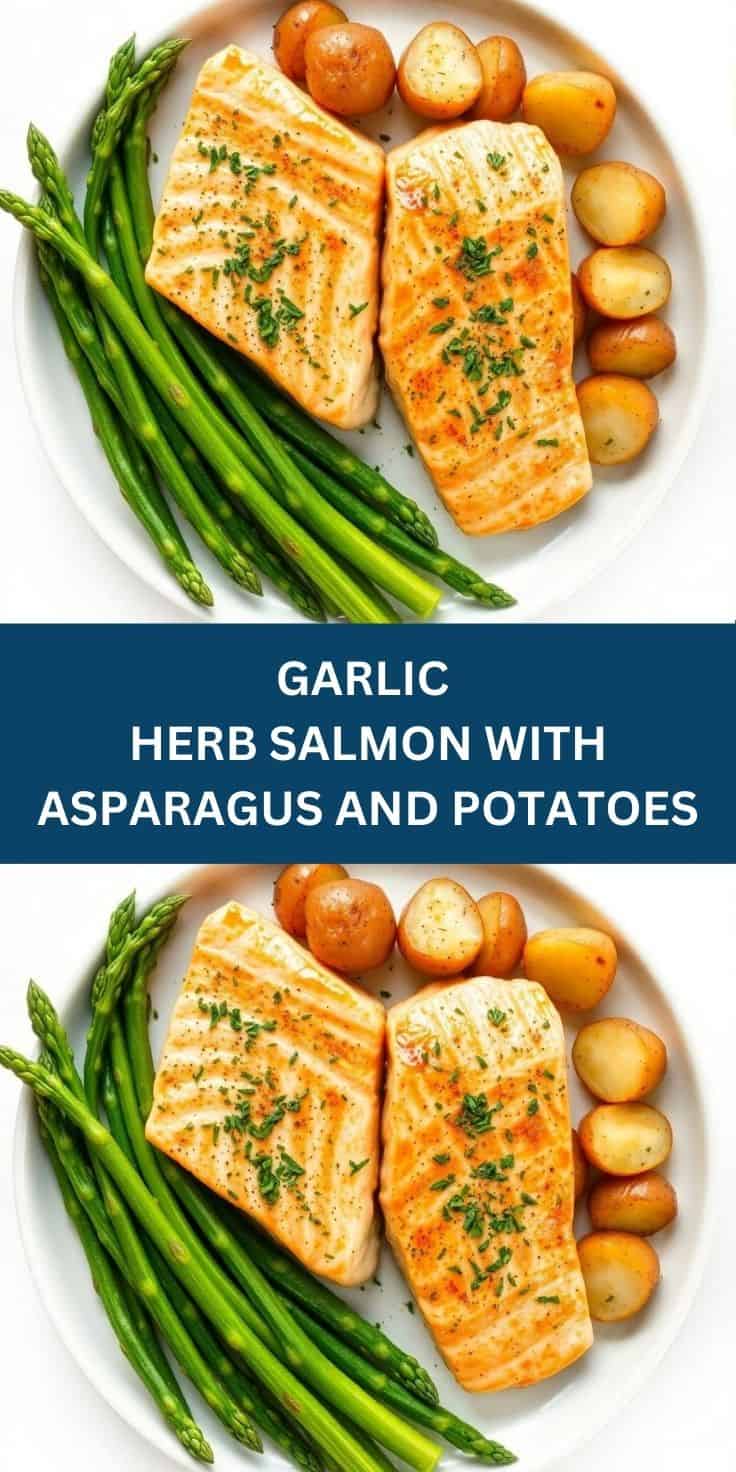
Frequently Asked Questions
Can I use frozen salmon for this recipe?
Yes, but thaw it completely first and pat it very dry before seasoning. Frozen salmon tends to release a lot of water as it cooks, which will steam the fish instead of roasting it and make the butter sauce watery. I thaw mine in the fridge overnight or in a bowl of cold water for about 30 minutes if I'm short on time.
Do I need to peel the baby potatoes?
No — leave the skins on. Baby potato skins are thin enough that they roast up nicely and add a little texture to the dish. Peeling them would just add extra work and you'd lose that slightly crisp edge on the cut side. I've never peeled them for this recipe.
Can I prep any of this in advance?
Yes, and I do this regularly on busy weeks. You can halve the potatoes, trim the asparagus, and mix the garlic herb butter up to a day ahead — store everything separately in the fridge. When you're ready to cook, just pull it all out, preheat the oven, and go. It saves about 10 minutes of prep on a weeknight when that 10 minutes actually matters.
What internal temperature should the salmon reach?
The FDA recommends 145°F (63°C) for fully cooked salmon. I use a cheap instant-read thermometer to check — it takes the guesswork out of it completely. If you don't have one, look for salmon that flakes easily when you press it gently with a fork and has turned from translucent to opaque all the way through.
Is this recipe gluten-free?
All the ingredients as listed are naturally gluten-free. Just check the labels on your Italian seasoning blend and any pre-mixed spices — some brands add fillers that contain gluten. If you're cooking for someone with celiac disease, it's worth verifying the specific products you use.
GARLIC HERB SALMON WITH ASPARAGUS AND POTATOES
Ingredients
- 4 salmon fillets
- 1 lb baby potatoes halved
- 1 bunch asparagus trimmed
- 3 tablespoons olive oil
- 3 tablespoons melted butter
- 4 garlic cloves minced
- 1 tablespoon lemon juice
- 1 teaspoon Italian seasoning
- 1 teaspoon dried thyme
- Salt and pepper to taste
- Lemon slices and fresh parsley for garnish
Instructions
Preheat Oven:
- Preheat your oven to 400°F (200°C). Line a large baking sheet with parchment or foil.
Roast the Potatoes:
- Toss halved potatoes with 1 tablespoon olive oil, salt, pepper, and half the garlic. Roast for 15 minutes.
Add Salmon and Asparagus:
- Push potatoes to the side. Place salmon and asparagus on the tray. Drizzle everything with melted butter, remaining olive oil, garlic, lemon juice, Italian seasoning, and thyme.
Bake:
- Return tray to oven and bake 12–15 minutes more, or until salmon flakes and potatoes are tender.
Serve:
- Garnish with lemon slices and fresh parsley. Serve warm.
Notes
Swap butter with extra olive oil. Storage:
Refrigerate leftovers in an airtight container for up to 2 days.
This is the kind of dinner I come back to when I want something that feels put-together without actually being complicated. The garlic butter does the heavy lifting flavor-wise, and the oven does the rest. I've served this to guests and made it on a random Tuesday — it works equally well in both situations.
What I appreciate most about it is that the whole thing is one pan and one sauce. There's no complicated technique, no special equipment, nothing you'd need to run to a specialty store for. The ingredients are the kind you can pick up at any Walmart or Aldi without a second thought. A regular sheet pan, a bit of foil, and you're set.
If you're looking for more one-pan dinners for the week, my taco stuffed peppers are another favorite in this house that come together with similar ease. And if you want something completely different to round out the week, the Thai red curry noodle soup is worth adding to the rotation too.
I hope this one finds its way into your regular weeknight lineup. It's earned a permanent spot in mine. 🍋🐟✨
If you liked this recipe, you might also enjoy these:
- One-Pan Garlic Sausage Alfredo Rigatoni
- Taco Stuffed Peppers
- Thai Red Curry Noodle Soup
- Easy Asian Cucumber Salad




Comments
No Comments