
Nigerian cuisine is a vibrant celebration of bold flavors, diverse ingredients, and rich traditions.
These 35 traditional Nigerian recipes bring the taste of Nigeria to your kitchen, with dishes perfect for family meals, special occasions, or exploring something new.
Staples like jollof rice, a savory one-pot rice dish, and egusi soup, a hearty melon seed soup, highlight the use of spices and fresh ingredients.
Try the smoky, peppery delight of suya, Nigerian-style grilled meat skewers, or enjoy puff-puff, a popular deep-fried snack with a hint of sweetness.
These recipes also include iconic dishes like moi moi (steamed bean pudding), eba and okra soup, and banga soup, all reflecting the regional diversity of Nigeria's food culture.
Whether you're new to Nigerian cuisine or looking to recreate nostalgic flavors, these dishes are sure to impress.
Traditional Nigerian Recipes for Authentic African Flavors

35. Suya Beef Kebabs

Nigeria's most beloved street food — thin strips of beef coated in a bold, aromatic suya spice blend made from ground roasted peanuts, ginger, paprika, and garlic, grilled over charcoal until charred and smoky. Found at every roadside suya spot from Lagos to Kano, these skewers are served wrapped in newspaper with sliced onions, tomatoes, and extra suya spice. A spectacular addition to any kabob recipe collection and our easy healthy grilling recipes.
Ingredients:
- 1½ lbs beef sirloin or flank steak, sliced very thinly against the grain into long strips
- Suya spice (yaji): ¼ cup roasted peanuts (ground to a fine powder), 1 tablespoon ginger powder, 1 tablespoon paprika, 1 teaspoon garlic powder, 1 teaspoon onion powder, 1 teaspoon cayenne pepper, ½ teaspoon salt — mix all together
- 2 tablespoons vegetable oil
- Wooden or metal skewers
- For serving: sliced red onions, sliced tomatoes, sliced cucumber, extra suya spice for sprinkling
Instructions:
- Mix together all the suya spice ingredients. Brush the beef strips with vegetable oil on both sides, then coat generously in the suya spice mixture — press it in firmly so it adheres well.
- Thread the seasoned beef strips lengthwise onto skewers, weaving the meat so it lies flat and compact. The thinner the strips, the better the char and flavour penetration.
- Marinate on the skewers for at least 30 minutes — 2 hours refrigerated gives the best result.
- Grill over high heat for 3–4 minutes per side until the suya spice coating is charred and fragrant and the beef is cooked through. Serve immediately scattered with sliced onions, tomatoes, and cucumber, with extra suya spice sprinkled over the top.
34. Pounded Yam and Egusi Soup

One of the most celebrated combinations in all of West African cuisine — smooth, elastic, stretchy pounded yam served alongside a deeply flavourful egusi soup made from ground melon seeds, assorted meats, fish, and leafy greens. The pounded yam is shaped into balls and used to scoop up the thick, rich soup in a deeply satisfying eating experience. A foundational meal of Nigerian culture and hospitality.
Ingredients:
- Pounded yam: 2 lbs white yam, peeled and cut into chunks
- Egusi soup: 2 cups ground egusi (melon seeds), 1 lb assorted meats (goat, beef, tripe), 2 tablespoons crayfish (ground dried shrimp), 2 stock cubes, 1 cup palm oil, 1 large onion (blended), 3 scotch bonnet peppers (blended), 2 cups spinach or bitter leaf, salt to taste
Instructions:
- Make the pounded yam: boil the yam chunks in salted water until completely tender — about 20 minutes. Drain thoroughly. In a mortar and pestle or heavy pot, pound the yam vigorously, adding very small splashes of hot water to keep the dough from sticking, until completely smooth, stretchy, and elastic with no lumps. Alternatively, use a stand mixer with a dough hook on high speed for 8–10 minutes. Shape into smooth balls.
- Cook the meats: season the assorted meats with stock cubes, onion, and salt. Pressure cook or simmer with a little water until completely tender. Reserve the meat stock.
- Make the egusi: heat palm oil in a pot over medium heat. Mix the ground egusi with a little water to form a paste. Add in spoonfuls to the hot oil and fry, stirring, for 5–7 minutes until the egusi is fried and fragrant. Add the blended onion and scotch bonnet. Cook 5 minutes.
- Add the meat stock, cooked meats, and ground crayfish. Simmer 10 minutes. Add the leafy greens and cook 3 more minutes. Season well. Serve the egusi soup in a bowl alongside the pounded yam balls.
33. Nigerian Fish Pepper Soup
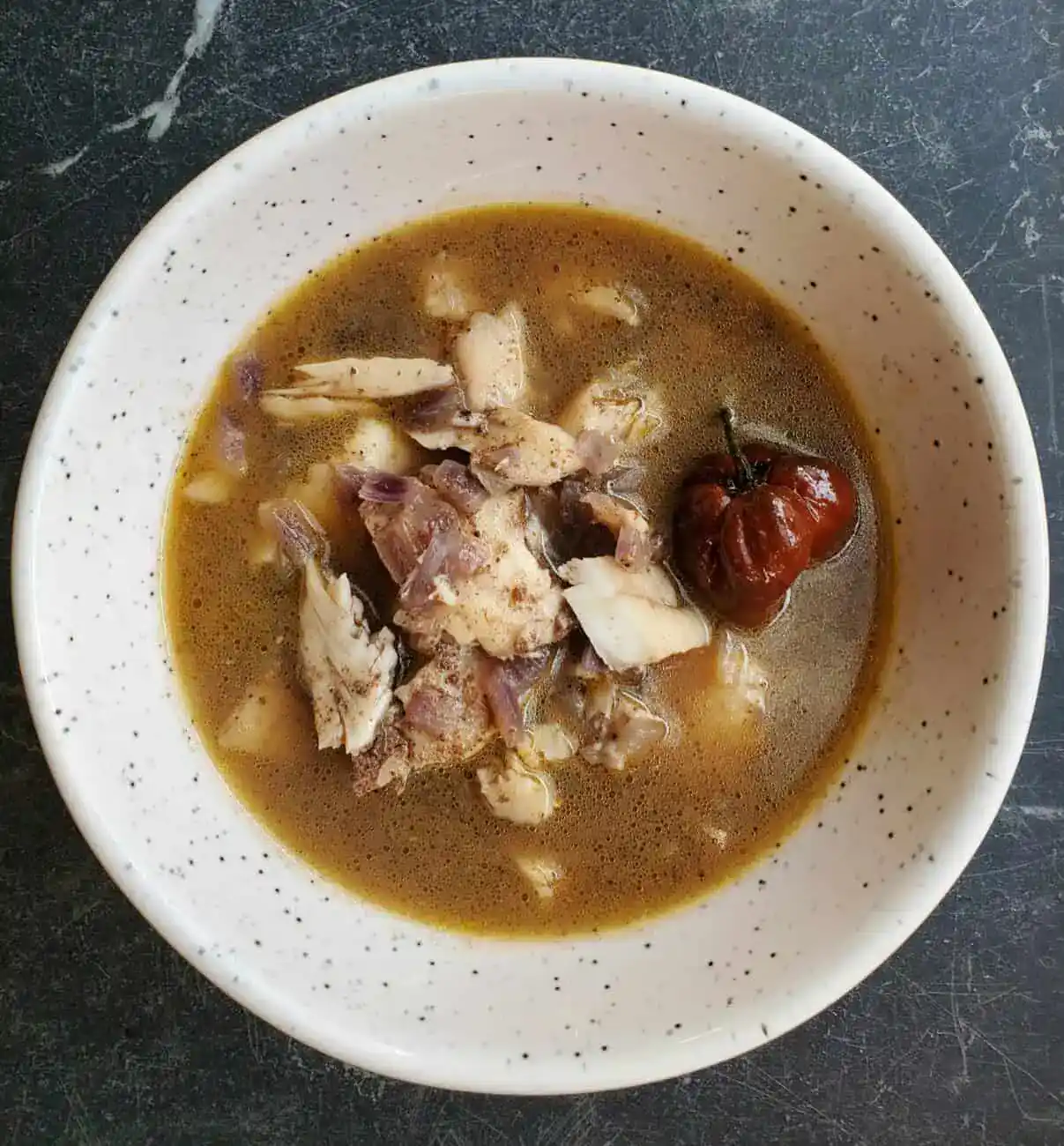
A deeply aromatic, medicinal, and intensely flavourful Nigerian broth — fresh catfish or tilapia simmered in a clear, spiced broth with scotch bonnet peppers, uziza leaves, ehuru (calabash nutmeg), and the distinctive African pepper soup spice blend. Consumed for comfort, after celebrations, during illness, and after childbirth throughout Nigeria. Light on the body but bold in flavour. See more great fish ideas in our delicious fish recipes.
Ingredients:
- 2 lbs fresh catfish or tilapia, cleaned and cut into large pieces
- 2–3 scotch bonnet peppers, blended
- 1 medium onion, sliced
- 2 tablespoons ground crayfish
- 1 tablespoon pepper soup spice mix (store-bought, or a blend of ehuru, utazi, and uda)
- 2 stock cubes
- 1 cup fresh uziza leaves or basil, roughly torn
- Salt, to taste
- 4 cups water
Instructions:
- Rinse the fish pieces thoroughly with cold water and a little lemon juice. Season lightly with salt.
- Bring the water to a boil in a medium pot. Add the sliced onion, blended scotch bonnet, ground crayfish, pepper soup spice mix, and stock cubes. Stir to combine and simmer for 5 minutes to build the broth base.
- Gently add the fish pieces to the broth. Cook over medium heat for 10–12 minutes until the fish is cooked through — do not stir vigorously as the fish will break apart. Taste and adjust seasoning generously.
- Add the uziza leaves or basil in the final 2 minutes. The soup should be clear, boldly seasoned, and intensely aromatic. Serve in deep bowls as a starter or light meal, sometimes with boiled yam or plantain alongside.
32. Efo Riro — Nigerian Spinach Stew

One of the finest vegetable stews in all of West African cooking — a rich, deeply savoury stew of shredded spinach (or African efo tete greens) cooked in palm oil with a blended tomato-pepper base, locust beans (iru), crayfish, and assorted meats and stockfish. Efo Riro is from the Yoruba people of southwest Nigeria and is one of the most requested dishes at Nigerian celebrations. Wonderful served over rice or with eba. See our vegetarian dinner ideas for more greens-based dishes.
Ingredients:
- 2 lbs fresh spinach or African efo tete, roughly chopped
- 8 oz assorted cooked meats (goat, beef, shaki/tripe)
- 4 oz stockfish, soaked overnight and deboned
- 3 tablespoons ground crayfish
- 1 tablespoon locust beans (iru), optional but traditional
- 3 red bell peppers + 2 scotch bonnet peppers, blended
- 1 large onion, half blended, half sliced
- ½ cup palm oil
- 2 stock cubes
- Salt, to taste
Instructions:
- Blend the bell peppers, scotch bonnet, and half the onion into a smooth purée. Set aside.
- Heat the palm oil in a large pot over medium heat until it melts. Add the sliced onion and fry for 3 minutes. Add the locust beans (iru) if using and stir for 1 minute. Pour in the blended pepper mixture. Cook over medium heat, stirring frequently, for 15–20 minutes until the pepper paste is fried down and the oil floats to the top.
- Add the cooked meats, stockfish, ground crayfish, and stock cubes. Stir to combine. Taste and season with salt. Simmer 5 minutes.
- Add the chopped spinach in two or three batches, stirring each batch in before adding the next. Cook for just 3–5 minutes — the spinach should wilt but retain some colour and texture. Do not overcook. Taste and adjust seasoning. Serve with white rice, eba, or pounded yam.
31. Moi Moi — Nigerian Steamed Bean Pudding

One of Nigeria's most beloved dishes — black-eyed peas soaked, peeled, and blended with onion, scotch bonnet, peppers, and crayfish into a smooth batter, then steamed in foil parcels or banana leaves until set into a firm, savoury, slightly springy pudding. Moi moi is eaten for breakfast alongside akamu (pap), as a side dish with jollof rice, or on its own as a snack. A deeply nutritious and culturally significant Nigerian food. See more great rice ideas in our rice cooking guide.
Ingredients:
- 2 cups dried black-eyed peas, soaked overnight
- 1 large onion, roughly chopped
- 2–3 scotch bonnet peppers
- 1 red bell pepper, roughly chopped
- 2 tablespoons ground crayfish
- 2 stock cubes
- ½ cup vegetable oil
- 1 cup warm water
- Salt, to taste
- Optional additions: 2 hard-boiled eggs (sliced), canned tuna, boiled shrimp, or sardines
- Foil squares or banana leaves, for wrapping
Instructions:
- Peel the soaked black-eyed peas by rubbing them vigorously between your hands and rinsing repeatedly until the skins are removed — the peeled peas will be white. Drain well.
- Blend the peeled peas with the onion, scotch bonnet, bell pepper, and warm water in a high-speed blender until completely smooth. The batter should be thick, creamy, and very smooth. Add the ground crayfish, crumbled stock cubes, oil, and salt. Blend briefly to incorporate. Taste and adjust seasoning generously.
- Grease the foil squares or banana leaf pieces. Pour the batter into each — about ¾ cup per parcel. Add any optional fillings (egg slice, tuna, shrimp). Fold and seal tightly.
- Stack the sealed parcels in a pot with 2 inches of water in the base. Steam covered over medium-low heat for 45–60 minutes until firm and set when tested. Serve warm alongside rice, jollof rice, or akamu.
30. Ghanaian Jollof Rice

West Africa's most internationally celebrated and debated dish — jollof rice is a one-pot rice cooked directly in a bold, reduced tomato, pepper, and onion base with spices until every grain is infused with deep, smoky flavour. The Ghanaian version uses aromatic spices and often develops a prized smoky bottom crust called "party jollof." Served at every celebration, party, and family gathering across West Africa. Also see our native jollof rice recipe.
Ingredients:
- 3 cups long-grain parboiled rice, rinsed
- 4 large tomatoes + 1 (14 oz) can crushed tomatoes
- 2 red bell peppers
- 2–3 scotch bonnet peppers
- 1 large onion, half blended, half sliced
- 3 cups chicken broth
- ½ cup vegetable oil
- 1 teaspoon curry powder
- 1 teaspoon smoked paprika
- 2 stock cubes
- 1 bay leaf
- Salt, to taste
Instructions:
- Blend the fresh tomatoes, bell peppers, scotch bonnet, and half the onion into a smooth purée. Heat the oil in a large heavy-bottomed pot over medium heat. Fry the sliced onion for 3 minutes until golden.
- Add the blended tomato mixture. Cook over medium-high heat, stirring frequently, for 25–30 minutes until the tomato paste has fried down completely, the oil has separated and floated to the top, and the mixture is very thick and dark. This is the critical step — under-fried tomato base creates a sour jollof. Season with curry powder, smoked paprika, stock cubes, and salt.
- Add the rinsed rice to the fried tomato base and stir to coat every grain. Add the chicken broth and bay leaf. Stir once. Bring to a boil, then reduce heat to the lowest setting. Cover tightly with foil, then the pot lid.
- Cook for 25–30 minutes until the rice has absorbed all the liquid. Do not open the lid for the first 20 minutes. For the "party jollof" smoky effect, increase heat to medium for the final 3–5 minutes to develop a slight char at the bottom. Fluff gently and serve with fried chicken, plantain, and coleslaw.
29. Ayamase — Nigerian Designer Stew (Ofada Stew)

One of the most unique and beloved stews in Nigerian cuisine — Ayamase (also called Designer Stew or Ofada Stew) is made with a blend of green peppers only rather than red, giving it its distinctive deep green colour and uniquely complex, slightly grassy flavour profile. Combined with bleached palm oil, assorted meats, and ponmo (cow skin), this is the traditional accompaniment to Ofada rice at Nigerian celebrations. Rich, bold, and unlike any other stew.
Ingredients:
- 1 lb assorted meats (goat, beef, tripe, ponmo/cow skin), cooked until tender
- 6 green bell peppers
- 6 tatashe (red bell pepper — surprisingly, some versions use a few for colour)
- 4–6 scotch bonnet peppers
- 1 large onion, half blended with peppers, half sliced
- ¾ cup palm oil, bleached (see instructions)
- 3 tablespoons ground crayfish
- 2 tablespoons locust beans (iru)
- 2 stock cubes
- Salt, to taste
Instructions:
- Bleach the palm oil: heat the palm oil in the pot over high heat with no lid for 10–15 minutes until it turns from orange-red to a clear, golden colour and loses its red pigment. This bleaching is essential for authentic Ayamase — do not skip this step. Cool slightly.
- Blend the green peppers, scotch bonnet, and half the onion into a chunky purée — do not blend completely smooth. The texture should be slightly rough.
- Add the sliced onion and locust beans to the bleached oil. Fry 2 minutes. Add the blended pepper mixture. Cook over medium heat, stirring frequently, for 20–25 minutes until the pepper is fried down and the oil floats. Season with stock cubes and salt.
- Add the cooked assorted meats and ground crayfish. Stir to combine. Simmer 10 minutes until the stew is thick and richly flavoured. Taste and season. Serve with Ofada rice or white rice.
28. Oha Soup
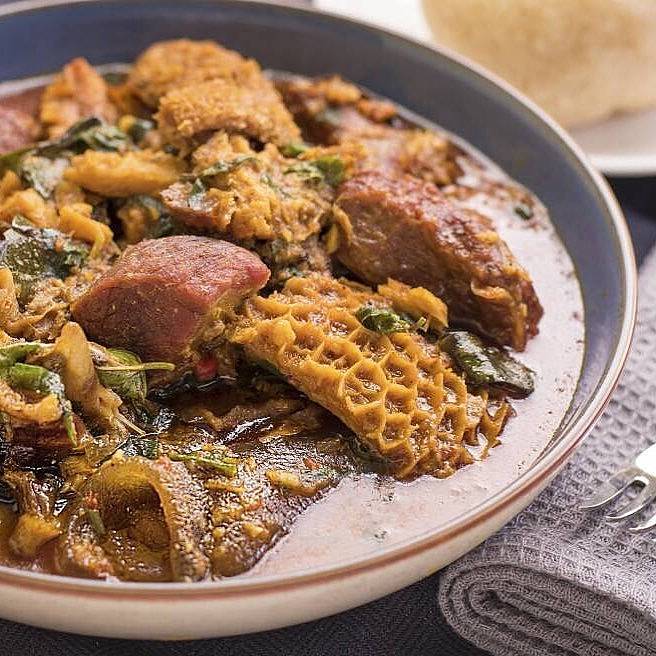
A deeply traditional and prestigious Igbo soup from southeastern Nigeria — oha leaves (a seasonal delicacy) shredded and cooked in a rich palm oil soup base thickened with cocoyam paste (ede akpuru), with assorted meats, stockfish, dried fish, and crayfish. Oha soup is reserved for celebrations and honoured guests and represents some of the finest traditional Igbo cooking. A wonderful dish for any lover of West African cuisine.
Ingredients:
- 2 cups fresh oha leaves, shredded (or substitute with spinach as a close approximation)
- 1 lb assorted cooked meats (goat, beef, tripe)
- 4 oz stockfish, soaked and deboned
- 4 oz dried smoked fish, deboned
- 6 medium cocoyams (ede akpuru), boiled and pounded to a smooth paste for thickening
- 3 tablespoons ground crayfish
- ½ cup palm oil
- 2 scotch bonnet peppers, blended
- 2 stock cubes
- Salt and ogiri (locust beans fermented paste), to taste
Instructions:
- Boil the cocoyams until completely tender. Pound in a mortar or blend until completely smooth — this is the traditional thickener for oha soup and gives it a uniquely velvety texture.
- In a large pot, combine the cooked meats, stockfish, and smoked fish with 3 cups of water. Bring to a simmer. Add the palm oil, blended scotch bonnet, ground crayfish, stock cubes, and ogiri. Stir to combine.
- Add the cocoyam paste in small spoonfuls, stirring each addition into the soup. The soup will thicken as the cocoyam dissolves. Simmer for 10 minutes, stirring frequently to prevent sticking, until the soup is thick and well-flavoured.
- Add the shredded oha leaves and stir gently. Cook for just 2–3 minutes — the oha leaves should wilt slightly but must not be overcooked or they will lose their colour and flavour. Taste and season with salt. Serve with eba, fufu, or pounded yam.
27. Banga Soup — Delta-Style Palm Nut Soup

A deeply rich and aromatic soup from the Niger Delta region of Nigeria — made from fresh palm nuts cooked down and pressed to extract a thick, orange-red cream that becomes the body of the soup, enriched with catfish, assorted meats, banga spice (a unique blend of Benin spices including atariko, oburunbebe stick, and dried beletete leaves), and crayfish. Traditionally served with starch (cassava starch) in Delta homes. Intensely flavourful and unlike any other Nigerian soup.
Ingredients:
- 2 lbs fresh palm nuts or 2 (16 oz) cans palm nut cream concentrate
- 1 lb fresh catfish, cleaned and cut into pieces
- 8 oz assorted meats, cooked until tender
- 2 tablespoons ground crayfish
- 1 banga spice sachet (available at African grocery stores) or 1 teaspoon dried thyme + ½ teaspoon nutmeg
- 2 scotch bonnet peppers, blended
- 1 medium onion, blended
- 2 stock cubes
- Fresh uziza leaves or basil, for finishing
- Salt, to taste
Instructions:
- If using fresh palm nuts: boil for 20 minutes until soft. Pound in a mortar, then add water and squeeze out the orange palm cream. Strain through a sieve, discarding the fibrous pulp and seeds. If using canned palm nut cream: mix the concentrate with 2 cups warm water.
- Pour the palm nut cream into a large pot. Bring to a boil over medium heat, stirring frequently. Add the blended onion, scotch bonnet, and banga spice sachet.
- Add the cooked assorted meats and cook 10 minutes. Add the catfish pieces and cook gently for 8–10 minutes until the fish is cooked through. Add ground crayfish and stock cubes. Simmer until the soup is thick and rich.
- Add the uziza leaves in the final 2 minutes. Season generously with salt. Serve with cassava starch, eba, or white rice.
26. Nkwobi — Spicy Cow Feet
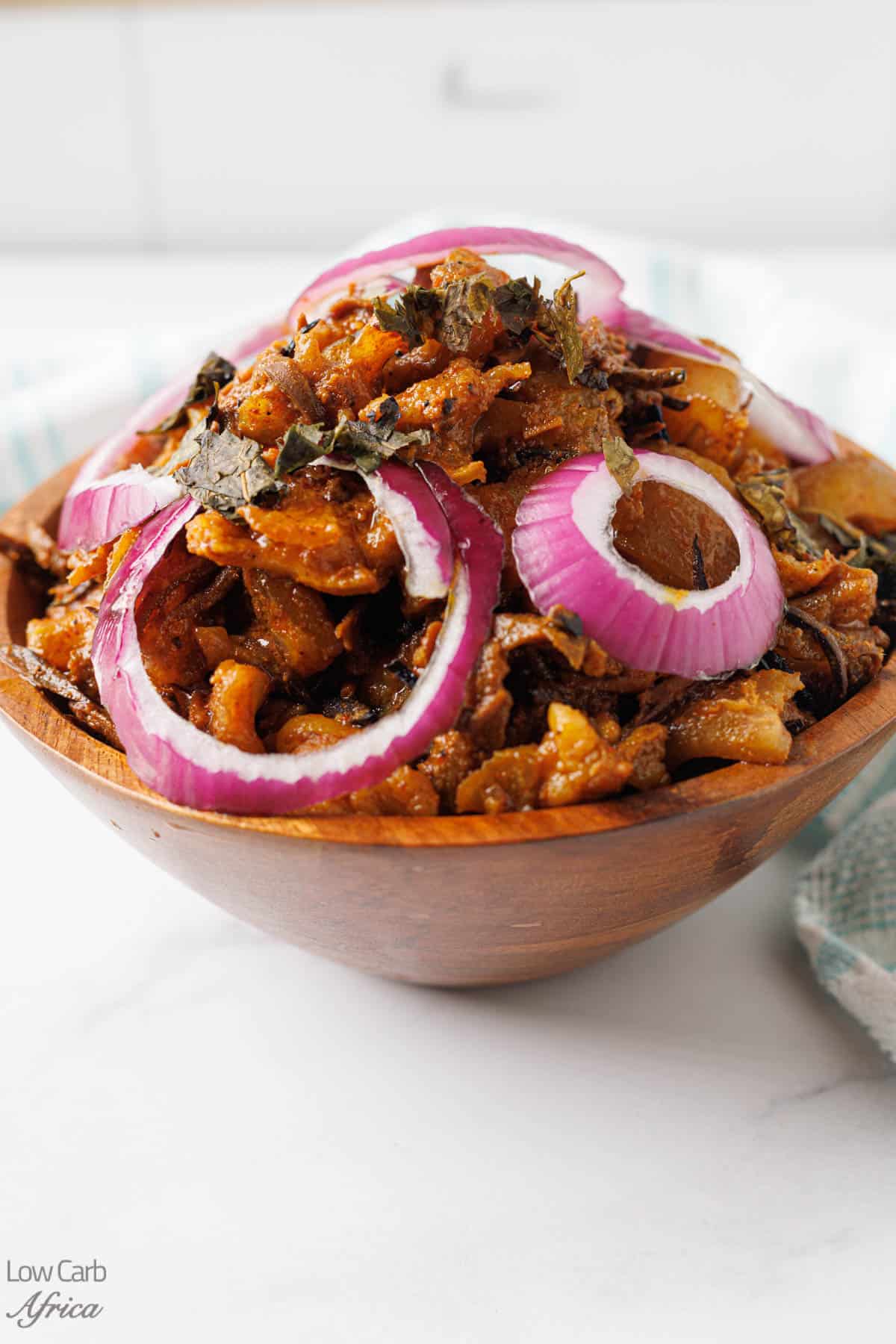
A beloved Igbo Nigerian delicacy traditionally enjoyed with palm wine at social gatherings — cooked cow feet (and sometimes knuckles) tossed in a warm, spiced palm oil sauce emulsified with potash (kaun), finished with shredded utazi leaves and sliced onion. The potash causes the palm oil to thicken and cling to the meat in a distinctive way unique to this dish. Nkwobi is eaten as a snack and social food rather than a main meal.
Ingredients:
- 2 lbs cow feet (cow leg), pressure cooked until completely tender
- ½ cup palm oil
- 1 tablespoon ground ehuru (calabash nutmeg) or regular nutmeg
- 2 tablespoons ground crayfish
- 2–3 scotch bonnet peppers, blended
- 1 teaspoon potash (kaun/ngu) dissolved in ¼ cup water and strained (or ½ teaspoon baking soda as substitute)
- 2 stock cubes
- Fresh utazi leaves, shredded (or baby arugula as substitute)
- 1 small red onion, thinly sliced
- Salt, to taste
Instructions:
- Pressure cook the cow feet with stock cubes, salt, and a little onion for 45–60 minutes until completely tender and gelatinous. Drain and set aside.
- In a large pot over low heat, warm the palm oil until just melted — do not fry or bleach. Add the strained potash water and stir immediately — the palm oil will thicken and turn a lighter colour as it emulsifies with the potash. This emulsification is the characteristic of nkwobi sauce.
- Add the ground ehuru, crayfish, blended scotch bonnet, and crumbled stock cubes. Stir well. Add the cooked cow feet and toss to coat every piece in the thickened palm oil sauce.
- Taste and season with salt. Serve in a large calabash or bowl, topped with shredded utazi leaves and sliced onion rings. Serve warm as a snack with cold drinks or palm wine.
25. Akara — Nigerian Bean Fritters
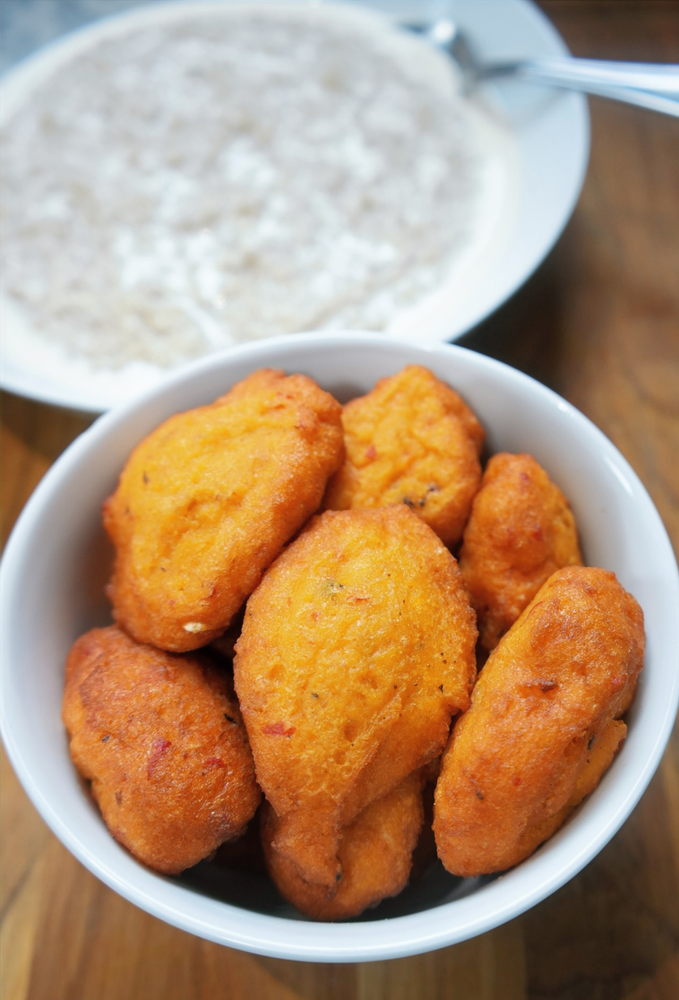
Nigeria's most popular breakfast street food — black-eyed peas soaked, peeled, and blended into a fluffy batter with onion and scotch bonnet, then deep-fried into golden, crispy fritters with a light, airy interior. Sold by hawkers across Lagos and Ibadan from very early morning, akara is traditionally eaten with akamu (fermented corn porridge) or bread for breakfast. Similar in concept to our Brazilian acarajé recipe and wonderful as a snack.
Ingredients:
- 2 cups dried black-eyed peas, soaked overnight
- 1 medium onion, roughly chopped
- 1–2 scotch bonnet peppers
- 1 teaspoon salt
- Oil for deep frying
Instructions:
- Peel the soaked black-eyed peas by rubbing vigorously between your hands and rinsing repeatedly until most skins are removed — the peeled peas should be cream-white. Drain very well.
- Blend the peeled peas with the onion, scotch bonnet, and a minimum amount of water — just enough for the blender to catch. The batter should be as thick as possible. Add salt and mix well. The key to light akara is minimal water and adequate beating.
- Beat the batter vigorously with a wooden spoon or hand mixer for 3–4 minutes — this incorporates air and makes the akara light and fluffy when fried. The batter is ready when a small amount dropped in water floats.
- Heat oil to 350°F in a deep pot. Drop spoonfuls of batter into the oil — use two spoons to shape. Fry in batches for 3–4 minutes, turning once, until golden on all sides. Drain on a wire rack. Serve hot with akamu or as a standalone snack.
24. Dodo — Nigerian Fried Plantain

The most beloved and universally eaten side dish across all of West Africa — very ripe, sweet plantains sliced and fried until the natural sugars caramelise into a golden, slightly crispy exterior and the interior is soft, sweet, and deeply satisfying. Dodo (fried plantain) accompanies jollof rice, rice and beans, fried rice, and almost any Nigerian meal. The riper and more speckled the plantain, the sweeter and better the result. A wonderful companion to our best side dish ideas.
Ingredients:
- 3 very ripe plantains (the skin should be mostly black or heavily speckled — yellow-green plantains are not ripe enough and will be starchy rather than sweet)
- Vegetable oil for shallow frying
- Pinch of salt (optional)
Instructions:
- Peel the ripe plantains. Slice diagonally into rounds about ½ inch thick, or cut into lengthwise slices. The diagonal cut is most common for dodo.
- Heat about ½ inch of vegetable oil in a large skillet over medium heat. The oil should be hot but not smoking — too high and the plantains will burn before caramelising; too low and they will absorb oil and be greasy.
- Add the plantain slices in a single layer — do not crowd the pan. Fry for 2–3 minutes per side until deeply golden and caramelised. The natural sugars will create a slightly sticky, caramelised crust.
- Remove with a slotted spoon and drain briefly on paper towels. Season with a pinch of salt if desired. Serve immediately alongside jollof rice, rice and beans, fried rice, or any Nigerian main dish.
23. Ogbono Soup

One of the most popular and distinctive soups in Nigerian cooking — ogbono seeds (wild African mango seeds) are ground and added to hot palm oil where they immediately develop their characteristic mucilaginous, drawing quality that gives the soup its "draw" texture. Rich, deeply savoury, thick, and nutritious with assorted meats, crayfish, and vegetables. Ogbono soup is eaten across all of Nigeria and is a genuine comfort food loved by all generations. See our favourite soup recipes for more hearty bowls.
Ingredients:
- 1 cup ground ogbono seeds
- 1 lb assorted cooked meats (goat, beef, tripe)
- 4 oz stockfish, soaked and deboned
- 3 tablespoons ground crayfish
- ½ cup palm oil
- 2 scotch bonnet peppers, blended
- 1 medium onion, blended
- 2 cups spinach or bitter leaf, chopped
- 2 stock cubes
- 2 cups water or meat stock
- Salt, to taste
Instructions:
- Heat the palm oil in a large pot over medium heat until melted. Add the ground ogbono directly to the hot oil and stir constantly for 2–3 minutes — the ogbono will immediately become sticky and stringy as it fries in the oil. This is the essential first step that develops the drawing quality.
- Add the warm water or meat stock gradually, stirring constantly to prevent lumps. The soup will become thick and viscous. Add the blended onion, scotch bonnet, and ground crayfish. Stir well.
- Add the cooked assorted meats, stockfish, and stock cubes. Simmer over medium-low heat for 15 minutes, stirring frequently, until the soup is well-cooked and the flavours have melded. Season with salt.
- Add the chopped spinach or bitter leaf. Cook 3–5 more minutes until the greens are just wilted. The soup should be very thick and draw (pull) when lifted with a spoon. Serve with eba, fufu, or pounded yam.
22. Afang Soup — Nigerian Leafy Green Vegetable Soup

A celebrated soup from the Efik and Ibibio people of Cross River and Akwa Ibom states in southeastern Nigeria — afang soup combines two types of greens, thinly sliced afang leaves (the dried, ground wild spinach with a distinctive slightly bitter flavour) and waterleaf (a succulent green), with palm oil, crayfish, periwinkle, assorted meats, and stockfish. One of Nigeria's most prestigious soups, served at weddings, naming ceremonies, and important events.
Ingredients:
- 2 cups dried afang leaves, washed and finely sliced (or substitute with kale, finely chopped)
- 4 cups waterleaf, roughly chopped (or substitute with spinach)
- 1 lb assorted cooked meats (goat, beef, tripe)
- 4 oz stockfish, soaked and deboned
- 1 cup periwinkle (snails), optional but traditional
- 3 tablespoons ground crayfish
- ½ cup palm oil
- 2 scotch bonnet peppers, blended
- 1 medium onion, blended
- 2 stock cubes
- Salt, to taste
Instructions:
- Cook the assorted meats in a pot with blended onion, stock cubes, salt, and a little water until completely tender. Reserve the meat stock.
- Add the palm oil to the pot with the cooked meats and stock. Add the blended scotch bonnet and ground crayfish. Stir and simmer 5 minutes.
- Add the waterleaf (or spinach) first — it releases a lot of water which adjusts the consistency of the soup. Cook for 5 minutes. Add the stockfish and periwinkle if using.
- Add the sliced afang leaves and stir through. Cook for 5–8 more minutes — the afang leaves take longer to soften than waterleaf. Season with salt. The soup should be very thick with minimal liquid. Serve with eba, fufu, or pounded yam.
21. Ogbono Soup — Draw Soup (Second Version)
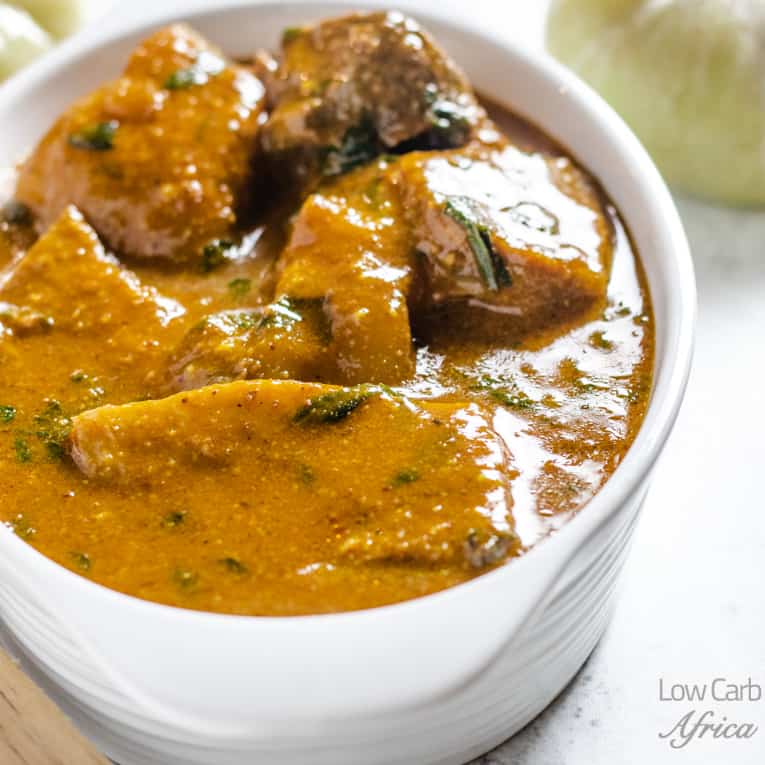
A wonderful second version of this beloved Nigerian staple — a thick, sticky, deeply savoury ogbono soup perfect for a low-carb or keto approach, with the same characteristic drawing quality from the ground ogbono seeds but served with a larger variety of vegetables and protein-rich meats. The "draw" quality of ogbono makes it one of the most satisfying and texturally unique soups in the world. Also great for anyone exploring our low carb dinner recipes.
Ingredients:
- ¾ cup ground ogbono seeds
- 1 lb beef or goat meat, cooked tender
- 4 oz smoked dried fish, deboned
- 3 tablespoons ground crayfish
- ½ cup palm oil
- 2 scotch bonnet peppers, blended
- 1 cup spinach, chopped
- ½ cup okra, sliced (adds extra draw texture)
- 2 stock cubes
- 2 cups hot water
- Salt, to taste
Instructions:
- Heat palm oil in a large pot until melted. Add the ground ogbono directly to the hot oil. Stir constantly for 3 minutes as it develops its sticky, drawing quality.
- Add hot water gradually while stirring to prevent lumps. The soup will thicken immediately. Add the blended scotch bonnet, ground crayfish, and crumbled stock cubes. Stir thoroughly.
- Add the cooked meat and smoked dried fish. Simmer over medium-low heat for 15 minutes, stirring frequently to prevent the ogbono from sticking to the bottom of the pot.
- Add the sliced okra and cook 5 minutes. Add the spinach and cook 3 more minutes. Season with salt. Serve thick and drawing with eba, fufu, or pounded yam.
20. Egusi Soup
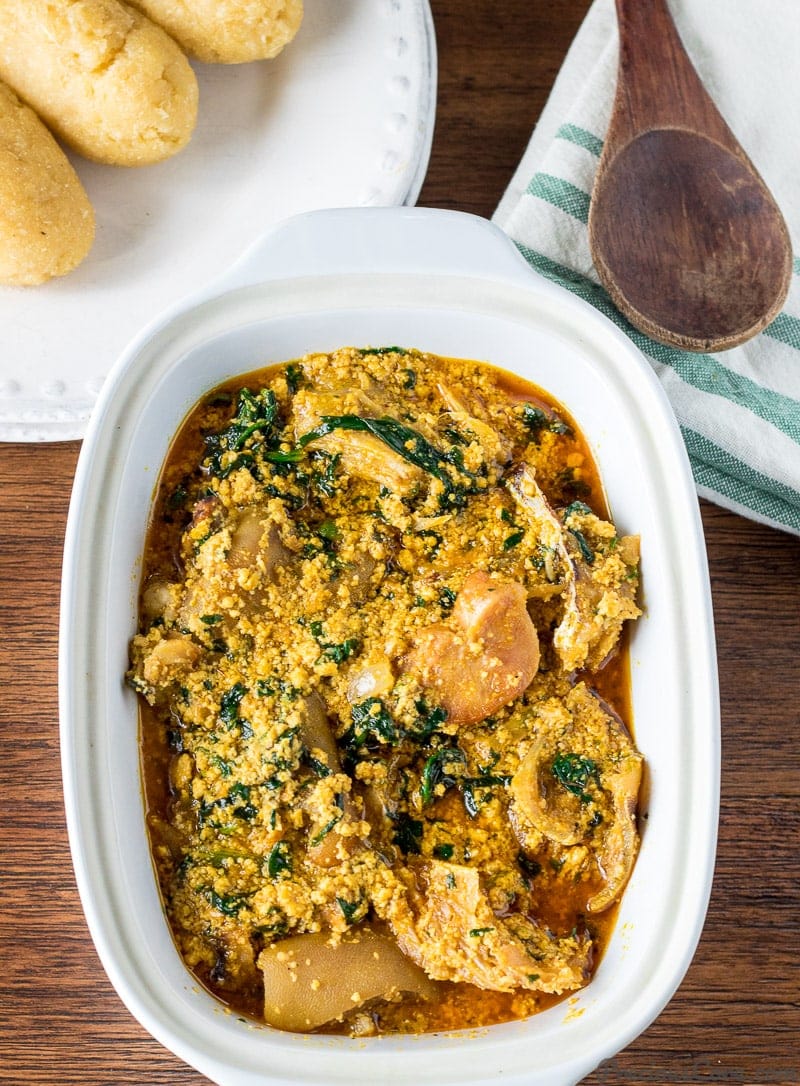
Nigeria's most popular and widely eaten soup — ground egusi (melon seeds) fried in palm oil until nutty and golden, then cooked with a rich tomato-pepper base, assorted meats, stockfish, crayfish, and leafy greens into a thick, deeply savoury, protein-rich soup. Every Nigerian family has their signature egusi technique — this version uses the frying method which produces beautifully formed egusi lumps throughout the soup. Eaten daily in millions of Nigerian homes. See our hearty stew ideas for more inspiration.
Ingredients:
- 2 cups ground egusi (melon seeds)
- 1 lb assorted cooked meats (beef, goat, tripe, ponmo)
- 4 oz stockfish, soaked and deboned
- 4 oz smoked dried fish, deboned
- 3 tablespoons ground crayfish
- ½ cup palm oil
- 3 red bell peppers + 2–3 scotch bonnet peppers, blended
- 1 large onion, half blended with peppers, half sliced
- 2 cups spinach, chopped
- 2 stock cubes
- Salt, to taste
Instructions:
- Mix the ground egusi with a little water to form a thick paste. Set aside. Heat palm oil in a large pot over medium heat. Add the sliced onion and fry 2 minutes.
- Add the egusi paste in spoonfuls to the hot oil — do not stir. Fry for 5–7 minutes, turning each clump, until the egusi forms firm, golden nuggets. The frying develops the nutty flavour.
- Add the blended tomato-pepper mixture and stir carefully to avoid completely breaking the egusi lumps. Cook for 15 minutes, stirring occasionally, until the pepper base is fried down and the oil separates.
- Add the cooked meats, stockfish, smoked fish, ground crayfish, and stock cubes. Add ½ cup of warm water if the soup is too thick. Simmer 10 minutes. Add the spinach and cook 3 more minutes. Season with salt. Serve with eba, pounded yam, or fufu.
19. Nsala Soup — Nigerian White Soup
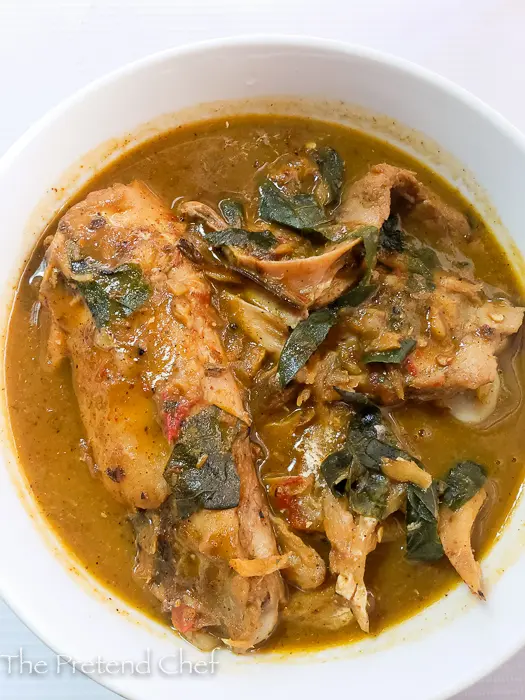
A beautifully delicate, clear, aromatic Igbo soup that is distinctly different from the palm oil-based soups — Nsala is a "white soup" made without palm oil, thickened instead with pounded yam, crayfish, and utazi leaves, with fresh catfish as the primary protein. The result is a clean, flavourful, lighter broth that showcases the fresh fish and aromatic spices beautifully. Perfect for anyone seeking a lighter Nigerian soup. See our collection of delicious fish recipes.
Ingredients:
- 1½ lbs fresh catfish, cleaned and cut into large pieces
- 1 small piece raw yam (about 4 oz), boiled and pounded to a smooth paste for thickening
- 2 tablespoons ground crayfish
- 2 scotch bonnet peppers, blended
- 1 teaspoon ground ehuru (calabash nutmeg)
- Fresh utazi leaves, shredded (or baby arugula as substitute)
- 2 stock cubes
- 4 cups water
- Salt, to taste
Instructions:
- Bring 4 cups of water to a boil. Season the catfish pieces with salt and stock cubes. Add to the boiling water and cook for 10 minutes until just cooked through.
- Add the blended scotch bonnet, ground crayfish, and ground ehuru. Stir to combine. Taste and adjust seasoning.
- Add the pounded yam paste in small pieces to the soup, stirring each addition to dissolve — this thickens the soup to the correct consistency. The soup should become slightly thick but still somewhat brothy.
- Add the utazi leaves and simmer for 2–3 minutes. Taste and season well with salt — Nsala should be well-seasoned and aromatic. Serve with pounded yam, eba, or fufu. Note: be gentle with the fish — it will continue to break if stirred aggressively.
18. Nigerian Coconut Rice

A beautifully fragrant, subtly sweet and savoury Nigerian rice dish — long-grain rice cooked in a combination of coconut milk and broth with onions, scotch bonnet, and sometimes fried fish or shrimp, producing a fluffy, richly flavourful rice that is popular at parties and celebrations. Nigerian coconut rice has a slightly more savoury and spiced character than other coconut rice dishes. A wonderful companion to our rice cooking guide.
Ingredients:
- 3 cups long-grain parboiled rice, rinsed
- 2 (13.5 oz) cans full-fat coconut milk
- 1 cup chicken broth
- 1 large onion, thinly sliced
- 1–2 scotch bonnet peppers, blended
- 2 tablespoons vegetable oil
- 2 stock cubes
- Salt, to taste
- Optional: 1 lb fried fish or shrimp, to stir through at the end
- Fresh cilantro or parsley, for garnish
Instructions:
- Heat the oil in a large heavy pot over medium heat. Add the sliced onion and fry for 5 minutes until softened and golden. Add the blended scotch bonnet and cook for 3 minutes.
- Add the coconut milk, chicken broth, stock cubes, and salt. Stir to combine and bring to a gentle boil. Taste the liquid — it should be well-seasoned as this is what will season the rice.
- Add the rinsed rice and stir once to distribute evenly. Bring back to a boil, then reduce heat to the lowest setting. Cover tightly with foil, then the pot lid.
- Cook for 25–30 minutes until the rice has absorbed all the coconut milk and is completely cooked. Do not open the lid for the first 20 minutes. Stir gently and fold in the fried fish or shrimp if using. Garnish with fresh herbs. Serve with fried chicken, fried plantain, or coleslaw.
17. Asaro — Nigerian Yam Pottage
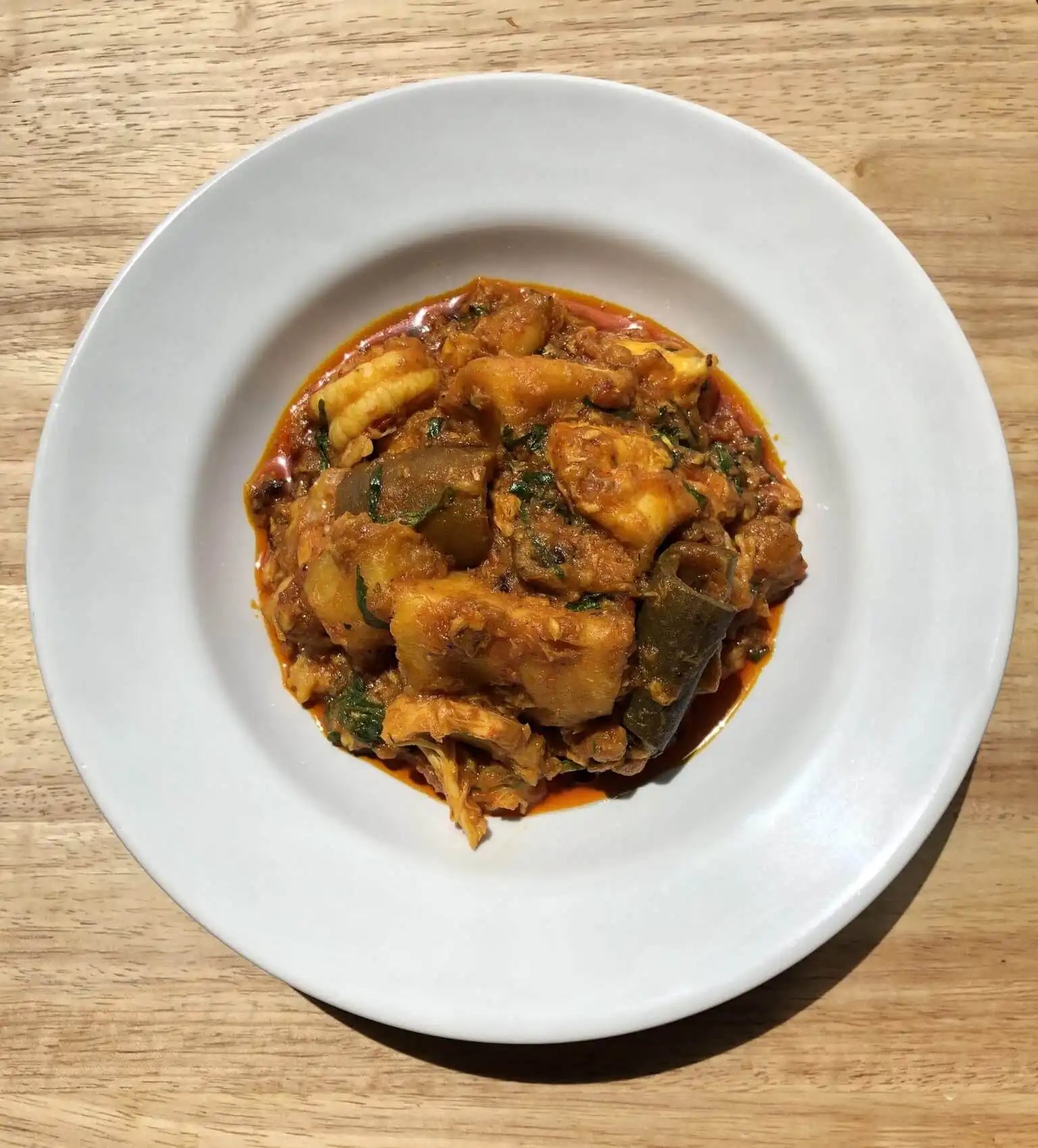
A nourishing, deeply comforting Yoruba Nigerian dish — chunks of white yam cooked until soft and partially mashed in a flavourful base of palm oil, tomatoes, scotch bonnet, onions, and crayfish until the yam absorbs all the rich, savoury flavours and the pottage becomes thick and stew-like. Asaro is eaten for breakfast, lunch, or dinner and is particularly loved as a comforting meal during rainy days. Wonderful alongside our best morning breakfast ideas.
Ingredients:
- 2 lbs white yam, peeled and cut into large chunks
- ½ cup palm oil
- 2 large tomatoes + 2 scotch bonnet peppers, blended
- 1 large onion, sliced
- 2 tablespoons ground crayfish
- 4 oz stockfish, soaked and deboned (optional)
- 2 stock cubes
- Salt, to taste
- Fresh spinach or ugu (fluted pumpkin leaves), optional for extra nutrition
Instructions:
- Heat the palm oil in a large pot over medium heat. Fry the sliced onion for 3 minutes. Add the blended tomato-scotch bonnet mixture and cook for 10–12 minutes until the tomatoes are fried down and the oil separates on top.
- Add the yam chunks to the fried tomato base. Add the crayfish, stock cubes, stockfish (if using), and enough water to just barely cover the yam. Stir to combine.
- Cover and cook over medium heat for 20–25 minutes, stirring occasionally, until the yam is very tender. Using the back of a wooden spoon, mash some of the yam pieces against the pot to thicken the pottage — leave some pieces whole for texture.
- If adding spinach or ugu leaves, stir in now and cook 3 more minutes. Season generously with salt. The asaro should be thick, rich, and deeply savoury. Serve hot in bowls as a complete meal.
16. Banga Rice

A spectacular and unique Nigerian rice dish from the Niger Delta — rice cooked directly in palm nut cream broth (the same rich base used for banga soup) rather than plain water or broth, absorbing the deep, orange-red, aromatic palm nut flavour into every grain. Served with fried fish, it is one of the most flavourful and distinctive rice dishes in all of Nigerian cooking. A wonderful addition to our rice recipe collection.
Ingredients:
- 2 cups long-grain parboiled rice, rinsed
- 1 (16 oz) can palm nut cream concentrate mixed with 2 cups warm water (or fresh palm nut cream)
- 1 cup water or fish broth
- 1 medium onion, sliced
- 1–2 scotch bonnet peppers, blended
- 2 tablespoons ground crayfish
- 1 banga spice sachet
- 2 stock cubes
- Salt, to taste
- Fried fish, for serving
Instructions:
- Combine the palm nut cream mixture, water or fish broth, sliced onion, blended scotch bonnet, ground crayfish, banga spice, crumbled stock cubes, and salt in a large pot. Stir well and bring to a gentle boil. Taste — it should be well-seasoned.
- Add the rinsed rice to the palm nut broth. Stir once to distribute. The liquid should just cover the rice by about 1 inch — add more water if needed.
- Bring back to a boil. Reduce heat to very low. Cover tightly with foil then the pot lid. Cook for 25–30 minutes until the rice is completely cooked and the liquid absorbed.
- Do not open the lid for the first 20 minutes. Open, fluff gently, and taste for seasoning. The rice should be deeply orange-tinged from the palm nut and fragrant with the banga spices. Serve hot with fried fish and a side salad.
15. Cornchaff — Adalu (Nigerian Corn and Beans)
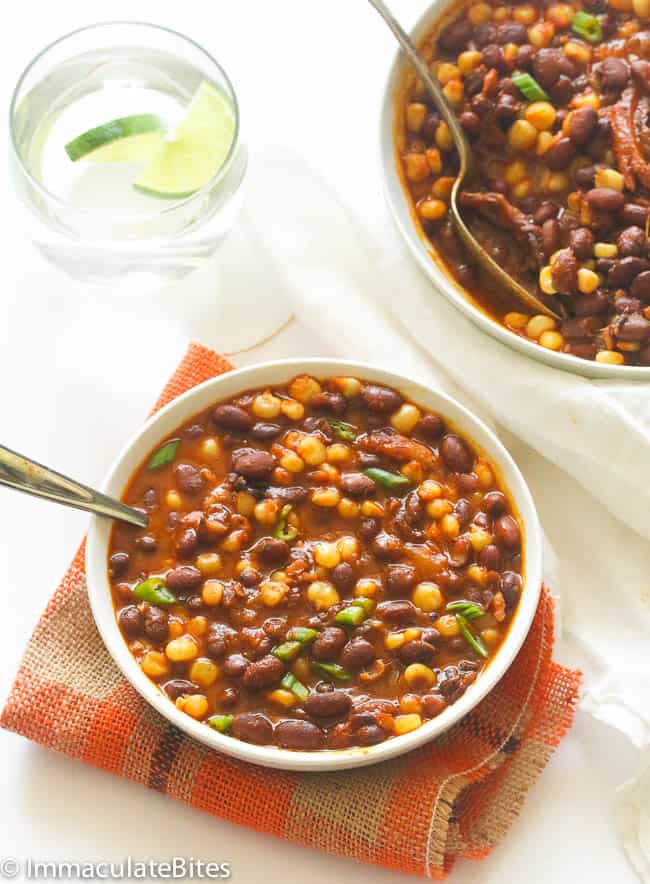
A humble, deeply nourishing, and beloved Nigerian one-pot meal — fresh or dried corn and black-eyed peas cooked together until tender in a seasoned palm oil base with crayfish, scotch bonnet, and spices. Adalu (the Yoruba name) or Cornchaff (the Igbo name) is high in plant protein and complex carbohydrates, deeply satisfying, and completely comforting. A genuine Nigerian staple beloved across all ethnic groups. A wonderful plant-based dish alongside our vegan dinner recipes.
Ingredients:
- 2 cups dried corn (maize), soaked overnight — or 2 cups fresh corn kernels cut from the cob
- 1 cup dried black-eyed peas, soaked overnight
- ¼ cup palm oil
- 1 large onion, sliced
- 2 scotch bonnet peppers, blended
- 2 tablespoons ground crayfish
- 2 stock cubes
- Salt, to taste
Instructions:
- If using dried corn: boil the soaked corn for 45 minutes until partially tender before adding the beans. If using fresh corn: it will cook faster. Cook the soaked black-eyed peas separately for 20 minutes until just tender. Drain both.
- Combine the partially cooked corn and beans in a large pot. Add enough water to just cover. Bring to a boil and cook together until both are completely tender — about 20–30 more minutes for dried corn, 10–15 for fresh.
- Add the palm oil, sliced onion, blended scotch bonnet, ground crayfish, and crumbled stock cubes. Stir to combine. Cook over medium heat for 10–15 minutes until the flavours meld and the mixture thickens slightly as the beans break down.
- Season generously with salt. Taste and adjust — cornchaff should be well-seasoned and rich. Mash a few beans with the back of a spoon for creamier consistency if desired. Serve hot as a complete meal, sometimes alongside fried fish or plantain.
14. Nkwobi — Spicy Cow Leg (Second Version)

A second wonderful version of this beloved Igbo Nigerian delicacy — braised cow leg and knuckle coated in a thick, fiery palm oil sauce made fragrant with ground ehuru, utazi leaves, and the distinctive potash emulsification technique unique to Nkwobi. This version particularly showcases the rich, collagen-rich gelatinous texture of well-cooked cow leg. Traditionally enjoyed at bar settings and social gatherings with cold drinks. A special occasion dish that always impresses.
Ingredients:
- 2 lbs cow leg (with bone), pressure cooked until completely tender and gelatinous
- ½ cup palm oil
- 1 tablespoon potash (kaun) dissolved in ½ cup water and strained through a sieve
- 1 tablespoon ground ehuru
- 3 tablespoons ground crayfish
- 3–4 scotch bonnet peppers, blended
- 2 stock cubes
- Fresh utazi leaves, thinly sliced
- Sliced onion rings, for garnish
- Salt, to taste
Instructions:
- Pressure cook the cow leg with stock cubes, salt, sliced onion, and a little water for 45–60 minutes until the meat is pull-apart tender. Drain and reserve.
- In a large pot over low heat, warm the palm oil until just liquid. Add the strained potash water — it will immediately begin to emulsify with the palm oil, turning lighter and thickening. Stir quickly and constantly for 1–2 minutes until the sauce is thick and uniform.
- Add the ground ehuru, ground crayfish, blended scotch bonnet, and crumbled stock cubes. Mix thoroughly. Taste and season with salt.
- Add the cooked cow leg pieces. Toss gently until every piece is thoroughly coated in the thick palm oil sauce. Garnish generously with shredded utazi leaves and onion rings. Serve warm in a calabash or bowl as a social snack.
13. Abacha — Nigerian African Salad
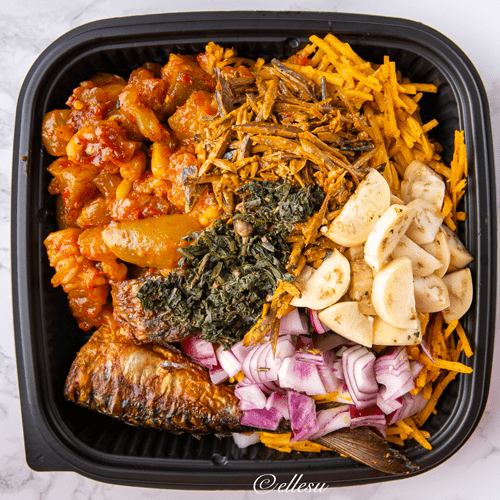
A unique and beloved Igbo Nigerian salad — dried shredded cassava (abacha) soaked and then dressed with palm oil emulsified with potash, crayfish, ugba (oil bean), garden egg, dried fish, smoked fish, and utazi leaves into a bright, tangy, deeply savoury salad that is completely unlike any other salad in the world. Abacha is eaten as a snack, appetiser, or light meal and is one of the most distinctive dishes of Igbo cuisine.
Ingredients:
- 2 cups dried abacha (dried shredded cassava), soaked in cold water for 20 minutes until softened, then drained
- ½ cup palm oil
- 1 tablespoon potash (kaun) dissolved in ½ cup water and strained
- 2 tablespoons ground crayfish
- ½ cup ugba (fermented oil bean), shredded (available at African grocery stores)
- 1 medium garden egg (eggplant), sliced
- 4 oz smoked dried fish, deboned
- Fresh utazi leaves, shredded
- 1 small red onion, thinly sliced
- 2 scotch bonnet peppers, finely chopped
- 2 stock cubes
- Salt, to taste
Instructions:
- Soak the dried abacha in cold water for 20–30 minutes until it is softened and flexible but not mushy. Drain very well in a colander.
- In a large mixing bowl, combine the palm oil with the strained potash water. Stir — the mixture will emulsify, lighten in colour, and thicken slightly. This is the dressing base.
- Add the ground crayfish, crumbled stock cubes, chopped scotch bonnet, and salt to the palm oil dressing. Mix well.
- Add the drained abacha, ugba, smoked fish, garden egg slices, and sliced onion to the bowl. Toss everything together thoroughly until every strand of cassava is coated in the palm oil dressing. Taste and adjust seasoning. Top with shredded utazi leaves. Serve immediately at room temperature.
12. Ofe Owerri Soup — Igbo Soup from Owerri
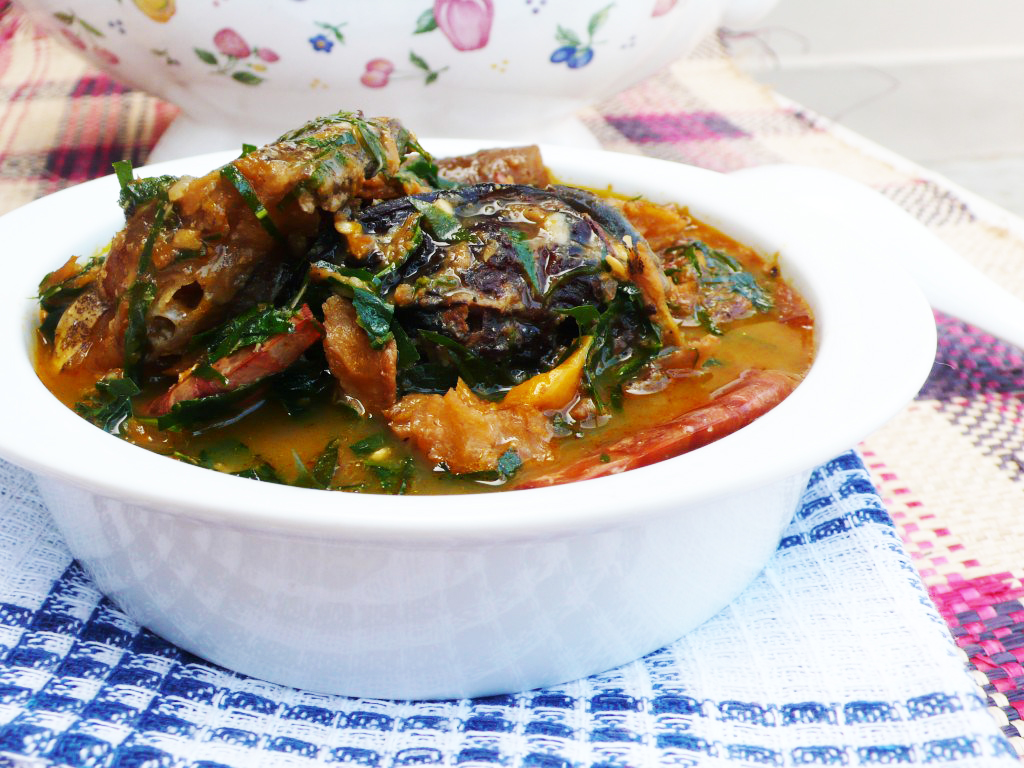
The pride of Owerri city and one of the most complex and prestigious Igbo soups — Ofe Owerri is a thick, deeply flavourful soup made with an exceptional variety of assorted meats, cocoyam as thickener, assorted vegetables (ede akpuru, oha leaves, ugwu), dried fish, stockfish, periwinkle, and palm oil. It is considered the most complete and festive of all Igbo soups and is reserved for very special occasions. A magnificent dish for any lover of West African cooking.
Ingredients:
- 1 lb assorted meats (goat, beef, tripe, ponmo), cooked tender
- 4 oz stockfish, soaked and deboned
- 4 oz smoked dried fish, deboned
- ½ cup periwinkle (snails), optional
- 8 cocoyams (ede akpuru), boiled and pounded smooth for thickening
- 2 cups ugu (fluted pumpkin leaves) or spinach, chopped
- 1 cup oha leaves, shredded
- 3 tablespoons ground crayfish
- ½ cup palm oil
- 2 scotch bonnet peppers, blended
- 1 tablespoon ogiri (locust beans fermented paste)
- 2 stock cubes and salt, to taste
Instructions:
- Boil and pound the cocoyams to a very smooth paste for thickening. Cook all assorted meats with stock cubes, onion, and salt until tender.
- Heat palm oil in a large pot. Add the blended scotch bonnet and cook 5 minutes. Add the cooked meats, stockfish, smoked fish, periwinkle, ground crayfish, ogiri, and the meat stock. Simmer 10 minutes.
- Add the cocoyam paste in small portions, stirring each addition into the soup to thicken it — the soup should become beautifully thick and velvety. Add more water if it becomes too thick.
- Add the ugu leaves and oha leaves. Cook 3–5 more minutes. Taste and season generously with salt. The soup should be extremely rich, thick, and complex. Serve with pounded yam, eba, or fufu.
11. Okro Soup with Spinach

A wonderfully nutritious and texturally unique Nigerian soup — fresh okra chopped or blended into a broth with palm oil, crayfish, assorted meats, dried fish, and spinach to produce a thick, mucilaginous, "drawing" soup that is loved for its texture and deep flavour. Okro soup is simpler and faster to make than many Nigerian soups and is eaten regularly in homes across the country. A great soup for any fan of okra alongside our favourite soup collection.
Ingredients:
- 2 cups fresh okra (okro), finely chopped or grated for a drawing texture
- 8 oz assorted cooked meats
- 4 oz stockfish or smoked dried fish, deboned
- 3 tablespoons ground crayfish
- ¼ cup palm oil
- 1 scotch bonnet pepper, blended
- 1 cup spinach or ugu leaves, chopped
- 2 stock cubes
- 1 cup water or meat stock
- Salt, to taste
Instructions:
- Chop the okra very finely for a drawing (slimy) texture, or slice into rounds for a less slimy result. Both textures are enjoyed depending on preference.
- In a pot, combine the meat stock or water, cooked meats, stockfish, and palm oil. Bring to a simmer. Add the blended scotch bonnet, ground crayfish, and crumbled stock cubes.
- Add the chopped okra and stir through. Cook over medium heat for 5–8 minutes until the okra is cooked and the soup has thickened and developed its characteristic drawing quality.
- Add the spinach and stir through. Cook 2–3 more minutes. Season generously with salt. The soup should be thick, drawing, and boldly seasoned. Serve immediately with eba, pounded yam, or fufu — okro soup thickens further as it sits.
10. Nigerian Tomato Stew — Nigerian Red Stew

The most fundamental and versatile sauce in all of Nigerian cooking — the Nigerian red stew is a richly fried tomato, red pepper, and scotch bonnet base cooked down in palm oil or vegetable oil with chicken, beef, or fish until deeply reduced and intensely savoury. This stew is the foundation that tops jollof rice, fried rice, spaghetti, and almost every rice dish in Nigeria and is eaten daily in millions of Nigerian homes. See more great chicken ideas in our easy chicken recipes.
Ingredients:
- 4 large ripe tomatoes + 1 (14 oz) can crushed tomatoes
- 4 red bell peppers (tatashe)
- 3–4 scotch bonnet peppers
- 1 large onion, half blended, half sliced
- 1 lb chicken pieces, seasoned and fried until golden
- ½ cup vegetable oil or palm oil
- 1 teaspoon curry powder
- 1 teaspoon thyme
- 2 stock cubes
- Salt, to taste
Instructions:
- Blend the fresh tomatoes, bell peppers, scotch bonnet, and half the onion into a smooth purée.
- Heat the oil in a large pot over medium-high heat. Add the sliced onion and fry 2 minutes. Pour in the blended tomato mixture — it will sizzle dramatically. Stir well.
- Cook over medium-high heat, stirring every few minutes, for 30–40 minutes until the tomato base has fried down completely, the water has evaporated, the oil has separated and floats on top, and the mixture is very thick and dark. This long frying is essential — under-fried tomato base is sour and raw-tasting.
- Add the fried chicken, curry powder, thyme, and stock cubes. Stir to coat the chicken in the stew. Simmer 10 minutes. Season with salt. The stew should be thick, rich, and deeply savoury. Serve over white rice or as a topping for any Nigerian rice dish.
9. Moi Moi — Steamed Bean Pudding (Second Version)

A second excellent version of Nigeria's beloved steamed bean pudding — this recipe adds boiled eggs and canned fish for a more substantial filling, making each moi moi parcel a complete, protein-rich meal in itself. The perfect combination of creamy bean batter with the egg and fish surprise inside is one of the most satisfying things in Nigerian cooking. Serve alongside jollof rice for the ultimate Nigerian meal. Also see our best breakfast ideas.
Ingredients:
- 2 cups black-eyed peas, soaked and peeled
- 1 large onion, roughly chopped
- 2 scotch bonnet peppers
- 1 red bell pepper
- 3 tablespoons ground crayfish
- ½ cup vegetable oil
- 2 stock cubes
- 1 cup warm water
- Salt, to taste
- 3 hard-boiled eggs, each sliced into 4 rounds
- 1 (5 oz) can sardines or tuna, drained
- Foil squares, for wrapping
Instructions:
- Blend the peeled black-eyed peas with the onion, scotch bonnet, bell pepper, and warm water until completely smooth. Add the ground crayfish, oil, crumbled stock cubes, and salt. Blend briefly to incorporate. The batter should be well-seasoned and smooth.
- Grease foil squares with a little oil. Spoon batter into each parcel — about ¾ cup per parcel. Place a slice of hard-boiled egg and a piece of canned fish in the centre of each. Fold and seal tightly.
- Arrange in a large pot with 2 inches of water in the base. The parcels should not be submerged. Steam covered over medium-low heat for 45–60 minutes until firm.
- Test doneness by touching the top — a cooked moi moi will feel firm and set, not liquid. Open a parcel and check — it should be set throughout with no liquid batter. Serve warm alongside jollof rice or as a standalone snack.
8. Iyan Egusi Soup — Pounded Yam with Egusi

The most celebrated and complete Nigerian food experience — iyan (smooth, elastic pounded yam) served with a rich, nutty egusi soup made from ground melon seeds with assorted vegetables and meats. This combination is considered the pinnacle of Nigerian hospitality and is served at weddings, funerals, naming ceremonies, and every major celebration. The pounded yam and egusi pairing is to Nigerians what bread and wine is to Europeans — fundamental and sacred. A natural match for our essential starch cooking guide.
Ingredients:
- 2 lbs white yam, peeled and cut into chunks, boiled until very tender
- Egusi soup: 1½ cups ground egusi, ½ cup palm oil, 1 lb assorted cooked meats, 4 oz stockfish, 3 tablespoons ground crayfish, 3 blended peppers + onion, 2 cups bitter leaf or spinach, 2 stock cubes, salt to taste
Instructions:
- Make the egusi soup: heat palm oil. Mix egusi with water to a paste. Fry in spoonfuls in the hot oil for 5–7 minutes until golden and nutty. Add blended pepper-onion and cook 10 minutes. Add meats, stockfish, crayfish, stock cubes, and a little warm water. Simmer 15 minutes. Add greens and cook 3 minutes. Season well.
- Make the iyan: drain the boiled yam thoroughly — any remaining water will make the pounded yam sticky and difficult. Place in a mortar or large bowl.
- Pound vigorously with the pestle, adding tiny amounts of hot water as needed to prevent sticking. Work in a rhythmic motion, turning the dough between pounds. Continue until the yam is completely smooth, glossy, elastic, and stretchy with absolutely no lumps — this takes 15–20 minutes of vigorous pounding. Alternatively, use a stand mixer with a dough hook on high for 8–10 minutes.
- Wet your hands and shape the iyan into smooth balls. Serve immediately alongside the egusi soup — the iyan will dry out if left exposed to air. Eat by pinching off a piece of iyan, making a small indentation with your thumb, and using it to scoop up the egusi soup.
7. Quick Catfish Stew
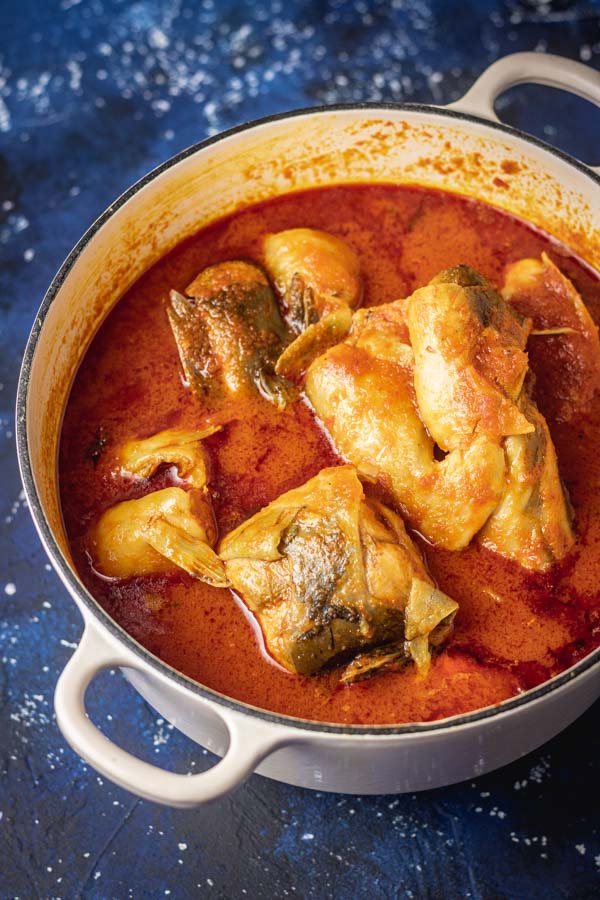
A quick, deeply flavourful Nigerian catfish stew — fresh catfish cooked in a richly fried tomato, red pepper, and onion base with palm oil and crayfish to create a bold, spicy, deeply satisfying stew that is ready in 30 minutes and perfect over white rice or rice and beans. Catfish is one of the most popular fish in Nigerian cooking for its firm texture and deep flavour. A great addition to our delicious fish recipes.
Ingredients:
- 1½ lbs fresh catfish, cleaned and cut into large pieces
- 3 large tomatoes + 2 red bell peppers + 2–3 scotch bonnet peppers, blended
- 1 large onion, half blended with peppers, half sliced
- ¼ cup palm oil or vegetable oil
- 2 tablespoons ground crayfish
- 1 teaspoon curry powder
- 1 teaspoon thyme
- 2 stock cubes
- Salt, to taste
- Fresh cilantro or green onions, for garnish
Instructions:
- Season the catfish pieces with salt, one crumbled stock cube, and a little of the blended pepper. Marinate 15 minutes.
- Heat the oil in a wide pot over medium-high heat. Add the sliced onion and fry 3 minutes. Pour in the blended tomato-pepper mixture. Cook over medium-high heat, stirring frequently, for 15–20 minutes until the tomato base has fried down and the oil separates.
- Add the curry powder, thyme, ground crayfish, and remaining stock cube. Season with salt. Stir well.
- Gently add the seasoned catfish pieces to the stew. Spoon the stew over the fish. Cover and cook over low heat for 10–12 minutes until the fish is just cooked through — do not stir to preserve the fish pieces. Taste and adjust seasoning. Garnish with fresh herbs. Serve over white rice.
6. Egg Sauce and Yam
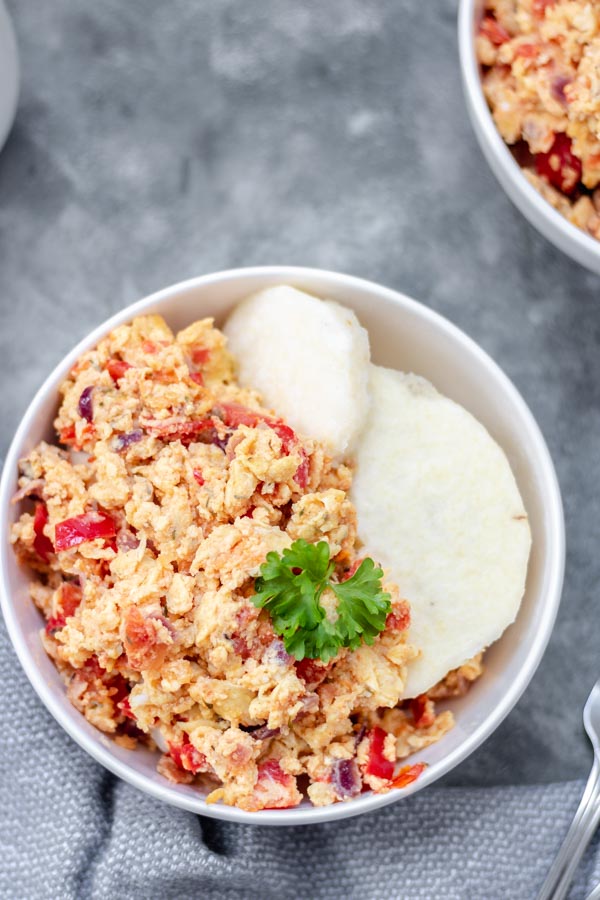
One of the simplest and most beloved Nigerian comfort meals — boiled white yam served with a savoury, spicy egg sauce made by scrambling eggs in a tomato, onion, and scotch bonnet base with palm oil or vegetable oil. This combination is eaten for breakfast, lunch, and dinner and requires minimal ingredients and effort while delivering enormous satisfaction. A universally loved Nigerian home-cooking staple. A wonderful addition to our easy breakfast recipes.
Ingredients:
- 1½ lbs white yam, peeled and cut into thick slices
- Salt, for boiling
- Egg sauce: 4 large eggs (beaten), 2 medium tomatoes (diced), 1 medium onion (sliced), 1–2 scotch bonnet peppers (finely diced), 2 tablespoons vegetable oil or palm oil, 1 stock cube, salt to taste
Instructions:
- Boil the yam slices in salted water for 15–20 minutes until completely tender when pierced with a fork. The yam should be soft but not falling apart. Drain and keep warm.
- Make the egg sauce: heat oil in a skillet over medium heat. Add the sliced onion and fry 3 minutes until translucent. Add the diced scotch bonnet and tomatoes. Cook for 5–7 minutes until the tomatoes have softened and released their juice.
- Season with the crumbled stock cube and salt. Stir well. Pour in the beaten eggs over the tomato mixture.
- Stir gently as the eggs cook, folding them through the tomato mixture until just set — the eggs should be in soft, golden curds coated in the tomato sauce. Do not overcook. Serve immediately alongside the hot boiled yam.
5. Ewa Agoyin — Boiled-to-Paste Black-Eyed Beans

Lagos's most famous street food breakfast — black-eyed peas cooked until completely soft and partially mashed into a creamy paste, then served with the legendary agoyin sauce, a deeply caramelised, dark, intensely savoury sauce made from completely dried-out fried onions and scotch bonnet with palm oil. The combination of the mild, creamy beans and the bold, almost smoky agoyin sauce is one of the most iconic and beloved Lagos street food pairings. Always served with agege bread or fried plantain.
Ingredients:
- 2 cups dried black-eyed peas, soaked overnight and drained
- Salt, to taste
- Agoyin sauce: 4 large onions (thinly sliced), 6 scotch bonnet peppers (blended), ½ cup palm oil, 1 tablespoon ground crayfish, 1 teaspoon ground crayfish, 2 stock cubes, salt to taste
Instructions:
- Cook the black-eyed peas: place in a pot with enough water to cover by 3 inches. Cook over medium heat for 60–90 minutes, adding water as needed, until the beans are completely tender and very soft — almost falling apart. Season with salt. Using the back of a spoon, partially mash the beans until the mixture is thick and creamy with some whole beans remaining.
- Make the agoyin sauce: heat the palm oil in a pot over high heat. Add all the sliced onions at once. Cook over high heat, stirring constantly, for 30–45 minutes. This is a very long caramelisation — the onions should reduce dramatically and eventually dry out almost completely into very dark, intensely caramelised fragments.
- Add the blended scotch bonnet to the dried caramelised onions. Continue cooking for 15 more minutes until the pepper is also fried down. Add ground crayfish, stock cubes, and salt. The finished sauce should be very dark, slightly chunky, and intensely savoury.
- Serve the warm, creamy bean paste in a bowl topped with several spoonfuls of the dark agoyin sauce. Accompany with thick agege-style white bread or fried plantain.
4. Asun — Nigerian Peppered Goat Meat
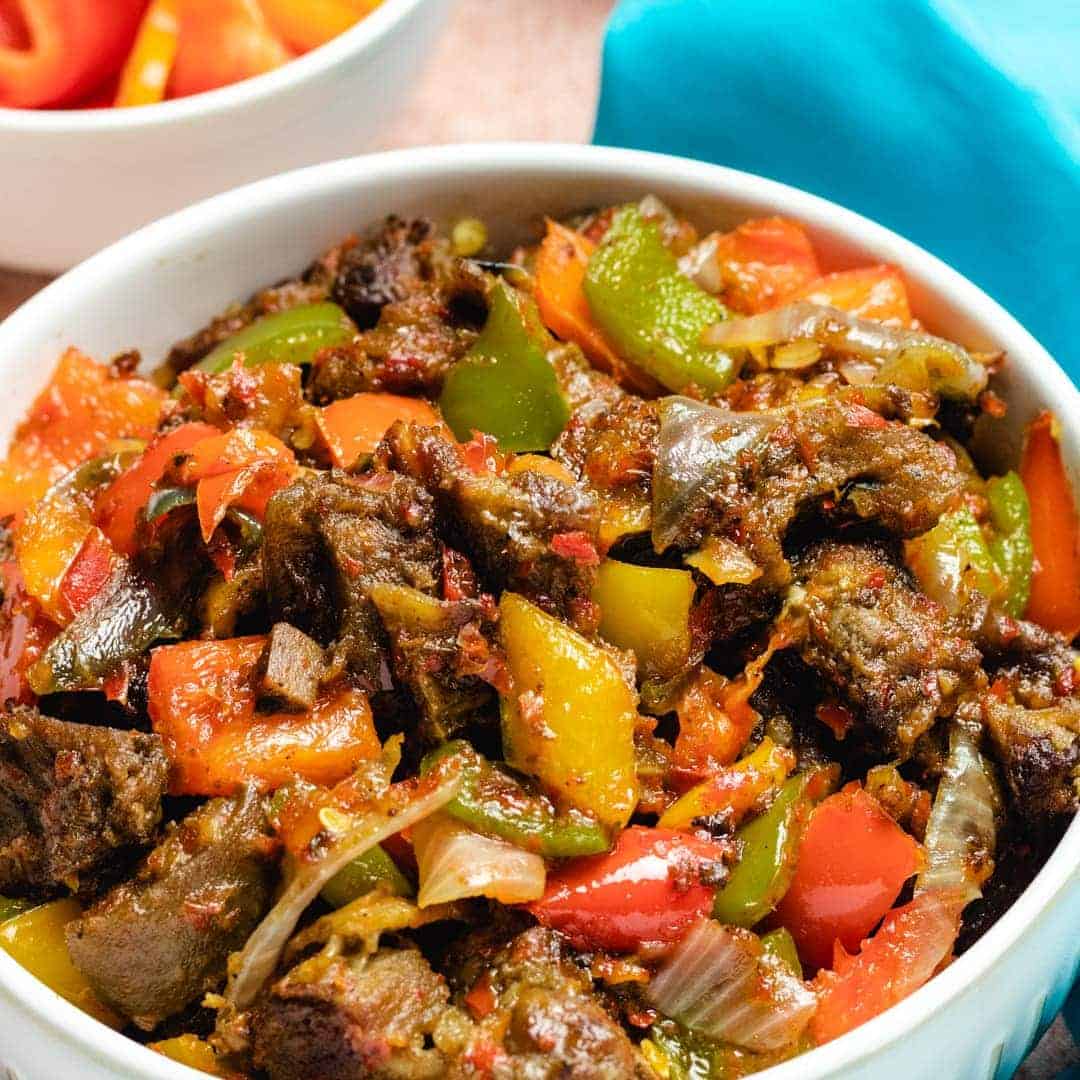
A spectacular Nigerian party appetiser and street food from Ekiti State — goat meat grilled over an open fire until charred and smoky, then chopped into bite-sized pieces and tossed in a bold pepper sauce of blended scotch bonnet, onions, and spices until the meat is coated in a fiery, sticky, intensely flavourful glaze. Asun is always served at Nigerian parties and celebrations and is eaten as a snack with drinks. A wonderful addition to our best appetizer ideas.
Ingredients:
- 2 lbs bone-in goat meat, cut into medium pieces
- Marinade: 2 stock cubes, 1 teaspoon thyme, 1 teaspoon curry powder, 1 sliced onion, salt — pressure cook with this seasoning and a little water until tender
- 4–6 scotch bonnet peppers, blended
- 2 red bell peppers, blended
- 1 large onion, sliced
- 2 tablespoons vegetable oil
- 1 stock cube
- Salt, to taste
Instructions:
- Pressure cook the goat meat with the marinade ingredients and a little water for 25–30 minutes until completely tender. Drain and reserve the stock for another use.
- Grill the cooked goat pieces over a very hot grill or under a broiler for 5–8 minutes, turning occasionally, until the outside is charred and smoky. Alternatively, fry in a very hot dry skillet until well-charred. The charring is essential to asun's flavour.
- Heat oil in a large skillet over high heat. Add the blended scotch bonnet and bell pepper. Cook for 8–10 minutes until fried down. Add the sliced onion and cook 3 minutes. Season with the stock cube and salt.
- Add the charred goat pieces to the pepper sauce. Toss vigorously over high heat for 3–5 minutes until every piece of meat is coated in the bold pepper sauce and slightly caramelised. Serve hot as an appetiser or snack with cold drinks.
3. Jollof Spaghetti
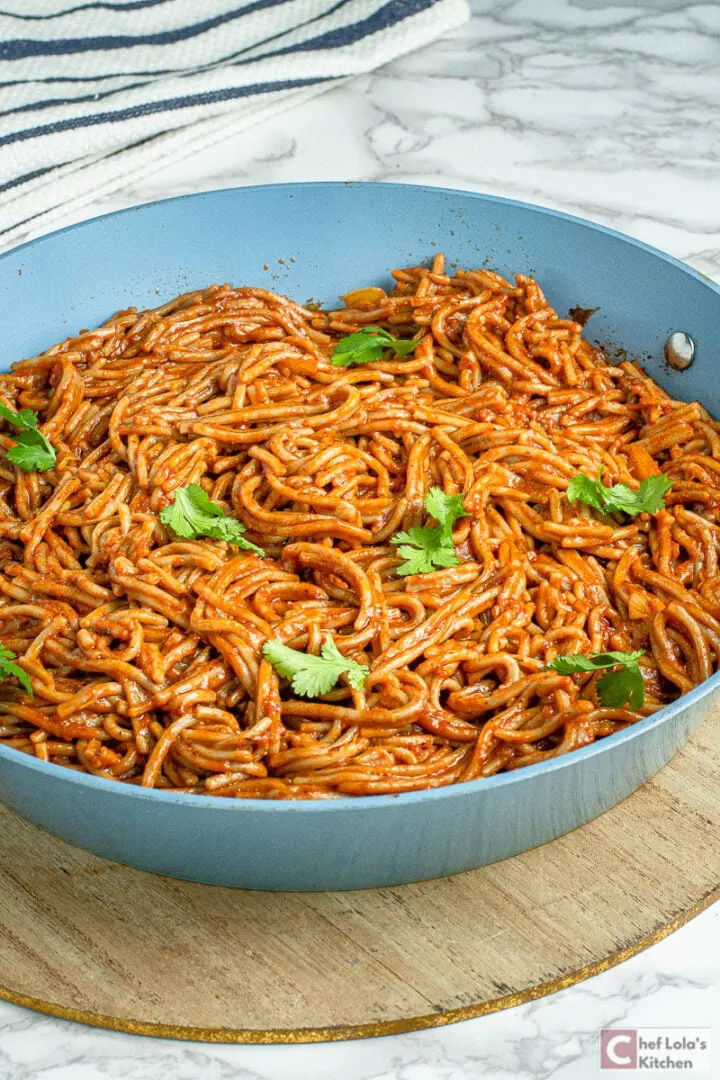
A wonderfully creative Nigerian fusion dish — spaghetti cooked directly in the classic Nigerian jollof sauce base of fried blended tomatoes, red peppers, and scotch bonnet with palm oil, crayfish, and spices, until every strand of pasta is infused with the bold, smoky jollof flavour. The result is unlike any Italian pasta dish — completely West African in character and utterly delicious. Perfect for any lover of our best pasta recipes.
Ingredients:
- 12 oz spaghetti
- 3 large tomatoes + 2 red bell peppers + 2–3 scotch bonnet peppers, blended
- 1 large onion, half blended with peppers, half sliced
- ¼ cup palm oil or vegetable oil
- 2 tablespoons ground crayfish
- 1 teaspoon curry powder
- 1 teaspoon thyme
- 2 stock cubes
- 2 cups chicken broth or water
- Salt, to taste
- Cooked chicken or shrimp, for serving
Instructions:
- Heat the oil in a large, wide pot over medium-high heat. Add the sliced onion and fry 3 minutes. Pour in the blended tomato-pepper mixture. Cook over medium-high heat, stirring frequently, for 20–25 minutes until completely fried down and the oil separates on top.
- Add the curry powder, thyme, ground crayfish, and crumbled stock cubes. Stir well. Season with salt. Pour in the chicken broth. Bring to a boil. Taste the liquid — it should be very well seasoned.
- Break the spaghetti in half and add to the jollof sauce. Stir to submerge all the pasta. The liquid should just cover the pasta — add a little more water if needed. Bring to a boil.
- Reduce heat to medium-low. Cover and cook for 12–15 minutes, stirring every 3–4 minutes to prevent sticking, until the pasta is cooked and has absorbed all the liquid. Do not add excess water — the pasta should absorb the jollof sauce, not boil in it. Serve with fried chicken or shrimp and fried plantain.
2. Nigerian Okra and Ogbono Soup
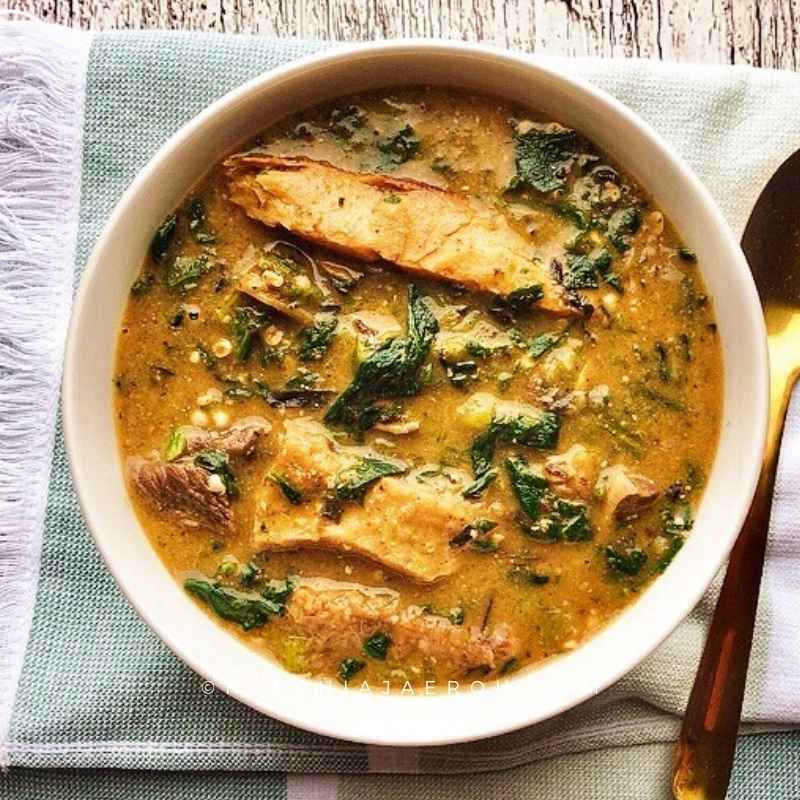
The ultimate combination of two of Nigeria's most drawing soups — okra and ogbono seeds combined together for a doubly thick, incredibly satisfying soup with an exceptional drawing quality from both the okra's natural mucilage and the ogbono seeds' stickiness. With assorted meats, dried fish, crayfish, and palm oil, this combined soup is extraordinarily rich and deeply flavourful. Truly a showcase of Nigerian soup-making mastery. A perfect match with our best soup recipes.
Ingredients:
- 1 cup fresh okra, finely chopped
- ½ cup ground ogbono seeds
- 1 lb assorted cooked meats
- 4 oz stockfish and 4 oz smoked dried fish, both deboned
- 3 tablespoons ground crayfish
- ½ cup palm oil
- 2 scotch bonnet peppers, blended
- 1 cup spinach or bitter leaf, chopped
- 2 stock cubes
- 1½ cups warm water or meat stock
- Salt, to taste
Instructions:
- Heat the palm oil in a large pot over medium heat until melted. Add the ground ogbono directly to the hot oil and stir constantly for 2–3 minutes to develop its sticky, drawing quality.
- Add the warm water gradually while stirring to prevent lumps. The soup will thicken immediately from the ogbono. Add the blended scotch bonnet, ground crayfish, and crumbled stock cubes. Stir well.
- Add the cooked meats, stockfish, and smoked fish. Simmer 10 minutes over medium-low heat, stirring frequently.
- Add the chopped okra and stir through — both the okra and ogbono will work together to create an exceptionally drawing, thick consistency. Cook 5–8 more minutes. Add the spinach and cook 3 more minutes. Season generously with salt. Serve immediately with eba, pounded yam, or fufu.
1. Gbegiri Soup (Abula) — Nigerian Bean Soup
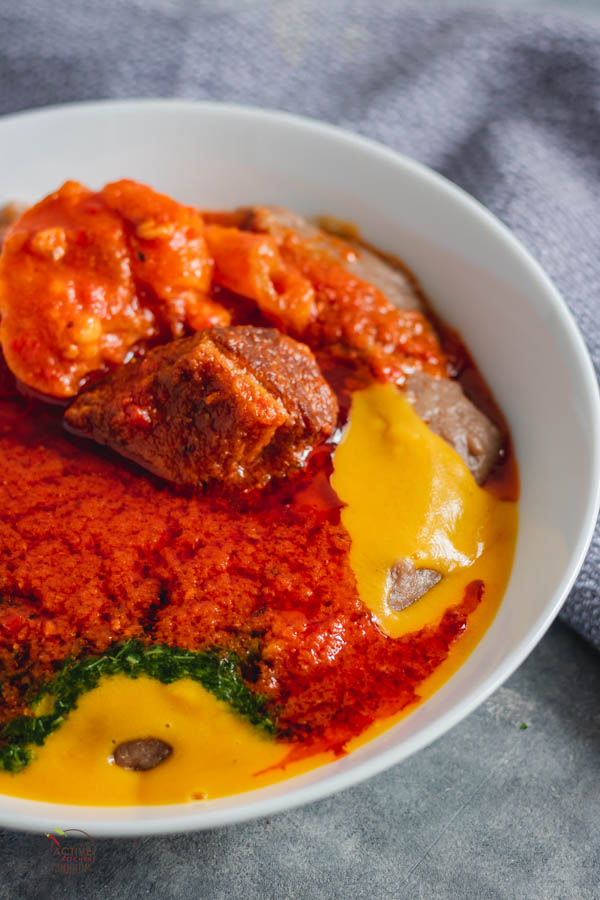
The third component of the celebrated Yoruba abula combination — gbegiri is a thick, smooth, golden bean soup made from black-eyed peas cooked until completely soft and blended into a velvety purée with palm oil and crayfish. Gbegiri is served alongside ewedu (jute leaf soup) and the Nigerian red stew together over amala (yam flour swallow) in the iconic abula combination beloved across Lagos and Yorubaland. It is one of the most distinctive and culturally significant soups in Nigerian cuisine. A wonderful companion to our black-eyed peas recipes.
Ingredients:
- 2 cups black-eyed peas, soaked overnight and peeled
- ¼ cup palm oil
- 2 tablespoons ground crayfish
- 1 scotch bonnet pepper, blended
- 2 stock cubes
- 2 cups water
- Salt, to taste
Instructions:
- Place the peeled black-eyed peas in a pot with 2 cups of water. Cook over medium heat for 45–60 minutes until the beans are completely soft and almost disintegrating. Do not drain — the cooking water is part of the soup.
- Use an immersion blender to blend the cooked beans and their water completely smooth, or blend in batches in a regular blender. The gbegiri should be very smooth, thick, and creamy with no lumps.
- Return to the pot over medium-low heat. Add the palm oil, blended scotch bonnet, ground crayfish, and crumbled stock cubes. Stir well to combine.
- Cook over medium-low heat for 10–15 minutes, stirring frequently, until the soup is cooked through, the flavours have melded, and the colour is a deep golden orange from the palm oil. Season generously with salt — gbegiri should be well-seasoned. Serve alongside ewedu and Nigerian red stew over amala for the complete abula experience.
FAQs
What are the most essential ingredients to stock for cooking authentic Nigerian food at home?
Nigerian cooking has a distinctive pantry that is quite different from European or Asian cuisines. Palm oil is the foundational cooking fat for most Nigerian soups and stews — its distinctive flavour, colour, and richness cannot be replicated by any substitute and is available at African grocery stores and increasingly in mainstream supermarkets. Ground crayfish (dried, ground shrimp) adds the savoury, umami depth that is the backbone of virtually every Nigerian soup — it is non-negotiable. Scotch bonnet peppers provide the characteristic Nigerian heat — they are much hotter than jalapeños and have a fruity quality that is essential to the flavour profile. Stock cubes (particularly Maggi and Knorr brands) are used in almost every dish. Stockfish (dried preserved fish) and dried smoked fish add depth to soups. Egusi (ground melon seeds) and ogbono (ground wild mango seeds) are the two most important soup thickeners. Locust beans (iru/dawadawa) add a deeply fermented savoury note. With these ingredients alongside fresh yam, black-eyed peas, and leafy greens, you can cook across the full range of Nigerian cuisine.
What is the difference between Nigerian Jollof Rice and Ghanaian Jollof Rice?
The Jollof Wars between Nigeria and Ghana are one of West Africa's most spirited friendly debates, and the differences are real and meaningful. Nigerian Jollof uses parboiled long-grain rice cooked in a richly fried tomato base — the tomatoes are fried for a very long time until caramelised and dark, which gives the Nigerian version its characteristic depth. Nigerian Jollof is also famous for the "party Jollof" effect where a slight char develops at the bottom of the pot from the firewood cooking, adding a smoky flavour that is considered the pinnacle of the dish. Ghanaian Jollof tends to use more aromatic spices, is often slightly more fragrant and herbal, and uses a different cooking technique. Both versions produce deeply flavourful, orange-red rice, but the flavour profiles reflect the distinct culinary traditions of each country. Both are extraordinary — the debate is ultimately one of the great joys of West African food culture.
How do I eat Nigerian soups if I cannot find yam or eba?
Nigerian soups are traditionally eaten with "swallows" — starchy foods shaped into balls and used to scoop up the soup rather than eaten with utensils. The most widely available options for home cooks outside Nigeria are: fufu made from cassava flour (available at African grocery stores as "fufu flour" and prepared by mixing with hot water), pounded yam made from yam flour (available as "poundo yam" at African grocery stores and prepared the same way), eba made from garri (dried, granulated cassava — the most common Nigerian swallow, prepared by pouring boiling water over garri and mixing), or semolina-based swallow. For those who cannot find any of these, Nigerian soups are also genuinely excellent served over white rice or with crusty bread for dipping — while not traditional, both are completely delicious ways to enjoy these extraordinary soups.
What makes Nigerian pepper soup different from other spiced soups?
Nigerian pepper soup has a completely unique flavour profile that comes from the specific combination of West African spices used — primarily the pepper soup spice blend which includes ehuru (calabash nutmeg), uda (grains of selim/Ethiopian pepper), utazi leaves, and sometimes oziza seeds. These spices together create an intensely aromatic, slightly medicinal, deeply warming flavour that is found nowhere else in world cuisine. The broth is clear rather than thick, which makes it feel light on the stomach despite its intense flavour. Scotch bonnet provides heat while the spice blend provides the characteristic aromatic complexity. Pepper soup is consumed across all regions of Nigeria in countless variations — catfish pepper soup, goat meat pepper soup, chicken pepper soup, and cow foot pepper soup are among the most popular. The soup is believed to have restorative properties and is commonly given to new mothers, people recovering from illness, and those who have been celebrating heavily the night before.
Share This Post!
If you loved these authentic Nigerian recipes, share this post with every food lover in your life! Pin it, share it on Facebook, or send it to whoever is ready to discover the incredible flavours of West African cuisine. 🇳🇬🍲




Anastasia says
Now I'm hungry! These are all delicious food.
Sana Umer says
Glad to hear that! Hope you get to try some of them soon!