
Spanish cuisine is as vibrant and diverse as its regions, and these 31 authentic Spanish recipes will take you on a flavorful journey through Spain’s rich food culture.
From the Mediterranean coast to the heart of the country, Spanish dishes are known for their use of fresh ingredients, bold spices, and time-honored cooking methods.
Start with tapas, small plates like patatas bravas (crispy potatoes with spicy sauce), or gambas al ajillo (garlic shrimp), perfect for sharing.
Don’t miss the iconic paella, a rice dish packed with seafood, chicken, or rabbit, and flavored with saffron and paprika.
For a hearty meal, try cocido madrileño, a rich stew of meats, vegetables, and chickpeas, or fabada asturiana, a delicious bean stew from Asturias.
For dessert, churros dipped in thick hot chocolate and flan, a creamy caramel custard, are perfect endings to a Spanish meal.
These recipes celebrate Spain’s incredible food culture and are sure to bring authentic Spanish flavors to your kitchen.
Authentic Spanish Recipes for a Taste of Spain

31. Spanish Paella (Paella Valenciana)
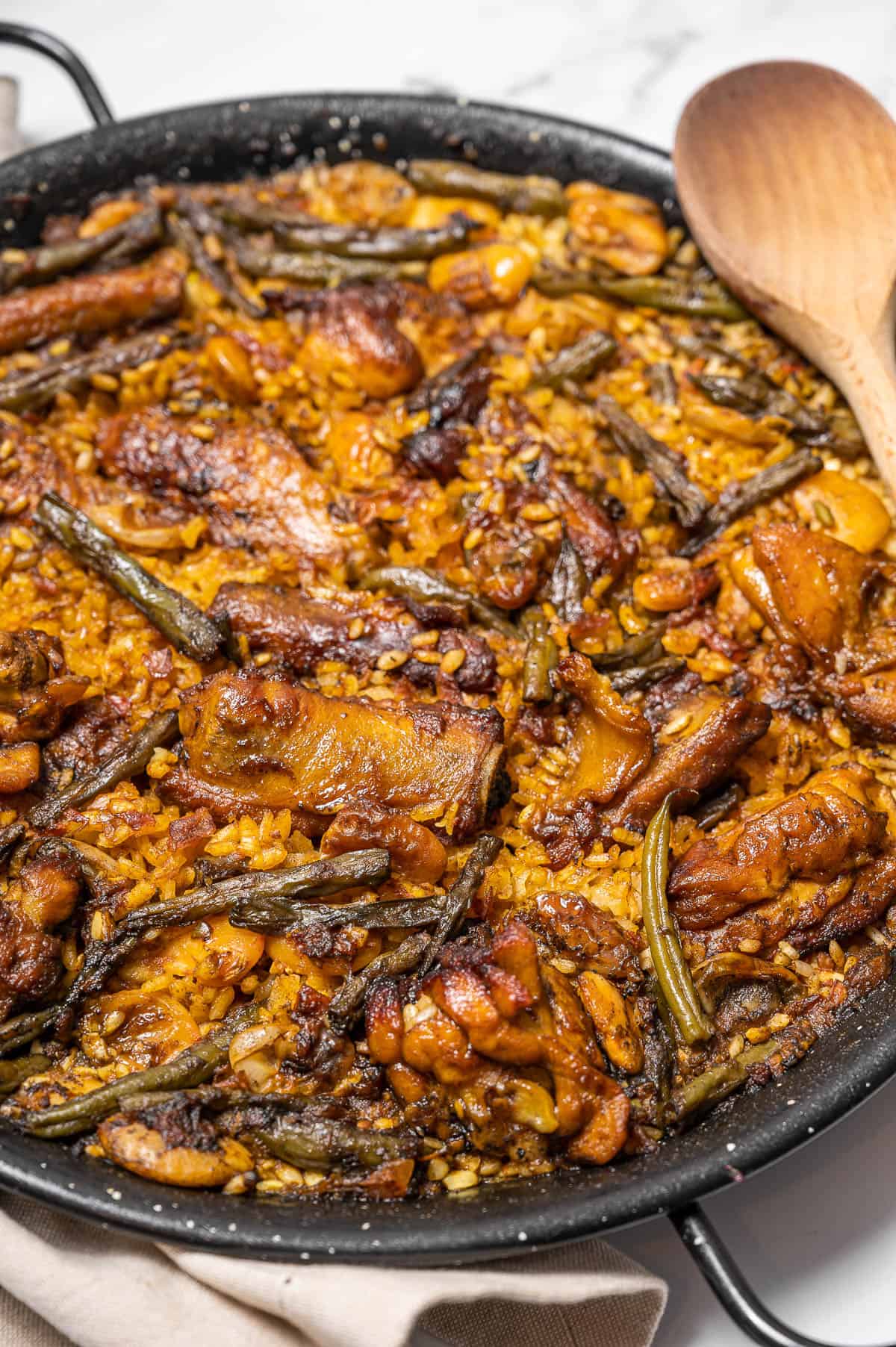
The most iconic dish in all of Spanish cuisine — a spectacular saffron-infused rice cooked in a wide, shallow paella pan with chicken, rabbit, green beans, and butter beans, developing the prized caramelized rice crust called socarrat at the base. The ultimate celebration dish and one that rewards the right technique. For more impressive rice dishes, explore our Spanish paella recipe and rice cooking guide.
Ingredients:
- 2 cups Bomba or Calasparra rice (short-grain paella rice)
- 1 lb chicken pieces, bone-in
- ½ lb rabbit pieces (or substitute with more chicken)
- 4 cups good-quality chicken broth, warmed
- 1 large pinch saffron threads, steeped in ¼ cup warm water
- 1 cup green beans, trimmed
- 1 cup butter beans or flat green beans
- 1 large tomato, grated
- 1 teaspoon sweet smoked paprika
- 4 cloves garlic, minced
- ¼ cup good olive oil
- Salt, to taste
- Lemon wedges, for serving
Instructions:
- Heat olive oil in a 15–16-inch paella pan over medium-high heat. Season the chicken and rabbit generously with salt. Fry skin-side down until deeply golden — about 8 minutes. Turn and cook another 5 minutes. Push to the edges of the pan.
- Add the green beans to the centre and fry 3 minutes. Add the garlic and grated tomato to the centre. Cook, stirring, for 3–4 minutes until the tomato has reduced to a thick paste. Stir in the smoked paprika and cook 30 seconds.
- Pour in the warmed broth and the saffron water. Season with salt and taste — the broth should be well-seasoned. Bring to a vigorous boil. Add the butter beans.
- Distribute the rice evenly across the pan without stirring. Cook over high heat for 10 minutes, then reduce to medium-low for 8–10 minutes until the rice has absorbed all the liquid. For the socarrat, increase heat to high for the final 2 minutes — you should hear gentle crackling. Rest 5 minutes off heat. Serve with lemon wedges.
30. Gazpacho

Spain's most famous cold soup and the ultimate summer refreshment — ripe tomatoes, cucumber, green pepper, red onion, garlic, sherry vinegar, and excellent olive oil blended into a silky, vibrant, deeply savoury cold soup that is served over ice with diced vegetable garnishes. Zero cooking, 10 minutes of effort, and completely extraordinary. A natural fit alongside our best summer recipes.
Ingredients:
- 2 lbs very ripe tomatoes, roughly chopped
- 1 medium cucumber, peeled and roughly chopped
- 1 green bell pepper, roughly chopped
- ½ small red onion, roughly chopped
- 2 cloves garlic
- 2 slices stale white bread, crusts removed, soaked in water and squeezed
- ¼ cup good extra-virgin olive oil, plus extra for drizzling
- 2 tablespoons sherry vinegar or red wine vinegar
- Salt, to taste
- Garnish: small-diced cucumber, tomato, and green pepper; drizzle of olive oil; fresh basil
Instructions:
- Combine the tomatoes, cucumber, green pepper, red onion, garlic, and soaked bread in a blender. Blend on high for 1 full minute until completely smooth.
- With the blender running, slowly drizzle in the olive oil to emulsify. Add the sherry vinegar and a generous pinch of salt. Blend again.
- Taste and adjust the balance of salt and vinegar. The soup should be bright, tangy, and well-seasoned. Pass through a fine-mesh sieve if you want an ultra-silky texture, or serve as-is for a more rustic result.
- Refrigerate for at least 2 hours until very cold — the flavours improve significantly as the soup rests. Serve in chilled bowls over ice, drizzled with extra olive oil and garnished with the diced vegetables.
29. Spanish Potato Omelette (Tortilla de Patatas)
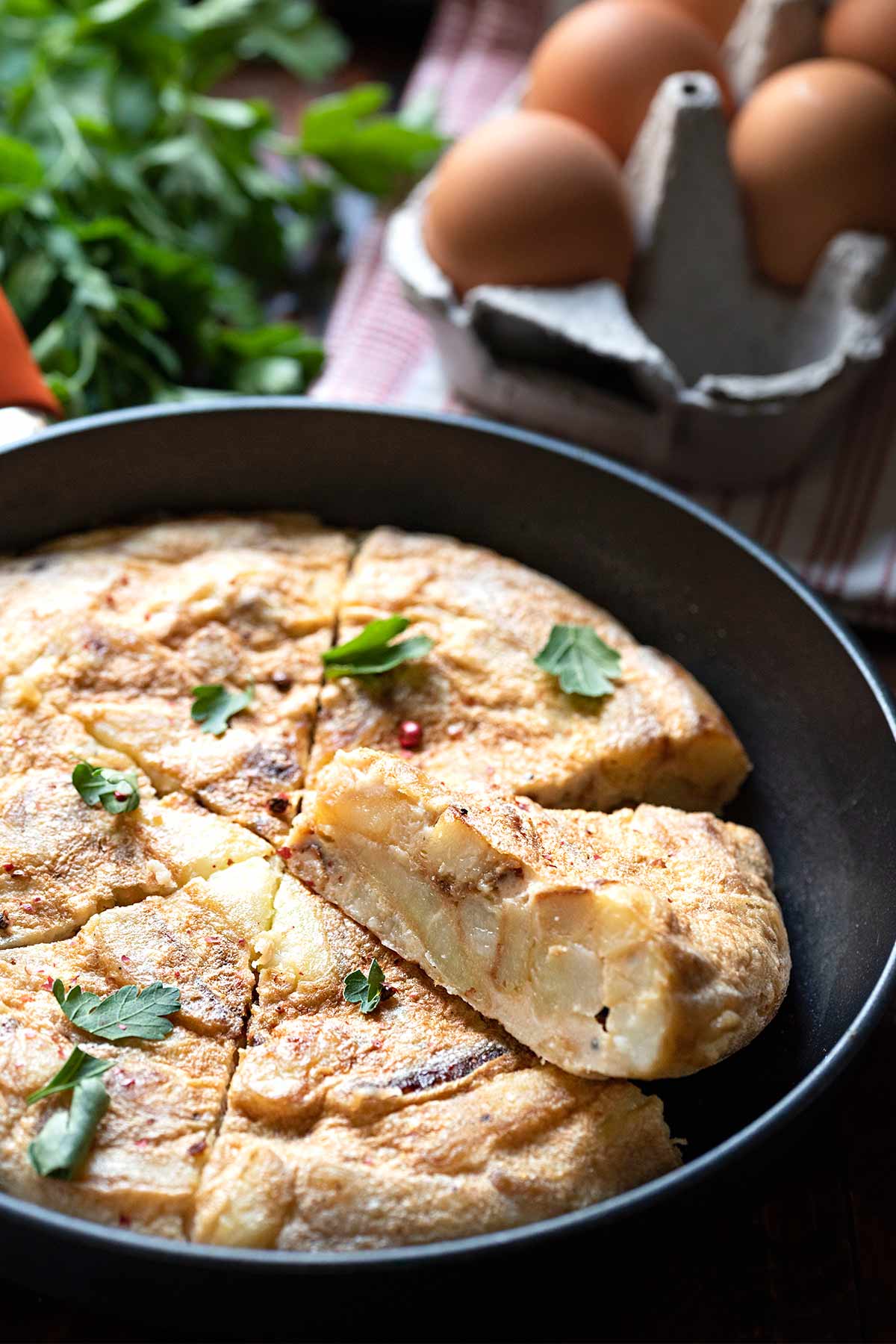
Spain's most universally beloved everyday dish — a thick, golden omelette of slowly olive-oil-cooked potato slices and softened onion bound together with egg, cooked until just custardy in the centre. The tortilla española is eaten for breakfast, lunch, tapas, and dinner and is one of the most satisfying and comforting things in all of European cooking. A wonderful dish alongside our best easy frittata recipes.
Ingredients:
- 1½ lbs Yukon Gold potatoes, peeled and thinly sliced into rounds
- 1 large onion, thinly sliced
- 6 large eggs
- ¾ cup good olive oil, for poaching
- Salt, to taste
Instructions:
- Heat the olive oil in a 10-inch skillet over medium heat. Add the potatoes and onion with a generous pinch of salt. Cook gently — the potatoes should poach in the oil, not fry — for 20–25 minutes, turning occasionally, until completely tender. Drain through a sieve, reserving the oil.
- Beat the eggs in a large bowl with a pinch of salt. Add the warm potato and onion mixture and stir to combine. Let rest 5 minutes.
- Heat 2 tablespoons of the reserved oil in the same skillet over medium heat. Pour in the egg and potato mixture. Cook for 4–5 minutes, shaking the pan occasionally, until the bottom is set and golden but the top is still slightly liquid.
- Place a large flat plate over the pan. In one confident motion, flip the tortilla onto the plate. Slide it back into the pan uncooked-side down. Cook 2–3 more minutes until just set but with a slight jiggle in the centre — this gives the characteristic custardy interior. Slide onto a plate. Rest 10 minutes before slicing. Serve warm or at room temperature.
28. Patatas Bravas (Spanish Crispy Potatoes)
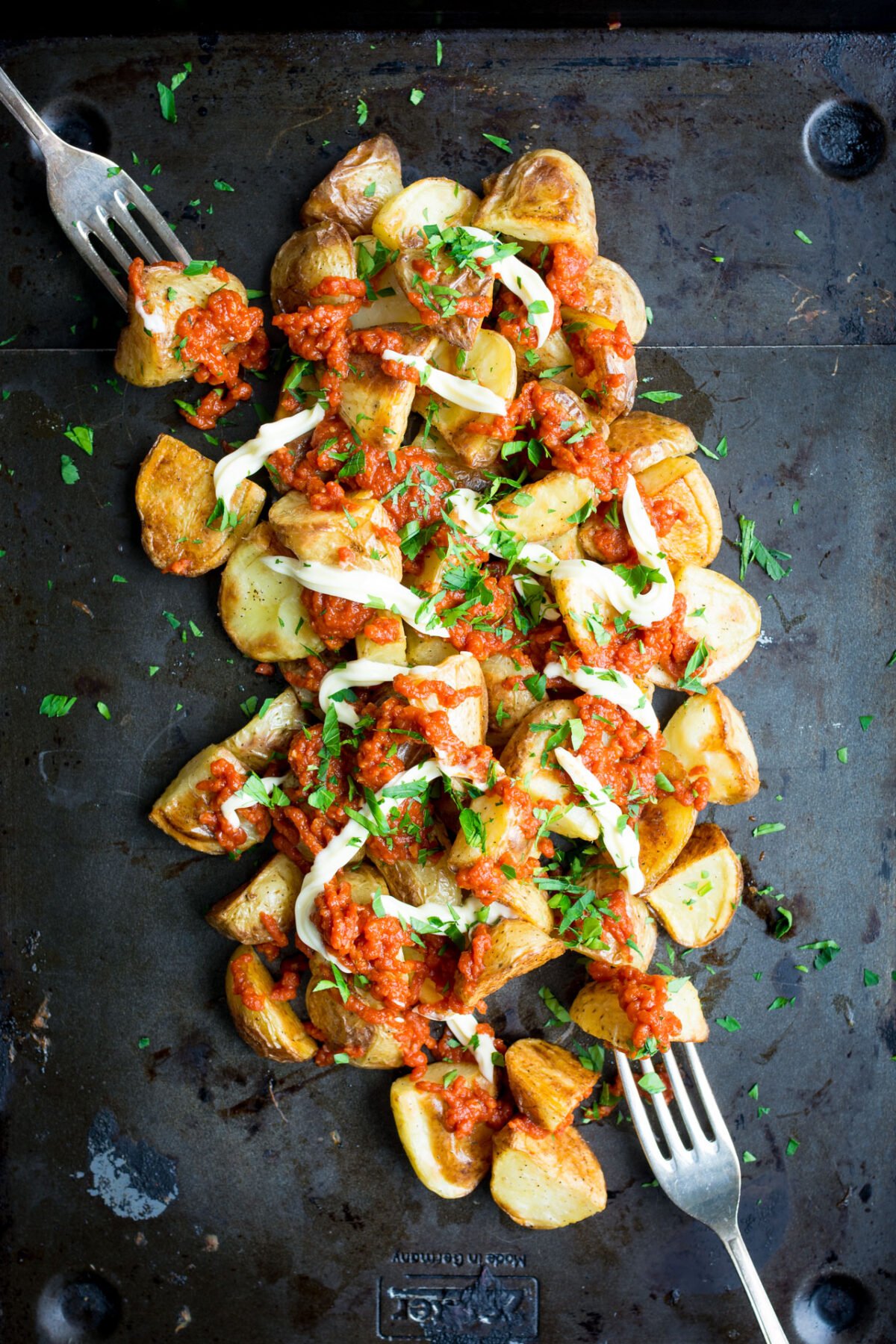
Spain's most iconic tapas dish — golden, crispy potato cubes served with a bold, smoky, slightly spicy tomato bravas sauce and often a drizzle of aioli. The name literally means "brave potatoes" and this dish is served in every tapas bar across Spain. Lighter than the traditional deep-fried version but no less satisfying. A perfect side alongside our easy side dish ideas.
Ingredients:
- 2 lbs Yukon Gold potatoes, cut into 1.5-inch cubes
- 3 tablespoons olive oil
- Salt, to taste
- Bravas sauce: 1 (14 oz) can crushed tomatoes, 1 tablespoon olive oil, 3 cloves garlic (minced), 1 teaspoon sweet smoked paprika, ½ teaspoon hot paprika or cayenne, 1 tablespoon sherry vinegar, 1 teaspoon sugar, salt to taste
- Aioli or mayonnaise, for drizzling
Instructions:
- Preheat oven to 425°F. Toss the potato cubes with olive oil and salt. Spread on a baking sheet in a single layer — do not crowd. Roast for 35–40 minutes, flipping halfway, until deeply golden and crispy on all sides.
- Make the bravas sauce: sauté the garlic in olive oil for 1 minute. Add the crushed tomatoes, both paprikas, sherry vinegar, sugar, and salt. Simmer for 10 minutes until thick and deeply flavoured. Taste and adjust the heat and seasoning.
- Transfer the crispy potatoes to a serving plate. Spoon the bravas sauce generously over the top.
- Drizzle with aioli or mayo in a zigzag pattern. Serve immediately as a tapas dish — they are best eaten the moment they come out of the oven while the potatoes are still crispy.
27. Croquetas de Jamón — Spanish Ham Croquettes

The most beloved tapas in all of Spain — a creamy, impossibly smooth béchamel enriched with diced serrano ham, chilled until firm, then shaped, breaded, and deep-fried until shatteringly golden. The contrast between the crispy crust and the molten, savoury interior is completely extraordinary. A showstopper appetizer alongside our best appetizer ideas.
Ingredients:
- 4 tablespoons butter
- ½ cup all-purpose flour
- 2 cups whole milk, warmed
- 4 oz serrano ham or prosciutto, very finely diced
- ¼ teaspoon nutmeg
- Salt and white pepper, to taste
- Breading: 2 eggs (beaten), 1 cup fine breadcrumbs (panko or regular)
- Oil for deep frying
Instructions:
- Melt the butter in a saucepan over medium heat. Add the flour and stir constantly for 2 minutes to cook out the raw flour taste. Gradually add the warm milk in a thin stream, whisking constantly until completely smooth and very thick. This takes 5–8 minutes of continuous stirring.
- Stir in the diced ham, nutmeg, salt, and white pepper. The béchamel should be very thick — thicker than a regular sauce. Spread into a shallow dish, press plastic wrap directly onto the surface, and refrigerate for at least 4 hours or overnight until completely firm.
- Shape the chilled mixture into cylinders or ovals about 1.5 inches long. Roll in beaten egg, then in breadcrumbs. Repeat the egg and breadcrumb step for a thicker crust. Refrigerate 30 minutes before frying.
- Heat oil to 375°F. Fry in batches of 4–5 for 2–3 minutes until deeply golden all over. Do not move them for the first minute — let the crust set. Drain on a wire rack. Serve immediately.
26. Pisto Manchego
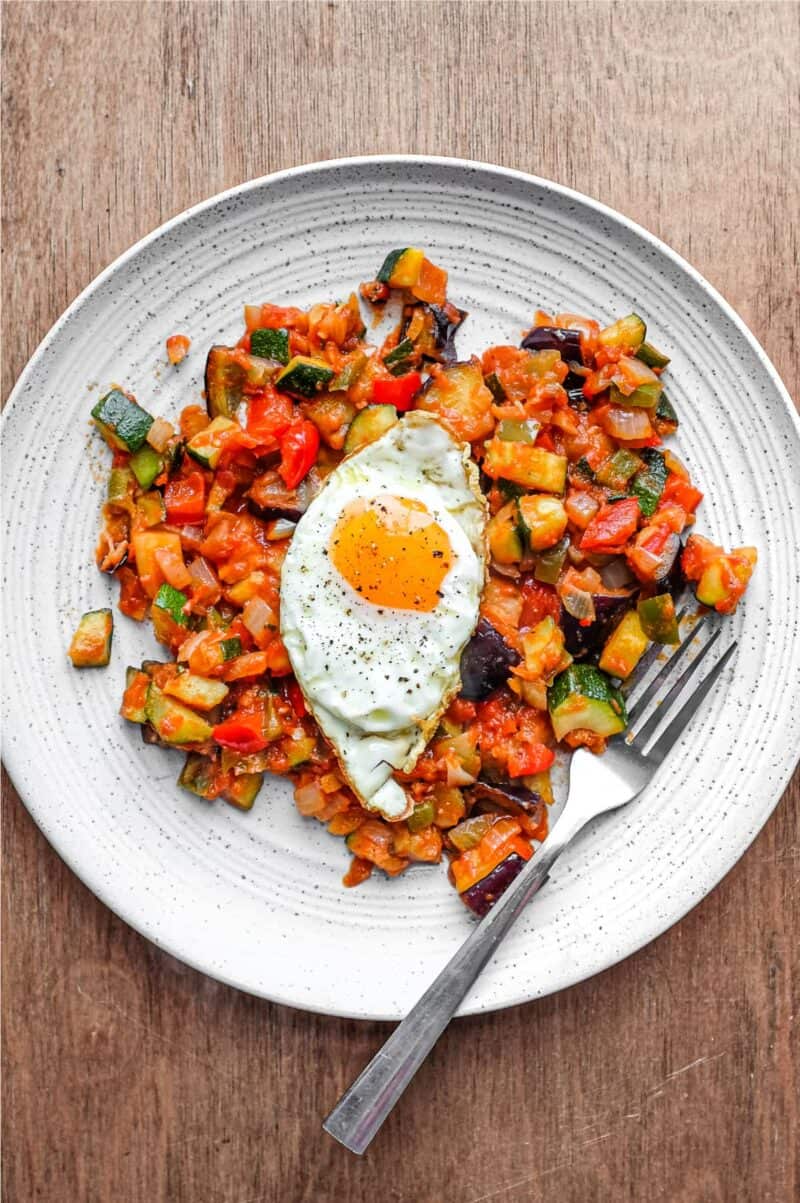
Spain's answer to ratatouille — a deeply flavourful, slow-cooked vegetable medley of tomatoes, peppers, zucchini, onion, and garlic in olive oil that becomes richly concentrated and jammy with long, patient cooking. Served with a fried egg on top for a classic Spanish supper, or as a side dish for meat and fish. A wonderful vegetarian dinner in its own right.
Ingredients:
- 2 medium zucchini, diced
- 1 large onion, finely diced
- 1 red bell pepper, diced
- 1 green bell pepper, diced
- 3 ripe tomatoes, grated or 1 (14 oz) can crushed tomatoes
- 4 cloves garlic, minced
- ¼ cup good olive oil
- 1 teaspoon sweet smoked paprika
- 1 teaspoon sugar
- Salt and pepper, to taste
- Fried eggs and crusty bread, for serving
Instructions:
- Heat the olive oil in a large, heavy-bottomed pan over medium heat. Add the onion and cook for 8 minutes until softened and beginning to turn golden. Add the garlic and cook 2 more minutes.
- Add the red and green peppers. Cook for 8 minutes until softened. Add the zucchini and cook 5 more minutes.
- Add the grated tomatoes, smoked paprika, sugar, salt, and pepper. Stir to combine. Reduce heat to low and cook uncovered for 25–30 minutes, stirring occasionally, until all the vegetables are completely tender and the mixture is thick and jammy with very little liquid remaining.
- Taste and adjust seasoning generously. Serve in a large bowl or individual dishes topped with a fried egg per person and plenty of crusty bread for scooping.
25. Albóndigas — Spanish Meatballs in Rich Tomato Sauce
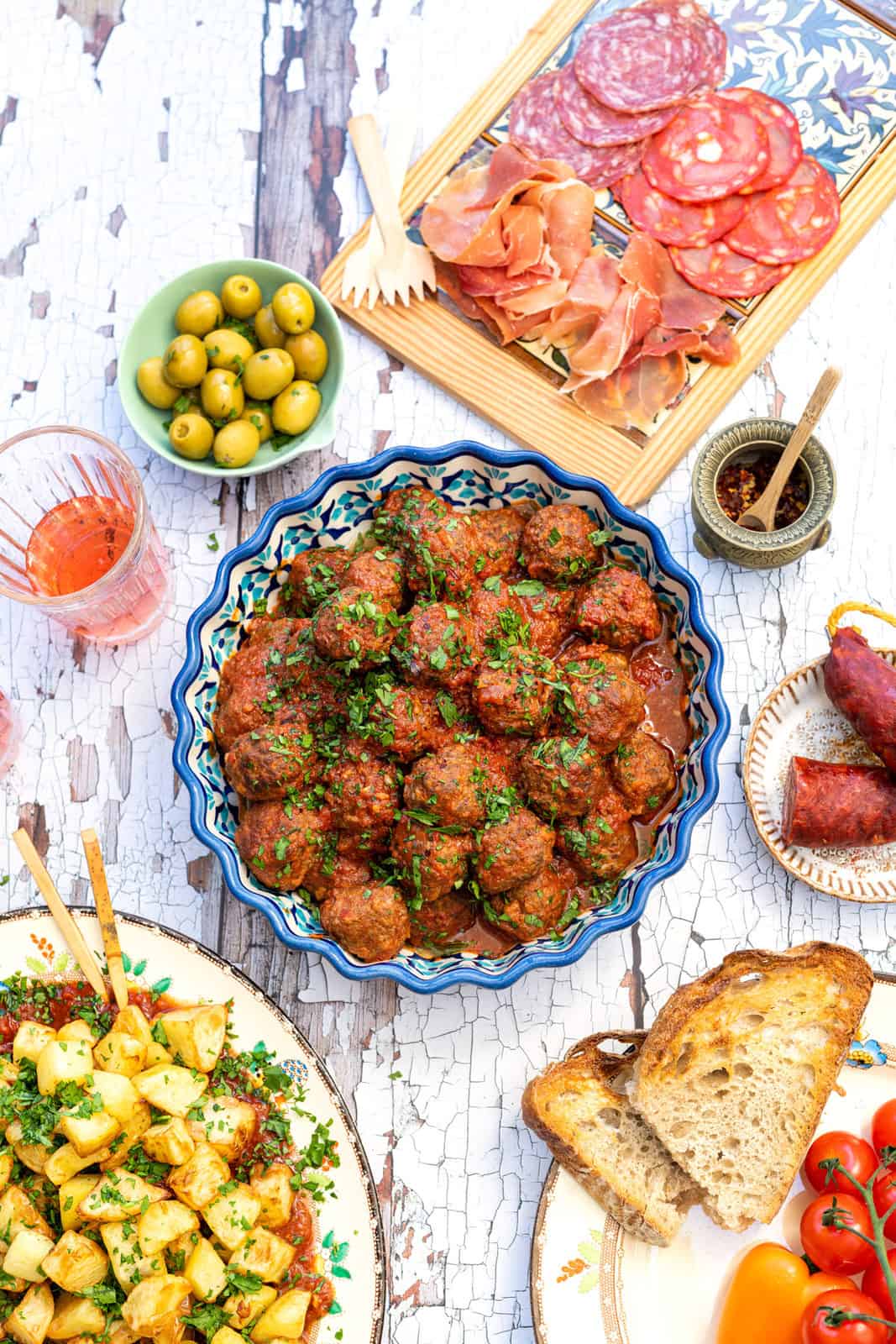
Tender, herb-fragrant Spanish meatballs in a deeply savoury, slow-cooked tomato sauce — one of the most beloved tapas dishes in Spain and equally wonderful served over rice or with crusty bread as a main course. These are different from Italian meatballs — lighter, more delicate, and perfumed with cumin and smoked paprika. See more ideas in our classic meatball collection.
Ingredients:
- 1 lb ground beef or a mix of beef and pork
- 2 cloves garlic, minced
- ¼ cup breadcrumbs soaked in 3 tablespoons milk
- 1 large egg
- 2 tablespoons fresh parsley, finely chopped
- ½ teaspoon cumin
- ½ teaspoon smoked paprika
- Salt and pepper, to taste
- Flour for dusting
- Tomato sauce: 1 onion (diced), 4 cloves garlic (minced), 1 (14 oz) can crushed tomatoes, ½ cup dry white wine, 1 teaspoon smoked paprika, 1 bay leaf, olive oil, salt and pepper
Instructions:
- Combine all meatball ingredients and mix until just combined — do not overwork. Roll into balls about 1.5 inches in diameter. Dust lightly in flour.
- Shallow-fry in olive oil over medium-high heat, turning to brown all sides — about 4 minutes. Remove and set aside. They do not need to be fully cooked through at this stage.
- Make the sauce in the same pan: sauté onion in olive oil for 5 minutes. Add garlic and cook 1 minute. Add white wine and cook 2 minutes. Add crushed tomatoes, smoked paprika, bay leaf, salt, and pepper. Simmer 10 minutes.
- Add the browned meatballs to the sauce. Cover and simmer gently for 20 minutes until the meatballs are cooked through and the sauce has thickened. Remove the bay leaf. Serve garnished with fresh parsley alongside crusty bread.
24. Churros with Chocolate Dipping Sauce
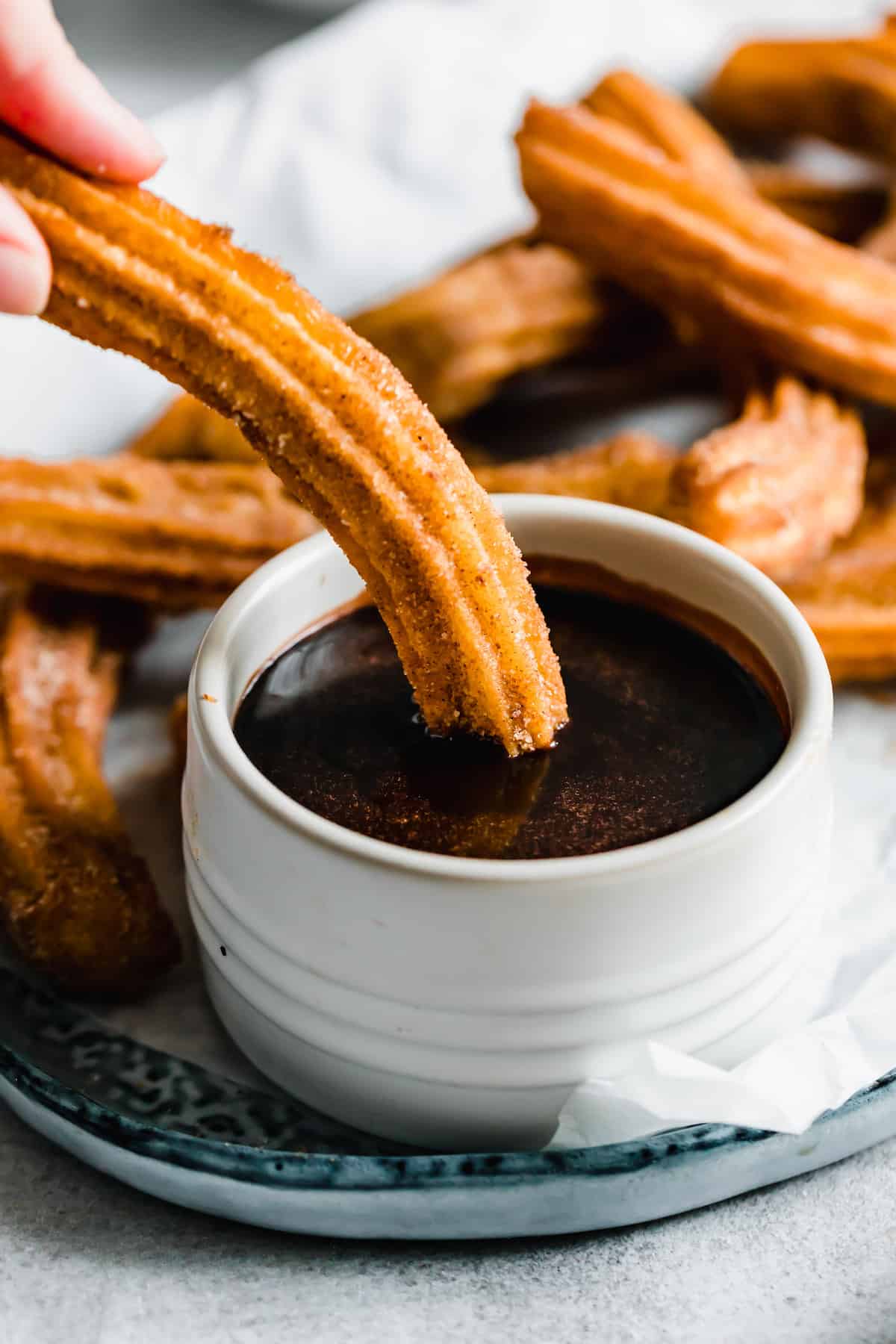
Spain's most iconic street food and beloved breakfast treat — long ridged dough sticks piped from a star-tipped pastry bag, fried until golden and crispy, then rolled in cinnamon sugar and dunked into an indulgently thick, rich Spanish hot chocolate sauce. Also see our own churro-inspired treats and easy dessert ideas for more sweet inspiration.
Ingredients:
- 1 cup water
- 1 cup all-purpose flour
- ½ teaspoon salt
- 1 tablespoon vegetable oil
- Oil for deep frying
- ½ cup sugar mixed with 1 teaspoon cinnamon, for rolling
- Thick chocolate dipping sauce: 4 oz dark chocolate (chopped), 1 cup whole milk, 2 tablespoons sugar, 1 tablespoon cornstarch dissolved in 2 tablespoons milk — simmer until thick and glossy
Instructions:
- Bring water, salt, and oil to a boil in a saucepan. Remove from heat and add the flour all at once. Stir vigorously until a smooth, thick dough forms that pulls away from the sides. Cool slightly — 5 minutes.
- Transfer the dough to a piping bag fitted with a large star tip. Heat oil to 375°F in a deep pot. Pipe 6-inch lengths of dough directly into the hot oil, cutting with scissors. Fry in batches of 3–4 for 3–4 minutes, turning, until golden and crispy all over.
- Drain briefly then immediately roll in the cinnamon sugar while still hot.
- Make the chocolate sauce: melt chocolate in the milk over medium heat, stirring. Add sugar and the cornstarch slurry. Stir constantly until the sauce is thick, glossy, and coats the back of a spoon. Serve the churros immediately with the warm chocolate sauce for dunking.
23. Pan Con Tomate with Espelette Pepper
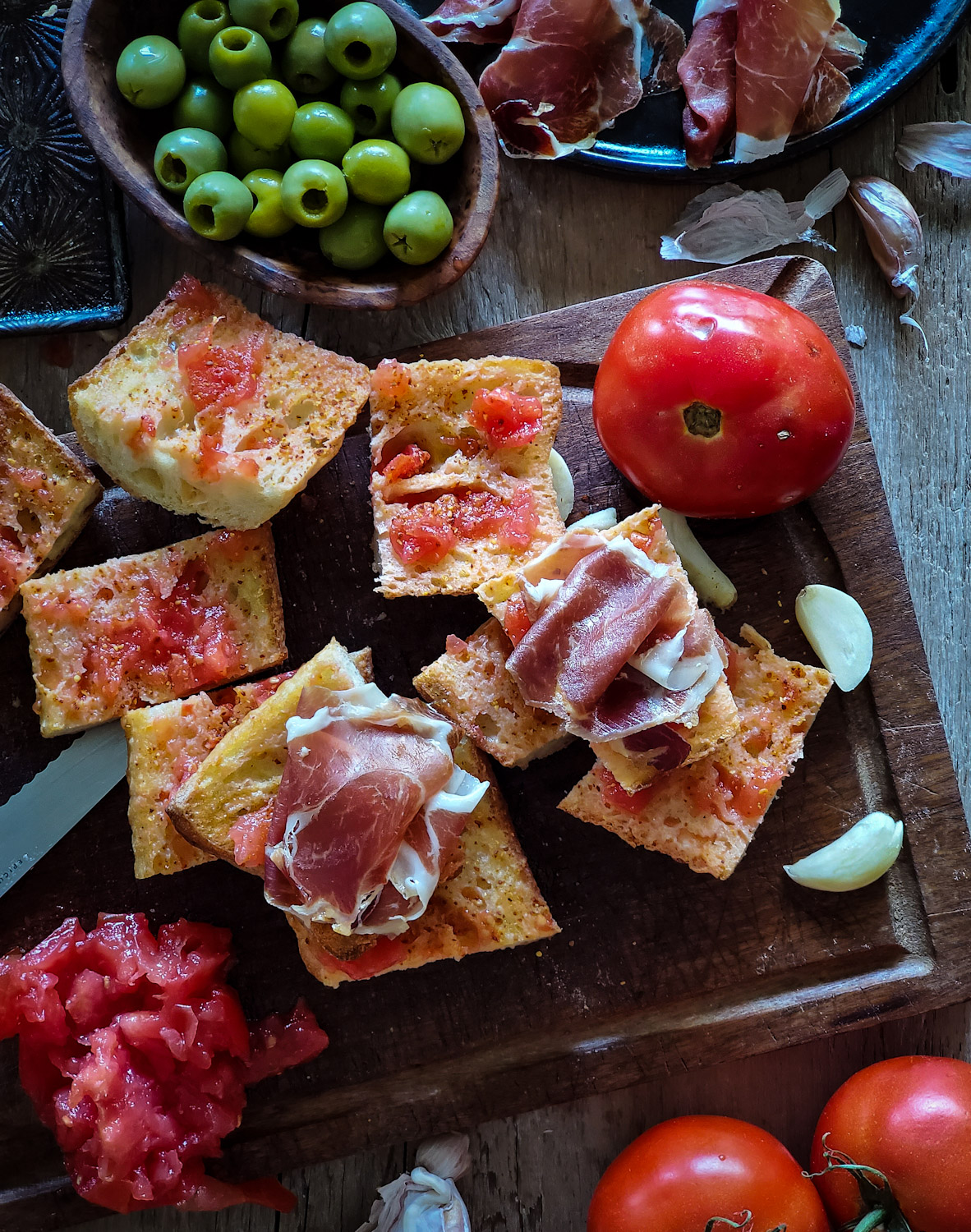
The simplest and most perfect thing in all of Spanish cuisine — thick slices of bread toasted until golden, rubbed with a cut garlic clove, then rubbed with a ripe tomato halved crosswise so all the juicy pulp and seeds absorb into the bread, drizzled with excellent olive oil, and finished with flaky sea salt and Espelette pepper. Zero cooking beyond toasting. Absolute perfection. The best possible use of good bread — also try our bruschetta recipe.
Ingredients:
- 4 thick slices crusty sourdough or rustic country bread
- 2 large, very ripe tomatoes, halved crosswise
- 2 cloves garlic, peeled and halved
- 3–4 tablespoons excellent extra-virgin olive oil
- Flaky sea salt (Maldon or fleur de sel)
- Espelette pepper or sweet smoked paprika, for finishing
Instructions:
- Toast the bread slices until deeply golden on both sides — under the grill, in a toaster, or in a dry cast iron pan. The bread should be truly crispy and well-toasted.
- While the toast is still hot, rub the cut side of the garlic clove firmly over each slice — the toast acts like a grater and the garlic perfumes the bread without being overpowering. Use as much or as little garlic as you prefer.
- Rub the cut side of each tomato half firmly over the toasted bread, pressing hard so all the juice and pulp are absorbed into the toast. Discard the spent tomato skin. Repeat until the bread is well coated with tomato.
- Drizzle generously with excellent olive oil. Finish with a good pinch of flaky sea salt and a dusting of Espelette pepper or smoked paprika. Serve immediately — pan con tomate waits for no one.
22. Calamares Fritos — Spanish Fried Calamari

Golden, paper-thin, incredibly crispy fried squid rings — a cornerstone of Spanish tapas culture, found in every bar from Madrid to Málaga. The Spanish version uses a simple flour dredge rather than batter, producing a uniquely light, crispy coating that showcases the sweet, tender squid. Irresistible with a squeeze of lemon. Perfect alongside our collection of delicious seafood recipes.
Ingredients:
- 1 lb fresh squid, cleaned and cut into ½-inch rings
- 1 cup all-purpose flour
- 1 teaspoon fine salt
- ½ teaspoon smoked paprika
- Oil for deep frying (olive oil is traditional)
- Lemon wedges and aioli or lemon mayo, for serving
Instructions:
- Pat the squid rings completely dry with paper towels — moisture is the enemy of crispy calamari. This step is critical.
- Mix together the flour, salt, and smoked paprika in a shallow bowl. Heat oil to 375°F in a deep pot — enough oil to fully submerge the rings.
- Working in small batches, toss the squid rings in the seasoned flour until lightly but completely coated. Shake off all excess flour — you want just a thin coating.
- Fry for 1.5–2 minutes until golden and crispy. Do not overcook — squid becomes tough very quickly. Drain immediately on a wire rack. Season with extra salt. Serve at once with lemon wedges and aioli.
21. Fabada Asturiana — White Bean and Chorizo Stew
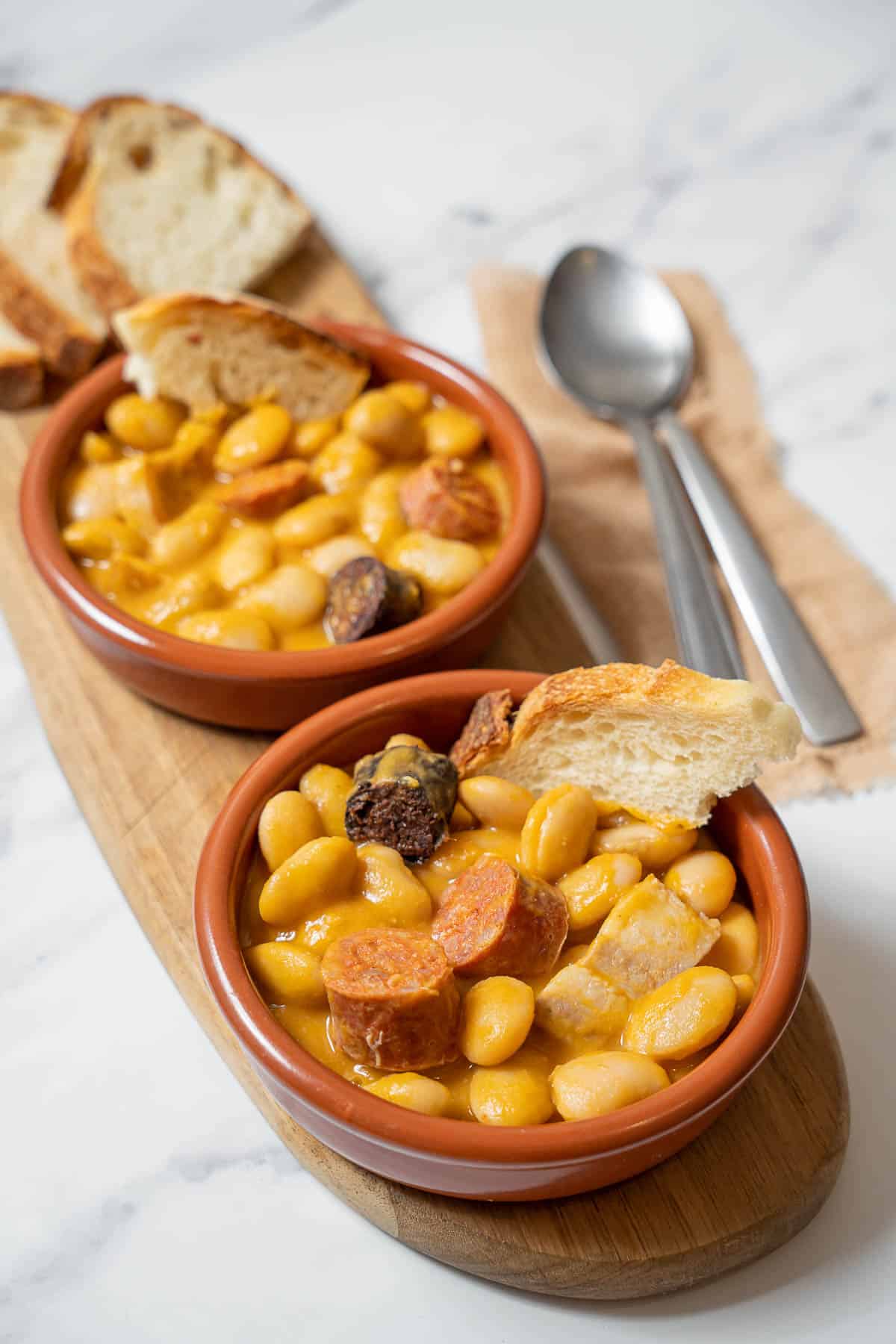
One of Spain's great winter stews — large, creamy white beans slow-cooked with Spanish chorizo, morcilla (blood sausage), and a smoked pork shoulder in a broth deeply coloured and flavoured with saffron and smoked paprika. A legendary dish from the Asturias region that is deeply comforting on cold days. Also see our ham and bean soup for a similarly hearty bowl.
Ingredients:
- 2 cups large white beans (fabes or cannellini), soaked overnight and drained
- 8 oz Spanish chorizo (cured, not fresh), sliced
- 4 oz morcilla (blood sausage) or additional chorizo
- 8 oz smoked pork shoulder or bacon, cut into large pieces
- 1 large onion, halved
- 4 cloves garlic, smashed
- 1 large pinch saffron threads
- 1 teaspoon sweet smoked paprika
- 2 bay leaves
- Salt, to taste
- Fresh parsley, for serving
Instructions:
- Place the soaked beans in a large heavy pot. Cover with cold water by 3 inches. Bring to a boil and skim off any foam that rises. Reduce to a simmer.
- Add the onion, garlic, bay leaves, saffron, smoked paprika, and all the meats. The meats should be submerged in the liquid. Simmer very gently — fabada should never boil vigorously — for 2–2.5 hours until the beans are completely tender and creamy.
- Throughout cooking, add cold water in small amounts if the beans become exposed — never add hot water, which toughens beans. Remove the onion halves and bay leaves.
- Taste and season with salt. The broth should be rich, smoky, and deeply flavourful. Slice the sausages and serve everything together in deep bowls with crusty bread and fresh parsley.
20. Gambas al Ajillo — Spanish Garlic Shrimp
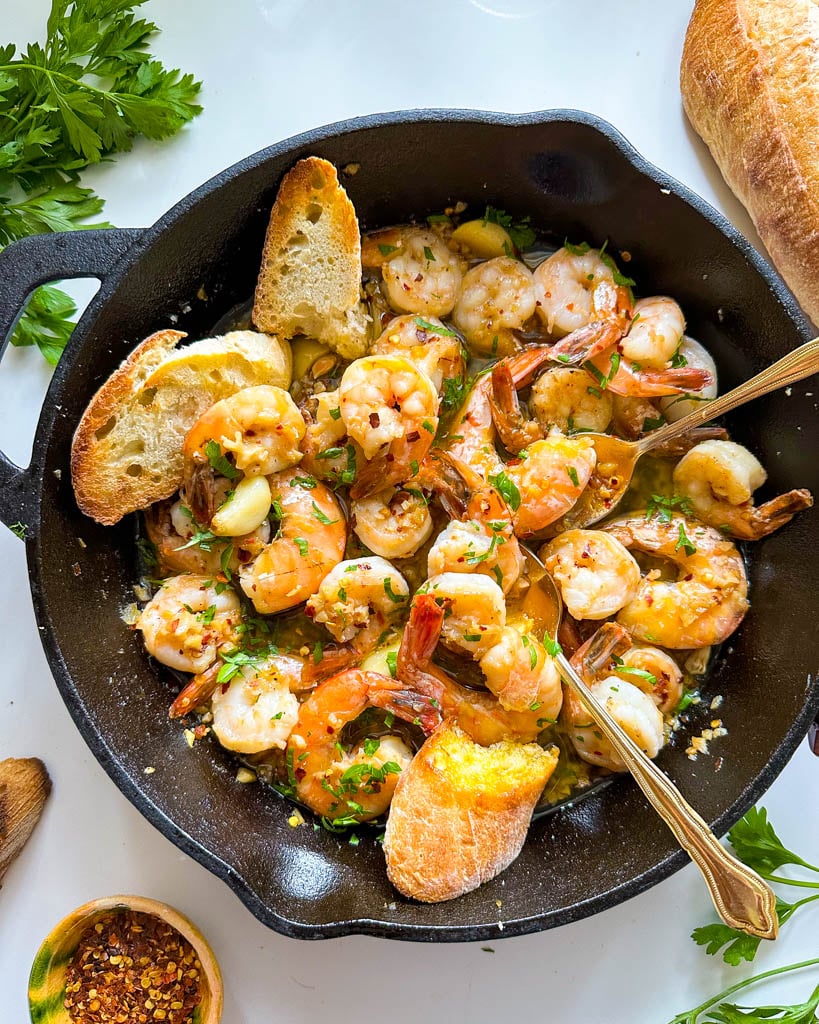
One of the most celebrated tapas in all of Spain — large shrimp sizzled in generous amounts of good olive oil with thin-sliced garlic, dried red chilli, and sherry, creating a sauce so fragrant and delicious that crusty bread for dunking is absolutely mandatory. Ready in 10 minutes and completely spectacular. For more great shrimp dishes, browse our healthy shrimp recipes.
Ingredients:
- 1 lb large shrimp, peeled and deveined (tails on)
- 6 cloves garlic, thinly sliced
- 2 dried red chillies or ½ teaspoon red pepper flakes
- ⅓ cup good extra-virgin olive oil
- 2 tablespoons dry sherry or dry white wine
- Fresh parsley, finely chopped
- Salt, to taste
- Crusty bread, for serving
Instructions:
- Pat the shrimp completely dry and season with salt. Heat the olive oil in a heavy skillet or earthenware cazuela over medium heat. Add the sliced garlic and dried chilli and cook gently for 2–3 minutes until the garlic is very lightly golden — watch carefully as it burns fast.
- Increase the heat to high. Add all the shrimp in a single layer. They should sizzle aggressively.
- Add the sherry and cook for 1–2 minutes per side until the shrimp are just pink and cooked through — do not overcook.
- Remove from heat immediately. Scatter fresh parsley over the top. Serve in the same pan, sizzling, with crusty bread alongside to soak up every drop of the garlic-infused oil.
19. Pulpo a la Gallega — Galician Octopus

One of Spain's most beloved and iconic dishes from the rugged Galicia coastline — tender, perfectly cooked octopus sliced onto a wooden board over boiled potatoes, drizzled with excellent olive oil, and finished with coarse salt and sweet or hot smoked paprika. Deceptively simple and utterly extraordinary. A magnificent seafood dish to add alongside our favourite seafood recipes.
Ingredients:
- 2 lbs cleaned octopus (fresh or frozen and thawed — frozen is actually preferred as freezing tenderises it)
- 1 lb small waxy potatoes, boiled and sliced
- ¼ cup excellent extra-virgin olive oil
- 1 teaspoon sweet smoked paprika
- ½ teaspoon hot smoked paprika
- Coarse sea salt, to taste
Instructions:
- Bring a large pot of unsalted water to a rolling boil. Dip the octopus tentacles into the boiling water three times — dipping and removing — before fully submerging. This curls and firms the tentacles for a better texture. Submerge the whole octopus, reduce to a gentle simmer, and cook for 45–60 minutes until completely tender when pierced with a skewer. Do not add salt to the water — it toughens octopus.
- Remove and rest on a cutting board for 10 minutes. The skin will loosen — leave it on as it carries much of the flavour.
- Boil the potatoes until tender. Slice into rounds and arrange on a wooden serving board or plate.
- Slice the octopus tentacles into rounds with scissors. Arrange over the potatoes. Drizzle very generously with excellent olive oil. Scatter both paprikas over the top and finish with a good pinch of coarse sea salt. Serve immediately.
18. Empanada Gallega

The magnificent Galician savoury pie — a large, flat, double-crusted pastry filled with a slow-cooked sofrito of onions, peppers, tomatoes, and olive oil, combined with tuna, chorizo, or seafood, baked until golden and sliced into portions. Eaten warm or at room temperature, it is one of the most satisfying things in Spanish cooking and travels beautifully for picnics. Perfect alongside our best picnic recipes.
Ingredients:
- Dough: 3 cups all-purpose flour, 1 teaspoon salt, 1 teaspoon sugar, 1 teaspoon instant yeast, ¾ cup warm water, ¼ cup olive oil — knead 8 minutes until smooth, rest 1 hour
- Filling: 3 large onions (thinly sliced), 2 red bell peppers (thinly sliced), 2 cloves garlic (minced), 1 (14 oz) can crushed tomatoes, 2 (5 oz) cans good tuna in olive oil (drained), 1 teaspoon sweet smoked paprika, ¼ cup olive oil, salt to taste
- 1 egg yolk mixed with 1 tablespoon water, for egg wash
Instructions:
- Make the filling: cook the onions in generous olive oil over very low heat for 25 minutes until completely soft and beginning to caramelize. Add the peppers and garlic and cook 15 more minutes. Add the tomatoes and smoked paprika. Cook until thick and jammy — about 10 minutes. Cool completely and fold in the drained tuna. Season generously.
- Preheat oven to 375°F. Divide the dough in half. Roll one half into a large rectangle to fit a 9x13-inch baking dish. Press into the dish, letting it come up the sides.
- Spread the cooled filling evenly over the dough. Roll the second half of dough to the same size. Lay over the filling. Pinch the edges together firmly and fold to create a sealed border. Make several steam vents in the top with a fork or knife. Brush with egg wash.
- Bake for 35–40 minutes until deeply golden. Cool for 20 minutes before slicing into squares or rectangles. Serve warm or at room temperature.
17. Bacalao al Pil Pil — Basque Cod in Garlic Sauce

One of the most technically remarkable and delicious dishes in all of Spanish cooking — salt cod slow-cooked in olive oil and garlic at very low temperature until the natural gelatin released from the fish emulsifies with the oil into a thick, creamy, ivory-coloured sauce with no cream or butter required. A Basque culinary miracle. For more beautiful fish dishes see our baked fish recipes.
Ingredients:
- 1½ lbs salt cod (bacalao), soaked in cold water for 48 hours, changing the water every 8 hours
- 1 cup good olive oil
- 8 cloves garlic, thinly sliced
- 2 dried red chillies (optional)
- Fresh parsley, for garnish
Instructions:
- Remove the desalted cod from the water and pat very dry. Cut into large portions. Taste a small piece — it should be pleasantly salty but not overwhelmingly so. Soak longer if needed.
- Heat the olive oil in a wide, shallow pan over very low heat. Add the garlic slices and dried chillies. Cook gently for 5 minutes until the garlic is just softened but not golden. Remove and set aside.
- Place the cod portions skin-side up in the infused oil. Cook over the lowest possible heat for 15–20 minutes, gently moving and swirling the pan constantly — the fish must never fry. The motion agitates the gelatin from the fish into the oil.
- Remove the cod carefully. Swirl the pan vigorously in circular motions — the sauce will gradually emulsify from the fish gelatin into a thick, creamy consistency. Add the reserved garlic. Arrange the cod in a serving dish and spoon the pil pil sauce over. Garnish with parsley.
16. Arroz con Leche — Spanish Rice Pudding
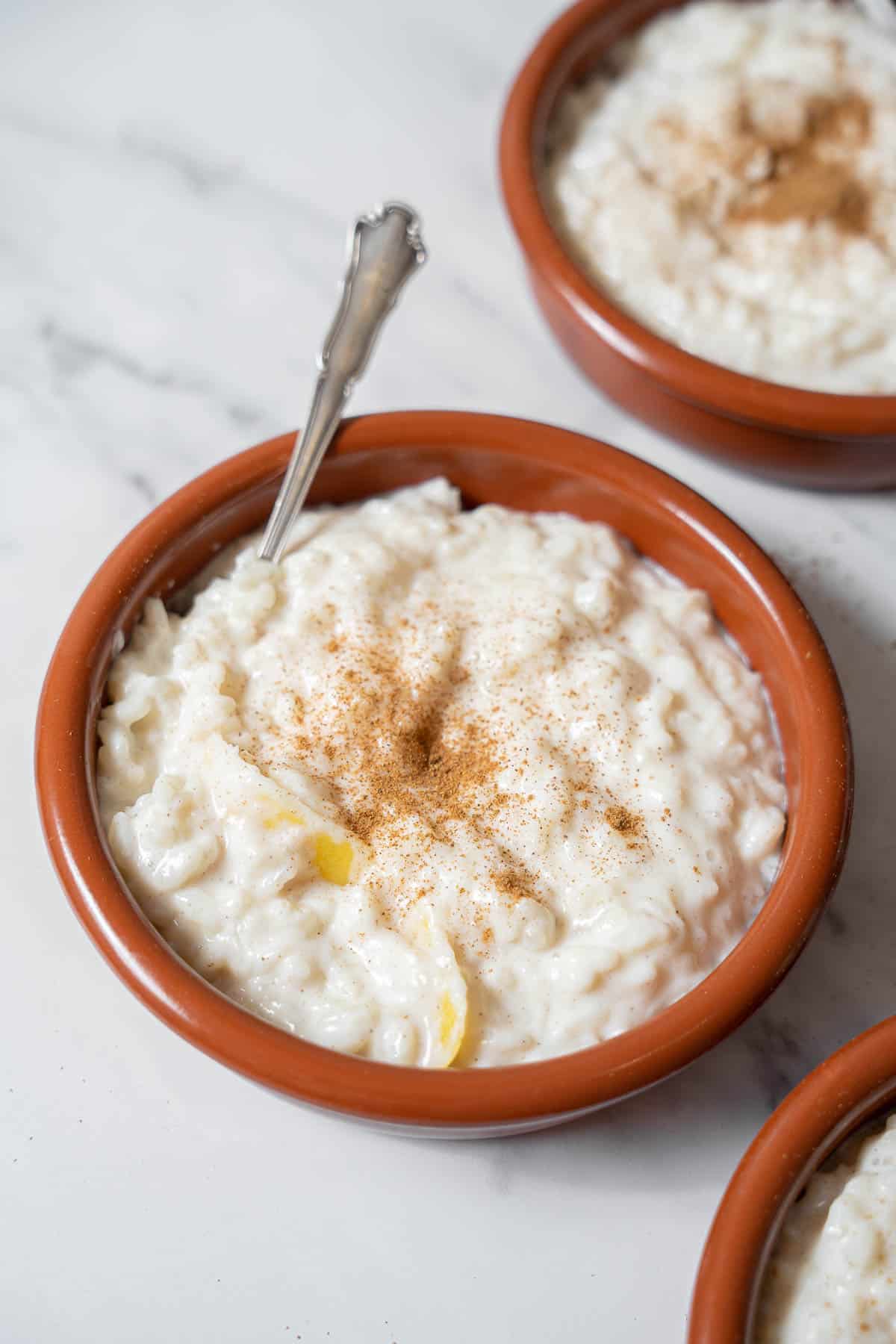
Spain's most comforting and beloved dessert — short-grain rice slowly cooked in whole milk with a cinnamon stick, lemon zest, and sugar until completely creamy and velvety, then served warm or chilled with a generous dusting of ground cinnamon. Every grandmother in Spain has her version and every version is wonderful. Also explore our easy rice pudding recipe for a similar comfort.
Ingredients:
- ½ cup short-grain rice (Arborio works well)
- 4 cups whole milk
- 1 cup water
- ½ cup sugar
- 1 cinnamon stick
- Zest of 1 lemon, peeled in strips
- Pinch of salt
- Ground cinnamon, for dusting
- Optional: 1 tablespoon butter, stirred in at the end for extra richness
Instructions:
- Combine the water, cinnamon stick, and lemon zest strips in a medium saucepan. Bring to a boil. Add the rice and cook over medium heat, stirring, until the water is mostly absorbed — about 5 minutes.
- Add 3 cups of the milk and reduce heat to low. Cook very gently, stirring frequently, for 20–25 minutes. The constant stirring releases the rice starch and creates the creamy consistency.
- Add the remaining cup of milk and the sugar. Continue cooking over low heat, stirring constantly, for another 15–20 minutes until the rice pudding is thick and creamy. It will thicken further as it cools.
- Remove the cinnamon stick and lemon peel. Stir in the butter if using. Pour into individual bowls or a large serving dish. Dust generously with ground cinnamon. Serve warm or refrigerate and serve chilled.
15. Salmorejo — Cold Spanish Tomato Soup

Córdoba's magnificent cold tomato soup — thicker, richer, and creamier than gazpacho due to the bread and olive oil emulsified into the blended tomatoes, served cold with crumbled hard-boiled egg and finely diced jamón serrano scattered over the top. One of the most elegant and satisfying cold soups in the world. A perfect summer meal alongside a simple salad.
Ingredients:
- 2 lbs very ripe tomatoes, roughly chopped
- 4 oz day-old white bread, crusts removed, torn into pieces
- 2 cloves garlic
- ½ cup excellent extra-virgin olive oil
- 2 tablespoons sherry vinegar
- 1 teaspoon salt, plus more to taste
- Garnish: 2 hard-boiled eggs (crumbled), 2 oz jamón serrano or prosciutto (finely diced), drizzle of olive oil
Instructions:
- Combine the tomatoes, bread pieces, and garlic in a blender. Blend on high for 1 full minute until completely smooth.
- With the blender running on low, slowly pour in the olive oil in a thin steady stream — this emulsifies the oil into the soup for the characteristic creamy, velvety texture. Add the sherry vinegar and salt. Blend 30 more seconds.
- Pass through a fine-mesh sieve if you want the silkiest result. Taste and adjust the salt and vinegar. The salmorejo should be bright, tangy, rich, and very well-seasoned.
- Refrigerate for at least 3 hours until very cold. Serve in chilled bowls, drizzled with a little more olive oil, scattered with crumbled hard-boiled egg and finely diced jamón. Serve immediately.
14. Tarta de Santiago — Spanish Almond Cake
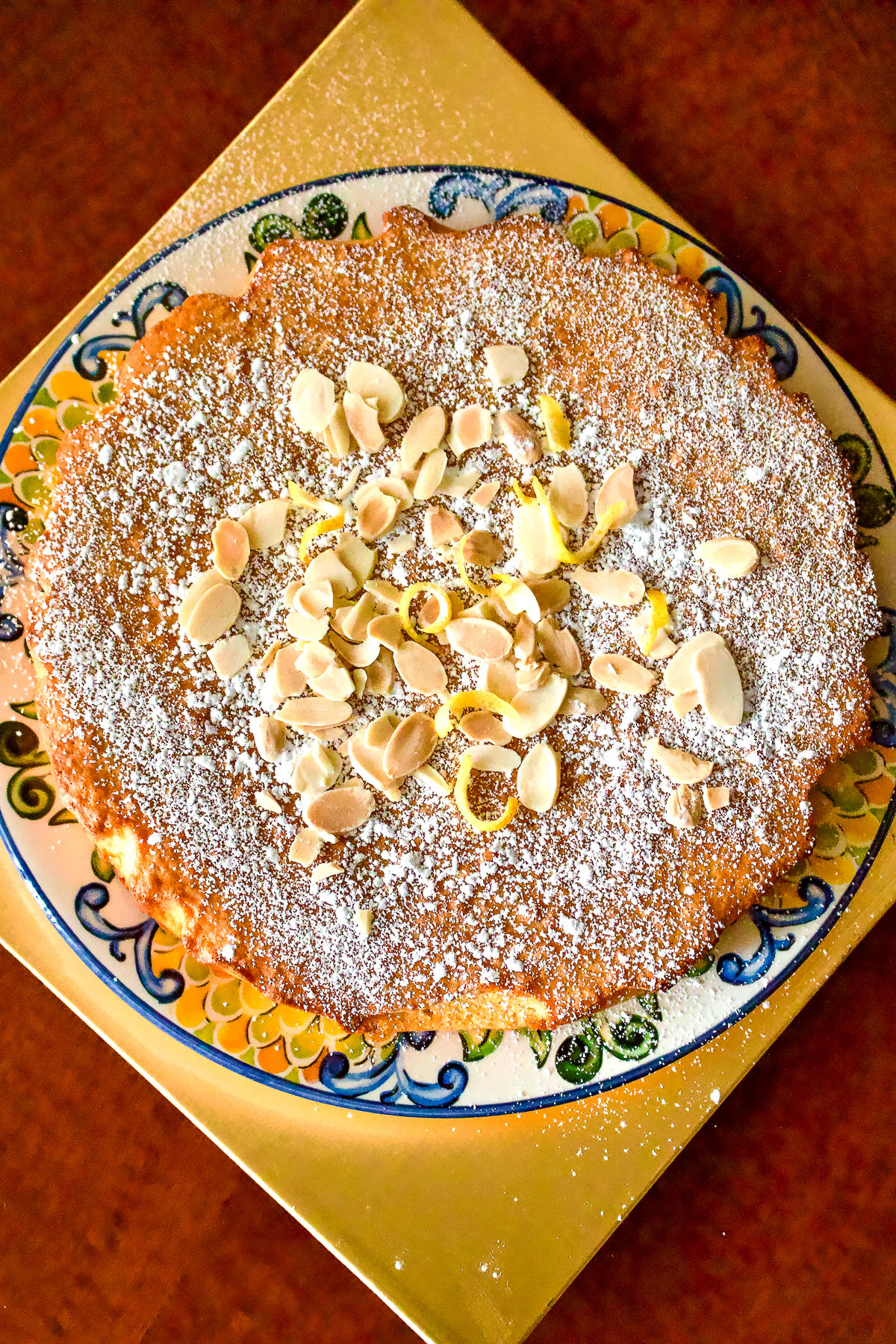
Galicia's most celebrated dessert and one of the oldest and most beautiful cakes in Spanish cuisine — a naturally gluten-free almond cake made with only ground almonds, sugar, eggs, lemon zest, and cinnamon, decorated with the famous cross of Saint James stencilled in powdered sugar. Dense, moist, intensely nutty, and completely extraordinary. Browse our easy homemade cake recipes for more inspiration.
Ingredients:
- 2 cups (200g) almond flour or finely ground blanched almonds
- 1 cup sugar
- 4 large eggs
- Zest of 1 lemon
- Zest of 1 orange
- 1 teaspoon ground cinnamon
- ½ teaspoon almond extract
- Pinch of salt
- Powdered sugar, for dusting (a Santiago cross stencil is traditional)
Instructions:
- Preheat oven to 350°F. Grease and line a 9-inch round cake pan with parchment. Beat the eggs and sugar together with a whisk or hand mixer for 3 minutes until pale and slightly thickened.
- Add the lemon zest, orange zest, cinnamon, almond extract, and salt. Mix to combine.
- Fold in the almond flour until just combined — the batter will be quite dense and moist.
- Pour into the prepared pan and bake for 30–35 minutes until the top is golden and a toothpick inserted in the centre comes out with just a few moist crumbs. Cool completely in the pan. Dust with powdered sugar and place a stencil of the cross of Saint James if desired. Remove stencil to reveal the design. Serves 8.
13. Pollo al Ajillo — Spanish Garlic Chicken
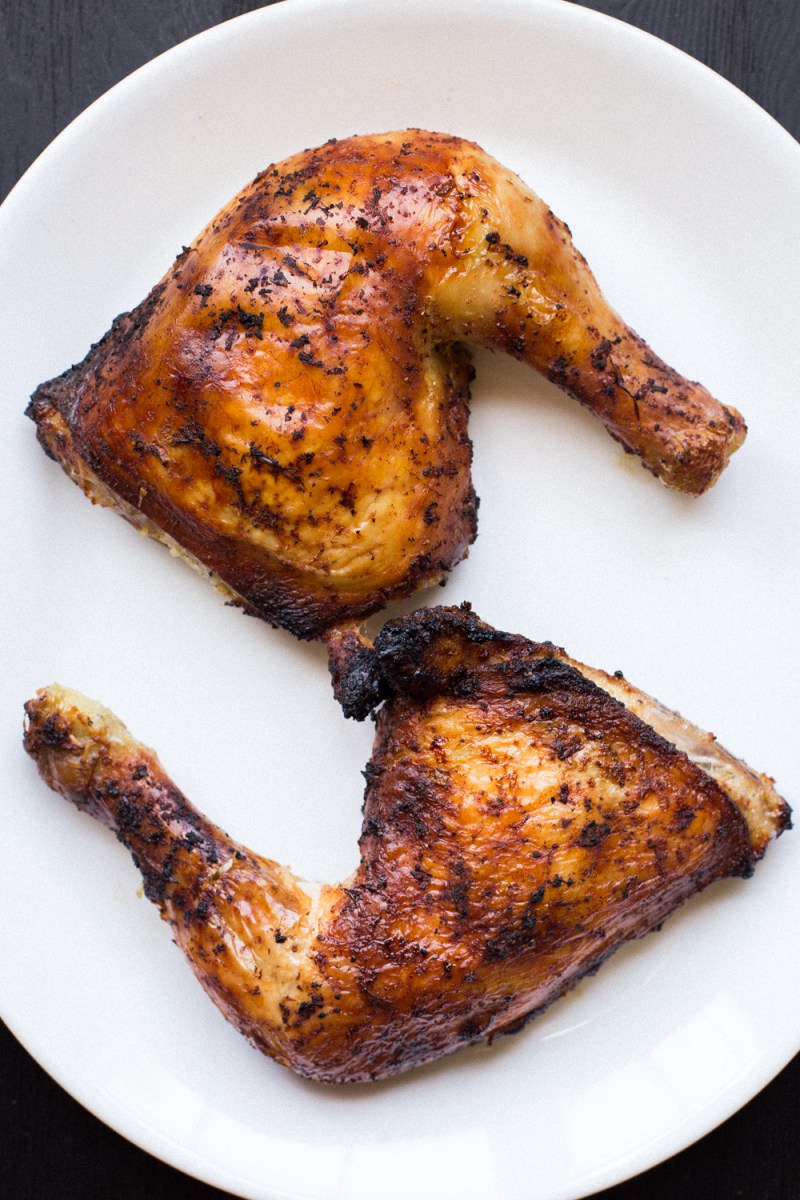
One of the most universally beloved Spanish home-cooking dishes — crispy, golden chicken pieces slowly braised with a generous amount of garlic, dry white wine, sherry, rosemary, thyme, and bay leaves until the chicken is meltingly tender and the sauce is deeply fragrant and winey. Simple enough for a weeknight, impressive enough for guests. Also see our easy chicken recipes.
Ingredients:
- 2 lbs bone-in, skin-on chicken pieces (thighs and drumsticks)
- 1 whole head of garlic, cloves separated, peeled and left whole
- ½ cup dry white wine
- ¼ cup dry sherry (fino or amontillado)
- 3 tablespoons olive oil
- 2 sprigs fresh rosemary
- 2 sprigs fresh thyme
- 2 bay leaves
- Salt and pepper, to taste
- Fresh parsley, for serving
Instructions:
- Season the chicken pieces generously with salt and pepper. Heat olive oil in a large heavy pan over medium-high heat. Fry the chicken skin-side down for 6–8 minutes without moving until the skin is deeply golden and crispy. Flip and cook 3 more minutes. Remove and set aside.
- Add the whole garlic cloves to the same pan. Cook gently for 3–4 minutes until lightly golden on all sides. Do not let them burn.
- Return the chicken to the pan. Add the white wine and sherry. Bring to a boil, scraping up any browned bits. Add the rosemary, thyme, and bay leaves.
- Reduce heat to low. Cover and cook for 25–30 minutes until the chicken is completely tender and cooked through and the sauce has reduced. Remove the herb sprigs and bay leaves. Taste and adjust seasoning. Scatter fresh parsley and serve with crusty bread or rice.
12. Escalivada Catalana — Catalan Roasted Vegetables
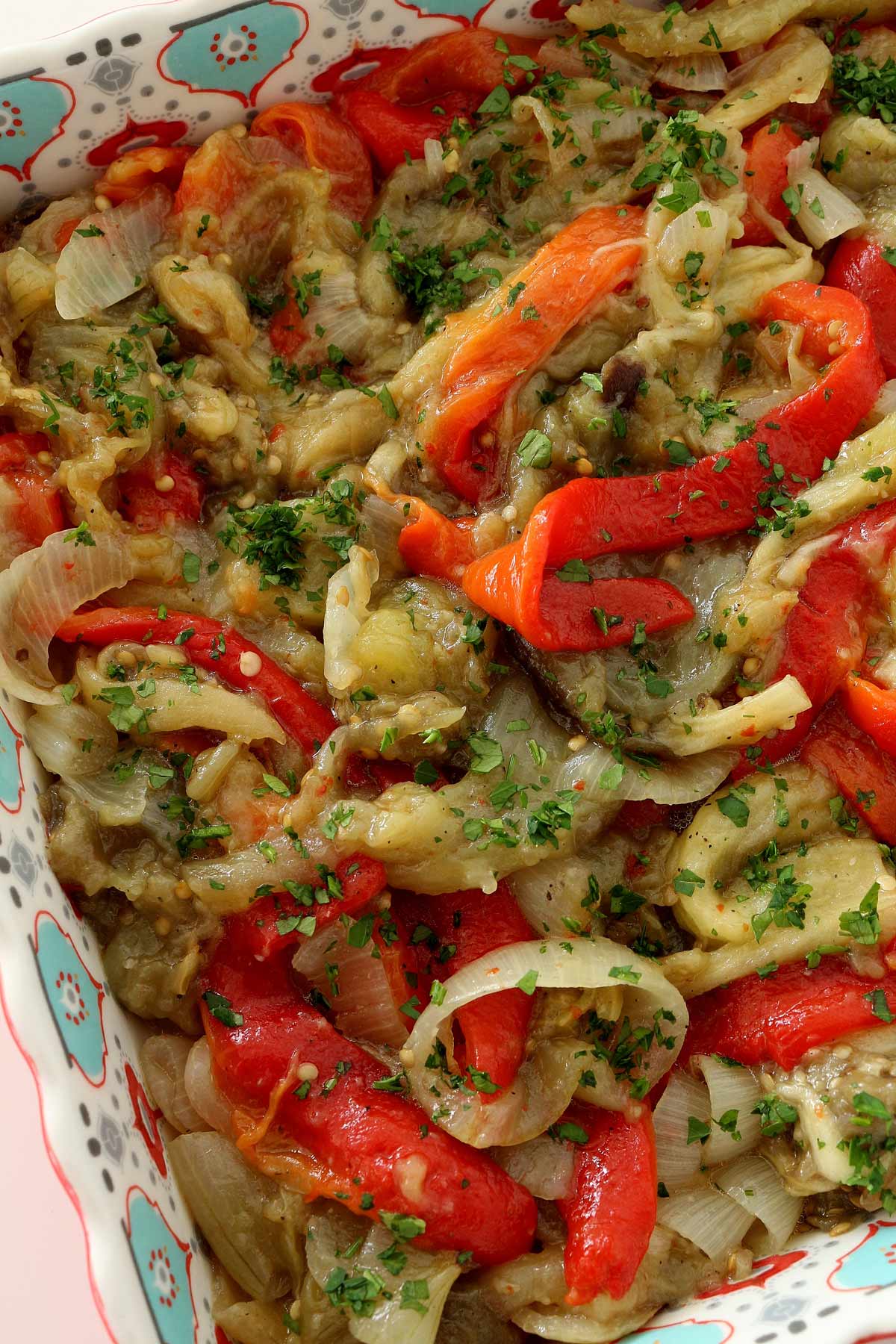
One of Catalonia's great contributions to Spanish cuisine — eggplant, red peppers, and onions roasted directly over an open flame or in a very hot oven until completely charred and blackened on the outside and silky, smoky, and sweet on the inside, then peeled and dressed with excellent olive oil and flaky salt. Extraordinary as a side dish, on toast, or as a tapa. A wonderful addition to any easy side dish repertoire.
Ingredients:
- 2 large eggplants
- 3 large red bell peppers
- 2 large onions, unpeeled
- 4–6 tablespoons excellent extra-virgin olive oil
- 2 cloves garlic, minced
- Flaky sea salt and sherry vinegar, to taste
- Fresh thyme or parsley, for serving
Instructions:
- Preheat oven to 450°F. Place the whole, unpeeled eggplants, peppers, and onions directly on a baking sheet. Roast for 45–55 minutes, turning occasionally, until all vegetables are deeply charred and completely collapsed and tender inside.
- Remove from the oven and place in a bowl. Cover tightly with plastic wrap and rest for 20–30 minutes — the steam helps the skins peel easily and intensifies the smoky flavour.
- Peel all vegetables carefully, removing all skin and seeds from the peppers. Do not rinse — the smoky juices are precious. Tear into strips by hand rather than cutting for the most authentic texture.
- Arrange on a platter. Drizzle very generously with olive oil. Add the minced garlic, a splash of sherry vinegar, and flaky salt. Serve at room temperature — escalivada is always better after resting at least an hour to allow the flavours to meld.
11. Cocido Madrileño

Madrid's grandest and most traditional dish — a slow-cooked chickpea stew with an extraordinary variety of meats including beef, pork, chicken, chorizo, morcilla, and a smoked ham bone, with potatoes, carrots, and cabbage. Traditionally served in three courses: first the rich broth as a soup with fideos noodles, then the chickpeas and vegetables, then the meats. A true Sunday feast. See our Sunday dinner ideas.
Ingredients:
- 2 cups dried chickpeas, soaked overnight and drained
- 1 lb beef chuck, cut into large pieces
- ½ lb pork belly or bacon, cut into pieces
- 4 oz serrano ham bone or smoked ham hock
- 2 chicken legs
- 4 oz Spanish chorizo, whole
- 4 oz morcilla (blood sausage), whole
- 2 medium potatoes, peeled and halved
- 2 large carrots, peeled
- ¼ small cabbage, cut into wedges
- Salt, to taste
- 2 oz thin noodles (fideos), for the soup course
Instructions:
- Place the chickpeas, beef, pork belly, and ham bone in a very large pot. Cover with cold water by 4 inches. Bring to a boil, skim thoroughly, then reduce to a very gentle simmer. Cook for 1.5 hours.
- Add the chicken, chorizo, morcilla, carrots, and potatoes. Continue simmering for 30 more minutes. Add the cabbage for the final 20 minutes. Everything should be completely tender. Season with salt.
- Carefully ladle the rich broth into a separate pot, leaving the solids behind. Bring the broth to a boil and cook the fideos noodles in it for 5 minutes. Serve this as the first course.
- Serve the chickpeas and vegetables as the second course, then the sliced meats and sausages as the third. This is the traditional three-course cocido experience.
10. Garbanzos con Espinacas — Chickpeas and Spinach
/12f87c3b-9628-48cf-8bb1-97e283cc6e68--2015-0414_chickpeas-and-spinach-218.jpg)
A deeply satisfying Andalusian dish — chickpeas and wilted spinach in a fragrant sauce of garlic, cumin, smoked paprika, and toasted bread blended with sherry vinegar into a thick, nutty paste that coats every chickpea. Completely vegan, deeply nourishing, and one of the most flavourful and comforting dishes in Spanish cooking. A perfect vegetarian dinner.
Ingredients:
- 2 (15 oz) cans chickpeas, drained and rinsed
- 6 cups fresh baby spinach
- 4 cloves garlic, 2 minced and 2 left whole for frying
- 1 slice crusty bread
- 1 teaspoon sweet smoked paprika
- 1 teaspoon ground cumin
- ¼ teaspoon ground coriander
- 1 tablespoon sherry vinegar
- ¼ cup olive oil
- Salt and pepper, to taste
- Lemon wedges, for serving
Instructions:
- Heat olive oil in a large pan over medium heat. Fry the 2 whole garlic cloves and the bread slice until golden on both sides. Remove both and set aside to cool.
- In the same oil, sauté the minced garlic for 1 minute. Add the smoked paprika, cumin, and coriander. Stir for 30 seconds. Add the spinach and cook until wilted — about 2 minutes.
- In a mortar and pestle or small blender, blend the fried bread, fried garlic cloves, sherry vinegar, and a splash of water into a smooth paste — this is the majao that thickens and flavours the dish.
- Add the chickpeas and the bread paste to the pan. Stir to combine. Add a splash of water if needed to loosen. Simmer for 10 minutes until the flavours have melded and the sauce is thick and fragrant. Season generously. Serve warm with lemon wedges.
9. Spanish Migas with Chorizo
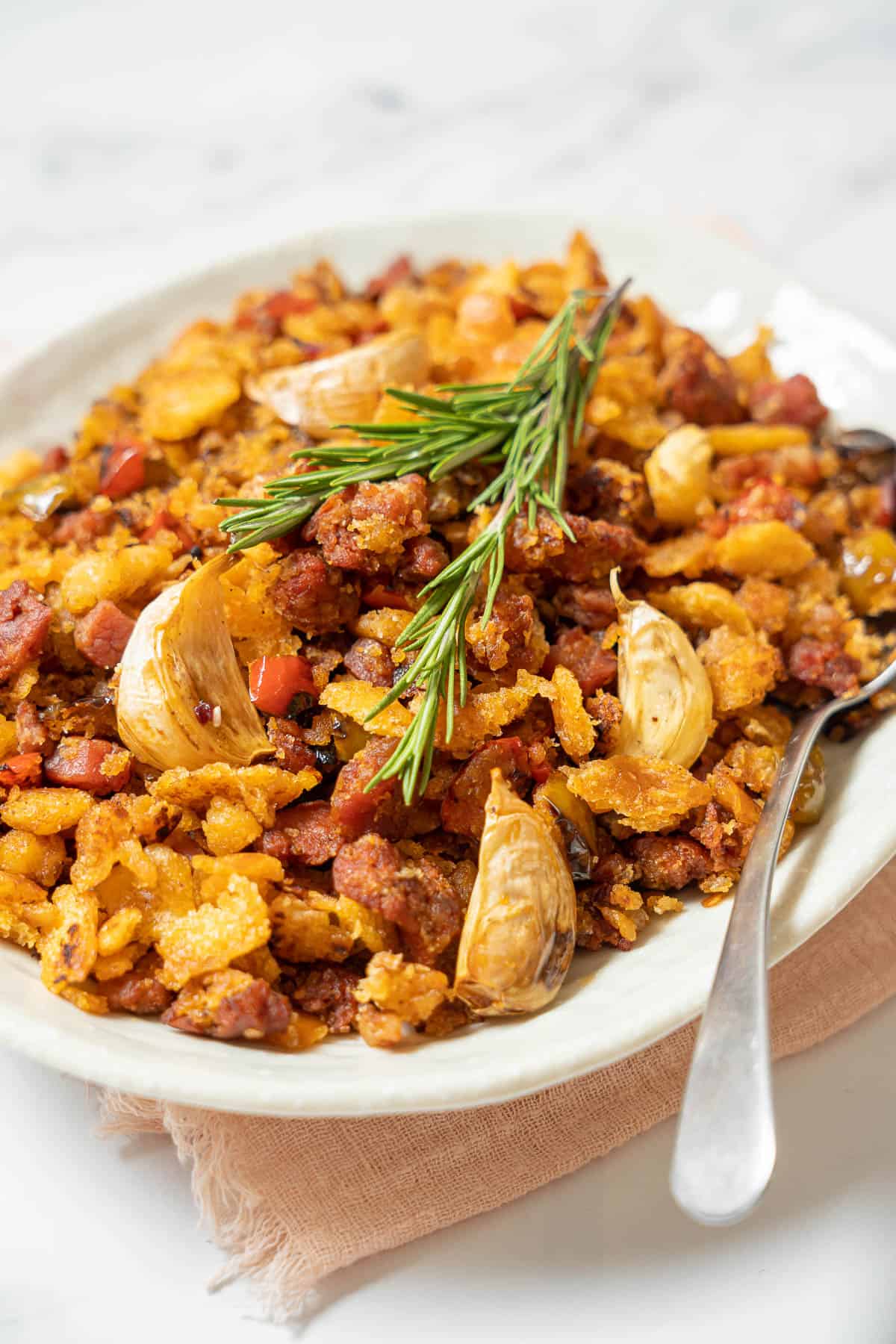
One of Spain's most ancient and beloved peasant dishes — stale bread broken into crumbs and slowly fried in olive oil with garlic and chorizo until each crumb is individually crispy and golden, seasoned with smoked paprika. Traditionally a shepherd's breakfast eaten on the plains of La Mancha, migas is a celebration of bread and simplicity. A wonderful dish alongside our simple dinner ideas.
Ingredients:
- 8 oz stale crusty bread (ideally 2–3 days old), torn into irregular small pieces
- ¼ cup water, sprinkled over the bread pieces 30 minutes before cooking and tossed through
- 6 oz Spanish chorizo, sliced into rounds
- 6 cloves garlic, thinly sliced
- ¼ cup olive oil
- 1 teaspoon sweet smoked paprika
- Salt, to taste
- Optional accompaniments: fried eggs, grapes, sliced red peppers
Instructions:
- Sprinkle the water over the torn bread pieces and toss well. Cover with a cloth and rest 30 minutes — the bread should be slightly damp but not wet. This prevents burning and creates the right texture.
- Heat olive oil in a large, wide pan over medium heat. Add the garlic and fry gently until golden. Add the chorizo and cook 3 minutes until it renders its fat and begins to colour.
- Add the moistened bread pieces and stir constantly over medium heat. The bread will begin to crisp in the fat — keep stirring so all pieces get evenly golden and crispy. This takes 15–20 minutes of continuous stirring and patience.
- Add the smoked paprika and salt. Toss to coat. Continue cooking until every crumb is golden and crispy. Serve immediately in a large pan or bowl — migas do not wait. Traditionally accompanied with fried eggs, fresh grapes, and sliced peppers.
8. Ensalada Rusa — Spanish Potato Salad

Spain's favourite potato salad and one of the most universally loved tapas — boiled potatoes, carrots, peas, and often tuna or hard-boiled egg bound together with a generous amount of good homemade mayonnaise. Served cold and found at every Spanish household gathering, celebration, and tapas spread. A wonderful companion to our easy potato salad recipe.
Ingredients:
- 1½ lbs waxy potatoes, peeled, boiled until tender, and diced
- 2 medium carrots, boiled until tender and diced
- 1 cup frozen peas, cooked and cooled
- 2 (5 oz) cans good tuna in olive oil, drained (optional)
- 2 hard-boiled eggs, 1 diced and 1 sliced for garnish
- ¾ cup good mayonnaise
- 2 tablespoons lemon juice or white wine vinegar
- Salt and white pepper, to taste
- Piquillo peppers or roasted red peppers, for garnish
Instructions:
- Boil the potatoes and carrots separately until just tender — they should hold their shape when diced. Cool completely before dressing.
- Combine the diced potatoes, carrots, peas, drained tuna, and diced hard-boiled egg in a large bowl.
- Mix together the mayonnaise, lemon juice, salt, and white pepper. Add to the bowl and fold gently until everything is evenly coated. Taste and adjust seasoning generously — the salad should be well-seasoned.
- Transfer to a serving platter and smooth the top. Decorate with sliced hard-boiled egg and strips of piquillo pepper. Refrigerate at least 2 hours before serving — overnight is ideal for the best flavour. Serve cold.
7. Chorizo a la Sidra — Chorizo in Cider

A beloved tapas and pintxos dish from Asturias — fresh or semi-cured Spanish chorizo sausages simmered in dry Asturian cider until the cider reduces into a glossy, slightly sweet, tangy sauce that coats the chorizo beautifully. Incredibly simple and deeply flavourful. Always served with crusty bread for the sauce and a cold cider to drink. A perfect match for our best appetizer collection.
Ingredients:
- 1 lb fresh or semi-cured Spanish chorizo links (not the hard, fully cured type)
- 1½ cups dry hard cider (Asturian sidra naturale or any good dry cider)
- 1 bay leaf
- 2 cloves garlic, smashed
- 1 tablespoon olive oil
- Fresh parsley, for garnish
- Crusty bread, for serving
Instructions:
- Prick the chorizo links several times with a fork to prevent bursting during cooking.
- Heat olive oil in a skillet over medium heat. Add the chorizo and cook for 3–4 minutes, turning, until lightly browned on all sides.
- Add the garlic, bay leaf, and cider. The cider should mostly cover the chorizo. Bring to a boil, then reduce to a simmer. Cook uncovered for 15–20 minutes, turning the chorizo occasionally, until the cider has reduced by about half and formed a slightly glossy sauce.
- Remove the bay leaf. Slice the chorizo into rounds or serve whole. Drizzle the cider reduction sauce over. Garnish with fresh parsley. Serve immediately with plenty of crusty bread to mop up the sauce.
6. Pimientos de Padrón — Spanish Fried Padrón Peppers

One of the simplest, most addictive, and most quintessentially Spanish tapas imaginable — small Padrón peppers blistered in very hot olive oil for just minutes and finished with a generous pinch of flaky sea salt. The famous surprise: most are mild, but every now and then one is fiercely spicy — a delightful Russian roulette with vegetables. A brilliant quick appetizer alongside our easy appetizer recipes.
Ingredients:
- 8 oz fresh Padrón peppers (or shishito peppers as an accessible substitute)
- 3 tablespoons good olive oil
- Flaky sea salt (Maldon), for finishing
Instructions:
- Wash the Padrón peppers and dry them completely with a tea towel — this is important as wet peppers in hot oil will splatter dangerously.
- Heat the olive oil in a large heavy skillet or cast iron pan over very high heat until the oil is shimmering and beginning to smoke.
- Add the peppers in a single layer — do not crowd the pan or they will steam rather than blister. They will splatter slightly — be careful. Cook for 2–3 minutes until the skins are blistered and blackened in spots, shaking and tossing the pan.
- Transfer immediately to a serving plate. Finish with a generous pinch of flaky sea salt. Serve at once while piping hot — pimientos de Padrón are best eaten the moment they come out of the pan.
5. Leche Frita — Spanish Fried Milk

One of Spain's most charming and unusual desserts — a thick, creamy custard made from milk, flour, and egg yolks, set until firm, then cut into squares, breaded, and fried until golden, and finished with cinnamon sugar. The contrast of the crispy fried exterior with the molten, creamy milk custard centre is completely extraordinary and unlike any other dessert. A wonderful entry for our favourite dessert ideas.
Ingredients:
- 2 cups whole milk
- 4 tablespoons all-purpose flour
- 2 tablespoons cornstarch
- 3 egg yolks
- 5 tablespoons sugar
- 1 cinnamon stick
- Zest of 1 lemon, peeled in strips
- Coating: 2 eggs (beaten), ½ cup flour
- Oil for shallow frying
- ½ cup sugar mixed with 1 teaspoon cinnamon, for rolling
Instructions:
- Heat the milk with the cinnamon stick and lemon zest strips until almost boiling. Remove from heat and steep 15 minutes. Remove the cinnamon and lemon peel. Whisk together the flour, cornstarch, egg yolks, and sugar in a bowl. Gradually add the infused warm milk, whisking constantly.
- Return to a saucepan over medium heat. Cook, stirring constantly, for 8–10 minutes until the custard is very thick — thick enough to hold its shape when dropped from a spoon.
- Pour into a lightly oiled square dish to a depth of about ¾ inch. Smooth the top and refrigerate for at least 4 hours or overnight until completely firm.
- Cut the set custard into squares. Dip each square in flour, then beaten egg. Shallow-fry in hot oil for 2 minutes per side until golden. Immediately roll in cinnamon sugar. Serve warm.
4. Classic Spanish Seafood Stew — Zarzuela de Mariscos

Barcelona's spectacular seafood stew — a rich, saffron-and-tomato-based broth filled with fish fillets, clams, mussels, shrimp, and calamari, built on a classic sofrito and enriched with brandy and ground almonds in the romesco style. One of the most impressive and delicious things to come out of Spain's Mediterranean coast. Perfect with our collection of seafood recipes.
Ingredients:
- 1 lb firm white fish fillets (monkfish, cod, or sea bass), cut into chunks
- 1 lb large shrimp, shell-on
- ½ lb clams, scrubbed
- ½ lb mussels, cleaned
- 8 oz squid, cleaned and cut into rings
- 1 large onion, diced
- 4 cloves garlic, minced
- 1 (14 oz) can crushed tomatoes
- ¼ cup brandy
- 1 cup fish or chicken broth
- 1 large pinch saffron threads
- 2 tablespoons ground almonds
- 1 teaspoon sweet smoked paprika
- ¼ cup olive oil
- Salt and parsley, for serving
Instructions:
- Heat olive oil in a large wide pot over medium heat. Sauté the onion for 8 minutes until softened. Add the garlic and cook 2 minutes. Add the crushed tomatoes and smoked paprika and cook 10 minutes until thick.
- Add the brandy and cook 2 minutes until the alcohol evaporates. Add the broth, saffron, and ground almonds. Stir to combine. Bring to a simmer.
- Add the squid and fish. Cook 3 minutes. Add the shrimp, clams, and mussels. Cover and cook 5 minutes until the clams and mussels have opened and the shrimp are pink. Discard any shellfish that have not opened.
- Taste and season with salt. Scatter fresh parsley over the top. Serve immediately in deep bowls with crusty bread for the broth.
3. Tumbet — Mallorcan Vegetable Tapa

Mallorca's celebrated layered vegetable dish — thinly sliced potatoes fried in olive oil, then layered with fried eggplant, roasted red peppers, and a rich, slow-cooked tomato sauce, baked together until unified into a deeply flavourful, beautiful dish. A wonderfully satisfying vegan main or side that showcases the extraordinary vegetables of the Balearic Islands. See more ideas in our vegetarian dinner recipes.
Ingredients:
- 3 medium potatoes, peeled and thinly sliced into rounds
- 1 large eggplant, thinly sliced into rounds
- 2 red bell peppers, roasted, peeled, and torn into strips
- ½ cup olive oil for frying, plus extra
- Salt, to taste
- Tomato sauce: 1 onion (diced), 4 cloves garlic (minced), 1 (14 oz) can crushed tomatoes, 1 teaspoon sugar, salt, olive oil — simmer 20 minutes until thick
Instructions:
- Salt the eggplant slices and rest 30 minutes. Pat dry. Fry the potato slices in batches in hot olive oil for 4–5 minutes until tender and lightly golden. Drain. Fry the eggplant slices for 3 minutes per side until golden. Drain. Make the tomato sauce and set aside.
- Preheat oven to 375°F. Oil a large baking dish. Arrange the fried potato slices in an overlapping layer in the base.
- Layer the fried eggplant slices over the potatoes. Arrange the roasted red pepper strips over the eggplant. Spoon the tomato sauce generously over the entire top layer.
- Bake for 20–25 minutes until bubbling and unified. Rest 10 minutes before serving. Tumbet is traditionally served at room temperature — the flavours develop beautifully as it cools.
2. Spanish Fideuà with Seafood
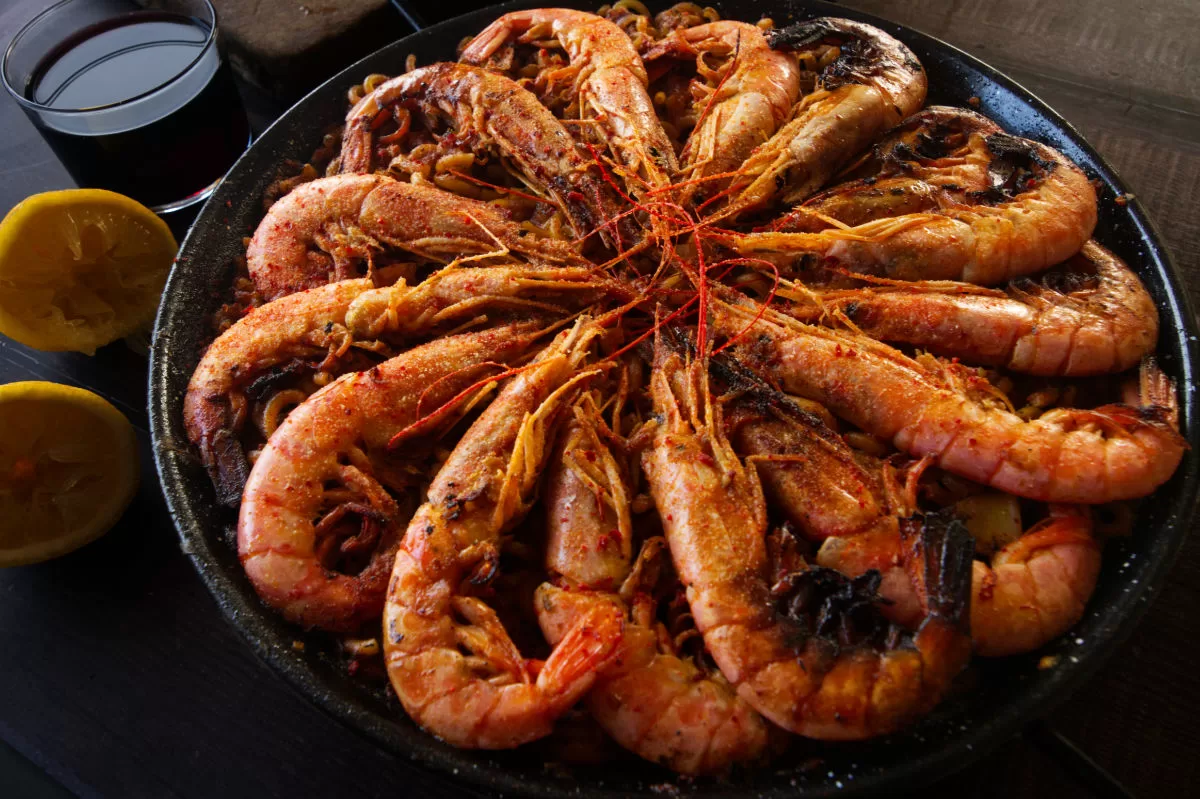
Valencia's famous noodle paella — a spectacular dish made in a paella pan with fideos (short, thin noodles toasted until golden) instead of rice, cooked in a rich saffron and tomato seafood broth with prawns, mussels, squid, and clams, developing the same magnificent socarrat crust at the base as a traditional paella. Served with alioli and lemon. An impressive centrepiece alongside our Spanish paella recipe.
Ingredients:
- 12 oz fideos noodles (or vermicelli broken into 1-inch pieces)
- ½ lb large prawns, shell-on
- ½ lb mussels, cleaned
- 8 oz squid, cut into rings
- ½ lb clams, scrubbed
- 1 large onion, finely diced
- 4 cloves garlic, minced
- 1 large tomato, grated
- 1 teaspoon sweet smoked paprika
- Large pinch saffron, steeped in warm water
- 4 cups fish or seafood broth, warmed
- ¼ cup olive oil
- Alioli (garlic mayonnaise) and lemon wedges, for serving
Instructions:
- Heat olive oil in a 14–15-inch paella pan over medium heat. Add the fideos noodles and toast, stirring constantly, until they are golden brown and nutty-smelling — about 3–4 minutes. Remove and set aside.
- In the same oil, sauté the onion for 5 minutes. Add the garlic and grated tomato and cook until the tomato reduces to a thick paste — about 5 minutes. Add the smoked paprika and stir 30 seconds.
- Add the squid and cook 2 minutes. Return the toasted noodles and pour in the warm broth and saffron water. Stir to distribute evenly and bring to a boil. Do not stir again from this point.
- Cook over high heat for 5 minutes, then medium for 5 minutes. Add the prawns, mussels, and clams and push into the noodles. Cook until the shellfish open and the liquid is absorbed. Increase heat for the final 2 minutes for the socarrat. Rest 5 minutes. Serve with alioli and lemon.
1. Caldo Gallego — Galician Broth
:max_bytes(150000):strip_icc():format(webp)/4570702-197b31c279ee44b79e49d199eb6d6bce.jpg)
Galicia's beloved soul-warming broth — a deeply nourishing soup of turnip greens (grelos) or kale, white beans, potatoes, and chunks of chorizo or smoked pork, slow-simmered until the broth is rich and comforting and the greens are silky. The most important and beloved everyday soup of Spain's Atlantic northwest and one of the greatest winter soups in all of European cooking. Also see our favourite soup recipes.
Ingredients:
- 1 cup dried white beans (navy or cannellini), soaked overnight and drained
- 6 oz Spanish chorizo, sliced
- 4 oz smoked pork belly or bacon, cut into chunks
- 1 smoked ham bone or hock (optional but excellent)
- 2 medium potatoes, peeled and diced
- 4 cups turnip greens, kale, or collard greens, roughly chopped
- 1 medium onion, diced
- 4 cloves garlic, minced
- 2 tablespoons olive oil
- 6 cups water
- Salt, to taste
Instructions:
- Place the soaked beans, smoked pork belly, and ham bone (if using) in a large pot. Cover with the water. Bring to a boil, skim thoroughly, then reduce to a very gentle simmer. Cook for 1 hour.
- In a small pan, sauté the onion and garlic in olive oil for 5 minutes. Add to the pot along with the chorizo. Continue simmering for 30 more minutes.
- Add the potatoes and cook for 15 minutes until just tender. Add the greens and simmer for 10 more minutes until completely wilted and tender.
- Remove the ham bone. Season with salt — the broth will already have saltiness from the smoked meats. Taste and adjust. Serve in deep bowls with crusty bread. Caldo gallego improves dramatically the next day as the flavours develop.
FAQs
What are the most essential ingredients to stock for cooking authentic Spanish food at home?
A Spanish pantry is built on a foundation of good olive oil — this is non-negotiable and the quality matters enormously. Sweet smoked paprika (pimentón dulce) and hot smoked paprika are used in a huge range of dishes and have no real substitute. Saffron is essential for paella and many other dishes — buy it from a reputable source as quality varies greatly. Sherry vinegar is used for dressings and finishing many tapas dishes. Good canned tomatoes or ripe fresh tomatoes for sofrito. Spanish chorizo (both fresh and cured) and jamón serrano appear throughout the cuisine. Dry white wine and dry sherry (fino) are cooking staples. Dried white beans (chickpeas, favas, white beans) are used in the great stews. With these ingredients stocked alongside good bread, garlic, and eggs, you can cook the majority of the recipes on this list.
What is the difference between a tortilla española and a French omelette?
They are completely different dishes beyond both being egg-based. A French omelette is cooked quickly over high heat, kept very soft and barely set inside, and served immediately — it is a study in speed and delicacy. A tortilla española is cooked slowly over medium-low heat, is 1.5–2 inches thick, contains potato and onion cooked in olive oil, and is flipped to cook both sides — it is meant to be eaten at room temperature and is just as good (some argue better) the next day. The tortilla española is also fundamentally a potato dish as much as an egg dish, while a French omelette is all about the eggs. The tortilla uses significantly more eggs to serve a similar number of people, and its texure when done correctly is custardy and slightly jiggly in the centre rather than fully set.
How do I achieve the socarrat — the crispy bottom crust — in paella and fideuà?
The socarrat is the most prized element of paella and fideuà — the thin layer of caramelized, slightly crispy rice or noodles at the very bottom of the pan. Several factors are essential. The pan must be wide and flat — a proper paella pan distributes heat evenly. Cook over high heat for the first phase to develop an even layer of rice in contact with the pan. Do not stir the rice at any point after adding the broth — stirring releases starch and prevents the crust from forming. Once the broth is fully absorbed, increase the heat to high for 2–3 minutes for the final phase. You should hear a gentle crackling sound — this is the socarrat forming. You can also gently check the bottom by sliding a spatula under a small section. The socarrat should be golden and slightly caramelized, not burnt. Remove from heat immediately and rest with a clean cloth over the top for 5 minutes.
Which Spanish dishes are best for a tapas party at home?
The ideal tapas spread combines hot and cold dishes, simple and more complex preparations. For cold tapas, pan con tomate, ensalada rusa, escalivada on bread, and jamón and cheese require minimal preparation and are universally loved. For hot tapas, gambas al ajillo is extraordinary and takes only 10 minutes, patatas bravas can be made ahead and reheated, croquetas de jamón can be shaped and refrigerated days ahead then fried to order, pimientos de Padrón take 5 minutes, and chorizo a la sidra can simmer while you prepare other dishes. Albóndigas in tomato sauce reheat beautifully. Tortilla española is best made the same day but can be served at room temperature. The key to a successful tapas party is variety and abundance — many small dishes rather than one large one, served continuously over several hours with good wine, is the authentic Spanish approach.
Share This Post!
If you loved these authentic Spanish recipes, share this post with every food lover in your life! Pin it, share it on Facebook, or send it to whoever needs a taste of España at their dinner table. 🥘🇪🇸



Comments
No Comments