
The single habit that most consistently changed how I eat, how I spend my evenings, and how much I enjoy cooking during the week is the weekly meal prep session — two to three focused hours on Sunday that eliminate the daily decision fatigue, the 6pm panic, and the takeout order that happens when dinner hasn't been planned and the refrigerator looks empty. When the week starts with cooked grains, roasted vegetables, prepped proteins, and ready-made sauces waiting in labeled containers, every meal becomes an assembly exercise rather than a cooking project — and the gap between wanting food and having genuinely good food narrows from 45 minutes to 10 minutes regardless of how exhausted the day has been.
What makes meal prep genuinely work in practice rather than just in theory is approaching it as a system rather than as a collection of specific recipes — understanding which components to prepare, in what order, how to store them, and how to combine them into genuinely different meals throughout the week without eating the same thing every day. This guide covers that entire system: the equipment you actually need, the components that give you the most flexibility per hour of prep, the exact sequence that makes a 2-hour prep session efficient, specific meal prep recipes that hold beautifully for 4–5 days, and the storage and reheating guidance that keeps everything as good on Friday as it was on Sunday.
Whether you are completely new to meal prep and don't know where to start, or you've tried it before and abandoned it because it felt like too much work or too repetitive, this guide is designed to give you a practical, realistic, genuinely sustainable approach to weekly meal prep that fits into a normal busy life and produces genuinely satisfying food every day of the week.
Let's build the meal prep system that actually works!

WHY WEEKLY MEAL PREP CHANGES EVERYTHING
- Eliminates the 6pm Decision Crisis: The biggest barrier to eating well on busy weeknights is not lack of time — it is the combination of decision fatigue, hunger, and an empty-looking refrigerator that produces the takeout order or the cereal bowl at the end of a long day. When the components of a complete meal are already cooked and waiting in the refrigerator, the decision has already been made and the food is already mostly done. Assembly of a genuinely satisfying meal from prepped components takes 5–10 minutes — well within the patience window of even the most exhausted evening.
- Converts One Cooking Session into Five Days of Good Food: Two to three hours of focused Sunday cooking produces enough components for five weekday breakfasts, five weekday lunches, and four to five weekday dinners — approximately 14–15 complete meals from one prep session. The efficiency ratio of time invested to meals produced is genuinely extraordinary. No other food habit produces a higher return on time investment than a well-executed weekly prep session.
- Component-Based Prep Creates Variety Rather Than Repetition: The most common meal prep mistake is cooking complete meals — 5 identical lunch containers of chicken, rice, and broccoli — which produces the most dreaded meal prep outcome: eating the same thing every day until it becomes actively unpleasant. The component approach in this guide produces different meals each day from the same prep session by mixing and matching grains, proteins, vegetables, and sauces in different combinations. Monday's quinoa with roasted chicken and tahini sauce genuinely tastes different from Wednesday's quinoa with roasted vegetables and pesto even though they share a grain base.
- Produces Significantly Better Food Than Weeknight Cooking: A meal assembled from components that have had time to develop flavor in the refrigerator is often genuinely better than the same meal cooked fresh — marinated grains absorb flavor over 24 hours, roasted vegetables develop a deeper, more concentrated sweetness on day two, and proteins stored in their cooking juices stay moist and flavorful throughout the week. The make-ahead quality of meal prep components is a genuine quality improvement, not just a convenience concession.
- Reduces Food Waste Significantly: Meal prep requires planning what will be eaten before shopping for it — this planning step eliminates the impulse produce purchases that sit in the crisper drawer wilting until they're thrown out. Every ingredient purchased for a prep session has a specific planned use, and the components prepared are designed to be used completely across the week's planned meals. The combination of intentional shopping and component-based cooking is the most effective food waste reduction strategy available for home cooks.
- Supports Any Health or nutrition information Goal More Effectively Than Any Other Habit: The research on food behavior consistently shows that the biggest predictor of healthy eating is the availability of prepared healthy food — when nutritious options require no effort because they are already prepared, they are chosen significantly more often than when they require preparation while convenient less-healthy options are immediately available. Meal prep is the structural intervention that makes healthy eating the path of least resistance rather than the path of most effort.
WHAT YOU NEED — EQUIPMENT
Effective meal prep does not require special equipment — it requires the right containers and enough oven and stovetop space to cook multiple components simultaneously. The equipment list that makes weekly prep genuinely efficient is minimal and most of it is already in any functional kitchen.
- Storage Containers: 8–12 rectangular glass or BPA-free plastic containers in 2 sizes — a larger size (4–6 cup capacity) for grains, roasted vegetables, and larger component batches, and a smaller size (1–2 cup capacity) for sauces, dressings, and smaller components. Glass containers are preferred for reheating directly in the microwave without transfer. Uniform containers that stack efficiently in the refrigerator make a significant practical difference in refrigerator organization — mismatched containers create a disorganized refrigerator that makes finding components during the week more difficult and less efficient.
- Two Large Sheet Pans: The most efficient meal prep uses the oven maximally — two sheet pans loaded with different vegetables roasting simultaneously doubles the vegetable output from a single oven session. Rimmed sheet pans (half-sheet size, 18x13 inches) are the most versatile and most used piece of meal prep equipment. Parchment paper lining eliminates cleanup time.
- A Large Heavy Pot and a Large Skillet: For cooking grains, making sauces, and browning proteins simultaneously with the oven working on vegetables. The ability to run the oven and two stovetop burners simultaneously is what enables a 2-hour session to produce enough components for a full week.
- A Sharp Chef's Knife and Large Cutting Board: Most of the active prep time in a meal prep session is cutting — vegetables for roasting, proteins for portioning, herbs for finishing. A sharp knife cuts active prep time significantly compared to a dull one, reduces effort, and produces more uniform pieces that cook more evenly.
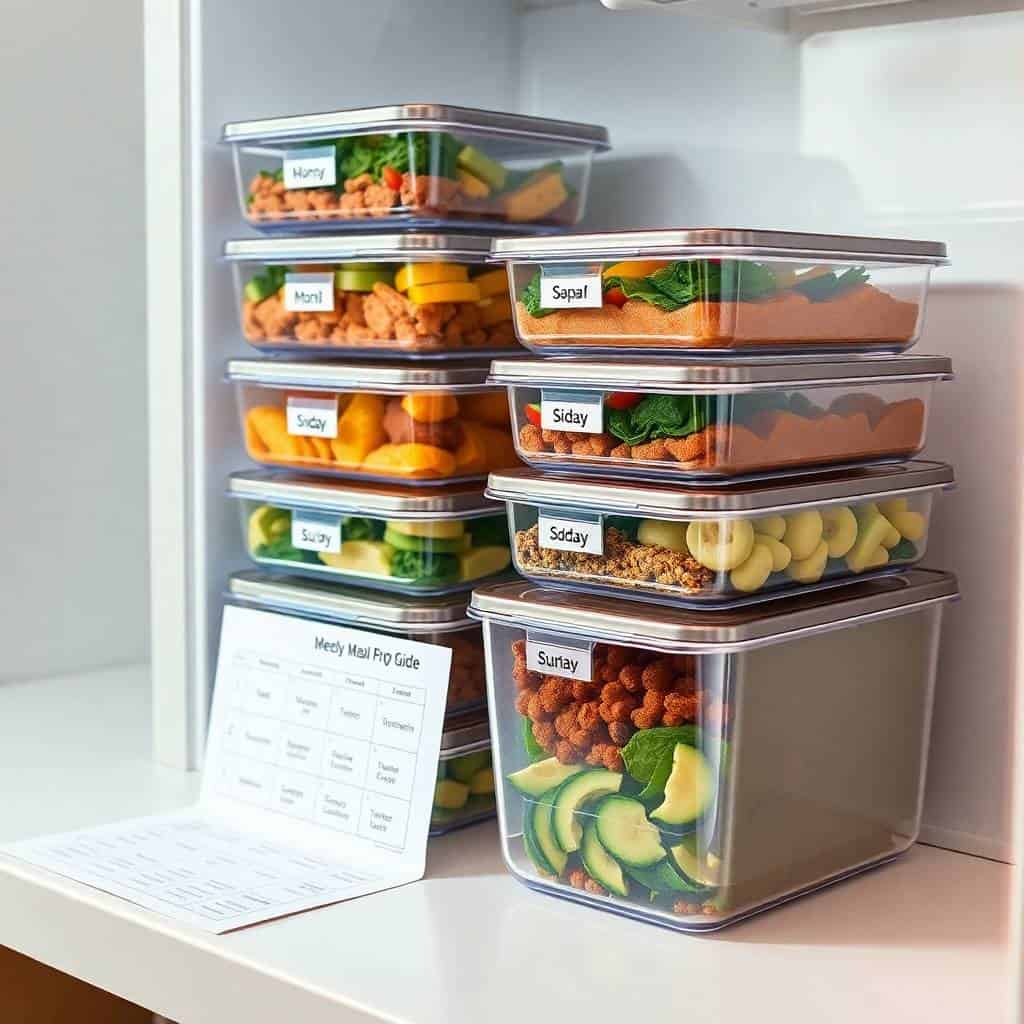
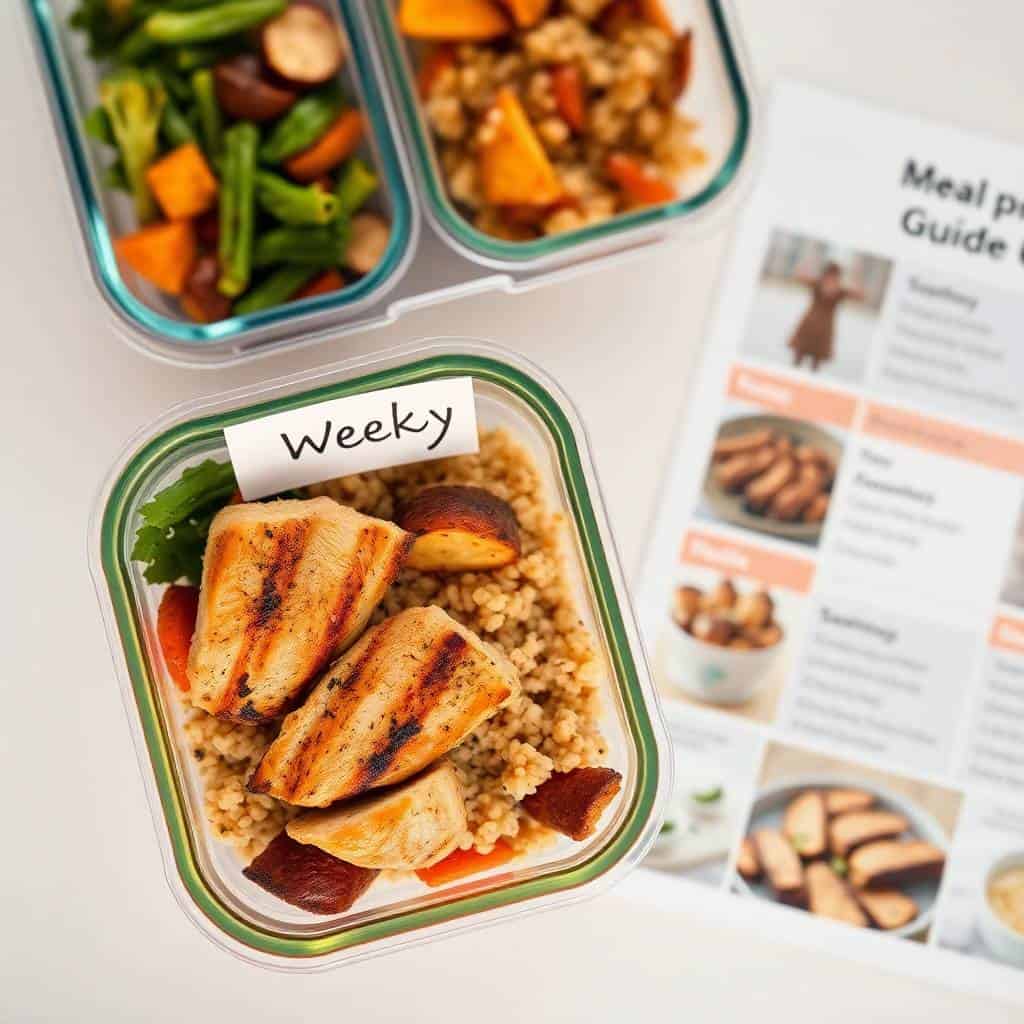
- Masking Tape and a Marker for Labeling: Every container goes into the refrigerator with a label indicating the contents and the prep date. Labeled containers eliminate the mystery-container problem that makes people avoid using meal-prepped food, and the date label ensures components are used within their safe storage window. This $2 habit is the difference between a meal prep system that works and one that produces forgotten containers discovered too late to use.
THE COMPONENT FRAMEWORK — WHAT TO PREP
The component-based meal prep approach prepares building blocks rather than complete meals, then assembles different combinations of those building blocks throughout the week. A standard week's prep session covers five component categories.
Component 1: Grains (1 or 2 varieties)
Cook a large batch of 1–2 grain varieties — enough for 8–10 servings total (approximately 2–2.5 cups dry grain each). Store seasoned grains separately from unseasoned if planning different flavor applications. Quinoa cooks in 15 minutes and is the highest-protein option. Brown rice cooks in 45 minutes and is the most filling and most versatile. Farro cooks in 25 minutes and has the most interesting flavor. Cook grains in broth rather than water for automatically more flavorful results. Season while hot with a small amount of olive oil and salt — seasoned grains are immediately usable in any bowl or salad without additional preparation. Storage: 5 days refrigerated, 3 months frozen.
Component 2: Roasted Vegetables (2 or 3 sheet pans)
Roast 3–4 different vegetables across 2 sheet pans at 425°F for 20–25 minutes simultaneously — this is the highest-efficiency oven use in any prep session. Choose vegetables with different textures, colors, and flavors for maximum variety throughout the week: a sweet option (sweet potato, butternut squash, beets), a cruciferous option (broccoli, cauliflower, Brussels sprouts), a quick-cooking option (cherry tomatoes, zucchini, asparagus), and an allium option (red onion, fennel, shallots). Keep each vegetable in a separate container so they can be combined in different ways across different meals — mixing all vegetables in one container limits flexibility. Season consistently with olive oil, salt, pepper, and garlic powder as the baseline — individual meals can add additional sauce or seasoning at assembly time. Storage: 4 days refrigerated.
Component 3: Proteins (1 or 2 varieties)
Prepare 2–3 pounds of one or two proteins that work across multiple meal contexts — the protein choice should be versatile enough to work in grain bowls, salads, wraps, and as a standalone main without feeling repetitive. Grilled or baked chicken breast sliced or shredded is the most versatile. Hard-boiled eggs (cook 8–10 at once) work for breakfast, salads, and snacks. Baked salmon works for grain bowls and salads. Crispy roasted chickpeas work for grain bowls and snacking. Ground beef or turkey cooked and seasoned works for grain bowls, tacos, and pasta. Storing proteins in an airtight container with a small amount of olive oil or their cooking juices keeps them moist through the storage period. Storage: 4 days refrigerated, 3 months frozen (proteins freeze best unseasoned).
Component 4: Sauces and Dressings (2 varieties)
Prepare 2 genuinely different sauces — the sauces are the most powerful meal variety lever in the entire prep session. The same grain-vegetable-protein combination dressed with lemon tahini tastes completely different dressed with gochujang sauce or green goddess dressing — which means two sauces effectively double the perceived variety of the week's meals from the same component set. Aim for contrasting flavor profiles: one creamy-tangy (tahini, tzatziki, green goddess, peanut sauce), one bold-umami (chimichurri, gochujang dressing, romesco, harissa). Make enough for 8–10 servings of each (approximately ¾ cup per sauce). Storage: 5–7 days refrigerated in sealed jars.
Component 5: Fresh Finishes (prepped but not cooked)
Wash and prepare fresh herbs (parsley, cilantro, basil, dill), wash and dry salad greens, slice radishes and cucumbers, crumble cheeses, and portion nuts or seeds into small containers. These finishes are added at assembly time rather than stored with the cooked components — they provide the fresh, bright, crunchy counterpoint that makes assembled meals feel genuinely fresh rather than like reheated leftovers. Fresh herbs washed and stored loosely in a slightly damp paper towel in a sealed container stay fresh for 5–7 days. Salad greens washed and spin-dried keep for 5 days in a container lined with paper towels. Storage: 5–7 days refrigerated for most fresh components.
THE 2-HOUR SUNDAY PREP SESSION — EXACT SEQUENCE
- Minutes 0–15: Set up and start grains
Clear the kitchen and set up a production workspace. Set the oven to 425°F to preheat. Start the grain that takes the longest first — brown rice (45 min) goes on now, quinoa (15 min) can go on later. Measure grain into pot with broth and bring to a boil — set a timer. While grains start, wash all produce and begin cutting vegetables. Having all produce washed and ready before any cooking starts eliminates the most common flow interruption in a prep session.
- Minutes 15–40: Load the oven and prep proteins
Toss cut vegetables with benefits of olive oil, salt, and pepper and spread across two sheet pans in single uncrowded layers. Slide both sheet pans into the preheated oven. Set a timer for 20–25 minutes. While vegetables roast, season and prepare proteins — marinate chicken if using, season salmon, or prep any other protein that needs advance preparation. If cooking a second grain (quinoa), start it now. The oven working on vegetables and grains cooking on the stovetop is the maximum parallel efficiency of the prep session — this is the 25-minute window where most of the volume cooking is happening without active monitoring.
- Minutes 40–70: Cook proteins and make sauces
Remove roasted vegetables from the oven when the timer sounds. Check and toss if needed — some vegetables need a second 10-minute roast for deeper caramelization. Cook proteins in the skillet while the oven does any second-round vegetable roasting. While proteins cook, make both sauces in a blender or food processor — most sauces take 3–5 minutes to blend and season. This is also the window for hard-boiling eggs if using — place in cold water, bring to a boil, cook 10–11 minutes for fully set yolks, transfer to ice bath. Season and remove grains from heat and allow to rest covered.
- Minutes 70–100: Prep fresh components, portion, and store
While cooked components cool (never store hot food in sealed containers — steam creates condensation that shortens storage life and can harbor bacterial growth), wash, spin-dry, and portion fresh herbs and salad greens. Crumble cheeses and portion nuts. Season cooked grains with olive oil and salt while still warm. Fluff and cool completely. Once all components are at room temperature, portion into labeled containers. Write the component name and prep date on masking tape and affix to each container. Organize the refrigerator by component category — grains together, proteins together, vegetables together, sauces together. A logically organized refrigerator makes weekday assembly significantly faster.
- Minutes 100–120: Clean up and plan the week
Clean the kitchen while referencing the prepped components and planning which combinations you'll eat on which days — write a simple note on a notepad or whiteboard inside a cabinet door listing the week's planned meals. This 5-minute planning step at the end of prep is what converts components into a coherent week of eating rather than a refrigerator of individual ingredients. Include breakfasts (overnight oats, hard-boiled eggs with grain bowls, or pre-portioned smoothie ingredients) and lunches (grain bowls assembled in portable containers) alongside dinners.
BEST MEAL PREP RECIPES BY COMPONENT
Best Meal Prep Grains
Quinoa cooked in chicken broth with olive oil and salt holds 5 days refrigerated and works in grain bowls, salads, breakfast bowls, and stuffed vegetables. Brown rice cooked in broth with a bay leaf and garlic holds 5 days and works in stir-fries, burrito bowls, and alongside any protein. Farro cooked in broth with fresh thyme holds 5 days and works in Mediterranean grain bowls, soups, and salads with its nutty, chewy character. For maximum flexibility, cook one neutral grain (brown rice or quinoa) and one more distinctive grain (farro or barley) per week so that different meals have different base characters. Explore our grain bowl recipes for the full range of grain bowl combinations that work with prepped components.
Best Meal Prep Vegetables
Sweet potatoes cubed and roasted with olive oil and smoked paprika hold 4 days and work in grain bowls, tacos, soups, and breakfast scrambles. Broccoli roasted at 425°F until deeply caramelized holds 4 days and works in grain bowls, stir-fries, pasta, and egg dishes. Cherry tomatoes roasted until burst and jammy hold 4 days and work as a sauce, grain bowl topping, pasta addition, and toast topping. Red cabbage thinly shredded raw holds 5 days and adds crunch to grain bowls, tacos, salads, and wraps. Roasted cauliflower with turmeric and cumin holds 4 days and works in grain bowls, wraps, and as a side. See our easy side dishes collection for more vegetable preparation ideas.
Best Meal Prep Proteins
Baked chicken breasts (seasoned simply with olive oil, salt, garlic powder, and smoked paprika at 400°F for 22–25 minutes) hold 4 days refrigerated and shred easily for grain bowls, salads, tacos, and soups. Hard-boiled eggs hold 5 days peeled in cold water or 7 days unpeeled and work for breakfast, salads, grain bowls, and snacks. Baked salmon (seasoned with lemon, olive oil, salt, and dill at 400°F for 12–15 minutes) holds 3 days and works in grain bowls and salads. Crispy roasted chickpeas (drained, dried, tossed with olive oil and spices, roasted at 400°F for 25–30 minutes) hold 3 days at room temperature in an open container and work in grain bowls, salads, and as snacks. See our chicken breast dinner recipes for more chicken preparation ideas.
Best Meal Prep Sauces
Lemon tahini dressing (tahini, lemon juice, garlic, olive oil, water, salt — blended smooth) holds 7 days refrigerated and works with virtually everything. Cilantro lime dressing (cilantro, lime juice, olive oil, garlic, cumin, salt — blended smooth and bright green) holds 5 days and works especially well with Mexican-inspired bowls. Gochujang sauce (gochujang, sesame oil, rice vinegar, soy sauce, garlic, honey — whisked) holds 10 days and works on Korean-inspired grain bowls, noodles, and roasted vegetables. Green goddess dressing (basil, parsley, tarragon, Greek yogurt, lemon, garlic — blended) holds 5 days and works on grain bowls, grain salads, and as a dip. Chimichurri (parsley, oregano, garlic, red wine vinegar, olive oil — chopped) holds 7 days and works on any protein and grain bowl. Find more sauce ideas in our meal prep for weight loss collection.
SAMPLE WEEK — HOW THE COMPONENTS COME TOGETHER
Sunday Prep: Brown rice + quinoa cooked. Sweet potato + broccoli + cherry tomatoes roasted. Chicken breasts baked. Hard-boiled eggs prepared. Lemon tahini + gochujang sauce made. Fresh herbs and greens washed and stored.
Monday: Quinoa bowl with broccoli, cherry tomatoes, sliced chicken, lemon tahini dressing, sesame seeds. Lunch under 5 minutes, genuinely satisfying, genuinely varied.
Tuesday: Brown rice bowl with sweet potato, hard-boiled egg, red cabbage (raw, from the crisper), gochujang sauce, sliced scallions. Same components, completely different flavor profile.
Wednesday: Large salad with greens, quinoa, remaining chicken shredded, cucumber, cherry tomatoes, lemon tahini as dressing. The remaining chicken stretches into a third distinct meal format.
Thursday: Brown rice stir-fried quickly in a hot pan with egg, broccoli, soy sauce, and sesame oil — a 10-minute dinner that uses prepped components in a hot, fresh preparation rather than assembled cold. Roasted broccoli in a hot pan with egg and soy becomes genuinely exciting rather than repetitive.
Friday: Everything remaining — any grain, any vegetable, any sauce — combined into a clean-out-the-fridge grain bowl topped with a fried egg and whatever sauce is left. Friday's bowl often becomes the week's best meal because the flavors in every component have had the most time to develop.
STORAGE GUIDE — HOW LONG EVERYTHING KEEPS
- Cooked grains: 5 days refrigerated, 3 months frozen. Reheat with a splash of water or broth, covered, in the microwave at 70% power for 1–2 minutes.
- Roasted vegetables: 4 days refrigerated. Eat cold in bowls and salads, or reheat at 400°F for 8 minutes on a sheet pan to restore crispiness — microwaving roasted vegetables makes them soft and steamed rather than crispy.
- Cooked chicken: 4 days refrigerated, 3 months frozen. Store with a tablespoon of cooking juices or olive oil to prevent drying. Reheat gently at 50% microwave power or slice cold directly into salads and grain bowls.
- Cooked salmon: 3 days refrigerated. Best eaten cold or at room temperature — reheating cooked salmon can produce a strong aroma and slightly changed texture. Cold salmon in grain bowls and salads is genuinely outstanding.
- Hard-boiled eggs: 5 days peeled in cold water (change water daily), 7 days unpeeled refrigerated. Add to bowls, salads, or eat as snacks.
- Sauces and dressings: 5–10 days refrigerated depending on ingredients. Creamy dressings with dairy: 5 days. Vinaigrettes and oil-based sauces: 7–10 days. Shake or stir before each use as separation is normal for homemade dressings.
- Washed greens and herbs: Salad greens 5 days in a towel-lined container. Fresh herbs 5–7 days in a damp towel-lined container or standing in a small amount of water covered loosely with a bag.
TIPS FOR SUCCESS
- Start Small — One Prep Session Covers One Category: The most common reason meal prep is abandoned after one attempt is overambition on the first session — trying to cook a full week of complete meals in one sitting is genuinely exhausting and often produces lower-quality results from rushed execution. Begin with one category: just cook three grains and two sauces. The following week, add roasted vegetables. The week after, add proteins. Building the habit incrementally produces a sustainable system — trying to implement the full system immediately often produces burnout that ends the habit before it starts.
- Never Store Hot Food in Sealed Containers: Hot food sealed in an airtight container creates steam condensation that pools in the bottom of the container, shortens storage life, and creates conditions that can harbor bacterial growth. Cool all cooked components to room temperature before sealing and refrigerating — spread on sheet pans or wide bowls to accelerate cooling if time is short. A food-safe temperature reading of 70°F or below before sealing is the correct target.
- Prep Components You Genuinely Want to Eat: The most common meal prep mistake after overambition is prepping food that feels healthy but that you don't actually want to eat — the plain steamed chicken and unseasoned brown rice that technically meets nutritional goals but that you will choose takeout over every single time. The components you prep should be foods you genuinely look forward to eating. If you love Thai flavors, prep components that work in Thai-inspired bowls. If you hate kale, don't prep kale no matter how healthy it is. The sustainable meal prep system is built on food you actually want, not food you think you should want.
- The Sauce Is the Most Important Prep Decision: If you have time to prep only one thing in a given week, prep the sauces. A great sauce transforms plain cooked grain and vegetables into something genuinely satisfying and genuinely varied — without it, even well-prepped components taste like diet food. With two excellent sauces in the refrigerator, the same components produce four or five genuinely different meal experiences across the week. The sauce investment — 10–15 minutes per sauce — produces the highest return of any single prep activity.
- Use the Freezer as a Second Refrigerator: A well-maintained meal prep freezer is the backup system that makes the meal prep habit truly resilient — when a week goes wrong and the prepped food runs out or isn't used, frozen components from previous sessions provide the same assembly-ready convenience as fresh prep. Freeze individual portions of cooked grains, proteins, and sauces in labeled bags lying flat, then stack vertically in the freezer like files. The ability to pull a frozen grain + frozen protein + refrigerator sauce into a complete dinner in 10 minutes is genuinely one of the most useful food habits available for busy households.
- Do a Mid-Week Refresh on Wednesday: A 20-minute Wednesday refresh — cutting fresh vegetables to replace depleted ones, making a fresh sauce, or cooking a quick additional grain — extends the freshness and variety of the week's meal prep through Friday without requiring a second full prep session. Wednesday vegetables are at the freshest point of the week's eating, which produces meals on Thursday and Friday that taste genuinely fresh rather than end-of-week tired. This mid-week habit is the detail that separates a 5-day meal prep system from a 3-day one.
FAQ
A standard full meal prep session producing components for a complete week of meals takes 2–2.5 hours when the session is planned and organized in advance. A beginner session covering only one or two component categories takes 45–60 minutes. The prep time decreases significantly with practice — an experienced meal prepper working from a planned list with organized workspace can produce a full week's components in 90 minutes. The time investment of 2 hours on Sunday produces approximately 14–15 meals for the week, which means each meal costs approximately 8–9 minutes of prep time amortized across the week — significantly less than cooking each meal individually would require.
Some foods deteriorate significantly in quality when prepped ahead and are better prepared fresh: avocado browns within hours and should be added fresh at serving time; dressed leafy salads wilt within hours and should be dressed immediately before eating; eggs cooked soft (soft-boiled, poached, or fried with runny yolks) lose their texture appeal quickly and are better cooked fresh in 3–4 minutes; pasta stored in sauce absorbs all liquid overnight and becomes gummy (store sauce and pasta separately and combine at serving); and any fried or crisped food loses its crunch within hours. The workaround for most of these is component storage — keep the ingredient and the preparation method separate and apply the preparation fresh at serving time.
For anyone cooking for themselves or a family on a regular basis, meal prep is genuinely worth the Sunday investment in multiple measurable ways: it significantly reduces weeknight cooking time from 30–45 minutes per meal to 5–10 minutes of assembly; it reduces the frequency of takeout orders for the 'what do I make tonight' problem; it reduces food waste through planned purchasing and full utilization of purchased ingredients; it supports better eating habits by making nutritious options as convenient as less nutritious ones; and it reduces the cognitive load of weeknight decision-making. The people for whom meal prep is least worth it are those who cook differently from day to day based on mood and inspiration — the system works best for people who prioritize efficiency and consistency over spontaneity.
The most effective strategies for preventing meal prep boredom are: rotating the grain base each week (quinoa this week, farro next week, brown rice the week after) so the foundational texture of your meals changes; making two genuinely different sauces per session and rotating through a repertoire of 8–10 sauce recipes across the month so the dominant flavor of each week's meals is always new; rotating the protein each week (chicken one week, salmon the next, chickpeas the week after); varying the vegetable selection with seasonality; and using the same components in different meal formats across the week (grain bowl Monday, salad Tuesday, stir-fry Thursday) so the components appear in genuinely different contexts rather than identical presentations. Meal prep boredom is almost always a symptom of insufficient sauce variety rather than ingredient repetition.
The most effective beginner approach to meal prep is a three-week onboarding sequence that builds the habit without overwhelming it. Week 1: prep only grains and one sauce — cook two grain varieties and make lemon tahini dressing. Nothing else. Use these to upgrade whatever you were already planning to eat that week. Week 2: add roasted vegetables to the grain and sauce prep — roast two sheet pans of vegetables alongside the grains. Week 3: add a protein to the existing grain, sauce, and vegetable prep — bake chicken breasts or prepare hard-boiled eggs. By week 3 you have a complete component-based prep system built incrementally, each addition requiring only 15–20 extra minutes over the previous week's session. The full system feels manageable because it was built gradually rather than imposed all at once. For recipe inspiration, browse our full collection at forfoodiefriends.com/recipes.
This weekly meal prep guide gives you a complete, practical, genuinely sustainable system for eating well every day of the week without cooking from scratch every night — start with one component category this Sunday and build the habit incrementally until the full system feels completely natural.
Use our grain bowl recipes as your primary meal assembly inspiration, our meal prep for weight loss collection for nutrition-focused guidance, and our 30-minute meals for the evenings when you want to cook something fresh rather than assemble from components. Your best eating week starts this Sunday. 🥗📦✨
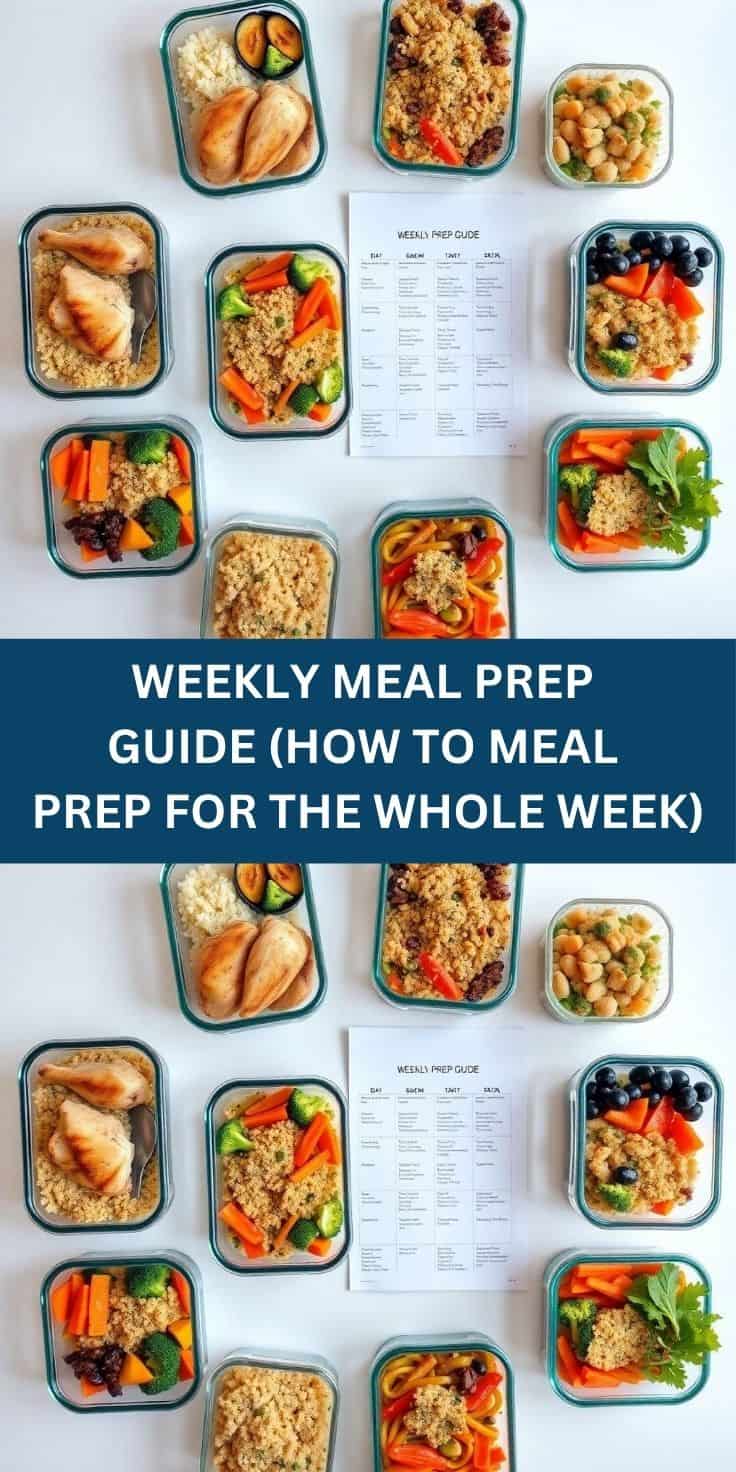
WEEKLY MEAL PREP GUIDE (HOW TO MEAL PREP FOR THE WHOLE WEEK)
Equipment
- Meal prep containers
- Large sheet pans
- Skillet
- Large pot
- Refrigerator storage space
Ingredients
Grains (Choose 2-3)
- 2 cups brown rice, uncooked or white rice, quinoa, or farro
- 3 cups water or vegetable broth for cooking grains
Proteins (Choose 2-3)
- 2 pounds boneless skinless chicken breasts cubed or sliced
- 2 cans (15 oz each) chickpeas, drained and rinsed or black beans
- 1.5 pounds ground turkey or lean ground beef for seasoned crumbles
Vegetables (Choose 4-6)
- 3 medium bell peppers (mixed colors) diced into bite-sized pieces
- 3 cups broccoli florets cut into uniform sizes
- 2 medium carrots sliced into rounds or batons
- 2 cups mushrooms sliced
- 4 cups zucchini, sliced or summer squash
- 1 large bunch leafy greens (spinach or kale) chopped
Seasonings and Oils
- 0.25 cup olive oil divided for roasting and dressing
- 2 teaspoons salt adjust to taste
- 1 teaspoon black pepper freshly ground
- 2 teaspoons garlic powder or fresh minced garlic
- 1 teaspoon Italian seasoning or preferred spice blend
- 2 tablespoons balsamic vinegar for dressing
Optional Toppings and Sauces
- 1 cup cherry tomatoes, halved add fresh on serving day
- 0.5 cup fresh herbs (parsley or cilantro) add fresh on serving day
- 0.5 cup tahini or hummus optional sauce component
Instructions
Preparation Phase (30 minutes)
- Wash all vegetables and pat dry completely. Preheat your oven to 425 degrees Fahrenheit and arrange two large baking sheets with parchment paper or silicone mats.
- Dice all bell peppers, carrots, broccoli, mushrooms, and zucchini into bite-sized, uniform pieces. This consistency ensures even cooking and makes assembly easier during the week. Keep each vegetable type separate on your prep surface.
- Pat chicken dry with paper towels and season generously with salt, pepper, garlic powder, and Italian seasoning. Toss ground turkey or beef with similar seasonings in a separate bowl.
- Drain and rinse canned chickpeas and pat them dry. Season with salt, pepper, and a drizzle of olive oil.
Cooking Phase (90 minutes - done simultaneously)
- Start your grains: Bring water or broth to a boil in a pot or rice cooker. Add rice or other grains with a pinch of salt. Reduce heat to low, cover, and let simmer for 40-45 minutes until tender. (If using a rice cooker, simply turn it on and it will complete automatically while you work on other components.)
- Begin roasting vegetables: Toss prepared vegetables (except leafy greens) with olive oil, salt, pepper, and Italian seasoning. Divide between prepared baking sheets in a single even layer. Roast in the preheated oven for 25-30 minutes, stirring halfway through, until vegetables are caramelized at the edges and tender.
- Cook proteins simultaneously: In one skillet over medium-high heat, add the seasoned chicken pieces with a light drizzle of olive oil. Cook for 8-10 minutes, stirring occasionally, until cooked through and no longer pink in the center (165 degrees Fahrenheit internal temperature). In a second skillet, brown the seasoned ground meat for 8-10 minutes until cooked through, breaking it apart as it cooks. On a third burner or in a smaller skillet, toss the chickpeas and roast over medium heat for 5-7 minutes until slightly crispy.
- While everything cooks, prepare your containers and storage system. Arrange 4-6 meal prep containers on your counter. Have a white label maker or masking tape and permanent marker ready for labeling.
Assembly and Storage Phase (30 minutes)
- Allow all cooked components to cool to room temperature (this is crucial to prevent condensation and bacterial growth). Fluff the cooked grains with a fork to separate the grains.
- Begin assembling containers: Layer each container with approximately one cup of cooked grain as the base. Top with a portion of cooked protein (rotate between chicken, ground meat, and chickpeas across the containers). Add a generous serving of mixed roasted vegetables on top of the protein.
- Prepare complementary containers: If you prefer, assemble a few containers with just grains and vegetables for lighter days, and keep proteins separate to add fresh for maximum shelf life. This also allows flexibility for different meal combinations throughout the week.
- For freshness, store leafy greens, fresh tomatoes, and herbs separately in small containers or paper towel-lined bags. These components are best added fresh on serving days. Prepare a simple dressing by whisking together remaining olive oil, balsamic vinegar, salt, pepper, and minced garlic - store in a glass jar.
- Cool completely before sealing containers with their lids. Use the label maker or write directly on tape: the date prepared, contents, and any allergen information. Stack containers neatly on a shelf in your refrigerator with labels facing forward for easy identification.
Throughout the Week (Assembly at Mealtime)
- Each evening or morning, retrieve a meal prep container from the refrigerator. If desired, add fresh leafy greens, halved cherry tomatoes, and chopped herbs directly to the container or on the side. Drizzle with prepared dressing or your choice of sauce (tahini, hummus, or hot sauce work beautifully).
- Reheat in a microwave for 2-3 minutes if you prefer warm meals, or enjoy at room temperature as a cold bowl. The entire assembly takes less than 5 minutes, leaving you with a nutritious, balanced meal ready to eat without any decision fatigue.
Notes


Comments
No Comments