
Gochujang noodles recipe is the easy vegetarian diet Korean dinner that comes together in just 20 minutes. Chewy noodles tossed in a glossy spicy-sweet gochujang sauce with crisp vegetables.
Each bite delivers bold Korean flavor with tender noodles, savory umami, and just the right amount of heat balanced by honey. It's pure comfort food magic.
The best part is how customizable it is — add any vegetables you love, adjust the spice level, and serve it cold or hot. It works as a quick lunch or satisfying dinner.
Perfect for busy weeknights, meal prep, or anytime you crave bold Korean flavors without ordering takeout. Better than restaurant noodles and ready faster than delivery.
Once you taste this addictive sauce, you'll understand why it has gone viral on social media. Let's discover why these noodles deserve a spot in your weekly rotation.
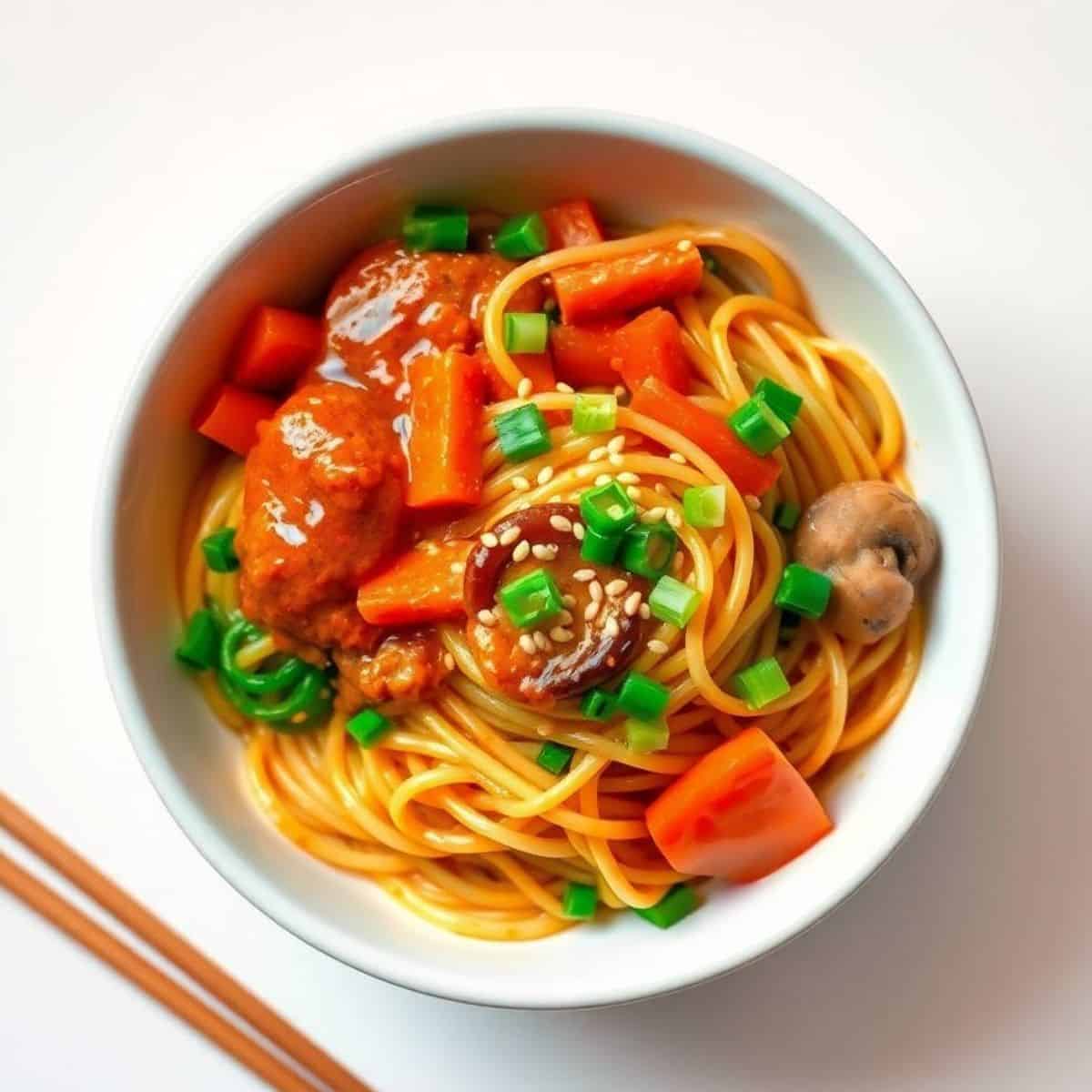
WHY YOU WILL LOVE THIS RECIPE
- Ready in 20 Minutes: The fastest dinner you'll ever make — perfect for busy weeknights when you need something quick, easy, and delicious.
- Bold Korean Flavor: Gochujang creates the most addictive sweet-spicy-savory umami flavor that's deeply satisfying in every single bite.
- Naturally vegetarian diet: Hearty plant-based dinner loaded with vegetables — no meat required for a deeply satisfying, complete meal.
- Better Than Takeout: All the bold Korean flavors of your favorite restaurant noodles made fresh at home for a fraction of the cost.
- Endlessly Customizable: Use any noodles you have, swap vegetables for what's fresh, and adjust spice level to suit any preference.
- Works Hot or Cold: Delicious served warm fresh from the pan or chilled the next day — perfect for meal prep lunches all week long.
INGREDIENTS
- Udon noodles, ramen, or spaghetti
- Gochujang paste (Korean red chili paste)
- Soy sauce (low-sodium)
- Honey or maple syrup
- Rice vinegar
- Sesame oil
- Fresh garlic, minced
- Fresh ginger, grated
- Vegetable oil
- Yellow onion, sliced
- Bell pepper, sliced
- Shredded carrots
- Snap peas or broccoli
- Baby spinach
- Sesame seeds (for garnish)
- Green onions, sliced (for garnish)
DIRECTIONS
- Step No.1: Cook the noodles
Bring a large pot of water to a boil. Cook noodles according to package directions until al dente. Reserve ½ cup pasta water, then drain and rinse with cold water.
- Step No.2: Make the gochujang sauce
In a small bowl, whisk together gochujang, soy sauce, honey, rice vinegar, sesame oil, garlic, and ginger until smooth and well combined.
- Step No.3: Stir-fry the vegetables
Heat vegetable oil in a large skillet or wok over high heat. Add onion and stir-fry 2 minutes. Add bell pepper, carrots, and snap peas, cook 3-4 more minutes until tender-crisp.
- Step No.4: Add spinach
Add baby spinach to the skillet and stir until wilted, about 1 minute. The greens add color and nutrition information without overwhelming the dish.
- Step No.5: Toss with sauce and noodles
Add cooked noodles to the skillet along with the gochujang sauce. Toss everything together using tongs until noodles are completely coated in glossy red sauce.
- Step No.6: Garnish and serve
Add a splash of reserved pasta water if needed to loosen the sauce. Garnish generously with sesame seeds and sliced green onions, then serve immediately while hot.
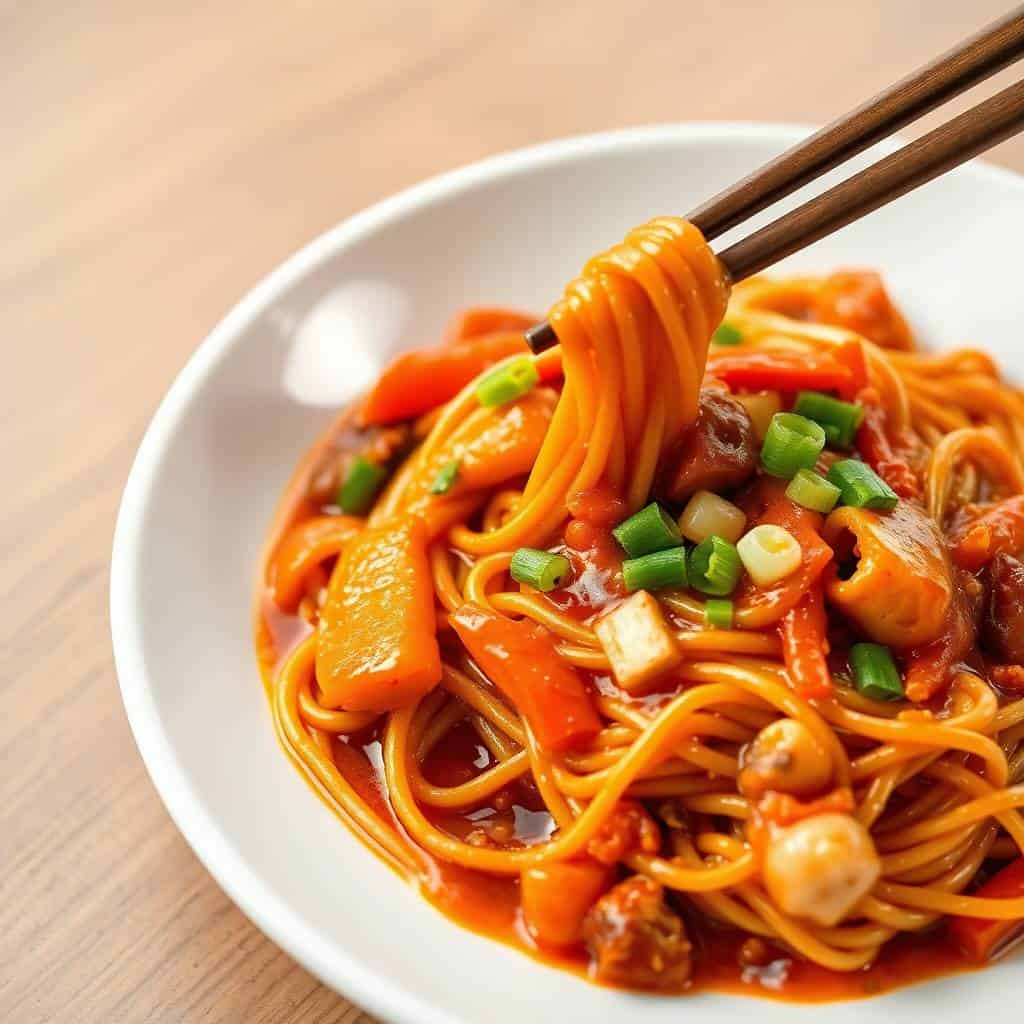
TIPS FOR SUCCESS
- Don't Overcook Noodles: Cook them just to al dente — they'll continue cooking when tossed with the sauce in the hot skillet.
- Reserve Pasta Water: Save ½ cup before draining — it helps loosen the sauce and creates the perfect glossy coating in this gochujang noodles recipe.
- Use High Heat: Stir-fry the vegetables on high heat to keep them crisp-tender — low heat creates soggy vegetables that lose their bright color.
- Adjust Heat to Taste: Start with less gochujang and add more — gochujang brands vary in spiciness, so adjust gradually for your perfect heat level.
- Toss with Tongs: Use tongs to toss noodles with sauce — they help distribute sauce evenly and don't break the delicate noodles.
- Serve Immediately: Korean noodles are best fresh from the pan when noodles are hot and saucy — they thicken and absorb sauce as they sit.
VARIATIONS
- Add Tofu: Pan-fry cubed extra-firm tofu and toss in for added protein — perfect for keeping it vegetarian diet while adding heartiness.
- Cold Noodle Salad: Serve chilled with cucumber, cherry tomatoes, and avocado for a refreshing cold noodle salad on hot summer days.
- Mushroom Version: Add 8 oz sliced shiitake or cremini mushrooms with the vegetables for an extra umami-packed earthy flavor.
- Egg-Topped: Top each serving with a soft-boiled or fried egg for richness and extra protein — the runny yolk creates the most amazing sauce.
- Creamy Gochujang: Add 2 tablespoons peanut butter or tahini to the sauce for a creamier, richer version with nutty depth.
- Extra Spicy: Add 1-2 sliced fresh chilies, sriracha, or extra gochujang for a serious heat kick that fans of spicy food will love.
SERVING AND STORAGE
Serving
Serve immediately while hot, garnished with sesame seeds and green onions. Top with a soft-boiled egg, crispy tofu, or kimchi for a complete satisfying Korean-inspired meal.
Storage
Store leftovers in an airtight container in the fridge for up to 4 days. Reheat in the microwave or skillet with a splash of water. Delicious served cold the next day too.
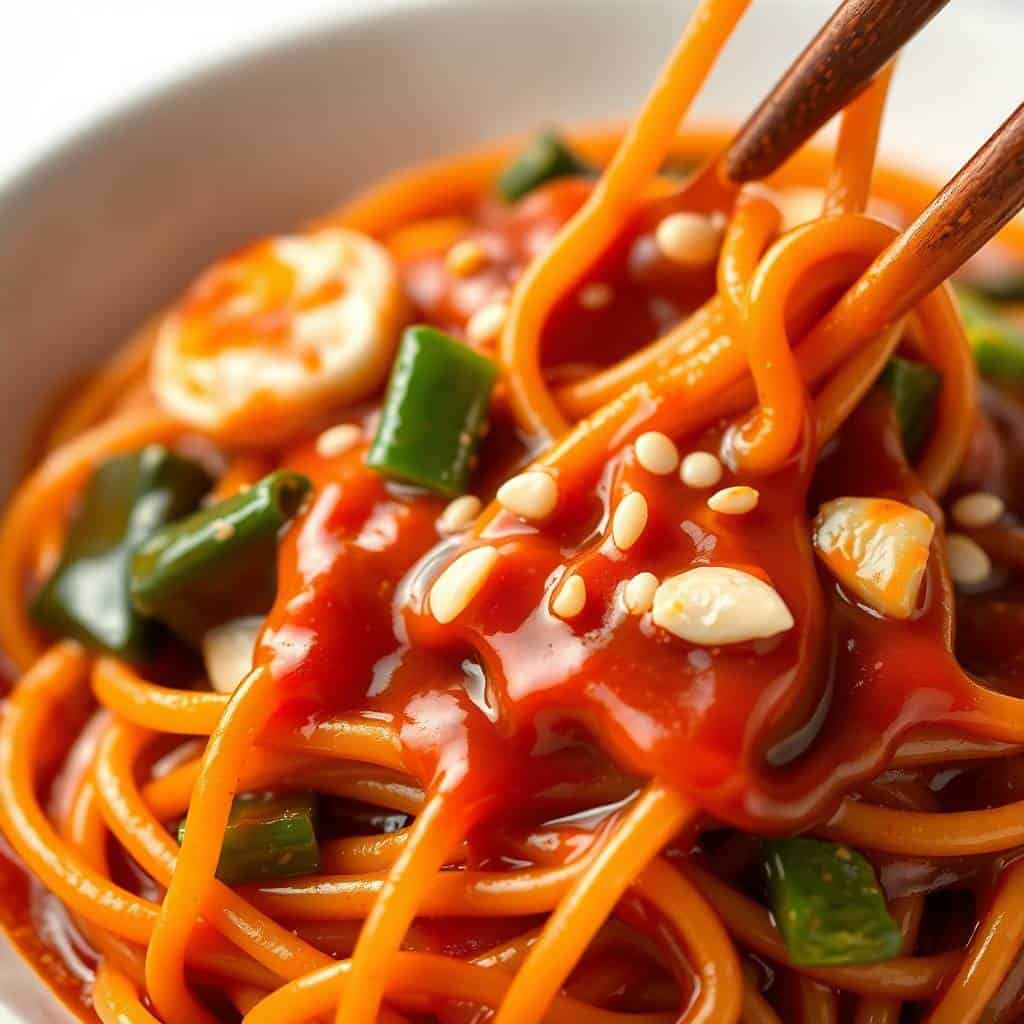
FAQ
Udon noodles are traditional and ideal because they're chewy and hold sauce well. Ramen, lo mein, soba, or even spaghetti also work great as substitutes.
Mild to medium-spicy depending on the gochujang paste brand and amount. Honey balances the heat. Use less for milder, more for spicier.
Yes — use maple syrup instead of honey. Most gochujang paste is plant-based, but always check labels to confirm no animal-derived ingredients.
Absolutely — gochujang paste noodles are delicious cold the next day. Just rinse the noodles with cold water after cooking, then toss with sauce and chill.
Find gochujang in the Asian section of most major grocery stores, at Asian markets, or online. Look for it in red plastic tubs labeled in Korean.
This gochujang noodles recipe is the kind of dinner that proves vegetarian diet Korean food can be deeply satisfying and exciting. It's bold, beautiful, and absolutely delicious.
Once you have a jar of gochujang in your fridge, you'll find endless ways to use it. For more easy weeknight dinners, see our 15 easy dinner recipes.
Make it once and watch it become a regular request from your family. Looking for more Asian flavors? Try our easy gochujang chicken.
Add it to your weekly rotation for stress-free vegetarian dinners. Browse more plant-based ideas in our 12 one pot vegetarian meals.
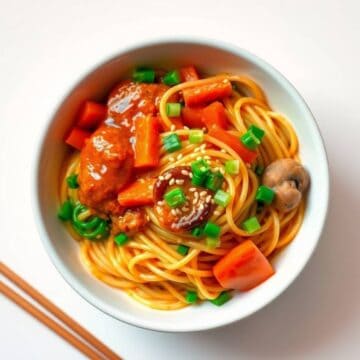
GOCHUJANG NOODLES RECIPE (EASY 20-MINUTE VEGETARIAN KOREAN DINNER)
Equipment
- Large pot for noodles
- Large skillet or wok
- Small bowl for sauce
- Colander
Ingredients
For the Noodles & Veggies:
- 10 oz udon noodles or thick Korean noodles or spaghetti
- 2 tablespoons vegetable oil divided
- 1 medium onion sliced
- 2 cups mixed vegetables bell peppers, carrots, mushrooms, cabbage, or bok choy
- 3 cloves garlic minced
- 1 teaspoon fresh ginger grated
- 3 green onions sliced, whites and greens separated
- 1 tablespoon sesame seeds for garnish
For the Gochujang Sauce:
- 3 tablespoons gochujang (Korean red pepper paste)
- 3 tablespoons soy sauce or tamari for gluten-free
- 2 tablespoons brown sugar or honey
- 1 tablespoon rice vinegar
- 1 teaspoon sesame oil
- ¼ cup water
Instructions
Cook Noodles:
- Cook noodles according to package instructions. Drain and set aside. Reserve ½ cup of pasta water.
Make Gochujang Sauce:
- In a small bowl, whisk together gochujang, soy sauce, brown sugar (or honey), rice vinegar, sesame oil, and water until smooth. Set aside.
Stir-Fry Vegetables:
- Heat 1 tablespoon oil in a large skillet or wok over medium-high heat. Add sliced onion and mixed vegetables. Stir-fry for 3-4 minutes until tender-crisp. Remove vegetables and set aside.
Sauté Aromatics:
- Add remaining 1 tablespoon oil to the skillet. Add garlic, ginger, and white parts of green onions. Stir-fry for 30 seconds until fragrant.
Add Sauce:
- Pour the gochujang sauce into the skillet. Bring to a simmer and cook for 1-2 minutes until slightly thickened.
Combine:
- Add cooked noodles and stir-fried vegetables to the skillet. Toss everything together until well coated in the sauce. Add reserved pasta water a little at a time if needed to loosen the sauce.
Garnish & Serve:
- Garnish with green onion tops and sesame seeds. Serve immediately.
Notes
- Make Ahead: Sauce can be made up to 5 days in advance. Vegetables can be chopped up to 2 days ahead.
- Variations: Add crispy tofu or tempeh for extra protein. Add cooked shrimp, beef, or chicken for non-vegetarian version. Use rice noodles or soba noodles instead of udon. Add a fried egg on top.
- Serving Suggestions: Serve with kimchi, pickled radish, or Korean cucumber salad. Top with fresh cilantro and a squeeze of lime. Pair with Korean vegetable pancakes (yachaejeon).
- Allergy-Friendly: Use tamari or coconut aminos instead of soy sauce for gluten-free. Use gluten-free noodles (rice noodles or soba with 100% buckwheat). Use maple syrup instead of brown sugar/honey for vegan.
- Storage Tips: Store in an airtight container in the refrigerator for up to 4 days. Reheat in a skillet with a splash of water or in the microwave. Not recommended for freezing.



Comments
No Comments