
Saad asked me to make this soup three weeks in a row before I finally sat down and wrote the recipe properly. He's not usually a soup kid — he'd rather have a burger or a plate of my cheesy chicken and rice — but something about this one got him. I think it's the shredded chicken. He likes pulling the strands apart with his spoon.
This is a one-pot soup, which matters to me on weeknights when I'm tired and the last thing I want is a sink full of dishes. You brown the chicken, sauté the vegetables in the same pot, add the broth and rice, let everything simmer together, then shred the chicken back in. That's it. The rice absorbs the broth as it cooks and the whole thing turns thick and filling — more like a meal than a starter.
My husband eats this with a squeeze of lemon over the top. Saad eats it plain with extra parsley because he thinks it looks fancy. Zainab picks out the carrots, which is a whole other conversation. I make a full pot and we finish most of it in one sitting — whatever's left, I reheat for lunch the next day and it's honestly even better.
One thing I'll say upfront: the rice will keep absorbing liquid as the soup sits. If you're planning to store leftovers, be ready to add a splash of broth when you reheat. I learned that the hard way the first time I made this — opened the fridge the next morning and it had turned into something closer to porridge. Not bad, but not what I was going for.
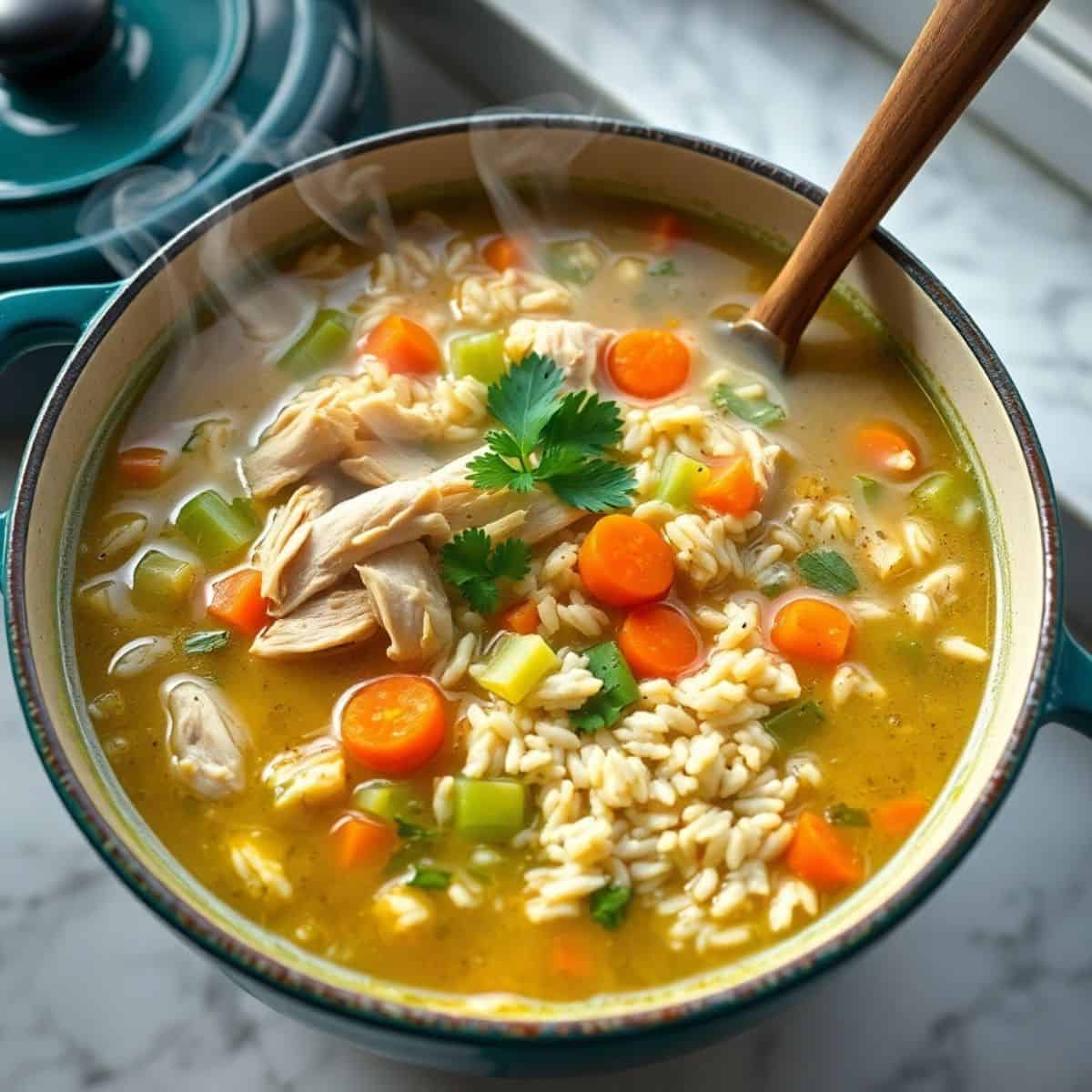
Why You'll Love This Recipe
- One pot, no fuss: Everything cooks in a single Dutch oven or heavy pot, which means less cleanup and less juggling. I brown the chicken first, build the flavor in the same pot with the vegetables, then add the broth and let it all come together. On busy nights that matters more than almost anything else.
- Real, filling meal: This isn't a light starter soup. The rice cooks right in the broth and soaks up all that chicken flavor, which means every spoonful is thick and satisfying. My family of four eats a full pot without complaint, and nobody asks for more food an hour later.
- Works with what you have: I've made this with chicken breasts, chicken thighs, and once with a leftover rotisserie chicken I had sitting in the fridge. All three worked. The thighs give you more flavor, the breast shreds cleaner, the rotisserie saves you 20 minutes. Use whatever you've got.
- Good for sick days and cold days both: In Pakistan, my mom would make a simple chicken shorba when anyone was unwell — thin, clear broth with ginger. This is my version of that instinct, just with rice and vegetables built in. It's warm, it's easy to eat, and it genuinely makes you feel better.
- Reheats well (with a trick): Cold soup the next day is one of life's reliable pleasures. Just add a splash of extra broth when reheating because the rice thickens things up overnight. Two minutes on the stovetop and it's back to exactly where it was.
Ingredients
- 1 tablespoon olive oil
- 1 onion, chopped
- 2 carrots, chopped
- 2 celery stalks, chopped
- 2 cloves garlic, minced
- 6 cups chicken broth (low-sodium if you can — easier to control the salt)
- 1 pound boneless, skinless chicken breasts or thighs, cut into bite-sized pieces
- ½ cup long-grain white rice
- 1 teaspoon dried thyme
- ½ teaspoon dried rosemary
- ¼ teaspoon black pepper
- Salt to taste
- Fresh parsley, chopped, for garnish (optional but I always use it)
Directions
- Sauté the vegetables: Heat the olive oil in a large pot or Dutch oven over medium heat. Add the chopped onion, carrots, and celery and cook for 5–7 minutes, stirring occasionally, until they're softened and the onion has gone translucent. Add the minced garlic and cook for another minute — you'll smell when it's ready.
- Add the broth and chicken: Pour in the chicken broth and add the chicken pieces. Stir everything together and bring it up to a simmer. Don't rush this step — let it come to heat gradually so the chicken stays tender.
- Cook the chicken: Reduce the heat to low, cover the pot, and simmer for 15–20 minutes until the chicken is cooked through. Thighs might need a few extra minutes. You want the chicken fully cooked here before you add the rice.
- Add rice and seasonings: Stir in the rice, thyme, rosemary, and black pepper. Taste the broth and add salt now — it's easier to season at this stage than at the end. Give everything a good stir so the rice doesn't clump in one spot.
- Simmer until the rice is tender: Cover the pot again and simmer for another 15–20 minutes, stirring once or twice to keep the rice from sticking to the bottom. The rice is done when it's soft and has absorbed some of the broth.
- Shred the chicken: If you'd like shredded chicken (which I always do — it's what Saad loves), fish out the chicken pieces and shred them with two forks. Takes about two minutes. Return the shredded chicken to the pot and stir it back in.
- Taste and serve: Do a final salt and pepper check. Ladle into bowls and top with fresh parsley if you're using it. Serve hot.

Tips for Success
- Use good broth: The broth is doing most of the flavor work here, so use one you'd actually enjoy drinking on its own. I usually grab the Swanson low-sodium chicken broth from Walmart — it's consistent and widely available. If you have homemade broth in the freezer, even better, but store-bought is genuinely fine.
- Watch the rice timing: White rice cooks fast in hot broth — faster than you'd expect. Start checking at the 15-minute mark. If you let it go too long, it turns mushy and the soup goes from thick to gluey. I've done this. It's not inedible, but it's not great. When the rice is just tender, take it off the heat.
- Season the broth before you add the rice: Rice absorbs salt as it cooks, so if you wait until the end to season, the soup can taste flat. I add my salt right after I stir the rice in, taste the broth, and adjust from there. Makes a real difference.
- Don't skip the parsley: I know fresh herbs feel optional, but a handful of chopped parsley stirred in at the very end (or scattered on top) genuinely brightens the whole bowl. It's not decoration — it changes the taste. Dried parsley doesn't do the same thing here, so either use fresh or skip it.
- A squeeze of lemon at the end: My husband always adds lemon juice to his bowl. I was skeptical the first time, but he was right — it cuts through the richness of the broth and makes everything taste a little more alive. Half a lemon squeezed over the pot before serving is enough for the whole batch, or let everyone do their own at the table.
Variations
- Use rotisserie chicken: This is my lazy-day shortcut. Skip the raw chicken entirely — just shred a rotisserie chicken and add it to the soup in the last 10 minutes of cooking, after the rice is nearly done. You save 20 minutes and the flavor is great. Costco's rotisserie chickens are perfect for this.
- Brown rice or wild rice: Both work, but add 15–20 extra minutes to your cooking time and check the liquid level partway through — brown and wild rice absorb more broth than white. The flavor is nuttier and the texture is chewier, which some people prefer. I like it both ways depending on the mood.
- Creamy version: Stir in ¼ cup of heavy cream or half-and-half right at the end, after the heat is off. It turns the broth silky and rich. My husband loves this version in winter. If you're going creamy, skip the lemon — the flavors don't mix well.
- Extra vegetables: I've thrown in a handful of spinach, some frozen peas, or diced zucchini with good results. Add softer vegetables in the last 5 minutes so they don't disappear into the broth. If you want to try a heartier soup situation, my ham and white bean soup uses a similar one-pot method with a totally different flavor base.
- Spiced-up version: Add a pinch of red pepper flakes and a teaspoon of cumin with the vegetables. It shifts the whole profile — warmer, slightly smoky, a little more interesting. This is the version I'd make for adults only. The kids won't touch anything with heat.
Serving and Storage
Serving
Serve this hot, straight from the pot. We eat it as a main meal — it's filling enough. If you want something on the side, crusty bread or a simple green salad works well. In Pakistan, a soup like this would never stand alone as a meal, but in our house it does. My husband likes a thick slice of bread to dunk in the broth. Saad eats his bowl clean and then usually asks for more rice from wherever I've left the pot.
Storage
Refrigerate leftovers in an airtight container for up to 4 days. When you reheat, add a splash of broth or water — the rice keeps absorbing liquid as it sits, so what was a soup yesterday is closer to a stew today. That's still good, but if you want the original texture back, add liquid before reheating. For freezing, let the soup cool completely, transfer to freezer-safe containers, and freeze for up to 3 months. Thaw overnight in the fridge and reheat on the stovetop with extra broth.

Frequently Asked Questions
Can I use leftover cooked chicken instead of raw?
Yes, and it saves a lot of time. Skip the raw chicken entirely and just add your shredded cooked chicken (rotisserie, leftover from another meal, whatever you have) in the last 10 minutes of cooking, after the rice is nearly tender. You're just heating it through at that point, not cooking it again.
Can I use brown rice or wild rice?
You can, but plan for extra cooking time — usually 15 to 20 minutes more than white rice. Brown and wild rice also absorb more liquid, so have extra broth on hand to add if the soup gets too thick before the rice is done. The texture is chewier and the flavor is nuttier, which I actually like.
Why does my soup get so thick in the fridge?
The rice keeps absorbing the broth even after the pot is off the heat. By the next morning, what was a soup has turned much thicker — sometimes almost porridge-like. It's not ruined, just concentrated. Add a cup of broth or water when you reheat it and stir it back to the consistency you want.
Can I make this gluten-free?
The recipe itself is naturally gluten-free — no flour, no pasta. Just make sure to check the label on your chicken broth. Some brands add wheat-based ingredients or thickeners, so it's worth reading the label if gluten is a concern for you or your family.
Can I substitute noodles for the rice?
Yes. Cook the noodles separately according to the package instructions, then stir them into the finished soup right before serving. If you add them directly to the broth to cook, they'll get soft and bloated fast — especially if you're planning on leftovers. Egg noodles work really well here.

CHICKEN AND RICE SOUP
Ingredients
- 1 tablespoon olive oil
- 1 onion chopped
- 2 carrots chopped
- 2 celery stalks chopped
- 2 cloves garlic minced
- 6 cups chicken broth
- 1 pound boneless skinless chicken breasts (or thighs), cut into bite-sized pieces
- ½ cup long-grain rice
- 1 teaspoon dried thyme
- ½ teaspoon dried rosemary
- ¼ teaspoon black pepper
- Salt to taste
- Optional: chopped fresh parsley for garnish
Instructions
- Sauté vegetables: Heat the olive oil in a large pot or Dutch oven over medium heat. Add the chopped onion, carrots, and celery and cook for 5-7 minutes, until softened. Add the minced garlic and cook for 1 minute more, until fragrant.
- Add broth and chicken: Pour in the chicken broth and add the chicken pieces. Bring to a simmer.
- Cook chicken: Reduce heat to low, cover the pot, and simmer for 15-20 minutes, or until the chicken is cooked through. If using chicken thighs, they may take a little longer.
- Add rice and seasonings: Stir in the rice, thyme, rosemary, and black pepper. Season with salt to taste.
- Simmer: Cover the pot and simmer for another 15-20 minutes, or until the rice is tender. Stir occasionally to prevent the rice from sticking to the bottom of the pot.
- Shred chicken (optional): If you prefer shredded chicken, remove the chicken breasts from the soup and shred them with two forks. Return the shredded chicken to the pot.
- Serve: Serve the Chicken and Rice Soup hot, garnished with chopped fresh parsley, if desired.
Notes
- Chicken: You can use chicken breasts or thighs. Chicken thighs tend to be more flavorful and moist. You can also use cooked rotisserie chicken or leftover chicken in this recipe. Just add it to the soup in the last 10-15 minutes of cooking.
- Rice: Long-grain rice is recommended for this soup. You can also use other types of rice, such as brown rice or wild rice, but the cooking time may need to be adjusted.
- Vegetables: You can add other vegetables to the soup, such as potatoes, peas, or corn.
- Seasoning: Adjust the seasonings to your liking. You can add other herbs, such as bay leaf or oregano.
- Broth: Use low-sodium chicken broth to control the salt level.
This soup has become one of those recipes I don't think about much anymore — I just make it. When the weather turns cold, when someone in the house is sniffly, when I open the fridge and there's a lone chicken breast and half an onion staring back at me, this is where I go. It's the kind of cooking I actually like doing: low effort, real payoff, nothing complicated.
If you're in a chicken-and-rice mood but want something that eats more like a casserole than a soup, my cheesy chicken and rice is worth a look — totally different texture and vibe, but same core idea. And if you want another hearty one-pot soup for colder days, the ham and white bean soup is one I come back to every winter.
However you make it — with thighs or breast, white rice or brown, creamy or plain — I hope it does what soup is supposed to do. Warm you up and make dinner feel manageable. 🍲🥄
If you liked this recipe, here are a few more you might enjoy:
- Cheesy Chicken and Rice
- Ham and White Bean Soup (Smoky, Hearty, and Freezer-Friendly)
- Cheesy Rice
- Chili Verde
- Creamy Ranch Beef and Sweet Corn Bowtie Casserole



Comments
No Comments