
My husband's doctor told him last spring to eat more fatty fish — salmon specifically, twice a week — and I won't pretend my first reaction was excitement. Salmon twice a week sounded like a sentence, not a dinner plan. But this grilled salmon with strawberry salsa is what changed that, and now it's genuinely one of the meals he looks forward to most. The salsa is what does it. Sweet ripe strawberries, jalapeño, lime, cilantro — it tastes like something you'd order at a beachside restaurant, not something prescribed by a cardiologist.
What makes this recipe actually work is that nothing about it feels like health food. The marinade on the salmon — olive oil, lemon, Dijon, honey, garlic, smoked paprika — gives it real flavor before it even touches the grill. And the strawberry salsa isn't an afterthought. It needs 15 to 20 minutes to sit after you make it, the strawberries releasing their juice, the lime softening the jalapeño's heat, the cilantro perfuming the whole bowl. By the time the salmon comes off the grill, the salsa is ready to spoon over the top. I also keep a similar approach when I make my crispy baked Parmesan garlic fries — build the flavor properly in the prep, and the final result takes care of itself.
The whole thing feeds four people in about 20 minutes. My husband eats his over brown rice so the salsa juices soak in. I eat mine over a green salad. Saad eats just the salmon and a side of fruit, which he calls "the orange fish" despite my repeated corrections. Zainab takes a spoonful of just the strawberries from the top, carefully avoiding any jalapeño or onion. Same recipe, four slightly different plates — that's every dinner in my house.
One thing I want to say upfront about the salsa: the strawberries matter enormously. Summer strawberries from a farmers' market or even a grocery store with good produce turnover are a completely different ingredient than the pale, woody ones available year-round. My mother used to say the same thing about mangoes in Pakistan — a recipe is only as good as its star ingredient. If real summer strawberries aren't available, thawed and drained frozen ones actually work better than bad fresh ones. Don't skip this note and then wonder why your salsa tastes flat.
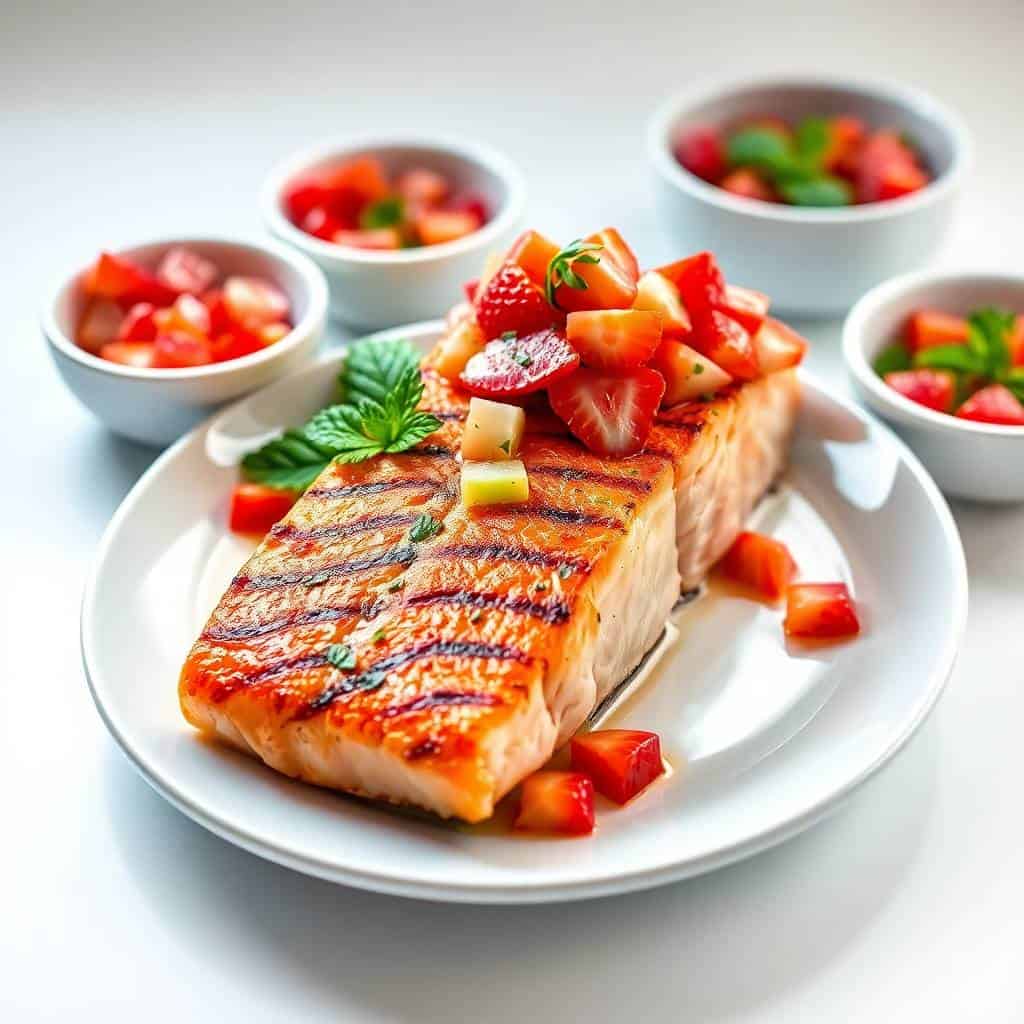
Why You'll Love This Recipe
- Twenty minutes, start to plated: The salsa takes about 10 minutes to chop and assemble, the salmon grills in 8. I start the salsa first, let it rest while the grill heats up, and by the time the fish is done the salsa has had time to actually taste like something. On Tuesday nights when everyone is hungry and nobody has patience, this is the recipe I reach for.
- Real cardiovascular nutrition, not wellness marketing: Salmon's omega-3 fatty acids — specifically EPA and DHA — have decades of research behind them showing reductions in triglycerides, blood pressure, and arterial inflammation. The American Heart Association recommends fatty fish at least twice a week for heart disease prevention. That's not a trend, that's what my husband's doctor told him to do. This recipe makes hitting that target feel like eating dinner, not taking medicine.
- A strawberry salsa that carries the dish: I've made grilled salmon plenty of times with just lemon and herbs, and it's fine. This salsa is what makes the recipe memorable. The sweet-tart strawberries against the smoky grilled fish, the jalapeño heat cutting through the richness, the lime brightening everything — it's a combination that works. It also goes on chicken, shrimp, white fish, and grilled tofu if you want to use leftovers across multiple meals.
- 35 grams of protein per fillet: A 6-oz salmon fillet delivers around 35g of protein, which keeps you full well into the evening. Combined with the fiber from the strawberries and vegetables in the salsa, this dinner doesn't leave you raiding the pantry at 10pm. That matters when you're trying to eat well consistently, not just on nights when you feel motivated.
- Endlessly customizable for mixed-tolerance families: Make the salsa without jalapeño, put a small bowl of minced jalapeño on the side, and let adults add their own heat. Skip the salsa components a picky kid won't eat — just spoon over the strawberries plain. The base recipe is a starting point, not a contract.
Ingredients
- For the Grilled Salmon:
- 4 salmon fillets (6 oz each, skin-on or skin-off)
- 3 tablespoons olive oil
- 2 tablespoons fresh lemon juice
- 1 tablespoon Dijon mustard
- 1 tablespoon honey
- 4 cloves garlic, minced
- 1 teaspoon smoked paprika
- 1 teaspoon ground cumin
- 1 teaspoon salt
- ½ teaspoon black pepper
- 1 teaspoon lemon zest
- For the Strawberry Salsa:
- 2 cups fresh ripe strawberries, hulled and diced small (about 1 lb)
- 1 small red onion, finely diced (about ⅓ cup)
- 1 jalapeño, seeded and finely minced (adjust to your heat preference)
- ½ red bell pepper, finely diced
- ¼ cup fresh cilantro, chopped
- 2 tablespoons fresh mint, chopped (optional but worth it)
- 2 tablespoons fresh lime juice (about 1 lime)
- 1 tablespoon lime zest
- 2 tablespoons olive oil
- 1 tablespoon honey or maple syrup
- 1 teaspoon salt
- ½ teaspoon black pepper
- For Serving:
- Lime wedges
- Fresh cilantro sprigs
- Cooked brown rice or quinoa (optional)
- Sliced avocado (optional)
- Mixed greens or a green salad (optional)
Directions
- Make the strawberry salsa first. Hull and dice the strawberries into small ¼-inch pieces. Finely dice the red onion, jalapeño, and red bell pepper. Chop the cilantro and mint. Add everything to a medium bowl. The salsa needs 15 to 20 minutes to rest and develop flavor while you grill the salmon — starting here gives it time to do that.
- Dress the salsa. Add lime juice, lime zest, olive oil, honey, salt, and pepper to the bowl. Toss gently — you want to coat everything without crushing the strawberries. Taste and adjust: more lime if it needs brightness, more honey if it's too tart, more jalapeño if you want more heat. Set aside at room temperature to rest while you prep the salmon.
- Make the marinade. Whisk together olive oil, lemon juice, Dijon mustard, honey, minced garlic, smoked paprika, cumin, salt, pepper, and lemon zest in a small bowl until the honey dissolves and everything is combined.
- Dry and marinate the salmon. Pat the salmon fillets completely dry with paper towels — this is not optional if you want any kind of crust on the grill. Brush both sides generously with the marinade. Let them sit at room temperature for 10 to 15 minutes while the grill heats up. Don't go past 30 minutes; the lemon juice starts to chemically cook the salmon after that, and you lose the texture you're after.
- Heat and oil the grill. Heat your grill to medium-high, around 425°F. Once hot, use tongs to rub an oil-soaked paper towel across the grates for about 30 seconds. Salmon sticks aggressively to unlubricated grates — I ruined a whole fillet that way once. Don't skip this step.
- Grill the salmon, first side. Place the fillets skin-side down (or presentation-side down if skinless) directly on the grates. Close the lid and don't touch them for 4 minutes. The crust needs to form and release naturally — if you try to move the fish before it's ready, it tears and you lose the skin on the grate.
- Flip and finish. After 4 minutes, slip a thin spatula under one edge and check for release. If it lifts cleanly, flip. If it resists, give it another 30 to 60 seconds. Grill the second side for 3 to 4 more minutes. Total time for 1-inch fillets: 7 to 8 minutes. Thicker fillets need 9 to 10 minutes.
- Check doneness. Pull the salmon at 130 to 135°F internal temperature for medium — that slightly translucent center that's very moist and rich. If you prefer it more done, 140 to 145°F is fine. Above 145°F the salmon goes dry and crumbly fast. Use a cheap instant-read thermometer; it takes the guesswork out completely.
- Plate and serve. Transfer the fillets to plates immediately. Spoon about ½ cup of strawberry salsa over each piece. The salsa juices will run down into whatever's underneath — this is the best part, especially if there's rice or salad greens to catch them. Add lime wedges and extra cilantro on the side.
Tips for Success
- Buy the best strawberries you can find for the salsa: I know I said this in the intro and I'm saying it again because it matters that much. Summer farmers' market strawberries have a sweet-tart-floral quality that makes this salsa unforgettable. Year-round grocery store strawberries — the pale, firm kind — make a salsa that's technically correct and completely forgettable. If you're in the off-season, thawed frozen strawberries (drained well) outperform bad fresh ones every single time. Cut them into ¼-inch pieces so they distribute evenly over the salmon rather than sitting in one big chunk.
- Don't over-marinate the salmon: Ten to fifteen minutes in the marinade is the target. The lemon juice starts chemically denaturing the salmon protein after about 30 minutes — similar to how ceviche works — and it changes the texture before the fish even hits the grill. You end up with fish that's already partially "cooked" by acid, and the texture suffers once it hits the heat. Set a timer when you start marinating so you don't forget.
- Oil the grill grates thoroughly: I cannot stress this enough. The first time I made this, I didn't oil the grates properly and half the salmon stayed stuck to the grill when I tried to flip it. Now I use tongs to hold a folded paper towel soaked in vegetable oil and swipe it across the hot grates several times before the fish goes on. It creates a non-stick surface and you get clean, intact fillets that flip without drama.
- Don't touch the salmon for the first 4 minutes: Every instinct says to check it, move it, make sure it's not burning. Ignore that instinct. The salmon needs to develop a crust that naturally releases from the grate. If you try to lift it before it's ready, it tears and the skin stays behind. Four minutes of patience is what separates a beautiful intact fillet from a pile of flakes stuck to the grill.
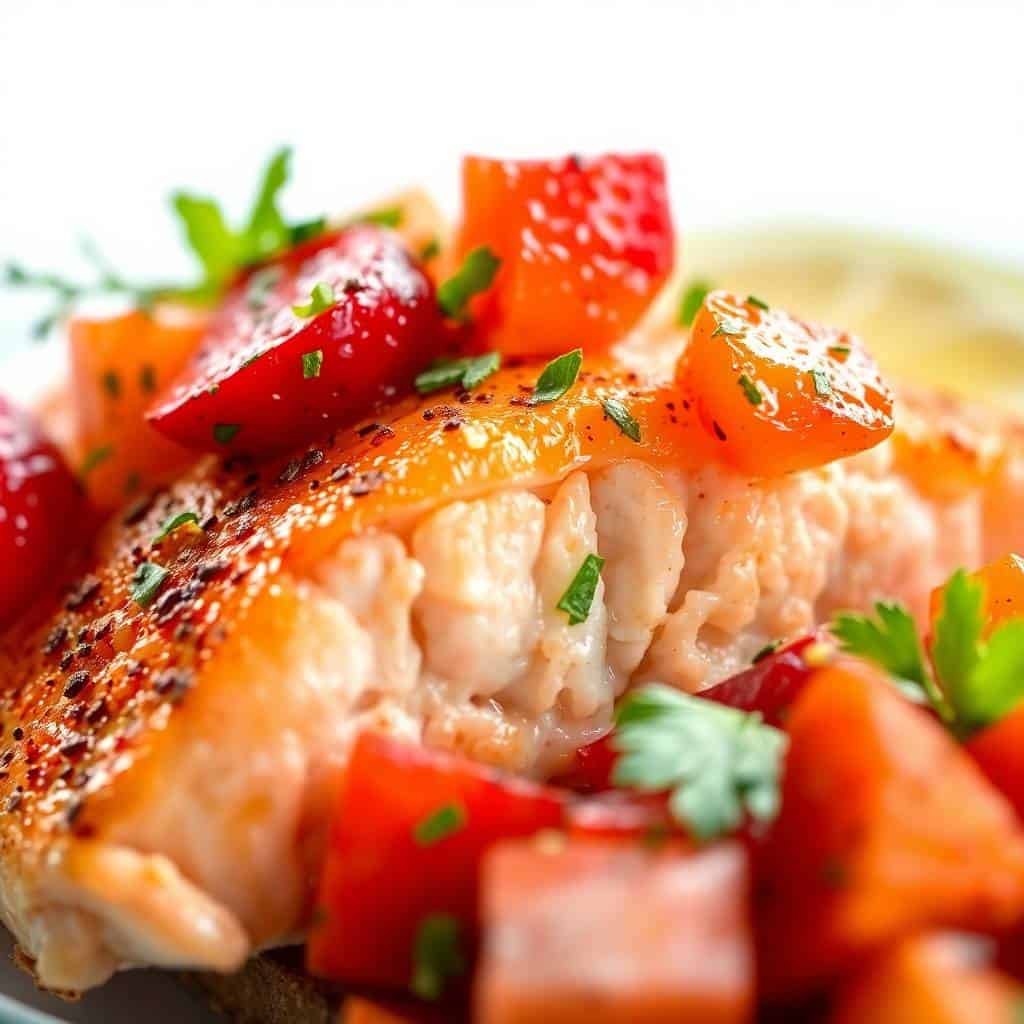
- Use a thermometer and pull at 130 to 135°F: Salmon overcooks fast — we're talking 90 seconds between perfect and dry. A cheap instant-read thermometer from Walmart or Amazon ($10 to $15) takes all the anxiety out of it. Pull at 130 to 135°F for medium, which is the sweet spot: slightly translucent in the center, very moist, full-flavored. The carryover heat after you pull it will bring the temperature up another 5 degrees or so. Don't wait for the fish to look "done" — by the time it looks done to the eye, it's usually already past its best.
Variations
- Mango salsa version: Swap the strawberries for 2 cups of diced ripe mango and add 2 tablespoons of fresh basil to the cilantro. Everything else stays the same. The mango version is sweeter and more tropical — it's the one I make in July when mangoes are at their best and the strawberries are already fading. My husband actually prefers this version, which says something because he was skeptical of fruit on fish until I made this.
- Pakistani-style mango-pomegranate salsa: Use 1½ cups diced mango and ½ cup pomegranate seeds instead of strawberries. Add 1 teaspoon of chaat masala to the dressing and use a mix of cilantro and mint. The chaat masala gives it a salty-tangy-spicy profile that's closer to the fruit chaat my mother would make in Pakistan during mango season. It sounds like an odd combination with grilled salmon, but the salty-sweet contrast works beautifully. This is the version I make when I want the food to feel like it comes from both parts of who I am.
- Peach-jalapeño version (late summer): Replace the strawberries with 2 cups of diced ripe peaches. Add a tablespoon of bourbon to the dressing if you're cooking for adults (completely optional but good). Use yellow onion instead of red. This is the August-September version of this recipe, when peaches are at their absolute peak and strawberries are long gone. The peach version is a bit more mellow and sweet, and the bourbon adds a depth that works surprisingly well against the smoky grilled salmon.
- Blackened spice rub version: Skip the honey-mustard marinade entirely. Instead, coat the salmon generously with a Cajun blackening rub: smoked paprika, cayenne, garlic powder, onion powder, dried oregano, thyme, salt, and pepper. Grill the same way. The result is spicier and bolder — the contrast between the spicy blackened crust and the sweet strawberry salsa is genuinely one of the best bites in this recipe's entire repertoire. This is the version I make when I want dinner to feel like more of an occasion.
- Sheet pan version (no grill required): Line a sheet pan with foil, brush the marinated salmon fillets on top, and bake at 425°F for 12 to 15 minutes until the salmon flakes easily. Broil for the last 2 minutes to get some color on the surface. The flavor is nearly identical to the grilled version — you lose the smoky char, but everything else holds. This is what I do in winter or on rainy days when the grill isn't happening. A regular sheet pan from any store works fine.
Serving and Storage
Serving
Serve immediately after the salmon comes off the grill — it loses its best qualities quickly as it cools. Plate each fillet with a generous spoonful (about ½ cup) of strawberry salsa right on top and let the juices run down. If you're serving over brown rice or quinoa, those juices soak in and flavor the whole base — that's the best bite in the whole plate. Round it out with sliced avocado, a green salad with a light vinaigrette, grilled zucchini or asparagus, or warm crusty bread for sopping up extra salsa. For drinks, a crisp white wine like Sauvignon Blanc or sparkling water with lime both work well alongside the brightness of the salsa. For a full dessert after a light dinner like this, something like a red velvet strawberry cheesecake makes a beautiful finish — the strawberry thread carries through the whole meal.
Storage
Grilled salmon is best eaten fresh. If you have leftovers, store them in an airtight container in the fridge for up to 2 days. Reheating degrades the texture significantly — the best use for leftover salmon is cold, flaked over a green salad, or stirred into a grain bowl with whatever's in the fridge. If you do reheat, use a microwave at 50% power for 1 to 2 minutes rather than a full blast — it's gentler. Don't freeze cooked salmon; the texture goes grainy and unpleasant. The strawberry salsa keeps in the fridge for up to 2 days but loses its brightness quickly — ideally make it the same day. If you want to prep ahead, chop all the salsa components and store them separately, then combine and dress within 30 to 60 minutes of eating. You can marinate the salmon up to 12 hours ahead in the fridge (no longer — the lemon juice will start cooking it). I usually make a double batch of salsa and use it on grilled chicken or scooped onto tortilla chips the next day.
Frequently Asked Questions
Can I make the strawberry salsa ahead of time?
The salsa is best made 30 minutes to 2 hours before serving — it needs that resting time to meld, but it starts losing its texture after about 4 hours as the lime juice breaks down the strawberries. If you want to prep ahead, chop all the components (strawberries, onion, jalapeño, bell pepper, herbs) and store them separately in the fridge, then combine and dress 30 to 60 minutes before dinner. The assembled, undressed components keep well for up to 24 hours. Once dressed, use it the same day.
Should I use wild-caught or farmed salmon?
Both work. Wild-caught salmon (sockeye, king, coho) has a slightly more concentrated flavor and marginally higher omega-3 content, but costs $20 to $30 per pound — which adds up quickly if you're eating this twice a week. Farmed Atlantic salmon costs $8 to $15 per pound, has a milder flavor, and delivers plenty of omega-3s and protein for everyday cooking. Costco's farmed Atlantic salmon is reliable and well-priced. Avoid pre-marinated or flavored salmon fillets — those often have added sugar and preservatives you don't need.
What if I don't have a grill or it's raining?
Use the sheet pan method: line a baking sheet with foil, place the marinated fillets on top, and bake at 425°F for 12 to 15 minutes. Broil for the last 2 minutes to develop some color. A cast iron skillet on the stovetop also works well — heat it over medium-high with a little oil until it's smoking slightly, then cook the salmon 4 minutes per side. You won't get the smoky char of a grill, but the flavor from the marinade carries the dish.
What can I substitute for jalapeño if my family doesn't like spice?
Skip the jalapeño entirely or swap it for finely diced sweet red bell pepper — you get the color and texture without any heat. The salsa is still good without spice; the lime and strawberries carry it. In my house I often make the salsa jalapeño-free and put a small bowl of minced jalapeño on the table for adults to add themselves. That way everyone eats from the same pot without complaints.
How do I know when the salmon is done without overcooking it?
A cheap instant-read thermometer is the most reliable method — pull the salmon at 130 to 135°F for medium (moist, slightly translucent center) or 140 to 145°F for more well-done. Carryover heat will raise the temperature another 5 degrees after you pull it, so factor that in. Visually, the salmon should flake easily when you press it with a fork, but the very center should still look slightly darker and more translucent than the outer edges. If it's uniformly opaque and white all the way through, it's overcooked.
HEART-HEALTHY GRILLED SALMON WITH STRAWBERRY SALSA RECIPE
Equipment
- Grill or grill pan
- Mixing bowls
- Tongs or spatula
- Knife and Cutting Board
Ingredients
For the Salmon:
- 4 pieces salmon fillets
- 2 tablespoons olive oil
- 1 tablespoon lemon juice
- 1 teaspoon garlic powder
- 1 teaspoon salt
- ½ teaspoon black pepper
- 1 teaspoon paprika
For the Strawberry Salsa:
- 1 ½ cups strawberries, diced
- ¼ cup red onion, finely chopped
- 1 small jalapeño, finely chopped
- 2 tablespoons lime juice
- 2 tablespoons fresh cilantro, chopped
- 1 teaspoon honey
- ¼ teaspoon salt
Instructions
Season Salmon
- Brush salmon with olive oil, lemon juice, garlic powder, salt, pepper, and paprika. Let it sit for 10 minutes.
Make Strawberry Salsa
- Combine strawberries, red onion, jalapeño, lime juice, cilantro, honey, and salt in a bowl. Mix gently and set aside.
Grill Salmon
- Grill salmon over medium heat for 6–8 minutes per side until flaky and cooked through.
Rest & Top
- Let salmon rest for a few minutes, then top with fresh strawberry salsa.
Serve
- Serve warm with rice, quinoa, or roasted vegetables.
Notes
- Heart-Healthy Tip: Rich in omega-3s and fresh antioxidants from strawberries.
- Heat Level: Adjust or remove jalapeño for a milder salsa.
- Protein Swap: Works well with grilled chicken or tofu.
- Make Ahead: Salsa can be prepared 2–3 hours in advance.
- Grill Tip: Oil grates well to prevent sticking.

Comments
No Comments