
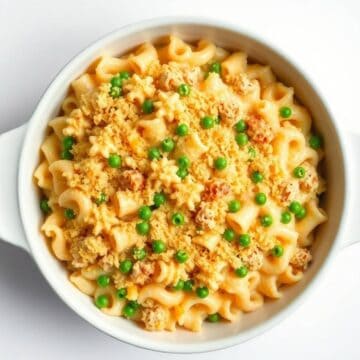
Few dishes occupy a more specific and more deeply affectionate place in American comfort food memory than a properly made tuna casserole — the dish that appeared on Tuesday night dinner tables across the country for generations, that required nothing more exotic than a can of tuna, a can of soup, egg noodles, and frozen peas to produce something that felt genuinely satisfying and genuinely comforting in a way that was entirely disproportionate to its humble ingredient list. I have watched adults who claimed to have no particular interest in tuna casserole take one bite of a properly made version and immediately go back for a second helping with an expression of surprised recognition — the flavor combination of creamy sauce, tender noodles, flaked tuna, sweet peas, and a crunchy golden breadcrumb topping is one of those complete, perfectly balanced eating experiences that the simplest ingredients occasionally achieve.
What this post delivers is a genuinely great tuna casserole — not just a functional one. The difference between a great tuna casserole and a merely adequate one is the quality of the cream sauce, the texture of the noodles going into the casserole, the quantity and quality of the tuna, and the golden, shattering breadcrumb topping that provides the essential crunch contrast against the soft, creamy interior. Every one of these variables is covered here in the detail needed to understand exactly why each matters and exactly what to do about it.
This post covers the classic tuna casserole in full detail plus five genuinely different variations — a from-scratch version without any canned soup that produces the most refined and most deeply flavored result available in this format; a loaded version with mushrooms, caramelized onions, and sharp white cheddar; a lighter Greek yogurt version; a Southwestern green chile version; and a tuna noodle skillet version that comes together in one pan on the stovetop in 20 minutes for weeknight occasions when the oven version simply isn't practical. Every version is genuinely satisfying and every version makes the best possible case for this underestimated classic.
Let's make the tuna casserole that converts every skeptic at the table!
WHY YOU WILL LOVE THIS RECIPE
- The Most Economical Genuinely Satisfying Dinner Available: Canned tuna, egg noodles, frozen peas, and cream of mushroom soup — the ingredient list for classic tuna casserole is one of the most affordable combinations that produces a genuinely satisfying, protein-rich dinner for six to eight people. The cost per serving is among the lowest of any hot dinner casserole available, which makes it genuinely one of the most practically valuable recipes in any household's rotation during any season.
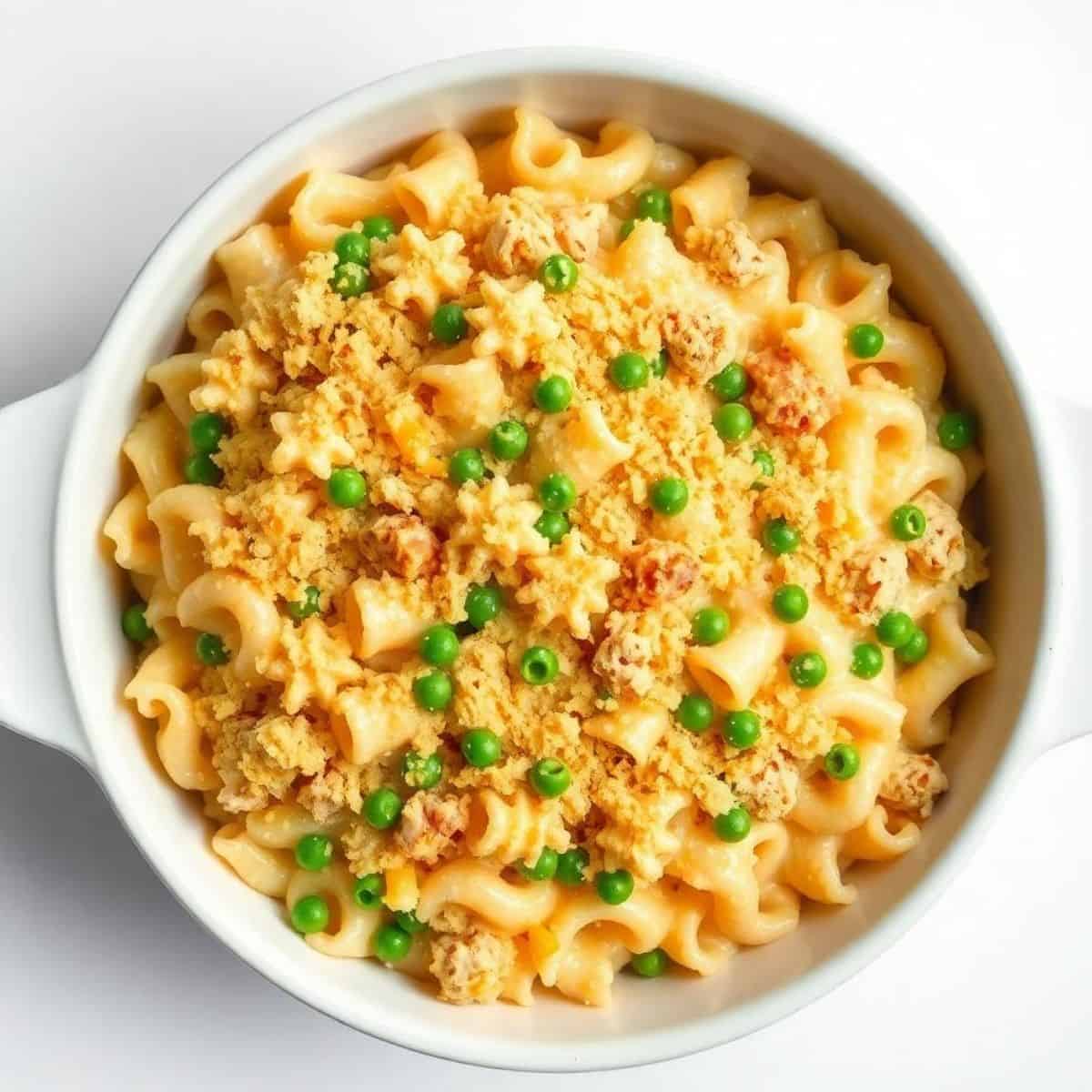
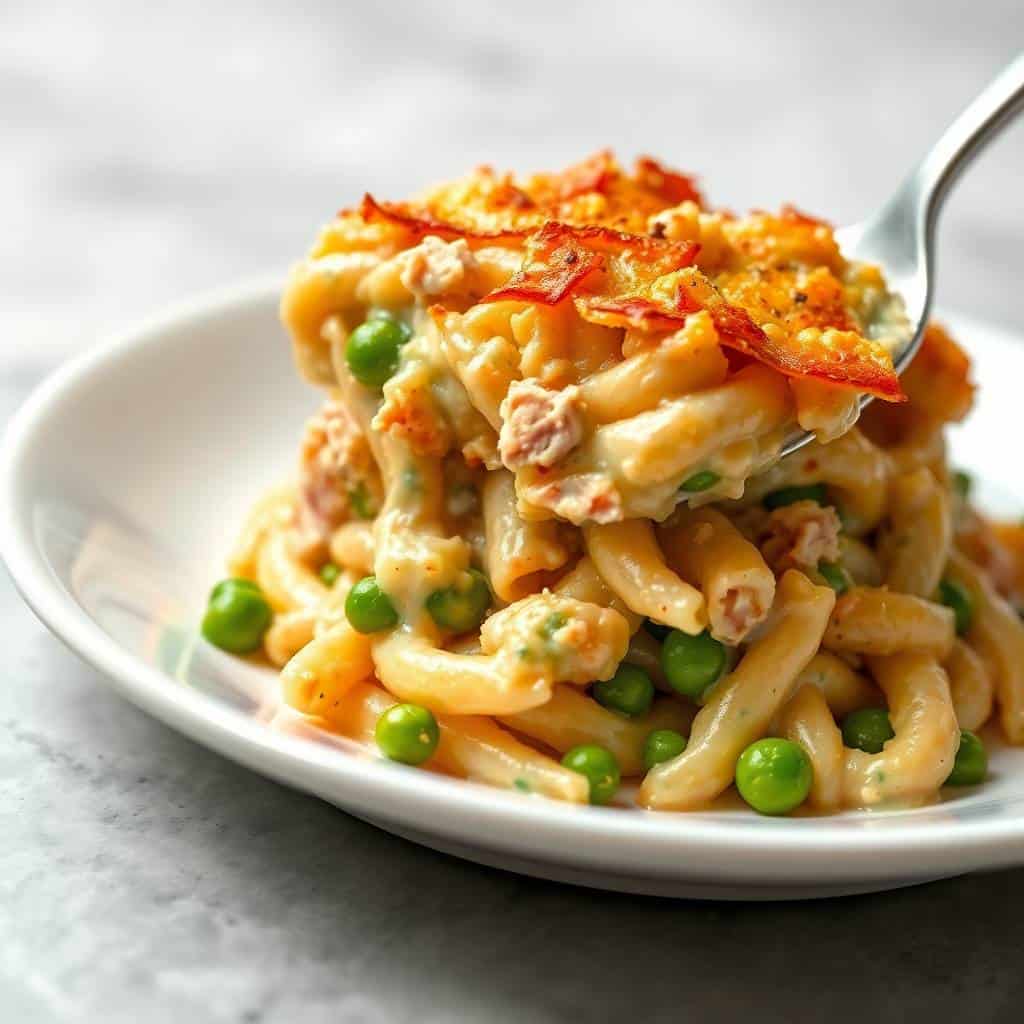
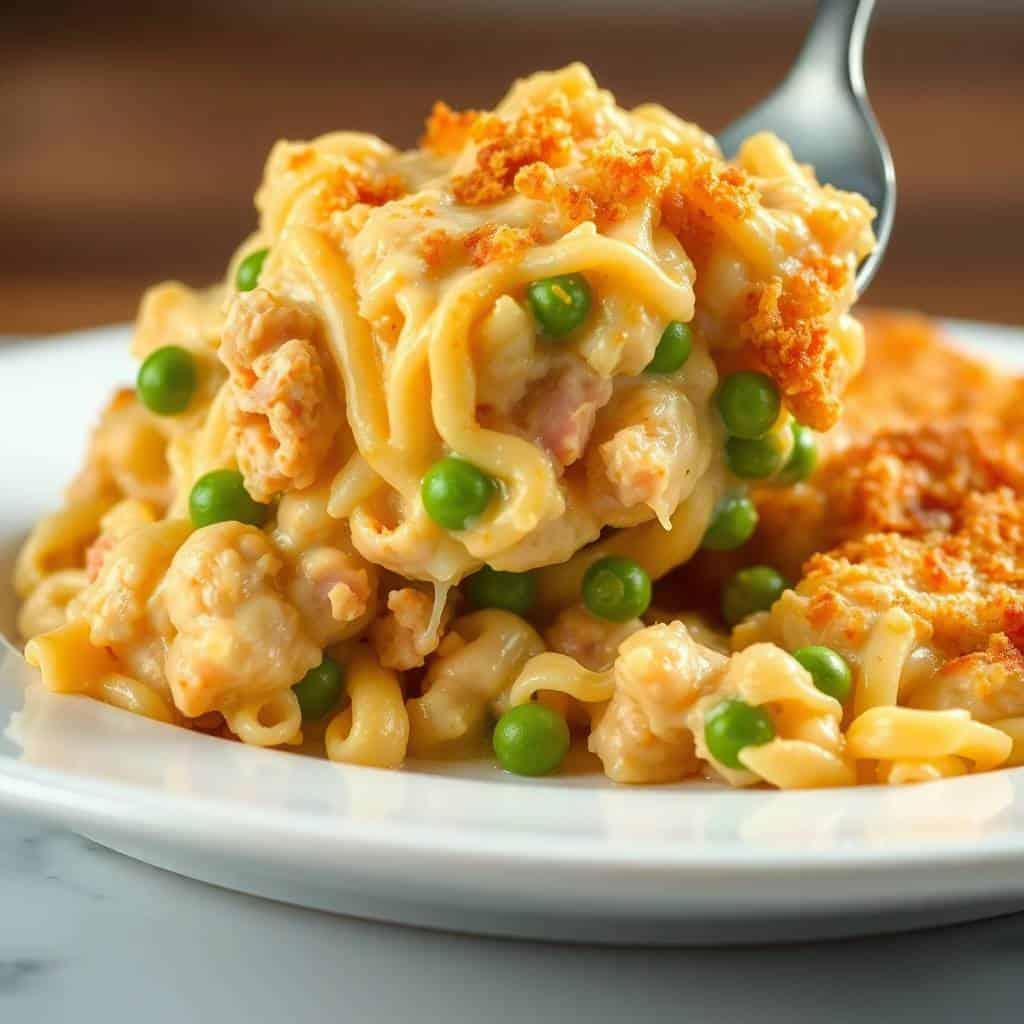
- The Golden Breadcrumb Topping Is the Most Important Component: Tuna casserole without a properly made golden, buttery breadcrumb topping is missing its defining textural element — the crunch that makes every forkful include the contrast between the soft, creamy interior and the crispy, golden surface that makes this casserole so satisfying to eat. Buttered panko tossed with a pinch of salt and scattered generously across the entire casserole surface before baking is the detail that elevates tuna casserole from functional to genuinely desirable.
- Pantry and Freezer Staples Only — No Special Shopping Required: Every ingredient in the classic version of this recipe is a pantry or freezer staple that most households maintain on hand — canned tuna, egg noodles, frozen peas, condensed cream of mushroom soup, cheddar cheese, butter, and panko breadcrumbs. On the days when the refrigerator is largely empty and a grocery run hasn't happened yet, tuna casserole is the recipe that turns the pantry into a complete and satisfying dinner without any advance planning or special purchasing.
- Six Variations from Classic to Sophisticated: Classic, from-scratch, loaded mushroom and caramelized onion, lighter Greek yogurt, Southwestern green chile, and one-pan stovetop skillet — the six variations in this post cover every occasion from the most nostalgic family dinner to a genuinely sophisticated dinner party contribution that uses the tuna casserole format as a vehicle for genuinely excellent flavors. The technique is the same across all six and the investment required increases only modestly from the classic to the more elaborate versions.
- Outstanding Make-Ahead Casserole for Any Schedule: Tuna casserole assembles in 20 minutes and can be refrigerated unbaked for up to 24 hours before baking — on the day of serving, it requires only oven time and no additional preparation. For weeknight households where Sunday preparation makes Monday through Wednesday evenings easier, assembling a tuna casserole on Sunday evening for Monday baking is one of the most practical food preparation habits available.
- Leftovers Reheat Beautifully and Improve Slightly Overnight: Unlike pasta-based dishes that dry out or become gummy when reheated, tuna casserole reheats in the microwave with a small amount of added milk to excellent effect — the sauce reconstitutes smoothly and the noodles remain tender rather than developing the gummy texture that fresh-cooked pasta sometimes develops when refrigerated. Leftover tuna casserole for Wednesday lunch is genuinely better than the leftover pizza alternative in terms of how satisfied you feel for the following several hours.
INGREDIENTS
- The Casserole Filling:
- 3 cans (5 oz each) tuna packed in water, drained — use solid white albacore for the cleanest flavor and the most intact, satisfying flakes. Chunk light tuna works but produces a softer, more broken texture. Drain very thoroughly — excess moisture from insufficiently drained tuna dilutes the sauce and makes the filling watery
- 12 oz wide egg noodles — cooked to 2 minutes less than package al dente directions. The noodles will continue cooking in the oven and must go in slightly underdone to avoid mushiness in the finished casserole
- 2 cans (10.5 oz each) condensed cream of mushroom soup, undiluted
- 1 cup full-fat sour cream
- 1 cup chicken or vegetable broth
- 1.5 cups sharp cheddar cheese, freshly shredded from a block, divided
- 1 cup frozen peas — do not thaw; add directly frozen to the filling mixture
- 1 small onion, finely diced, or 3 tablespoons dried minced onion
- 2 stalks celery, finely diced — the celery provides the essential fresh crunch and aromatic note that makes tuna casserole taste like more than the sum of its canned parts
- 1 teaspoon garlic powder
- 1 teaspoon onion powder
- ½ teaspoon dry mustard powder — amplifies the savory depth of the cheese and cream sauce without adding a detectable mustard flavor
- Salt and black pepper
- 1 tablespoon fresh lemon juice — brightens the tuna flavor and lifts the entire filling
- The Breadcrumb Topping:
- 1.5 cups panko breadcrumbs
- 4 tablespoons unsalted butter, melted
- 2 tablespoons Parmesan, finely grated — adds a subtle, savory depth to the topping
- Pinch of health benefits of garlic powder and salt
- Fresh parsley for serving
DIRECTIONS
- Step No.1: Cook the noodles and preheat
Preheat oven to 375°F. Grease a 9x13 inch baking dish thoroughly. Bring a large pot of generously salted water to a full rolling boil. Cook egg noodles for exactly 2 minutes less than the minimum time indicated on the package directions — if the package says 8–10 minutes, cook for 6 minutes. The noodles should be genuinely underdone and slightly firm at the center — they will finish cooking in the oven and any noodle that is fully cooked before baking will become soft and slightly mushy in the finished casserole. Drain immediately, rinse briefly with cold water to stop cooking, and toss with a teaspoon of olive oil to prevent sticking. Set aside.
- Step No.2: Make the filling
In the largest mixing bowl available, whisk together both cans of condensed cream of mushroom soup (undiluted, straight from the can), sour cream, broth, garlic powder, onion powder, dry mustard, and lemon juice until completely smooth and uniform. Add 1 cup of the shredded cheddar and stir to distribute. Add the diced onion and celery and stir through. Taste the sauce aggressively — it should taste boldly seasoned, quite salty, and noticeably savory. If it tastes mild at this stage it will taste flat after baking. Adjust with additional salt, black pepper, and garlic powder until the sauce tastes assertive and full-flavored. Add the drained tuna — break into flakes over the bowl and fold through gently rather than stirring vigorously, which breaks the tuna into unpleasantly small pieces. Add frozen peas (still frozen) and the undercooked noodles. Fold everything together gently until the noodles and tuna are evenly distributed throughout the sauce.
- Step No.3: Transfer and add cheese layer
Transfer the noodle-tuna mixture to the prepared baking dish and spread into an even, level layer — press gently into the corners and smooth the surface with a spatula. The filling should look quite full in the dish — a filling that doesn't reach nearly to the rim of the dish will bake unevenly and the noodles near the top will dry out before the center heats through. Scatter the reserved ½ cup of shredded cheddar evenly across the entire surface of the filling — this cheese layer between the filling and the breadcrumb topping melts into a golden, slightly caramelized layer that is distinctly satisfying and that anchors the breadcrumb topping so it doesn't slide off individual servings.
- Step No.4: Make and add the breadcrumb topping
In a small bowl, toss panko breadcrumbs with melted butter, Parmesan, a pinch of garlic powder, and a pinch of salt until every breadcrumb is lightly and evenly coated with butter — the breadcrumbs should look slightly shiny rather than dry. The butter coating is what produces the golden color during baking; under-buttered breadcrumbs produce a pale, dry-looking topping that lacks the visual drama and the flavor depth of a properly buttered crumb. Scatter the buttered breadcrumb mixture evenly across the cheese-topped surface of the casserole — go edge to edge so every serving has golden breadcrumb topping across its full surface. The topping should look generous and slightly mounded.
- Step No.5: Bake and serve
Bake uncovered at 375°F for 30–35 minutes until the breadcrumb topping is deeply, uniformly golden and the filling is hot and bubbling around the edges of the dish. The center should show no liquid movement when the dish is gently shaken. If the breadcrumb topping is browning faster than the filling is heating, tent very loosely with foil for the final 10 minutes. If the topping needs additional browning in the final 5 minutes, increase heat to 400°F briefly. Rest 10 minutes before serving — the filling needs to firm slightly for clean portions and the internal temperature needs to equalize throughout the dish. Scatter fresh parsley generously across the surface before bringing to the table. Serve directly from the baking dish with a large spoon that reaches the bottom, ensuring every serving includes filling and golden breadcrumb topping in every portion.
TIPS FOR SUCCESS
- Undercook the Noodles Before Baking: This is the single most important technique instruction in the entire recipe and the most commonly disregarded. Egg noodles cooked to al dente before being added to a casserole that bakes for 30–35 more minutes will emerge overcooked, soft, and slightly mushy — the texture that most people associate with disappointing tuna casserole. Egg noodles cooked for 2 minutes less than al dente go into the casserole with a genuinely firm, underdone center and emerge from the oven perfectly tender. The math is simple and the outcome is dramatic.
- Drain the Tuna as Thoroughly as Possible: Tuna packed in water releases a significant amount of liquid when added to a casserole if not thoroughly drained — this excess moisture dilutes the cream sauce and produces a filling that is watery rather than thick and coating. Open each can, press the lid down firmly against the tuna to expel as much liquid as possible, then turn the can upside down over the sink and press again. For the most thorough draining, transfer the drained tuna to paper towels and press gently before adding to the filling. This extra step makes a noticeable difference in the finished casserole's consistency.
- Fold the Tuna Gently to Preserve the Flake: Vigorous stirring breaks tuna into tiny, sand-like particles that distribute throughout the filling but are virtually invisible and nearly textureless when eating. Folding the tuna with a wide spatula using broad, gentle strokes preserves larger, more visible, more texturally interesting flakes that make the tuna's presence in each forkful satisfying and distinct. The size of the tuna flakes in the finished casserole is one of the most tangible quality differences between carefully and carelessly assembled tuna casserole.
- Add Celery for Essential Fresh Crunch: Diced celery is the ingredient that most distinguishes a genuinely good tuna casserole from a flat, one-dimensional one — the celery's mild crunch, vegetal freshness, and slight bitterness provides the textural contrast and flavor counterpoint that makes every bite more interesting than without it. Some people remove the celery from tuna casserole recipes for simplicity — this is the single most impactful simplification to avoid. The celery can be sautéed briefly in butter before adding for a more mellow flavor, or added raw for more pronounced crunch and freshness. Raw celery is the traditional approach and produces the better result.
- The Lemon Juice Is Not Optional: A tablespoon of fresh lemon juice stirred into the filling before baking brightens the entire flavor of the casserole in a way that is difficult to articulate but immediately obvious when tasted — the acid from the lemon lifts the tuna flavor from flat and slightly fishy to clean and forward, makes the cream sauce taste more vivid, and makes the peas taste sweeter by contrast. This is the ingredient most commonly omitted from basic tuna casserole recipes and the one that most immediately elevates the result. Add it without hesitation.
- Bake Uncovered for the Full Time: Unlike some casseroles that benefit from covered baking to trap steam, tuna casserole with pre-cooked noodles benefits from uncovered baking that allows the surface moisture to evaporate and the breadcrumb topping to achieve maximum crunchiness. Covering tuna casserole during baking produces a steamed, soft topping that loses the crunch that is its defining quality. The filling has sufficient moisture from the soup and sour cream to remain properly sauced without the assistance of trapped steam.
VARIATIONS
- From-Scratch Tuna Casserole (No Canned Soup): Replace both cans of condensed cream of mushroom soup with a homemade béchamel enriched with mushrooms — melt 4 tablespoons butter, sauté 8 oz finely diced cremini mushrooms until golden, add 4 tablespoons flour and cook 1–2 minutes, add 2.5 cups whole milk and 1 cup chicken broth gradually while whisking, season with salt, pepper, garlic, dry mustard, and a pinch of nutmeg, simmer 4–5 minutes until thick and smooth. Use this sauce in the same quantity as the canned soups. The from-scratch version produces a cleaner, more genuinely mushroom-flavored sauce with a silkier texture and none of the metallic or processed notes of canned soup. It is the version for anyone who wants to make tuna casserole entirely from real, recognizable ingredients.
- Loaded Tuna Casserole with Caramelized Onions and White Cheddar: Caramelize 2 large onions in 3 tablespoons of butter over medium-low heat for 30–35 minutes until deeply golden, sweet, and jammy — this investment produces an extraordinary depth of flavor that elevates every component of the casserole above the standard version. Add 8 oz cremini mushrooms sautéed golden alongside the caramelized onions. Replace yellow cheddar with sharp white cheddar or Gruyère. Add 1 teaspoon of fresh thyme to the filling. Finish the breadcrumb topping with an additional 2 tablespoons of grated Parmesan. This loaded version is the most impressive and most deeply flavored of all the variations — the caramelized onion sweetness against the savory white cheddar and the mushroom-enriched sauce produces a tuna casserole that operates at an entirely different flavor level from the classic.
- Lighter Greek Yogurt Tuna Casserole: Replace the full-fat sour cream with an equal quantity of full-fat plain Greek yogurt. Replace one can of condensed soup with 1 cup of low-sodium chicken broth whisked with 2 tablespoons of cornstarch (to provide thickening without the canned soup). Reduce the total cheddar in the filling to ¾ cup and maintain the full topping cheese. The lighter version is noticeably less rich than the classic but retains the essential creamy, cheesy, satisfying character that makes tuna casserole so appealing — the Greek yogurt's tang actually brightens the overall flavor in a way that is genuinely pleasant rather than simply lighter. Find more lighter options in our healthy dinner recipes.
- Southwestern Green Chile Tuna Casserole: Add 1 can (4 oz) diced green chiles and 1 can (10 oz) rotel diced tomatoes and green chiles (drained of most but not all liquid) to the filling. Replace cream of mushroom soup with cream of chicken soup for a lighter, more Southwestern-compatible flavor base. Replace yellow cheddar with equal parts Monterey Jack and pepper jack for more heat and better melting. Add 1 teaspoon cumin and ½ teaspoon chili powder to the sauce seasoning. Top with crushed tortilla chips instead of or in addition to the panko for a Southwestern-inspired crunchy topping. This variation is genuinely different in character from the classic and works particularly well for households where the classic version is too familiar and too mild.
- One-Pan Stovetop Tuna Noodle Skillet: Cook egg noodles in a large, deep skillet in chicken broth rather than water — as the noodles cook and absorb the broth, add cream of mushroom soup, sour cream, cheddar, drained tuna, peas, and celery directly to the same skillet. Stir continuously over medium heat for 4–5 minutes until the sauce is thick and coating and the noodles are perfectly tender. Top with buttered panko and cover the skillet for 2 minutes until the panko is slightly toasted from the steam. This stovetop version produces genuinely excellent tuna noodle in 20 minutes with one pan to clean — it doesn't develop the same deeply baked, unified casserole character of the oven version but produces a dish that is superior in every practical way on weeknights when oven time isn't available.
SERVING AND STORAGE
Serving
Serve tuna casserole directly from the baking dish after the 10-minute rest, using a large spoon or spatula that reaches the bottom of the dish so every serving captures filling, cheese layer, and breadcrumb topping simultaneously. Scatter fresh parsley generously across the entire surface before bringing to the table — the bright green of fresh parsley against the golden breadcrumb topping is the visual detail that makes tuna casserole look as appealing as it tastes. Pair with a simple green salad or steamed green beans for freshness and color contrast. A squeeze of fresh lemon over each individual serving at the table adds brightness that the casserole benefits from at every serving stage.
Storage
Tuna casserole stores refrigerated covered for up to 3 days — the noodles continue absorbing the surrounding sauce during storage and the casserole becomes progressively thicker and more compact. Add 2–3 tablespoons of broth or milk per serving before reheating to reconstitute the sauce consistency. Reheat individual portions covered in the microwave at 70% power for 2 minutes. Reheat the full casserole covered with foil at 325°F for 20–25 minutes, then uncover for 5 minutes to restore some topping crispiness. The breadcrumb topping softens significantly during refrigeration — for partially restored crunch, add a small amount of fresh buttered panko across the top before the final uncovered oven reheating. For make-ahead preparation, assemble the complete casserole including topping and refrigerate for up to 24 hours — bake directly from the refrigerator, adding 10 minutes to the total baking time.
FAQ
Dry tuna casserole is almost always caused by overcooked noodles going into the casserole or insufficient sauce volume relative to the noodle quantity. Egg noodles that are fully cooked before baking will absorb whatever remaining sauce surrounds them during the oven time, leaving the finished casserole with very little sauce coating the noodles — the result reads as dry even when technically there is sauce present. Cook noodles 2 minutes less than al dente before adding to the casserole. If the casserole emerges dry, add ¼ cup of warm milk or broth per serving, cover with foil, and return to a 325°F oven for 10 minutes to allow the liquid to rehydrate the noodles. Prevent dryness in future batches by increasing the broth quantity in the filling by ¼ cup.
Yes — several pasta shapes work well in tuna casserole as egg noodle substitutes. Rotini, farfalle, cavatappi, and penne all hold their shape through the baking process better than thin pasta shapes. Medium shells work particularly well because they capture sauce inside each shell, producing particularly saucy bites. Avoid very thin pasta like angel hair or very large shapes like rigatoni — both create textural imbalances with the tuna and vegetable components. Whatever pasta shape is used, cook it 2 minutes less than the package al dente directions before adding to the casserole filling — the undercooking rule applies to all pasta shapes, not just egg noodles.
Solid white albacore tuna packed in water is the best choice for tuna casserole — it has the cleanest, mildest flavor, the most intact and satisfying flake structure, and the least pronounced fishiness of any canned tuna option. Chunk light tuna works and is more economical but has a slightly stronger flavor and softer texture that breaks down more easily during mixing, producing smaller flakes that are less satisfying texturally. Tuna packed in oil produces a richer, more flavorful result than water-packed tuna and is genuinely good in this application — drain very thoroughly and reduce the butter slightly in the topping to account for the additional fat. For maximum tuna flavor with the most intact texture, look for Italian or Spanish benefits of olive oil-packed tuna sold in glass jars at specialty food stores.
Yes — tuna casserole is a very practical make-ahead dish. Assemble the complete casserole including the breadcrumb topping, cover tightly with plastic wrap, and refrigerate for up to 24 hours before baking. When ready to bake, remove from the refrigerator and let stand at room temperature for 20 minutes while the oven preheats, then bake as directed adding 10 minutes to the total baking time to account for the cold start. The filling actually benefits from the overnight rest as the flavors meld and the sauce becomes more cohesive. Do not refrigerate for longer than 24 hours before baking — the noodles begin absorbing sauce aggressively beyond this point and the finished casserole can be drier than ideal.
Cream of chicken soup and cream of celery soup are the most direct substitutes for cream of mushroom in tuna casserole — both provide the same undiluted condensed cream base and similar body to the filling. Cream of chicken produces a slightly lighter, more neutral flavor. Cream of celery produces a delicate, slightly herbal result. For a completely from-scratch option, the homemade béchamel with mushrooms described in the variations section of this post provides a genuinely superior result to any canned option — it requires 15 additional minutes but produces a sauce with better flavor, better texture, and complete control over sodium content. Any condensed cream soup used undiluted can substitute in equal quantity in this recipe.
This tuna casserole is the pantry dinner that earns genuine enthusiasm rather than mere acceptance — make it once with the properly undercooked noodles, the thoroughly drained tuna, the lemon juice, and the generously buttered panko topping and it becomes the weeknight comfort food recipe your household returns to all season long.
Try the loaded caramelized onion and white cheddar version for the most sophisticated result, or the one-pan stovetop version for the most practical weeknight preparation. Pair with our chicken and rice casserole, our King Ranch chicken, and our classic pot pie variations for the complete comfort food casserole collection that carries any household through the entire cold-weather season. 🐟🍝✨
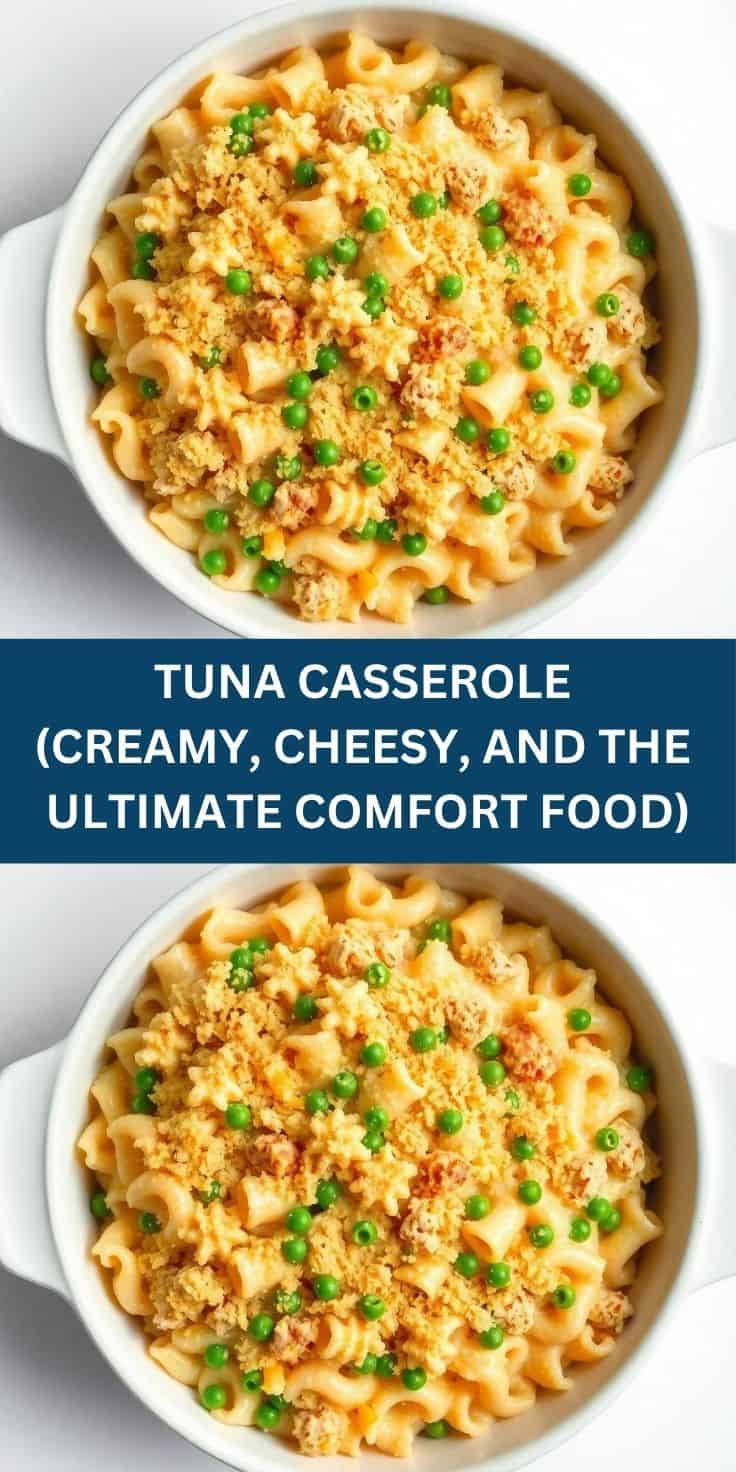
TUNA CASSEROLE (CREAMY, CHEESY, AND THE ULTIMATE COMFORT FOOD)
Equipment
- 9x13-inch baking dish
- Large pot
- Mixing Bowl
- Oven
Ingredients
Casserole Base:
- 12 oz egg noodles
- 2 cans canned tuna drained
- 1 can cream of mushroom soup
- 1 cup milk
- 1 cup frozen peas
Seasoning & Cheese:
- 2 cups cheddar cheese shredded
- 1 teaspoon garlic powder
- 1 teaspoon onion powder
- ½ teaspoon salt
- ½ teaspoon black pepper
Topping:
- 1 cup breadcrumbs
- 2 tablespoon butter melted
Instructions
Preheat Oven:
- Preheat oven to 350°F (175°C). Grease a 9x13-inch baking dish.
Cook Pasta:
- Cook egg noodles according to package instructions. Drain and set aside.
Mix Filling:
- In a large bowl, combine cooked noodles, tuna, cream of mushroom soup, milk, peas, garlic powder, onion powder, salt, pepper, and 1 cup cheddar cheese.
Assemble:
- Pour mixture into prepared baking dish and spread evenly.
Add Topping:
- Mix breadcrumbs with melted butter and sprinkle over casserole. Top with remaining cheese.
Bake:
- Bake uncovered for 25–30 minutes until bubbly and golden on top.
Serve:
- Let cool for 5 minutes before serving warm.
Notes
- Add mushrooms or corn for extra flavor.
- Use cream of celery soup for variation.
- Great for leftovers and meal prep.


Comments
No Comments