
I started making this beef and pepper rice bowl on a Thursday night when I had a pound of flank steak in the fridge and absolutely no plan. Twenty-five minutes later, my husband had cleared his bowl and was eyeing what was left in the pan. That's usually my signal that something is worth writing down.
What makes this one work is the sauce — soy sauce, oyster sauce, a little rice vinegar, and brown sugar, all pulled together with a cornstarch slurry so it coats every strip of beef and every slice of pepper. The first time I made it I skipped the cornstarch slurry because I didn't feel like mixing an extra bowl. The sauce just ran straight to the bottom. Don't skip it. It takes thirty seconds and it's what makes the whole thing glossy and clingy in the best way.
My husband eats this with plain jasmine rice. Saad wants extra sriracha on top. Zainab picks out the peppers and eats them first, then the beef, then the rice — in that specific order, every time. I make this on rotation during the week, usually when I need something fast that isn't pasta again. If you're also doing weeknight dinner triage, you might want to check out my gochujang chicken skillet — it's a similar vibe, different sauce, equally fast.
A few things to know before you start: slice the beef thin, and I mean actually thin — maybe ¼ inch. Thick slices don't cook evenly in a hot skillet and you end up with chewy patches. Also, the ten-minute marinade step matters. I've rushed it before and the beef browns fine but lacks that seasoned-all-the-way-through flavor. Give it the full ten minutes while you prep the vegetables and mix the sauce.
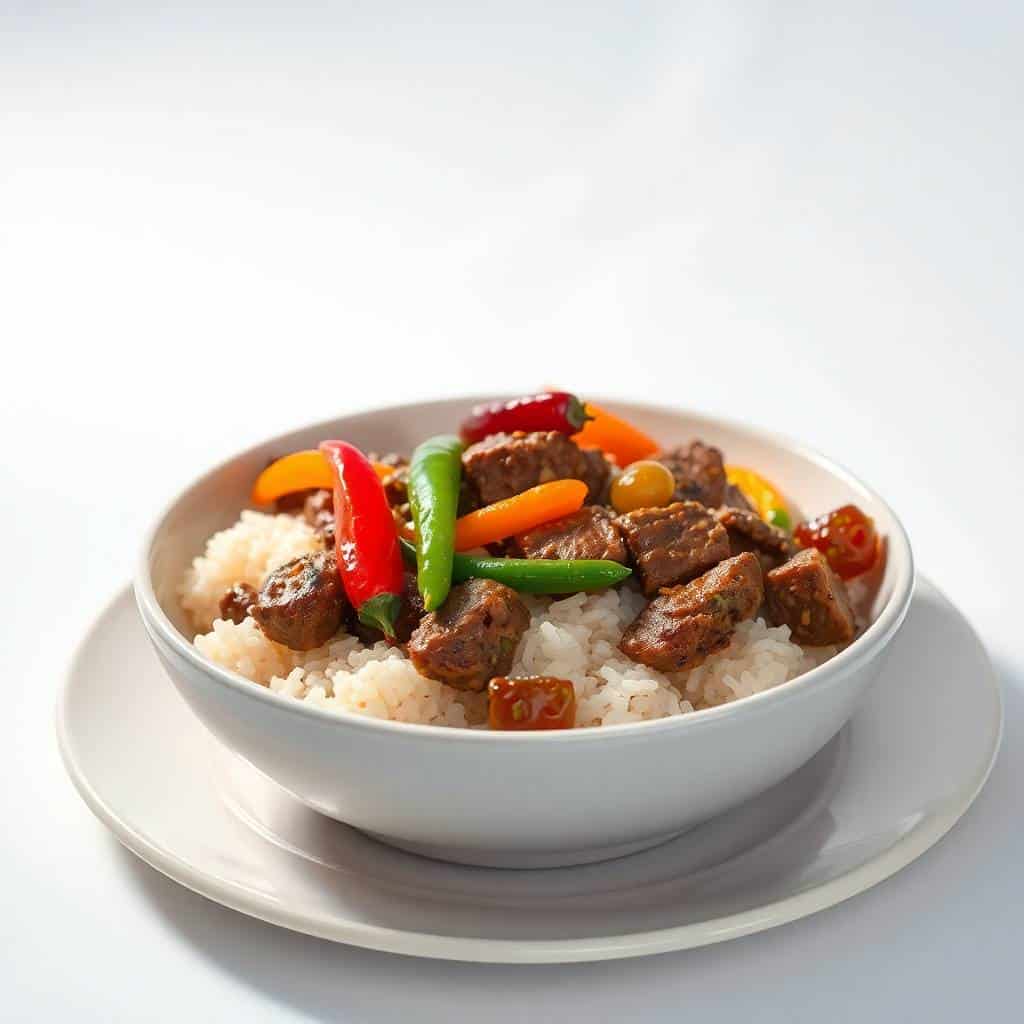
Why You'll Love This Recipe
- On the table in 30 minutes: I timed this once because I was skeptical of my own claim — it clocked in at 27 minutes from cold pan to bowl on the table. The marinade runs while you chop the vegetables, the sauce takes about two minutes to whisk together, and the actual cooking goes fast over high heat. On chaotic weeknights, this is the recipe I reach for when I can't think of anything else.
- The sauce actually clings to everything: A lot of stir-fry sauces just pool at the bottom of the bowl. This one coats the beef and peppers because of the cornstarch slurry, which sounds fancier than it is — it's literally just cornstarch mixed with a spoonful of water. The result is that glossy, takeout-style sauce that makes the whole bowl look and taste like you tried harder than you did.
- Works with what you already have: I've made this with flank steak, sirloin, and once with a beef sirloin tip from Walmart that was on sale. All three worked. The peppers can be any color — I usually grab a bag of mixed mini peppers from Costco when I see them. As long as you have soy sauce, oyster sauce, and rice vinegar in your pantry, you're most of the way there.
- Meal prep friendly in the right way: I store the beef and pepper mixture separately from the rice. If you combine them and refrigerate, the rice absorbs the sauce and turns dense. Keep them apart, and both reheat beautifully — the beef mixture in a skillet with a splash of water, the rice in the microwave with a damp paper towel on top. Lunch for the next three days, sorted.
- Adjustable heat for the whole table: The base recipe is mild — my kids eat it without complaint. But my husband and I add sriracha at the table, and sometimes I'll toss in a pinch of chili flakes when I'm cooking the vegetables. It scales up in spice without any changes to the actual recipe, which means one pot feeds everyone differently.
Ingredients
- For the Stir-Fry:
- 1 lb flank steak or sirloin, thinly sliced
- 1 tablespoon cornstarch
- 1 tablespoon soy sauce
- 1 tablespoon vegetable oil
- 1 red bell pepper, sliced
- 1 green bell pepper, sliced
- 1 small onion, sliced
- 2 cloves garlic, minced
- 1 teaspoon fresh ginger, grated (or ½ teaspoon ground ginger in a pinch)
- For the Sauce:
- ¼ cup soy sauce
- 2 tablespoons oyster sauce (use hoisin if you have a shellfish allergy)
- 1 tablespoon rice vinegar
- 1 tablespoon brown sugar
- ½ cup beef broth or water
- 1 teaspoon cornstarch, mixed with 1 tablespoon water
- For Serving:
- 2 cups cooked white or brown rice
- Sliced green onions (optional)
- Sesame seeds (optional)
- Sriracha (optional, for serving)
Directions
- Marinate the beef: In a bowl, toss the sliced beef with 1 tablespoon soy sauce and 1 tablespoon cornstarch. Set it aside for 10 minutes. The cornstarch helps the beef brown better and stay tender once it hits the hot pan.
- Mix the sauce: In a small bowl, whisk together the soy sauce, oyster sauce, rice vinegar, brown sugar, and beef broth. Set it aside — you'll want it ready to pour in quickly once the beef goes back in the pan.
- Stir-fry the beef: Heat vegetable oil in a large skillet or wok over medium-high heat until it shimmers. Add the beef in a single layer — don't pile it — and cook until browned, about 2–3 minutes. Remove the beef and set it aside. Crowding the pan here will steam the beef instead of sear it.
- Cook the vegetables: In the same skillet, add a little more oil if it looks dry. Add the bell peppers, onion, garlic, and ginger. Stir-fry for 2–3 minutes until just slightly tender. You want them to keep a little bite — overcooked peppers go limp and lose the texture that makes this bowl satisfying.
- Combine and thicken: Return the beef to the skillet. Pour in the sauce and bring it to a simmer. Add the cornstarch slurry and stir for about 2 minutes until the sauce thickens and coats everything. This is the moment the whole bowl comes together.
- Serve: Spoon hot cooked rice into bowls and top with the beef and pepper mixture. Finish with green onions, sesame seeds, and sriracha if you're using them.
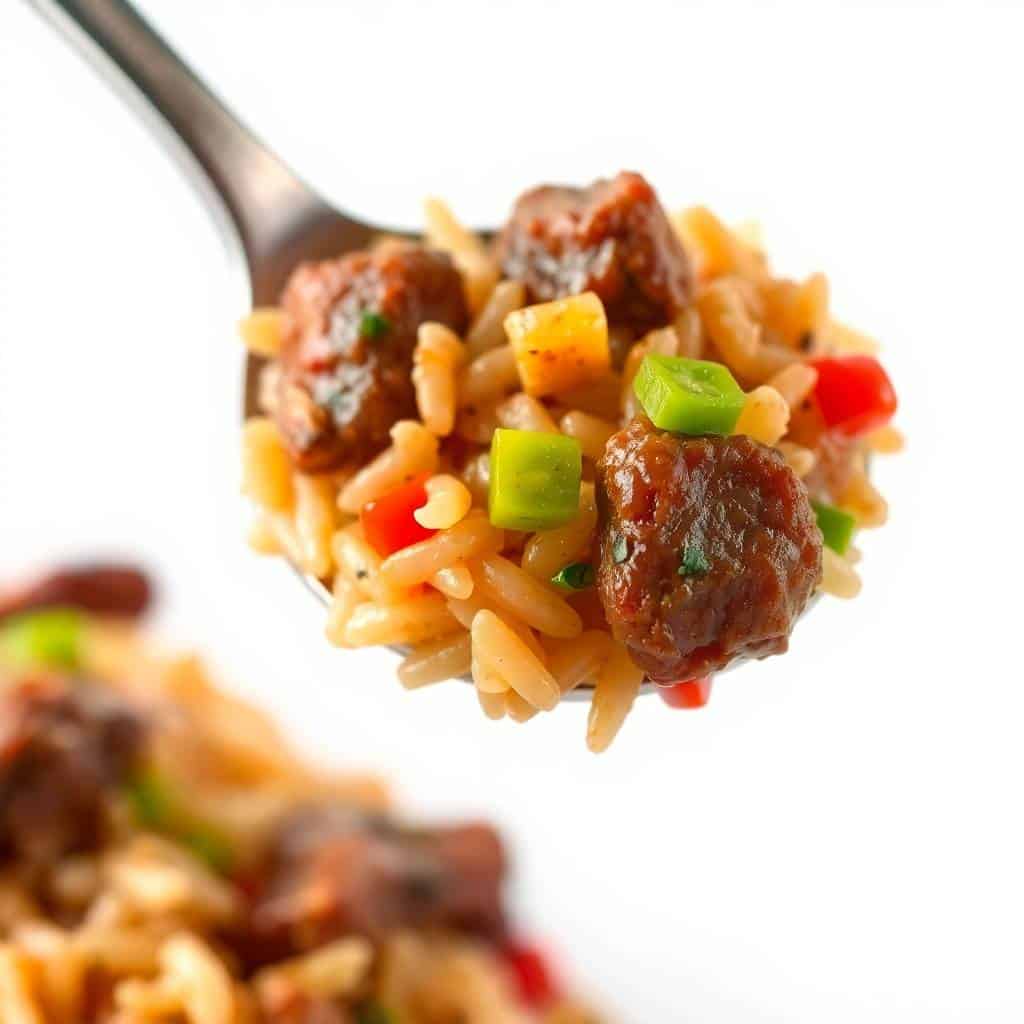
Tips for Success
- Slice the beef against the grain: I didn't pay attention to this the first time I made a stir-fry and the beef came out tough and stringy. Find which direction the muscle fibers run and cut across them. It makes a genuine difference in tenderness — we're talking chewy versus actually pleasant to eat. A sharp knife and partially frozen beef (15 minutes in the freezer) makes thin slicing much easier.
- Don't crowd the pan: I learned this after my first two attempts came out looking more like braised beef than stir-fry. When too many pieces of meat are in the skillet at once, they release moisture and steam each other instead of getting that sear. If your skillet is on the smaller side, cook the beef in two batches. It adds maybe four minutes and the difference is noticeable.
- Have everything prepped before you turn on the heat: Stir-fry moves fast. I've burned garlic before because I was still measuring out soy sauce when the pan was already screaming hot. Get the sauce mixed, the vegetables sliced, and the cornstarch slurry ready before you heat the oil. The whole cooking part takes maybe 10 minutes once you're set up.
- Use high heat and mean it: Medium heat will not give you that wok-style sear. Turn your burner up and let the pan get genuinely hot before the beef goes in. If you're worried about your smoke alarm (I've triggered mine), open a window first. The high heat is what creates the slightly caramelized edges on the beef that make this taste more like takeout than a weeknight improvisation.
- Taste the sauce before it goes in: Every brand of soy sauce is a little different in saltiness. I always taste the sauce mixture before adding it to the pan. If it's too salty for your liking, add a splash more broth or a tiny bit more brown sugar to balance it. Once it's in the pan and reduced, you can't take the salt back out.
Variations
- Spicy version: Add ½ to 1 teaspoon of chili flakes when you stir-fry the vegetables, or stir a tablespoon of gochujang into the sauce before adding it to the pan. I actually love this bowl with gochujang — it adds a fermented heat that's deeper than plain sriracha. My husband uses it this way almost every time now.
- Chicken instead of beef: Thinly sliced chicken thighs work really well here — they stay juicier than chicken breast in high heat. Use the same marinade, same timing. This is a good option if flank steak is expensive that week; chicken thighs from Aldi or Walmart are reliably affordable. For a similar weeknight chicken dinner idea, my Ritz cracker chicken is another family-pleaser with very little effort.
- Add more vegetables: Broccoli florets or snap peas are the easiest additions — toss them in with the bell peppers. I sometimes throw in a handful of shredded cabbage at the very end just to add bulk and texture. It wilts slightly in the hot sauce without overcooking, and the kids don't even notice it's there.
- Cauliflower rice for a lower-carb bowl: I know this isn't the most traditional swap, but my sister-in-law eats low-carb and I've made this for her with cauliflower rice from the frozen section at Trader Joe's. The sauce is flavored enough that it carries the whole bowl. Just make sure the cauliflower rice is well-drained before you heat it — watery cauliflower rice makes everything soggy.
- Gluten-free: Swap the soy sauce for tamari (same quantity, same flavor, no gluten) and replace the oyster sauce with hoisin. This isn't my usual setup because we don't have gluten issues in our house, but I've made it this way for a friend and it tasted nearly identical. Just check that your hoisin is also labeled gluten-free.
Serving and Storage
Serving
Serve straight from the pan over hot cooked rice — jasmine rice is my first choice because it's slightly sticky and holds the sauce well, but plain long-grain white rice or brown rice both work. Put the toppings on the table separately so everyone can add what they want. My husband piles on the green onions and sesame seeds. Saad wants sriracha. Zainab takes hers plain. I've stopped plating individual portions and just let everyone do their own — one less step for me. If you like having a side dish alongside rice bowls, garlic butter shrimp pasta is a nice contrast on the nights I'm cooking for a crowd and need two mains.
Storage
Store the beef and pepper mixture and the rice in separate airtight containers in the fridge for up to 3 days. Keeping them separate stops the rice from soaking up all the sauce overnight and turning into one dense block. To reheat the beef mixture, a quick minute in a skillet with a tablespoon of water works better than the microwave — it revives the sauce and keeps the peppers from going completely soft. The rice reheats fine in the microwave with a damp paper towel laid over the top. For freezing, the beef and pepper mixture freezes well for up to 2 months; thaw in the fridge overnight before reheating. I wouldn't freeze the rice separately — it never comes back quite right.
Frequently Asked Questions
Can I use ground beef instead of sliced steak?
You can, and it's a completely different texture but still good. Skip the marinade step if you're using ground beef — just brown it with a little soy sauce and drain the excess fat before adding the vegetables. The sauce works the same way on top. I actually have a ground beef version I make when I forget to thaw the steak.
Can I make the sauce ahead of time?
Yes, and I actually recommend it for busy nights. Mix the soy sauce, oyster sauce, rice vinegar, brown sugar, and beef broth in a jar and refrigerate for up to 3 days. Keep the cornstarch slurry separate and mix it fresh when you're ready to cook — cornstarch starts to settle and clump if it sits too long in liquid.
Can I freeze the beef and pepper mixture?
Yes. Let it cool completely, then freeze in an airtight container or freezer bag for up to 2 months. Thaw overnight in the fridge and reheat in a skillet over medium heat. The peppers will be softer after freezing — that's just the nature of cooked peppers — but the flavor holds up well. I freeze it in individual portions for easy lunches.
What if I can't find oyster sauce?
Hoisin sauce is the closest substitute and works really well here — use the same amount. The flavor is a bit sweeter and slightly less briny than oyster sauce, but the bowl is still very good. I've used hoisin when I ran out of oyster sauce and honestly didn't notice a huge difference once everything was mixed together.
How do I keep the beef from turning tough?
Two things: slice thin and cook fast over high heat. The cornstarch in the marinade also helps by creating a light coating that protects the meat from drying out. Don't overcook it — once the beef is browned and no longer pink, pull it out of the pan. It goes back in later when the sauce is added, so it finishes cooking gently without going rubbery.
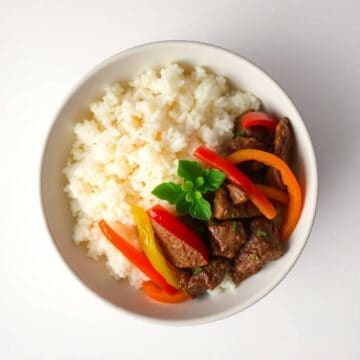
BEEF AND PEPPER RICE BOWL
Ingredients
For the Stir Fry:
- 1 lb flank steak or sirloin thinly sliced
- 1 tablespoon cornstarch
- 1 tablespoon soy sauce
- 1 tablespoon vegetable oil
- 1 red bell pepper sliced
- 1 green bell pepper sliced
- 1 small onion sliced
- 2 cloves garlic minced
- 1 teaspoon ginger grated
For the Sauce:
- ¼ cup soy sauce
- 2 tablespoons oyster sauce
- 1 tablespoon rice vinegar
- 1 tablespoon brown sugar
- ½ cup beef broth or water
- 1 teaspoon cornstarch mixed with 1 tablespoon water
For Serving:
- 2 cups cooked white or brown rice
- Sliced green onions optional
- Sesame seeds optional
Instructions
Marinate the Beef:
- In a bowl, toss sliced beef with 1 tablespoon soy sauce and 1 tablespoon cornstarch. Set aside for 10 minutes.
Make the Sauce:
- In a small bowl, whisk together soy sauce, oyster sauce, rice vinegar, brown sugar, and beef broth. Set aside.
Stir Fry the Beef:
- Heat vegetable oil in a large skillet or wok over medium-high heat. Add the beef and cook until browned. Remove and set aside.
Cook the Veggies:
- In the same skillet, add more oil if needed. Stir-fry bell peppers, onion, garlic, and ginger for 2–3 minutes until slightly tender.
Combine and Simmer:
- Return beef to the skillet. Pour in the sauce and bring to a simmer. Add the cornstarch slurry and cook until sauce thickens, about 2 minutes.
Serve:
- Spoon beef and peppers over bowls of hot cooked rice. Garnish with green onions and sesame seeds if desired.
Notes
Slice the beef and prep veggies in advance for a quick dinner. Sauce can be made ahead and refrigerated for 2–3 days. Customizing the Flavor:
Add chili flakes or Sriracha for heat. Try adding broccoli or snap peas for more vegetables. Serving Suggestions:
Serve with steamed rice, jasmine rice, or cauliflower rice for a low-carb version. Allergy-Friendly Options:
Use tamari for gluten-free soy sauce. Skip oyster sauce for shellfish allergies and use hoisin instead. Storage Tips:
Store leftovers in an airtight container for up to 3 days. Reheat in a skillet or microwave until warmed through.
This is one of those recipes that's been in my weeknight rotation long enough that I don't even think about it anymore — I just make it. The sauce comes together fast, the whole thing cooks in one pan, and there's almost never leftovers. On the rare occasion there are, my husband takes them for lunch the next day and sends me a text saying it's better cold. I disagree, but I'll let him have


Comments
No Comments