
I made this balsamic chicken on a Tuesday night when I had about 40 minutes, two hungry kids, and zero desire to wash a pile of dishes afterward. One pan, everything in together, done. I've made it probably a dozen times since then and it's become one of those recipes I don't even think about anymore — I just make it. If you're looking for a solid weeknight dinner that doesn't require much from you, this is it.
What makes this work is the balsamic glaze — balsamic vinegar, honey, garlic, and Dijon mustard. It sounds fancy but it comes together in about two minutes in the same pan you cook everything else in. The Dijon is the part people don't expect. It adds a little sharpness that keeps the sauce from being too sweet, and it helps it cling to the chicken properly. I tried this once without it and the sauce slid right off. Don't skip it.
My husband eats this over rice every single time. Saad will eat the chicken but picks around the green beans, which — fine, I've given up that battle. Zainab actually loves the leftovers cold the next day straight from the container, which I find slightly alarming but also flattering. I usually make this on a weeknight but it's also the kind of thing I'd put together if we had someone coming over for dinner without much notice. It looks better than the effort it takes. If you're into one-pan dinners, my ground turkey sweet potato skillet is another one I reach for constantly.
One thing to set your expectations on: this is a skillet recipe, not a baking dish recipe. You sear the chicken first, build the sauce in the same pan, then add vegetables and let everything simmer together. That sear is what gives the chicken its color and flavor. Don't skip it or rush it — 6 to 7 minutes per side on medium heat. Use a heavy skillet, cast iron if you have it, and let it do its job.
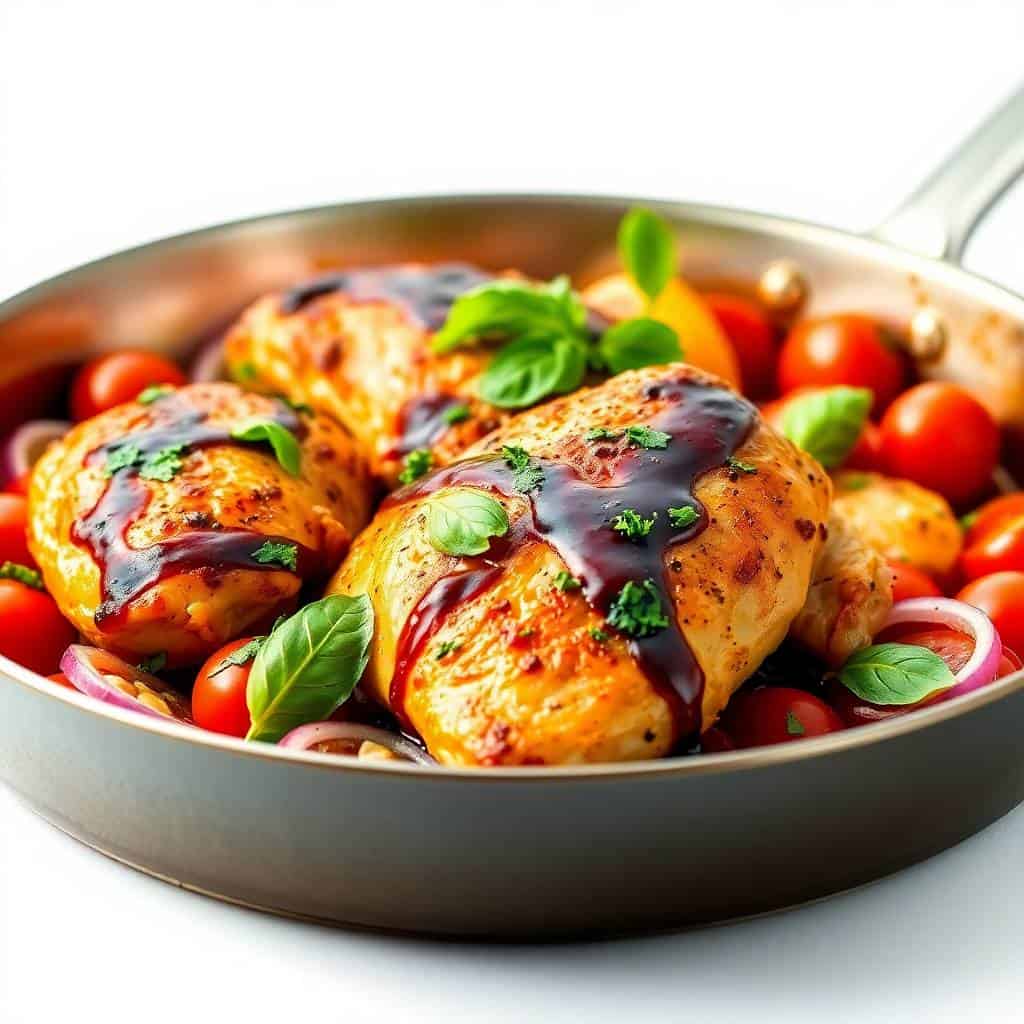
Why You'll Love This Recipe
- One pan, one cleanup: Everything — the chicken, the sauce, the vegetables — cooks in a single skillet. I wipe it down after dinner and I'm done. On weeknights that matters more to me than almost anything else. No second pot for the sauce, no separate baking dish for the vegetables.
- The balsamic glaze does most of the work: Once you stir together the vinegar, honey, garlic, and Dijon, the sauce practically finishes itself. It reduces in the pan and coats everything as it simmers. The chicken comes out sticky, glossy, and really savory — and you didn't have to do much for it.
- You can use whatever vegetables you have: The recipe calls for cherry tomatoes, green beans, and red onion, but I've made this with bell peppers, zucchini, broccoli, and asparagus depending on what's in my fridge. The sauce works with all of them. This is genuinely one of those recipes that adapts to what you've got.
- The chicken stays juicy: A lot of boneless chicken breast recipes leave you with dry, rubbery meat. The trick here is the sear followed by the simmer in the sauce. The liquid keeps the chicken from drying out, and the fat from the olive oil helps too. I've overcooked chicken in the oven plenty of times — this stovetop method is more forgiving.
- It's naturally gluten-free without any substitutions: No flour, no breadcrumbs, no thickener — the sauce reduces on its own. If you're cooking for someone with a gluten restriction, this works as-is. Just double-check your balsamic vinegar label to be sure (most are fine, but some cheap ones have additives).
Ingredients
For the Chicken
- 4 boneless, skinless chicken breasts
- 1 tablespoon olive oil
- Salt and pepper to taste
- 1 teaspoon Italian seasoning
- 1 cup cherry tomatoes, halved
- 1 cup green beans, trimmed
- ½ cup sliced red onion
For the Balsamic Sauce
- ¼ cup balsamic vinegar (use a decent one — aged if you can find it)
- 2 tablespoons honey (or maple syrup if you prefer)
- 2 cloves garlic, minced
- 1 tablespoon Dijon mustard
Directions
- Season the chicken: Pat the chicken breasts dry with paper towels — this helps them sear properly. Season both sides generously with salt, pepper, and Italian seasoning. Don't rush this step; the seasoning on the outside is what builds flavor before the sauce even goes in.
- Sear the chicken: Heat the olive oil in a large heavy skillet over medium heat. Add the chicken and cook for 6 to 7 minutes per side until golden brown and cooked through. The internal temperature should read 165°F on an instant-read thermometer. Remove the chicken and set it aside on a plate.
- Make the sauce: In the same skillet (don't wipe it out — those browned bits are flavor), add the minced garlic and cook for about 30 seconds, stirring constantly so it doesn't burn. Stir in the balsamic vinegar, honey, and Dijon mustard. Let it simmer for 2 to 3 minutes until it thickens slightly.
- Add the vegetables: Add the cherry tomatoes, green beans, and red onion to the skillet. Stir to coat everything in the sauce. Return the chicken to the pan, nestling it in among the vegetables. Spoon some sauce over the top of each piece.
- Simmer and finish: Let everything simmer together over medium-low heat for another 5 to 7 minutes, until the vegetables are tender and the chicken has soaked up some of the sauce. Spoon extra sauce over the top before serving.
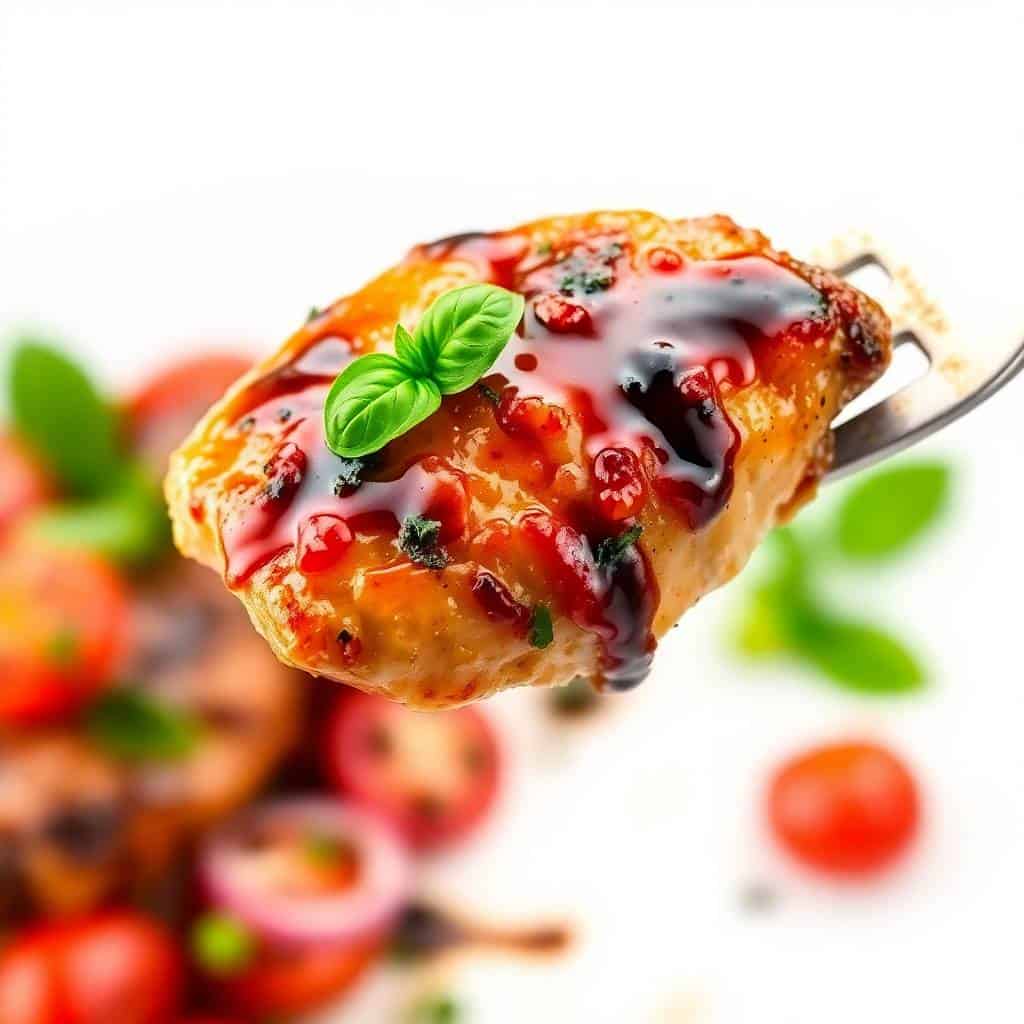
Tips for Success
- Dry the chicken before you season it: I skipped this the first few times I made skillet chicken and wondered why I wasn't getting any color. Moisture on the surface of the chicken turns to steam before it can sear, so you end up with grey chicken instead of golden. 30 seconds with a paper towel makes a real difference.
- Don't move the chicken around while it's searing: Put it in the pan and leave it alone for 6 to 7 minutes. If you keep lifting it to check or moving it around, it won't develop a proper crust and it'll stick. You'll know it's ready to flip when it releases easily from the pan on its own.
- Keep the sauce at a simmer, not a full boil: Once you add the balsamic mixture, keep the heat at medium-low. A hard boil will make the sauce bitter and can cause the honey to scorch. You want it to bubble gently and reduce slowly. The Dijon helps it emulsify so it doesn't separate.
- Marinate ahead if you have time: If I know I'm making this for dinner, I'll mix the sauce ingredients in the morning and put the raw chicken into it in a zip-lock bag in the fridge. Even 30 minutes makes the flavor noticeably deeper. You can go up to 12 hours — I've done it overnight and it's great.
- Use a thermometer: I know it feels fussy but I always check chicken with an instant-read thermometer. Undercooked chicken is a real food safety issue, and overcooked chicken is sad. You're looking for 165°F in the thickest part. A basic thermometer from Walmart costs about $10 and is worth every cent.
Variations
- Use chicken thighs instead of breasts: Boneless, skinless chicken thighs work really well here and they're more forgiving if you overcook them slightly. They need an extra 5 minutes or so, and they come out a bit richer and juicier. My husband actually prefers this version — the extra fat in the thighs soaks up the balsamic glaze really well.
- Swap the vegetables for whatever's in season: I've made this with asparagus in spring, zucchini and bell peppers in summer, and sweet potato cubes in fall (just cut them small so they cook through in time). The balsamic glaze works with almost any vegetable. If you're using something dense like sweet potato, give it a head start in the pan before adding the chicken back in.
- Add a cheesy finish: In the last 2 minutes of cooking, scatter some shredded mozzarella or crumbled feta over the top and cover the pan with a lid to let it melt. The feta version especially — salty, creamy feta against the sweet-tangy balsamic is really something. Zainab loves this version.
- Make it spicy: Add ½ teaspoon of crushed red pepper flakes to the sauce when you add the garlic. It doesn't make it fiery, just gives a gentle heat that cuts through the sweetness of the honey. If you want actual heat, go up to a full teaspoon. My husband adds extra chili flakes at the table regardless of how much I put in.
- Lemon-balsamic version: Replace half the balsamic vinegar with fresh lemon juice for a brighter, sharper sauce. This version is great in summer when you want something a little lighter. I usually add a bit of lemon zest too if I'm going this route. Serve it with a simple green salad and it's a completely different feel from the original.
Serving and Storage
Serving
I serve this over plain white rice most nights because the sauce soaks into it beautifully and nothing gets wasted. Quinoa works really well too if you want more protein. Crusty bread is also great for mopping up the pan sauce — don't leave that behind. If I'm trying to keep things lighter I'll serve it alongside a simple green salad. This is also good over mashed potatoes if you want something more comforting on a cold night.
Storage
Let everything cool down before storing. I put it in an airtight container in the fridge where it keeps well for up to 3 days. Reheat gently in a skillet over low heat with a splash of water to loosen the sauce, or microwave covered in 60-second intervals. For freezing, cool completely first, then freeze in a freezer-safe container for up to 2 months. Thaw overnight in the fridge and reheat the same way — the sauce does get a bit thicker but still tastes good.
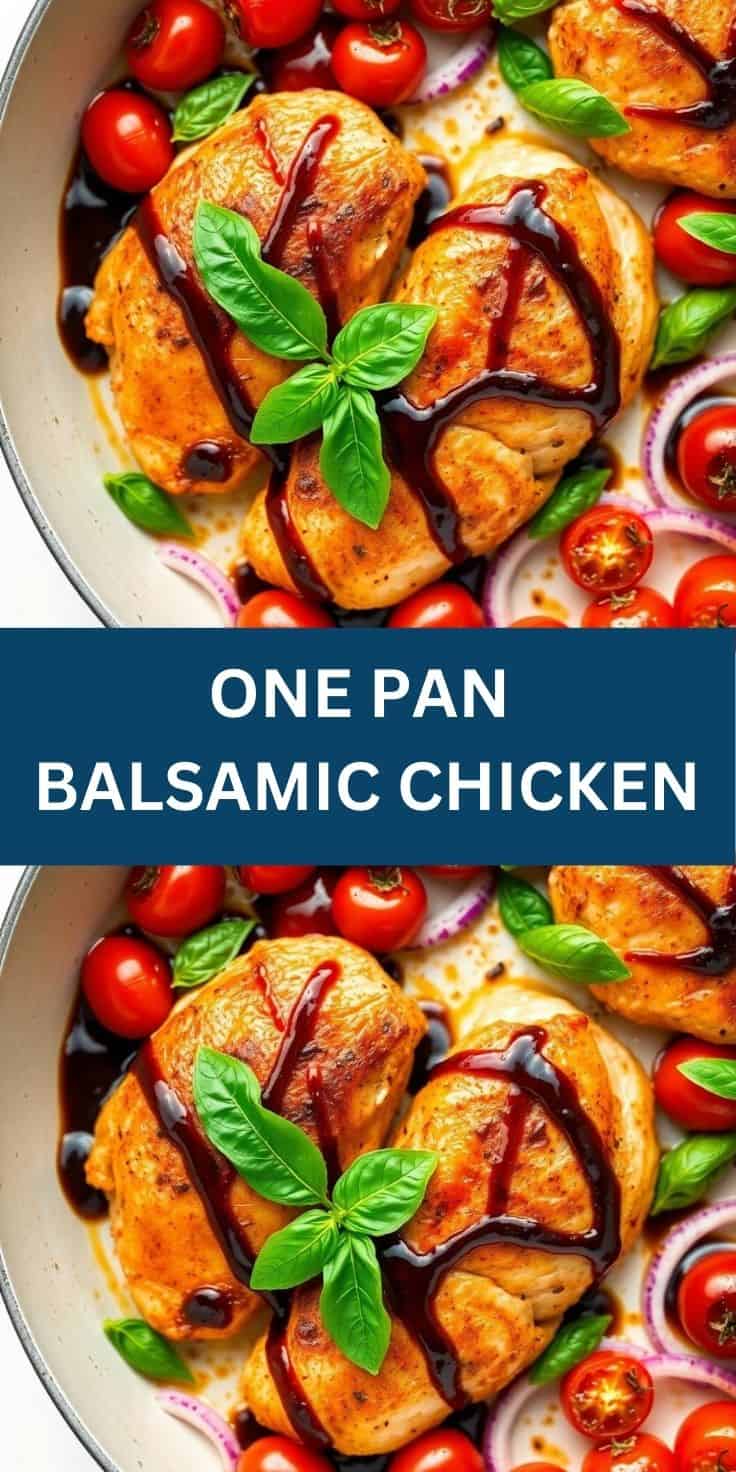
Frequently Asked Questions
Can I use chicken thighs instead of chicken breasts?
Yes, and honestly they work really well. Boneless, skinless thighs stay juicier and are harder to overcook. Add about 5 extra minutes to the cooking time and check that they hit 165°F internally before serving.
Can I make this ahead of time?
Yes. You can marinate the raw chicken in the sauce for up to 12 hours in the fridge — this actually makes the flavor noticeably deeper. If you want to cook it ahead, the finished dish keeps in the fridge for up to 3 days and reheats well in a skillet with a splash of water.
What balsamic vinegar should I use?
Look for one labeled "aged balsamic" if you can — it's thicker and naturally sweeter with less sharp acidity. The cheap stuff works fine but the sauce will be a bit thinner and sharper. Trader Joe's and Aldi both carry decent aged balsamic at a reasonable price.
Can I freeze this after cooking?
You can. Cool the chicken and vegetables completely, then freeze in a freezer-safe container for up to 2 months. Thaw overnight in the refrigerator and reheat gently — the sauce thickens a bit more after freezing but the flavor is still there.
What sides go best with this?
Rice is the obvious one — it soaks up the sauce perfectly. Quinoa, mashed potatoes, and crusty bread all work too. If I want something lighter I'll serve it over a simple arugula salad and let the warm chicken wilt the greens a little. It's good either way.
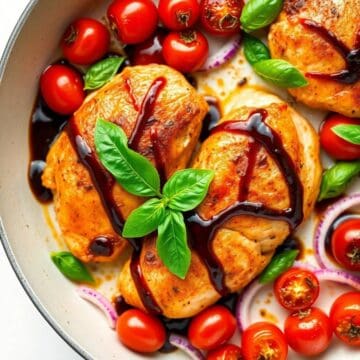
ONE PAN BALSAMIC CHICKEN
Ingredients
For the Chicken:
- 4 boneless skinless chicken breasts
- 1 tablespoon olive oil
- Salt and pepper to taste
- 1 teaspoon Italian seasoning
- 1 cup cherry tomatoes halved
- 1 cup green beans trimmed
- ½ cup sliced red onion
For the Balsamic Sauce:
- ¼ cup balsamic vinegar
- 2 tablespoons honey
- 2 cloves garlic minced
- 1 tablespoon Dijon mustard
Instructions
Prepare the Chicken:
- Season chicken breasts with salt, pepper, and Italian seasoning.
Cook the Chicken:
- In a large skillet, heat olive oil over medium heat. Add chicken and cook for 6–7 minutes per side until golden brown and cooked through. Remove and set aside.
Make the Sauce:
- In the same skillet, add garlic and cook for 30 seconds. Stir in balsamic vinegar, honey, and Dijon mustard. Simmer for 2–3 minutes.
Add Vegetables and Finish:
- Add cherry tomatoes, green beans, and red onion to the skillet. Return chicken to the pan. Spoon sauce over everything and simmer for another 5–7 minutes until vegetables are tender and chicken is coated.
Serve:
- Serve hot, spooning extra sauce over the chicken and veggies.
Notes
You can marinate the chicken in the balsamic sauce for up to 12 hours for deeper flavour. Customizing the Flavor:
Add mushrooms or bell peppers to the pan for even more vegetables. Serving Suggestions:
Serve over rice, quinoa, or a simple green salad. Allergy-Friendly Options:
Use maple syrup instead of honey for a vegan-friendly sauce (if using plant-based chicken). Storage Tips:
Store leftovers in an airtight container in the fridge for up to 3 days. Reheat gently before serving.
This balsamic chicken has stuck around in my regular rotation because it asks so little and delivers so much. On a weeknight when I've got 40 minutes and no patience for complicated, it's exactly what I want. The sauce comes together in the same pan, the vegetables go in with the chicken, and dinner is on the table before anyone gets too cranky. That's really all I need from a recipe.
I do want to be honest — this isn't restaurant balsamic chicken, it's home cook balsamic chicken. The sauce is simple, the technique is straightforward, and that's exactly the point. You can dress it up with feta and fresh herbs and seasonal vegetables if you want something to put in front of guests. Or you can make it exactly as written on a random Tuesday. Both are valid.
If you're on a one-pan dinner kick right now, my ground turkey sweet potato skillet is worth trying next — it's a completely different flavor profile but the same low-effort, one-pan logic. And if you need something sweet to finish the meal, the cherry lemon cheesecake on the site is one I come back to whenever I want dessert that looks like more work than it actually is.
I hope this becomes one of those recipes you stop having to think about — where you just make it on autopilot and it always comes out right. That's where I am with it now. 🍋🥄✨
If you liked this, these are some other recipes worth trying:
- Ground Turkey Sweet Potato Skillet — another one-pan weeknight dinner that comes together fast
- Popeyes Spicy Fried Chicken — for when you want something crispy and bold
- Smoked Sausage, Apple and Potato Soup — a hearty cold-weather dinner with minimal prep
- Cherry Lemon Cheesecake — for a no-fuss dessert that looks impressive
- Pineapple Dream Dessert — a light, creamy no-bake dessert the whole family loves



Comments
No Comments