
My husband doesn't really get excited about weeknight dinners — except for this one. Steak and mashed potatoes is the meal he actually asks for by name, and once I figured out how to get both components right at the same time, it became a regular in our rotation.
What made the difference for me was treating these as two separate jobs that happen to finish together. The potatoes go on first — they take the longest and can sit covered while the steak cooks. The steak gets a hot pan, real heat, and a proper rest afterward. That's honestly the whole secret. I don't marinate, I don't brine, I don't do anything fancy. Just seasoning, a hot skillet, and patience while it rests.
I make this on Friday nights mostly — the end of a long week when everyone's tired and wants something that feels substantial. My husband goes back for seconds almost every time. If you want something lighter for the rest of the week, my One-Pan Creamy Parmesan Chicken and Rice is what I reach for on Tuesday nights when I need dinner done fast.
One thing I want to set expectations on: this recipe is straightforward but the resting step is non-negotiable. The first time I made pan-seared steak at home, I cut into it immediately and watched all those juices run straight out onto the cutting board. Five minutes of resting makes the difference between a dry steak and a juicy one. Don't skip it.
Why You'll Love This Recipe
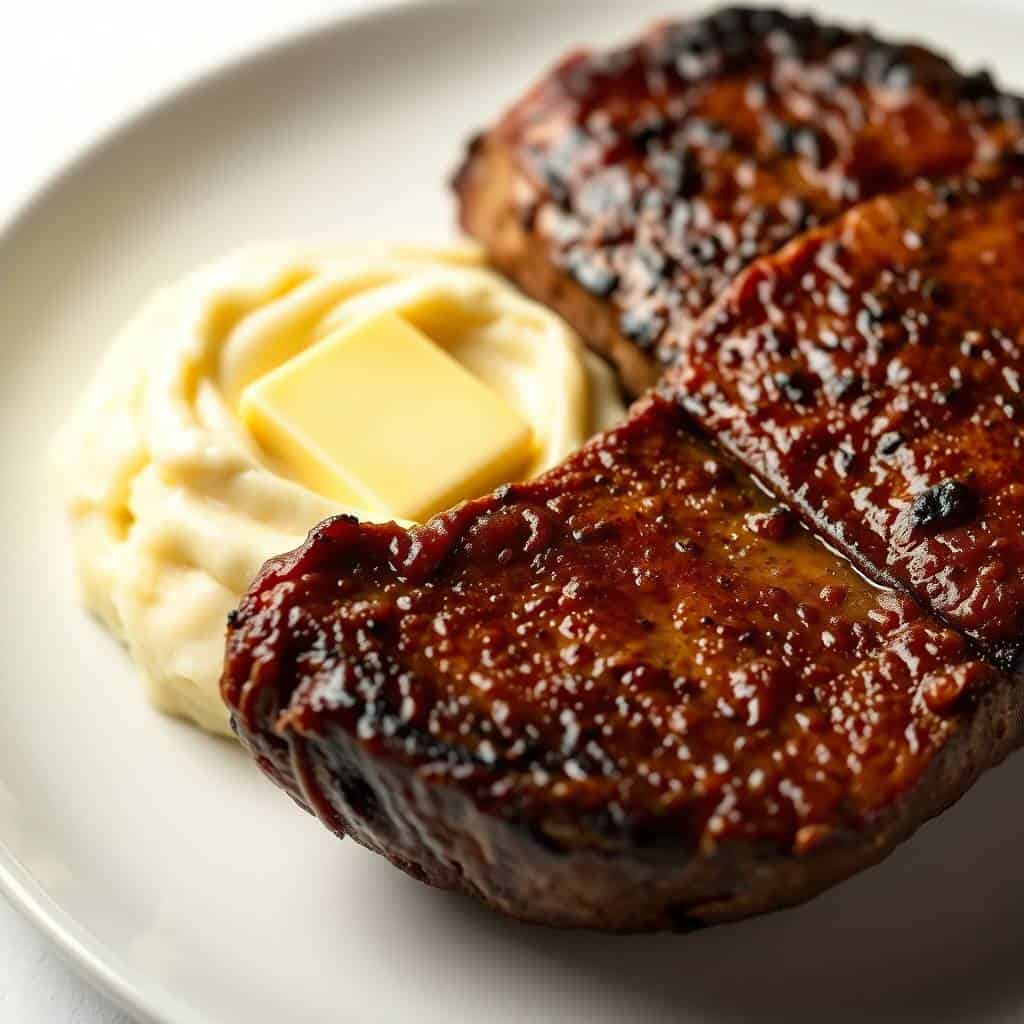
- One skillet, one pot: The whole steak cooks in a single heavy skillet and the mashed potatoes come together in one pot. I'm not dealing with a pile of dishes after dinner, which matters more to me than almost anything else on a weeknight. Cleanup takes about five minutes.
- The mashed potatoes are actually creamy: Not the gluey, stiff kind. Using Yukon Gold potatoes and warm butter (not cold, straight from the fridge) makes a real difference in texture. I mash by hand with a potato masher — no stand mixer needed — and they come out smooth every time.
- Ready in about 35 minutes: The potatoes boil while you prep everything else. By the time the steak is seared and rested, the mash is done and waiting. There's no part of this recipe that requires skill — just timing.
- Works with whatever steak you have: Ribeye is what I use when I want something rich and indulgent. Sirloin works great and is usually cheaper at Walmart or Costco. Even a thinner cut like flat iron steak does well here — just watch the cooking time since thinner cuts go fast.
- Feels like a proper dinner: There's something about steak and mash together that feels like effort, even though the actual work is minimal. My husband always seems a little impressed, which I find quietly satisfying.
Ingredients
- For the Steak:
- 4 ribeye steaks (or your preferred cut — sirloin works great too)
- 1 tablespoon olive oil
- 2 cloves garlic, minced
- 1 tablespoon fresh rosemary, chopped (or ½ teaspoon dried rosemary)
- Salt and black pepper, to taste
- For the Mashed Potatoes:
- 2 lbs Yukon Gold or Russet potatoes
- 4 tablespoons unsalted butter (room temperature)
- ½ cup whole milk (warmed — cold milk makes gluey mash)
- Salt and pepper, to taste
Directions
- Start the potatoes first: Peel and cut potatoes into roughly equal chunks — about 1½ inches. Place them in a large pot, cover with cold water, add a generous pinch of salt, and bring to a boil. Cook for 15–20 minutes until a fork slides in easily with no resistance. Starting in cold water helps them cook evenly all the way through.
- Make the mashed potatoes: Drain the potatoes and return them to the warm pot. Add the butter and let it start to melt, then pour in the warmed milk. Mash with a potato masher until smooth — don't overwork them or they'll go gluey. Season with salt and pepper, taste, and adjust. Cover the pot and set aside; they'll stay warm while the steak cooks.
- Season the steak: Pat the steaks dry with a paper towel first — this is important for getting a good sear. A wet steak steams instead of browns. Season both sides generously with salt, pepper, and the chopped rosemary. Press the seasoning in gently so it sticks.
- Sear the steak: Heat olive oil in a heavy skillet (cast iron is ideal, but any heavy skillet works) over medium-high heat until the oil just starts to shimmer. Add the garlic and cook for about 30 seconds until fragrant — watch it closely so it doesn't burn. Add the steaks and cook 4–5 minutes per side for medium-rare. For medium, go about 5–6 minutes per side. Don't move the steaks around while they cook — let them sit and build a crust.
- Rest the steak: Move the steaks to a cutting board and let them rest for 5 full minutes before cutting into them. This lets the juices redistribute back into the meat. Cut too early and those juices end up on your board, not in your steak.
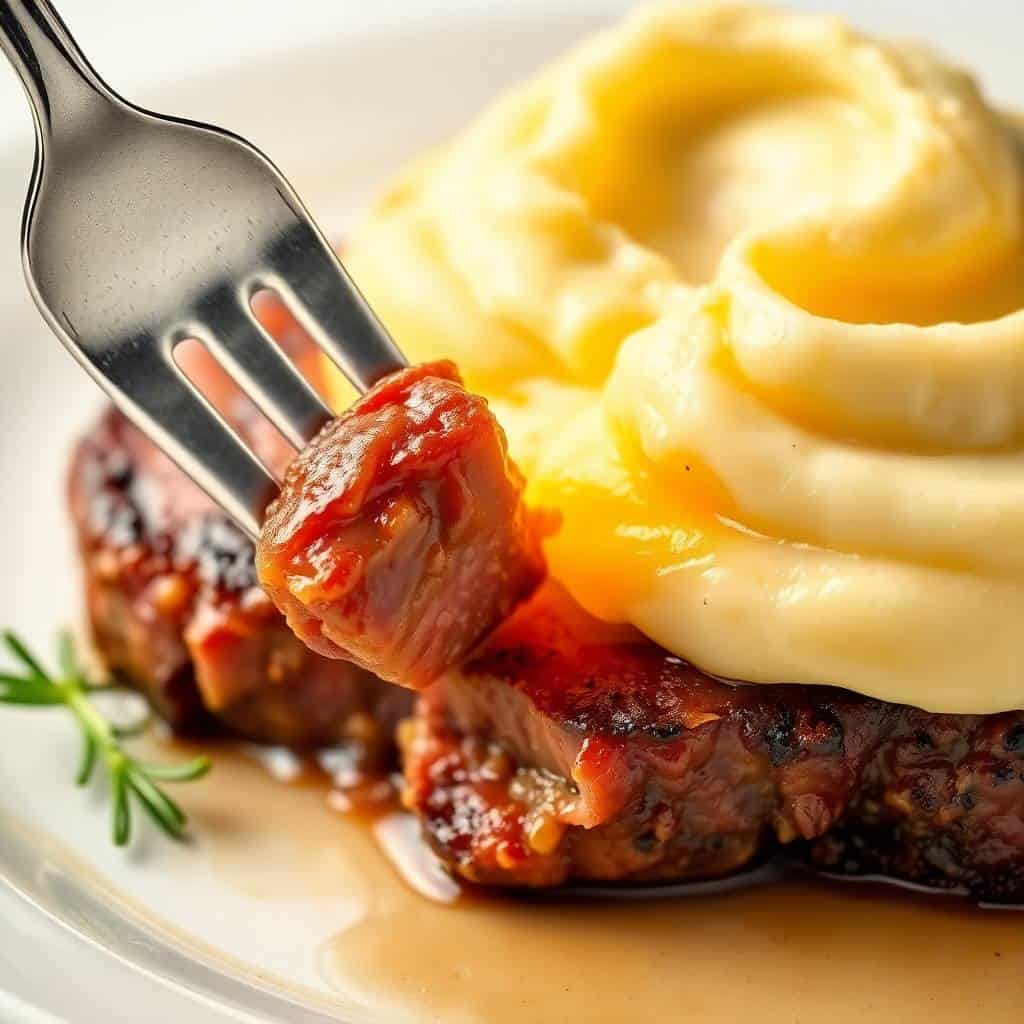
- Serve: Spoon a generous portion of mashed potatoes onto each plate and lay the steak alongside or on top. Drizzle any pan juices from the skillet over the steak — that's flavor you don't want to leave behind.
Tips for Success
- Pat the steak dry before seasoning: I skipped this the first couple of times and wondered why my steak wasn't getting that brown crust. Moisture on the surface creates steam in the pan, which prevents browning. Takes five seconds with a paper towel and makes a real difference.
- Warm your milk before adding it to the potatoes: Cold milk tightens the starch in the potatoes and can make mash dense and heavy. I just microwave the milk for 45 seconds in a small cup. It's a tiny step that noticeably improves the texture.
- Use a meat thermometer if you're unsure: Cooking times vary depending on the thickness of your steak. For medium-rare aim for 130–135°F internal; medium is 140–145°F. A basic instant-read thermometer costs about $10 at any kitchen store and takes all the guesswork out. I've had the same one for years.
- Don't skip the resting time: Five minutes feels like a long time when everyone's hungry and the food smells incredible. But I've cut into a steak too early more than once and it's always a little disappointing — the juices drain out and the meat looks gray inside instead of pink. Set a timer if you need to.
- Salt the potato water generously: The water should taste like mild seawater — that's not an exaggeration. Potatoes absorb salt as they cook, and if the water is bland, no amount of seasoning afterward will fully fix it. This applies to pasta too, but potatoes especially.
Variations
- Garlic butter steak: While the steak is resting, throw a tablespoon of butter into the hot skillet and add a smashed garlic clove. Let it foam up and turn golden — about 30 seconds — then spoon it over the steak. My husband insists on this version now and honestly I don't blame him. It takes 90 seconds and makes the whole plate smell incredible.
- Cheesy mashed potatoes: Stir in ½ cup of shredded sharp cheddar or Parmesan right after mashing, while the potatoes are still hot. The cheese melts in completely and adds a richness that makes the mash feel almost like a dish on its own. Saad always asks for the cheesy version.
- Mushroom pan sauce: After removing the steak, keep the skillet on medium heat and add a cup of sliced cremini mushrooms. Cook until they release their liquid and start to brown, about 4 minutes. Pour in ½ cup of beef broth, scrape up the fond from the bottom of the pan, and let it reduce for a couple of minutes. That becomes your sauce. Pour it over everything.
- Grilled steak version: If it's summer and you'd rather be outside, grill the steak instead of pan-searing it. Same seasoning, same resting rule. The mashed potatoes work just as well alongside grilled steak — you don't need to change anything else.
- Portobello mushroom version: If you're cooking for someone who doesn't eat meat, swap the steak for large portobello mushroom caps. Season and cook them the same way — hot pan, olive oil, garlic, rosemary — about 3–4 minutes per side. They get that same savory, seared quality and hold up well next to the mash.
Serving and Storage
Serving
I usually serve this with something green alongside — steamed broccoli, roasted green beans, or whatever vegetable I have. It doesn't need much because the steak and mash are already filling. If I'm doing a Friday dinner and want to keep the potato theme going, my Sliced Baked Potatoes with Crispy Edges is a great side another night. For steak and mash specifically, I just spoon the pan drippings over the top and that's enough sauce for most people.
Storage
Store leftovers in an airtight container in the fridge for up to 3 days. For the mashed potatoes, reheat gently in a small saucepan over low heat with a splash of milk to loosen them up — the microwave works in a pinch but can make them a bit stiff. For the steak, reheat in a skillet over medium heat for 2–3 minutes per side rather than the microwave, which tends to overcook it. The steak is also genuinely good eaten cold the next day, sliced thin in a sandwich or over a salad.
Frequently Asked Questions
Can I make the mashed potatoes ahead of time?
Yes, and I do this regularly. Make them the day before, store in the fridge in a covered container, and reheat on the stovetop over low heat with a splash of warm milk and an extra pat of butter. Stir gently as they warm up and they come back to almost the same texture as fresh. The microwave works too but stir halfway through so they heat evenly.
What's the best steak cut for this recipe?
Ribeye gives you the most flavor because of the fat marbling, but sirloin is leaner and usually more affordable — I use sirloin more often because it's what Costco has at a reasonable price. Filet mignon works too if you want something very tender. Whatever cut you use, the technique is the same: dry the surface, hot pan, don't move it while it cooks, rest before cutting.
Can I add cheese to the mashed potatoes?
Absolutely. Sharp cheddar, Parmesan, or even cream cheese all work well. Add it right after mashing while the potatoes are still hot so it melts in smoothly. Start with about ½ cup shredded and add more to taste. Cream cheese makes them particularly rich and silky — about 2 tablespoons is enough.
Can I freeze leftover mashed potatoes?
You can, though the texture changes a little after freezing — they can turn slightly watery when thawed. I freeze them in a zip-lock bag, press out the air, and flatten them so they thaw quickly. Reheat from frozen in a saucepan with extra butter and milk and mash again briefly. They won't be quite as fluffy but they're still good and it's better than throwing them out.
How do I know when the steak is done without a thermometer?
The finger test is the classic method: press the center of the steak with your finger. Soft and springy like the flesh at the base of your thumb when your hand is relaxed means rare. Firmer, like pressing the same spot with your hand slightly tightened, is medium. Very firm is well-done. Honestly though, an instant-read thermometer is about $10 and removes all the guesswork — I've been using a cheap one for years and it's the most useful tool in my kitchen drawer.
STEAK AND MASHED POTATOES
Ingredients
For the Steak:
- 4 ribeye steaks or your preferred cut
- 1 tablespoon olive oil
- 2 cloves garlic minced
- 1 tablespoon fresh rosemary chopped
- Salt and pepper to taste
For the Mashed Potatoes:
- 2 lbs potatoes Yukon Gold or Russet
- 4 tablespoons butter
- ½ cup milk
- Salt and pepper to taste
Instructions
Prepare the Mashed Potatoes:
- Peel and cut potatoes into chunks. Place them in a pot and cover with water. Bring to a boil and cook for 15–20 minutes, or until fork-tender.
- Drain potatoes and return to the pot. Add butter, milk, salt, and pepper. Mash until smooth and creamy. Set aside.
Cook the Steak:
- Season the steaks with salt, pepper, and fresh rosemary on both sides.
- Heat olive oil in a large skillet over medium-high heat. Add garlic and cook for 1 minute until fragrant.
- Add steaks to the skillet and cook for 4–5 minutes per side for medium-rare (adjust time for desired doneness). Let steaks rest for 5 minutes before serving.
Serve:
- Plate the mashed potatoes and top with the cooked steak. Optionally, drizzle some pan juices over the steak for extra flavor.
Notes
- Make Ahead: You can prep mashed potatoes in advance by making them the day before and storing them in the fridge. Reheat them in the microwave or on the stovetop with a little extra milk.
- Customizations: Add sour cream, garlic, or cheese to the mashed potatoes for extra richness.
- Storage Tips: Store leftovers in an airtight container for up to 3 days. The steak can be reheated in a skillet for best results.
- Allergy-Friendly: This recipe is naturally gluten-free.
This is genuinely one of those dinners where the effort involved and the result feel completely out of proportion — in a good way. Thirty-five minutes, one pot, one skillet, and you have something that feels like a proper sit-down meal. I've made it on ordinary Fridays and I've made it when we had family visiting, and it works equally well for both.
The thing I keep coming back to is how much the simple steps matter here. Patting the steak dry. Warming the milk. Letting it rest. None of these things take extra time really — they just take paying attention. Once you've made this a couple of times the whole thing runs on autopilot.
If you want to round out the meal with something on the side, roasted vegetables work perfectly — or check out my Chicken Fajita Casserole for a completely different kind of weeknight dinner when you want something with more of a kick. And if dessert is on your mind after a big meal like this, my Rice Krispie Chocolate Chip Cookies are something the whole family loves — quick to make and they disappear fast.
Make it once and you'll have it memorized. That's the kind of recipe this is. 🥩🥔✨
If you liked this, you'll probably like these too:
- One-Pan Creamy Parmesan Chicken and Rice (Weeknight Comfort in One Dish)
- Sliced Baked Potatoes with Crispy Edges (30-Min Side Dish)
- Chicken Fajita Casserole
- Rice Krispie Chocolate Chip Cookies (Chewy with a Surprise Crunch)
- Chocolate Chip Cookie Dough Twists




Comments
No Comments