
The gluten-free pasta problem has two layers: the pasta itself and the cooking of it. Most GF pasta is made from rice flour, corn flour, chickpea flour, or a blend of these — and when cooked correctly, good GF pasta has a texture that is genuinely acceptable and, in the case of chickpea and lentil pasta, arguably more nutritious than wheat pasta. The cardboard reputation comes entirely from incorrect cooking: GF pasta is less forgiving than wheat pasta to overcooking, it sticks aggressively if not tossed in oil or sauce immediately after draining, and it needs to be served and eaten while hot — cold GF pasta consolidates into a starchy mass that is genuinely unpleasant in a way that cold wheat pasta is only slightly unpleasant.
The correct technique for GF pasta: cook in heavily salted water (as salty as the sea), taste 2 minutes before the package time states, drain immediately when al dente (GF pasta continues cooking in residual heat faster than wheat pasta), reserve a cup of pasta water before draining, and toss with sauce immediately — never let it sit undressed in the colander. Following these steps produces GF pasta that is indistinguishable in texture from wheat pasta to anyone who is not specifically comparing the two.
All 15 recipes below use halal ingredients. The pasta type matters for some recipes — lighter sauces (aglio e olio, pesto) work better with rice-based GF pasta that has a neutral flavor. Heavier, protein-rich sauces (butter chicken pasta, marinara with meat) work equally well with any GF pasta including chickpea or lentil pasta whose stronger flavor is covered by the sauce.
15 Gluten-Free Pasta Recipes (That Don't Taste Like Cardboard)
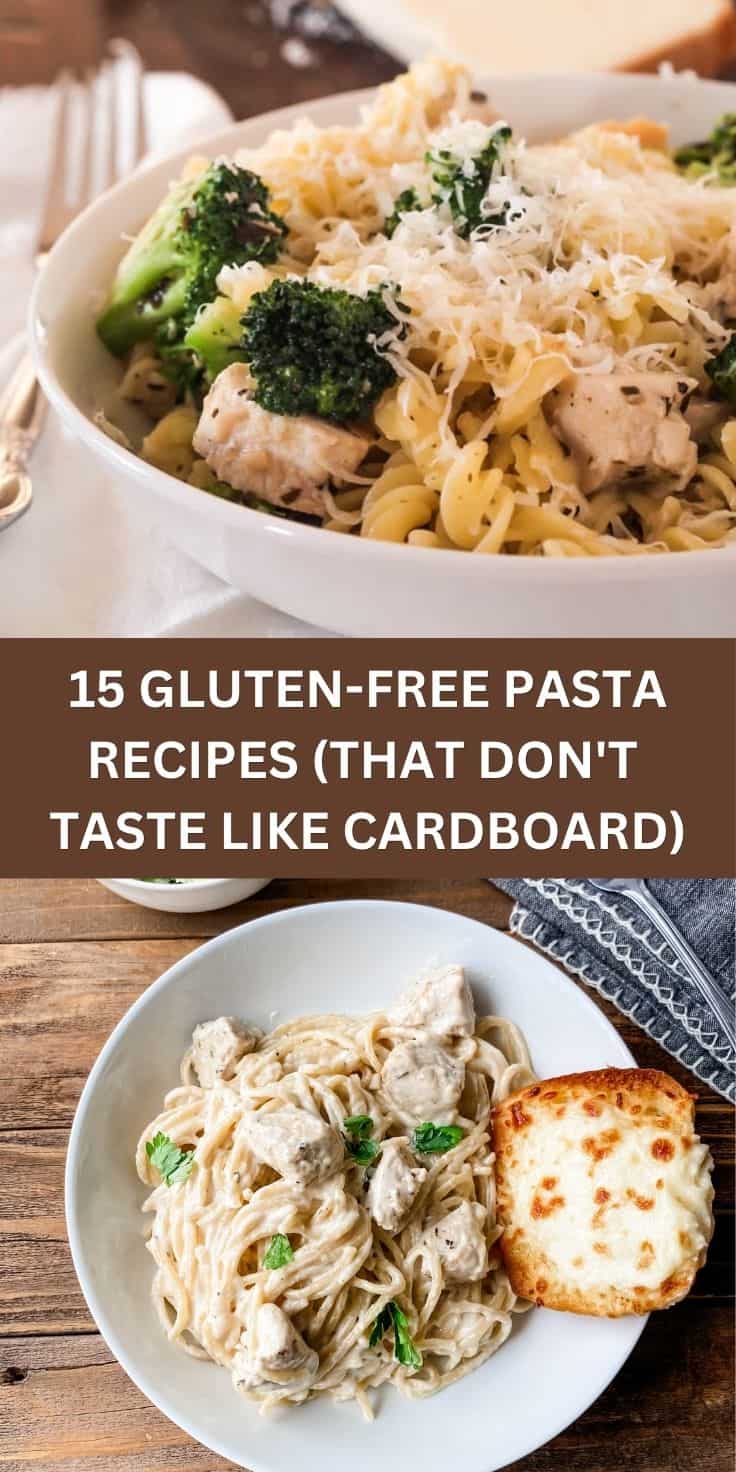
15. Classic GF Spaghetti Marinara

GF spaghetti (rice or corn-based) with a slow-cooked marinara sauce — canned San Marzano tomatoes, onion, garlic, olive oil, fresh basil, and a pinch of sugar — simmered 20 minutes for depth, tossed with the pasta and a splash of reserved pasta water to emulsify the sauce. The marinara sauce itself contains no gluten — the only GF substitution is the pasta. Cook the GF pasta to exactly al dente, drain immediately, and toss with the hot sauce within 30 seconds of draining. GF pasta that sits in the colander for 2 minutes begins to stick irreversibly. Add cooked halal ground beef for a bolognese variation.
Ingredients
- 400g GF spaghetti (rice or corn-based)
- Marinara: 2 tablespoon olive oil + 1 large onion finely diced + 4 garlic cloves + 1 can (400g) San Marzano tomatoes + 1 teaspoon sugar + salt + pepper + fresh basil
- Optional: 300g halal ground beef, browned separately and stirred in
- Reserved pasta water
Instructions
- Make the marinara: cook the diced onion in olive oil over medium-low heat until completely soft and translucent — 15 minutes. Add the garlic and cook 2 minutes. Add the crushed tomatoes, sugar, salt, and pepper. Simmer 20 minutes. Blend partially with an immersion blender for a smoother sauce, or leave chunky.
- Cook the GF spaghetti in heavily salted boiling water. Taste 2 minutes before the package time. Reserve 1 cup of pasta water before draining. Drain immediately when al dente.
- Add the drained GF spaghetti directly to the hot marinara sauce in the pan. Toss vigorously, adding splashes of reserved pasta water to emulsify the sauce around the pasta. The pasta water starch helps the sauce cling. Toss for 60 to 90 seconds until the pasta and sauce are fully combined.
- Serve immediately topped with fresh basil and grated Parmesan.
- Reserve 1 cup of pasta cooking water before draining — gluten-free pasta releases more starch into the cooking water than wheat pasta, making it even more valuable for emulsifying sauces. Add it a splash at a time until the sauce reaches a glossy, coating consistency.
14. GF Pesto Pasta with Halal Chicken
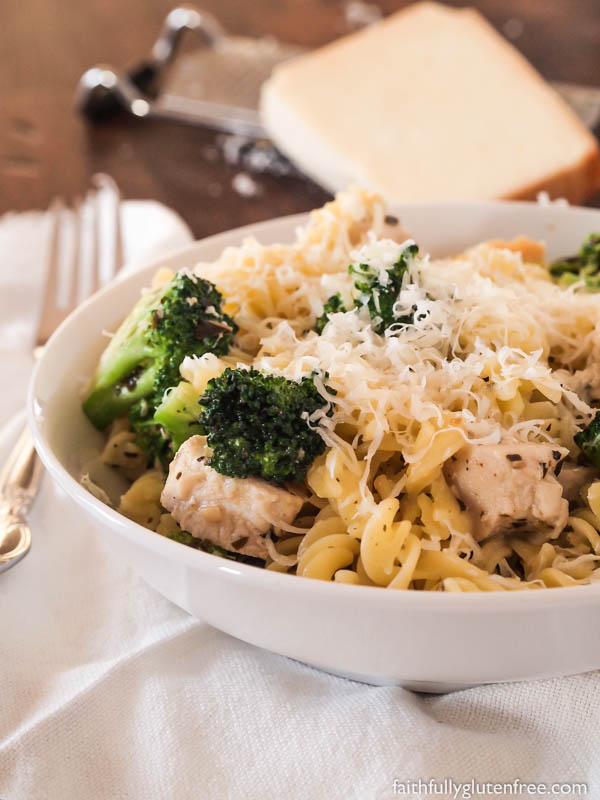
GF pasta (rice-based for this one — the neutral flavor pairs better with the fresh basil pesto than chickpea pasta would) tossed with homemade or store-bought basil pesto, cherry tomatoes, and pan-cooked halal chicken breast. The pesto sauce contains no gluten — the only substitution is the pasta. Finish with lemon zest, Parmesan, and a splash of pasta water to emulsify the pesto into a cohesive sauce rather than a greasy coating. The dish that my husband calls his best GF pasta option, specifically because the pesto flavor covers any GF pasta flavor that might otherwise be detectable.
Ingredients
- 400g GF penne or fusilli (rice-based)
- 4 tablespoon good basil pesto
- 2 cups cherry tomatoes, halved
- 2 halal chicken breasts, cooked and sliced
- Zest of 1 lemon + ½ cup reserved pasta water + grated Parmesan
Instructions
- Cook the halal chicken breasts in a pan with olive oil and seasoning until cooked through. Slice and set aside. Cook the GF pasta in heavily salted boiling water. Reserve 1 cup pasta water. Drain immediately when al dente.
- In a large bowl or the drained pasta pot, toss the hot GF pasta with the pesto immediately, adding splashes of reserved pasta water to loosen the pesto into a sauce consistency. Add the cherry tomatoes and sliced chicken and toss to combine.
- Finish with lemon zest and grated Parmesan. Serve immediately — pesto pasta consolidates quickly as it cools.
- Reserve 1 cup of pasta cooking water before draining — gluten-free pasta releases more starch into the cooking water than wheat pasta, making it even more valuable for emulsifying sauces. Add it a splash at a time until the sauce reaches a glossy, coating consistency.
- Taste and adjust seasoning before serving — gluten-free pasta has a more neutral flavour than wheat pasta, which means the sauce carries all the flavour weight. Season the sauce boldly and finish with salt, acid, or fresh herbs as needed.
13. GF Butter Chicken Pasta
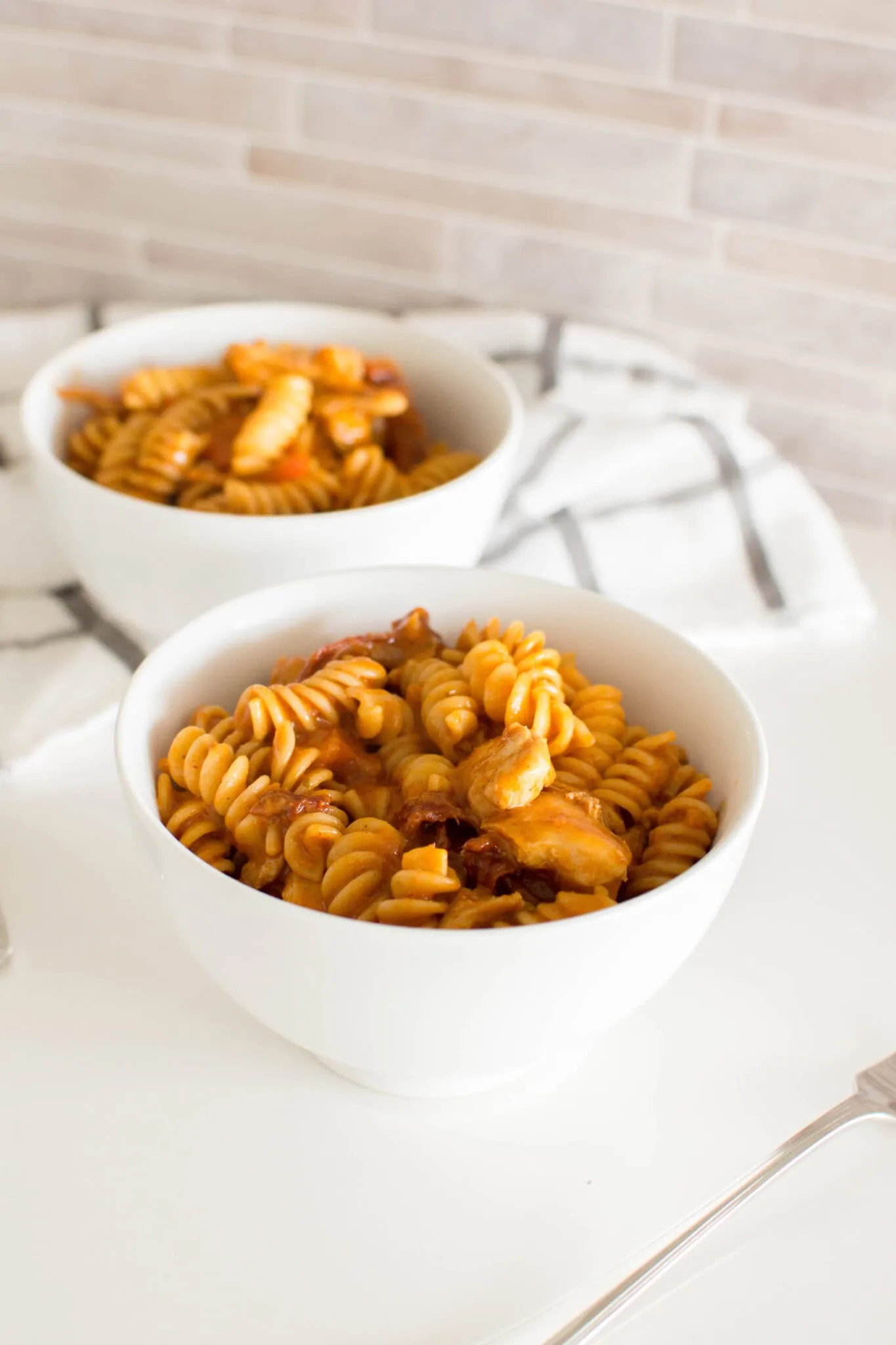
The pasta format that generates the most double-takes at the table — GF penne or rigatoni tossed with a butter chicken sauce (the same creamy tomato-cream sauce from the butter chicken recipe, made thinner with reserved pasta water to a pasta-sauce consistency). A fusion dinner that works because butter chicken sauce is naturally GF and naturally thick enough to coat pasta well when thinned slightly. The Pakistani-American dinner table experiment that became a permanent weeknight rotation. My mother in Pakistan's video-call reaction: 'why would you do that to pasta and also can you send me the recipe.'
Ingredients
- 400g GF rigatoni or penne
- Butter chicken sauce: use the full butter chicken sauce recipe (see dinner collection) but make it slightly thinner by adding ¼ cup extra cream or pasta water
- Fresh cilantro + extra cream for finishing
Instructions
- Make the butter chicken sauce ahead of time — it can be made days in advance and refrigerated. Cook the GF pasta in heavily salted boiling water. Reserve 1 cup pasta water.
- While the pasta cooks, warm the butter chicken sauce in a wide pan. Thin with pasta water to a consistency that coats the back of a spoon generously but is not as thick as it would be served over rice.
- Drain the GF pasta immediately when al dente. Add directly to the warm butter chicken sauce and toss vigorously, adding more pasta water if needed so every piece of pasta is coated in the creamy sauce.
- Serve immediately in bowls with a swirl of cream and torn fresh cilantro leaves over the top.
- Reserve 1 cup of pasta cooking water before draining — gluten-free pasta releases more starch into the cooking water than wheat pasta, making it even more valuable for emulsifying sauces. Add it a splash at a time until the sauce reaches a glossy, coating consistency.
12. GF Aglio e Olio

GF spaghetti tossed in olive oil, toasted garlic, red pepper flakes, and fresh parsley. The simplest pasta recipe in any cuisine and naturally GF except for the pasta. The entire sauce is olive oil and garlic — cooked slowly over low heat until the garlic is golden and fragrant but not burnt. The pasta water is the emulsifier that brings the oil and starchy water into a cohesive sauce. Use rice-based GF spaghetti for this recipe — the neutral flavor and thin shape are both correct for aglio e olio. This is the recipe that proves GF pasta is not a compromise when the pasta is cooked correctly and the sauce is correct.
Ingredients
- 400g GF spaghetti (rice-based)
- ½ cup good olive oil
- 6 garlic cloves, very thinly sliced
- ½ teaspoon red pepper flakes (adjust to heat preference)
- ½ cup fresh flat-leaf parsley, roughly chopped
- Salt + black pepper
- Reserved pasta water
Instructions
- Cook the GF spaghetti in heavily salted boiling water. Reserve 1.5 cups of pasta water before draining. Drain immediately when al dente.
- While the pasta cooks, heat the olive oil in a wide skillet over medium-low heat. Add the thinly sliced garlic and cook slowly, stirring frequently, until the garlic is golden and fragrant — about 5 to 7 minutes. The garlic must not burn. Add the red pepper flakes and cook 30 more seconds.
- Increase the heat to medium. Add ½ cup of the reserved pasta water to the garlic oil — it will sizzle. Stir to create an emulsion. Add the drained GF spaghetti directly to the pan and toss vigorously, adding more pasta water as needed so the pasta is coated in a glossy, emulsified sauce rather than plain oil.
- Add the fresh parsley and toss. Season with salt and black pepper. Serve immediately with additional red pepper flakes on the side.
- Reserve 1 cup of pasta cooking water before draining — gluten-free pasta releases more starch into the cooking water than wheat pasta, making it even more valuable for emulsifying sauces. Add it a splash at a time until the sauce reaches a glossy, coating consistency.
11. GF Pasta Primavera

GF pasta tossed with sautéed spring vegetables — zucchini, asparagus, cherry tomatoes, peas, and garlic — in olive oil, lemon, and Parmesan. Naturally GF except for the pasta. The primavera is the pasta that depends on vegetable quality rather than sauce richness — use whatever vegetables are fresh and in season. The cooking technique: sauté each vegetable briefly in hot olive oil until just tender and slightly caramelized, not steamed. The finished dish should have vegetables that have color and some caramelization, not pale steamed vegetables in a watery sauce.
Ingredients
- 400g GF penne or fusilli
- Vegetables: 1 zucchini sliced + 1 cup asparagus 1-inch pieces + 1 cup cherry tomatoes + ½ cup frozen peas
- 3 garlic cloves + 2 tablespoon olive oil + zest and juice of 1 lemon + ½ cup grated Parmesan + salt + pepper + fresh basil
Instructions
- Cook the GF pasta in heavily salted boiling water. Reserve 1 cup pasta water. Drain when al dente.
- While the pasta cooks, heat olive oil in a large skillet over medium-high heat. Add the zucchini and asparagus and cook, stirring occasionally, for 4 minutes until slightly golden. Add the garlic and cook 1 minute. Add the cherry tomatoes and cook 2 more minutes until they begin to soften. Add the frozen peas and stir to warm through.
- Add the drained GF pasta to the vegetables in the pan. Add the lemon zest, lemon juice, and grated Parmesan. Toss everything together, adding pasta water as needed so the dish is saucy rather than dry. Season with salt and pepper. Scatter fresh basil over the top.
- Reserve 1 cup of pasta cooking water before draining — gluten-free pasta releases more starch into the cooking water than wheat pasta, making it even more valuable for emulsifying sauces. Add it a splash at a time until the sauce reaches a glossy, coating consistency.
- Taste and adjust seasoning before serving — gluten-free pasta has a more neutral flavour than wheat pasta, which means the sauce carries all the flavour weight. Season the sauce boldly and finish with salt, acid, or fresh herbs as needed.
10. GF Cacio e Pepe

GF spaghetti or rigatoni tossed with finely grated Pecorino Romano, coarsely ground black pepper, and pasta water — nothing else. The most technically challenging pasta in this collection and the most elegantly simple when it works correctly. The emulsification of pasta water starch with the melted Pecorino is what produces the creamy, sauce-like coating rather than a clumpy, cheesy mess — and GF pasta with its slightly more starchy pasta water (GF pasta releases more starch during cooking) actually emulsifies slightly more easily than wheat pasta for this purpose. Toast the black pepper in a dry pan first. Use only Pecorino Romano (not Parmesan).
Ingredients
- 400g GF spaghetti or rigatoni (rice-based)
- 1.5 cups finely grated Pecorino Romano (grate fresh yourself — pre-grated does not melt correctly)
- 2 teaspoon coarsely ground black pepper (toast in dry pan first until fragrant)
- Reserved pasta water (the starch is essential — do not discard)
Instructions
- Cook the GF pasta in salted boiling water. Reserve 2 cups of pasta water — this is the most important step and you need more than you think.
- Toast the coarsely ground black pepper in a dry skillet over medium heat for 60 seconds until fragrant. Add ½ cup of the reserved pasta water to the pepper and let it simmer while the pasta finishes cooking.
- Drain the pasta when al dente. Add immediately to the pepper-water skillet and toss over medium heat. Remove the skillet from the heat. Add the finely grated Pecorino in three additions, tossing constantly and adding small splashes of pasta water between each addition. The goal is a creamy sauce that clings to every strand — if it clumps, add more pasta water and toss faster. Serve immediately.
- Reserve 1 cup of pasta cooking water before draining — gluten-free pasta releases more starch into the cooking water than wheat pasta, making it even more valuable for emulsifying sauces. Add it a splash at a time until the sauce reaches a glossy, coating consistency.
- Taste and adjust seasoning before serving — gluten-free pasta has a more neutral flavour than wheat pasta, which means the sauce carries all the flavour weight. Season the sauce boldly and finish with salt, acid, or fresh herbs as needed.
9. GF Pasta with Halal Beef Ragù

A slow-cooked halal beef ragù (beef chuck, onion, carrot, celery, garlic, tomatoes, beef broth, red wine — or use pomegranate juice or additional broth for the wine-free version — herbs) simmered 2 to 3 hours until the beef falls apart, served over GF pappardelle or rigatoni. The ragù itself is naturally GF — no wheat anywhere in the long-cooked sauce. The GF pasta substitution is the only change, and the richness of the ragù completely covers any GF pasta flavor. A weekend dinner that fills the house with the smell of slow-cooked meat sauce for 3 hours.
Ingredients
- 500g halal beef chuck, cut into large chunks
- Ragù aromatics: 1 onion + 2 carrots + 2 celery stalks + 4 garlic cloves (all finely diced)
- 1 can crushed tomatoes + 1 cup GF beef broth + 1 cup pomegranate juice (for depth) + 2 bay leaves + 1 teaspoon dried thyme + salt + pepper
- 400g GF pappardelle or rigatoni
- Grated Parmesan for serving
Instructions
- Season the beef chunks generously with salt and pepper. In a Dutch oven over medium-high heat, brown the beef on all sides in olive oil — 2 to 3 minutes per side. Remove and set aside.
- In the same pot, cook the diced onion, carrots, celery, and garlic over medium heat until softened — 10 minutes. Add the crushed tomatoes, GF beef broth, pomegranate juice, bay leaves, and thyme. Return the browned beef to the pot.
- Bring to a simmer. Cover and cook over the lowest possible heat for 2 to 3 hours until the beef is falling apart. Shred the beef with two forks directly in the sauce. Remove the bay leaves. Taste and adjust salt.
- Cook the GF pasta in heavily salted boiling water. Reserve 1 cup pasta water. Drain when al dente. Toss the hot pasta with the beef ragù, adding pasta water to loosen if needed. Serve with grated Parmesan.
- Reserve 1 cup of pasta cooking water before draining — gluten-free pasta releases more starch into the cooking water than wheat pasta, making it even more valuable for emulsifying sauces. Add it a splash at a time until the sauce reaches a glossy, coating consistency.
8. GF Pasta with Halal Chicken Alfredo

GF fettuccine or penne tossed with a cream-Parmesan Alfredo sauce (heavy cream, butter, garlic, Parmesan, salt, and pepper — no flour used as a thickener in traditional Alfredo) and pan-cooked halal chicken breast. Traditional Alfredo sauce contains no wheat — it thickens naturally from the emulsification of cream, butter, and Parmesan. The GF pasta substitution is the only change. Use rice-based GF fettuccine for the most traditional format. The pasta water is even more important for Alfredo than for marinara — it prevents the Parmesan from clumping and produces the glossy, creamy sauce rather than a greasy separation.
Ingredients
- 400g GF fettuccine (rice-based)
- 2 halal chicken breasts, cooked and sliced
- Alfredo sauce: 2 tablespoon butter + 2 garlic cloves + 1 cup heavy cream + 1 cup freshly grated Parmesan + salt + white pepper
- Reserved pasta water
Instructions
- Cook the halal chicken breasts and slice them. Cook the GF fettuccine in heavily salted boiling water. Reserve 1 cup pasta water. Drain when al dente.
- While the pasta cooks, make the Alfredo: melt the butter in a wide skillet over medium heat. Add the garlic and cook 1 minute. Add the heavy cream and bring to a gentle simmer. Simmer 3 minutes until slightly reduced.
- Remove the skillet from the heat. Add the grated Parmesan and whisk immediately until the sauce is smooth and glossy. Season with salt and white pepper.
- Add the drained GF fettuccine to the Alfredo sauce and toss, adding splashes of pasta water as needed. Add the sliced chicken and toss to combine. Serve immediately with additional Parmesan and a twist of black pepper.
- Reserve 1 cup of pasta cooking water before draining — gluten-free pasta releases more starch into the cooking water than wheat pasta, making it even more valuable for emulsifying sauces. Add it a splash at a time until the sauce reaches a glossy, coating consistency.
7. GF Lemon Ricotta Pasta
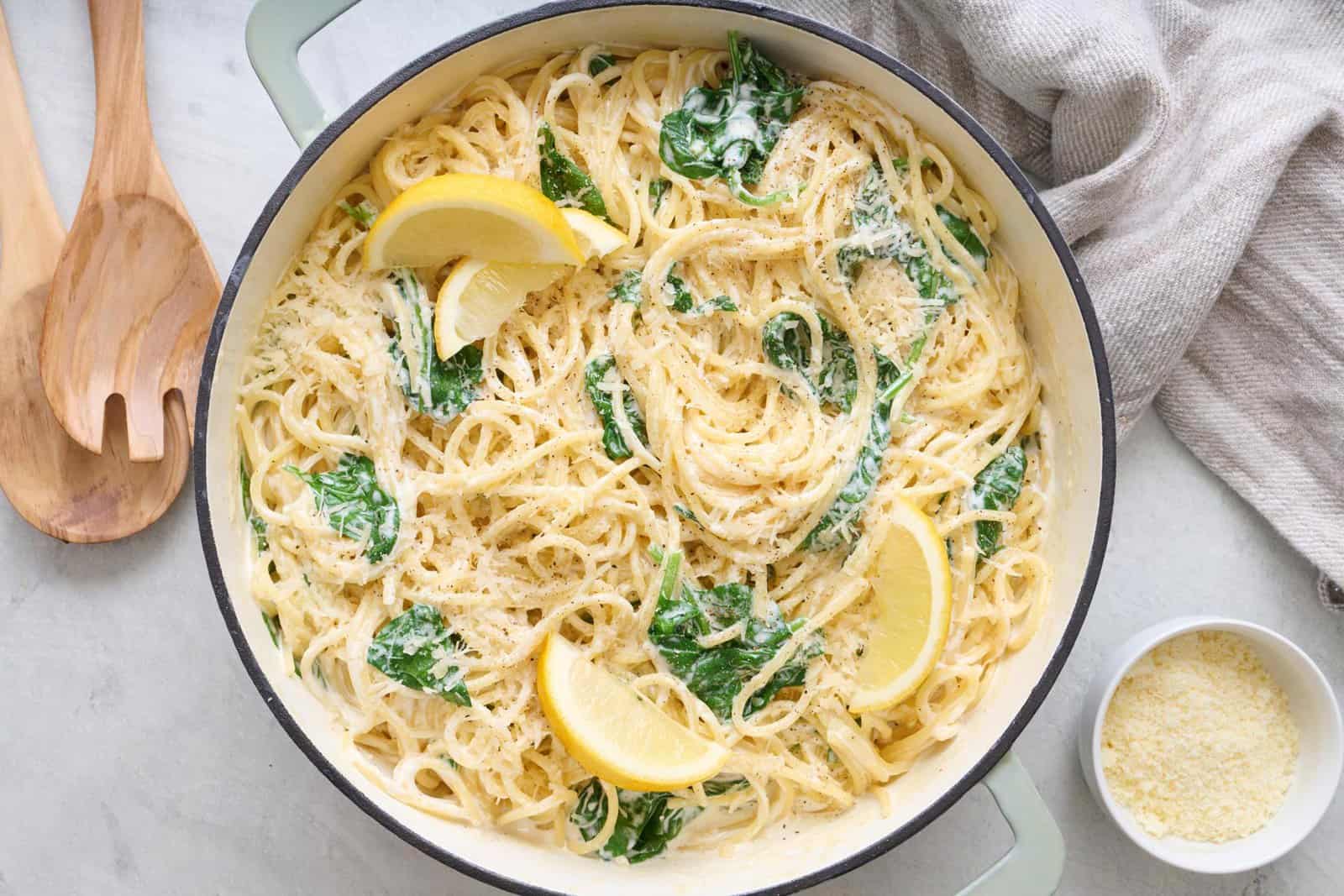
GF pasta tossed with whole-milk ricotta, lemon zest, lemon juice, fresh herbs, and a generous amount of pasta water to create a light, creamy sauce that coats every piece of pasta without being heavy. Naturally GF except for the pasta. The technique: the ricotta is stirred into the hot pasta off the heat — heat makes ricotta rubbery rather than creamy. The cold ricotta meets the hot pasta and the starchy pasta water creates the sauce consistency. Fresh herbs — basil, mint, or parsley — are added at the very end. A 20-minute dinner that reads as more complex than it is.
Ingredients
- 400g GF penne or rigatoni
- 1 cup whole-milk ricotta
- Zest and juice of 2 lemons
- 2 garlic cloves minced + 2 tablespoon olive oil + salt + white pepper
- Fresh basil and mint + extra Parmesan
- Reserved pasta water
Instructions
- Cook the GF pasta in heavily salted boiling water. Reserve 1.5 cups pasta water. Drain when al dente.
- While the pasta cooks, in a large bowl mix together the ricotta, lemon zest, lemon juice, olive oil, minced garlic, salt, and white pepper until smooth.
- Add the hot drained GF pasta directly to the ricotta mixture. Do not do this on heat — remove the bowl from any heat source. Toss vigorously, adding the reserved pasta water ¼ cup at a time until the ricotta becomes a creamy, pourable sauce that coats the pasta. You may use up to 1 cup of pasta water.
- Add the fresh basil and mint leaves and toss gently. Serve immediately with grated Parmesan over the top.
- Reserve 1 cup of pasta cooking water before draining — gluten-free pasta releases more starch into the cooking water than wheat pasta, making it even more valuable for emulsifying sauces. Add it a splash at a time until the sauce reaches a glossy, coating consistency.
6. GF Pasta e Fagioli
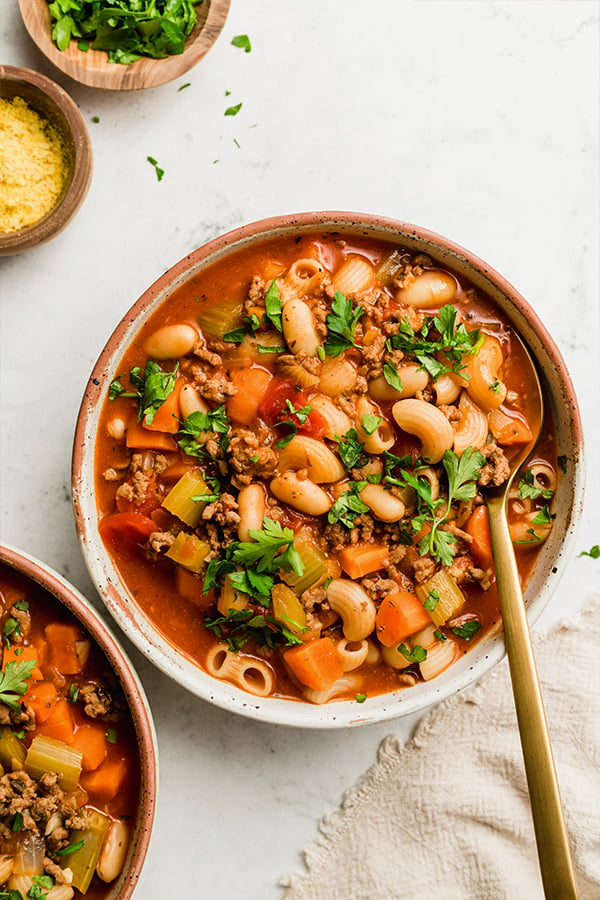
A thick Italian bean soup with GF pasta — cannellini beans, pancetta (or halal turkey bacon), onion, celery, carrot, garlic, crushed tomatoes, rosemary, and GF small pasta shapes simmered directly in the broth until the pasta is cooked and the soup has thickened. The pasta cooks in the soup rather than separately — add it in the last 10 minutes of cooking. GF pasta cooked directly in a thick soup requires slightly more liquid than you think because GF pasta absorbs more water than wheat pasta. The soup should be thick and dense — Italian-style 'spoonable thick' rather than brothy thin.
Ingredients
- 1 can (400g) cannellini beans, half mashed and half left whole
- 100g halal turkey bacon, diced + 1 onion + 2 celery stalks + 2 carrots + 3 garlic cloves
- 1 can crushed tomatoes + 1 litre GF chicken or vegetable broth
- 1 sprig rosemary + salt + pepper
- 150g GF small pasta shapes (ditalini, small elbows)
Instructions
- In a large pot over medium heat, cook the diced halal turkey bacon until slightly crispy. Add the diced onion, celery, and carrots and cook until softened — 10 minutes. Add the garlic and rosemary and cook 2 minutes.
- Add the crushed tomatoes and cook 5 minutes. Add the GF broth and the mashed and whole cannellini beans. Stir to combine. Season with salt and pepper. Simmer 20 minutes.
- Add the GF pasta shapes to the simmering soup. Cook, stirring frequently, for the time stated on the GF pasta package minus 2 minutes — the pasta will continue to cook in the residual heat. If the soup becomes too thick, add more broth. Remove the rosemary sprig.
- Serve in deep bowls with a drizzle of good olive oil over the top and grated Parmesan alongside.
- Reserve 1 cup of pasta cooking water before draining — gluten-free pasta releases more starch into the cooking water than wheat pasta, making it even more valuable for emulsifying sauces. Add it a splash at a time until the sauce reaches a glossy, coating consistency.
5. GF Cold Sesame Noodles
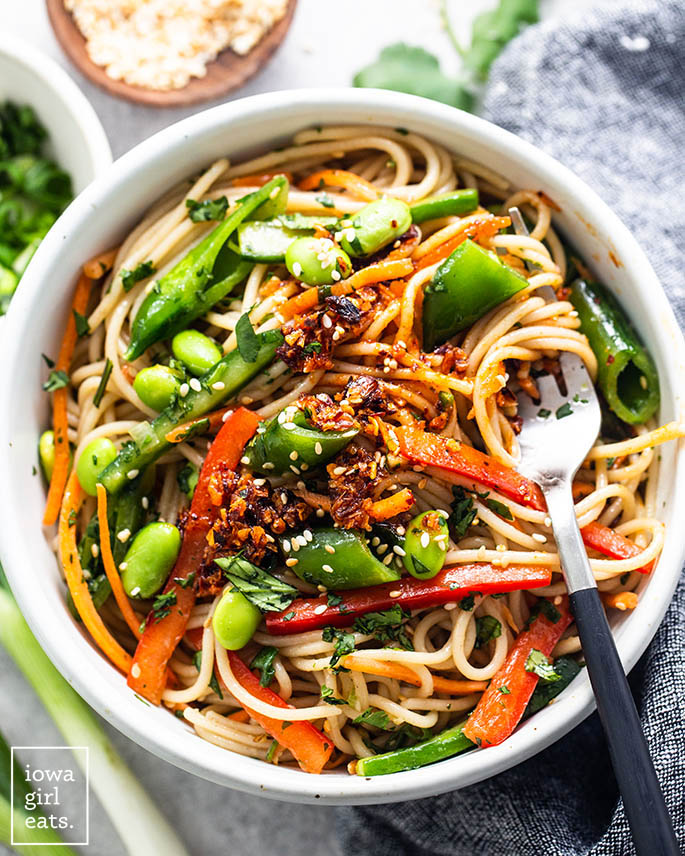
GF rice noodles tossed cold in a peanut-sesame sauce (peanut butter, tamari, sesame oil, rice vinegar, garlic, ginger, honey, chili) with shredded cucumber, julienned carrot, sliced green onion, and a garnish of sesame seeds. Naturally GF when rice noodles and tamari are used. Rice noodles are the GF noodle that requires no cooking — just 5 minutes soaking in boiling water, then drain and cool. The peanut-sesame sauce is the recipe that every person who has eaten it in my household has requested within the same week.
Ingredients
- 300g GF rice noodles (wide or medium width), prepared per package (typically soaked in boiling water 5 minutes)
- Peanut sesame sauce: 4 tablespoon peanut butter + 3 tablespoon tamari (GF) + 2 tablespoon rice vinegar + 1 tablespoon sesame oil + 2 garlic cloves grated + 1 teaspoon grated ginger + 1 tablespoon honey + chili oil or sriracha to taste + 3–4 tablespoon warm water to loosen
- Garnish: shredded cucumber, julienned carrot, sliced green onion, sesame seeds, extra chili oil
Instructions
- Prepare the rice noodles per package directions. Drain, rinse with cold water until completely cold, drain again. Toss with a few drops of sesame oil to prevent sticking.
- Whisk together all peanut sesame sauce ingredients, adding warm water tablespoon by tablespoon until the sauce is pourable but thick — it should coat a spoon thickly. Taste and adjust: more tamari for saltiness, more vinegar for tartness, more honey for sweetness, more chili for heat.
- Toss the cold rice noodles with the peanut sesame sauce until every noodle is coated. Add the shredded cucumber and julienned carrot and toss to combine.
- Serve in bowls at room temperature or cold. Top with sliced green onion, sesame seeds, and a drizzle of additional chili oil. This dish can be made 2 hours ahead and refrigerated — bring back to room temperature before serving and loosen with a tablespoon of warm water if needed.
- Reserve 1 cup of pasta cooking water before draining — gluten-free pasta releases more starch into the cooking water than wheat pasta, making it even more valuable for emulsifying sauces. Add it a splash at a time until the sauce reaches a glossy, coating consistency.
4. GF Pasta with Roasted Tomatoes and Halal Chicken Sausage
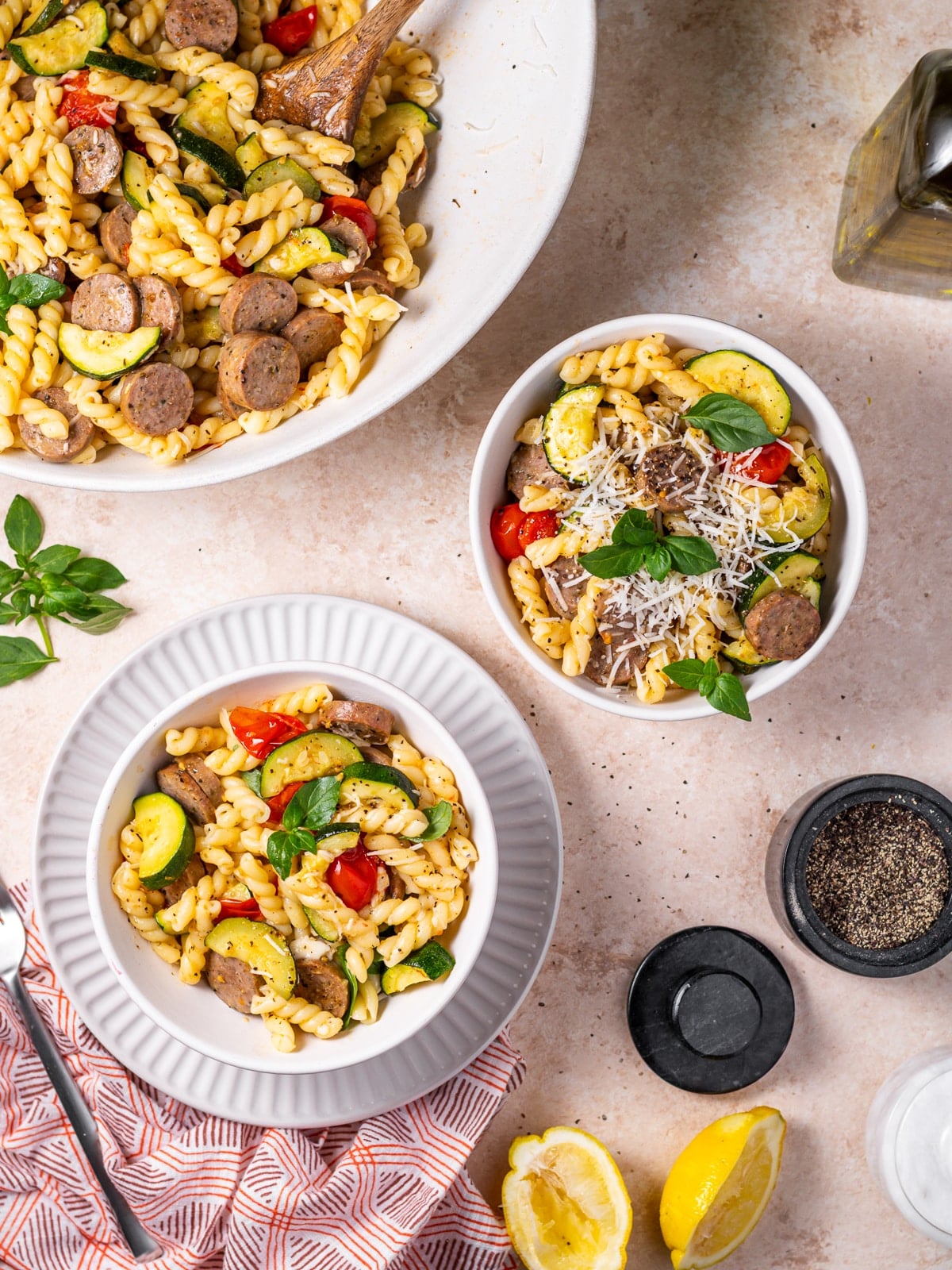
Halal chicken sausage sliced and roasted on a sheet pan with cherry tomatoes and garlic until caramelized, then tossed with GF pasta, the roasting pan juices, olive oil, fresh basil, and Parmesan. Sheet pan pasta: the sauce is made in the oven while the pasta cooks on the stovetop, then everything comes together in the serving bowl. Naturally GF except the pasta — check that your halal chicken sausage brand is GF (some contain breadcrumbs as a filler). The roasted tomatoes burst and become a concentrated, sweet-acid sauce mixed with the chicken sausage fat and olive oil.
Ingredients
- 400g GF pasta (penne or rigatoni)
- 400g halal chicken sausage, sliced into ½-inch rounds
- 2 cups cherry tomatoes + 4 garlic cloves roughly chopped + 3 tablespoon olive oil + salt + pepper
- Fresh basil + grated Parmesan + red pepper flakes
Instructions
- Preheat the oven to 425°F. On a large sheet pan, spread the sliced halal chicken sausage, cherry tomatoes, and garlic. Drizzle with olive oil, season with salt, pepper, and red pepper flakes. Toss to coat.
- Roast at 425°F for 20 minutes until the sausage is caramelized and the tomatoes have burst and concentrated. The sheet pan will have a pool of caramelized tomato juice, oil, and sausage fat — this is the sauce.
- Cook the GF pasta in heavily salted boiling water while the pan roasts. Reserve 1 cup pasta water. Drain when al dente.
- Add the hot drained GF pasta to the sheet pan (or scrape everything from the pan into a serving bowl). Toss vigorously to combine, adding pasta water as needed to loosen the sauce. Add torn fresh basil and grated Parmesan. Serve directly from the pan.
- Reserve 1 cup of pasta cooking water before draining — gluten-free pasta releases more starch into the cooking water than wheat pasta, making it even more valuable for emulsifying sauces. Add it a splash at a time until the sauce reaches a glossy, coating consistency.
3. GF Pasta with Halal Lamb and Mint
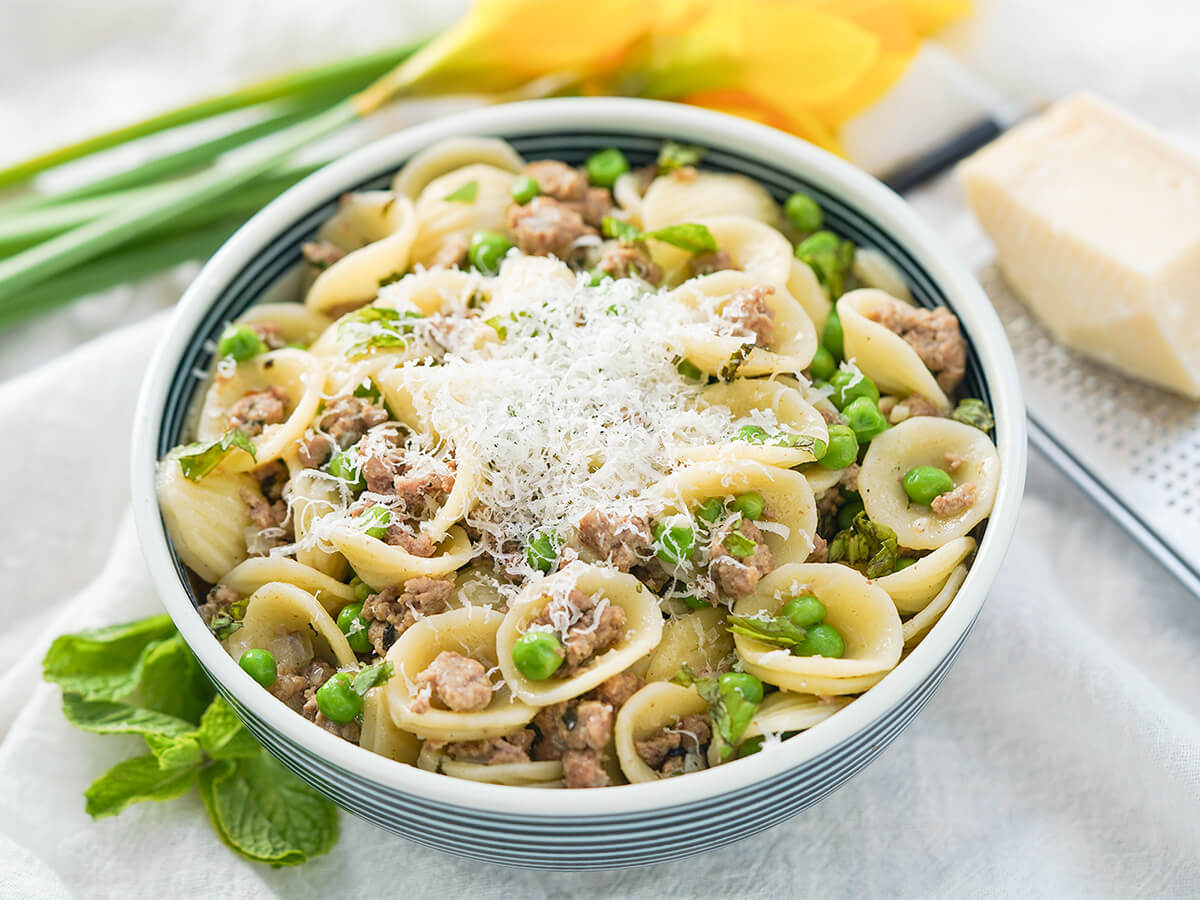
GF pasta tossed with halal ground lamb cooked with garlic, cumin, cinnamon, fresh mint, and a splash of lemon — crumbled feta added at serving. The lamb-mint-feta combination is Mediterranean in origin and complete in flavor with no additional sauce required — the lamb fat and the starchy pasta water create the sauce. Use GF penne or rigatoni rather than spaghetti — the lamb sauce clings to tube shapes better than strands. A dinner that uses the GF pasta correctly as a vehicle for the lamb rather than as the feature, which is the correct GF pasta strategy when the sauce is strong.
Ingredients
- 400g GF penne or rigatoni
- 400g halal ground lamb
- 3 garlic cloves + 1 teaspoon cumin + ¼ teaspoon cinnamon + juice of 1 lemon + 3 tablespoon fresh mint + salt + pepper
- ½ cup crumbled feta + extra fresh mint for serving
- Reserved pasta water
Instructions
- Cook the GF pasta in heavily salted boiling water. Reserve 1 cup pasta water. Drain when al dente.
- While the pasta cooks, cook the halal ground lamb in a hot skillet over medium-high heat, breaking it up until cooked through and any fat has rendered — about 8 minutes. Add the garlic, cumin, and cinnamon and cook 2 minutes until fragrant. Add the lemon juice and fresh mint and stir to combine. Season with salt and pepper.
- Add the drained GF pasta to the lamb in the skillet. Toss vigorously, adding pasta water as needed to create a light coating — the pasta water emulsifies with the lamb fat and creates the sauce.
- Serve in bowls with crumbled feta and additional fresh mint scattered over the top.
- Reserve 1 cup of pasta cooking water before draining — gluten-free pasta releases more starch into the cooking water than wheat pasta, making it even more valuable for emulsifying sauces. Add it a splash at a time until the sauce reaches a glossy, coating consistency.
2. GF Baked Pasta (Pastitsio-Style)
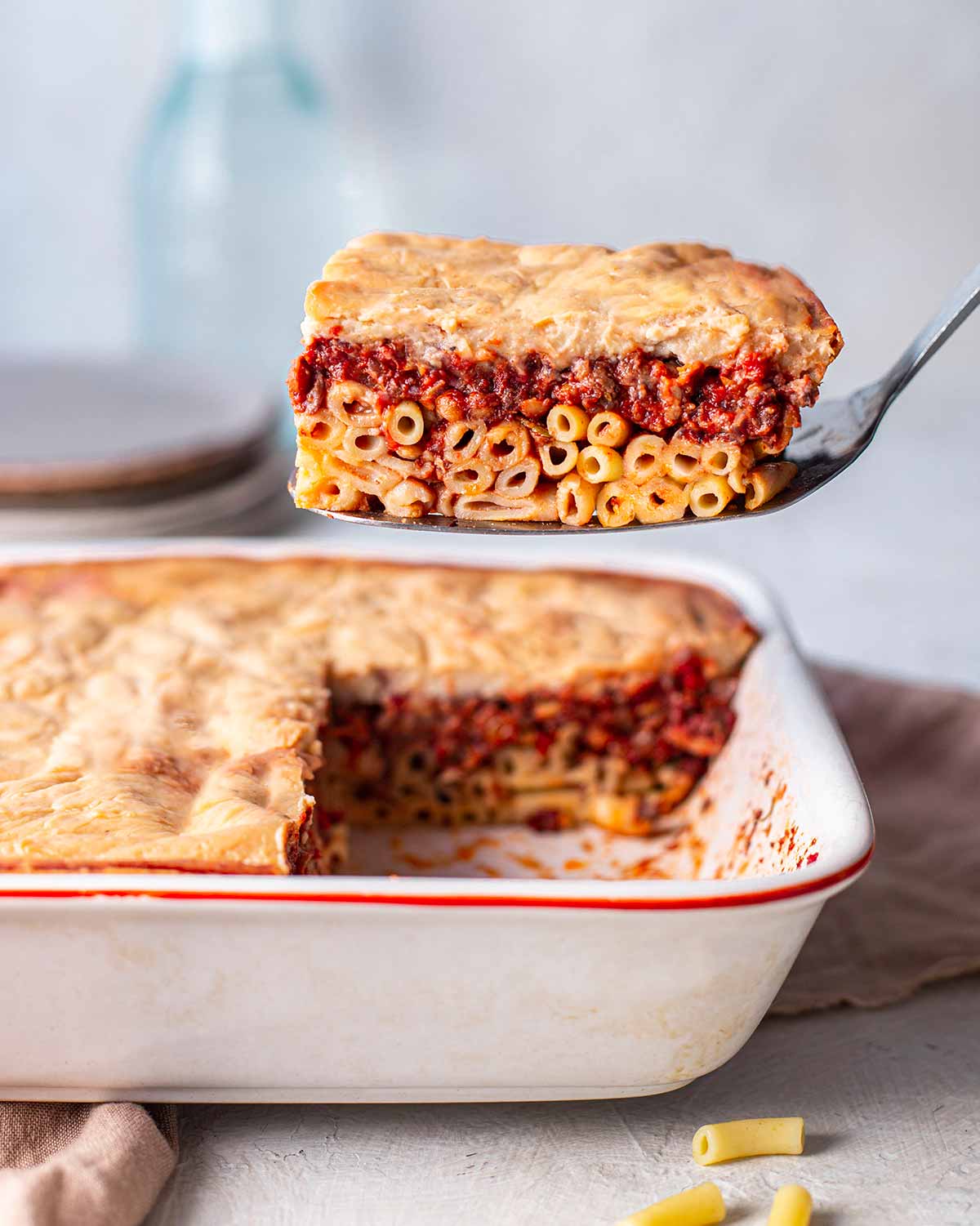
GF pasta baked in a casserole with a halal ground beef and tomato layer and a creamy béchamel sauce made with GF flour (or cornstarch). A GF version of the Greek pastitsio or Italian baked ziti. The béchamel is the only component that requires a GF adjustment — replace the wheat flour with cornstarch (1 tablespoon cornstarch per cup of milk produces the same thickness as 2 tablespoon flour). The baked pasta casserole holds together better with GF pasta than with wheat pasta because GF pasta's higher starch content acts as a slightly better binder in the baked format.
Ingredients
- 400g GF tube pasta (ziti or rigatoni), cooked and drained
- Meat sauce: 400g halal ground beef + 1 onion + 3 garlic cloves + 1 can crushed tomatoes + 1 teaspoon cinnamon + 1 teaspoon cumin + salt
- GF béchamel: 3 cups milk + 3 tablespoon cornstarch dissolved in ¼ cup cold milk + 2 tablespoon butter + salt + pinch of nutmeg + 1 egg yolk
- ½ cup grated Parmesan for the top
Instructions
- Make the meat sauce: cook the ground beef with diced onion and garlic until browned. Add the crushed tomatoes, cinnamon, and cumin. Simmer 15 minutes. Season with salt.
- Make the GF béchamel: melt the butter in a saucepan. Add the milk and heat until warm. Whisk in the cornstarch slurry and continue whisking over medium heat until the sauce thickens — about 5 minutes. Remove from heat, season with salt and nutmeg, and whisk in the egg yolk.
- Preheat the oven to 375°F. Layer the cooked GF pasta in a greased baking dish. Pour the meat sauce over the pasta. Pour the GF béchamel over the top. Sprinkle grated Parmesan over the béchamel.
- Bake at 375°F for 35 minutes until the top is golden and the casserole is bubbling at the edges. Let rest 10 minutes before slicing and serving.
- Reserve 1 cup of pasta cooking water before draining — gluten-free pasta releases more starch into the cooking water than wheat pasta, making it even more valuable for emulsifying sauces. Add it a splash at a time until the sauce reaches a glossy, coating consistency.
1. GF Pasta with Halal Chicken and Sun-Dried Tomato Cream Sauce

The number-one GF pasta recipe in this collection earns its position because it is the recipe that consistently produces the 'this is gluten-free?' response — GF penne tossed with pan-cooked halal chicken breast, a cream sauce made from heavy cream, sun-dried tomatoes, garlic, spinach, and Parmesan, and a generous amount of reserved pasta water. Naturally GF (no flour thickener in the cream sauce — the cream reduces naturally). The Tuscan-style cream sauce is rich enough to cover any GF pasta flavor completely, and the sun-dried tomatoes provide a concentrated, sweet-acid depth that makes the sauce far more complex than its short ingredient list suggests. My husband's answer to 'what's the best pasta you've had recently' has been this recipe for three months running.
Ingredients
- 400g GF penne
- 2 halal chicken breasts, sliced thin
- Sun-dried tomato cream sauce: 3 tablespoon oil from sun-dried tomato jar + 4 garlic cloves + ⅓ cup sun-dried tomatoes chopped + 1 cup heavy cream + 2 cups baby spinach + ½ cup grated Parmesan + salt + pepper + red pepper flakes
- Reserved pasta water
Instructions
- Season the sliced halal chicken with salt and pepper. Heat the sun-dried tomato oil in a wide skillet over medium-high heat. Cook the chicken slices for 3 to 4 minutes per side until golden and cooked through. Remove to a plate.
- In the same skillet, add the garlic and cook 1 minute. Add the chopped sun-dried tomatoes and cook 2 minutes. Pour in the heavy cream, bring to a gentle simmer, and cook 3 minutes until the cream begins to thicken slightly.
- Cook the GF penne in heavily salted boiling water while the sauce simmers. Reserve 1 cup pasta water. Drain when al dente.
- Add the baby spinach to the cream sauce and stir until wilted — about 1 minute. Add the grated Parmesan and stir until melted. Return the cooked chicken to the sauce. Add the drained GF penne and toss vigorously, adding pasta water as needed until every piece of pasta is coated in the glossy cream sauce. Serve immediately in warm bowls with additional Parmesan and red pepper flakes.
- Reserve 1 cup of pasta cooking water before draining — gluten-free pasta releases more starch into the cooking water than wheat pasta, making it even more valuable for emulsifying sauces. Add it a splash at a time until the sauce reaches a glossy, coating consistency.
Frequently Asked Questions
What type of GF pasta is best for different sauces?
Rice-based GF pasta is the most neutral in flavor and is the best choice for light sauces like aglio e olio, pesto, lemon ricotta, and cacio e pepe where the pasta flavor is part of the dish rather than covered by the sauce. Chickpea or lentil pasta has a more pronounced flavor (slightly nutty and earthy) that pairs well with heavy, rich sauces like butter chicken pasta, beef ragù, and Alfredo where the sauce covers the pasta flavor entirely — the protein content of chickpea/lentil pasta is also significantly higher than rice pasta, which makes it a better nutritional choice for protein-focused meals. Corn pasta falls between the two in flavor and works well for most sauce types. For baked pasta dishes (lasagna, pastitsio, baked ziti), any GF tube-shaped pasta works because the baking process softens GF pasta's texture differences.
Why does GF pasta get mushy so quickly?
GF pasta gets mushy quickly for two reasons: it has a narrower window between undercooked and overcooked than wheat pasta (approximately 1 to 2 minutes versus 3 to 4 minutes for wheat pasta), and it continues cooking rapidly in its residual heat after draining because GF starches absorb water faster than gluten-containing starch. The solutions: taste the pasta 2 full minutes before the package time, drain it the moment it reaches al dente, rinse briefly with cold water if serving in a cold dish (only acceptable for cold pasta — never rinse hot pasta that goes into a hot sauce), toss immediately with sauce or oil after draining so the pasta stops cooking, and serve immediately. GF pasta does not hold on a buffet or in a covered dish for more than 15 minutes without becoming mushy. Cook it close to serving time and serve it immediately.
GF pasta is a correct technique problem more than a product problem. Heavily salted water. Reserve the pasta water. Drain immediately when al dente. Sauce within 30 seconds. Serve immediately. Follow these steps with any of these 15 recipes and the GF pasta is indistinguishable from the wheat version — and in the case of the Tuscan chicken cream sauce, genuinely better than any pasta night we have had. 🍝✨
More From FoodieFriends
- 25 Easy Gluten-Free Dinners
- 29 Gluten-Free Desserts
- 23 Gluten-Free Breakfast Ideas
- 21 Gluten-Free Party Food Ideas
- 25 High-Protein Dinner Recipes
- 23 High-Protein Pasta Recipes
- 30 Easy Air Fryer Dinners
- 15 High-Protein Chicken Bowls
- Freezer-Friendly Chicken Fajita Bowls


Comments
No Comments