
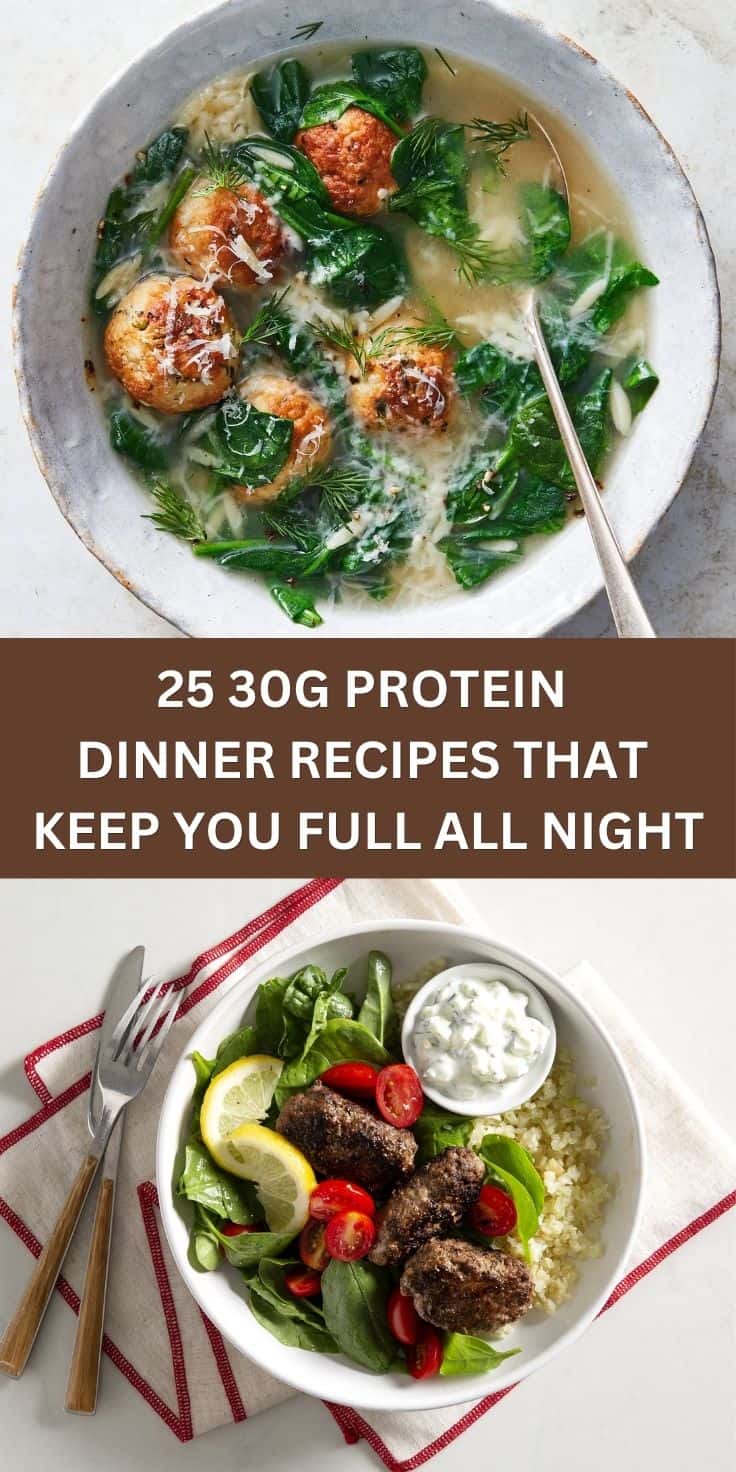
My husband's protein tracking has a specific evening problem that the breakfast and lunch collections address from the front of the day — if dinner delivers fewer than 30 grams of protein, the total daily protein target becomes mathematically impossible to reach without adding a protein snack at 9 PM, which disrupts the satiety trajectory he is trying to maintain and which he finds considerably less satisfying than a dinner that handles the protein requirement and leaves him comfortably full until morning without intervention.
The full-all-night specification in this collection is not a marketing description — it is the specific outcome that high-protein dinners produce through the satiety mechanism of protein's slower digestion rate relative to carbohydrates. A dinner that delivers 30+ grams of protein from a complete protein source (meat, fish, eggs, or a complementary combination of plant proteins) produces satiety that extends meaningfully past the time a carbohydrate-forward dinner of equivalent calories would, which is why the 30g threshold is the relevant marker rather than a calorie target.
Saad's dinner protein relationship is less systematic than his father's — he eats the halal beef and broccoli because he likes stir-fries, the chana masala because it is the most Pakistani-flavored dinner in this collection and he connects it to the daal his grandmother makes, and the chicken shawarma bowl because it is the dinner he describes as "the same as lunch but for dinner," which is accurate in the sense that the shawarma-spiced chicken over rice bowl is structurally similar to several lunches he endorses. His protein tracking is currently limited to the observation that chicken is "the protein one" when his mother asks which dinner he wants.
My mother in Pakistan's perspective on high-protein dinners is that every dinner she has ever made is high-protein — gosht, daal, chana, fish — and that the practice of tracking protein in grams is a Western fitness culture import that she understands intellectually but does not practice, because Pakistani cooking tradition produces high-protein dinners naturally through its reliance on legumes, meat, and eggs as the primary flavoring and structural ingredients of every meal. She is correct that chana masala, halal beef karahi, and daal gosht are all 30g+ protein dinners that she has been making without a protein calculator for 40 years.
All 25 dinners in this collection use halal meat proteins throughout — halal beef, halal ground turkey, halal chicken, and halal lamb where specified. Plant protein sources (chickpeas, lentils, edamame) appear in the vegetarian and semi-vegetarian options and are combined with dairy or eggs to reach the 30g threshold where plant proteins alone fall short. The protein count for each dinner is noted in the recipe introduction based on the primary protein sources — individual variations in ingredient brands, portion sizes, and specific cuts will affect the actual total.
The father-in-law's cardiac diet needs appear where the recipe naturally accommodates adaptation — lower-sodium variations, soft-textured serving suggestions (the beef and broccoli served over soft rice, the turkey meatball soup as the complete meal, the lentil soup without the crispy topping elements). Most of the soup and stew recipes in this collection are naturally suitable for soft-food cardiac diets with minor salt adjustments.
The sister-in-law in her postpartum recovery period has specific requirements that align with several of these dinners — high protein, warming, easy to eat, and nourishing. The one-pot chicken and rice, turkey meatball soup, lentil soup, and chana masala are the four recipes in this collection most appropriate for the postpartum meal train delivery context, requiring no reheating adjustment, traveling well in sealed containers, and being soft enough to eat without significant chewing effort during the recovery period.
Whether you are closing a daily protein deficit at dinner and need recipes that consistently deliver 30g+ in a single serving, feeding a household where the adult members have protein targets and the children need the same dinner adapted to child-appropriate portions, building a weeknight rotation where every dinner is both genuinely delicious and nutritionally complete without supplementation, or simply wanting the 25 dinners that leave everyone at the table genuinely satisfied until morning, this is that collection.
25 Dinner Recipes with 30g+ Protein Per Serving
25. Halal Beef and Broccoli Stir-Fry
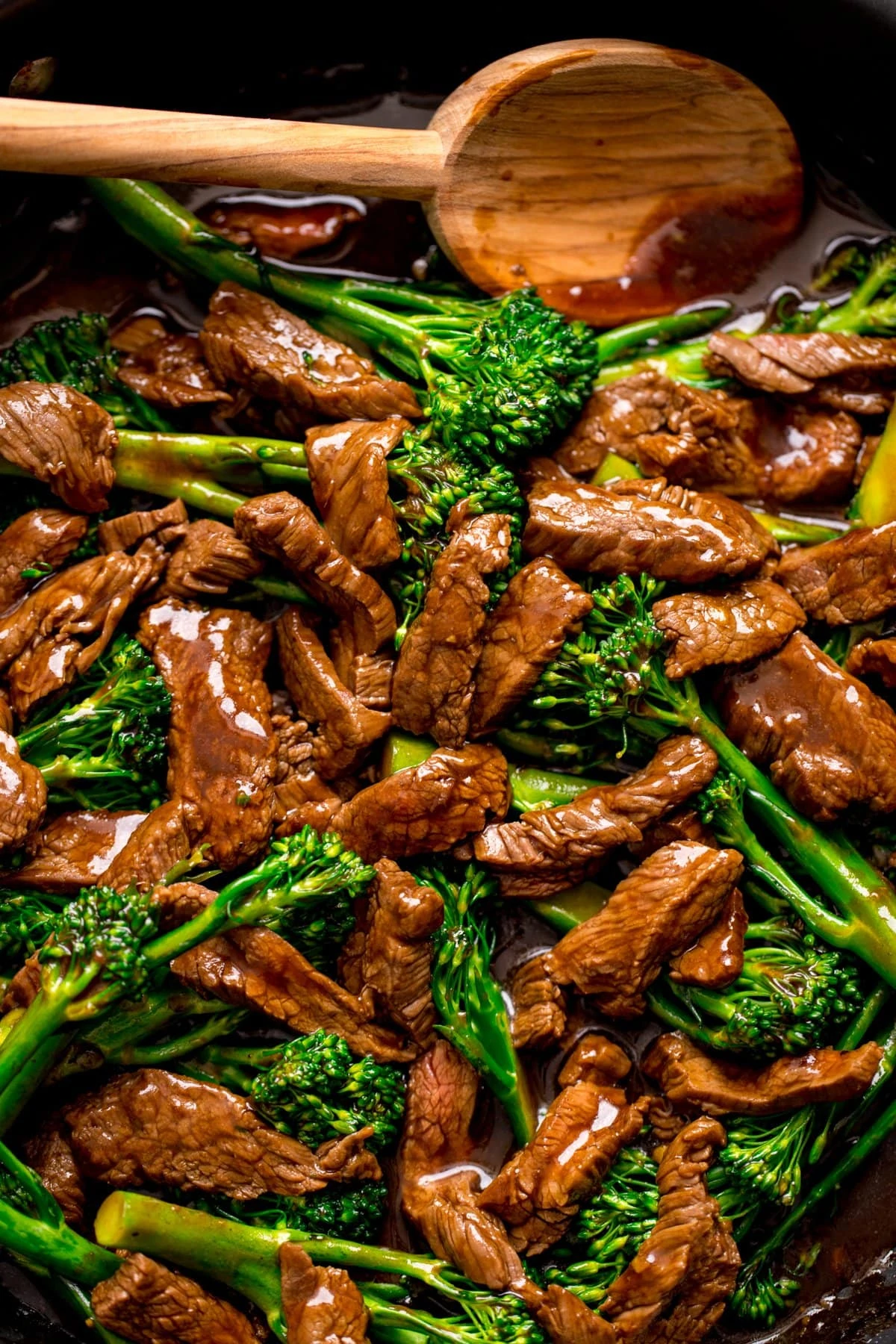
Halal flank steak sliced thin against the grain, velveted in baking soda briefly, stir-fried over highest possible heat with broccoli in a savory brown sauce of oyster sauce, soy sauce, sesame oil, garlic, ginger, and a little brown sugar — the Chinese-American takeout dinner made at home in 20 minutes with halal beef. 35-40g protein per serving from the beef (28g per 4 oz) and the broccoli's additional plant protein. Saad identifies this as "the broccoli beef one" and eats the beef first and the broccoli second in a reliable two-stage process.
Ingredients (serves 4)
- 1.5 lbs halal flank steak or sirloin, sliced thin against the grain + 1 teaspoon baking soda (velvet the beef: toss with baking soda and 1 teaspoon cornstarch, rest 15 min, rinse well)
- 4 cups broccoli florets + 4 garlic cloves minced + 1-inch ginger grated
- Sauce: 3 tablespoon oyster sauce + 2 tablespoon soy sauce + 1 tablespoon sesame oil + 1 teaspoon brown sugar + 2 teaspoon cornstarch + ½ cup beef broth
Instructions
- Velvet beef: toss with baking soda and cornstarch, rest 15 minutes, rinse completely under cold water. Pat dry. Mix sauce ingredients. Stir-fry beef in batches over highest possible heat in 1 tablespoon oil — 90 seconds, set aside. Stir-fry broccoli in same wok 3 minutes. Add garlic and ginger 30 seconds. Return beef to wok. Add sauce. Toss until sauce thickens and coats everything, 2 minutes. Serve immediately over steamed rice. ~35-40g protein per serving.
- Preheat your cooking surface to the correct temperature before adding the protein — searing requires high heat to create the Maillard reaction, while braising requires lower, steady heat for the collagen to break down.
- Cook the protein to the correct internal temperature: chicken and turkey to 165°F, beef and lamb to 145°F minimum. Use an instant-read thermometer at the thickest point for accuracy.
- Rest the protein 5 minutes before slicing — this allows the juices to redistribute and keeps every bite moist rather than running out when cut.
- Plate with the grain or vegetable base, add any sauce or dressing, and serve immediately. Store leftovers in sealed containers up to 4 days.
24. Chicken Shawarma Bowl
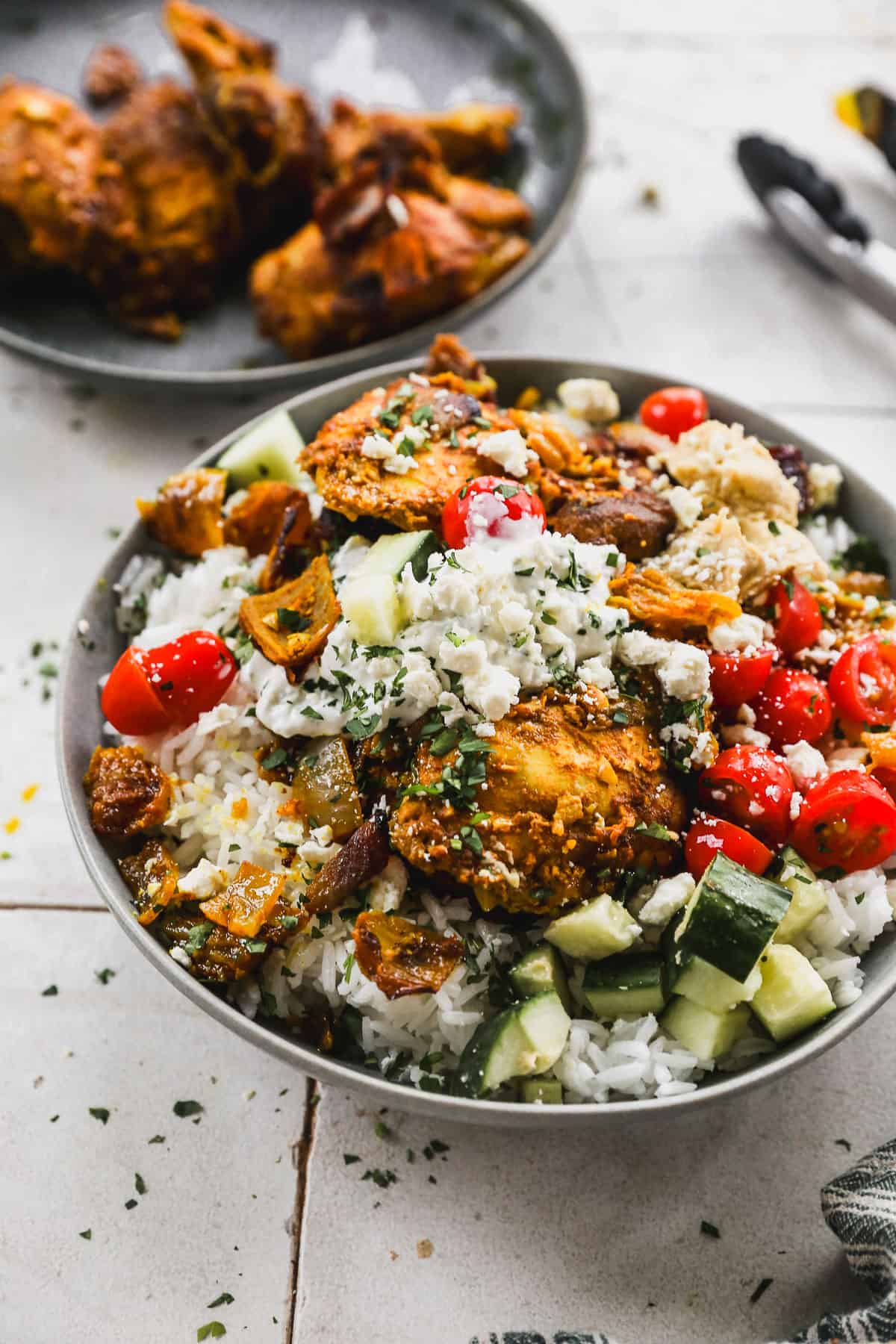
Shawarma-spiced halal chicken thighs (cumin, coriander, turmeric, smoked paprika, cinnamon, cardamom, garlic, lemon, olive oil) seared in a skillet or grilled, sliced thin, and built into a bowl over rice or cauliflower rice with cucumber, tomato, pickled vegetables, hummus, and garlic toum sauce — 38-42g protein per bowl from the chicken (30g per 4 oz thigh) plus the hummus and yogurt sauce components. The weeknight shawarma bowl that takes 25 minutes and tastes like the restaurant version that takes 6 hours of rotisserie cooking.
Ingredients (serves 4)
- 1.5 lbs halal chicken thighs + Shawarma marinade: 1 teaspoon each cumin, coriander, turmeric, smoked paprika + ½ teaspoon cinnamon + ¼ teaspoon cardamom + 4 garlic cloves minced + juice of 1 lemon + 3 tablespoon olive oil + salt — marinate 30 min to overnight
- 4 cups cooked rice + 1 English cucumber diced + 2 cups cherry tomatoes halved + hummus + garlic sauce (toum) + pickled turnip or vegetables
Instructions
- Cook marinated chicken in a hot skillet or grill 5-6 min per side until 165°F. Rest 5 min, slice thin. Build bowls: rice base, sliced shawarma chicken, cucumber, tomatoes, pickled vegetables. Add hummus and garlic sauce. Scatter parsley. Squeeze lemon. ~38-42g protein per bowl.
- Preheat your cooking surface to the correct temperature before adding the protein — searing requires high heat to create the Maillard reaction, while braising requires lower, steady heat for the collagen to break down.
- Cook the protein to the correct internal temperature: chicken and turkey to 165°F, beef and lamb to 145°F minimum. Use an instant-read thermometer at the thickest point for accuracy.
- Rest the protein 5 minutes before slicing — this allows the juices to redistribute and keeps every bite moist rather than running out when cut.
- Plate with the grain or vegetable base, add any sauce or dressing, and serve immediately. Store leftovers in sealed containers up to 4 days.
23. One-Pot Chana Masala

Two cans of chickpeas simmered in a deeply spiced tomato sauce — onion, garlic, ginger, cumin, coriander, garam masala, amchur (dried mango powder), Kashmiri chili, and crushed tomatoes — cooked down until the sauce thickens and the chickpeas absorb the aromatics. The chana masala is the Pakistani-origin dinner in this collection that my mother in Pakistan makes in a pressure cooker and which I make in a pot on the stovetop in 35 minutes — 22-25g protein per serving from the chickpeas alone, which when paired with a chapati or naan (4-5g) and a side of yogurt (10g) reaches the 30g target comfortably. Saad connects this to his grandmother's cooking and eats it with naan without supervision.
Ingredients (serves 4)
- 2 cans (15 oz each) chickpeas, drained + 1 large onion diced + 4 garlic cloves + 1-inch ginger grated + 1 can crushed tomatoes
- Spices: 1.5 teaspoon cumin + 1 teaspoon coriander + 1 teaspoon garam masala + 1 teaspoon Kashmiri chili + ½ teaspoon turmeric + ½ teaspoon amchur (dried mango powder) + salt
- 2 tablespoon oil + fresh cilantro + lemon juice + naan or rice for serving
Instructions
- Sauté onion in oil until deep golden, 8 minutes. Add garlic and ginger, cook 2 minutes. Add all spices, stir 60 seconds until fragrant. Add crushed tomatoes, cook 5 minutes until thickened. Add chickpeas and ½ cup water. Simmer 20 minutes until sauce is thick and chickpeas are deeply flavored. Finish with lemon juice and fresh cilantro. Serve with naan or rice and plain yogurt on the side. ~22-25g protein from chickpeas; 30g+ with yogurt and naan.
- Preheat your cooking surface to the correct temperature before adding the protein — searing requires high heat to create the Maillard reaction, while braising requires lower, steady heat for the collagen to break down.
- Cook the protein to the correct internal temperature: chicken and turkey to 165°F, beef and lamb to 145°F minimum. Use an instant-read thermometer at the thickest point for accuracy.
- Rest the protein 5 minutes before slicing — this allows the juices to redistribute and keeps every bite moist rather than running out when cut.
- Plate with the grain or vegetable base, add any sauce or dressing, and serve immediately. Store leftovers in sealed containers up to 4 days.
22. Grilled Chicken Caesar Dinner Salad
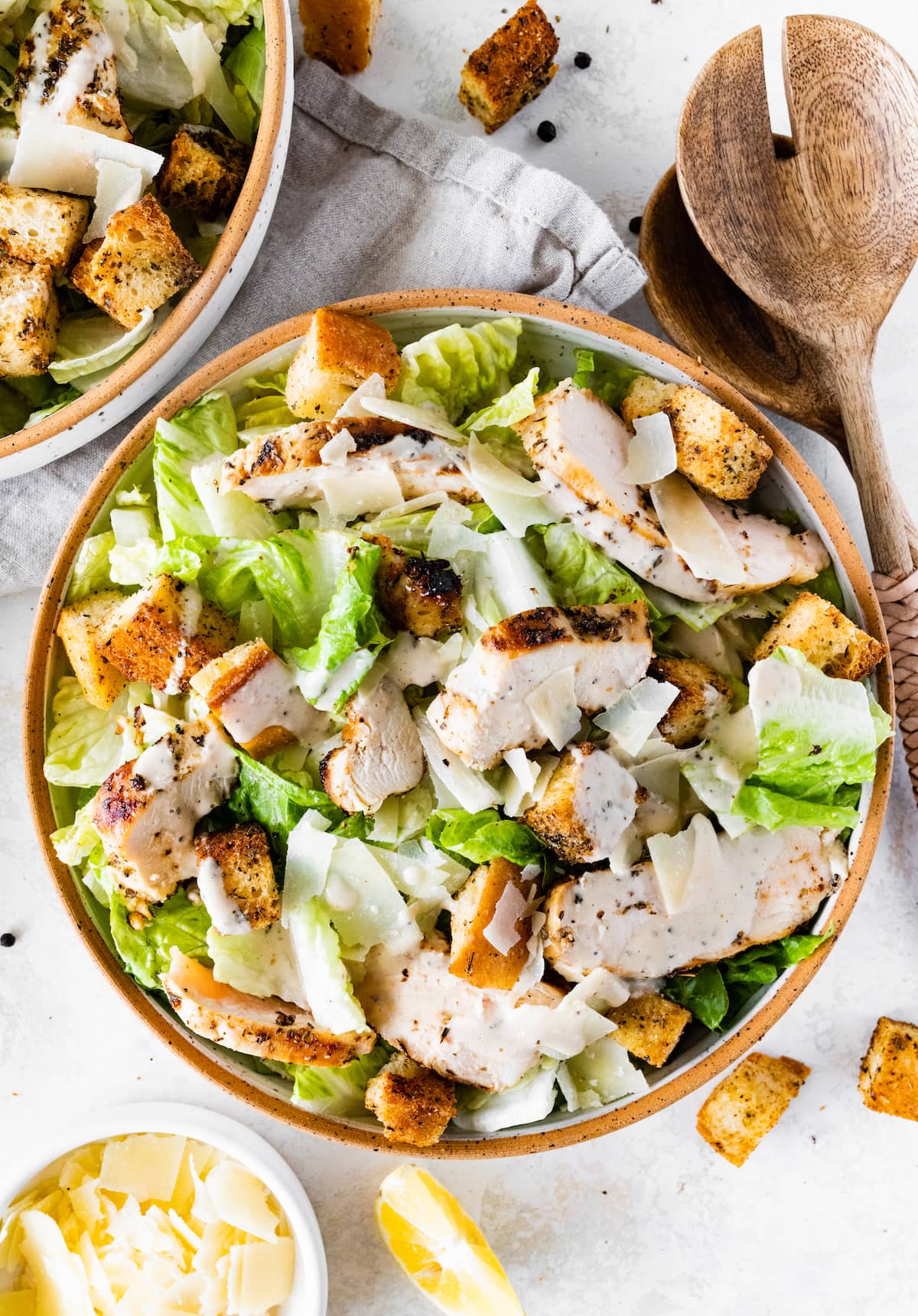
A full dinner-portion Caesar salad — two large romaine hearts, a full 5-6 oz grilled halal chicken breast per person, generous Parmesan, and homemade Caesar dressing — scaled to dinner rather than side dish quantities. The dinner Caesar produces 38-42g protein per serving from the chicken (35g per 5 oz) plus the Parmesan and egg in the dressing. Make the Caesar dressing from scratch — the mayo-anchovy-garlic-lemon-Worcestershire version takes 3 minutes and produces a dramatically better dressing than bottled Caesar, which will not be detectable as anchovy by anyone who believes they dislike anchovies.
Ingredients (serves 4)
- 4 halal chicken breasts (5-6 oz each), grilled and sliced + 4 large romaine hearts, chopped
- Caesar dressing: ½ cup mayo + 2 tablespoon lemon juice + 1 tablespoon Worcestershire + 2 garlic cloves minced + 1 teaspoon Dijon + ¼ cup Parmesan grated + salt and pepper + 2 tablespoon olive oil
- 1 cup shaved Parmesan + 2 cups croutons
Instructions
- Grill chicken breasts 6-7 min per side until 165°F. Rest 5 min, slice. Whisk dressing. Toss romaine with dressing. Divide onto 4 plates or large bowls — dinner-portion quantities, not side salad. Top with sliced chicken, shaved Parmesan, and croutons. Eat immediately. ~38-42g protein per serving.
- Preheat your cooking surface to the correct temperature before adding the protein — searing requires high heat to create the Maillard reaction, while braising requires lower, steady heat for the collagen to break down.
- Cook the protein to the correct internal temperature: chicken and turkey to 165°F, beef and lamb to 145°F minimum. Use an instant-read thermometer at the thickest point for accuracy.
- Rest the protein 5 minutes before slicing — this allows the juices to redistribute and keeps every bite moist rather than running out when cut.
- Plate with the grain or vegetable base, add any sauce or dressing, and serve immediately. Store leftovers in sealed containers up to 4 days.
21. Shrimp Stir-Fry with Vegetables
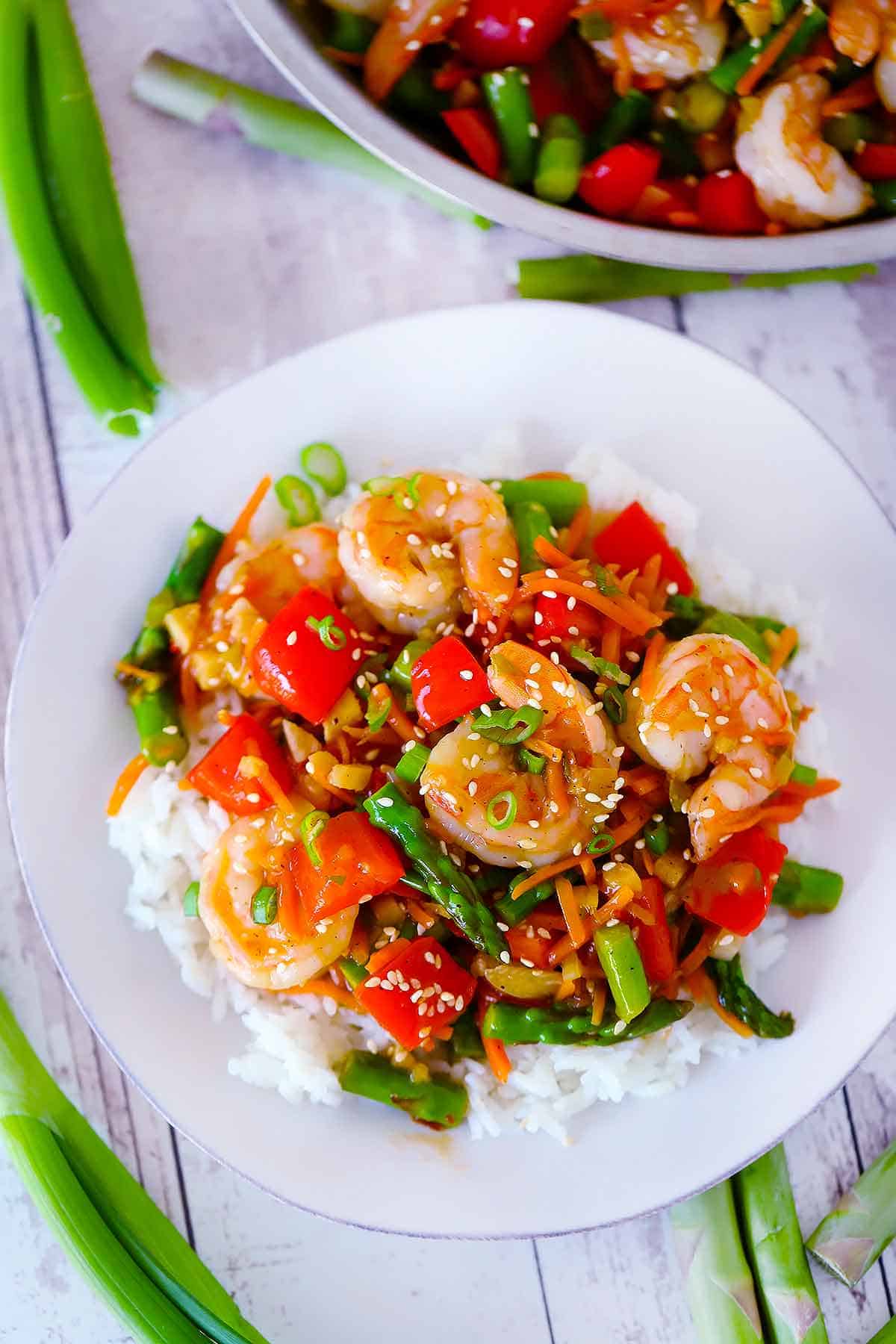
Large halal shrimp stir-fried over highest heat with snap peas, bell pepper, broccoli, garlic, and ginger in a savory sauce of soy sauce, sesame oil, rice vinegar, and honey — the fastest protein dinner in this collection at 12 minutes total from cold shrimp to plated dinner. Large shrimp (21-25 count per pound) provide 24g protein per 4 oz; 5 oz per serving reaches 30g from the shrimp alone, with the additional vegetables providing plant protein to close any gap. The shrimp stir-fry reheats poorly — make only what will be eaten at the meal.
Ingredients (serves 4)
- 1.5 lbs large halal shrimp, peeled and deveined + 2 cups snap peas + 2 bell peppers sliced + 2 cups broccoli florets + 4 garlic cloves minced + 1-inch ginger grated
- Sauce: 3 tablespoon soy sauce + 1 tablespoon sesame oil + 1 tablespoon rice vinegar + 1 teaspoon honey + 1 teaspoon cornstarch + 2 tablespoon water
Instructions
- Mix sauce. Stir-fry vegetables over highest heat in 1 tablespoon oil 4-5 minutes until crisp-tender. Add garlic and ginger 30 seconds. Push to sides. Add shrimp in a single layer, cook 1-2 minutes per side until pink and curled. Add sauce, toss to coat, cook 1 minute until sauce thickens. Serve immediately over steamed rice. ~30-35g protein per serving.
- Preheat your cooking surface to the correct temperature before adding the protein — searing requires high heat to create the Maillard reaction, while braising requires lower, steady heat for the collagen to break down.
- Cook the protein to the correct internal temperature: chicken and turkey to 165°F, beef and lamb to 145°F minimum. Use an instant-read thermometer at the thickest point for accuracy.
- Rest the protein 5 minutes before slicing — this allows the juices to redistribute and keeps every bite moist rather than running out when cut.
- Plate with the grain or vegetable base, add any sauce or dressing, and serve immediately. Store leftovers in sealed containers up to 4 days.
20. Lemon Herb Salmon with Asparagus

Halal salmon fillets (6 oz each) seared in a hot skillet until golden, finished with lemon butter, garlic, and fresh dill or herbs — plated alongside asparagus roasted at 425°F for 12 minutes with the same lemon and herb profile. Salmon provides 34g protein per 6 oz fillet — the single highest protein-per-serving count from a non-beef source in this collection. The lemon butter sauce doubles as the finishing sauce for the asparagus, making this a one-sauce dinner with two components that take the same total time.
Ingredients (serves 4)
- 4 halal salmon fillets (6 oz each), skin on + salt, pepper, garlic powder
- Lemon butter: 3 tablespoon butter + 3 garlic cloves minced + juice of 1 lemon + zest of 1 lemon + 2 tablespoon fresh dill or parsley
- 2 bunches asparagus + olive oil + salt and pepper
Instructions
- Roast asparagus 425°F 12 minutes. Season salmon. Sear skin-side up in a hot oven-safe skillet 3-4 minutes until golden. Flip, cook 3-4 more minutes until just cooked through (slightly translucent center is fine — salmon at 125°F internal is perfectly cooked). Remove from skillet. Make lemon butter in the same pan: melt butter, add garlic 30 seconds, add lemon juice and zest, stir. Drizzle over salmon and asparagus. ~34g protein per serving from salmon alone.
- Preheat your cooking surface to the correct temperature before adding the protein — searing requires high heat to create the Maillard reaction, while braising requires lower, steady heat for the collagen to break down.
- Cook the protein to the correct internal temperature: chicken and turkey to 165°F, beef and lamb to 145°F minimum. Use an instant-read thermometer at the thickest point for accuracy.
- Rest the protein 5 minutes before slicing — this allows the juices to redistribute and keeps every bite moist rather than running out when cut.
- Plate with the grain or vegetable base, add any sauce or dressing, and serve immediately. Store leftovers in sealed containers up to 4 days.
19. Turkey Meatball Soup

Homemade halal turkey meatballs (ground turkey, garlic, parsley, Parmesan, egg, breadcrumbs) simmered in a tomato-based broth with white beans and spinach — the protein-dense soup that reaches 35g protein per serving from the combination of turkey meatballs (18g per 3 meatballs), white beans (15g per cup), and the Parmesan in the broth. The most appropriate dinner from this collection for the sister-in-law in postpartum recovery — nourishing, protein-rich, soft enough to eat without effort, and deliverable in a sealed container with zero quality loss.
Ingredients (serves 6)
- Meatballs: 1 lb ground halal turkey + 2 garlic cloves minced + ¼ cup Parmesan grated + 3 tablespoon fresh parsley + 1 egg + ¼ cup breadcrumbs + salt and pepper — form into 24 small meatballs
- Soup base: 1 large onion diced + 4 garlic cloves + 1 can crushed tomatoes + 6 cups chicken broth + 1 can white beans + 3 cups baby spinach + 1 teaspoon Italian seasoning + salt and pepper
Instructions
- Brown meatballs in batches in a little oil over medium-high heat, 2 minutes per side — they finish cooking in the soup. Set aside. In same pot, sauté onion 5 minutes, add garlic 1 minute. Add crushed tomatoes, broth, Italian seasoning. Bring to a boil. Add meatballs and white beans. Simmer 20 minutes. Add spinach in the final 2 minutes. Adjust seasoning. ~35g protein per serving.
- Preheat your cooking surface to the correct temperature before adding the protein — searing requires high heat to create the Maillard reaction, while braising requires lower, steady heat for the collagen to break down.
- Cook the protein to the correct internal temperature: chicken and turkey to 165°F, beef and lamb to 145°F minimum. Use an instant-read thermometer at the thickest point for accuracy.
- Rest the protein 5 minutes before slicing — this allows the juices to redistribute and keeps every bite moist rather than running out when cut.
- Plate with the grain or vegetable base, add any sauce or dressing, and serve immediately. Store leftovers in sealed containers up to 4 days.
18. Halal Beef Stir-Fry with Noodles
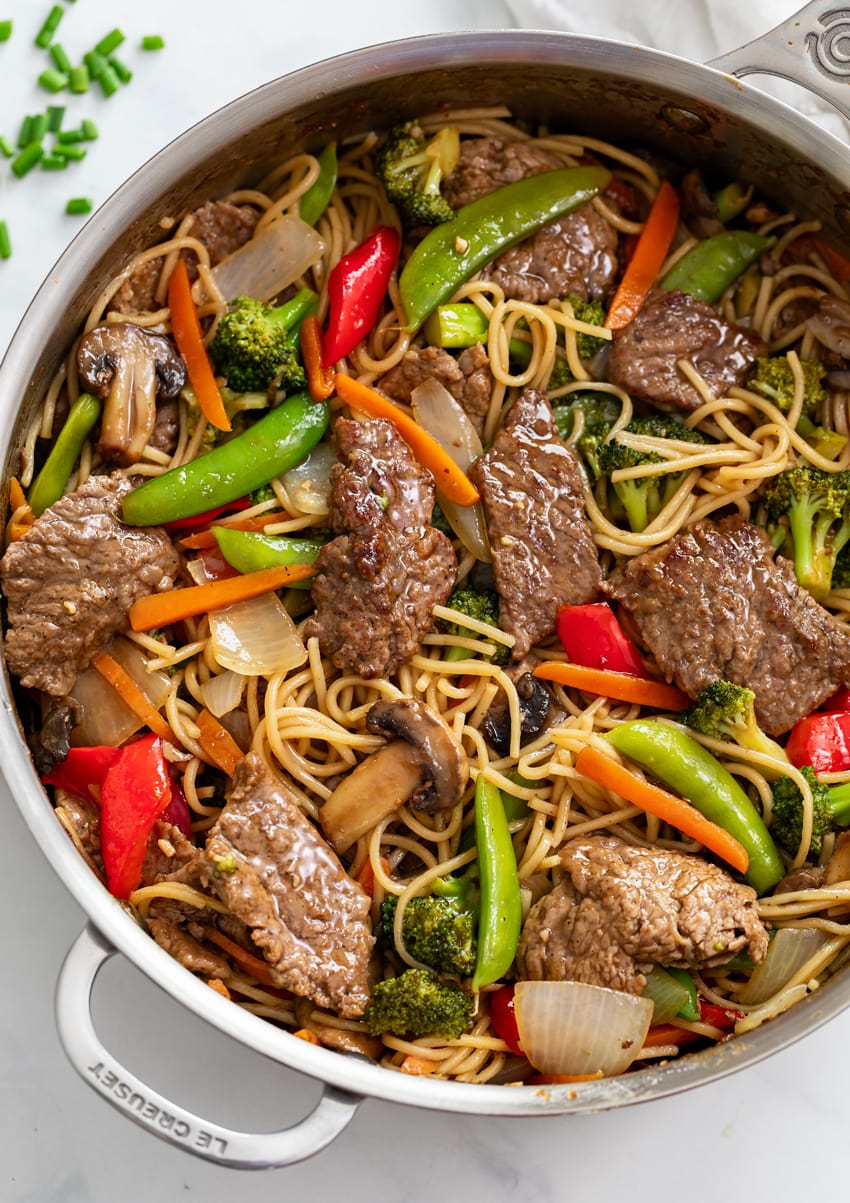
Halal beef sirloin sliced thin, stir-fried with lo mein noodles, mushrooms, snap peas, and green onions in an oyster-hoisin sauce — the noodle stir-fry that combines the protein of beef with the carbohydrate of noodles in one pan that takes 20 minutes and produces 35-38g protein per serving. The noodle component makes this the most filling dinner in the stir-fry section of this collection — the combined protein and carbohydrate satiety effect is longer-lasting than either component alone.
Ingredients (serves 4)
- 1 lb halal beef sirloin, sliced thin against the grain + 8 oz lo mein noodles, cooked and drained
- 2 cups mushrooms sliced + 1 cup snap peas + 4 green onions + 3 garlic cloves + 1-inch ginger
- Sauce: 2 tablespoon oyster sauce + 1 tablespoon hoisin + 2 tablespoon soy sauce + 1 teaspoon sesame oil + 1 teaspoon cornstarch
Instructions
- Mix sauce. Stir-fry beef in batches over highest heat, 90 sec per side. Set aside. Stir-fry vegetables 4 minutes. Add garlic and ginger 30 seconds. Add cooked noodles, toss with sauce 2 minutes. Return beef. Toss everything together until sauce coats noodles and beef evenly. Serve immediately. ~35-38g protein per serving.
- Preheat your cooking surface to the correct temperature before adding the protein — searing requires high heat to create the Maillard reaction, while braising requires lower, steady heat for the collagen to break down.
- Cook the protein to the correct internal temperature: chicken and turkey to 165°F, beef and lamb to 145°F minimum. Use an instant-read thermometer at the thickest point for accuracy.
- Rest the protein 5 minutes before slicing — this allows the juices to redistribute and keeps every bite moist rather than running out when cut.
- Plate with the grain or vegetable base, add any sauce or dressing, and serve immediately. Store leftovers in sealed containers up to 4 days.
17. Chicken Tikka Masala
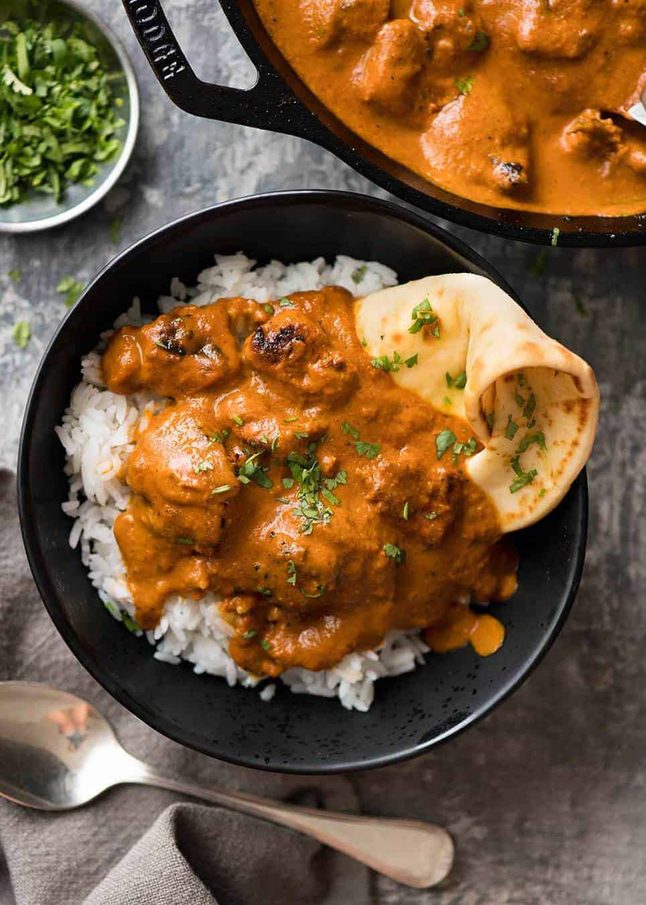
Halal chicken thighs marinated in spiced yogurt (the tikka), seared in a skillet, and simmered in a tomato-cream-spice sauce (onion, garlic, ginger, garam masala, cumin, coriander, Kashmiri chili, tomato puree, and heavy cream) until the sauce is thick and the chicken is deeply flavored throughout — 35-38g protein per serving from the chicken (28g per 4 oz thigh) and the yogurt in the marinade and the cream sauce. The most requested restaurant-style halal dinner in this collection and the one my mother in Pakistan rates as acceptably close to the subcontinent original, which is the highest rating she applies to any Western adaptation of Pakistani cuisine.
Ingredients (serves 4)
- 1.5 lbs halal chicken thighs + Tikka marinade: ½ cup yogurt + 1 tablespoon Kashmiri chili + 1 teaspoon garam masala + 1 teaspoon cumin + 4 garlic cloves grated + 1-inch ginger grated + salt — marinate 1 hour minimum
- Masala sauce: 1 large onion diced + 4 garlic cloves + 1-inch ginger + 1 can tomato puree + 1 teaspoon garam masala + 1 teaspoon cumin + 1 teaspoon coriander + 1 teaspoon Kashmiri chili + ½ teaspoon turmeric + ½ cup heavy cream + 2 tablespoon butter + salt
Instructions
- Sear marinated chicken in batches in hot oil until charred on outside. Set aside. Sauté onion in butter 8 minutes. Add garlic and ginger 2 minutes. Add spices 60 seconds. Add tomato puree, simmer 10 minutes. Add chicken and ¼ cup water. Simmer 15 minutes until chicken is cooked through. Stir in cream. Simmer 5 more minutes. Serve over basmati rice. ~35-38g protein per serving.
- Preheat your cooking surface to the correct temperature before adding the protein — searing requires high heat to create the Maillard reaction, while braising requires lower, steady heat for the collagen to break down.
- Cook the protein to the correct internal temperature: chicken and turkey to 165°F, beef and lamb to 145°F minimum. Use an instant-read thermometer at the thickest point for accuracy.
- Rest the protein 5 minutes before slicing — this allows the juices to redistribute and keeps every bite moist rather than running out when cut.
- Plate with the grain or vegetable base, add any sauce or dressing, and serve immediately. Store leftovers in sealed containers up to 4 days.
16. Lemon Herb Salmon Rice Bowl

Seared halal salmon broken into large flakes over a bowl of rice with edamame, cucumber, avocado, and shredded carrot — dressed with a lemon-sesame sauce that ties the bowl together. The salmon rice bowl is the highest-protein single-bowl dinner in this collection at 40-45g protein from the combined salmon (34g per 6 oz) and edamame (9g per ½ cup). The bowl format makes the salmon accessible to Zainab, who eats the salmon and the edamame from the bowl separately and identifies the bowl as "the green bowl" for the avocado and edamame color profile.
Ingredients (serves 4)
- 4 halal salmon fillets (5-6 oz each), seared + 4 cups cooked rice + 1 cup frozen edamame, thawed + 1 English cucumber diced + 1 avocado, sliced + 1 cup shredded carrot
- Lemon-sesame dressing: 3 tablespoon soy sauce + 2 tablespoon sesame oil + juice of 1 lemon + 1 teaspoon honey + 1 garlic clove minced + 1 teaspoon grated ginger
Instructions
- Sear salmon 3-4 min per side. Flake into large pieces. Build bowls: rice base, edamame, cucumber, carrot, avocado. Add flaked salmon. Drizzle dressing generously. Scatter sesame seeds and sliced green onion. ~40-45g protein per bowl.
- Preheat your cooking surface to the correct temperature before adding the protein — searing requires high heat to create the Maillard reaction, while braising requires lower, steady heat for the collagen to break down.
- Cook the protein to the correct internal temperature: chicken and turkey to 165°F, beef and lamb to 145°F minimum. Use an instant-read thermometer at the thickest point for accuracy.
- Rest the protein 5 minutes before slicing — this allows the juices to redistribute and keeps every bite moist rather than running out when cut.
- Plate with the grain or vegetable base, add any sauce or dressing, and serve immediately. Store leftovers in sealed containers up to 4 days.
15. Turkey Taco Bowl
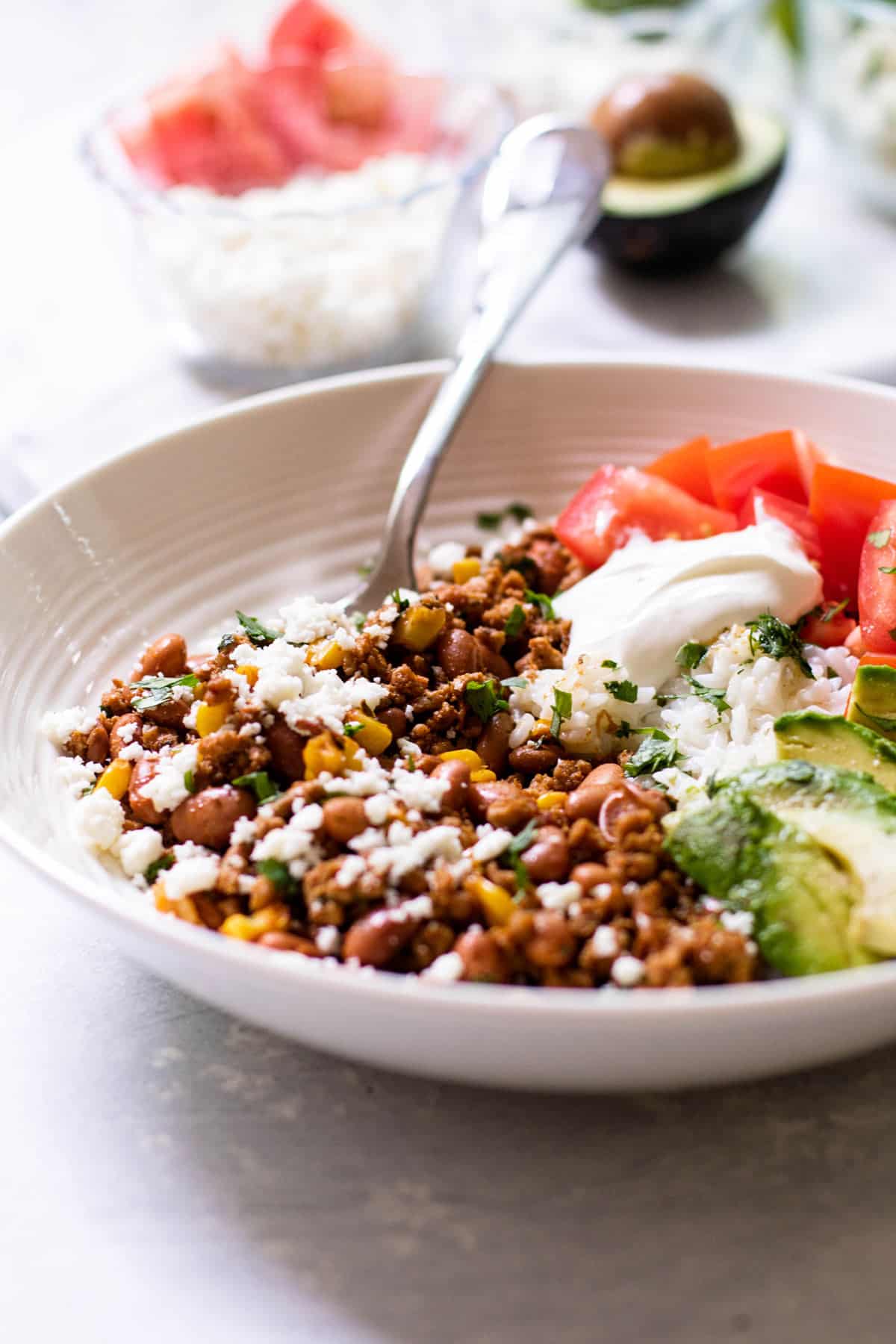
Halal ground turkey cooked with taco seasoning (cumin, chili powder, smoked paprika, garlic, onion powder) over rice with black beans, corn, pico de gallo, avocado, and chipotle crema — the taco bowl that reaches 35-40g protein from the combination of ground turkey (22g per 4 oz), black beans (15g per cup combined into the bowl), and the Greek yogurt in the chipotle crema. The taco bowl format allows Saad to eat the components in the configuration he prefers (rice, meat, cheese, no avocado contacting the rice) and Zainab to eat the components she prefers (avocado, corn, pico, rice, minimal turkey).
Ingredients (serves 4)
- 1 lb halal ground turkey + taco seasoning: 1 teaspoon cumin + 1 teaspoon chili powder + ½ teaspoon smoked paprika + ½ teaspoon garlic powder + ½ teaspoon onion powder + salt
- 4 cups cooked rice + 1 can black beans, warmed with cumin + 1 cup corn + pico de gallo + 1 avocado
- Chipotle crema: ½ cup Greek yogurt + 1 tablespoon chipotle adobo + lime juice
Instructions
- Cook ground turkey with taco seasoning until browned and cooked through. Set up bowl station. Build bowls: rice, seasoned turkey, black beans, corn, pico. Add avocado and chipotle crema. ~35-40g protein per bowl.
- Preheat your cooking surface to the correct temperature before adding the protein — searing requires high heat to create the Maillard reaction, while braising requires lower, steady heat for the collagen to break down.
- Cook the protein to the correct internal temperature: chicken and turkey to 165°F, beef and lamb to 145°F minimum. Use an instant-read thermometer at the thickest point for accuracy.
- Rest the protein 5 minutes before slicing — this allows the juices to redistribute and keeps every bite moist rather than running out when cut.
- Plate with the grain or vegetable base, add any sauce or dressing, and serve immediately. Store leftovers in sealed containers up to 4 days.
14. High-Protein Egg Fried Rice
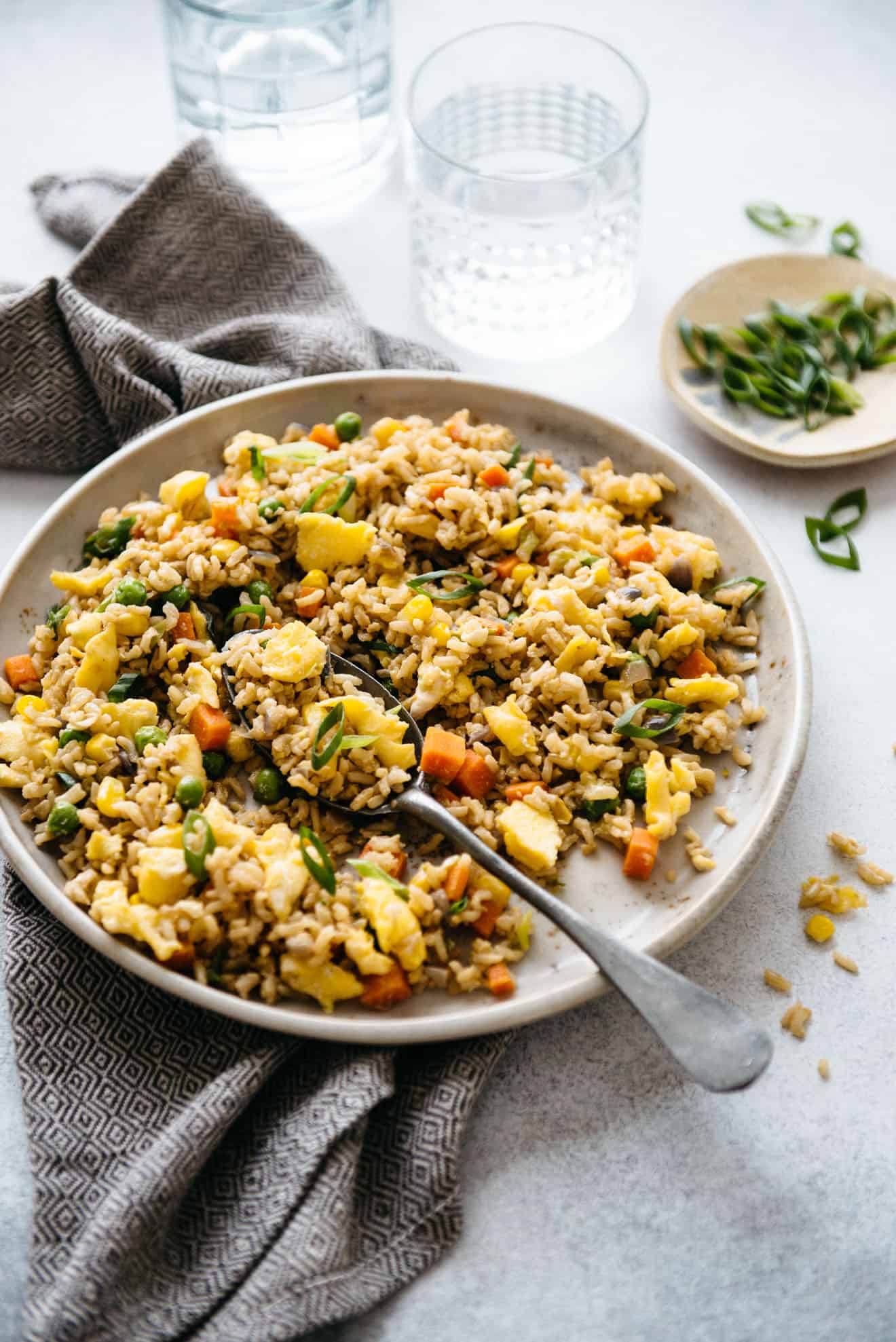
Day-old rice stir-fried in a hot wok with 4 eggs scrambled directly into the rice, halal chicken breast diced and cooked through, frozen edamame, peas, and green onions — seasoned with soy sauce, sesame oil, and garlic. The protein fried rice provides 35-40g protein per generous serving from the egg-and-chicken-and-edamame combination, making fried rice a complete high-protein dinner rather than the carbohydrate-heavy side dish it is typically classified as. Day-old cold rice is the only rice that stir-fries correctly — fresh rice is too moist and clumps rather than separating in the wok.
Ingredients (serves 4)
- 4 cups day-old cold rice + 4 large eggs + 1 cup diced halal chicken breast, cooked + 1 cup frozen edamame, thawed + ½ cup frozen peas + 4 green onions + 4 garlic cloves minced
- Seasoning: 3 tablespoon soy sauce + 1 tablespoon sesame oil + 1 teaspoon oyster sauce + pinch of white pepper
Instructions
- Heat a wok or large skillet over highest possible heat until smoking. Add 2 tablespoon oil. Add rice, pressing into pan and letting sit undisturbed 2 minutes to develop a slight crust. Stir-fry, breaking up clumps. Push rice to sides. Crack eggs directly into the center, scramble quickly, then fold into the rice before fully set. Add chicken, edamame, and peas. Toss. Add soy sauce mixture and garlic. Stir-fry 2 more minutes. Top with green onions. ~35-40g protein per serving.
- Preheat your cooking surface to the correct temperature before adding the protein — searing requires high heat to create the Maillard reaction, while braising requires lower, steady heat for the collagen to break down.
- Cook the protein to the correct internal temperature: chicken and turkey to 165°F, beef and lamb to 145°F minimum. Use an instant-read thermometer at the thickest point for accuracy.
- Rest the protein 5 minutes before slicing — this allows the juices to redistribute and keeps every bite moist rather than running out when cut.
- Plate with the grain or vegetable base, add any sauce or dressing, and serve immediately. Store leftovers in sealed containers up to 4 days.
13. Halal Lamb Kofta Bowls

Halal ground lamb mixed with garlic, parsley, cumin, coriander, cinnamon, and allspice, formed into elongated kofta shapes around skewers and grilled or broiled — served in a bowl over rice or bulgur with cucumber, tomato, fresh parsley, and tzatziki. The spiced lamb kofta is the dinner that most directly reflects the Pakistani-Middle Eastern cooking tradition — the kofta format is universal across both cuisines, and the spice blend in this version is closer to the Lebanese-Middle Eastern preparation than the Pakistani seekh kebab but shares the same conceptual foundation. 35-38g protein per bowl from the lamb kofta plus the yogurt in the tzatziki.
Ingredients (serves 4)
- 1.5 lbs halal ground lamb (or beef) + 4 garlic cloves minced + ¼ cup fresh parsley + 1 teaspoon cumin + 1 teaspoon coriander + ½ teaspoon cinnamon + ¼ teaspoon allspice + salt and pepper — mix and form around skewers
- 4 cups cooked rice or bulgur + 1 cucumber diced + 2 tomatoes diced + fresh parsley + tzatziki + sumac + lemon
Instructions
- Mix lamb with all seasonings thoroughly. Form around metal skewers or into elongated oval shapes if broiling. Grill or broil over high heat 4-5 minutes per side until charred on the outside and cooked through. Build bowls: rice or bulgur, kofta, cucumber, tomato. Add tzatziki and a squeeze of lemon. Dust sumac over the top. ~35-38g protein per bowl.
- Preheat your cooking surface to the correct temperature before adding the protein — searing requires high heat to create the Maillard reaction, while braising requires lower, steady heat for the collagen to break down.
- Cook the protein to the correct internal temperature: chicken and turkey to 165°F, beef and lamb to 145°F minimum. Use an instant-read thermometer at the thickest point for accuracy.
- Rest the protein 5 minutes before slicing — this allows the juices to redistribute and keeps every bite moist rather than running out when cut.
- Plate with the grain or vegetable base, add any sauce or dressing, and serve immediately. Store leftovers in sealed containers up to 4 days.
12. Chicken and Sweet Potato Sheet Pan

Bone-in halal chicken thighs and sweet potato cubes on one sheet pan, roasted at 425°F for 40 minutes until the chicken skin is crispy and the sweet potatoes are caramelized — seasoned with a spice rub of smoked paprika, cumin, garlic powder, salt, and olive oil that is applied to both the chicken and the sweet potatoes for flavor unity. Add broccoli florets in the final 12 minutes. One pan, one oven, 5 minutes of prep — 33-36g protein per serving from the bone-in thigh (25-28g per thigh) plus the additional plant protein of the broccoli.
Ingredients (serves 4)
- 4 bone-in halal chicken thighs + 3 large sweet potatoes, cubed + 3 cups broccoli florets
- Spice rub: 2 tablespoon olive oil + 1 teaspoon smoked paprika + 1 teaspoon cumin + 1 teaspoon garlic powder + ½ teaspoon onion powder + salt and pepper — toss chicken and sweet potato in this
Instructions
- Preheat oven to 425°F. Toss sweet potatoes with half the spice rub. Rub chicken with remaining spice rub. Arrange chicken skin-side up and sweet potato on a large sheet pan — do not crowd. Roast 28 minutes. Add broccoli tossed in olive oil and salt. Roast 12 more minutes until chicken skin is golden and crispy, sweet potato is caramelized, and broccoli is slightly charred. ~33-36g protein per serving.
- Preheat your cooking surface to the correct temperature before adding the protein — searing requires high heat to create the Maillard reaction, while braising requires lower, steady heat for the collagen to break down.
- Cook the protein to the correct internal temperature: chicken and turkey to 165°F, beef and lamb to 145°F minimum. Use an instant-read thermometer at the thickest point for accuracy.
- Rest the protein 5 minutes before slicing — this allows the juices to redistribute and keeps every bite moist rather than running out when cut.
- Plate with the grain or vegetable base, add any sauce or dressing, and serve immediately. Store leftovers in sealed containers up to 4 days.
11. High-Protein Pasta Bolognese

A bolognese made with a 50/50 blend of halal ground beef and halal ground turkey — the beef for richness and depth, the turkey for leaner protein density — cooked low and slow for 45 minutes with carrot, celery, onion, garlic, crushed tomatoes, and a splash of chicken broth. The high-protein pasta format delivers 38-42g protein per serving from the combined beef-turkey meat sauce (approximately 1.5 oz each per serving) over 2 oz dry pasta. More protein per serving than any pure beef bolognese made at standard pasta ratios because the sauce-to-pasta ratio is deliberately higher than a standard bolognese.
Ingredients (serves 6)
- ¾ lb halal ground beef (80/20) + ¾ lb halal ground turkey + 1 onion diced + 2 carrots diced + 2 celery stalks diced + 4 garlic cloves minced
- 1 can crushed tomatoes + 1 can tomato paste + ½ cup chicken broth + 1 teaspoon Italian seasoning + salt and pepper
- 12 oz dry spaghetti or rigatoni + Parmesan for serving
Instructions
- Brown both meats in a large pot over medium-high heat, breaking up well. Set aside. Sauté onion, carrot, and celery in same pot 8 minutes. Add garlic 1 minute. Add tomato paste and stir 2 minutes. Return meat. Add crushed tomatoes, broth, Italian seasoning. Simmer 45 minutes until sauce is thick and rich. Cook pasta al dente. Serve pasta with a generous ladle of the meat-heavy sauce. Finish with Parmesan. ~38-42g protein per serving.
- Preheat your cooking surface to the correct temperature before adding the protein — searing requires high heat to create the Maillard reaction, while braising requires lower, steady heat for the collagen to break down.
- Cook the protein to the correct internal temperature: chicken and turkey to 165°F, beef and lamb to 145°F minimum. Use an instant-read thermometer at the thickest point for accuracy.
- Rest the protein 5 minutes before slicing — this allows the juices to redistribute and keeps every bite moist rather than running out when cut.
- Plate with the grain or vegetable base, add any sauce or dressing, and serve immediately. Store leftovers in sealed containers up to 4 days.
10. Halal Beef Stuffed Bell Peppers
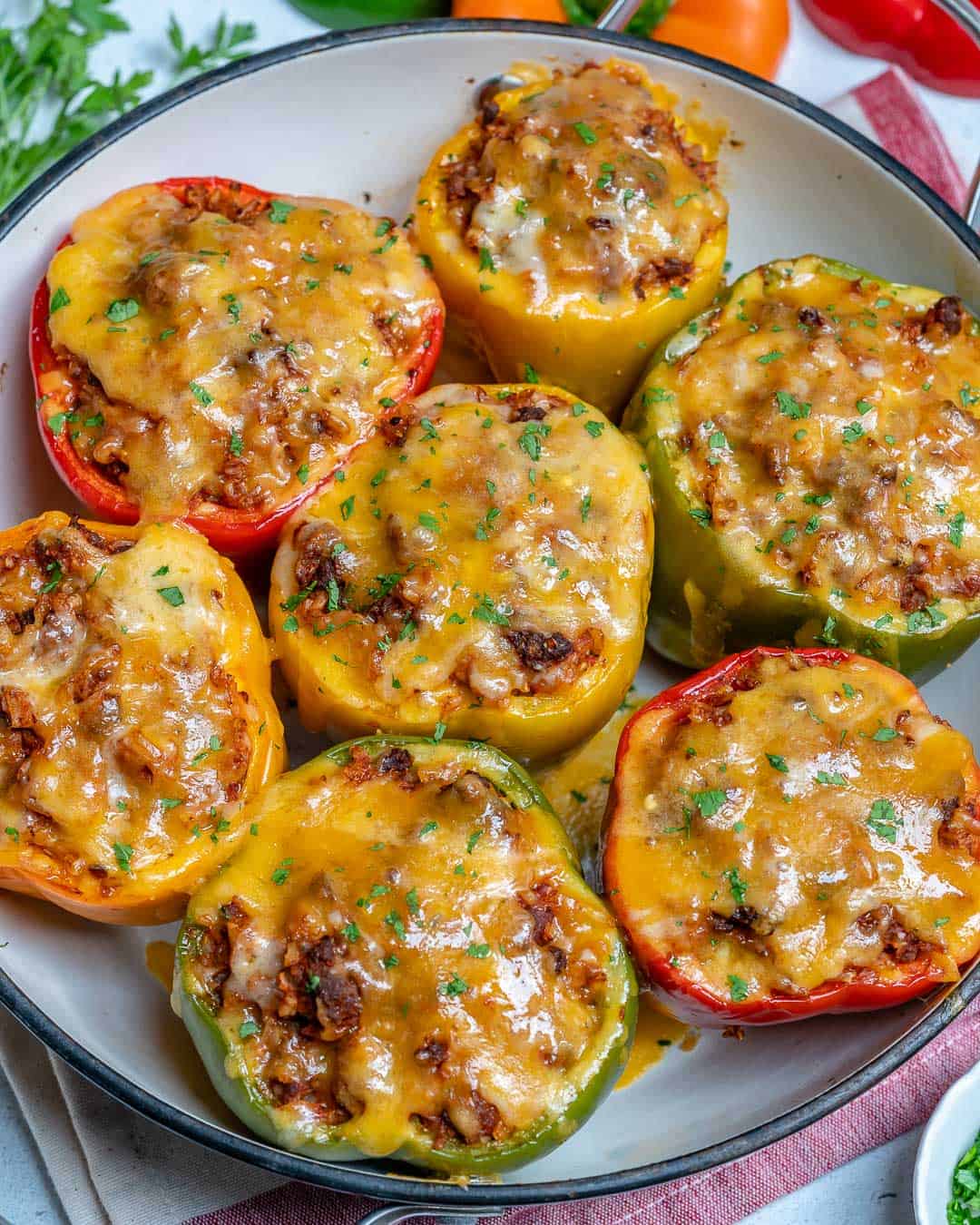
Bell peppers halved and filled with a seasoned halal ground beef and rice mixture (ground beef, onion, garlic, cumin, paprika, diced tomatoes, cooked rice, and shredded mozzarella), baked at 375°F until the peppers are tender and the cheese is golden — 32-35g protein per two-pepper serving from the beef (22g per 4 oz) and the cheese (8g per serving). The father-in-law's cardiac diet version: ground turkey instead of beef, reduced cheese, extra vegetables added to the filling. The stuffed pepper is the dinner most likely to produce consistent enthusiasm from both Saad and Zainab because it is a visible portion container they can see the contents of before eating.
Ingredients (serves 4, 2 pepper halves each)
- 4 large bell peppers, halved and seeded + 1 lb halal ground beef + 1 onion diced + 4 garlic cloves + 1 cup cooked rice + 1 can diced tomatoes + 1 teaspoon cumin + 1 teaspoon smoked paprika + salt and pepper
- 1 cup shredded mozzarella or cheddar for topping
Instructions
- Preheat oven to 375°F. Cook ground beef with onion and garlic until browned. Add spices, diced tomatoes, and cooked rice. Stir to combine. Fill pepper halves with the beef-rice mixture, mounding generously. Arrange in a baking dish. Top each with shredded cheese. Add ½ cup water to the base of the baking dish. Cover with foil, bake 30 minutes. Uncover, bake 10-15 more minutes until cheese is golden and peppers are completely tender. ~32-35g protein per serving.
- Preheat your cooking surface to the correct temperature before adding the protein — searing requires high heat to create the Maillard reaction, while braising requires lower, steady heat for the collagen to break down.
- Cook the protein to the correct internal temperature: chicken and turkey to 165°F, beef and lamb to 145°F minimum. Use an instant-read thermometer at the thickest point for accuracy.
- Rest the protein 5 minutes before slicing — this allows the juices to redistribute and keeps every bite moist rather than running out when cut.
- Plate with the grain or vegetable base, add any sauce or dressing, and serve immediately. Store leftovers in sealed containers up to 4 days.
9. Greek Chicken Bowls
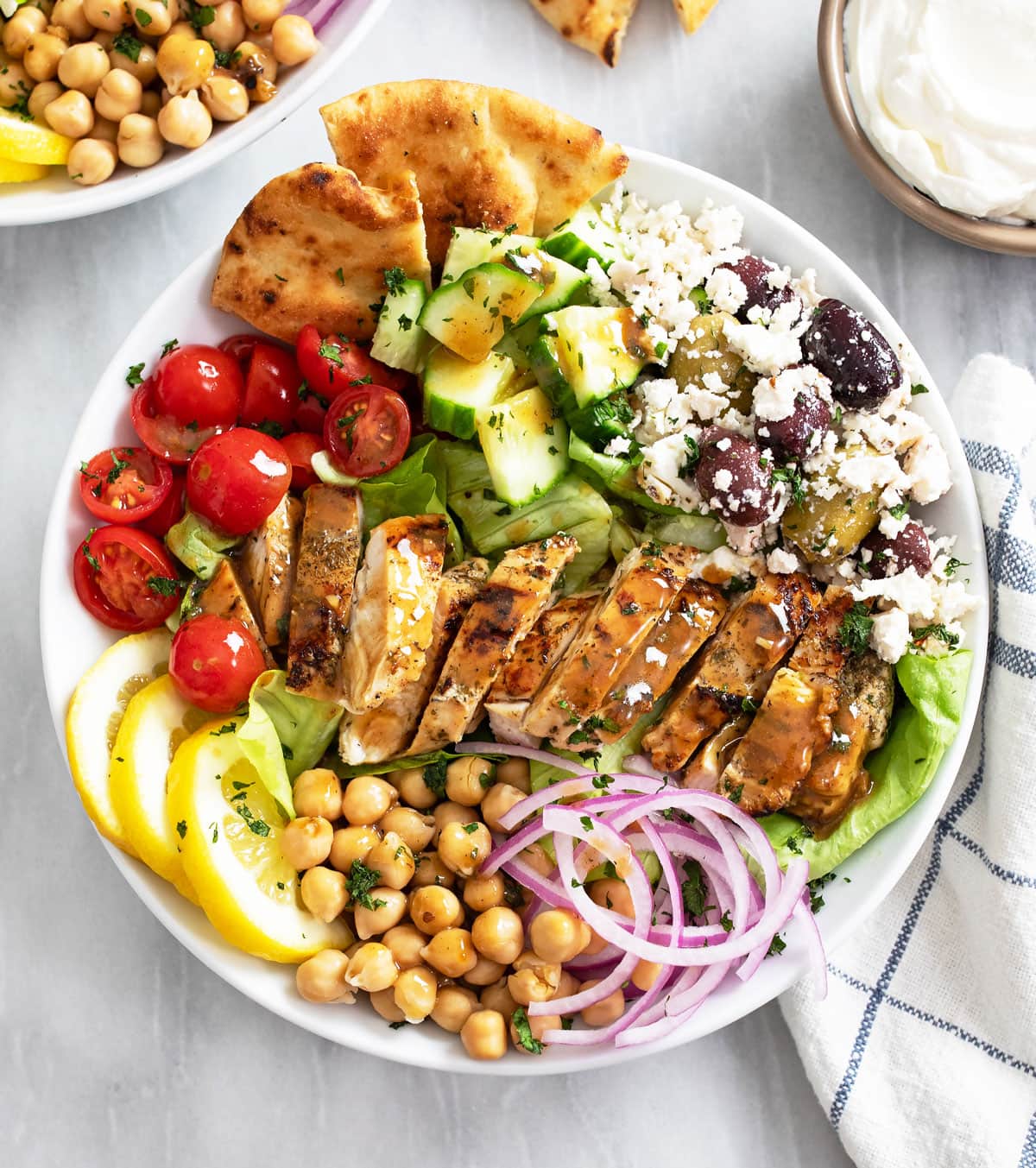
Lemon-oregano marinated halal chicken thighs cooked in a skillet or on the grill, sliced, and built into a Greek-style bowl over rice or bulgur with cucumber, cherry tomatoes, Kalamata olives, crumbled feta, red onion, and a generous spoonful of tzatziki — 38-42g protein per bowl from the chicken (30g per 4 oz thigh) and the feta and tzatziki dairy protein. The Greek bowl is Zainab's preferred dinner bowl from this collection, primarily because the cucumber, tomato, and feta color arrangement on the bowl's surface looks appealing to her before she eats it, which is the first evaluative criterion she applies to any composed dish.
Ingredients (serves 4)
- 1.5 lbs halal chicken thighs + Marinade: juice of 2 lemons + 3 tablespoon olive oil + 4 garlic cloves + 1.5 teaspoon dried oregano + salt and pepper — marinate 1-4 hours
- 4 cups cooked rice or bulgur + 1 English cucumber + 1 pint cherry tomatoes + ½ cup Kalamata olives + ½ cup crumbled feta + ¼ red onion + tzatziki
Instructions
- Cook marinated chicken in a skillet or grill 5-6 min per side until 165°F. Rest 5 min, slice. Build bowls: rice or bulgur base, sliced chicken, cucumber, tomatoes, olives, feta, red onion. Add tzatziki. Drizzle with olive oil and a squeeze of lemon. ~38-42g protein per bowl.
- Preheat your cooking surface to the correct temperature before adding the protein — searing requires high heat to create the Maillard reaction, while braising requires lower, steady heat for the collagen to break down.
- Cook the protein to the correct internal temperature: chicken and turkey to 165°F, beef and lamb to 145°F minimum. Use an instant-read thermometer at the thickest point for accuracy.
- Rest the protein 5 minutes before slicing — this allows the juices to redistribute and keeps every bite moist rather than running out when cut.
- Plate with the grain or vegetable base, add any sauce or dressing, and serve immediately. Store leftovers in sealed containers up to 4 days.
8. Shrimp Tacos with Mango Salsa
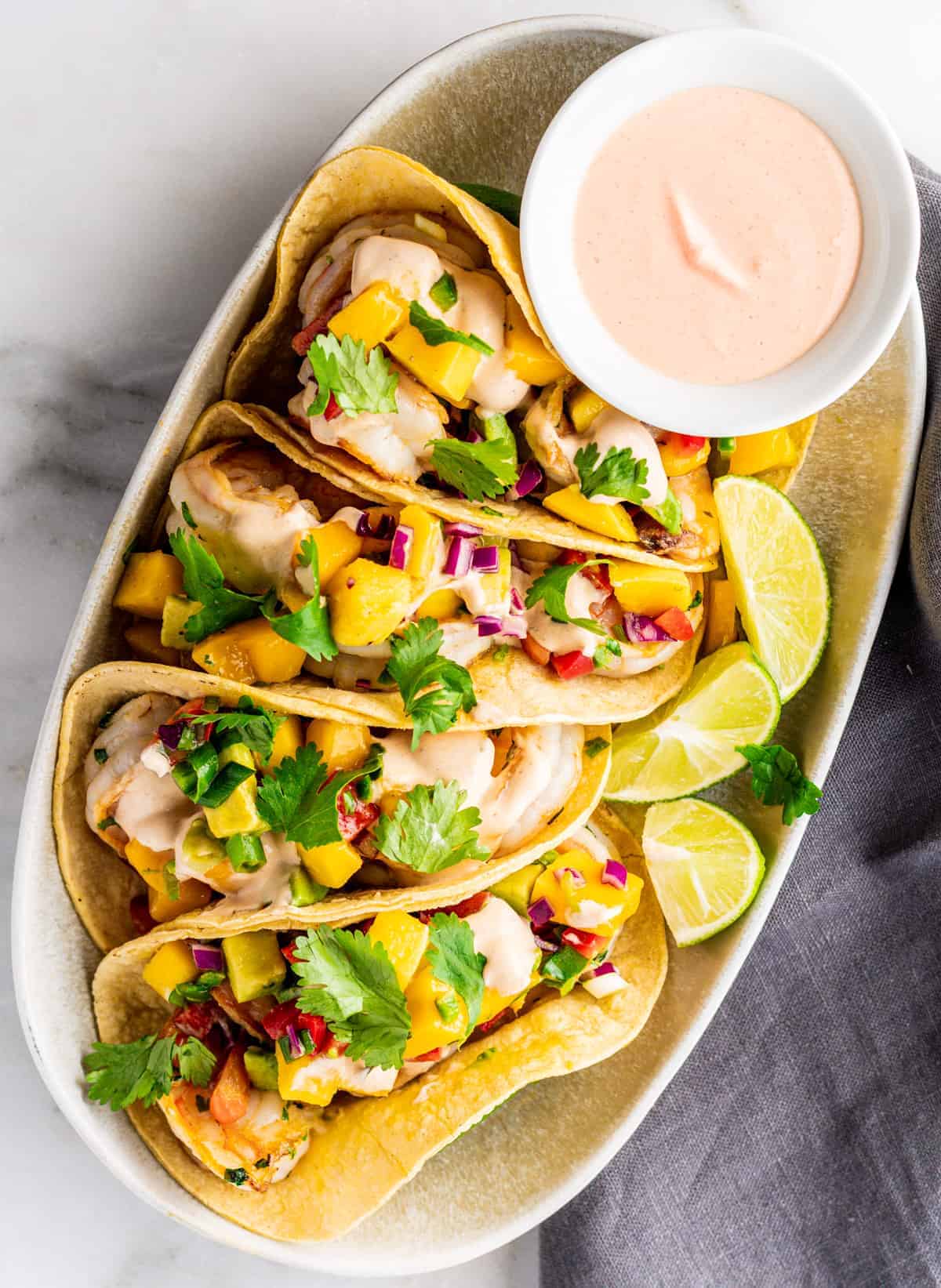
Large halal shrimp marinated in lime, cumin, and chili, grilled or seared 2 minutes per side, loaded into corn tortillas with fresh mango salsa (mango, red onion, jalapeño, cilantro, lime juice), and a drizzle of chipotle crema — 30-32g protein per serving from the large shrimp (24g per 4 oz) plus the Greek yogurt in the chipotle crema. The shrimp taco with mango salsa is the sweetest-smelling dinner in this collection while it is being cooked — the combination of searing shrimp, lime, and mango in the kitchen produces an aroma that Zainab identifies as "the good smell" when it appears.
Ingredients (serves 4)
- 1.5 lbs large halal shrimp + Marinade: juice of 2 limes + 1 teaspoon cumin + 1 teaspoon chili powder + 2 garlic cloves + 2 tablespoon olive oil + salt — marinate 10 min only
- Mango salsa: 1 ripe mango diced + ¼ red onion diced + 1 jalapeño minced + juice of 1 lime + fresh cilantro
- 8 corn tortillas + chipotle crema: ½ cup Greek yogurt + 1 tablespoon chipotle adobo + lime juice
Instructions
- Make mango salsa and chipotle crema and set aside. Cook shrimp in a hot skillet or grill 2 min per side until pink and curled — do not overcrowd. Warm tortillas. Build tacos: shrimp, mango salsa, chipotle crema, extra cilantro, lime squeeze. Serve immediately — assembled shrimp tacos do not hold. ~30-32g protein per serving.
- Preheat your cooking surface to the correct temperature before adding the protein — searing requires high heat to create the Maillard reaction, while braising requires lower, steady heat for the collagen to break down.
- Cook the protein to the correct internal temperature: chicken and turkey to 165°F, beef and lamb to 145°F minimum. Use an instant-read thermometer at the thickest point for accuracy.
- Rest the protein 5 minutes before slicing — this allows the juices to redistribute and keeps every bite moist rather than running out when cut.
- Plate with the grain or vegetable base, add any sauce or dressing, and serve immediately. Store leftovers in sealed containers up to 4 days.
7. One-Pot Chicken and Rice
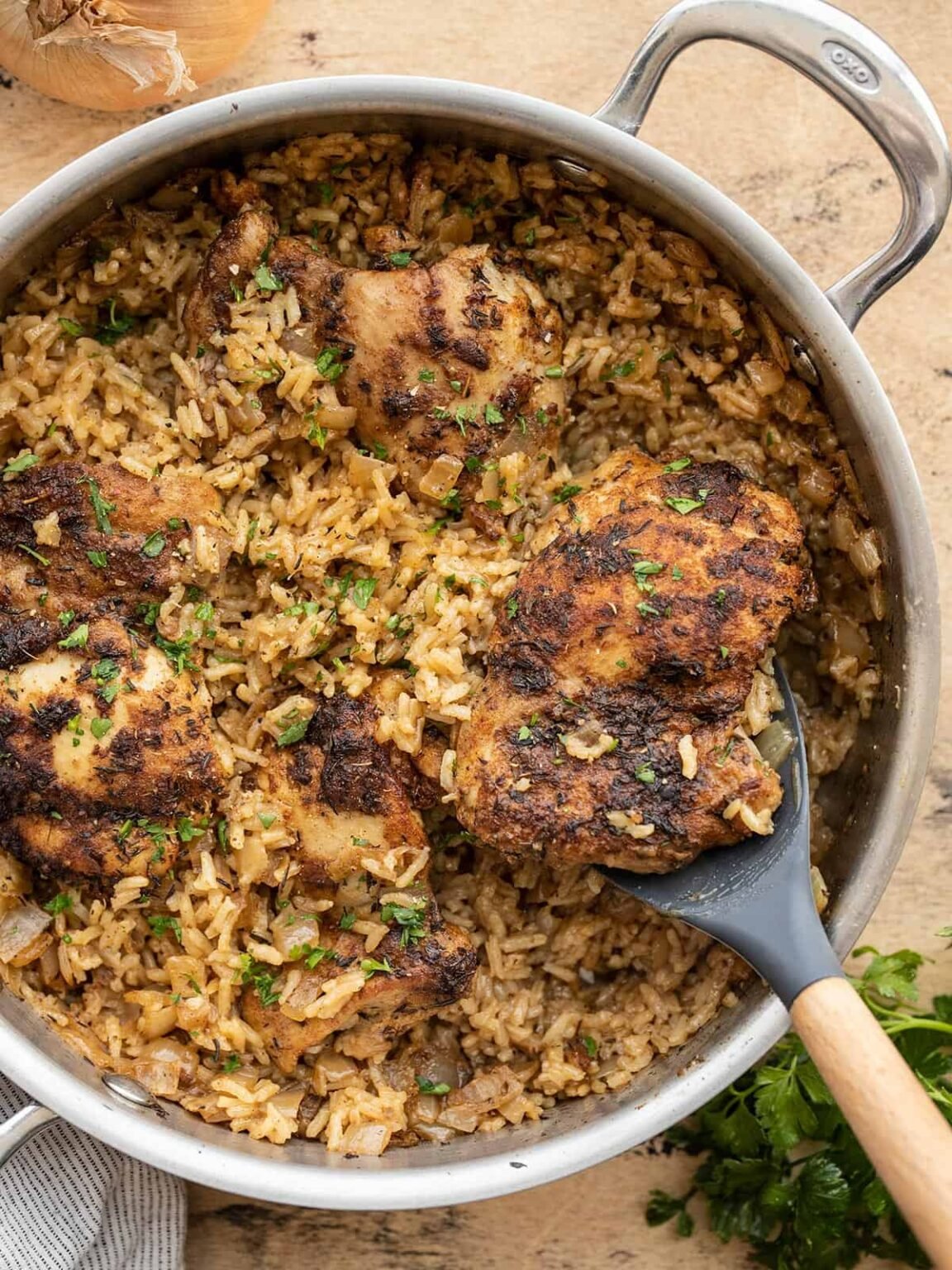
Bone-in halal chicken thighs seared skin-side down in a Dutch oven, then the chicken is removed, aromatics are sautéed in the chicken fat, rice is toasted in the same pot, and the chicken is nested back in the rice with broth to cook together — the one-pot dinner that produces deeply flavored rice (it cooks in the same liquid as the chicken) and crispy-skinned chicken in one pot with one cleaning effort. 33-36g protein per serving. The postpartum meal delivery version: cook in a pot that is oven-to-table presentable, portion directly from the pot into sealed containers for the sister-in-law without any transfer step.
Ingredients (serves 4)
- 4 bone-in halal chicken thighs, seasoned with salt, pepper, garlic powder, smoked paprika
- 1.5 cups long-grain white rice + 1 onion diced + 4 garlic cloves + 1 teaspoon cumin + 1 teaspoon turmeric + 2.5 cups chicken broth + fresh parsley or dill for topping
Instructions
- Sear chicken thighs skin-side down in a Dutch oven over medium-high heat 5-6 minutes until skin is golden and crispy. Remove chicken. Sauté onion in chicken fat 5 minutes. Add garlic 1 minute. Add spices 30 seconds. Add rice and stir 2 minutes to toast. Add chicken broth. Nestle chicken thighs skin-side up on top of the rice. Bring to a boil, reduce to low, cover tightly and cook 20 minutes. Rest covered 10 minutes. Scatter parsley. ~33-36g protein per serving.
- Preheat your cooking surface to the correct temperature before adding the protein — searing requires high heat to create the Maillard reaction, while braising requires lower, steady heat for the collagen to break down.
- Cook the protein to the correct internal temperature: chicken and turkey to 165°F, beef and lamb to 145°F minimum. Use an instant-read thermometer at the thickest point for accuracy.
- Rest the protein 5 minutes before slicing — this allows the juices to redistribute and keeps every bite moist rather than running out when cut.
- Plate with the grain or vegetable base, add any sauce or dressing, and serve immediately. Store leftovers in sealed containers up to 4 days.
6. Protein-Packed Lentil Soup
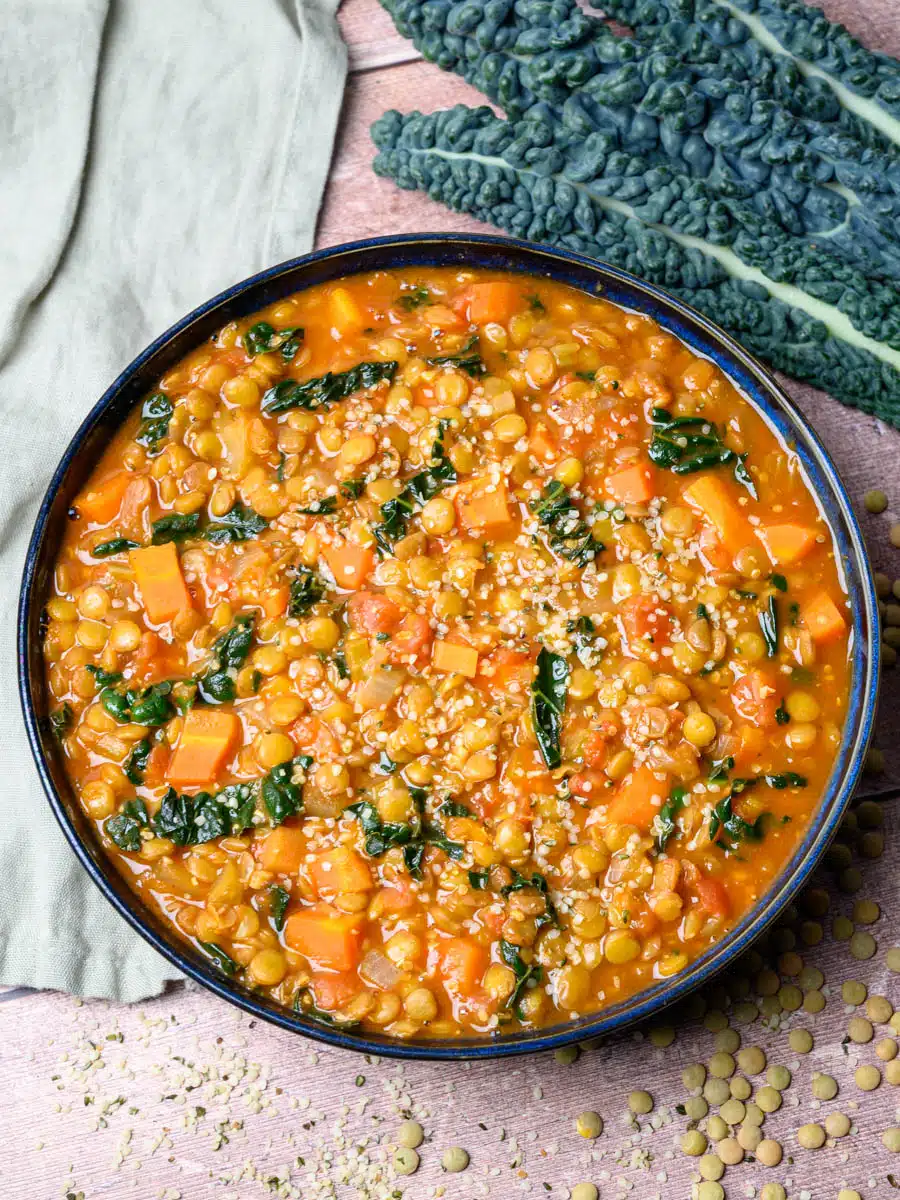
Red lentils cooked in a deeply spiced tomato broth (cumin, coriander, turmeric, Kashmiri chili, garlic, ginger, tomato) until completely soft, blended partially for a creamy-textured soup with remaining whole lentils for body — finished with a tarka (tempered spices: cumin seeds, garlic, and Kashmiri chili in hot oil drizzled over the soup surface) that my mother in Pakistan identifies as the correct finish for any daal preparation. Red lentils provide 18g protein per cup cooked; the 1.5 cups per serving in this soup delivers 27g from lentils alone, and paired with the tarka yogurt and a chapati, the 30g target is reached. The most Pakistani-technique recipe in this collection.
Ingredients (serves 6)
- 2 cups dry red lentils, rinsed + 1 large onion diced + 4 garlic cloves + 1-inch ginger + 1 can crushed tomatoes
- Spices: 1.5 teaspoon cumin + 1 teaspoon coriander + 1 teaspoon turmeric + 1 teaspoon Kashmiri chili + salt + 6 cups water or broth
- Tarka: 2 tablespoon oil + 1 teaspoon cumin seeds + 3 garlic cloves sliced + ½ teaspoon Kashmiri chili — heat until sizzling, drizzle over soup at serving
- 2 cups baby spinach + lemon juice + fresh cilantro
Instructions
- Sauté onion in oil 8 minutes. Add garlic and ginger 2 minutes. Add spices 60 seconds. Add tomatoes, cook 5 minutes. Add lentils and water or broth. Bring to boil, reduce to simmer, cook 25-30 minutes until lentils are completely soft. Stir in spinach. Finish with lemon juice. Make tarka: heat oil in a small pan until very hot, add cumin seeds (they should sizzle immediately), garlic slices (30 seconds), and Kashmiri chili. Pour sizzling tarka over the soup surface. Serve immediately with chapati or naan. ~27g protein from lentils; 30g+ with yogurt or added dairy.
- Preheat your cooking surface to the correct temperature before adding the protein — searing requires high heat to create the Maillard reaction, while braising requires lower, steady heat for the collagen to break down.
- Cook the protein to the correct internal temperature: chicken and turkey to 165°F, beef and lamb to 145°F minimum. Use an instant-read thermometer at the thickest point for accuracy.
- Rest the protein 5 minutes before slicing — this allows the juices to redistribute and keeps every bite moist rather than running out when cut.
- Plate with the grain or vegetable base, add any sauce or dressing, and serve immediately. Store leftovers in sealed containers up to 4 days.
5. Turkey Stuffed Mushrooms (Dinner Size)
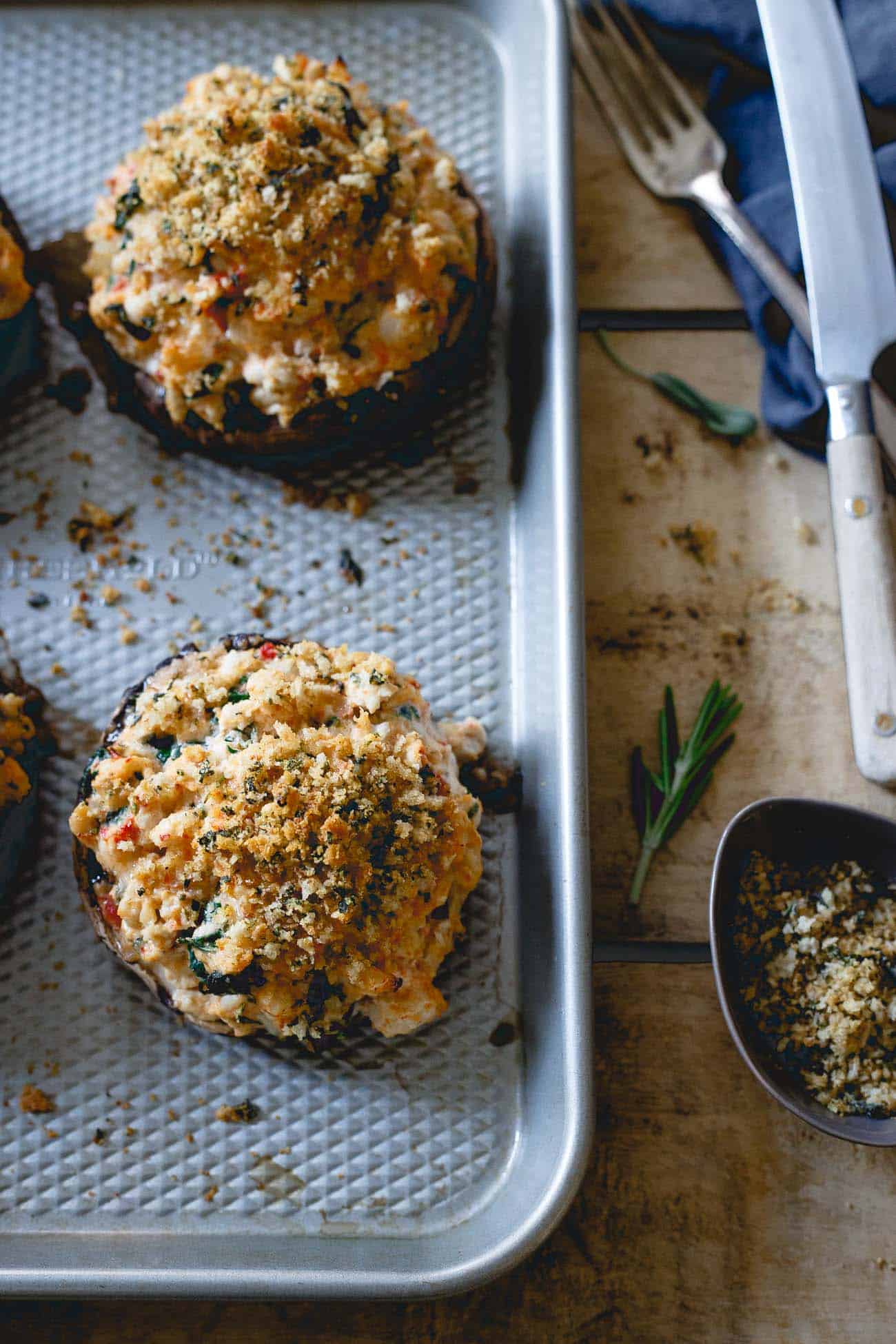
Large portobello mushroom caps filled with a savory halal ground turkey mixture (turkey, garlic, Italian seasoning, sun-dried tomatoes, spinach, Parmesan) and baked until the turkey is cooked through and the mushroom is tender — the low-carbohydrate, high-protein dinner that produces 30-32g protein per two-mushroom serving from the turkey filling (22g per 4 oz) and the Parmesan and mozzarella topping (8g). The dinner-portion mushroom is significantly larger than the appetizer version — use the largest portobello caps available, 5-6 inches across, for a filling that genuinely constitutes a full dinner.
Ingredients (serves 4)
- 8 large portobello mushrooms, stems and gills removed + 1 lb halal ground turkey
- Turkey filling: 4 garlic cloves + 1 cup baby spinach + 3 tablespoon sun-dried tomatoes + ½ cup Parmesan + 1 teaspoon Italian seasoning + salt and pepper + ½ cup shredded mozzarella for topping
Instructions
- Preheat oven to 375°F. Cook turkey with garlic and Italian seasoning until browned. Add spinach and sun-dried tomatoes, stir until spinach wilts. Stir in Parmesan off heat. Fill each mushroom cap generously, mounding the filling. Arrange on a lined baking sheet. Top with mozzarella. Bake 20-22 minutes until mushroom is tender and cheese is golden. ~30-32g protein per 2-mushroom serving.
- Preheat your cooking surface to the correct temperature before adding the protein — searing requires high heat to create the Maillard reaction, while braising requires lower, steady heat for the collagen to break down.
- Cook the protein to the correct internal temperature: chicken and turkey to 165°F, beef and lamb to 145°F minimum. Use an instant-read thermometer at the thickest point for accuracy.
- Rest the protein 5 minutes before slicing — this allows the juices to redistribute and keeps every bite moist rather than running out when cut.
- Plate with the grain or vegetable base, add any sauce or dressing, and serve immediately. Store leftovers in sealed containers up to 4 days.
4. Tuna Pasta with White Beans
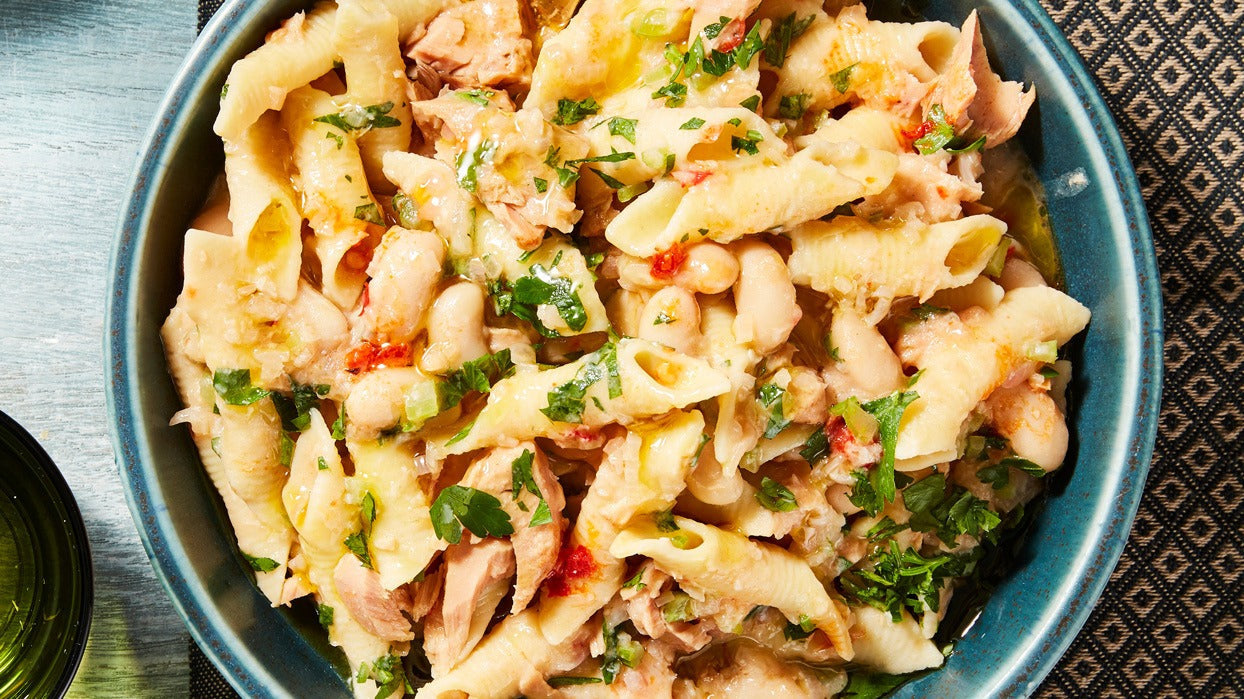
Penne pasta tossed with olive-oil-packed canned tuna, white beans, garlic, capers, cherry tomatoes, and fresh parsley in a lemon-olive oil sauce — the pantry dinner that requires no fresh protein shopping and that delivers 38-42g protein per serving from the unexpected combination of canned tuna (25g per can) and white beans (15g per cup), two protein sources that are individually unimpressive but collectively put this pasta's protein count above most meat-based pasta dinners. The tuna white bean combination is a Roman pantry classic, adapted here for a full-protein dinner format rather than its traditional light-pasta context.
Ingredients (serves 4)
- 12 oz dry penne + 3 cans (5 oz each) tuna in olive oil, drained + 1 can white beans, drained
- 1 pint cherry tomatoes, halved + 4 garlic cloves + 2 tablespoon capers + ¼ cup fresh parsley + juice of 1 lemon + 3 tablespoon olive oil + salt and pepper + Parmesan for serving
Instructions
- Cook pasta al dente, reserve ½ cup pasta water. In a large skillet, warm olive oil over medium heat. Add garlic 60 seconds. Add cherry tomatoes, cook 3 minutes until softened. Add capers, white beans, and tuna. Toss gently — keep tuna in larger flakes. Add drained pasta and pasta water. Toss with lemon juice and parsley. Adjust seasoning. Serve with Parmesan grated over. ~38-42g protein per serving.
- Preheat your cooking surface to the correct temperature before adding the protein — searing requires high heat to create the Maillard reaction, while braising requires lower, steady heat for the collagen to break down.
- Cook the protein to the correct internal temperature: chicken and turkey to 165°F, beef and lamb to 145°F minimum. Use an instant-read thermometer at the thickest point for accuracy.
- Rest the protein 5 minutes before slicing — this allows the juices to redistribute and keeps every bite moist rather than running out when cut.
- Plate with the grain or vegetable base, add any sauce or dressing, and serve immediately. Store leftovers in sealed containers up to 4 days.
3. Halal Steak and Veggie Bowl

Halal beef sirloin steak (6 oz per serving) seasoned simply with salt, pepper, and garlic, seared in a cast iron to medium, rested 5 minutes and sliced thin — served in a bowl over rice with roasted vegetables (broccoli, bell pepper, zucchini) and a drizzle of chimichurri (parsley, garlic, red wine vinegar, olive oil, red pepper flakes). The steak bowl is the highest single-ingredient protein dinner in this collection — the 6 oz halal sirloin provides 42g protein before any accompaniment is included. My husband eats this on high protein target days. The chimichurri takes 3 minutes to make and elevates the steak-and-rice bowl format into something genuinely exciting.
Ingredients (serves 4)
- 4 halal beef sirloin steaks (6 oz each) + salt, pepper, garlic powder
- Roasted vegetables: 3 cups broccoli + 2 bell peppers + 2 zucchini — all cubed, tossed with olive oil and salt, roasted 425°F 20 minutes
- Chimichurri: 1 cup fresh parsley + 4 garlic cloves + 2 tablespoon red wine vinegar + ½ cup olive oil + ¼ teaspoon red pepper flakes + salt — blend or finely chop
- 4 cups cooked rice
Instructions
- Roast vegetables 425°F 20 minutes while preparing the steak. Season steak generously with salt, pepper, and garlic powder. Sear in a screaming hot cast iron 3-4 minutes per side for medium (135°F). Rest 5 minutes — mandatory. Slice thin against the grain. Build bowls: rice, roasted vegetables, sliced steak fanned over the top. Drizzle chimichurri generously over steak and vegetables. ~42g protein per serving from steak alone.
- Preheat your cooking surface to the correct temperature before adding the protein — searing requires high heat to create the Maillard reaction, while braising requires lower, steady heat for the collagen to break down.
- Cook the protein to the correct internal temperature: chicken and turkey to 165°F, beef and lamb to 145°F minimum. Use an instant-read thermometer at the thickest point for accuracy.
- Rest the protein 5 minutes before slicing — this allows the juices to redistribute and keeps every bite moist rather than running out when cut.
- Plate with the grain or vegetable base, add any sauce or dressing, and serve immediately. Store leftovers in sealed containers up to 4 days.
2. Chicken Souvlaki Plate

Halal chicken thigh cubes marinated in lemon-oregano-garlic-olive oil on skewers, grilled or broiled over high heat until charred on all sides — plated on a full dinner plate with warmed pita, a scoop of rice, sliced tomato, cucumber, olives, and a generous serving of tzatziki. The souvlaki plate is the Greek takeout dinner format reproduced at home in 25 minutes, providing 38-40g protein from the chicken thigh skewers (30g per 4 oz) plus the tzatziki dairy protein. The plate format serves as both a complete dinner and a demonstration that a "protein dinner" does not need to be a single large piece of meat — the distributed souvlaki-and-accompaniment format is as satisfying and as protein-dense as any single-protein preparation in this collection.
Ingredients (serves 4)
- 1.5 lbs halal chicken thighs, cubed + Marinade: juice of 2 lemons + ¼ cup olive oil + 4 garlic cloves minced + 1.5 teaspoon dried oregano + salt and pepper — marinate 2-4 hours
- Pita breads + 2 cups cooked rice + 2 tomatoes sliced + 1 cucumber sliced + ½ cup Kalamata olives + tzatziki
Instructions
- Thread marinated chicken onto metal skewers. Grill or broil over high heat 3-4 min per side until charred and 165°F. Warm pita breads. Plate each serving: pita, scoop of rice, 2-3 chicken skewers, sliced tomato and cucumber, olives. Add generous tzatziki. Squeeze lemon. ~38-40g protein per plate.
- Preheat your cooking surface to the correct temperature before adding the protein — searing requires high heat to create the Maillard reaction, while braising requires lower, steady heat for the collagen to break down.
- Cook the protein to the correct internal temperature: chicken and turkey to 165°F, beef and lamb to 145°F minimum. Use an instant-read thermometer at the thickest point for accuracy.
- Rest the protein 5 minutes before slicing — this allows the juices to redistribute and keeps every bite moist rather than running out when cut.
- Plate with the grain or vegetable base, add any sauce or dressing, and serve immediately. Store leftovers in sealed containers up to 4 days.
1. Cottage Cheese Pasta (The 40g Protein Dinner)
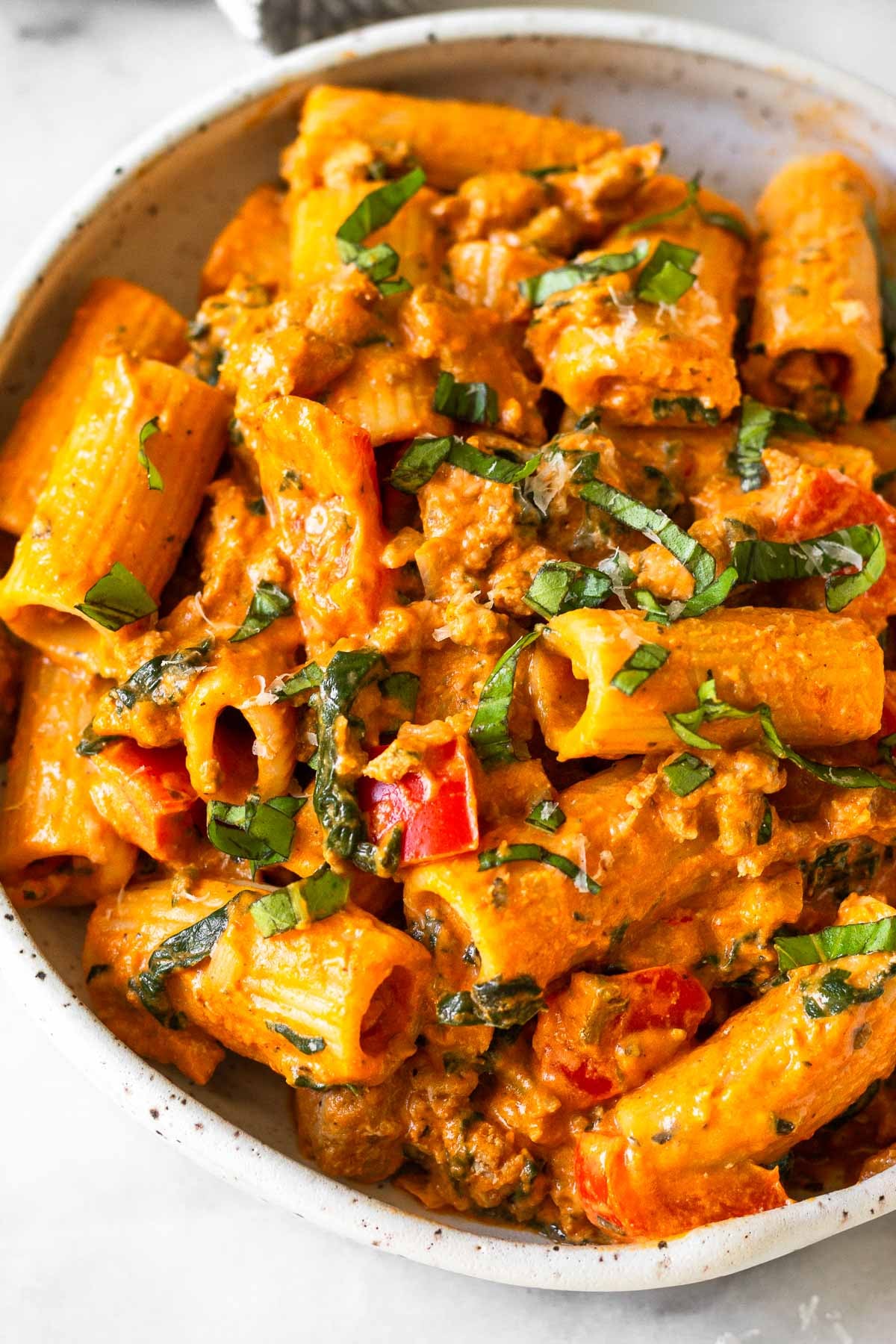
The number-one protein dinner earns its position by being the recipe that most consistently surprises people who eat it — a cream-style pasta sauce made by blending full-fat cottage cheese smooth (the cottage cheese blends into a sauce that is genuinely indistinguishable from a cream cheese or ricotta sauce in texture and mouth-feel), tossed through pasta with roasted cherry tomatoes and sautéed halal ground beef or chicken, producing a pasta dinner that delivers 40-45g protein per serving from the unusual but effective combination of cottage cheese (14g per ½ cup), ground beef or chicken (22g per 4 oz), and Parmesan garnish — a number that most people do not associate with a pasta dinner and that my husband identified as the reason this is now his standing preference for the highest-protein weeknight dinner that also tastes genuinely excellent. Saad eats this without knowing the sauce base is cottage cheese, which he would object to on principle if he knew, and describes the pasta as "the creamy one" — an accurate description of what blended cottage cheese produces.
Ingredients (serves 4)
- 12 oz penne or rigatoni + 1 lb halal ground beef or ground chicken
- Cottage cheese sauce: 2 cups full-fat cottage cheese + ¼ cup Parmesan grated + 2 garlic cloves + 2 tablespoon lemon juice + salt and pepper — blend completely smooth in a blender or food processor
- 1 pint cherry tomatoes, roasted at 425°F 15 min until burst + 4 garlic cloves + 1 teaspoon Italian seasoning + fresh basil + extra Parmesan for serving
Instructions
- Roast cherry tomatoes 425°F 15 minutes until burst and caramelized. Cook pasta al dente, reserve 1 cup pasta water. Cook ground beef or chicken with garlic and Italian seasoning until browned. Blend cottage cheese with Parmesan, garlic, lemon juice, salt, and pepper until completely smooth. Add blended cottage cheese sauce to the skillet with the cooked meat over medium-low heat. Add a splash of pasta water to loosen. Toss with drained pasta and roasted tomatoes. Toss until sauce coats every piece of pasta — the sauce thickens quickly from the pasta water starch. Serve topped with fresh basil and extra Parmesan. ~40-45g protein per serving. The sauce must be blended completely smooth for the correct texture — partially blended cottage cheese has a visible curd texture that the fully blended version does not.
- Preheat your cooking surface to the correct temperature before adding the protein — searing requires high heat to create the Maillard reaction, while braising requires lower, steady heat for the collagen to break down.
- Cook the protein to the correct internal temperature: chicken and turkey to 165°F, beef and lamb to 145°F minimum. Use an instant-read thermometer at the thickest point for accuracy.
- Rest the protein 5 minutes before slicing — this allows the juices to redistribute and keeps every bite moist rather than running out when cut.
- Plate with the grain or vegetable base, add any sauce or dressing, and serve immediately. Store leftovers in sealed containers up to 4 days.
Frequently Asked Questions
How do I reach 30g protein in a dinner without eating a large portion of meat?
Combine two or three protein sources rather than relying on one. The most effective combinations: ground meat (22g per 4 oz) plus cheese or yogurt (8-10g) plus legumes (15g per cup) — any two of these three sources reaches 30g without requiring a large portion of any single one. The cottage cheese pasta, tuna white bean pasta, and chana masala with yogurt all demonstrate this principle — the protein total comes from multiple smaller contributors rather than a single large protein serving, which is the approach that produces the most satisfying and nutritionally complete dinner for the portion size.
Which of these dinners work best for meal prep and reheating?
Best for meal prep refrigerator storage and reheating (up to 4-5 days): chana masala, turkey meatball soup, lentil soup, one-pot chicken and rice, high-protein bolognese, halal beef stuffed peppers, chicken tikka masala. These all improve in flavor over 1-2 days as the spices develop. Eat fresh immediately, does not reheat well: shrimp stir-fry, shrimp tacos, grilled chicken Caesar, and the salmon dishes (salmon becomes dry and slightly fishy on reheating). The halal steak bowl and kofta bowls reheat acceptably if the steak is kept medium and the rice is stored separately — combine at reheating time.
These 25 protein dinners have solved the evening protein problem entirely — the cottage cheese pasta for the highest protein count from the least expected source, the chana masala for the Pakistani-origin dinner that my mother endorses without needing a protein calculator to validate, the one-pot chicken and rice for the sister-in-law's postpartum meal train, and the steak bowl for my husband's highest-target days. Blend the cottage cheese completely smooth. Rest the steak before slicing. Add the tarka last. 💪🥩✨
More High-Protein Collections
- 21 High-Protein Breakfast Meal Prep Ideas
- 21 High-Protein Summer Lunch Bowls
- Freezer-Friendly Grilled Chicken Fajita Bowls
- 27 Best Grilled Chicken Recipes
- Halal Beef and Broccoli in 25 Minutes
- Sheet Pan Protein Fajitas
- Air Fryer Turkey Meatballs
- Protein Mac and Cheese with Cottage Cheese
- One-Pot Budget Chicken and Vegetable Rice



Comments
No Comments