
I made this cake for the first time when I had four bananas sitting on my counter that were way past the point of eating straight. Black-spotted, almost mushy — exactly the kind of bananas most people throw out. I figured I'd make something with them, and I ended up with a cake that my husband asked about for the next two weeks. That's how this one entered our regular rotation.
What makes this banana pecan caramel cake different from a regular banana cake is the homemade caramel. I know it sounds intimidating — I avoided making caramel from scratch for years — but once you've done it a couple of times, it's actually not that hard. You're just melting sugar until it turns amber, then adding butter and cream. The result is this glossy, slightly sticky sauce that soaks into the top of the cake and drips down the sides. The toasted pecans add a crunch that cuts through all that softness. It's the combination I didn't know I was missing.
My husband is the one who gets most excited about this cake. He's the kind of person who will eat the same thing three days in a row without complaining, and this is one of those things. I've also made it for a few gatherings and it goes faster than almost anything else I bring, including my carrot cake, which is saying something because that one has its own fan club in our circle.
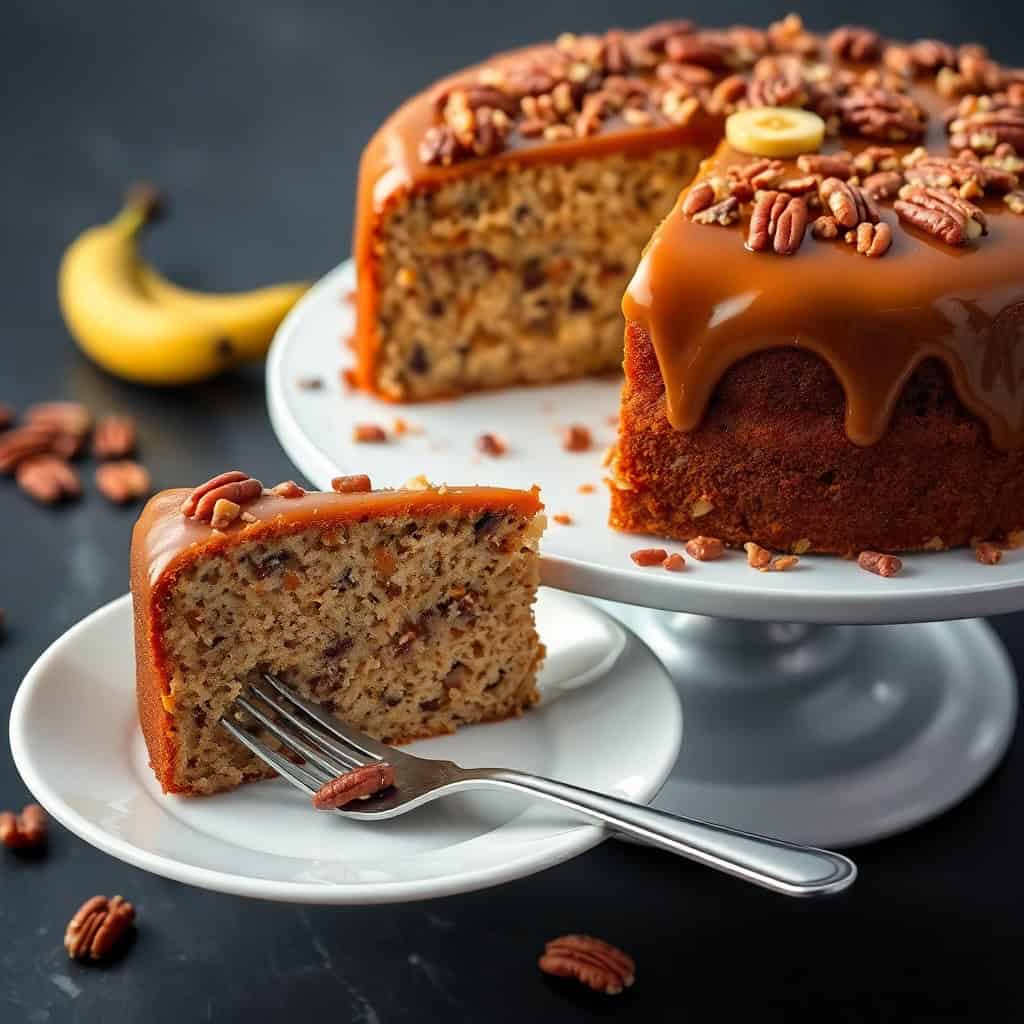
One thing I'll warn you about upfront: let the cake cool completely before you pour the caramel. I didn't do that the first time. The caramel hit the warm cake and just ran off the sides and pooled under the cake stand. It was a mess, and I had to scrape caramel off the counter. Completely cooled — I mean at least an hour, maybe more if your kitchen is warm — before the caramel goes on.
Why You'll Love This Recipe
- Those overripe bananas finally have a purpose: I used to feel guilty throwing out bananas that had gone too dark to eat. Now when I see black-spotted bananas on my counter, I actually get a little excited. The riper they are, the sweeter and more intensely banana the cake tastes. If you have bananas that are basically black on the outside, those are the ones you want for this.
- The caramel is homemade and it shows: Store-bought caramel sauce is fine in a pinch, but the homemade version has a slight bitterness from the cooked sugar that balances the sweetness of the bananas. It takes about 10 minutes to make and uses three ingredients you already have. Once you make it this way, the jarred stuff feels a bit flat by comparison.
- It keeps well and actually tastes better the next day: I've made this cake the night before I needed it and found that the caramel soaks into the top layer overnight, making the whole thing more cohesive and almost fudgy on top. If you're making it for a gathering, baking the day before is genuinely the move. The cake stays moist for days, which is the bananas doing their job.
- No stand mixer required: I don't own one. I cream the butter and sugar with a handheld electric mixer, which costs about $20 and lives in a drawer. If you don't even have that, a wooden spoon and some elbow grease works — just make sure your butter is genuinely soft, not cold, before you start. Cold butter will not cream properly by hand, and your cake will suffer for it.
- The pecans toast in the oven while it preheats: Spread them on a sheet pan and put them in the oven as it comes up to temperature — they'll be golden and fragrant in about 8 minutes. This small step makes a real difference. Untoasted pecans in a cake taste a bit flat. Toasted ones have this deeper, almost buttery flavor that stands up next to the caramel without disappearing into the background.
Ingredients
- 2½ cups all-purpose flour
- 1 teaspoon baking soda
- ½ teaspoon salt
- ½ cup unsalted butter, softened to room temperature
- 1 cup granulated sugar
- ½ cup brown sugar, packed
- 2 large eggs, room temperature
- 1 teaspoon vanilla extract
- 1¼ cups mashed ripe bananas (about 3 large or 4 medium — the blacker the better)
- ½ cup buttermilk (or ½ cup milk + 1½ teaspoons white vinegar, left to sit for 5 minutes)
- 1 cup pecans, chopped and toasted
- 1 cup caramel sauce (homemade below, or store-bought in a pinch)
For the Homemade Caramel Sauce
- 1 cup granulated sugar
- 6 tablespoons unsalted butter, cut into pieces
- ½ cup heavy cream, at room temperature
Directions
- Step 1: Toast the pecans and prep your pan. Preheat your oven to 350°F (175°C). Spread the chopped pecans on a sheet pan and slide them in while the oven comes up to temperature — about 7–8 minutes, stirring once, until fragrant. Pull them out and set aside. Grease and flour a 9-inch round cake pan (or two 8-inch pans if you want a layer cake).
- Step 2: Mix the dry ingredients. In a medium bowl, whisk together the flour, baking soda, and salt. Set aside. Doing this separately means your leavening gets evenly distributed before it hits the wet batter, which helps the cake rise evenly.
- Step 3: Cream the butter and sugars. In a large bowl, beat the softened butter with both sugars until light and fluffy — about 3 minutes with a handheld mixer. Add the eggs one at a time, beating after each one. Mix in the vanilla extract. The mixture should look pale and slightly increased in volume.
- Step 4: Add the bananas and buttermilk. Stir in the mashed bananas, then the buttermilk. The batter may look a little curdled at this stage — that's normal. Once the flour goes in, it all comes together.
- Step 5: Combine wet and dry. Add the dry ingredients to the wet mixture and stir until just combined — don't overmix or your cake will be dense. A few small streaks of flour are fine; they'll disappear as you fold. Gently fold in the toasted pecans.
- Step 6: Bake. Pour the batter into your prepared pan(s) and bake for 35–40 minutes for a single 9-inch pan, or 28–32 minutes for two 8-inch pans. The cake is done when a toothpick inserted in the center comes out clean or with a few moist crumbs. Cool in the pan for 10 minutes, then transfer to a wire rack and cool completely.
- Step 7: Make the caramel sauce. In a medium heavy-bottomed saucepan (not nonstick — caramel gets very hot), heat the sugar over medium heat, stirring constantly with a wooden spoon. It will clump, then slowly melt into an amber liquid. The moment it's fully liquid and deep amber, add the butter pieces and stir until melted — it will bubble aggressively, which is normal. Slowly pour in the heavy cream while stirring. Let it bubble for 1 minute, then remove from heat. Let cool for 15–20 minutes before using. It will thicken as it cools.
- Step 8: Finish the cake. Once the cake is completely cool, drizzle the caramel sauce generously over the top. Let it drip down the sides naturally. If you made two layers, spread some caramel between the layers before stacking. The caramel will set slightly as it sits.
Tips for Success
- Your bananas need to be genuinely overripe: I mean past the point where you'd eat them fresh. Yellow bananas with a few spots won't give you enough sweetness or moisture. The ones with fully brown or black peels are what you want — they mash easily and have almost a honey-like flavor. If your bananas aren't ripe enough, you can speed things up by putting unpeeled bananas on a sheet pan in a 300°F oven for about 15 minutes until the skins blacken.
- Don't rush the caramel — and don't walk away from it: Caramel goes from perfect to burnt in about 30 seconds. I learned this the hard way when I answered a text message mid-cook and came back to smoke and a ruined pan. Keep your eyes on it the entire time. Once it starts to turn amber, it moves fast. Have your butter and cream measured and ready before you even put the sugar on the heat.
- Room temperature ingredients are not optional: Cold butter won't cream properly, and cold eggs can cause the batter to seize and look broken. I set my butter and eggs out about an hour before I start. If I forget — which happens — I soften the butter in the microwave in 5-second bursts, checking each time. For the eggs, I put them in a bowl of warm (not hot) water for 10 minutes.
- Cool the cake completely before adding caramel: I know I mentioned this in the intro but it's worth saying again because I've seen people skip it. A warm cake will absorb the caramel unevenly, and a lot of it will just slide off onto the plate. You want the caramel to sit on top and slowly soak in — that only happens when the cake is at room temperature. An hour minimum on a wire rack, not just 20 minutes on the counter.
- Don't overmix once the flour goes in: Overmixing develops gluten and makes banana cake tough and dense instead of tender. Once the dry ingredients hit the wet, stir only until you can't see dry flour. Even if the batter looks a little lumpy — that's fine. A lumpy batter baked correctly beats a smooth batter that got overmixed every time.
Variations
- Chocolate chip banana caramel: Fold ½ cup of semi-sweet chocolate chips into the batter along with the pecans. The chocolate melts slightly during baking and creates little pockets of richness throughout the crumb. This is the version my daughter Zainab requests every time — she's not a huge pecan fan but she'll eat this version without complaint. The caramel and chocolate combination is genuinely excellent together.
- Warm spiced version: Add 1 teaspoon of cinnamon and ¼ teaspoon of nutmeg to your dry ingredients. This shifts the flavor profile toward something that tastes almost autumnal — closer to a spiced banana bread than a plain banana cake. I make this version in the colder months and serve it slightly warm with a scoop of vanilla ice cream. If you enjoy my cranberry walnut bread, this spiced version hits a similar note.
- Walnut substitution: If you can't find pecans or they're expensive in your area, walnuts work well here. They have a slightly more bitter edge than pecans, which actually plays nicely against the sweet caramel. Same process — toast them first, chop roughly, fold in at the end. I've done this swap a few times and it's a good backup option.
- Extra caramel layers: If you bake this as two separate layers, spread caramel between the layers before stacking — not just on top. This creates a caramel filling that makes each slice dramatically more indulgent. Let the caramel cool and thicken a bit first so it doesn't run out the sides when you add the top layer. If you love this kind of caramel-forward dessert, my pecan cheesecake pie takes it even further.
- Dairy-free version: I haven't tested this myself, so I'll be upfront about that. But based on how the recipe works, you could substitute plant-based butter (the stick kind, not spreadable) for the regular butter, and use full-fat coconut cream in place of the heavy cream for the caramel. For the buttermilk, mix ½ cup of oat milk with 1½ teaspoons of lemon juice. The texture will be slightly different but should still work.
Serving and Storage
Serving
Serve this cake at room temperature — it slices cleanly and the caramel has the right consistency when it's not cold from the fridge. If you refrigerated it, pull it out about 30 minutes before serving. I like to warm individual slices for about 20 seconds in the microwave and then add a small spoonful of extra caramel sauce on top. A scoop of vanilla ice cream alongside is genuinely the way to eat this. My husband likes his with a strong cup of tea, which is very Pakistani of him regardless of what's on the plate.
Storage
Store the cake covered at room temperature for up to 3 days — it actually tastes better on day two once the caramel has had time to soak in. After that, cover it tightly with plastic wrap or move it to an airtight container in the refrigerator for up to 5 days total. To freeze, wrap individual slices in plastic wrap, then a layer of foil, and freeze for up to 3 months. Thaw overnight in the refrigerator, then bring to room temperature before eating. Don't try to microwave it from frozen — the caramel gets weird and the texture suffers.
Frequently Asked Questions
Can I make this cake a day ahead?
Yes, and honestly I'd encourage it. Bake the cake and let it cool completely, then wrap it tightly in plastic wrap and leave it at room temperature overnight. Make the caramel the day before too and store it in a jar — just warm it briefly before pouring. Assemble on the day you're serving it. The cake actually holds moisture better after resting overnight.
What can I use instead of buttermilk?
The easiest substitute is regular milk with a splash of acid. Measure ½ cup of milk, add 1½ teaspoons of white vinegar or lemon juice, stir, and let it sit for 5 minutes. It will curdle slightly — that's exactly what you want. It won't taste identical to real buttermilk but it does the same job in the batter, which is adding a bit of tang and helping the baking soda activate.
My caramel sauce seized up and turned grainy — what happened?
This happened to me the first two times I made caramel from scratch. The most common reason is that the sugar crystallized — this can happen if you stir too early, or if a sugar crystal falls back into the melted sugar from the sides of the pan. Try brushing the sides of the pan down with a pastry brush dipped in water as the sugar melts. If it seizes after the cream goes in, keep it on low heat and stir — sometimes it will come back together. If not, start over; it's faster than you think.
Can I use store-bought caramel sauce instead of making my own?
You can, and the cake will still be good. I've done it on busy days using a jar of Trader Joe's fleur de sel caramel sauce and it worked fine. The homemade version has a deeper, slightly more complex flavor, but if you're short on time or nervous about making caramel, store-bought is a completely reasonable shortcut. Warm it up a little before drizzling so it pours easily.
How do I know when the cake is done baking?
Use the toothpick test — insert it in the center of the cake and pull it out. If it comes out with wet batter on it, keep baking. A few moist crumbs are fine. The other sign I watch for: the cake will pull slightly away from the edges of the pan when it's done, and the top will spring back if you press it gently. If you have an oven that runs hot or cool, start checking at 30 minutes rather than 35.
Heavenly Banana Pecan Caramel Cake Recipe
Ingredients
- 2 ½ cups all-purpose flour
- 1 teaspoon baking soda
- ½ teaspoon salt
- ½ cup unsalted butter, softened
- 1 cup granulated sugar
- ½ cup brown sugar
- 2 large eggs
- 1 teaspoon vanilla extract
- 1 ¼ cups mashed ripe bananas
- ½ cup buttermilk
- 1 cup chopped pecans
- 1 cup caramel sauce
Instructions
Preheat and Prepare Pans:
- Preheat oven to 350°F (175°C). Grease and flour a 9-inch round cake pan or two 8-inch pans.
Mix Dry Ingredients:
- In a bowl, whisk together flour, baking soda, and salt.
Cream Butter and Sugars:
- In a large bowl, beat butter, granulated sugar, and brown sugar until fluffy. Add eggs one at a time, then vanilla.
Combine Wet and Dry Ingredients:
- Gradually mix in mashed bananas and buttermilk. Add dry ingredients and stir until just combined.
Fold in Pecans:
- Gently fold in the chopped pecans. Pour the batter into prepared pans.
Bake:
- Bake for 35-40 minutes or until a toothpick comes out clean. Cool completely before adding caramel.
Finish with Caramel Sauce:
- Drizzle caramel sauce generously over the cooled cake before serving.
Notes
- Make Ahead:
This cake tastes even better the next day! Bake and store in an airtight container at room temperature for up to 3 days. - Customizing the Flavor:
Swap pecans for walnuts or add chocolate chips for a richer taste. Drizzle with cream cheese glaze for extra indulgence. - Serving Suggestions:
Serve warm or at room temperature with a drizzle of caramel sauce on top. Pair with a scoop of vanilla ice cream. - Storage Tips:
Wrap leftovers in plastic wrap or store in an airtight container. For longer storage, freeze slices for up to 3 months.
This cake has earned a permanent spot in my kitchen. I make it whenever I have



Comments
No Comments