
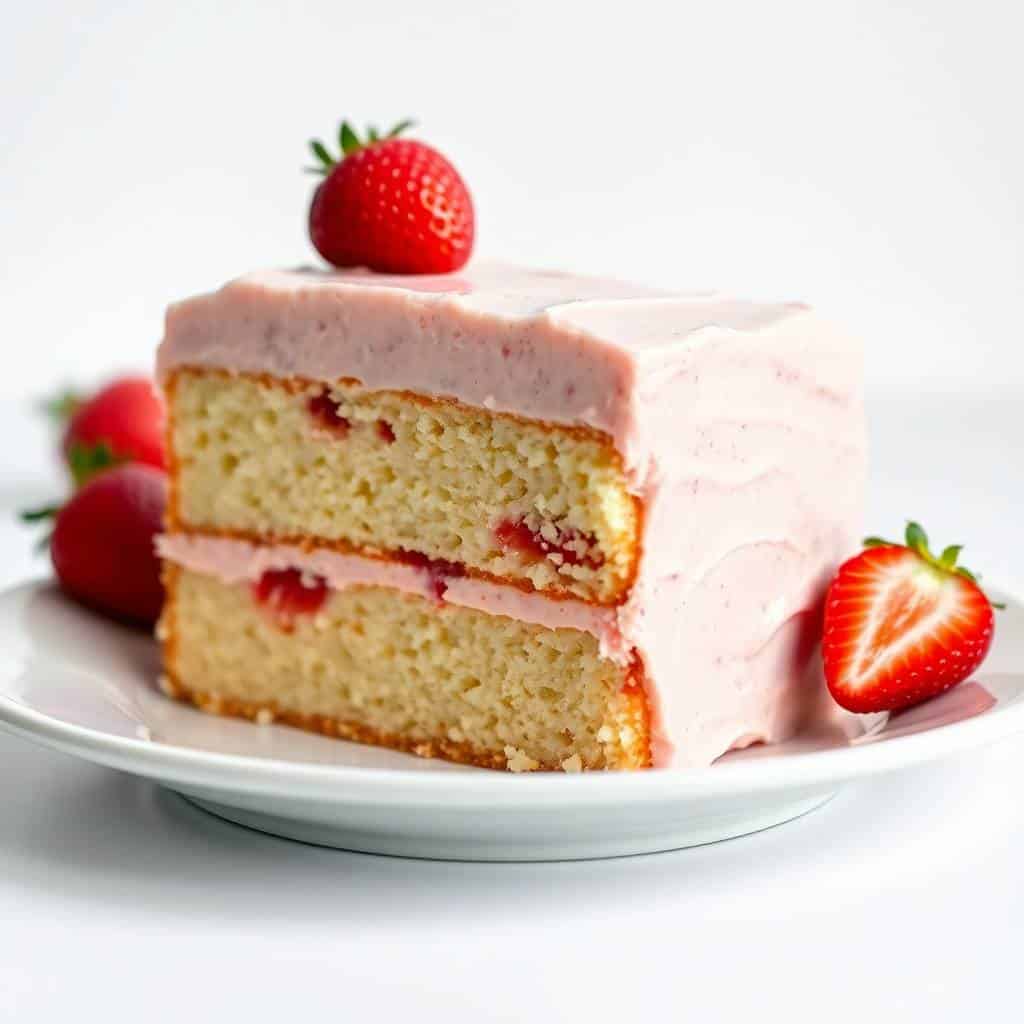
I made this cake for Zainab's birthday last year and she stood in the kitchen watching it come out of the oven like it was going to disappear. The vanilla bean specks in the layers, that pale pink frosting — it looked like something from a bakery window. Except I made it in my own kitchen, with a hand mixer I bought on sale years ago.
What makes this cake work is the combination of vanilla bean paste (not extract — there's a real difference) and a frosting that uses reduced strawberry puree instead of jam or flavoring. The first time I tried making strawberry frosting, I just dumped in raw blended strawberries and ended up with a runny pink mess that slid right off the cake. Reducing the puree first is the step I won't skip anymore. It concentrates the flavor and gets rid of the excess water that wrecks the frosting consistency.
I make this cake a few times a year — birthdays, Eid gatherings, once just because it was a rainy weekend and I wanted a project. My husband, who normally reaches for something chocolatey, took a second slice without saying a word, which is his version of a compliment. If you're looking for something a bit more celebratory, my Pineapple Cream Cheese Pound Cake uses a similar cream cheese base and is equally good for a casual afternoon.
One thing to set expectations on: this is a project cake. It's not a 30-minute weeknight thing. Between baking, cooling completely, and making the frosting, you're looking at a few hours. I usually bake the layers the night before and frost the next day. That actually makes the whole thing easier and less stressful.
Why You'll Love This Recipe
- The vanilla bean paste is actually worth it: I resisted buying it for a long time because it felt unnecessary. Then I tried it once and I stopped questioning it. You get those tiny dark specks all through the cake and the flavor is deeper and more rounded than extract alone. It's available at most grocery stores now — I've seen it at Walmart and Trader Joe's — so it's not a specialty item anymore.
- The frosting tastes like real strawberries: Because it uses real strawberries. Reducing the puree takes about 10 minutes and makes a huge difference — you get that fresh, slightly tart flavor instead of the artificial pink sweetness you get from flavoring. I've used both fresh and frozen strawberries and both work fine.
- The layers hold up properly: The sour cream in the batter keeps the crumb moist without making it too tender to stack. I've made layer cakes that fell apart the second I tried to lift a layer — this one doesn't do that. It slices cleanly and stays sturdy even after a day in the fridge.
- You can split it across two days: Bake the layers one day, frost the next. The cooled, wrapped layers actually taste better after resting overnight — the crumb settles and the flavor deepens a bit. This makes it manageable even if you have a full day ahead of the event.
- No stand mixer required: I don't own one. I use a basic hand mixer I've had for years and it does the job completely fine. For creaming the butter and sugar, just make sure you go the full 3–4 minutes — that's what builds the light texture, not the equipment.
Ingredients
- 2 ½ cups all-purpose flour
- 2 ½ teaspoons baking powder
- ½ teaspoon salt
- 1 cup unsalted butter, softened (2 sticks)
- 1 ¾ cups granulated sugar
- 2 large eggs, room temperature
- 2 large egg whites, room temperature
- 1 tablespoon vanilla bean paste (or seeds scraped from 1 vanilla bean pod)
- 1 cup whole milk, room temperature
- For the Strawberry Cream Cheese Frosting:
- 8 oz full-fat block cream cheese, softened
- ½ cup unsalted butter, softened
- 3 cups powdered sugar
- ½ cup strawberry purée (from fresh or frozen strawberries, reduced — see Tips)
- 1 teaspoon vanilla extract
- Pinch of salt
Directions
- Preheat and prep: Preheat your oven to 350°F (175°C). Grease two 8-inch round cake pans, line the bottoms with parchment paper, then grease the parchment too. This extra step means the layers come out cleanly every time.
- Mix the dry ingredients: In a medium bowl, whisk together the flour, baking powder, and salt. Set it aside — you'll be coming back to it shortly.
- Cream the butter and sugar: In a large bowl, beat the softened butter and granulated sugar together on medium speed for 3–4 full minutes. Don't rush this. The mixture should look pale and fluffy — this is what gives the cake its light texture.
- Add eggs and vanilla: Add the eggs and egg whites one at a time, beating well after each. Then mix in the vanilla bean paste. The batter might look slightly curdled at this point — that's normal, it comes together once you add the flour.
- Alternate the dry and wet: Add the flour mixture in three additions, alternating with the milk in two additions (flour, milk, flour, milk, flour). Start and end with the flour. Mix just until combined after each addition — overmixing here makes the cake tough.
- Bake: Divide the batter evenly between the two pans. Bake for 28–30 minutes, until a toothpick inserted in the center comes out clean. I start checking at 25 minutes because ovens vary.
- Cool properly: Let the cakes cool in the pans for 10 minutes, then turn them out onto a wire rack to cool completely. Completely means completely — I once frosted a slightly warm cake and watched the frosting slide off in slow motion. At least an hour, ideally two.
- Make the frosting: Beat the softened cream cheese and butter together until smooth, about 2 minutes. Add the powdered sugar gradually, then mix in the reduced strawberry purée, vanilla extract, and a pinch of salt. Beat until fluffy and smooth. If it feels too soft, refrigerate for 10–15 minutes before using.
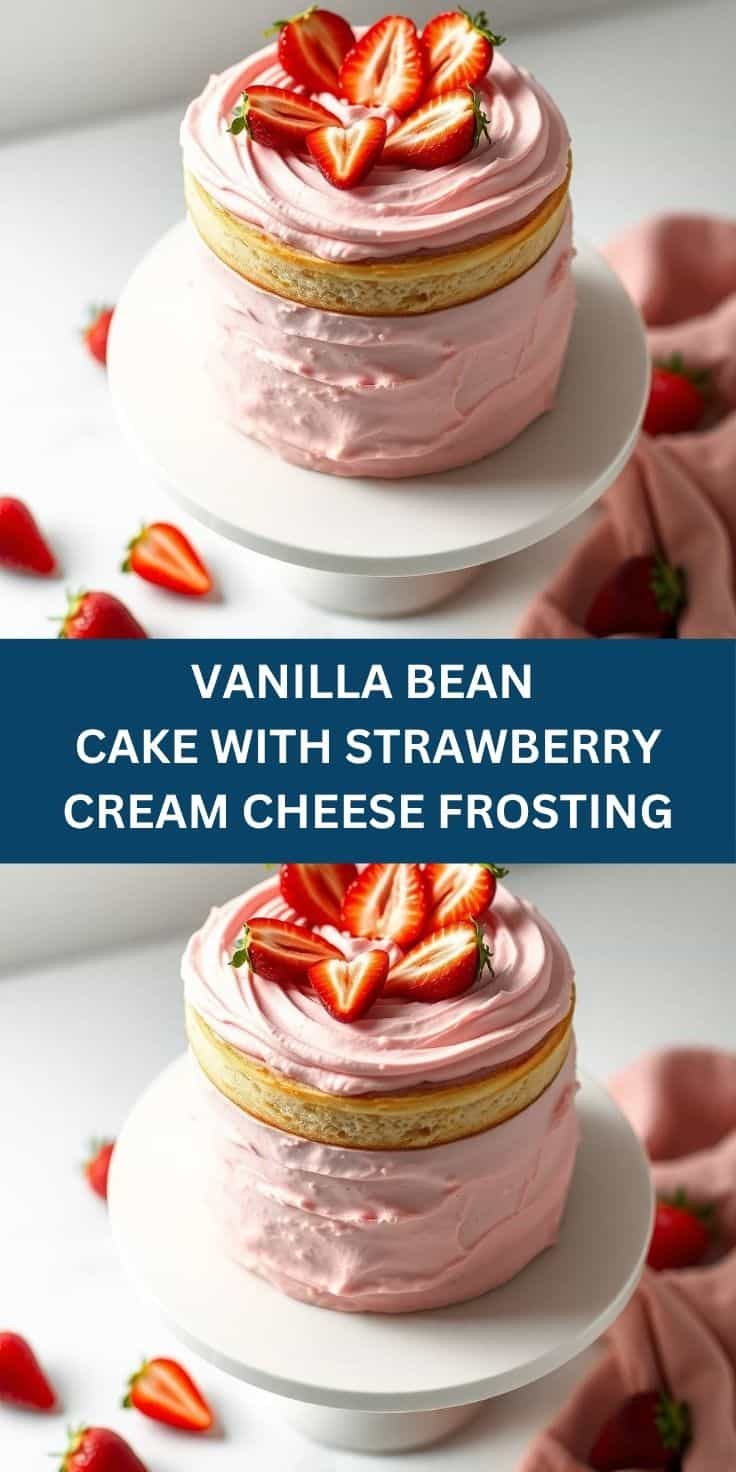
- Assemble the cake: Place one layer on your serving plate or cake board. Spread a generous layer of frosting over the top. Add the second layer and frost the top and sides however you like — rustic and swoopy works just as well as perfectly smooth.
Tips for Success
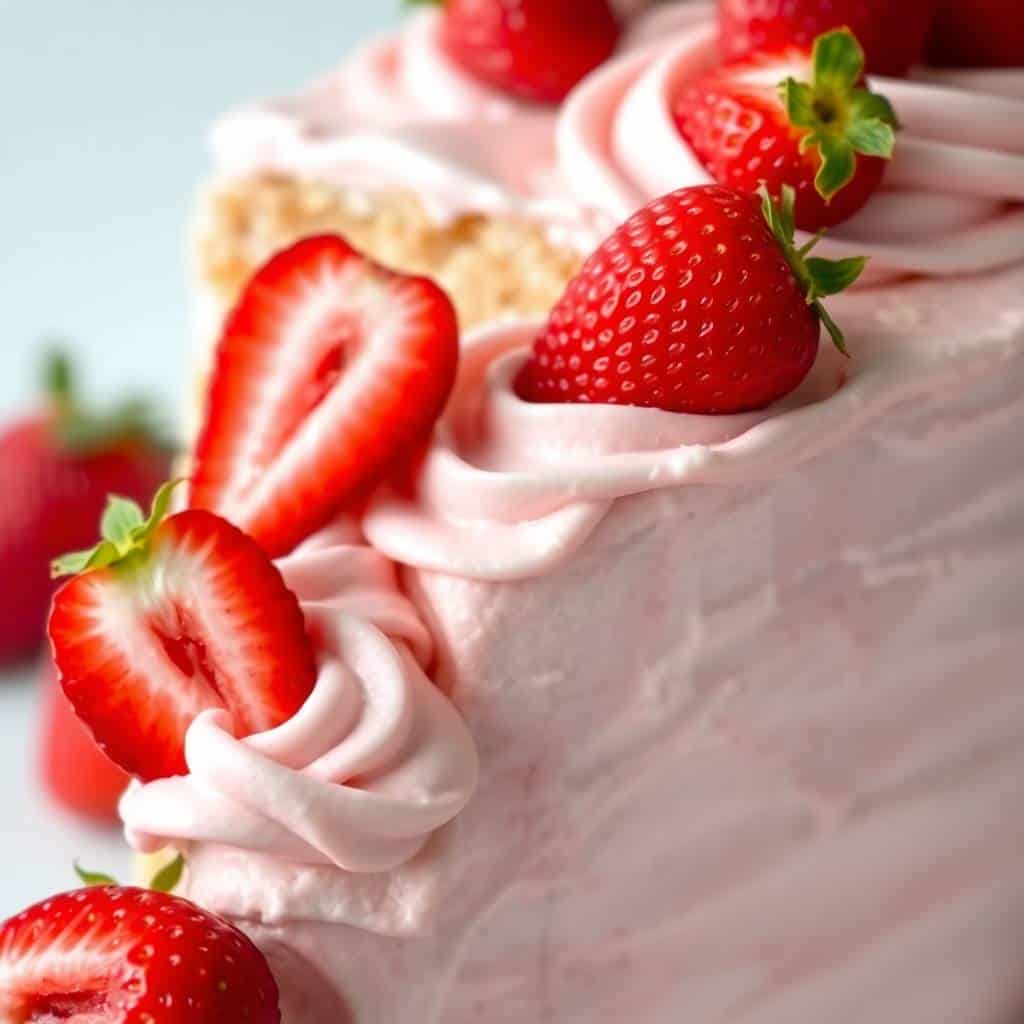
- Reduce the strawberry puree — don't skip this: Blend your strawberries until smooth, then pour into a small saucepan and simmer over medium-low heat for about 10 minutes, stirring occasionally, until it thickens and reduces by roughly half. Let it cool completely before adding it to the frosting. If you add it warm or watery, you'll get a runny frosting that won't hold its shape. I ruined my first batch of this frosting exactly this way.
- Room temperature ingredients actually matter here: Cold butter won't cream properly — you'll end up with lumps. Cold eggs can cause the batter to break. Cold cream cheese makes lumpy frosting. I usually set everything out about an hour before I start baking. If you forgot, cut the butter into small cubes and let it sit for 20 minutes; it warms up faster that way.
- Use full-fat block cream cheese, not the spreadable kind: I learned this the hard way. The spreadable cream cheese in the tub has extra moisture and stabilizers added — it makes the frosting soft and difficult to work with. The block kind (Philadelphia or store-brand equivalent) is what you want. It's usually in the same section, just looks different.
- Don't overmix the batter after adding the flour: Once you start adding the dry ingredients, switch to a lower speed and mix only until you can't see streaks of flour anymore. Overmixing develops gluten and makes the cake dense instead of tender. A few gentle strokes with a spatula at the end to scrape the bottom of the bowl is fine.
- Level your layers if they dome: If your cake layers bake up with a dome in the center, use a long serrated knife to trim it flat before frosting. It takes 30 seconds and makes assembling the cake so much easier. The scraps are the baker's reward — I eat them immediately with a bit of leftover frosting.
Variations
- Chocolate base with strawberry frosting: Replace ½ cup of the all-purpose flour with unsweetened cocoa powder. The chocolate and strawberry combination is classic for a reason. My husband actually prefers this version — the slight bitterness of cocoa balances the sweet fruity frosting really well.
- Lemon vanilla with strawberry: Add the zest of one lemon and a tablespoon of lemon juice to the batter. The citrus cuts through the richness and makes the cake taste brighter. I've served this version in summer and it goes quickly.
- Mixed berry frosting: Use a combination of strawberry and raspberry puree (reduce them together) for a slightly more complex, less sweet frosting. The color comes out a deeper pink, almost magenta, which looks beautiful on a white cake.
- Cupcake version: This batter works in a standard muffin tin too. Fill liners about ⅔ full and bake at 350°F for 18–20 minutes. Makes about 24 cupcakes. I've made these for Zainab's class parties — they travel better than a layered cake and the kids go through them fast. For bite-sized versions, check out my Fireworks Funfetti Cupcakes for another party-friendly option.
- Strawberry jam swirl: Drop spoonfuls of good strawberry jam onto the batter in the pans, then swirl with a skewer before baking. It adds pockets of jammy flavor through the cake and makes each slice look a bit different. Use a thick jam — a runny one just sinks.
Serving and Storage
Serving
Let the cake sit at room temperature for about 20–30 minutes before slicing if it's been refrigerated — cold cream cheese frosting is dense and a bit waxy, but at room temperature it softens up and tastes the way it should. I usually top the finished cake with a few fresh strawberries right before serving, both because it looks nice and because it signals to anyone who hasn't read the menu what flavor is coming. A drizzle of slightly warmed strawberry jam over the top also works beautifully as a finishing touch.
Storage
Because of the cream cheese frosting, this cake needs to be refrigerated. Store it covered (a cake dome, a large bowl inverted over it, or loosely tented with plastic wrap) for up to 4 days. The cake layers themselves actually freeze well — wrap each unfrosted layer tightly in plastic wrap, then in foil, and freeze for up to 2 months. Thaw overnight in the fridge or at room temperature for a couple of hours. I don't recommend freezing the assembled frosted cake — the frosting texture changes after thawing.
Frequently Asked Questions
Can I use vanilla extract instead of vanilla bean paste?
You can, and the cake will still be good. Use 2 teaspoons of pure vanilla extract in place of the tablespoon of paste. What you'll lose is the visual specks through the crumb and some of that deeper, more rounded vanilla flavor. Vanilla bean paste is worth buying if you bake regularly — a jar lasts a long time and makes a noticeable difference in cakes and custards.
How do I make the strawberry puree?
Blend about 1 cup of fresh or thawed frozen strawberries until completely smooth. Pour into a small saucepan and simmer over medium-low heat, stirring frequently, for around 10 minutes until it reduces and thickens — you should end up with roughly ½ cup of concentrated puree. Let it cool to room temperature before adding to the frosting. Don't add it warm or it will melt the butter.
Can I freeze this cake?
The unfrosted cake layers freeze really well. Wrap each cooled layer individually in plastic wrap, then in aluminum foil, and freeze for up to 2 months. When you're ready to use them, thaw at room temperature for 2 hours or overnight in the fridge. I wouldn't freeze the assembled frosted cake — cream cheese frosting doesn't hold up well through a freeze-thaw cycle.
Why is my frosting runny?
Almost always it's the strawberry puree — either it wasn't reduced enough, or it was added while still warm. The other culprit is using spreadable cream cheese from a tub instead of block cream cheese. If your frosting is already made and it's too soft, refrigerate it for 15–20 minutes and then beat it again briefly. That usually firms it back up enough to work with.
Can I make this cake a day ahead?
Yes, and I'd actually recommend it. Bake the layers the day before, let them cool completely, wrap them in plastic wrap, and leave them at room temperature overnight. Make the frosting and assemble on the day. The rested layers are actually a little easier to frost and the crumb is more settled. Just keep the assembled cake in the fridge if you're not serving it within a couple of hours.
VANILLA BEAN CAKE WITH STRAWBERRY CREAM CHEESE FROSTING
Ingredients
For the Cake:
- 2 ½ cups all-purpose flour
- 2 ½ teaspoons baking powder
- ½ teaspoon salt
- 1 cup unsalted butter softened
- 1 ¾ cups granulated sugar
- 2 large eggs
- 2 large egg whites
- 1 tablespoon vanilla bean paste or seeds from 1 vanilla bean
- 1 cup whole milk
For the Strawberry Cream Cheese Frosting:
- 8 oz cream cheese softened
- ½ cup unsalted butter softened
- 3 cups powdered sugar
- ½ cup strawberry purée from fresh or frozen strawberries
- 1 teaspoon vanilla extract
Instructions
- Preheat Oven: Preheat oven to 350°F (175°C). Grease and line two 8-inch round cake pans with parchment paper.
- Mix Dry Ingredients: In a bowl, whisk together flour, baking powder, and salt. Set aside.
- Cream Butter and Sugar: In a large mixing bowl, beat butter and sugar until light and fluffy. Add eggs, egg whites, and vanilla bean paste; mix well.
- Combine Wet and Dry: Gradually add dry ingredients alternately with milk, mixing until just combined.
- Bake: Divide batter evenly between pans and bake for 28–30 minutes or until a toothpick comes out clean. Cool completely.
- Prepare Frosting: Beat cream cheese and butter until smooth. Add powdered sugar, strawberry purée, and vanilla extract. Beat until fluffy.
- Assemble Cake: Frost cooled cakes and layer them with extra frosting between layers. Garnish with fresh strawberries if desired.
Notes
- Make Ahead: Cakes can be baked a day ahead and stored wrapped at room temperature.
- Flavour Boost: Add a few drops of almond extract for extra depth.
- Serving Suggestions: Top with fresh strawberries or a drizzle of strawberry sauce.
- Storage Tips: Refrigerate leftovers for up to 4 days. Bring to room temperature before serving.
This cake has become my go-to when I need something that looks like I spent a lot more effort than I did. The layers are forgiving, the frosting comes together quickly once you've got your reduced puree ready, and the finished result looks genuinely impressive on a table. I've brought it to gatherings where nobody believed I made it at home, which — honestly — is the best kind of feedback a baker can get.
The thing I keep coming back to is how the two flavors actually balance each other. The cake itself is rich and buttery with that deep vanilla flavor, and then the frosting is tangy and fruity — they don't compete, they just work together. I'm not a trained pastry chef and this is definitely my home version of a layer cake, not a French patisserie creation. But that's the point. You don't need to be a professional to make something that makes people pause before they take a bite.
If you've got a celebration coming up and you want a cake that feels special without requiring specialist skills or equipment, this is the one I'd point you to. And if you're in a cheesecake mood after all this cream cheese talk, my Pumpkin Caramel Cheesecake Delight is worth bookmarking for fall. 🍓🎂✨
If you made this cake, I'd love to know how it went — especially if you tried one of the variations. Leave a comment below or tag me if you share it.
More baking recipes you might like:
- Pineapple Cream Cheese Pound Cake — dense, moist, and great for slicing ahead
- Pumpkin


Comments
No Comments