
I made tzatziki for the first time when I was trying to figure out what to serve alongside some grilled chicken skewers, and I genuinely did not expect it to become one of those things I make on repeat. I had Greek yogurt in the fridge, a cucumber sitting on the counter, and about 15 minutes before dinner needed to be on the table. That first batch was a little watery because I didn't squeeze the cucumber properly — lesson learned fast.
What makes this version work is the balance between the yogurt's tang, the garlic's punch, and the fresh dill. I also add a small splash of white vinegar along with the lemon juice, which sounds odd but gives it a little extra brightness without making it sour. Full-fat Greek yogurt is the move here — the low-fat version makes the whole thing taste a bit thin and sad.
My husband started requesting this with almost everything — it turns up next to grilled meats, as a spread in wraps, spooned over roasted vegetables. Zainab dunks raw carrots and cucumber strips in it like it's the best thing on the table, which honestly it sometimes is. I usually pair it with something simple on the side, like my parsley salad, and the whole spread comes together in under 20 minutes.
One important thing before you start: give the tzatziki at least 30 minutes in the fridge before you serve it. I know it's tempting to eat it right away — I've done it — but the flavors genuinely come together better after it rests. If you can make it an hour ahead, even better.

Why You'll Love This Recipe
- It comes together in under 15 minutes: There's almost no cooking involved — just grating, squeezing, and stirring. I've made this on weeknights when dinner is already running late and it still makes the table feel put-together. Most of the time investment is actually the chilling, which you can do while you cook everything else.
- It works as a dip, a sauce, or a spread: I've used this same batch as a dip for pita chips, a sauce drizzled over grilled chicken, and a spread inside a wrap with roasted vegetables. It holds up in all three roles without any adjustments. That kind of flexibility is what keeps it in my regular rotation.
- The ingredients are genuinely accessible: Everything here — Greek yogurt, cucumber, garlic, dill, lemon — is available at any Walmart, Aldi, or regular grocery store. You don't need a specialty shop or anything unusual. I usually have most of this in my fridge already.
- It actually tastes better the next day: The garlic mellows a little overnight and everything just sits together more comfortably. I've made a double batch on a Sunday and had it last through Tuesday lunches without it losing anything. If anything, day-two tzatziki is my favorite version.
- It's one of those recipes that looks impressive but isn't: I've brought this to gatherings and people always ask what's in it, assuming it's complicated. It's not. It's five real ingredients and a bit of patience. This is not authentic Greek restaurant tzatziki — it's my version, built for a regular home kitchen with regular ingredients.
Ingredients
- 1 cup Greek yogurt (plain, full-fat — this is not the place for fat-free)
- 1 medium English cucumber, grated and squeezed dry
- 2 cloves garlic, minced
- 2 tablespoons olive oil
- 1 tablespoon fresh lemon juice
- 1 teaspoon white vinegar
- 1 teaspoon fresh dill, chopped (or ½ teaspoon dried dill in a pinch)
- ½ teaspoon salt
- ¼ teaspoon black pepper
- Extra dill and a drizzle of olive oil, for serving (optional)
Directions
- Grate and drain the cucumber: Grate the cucumber on the large holes of a box grater, then pile it into a clean kitchen towel or a few layers of paper towel. Squeeze out as much liquid as you can — you'll be surprised how much comes out. Skipping this step is what gives you watery tzatziki, and I know from experience.
- Combine the yogurt and garlic: In a medium bowl, stir together the Greek yogurt and minced garlic until the garlic is evenly distributed. I do this first because it gives the garlic a couple minutes to start infusing into the yogurt while I'm prepping everything else.
- Add the remaining ingredients: Fold in the squeezed cucumber, olive oil, lemon juice, white vinegar, and dill. Season with salt and pepper, then stir gently until everything is combined. Taste it here — if it needs more salt or a touch more lemon, now is the time.
- Chill before serving: Cover the bowl and refrigerate for at least 30 minutes, ideally an hour. This step isn't optional if you want the flavors to actually come together properly. The garlic softens, the dill blooms, and the whole thing thickens up a little more.
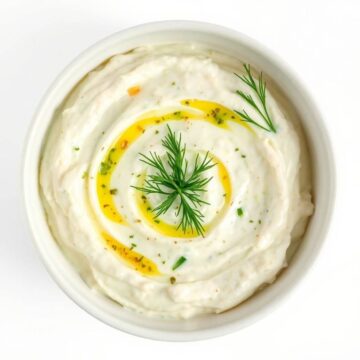
- Serve: Spoon into a serving bowl, drizzle with a little olive oil, and scatter some fresh dill on top if you have it. Serve cold alongside pita, raw vegetables, grilled meats, or whatever you're eating that night.

Tips for Success
- Squeeze the cucumber twice: I mean it. Grate it, squeeze it once, let it sit for two minutes, then squeeze again. The amount of water locked in a fresh cucumber is genuinely wild. That extra squeeze is the difference between thick, creamy tzatziki and something that slowly pools on the plate.
- Use full-fat Greek yogurt: I've tried this with low-fat and it works, but the texture is noticeably looser and the flavor is less rich. If full-fat isn't available, strain regular plain yogurt through a cheesecloth for 30 minutes — you'll get a similar result. Brands like Fage or Chobani full-fat work great here.
- Don't skip the chill time: Fresh garlic straight into fresh yogurt can be pretty aggressive — almost sharp. Give it that 30-60 minutes in the fridge and it softens considerably. The dill also needs time to do its thing. I've rushed this before and it tasted fine, but not as good as when I was patient.
- Mince the garlic very fine: Big chunks of raw garlic in tzatziki are not pleasant. I mince mine as fine as I can get it, then press the flat of my knife over it a couple times to really break it down. If you have a garlic press, use it — this is one of the few cases where I genuinely recommend one over hand-mincing.
- Season after chilling, not just before: The salt settles in as it chills, so what tastes right at room temperature might need a little more once it's cold. I always do a quick taste right before serving and adjust. A tiny pinch more salt or an extra squeeze of lemon right at the end can make a real difference.
Variations
- Minty version: Swap half the dill for fresh mint leaves, finely chopped. I stumbled onto this when I ran out of dill one evening and it honestly might be my favorite variation now. The mint makes it taste even more cooling, especially in summer. Saad prefers this version over the original.
- Roasted garlic version: If raw garlic is too sharp for your taste, roast a whole head of garlic in the oven at 400°F (200°C) for about 40 minutes until soft and golden, then squeeze out the cloves. The flavor becomes sweet and mellow instead of sharp. This is also the version I'd use if I was making a dairy-free tzatziki with plant-based yogurt — roasted garlic is gentler on the whole thing.
- Spiced up: A pinch of cayenne or a small amount of finely minced fresh chili stirred in at the end gives this a subtle heat that works really well next to grilled meats. My husband adds more chili than I put in — he always does. Start with just a small pinch and taste as you go.
- Herb blend: Dill is the classic choice, but parsley, oregano, or a small amount of basil all work. A mix of dill and parsley is particularly good — it adds a little earthiness without overpowering the yogurt. If you have fresh herbs on hand and one of them is dill, start there and add others to taste.
- Lemon zest version: Add ½ teaspoon of lemon zest along with the juice. It makes the tzatziki smell incredible and adds a brighter citrus note that stands out more than just the juice alone. I do this when I'm serving it as a standalone dip rather than a sauce — it makes it feel a little more special.
Serving and Storage
Serving
Serve tzatziki cold, straight from the fridge. It's good with warm pita bread, pita chips, or raw vegetables like carrots, celery, and cucumber strips. It also works really well as a sauce over grilled chicken or lamb — the cool creaminess against hot meat is the whole point. If you're making it for a gathering, I'd pull it out of the fridge about 5 minutes before serving, just to take the very cold edge off. Back in Pakistan we'd serve something similar alongside grilled meats with flatbread, and that's pretty much how I still serve it here too. For a fuller spread, I'll put it out next to my parsley salad and whatever protein I've got going.
Storage
Store in an airtight container in the refrigerator for up to 3 days. Give it a quick stir before serving again, as a little liquid may separate on top — that's normal. Do not freeze tzatziki. I tried once out of curiosity and the yogurt separated completely when it thawed. The texture was grainy and wrong. It doesn't take long to make fresh, so just do that instead.

Frequently Asked Questions
Can I make tzatziki ahead of time?
Yes, and I actually recommend it. Making it a few hours ahead — or even the night before — gives the garlic and dill time to really settle into the yogurt. Just stir it once before serving and taste for seasoning, since it may need a tiny pinch more salt after sitting overnight.
Can I use regular yogurt instead of Greek yogurt?
You can, but you'll need to strain it first. Line a fine mesh strainer with cheesecloth or a clean kitchen towel, spoon in the regular yogurt, and let it drain in the fridge for at least an hour. This removes the excess liquid and gives you something closer to the thick consistency Greek yogurt naturally has. It's worth the extra step.
Can I freeze tzatziki?
No — freezing breaks the yogurt and the texture becomes grainy and watery when thawed. I tried it once just to see, and the result was not good. Tzatziki is quick enough to make fresh that freezing really isn't worth it. It keeps well in the fridge for 3 days, which is usually enough.
My tzatziki came out watery — what went wrong?
Almost certainly the cucumber. This happened to me my first time — I squeezed it but not enough. Grate the cucumber, pile it into a towel, squeeze hard, let it rest two minutes, then squeeze again. You want to feel like you've gotten almost all the moisture out. If it's still a bit loose after chilling, you can stir in a spoonful more of Greek yogurt to bring it back.
What can I serve with tzatziki besides pita?
Quite a lot. Raw vegetables like carrots, celery, and bell pepper strips work well. It's excellent over grilled chicken or lamb, inside wraps and sandwiches, or spooned over roasted vegetables. I've also used it as a salad dressing thinned with a little extra lemon juice, and it was really good that way.
Tzatziki is one of those recipes I keep coming back to because it genuinely improves almost any meal it sits next to. It takes almost no time, it uses ingredients I usually already have, and it holds up well in the fridge for a few days — which means I can make it Sunday and still be eating well on Tuesday. That combination of easy and useful is hard to beat.
The thing I like most about this version is how cleanly it comes together. No blender, no special equipment — just a grater, a bowl, and a spoon. I've made it the night before gatherings, I've made it 20 minutes before dinner, and it's worked both ways. If I'm putting together a spread, I'll pair it with something like my chicken riesling or keep it light with fresh vegetables and flatbread on the side.
If you're making this for the first time, the only thing I'd really emphasize is: squeeze the cucumber properly and give it time to chill. Everything else is forgiving. You can adjust the garlic, adjust the dill, add mint instead — it'll still be good. The cucumber and the resting time are the two things that actually make a difference.
I hope this becomes a regular in your kitchen the same way it did in mine. It's one of those quiet, reliable recipes that never lets you down. 🥒✨
TZATZIKI
Ingredients
For the Base:
- 1 cup Greek yogurt plain, full-fat or low-fat
- 1 cucumber English cucumber grated and excess water squeezed out
- 2 tablespoons olive oil
For Flavor:
- 1 tablespoon lemon juice freshly squeezed
- 2 cloves garlic minced
- 1 teaspoon dill fresh, chopped
- ½ teaspoon salt
- ¼ teaspoon black pepper
For Topping (Optional):
- Extra dill or olive oil (optional) for garnish
Instructions
Prepare Cucumber:
- Grate cucumber and squeeze out excess water using a cheesecloth or paper towel.
Mix Ingredients:
- In a bowl, combine Greek yogurt, grated cucumber, olive oil, lemon juice, minced garlic, dill, salt, and black pepper. Mix well.
Chill:
- Cover and refrigerate for at least 1 hour to let flavors meld.
Serve:
- Garnish with extra dill or a drizzle of olive oil if desired. Serve with pita, chips, or fresh veggies.
Notes
- Make Ahead: Tzatziki can be made a few hours ahead to enhance flavor.
- Variations: Add grated carrot or mint for a different flavor twist.
- Serving Suggestions: Ideal with gyros, sandwiches, chips, or fresh veggies.
- Allergy-Friendly: Use dairy-free Greek yogurt for a lactose-free option.
- Storage Tips: Store in an airtight container in the refrigerator for up to 3 days.
If you liked this, here are a few other things on the site worth making:
- Parsley Salad on Repeat — fresh, bright, and ready in minutes. Good alongside almost anything.
- Chicken Riesling — a pan sauce chicken recipe that feels fancy but comes together on a weeknight.
- Keto Avocado Egg Salad — creamy, filling, and great for lunches when you want something quick.
- Healthy Oatmeal Cookies — for when you need something sweet after all that savory.
- Almond Amaretti Cookies — three ingredients and genuinely impressive every time.





Comments
No Comments