
Cold season in my house means soup season, and nobody lets me forget it. The second the temperature drops, my husband starts dropping hints about chicken noodle soup — not the kind from a can, the real kind, the kind that takes a few hours and makes the whole house smell like something good is happening. This roasted version is what I landed on after a few attempts, and it's the one I keep coming back to.
The difference between roasted chicken noodle soup and regular chicken noodle soup is the broth. When you roast the chicken first — along with the onion, carrots, celery, and garlic — those vegetables caramelize in the pan, and the drippings turn into something you absolutely do not want to leave behind. You pour the broth right into that roasting pan, scrape up all those bits, and suddenly your soup base has depth that takes regular chicken noodle soup about three hours of simmering to achieve. It's a genuinely smart shortcut disguised as extra work.
My husband asks for this whenever anyone in the house gets sick, and honestly, I make it even when everyone's fine because it's that kind of meal. It also pairs well with something simple on the side — if you want a heartier dinner, I'll sometimes serve it alongside my Caesar Chicken Bake earlier in the week and use the leftover chicken here. Nothing wasted.
One thing to know before you start: the noodles are the trickiest part, not because cooking them is hard, but because they go mushy fast if you're not careful. I'll walk you through that. The rest is pretty forgiving — this soup wants to be good, and it will be.
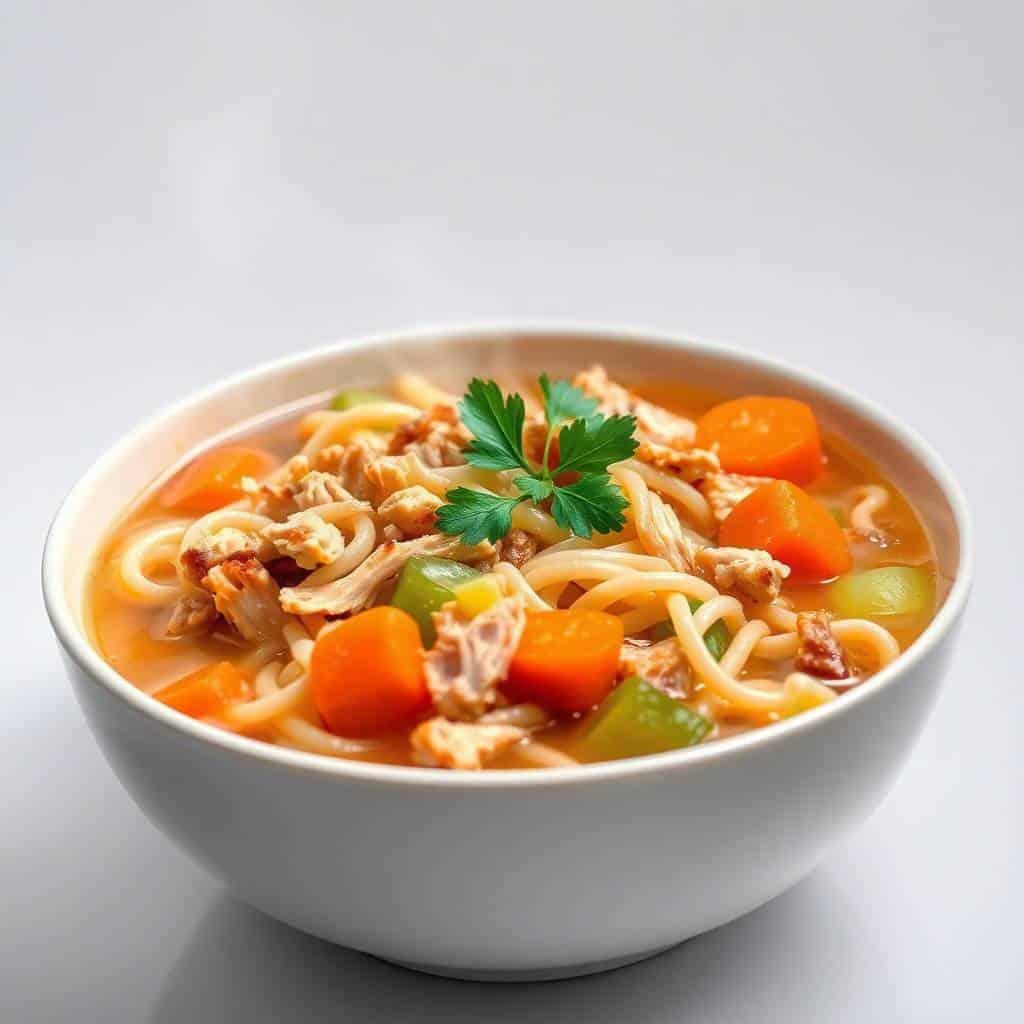
Why You'll Love This Recipe
- The broth is genuinely different: Roasting the chicken and vegetables first means the pan drippings go directly into your broth. That fond — those caramelized bits stuck to the bottom of the roasting pan — is where most of the flavor lives. Pouring broth over it and scraping it up takes about 30 seconds and adds something you just can't replicate any other way.
- It works with a rotisserie chicken: If you don't have time to roast a whole chicken, grab one from Costco or Walmart. You skip Part 1 entirely and start straight from the soup step. The broth won't be quite as deep, but it's still a very good bowl of soup on a weeknight.
- It's a complete meal in one pot: Chicken, vegetables, noodles — there's nothing else you really need to make. I do sometimes put out some crusty bread because my husband will eat bread with everything, but the soup stands on its own without it.
- Leftovers keep well — if you handle the noodles right: The broth and chicken reheat beautifully. Three days in the fridge and it's still great. The trick (which I'll get to in the Tips section) is not cooking the noodles directly into a batch you plan to store. It matters more than it sounds.
- It's endlessly adjustable: I've made this with egg noodles, with ditalini, with broken spaghetti when I was out of everything else. I've added turmeric when someone was sick, fresh dill when I had it, lemon juice at the end when I wanted brightness. The base is solid enough to handle changes.
Ingredients
- For Roasting:
- 1 whole roasting chicken (3–4 lbs) — or bone-in, skin-on pieces work too
- 2 tablespoons olive oil
- 1 teaspoon salt
- ½ teaspoon black pepper
- 1 large onion, cut into large wedges
- 2–3 carrots, roughly chopped
- 2–3 celery stalks, roughly chopped
- 4–6 cloves garlic, smashed (unpeeled is fine)
- Optional: a few sprigs of fresh thyme or rosemary
- For the Soup:
- 8 cups low-sodium chicken broth
- 1 cup carrots, peeled and diced (about 2 medium)
- 1 cup celery, diced (about 2–3 stalks)
- ½ cup onion, diced (about half a medium onion)
- 1–2 cups shredded cooked chicken (from the roasted chicken above)
- 1 cup egg noodles (or ditalini, rotini, or small shells)
- 2–3 tablespoons fresh parsley, chopped
- Salt and black pepper to taste
- Optional: 1 bay leaf
Directions
- Step 1: Roast the chicken and vegetables. Preheat your oven to 400°F (200°C). Pat the chicken completely dry with paper towels — this is important for getting good color on the skin. Rub it all over with 2 tablespoons of olive oil, then season generously with salt and pepper. Place it in a roasting pan or on a large sheet pan, and scatter the roughly chopped onion, carrots, celery, and smashed garlic around it. Add herb sprigs if you have them. Roast for 45–60 minutes (longer for a whole bird, about 30–40 minutes for bone-in pieces) until the internal temperature reads 165°F at the thickest part of the thigh and the skin is deep golden brown.
- Step 2: Pull the chicken and start the broth. Lift the chicken out of the pan and set it aside to cool — don't skip the resting time, you need it cool enough to shred. Now scrape everything left in that roasting pan — the caramelized vegetables, the drippings, all of it — directly into a large soup pot or Dutch oven. Pour in the 8 cups of chicken broth and scrape the bottom of the pot with a wooden spoon to get everything incorporated. Add the bay leaf if using. If you have the carcass and bones available after shredding, add them too for extra depth. Bring to a simmer over medium-high heat, then reduce to low, cover, and let it go for 30–45 minutes.
- Step 3: Shred the chicken and strain the broth. While the broth simmers, shred the cooled chicken meat into bite-sized pieces — you'll need 1 to 2 cups for the soup. Save any extra for another meal. After the broth has simmered, strain it through a fine-mesh sieve into a clean pot, pressing the vegetables gently to squeeze out as much liquid as you can. Discard the solids. What you're left with is a beautifully clear, golden broth that tastes like you spent all day on it.
- Step 4: Cook the fresh vegetables in the broth. Return the strained broth to the pot and bring it to a simmer over medium heat. Add the diced fresh carrots, celery, and onion. These cook in the finished broth so they stay a little brighter and more distinct than the roasted vegetables — it gives the soup nice texture. Simmer for 10–15 minutes until the vegetables are tender but not falling apart.
- Step 5: Add the noodles. Add the egg noodles and cook according to the package directions — usually 6–10 minutes — until just al dente. Don't walk away here. Noodles in soup go from perfect to mushy faster than you expect. Pull them just before you think they're done; they'll continue softening in the hot broth.
- Step 6: Add the chicken and finish. Stir in the shredded chicken and the chopped fresh parsley. Let it heat through for 2–3 minutes. Taste the broth and season with salt and pepper — how much you need depends entirely on your broth, so always taste before adding anything.
- Step 7: Remove the bay leaf and serve. Fish out the bay leaf, ladle the soup into bowls, and scatter a little extra parsley on top if you like. Serve immediately.
Tips for Success
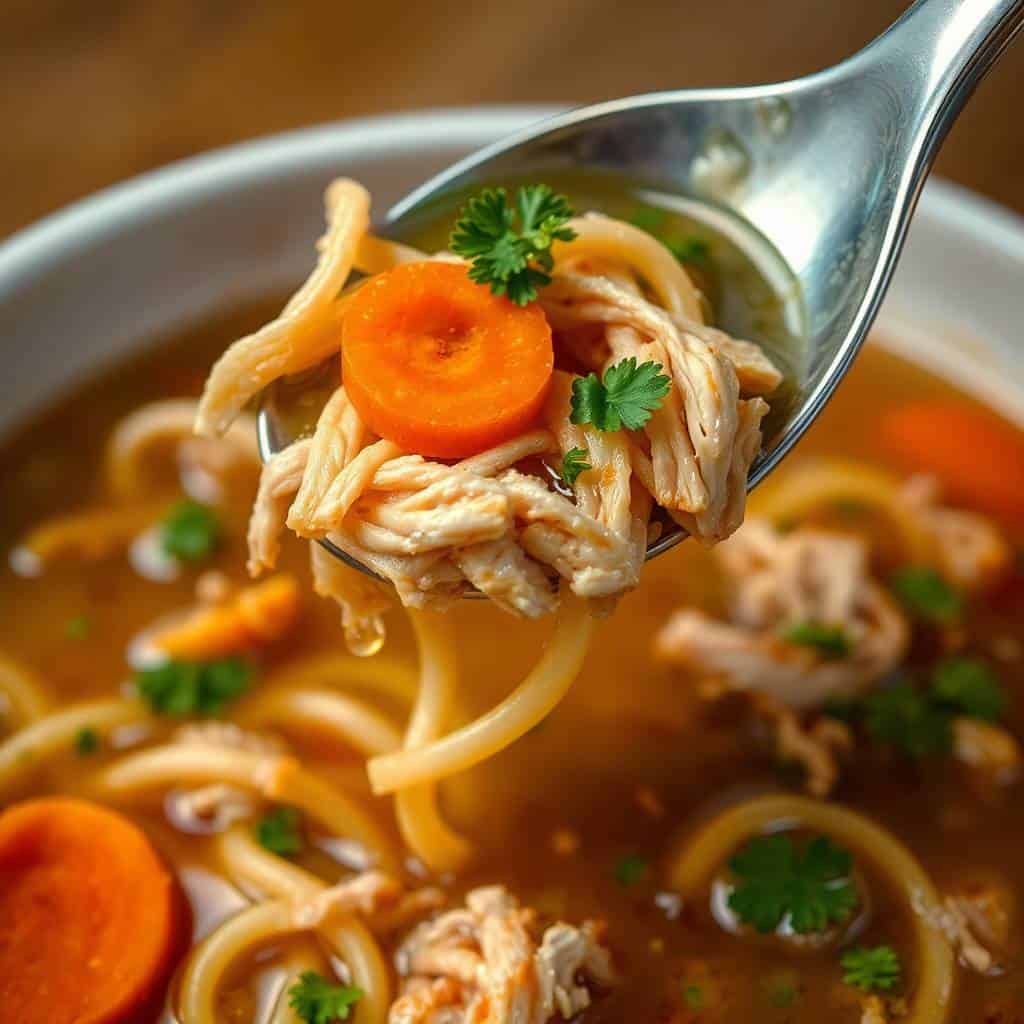
- Don't skip straining the broth: I know it's an extra step and an extra bowl to wash, but straining gives you a clear broth that looks and tastes restaurant-quality. The first time I skipped it, the soup was still good, but it looked murky and the texture was uneven. Five extra minutes of straining makes a real difference in the final bowl.
- Cook the noodles separately if you're making a big batch: This is the tip I wish someone had told me earlier. If you cook noodles directly in the pot and plan to have leftovers, they will absorb the broth overnight and turn into a thick, starchy mess by morning. Cook them in a separate pot, store them separately, and add them to each bowl as you serve. It sounds fussy but takes two minutes and saves your leftovers entirely.
- Use a low-sodium broth: The pan drippings and the roasted chicken already bring salt to this soup. If you use regular-sodium broth on top of that, you'll end up chasing it with water to fix the saltiness. Low-sodium broth lets you control the final seasoning yourself, which is always better.
- Let the chicken cool before shredding: I've tried shredding it too early when I was in a rush, and burned fingers aside, the meat tears unevenly when it's too hot. Give it 15–20 minutes on the cutting board. It shreds much more cleanly once it's rested.
- Add the parsley at the very end: Fresh parsley added too early just wilts and loses its brightness. Stir it in right before you serve and it stays green and fragrant. Dried parsley is a different thing entirely — it doesn't do the same job here, so if all you have is dried, skip it and use a squeeze of lemon instead.
Variations
- Ginger and turmeric version: Add 1 teaspoon of grated fresh ginger and ½ teaspoon of ground turmeric along with the garlic when you sauté the fresh vegetables. This is the version I make when someone is actually sick — it adds warmth and color and feels genuinely medicinal without tasting like medicine. Zainab likes this one better than the plain version, which I did not expect.
- Creamy chicken noodle soup: Stir in 3–4 tablespoons of heavy cream after you've added the chicken and parsley, just before serving. Take it off the heat first so it doesn't break. It makes the broth silky and a little richer — different from the classic, but really good on a cold night. If you only have half-and-half, that works too.
- Lemon and dill: Swap the parsley for fresh dill and add a good squeeze of lemon juice right at the end. This version is brighter and lighter-tasting — more of a spring soup than a winter one. My husband is not a dill person, so when I make this I usually just stir the dill into my own bowl.
- Spicy version: Add ½ teaspoon of red pepper flakes when you're cooking the fresh vegetables, or just hit your own bowl with a few dashes of hot sauce before serving. The base soup is mild enough that spice really opens it up. This is what my husband does every single time without fail.
- Extra vegetables: Frozen peas, diced zucchini, or chopped spinach all work well added in the last 5 minutes. Peas especially — they barely need cooking and add a little sweetness. This is a good recipe for using up whatever's getting soft in the crisper drawer. If you enjoy noodle-forward soups, my One Pot French Onion Pasta is worth a look too — completely different flavor profile but the same cozy energy.
Serving and Storage
Serving
Serve it hot, right away, with extra parsley scattered on top. Crusty bread on the side is never a bad idea — my husband dunks his bread into the broth and that's just how things are in this house. A simple green salad works if you want something lighter alongside it. This is a complete meal on its own though; you don't need much else.
Storage
The soup (without noodles) keeps in an airtight container in the refrigerator for 3–4 days. The flavor actually deepens a little overnight — the broth gets richer and the chicken absorbs more seasoning. Reheat gently on the stovetop over medium-low heat. If you stored the noodles separately, cook a fresh small batch or add the precooked ones to your bowl before ladling in the hot soup. For freezing, leave the noodles out entirely and freeze just the broth and chicken for up to 3 months. Thaw overnight in the fridge, reheat, and cook fresh noodles when you're ready to serve.
Frequently Asked Questions
Can I use a rotisserie chicken instead of roasting my own?
Yes, and it's a perfectly good option for a weeknight. Grab one from Costco or Walmart, shred the meat, and skip straight to the soup steps. You won't have the roasting pan drippings, but if you simmer the carcass in the broth for 30–45 minutes before straining, you'll still get decent depth. It's a different soup but still a very good one.
Why do my noodles get mushy in the leftovers?
Because noodles keep absorbing liquid even after cooking, especially once they sit in hot broth overnight. The fix is to store noodles separately from the soup and combine them per bowl at serving time. If you've already mixed everything together, the soup is still fine — the texture of the noodles will just be softer, and you may need to add a splash of extra broth when reheating since they'll have soaked up a lot of it.
Can I make this soup ahead of time?
The roasted chicken and strained broth can be made 1–2 days in advance and stored separately in the refrigerator. When you're ready to make the soup, just bring the broth back to a simmer, add the fresh vegetables, cook the noodles, and finish with the chicken and parsley. It actually makes the recipe feel much more manageable on a busy evening if you do the roasting step the day before.
Can I use bone-in chicken pieces instead of a whole bird?
Absolutely. Bone-in, skin-on thighs and drumsticks work really well and roast faster — about 30–40 minutes at 400°F. Thighs especially give you tender, easy-to-shred meat. Breasts work too but can dry out if over-roasted, so check the temperature earlier. Either way, the technique and the rest of the recipe stay exactly the same.
Can I freeze this soup?
Yes, but freeze it without the noodles. Noodles don't freeze well — they turn into mush when thawed. Freeze just the broth and shredded chicken in an airtight container for up to 3 months. Thaw it overnight in the fridge, reheat on the stovetop, and cook fresh noodles when you're ready to serve. I keep a couple of containers in the freezer through winter specifically for sick days.
ROASTED CHICKEN NOODLE SOUP
Ingredients
For Roasting:
- 1 whole roasting chicken 3-4 lbs, or 3-4 lbs bone-in, skin-on chicken pieces (thighs, drumsticks, breasts)
- 2 tablespoons olive oil
- 1 teaspoon salt
- ½ teaspoon black pepper
- 1 large onion cut into large wedges or quarters
- 2-3 carrots roughly chopped
- 2-3 celery stalks roughly chopped
- 4-6 cloves garlic smashed (unpeeled is fine)
- Optional: Fresh herbs like thyme or rosemary sprigs
For the Soup:
- 8 cups chicken broth low sodium recommended
- 1 cup egg noodles or other small pasta like ditalini, rotini
- 1-2 cups cooked shredded chicken from roasted chicken
- 1 cup carrots peeled and diced (about 2 medium)
- 1 cup celery diced (about 2-3 stalks)
- ½ cup onion diced (about ½ medium)
- 2-3 tablespoons fresh parsley chopped
- Salt and black pepper to taste
- Optional: 1 bay leaf
Instructions
Roast Chicken and Vegetables:
- Preheat oven to 400°F (200°C).
- Pat the chicken dry with paper towels. Rub with 2 tablespoons olive oil, then season generously with salt and pepper.
- Place the chicken in a large roasting pan or on a baking sheet. Arrange the roughly chopped onion, carrots, celery, and smashed garlic around the chicken. Add optional herb sprigs.
- Roast for 45-60 minutes, or until the chicken is cooked through (internal temperature of 165°F/74°C in the thickest part of the thigh) and the skin is golden brown. The vegetables should be lightly caramelized.
Make the Broth (while chicken roasts):
- Once the chicken is out of the oven, carefully remove the chicken from the pan and set aside to cool.
- Add the roasted vegetables and any pan drippings from the roasting pan directly into a large soup pot or Dutch oven.
- Pour 8 cups of chicken broth into the pot. If using a whole chicken, you can also add the carcass and any leftover bones (after de-boning the meat) to the pot for extra flavor. Add a bay leaf if using.
- Bring to a simmer over medium-high heat, then reduce heat to low, cover, and simmer for at least 30-45 minutes (longer if using carcass/bones for more depth).
Prepare Chicken and Strain Broth:
- While the broth simmers, shred the cooked chicken meat from the bones once it's cool enough to handle. Discard bones and skin (unless using them for broth). You'll need 1-2 cups of shredded chicken for the soup. Save any extra for other uses.
- After simmering, carefully strain the broth through a fine-mesh sieve into a clean pot or large bowl, discarding the roasted vegetables and any bones. This creates a clear, flavorful broth. You can gently press the vegetables to extract maximum flavor.
Cook Soup:
- Return the strained broth to the large soup pot.
- Add the diced fresh carrots, diced fresh celery, and diced fresh onion to the broth. Bring to a simmer over medium heat. Cook for 10-15 minutes, or until the vegetables are tender-crisp.
- Add the egg noodles to the simmering soup. Cook according to package directions, usually 6-10 minutes, until al dente.
- Stir in the shredded cooked chicken and fresh chopped parsley. Heat through for a few minutes.
Season and Serve:
- Taste the soup and season generously with salt and black pepper as needed. The amount will depend on the saltiness of your broth.
- Ladle hot soup into bowls. Serve immediately, perhaps with crusty bread for dipping.
Notes
- Make Ahead: The roasted chicken and broth can be prepared a day or two in advance. Store separately in the refrigerator. The soup base (broth and cooked vegetables) can also be made ahead. Add noodles and shredded chicken just before serving.
- Prevent Soggy Noodles: For best texture, cook noodles separately and add them to individual bowls, or add them to the main pot just before serving if you know the soup will be eaten entirely within an hour. Leftover noodles in soup tend to swell and become mushy.
- Vegetable Variety: Feel free to add other vegetables like diced potatoes, corn, or peas during the last 5-10 minutes of cooking for added color and nutrition.
- Herb Freshness: Fresh parsley, thyme, or dill added at the end brighten the soup's flavor.
- Storage: Store leftover soup in an airtight container in the refrigerator for up to 3-4 days. It also freezes well (without noodles, or with noodles added just before reheating) for up to 3 months.




Comments
No Comments