
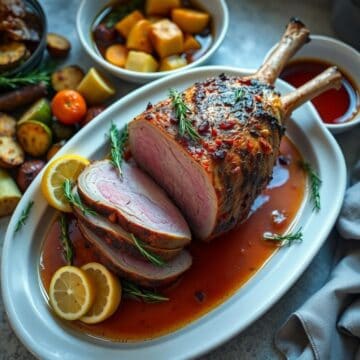
My husband doesn't get excited about much at the dinner table — except for this. The first time I roasted a whole leg of lamb for Eid, he came to the kitchen three times just to stand in the doorway and smell it. Not to help. Just to smell it. That garlic and rosemary hitting the oven heat is one of those aromas that makes the whole house feel like something significant is happening.
What makes this recipe work is the marinade paste — garlic, fresh rosemary, thyme, Dijon mustard, lemon juice, and olive oil rubbed into every fold and corner of the meat. I let it sit for at least an hour, but overnight is where the real difference shows. The Dijon acts as a binder so the herbs actually stick to the surface and form a proper crust as it roasts. It's not a complicated recipe, but those details are the ones that separate a good roast from a great one.
I make this a few times a year — Eid, Easter when we're hosting, and occasionally on a Sunday when I want to cook something that feels worth the effort. My husband pulls toward medium, closer to 140°F. I like it at 135°F where it's still a little pink and the juices run when you slice it. We've landed on 138°F as our household compromise and nobody argues. If you're building out a full holiday spread, my fig and goat cheese pinwheels are a great starter that you can prep ahead while the lamb is marinating.
One thing I'll say upfront: get a meat thermometer. Not an expensive one — a $10 instant-read from Walmart does the job perfectly. Lamb is too expensive to guess on, and the difference between 135°F and 155°F is the difference between something you're proud of and something you're apologizing for. Don't skip the rest time either. Fifteen minutes, loosely tented with foil, before you even pick up the knife.
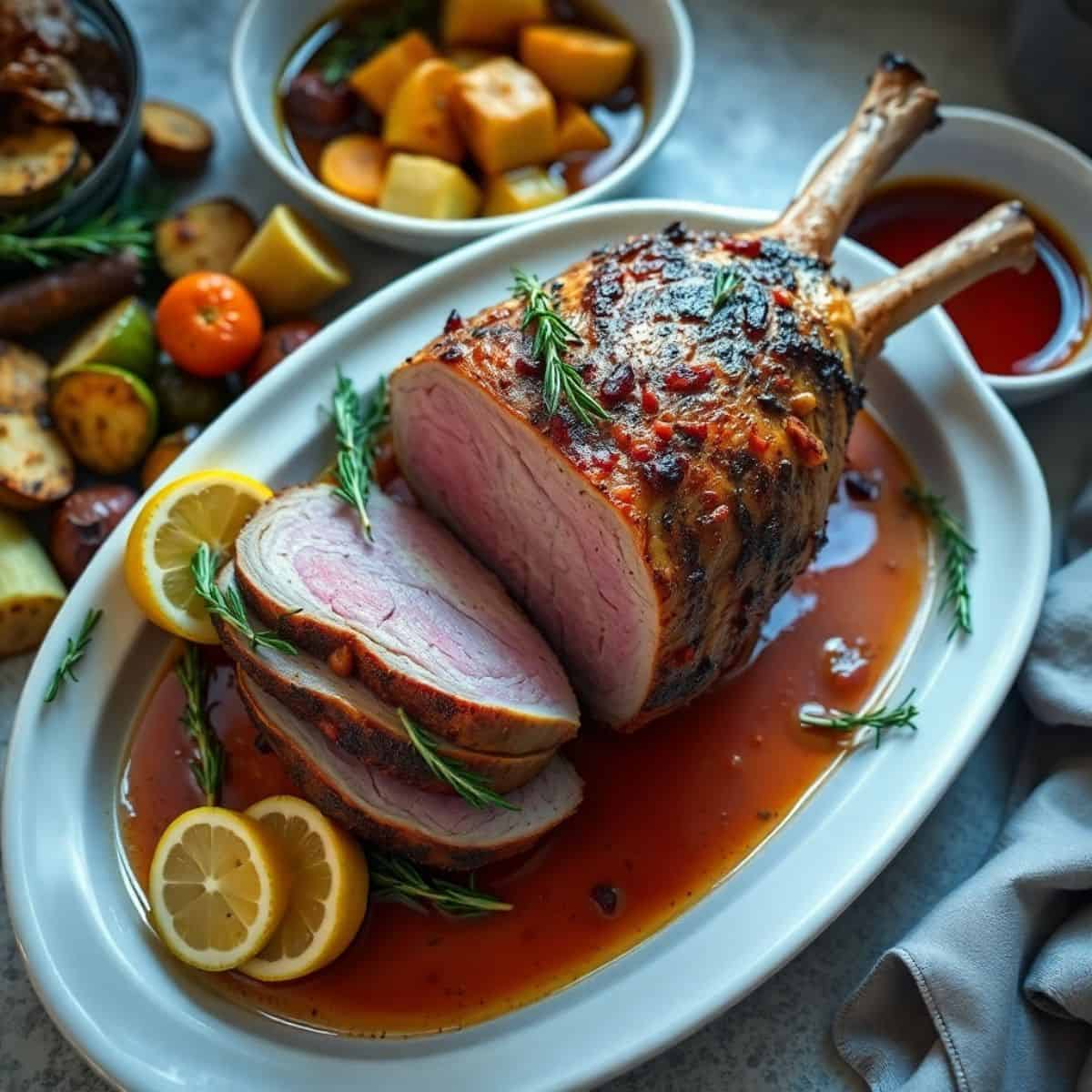
Why You'll Love This Recipe
- The crust is genuinely good: The Dijon mustard in the marinade isn't just for flavor — it acts as a glue that holds the herbs and garlic to the surface of the meat. As it roasts uncovered, that layer firms up into a fragrant, slightly crispy crust. I ruined my first attempt by covering the pan with foil the whole time thinking I was keeping it moist. Don't do that — uncovered is the move, the whole way through.
- It's mostly hands-off: Once the lamb goes into the oven, you have an hour and a half of freedom. I usually use that time to prep sides, set the table, and drink a cup of tea in peace. The only active step mid-roast is basting, which takes about two minutes. The oven does the actual work.
- It works for a crowd: A 4-5 pound bone-in leg feeds six to eight people comfortably. I double the marinade if I'm doing a larger cut, but the cooking method stays exactly the same. The bone-in version has better flavor and the pan drippings make an incredible sauce — don't pour them out under any circumstances.
- Marinating overnight changes the whole thing: An hour is the minimum and it works fine. But if you can rub it down the night before and leave it in the fridge until about 30 minutes before you're ready to roast, the garlic and herbs work their way deeper into the meat. The flavor goes from good to noticeably better. I started doing this after one particularly rushed Eid morning and haven't gone back.
- The leftovers are worth planning for: Cold sliced lamb the next day, tucked into flatbread with yogurt and cucumber, is one of my favorite lunch situations. Zainab picks at the leftovers straight from the container, which I take as a compliment. Reheat gently in a low oven if you want it warm — the microwave dries it out fast, so go slow if you use it.
Ingredients
- 1 bone-in leg of lamb, 4-5 lbs (boneless works too — reduce cooking time by about 20 minutes)
- 4 cloves garlic, minced
- 3 tablespoons olive oil
- 2 tablespoons fresh rosemary, chopped (dried works in a pinch — use 1 tablespoon)
- 1 tablespoon fresh thyme leaves (or ½ tablespoon dried)
- 1 tablespoon Dijon mustard
- 1 tablespoon lemon juice
- 1 teaspoon salt
- ½ teaspoon black pepper
- ½ teaspoon paprika
- 1 teaspoon ground cumin (optional — adds a warm, earthy note I really like)
Directions
- Make the marinade paste: In a small bowl, combine the minced garlic, olive oil, rosemary, thyme, Dijon mustard, lemon juice, salt, pepper, paprika, and cumin if using. Stir everything together until it forms a thick, spreadable paste. It should smell incredible at this point — that's how you know you're on the right track.
- Marinate the lamb: Pat the lamb completely dry with paper towels — this matters because surface moisture prevents the crust from forming properly. Rub the paste all over the meat, getting into any folds and around the bone. Cover and refrigerate for at least 1 hour, or overnight for best results. Pull it out of the fridge 30 minutes before roasting so it comes closer to room temperature.
- Preheat the oven: Set your oven to 375°F (190°C). Place the lamb on a roasting rack set inside a roasting pan. The rack lifts the meat so hot air circulates underneath — skip it and the bottom steams instead of roasts.
- Roast the lamb: Roast uncovered for 1 hour 30 minutes to 2 hours, depending on the size of your leg and your preferred doneness. Use a meat thermometer inserted into the thickest part (not touching the bone): 125°F (52°C) for rare, 135°F (57°C) for medium-rare, 145°F (63°C) for medium. I pull mine at 135°F.
- Baste halfway through: Around the 45-minute mark, open the oven and spoon the pan juices over the top of the lamb. This keeps the surface from drying out and helps build the crust. If the pan looks dry, add a splash of water or broth to keep the drippings from burning.
- Rest before slicing: Remove the lamb from the oven, tent loosely with foil, and let it rest for 15 minutes. Cutting into it too soon lets all the juices run out onto the board. Slice against the grain and serve with the pan drippings spooned over the top.
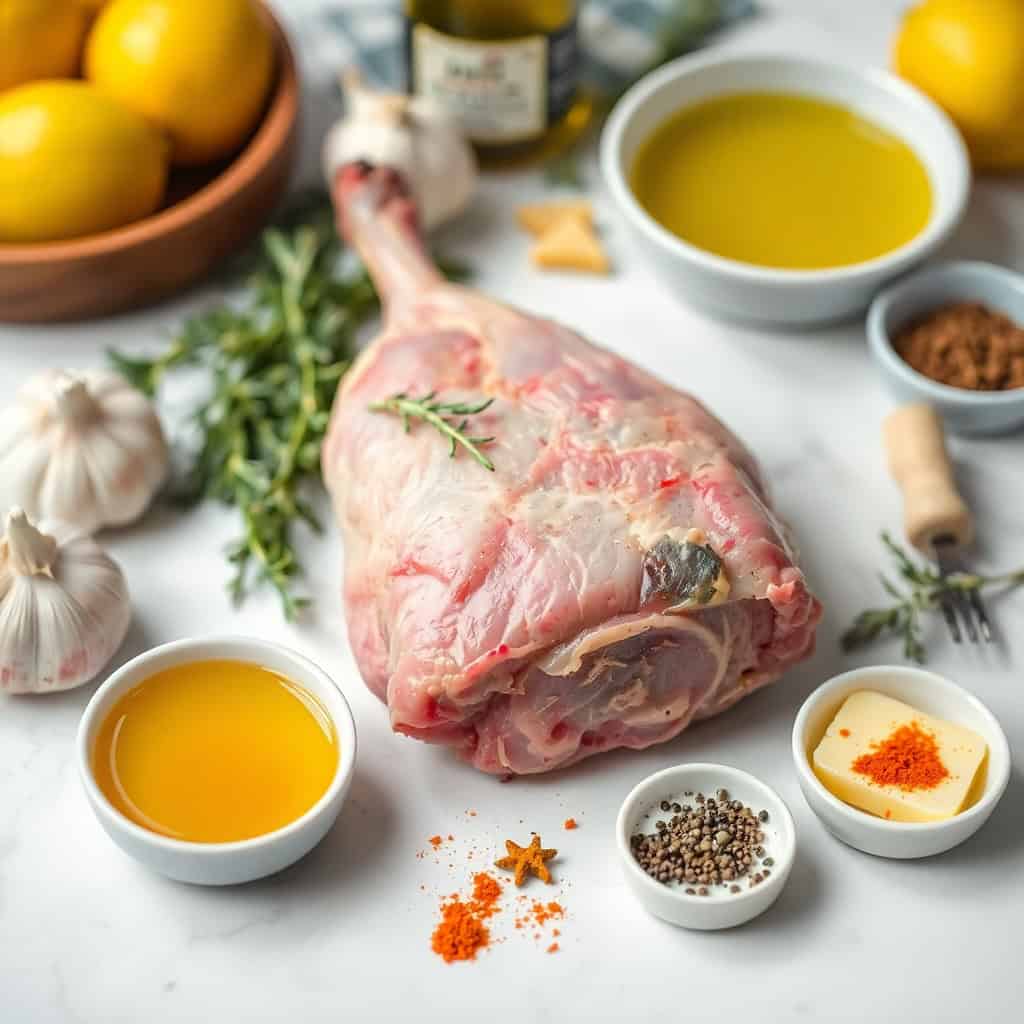
Tips for Success
- Dry the meat before marinating: I skipped this step once and the marinade slid right off in the oven instead of forming a crust. Paper towels, a firm pat, all over the surface — it takes twenty seconds and makes a real difference. Moisture on the surface creates steam, and steam is the enemy of a proper crust.
- Use a meat thermometer, not a timer: Every leg of lamb is a different shape and weight, so oven time varies more than you'd think. A $10 instant-read from any grocery store or Walmart is the only reliable way to know. I've had legs that hit 135°F at 80 minutes and others that needed the full two hours. Don't rely on the clock alone.
- Don't cover the pan: Covering the lamb traps steam and you lose the crust entirely. The first time I made this I covered it with foil thinking I was keeping it moist — I ended up with something that tasted more braised than roasted. The broth in the pan bottom provides enough moisture. Leave the top uncovered the whole way through.
- Save the pan drippings: Pour them through a fine strainer into a small saucepan, skim the fat if you want, and heat them briefly — that's your sauce, no recipe required. All the garlic and rosemary flavor is already baked into it. I've served this alongside roasted garlic butter parmesan potatoes and the drippings work as a sauce for both the lamb and the potatoes.
- Bring it to room temperature first: Cold meat straight from the fridge cooks unevenly — the outside can overcook before the center reaches temperature. I pull the lamb out 30 minutes before it goes in the oven. On a busy day I set a timer on my phone so I don't forget.
Variations
- Mediterranean-style: Add a teaspoon of dried oregano and a tablespoon of lemon zest to the marinade, then scatter halved cherry tomatoes and olives around the pan as it roasts. This is closer to a Greek-style preparation and it's genuinely excellent. My husband specifically requests this version when we're having guests over.
- Slow-roasted fall-apart version: Drop the oven to 300°F (150°C) and cook for 4 to 5 hours. The meat pulls apart with a fork instead of slicing clean. This is how I make it when I want something more casual — pile it into flatbread with yogurt and cucumber. It's not the same presentation as a carved holiday roast, but the flavor is something else.
- Garlic butter finish: In the last 15 minutes of roasting, brush the surface with 2 tablespoons of melted butter mixed with a clove of minced garlic. It deepens the crust color and adds a richness that pushes it over the top. I don't do this every time, but for a proper holiday dinner I usually do.
- Spiced version — closer to what I grew up eating: In Pakistan we'd use a marinade that leans more heavily on cumin, coriander, and chili — less rosemary, more warm spice. If you have garam masala, add a teaspoon to the paste and skip the thyme. Serve with naan or rice instead of roasted potatoes. It's a completely different dish but uses the exact same technique.
- Wine-braised pan base: Pour half a cup of red wine into the roasting pan alongside a splash of broth. As the lamb roasts, the wine reduces with the drippings into something deeply savory. This works particularly well paired with the Mediterranean version above.
Serving and Storage
Serving
Slice the lamb against the grain for the most tender cuts. I always pour the pan drippings through a strainer and serve them alongside as a light sauce — it takes two minutes and makes the plate look finished. If I'm serving it for Eid, I do roasted vegetables and rice on the side. For a more Western-style spread, roasted potatoes and asparagus make sense, and the drippings work as a sauce for both. Keep the sides simple — the lamb is the thing people are going to remember. If you want a starter that won't compete with the main, my Christmas appetizer recipes roundup has a few options that pair well with a roast dinner.
Storage
Leftovers keep well in an airtight container in the refrigerator for up to 4 days. To reheat, place slices in a baking dish with a spoonful of broth or water, cover tightly with foil, and warm at 300°F (150°C) for about 15 minutes. This keeps the meat from drying out. The microwave works in a pinch but go in 30-second intervals and stop the moment it's warm — overheating lamb in the microwave makes it tough fast. Cold leftover lamb sliced thin and tucked into flatbread with yogurt and cucumber is honestly one of my favorite next-day lunches.
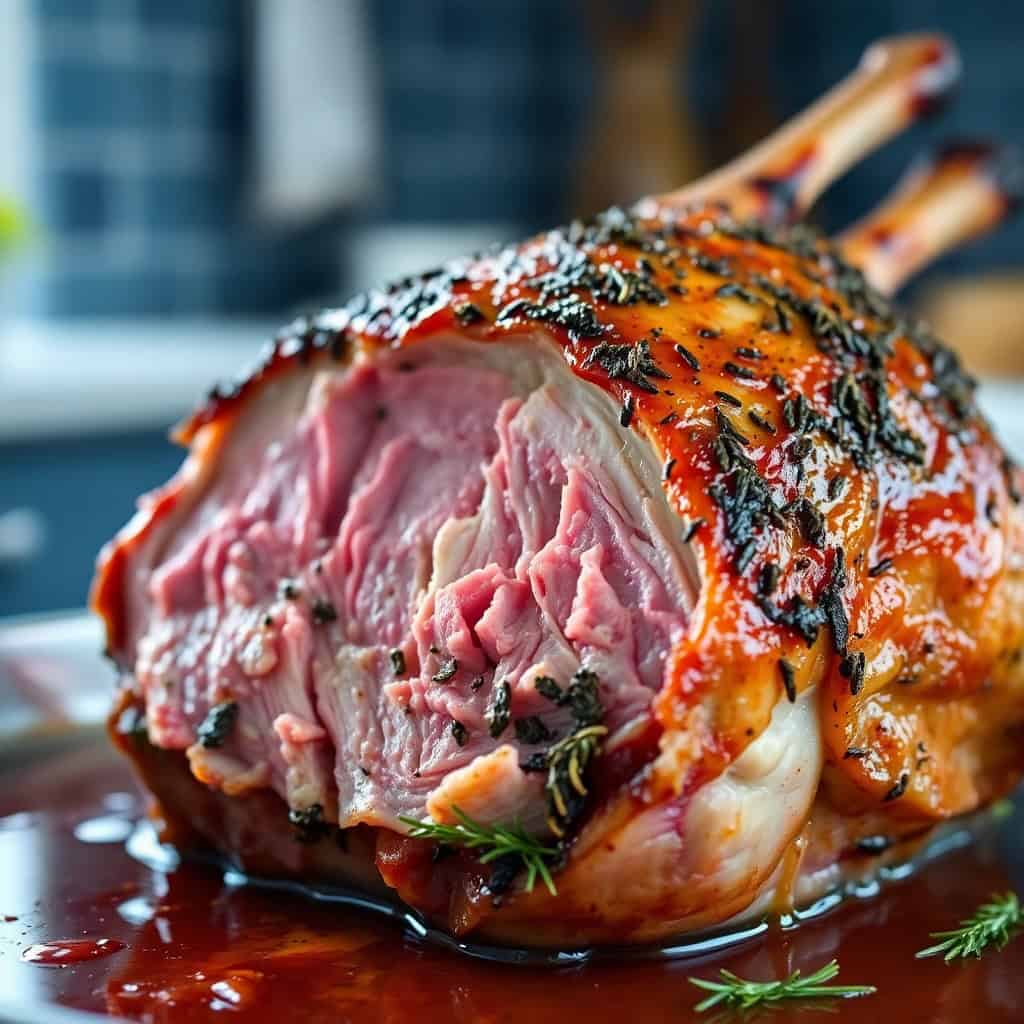
Frequently Asked Questions
Can I marinate the lamb overnight?
Yes, and I'd actually recommend it. An hour works and gives you a solid result, but overnight marinating lets the garlic and herbs penetrate deeper into the meat. I rub the lamb, cover the pan with plastic wrap, and leave it in the fridge until about 30 minutes before I'm ready to roast. The difference in flavor is noticeable enough that I stopped doing short marinades altogether.
What internal temperature should I cook the lamb to?
For medium-rare, pull it at 135°F (57°C). For medium, aim for 145°F (63°C). I personally pull mine at 135°F — the meat is still pink, juicy, and full of flavor at that temperature. Much above 145°F and lamb starts to get dry and lose what makes it special. A cheap instant-read thermometer takes the guesswork out entirely.
Can I use a boneless leg of lamb instead?
Yes. Boneless cooks faster and is easier to slice, but bone-in has more flavor and the bone helps conduct heat through the center of the meat. If you go boneless, start checking the temperature about 20 minutes earlier than the recipe suggests. Everything else — the marinade, temperature, and resting time — stays exactly the same.
How do I keep the lamb from drying out?
Three things help: don't overcook it (use a thermometer), baste with the pan juices halfway through roasting, and let it rest for a full 15 minutes before slicing. The resting step is the one people skip most often and it makes the biggest difference — cutting too soon pushes all the juices onto the cutting board instead of keeping them in the meat.
What's the best way to reheat leftover roast lamb?
Low and slow in the oven is best. Place the slices in a baking dish, add a splash of broth or water, cover tightly with foil, and reheat at 300°F (150°C) for 12-15 minutes. This keeps everything moist. If you use the microwave, go in 30-second bursts and stop the moment it's warm — lamb gets tough quickly if it's microwaved too long.
ROAST LEG OF LAMB
Ingredients
- 1 4-5 lb bone-in leg of lamb (or boneless)
- 4 cloves garlic minced
- 3 tablespoons olive oil
- 2 tablespoons fresh rosemary chopped
- 1 tablespoon fresh thyme leaves
- 1 tablespoon Dijon mustard
- 1 tablespoon lemon juice
- 1 teaspoon salt
- ½ teaspoon black pepper
- ½ teaspoon paprika
- 1 teaspoon ground cumin optional, for a Mediterranean touch
Instructions
Step No.1: Prepare the Marinade
- In a small bowl, mix garlic, olive oil, rosemary, thyme, Dijon mustard, lemon juice, salt, pepper, paprika, and cumin to create a flavorful paste.
Step No.2: Marinate the Lamb
- Pat the leg of lamb dry with paper towels. Rub the marinade evenly all over the lamb, making sure to coat all sides. Let it marinate for at least 1 hour (or overnight for best flavor).
Step No.3: Preheat the Oven
- Preheat your oven to 375°F (190°C). Place the lamb on a roasting rack in a roasting pan.
Step No.4: Roast the Lamb
- Roast the leg of lamb uncovered for about 1 hour 30 minutes to 2 hours, or until the internal temperature reaches:
- 125°F (52°C) for rare
- 135°F (57°C) for medium-rare
- 145°F (63°C) for medium
Step No.5: Rest and Serve
- Remove the lamb from the oven and let it rest for 15 minutes before slicing. This allows the juices to redistribute, making the meat tender and juicy.
Step No.6: Serve and Enjoy
- Slice the Roast Leg of Lamb against the grain and serve with your favorite sides like roasted vegetables, mashed potatoes, or a fresh salad.
Notes
- Bone-In vs. Boneless: Bone-in lamb has more flavor, while boneless lamb is easier to slice. Adjust cooking time based on size.
- Marinate Overnight: For the best flavor, let the lamb marinate in the fridge overnight.
- Use a Meat Thermometer: This ensures the lamb is cooked to your preferred doneness.
- Greek-Style Roast Lamb: Add oregano, lemon zest, and extra garlic for a Mediterranean twist.
- Spicy Version: Mix in red pepper flakes or cayenne pepper for a little heat.
- Slow-Roasted Lamb: Cook at 300°F (150°C) for 4-5 hours for fall-apart tender meat.
- Garlic Butter Glaze: Brush with melted garlic butter during the last 15 minutes of roasting for extra richness.



Comments
No Comments