
Last fall when the weather finally turned cool enough that I could start baking again without overheating our kitchen, Saad asked if I could make "fancy cookies for fall" because he had seen macarons at a French bakery during a school field trip and become obsessed with the colorful little sandwich cookies on display.
I had been wanting to try a pumpkin macaron variation for years (French pastry technique applied to American fall flavors felt like the right cross-cultural baking experiment for me as a Pakistani-American cook), but I had been intimidated by macaron technique because the recipe reputation suggests they're impossibly fussy and prone to dramatic failure.
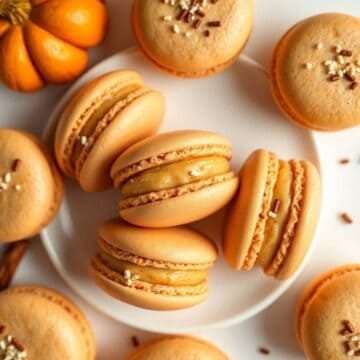
My first attempt at these pumpkin pie macarons last October was actually successful on the very first try (which surprised me genuinely because every recipe I had read warned about expecting multiple failed attempts), and the combination of crisp-yet-chewy almond-flour shells with the warm pumpkin spice flavor and silky pumpkin-cream cheese filling has become my defining fall dessert ever since.
My husband took 2 macarons to his coworkers as a fall office treat and his coworkers reportedly asked if I had a bakery business they could order from, which is the kind of dessert reaction every home baker secretly hopes for and rarely receives for recipes they've made for the first time.
My mother in Pakistan would recognize the underlying principle of pumpkin desserts because traditional Pakistani cuisine includes pumpkin halwa (kaddu ka halwa) for fall and winter — a sweet preparation of pumpkin slow-cooked with milk, sugar, cardamom, and pistachios that's structurally similar to American pumpkin pie filling, just expressed in a different cuisine tradition.
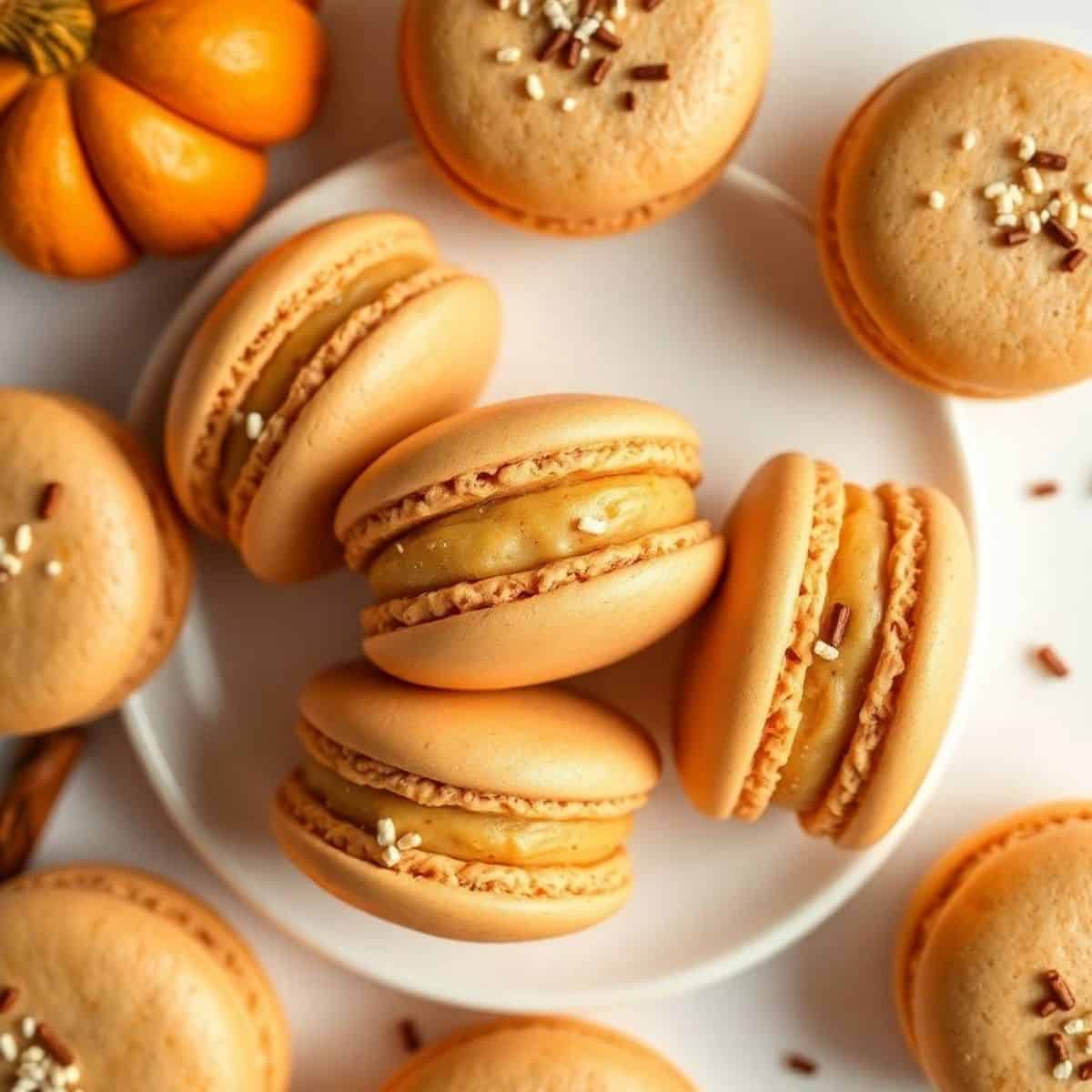
Why You'll Love This Recipe
- Bridges French pastry tradition with American fall comfort flavors: The genius of this recipe is the cross-cultural pairing — the delicate French macaron technique that's been refined for centuries combined with the warm pumpkin spice flavor profile that defines American autumn comfort food. The result is elegant enough for a sophisticated fall dinner party (the macaron shells are visually stunning with their crisp ruffled "feet" and smooth domed tops) but flavorful enough that guests who don't normally connect with delicate French pastry still genuinely enjoy them because the pumpkin-pie flavor reads as familiar and warming. For fall entertaining, this dessert genuinely impresses both pastry enthusiasts and pumpkin-pie traditionalists simultaneously.
- Make-ahead friendly — flavor improves over 24-48 hours of "maturation": Macarons are genuinely one of the rare desserts that improve with overnight (and even multi-day) refrigeration. The crisp shell absorbs subtle moisture from the filling during what French bakers call "maturation," which produces the perfect macaron texture: crisp outer shell that yields to a chewy interior with a creamy filling between. Fresh-baked macarons on day one are too crisp; properly matured macarons on day 2-3 have the ideal texture. For party-hosting realism, this means you can bake the macaron shells 2-3 days in advance and fill them 1-2 days before serving, with the matured macarons arriving at the party in peak condition with zero day-of work required.
- More forgiving than the recipe reputation suggests — actual success on first attempt: Macaron recipes have a reputation for being impossibly fussy with dramatic failure modes, but the actual technique is more forgiving than the reputation suggests if you follow specific guidelines. The proper approach is to follow the recipe precisely on first attempt — measure ingredients by weight (not volume), age the egg whites 24 hours before baking, fold the batter properly (not too much, not too little), let the piped shells rest 30-60 minutes before baking, and bake at the correct temperature. Following all these steps in order produces successful macarons on most first attempts. The recipe failures usually come from skipping or modifying these specific steps.
- Naturally gluten-free diet — accessible for guests with dietary restrictions: Traditional French macarons are made with almond flour rather than wheat flour, which makes them naturally gluten-free without any recipe modifications. For households with gluten-intolerant family members or gatherings where you have guests with celiac disease, this dessert is genuinely inclusive without requiring a separate "gluten-free version" that feels like a compromise. The shells use almond flour, powdered sugar, and egg whites — all naturally gluten-free ingredients. The filling uses pumpkin puree and cream cheese — also naturally gluten-free. For dietary-inclusive entertaining, macarons solve the "what dessert can my gluten-free guests actually eat" problem elegantly.
- Endlessly customizable — same template, infinite seasonal flavor variations: Same base technique (almond flour-meringue shells + flavored buttercream or ganache filling) accommodates infinite seasonal variations through the year — chocolate-raspberry for Valentine's Day, lemon-blueberry for spring, rose-pistachio for summer wedding desserts, pumpkin-pie for fall, peppermint-chocolate for winter holidays, Pakistani-American cardamom-rose-saffron hybrid for Eid celebrations. The template scales with the season, the occasion, and what flavor profile you want to express. One basic macaron technique mastered becomes a permanent foundation for dozens of variations across the entire year of celebrations.
Ingredients
- For the Macaron Shells (Makes about 24 macaron sandwiches = 48 shells):
- 200g (about 2 cups) almond flour, finely ground
- 200g (about 1¾ cups) powdered sugar, sifted
- 150g egg whites, aged 24 hours (from about 5 large eggs)
- 200g (1 cup) granulated sugar
- 50ml water
- 1 teaspoon pumpkin pie spice (or homemade blend below)
- Orange food coloring gel (small amount — not liquid food coloring)
- Pinch of salt
- For Homemade Pumpkin Pie Spice (Optional, Replaces 1 teaspoon Above):
- 2 teaspoon ground cinnamon
- 1 teaspoon ground ginger
- ½ teaspoon ground nutmeg
- ½ teaspoon ground cloves
- ¼ teaspoon ground allspice
- For the Pumpkin-Cream Cheese Filling:
- 8 oz cream cheese, softened to room temperature
- ½ cup unsalted butter, softened to room temperature
- ½ cup pure pumpkin puree (NOT pumpkin pie filling)
- 2 cups powdered sugar, sifted
- 1 teaspoon pumpkin pie spice
- 1 teaspoon pure vanilla extract
- Pinch of salt
- For Optional Garnishes:
- Powdered sugar (for dusting)
- 2 tablespoon chopped candied pecans or walnuts
- Cinnamon sticks (for visual presentation)
- 2 tablespoon ground cinnamon (for dusting top of shells before baking)
- ¼ cup chopped pistachios (for Pakistani-American variation)
Directions
- Step 1: Age the egg whites 24 hours in advance (overnight prep). The night before baking, separate 5 large eggs and place ONLY the whites in a clean glass or metal bowl (NEVER plastic — plastic retains traces of fat that prevent whites from whipping properly). Cover loosely with plastic wrap (allowing air circulation but preventing dust) and let sit at room temperature overnight. This 24-hour aging step removes excess moisture from the whites and develops better foam structure — it's genuinely the difference between successful and unsuccessful macarons. Don't skip this step. The egg yolks can be stored in the refrigerator for other uses (custard, scrambled eggs, mayonnaise, etc.).
- Step 2: Prepare the dry ingredients (5 minutes). On the day of baking, weigh out 200g of almond flour and 200g of powdered sugar. Sift the almond flour and powdered sugar together through a fine-mesh sieve to remove any larger pieces and create a uniform dry mixture. Add the pumpkin pie spice to this mixture and whisk briefly to combine. The sifted-uniform dry mixture is essential for the smooth shell surface that defines good macarons — coarse almond particles produce bumpy shells. Set this prepared dry mixture aside.
- Step 3: Make the Italian meringue (15 minutes). In a small saucepan, combine the granulated sugar and water. Heat over medium heat until the sugar dissolves, then increase to medium-high heat until the mixture reaches 245°F (118°C) on a candy thermometer (about 5-7 minutes total). While the sugar is heating, transfer the aged egg whites to the bowl of a stand mixer fitted with the whisk attachment. Add the pinch of salt. When the sugar syrup reaches 235°F, start whipping the egg whites on medium-high speed. By the time the sugar syrup hits 245°F, the egg whites should be at soft peaks. With the mixer running at medium speed, SLOWLY pour the hot sugar syrup down the side of the bowl into the whipping egg whites (never directly onto the whisk — this can cause crystallization). Continue whipping for 5-7 minutes until the meringue reaches stiff, glossy peaks AND the outside of the bowl is cool to the touch. Add orange food coloring gel and whip for 30 seconds more to incorporate.
- Step 4: Make the macaronage (folding the batter — 5 minutes). Add the sifted dry mixture to the bowl with the meringue in 2 additions. Using a large rubber spatula, fold the dry into the meringue with a specific technique — scrape down the side of the bowl, pull through the center to the bottom, and fold up and over. Continue this scraping-and-folding motion. The proper consistency is "lava flow" — when you lift the spatula and drizzle the batter back into the bowl, it should form a ribbon that slowly disappears into the rest of the batter within 10-15 seconds (not immediately, not after 30+ seconds). Typically 35-45 folds total. UNDERMIXING produces lumpy shells; OVERMIXING produces flat shells that don't develop "feet." This step is where most macaron failures happen — go slowly and check the consistency every 5-7 folds.
- Step 5: Pipe the shells onto baking sheets (10 minutes). Transfer the batter to a piping bag fitted with a ½-inch round tip. Line 2 large baking sheets with parchment paper or silicone baking mats. Pipe 1.5-inch circles of batter onto the prepared sheets, spaced 1.5 inches apart. You should get approximately 48 shells total (24 pairs). After piping, lift each baking sheet about 6 inches above the counter and drop it firmly — this releases air bubbles and helps the shells settle smoothly. Repeat 3-4 times per sheet. Pop any visible surface bubbles with a toothpick. Optionally, dust the tops lightly with extra cinnamon for visual interest.
- Step 6: Rest the piped shells 30-60 minutes (essential resting period). Let the piped shells rest at room temperature for 30-60 minutes (longer in humid environments, shorter in dry environments) until the tops form a thin "skin" — when you gently touch the surface with your fingertip, the batter should NOT stick to your finger and should feel slightly dry. This skin formation is essential for developing the characteristic ruffled "feet" at the base of the macaron during baking. In very humid weather, this can take up to 90 minutes. In dry weather, 30 minutes may be enough. Don't skip or rush this step — unrested macarons crack on top instead of developing feet.
- Step 7: Bake the shells (12-15 minutes per batch). Preheat the oven to 300°F (150°C) — this is genuinely lower than most recipes call for and produces better results. Bake one tray at a time on the middle rack for 12-15 minutes, rotating the tray halfway through (around the 7-minute mark) for even baking. The shells are done when they have visible "feet" at the bottom (the ruffled crispy edge) and they slide easily off the parchment when nudged. If a shell sticks to the parchment, it needs another 1-2 minutes. Let the shells cool COMPLETELY on the baking sheet before attempting to remove them (about 30 minutes total). Premature removal breaks the shells.
- Step 8: Make the pumpkin-cream cheese filling (10 minutes). While shells cool, make the filling. In a medium bowl, beat the softened cream cheese and softened butter together with an electric mixer until smooth and uniform (about 2 minutes). Add the pumpkin puree, pumpkin pie spice, vanilla extract, and salt. Beat until smooth (about 1 minute). Gradually add the powdered sugar in 2-3 additions, beating until smooth and uniform after each addition. The filling should be thick enough to pipe (not runny) but smooth enough to spread (not stiff). Taste and adjust — add more pumpkin spice if it tastes flat, more powdered sugar if it's too runny. Transfer to a piping bag fitted with a ½-inch round or star tip.
- Step 9: Assemble the macarons (15 minutes). Pair up the cooled shells by size (try to match similar-sized shells together for uniform sandwich pairs). Pipe about 1 tablespoon of filling onto the flat side of one shell. Gently press a second shell on top with a light twisting motion to seat the filling evenly. Repeat for all pairs. The filling should be visible at the edges but not oozing out. For Pakistani-American variation: gently press chopped pistachios into the visible filling at the edges of each assembled macaron for visual appeal and added flavor.
- Step 10: Mature the assembled macarons 24-48 hours (essential for proper texture). Place the assembled macarons in an airtight container, separated by parchment paper if stacking, and refrigerate for 24-48 hours BEFORE serving. This "maturation" step is what produces the perfect macaron texture — crisp outer shell that yields to a chewy interior with creamy filling. Fresh-assembled macarons on day 0 are too crisp; properly matured macarons on day 2-3 have the ideal texture. Don't skip this step — it's the difference between bakery-quality macarons and homemade-tasting ones. Bring to room temperature for 30 minutes before serving for optimal flavor.
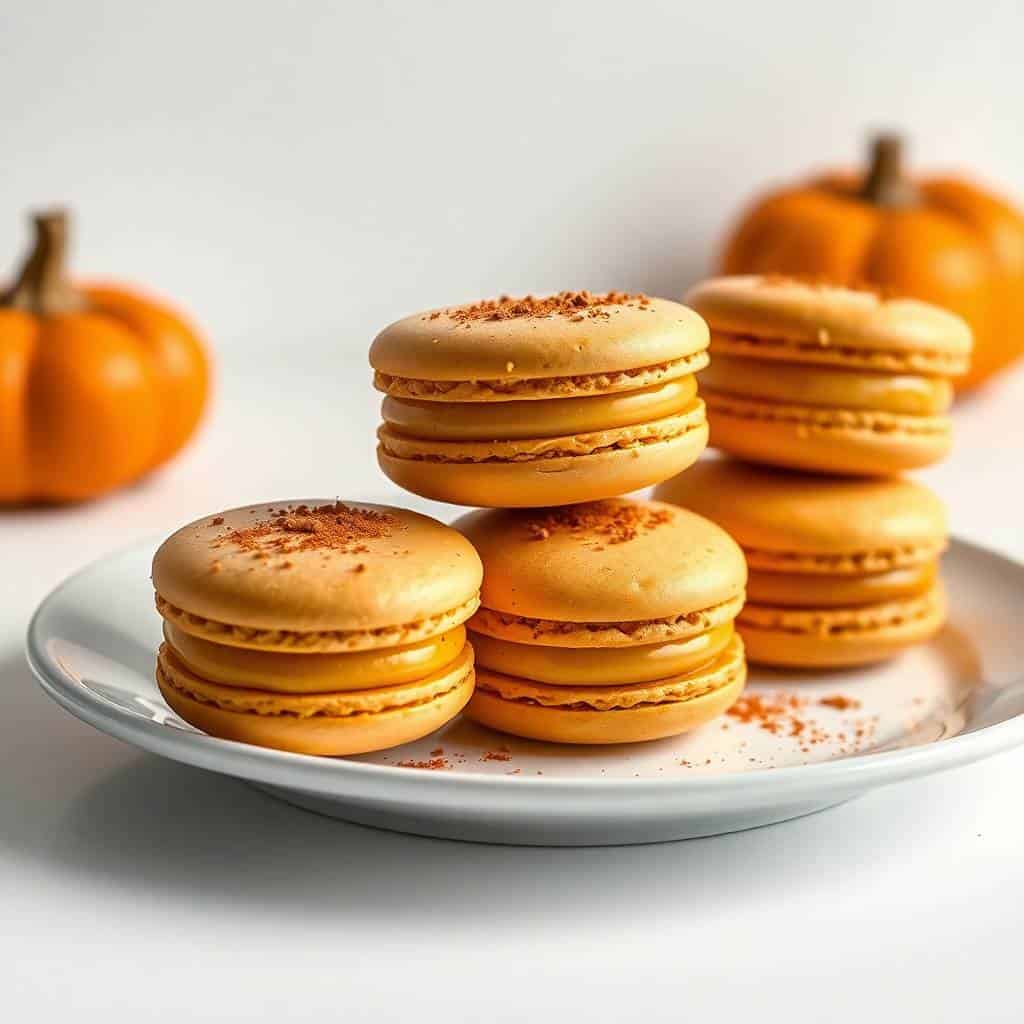
Tips for Success
- Measure ingredients BY WEIGHT (in grams) — NOT by volume. The single biggest factor separating successful macarons from failed ones is precision in ingredient measurements. Volume measurements (cups, tablespoons) introduce 10-20% variation between attempts depending on how packed the almond flour is, how settled the powdered sugar is, and how full the cups are measured. Weight measurements (grams on a digital kitchen scale) produce identical proportions every time. A digital kitchen scale costs $15-25 and is genuinely the most important macaron baking investment — more important than fancy piping bags or silicone mats. The recipe lists weights specifically because volume measurements produce inconsistent results. If you only have volume measurements available, follow the conversions but expect variability between batches.
- AGE the egg whites 24 hours before baking — non-negotiable. Aged egg whites have lost some of their moisture, which produces a more stable meringue with better foam structure and ultimately better macaron shells. Fresh egg whites from cold eggs produce weaker meringue and inconsistent shell results. The proper aging technique: separate egg whites the night before, place in a clean glass or metal bowl (NEVER plastic), cover loosely with plastic wrap, and leave at room temperature overnight. The egg whites should be slightly viscous and noticeably less watery the next morning. This aging step takes zero active effort but produces dramatically better results — it's the easiest way to upgrade your macaron success rate.
- Test the macaronage consistency with the "ribbon test" — not by count. Macaron failures often happen during the folding step because home bakers either count strokes (which doesn't account for ingredient variation) or guess at consistency. The proper test is the "ribbon test" — lift the spatula and let the batter drip back into the bowl. The dripping batter should form a ribbon that slowly disappears into the surface within 10-15 seconds (not immediately on contact, not still visible after 30+ seconds). Under that ribbon test result, you've folded too little; over it, you've folded too much. Check the ribbon test every 5-7 folds during the macaronage stage. The visual cue is dramatically more reliable than stroke counting.
- REST the piped shells until they form a "skin" — essential for feet development. The characteristic ruffled "feet" at the bottom of macarons develop because the surface of the shell sets/dries before the interior expands during baking — the interior pushes outward through the bottom edges (which haven't set yet) creating the feet. If the shells aren't rested long enough to form a surface skin, the interior expansion blows through the top instead, producing cracked tops without feet. The test for adequate resting: gently touch the surface of a shell with your fingertip; the batter should NOT stick to your finger and should feel slightly dry. In humid environments, this can take up to 90 minutes; in dry environments, 30 minutes may be sufficient.
- Use a SILICONE MAT or QUALITY PARCHMENT — cheap parchment ruins macarons. Cheap thin parchment paper allows the macaron shells to spread too thin during baking and produces flat shells without proper feet development. Quality parchment (Reynolds, If You Care, or similar reputable brands) is thicker and produces better shell shape. Silicone baking mats (Silpat or similar) are genuinely the best surface for macarons — the consistent temperature distribution produces uniformly developed feet and smooth domed tops. The mat investment is $15-25 and pays off for many baking applications beyond macarons. If using parchment, ensure you're using the quality kind, not the dollar-store thin version.
Variations
- Salted maple caramel filling (deeper fall flavors): Replace the pumpkin-cream cheese filling with salted maple caramel buttercream. Make caramel by simmering ¾ cup pure maple syrup with 2 tablespoons of butter and 1 teaspoon of salt for 8-10 minutes until thickened. Let cool. Beat into 1 cup of softened butter with 2 cups powdered sugar until smooth. This filling has a deeper, more sophisticated fall flavor that pairs beautifully with the pumpkin-spiced shells. The salted maple combination feels especially appropriate for adult-only gatherings and Thanksgiving dessert tables. The visual contrast between the orange shells and amber caramel filling is striking.
- Maple-cinnamon buttercream filling (classic comfort flavor): Replace the pumpkin-cream cheese filling with maple-cinnamon buttercream. Beat 1 cup softened butter with 2 cups powdered sugar, 3 tablespoons pure maple syrup, 1 teaspoon ground cinnamon, and ½ teaspoon vanilla extract until smooth. This filling has a more straightforward maple-cinnamon comfort flavor that pairs beautifully with the pumpkin-spiced shells. The result is somewhat closer to "fall coffee shop macaron" flavor — accessible and crowd-pleasing without being too sophisticated. This is a great variation for fall family gatherings with mixed ages.
- Chocolate ganache filling with pumpkin shells (chocolate lovers' version): Replace the pumpkin-cream cheese filling with dark chocolate ganache (8 oz dark chocolate + ¾ cup heavy cream, heated and combined until smooth, then cooled until pipeable). The pumpkin-spiced shells filled with dark chocolate ganache creates a sophisticated chocolate-and-pumpkin combination that bridges fall flavors with classic chocolate elegance. This version is genuinely my favorite of all the variations because chocolate and pumpkin are an underrated flavor pairing. The shells are slightly less sweet to balance the rich chocolate filling.
- Apple butter filling (peak autumn variation): Replace the pumpkin-cream cheese filling with apple butter buttercream. Beat 1 cup softened butter with 1.5 cups powdered sugar, ⅓ cup apple butter, 1 teaspoon ground cinnamon, and a pinch of nutmeg until smooth. This produces a distinct apple-cinnamon-fall flavor that's slightly different from but complementary to the pumpkin-spiced shells. Apple butter is widely available at most American grocery stores during fall (and increasingly year-round). This version is genuinely peak-autumn flavor and works beautifully for harvest dinners, thanksgiving desserts, and Halloween parties.
- Pakistani-American cardamom-pumpkin halwa hybrid (Sana's adaptation): Add 1 teaspoon of ground cardamom to the macaron shells (along with the pumpkin pie spice). For the filling: combine ½ cup of pure pumpkin puree with 4 tablespoons of butter, 3 tablespoons of milk powder (or khoya if available at Pakistani markets), 1 teaspoon of cardamom, 1 tablespoon of rose water, and a pinch of saffron threads. Simmer over low heat for 15 minutes until thickened. Cool, then beat into 1 cup softened butter with 1.5 cups powdered sugar. Garnish with chopped pistachios. The result is a Pakistani-American take on pumpkin macarons that bridges the French pastry tradition with the kaddu ka halwa (pumpkin halwa) tradition my mother in Pakistan would recognize from her own fall and winter cooking. My husband requests this version specifically for our family Eid celebrations that fall during autumn months. The pistachio-cardamom-saffron flavor combination feels both elegantly French AND deeply familiar from our Pakistani-American family tradition.
Serving and Storage
How to Serve
Serve at slightly cool room temperature (remove from refrigerator 30 minutes before serving for optimal flavor and texture — very cold macarons mute the spice flavors and feel slightly hard). Arrange the macarons on a decorative platter — white serving platters provide maximum visual contrast with the orange shells. Garnish elegantly with cinnamon sticks arranged decoratively on the platter, a light dusting of powdered sugar, fresh autumn leaves (food-safe artificial ones for visual presentation only), or fresh herbs like sage or rosemary. For Pakistani-American variation: garnish with chopped pistachios scattered on the platter, a few rose petals (food-grade, from Middle Eastern markets), and silver leaf (chandi varak) for ultra-luxurious presentation appropriate for Eid celebrations. Pair with drinks: hot apple cider, pumpkin spice latte, masala chai (which bridges the East-West flavor connection beautifully), espresso, dessert wine, or sparkling water for non-drinkers. For dessert platters: arrange macarons alongside small slices of pumpkin pie, mini caramel apples, or chocolate truffles for a complete autumn dessert presentation. The macarons are rich and elegant — 2-3 macarons per guest is the proper serving size for an after-dinner dessert, while 4-5 per guest may be appropriate for a dessert-only gathering. For party hosting, plan for 2.5-3 macarons per guest as your baseline.
How to Store
Refrigerator storage: assembled macarons store beautifully in an airtight container in the refrigerator for up to 5 days. The flavor and texture actually peak at days 2-3 due to the maturation process — the shells absorb subtle moisture from the filling to develop the characteristic crisp-exterior-chewy-interior texture. Separate layers with parchment paper if stacking. Bring to room temperature for 30 minutes before serving. Freezer storage: macarons freeze remarkably well for up to 2 months. Place assembled macarons in a single layer on a baking sheet and freeze until firm (about 1 hour), then transfer to an airtight container or freezer-safe bag for long-term storage. Separate layers with parchment paper. To use frozen macarons: thaw in the refrigerator overnight, then bring to room temperature 30 minutes before serving. The texture after freezing and thawing is essentially identical to fresh-matured. For meal-prep applications: bake several batches of macarons over consecutive weekends throughout fall and freeze them for holiday entertaining throughout November-December — the freezer approach is the secret behind well-organized fall hosting calendars. For Thanksgiving and holiday dessert tables: bake 1-2 weeks in advance, freeze, then thaw the day before serving. For unfilled macaron shells alone: shells can be stored separately at room temperature in an airtight container for up to 1 week before filling, which extends your prep timeline flexibly. Fill only when needed.
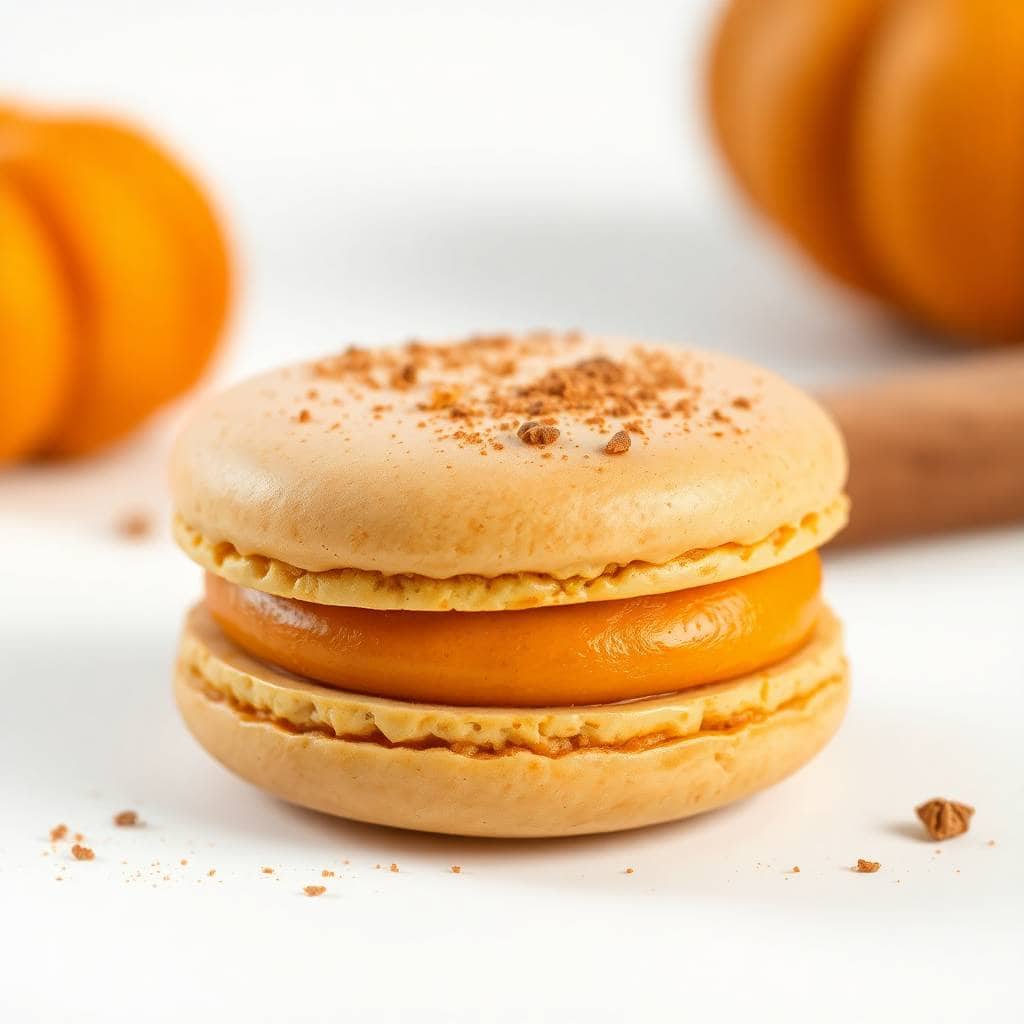
Related Recipes You Might Like
If you loved these pumpkin pie macarons, here are more elegant entertaining and special-occasion dessert recipe collections from the site that pair beautifully with fall gatherings, Thanksgiving celebrations, and holiday entertaining:
- Macaron Recipe — master French pastry technique
- Salted Caramel Apple Sheet Cake — companion autumn dessert
- The Best Snickerdoodle Cookies — classic fall cookie pairing
- Strawberry Mug Cake — single-serving sweet treat for casual moments
- 17 Scaled-Down Father's Day Dinner Recipes for Two — for elegant date-night dinners
Frequently Asked Questions
Can I make pumpkin pie macarons ahead of time?
Absolutely yes — and they actually require advance preparation for optimal texture. The 24-48 hour maturation period is genuinely essential for proper macaron texture: the crisp shell absorbs subtle moisture from the filling during refrigeration to develop the characteristic crisp-exterior-chewy-interior quality. Fresh-assembled macarons on day 0 are too crisp and one-dimensional; matured macarons on days 2-3 have the ideal texture. For party hosting, this means you can (and should) bake and assemble these macarons 1-2 days before serving — the make-ahead approach isn't just convenient, it's the proper technique. Beyond 5 days in the refrigerator, the texture may begin to soften slightly. For longer storage, freezing is recommended (up to 2 months).
Can I use canned pumpkin puree?
Yes — canned pumpkin puree is genuinely the best choice for this recipe and what most professional bakeries use. Use 100% pure pumpkin puree (the kind labeled "pumpkin" on the ingredients), NOT pumpkin pie filling (which contains added sugar, spices, and stabilizers that will throw off the recipe). Libby's brand is the most widely available reliable option. Canned pumpkin has a consistent moisture content that produces reliable filling texture; fresh-roasted pumpkin can vary significantly in moisture content depending on the variety and roasting time, which makes it less reliable. If you do want to use fresh-roasted pumpkin: roast sugar pie pumpkin until tender, puree until smooth, and drain in a fine-mesh sieve for 30 minutes to remove excess moisture before using.
Why are macarons considered tricky to make?
Macarons have specific technique requirements where deviations produce dramatic failures, which has given them a fussy reputation. The three most common failure modes: improper macaronage folding (under-folded = lumpy bumpy shells; over-folded = flat shells without feet), inadequate shell resting (no skin formation = cracked tops without feet), and incorrect oven temperature (too hot = cracked shells; too cool = hollow shells). However, if you follow specific guidelines precisely on the first attempt, success is genuinely achievable — measure by weight (not volume), age egg whites 24 hours, perform the ribbon test for proper folding consistency, rest shells until they form a skin, and bake at 300°F (not the higher temperatures many recipes call for). Following all these steps in order produces successful macarons on most first attempts.
Can I make these gluten-free?
Macarons are NATURALLY gluten-free — no recipe modifications needed. The shells use almond flour (not wheat flour), powdered sugar, and egg whites, all of which are naturally gluten-free ingredients. The pumpkin-cream cheese filling uses cream cheese, butter, pumpkin puree, and powdered sugar, all also gluten-free. As long as you use certified gluten-free almond flour (some brands of almond flour are processed in facilities that also handle wheat, which can cause cross-contamination for celiac disease sufferers) and verify that your other ingredients are also free of cross-contamination, these macarons are safe for guests with gluten sensitivities or celiac disease. For dietary-inclusive entertaining, this is genuinely one of the most accessible elegant desserts — no separate "gluten-free version" needed.
Can I add other fall flavors?
Absolutely — fall flavor variations work beautifully with the basic macaron technique. Specific combinations to try: maple-walnut (add 2 tablespoons maple syrup to filling, top with crushed walnuts), apple cider-cinnamon (reduce apple cider to a syrup, add to filling), chai-spice (add 2 teaspoons chai spice blend to shells and filling), cranberry-orange (use cranberry sauce in filling, add orange zest to shells), gingerbread (add molasses and ginger spice to shells), salted caramel-pecan (caramel buttercream filling with crushed pecans), bourbon-vanilla (add 1 tablespoon bourbon to filling along with extra vanilla), or pumpkin-chocolate (use chocolate ganache filling with pumpkin-spiced shells). The macaron template is genuinely flexible — once you've mastered the technique, infinite seasonal variations open up. Each variation requires the same basic shell technique with different filling and minor shell flavorings.
These pumpkin pie macarons have earned their permanent place in my fall dessert rotation specifically because of how perfectly they delivered the "intimidating French technique made accessible at home" surprise — my first attempt was successful, which is genuinely the rare outcome that gave me confidence to pursue more advanced French pastry projects since.
Saad's initial macaron obsession that started after his school field trip to the French bakery last fall has continued through this entire year, and he now requests "fancy cookies" for every special occasion — birthdays, school year-end celebrations, our family holidays.
My husband's coworkers' "do you have a bakery business" question after he brought 2 macarons to share at his office last fall is genuinely the high praise that every home baker secretly hopes for, and the recipe has since become my go-to contribution for any fall office potluck or seasonal celebration outside our immediate family.
My mother in Pakistan would recognize the underlying pumpkin-dessert principle from her own kaddu ka halwa (pumpkin halwa) tradition — slow-cooked pumpkin with milk, sugar, cardamom, and pistachios that's structurally similar to American pumpkin pie filling but expressed within Pakistani culinary tradition. The Pakistani-American cardamom-pumpkin halwa hybrid macaron variation deserves special mention because it genuinely bridges the French pastry tradition with the South Asian fall dessert tradition my mother and I both know intimately, creating a cross-cultural dessert that earns "what is this incredible flavor combination" questions at our family Eid celebrations that fall during autumn months. 🎃🌰💕✨
Pumpkin Pie Macarons Recipe (Fall-Inspired, Elegant, Make-Ahead)
Ingredients
For the Macaron Shells
- 1 cup almond flour finely ground, sifted to remove lumps
- 1 cup powdered sugar sifted
- 3 large egg whites room temperature, aged 24 hours if possible
- ¼ teaspoon cream of tartar helps stabilize egg whites
- ¼ cup granulated sugar added gradually during whipping
- ¼ teaspoon salt
- ½ teaspoon vanilla extract
- ¼ teaspoon pumpkin pie spice adds warmth to shells
- 2-3 drops orange gel food coloring optional, for color
For the Pumpkin Pie Filling
- ¼ cup butter softened
- ½ cup powdered sugar sifted
- 3 tablespoons pumpkin puree pure pumpkin, not pie filling
- ½ teaspoon pumpkin pie spice
- ¼ teaspoon vanilla extract
- 1 pinch salt
For Topping
- 2 tablespoons finely chopped candied ginger or pecans optional garnish for raw shells
Instructions
Make the Macaron Shells
- Preheat your oven to 300 degrees Fahrenheit. Line two baking sheets with parchment paper or silicone baking mats. In a food processor, combine the sifted almond flour and powdered sugar. Pulse 8-10 times until well combined and very fine, then sift the mixture through a fine-mesh sieve into a bowl, discarding any larger particles.
- In a clean, dry bowl, whip the room-temperature egg whites with cream of tartar and salt using an electric mixer on medium speed. When the mixture becomes foamy, gradually add the granulated sugar while continuing to whip. Add the vanilla extract and pumpkin pie spice. Increase speed to medium-high and whip until stiff peaks form, about 3-4 minutes. The meringue should be glossy and hold its shape. Add orange gel food coloring now if using.
- Using a spatula, gently fold the almond flour mixture into the meringue in three additions, folding slowly and carefully to maintain air while ensuring no streaks of dry ingredients remain. The final batter should flow like lava - it should slowly spread when dropped from a spoon but still hold its shape. This is called the proper macaronage.
- Transfer the batter to a piping bag fitted with a ½-inch round tip. Pipe 1-inch rounds onto your prepared baking sheets, spacing them about 1 inch apart. Tap the baking sheet firmly on the counter 2-3 times to release air bubbles. If desired, sprinkle finely chopped candied ginger or pecans on top of each shell now. Let the piped macarons rest for 10-15 minutes until a slight skin forms on top.
- Bake for 16-18 minutes, until the shells are set and slightly firm to the touch but still have a slight give. They should not brown. Remove from the oven and let cool completely on the baking sheet for at least 10 minutes before carefully peeling them off. The shells should have developed little feet around the base.
Make the Pumpkin Pie Filling
- While the shells cool, prepare the filling. In a medium bowl, beat the softened butter with an electric mixer on medium speed until light and creamy, about 1-2 minutes.
- Gradually add the sifted powdered sugar, beating until well combined and fluffy. Add the pumpkin puree, pumpkin pie spice, vanilla extract, and salt. Beat until the filling is smooth, creamy, and well combined, about 1-2 minutes more. If the filling seems too soft, refrigerate for 10 minutes before using.
Assemble the Macarons
- Once the shells are completely cooled, pair them by size, matching larger shells with larger shells. Transfer the pumpkin filling to a piping bag fitted with a ¼-inch round tip or small plain tip.
- Pipe a generous teaspoon of filling onto the flat side of one shell, then gently press the flat side of a matching shell on top to create a sandwich. Repeat with all remaining shells. Place the finished macarons on a baking sheet or plate.
- Cover the macarons and refrigerate for at least 24 hours before serving. This resting period allows the shells to soften slightly and the flavors to meld beautifully. Serve chilled or at room temperature.
Notes


Comments
No Comments