
Saad discovered mango shake two summers ago and has since declared it his favorite drink of any kind, which is a strong endorsement from a child whose previous favorite drink was chocolate milk — he requests it before school on hot mornings, after his soccer practices, and at the dinner table whenever mangoes are in season in our house.
Even Zainab drinks this shake without complaint (a rare and genuinely surprising development given her texture preferences for virtually everything), which makes mango shake the only drink outside of plain milk that both my kids accept without negotiation or creative persuasion on my part.

Why You'll Love This Recipe
- Only 3 ingredients and 5 minutes from start to finish: This is genuinely one of the fastest recipes on the site — mango cubes, chilled milk, and sugar go into the blender, blend for 60 seconds, and the shake is ready. No cooking, no cooling time, no complicated steps. If you have ripe mangoes in the house and milk in the fridge, this shake is available to you in under 5 minutes flat. For busy summer mornings when Saad needs breakfast and I'm already running late for school drop-off, this 5-minute window is genuinely the recipe-saving feature that makes it realistic as a weekday drink option rather than just a weekend treat.
- Naturally packed with vitamins, fiber, and real fruit nutrition information: Fresh mango delivers vitamins C, A, and E in substantial quantities, along with potassium, magnesium, and 3 grams of fiber per cup of fruit. The nutritional profile of this shake is genuinely impressive for a drink that tastes as indulgent as a dessert — you're getting real fruit nutrition plus the calcium and protein from the milk, not just sugar water with mango flavoring. My mother in Pakistan was never interested in low-nutrition food that merely tasted good — her philosophy was that a drink should nourish as well as refresh, and fresh mango shake is the perfect embodiment of that principle.
- Kid-approved even for picky eaters — both my kids drink it: Mango shake has achieved something genuinely rare in our household — universal acceptance. Saad requests it daily during mango season. Zainab drinks it without the usual texture-and-appearance inspection she applies to most foods. For households with picky eaters who reject most fruit in its natural form, blending the fruit into a creamy cold drink is often the most effective way to deliver real fruit nutrition without daily negotiations. The cold temperature, creamy texture, and natural mango sweetness create a sensory profile that most children find immediately appealing.
- Endlessly customizable — same 3-ingredient base, infinite variations: The base recipe (mango + milk + sugar) is a foundation that accepts many variations without technique changes — coconut milk for a tropical twist, a scoop of vanilla ice cream for richer dessert-style shake, frozen mango for year-round accessibility, additional fruits (banana, strawberry) for hybrid flavor profiles, or condensed milk in place of regular milk and sugar for a Pakistani-style richer version. The customization range is genuinely wide while the core technique stays the same.
- Works as breakfast drink, afternoon snack, or dessert — multi-occasion versatility: This shake serves multiple daily functions depending on how you prepare it. For breakfast: a lighter version with less sugar alongside toast or eggs. For afternoon snack: the standard recipe served cold after school. For dessert: the ice cream variation (mentioned in Variations) that produces a thick, indulgent shake closer to a milkshake than a fruit drink. Saad gets the post-soccer-practice version (full sugar, extra mango, served ice cold) and my husband gets the lighter work-from-home version (reduced sugar, standard mango ratio) — same base recipe, adjusted ratios.
Ingredients

- 2 cups fresh ripe mango, cubed — Chaunsa, Dusehri (Dassheri), or Alphonso are the best varieties for shakes because of their high pulp content, natural sweetness, and intense mango flavor. Ataulfo (honey mango) works beautifully as a widely available American supermarket alternative. Frozen mango works when fresh isn't available — thaw partially before blending for best texture. Avoid unripe mango (too tart) or overly fibrous varieties (produce a stringy texture after blending).
- 1.5 cups whole milk, chilled — Full-fat whole milk produces the creamiest texture and the most satisfying mouthfeel. 2% milk works as a lighter alternative. For dairy-free: coconut milk (richest dairy-free result) or oat milk (milder flavor that doesn't compete with the mango) both work beautifully. Always use cold milk directly from the refrigerator — room-temperature milk produces a less refreshing, slightly flat-tasting shake.
- 2 tablespoon sugar — Start with 2 tablespoons and adjust to taste based on your mango's natural sweetness. Very ripe Dusehri or Chaunsa mangoes may need only 1 tablespoon; less-sweet supermarket mangoes may need 3 tablespoons. Alternatives: honey (adds slight floral note), maple syrup (slightly different sweetness profile), or condensed milk (replaces both milk and sugar for a richer Pakistani-style version). Omit entirely if your mangoes are very sweet and you prefer a lower-sugar drink.
- ½ cup ice cubes — Adds chill and slightly thins the shake to the right consistency. Skip ice if using frozen mango (already cold enough). For a thicker smoothie-style shake, reduce or eliminate ice and serve immediately.
Directions
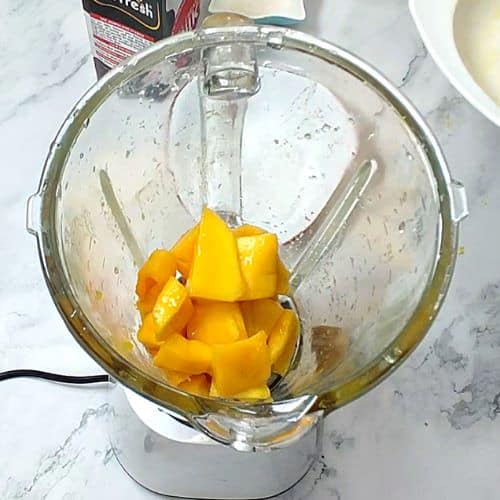
- Step 1: Prepare and chill the mango (5 minutes). Peel the mango and cut the flesh away from the pit in large pieces. Cube the mango flesh into roughly 1-inch pieces. For the best shake: use mango that has been refrigerated for at least 2 hours before blending — cold mango produces a colder, thicker shake without needing excess ice. If using frozen mango, remove from freezer 10 minutes before blending so it's soft enough to blend smoothly without straining the motor.
- Step 2: Chill the serving glasses (optional but recommended). Place tall serving glasses in the freezer for 15-20 minutes before making the shake. My mother in Pakistan taught me this step and she was right — a pre-chilled glass keeps the drink cold significantly longer and makes the first sip dramatically more refreshing than a room-temperature glass. For spontaneous shake-making without planning ahead: rinse the glasses under very cold water and fill briefly with ice water for 2 minutes, then empty and dry before pouring.
- Step 3: Add all ingredients to the blender (1 minute). Add the cubed mango to the blender jug first (placing softer ingredients at the bottom helps the blender catch and process the mango more efficiently). Add the ice cubes on top of the mango. Pour the chilled milk over the ice. Add the sugar last. The layering order genuinely matters for efficient blending — mango at bottom, ice in middle, liquid on top creates a vortex that pulls everything down into the blade evenly.
- Step 4: Blend until completely smooth (60-90 seconds). Blend on high speed for 60-90 seconds until the shake is completely smooth with no visible mango chunks or ice pieces. Stop the blender halfway and scrape down the sides if the mango is sticking to the walls. The finished shake should pour smoothly from the blender with a thick, creamy consistency — similar to a smoothie but slightly more pourable than a milkshake. If the shake seems too thick: add 2-3 tablespoons of additional milk and blend 10 more seconds. If too thin: add 3-4 more mango cubes and blend again.
- Step 5: Taste and adjust sweetness (30 seconds). Before pouring, taste directly from the blender (or a small spoon) and adjust sugar if needed. Mangoes vary significantly in natural sweetness depending on variety and ripeness — a very sweet Dusehri mango may not need any additional sugar, while a less-sweet supermarket mango may need another tablespoon. This taste-and-adjust step is the difference between a shake that tastes perfectly calibrated to your specific mangoes and one that's generically sweet.
- Step 6: Optional — strain for finer texture (2 minutes). For an ultra-smooth, fiber-free shake: pour the blended shake through a fine-mesh strainer into a pitcher, pressing the pulp with a spoon to extract all the liquid. This step is optional — my household prefers the fiber-included version for nutritional completeness, but straining produces a smoother, more juice-like consistency some people prefer. If serving to young children who are sensitive to texture, straining is worth the 2 extra minutes.
- Step 7: Pour into chilled glasses and serve immediately (1 minute). Pour the finished shake into the pre-chilled glasses. Serve immediately — mango shake separates and loses its chill quickly, so the window between blending and drinking is genuinely the optimal consumption moment. For garnish: a small mango cube balanced on the rim, a fresh mint sprig, a sprinkle of ground cardamom on top (the Pakistani way — cardamom and mango are a natural flavor pairing), or a drizzle of condensed milk on the inside of the glass before pouring for a visually attractive presentation.
Tips for Success
- Use the ripest mango you can find — ripeness is the single most important variable. An underripe mango produces a shake that's tart, slightly bitter, and pale in color regardless of how much sugar you add. A perfectly ripe mango produces a deeply sweet, intensely orange, naturally fragrant shake that needs minimal sugar and maximum no other additions. The test for a ripe mango: it should yield slightly to gentle pressure (like a ripe avocado) and smell noticeably sweet and floral at the stem end. Visual color alone is unreliable — many ripe varieties stay green even when perfectly ripe. For the best possible shake, buy mangoes 2-3 days before you plan to make the shake and let them ripen at room temperature on the counter.
- Always use cold ingredients — room-temperature mango and milk produce a flat, disappointing shake. The refreshing quality of mango shake comes entirely from cold temperature. Room-temperature mango and milk blend into a warm, slightly foamy, unrefreshing drink that tastes noticeably worse than the chilled version despite using identical ingredients. Always refrigerate both mango and milk for at least 2 hours before blending. My mother in Pakistan refrigerated her mangoes overnight before shake-making, which produced consistently colder and thicker results than same-day refrigeration. For sudden cravings: freeze mango cubes for 30 minutes on a baking sheet (not long enough to fully freeze but cold enough for shake purposes) while chilling the milk in the coldest part of the fridge.
- Add sugar in stages — mango sweetness varies too much to add the full amount at once. Sugar quantity is the most variable element in this recipe because mango sweetness differs dramatically between varieties, ripeness levels, and growing regions. Starting with 1 tablespoon of sugar, blending, tasting, and adding more if needed produces a perfectly calibrated shake every time. Adding the full 2 tablespoons at once and hoping for the best produces either a too-sweet shake (when your mangoes happen to be especially sweet) or a correctly-sweet shake (when your mangoes need the full amount) — the taste-first approach eliminates this lottery entirely. For summer mango season when Pakistani varieties like Dusehri or Chaunsa are available at South Asian grocery stores, start with even less sugar (½ tablespoon) because these varieties are dramatically sweeter than typical supermarket mangoes.
- Don't over-blend — 60-90 seconds is optimal, more introduces air and changes texture. Over-blending incorporates excess air into the shake, which produces a foamy, bubbly texture that's noticeably different from the dense, creamy consistency of a properly blended shake. The target is smooth and creamy without being foamy — which is achievable in 60-90 seconds at high speed on most standard blenders. If your blender is weaker (common with budget models): blend in 20-second bursts with 5-second rests to prevent motor overheating and achieve even blending without over-processing. The shake is ready when you can no longer hear any ice pieces hitting the blades.
- For year-round mango shake — freeze ripe mangoes at peak season for off-season use. Fresh mangoes are only available at peak quality for about 3-4 months in most American markets (May through August for peak variety). The solution for year-round mango shake access: buy extra ripe mangoes during peak season, peel and cube them, spread on a parchment-lined baking sheet, and freeze until solid (about 2 hours). Transfer the frozen cubes to freezer-safe bags and store for up to 6 months. Frozen mango from peak-season ripe fruit produces significantly better shake than fresh off-season supermarket mangoes. This is the approach my mother in Pakistan uses because she considers access to quality mango a year-round household right, not a seasonal luxury.
Variations
- Pakistani-style rich mango shake with condensed milk (Sana's family version): Replace the regular milk and sugar entirely with ¾ cup of sweetened condensed milk + ¾ cup of regular whole milk. The condensed milk adds a caramel-like richness and deeper sweetness that produces a dramatically more indulgent shake than the standard version — this is genuinely the version my mother in Pakistan makes for special guests and Eid celebrations, not the everyday version. The result is thicker, richer, sweeter, and more dessert-like than the base recipe. For the Pakistani-American experience, add a pinch of cardamom powder to the blender — cardamom and mango is a flavor pairing my mother would approve of that elevates the drink from refreshing to genuinely special. My husband requests this condensed-milk version specifically for Eid.
- Mango ice cream shake (dessert version): Add 2 scoops of good-quality vanilla ice cream to the blender alongside the other ingredients. The ice cream replaces the ice cubes (no ice needed — the ice cream provides both cold temperature and thick creamy texture). The result is a mango milkshake rather than a mango health drink — denser, richer, significantly sweeter, and unmistakably dessert-category. Saad's birthday treat request is consistently this ice cream version, which our household makes exactly twice a year (his birthday and one special summer occasion) because it's so rich that daily consumption isn't realistic. For a grown-up dessert variation: add 1 tablespoon of Baileys Irish Cream or a small shot of mango liqueur to the adult portions after blending.
- Tropical coconut mango shake (dairy-free and summery): Replace whole milk with full-fat canned coconut milk (not the light version — the fat content matters for texture). Add ¼ cup of pineapple chunks to the blender alongside the mango. Reduce sugar to 1 tablespoon (coconut milk adds natural sweetness). The result is a tropical mango-coconut shake that tastes like a vacation and works beautifully for dairy-free households or anyone wanting a different flavor profile from the standard recipe. For garnish: a small pinch of toasted shredded coconut on top and a pineapple slice on the rim. This is my preferred version for hot August weekend mornings alongside a slow family breakfast.
- Mango banana shake (kids' energy drink): Add 1 ripe banana to the blender alongside the mango. Reduce mango to 1.5 cups and reduce or eliminate sugar (banana adds significant natural sweetness). The result is a thicker, more substantial shake that bridges mango and banana flavors — higher in natural sugars and potassium than the standard version. Saad takes this version to his soccer tournaments in a thermos because the banana adds slow-release energy that sustains him through multiple games. For additional protein: add 1 tablespoon of almond butter or a half-scoop of vanilla protein powder for a more functional pre-sports drink.
- Mango strawberry shake (summer hybrid): Add ½ cup of fresh or frozen strawberries to the blender alongside the mango. The strawberry adds tartness that balances the mango sweetness and produces a beautiful orange-pink color that kids find visually exciting. Zainab specifically requested this version after seeing it at a cousin's house, which marks the first time she has ever requested a specific food variation rather than rejecting all variations — a genuinely momentous development in our picky-eater journey. The strawberry-mango combination is also a popular flavor at Pakistani juice shops, where it's served as "Special Mix" alongside standard mango shake.
Serving and Storage
How to Serve
Serve immediately after blending in pre-chilled tall glasses for the best temperature and texture — mango shake is genuinely at its peak in the first 5 minutes after blending, before the ice melts and dilutes the flavor or the shake separates. For a Pakistani-style presentation: serve in tall clear glasses so the orange color is fully visible, add a small mango cube on the rim, dust lightly with ground cardamom or a pinch of saffron-infused milk on top. For kid-friendly presentations: add a paper straw with colorful patterns (Saad specifically requests paper straws for his mango shake — he feels strongly about the aesthetic). For adult garnish: a sprig of fresh mint, a thin mango slice, or a small wedge of lime add visual elegance appropriate for hosting. Pair with: Pakistani breakfast foods (paratha, eggs, fried potato) for a complete South Asian morning; with cookies or biscuits for an afternoon snack; with grilled meats or kebabs for a refreshing drink alongside spicy savory food where the mango sweetness provides palate relief. Serve alongside our favorite cookie recipes for a dessert spread, or as a refreshing drink during any of our winter dinner ideas when mango shake from frozen fruit provides a summery contrast to warming food.
How to Store
Mango shake is genuinely best consumed immediately and does not store well for more than a few hours. If you must store it: transfer to an airtight container or sealed pitcher and refrigerate for up to 4 hours maximum. After 4 hours, the shake separates (mango solids settle at the bottom, liquid rises to the top), the color darkens slightly, and the flavor quality degrades noticeably. To re-serve stored shake: shake or stir vigorously to recombine, or re-blend for 15 seconds to restore the original consistency. Skip freezing the finished shake — the ice crystals that form during freezing break the emulsion entirely and the texture becomes grainy and unpleasant after thawing. For meal-prep applications: instead of making the full shake in advance, freeze the mango cubes ahead of time (see Tips section) and keep milk chilled in the fridge — then blend fresh in 5 minutes whenever needed. This "component prep, fresh blend" approach is how my mother in Pakistan maintains shake quality across a full day of family visits during mango season, refreshing each batch as guests arrive rather than making one large batch that degrades.
Related Recipes You Might Like
If you loved this easy mango shake recipe, here are more summer drink and family-favorite recipe collections from the site that pair beautifully with warm-weather entertaining and everyday family meals:
- 21 Best Italian Cookie Recipes — pair with mango shake for dessert spread
- 29 Best Winter Dinner Ideas — main dinner recipes to serve alongside summer drinks
- 35 Easy Dip Recipes — snack-board pairings for afternoon shake service
- 31 Best Salad Recipes — light lunch pairings for summer
- Salted Caramel Apple Sheet Cake — seasonal dessert companion
Frequently Asked Questions
Is mango shake good for health?
Yes — fresh mango shake made with real fruit and milk is genuinely nutritious. One serving delivers substantial amounts of vitamins C, A, and E from the mango, plus calcium and protein from the milk. Mangoes also contain potassium, magnesium, and 3 grams of fiber per cup of fruit, which supports heart health, blood pressure regulation, and digestive function. The main nutritional consideration is natural sugar content — ripe mangoes are high in natural fructose, which is fine in moderate quantities for most people. For lower-sugar versions, reduce or omit added sugar (ripe mangoes provide plenty of natural sweetness) and pair with a protein-rich food to slow the sugar absorption.
Can I mix mango and milk?
Yes, absolutely — mango and milk combine beautifully in a blender to produce a creamy, thick shake. The natural acidity of mango is low enough that it doesn't curdle milk the way citrus fruits like lemon or orange would. Any pulpy, soft fruit (mango, banana, strawberry, peach, papaya) combines well with milk for shake applications. The key technique requirements: use cold milk (room-temperature milk produces a less stable emulsion and a foamier texture), use ripe mango (underripe mango's higher acidity can cause slight curdling in rare cases), and blend rather than stir (blending creates a smooth stable emulsion that stirring cannot achieve).
Which mango is best for a mango shake?
The Dusehri (Dassheri) and Chaunsa varieties from Pakistan and India are genuinely the best for shakes because of their exceptional pulp content, intense sweetness, minimal fiber, and classic deep-mango flavor. Alphonso from India is similarly excellent. In American supermarkets, the most accessible high-quality option is Ataulfo (honey mango) — the small yellow-skinned variety available at most grocery stores from April through July, which is significantly more flavorful than the large red-green Tommy Atkins variety that dominates American supermarket produce sections. For the authentic Pakistani mango shake experience, shop at South Asian or Pakistani grocery stores during peak summer months (June-August) when imported Pakistani mango varieties are occasionally available.
Can I make mango shake without a blender?
Yes, with some extra effort. For very ripe, soft mangoes: mash the mango flesh through a fine-mesh sieve or potato ricer to produce a smooth pulp, then whisk the pulp vigorously with cold milk and sugar until well combined. The result won't be as smooth or thick as a blended version but is acceptable when a blender isn't available. An immersion blender (stick blender) works well if you have one — blend directly in a tall container. For the smoothest no-blender result: use canned mango pulp (available at South Asian grocery stores) which is already smooth and combines easily with cold milk and sugar by whisking.
Can I use frozen mango instead of fresh?
Yes — frozen mango is an excellent substitute for fresh and produces a thicker, colder shake that some people prefer. Remove frozen mango from the freezer 10 minutes before blending to partially thaw (blending completely frozen fruit can strain the blender motor and produces uneven texture). Skip the ice when using frozen mango — the frozen fruit itself provides all the chill needed. The flavor of frozen mango varies significantly by brand — frozen mango made from peak-season ripe fruit (often sold at warehouse stores or South Asian markets) is noticeably better than generic supermarket frozen mango. For year-round access to peak mango flavor: freeze your own ripe mangoes at home during summer peak season using the method described in the Tips section.
This easy mango shake has earned its permanent status as the most-requested drink in our household specifically because it bridges my mother in Pakistan's summer mango traditions with the everyday American household context where a 5-minute, 3-ingredient drink is genuinely what busy family life requires.
Saad's daily mango season requests and Zainab's quiet acceptance (the highest form of Zainab-specific endorsement available) confirm that this recipe works across the full age range of our household without modification or negotiation.
My husband's peak-summer consumption is genuinely remarkable — two glasses a day during Dusehri and Chaunsa season is not unusual — and his enthusiasm for the condensed-milk Eid version every year is the kind of recipe-loyalty that confirms a dish has earned permanent family status.
My mother in Pakistan's principle that a chilled glass matters as much as the drink inside it sounds like minor detail advice until you serve the same shake in a room-temperature glass and a pre-chilled glass on the same summer afternoon and taste the difference yourself — which is genuinely the kind of small technique wisdom that separates good home cooking from great home cooking. The Pakistani cardamom variation, the condensed milk version, and the tropical coconut adaptation all build on the same 3-ingredient foundation, which means mastering this simple base recipe opens up a surprisingly wide range of mango drink expressions for every occasion. 🥭🥛✨
Easy Mango Shake Recipe (3 Ingredients, Ready in 5 Minutes)
Equipment
- 1 Blender
- 1 Knife
- Measuring cup
Ingredients
- 2 cups fresh mango chunks ripe Chaunsa or Dusehri mangoes, peeled and cubed
- 1 cup plain yogurt full-fat yogurt works best
- 1 cup whole milk cold milk
- 2 tablespoons sugar adjust to taste based on mango sweetness
- 1 pinch cardamom powder optional but traditional
- 4-5 ice cubes ice for chilling
Instructions
- Peel and remove the pit from your ripe mangoes, then cut the flesh into 2-inch chunks. You should have approximately 2 cups of fresh mango pieces. If using frozen mango chunks, ensure they are thawed before blending.
- Place the mango chunks, plain yogurt, cold milk, sugar, and cardamom powder (if using) into a blender. Start with the liquid ingredients first, then add the solid ingredients on top for better blending.
- Blend on high speed for 1-2 minutes until the mixture is completely smooth and creamy. There should be no lumps of mango remaining. If the consistency is too thick, add more milk; if too thin, add more mango or yogurt.
- Take two glasses and place them in the freezer for 20 minutes before serving. This temperature control is essential for achieving the perfect mango shake experience, just as my mother taught me.
- Add ice cubes to the blended mango mixture and pulse once or twice to incorporate. Pour the shake into your chilled glasses immediately, dividing evenly between servings.
- Serve immediately while the shake is cold and creamy. Garnish with a slice of fresh mango on the rim of the glass if desired. Stir well before drinking as some separation may naturally occur.
Notes




Comments
No Comments