
I started making this bowl on a Sunday afternoon when I had two salmon fillets in the fridge and absolutely no plan. I'd cooked quinoa earlier in the week for something else, the avocado on my counter was at peak ripeness, and there were cherry tomatoes rolling around that needed to be used. It came together almost by accident, but by the time I sat down to eat it, I knew I was going to make it again — on purpose, next time.
What makes this work is the marinade. Lemon zest, lemon juice, dried thyme, oregano, olive oil — it sounds simple, and it is, but it does a lot. The zest especially is something I used to skip (I know, I know), and the first few times I made this, the salmon was fine but a little flat. Once I started adding the zest, the whole bowl felt brighter. The marinade only needs 15 minutes — don't go longer or the acid starts softening the salmon in a way that makes it a bit mushy after cooking.
My husband eats this happily, which honestly surprised me because he's more of a rice-and-curry person. But there's enough going on here — the richness of the salmon, the creaminess of the avocado, the little pops from the cherry tomatoes — that it holds his attention. I make it for lunch more often than dinner, usually doubling the quinoa so I have enough for a couple of days. If you're someone who meal preps, this is a genuinely useful recipe to have in rotation, similar to how I think about my sautéed asparagus and mushrooms — cook the components separately, store them, and build your bowl fresh each time.
One thing to know going in: the assembly takes maybe 5 minutes, but only if your components are ready. So either cook everything at once or keep cooked quinoa in the fridge ahead of time. I almost always bake the salmon (375°F, 15–20 minutes), but pan-searing works too if you want a crispier edge. Both methods are in the directions below.
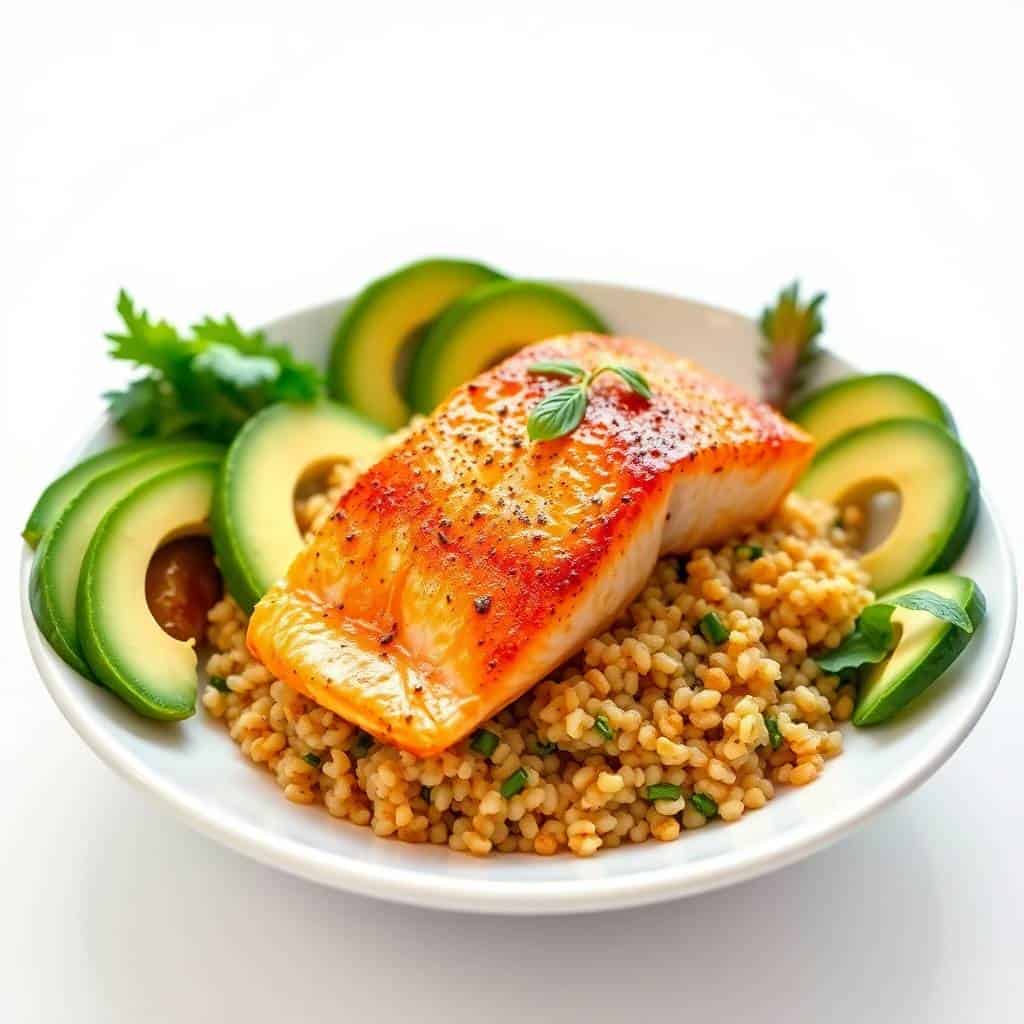
Why You'll Love This Recipe
- The lemon-herb marinade actually does the heavy lifting: I used to think salmon needed complicated sauces to taste good. Turns out, lemon zest, olive oil, thyme, and oregano is all you need. The zest especially adds a sharpness that juice alone doesn't give you. It takes five minutes to mix and fifteen minutes to marinate — so by the time you've cooked the quinoa, the salmon is ready to go in the oven.
- It's genuinely meal-prep friendly — not just in theory: A lot of recipes claim to be meal-prep friendly but then fall apart (literally) by day two. This one doesn't. The quinoa keeps well in the fridge for three days. The salmon reheats without going rubbery if you do it gently. The avocado you slice fresh each time — takes thirty seconds. I make a batch on Sunday and have lunch sorted for Monday and Tuesday without any effort.
- You don't need fancy equipment or specialty ingredients: Everything here comes from a regular grocery store — salmon fillets, a lemon, dried herbs from the spice aisle, quinoa (Costco has a great big bag of it), and whatever fresh vegetables you have. I don't own a fancy kitchen scale or a fish spatula. I use a regular sheet pan and a fork. It works perfectly fine.
- It keeps you full without feeling heavy: I started making this during a stretch when I was trying to eat lighter lunches, and what I noticed is that I wasn't hungry again an hour later the way I sometimes am with salads. The combination of protein from the salmon, fat from the avocado, and fiber from the quinoa actually sticks. It doesn't feel like a diet bowl — it feels like a proper meal.
- The bowl is flexible enough to use whatever you have: Some weeks I have cucumber, some weeks I don't. Sometimes I throw in a handful of baby spinach, sometimes arugula, sometimes neither. Once I added a spoonful of hummus on the side and it was great. The base — quinoa, lemon-herb salmon, avocado — is solid enough that the toppings are genuinely interchangeable.
Ingredients
- 2 salmon fillets
- 1 tablespoon olive oil
- 1 teaspoon lemon zest
- 1 tablespoon fresh lemon juice
- 1 teaspoon dried thyme
- 1 teaspoon dried oregano
- Salt and pepper, to taste
- 1 cup quinoa, uncooked
- 2 cups water or low-sodium broth (broth adds more flavor)
- Pinch of salt
- 1 ripe avocado, sliced
- ½ cup cherry tomatoes, halved
- ¼ cup cucumber, sliced or diced
- Baby spinach or arugula (optional, a small handful)
- Fresh parsley or dill, for garnish
- Lemon wedges, for serving
Directions
- Cook the quinoa: Rinse the quinoa under cold water for about 30 seconds — this removes the saponin coating that makes it taste bitter. Combine with 2 cups water or broth and a pinch of salt in a medium saucepan. Bring to a boil, then reduce heat to low, cover, and simmer for 15 minutes until the liquid is absorbed. Fluff with a fork and set aside uncovered so it doesn't get soggy.
- Make the marinade: In a small bowl, mix together the olive oil, lemon zest, lemon juice, thyme, oregano, salt, and pepper. This takes less than two minutes and makes enough to coat both fillets generously. Rub it all over the salmon and let it sit for 15 minutes — don't skip this rest time, it makes a noticeable difference in flavor.
- Bake (or pan-sear) the salmon: To bake: preheat your oven to 375°F (190°C), line a sheet pan with parchment paper, and bake the fillets for 15–20 minutes until they flake easily with a fork. To pan-sear: heat a heavy skillet over medium-high heat, add a small drizzle of oil, and cook the salmon skin-side down for about 4 minutes, then flip and cook another 3–4 minutes. Both methods work — baking is more hands-off, searing gives you a crispier edge.
- Prep your toppings: While the salmon is cooking, slice the avocado, halve the cherry tomatoes, dice the cucumber, and wash your greens if using. Lay everything out so assembly goes fast once the salmon is done.
- Assemble the bowls: Divide the quinoa between two bowls. Add a bed of greens if you're using them, then place a salmon fillet on top. Arrange the avocado, tomatoes, and cucumber around it. Scatter fresh parsley or dill over everything.
- Finish and serve: Squeeze a wedge of lemon over the whole bowl right before eating. If you want a little more dressing, a drizzle of olive oil with a pinch of salt works great, or a light vinaigrette. Serve while the salmon is still warm.
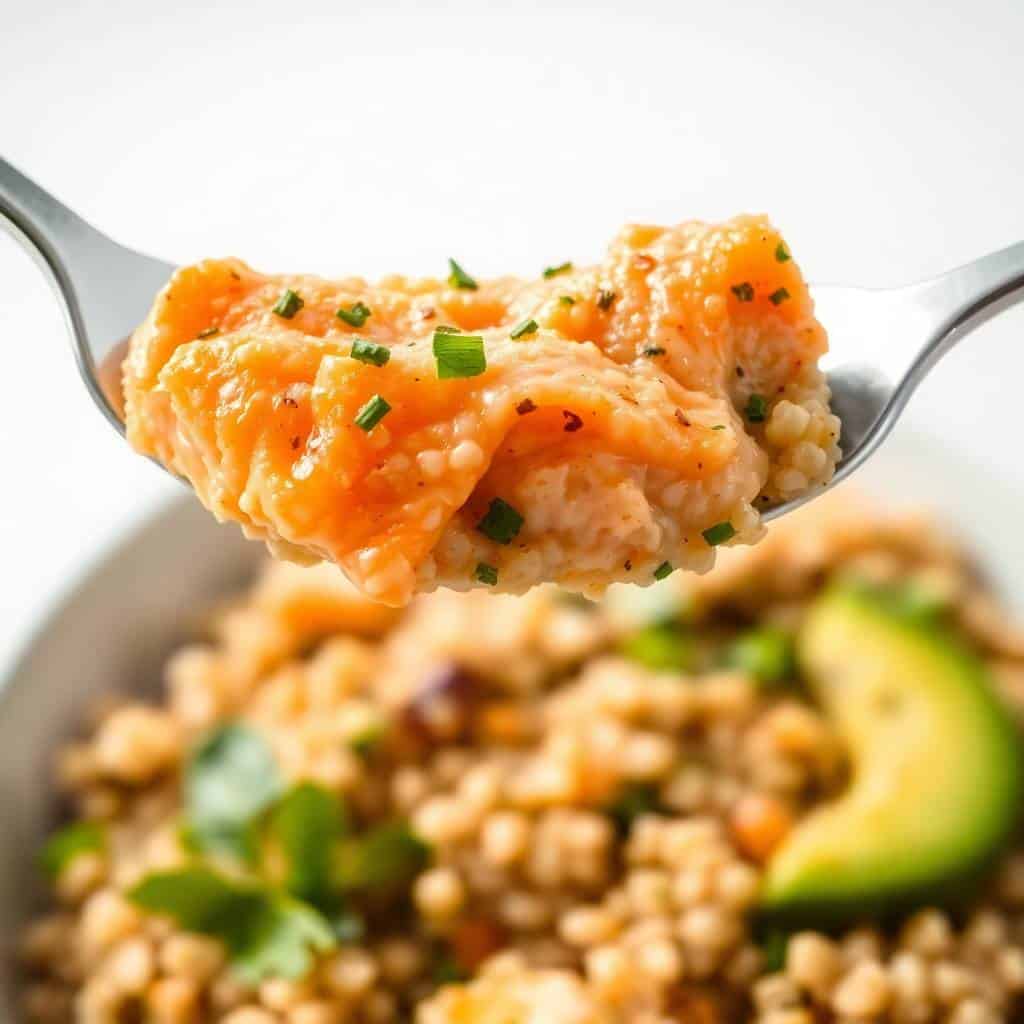
Tips for Success
- Don't marinate the salmon for more than 15–20 minutes: I learned this the hard way. The lemon juice is acidic enough that if you leave the salmon in the marinade for an hour thinking "more time = more flavor," you end up with salmon that's started to cure on the outside and turns oddly soft after cooking. Fifteen minutes is genuinely enough. Set a timer and move on.
- Always rinse the quinoa: I know it says it on the package too, but I skipped this once when I was in a hurry and the quinoa had a slightly soapy, bitter edge to it that I couldn't explain until I looked it up. It's the natural saponin coating. Thirty seconds under cold water through a fine mesh strainer fixes it completely. If you don't have a fine mesh strainer, use a regular sieve lined with a piece of cheesecloth or a clean J-cloth.
- Let your salmon sit out for 10 minutes before cooking: Cold salmon straight from the fridge cooks unevenly — the outside gets done before the center catches up. I just take it out while I'm prepping everything else. It doesn't need to be room temperature, just not fridge-cold. This small thing genuinely improves the texture.
- Pick your avocado the day before: If you buy a hard avocado the same day you want to make this bowl, you'll be disappointed. I keep an avocado on the counter and check it daily — it should give slightly when you press the top near the stem. If it's very firm, put it in a paper bag with a banana overnight. If it's already very soft and dark everywhere, it's past the point of being good for slicing.
- Add any dressing right before eating, not before storing: If you're meal prepping, keep the dressing separate and add it at the last moment. I once dressed the whole bowl before storing it and the greens were completely wilted and the cucumber had made everything watery by the next day. Store everything dry and dress it fresh — it takes ten seconds.
Variations
- Swap the grain: I've made this with brown rice when I ran out of quinoa and it was just as good — nuttier and a bit chewier. Farro works too if you can find it. For a lower-carb version, cauliflower rice is an option; just roast it briefly so it's not watery. Honestly any grain base works here because the salmon marinade is doing most of the flavor work.
- Add a spicy element: A drizzle of gochujang mayo over the top takes this bowl in a completely different direction — still works with the lemon salmon, but adds a creamy heat that my husband loves. Red pepper flakes on the salmon before baking is a simpler option. Either way, a little spice cuts through the richness of the avocado nicely.
- Plant-based version: Replace the salmon with a block of extra-firm tofu that you've pressed dry and cut into thick slabs, then marinate it in the same lemon-herb mixture and bake or pan-sear until golden. Roasted chickpeas are another option — toss them in the same marinade and roast at 400°F for 25 minutes. The lemon-herb flavor transfers well to both.
- Add a spoonful of hummus: I started doing this when I had leftover hummus in the fridge and didn't know what to do with it. A big spoonful on the side of the bowl adds creaminess and a slightly nutty flavor that goes really well with the lemon salmon. It also makes the bowl feel more filling if you're eating it as a full dinner rather than a light lunch.
- Make it with canned salmon: This isn't my first choice, but it works when you need it to. Drain the can well, break it up into chunks, and toss with the lemon-herb marinade. You won't get the same texture as fresh baked fillets, but the flavor comes through. It's a good weekday shortcut when fresh salmon isn't in your budget or you forgot to defrost anything.
Serving and Storage
Serving
Serve while the salmon is still warm, with a fresh lemon wedge on the side that you squeeze right at the table. I like adding a small handful of greens under the quinoa for extra bulk — baby spinach disappears into the bowl and you barely notice it, but it adds to the meal. If you want to make this feel more like a dinner than a lunch, a side of sautéed asparagus and mushrooms alongside is a really natural pairing — the earthy mushrooms work well against the bright lemon salmon.
Storage
Store the quinoa and salmon in separate airtight containers in the fridge — the quinoa keeps for up to 3 days, the salmon is best within 2 days. Do not store sliced avocado ahead of time; it browns quickly once cut. Slice it fresh when you're ready to assemble. To reheat the salmon, cover it loosely and microwave on 60% power for about 90 seconds — high heat makes it rubbery. The quinoa reheats fine in the microwave with a splash of water to loosen it up. Do not dress or sauce the bowl before storing; add everything fresh when you're building the bowl to eat.
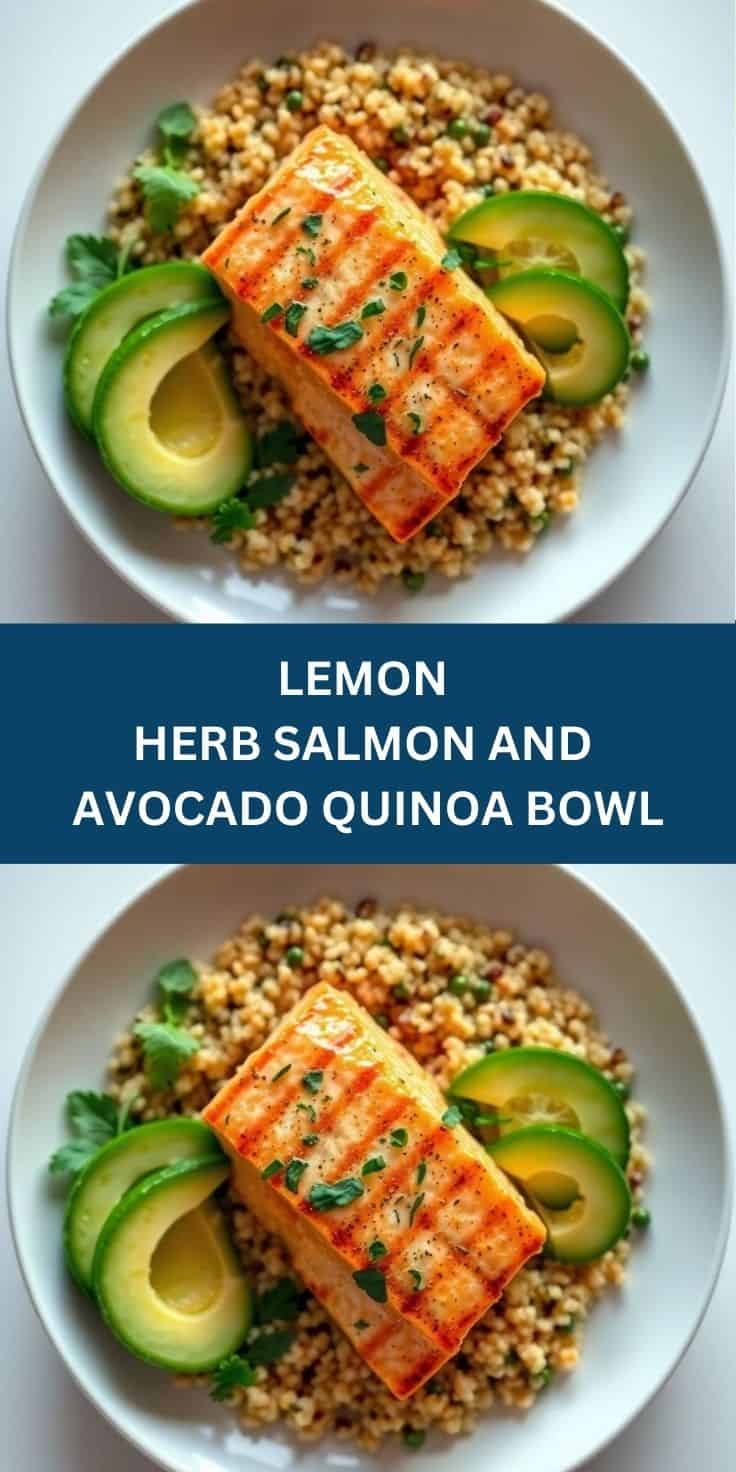
Frequently Asked Questions
Can I grill the salmon instead of baking it?
Yes, and grilling gives you a slightly smoky edge that's really nice with the lemon herbs. Make sure your grill grates are clean and well-oiled before you put the salmon on — it's a delicate fish and will stick if the surface isn't ready. Cook over medium-high heat for about 4 minutes per side, depending on the thickness of your fillets.
How do I keep the avocado from browning?
The best move is to slice it right before you eat. If you need to prep ahead, squeeze lemon juice directly onto the cut surface and press a piece of plastic wrap tightly against the flesh so no air reaches it. Storing the avocado half with the pit still in also slows browning a little. Even then, plan on using it within a few hours — avocado doesn't hold well once cut.
How far ahead can I prep this for meal prep?
The quinoa keeps for 3 days in the fridge, the cooked salmon for 2 days. I usually cook both on Sunday and build bowls for Monday and Tuesday lunch — that's the sweet spot. By day three the salmon starts to taste a bit tired. Keep everything stored dry and separately, slice the avocado fresh each time, and you'll have a good bowl every time.
Can I use canned salmon instead of fresh?
You can, and it's a reasonable shortcut when fresh isn't available or the price is high. Drain the can thoroughly, break the salmon into chunks, and toss with the lemon-herb marinade — the flavor still comes through. The texture is softer and more crumbly than baked fillets, so just set your expectations accordingly. It works especially well if you're making bowls for lunch where you're eating at your desk rather than sitting down to a proper plate.
What dressing works best with this bowl?
Honestly, extra lemon juice and a drizzle of good olive oil is all it really needs — the marinade already seasons the salmon well. A simple lemon vinaigrette (lemon juice, olive oil, a small amount of Dijon, salt) is my go-to when I want something a little more structured. Tahini thinned with a bit of water and lemon also works really well here. I'd stay away from anything heavy or cream-based — it masks the brightness of the lemon herbs.
This bowl has quietly become one of my most-made lunches over the past year. It's not flashy — it doesn't look like something I spent two hours on — but it's reliable, it tastes good, and I genuinely look forward to it. The lemon-herb salmon is the kind of thing where you eat it and think "I should make fish more often," and then you actually do, which is a rare thing.
What I appreciate most is that it doesn't require me to be perfectly stocked. The core ingredients are simple enough that I can usually pull this together midweek without a dedicated grocery run. The toppings shift based on whatever's in the fridge — sometimes cucumber, sometimes not, sometimes a handful of arugula, sometimes plain spinach. The bowl works either way.
If you're making this for the first time, I'd say just start with the base recipe exactly as written. Get the quinoa and the lemon-herb marinade right first, then start playing with variations once you know the foundation. And if you're looking for something to make on the same day that rounds it out into a fuller dinner, my mozzarella chicken in basil cream sauce is about as different as it gets from this bowl, but both are things my husband happily eats in the same week without complaint. Balance in a household requires some range.
I hope it becomes a regular in your kitchen the way it has in mine. 🍋🥑✨
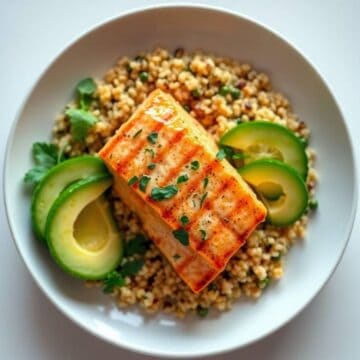
LEMON HERB SALMON AND AVOCADO QUINOA BOWL
Ingredients
For the Salmon:
- 2 salmon fillets
- 1 tablespoon olive oil
- 1 teaspoon lemon zest
- 1 tablespoon lemon juice
- 1 teaspoon dried thyme
- 1 teaspoon dried oregano
- Salt and pepper to taste
For the Quinoa:
- 1 cup quinoa uncooked
- 2 cups water or broth
- Pinch of salt
For the Toppings:
- 1 ripe avocado sliced
- ½ cup cherry tomatoes halved
- ¼ cup cucumber sliced
- Fresh parsley for garnish
- Lemon wedges for serving
Instructions
Cook the Quinoa:
- In a medium saucepan, combine quinoa, water (or broth), and a pinch of salt. Bring to a boil, then reduce heat and cover. Simmer for 15 minutes or until water is absorbed and quinoa is tender. Fluff with a fork and set aside.
Prepare the Salmon:
- Preheat the oven to 375°F (190°C). In a small bowl, mix olive oil, lemon zest, lemon juice, thyme, oregano, salt, and pepper. Rub the mixture over the salmon fillets.
Bake the Salmon:
- Place the salmon fillets on a baking sheet lined with parchment paper. Bake for 15–20 minutes, or until the salmon is cooked through and flakes easily with a fork.
Assemble the Bowl:
- Divide the cooked quinoa between two bowls. Top each with a salmon fillet, sliced avocado, cherry tomatoes, and cucumber. Garnish with fresh parsley and a lemon wedge.
Serve:
- Serve immediately and enjoy!
Notes
Quinoa can be cooked in advance and stored in the fridge for up to 3 days. The salmon can also be prepped and refrigerated until ready to cook. Customizing the Flavour:
Add a drizzle of olive oil or your favorite dressing on top for extra flavour. You can also substitute the salmon with grilled chicken or tofu. Serving Suggestions:
Serve with a side of sautéed greens or roasted vegetables for a well-rounded meal. Allergy-Friendly Options:
This recipe is naturally gluten-free. For a dairy-free version, ensure the toppings are suitable or omit dairy-based garnishes. Storage Tips:
Store leftovers in an airtight container in the fridge for up to 2 days. Reheat gently before serving.



Comments
No Comments