
Grilling a perfect steak is one of the most satisfying and most impressive things any cook can do — and with the right technique, the right cut, and the right finishing sauce, even a beginning grill cook can produce results that rival the finest steakhouses. These grilled steak recipes cover every cut from ribeye and New York strip to flank, skirt, and hanger steak, every technique from direct high-heat searing to the reverse sear method, and every finishing sauce from classic garlic butter to vibrant chimichurri and bold blue cheese butter.
The secret to extraordinary grilled steak is simpler than most people realize: start with good meat at room temperature, season it more aggressively than feels comfortable, use the highest possible heat for searing, flip only once, rest properly before cutting, and cut against the grain. Every other technique is a refinement of these fundamentals.
These grilled steak recipes are organized around Father's Day — the biggest grilling occasion of the year — but every single one is equally perfect for any summer weekend, any special dinner, or any occasion where only steak from the grill will do.
These 17 best grilled steak recipes will make you the most celebrated grill master in the neighborhood. Fire it up!
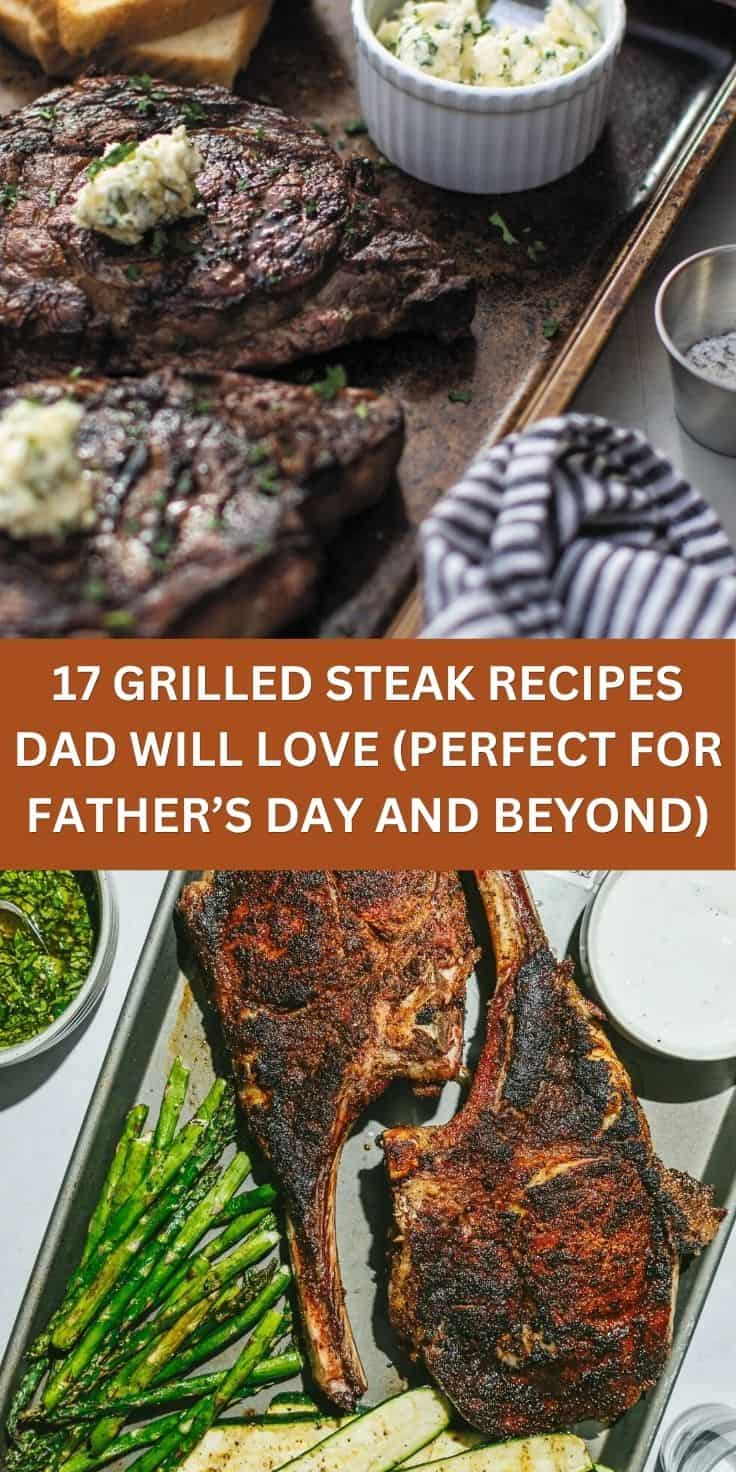
Grilled Steak Recipes for Every Cut and Every Occasion
17. Classic Grilled Ribeye with Garlic Butter

A thick-cut, well-marbled ribeye steak grilled to a perfect medium-rare with deep crosshatch grill marks and finished with a compound garlic-herb butter that melts luxuriously over the hot surface as it arrives at the table — the most universally celebrated of all grilled steak recipes and the one that most people picture when they imagine the perfect Father's Day steak dinner.
Ingredients:
- 2 ribeye steaks, 1½ inches thick (12-14 oz each)
- Coarse kosher salt and coarsely ground black pepper — more than you think necessary
- 1 tablespoon vegetable oil for the grill grates
- Garlic herb butter: 4 tablespoons butter softened, 3 cloves garlic minced, 1 tablespoon fresh thyme, 1 tablespoon fresh rosemary finely chopped, 1 tablespoon fresh chives, pinch flaky salt — mixed together and chilled into a log
Instructions:
- Remove steaks from refrigeration 45-60 minutes before grilling and pat completely dry with paper towels. Season both sides and all edges very generously — the salt crust is what creates the extraordinary caramelized exterior. For a 1½-inch steak, use approximately ¾ teaspoon of coarse salt per side, which feels like too much but is correct. Preheat grill to maximum high heat — a gas grill should reach 500-550°F, a charcoal grill should have the coals glowing bright orange with no black showing.
- Oil the grill grates immediately before placing steaks — use a folded paper towel dipped in vegetable oil held with tongs and wiped quickly across the grates. Hot oiled grates prevent sticking and create the char marks that are the visual signature of a properly grilled steak. Place steaks at a 45-degree angle to the grill grates for the classic crosshatch pattern. Grill without moving for 3-4 minutes.
- Rotate steaks 90 degrees on the same side for the second set of crosshatch marks. Grill 2 more minutes. Flip steaks once and grill 3-4 more minutes for medium-rare — the total cooking time for a 1½-inch ribeye for medium-rare is 8-10 minutes. Use an instant-read thermometer to check: 125°F for medium-rare, 135°F for medium. Remove at 5°F below your target since the temperature rises during resting.
- Rest steaks on a cutting board for 8-10 minutes — this is the step most commonly skipped and the one that makes the most difference. Place a thick slice of the garlic herb butter compound on top of each steak immediately when it comes off the grill — the residual heat melts it into a fragrant, luxurious sauce while the steak rests. Slice against the grain if sharing. Serve immediately after the rest with the melted butter pooled around the steak on the plate.
16. Chimichurri Skirt Steak
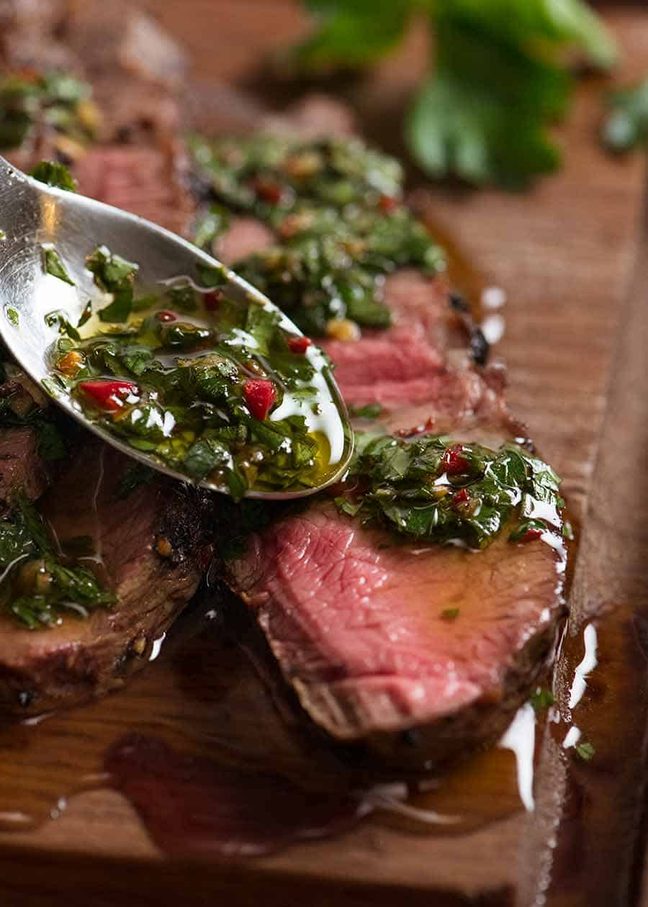
Skirt steak — one of the most flavorful and most underrated cuts — grilled at maximum heat until deeply charred and served with an authentic Argentinian chimichurri of fresh parsley, garlic, red wine vinegar, olive oil, and red pepper flakes. One of the most vibrant, most flavorful, and most visually beautiful grilled steak recipes that benefits from the skirt's quick cooking time and extraordinary flavor intensity.
Ingredients:
- 2 lbs skirt steak, trimmed of excess membrane
- Coarse salt, black pepper, smoked paprika for seasoning
- Chimichurri: 1 cup fresh flat-leaf parsley leaves tightly packed, 4 cloves garlic, ¼ cup red wine vinegar, ½ cup good benefits of olive oil, 1 teaspoon dried oregano, ½ teaspoon red pepper flakes, salt and pepper — pulse in food processor until finely chopped but not smooth
Instructions:
- Make chimichurri at least 30 minutes before serving — ideally 2-4 hours ahead. Combine all chimichurri ingredients in a food processor and pulse 8-10 times until the parsley is finely chopped and everything is combined but the sauce retains some texture — avoid blending completely smooth, which creates a green paste rather than the chunky, herbaceous sauce that is authentic chimichurri. Season assertively with salt. The longer chimichurri sits before serving, the more the garlic and vinegar mellow and the flavors integrate.
- Pat skirt steak completely dry and season generously with coarse salt, black pepper, and smoked paprika. Skirt steak is thin (typically ¼-½ inch) and cooks extremely quickly — the entire cook time for medium-rare skirt steak is 3-4 minutes total, not per side. Preheat grill to the absolute maximum temperature — skirt steak needs the most intense heat possible to sear the exterior before the interior overcooks.
- Grill over maximum heat for 2-3 minutes per side — skirt steak should sizzle and smoke aggressively from the moment it hits the grates. Watch carefully — the thin cut overcooks to chewy in seconds past medium. Target 125-130°F internal temperature for medium-rare. Remove and rest for only 5 minutes — skirt steak resting time is shorter than thicker cuts due to its thinness.
- Cut skirt steak against the grain — the grain runs across the width of the steak rather than the length, so cutting against it means cutting across the steak into short strips rather than along its length. This is absolutely critical: skirt steak cut with the grain is unpleasantly chewy and practically inedible, while skirt steak cut against the grain is tender and juicy. Spoon chimichurri generously over the sliced steak and serve immediately with additional sauce alongside.
15. Reverse Sear Tomahawk Steak

A dramatic 2+ pound tomahawk ribeye with its full long rib bone intact — cooked using the reverse sear method (low oven first, then screaming-hot sear) for the most evenly cooked, most perfectly medium-rare, and most visually spectacular of all grilled steak recipes. The tomahawk steak is the ultimate Father's Day centerpiece — when this arrives at the table, every other steak at every other table seems inadequate.
Ingredients:
- 1 tomahawk ribeye steak (2-2.5 lbs, at least 2 inches thick)
- Very generous amount of coarse salt and black pepper — season the night before if possible for the best crust
- 2 tablespoons neutral oil for the final sear
- 4 tablespoons butter, garlic, thyme for basting
- Flaky sea salt for finishing
Instructions:
- Season the tomahawk steak the night before if possible: pat completely dry, season very generously on all surfaces, and leave uncovered on a wire rack set in a sheet pan in the refrigerator overnight. The overnight dry-brine dramatically improves the crust quality — the surface moisture drawn out by the salt evaporates overnight, leaving a dry surface that sears rather than steams. Remove from refrigerator 1 hour before cooking.
- Reverse sear low-temperature phase: place the seasoned tomahawk on a wire rack in a sheet pan. Cook in a 250°F oven for 45-60 minutes until the internal temperature reaches 120-125°F — this gentle low heat cooks the interior to near-perfect doneness edge-to-edge without any gray band of overcooked meat beneath the sear. Remove from oven and rest 10 minutes while you prepare the sear.
- Heat grill to maximum temperature — 600°F or higher for the final sear. Alternatively, use a screaming-hot cast iron skillet on the stovetop for the most intense possible sear. Pat the steak surface completely dry again before searing — any moisture prevents the immediate, intense Maillard reaction sear that creates the extraordinary crust. Sear 60-90 seconds per side only — the interior is already at temperature and only the exterior needs the high-heat treatment.
- During the last 30 seconds of searing, add butter, garlic, and thyme to the pan and baste continuously for the most spectacular garlic-butter crust. Rest 5 minutes after searing — much less than the initial reverse sear rest since the interior is already at temperature. Present the entire tomahawk on a large wooden board with the 18-inch rib bone pointing dramatically upward. Slice tableside against the grain for maximum theater. Finish with flaky sea salt.
14. Bourbon Marinated Flank Steak
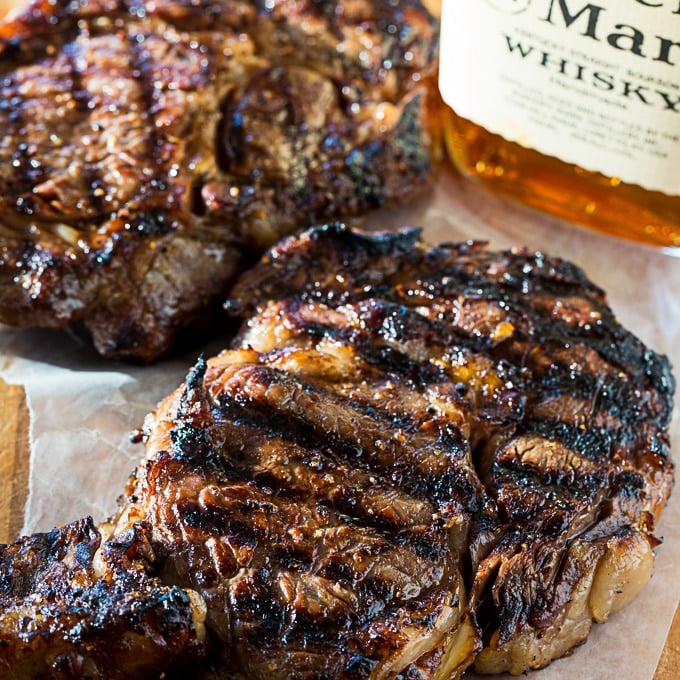
Flank steak marinated for 4-24 hours in bourbon, soy sauce, brown sugar, garlic, and ginger — grilled over high heat and sliced thin against the grain for deeply flavored, tender, caramelized grilled steak with a sweet-savory-smoky complexity that bourbon provides to any marinade. One of the most family-friendly and most crowd-pleasing grilled steak recipes for a Father's Day dinner that feeds a group economically.
Ingredients:
- 2 lbs flank steak
- Bourbon marinade: ¼ cup bourbon, ¼ cup soy sauce, 3 tablespoons brown sugar, 3 cloves garlic minced, 1 tablespoon fresh ginger grated, 2 tablespoons olive oil, 1 teaspoon black pepper, juice of 1 lime
Instructions:
- Whisk all marinade ingredients together until the brown sugar dissolves completely. Place flank steak in a zip-lock bag or shallow dish and pour marinade over, ensuring complete coverage. Refrigerate for minimum 4 hours — overnight is significantly better for the most deeply flavored result. The bourbon's alcohol penetrates the muscle fibers slightly and the sugar creates extraordinary caramelization during grilling. Remove steak from marinade and pat completely dry before grilling — wet marinated meat steams rather than sears.
- Discard the used marinade or bring it to a boil in a saucepan for 3-4 minutes and reduce to a glaze to use as a finishing sauce. Preheat grill to high heat. Score the flank steak lightly on both sides in a crosshatch pattern if desired — ¼ inch deep cuts help the marinade penetrate further and prevent the steak from curling on the grill.
- Grill over high heat for 4-5 minutes per side for medium-rare. Flank steak is typically 1 inch or less in thickness and cooks quickly — check temperature at 4 minutes per side and don't overcook. Target 130-135°F for medium-rare. Flank steak becomes significantly tougher above medium doneness due to its muscle fiber structure — medium-rare is strongly preferred.
- Rest for 8-10 minutes. Slice thinly — ¼ inch slices — against the grain on the diagonal. The combination of thin slicing and against-the-grain cutting is what makes flank steak tender rather than chewy. The bourbon marinade creates deep, gorgeous caramelized color on the sliced surfaces. Arrange overlapping on a large platter and drizzle the reduced marinade glaze over the top if made.
13. New York Strip with Blue Cheese Butter
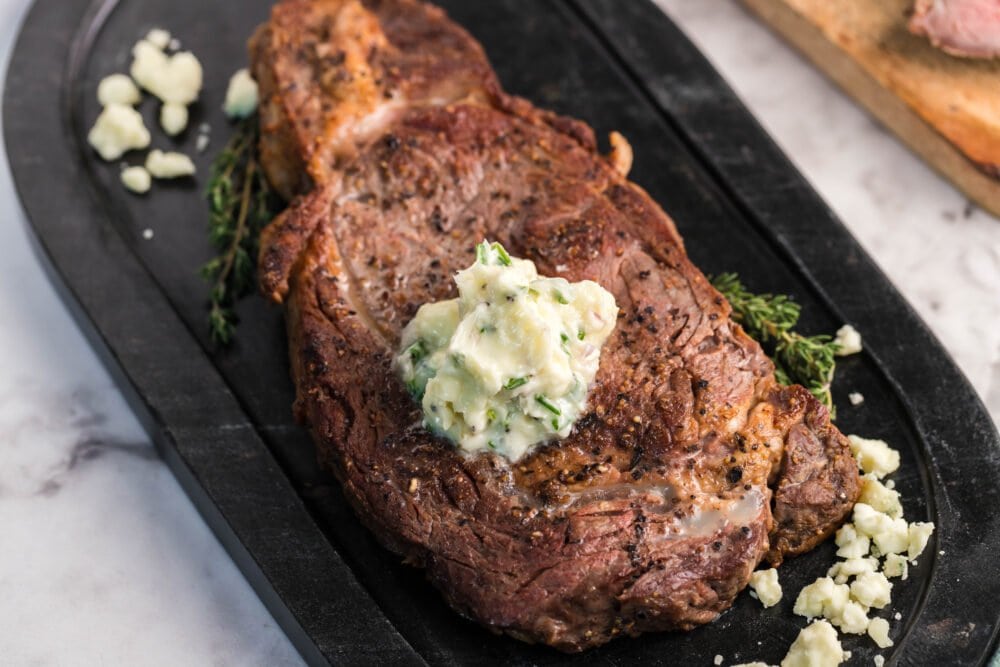
A thick New York strip steak — the most steak-lover's steak, with its firm texture and bold beefy flavor — grilled to medium-rare perfection and finished with a pungent blue cheese compound butter that melts into a creamy, intensely flavored sauce. One of the most sophisticated and most impressive grilled steak recipes that balances the strip's assertive beef flavor with blue cheese's equally bold character.
Ingredients:
- 2 New York strip steaks, 1½ inches thick (12 oz each)
- Coarse salt, black pepper
- Blue cheese butter: 4 tablespoons butter softened, 2 oz blue cheese (Gorgonzola or Roquefort) crumbled, 1 tablespoon fresh chives, pinch of black pepper — mixed and rolled into a log, chilled
- Watercress or arugula salad alongside
Instructions:
- Make blue cheese butter the day before: beat softened butter until light, then fold in crumbled blue cheese and chives until combined but with visible blue cheese pieces remaining rather than a fully smooth mixture — the texture contrast between butter and cheese is part of what makes this compound butter so interesting. Roll in plastic wrap into a 1-inch diameter log, twist the ends to seal, and refrigerate until firm. Slice into ½-inch rounds just before serving.
- The New York strip has a firm fat cap running along one edge — score through this fat cap in ½-inch intervals with a sharp knife before grilling. This prevents the steak from bowing upward on the grill as the fat contracts with heat, which otherwise lifts the center of the steak off the grates and prevents even searing.
- Season steaks very generously and grill over high heat 4-5 minutes per side for medium-rare on a 1½-inch strip. New York strip is slightly firmer than ribeye and benefits from reaching a slightly higher internal temperature — 130-135°F for the best balance between tenderness and texture. Stand the steak on its fat-cap edge for 1-2 minutes after the flat sides to render the fat cap until golden and crispy.
- Rest for 8-10 minutes. Place a generous round of blue cheese butter on top of each steak immediately when it comes off the grill — the resting period and steak heat melts the butter into a creamy pool on the surface. The strong, pungent blue cheese is a genuinely perfect pairing for the assertive beefy flavor of a well-grilled New York strip and is one of the most distinctively adult and sophisticated of all grilled steak recipes.
12. Garlic Herb Sirloin Steak
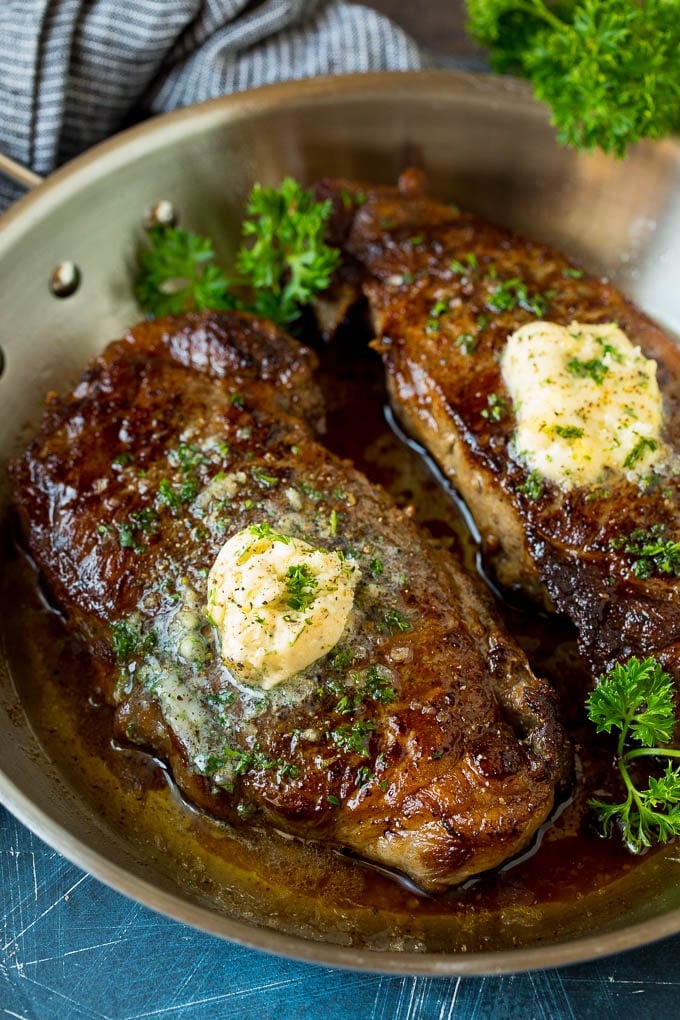
Sirloin steak — the most economical and most widely available premium cut — grilled with a simple garlic and herb paste coating that creates an extraordinary fragrant crust. Sirloin is often overlooked in favor of ribeye and strip but is an outstanding cut when cooked properly, and this garlic herb preparation maximizes its natural flavor in one of the most accessible and practical grilled steak recipes in the collection.
Ingredients:
- 2 sirloin steaks, 1¼ inches thick (10 oz each)
- Coarse salt and black pepper
- Garlic herb paste: 4 cloves garlic minced to a paste, 2 tablespoons olive oil, 1 tablespoon fresh rosemary finely chopped, 1 tablespoon fresh thyme, zest of 1 lemon, salt and pepper — mixed together
Instructions:
- Coat steaks in the garlic herb paste 30-60 minutes before grilling — long enough for the garlic to penetrate the surface slightly but not so long that the acid from the garlic begins breaking down the surface texture of the meat. The paste should completely coat both sides of each steak in a thin, even layer. Don't add extra salt to the paste if the steaks are already seasoned with coarse salt before applying it.
- Preheat grill to high heat. The garlic in the herb paste has a higher sugar content than plain steak and will caramelize (and potentially burn if the heat is too aggressive) more quickly than unseasoned steak — watch carefully during the first side and reduce heat slightly if the herbs begin to char rather than caramelize.
- Grill 3-4 minutes per side for medium-rare on a 1¼-inch sirloin. Sirloin has less marbling than ribeye but more than flank or skirt — it benefits from medium-rare to medium doneness to remain tender. Above medium, sirloin can become noticeably tougher due to its leaner composition.
- Rest 7-8 minutes. The garlic herb crust will have developed a deeply golden, fragrant exterior with visible rosemary and thyme leaves caramelized into the surface. Slice against the grain — sirloin's grain runs consistently along the length of the steak, so cutting across it at a slight diagonal produces beautiful, tender slices. Serve with simple sides that don't compete with the steak's garlic and herb profile — simple roasted vegetables and a green salad are the ideal companions.
11. Carne Asada

Flank or skirt steak marinated in citrus, garlic, cumin, and chili — grilled over high heat until slightly charred and deeply flavored, then sliced thin for tacos, burritos, or serving alongside rice and beans. Authentic carne asada is one of the most beloved and most delicious grilled steak recipes in Mexican cuisine and one of the most consistently crowd-pleasing preparations for any gathering.
Ingredients:
- 2 lbs flank or skirt steak
- Carne asada marinade: juice of 3 oranges, juice of 3 limes, ¼ cup olive oil, 6 cloves garlic minced, 1 jalapeño minced, 1 teaspoon cumin, 1 teaspoon chili powder, 1 teaspoon smoked paprika, 1 teaspoon dried oregano, salt and black pepper, ¼ cup fresh cilantro chopped
- Corn tortillas, salsa, guacamole, lime for serving
Instructions:
- Combine all marinade ingredients and pour over steak in a large zip-lock bag or glass dish. The citrus juice is the tenderizing agent — the acids break down the outer muscle fibers and help the flavors penetrate. Marinate a minimum of 4 hours but 8-24 hours produces the most flavorful, most tender result. Don't marinate longer than 24 hours — the citrus acid eventually makes the meat's surface mushy.
- Remove steak from marinade and pat completely dry. The drying is critical — wet steak from the marinade steams rather than sears and the caramelization that creates carne asada's distinctive char cannot form on a wet surface. Preheat grill to maximum heat — carne asada demands the most intense possible heat for authentic results.
- Grill over maximum heat for 3-4 minutes per side until the exterior is deeply charred with some blackened edges — this is correct for carne asada and the char is part of the flavor profile rather than a mistake. The slight char notes are the defining flavor characteristic that distinguishes authentic carne asada from ordinary grilled steak. Target 130°F internal temperature.
- Rest 5-8 minutes. Slice very thin against the grain on the diagonal — the thin slices maximize the proportion of caramelized crust in each bite. For tacos: warm corn tortillas directly on the grill for 30 seconds per side until slightly charred. Pile sliced carne asada, fresh salsa, guacamole, diced white onion, and fresh cilantro into each tortilla. A squeeze of fresh lime over everything is essential and non-negotiable in authentic carne asada service.
10. Pittsburgh Rare Steak
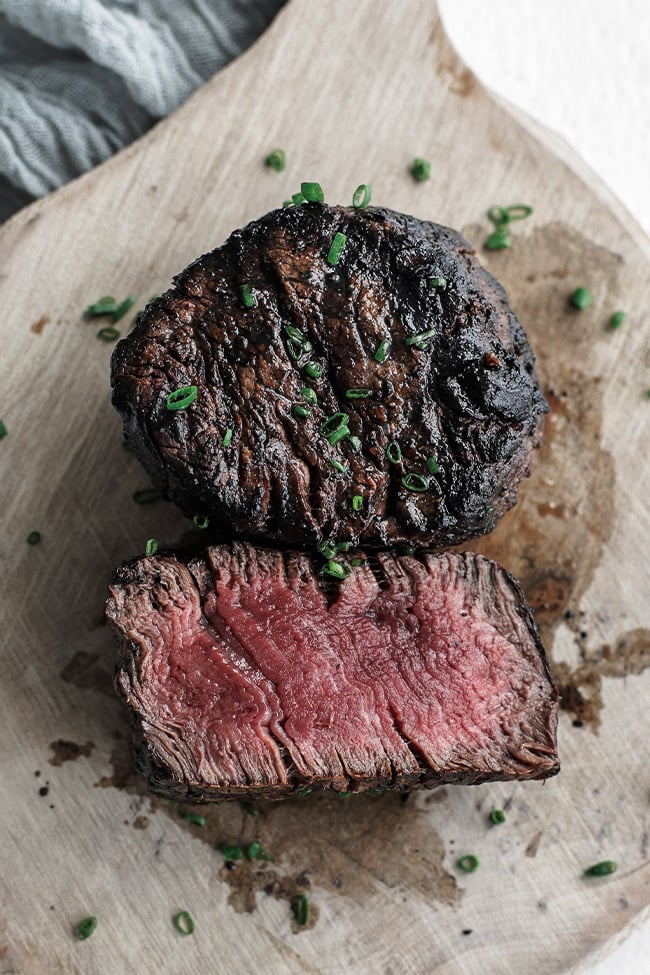
The legendary Pittsburgh style (also called "black and blue") — a thick steak seared at maximum possible heat until the exterior is completely charred and black while the interior remains cool and essentially raw, just above refrigerator temperature. One of the most specific and most technically interesting of all grilled steak recipes and the preferred preparation of devoted steak purists who want maximum crust with maximum rawness simultaneously.
Ingredients:
- 2 ribeye or strip steaks, 1½ inches thick
- Very generous coarse salt and black pepper only — no other seasoning
- Very high heat grill or a steel surface that can reach 700°F+
Instructions:
- Pittsburgh rare requires the highest possible cooking temperature — the goal is to sear the complete exterior to a deep black char in the shortest possible time before the interior temperature rises above 100°F. Preheat gas grill on all burners to maximum for 15-20 minutes, or build a charcoal fire that's as hot as possible with coals nearly touching the grate. Cast iron on the highest burner of a gas stovetop is an effective indoor alternative.
- Season steaks very generously — the salt and pepper are the only flavors and should be prominent. The steak should ideally be cold from the refrigerator when it hits the grill — cold interior means more time before the center reaches temperature during the high-heat exterior sear, allowing more char development before the interior temperature rises.
- Grill for 2-3 minutes per side at the absolute maximum heat available, pressing firmly with a spatula to maximize surface contact with the grates. The exterior should be almost completely black by the time it comes off the grill. Total cooking time is 4-6 minutes. Internal temperature when done should be 95-100°F — blue and essentially raw throughout.
- No resting time is needed for Pittsburgh rare due to the extremely low internal temperature. Serve immediately, whole or sliced. Pittsburgh rare is not for everyone — it's specifically for the steak purist dad who wants the most intense crust possible with essentially raw meat inside and knows exactly what he's ordering when he requests it. For all other dads, any of the other grilled steak recipes in this collection is more appropriate and more universally appreciated.
9. Coffee-Rubbed Ribeye
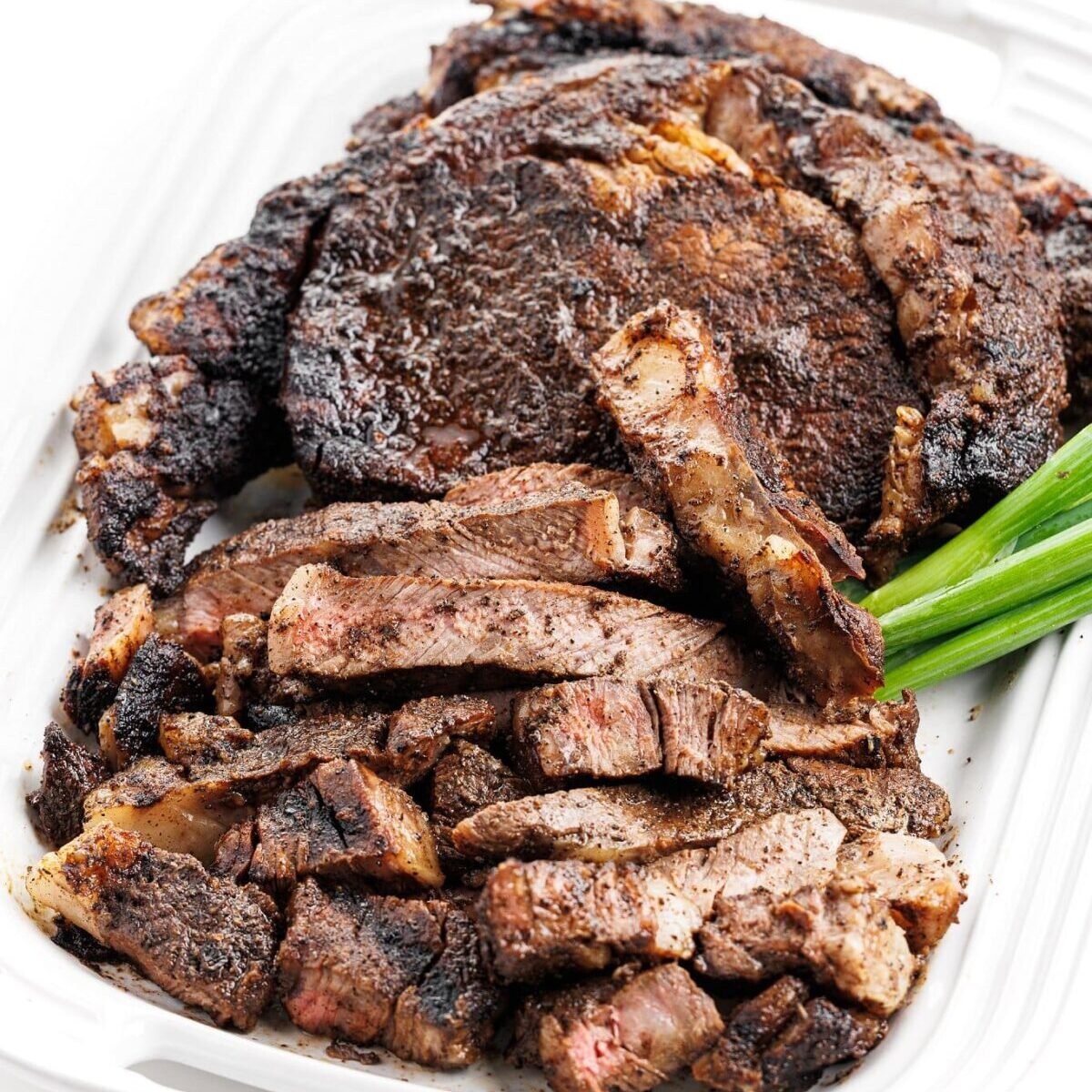
A ribeye coated in a deeply flavorful dry rub of ground espresso, brown sugar, smoked paprika, cumin, and black pepper — grilled to create the most extraordinary, most complex, and most deeply flavored crust of any grilled steak recipe. Coffee amplifies the Maillard reaction crust formation and adds a subtle, dark, slightly bitter depth that makes this the most interesting and most discussed grilled steak at any Father's Day cookout.
Ingredients:
- 2 ribeye steaks, 1½ inches thick
- Coffee rub: 2 tablespoons finely ground espresso or dark roast coffee, 1 tablespoon brown sugar, 1 tablespoon smoked paprika, 1 teaspoon cumin, 1 teaspoon black pepper, 1 teaspoon garlic powder, 1 teaspoon kosher salt, ¼ teaspoon cayenne
Instructions:
- Mix all rub ingredients together thoroughly. Pat steaks completely dry. Apply the coffee rub generously to all surfaces of each steak — press it firmly into the surface with your hands rather than just dusting it on, which ensures the rub adheres and creates a uniform coating rather than patchy coverage. Allow the rubbed steaks to sit at room temperature for 30-45 minutes — this brief rest allows the rub to begin adhering more firmly to the surface and the salt to draw a tiny amount of moisture that then dissolves the salt and begins the curing process.
- The coffee-brown sugar rub caramelizes faster than plain salt-and-pepper seasoning — watch the grill temperature and don't exceed 450°F to prevent the sugar from burning to bitterness before the steak finishes cooking. A slightly lower grill temperature for coffee-rubbed steaks produces a better result than maximum heat for this specific preparation.
- Grill at 425-450°F for 4-5 minutes per side for medium-rare on a 1½-inch ribeye. The finished exterior will be very dark — almost black in some areas — which is correct and desirable. This darkness is caramelization, not burning. A thin line of visually burned rub at the very edges of the sear marks is normal and doesn't indicate the meat itself is overcooked.
- Rest 8-10 minutes. Slice against the grain for serving or present whole for the most dramatic visual impact. The coffee rub crust — deep, almost black, with complex spice notes — is visually extraordinary and creates immediate anticipation. The first bite reveals that the coffee flavor is subtle and enhancing rather than dominant — it amplifies the steak's natural umami rather than competing with it, making this one of the most surprisingly nuanced of all grilled steak recipes.
8. Korean BBQ Bulgogi Steak
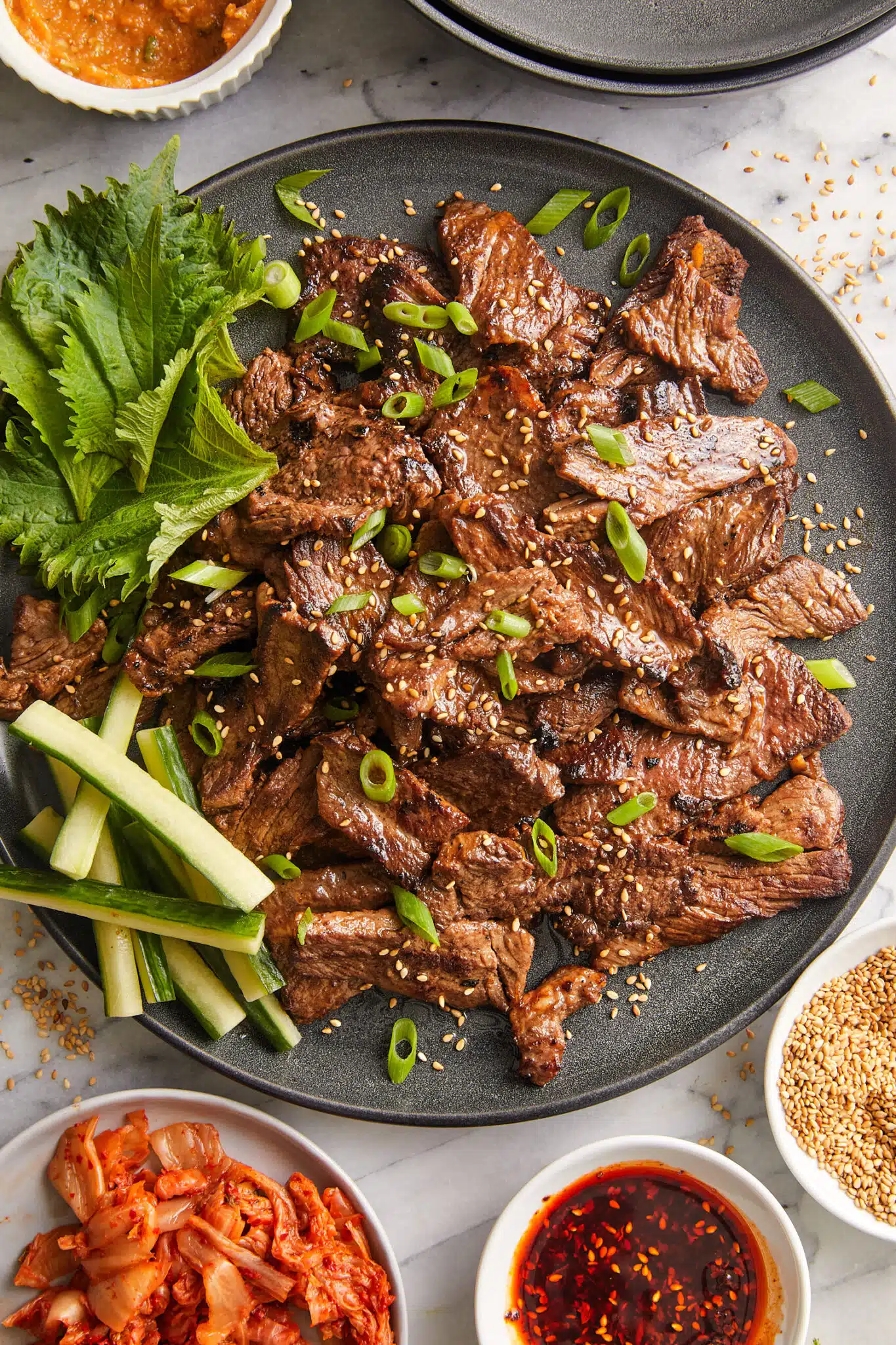
Ribeye or sirloin thinly sliced and marinated in Asian pear, soy sauce, sesame oil, garlic, and ginger — grilled quickly over high heat for the most deeply caramelized, most complex-flavored, and most uniquely delicious of all grilled steak recipes that draws from one of the world's most beloved grilling traditions. The Asian pear in the marinade is the secret ingredient that tenderizes while contributing a unique sweetness.
Ingredients:
- 2 lbs ribeye or sirloin, sliced ¼ inch thin (partially freeze for easier slicing)
- Bulgogi marinade: ½ Asian pear, grated, ¼ cup soy sauce, 2 tablespoons sesame oil, 3 tablespoons brown sugar, 5 cloves garlic minced, 1 tablespoon fresh ginger grated, 2 green onions sliced, 1 teaspoon black pepper
- Steamed rice, lettuce wraps, sesame seeds, sliced green onions for serving
Instructions:
- Slice beef thinly — partially freeze (30-45 minutes in the freezer) for the most consistent ¼-inch slices that are very difficult to achieve with completely unfrozen beef. The thin slicing is essential to authentic bulgogi — thicker slices don't caramelize as effectively or absorb the marinade as thoroughly. Grate Asian pear directly into the marinade — the enzymes in Asian pear are among the most effective natural meat tenderizers and distinguish authentic Korean bulgogi from inferior versions using apple or other fruit substitutes.
- Marinate sliced beef for 30 minutes to 4 hours. Don't marinate for longer as the fruit enzymes continue breaking down the meat fibers and can make the texture unpleasant. Pat the marinated beef reasonably dry before grilling — some marinade remaining on the surface is fine and will caramelize beautifully, but excessive liquid causes steaming.
- Grill over very high heat for 1-2 minutes per side only — the thin slices cook through almost immediately and the goal is maximum caramelization in minimum time. Use a grill pan, grill basket, or the actual grill grates. The sugar in the marinade creates extraordinarily beautiful caramelization — the pieces should look deeply golden-brown to slightly charred in places.
- Serve over steamed white rice with sesame seeds and green onions scattered across the top. Alternatively serve with lettuce cups for wrapping individual portions with rice and a dab of gochujang sauce — this DIY wrapping style is the traditional Korean way to eat bulgogi and is one of the most fun and interactive eating experiences at any Father's Day dinner table.
7. Hanger Steak with Red Wine Reduction
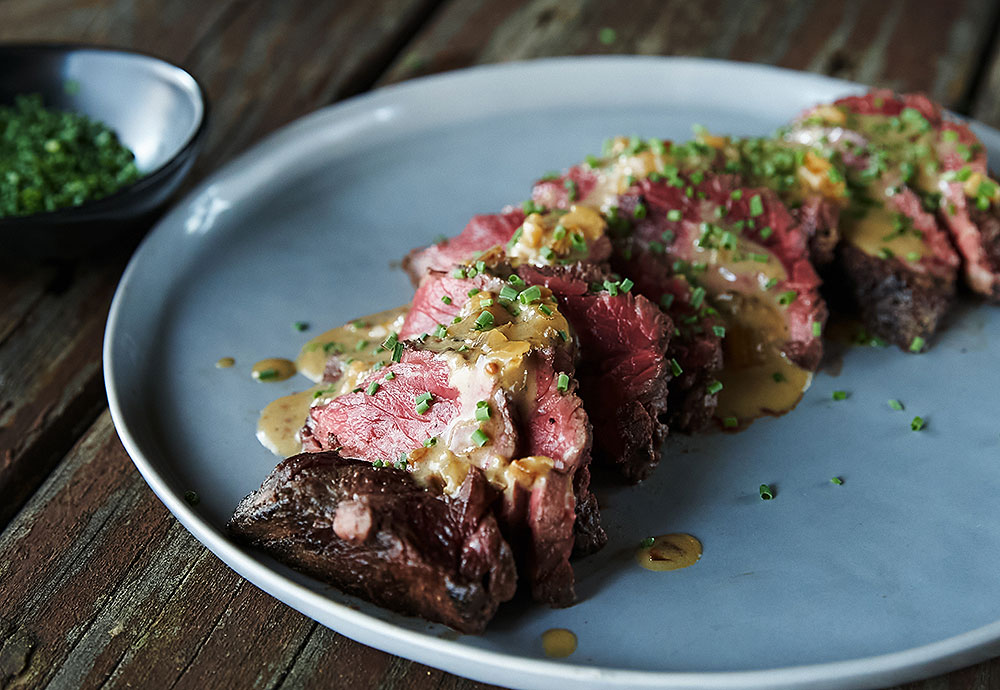
Hanger steak — the most prized and most flavorful butcher's cut that was historically kept by butchers themselves — grilled to medium-rare and served with a simple red wine and shallot reduction that complements its extraordinary mineral, beefy character. One of the most restaurant-quality and most sophisticated grilled steak recipes in the collection for the culinary-adventurous dad who appreciates lesser-known cuts.
Ingredients:
- 2 hanger steaks (8-10 oz each), connective tissue center membrane removed by the butcher
- Coarse salt, black pepper
- Red wine reduction: 2 shallots minced, 1 cup dry red wine, 1 cup beef stock, 2 tablespoons butter, fresh thyme, salt and pepper — cooked down to 3 tablespoons
Instructions:
- Ask the butcher to remove the center connective tissue membrane from the hanger steak — this membrane runs down the center of the cut and is extremely chewy if left in. Most good butchers will do this at no charge when asked. The two halves of hanger steak without the membrane are excellent, tender, and intensely flavorful. Season generously with coarse salt and black pepper at least 30 minutes before grilling.
- Make the red wine reduction: sauté minced shallots in butter until soft and golden. Add red wine and thyme and simmer until reduced by half. Add beef stock and simmer until reduced to approximately 3 tablespoons of a glossy, concentrated sauce. Whisk in 1 tablespoon cold butter at the very end off the heat to create a silky, glossy finish. Season with salt and pepper. This sauce can be made completely ahead and rewarmed gently.
- Grill hanger steak over high heat for 4-5 minutes per side for medium-rare. Hanger steak must be served medium-rare or medium — it becomes very tough at medium-well or well done, more than virtually any other cut. Target 130°F internal temperature. Rest 8 minutes.
- Slice thinly against the grain. Spoon the warm red wine reduction sauce across the sliced steak in a thin thread. The combination of hanger steak's extraordinary mineral, almost organ-like beefy depth with the classic French red wine shallot reduction is one of the most genuinely bistro-quality at-home grilled steak experiences possible.
6. Herb-Marinated Tri-Tip

Tri-tip — the California BBQ cut that's largely unknown outside the American West but has a devoted following wherever it's discovered — marinated in rosemary, garlic, red wine, and olive oil and grilled low-and-slow then finished over high heat. One of the most economical and most family-friendly grilled steak recipes that produces tender, flavorful slices for a crowd from a single large roast on the grill.
Ingredients:
- 1 tri-tip roast (2-3 lbs)
- Herb marinade: ¼ cup olive oil, ¼ cup dry red wine, 6 cloves garlic minced, 2 tablespoons fresh rosemary finely chopped, 1 tablespoon fresh thyme, salt and black pepper
Instructions:
- Marinate tri-tip for 4-24 hours in the herb marinade, turning once. The tri-tip is triangular with three distinct sections of muscle fiber running in different directions — this variable grain is what makes slicing technique especially important at serving time. Locate the grain direction in each section before grilling. Remove from marinade and pat completely dry before grilling.
- Use a two-zone grill setup: high direct heat on one side, no heat on the other. Begin the tri-tip over indirect heat, lid closed, for 25-35 minutes until the internal temperature reaches 115-120°F. This indirect cooking phase develops even cooking throughout before the final sear.
- Move to direct high heat and sear all surfaces — each flat side and the rounded edge — for 3-4 minutes each until deeply golden and caramelized. Target 130°F internal for medium-rare. Total cooking time for a 2-3 lb tri-tip is 40-50 minutes. Rest 15 minutes — the large roast format requires more resting time than individual steaks.
- Slice against the grain — because the grain runs in different directions in different sections of the tri-tip, divide the roast at the point where the grain direction changes and slice each section independently against its own grain. Sliced tri-tip arranged on a platter with the rich marinade juices poured over the top is one of the most beautiful and satisfying presentations in all of grilled steak recipe collections.
5. Steakhouse-Style T-Bone
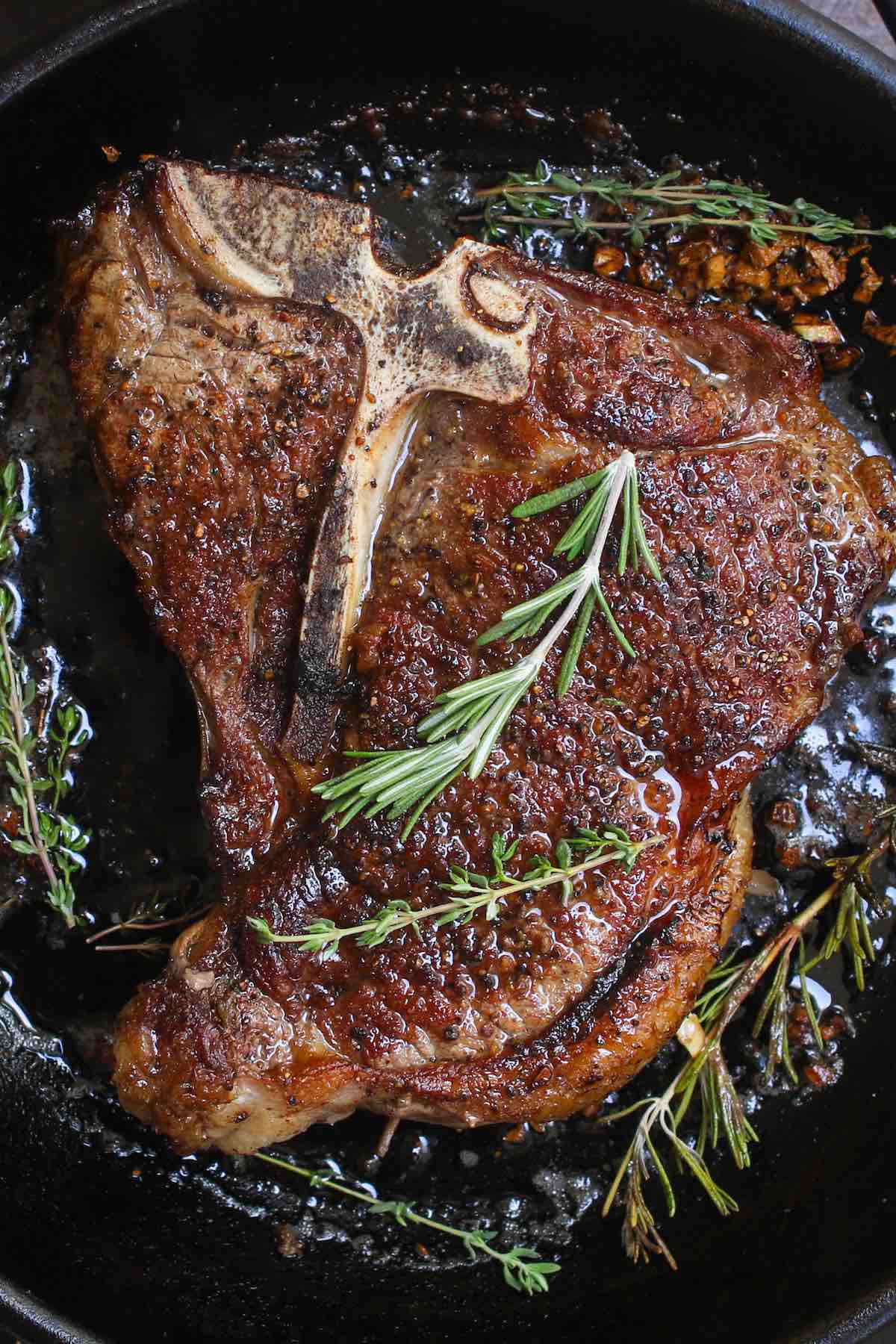
A massive T-bone steak — containing both the New York strip on one side of the bone and the tenderloin on the other — grilled to perfection with the critical technique challenge of managing two different muscles cooking at different rates. One of the most impressive and most genuinely satisfying grilled steak recipes that is the closest any home grill cook can come to the classic American steakhouse experience.
Ingredients:
- 1 T-bone or Porterhouse steak, 1¾-2 inches thick (24-28 oz)
- Very generous coarse salt and black pepper
- 2 tablespoons butter, 2 garlic cloves, thyme for finishing
- Lemon wedges and flaky salt for serving
Instructions:
- A T-bone contains two muscles separated by the central T-shaped bone: the strip (the larger section) and the tenderloin (the smaller section). The tenderloin cooks faster than the strip due to its lower fat content and proximity to the bone — this means the tenderloin side needs to be positioned away from the hottest part of the grill to prevent it from overcooking while the strip catches up. Season very generously on all surfaces including the edges.
- Grill with the strip side over direct high heat and the tenderloin side slightly toward the cooler zone if using a two-zone setup. Grill 5-6 minutes on the first side without moving. Flip once. Grill 4-5 more minutes. During the last 2 minutes, position the steak on its edge with the strip side down to render and crisp the fat cap while keeping the tenderloin section elevated and away from the highest heat.
- Add butter, garlic, and thyme to the grill surface beside the steak — the butter will foam and brown in the grill's ambient heat. Baste the steak with this butter using a spoon or brush during the final minute. Remove at 130°F in the strip section — the tenderloin will be slightly more cooked at this point, which is acceptable given the different fat content of each muscle.
- Rest 10-12 minutes. Present the entire steak whole to Dad at the table for maximum visual impact before carving. Carve tableside: cut both muscles away from the T-bone first, then slice each muscle against its own grain. The tenderloin side slices into small, buttery rounds while the strip side slices into longer, firmer strips — both on the same plate is one of the most extraordinary steak eating experiences possible.
4. Jalapeño Citrus Skirt Steak Tacos

Skirt steak marinated in jalapeño, citrus, and cumin — grilled to a perfect char and served in warm corn tortillas with mango salsa, avocado crema, and pickled red onions. One of the most vibrant, most crowd-pleasing, and most genuinely exciting grilled steak recipes for a Father's Day celebration that wants to go beyond the traditional backyard cookout into genuinely extraordinary territory.
Ingredients:
- 2 lbs skirt steak
- Marinade: juice of 3 limes and 2 oranges, 2 jalapeños minced, 4 garlic cloves minced, 1 teaspoon cumin, 1 teaspoon chili powder, 2 tablespoon olive oil, ¼ cup cilantro chopped
- Small corn tortillas, warmed
- Mango salsa: 1 ripe mango diced, ½ red onion diced, 1 jalapeño minced, juice of 1 lime, ¼ cup cilantro — combined
- Avocado crema: 2 avocados, ½ cup sour cream, juice of 2 limes, 1 garlic clove, salt — blended smooth
Instructions:
- Marinate skirt steak for 2-4 hours maximum — the citrus acid works quickly and over-marinating creates an unpleasantly mushy surface texture. Make mango salsa and avocado crema while the steak marinates — both improve with 30+ minutes of resting time before serving. The mango salsa's sweetness is the perfect counterpoint to the charred, jalapeño-forward steak and is what makes this taco recipe genuinely extraordinary rather than ordinary.
- Remove steak from marinade and pat completely dry. Grill over maximum heat for 2-3 minutes per side — skirt steak is thin and cooks very quickly. Target internal temperature of 125-130°F. The exterior should have some char marks and the steak should smell intensely of the citrus and jalapeño marinade caramelizing in the heat.
- Rest 5 minutes. Slice very thin against the grain — ⅛-inch slices maximize the proportion of flavorful caramelized crust in each bite and are what produces the tender taco filling rather than tough, chewy strips. Warm corn tortillas directly on the grill for 20-30 seconds per side.
- Build each taco: a generous spoonful of avocado crema on the tortilla, then sliced steak, then a spoonful of mango salsa on top. Add pickled red onions and extra cilantro. A squeeze of fresh lime over the assembled taco at the last moment before eating. This Father's Day grilled steak taco recipe produces the most festive, most colorful, and most genuinely exciting taco experience achievable at a home cookout.
3. Prime Rib on the Grill
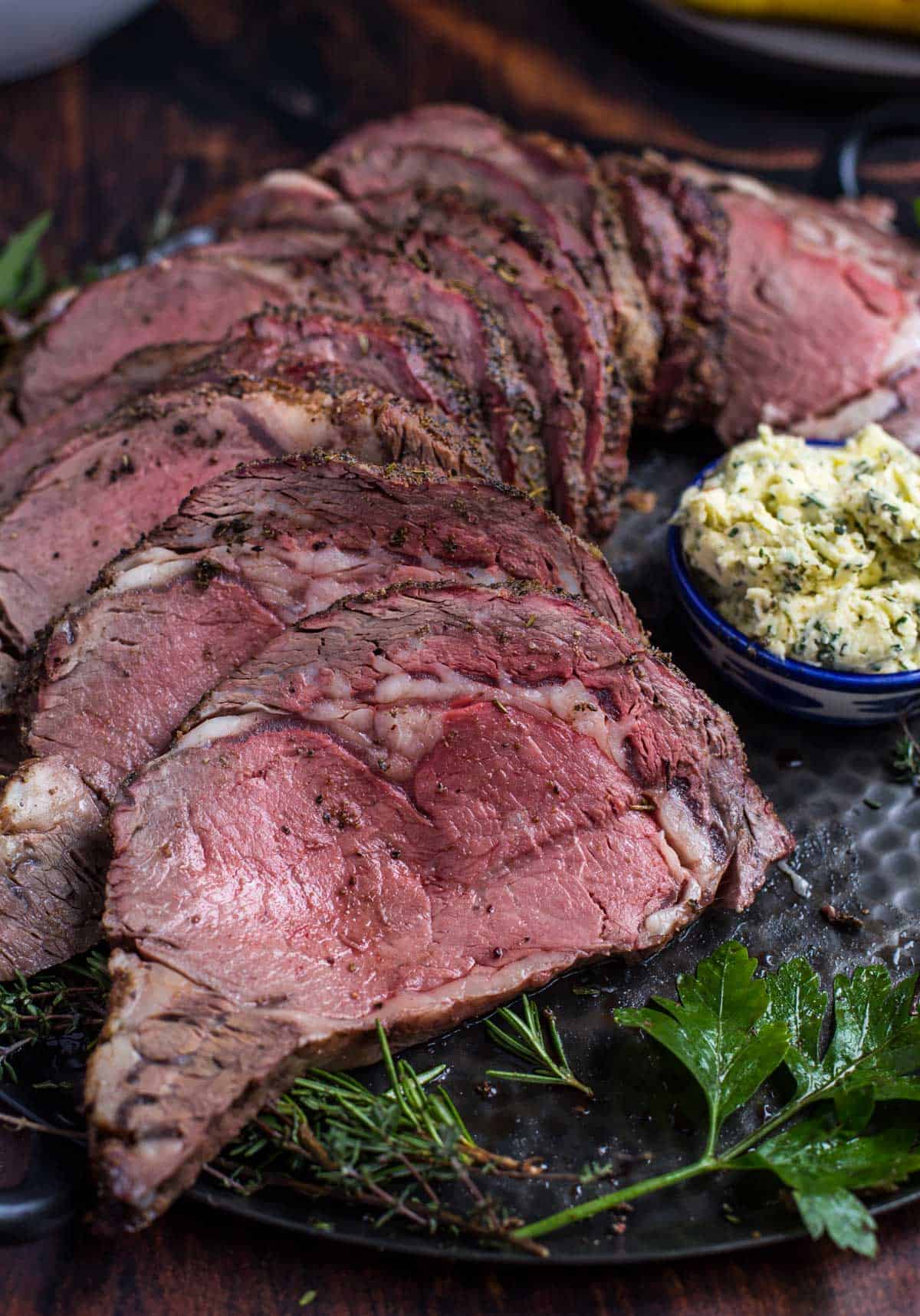
A full bone-in prime rib roast cooked using indirect heat on the grill with a herbed dry rub — the most ambitious, most impressive, and most genuinely spectacular of all grilled steak recipes that produces an extraordinary holiday-worthy centerpiece from the backyard grill. Prime rib on the grill has a distinct smoky character that oven-roasted prime rib cannot replicate.
Ingredients:
- 1 bone-in prime rib roast (3-4 bones, 7-9 lbs)
- Dry rub: 3 tablespoons coarse salt, 2 tablespoons black pepper, 2 tablespoons garlic powder, 1 tablespoon dried rosemary, 1 tablespoon smoked paprika — applied the night before
- Horseradish cream sauce for serving
Instructions:
- Apply the dry rub the night before and refrigerate uncovered on a wire rack — the overnight dry brine and air drying produces the most flavorful, most perfectly seasoned, and best-crusted prime rib possible. Remove from refrigerator 2 hours before grilling to temper completely. A completely room-temperature roast cooks significantly more evenly than a cold one of this size.
- Set up a two-zone grill for indirect cooking — all burners on one side only for gas, coals pushed to the sides for charcoal. Target 325°F in the indirect zone. Place the prime rib bone-side-down on the indirect heat side with the fatty fat cap facing toward the heat source. Add wood chips (oak or hickory) to the heat source for smoke. Close the grill lid.
- Cook for approximately 15 minutes per pound for medium-rare, monitoring with a probe thermometer. A 7-lb roast takes approximately 1 hour 45 minutes. Target 120°F internal temperature — the prime rib will rise approximately 10°F during the 30-minute rest, reaching the ideal 130°F serving temperature.
- Rest 30 full minutes tented with foil — this is the most important and most commonly rushed step for prime rib. After resting, sear the exterior over direct high heat for 3-4 minutes for a final crust if desired. Carve tableside, cutting between the rib bones and then slicing each bone section. The grill-smoked prime rib is the single most impressive Father's Day grilled steak centerpiece possible.
2. Steakhouse Butter Board
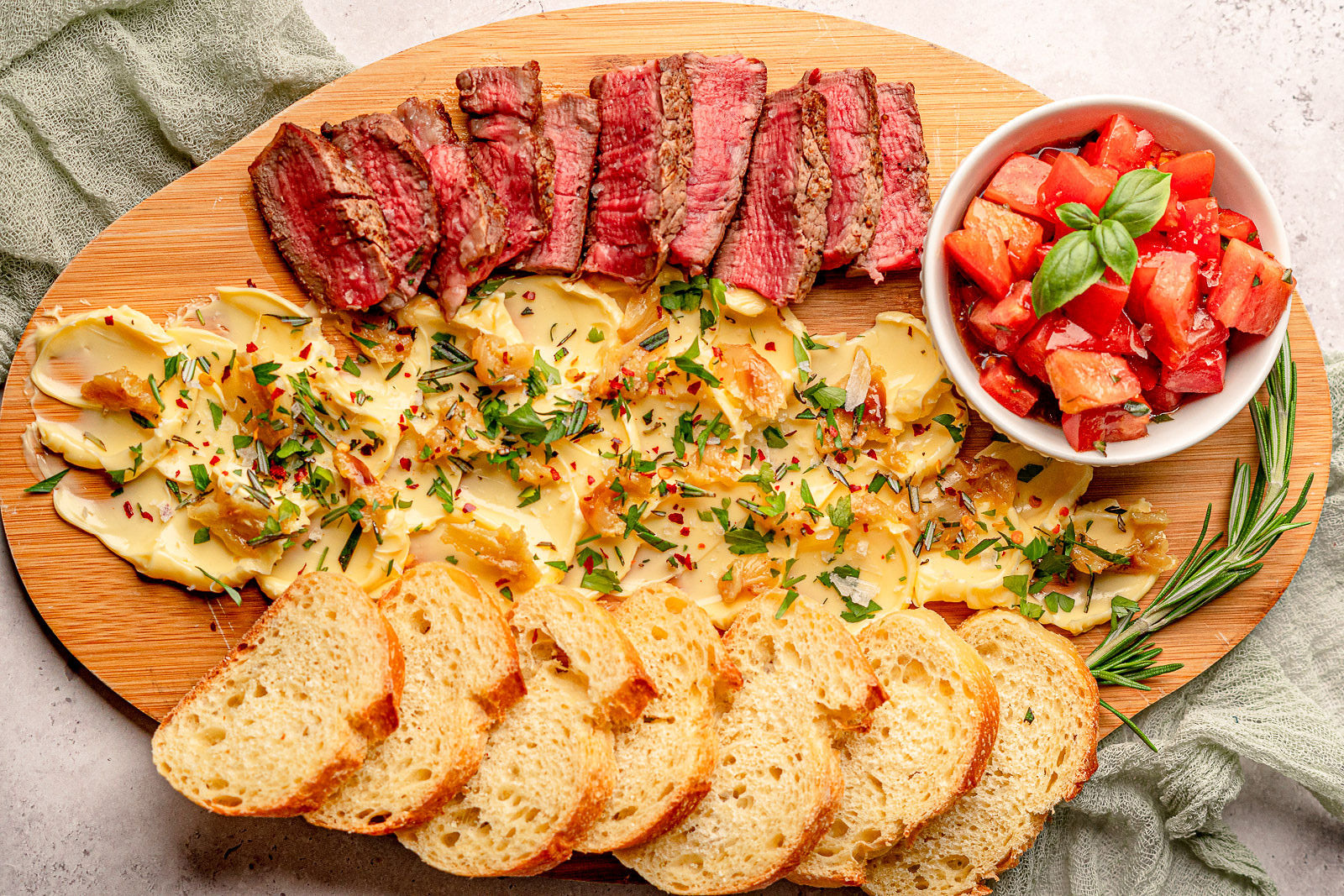
A complete set of four compound butters — garlic herb, blue cheese, truffle, and smoked chili — arranged on a wooden board with sliced grilled steaks for the ultimate steakhouse-style Father's Day presentation. Creating multiple compound butters turns any grilled steak into a multi-dimensional, choose-your-own-adventure steakhouse experience at home.
Ingredients:
- 3-4 grilled steaks of any cut and preparation (use the classic ribeye recipe as the base)
- Garlic herb butter: 4 tablespoon butter + garlic + chives + rosemary
- Blue cheese butter: 4 tablespoon butter + 1 oz blue cheese + chives
- Truffle butter: 4 tablespoon butter + 1 teaspoon truffle oil + pinch salt
- Smoked chili butter: 4 tablespoon butter + 1 teaspoon smoked paprika + ½ teaspoon chipotle powder + pinch brown sugar
Instructions:
- Make all four compound butters up to 3 days before Father's Day — they keep refrigerated and are actually better after 24 hours as the flavors develop and the butter firms to an easily sliceable consistency. Roll each butter in plastic wrap into a log and refrigerate. Label each log clearly so there's no confusion at serving time.
- Grill steaks using the classic ribeye technique or any method in this collection. While steaks rest, slice each compound butter log into attractive ½-inch rounds and arrange on a small wooden board or marble slab — one neat row of each variety, clearly separated with labels or small sprigs of the herbs they contain.
- Slice rested steaks and arrange on the large serving board or platter. Place the compound butter board alongside the sliced steaks. Each person selects their preferred butter and places it directly on their steak portion.
- The compound butter board transforms a straightforward grilled steak dinner into an interactive, sophisticated steakhouse experience — the conversation about which butter to choose, the tasting of combinations, and the personalization of each plate is part of what makes this one of the most engaging and memorable Father's Day dinner experiences possible. All grilled steak recipe basics apply — the butters are the celebration that wraps around the fundamentals.
1. The Complete Grilling Guide for Perfect Steak Every Time
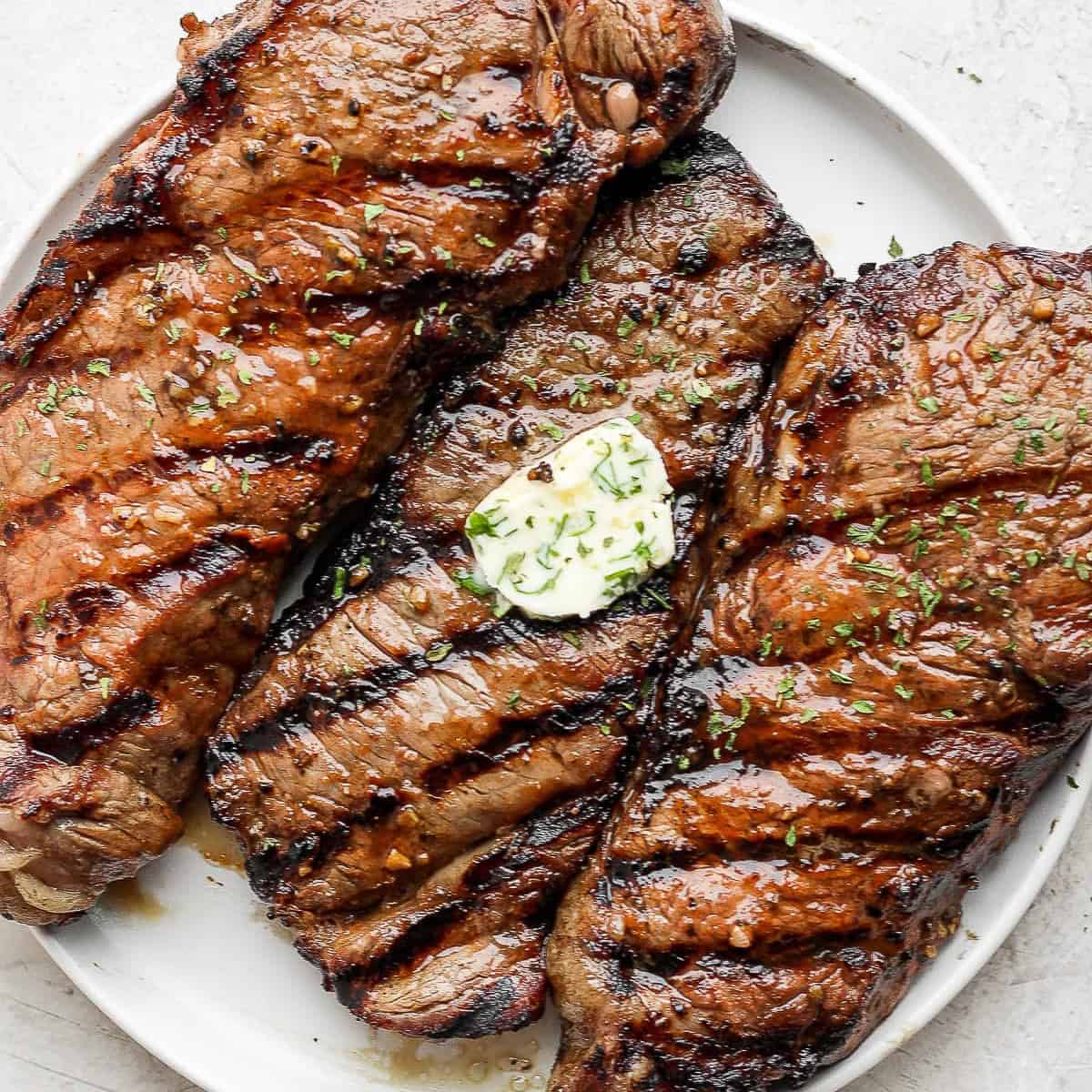
The definitive guide to grilling any steak perfectly every time — covering the most important cuts and their characteristics, the exact temperatures for every doneness level, the universal technique principles that apply regardless of which grilled steak recipe you choose, and the most common mistakes that cause home grill cooks to produce disappointing steaks despite using quality ingredients.
Steak Doneness Temperature Guide:
- Blue/Rare: 115-120°F — cool, red center with just slight warmth; almost raw
- Rare: 120-125°F — warm red center; soft to the touch
- Medium-Rare: 130-135°F — warm pink-red center; slight spring; the ideal for most cuts
- Medium: 135-145°F — warm pink center; more spring; appropriate for leaner cuts
- Medium-Well: 145-155°F — slightly pink center; mostly firm; not recommended for premium cuts
- Well Done: 160°F+ — no pink; very firm; loses most of the qualities that make quality steak worth buying
- Remove from heat 5°F below target — carryover cooking during the rest period raises the temperature by 5-10°F
Instructions:
- The five rules for perfect grilled steak: (1) Start at room temperature — 45-60 minutes out of the refrigerator for even cooking; (2) Pat completely dry before grilling — wet surfaces steam rather than sear; (3) Season more aggressively than seems necessary — the salt crust is what creates the extraordinary exterior; (4) Flip only once — frequent flipping prevents the Maillard reaction crust from fully developing; (5) Rest properly before cutting — minimum 5 minutes for thin cuts, 10-15 minutes for thick ones. Violating any of these rules produces noticeably inferior results.
- Choose the right cut for the occasion: Ribeye for maximum flavor and richness (Father's Day showstopper). New York strip for the most classically beefy, firm-textured steak. Tenderloin for the most tender but least flavorful. Flank and skirt for the most economical and most intensely flavored marinated options. Hanger for the most prized flavor per dollar. T-bone and Porterhouse for the most theatrical presentation that combines two muscles in one impressive cut.
- The grill setup matters as much as the cooking: A clean, well-oiled, properly preheated grill is 50% of the result before any technique is applied. Clean grates prevent sticking and ensure proper char marks. Well-oiled grates prevent the steak's daily protein needs from bonding to the metal. Proper preheating (10-15 minutes at maximum heat for a gas grill) ensures the grates are hot enough to sear the instant the steak makes contact rather than gradually heating with the steak on it, which produces steamed-gray exteriors instead of golden-brown crusts.
- Use a thermometer — always: The touch test and time-based doneness guides are useful approximations but a $15 instant-read thermometer is the only completely reliable method for hitting exact doneness on every cut, every thickness, every time. The investment pays for itself on the first Father's Day steak that arrives at the table exactly as requested rather than slightly over or under. Browse our best Father's Day recipes for complete Father's Day dinner menu inspiration beyond the steak centerpiece.
FAQs About Grilled Steak Recipes
What is the best cut of steak for grilling?
Ribeye is the most universally beloved grilling cut due to its high fat marbling that keeps it juicy and adds extraordinary flavor. New York strip is the most classic steakhouse cut with a firmer texture and very bold beefy flavor. For budget-conscious grilling, flank and skirt steak offer exceptional flavor at significantly lower price points when properly marinated and sliced against the grain. According to culinary science, the fat marbling within the muscle fibers is the primary determinant of flavor and juiciness in grilled steak — which is why USDA Prime and Choice grades produce noticeably better results than Select grade for the same cooking technique.
How do you keep grilled steak juicy?
The three most important factors for juicy grilled steak are: (1) not cooking past medium-rare to medium, as higher temperatures cause the muscle proteins to contract and squeeze out moisture; (2) resting properly after grilling, which allows the squeezed-out juices to redistribute back through the muscle fibers; and (3) slicing against the grain, which shortens the muscle fibers and prevents them from acting as long straws that squeeze juice out when chewed. For more grilling inspiration, see our best backyard BBQ recipes.
Should you marinate steak before grilling?
It depends on the cut. Premium cuts like ribeye, New York strip, and tenderloin don't need marinating — their own fat content provides sufficient flavor and tenderness and marinades often mask rather than enhance their natural qualities. Tougher cuts like flank, skirt, and hanger benefit enormously from marinades that both add flavor and tenderize through acidic ingredients. For all grilled steak recipes, a dry brine of salt applied hours before cooking universally improves flavor and crust quality regardless of cut.
What temperature should I grill steak at?
Direct high heat — 450-550°F — is correct for most steaks up to 1 inch thick. Steaks 1½ inches and thicker benefit from a two-zone approach: sear over direct high heat first, then finish over indirect medium heat, or use the reverse sear method (low indirect heat first, then high-heat sear). The goal is always the same: maximum crust formation with precise interior doneness. For more outdoor cooking inspiration, browse our Memorial Day grilling meal prep.
Share This Post!
If you loved these grilled steak recipes, share this post with every grill master who wants to make the most perfect Father's Day steak dinner! Pin it, share it on Facebook, or send it to the family member who runs the grill every Father's Day. 🥩🔥✨




Comments
No Comments