
Tuesday nights are my chaos nights. The kids are home, my husband gets in late, and I have about 30 minutes before everyone starts wandering into the kitchen asking what's for dinner. This garlic butter shrimp linguine is what I cook on Tuesday nights — and most other nights when I need something good without a lot of thinking involved.
What makes it work is the sauce. Butter, garlic, a splash of white wine or chicken broth, a hit of heavy cream, Parmesan that melts right in — it sounds involved but the whole thing comes together while the pasta drains. The shrimp take about four minutes. The sauce is done in ten. I've made this probably thirty times now and I still actually look forward to it, which is not something I can say about most weeknight recipes.
My husband is the seafood person in this house. The first time I made this, he had two full portions and then stood over the pot eating the last of the sauce with a piece of bread. Saad picked out every single shrimp and ate them plain with lemon, which is completely typical of him. Either way the pan was empty, so I'm calling it a win. If you want a no-cook shrimp option for warmer evenings, my Street Corn Chicken Chili isn't that — but it's another weeknight dinner that disappears just as fast at my table.
One thing worth saying upfront: reserve your pasta water before you drain the pot. I forgot it on my second attempt and the sauce went thick and gluey. That starchy water is what keeps everything silky. I now keep a mug sitting right next to the pot so I physically cannot forget it. It's a two-second habit that makes a real difference.
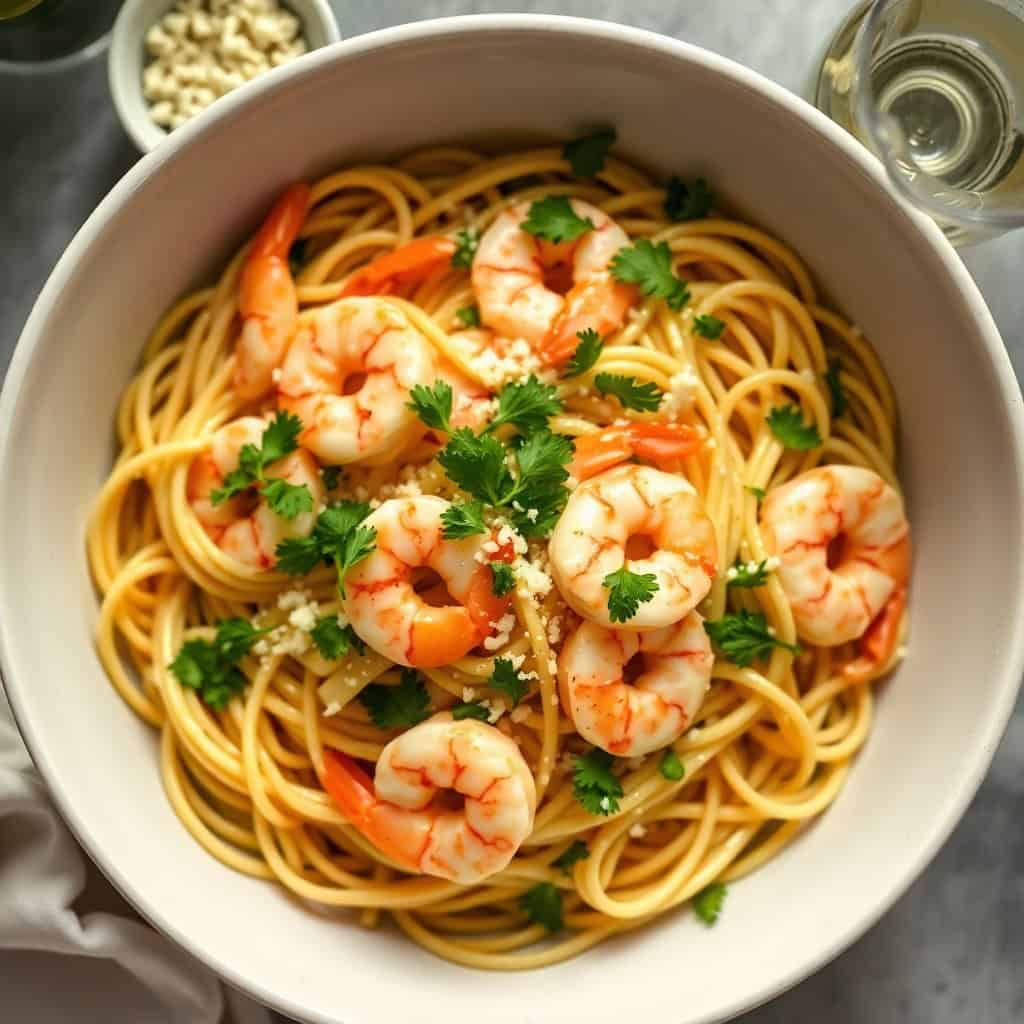
Why You'll Love This Recipe
- On the table in 30 minutes: I start boiling the pasta water and by the time the linguine is al dente, the sauce is ready too. Everything finishes at roughly the same moment, which almost never happens with pasta dishes. On the nights I'm really pressed, I use pre-peeled frozen shrimp thawed under cold running water — that saves another five minutes without affecting the final result.
- One skillet for the sauce: After the shrimp come out, every bit of flavor stuck to the pan gets lifted up with the wine or broth. That fond — the brown bits at the bottom — is where a lot of the depth comes from. I don't own fancy cookware. A regular heavy skillet from Walmart does this perfectly fine.
- The garlic butter sauce is genuinely good: Butter, garlic, a little cream, Parmesan — it coats the pasta without sitting heavy. I've had creamy pasta dishes that weigh you down for an hour afterward. This one doesn't do that. The lemon at the end keeps the whole thing from feeling too rich, which matters when you're eating on a weeknight and not a holiday.
- Flexible with what you have: No white wine? Use chicken broth. No fresh parsley? Skip it or use a pinch of dried. Out of linguine? Spaghetti or fettuccine both work fine. I've made this with whatever was in the pantry more times than I can count, and it's always come together.
- Looks more considered than it is: Pasta in a glossy cream sauce with pink shrimp and fresh parsley on top genuinely looks like something from a restaurant. I mean this practically — on nights when everyone's tired and dinner needs to feel like a real meal, this delivers that without the effort usually required to pull it off.
Ingredients
- 8 oz linguine pasta
- 1 lb large shrimp, peeled and deveined (fresh or frozen-thawed)
- 3 tablespoons unsalted butter, divided
- 4 cloves garlic, minced
- ¼ cup dry white wine (or chicken broth for a non-alcoholic version)
- ½ teaspoon crushed red pepper flakes (optional)
- ½ cup heavy cream (or half-and-half in a pinch)
- ¼ cup freshly grated Parmesan cheese, plus more for serving
- Juice of half a lemon
- Salt and black pepper, to taste
- 2 tablespoons fresh flat-leaf parsley, chopped (for garnish)
- Lemon wedges, for serving
Directions
- Cook the linguine: Bring a large pot of well-salted water to a boil and cook the linguine until al dente, usually 9–11 minutes. Before you drain it, scoop out about 1 cup of pasta water and set it aside in a mug — you'll need it to loosen the sauce later. Drain and set the pasta aside.
- Cook the shrimp: While the pasta cooks, pat the shrimp completely dry with paper towels. Wet shrimp steam instead of sear, and you want a little color on them. Season with salt, pepper, and the red pepper flakes if using. Melt 1 tablespoon of butter in a large skillet over medium-high heat, add the shrimp in a single layer, and cook 2 minutes per side until pink and just opaque. Remove from the skillet and set aside.
- Build the garlic butter base: Lower the heat to medium and add the remaining 2 tablespoons of butter to the same skillet. Once melted, add the minced garlic and cook for about 1 minute, stirring the whole time, until fragrant but not brown. Burned garlic makes the entire sauce bitter — if it's moving too fast, slide the pan off the heat for a few seconds.
- Deglaze and simmer: Pour in the white wine or chicken broth, scraping up any browned bits from the bottom of the pan. That's flavor — don't leave it. Let the liquid simmer for 2–3 minutes until reduced by about half.
- Add the cream and Parmesan: Stir in the heavy cream and let it cook for 2–3 minutes until the sauce thickens slightly. Add the grated Parmesan and stir until it melts in smoothly. Squeeze in the lemon juice and taste — adjust salt, pepper, or lemon as needed.
- Combine everything: Return the shrimp to the skillet, then add the drained linguine. Toss with tongs, adding the reserved pasta water a few tablespoons at a time until the sauce coats the pasta evenly. Start with 2–3 tablespoons and go from there.
- Serve immediately: Plate the pasta and top with fresh parsley, extra Parmesan, and lemon wedges on the side. This one doesn't hold well — the sauce tightens up as it cools, so eat it straight from the pan while it's hot.

Tips for Success
- Dry the shrimp before they hit the pan: I skipped this step the first few times and couldn't figure out why my shrimp were pale and a little rubbery. Moisture becomes steam in a hot pan, and steam prevents any browning at all. A quick press with paper towels takes about 20 seconds and makes a real difference in the texture and color you end up with.
- Don't walk away from the garlic: Garlic goes from fragrant and golden to dark and bitter in about 30 seconds on a hot burner. I keep the heat at medium when I add it and stir the entire time. If it starts browning too fast, I slide the pan off the heat for a moment. Burned garlic isn't a minor issue — it flavors the whole sauce and you can't fix it.
- Grate the Parmesan yourself: Pre-shredded Parmesan from the bag has anti-caking powder in it, which makes it clump instead of melt into the sauce. I know it's one extra step, but a block from Costco or the deli counter and a box grater takes about 60 seconds. Room-temperature cheese also melts more smoothly than cold straight from the fridge — I let mine sit out for about 10 minutes before I start cooking.
- Reserve the pasta water before you drain: I've forgotten this step by getting distracted right at the end. The mug sitting next to the pot is now non-negotiable in my kitchen. That starchy water is what makes the sauce cling to the pasta instead of pooling at the bottom of the bowl. Plain water does not do the same thing — I've tried.
- Pull the shrimp the moment they're opaque: Shrimp overcook fast — we're talking seconds, not minutes. I take them off the heat as soon as they turn from translucent gray to pink and just barely opaque all the way through. They'll carry over from residual heat anyway, and they go back into a hot sauce later. Rubbery shrimp almost always means they cooked two minutes too long.
Variations
- Extra creamy version: Increase the heavy cream to ¾ cup and let it reduce a little longer before adding the Parmesan. This is the version I make when my husband specifically requests "the fancy pasta." It's noticeably thicker — closer to an Alfredo — and coats the linguine heavily. A simple green salad alongside balances it out well.
- Spicy Cajun version: Toss the shrimp in a tablespoon of Cajun seasoning before cooking — McCormick makes one you can find at any Walmart or grocery store. The butter sauce picks up all that smoky, spiced flavor from the pan and the result is a completely different dish. Still fast, but with a lot more heat and depth. I skip the lemon at the end with this version; it doesn't quite fit the flavor profile.
- Add vegetables: A couple of handfuls of baby spinach stirred in right after the cream sauce comes together wilts in about a minute and adds color and bulk without changing the flavor much. Halved cherry tomatoes added with the garlic also work well — they soften into the sauce and add a slight sweetness. This is how I stretch the dish when I'm feeding more than four people.
- Lemon-forward version: Double the lemon juice and add the zest of a whole lemon along with it. This makes the dish noticeably brighter and cuts through the butter more aggressively. I make this version in summer when I want something that feels lighter even though the cream is still in there. A little fresh dill if you have it pairs well with both the shrimp and the extra lemon.
- Swap the pasta: Fettuccine works exactly the same way. Spaghetti is slightly thinner so the sauce coats it a bit differently — still good. I've used penne in a pinch and it becomes almost a different dish entirely, more of a saucy skillet pasta than a restaurant-style plate. Whatever long pasta you have in the pantry will get you there.
Serving and Storage
Serving
Serve this immediately, straight from the skillet. The sauce tightens up as it sits, so it's at its best the moment you toss everything together. I usually just bring the skillet to the table and serve from there so nobody's waiting while I plate individual portions. Set out extra Parmesan and lemon wedges — my husband always wants more of both. A simple green salad or some crusty bread is really all this needs alongside it. Saad always asks for garlic bread, which I make by slicing a baguette, spreading butter, and running it under the broiler for a couple of minutes.
Storage
Store leftovers in an airtight container in the fridge for up to 2 days. To reheat, put it in a skillet over medium-low heat with a splash of chicken broth or cream — about 2 tablespoons — and toss gently until warmed through. The microwave works in a pinch but the shrimp get rubbery and the sauce can separate. I don't recommend freezing this one: the cream sauce breaks when it thaws and the shrimp texture suffers significantly.
Frequently Asked Questions
Can I use frozen shrimp for this recipe?
Yes, and honestly frozen shrimp is what I use most of the time. Thaw them completely under cold running water for about 5 minutes, then pat them very dry before they hit the pan. The key is making sure they're not still icy in the center or sitting in residual water — if they are, they'll steam instead of sear and you'll lose any chance of that slightly golden exterior.
Can I make this without heavy cream?
Half-and-half works — the sauce will be a bit thinner but it still comes together. Whole milk is too thin and tends to break when the Parmesan goes in. If you want to skip dairy cream entirely, full-fat coconut cream is a workable swap; the flavor is different but not bad, just unexpected. I wouldn't call it traditional by any stretch, but it gets the job done.
Can I make this ahead of time?
Not really, if you want it at its best. The shrimp go rubbery when reheated and the sauce tightens considerably as it sits. What I do when I'm planning ahead is prep everything first — mince the garlic, thaw and dry the shrimp, measure out the cream and broth — so when it's time to cook I'm just assembling. The actual cooking from that point is about 20 minutes flat.
What can I substitute for the white wine?
Chicken broth is the straightforward swap and it works well. If you want to mimic the slight tartness of wine, add an extra squeeze of lemon juice at the end. I've also used a mix of broth and a teaspoon of white wine vinegar in a pinch — not identical but close enough that nobody at my table noticed the difference.
My sauce turned out too thick — how do I fix it?
That's exactly what the reserved pasta water is for. Add it a tablespoon at a time, tossing the pasta as you go — the starch in the water loosens the sauce without making it watery. If you forgot to save pasta water (I have done this multiple times), a small splash of warm chicken broth works as a backup. Add it slowly and stop when it looks right.
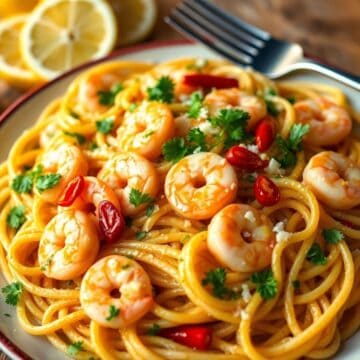
GARLIC BUTTER SHRIMP LINGUINE
Ingredients
- 8 oz linguine pasta
- 1 lb shrimp peeled and deveined
- 3 tablespoon unsalted butter
- 4 cloves garlic minced
- ¼ cup chicken broth or white wine
- ½ teaspoon red pepper flakes (optional)
- ½ cup heavy cream
- ¼ cup grated Parmesan cheese
- Salt and pepper to taste
- Fresh parsley, chopped for garnish
- Lemon wedges for serving
Instructions
- Cook linguine according to package directions, drain, and set aside.
- In a large skillet, melt butter over medium heat. Add minced garlic and cook until fragrant, about 1-2 minutes.
- Add shrimp to the skillet, season with salt, pepper, and red pepper flakes (if using). Cook until pink and opaque, about 4-5 minutes.
- Remove shrimp from skillet and set aside.
- Add chicken broth or white wine to the skillet, scraping any bits from the bottom. Let it simmer for 2-3 minutes.
- Stir in heavy cream and Parmesan cheese, cooking until the sauce thickens, about 3 minutes.
- Return shrimp and pasta to the skillet, tossing to coat in the sauce.
- Serve garnished with fresh parsley and lemon wedges.
Notes
- Make Ahead: You can cook the shrimp and store it in the refrigerator for up to 2 days. Reheat and toss with fresh pasta.
- Customizing the Flavor: Add a squeeze of lemon juice or a sprinkle of fresh basil for added flavor. For more spice, increase red pepper flakes.
- Serving Suggestions: Serve the linguine with extra grated Parmesan and a side of garlic bread for a complete meal.
- Storage Tips: Store leftover shrimp linguine in an airtight container in the refrigerator for up to 2 days. Reheat gently on the stove with a splash of cream.
This is one of those recipes I keep coming back to because it fits so many different kinds of evenings. When I need dinner fast and I don't want to think, it's this. When I want something that feels a little more considered — dinner with a friend dropping by last minute, or a night when my husband and I actually eat after the kids are down — it's still this. The same 30-minute recipe just sits alongside a glass of wine instead of a glass of water.
I'll be honest: this isn't authentic Italian pasta. Any Italian home cook would probably have strong opinions about the cream, and they'd be right. It's my version — weeknight-practical, built around ingredients from any grocery store, and good enough that my family asks for it repeatedly. That's the only bar I'm actually trying to clear. If you want something equally fast but completely different for another night, my Mexican Picadillo is another weeknight dinner that comes together quickly and goes fast at my table.
If this is your first time cooking shrimp, go slow on the heat and watch them closely. The moment they curl and turn pink, pull them. That confidence with shrimp will carry over — once you see how fast they cook, you stop being nervous about them. Make this on a Tuesday, or whatever night you just need something good without a lot of fuss. 🍝🧄✨
If you liked this, here are a few more recipes worth trying:
- Street Corn Chicken Chili — another weeknight dinner that comes together fast and feeds a crowd
- Mexican Picadillo Recipe — ground beef in a savory tomato sauce, great over rice
- Cinnamon Cheesecake Cookies — what I make when the kids




Comments
No Comments