
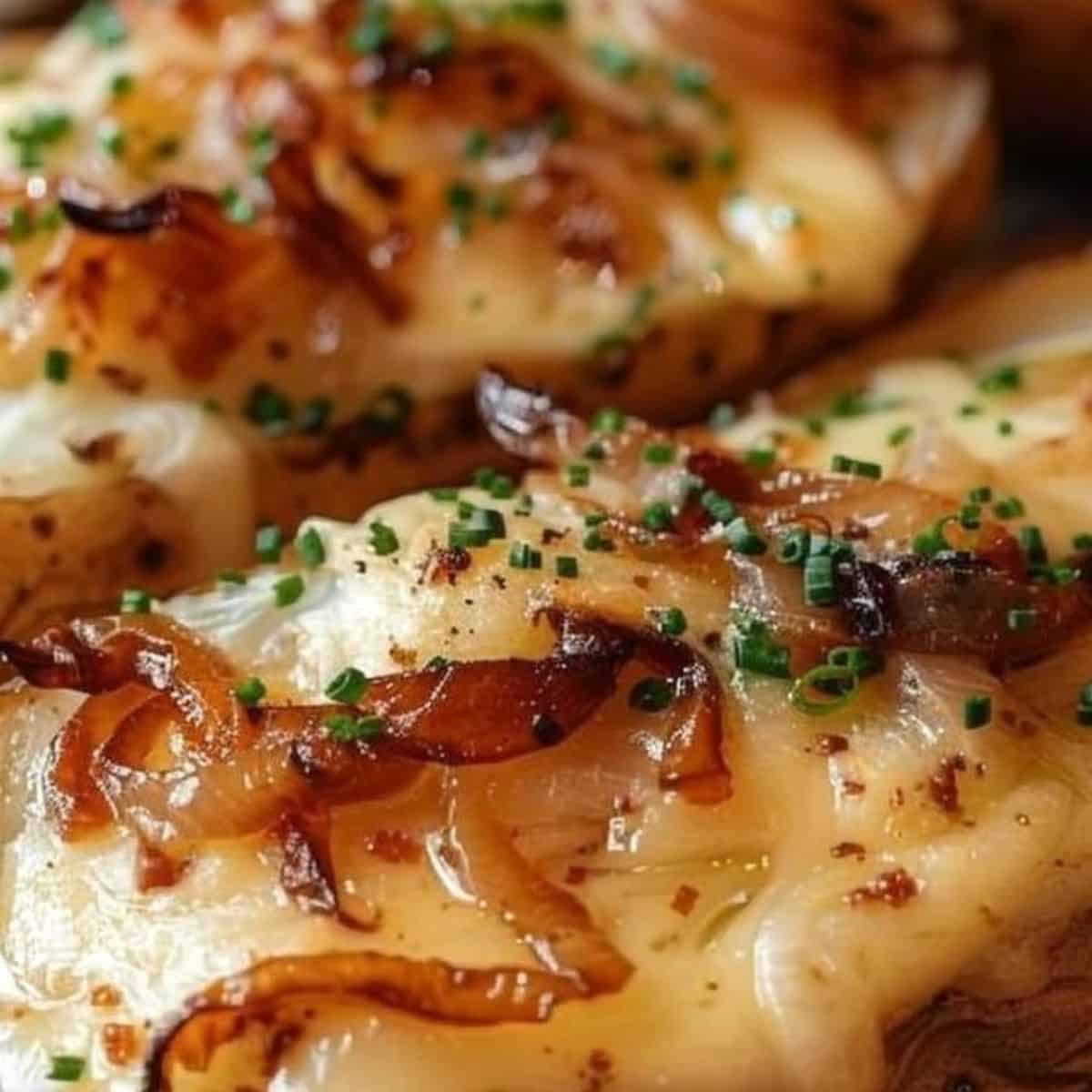
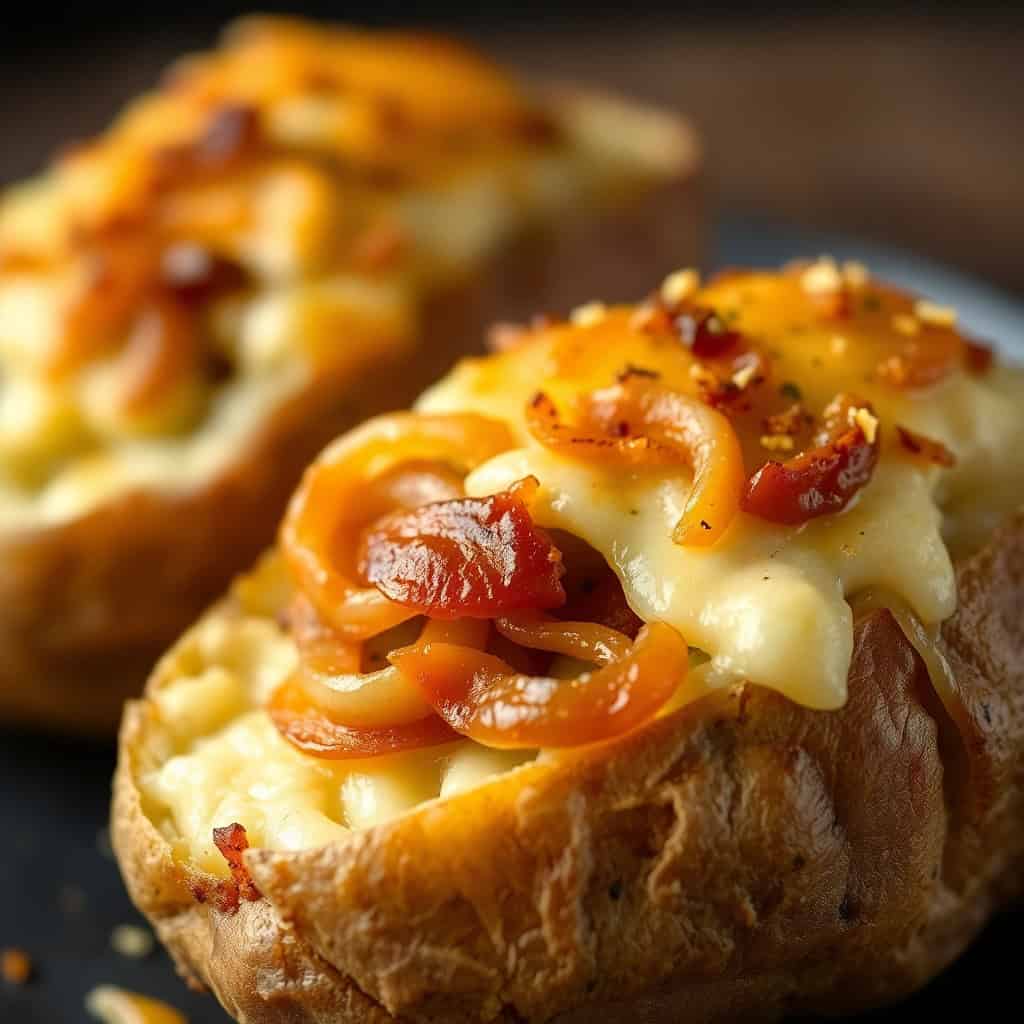
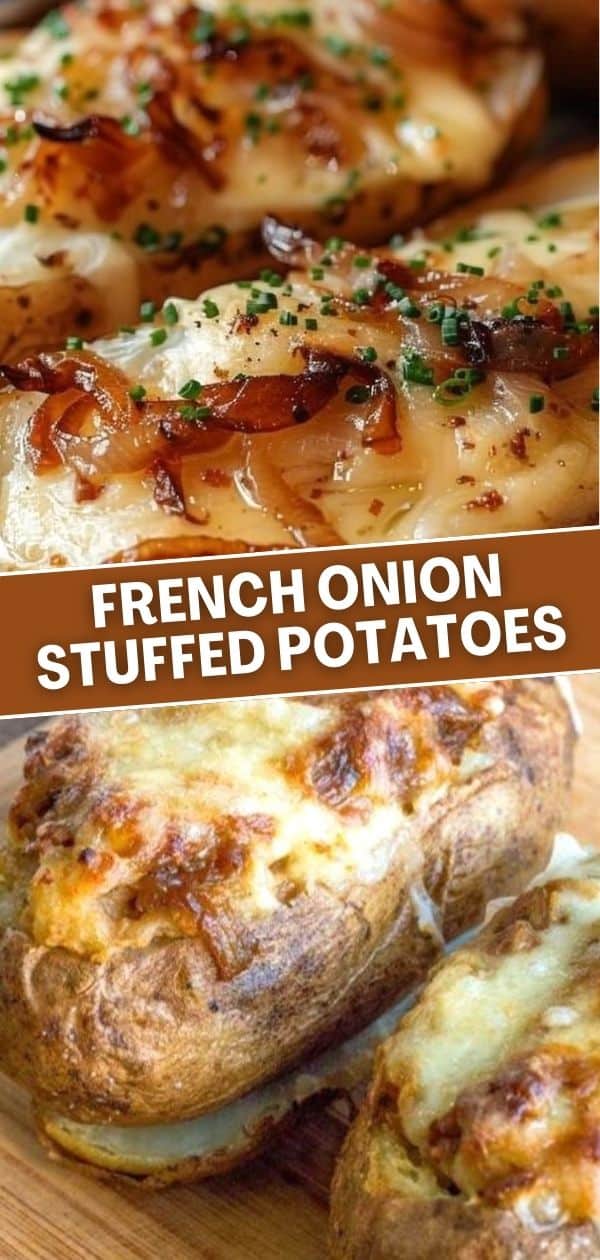
The stuffed potato that elevates the humble baked potato from a simple side dish into a complete, deeply satisfying main course or spectacular side — the one that combines the creamy comfort of twice-baked potato with the extraordinary richness of French onion soup in every single bite — is this French onion stuffed potato: a fluffy baked russet potato with its flesh scooped out and mashed together with sour cream, caramelized onions, and Gruyère cheese, then piped or spooned back into the potato shell, topped with more caramelized onions and more cheese, and baked again until golden and bubbling. It is the most impressive, most flavorful stuffed potato you will ever serve.
What makes French onion stuffed potatoes so deeply satisfying is the combination of two of the most comforting flavors in all of cooking — the fluffy, butter-soft interior of a properly baked russet potato and the deeply sweet, caramelized onions and nutty, melted Gruyère that are the defining flavors of French onion soup. Both components require patience and care to make properly, but the technique for each is completely accessible, and the result is a dish that tastes like it came from a restaurant kitchen while being entirely achievable at home.
This post covers the classic French onion stuffed potato in full detail — baking the potatoes, caramelizing the onions, preparing the filling, and the second bake — plus five variations including a loaded version, a spicy version, mini potato appetizers, a vegan option, and a vegetarian mushroom version. Find more potato inspiration in our easy French onion soup, our French onion meatballs, and our scalloped potatoes.
Let's make the most comforting, most deeply flavored stuffed potato your kitchen has ever produced!
WHY YOU WILL LOVE THIS RECIPE
- All the Flavor of French Onion Soup in the Most Comforting Form: French onion stuffed potatoes capture every defining quality of French onion soup — the deeply sweet, jammy caramelized onions; the rich, savory beef broth reduction; the golden, bubbly melted Gruyère cheese on top — and deliver them inside the most comforting, most satisfying vehicle available: a fluffy baked russet potato. The combination produces a dish that is simultaneously more substantial and more elegantly flavored than either component alone, and that feels genuinely special despite being made entirely from accessible ingredients.
- Versatile — Works as a Hearty Vegetarian Main or an Impressive Side: French onion stuffed potatoes are large enough and substantial enough to serve as a complete vegetarian main course — one large stuffed potato is a genuinely filling dinner when paired with a simple green salad. As a side dish, they are the kind of spectacular accompaniment that makes every guest at the table notice and comment. This dual-purpose quality makes them one of the most versatile recipes in the collection — usable for a casual vegetarian weeknight dinner or as an impressive side at a dinner party or holiday gathering.
- Make-Ahead Friendly — Prepare Everything in Advance: The entire recipe can be completed through the stuffing step — potatoes baked, filling made, potatoes stuffed — and the assembled, filled potatoes can be refrigerated for up to 24 hours before the second bake. This make-ahead approach transforms a 75-minute dinner into a 20-minute oven-to-table experience on the day of serving. I prepare these for dinner parties the morning of the event, refrigerate them all day, and slide them into the oven 20 minutes before guests are seated — the result looks and tastes as though I spent the entire afternoon cooking.
- The Caramelized Onions Are the Soul of the Entire Dish: The 25–30 minute low-and-slow caramelization of the onions is the step that elevates these stuffed potatoes from merely good to genuinely extraordinary. Properly caramelized onions — deeply golden, jammy, sweet, and almost melting — transform the potato filling from a plain cream-and-cheese mash into something with genuine depth, complexity, and the distinctive French onion character that makes this recipe unique. The caramelization cannot be rushed, and the patience invested in this step is the single biggest determinant of the final quality of the dish.
- Gruyère Cheese Melts into the Most Beautiful Golden Topping: Gruyère is the perfect cheese for this application — its high fat content produces an exceptionally smooth, flowing melt that seeps into the potato filling and coats the top in a creamy layer before browning; its nutty, slightly sweet flavor is the classic pairing with caramelized onions; and it develops a gorgeous golden color and slightly crisp surface during the second bake that makes the finished potato look genuinely spectacular on the plate. No other cheese produces quite the same result, though Swiss or provolone make excellent substitutes. See our caramelized onion and Gruyère tart for another classic Gruyère application.
INGREDIENTS
- 4 large russet potatoes
- 2 tablespoons unsalted butter
- 1 tablespoon olive oil
- 2 large onions, thinly sliced
- 2 cloves garlic, minced
- ½ cup beef broth (or vegetable broth for a vegetarian version)
- 1 cup shredded Gruyère cheese
- ½ cup sour cream
- ¼ cup grated Parmesan cheese
- Salt and pepper, to taste
- Fresh thyme, for garnish (optional)
DIRECTIONS
- Step No.1: Bake the potatoes
Preheat the oven to 400°F (200°C). Wash and dry the russet potatoes thoroughly, then pierce each potato 8–10 times with a fork — the piercings allow steam to escape during baking and prevent the skin from splitting. Rub each potato lightly with olive oil and sprinkle with salt. Bake directly on the oven rack (not on a baking sheet — direct rack baking produces a crispier skin) for 50–60 minutes until a knife inserted into the thickest part slides through without resistance and the skin is dry and crisp. Remove from the oven and allow to cool for 10 minutes before handling.
- Step No.2: Caramelize the onions
While the potatoes bake, heat the butter and olive oil together in a large skillet over medium heat. Once the butter is melted and foamy, add the thinly sliced onions and a pinch of salt. Cook over medium-low heat, stirring occasionally, for 25–30 minutes until the onions are deeply golden, soft, and sweet — they should have reduced significantly in volume and have a jammy, almost melting texture. Add the minced garlic in the final 5 minutes and cook for 1–2 minutes until fragrant. Pour in the beef broth and simmer for 2–3 minutes until the liquid is mostly absorbed and the onion mixture is glossy and concentrated. Remove from heat and set aside.
- Step No.3: Prepare the filling
Once the baked potatoes are cool enough to handle, slice each one in half lengthwise. Using a large spoon, scoop the potato flesh out of each half into a large mixing bowl, leaving a ¼-inch border of potato flesh attached to the skin to create a stable shell that holds its shape during the second bake. Add the sour cream, half of the shredded Gruyère, the grated Parmesan, and half of the caramelized onion mixture to the scooped potato flesh. Mash everything together until the filling is smooth and creamy — season generously with salt and pepper. The filling should taste well-seasoned and deeply savory on its own; underseasoned filling will not improve during the second bake.
- Step No.4: Stuff and bake
Place the empty potato shells on a baking sheet. Spoon the filling generously back into each shell, mounding it slightly above the rim — the filling will settle during the second bake. Top each stuffed potato with a portion of the remaining caramelized onions, then scatter the remaining shredded Gruyère evenly over all four potatoes. Return to the oven at 400°F and bake for 15–20 minutes until the cheese is melted, golden, and bubbly and the filling is heated through. Remove from the oven, garnish with fresh thyme if desired, and serve immediately while hot.
TIPS FOR SUCCESS
- Use Russet Potatoes — Their Starchy Texture Is What You Need: Russet potatoes are specifically designed by their natural starch content for baking and mashing applications — they bake into a dry, fluffy interior that mashes to a smooth, creamy consistency without becoming gluey or dense. Yukon Gold potatoes produce a slightly creamier but less fluffy mash; red potatoes produce a waxy, slightly gluey mash that does not have the light, airy quality the russet version provides. Always use russets for this recipe.
- Do Not Rush the Onion Caramelization: The entire character of this dish depends on properly caramelized onions — deeply sweet, golden, jammy, and concentrated. This takes 25–30 minutes of patient cooking over medium-low heat and cannot be achieved in less time at higher heat without producing bitter, improperly cooked onions. Plan the caramelization to happen while the potatoes are baking so both components are ready at the same time without any additional waiting.
- Leave a Thick Border When Scooping the Potato Flesh: The ¼-inch border of potato flesh left in the skin during scooping provides the structural support that keeps the potato shell intact during filling, baking, and serving. Scooping too close to the skin produces a fragile shell that splits or collapses when the heavy filling is added. A thick border also provides a more satisfying skin-to-filling ratio in each bite.
- Season the Filling Generously Before Stuffing: The filling should taste perfectly seasoned on its own before going back into the potato shells — it will not improve its seasoning during the second bake. Taste after mashing and add salt and pepper in small increments until the filling tastes full-flavored and savory. Underseasoned filling produces a beautiful-looking stuffed potato that tastes disappointingly bland.
- Use Freshly Shredded Cheese for the Best Melt: Pre-shredded cheese from a bag contains anti-caking agents (usually potato starch or cellulose) that prevent the shreds from clumping together in storage but also interfere with the smooth, creamy melt that makes the cheese topping so beautiful. Freshly shredded cheese from a block melts significantly more smoothly, browns more evenly, and produces a far superior result. If only pre-shredded cheese is available, it works but will not produce the same silky, flowing melt.
VARIATIONS
- Loaded French Onion Stuffed Potatoes: After the second bake, top each potato with a generous scattering of crispy bacon bits, an additional dollop of sour cream, and a sprinkle of fresh chives. The loaded version transforms an already impressive potato into something genuinely spectacular and provides both a salty, smoky counterpoint to the sweet caramelized onions and a cool, tangy element from the sour cream that makes every bite more complex. See our easy hamburger potato casserole for another loaded potato dinner idea.
- Spicy French Onion Stuffed Potatoes: Add ¼ teaspoon of red pepper flakes and a dash of hot sauce to the potato filling before stuffing. Replace ¼ cup of the Gruyère with pepper jack cheese for an additional heat element in the topping that melts alongside the Gruyère and reinforces the spice throughout. The spicy version pairs particularly well with the sweetness of the caramelized onions — the heat and sweetness balance each other in a genuinely interesting way.
- Mini French Onion Stuffed Potatoes: Use small Yukon Gold or red potatoes (about 2 inches in diameter) and bake for 35–40 minutes. Slice in half, scoop a small amount of flesh from each half, fill with a teaspoon of the caramelized onion filling, top with a pinch of Gruyère, and bake for 10 minutes. Serve as bite-sized appetizers or party snacks that deliver all the French onion flavor in two-bite portions. See our party food ideas for more finger food inspiration.
- Vegan French Onion Stuffed Potatoes: Replace the butter with vegan margarine, the sour cream with thick plant-based yogurt or cashew cream, and the Gruyère and Parmesan with your preferred dairy-free cheese alternatives. Use vegetable broth instead of beef broth for the onion caramelization. The vegan version follows the identical technique and produces a genuinely excellent result — the caramelized onions remain the defining flavor element regardless of the dairy substitutions.
- Mushroom French Onion Stuffed Potatoes: Add 1 cup of finely diced cremini or portobello mushrooms to the skillet along with the onions during the caramelization step — cook them together until both the onions and mushrooms are deeply golden and concentrated. The mushrooms add an earthy, meaty umami depth that makes the vegetarian version substantially more satisfying and complex, and the combination of caramelized onions and sautéed mushrooms in the potato filling produces a flavor that is genuinely extraordinary. See our balsamic chicken with roasted vegetables for a pairing idea alongside.
SERVING AND STORAGE
Serving
Serve French onion stuffed potatoes immediately from the oven while the cheese is still golden and bubbling. As a main course, pair with a simple green salad or our balsamic roasted vegetables for a complete, balanced dinner. As a side dish, they pair beautifully with grilled meats or a crisp salad. Garnish with fresh thyme for color and a light herbal note.
Storage
Store leftover stuffed potatoes in an airtight container in the refrigerator for up to 3 days. Reheat in a 375°F oven for 15–20 minutes until heated through and the cheese is melted again — the oven is significantly better than the microwave for reheating, which tends to make the potato skin soggy. To freeze, wrap the cooled, unstuffed filled potato shells individually in plastic wrap and foil and freeze for up to 2 months. Thaw overnight in the refrigerator and reheat in the oven as directed.
FAQ
Yes — Yukon Gold potatoes work well and produce a slightly creamier, buttery-tasting filling that is delicious, though slightly denser than the russet version. Sweet potatoes produce a very different but genuinely excellent result — the natural sweetness of the sweet potato pairs beautifully with the savory caramelized onions and Gruyère. Red potatoes are not recommended as their waxy texture produces a gluey mash that does not have the light, fluffy quality the russet version provides.
Prepare and stuff the potatoes completely, place on a baking sheet, cover tightly with plastic wrap, and refrigerate for up to 24 hours before the second bake. When ready to serve, remove from the refrigerator 20 minutes before baking to take the chill off, then bake at 400°F for 20–25 minutes (add 5 extra minutes to account for the cold start) until the cheese is golden and the filling is heated through. This make-ahead approach works perfectly for dinner parties and gatherings.
Yes, but freshly shredded cheese is significantly better for both the filling and the topping. Pre-shredded cheese contains anti-caking agents that interfere with a smooth, creamy melt and produce a slightly grainy or separated texture rather than the silky, flowing melt that makes the cheese topping so beautiful. If time is a constraint, pre-shredded cheese produces an acceptable result — but investing 2 minutes in shredding from a block makes a meaningful difference in the finished dish.
Yes — the caramelized onions are the defining flavor of this dish and cannot be omitted or replaced with raw or quickly cooked onions. The 25–30 minute caramelization transforms the onions from sharp and pungent to deeply sweet, complex, and concentrated — they are what makes these stuffed potatoes French onion stuffed potatoes rather than simply cheesy stuffed potatoes. Without properly caramelized onions, the dish loses its entire character and the recipe becomes a generic twice-baked potato, which is fine but not what this recipe is about.
Yes — the recipe is easily made fully vegetarian by substituting vegetable broth for beef broth in the onion caramelization step. The vegetable broth version produces an excellent result with a slightly lighter, less intense flavor than the beef broth version. All other ingredients are already vegetarian. For a vegan version, replace the butter with vegan margarine, the sour cream with plant-based yogurt or cashew cream, and the Gruyère and Parmesan with dairy-free alternatives.
French onion stuffed potatoes are the recipe that makes a simple baked potato feel like a genuinely special dinner — the golden cheese topping, the creamy filling fragrant with caramelized onion, and the crisp potato skin that gives way to reveal all of that French onion richness inside create an eating experience that is deeply comforting and genuinely impressive simultaneously. Make them for your next dinner party and serve them as a side that upstages the main course.
Try the mushroom version for a more substantial vegetarian main, the loaded version for the most indulgent result, and the mini version for an elegant appetizer. Pair with our easy French onion soup, our French onion meatballs, our scalloped potatoes, and our caramelized onion and Gruyère tart for the complete French onion collection. 🧅🥔🧀✨

FRENCH ONION STUFFED POTATOES
Ingredients
- 4 large russet potatoes
- 2 tablespoon butter
- 2 large onions, thinly sliced
- 1 tablespoon olive oil
- 2 cloves garlic, minced
- ½ cup beef broth
- 1 cup shredded Gruyère cheese
- ½ cup sour cream
- ¼ cup Parmesan cheese, grated
- Fresh thyme for garnish (optional)
- Salt and pepper to taste
Instructions
- Bake the Potatoes:Preheat oven to 400°F (200°C). Wash and dry the potatoes, then pierce them with a fork. Bake directly on the oven rack for 50-60 minutes until tender. Let cool slightly.
- Caramelize the Onions:While the potatoes bake, heat butter and olive oil in a skillet over medium heat. Add onions and cook, stirring occasionally, for 15-20 minutes until golden and caramelized. Add garlic and cook for 1-2 minutes. Pour in beef broth and simmer until the liquid reduces.
- Prepare the Filling:Slice the top off each potato and scoop out the flesh into a bowl, leaving a shell. Mash the potato flesh with sour cream, half the Gruyère cheese, and Parmesan. Fold in the caramelized onions. Season with salt and pepper.
- Stuff and Bake:Fill each potato shell with the mixture, mounding slightly. Top with remaining Gruyère cheese. Place on a baking sheet and return to the oven for 10-15 minutes, or until the cheese is melted and bubbly.
- Serve: Garnish with fresh thyme if desired and serve warm.
Notes
- Make Ahead:
Prepare the filling ahead of time and refrigerate. When ready to serve, bake the potatoes and stuff them with the pre-made filling. - Customizing the Flavor:
Add cooked bacon or shredded chicken for extra protein. Swap Gruyère for mozzarella or cheddar if preferred. - Serving Suggestions:
Serve these stuffed potatoes with a crisp green salad or roasted vegetables for a complete meal. - Storage Tips:
Store leftovers in an airtight container in the fridge for up to 3 days. Reheat in the oven or microwave before serving.



Comments
No Comments