
My husband doesn't really love French food — except for this one. The first time I put this on the table he looked at the apples in the sauce with some suspicion, took one bite, and asked me when I was making it again. That was enough for me to start writing it down properly.
Chicken à la Normande comes from the Normandy region of France, where apples, cream, and butter are basically a food group. The sauce here is built from dry white wine, chicken broth, and heavy cream, with Dijon mustard stirred in for a little sharpness and a couple of tablespoons of brandy or Calvados if you have it. The apples don't make the dish sweet — they soften into the sauce and add this quiet, slightly fruity depth that you'd miss if they weren't there. It's one of those recipes where every element is doing something useful.
I make this on weekends when I want something that feels a bit special but I'm not trying to spend three hours in the kitchen. It goes beautifully with mashed potatoes or crusty bread — if you want a quick no-fuss bread to serve alongside, my no-oven stovetop bread comes together while the casserole is in the oven. My husband eats it with rice. Both work fine.
One honest note before you start: I'm not French, this isn't a recipe from a Normandy grandmother, and I've adapted it to what's easy to find at a regular grocery store. Calvados (the traditional apple brandy from the region) is wonderful if you can track it down, but regular brandy or even just skipping it entirely still gives you a genuinely good dish. Don't let the French name make this feel harder than it is.
Why You'll Love This Recipe
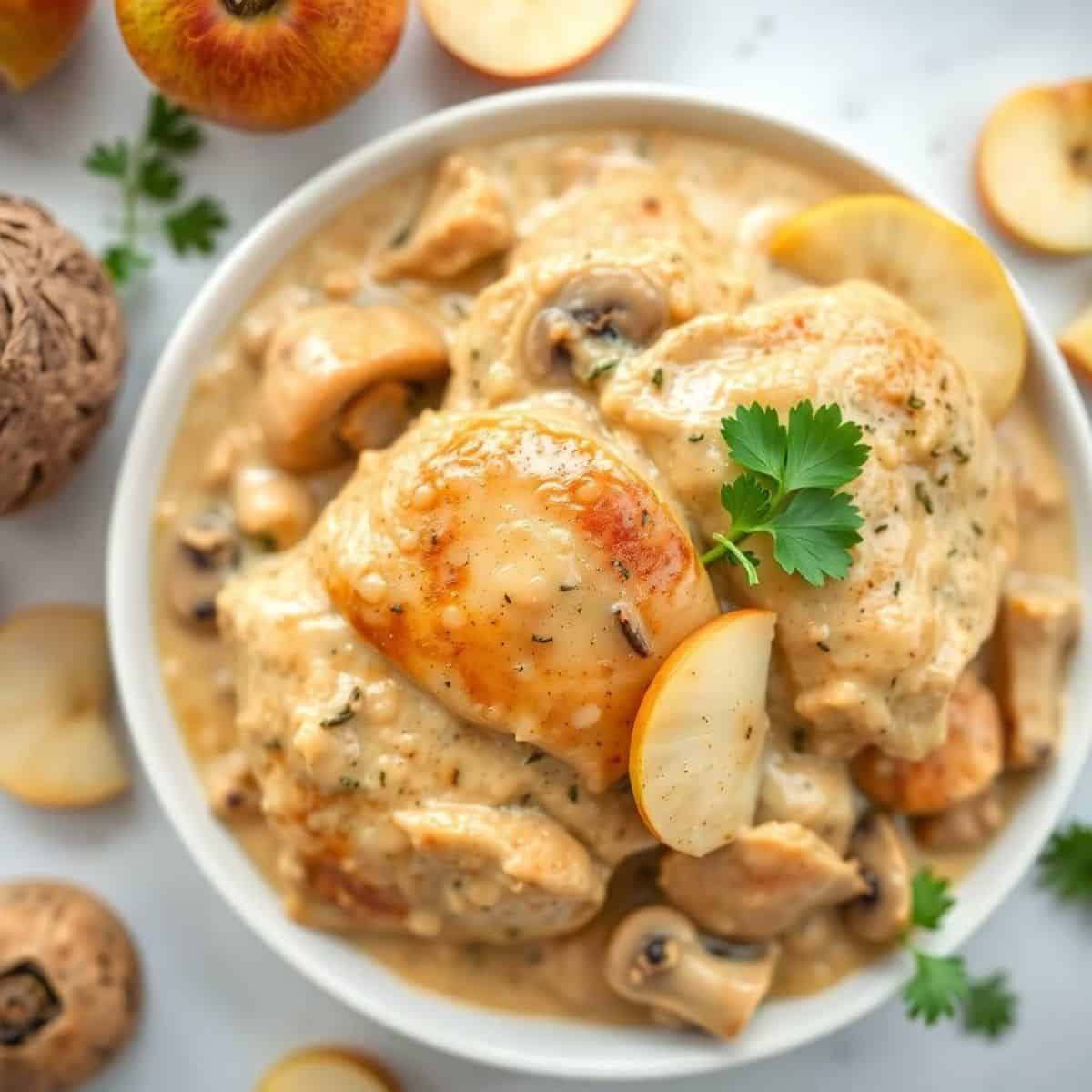
- The sauce is genuinely something special: It's creamy without being heavy, and the Dijon mustard gives it a little backbone so it doesn't taste like plain cream sauce. I've made versions without the mustard and they're fine, but the mustard version is noticeably better. Pour it over mashed potatoes and you'll understand why French people eat like this.
- Apples and savory chicken work better together than you'd think: I know it sounds like a strange combination if you haven't tried it. The apples cook down gently and melt into the sauce — they're not crunchy, they're not sweet chunks of fruit sitting on top of chicken. They just add this soft, rounded quality to the whole dish that keeps it interesting. Granny Smith or Honeycrisp are my go-to choices here.
- Everything happens in one pan: You brown the chicken, build the sauce, and bake it all in the same skillet or Dutch oven. I hate washing dishes, so this matters to me. The only other thing you'll need to clean is the baking dish — or skip that entirely if your skillet is oven-safe, which is what I do.
- It reheats beautifully the next day: The sauce actually gets a little better overnight as everything settles together. I make a full batch even when it's just the four of us because the leftovers are genuinely good — just reheat gently on the stovetop over low heat so the cream doesn't break.
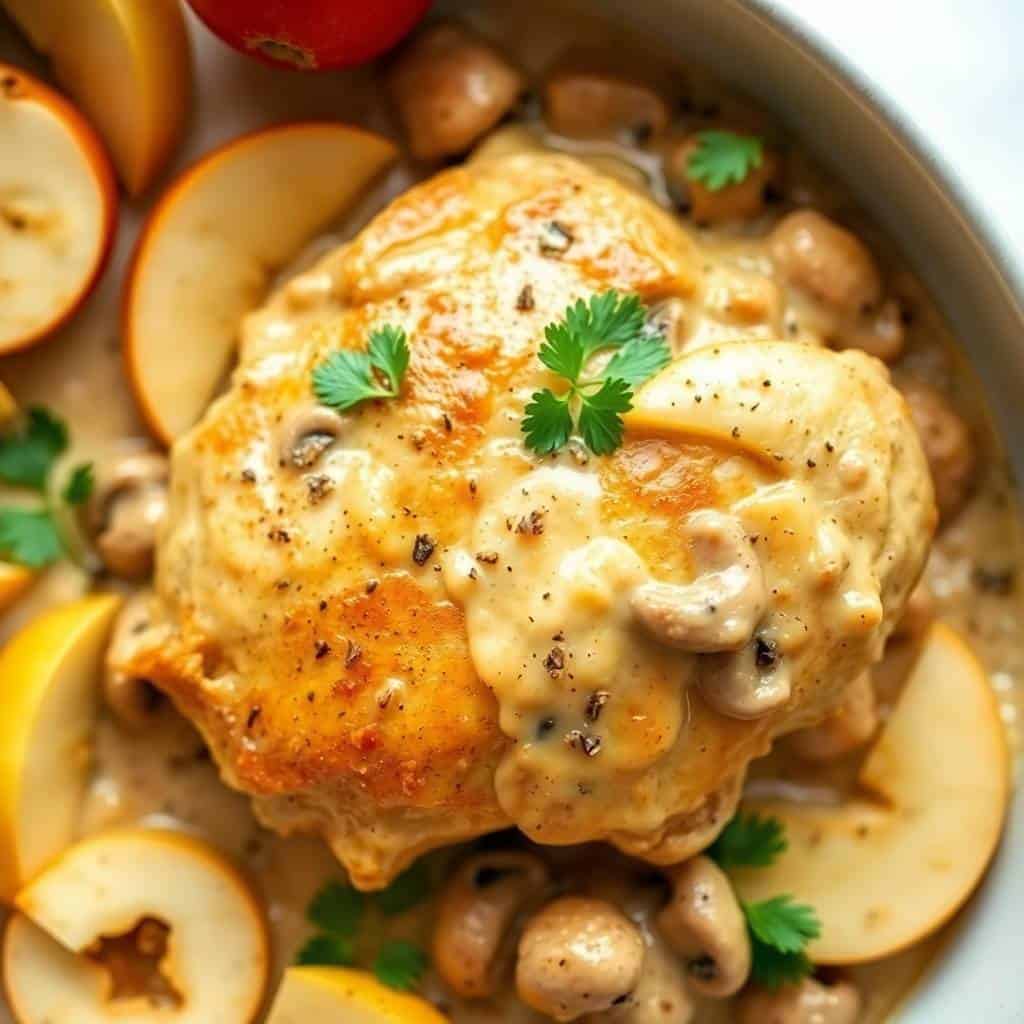
- It looks like you tried much harder than you did: The golden chicken, the glossy cream sauce, the soft apple slices — it presents beautifully on the table. I've served this to guests and gotten compliments every single time. Nobody needs to know it took you about 45 minutes of actual active cooking.
Ingredients
- 4 boneless, skinless chicken breasts
- 2 tablespoon olive oil
- 2 tablespoon unsalted butter
- 1 medium onion, finely chopped
- 2 cloves garlic, minced
- 2 medium apples, peeled, cored, and sliced (Granny Smith or Honeycrisp work best)
- 1 cup dry white wine (Chardonnay or Sauvignon Blanc — nothing sweet)
- 1 cup chicken broth
- 1 cup heavy cream (or half-and-half for a lighter version)
- 2 tablespoon brandy or Calvados (optional, but worth it if you have it)
- 1 tablespoon Dijon mustard
- 1 teaspoon dried thyme (or 1 teaspoon fresh thyme leaves)
- 1 bay leaf
- Salt and pepper, to taste
- Fresh parsley, chopped, for garnish
Directions
- Preheat and prep: Preheat your oven to 375°F (190°C). Pat the chicken breasts dry with paper towels and season both sides generously with salt and pepper. Dry chicken browns better — wet chicken just steams in the pan.
- Brown the chicken: Heat the olive oil in a large oven-safe skillet or Dutch oven over medium-high heat. Add the chicken and cook for 4-5 minutes per side until deep golden brown. You're not cooking it through at this stage — just building color. Remove the chicken and set it aside on a plate.
- Soften the onion and garlic: Lower the heat to medium and add the butter to the same skillet. Once melted, add the chopped onion and cook for 2-3 minutes until softened and translucent. Add the garlic and cook for another minute, stirring so it doesn't burn.
- Cook the apples: Add the sliced apples to the skillet and cook for 3-4 minutes, stirring occasionally, until they start to soften at the edges. They'll continue cooking in the oven so don't rush this step — you just want them to start releasing their juices.
- Build the sauce: Pour in the white wine and brandy (if using), scraping the bottom of the pan to lift all those browned bits — that's where a lot of the flavor lives. Let it bubble for about 2 minutes to cook off the alcohol. Pour in the chicken broth, then stir in the heavy cream, Dijon mustard, thyme, and bay leaf. Bring everything to a gentle simmer.
- Return the chicken and bake: Nestle the browned chicken breasts back into the skillet, spooning some of the sauce and apples over the top. Transfer the skillet to the oven and bake uncovered for 25-30 minutes, until the chicken is cooked through and the sauce has thickened slightly.
- Finish the sauce: Remove the skillet from the oven and transfer the chicken to a plate to rest for a few minutes. Fish out the bay leaf and discard it. Stir the 2 tablespoons of butter into the sauce — this is the classic French finishing move and it makes the sauce silky and glossy. Taste and adjust salt and pepper.
- Serve: Return the chicken to the skillet or plate it individually with the sauce spooned generously over the top. Scatter fresh parsley over everything and bring it straight to the table.
Tips for Success
- Don't skip browning the chicken: I know it's tempting to just throw everything in the pan and go, but that golden crust on the chicken is where a lot of the flavor in the final dish comes from. The brown bits left in the pan after searing are called fond, and they dissolve into the sauce when you add the wine. If you skip the sear, you lose all of that. Five extra minutes, genuinely worth it.
- Use a dry white wine, not a sweet one: The first time I made a cream sauce with wine I grabbed whatever was open, which happened to be a semi-sweet Riesling. The sauce came out too sweet and slightly cloying. Stick with a dry Chardonnay, Sauvignon Blanc, or even a dry Pinot Grigio. If you don't drink wine, you can replace it with extra chicken broth and a tablespoon of white wine vinegar for acidity.
- Let the sauce reduce properly before adding the cream: After you add the wine and broth, give it a few minutes to simmer and reduce before stirring in the cream. If you rush this step, the sauce can end up thin and watery. You want it to coat the back of a spoon lightly before the cream goes in.
- Check your chicken temperature, not just the time: Oven temperatures vary and chicken breast thickness varies even more. I always check with an instant-read thermometer — you're looking for 165°F (74°C) at the thickest part. If your chicken breasts are on the larger side, add 5 extra minutes and check again. Cutting into it early lets the juices run out and you end up with dry chicken, which ruins the whole dish.
- Stir in the butter at the very end, off the heat: The finishing butter is what makes French sauces taste like French sauces. But if you add it while the sauce is still at a hard boil, it just melts in without doing much. Take the skillet off the heat (or lower it to the lowest setting), then stir in cold butter a tablespoon at a time. The sauce will turn glossy and thick in a way that cream alone doesn't achieve.
Variations
- Use chicken thighs instead of breasts: Bone-in, skin-on chicken thighs are genuinely more forgiving in this recipe — dark meat holds up better to the braising liquid and is harder to overcook. The skin crisps up beautifully during the initial sear. If you use bone-in thighs, increase the oven time to 35-40 minutes and check that the internal temperature reaches 165°F. My husband actually prefers the thigh version.
- Swap wine for dry apple cider: If you want to lean harder into the Norman apple theme, replace the white wine with dry hard apple cider (not sweet cider — the kind that's closer to a dry white wine in flavor). It deepens the apple character in the sauce noticeably and makes the dish feel even more authentic to the Normandy style. This is also a good move if you prefer not to cook with wine.
- Add mushrooms: Sliced cremini or button mushrooms added with the onions make this heartier and add an earthy quality that works really well with the cream sauce. Use about 1 cup of sliced mushrooms and cook them until they've released their liquid and started to brown before you add the apples. This is my go-to version when I want the dish to feel more substantial.
- Gruyère-topped version: In the last 5 minutes of baking, scatter a handful of grated Gruyère over the top of the casserole and let it melt and bubble. It adds a nutty, slightly salty layer that works beautifully with the sweet apples underneath. Parmesan works too if that's what you have. This version is what I make when I want the dish to feel extra indulgent.
- Pear variation: Replace the apples with ripe but firm pears — Bosc or Anjou hold their shape better in the oven than Bartlett. The flavor is softer and more floral than apple, and it pairs especially well with the Dijon mustard in the sauce. I tried this version after running out of apples one evening and it was genuinely lovely in a different way.
Serving and Storage
Serving
This casserole is best served right out of the oven while the sauce is still glossy and loose. Creamy mashed potatoes are the classic pairing — the sauce soaks into the potatoes in the best possible way. Egg noodles or buttered rice also work well. If you want something lighter alongside, a simple green salad with a sharp vinaigrette cuts through the richness nicely. I sometimes serve thick slices of my stovetop bread on the side for sauce-mopping purposes, which Zainab approves of strongly.
Storage
Leftovers keep well in an airtight container in the refrigerator for up to 3 days. The sauce will thicken considerably once cold — that's normal. Reheat gently on the stovetop over low heat, adding a splash of chicken broth or cream to loosen the sauce as it warms up. Don't rush the reheating on high heat or the cream sauce can separate and turn grainy. I haven't tried freezing this one — cream-based sauces tend to break when frozen and thawed, so I'd stick to refrigerating it.
Frequently Asked Questions
Can I make this casserole ahead of time?
Yes — you can brown the chicken and make the sauce up to a day ahead, then store everything assembled (but unbaked) in the refrigerator. When you're ready to cook, pull it out of the fridge 20 minutes before baking so it's not ice cold, then bake at 375°F and add about 5-10 minutes to the baking time. The sauce may need a stir and a small splash of broth if it looks too thick going into the oven.
What type of apple works best in this recipe?
Tart, firm apples hold up the best in this dish. Granny Smith is my first choice — the tartness balances the richness of the cream sauce really well and the slices hold their shape during cooking. Honeycrisp also works great. Avoid very sweet or very soft apples like Red Delicious or Fuji, which can turn mushy and make the sauce taste one-dimensional.
Can I substitute the heavy cream for something lighter?
Half-and-half works as a substitute and gives you a noticeably lighter sauce. The texture won't be quite as silky and it may take a little longer to thicken in the oven, but the flavor is still really good. I wouldn't go below half-and-half — regular milk tends to make the sauce thin and can curdle under heat.
I don't have brandy or Calvados — can I skip it?
Completely fine to skip it. The brandy adds a warm, slightly caramel depth to the sauce but the dish is genuinely good without it. If you want a non-alcoholic substitute that gives a similar effect, a teaspoon of apple cider vinegar stirred into the sauce at the end adds a similar brightness without the alcohol.
Can I use bone-in chicken for this recipe?
Yes, and honestly I think bone-in chicken thighs give you a better result — the meat stays juicier and the bones add flavor to the sauce. If you use bone-in pieces, increase the oven time to 35-40 minutes and verify the internal temperature reaches 165°F at the thickest part, away from the bone. The rest of the recipe stays exactly the same.

This is one of those recipes I keep coming back to because it works reliably without demanding much from me. The sauce is the star — creamy, slightly sharp from the mustard, with that quiet apple sweetness running through it — and the chicken stays moist because it finishes in the oven surrounded by all that liquid. It doesn't need a lot of last-minute fussing, which I appreciate on the days I want dinner to feel special but my energy is running low.
If you're cooking for guests, this is exactly the kind of dish that makes people think you spent much longer in the kitchen than you did. I've served it alongside a simple green salad and a glass of whatever white wine is left from making the sauce, and that's genuinely all it needs. If you want to round out the meal with something on the lighter side beforehand, my cranberry pecan chicken salad makes a lovely starter. And for dessert, something like classic chocolate mousse feels like a natural finish to a French-inspired meal without adding a lot of extra work.
I hope this one earns a regular spot in your kitchen the way it has in mine. The leftovers the next day, reheated slowly with a little extra splash of cream, might honestly be better than the first night. 🍗✨

FRENCH CHICKEN CASSEROLE A LA NORMANDE
Ingredients
- 4 boneless skinless chicken breasts
- 2 tablespoon olive oil
- 1 medium onion finely chopped
- 2 medium apples peeled, cored, and sliced
- 2 cloves garlic minced
- 1 cup dry white wine such as Chardonnay
- 1 cup chicken broth
- 1 cup heavy cream
- 2 tablespoon brandy or Calvados optional, for a more authentic Normandy flavor
- 1 tablespoon Dijon mustard
- 1 teaspoon dried thyme
- 1 bay leaf
- Salt and pepper to taste
- 2 tablespoon butter
- Fresh parsley for garnish
Instructions
- Preheat the oven to 375°F (190°C).
- In a large ovenproof skillet or Dutch oven, heat the olive oil over medium-high heat. Season the chicken breasts with salt and pepper, and brown them in the skillet for 4-5 minutes per side until golden. Remove the chicken from the skillet and set aside.
- In the same skillet, add the chopped onion and cook for 2-3 minutes until softened. Add the garlic and cook for another 1 minute until fragrant.
- Add the sliced apples to the skillet and cook for 3-4 minutes until they begin to soften.
- Pour in the white wine and chicken broth, scraping the bottom of the skillet to release any browned bits. Stir in the heavy cream, brandy (if using), Dijon mustard, thyme, and bay leaf. Bring the mixture to a simmer.
- Return the browned chicken breasts to the skillet, spooning some of the sauce and apples over the top.
- Transfer the skillet to the preheated oven and bake for 25-30 minutes, or until the chicken is cooked through and the sauce has thickened.
- Remove the chicken from the skillet and set aside. Stir in the butter to finish the sauce, adjusting seasoning with salt and pepper.
- Serve the chicken with the creamy apple sauce, garnished with fresh parsley. This dish pairs wonderfully with rice or mashed potatoes.
Notes
- If you prefer a lighter version, you can use half-and-half instead of heavy cream.
- You can substitute the apples with pears for a different flavor twist.
- If you don’t have brandy or Calvados, you can skip it, but it adds a lovely depth of flavor to the sauce.
- This dish can be made ahead of time; simply reheat in the oven at 350°F for 15-20 minutes before serving.
- Leftovers can be stored in the refrigerator for up to 3 days and reheated gently to preserve the sauce’s creaminess.





Comments
No Comments