
I made this sweet potato casserole for the first time three years ago and completely forgot to drain the potatoes properly after boiling. The filling came out watery and loose, and I was genuinely annoyed at myself. Now I drain them, let them sit in the colander for a few minutes, and sometimes even put them back in the dry pot over low heat for sixty seconds to steam off the last of the moisture. That step alone changed everything.
The base here is straightforward — sweet potatoes, butter, brown sugar, cinnamon, a little nutmeg, eggs, milk. Nothing exotic. What makes it worth making is the balance: the filling is creamy and lightly sweet, not candy-sweet, so the topping actually has something to contrast with. I give you both options below — the pecan streusel and the marshmallow version — because honestly, this household is divided on the subject and I've stopped picking sides.
This shows up on my table every November, and it disappears faster than almost anything else I put out. My husband goes straight for the pecan version. Zainab, who is nine and very opinionated, pulls off the marshmallows and eats them separately, then eats the sweet potato filling with a spoon. I've stopped commenting on this. If you're building out a full holiday spread, this pairs really well next to my broccoli cheese casserole — the two together cover the whole vegetable side situation without much fuss.
One practical note before you start: this casserole reheats beautifully, which means you can make it the day before and just pop it in the oven before your meal. I'll walk through exactly how to do that in the tips section. The whole thing comes together in under an hour, and most of that time is the oven doing the work.

Why You'll Love This Recipe
- It works as a make-ahead dish: I almost always assemble this the night before a big meal and refrigerate it unbaked. The next day I pull it out while the oven preheats and bake it fresh. This saves me enormous stress on the day itself, especially when I'm managing multiple dishes at once. The texture doesn't suffer at all — if anything, it feels more set and sliceable than when I bake it immediately.
- Two topping options, one filling: I used to feel pressure to pick one topping and commit. Then I realized I could just make two small dishes — half with pecans, half with marshmallows — and let everyone sort themselves out. The filling recipe below makes enough for a 9x9 dish, so if you want to split it, use two smaller dishes or a 9x13 and divide down the middle. No one at my table complains about this system.
- The filling isn't cloyingly sweet: A lot of sweet potato casserole recipes read like dessert, which is fine if that's what you want. This one uses just enough brown sugar to round out the potatoes' natural sweetness without tipping into candy territory. The pecan topping adds its own sweetness, so the filling stays balanced. I've tasted it before adding the topping many times — it's good enough to eat on its own, honestly.
- Beginner-friendly but doesn't taste like it: This is a recipe I'd hand to someone who doesn't cook much. Boil, mash, mix, bake — that's basically it. I've made it with Zainab helping and it still turned out exactly right. The pecan topping takes maybe four minutes to mix together. Nothing here requires technique beyond stirring.
Ingredients
For the Sweet Potato Base
- 4 medium sweet potatoes, peeled and cubed
- 2 tablespoons unsalted butter, softened
- ¼ cup brown sugar (packed)
- ½ cup milk or cream (whole milk works fine; half-and-half makes it richer)
- 2 large eggs
- 1 teaspoon vanilla extract
- ½ teaspoon ground cinnamon
- ¼ teaspoon ground nutmeg
- ¼ teaspoon salt
For the Pecan Streusel Topping
- ½ cup all-purpose flour
- ½ cup brown sugar (packed)
- ⅓ cup unsalted butter, melted
- ½ cup chopped pecans
For the Marshmallow Topping (alternative)
- 2 cups mini marshmallows (one standard bag has plenty)
Directions
- Boil the sweet potatoes: Preheat your oven to 375°F (190°C). Peel and cube the sweet potatoes into roughly 1-inch pieces — they'll cook more evenly this way. Boil in salted water for about 15 minutes until completely fork-tender, then drain well and let them sit in the colander for a couple of minutes. Excess moisture is the enemy of a creamy filling, so don't rush this step.
- Make the filling: Return the drained sweet potatoes to the warm (now dry) pot and mash until smooth. Add the butter, brown sugar, milk, eggs, vanilla, cinnamon, nutmeg, and salt, then mix until fully combined and creamy. Taste it here — if you want it a touch sweeter, add another tablespoon of brown sugar. If it tastes right, move on.
- Assemble the base: Grease a 9x9-inch baking dish well (I use butter right on the dish with my fingers). Spread the sweet potato mixture in an even layer. Smooth the top with the back of a spoon — this gives the topping something flat to sit on.
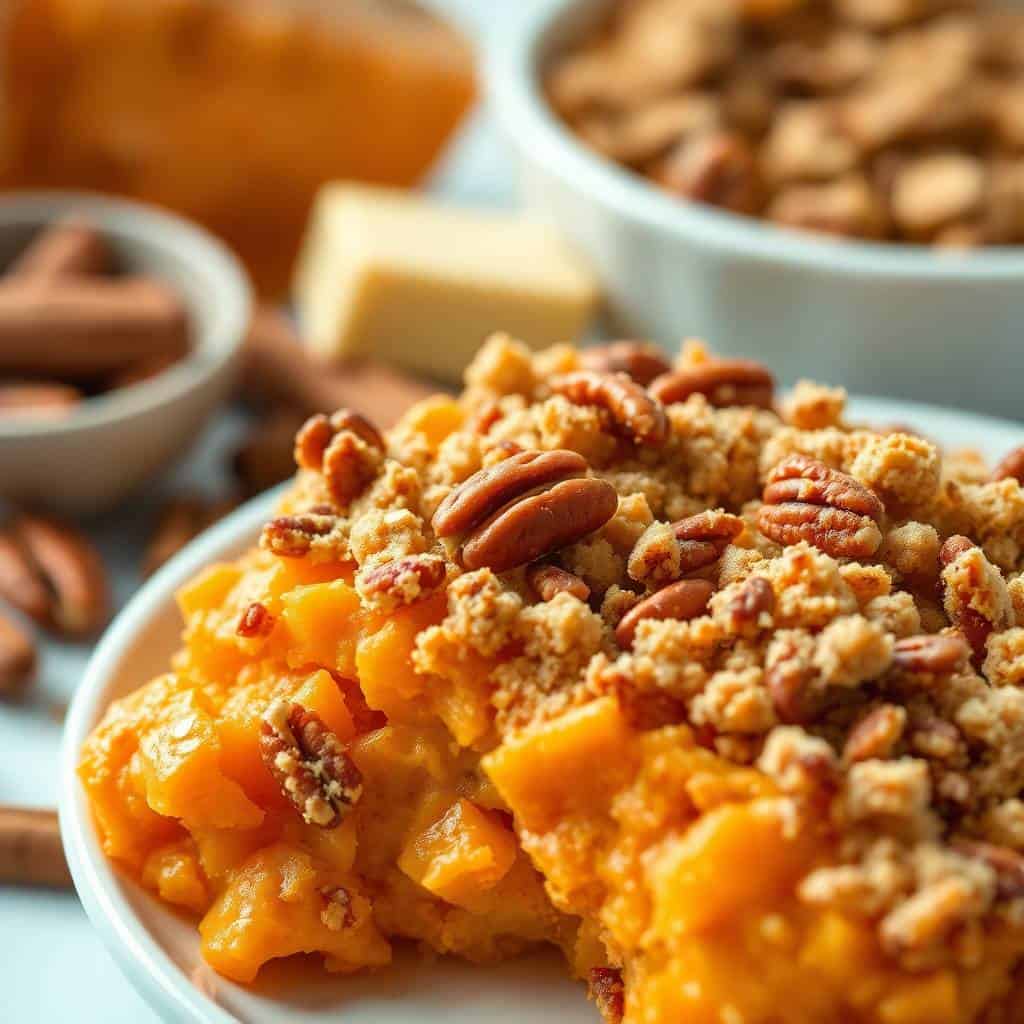
- Add your topping: For the pecan streusel, mix flour, brown sugar, melted butter, and chopped pecans in a bowl until it resembles coarse, damp crumbs. Sprinkle it evenly over the sweet potato layer. For the marshmallow version, scatter mini marshmallows across the top and add them during the last 5 minutes of baking so they melt and turn golden without burning.
- Bake: Bake for 20–25 minutes, until the filling is set and the pecan topping is golden and slightly crisp. If you're using marshmallows, bake the casserole for 18 minutes first, then scatter the marshmallows on top and return to the oven for 4–5 minutes, watching carefully. Let it rest for 5 minutes before serving.
Tips for Success
- Drain the potatoes longer than you think you need to: I mentioned this above but it bears repeating because I ruined my first attempt by skipping it. Watery sweet potatoes give you a filling that spreads when you cut into it and doesn't hold its shape. After draining, I put the pot back on the burner on low for about a minute — no water in it, just the potatoes — and let the steam escape. It makes a real difference to the final texture.
- Let the eggs come to room temperature first: Cold eggs can cause the butter in the filling to seize up slightly, and you end up with little flecks instead of a smooth mix. I take the eggs out about 20 minutes before I start. It's a small thing but the filling comes out noticeably smoother. Same principle applies in most baked goods — cold dairy and cold eggs don't incorporate as cleanly.
- Don't overbake the pecan topping: The first few times I made the streusel version, I kept it in too long trying to make sure the center was set. The topping went from golden to dark brown and bitter. Pull it out when the edges of the topping are just starting to darken — it continues cooking a little from the residual heat of the dish. 22 minutes at 375°F is usually exactly right in my oven, but ovens vary.
- Grease the dish all the way up the sides: The sweet potato mixture climbs the sides a little as it bakes, and if those sides aren't greased, you lose the first serving to scraping. I use softened butter and a paper towel to coat the inside of the dish, including up the walls. Takes thirty seconds and makes cleanup and serving much easier.
- Taste before you bake: The raw egg in the filling means you can't eat spoonfuls of it, but you can taste a small amount off a spoon to check the spice level. I've adjusted cinnamon and salt at this stage more times than I can count. Getting the seasoning right before it goes in the oven is worth the thirty seconds it takes.
Variations
- Classic marshmallow topping: This is what most Americans think of when they picture sweet potato casserole — gooey, toasted marshmallows on top. Add 2 cups of mini marshmallows during the last 5 minutes of baking and watch them closely. They go from perfectly toasted to burnt faster than you expect. This is the version Zainab asks for, though she mostly just eats the marshmallows.
- Dairy-free version: Swap the butter for coconut oil (refined, so it doesn't taste like coconut) and use unsweetened oat milk or almond milk in place of dairy milk. The texture is slightly less rich but still works well. Use gluten-free flour in the streusel if you also need that — I've tested this for guests with dietary restrictions and it holds together fine.
- Spiced-up version: Add ¼ teaspoon of ground ginger and a small pinch of cloves to the filling along with the cinnamon and nutmeg. This gives the casserole a warmer, more complex flavor — closer to what you'd find in a pumpkin pie spice blend. My husband prefers this version, so I often make two small dishes with different spice levels.
- Reduced sugar: If you're serving this alongside other sweet dishes (pies, glazed carrots, that kind of spread), it can feel like too much sugar all at once. Cut the brown sugar in the filling down to 2 tablespoons and let the potatoes' natural sweetness carry the dish. You still get a topping with its own sweetness, so the overall dish doesn't feel flat — just a bit more restrained.
- Savory-leaning version: Skip the sugar in the filling almost entirely and add ½ teaspoon of smoked paprika, a bit of black pepper, and a full ½ teaspoon of salt. Top with just chopped pecans (no streusel, just the nuts) and a drizzle of olive oil. This is genuinely different from the classic but pairs really well with roasted meats. In Pakistan we'd serve something similar alongside a heavy meat dish where you want a starchy side that isn't sweet — this scratches that itch.
Serving and Storage
Serving
Serve this warm, straight from the baking dish. It works alongside roasted turkey or chicken, but I've also put it next to simpler weeknight dinners and it always fits. If you're building a holiday table, it sits naturally beside a broccoli cheese casserole and something like roasted asparagus with burrata — you get a range of flavors without everyone fighting over the same dish. Scoop it with a large spoon rather than cutting it into squares unless it's fully cooled, which it rarely is by the time it reaches the table.
Storage
Leftovers keep in an airtight container in the fridge for up to 3 days. Reheat individual portions in the microwave for about 90 seconds, or cover the whole dish with foil and warm it in a 325°F oven for 15 minutes. The pecan topping softens slightly after being refrigerated, but it's still good. The marshmallow version gets a bit sticky as leftovers — still edible, just not as pretty. To freeze: assemble without the topping, freeze for up to 2 months, then thaw overnight in the fridge, add your topping, and bake as directed.
Frequently Asked Questions
Can I make this casserole the day before?
Yes, and I actually recommend it for holiday meals. Assemble the filling and spread it in the greased dish, then cover tightly with plastic wrap and refrigerate overnight. Add the topping right before baking — don't put the streusel on the night before or it absorbs moisture and loses its crunch. Pull the dish out of the fridge while the oven preheats and add about 5 extra minutes to the baking time since it's starting cold.
Can I freeze sweet potato casserole?
Yes, but freeze only the filling — without any topping on it. Let it cool completely, wrap the dish tightly in plastic wrap and then foil, and freeze for up to 2 months. Thaw overnight in the refrigerator, then add your pecan streusel or marshmallows right before baking. Baking from a cold, thawed state means it needs a few extra minutes in the oven.
Can I use canned sweet potatoes instead of fresh?
You can. Drain them very well and mash them as you would fresh. The main thing to watch is that canned sweet potatoes are often packed in syrup or already lightly sweetened, so taste the filling before adding all the brown sugar — you may only need half. The texture is slightly softer with canned, but the casserole still bakes up fine.
Which topping is better — pecans or marshmallows?
Honestly, it depends on what you're serving it with. The pecan streusel has crunch and a slightly caramel flavor that holds up well next to savory mains. The marshmallow version is softer, sweeter, and more nostalgic — it's what most people picture when they think of this dish. My family is split, which is why I often make two small dishes instead of one big one. Neither is wrong.
How do I know when the casserole is done baking?
For the pecan version, look for a golden-brown streusel top and a filling that doesn't jiggle when you gently shake the dish. That usually happens around 22–25 minutes at 375°F. For the marshmallow version, you want the marshmallows puffed and lightly toasted — golden on top, not white and raw but also not dark brown and deflated. Keep an eye on them in the last 2 minutes; they move fast.
EASY SWEET POTATO CASSEROLE
Ingredients
For the Sweet Potato Base:
- 4 medium sweet potatoes peeled and cubed
- 2 tablespoons unsalted butter softened
- ¼ cup brown sugar
- ½ teaspoon cinnamon
- ¼ teaspoon salt
For the Pecan Topping:
- ½ cup all-purpose flour
- ½ cup brown sugar
- ⅓ cup unsalted butter melted
- ½ cup chopped pecans
Instructions
Prepare Sweet Potatoes:
- Preheat oven to 375°F (190°C). Boil sweet potatoes until tender, about 15 minutes. Drain and mash with butter, brown sugar, cinnamon, and salt.
Assemble Base:
- Spread mashed sweet potatoes evenly in a greased 9x9-inch baking dish.
Prepare Topping:
- Mix flour, brown sugar, melted butter, and chopped pecans in a bowl to make the topping. Sprinkle evenly over sweet potatoes.
Bake and Serve:
- Bake for 20–25 minutes until topping is golden and crisp. Serve warm.
Notes
- Make Ahead: Sweet potatoes can be boiled a day ahead for faster prep.
- Variations: Add marshmallows on top before baking for a classic holiday twist.
- Serving Suggestions: Pair with roasted meats or enjoy as a festive side dish.
- Allergy-Friendly: Use coconut oil and gluten-free flour for a dairy-free, gluten-free version.
- Storage Tips: Store leftovers in an airtight container in the fridge for up to 3 days. Reheat before serving.
This is one of those dishes I make without thinking much anymore — I know the proportions by heart and I know exactly when to pull it from the oven. That took a few rounds of getting it wrong, but now it's genuinely one of the easiest things on my holiday table. The filling comes together in the time it takes to boil the potatoes, and the topping takes four minutes to mix. There's no stage where you need to pay close attention except the last few minutes of baking if you're doing marshmallows.
If you're building out a full holiday spread, I'd pair this with something like my cozy chicken and dumplings soup as a starter, or lean into the comfort food angle completely and put it next to the one-pan baked ziti with sausage for a different kind of gathering. It fits wherever you need a warm, starchy side that doesn't require much last-minute work.
I make a double batch every November because a single 9x9 dish genuinely doesn't last through one meal at my house. If you're feeding more than four or five people, double everything and use a 9x13. Same temperature, same timing, just a slightly fuller dish. It comes out exactly the same. 🍠✨
If you liked this, here are a few more


Comments
No Comments