
One-pot pasta earned my trust slowly. The method — cooking pasta in a measured amount of liquid so that the starchy cooking liquid reduces into the sauce rather than being drained away — sounded like a shortcut that would produce inferior pasta. The first time I tried it with this corn rigatoni, I understood what I had been missing: the pasta starch that normally goes down the drain is instead emulsified into the sauce, and what results is a cohesive, creamy, clingy sauce that no separately-made sauce can quite replicate.
This recipe exists because of an August surplus: more corn than I knew what to do with, some Parmesan in the fridge, and a box of rigatoni on the shelf. I made it on a Tuesday evening by stripping kernels from four cobs into a pot, adding pasta and liquid, and thirty minutes later my husband ate it in near silence — the particular kind of quiet that means he is too focused on eating to talk. He said afterward that it tasted like summer, which is the most accurate description of what sweet August corn cooked into a Parmesan cream sauce tastes like.
The technique is worth understanding: the pasta cooks in just enough liquid (a combination of broth, water, and cream) that by the time the rigatoni is al dente, the liquid has reduced to a thick, starchy, flavourful sauce. The corn's natural sugars caramelise slightly in the hot liquid. The Parmesan melts into the starchy pasta water and creates the creamy emulsion that coats every piece of rigatoni. No separate sauce pot, no draining, no deglazing — one pot from start to finish.
Saad and Zainab both eat this because it looks like pasta and the corn is sweet and recognisable. My husband considers it one of the better pasta dishes I make regularly, which I weigh against the fact that he also considers a good burger to be in the same category of food experiences. The comparison is not diminishing. He eats it enthusiastically and asks if there is more.
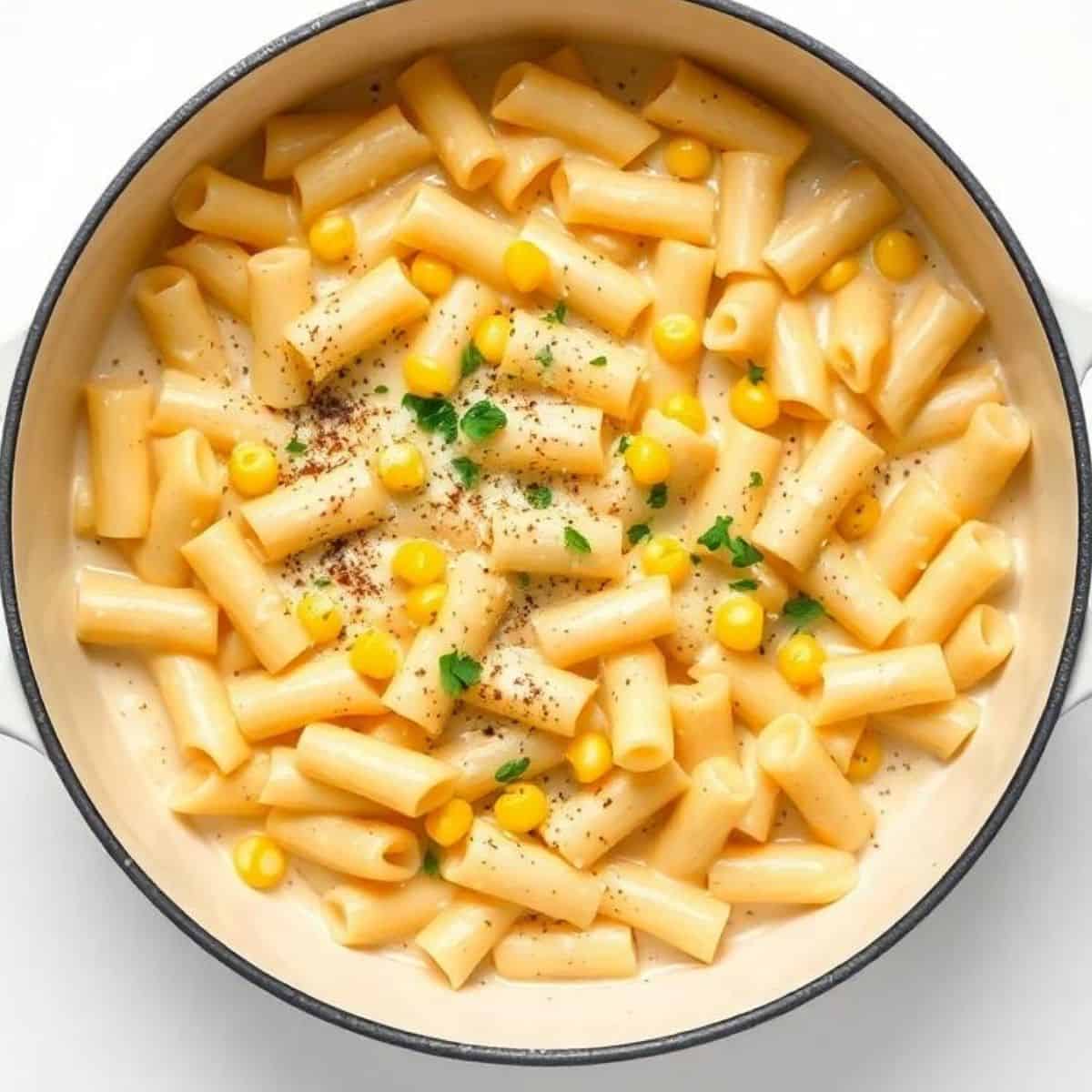
Why You'll Love This Recipe
- The one-pot method creates a sauce from pasta starch — no separate sauce needed: Cooking pasta in a measured amount of liquid means the starchy cooking water is never drained. It stays in the pot, concentrates as the liquid reduces, and emulsifies with the Parmesan and cream into a cohesive sauce that coats every ridge of every piece of rigatoni. This is the technique that makes one-pot pasta different from pasta with sauce poured over.
- Sweet summer corn makes this taste like the season in a bowl: Four ears of fresh sweet corn, stripped from the cob, release their juice into the cooking liquid as the pasta simmers. The corn's natural sugar concentrates in the reducing broth, sweetening the sauce in a way that dried or canned corn cannot replicate. Fresh corn is the ingredient that makes this recipe worth making. At the peak of summer, it is extraordinary.
- One pot, 30 minutes, minimal cleanup: One wide pot, one measuring jug, one corn knife, and a grater. Rigatoni and all the sauce components cook together. Nothing is drained. Nothing is transferred. The pot goes from the stove to the table. Cleanup takes less time than making the recipe.
- The pasta cooks in flavoured liquid — every bite tastes of corn and Parmesan throughout: Pasta cooked in plain boiling water tastes neutral — all the flavour comes from the sauce added after draining. Pasta cooked in corn-infused broth with Parmesan absorbs that flavour throughout the cooking time. The rigatoni itself tastes of corn and cheese, not just the exterior coating.
- Scales perfectly for two or for eight — adjust liquid proportionally: The recipe serves four. To serve two: halve all quantities, use a smaller pot, reduce total cooking time by 3 to 4 minutes. To serve eight: double quantities, use the largest pot you have, and increase cooking time by 4 to 5 minutes. The ratio of pasta to liquid (1 cup liquid per 100g pasta as a starting guide) is what holds the method together.
Ingredients
- 400g rigatoni (the ridges and hollow tube catch the sauce — do not substitute a smooth pasta shape)
- 4 ears of fresh sweet corn, husked (about 3 cups kernels when stripped from the cob)
- 4 garlic cloves, thinly sliced
- 1 shallot, finely diced (or ½ small onion)
- 3 tablespoons unsalted butter
- 2 cups good chicken or vegetable broth
- 1 cup whole milk
- ½ cup heavy cream
- ½ cup dry white wine or an extra ½ cup broth (the wine adds acidity that the dish needs)
- 1 cup (about 80g) Parmesan, finely grated — plus more for serving
- 1 teaspoon fine salt, plus more to taste
- ½ teaspoon white pepper or black pepper
- ¼ teaspoon chilli flakes (optional — adds a pleasant background heat that contrasts the sweetness of the corn)
- To finish: large handful of fresh basil leaves, torn
- Zest of 1 lemon (brightens the rich sauce)
- Extra Parmesan and a drizzle of good olive oil for serving
Directions
- Step 1: Strip the corn from the cobs and reserve the cobs. Stand each corn cob upright in a wide bowl. Using a sharp knife, cut downward along the cob from top to bottom to remove the kernels, rotating the cob as you go. You should get approximately ¾ cup of kernels per cob. Once all kernels are removed, run the back of the knife down each cob to scrape out the corn milk — the starchy liquid clinging to the cob. This corn milk is flavour-dense and should not be wasted. Keep two of the stripped cobs to simmer in the broth during cooking — they release additional corn flavour into the liquid.
- Step 2: Bloom the aromatics in butter. In a wide, deep pot (at least 4-litre capacity — the pasta needs room to move), melt the butter over medium heat. Add the thinly sliced garlic and finely diced shallot. Cook, stirring often, for 2 to 3 minutes until the garlic is golden and fragrant and the shallot is translucent. Do not let the garlic burn — it turns bitter quickly in butter. If it is browning too fast, add a splash of the wine or broth to slow it down.
- Step 3: Add liquids, corn, stripped cobs, and dry pasta. Add the white wine (or extra broth) to the pot and let it sizzle for 30 seconds, scraping up any browned bits from the bottom of the pot. Add the broth, whole milk, and heavy cream. Add the corn kernels and corn milk from the bowl. Add the two stripped corn cobs to the liquid — they will infuse the broth with deep corn flavour as the pasta cooks. Add the salt, pepper, and chilli flakes. Add the DRY rigatoni directly to the unheated liquid and stir to submerge as much as possible.
- Step 4: Bring to a boil and cook, stirring frequently. Bring the pot to a full rolling boil over medium-high heat, stirring every 1 to 2 minutes to prevent the pasta from sticking to the bottom and to ensure even cooking. Once at a boil, reduce heat to medium — the liquid should be actively simmering, not at a full rolling boil. Cook for 13 to 16 minutes, stirring every minute or so, until the rigatoni is al dente and the liquid has reduced to a thick, glossy sauce that coats the pasta. The pot will look too liquidy at the 10-minute mark — continue cooking and stirring. It comes together in the last 3 to 4 minutes.
- Step 5: Remove cobs, add Parmesan, and finish. Remove and discard the corn cobs. Remove the pot from heat. Immediately add the grated Parmesan in two additions, stirring after each, until it melts into a smooth, creamy sauce. Add the lemon zest and stir. Taste the sauce: if it tastes flat, add salt. If it tastes too rich, add a squeeze of lemon juice. If the sauce is thicker than you like, add a splash of broth or hot water and stir. If it seems thin, let it sit off heat for 2 minutes — it thickens as it cools.
- Step 6: Finish with basil and serve immediately. Tear the fresh basil leaves and stir most of them through the pasta. Reserve a few larger leaves for topping. Divide into wide shallow bowls. Drizzle each bowl with a thin stream of good olive oil. Scatter the reserved basil leaves over. Add a generous grating of extra Parmesan and a few turns of black pepper. Serve immediately — one-pot pasta thickens quickly off the heat as the starch in the sauce continues to set.
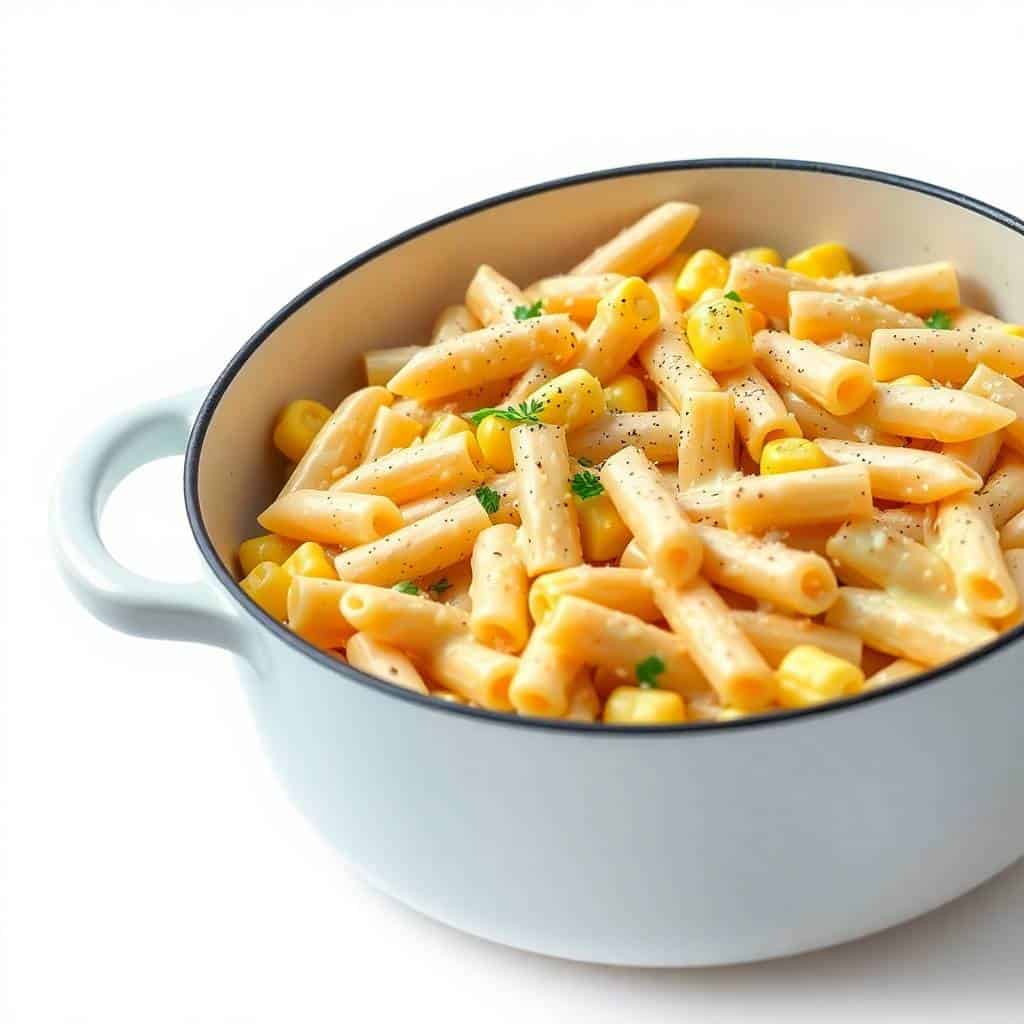
Tips for Success
- Use fresh sweet corn — it is the whole point of this recipe. Frozen corn produces a version of this pasta that is good but noticeably inferior to the fresh corn version. Fresh sweet corn, especially at peak summer (late July through September in the US), releases juice and corn milk into the cooking liquid that contributes a sweetness and depth that frozen kernels, which have been blanched before freezing, cannot match. If making this in winter, it is worth waiting until summer corn is available.
- Stir every minute during cooking — this is not optional. The starch in the pasta is what thickens the sauce, and that starch needs to be kept in motion so it does not settle and stick to the bottom of the pot. A one-pot pasta that is not stirred frequently enough sticks at the base, burns, and produces bitter-tasting scorched bits in the sauce. Set a timer and stir each time it goes off.
- Grate the Parmesan very finely — pre-grated cheese does not melt smoothly. Pre-grated Parmesan from a bag contains cellulose anti-caking agents that prevent it from melting into a smooth sauce — it clumps and produces a grainy result. Finely grated fresh Parmesan on a Microplane or the fine side of a box grater melts into the hot starchy liquid in seconds and produces a completely smooth, glossy sauce. This is the single most common point of failure in Parmesan pasta dishes.
- The liquid ratio is important — do not add extra liquid early. The recipe is calibrated so that by the time the pasta reaches al dente, the liquid has reduced to a sauce consistency. Adding extra liquid at the start produces watery pasta that never properly sauces. If you feel nervous about the liquid level at the 8-minute mark, resist adding more — continue cooking and stirring. The sauce comes together in the final minutes as the starch concentrates.
- Serve in wide shallow bowls — they keep the pasta warm longer and showcase the sauce. Deep bowls concentrate heat at the bottom and leave the top of the pasta cooling. Wide shallow bowls allow even heat distribution and show off the glossy corn sauce and the corn kernels in a way that makes the dish look as good as it tastes.
Variations
- Corn and halal bacon version: Cook 150g halal beef bacon, diced into small pieces, in the pot before the butter step. Remove crispy bacon pieces and set aside. Cook the garlic and shallot in the bacon fat. Proceed with the recipe as written. Stir the crispy bacon back in with the Parmesan at the end. The smokiness of the halal bacon against the sweet corn is extraordinary.
- Spicy corn rigatoni: Add 1 finely minced jalapeño or serrano chilli with the garlic and shallot. Increase chilli flakes to ½ teaspoon. Add a pinch of cayenne with the salt. The heat version has a sweet-hot quality from the corn-and-chilli combination that is genuinely addictive.
- Corn rigatoni with shrimp: Add 400g large prawns (peeled, deveined) to the pot in the last 3 minutes of cooking — they cook through in the residual heat of the simmering liquid. The prawn version is the restaurant-format of this dish and serves equally well as a special occasion dinner.
- Vegan version with nutritional yeast: Replace butter with olive oil, cream with full-fat coconut cream, milk with oat milk, and Parmesan with 4 tablespoons nutritional yeast plus 1 tablespoon white miso stirred in off heat. The vegan version has a different character but is genuinely excellent — the corn sweetness carries the dish even without dairy.
- Corn and ricotta variation: Add ½ cup fresh ricotta off the heat with the Parmesan. The ricotta makes the sauce creamier, thicker, and slightly tangier. Dollop extra ricotta on top of each serving and drizzle with honey for a sweet-savoury combination.
How to Serve
Serve immediately in wide shallow bowls while the sauce is glossy and clinging. The Parmesan, olive oil, and extra basil leaves should be on the table so each person can adjust to their preference — some people (my husband) want significantly more Parmesan than seems reasonable, and having it at the table prevents the serving bowl from running out of cheese before everyone has had a turn. A cold glass of something white alongside. That is the whole dinner.
How to Store
One-pot pasta does not keep well — the starch in the sauce continues to set and the pasta absorbs the remaining liquid, producing a dry, clumped result within 2 hours of cooking. If you have leftovers, refrigerate and reheat with a generous splash of broth or water and a drizzle of cream, stirring over medium-low heat until the sauce becomes glossy again. Fresh Parmesan must be added again at reheating. Do not freeze — the pasta texture deteriorates completely.
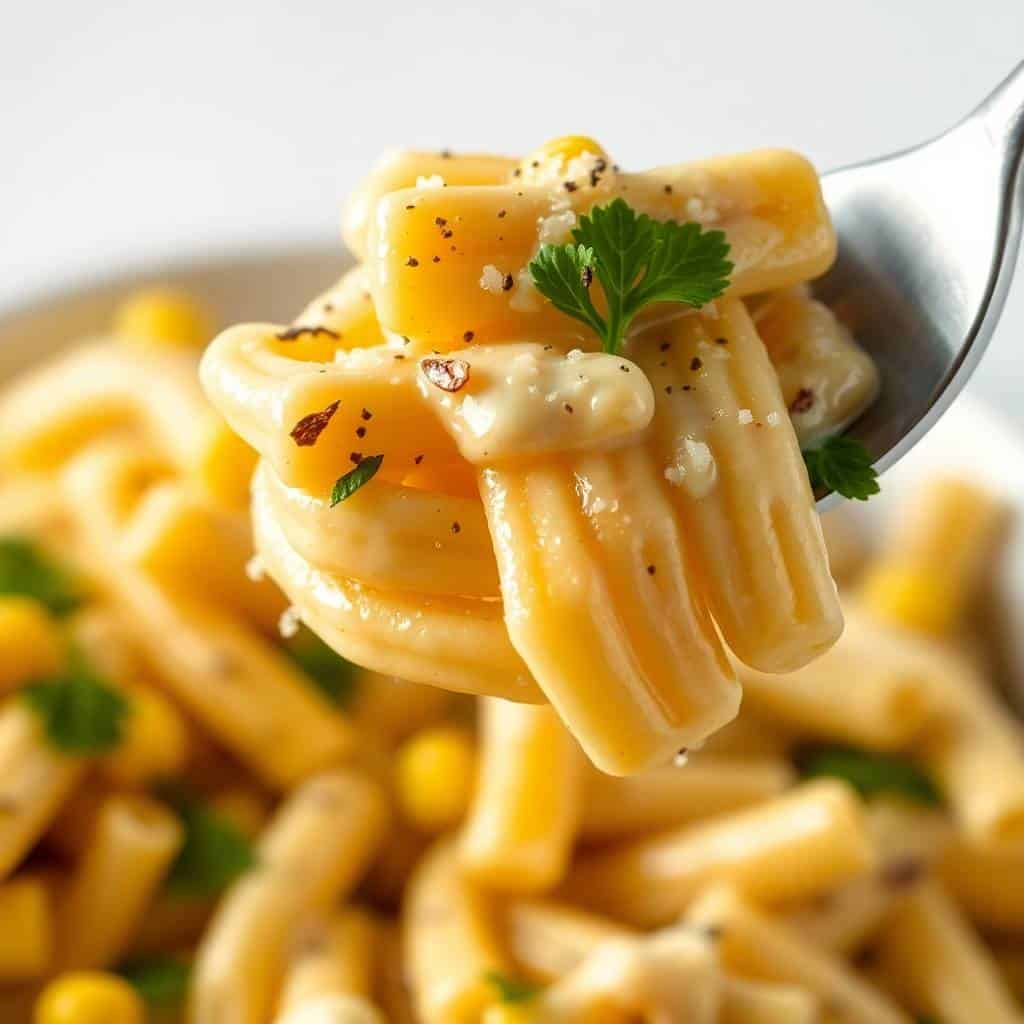
Related Recipes You Might Like
If you loved this recipe, here are a few more from the site:
- 25 One-Pot Pasta Variations the Family Loves — more one-pot pasta dinners for weeknights
- 31 Easy Zucchini Recipes for Garden Harvest — another summer vegetable recipe to pair with this pasta
- Creamy Cucumber Salad with Sour Cream and Dill — the perfect cool side salad alongside this rich pasta
- High-Protein Stuffed Shells with Hidden Veggies — another pasta bake dinner for the weekly rotation
- One-Pot High-Protein Lemon Chicken and Rice — another one-pot dinner with minimal cleanup
Frequently Asked Questions
Can I use frozen corn instead of fresh?
Frozen corn works and produces a good result — thaw completely and drain before using. The liquid content of frozen corn affects the sauce consistency slightly, so you may need to cook the pasta 1 to 2 minutes longer. The flavour will be noticeably milder than fresh summer corn because the blanching process used to freeze corn reduces the natural sugars. The dish is worth making with frozen corn in winter; it is worth waiting for fresh corn in summer.
Why is my one-pot pasta sauce too thick or too thin?
Too thick: add a splash of warm broth or water, stir over low heat until the sauce loosens to your desired consistency. This is easy to fix. Too thin: the pasta was removed before enough liquid reduced — return to medium heat uncovered and stir for 2 to 3 minutes until thickened. Also check that you added the correct amount of liquid at the start. The sauce should reach the right consistency naturally when the pasta hits al dente.
Can I make this without heavy cream?
Yes — the cream contributes richness but the Parmesan and pasta starch do most of the sauce-building work. Replace the ½ cup heavy cream with an additional ½ cup whole milk and add 1 extra tablespoon of butter. The result is a lighter sauce that is still cohesive and creamy, just less rich. Do not use non-dairy milk substitutes unless making the vegan version — oat or almond milk behaves differently in hot starchy liquid.
What pasta shape works best for this recipe?
Rigatoni is ideal because the ridges and hollow tube trap the starchy corn sauce in every bite. Other excellent options: penne rigate (ridged penne), casarecce, fusilli, or cavatappi. Avoid smooth pasta shapes (regular penne, spaghetti, linguine) — they do not trap the sauce the same way. Avoid very large shapes like paccheri — they take too long to cook through in the reduced liquid amount.
Can I add protein to make this a complete dinner?
Yes. Grilled halal chicken breast, sautéed prawns, or crisped halal beef bacon are all excellent additions. Add cooked chicken or prawns in the last 2 minutes of cooking. Add crispy bacon at the very end. The corn rigatoni as written is substantial enough as a vegetarian main course — the Parmesan and whole milk and cream provide significant protein — but the halal bacon version is my husband's preferred format.
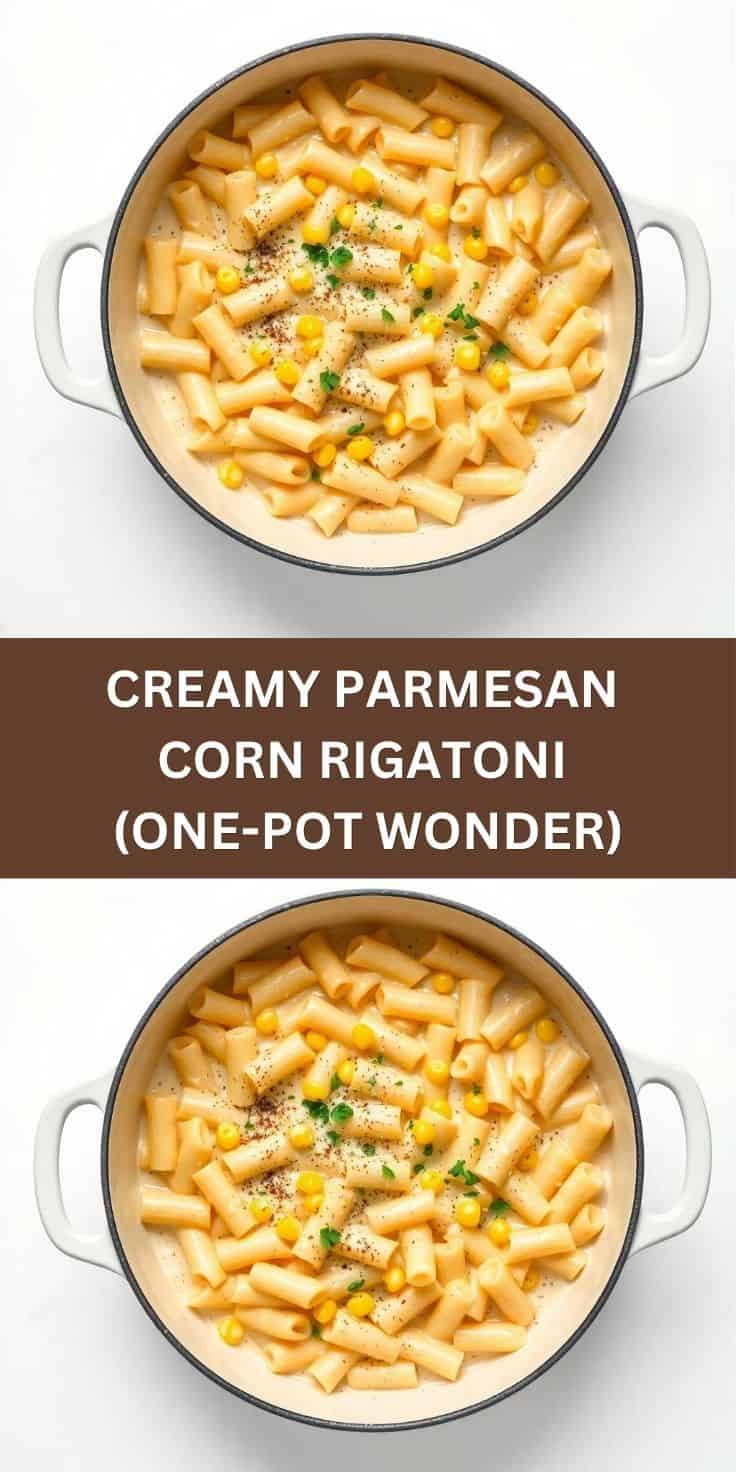
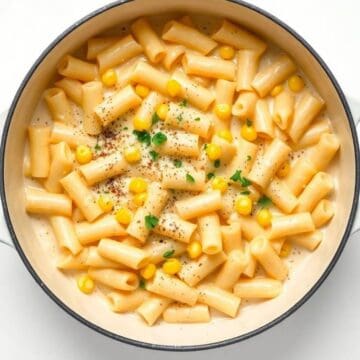
CREAMY PARMESAN CORN RIGATONI (ONE POT WONDER)
Equipment
- Large Dutch oven or deep pot
- Wooden Spoon
- Sharp knife and cutting board
- Measuring Cups and Spoons
Ingredients
For the Pasta:
- 1 lb rigatoni pasta
- 3 cups fresh or frozen corn kernels
- 1 medium yellow onion, finely diced
- 4 cloves garlic, minced
- 4 cups low-sodium vegetable broth
- 1 cup heavy cream
- 1 ½ cups grated Parmesan cheese
- 2 tablespoons unsalted butter
- 1 tablespoon olive oil
- 1 teaspoon Italian seasoning
- ½ teaspoon salt
- ½ teaspoon black pepper
For Garnish:
- 2 tablespoons fresh parsley, chopped
- 2 tablespoons extra Parmesan cheese
- ¼ teaspoon red pepper flakes
Instructions
Cook the Aromatics
- Heat the olive oil and butter in a large Dutch oven over medium heat. Add the diced onion and cook for 3–4 minutes until softened. Stir in the garlic and cook for 30 seconds.
Add the Pasta and Corn
- Add the rigatoni, corn, vegetable broth, Italian seasoning, salt, and black pepper. Stir well to combine.
Simmer the Pasta
- Bring the mixture to a gentle boil, then reduce the heat to medium-low. Simmer uncovered for 12–15 minutes, stirring frequently, until the pasta is tender and most of the liquid has been absorbed.
Make It Creamy
- Reduce the heat to low and stir in the heavy cream. Add the Parmesan cheese gradually, stirring continuously until melted and the sauce is smooth and creamy.
Finish and Serve
- Remove from the heat and let the pasta rest for 2 minutes. Garnish with fresh parsley, extra Parmesan, and red pepper flakes if desired.
Notes
- One-Pot Convenience: The pasta, corn, and creamy Parmesan sauce cook together in one pot for easy cleanup.
- Sweet and Savory: Sweet corn balances the salty Parmesan and garlic for a family-friendly flavor combination.
- Quick Dinner: This comforting pasta comes together in about 30 minutes, making it ideal for busy weeknights.
- Easy Variation: Add cooked chicken, shrimp, crispy bacon, spinach, or roasted zucchini for extra protein and vegetables.
- Storage: Refrigerate leftovers in an airtight container for up to 4 days. Reheat gently with a splash of broth or milk.





Comments
No Comments