
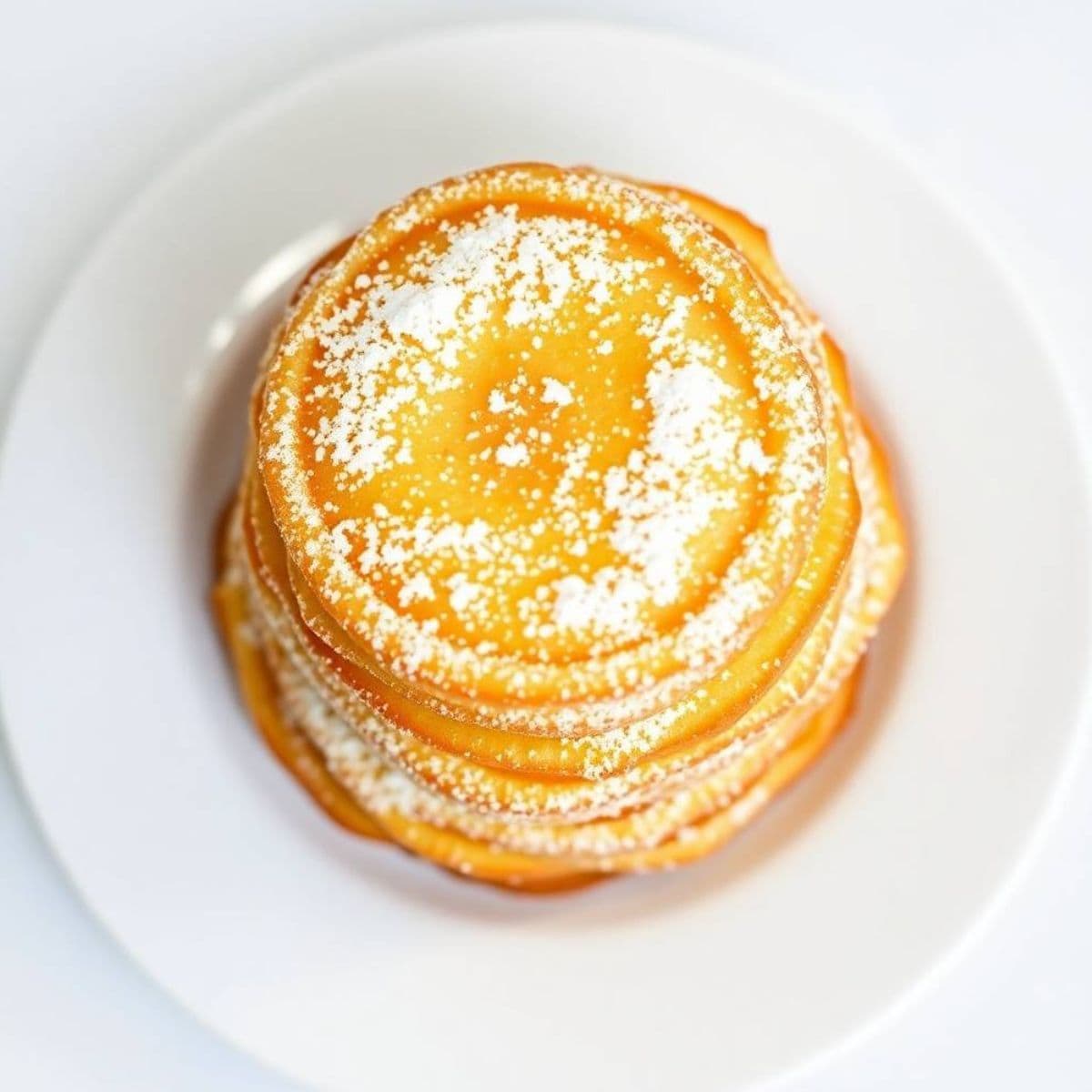
The holiday treat that transports me most completely back to my first Christmas market experience — the smell of hot oil and cinnamon sugar drifting across the stalls, the sound of thin dough shattering between your fingers — is a batch of freshly made buñuelos: thin rounds of simple fried dough that emerge from the oil golden and crackling-crisp, then get coated immediately in a cinnamon-sugar mixture that clings to every bubbled surface and adds a whisper of sweetness and spice to each impossibly light, shattering bite. They are one of the most universally joyful treats I know how to make.
Buñuelos are a beloved tradition across Mexico, Colombia, and much of Latin America and Spain, appearing at holiday celebrations, street fairs, and family gatherings in slightly different forms depending on the regional tradition. The Mexican version — thin, flat, cracker-like rounds of fried dough — is the one in this recipe, and its thinness is both its most important quality and its defining challenge. The thinner the dough is rolled, the crispier and more delicate the finished buñuelo; a slightly thick buñuelo is still good but a properly thin one is extraordinary, shattering into a thousand papery shards with the first bite.
This post covers the classic buñuelo in full detail — dough mixing, resting, rolling technique, frying temperature, and cinnamon sugar coating — plus six variations including a chocolate drizzle version, an orange zest dough, mini bite-sized versions, a savory version, a honey glaze, and an anise-infused traditional variation. Find more Mexican-inspired sweet treats in our churros, our cinnamon sugar treats, and our best Christmas dessert recipes.
Let's make the crispiest, most festive buñuelos your kitchen has ever produced!
WHY YOU WILL LOVE THIS RECIPE
- The Crispiest, Most Delicate Fried Dough Treat Available: A properly made buñuelo — rolled paper-thin, fried in hot oil for 60 seconds per side — produces a texture that is unlike any other fried dough product: not chewy, not soft, not dense, but genuinely papery and crackling, shattering into light, feather-like shards with the smallest pressure. This texture is almost impossibly light and airy for something that is simply flour, butter, and water. The cinnamon sugar adheres to every bubble and ridge on the surface, creating a coating that is simultaneously sweet, spiced, and slightly crunchy against the crisp dough. There is nothing else quite like it in the dessert world.
- Made from Basic Pantry Staples in Under an Hour: Flour, baking powder, salt, sugar, butter, milk, and vanilla — these are the ingredients that make buñuelos, and they are ingredients that virtually every home baker already has at all times. The only special requirement is a deep skillet with oil and the patience to roll the dough genuinely thin. The total preparation time is approximately 50 minutes including the essential 30-minute dough rest — and the rest is completely hands-off, making this genuinely practical as a same-day holiday treat preparation.
- A Genuinely Fun Family Holiday Kitchen Activity: Buñuelo making is a multi-step kitchen activity that is perfectly suited to involving the whole family — adults mix and rest the dough, children help roll (with supervision) or coat the finished buñuelos in cinnamon sugar, and everyone gets to enjoy the results immediately warm from the oil. The rolling and sugaring steps are particularly accessible for children, and the immediate reward of a warm, crunchy, sweet buñuelo makes the activity deeply satisfying for participants of any age. I make these every Christmas Eve as a family cooking activity and the tradition has become one of the most anticipated parts of our celebration.
- Stay Crispy for Hours — Perfect for Party and Holiday Serving: Unlike most fried foods that go soft within 20 minutes, properly made buñuelos stay genuinely crispy for several hours at room temperature. The very low moisture content of the paper-thin fried dough means there is little moisture to soften the structure after cooking. This makes them ideal for party and holiday serving — they can be made 2–3 hours before a gathering begins and will still be crackling-crisp when guests arrive. Stack them loosely on a platter, do not cover tightly (steam softens them), and let guests serve themselves throughout the event.
- Completely Versatile — Serve Sweet or Savory, Plain or Dressed Up: The base buñuelo recipe produces a neutral, lightly sweetened fried dough that is the perfect canvas for any number of finishing treatments. The classic cinnamon sugar is the most traditional and most beloved; warm honey drizzled over the top adds sticky sweetness; melted chocolate creates an indulgent dessert; a pinch of sea salt and a side of salsa transforms them into a savory snack cracker. Find more sweet treat inspiration in our best Christmas dessert recipes and our easy dessert recipes.
INGREDIENTS
- For the Dough:
- 2 cups all-purpose flour
- 1 teaspoon baking powder
- ¼ teaspoon salt
- 2 tablespoons granulated sugar
- 2 tablespoons unsalted butter, melted
- ½ cup warm milk
- 1 teaspoon vanilla extract
- Vegetable, canola, or sunflower oil, for frying
- For the Cinnamon Sugar Coating:
- ½ cup granulated sugar
- 1 tablespoon ground cinnamon
DIRECTIONS
- Step No.1: Mix the dough
In a large bowl, whisk together the flour, baking powder, salt, and granulated sugar until evenly combined. Add the melted butter, warm milk, and vanilla extract and stir with a wooden spoon or rubber spatula until a soft, cohesive dough forms — the dough should pull away from the sides of the bowl and feel slightly tacky but not sticky. If the dough seems dry and crumbly, add warm milk one tablespoon at a time until it comes together. If it sticks persistently to your hands, add flour one tablespoon at a time. The correct consistency is soft, pliable, and slightly supple — like a very soft bread dough.
- Step No.2: Knead and rest the dough
Turn the dough out onto a lightly floured surface and knead for 5 minutes — push the dough away from you with the heel of your hand, fold it back toward you, turn a quarter rotation, and repeat. The kneading develops gluten structure that makes the dough strong enough to roll very thin without tearing. After 5 minutes the dough should be smooth, elastic, and slightly springy — it should spring back slowly when pressed with a finger. Shape into a ball, cover with a clean kitchen towel or plastic wrap, and allow to rest at room temperature for at least 30 minutes. The resting step is non-negotiable: it relaxes the gluten that the kneading developed, making the dough significantly easier to roll thin without it springing back.
- Step No.3: Divide and roll
After resting, divide the dough into 12–15 equal balls — each ball should be approximately the size of a golf ball. Lightly flour a clean work surface and rolling pin. Roll each ball into a thin, roughly circular shape approximately 6–8 inches in diameter. The target thickness is as thin as you can achieve without tearing — think translucent, paper-thin, close to a flour tortilla in thickness or even thinner. Use a plate as a guide to trim the circles to a neat round shape if desired. Any tears can be pressed back together gently. The more resistance you feel during rolling, the more the dough needs to rest — if a ball springs back immediately when rolled, cover it and let it rest 5 more minutes before attempting again.
- Step No.4: Heat the oil and fry
Pour vegetable oil into a deep, wide skillet to a depth of approximately 1 inch. Heat over medium heat until the oil reaches 350°F (175°C) — test readiness by dropping a small pinch of dough into the oil; it should sizzle immediately and begin to turn golden within 20 seconds. If it sinks and does nothing, the oil is too cold; if it browns in under 10 seconds, it is too hot. Working with one buñuelo at a time, carefully lower the rolled dough round into the hot oil — it will immediately begin to bubble and blister across the surface, which is what creates the characteristic textured appearance. Fry for approximately 30–60 seconds per side, watching carefully and flipping with tongs when the bottom is golden. Transfer to a paper towel-lined plate to drain briefly.
- Step No.5: Coat in cinnamon sugar and serve
Mix the granulated sugar and ground cinnamon together in a wide, shallow bowl or on a plate — wide enough that a full buñuelo circle can be laid flat in it. While each buñuelo is still hot from the oil (the heat makes the sugar adhere immediately and forms a slightly caramelized coating), press one side into the cinnamon sugar mixture, then flip and coat the other side, pressing gently to ensure full coverage. Transfer to a serving platter, laying flat and not stacking until they have cooled to room temperature — stacking hot buñuelos traps steam and softens the crust. Serve warm with coffee, hot chocolate, or as a dessert platter centerpiece.
TIPS FOR SUCCESS
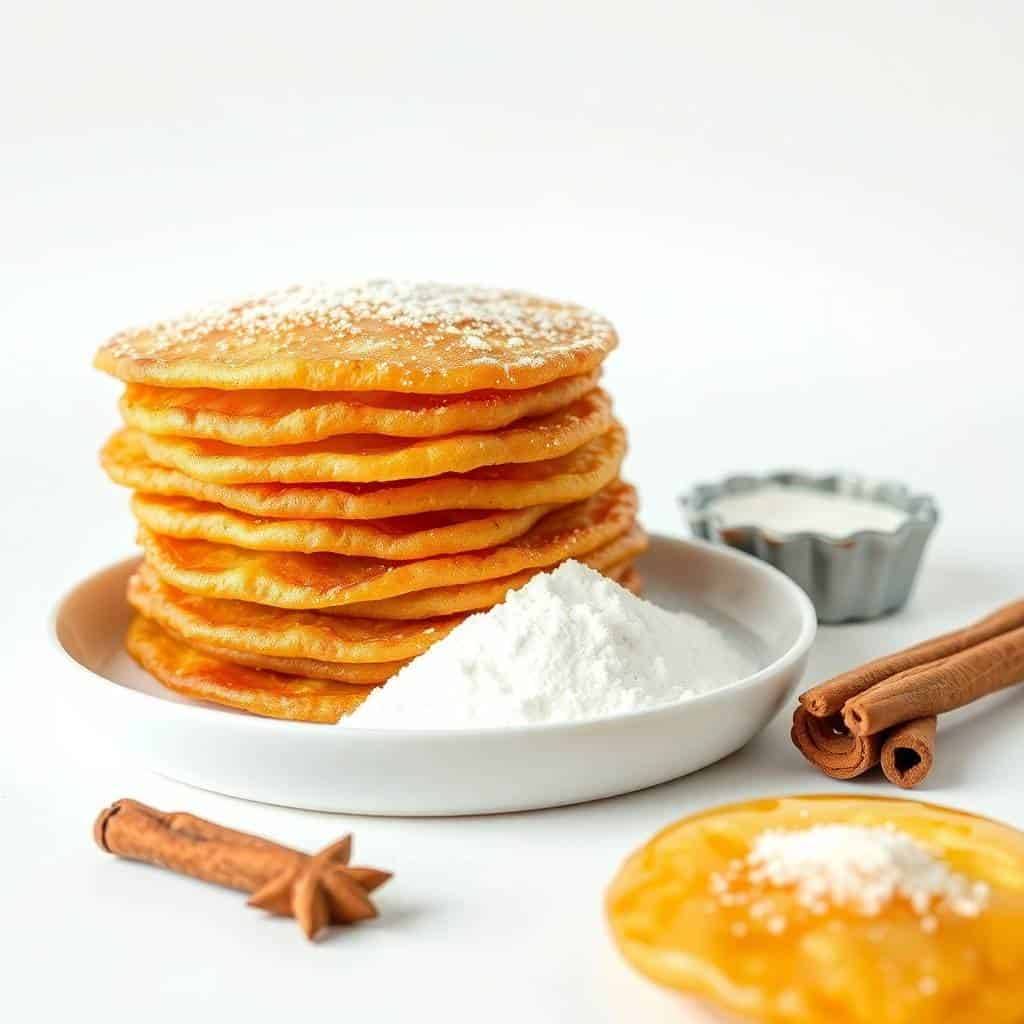
- Roll the Dough as Thin as Possible — This Is the Entire Recipe: The thickness of the rolled dough determines the finished texture more than any other factor in the recipe. A dough circle rolled to a uniform, almost translucent thinness — similar to a flour tortilla or just slightly thicker — fries into a buñuelo that shatters like a wafer and has the signature papery, delicate crunch. A dough circle that is rolled only moderately thin fries into something more like a soft pita — edible, even pleasant, but completely missing the defining characteristic that makes buñuelos so special. Take the time to roll each circle as thin as you possibly can without tearing it.
- Do Not Skip or Shorten the 30-Minute Rest: The 30-minute rest is not a suggestion — it is the step that makes the dough rollable. During the rest, the gluten strands that were tightened by kneading relax and become pliable, allowing the dough to be stretched thin without immediately springing back. Attempting to roll the dough without resting produces circles that shrink back to half their size the moment you lift the rolling pin and cannot be thinned sufficiently regardless of how much force is applied. If the dough rests and is still springing back significantly, it needs more time — cover it and wait another 10–15 minutes before trying again.
- Maintain Oil Temperature at 350°F Throughout: Oil temperature consistency is the key to buñuelos that are evenly golden rather than pale in some spots and dark in others. After each buñuelo is fried, the oil temperature drops slightly — allow it to recover to 350°F for 30–60 seconds before adding the next one. Consistently hot oil produces consistently golden, consistently crispy buñuelos; fluctuating temperature produces uneven results. Keep the heat at medium-medium/high and adjust as needed based on how quickly each buñuelo is browning.
- Coat in Cinnamon Sugar Immediately While Hot: The cinnamon sugar adheres most completely and most evenly to a hot, freshly fried buñuelo — the residual oil on the surface acts as an adhesive and the heat causes the sugar to partially caramelize into the surface rather than simply sitting on top. A cooled buñuelo has a drier surface that repels the sugar coating and produces patchy, uneven coverage. Transfer directly from paper towels to the cinnamon sugar within 30 seconds of coming out of the oil for the best, most even coating.
- Use Neutral Oil with a High Smoke Point: Vegetable, canola, and sunflower oil are all excellent choices — they have neutral flavors that do not compete with the delicate dough and cinnamon sugar, and high smoke points that allow frying at 350°F without burning. Avoid olive oil for frying buñuelos — its lower smoke point makes it prone to smoking at frying temperatures, and its distinctive flavor is noticeable in the finished dough. Fresh oil also produces better-tasting buñuelos than oil that has been used multiple times.
VARIATIONS
- Chocolate Drizzle Buñuelos: Allow the cinnamon-sugar-coated buñuelos to cool completely, then drizzle with melted semisweet chocolate using a fork or a piping bag. The dark chocolate against the golden, cinnamon-spiced buñuelo is a genuinely spectacular flavor combination — the slight bitterness of the chocolate plays beautifully against the sweet cinnamon coating. For a white chocolate version, melt white chocolate chips with a tiny amount of coconut oil and drizzle in the same manner for a sweeter, creamier visual contrast. These are the most impressive-looking variation and the one to make for a holiday dessert presentation.
- Orange Zest Buñuelos: Add 1 teaspoon of finely grated fresh orange zest to the dough along with the vanilla extract — the citrus oils in the zest perfume the entire dough with a bright, floral orange note that is particularly beautiful paired with the cinnamon sugar coating. Orange and cinnamon is one of the most classic and most beloved spice-citrus combinations in all of holiday baking, and in a buñuelo the pairing is extraordinarily good. This is the most sophisticated and most distinctively flavored variation and the one I make for guests who appreciate unexpected refinement in a simple recipe.
- Mini Buñuelos: Divide the dough into 25–30 smaller balls and roll each into 3–4 inch circles — the mini buñuelos are bite-sized, completely adorable, and perfect for dessert platters, holiday party serving, and snacking. They fry even faster than the full-sized version (approximately 20–30 seconds per side) and are easier for children to eat. A platter of mixed-size buñuelos in cinnamon sugar with a small bowl of chocolate sauce for dipping is one of the most visually appealing and most crowd-pleasing holiday dessert presentations I know. Find more party dessert ideas in our easy dessert recipes.
- Savory Buñuelos: Skip the sugar in the dough (or reduce to 1 teaspoon), skip the cinnamon sugar coating entirely, and serve the plain fried buñuelos sprinkled with flaky sea salt and a pinch of cumin. Serve with salsa, guacamole, or queso dip for scooping — the buñuelo's crackling thinness makes it an excellent vehicle for dips and works extraordinarily well as an alternative to chips for a crowd. This savory version is surprisingly versatile and works as an appetizer or snack alongside our cheesy taco dip or our classic guacamole.
- Honey Glazed Buñuelos: Instead of cinnamon sugar, drizzle warm honey generously over the freshly fried buñuelos while they are still hot — the honey soaks slightly into the hot, porous surface of the fried dough and creates a sticky, translucent glaze that is sweet, floral, and deeply satisfying. Sprinkle a tiny amount of ground cinnamon over the honey glaze for an additional spice layer. Honey-glazed buñuelos are stickier than the cinnamon sugar version and are best eaten immediately while the honey is still warm and fluid — they become progressively stickier as they cool and the honey thickens.
- Anise-Infused Traditional Buñuelos: Add ½ teaspoon of crushed anise seed to the dough along with the other dry ingredients — this is the most traditionally Mexican version of buñuelo dough, producing a subtly licorice-flavored base that is much more complex and more authentic than the plain vanilla version. The anise flavor is gentle rather than dominant, adding an herbal, slightly sweet undertone that pairs beautifully with the cinnamon sugar coating. This is the version to make when you want buñuelos that taste most like the ones from the street market stalls and family recipes that have been passed down through generations.
SERVING AND STORAGE
Serving
Serve buñuelos warm at room temperature, arranged loosely on a large platter — do not stack tightly while still warm as the steam will soften them. Pair with hot chocolate, coffee, or atole for the most traditional and most complete serving experience. For a holiday dessert presentation, arrange on a wooden board with small ramekins of warm honey and melted chocolate for dipping alongside the cinnamon-sugar-coated rounds. See our best Christmas dessert recipes and our easy dessert recipes for more holiday pairing ideas.
Storage
Store cooled buñuelos in a single layer or loosely stacked in an airtight container at room temperature for up to 2 days — do not refrigerate as the humidity of the refrigerator makes them soft and stale. For longer freshness, store in a container with a paper towel at the bottom and between layers to absorb any residual moisture. The dough can be made up to 24 hours ahead, wrapped tightly in plastic wrap, and refrigerated — bring to room temperature for 15 minutes before rolling. Frying and cinnamon sugar coating must be done the day of serving for best results.
FAQ
No — though both are fried doughs popular in Mexican and Latin American cuisine, they are quite different in both preparation and texture. Buñuelos are rolled paper-thin and fried into flat, crispy, cracker-like rounds that shatter with each bite. Sopapillas are made from a thicker dough that is cut into squares or triangles and puffed up during frying into pillowy, hollow, soft pastries. Both are delicious and both get the cinnamon-and-sweetness treatment, but their textures are completely different. Buñuelos are crispy and flat; sopapillas are soft and puffy.
Yes — baking is possible, though the texture is different from fried. Preheat the oven to 400°F, place the rolled-out dough circles on parchment-lined baking sheets, brush lightly with melted butter on both sides, and bake for 8–12 minutes until golden and crispy, flipping once halfway through. The baked version will not be as dramatically blistered and crackling as the fried version, but it produces a genuinely crispy, cracker-like result that is much lighter in oil content. Coat with cinnamon sugar immediately after removing from the oven while still hot for best adhesion.
Neutral oils with high smoke points — vegetable oil, canola oil, and sunflower oil — are all excellent choices. They produce no competing flavor in the finished buñuelo (which is mildly sweet and delicate) and maintain stable temperatures at 350°F. Avoid olive oil — its lower smoke point causes it to smoke and break down at frying temperatures, and its distinctive flavor is noticeable in the fried dough. Peanut oil also works well if there are no nut allergies and produces a very clean, neutral-tasting fry.
The two most common causes of dough that is difficult to roll thin are insufficient resting time and insufficient hydration. If the dough is springing back every time you try to roll it, it needs more time to rest — cover it and wait another 10–15 minutes before trying again. The gluten is still too tight to stretch. If the dough is crumbly or stiff rather than soft and elastic, it needs more liquid — add warm milk one tablespoon at a time, kneading it in completely before assessing whether more is needed. Properly rested and properly hydrated dough should roll thin with moderate effort and very little spring-back.
Yes — the dough can be made up to 24 hours ahead of time. After kneading, wrap the dough tightly in plastic wrap or place in an airtight container and refrigerate overnight. When ready to fry, remove the dough from the refrigerator and allow it to come to room temperature for 15–20 minutes before dividing and rolling — cold dough is stiffer and harder to roll thin than room-temperature dough. The frying and cinnamon sugar coating should always be done the same day as serving for the crispiest, freshest results.
Buñuelos are the treat that turns any gathering into a celebration — the sizzle of the oil, the cloud of cinnamon-sugar that rises when you coat each round, and the impossibly light crunch of the first bite are among the most joyful sensory experiences in all of home cooking. Make them with family, make them for a holiday, make them on any day when you want to feel festive without any particular occasion to justify it.
Try the orange zest version for the most aromatic result, the chocolate drizzle for maximum drama, and the anise-infused dough when you want the most traditional flavor. Pair with our churros, our cinnamon sugar french toast muffins, our best Christmas dessert recipes, and our easy dessert recipes for the complete holiday sweet spread. 🎊🍩✨

BUÑUELOS
Ingredients
For the Dough:
- 2 cups all-purpose flour
- 1 teaspoon baking powder
- ¼ teaspoon salt
- 2 tablespoons granulated sugar
- 2 tablespoons butter melted
- ½ cup warm milk
- 1 teaspoon vanilla extract
- Oil for frying
For Topping:
- ½ cup granulated sugar
- 1 tablespoon ground cinnamon
Instructions
Make the Dough:
- In a large bowl, mix flour, baking powder, salt, and sugar. Add melted butter, warm milk, and vanilla. Mix to form a soft dough.
Rest the Dough:
- Cover and let rest for 30 minutes. Then divide into 12–15 small balls.
Roll Out:
- On a floured surface, roll each ball into a thin circle, about 6–8 inches wide.
Fry:
- Heat oil in a deep skillet to 350°F (175°C). Fry each buñuelo one at a time until golden brown and crisp, about 1 minute per side. Drain on paper towels.
Coat with Cinnamon Sugar:
- Mix cinnamon and sugar in a shallow dish. While still warm, coat each buñuelo generously in the mixture.
Notes
Storage: Best eaten fresh, but can be stored in an airtight container for up to 2 days.
Serving Suggestions: Serve with piloncillo syrup, honey, or chocolate sauce.
Make Ahead: Dough can be made a day in advance and kept covered in the fridge.
Shaping Tip: Use a plate as a guide to get perfectly round shapes.


Comments
No Comments