
The salad that stops every conversation at the table the moment it is placed down — and that earns the most genuine "what is this?" followed by the most enthusiastic eating of any salad I serve during summer — is a peach caprese salad: alternating slices of ripe golden peach and fresh mozzarella fanned across a platter, layered with fresh basil, drizzled with balsamic glaze and good olive oil, and finished with flaky sea salt and cracked black pepper. It takes the logic of the classic Italian caprese — the sweetness of tomato, the creaminess of fresh mozzarella, the fragrance of basil, the acid of balsamic — and replaces the tomato with a ripe peach in a way that is simultaneously surprising and completely natural, as though it was always meant to be this way.
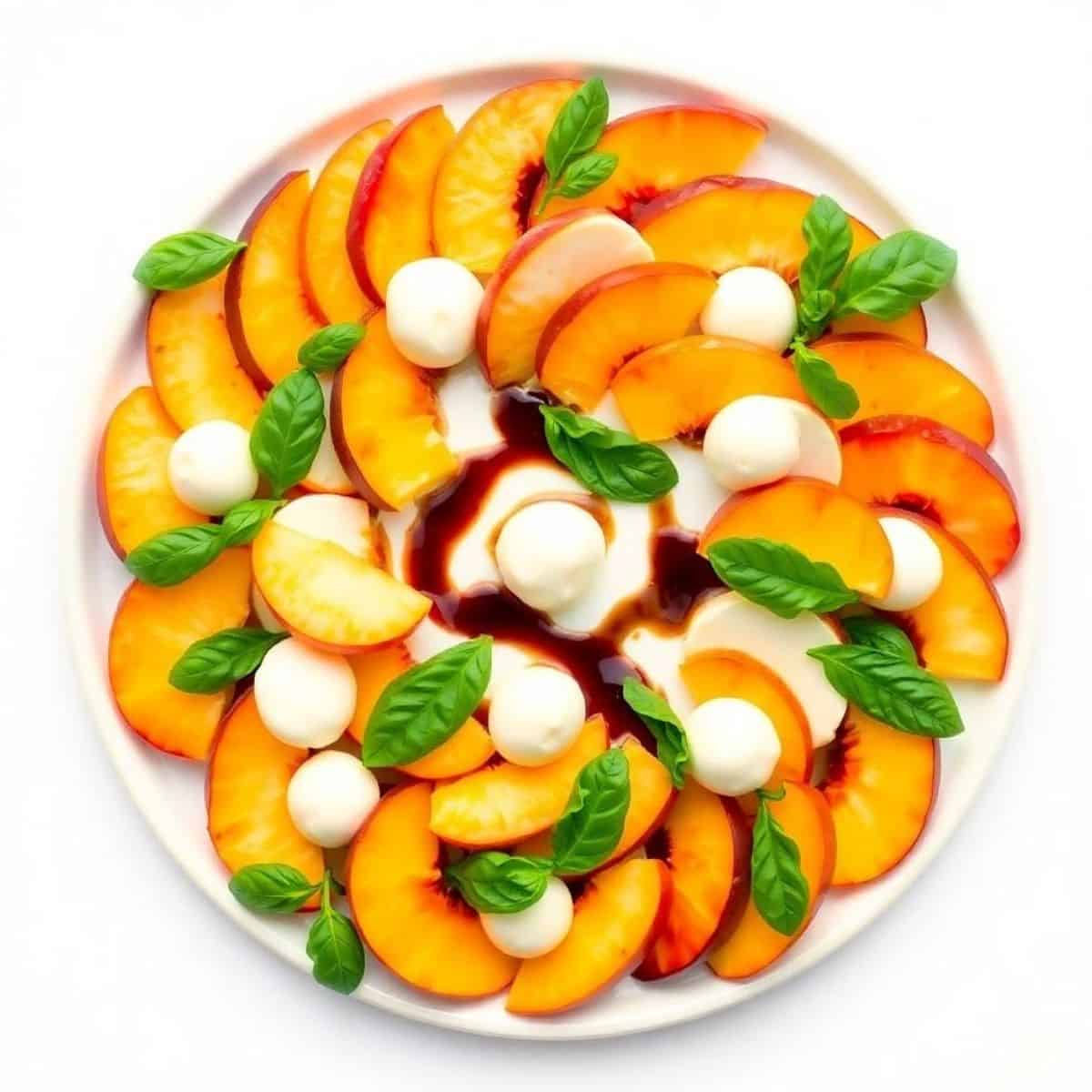
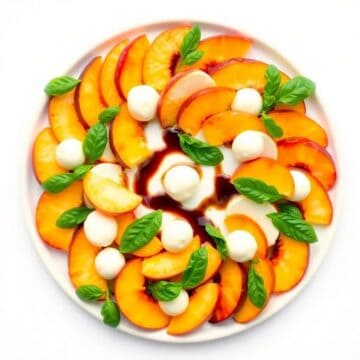
The peach caprese is genuinely one of summer's most beautiful salad presentations — the golden-to-blush slices of ripe peach alternating with the brilliant white rounds of mozzarella, the deep green basil scattered throughout, and the dark balsamic glaze drizzled across everything creates a color palette that is inherently stunning without any arrangement skill beyond the simple fanning of alternating slices. It looks like it came from a restaurant menu and costs a fraction of what that restaurant would charge, and it takes under 10 minutes to assemble from the moment the peaches are sliced.
This post covers the classic peach caprese in full detail plus five variations — a peach and burrata caprese, a grilled peach caprese, a peach and prosciutto caprese, a peach caprese with candied walnuts and goat cheese, and a watermelon and peach caprese that is the most dramatically colorful and most summer-forward version. Every variation uses the same foundational technique and every variation produces a platter that earns genuine admiration at any summer table. Find more summer salad inspiration in our watermelon salad and our grilled peaches with burrata.
Let's make the most beautiful salad of the entire summer!
WHY YOU WILL LOVE THIS RECIPE
- Ten Minutes from First Slice to Platter on the Table: The peach caprese has three active preparation steps — slicing the peaches, slicing the mozzarella, and arranging on a platter — none of which require cooking, timing, or technique beyond careful knife work and a basic sense of visual arrangement. The entire salad is assembled in under 10 minutes and every minute of that time is active, engaged, and genuinely satisfying. It is simultaneously the fastest and one of the most genuinely impressive summer salad preparations available.
- The Sweet-Salty-Acidic-Creamy Balance Is Genuinely Perfect: The peach caprese achieves the same fundamental flavor balance that makes the classic tomato caprese so enduring — a sweet component (the ripe peach replacing the tomato), a creamy-neutral component (the fresh mozzarella), an aromatic herb component (the basil), and an acidic-sweet finishing element (the balsamic glaze) — but the peach's more intensely sweet, more fragrant, more distinctly seasonal character makes the combination feel more special and more surprising than the classic version, which every guest has encountered many times before.
- Works as Appetizer, Salad Course, and Side Dish Simultaneously: The peach caprese is genuinely appropriate in every meal position — as a passed appetizer with small forks at a cocktail party, as a composed salad course before the main at a sit-down dinner, as a side salad alongside grilled daily protein needs at a backyard gathering, or as a light lunch with good bread. No other summer salad crosses as many meal contexts as elegantly and as naturally as a well-made peach caprese.
- The Ingredient Quality Does All the Work: Peach caprese is one of the rare preparations where the quality of the individual components determines the outcome more completely than any technique — a ripe, fragrant summer peach, a high-quality fresh mozzarella packed in water, fresh basil with deeply green aromatic leaves, a genuine balsamic reduction rather than a thin commercial drizzle, and the best available benefits of olive oil produce a salad that is genuinely extraordinary. Mediocre versions of any of these components produce a mediocre result regardless of how carefully the salad is assembled.
- The Most Photogenic Summer Salad Available: The visual of alternating golden peach and white mozzarella slices fanned across a white plate with bright green basil and dark balsamic drizzle is genuinely one of the most Instagram-worthy food presentations available from a home kitchen — restaurants charge premium prices for this presentation specifically because it is so striking. The color contrast, the alternating pattern, and the glossy balsamic drizzle combine to produce a platter that looks professionally styled without any styling effort.
- Celebrates Peak Peach Season in Its Most Pure and Most Elegant Expression: The peach caprese does not cook the peach, does not add sugar, does not caramelize or concentrate the peach's character — it presents the ripe summer peach exactly as it is, in the most flattering and most complementary context available. This is the salad to make specifically during the 3–4 week window when local peaches are at their absolute peak, and to make as many times as that window allows. Find more peak-season peach ideas in our fresh peach cobbler and our peach bellini popsicles.
INGREDIENTS
- 4 ripe but firm peaches — sliced into ¼-inch thick rounds or half-moons. The peach does not need to be peeled for this salad — the skin provides color contrast and the texture is not unpleasant in thin slices. If you prefer a cleaner appearance, peel using the blanching method
- 16 oz fresh mozzarella — sliced ¼-inch thick. Use the highest quality fresh mozzarella available — packed in water, genuinely fresh, never the pre-sliced commercial variety. Buffalo mozzarella produces the most extraordinary result
- 1 cup fresh basil leaves — whole small leaves or very roughly torn larger ones. Added at the very last moment before serving to prevent browning
- 3 tablespoons balsamic glaze — either store-bought or homemade by reducing ½ cup balsamic vinegar to a syrupy consistency over medium heat for 8–10 minutes
- 3 tablespoons good extra-virgin olive oil — the best bottle available, used as a finishing drizzle
- Flaky sea salt — Maldon or fleur de sel
- Freshly cracked black pepper — more generously than seems comfortable
- Optional: honey for additional drizzle, lemon zest for brightness, microgreens for garnish
DIRECTIONS
- Step No.1: Prepare and slice the components
Remove the mozzarella from its liquid and pat dry thoroughly with paper towels — excess moisture from the packing liquid pools on the plate and dilutes the olive oil and balsamic drizzle. Slice into ¼-inch rounds. Slice peaches into ¼-inch thick rounds cutting from stem to base around the pit, or slice each halved peach into ¼-inch half-moon slices. Peach slices should be approximately the same diameter as the mozzarella rounds for the most aesthetically balanced alternating presentation — choose the slicing method that produces peach pieces closest in size to your mozzarella slices. Work quickly after slicing peaches as the cut surfaces begin oxidizing within minutes — add lemon juice to the slices immediately or proceed directly to assembling the platter.
- Step No.2: Arrange the platter
Choose a wide, flat serving platter — white or neutral colored to maximize the visual contrast of the peach, mozzarella, and basil. Begin arranging the alternating slices in a fan pattern across the platter — one peach slice, one mozzarella slice, one peach slice, one mozzarella slice — overlapping each slice slightly over the previous one so the alternating colors are visible throughout the fan. Arrange in a single line across the center of the platter, in a circular pattern around the rim, or in a more casual scattered arrangement depending on the platter shape and the aesthetic preference. Tuck whole basil leaves into the gaps between slices throughout the arrangement — they should be visible between every second pair of slices rather than concentrated in one area.
- Step No.3: Dress and finish
Drizzle olive oil in a thin, continuous stream across the entire platter — across both the peach and mozzarella surfaces. The olive oil should be present on every component but should not pool on the platter surface. Drizzle the balsamic glaze in the same manner — in a thin, continuous stream across the entire platter creating a pattern of dark lines across the lighter components. The balsamic should be thick enough to hold its shape as a drizzle rather than running freely — if your balsamic glaze is too thin, reduce it further or use a good quality store-bought glaze. Finish with a generous pinch of flaky sea salt scattered across the entire surface and a crack of black pepper. Add any optional garnishes — lemon zest, a small drizzle of honey, a scatter of microgreens.
- Step No.4: Add basil and serve immediately
Add any additional basil leaves that were not tucked between slices as a final scatter across the top of the dressed platter — basil goes on last and the salad should be served within 5 minutes of adding basil, as the heat from the platter surface and the acidity of the balsamic begin browning basil leaves within minutes of contact. Serve immediately at room temperature — this salad should not be refrigerated after assembly as cold mutes the peach fragrance and firms the mozzarella. If preparing components slightly ahead, keep sliced peaches and mozzarella separately refrigerated and assemble directly before serving.
TIPS FOR SUCCESS
- Use the Most Fragrant Peaches Available — This Is the Entire Salad: The peach in this salad is not a supporting player — it is the primary flavor and the primary visual component of the entire preparation. A peach that has no fragrance will produce a salad that tastes of very little — sweet water with mozzarella. A peach that smells deeply fragrant at the stem end and tastes of concentrated summer will produce a salad that is genuinely extraordinary. Buy peaches from a farmer's market at the height of the season and smell every peach before buying it. This 30-second selection effort is the single most impactful thing you can do for this salad.
- Use Block Mozzarella Packed in Water — Not Pre-Sliced: Pre-sliced fresh mozzarella that comes vacuum-packed without water has already lost a significant portion of its fresh milk character and produces a salad that tastes noticeably more bland than one made with fresh mozzarella packed in water. The block of fresh mozzarella packed in water is the correct ingredient for this salad — it is the most freshly flavored, the most appropriately creamy in texture, and the most beautifully white in color. Buffalo mozzarella (made from water buffalo milk rather than cow's milk) produces the most extraordinary result of all — its flavor is richer, more complex, and more genuinely Italian than standard cow's milk fresh mozzarella.
- Pat the Mozzarella Thoroughly Dry Before Slicing: Fresh mozzarella packed in water releases moisture continuously after it is removed from its packaging — moisture that pools on the plate under the slices, dilutes the olive oil and balsamic, and makes the platter presentation appear wet and unappetizing within minutes of assembly. Pat the entire block thoroughly dry with multiple paper towel changes before slicing, and slice onto a paper towel that absorbs the additional moisture released at each cut surface. The drier the mozzarella going onto the plate, the longer the salad maintains its beautiful presentation quality at the table.
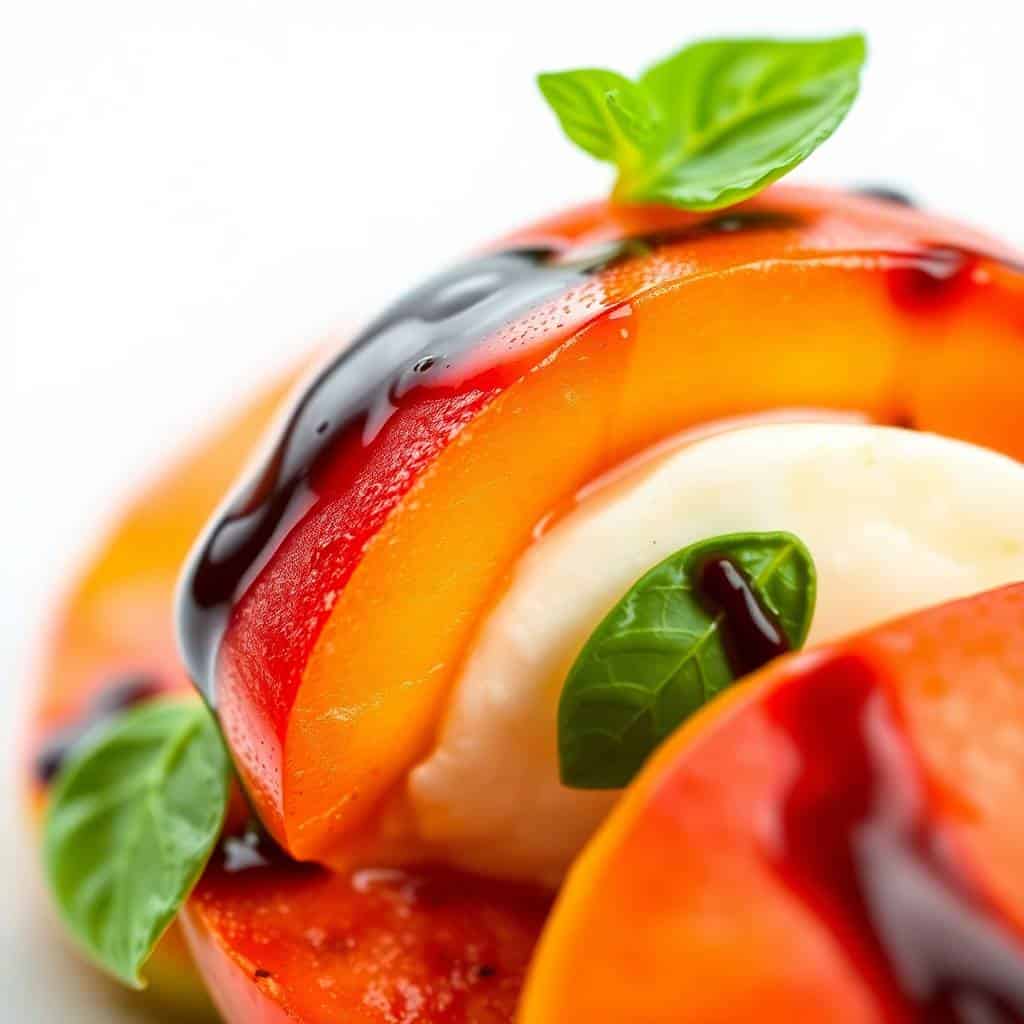
- The Balsamic Must Be a Glaze — Not Thin Balsamic Vinegar: Thin balsamic vinegar drizzled on a caprese salad runs off every component immediately, pools on the plate below, and produces a sour, flat flavor rather than the sweet-acidic complexity of properly reduced balsamic. The balsamic glaze — whether homemade by reducing ½ cup balsamic in a saucepan to 2–3 tablespoons of thick syrup, or a good quality store-bought glaze — clings to the peach and mozzarella surfaces, releases its flavor gradually, and provides the visual drama of dark lines against the pale components. Never use thin balsamic vinegar directly from the bottle on a caprese presentation.
- Season More Generously Than Seems Comfortable: Fresh mozzarella is naturally very mild in flavor — it provides creaminess and texture but very little seasoning. Peaches provide sweetness and fragrance but no salt. This means the salt and pepper finishing the salad must do significant seasoning work across a large volume of mildly flavored ingredients — season more generously with flaky salt and cracked pepper than you would season a meat or vegetable preparation. The salad should taste distinctly seasoned when tasted together rather than needing more salt after assembly.
VARIATIONS
- Peach and Burrata Caprese: Replace the fresh mozzarella slices with 2–3 whole balls of room-temperature burrata placed at intervals across the peach slice arrangement rather than interspersed as slices. The burrata version is the most indulgent and the most dramatically beautiful of all the variations — the intact burrata balls on the platter become the visual focus, and when torn at the table the flowing stracciatella cream pools across the peach slices and balsamic in a way that is genuinely extraordinary. See our complete grilled peaches with burrata recipe for the full burrata technique.
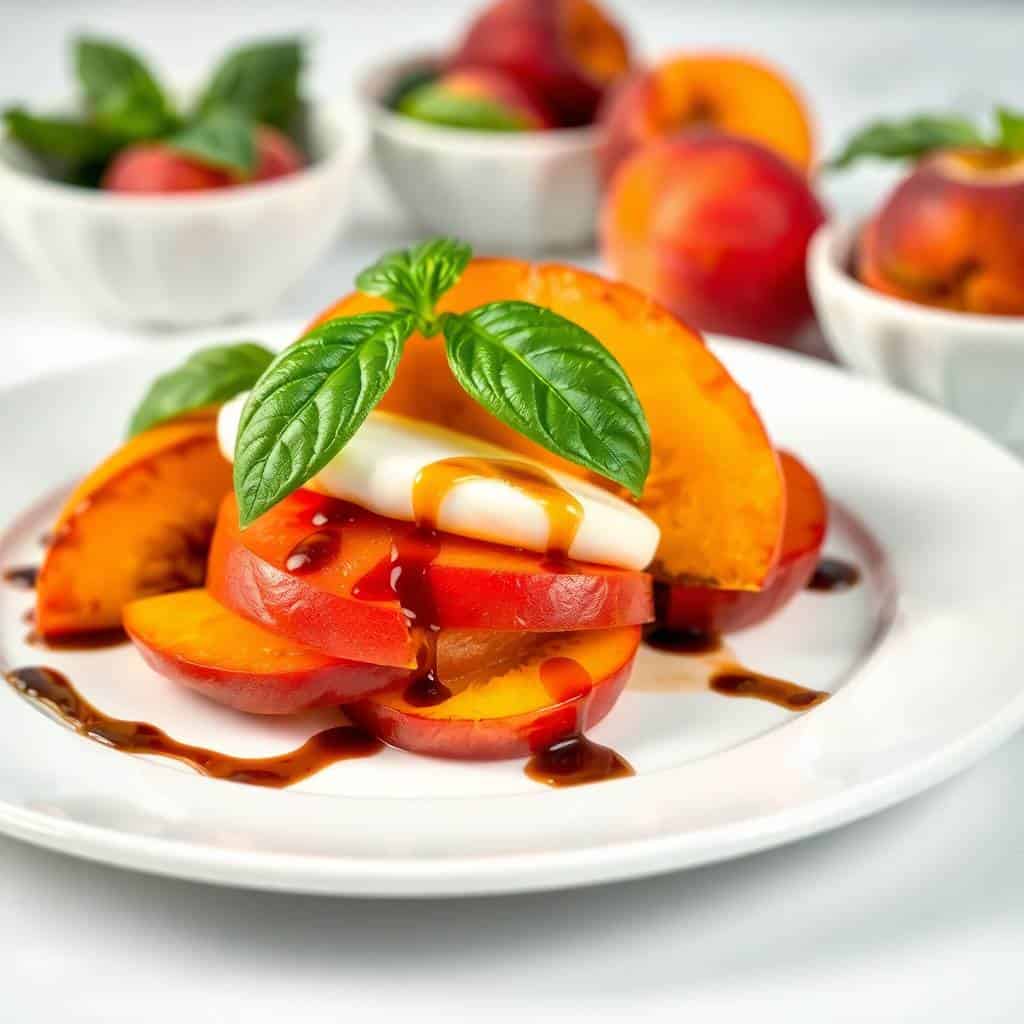
- Grilled Peach Caprese: Grill peach halves cut-side down at medium-high heat for 3–4 minutes until caramelized, slice into wedges while still warm, and arrange on the platter with the mozzarella while the peach is still slightly warm. The warm caramelized grilled peach against the cool fresh mozzarella creates the temperature contrast that makes our grilled peaches preparations so compelling, and the caramelized surface of the peach provides a more complex flavor than raw peach that elevates the entire caprese into something more deeply flavored and more genuinely sophisticated.
- Peach and Prosciutto Caprese: Drape 4–6 thin slices of prosciutto crudo in casual folds across the assembled peach-mozzarella platter before the balsamic and olive oil drizzle. The prosciutto's salty, slightly savory character transforms the peach caprese from a purely fresh salad into something that reads more definitively as a sophisticated appetizer and that is more substantial as a first course. The combination of sweet peach, salty prosciutto, creamy mozzarella, and basil-balsamic dressing is one of Italian cuisine's most classically complementary flavor groupings in a single preparation.
- Peach Caprese with Candied Walnuts and Goat Cheese: Replace fresh mozzarella with crumbled goat cheese scattered across the peach slices and add ¼ cup of candied walnuts as a finishing component. Replace basil with fresh arugula for a peppery green note that suits the tangier goat cheese. The goat cheese and candied walnut version is the most complex and the most fall-appropriate of all the variations — it bridges the gap between summer peach season and the earliest fall flavors and works beautifully as the nights begin to cool while peaches are still available. Dress with a honey-lemon vinaigrette rather than straight balsamic glaze for this version.
- Watermelon and Peach Caprese: Replace half the peach slices with equally-sized slices of seedless watermelon — the most dramatically colorful and the most intensely summery of all the caprese variations. The vivid pink-red watermelon against the golden peach against the white mozzarella produces one of the most beautiful three-color food presentations available in summer, and the flavor combination of watermelon's light fresh sweetness with peach's deeper floral sweetness alongside the mozzarella and balsamic is genuinely outstanding. See our watermelon salad for more watermelon-mozzarella inspiration.
SERVING AND STORAGE
Serving
Serve peach caprese at room temperature immediately after assembly — cold temperatures mute the peach's fragrance and the mozzarella's delicate flavor and firm the mozzarella's texture in a way that is less pleasant than its natural room-temperature creaminess. Accompany with good crusty bread for absorbing the pooled olive oil and balsamic on the platter — the residual dressing is genuinely one of the most extraordinary bread-dipping preparations available at any summer table. For a dinner party starter, bring the assembled platter to the table before guests sit down so they see it in its most beautiful fully-dressed state before serving begins.
Storage
Peach caprese does not store well in its assembled form — the basil blackens, the peach oxidizes and releases juice, and the mozzarella weeps moisture within 30–60 minutes of assembly. This is a make-to-order preparation that should be assembled directly before serving. For advance preparation: slice the mozzarella and store in its original liquid in the refrigerator up to 24 hours; slice peaches immediately before assembly and add lemon juice to prevent oxidation; make the balsamic reduction up to 2 weeks ahead and store in a sealed jar. The 10-minute assembly time is genuinely fast enough that advance preparation beyond the components themselves is not practically necessary.
FAQ
Peach caprese is a make-to-order preparation — it cannot be assembled ahead of time and maintained in good quality. The basil blackens within 15–20 minutes of contact with the balsamic, the peach oxidizes and releases juice, and the mozzarella continues weeping moisture. For practical advance preparation: slice and refrigerate the mozzarella in water up to 24 hours ahead; make the balsamic glaze up to 2 weeks ahead; have all garnishes ready. The 10-minute assembly at serving time is the most practical approach. If serving at a party where you need to prepare ahead, assemble without dressing and basil up to 30 minutes before and add the dressing and basil only at the last moment before guests see the platter.
Peeling is optional and a genuine aesthetic preference rather than a flavor or texture necessity. Unpeeled peaches in caprese provide color contrast from the skin's blush-to-red tones against the golden flesh, and thin peach slices have skin that is not unpleasantly chewy or tough. Peeled peaches produce a more uniformly golden appearance and a slightly more refined presentation. If peeling: use the blanching method — score an X at the base, boil 30–45 seconds, transfer to ice water, and slip the skin off by hand. For a 10-minute salad where time matters, leaving the skin on is entirely appropriate and produces a beautiful result.
Fresh mozzarella packed in water is the correct type for any caprese preparation — it has the appropriate fresh milk flavor, the appropriate soft and slightly yielding texture, and the brilliant white color that provides the visual contrast against the other caprese components. Buffalo mozzarella (fior di latte di bufala) is the most extraordinary option available — richer, more complex, and more authentically Italian than cow's milk fresh mozzarella. Avoid: pre-shredded mozzarella (entirely wrong texture and flavor), low-moisture block mozzarella (too firm, wrong flavor profile), and fresh mozzarella that comes vacuum-packed without water (has lost its freshness). The mozzarella should be at room temperature before serving — remove from the refrigerator 30 minutes ahead.
The classic caprese dressing is simply good olive oil and balsamic glaze — no vinaigrette, no emulsification, no additional ingredients beyond flaky salt and cracked pepper. The olive oil provides richness and carries the peach and basil aromatics; the balsamic glaze provides the sweet-acidic complexity that makes every component taste brighter and more complete. The dressing should be applied as two separate drizzles rather than combined — olive oil first, balsamic glaze second. A small addition of good honey over the balsamic drizzle is a popular and genuinely excellent enhancement that adds warmth and amplifies the peach's sweetness without competing with the other components.
Peach caprese is specifically a peak-season summer salad — its extraordinary quality depends entirely on ripe, fragrant, genuinely sweet local peaches that are available during a 3–4 week window in July and August in most regions. Outside of peak peach season, the salad is significantly less impressive since underripe or out-of-season peaches lack the fragrance and sweetness that make the preparation genuinely outstanding. Make peach caprese specifically during the farmer's market peak season window and as many times as that window allows — it is one of the most genuinely seasonal and most time-sensitive preparations in the entire summer repertoire.
Peach caprese is the 10-minute summer salad that earns the most immediate and the most genuine admiration of any preparation in the seasonal repertoire — make it with the best peaches available during peak season and serve it immediately at room temperature for the most extraordinary result possible from so few ingredients and so little effort.
Try the burrata version for the most indulgent and most dramatic presentation, or the grilled peach version for the most complex and most deeply flavored result. Pair with our grilled peaches, our fresh peach cobbler, our peach bellini popsicles, and our watermelon salad for the complete summer peach and salad collection. 🍑🧀✨
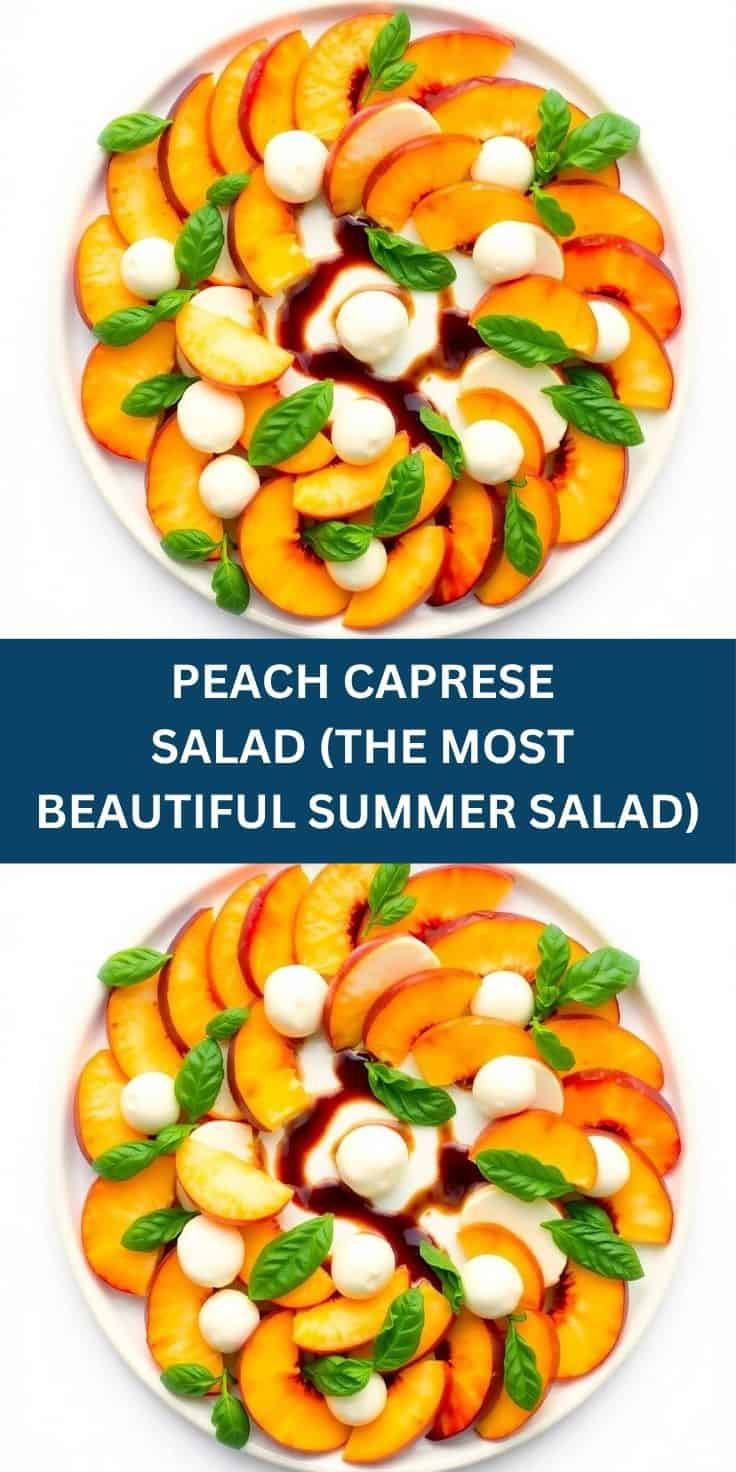
PEACH CAPRESE SALAD (THE MOST BEAUTIFUL SUMMER SALAD)
Equipment
- Serving platter
- Sharp knife
- Cutting board
- Small spoon (for drizzle)
Ingredients
Salad Base:
- 3 fresh peaches sliced
- 1 cup fresh mozzarella balls
- ½ cup fresh basil leaves
Dressing:
- 2 tablespoon olive oil
- 2 tablespoon balsamic glaze
- ¼ teaspoon salt
- ¼ teaspoon black pepper
Instructions
Prepare Ingredients:
- Slice peaches and mozzarella into even pieces and wash basil leaves.
Assemble Salad:
- Arrange peach slices, mozzarella, and basil alternately on a serving platter.
Season:
- Drizzle olive oil and balsamic glaze evenly over the salad.
Finish:
- Sprinkle with salt and black pepper to taste.
Serve:
- Serve immediately as a fresh summer appetizer or side dish.
Notes
- Use ripe but firm peaches for best texture.
- Add prosciutto for a savory twist.
- Best served fresh to avoid watery fruit.

Comments
No Comments