
I made this pork loin roast for the first time two Christmases ago, and I still think about how the kitchen smelled when that cranberry-orange glaze started caramelizing in the oven. It was one of those moments where I thought, okay, I actually pulled this off. My husband walked in, sniffed the air, and immediately asked what we were having — which is the highest compliment he gives.
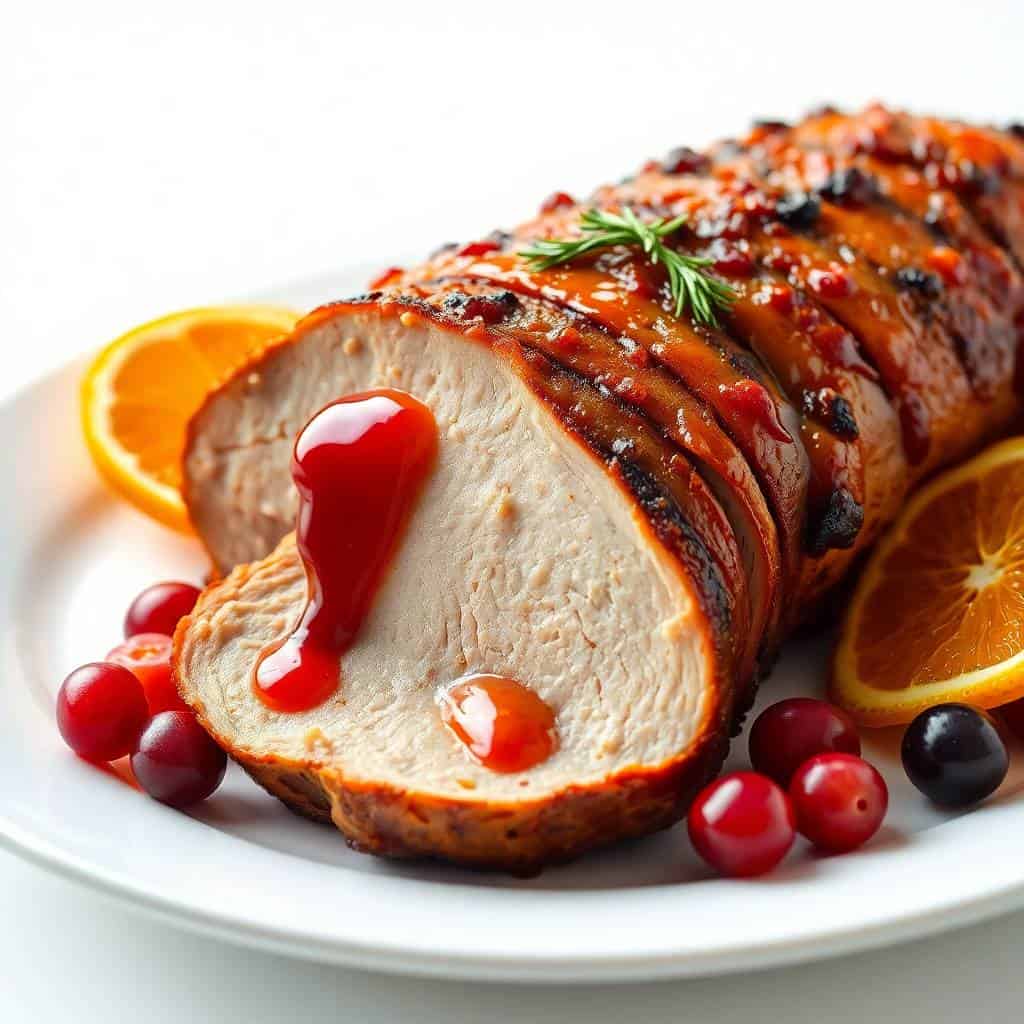
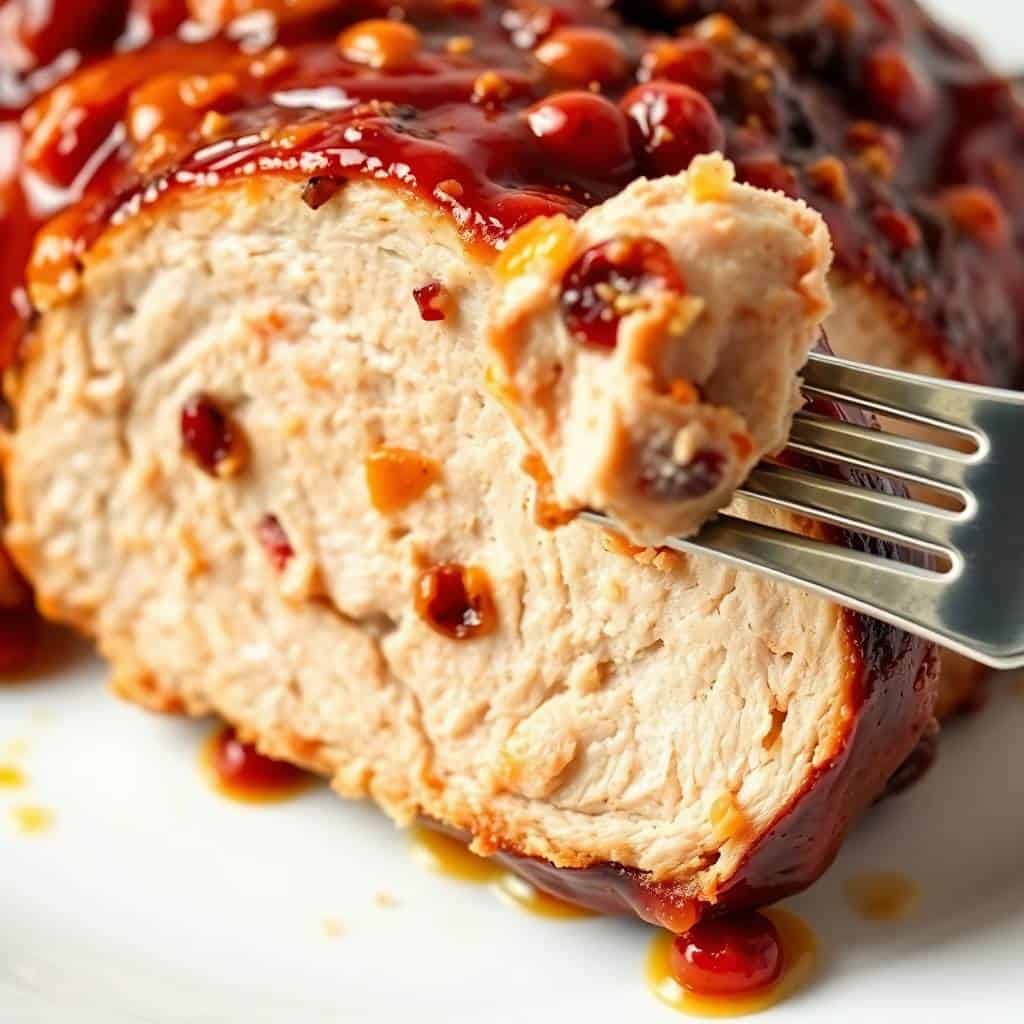
What I love about this recipe is that the glaze does all the heavy lifting. You simmer cranberries with orange juice, honey, garlic, and a little Dijon until it thickens into something deeply savory and just a little tart. That glaze goes over the pork twice — once before it goes in the oven and once halfway through — and by the time it comes out, the outside has this sticky, glossy coating that looks way more impressive than the effort it took. The sear at the beginning is non-negotiable, though. I skipped it once to save time and the roast came out pale and sad. Never again.
This is the roast I make when I need something that feels like a real occasion. Saad doesn't usually get excited about pork, but he ate two slices of this and asked if there were leftovers for the next day. We serve it with roasted potatoes with baked feta and garlic on the side, which is a combination I will stand behind completely. My husband adds extra glaze on his plate every single time.
One thing to know before you start: this isn't a quick weeknight dinner. From prep to resting time, you're looking at close to 90 minutes. But most of that is hands-off oven time, so you're not standing over anything. I usually prep the glaze the night before, which cuts down the day-of work considerably and actually makes the flavors a little deeper.
Why You'll Love This Recipe
- The glaze is genuinely special: I've made a lot of fruit-based glazes for pork over the years, and this one is the one I keep coming back to. The cranberries give it real tartness, the orange juice brightens everything, and the honey rounds the edges. It's not sweet in a cloying way — it actually tastes like something you'd get at a restaurant and wonder how they did it.
- It looks like a showpiece with very little fuss: I'm not someone who has time to fuss over a centerpiece roast for three hours. This one gets a quick sear, goes in the oven, gets basted once, and comes out looking like you put in way more work than you did. Slice it at the table with the extra glaze on the side and everyone thinks you're a genius.
- The glaze doubles as a sauce: I always make the full batch of glaze from the longer ingredient list below, even though the WPRM card uses half a cup of orange juice. That way there's enough left over to serve at the table. People pour it over everything — the pork, the potatoes, even the bread.
- Make-ahead friendly: The glaze keeps in the fridge for two days without any problem, and you can season and sear the pork the morning of and let it sit in the fridge until you're ready to roast. On big holiday dinners when counter space is precious and everyone is trying to use the kitchen at the same time, being able to prep this in stages is genuinely helpful.
- The leftovers are excellent: Cold slices of this pork the next day, on bread with a little mustard, might actually be better than the original meal. I've also shredded leftovers and warmed them with a splash of the reserved glaze, and that's basically a whole new meal right there. I make a double batch of glaze specifically so I have extra for reheating purposes.
Ingredients
- 3 to 4-pound boneless pork loin roast
- 1 tablespoon olive oil
- 1 teaspoon salt
- ½ teaspoon black pepper
- 1 teaspoon dried thyme
- 1 teaspoon dried rosemary
- 1 cup fresh or frozen cranberries
- ½ cup orange juice (freshly squeezed is better, but bottled works)
- 2 tablespoons orange zest
- ⅓ cup honey or maple syrup
- 2 tablespoons Dijon mustard
- 4 cloves garlic, minced
- Fresh rosemary or thyme sprigs for garnish (optional)
Directions
- Preheat the oven: Set your oven to 375°F (190°C) and let it fully preheat before anything goes in. A properly preheated oven makes a real difference in how the glaze sets on the surface of the meat.
- Make the glaze: In a small saucepan over medium heat, combine the orange juice, orange zest, cranberries, honey, Dijon mustard, and garlic. Stir occasionally and let it simmer for about 8–10 minutes, until the cranberries have burst and the mixture has thickened enough to coat the back of a spoon. Take it off the heat and set aside.
- Season the pork: Pat the pork loin completely dry with paper towels — this step matters for the sear. Rub it all over with olive oil, then season generously with salt, pepper, thyme, and rosemary.
- Sear the pork: Heat a heavy skillet (cast iron is great here, but any heavy skillet works) over medium-high heat until it's properly hot. Sear the pork on all sides, about 2–3 minutes per side, until golden brown all around. This builds flavor and helps seal the surface so the glaze has something to cling to.
- Glaze and roast: Transfer the pork to a roasting pan or a baking dish. Pour half the cranberry-orange glaze over the top and spread it to coat. Roast for 50–60 minutes total.
- Baste halfway through: At the 25–30 minute mark, spoon or brush more glaze over the top. Keep the rest warm for serving. Continue roasting until a meat thermometer inserted into the thickest part reads 145°F (63°C).
- Rest before slicing: Pull the roast from the oven and let it rest, uncovered, for 10 minutes. This is the step I used to rush and regret — if you cut into it too soon, the juices run all over the cutting board and you lose them. Let it rest. Then slice and serve with the remaining warm glaze drizzled over the top.
Tips for Success
- Don't skip the sear: I know it's tempting to just throw everything in the oven and save yourself a pan to wash, but the sear is where a lot of the flavor lives. The first time I made this without searing, the outside stayed pale and soft and the glaze just sat on top instead of bonding with the crust. Take the 10 minutes to do it — it changes the texture completely.
- Use a meat thermometer: Pork loin is lean, which means it goes from perfect to dry very quickly past 145°F (63°C). I've overcooked this before by relying on timing alone — ovens vary, roast sizes vary, and a $10 instant-read thermometer from Walmart is the only thing that guarantees you pull it at the right moment. It's one of the most useful cheap tools in my kitchen.
- Let the glaze thicken properly: The glaze should be syrupy enough that when you dip a spoon in and lift it out, the coating stays on the back of the spoon instead of running off immediately. If it's too thin, it'll just pool at the bottom of the roasting pan and not coat the meat. Give it a few more minutes of simmering if it seems loose.
- Make the glaze ahead if you can: If I'm making this for a holiday dinner, I make the glaze the evening before and store it in a jar in the fridge. It thickens more as it cools, so I warm it gently on the stove before using. The flavors also mellow and develop overnight, which I think makes it taste even better.
- Tent with foil if the top is browning too fast: If you check on the roast at the halfway point and the glaze is darkening faster than you'd like, loosely lay a piece of foil over the top for the rest of the cooking time. This has saved me more than once. You still get the caramelized coating, just without the burnt edges.
Variations
- Add warm spices to the glaze: A pinch of cinnamon, a tiny bit of ground cloves, or even a crack of cardamom in the glaze takes this in a more warming, holiday direction. I tested this version for a Thanksgiving dinner and my mother-in-law asked me for the recipe, which felt like a genuine win. It pairs especially well if you're serving it alongside roasted root vegetables.
- Use dried cranberries if that's what you have: Fresh or frozen cranberries are ideal because they break down into the glaze and give it body, but if all you have are dried cranberries, soak them in the orange juice for 20 minutes first. They won't burst the same way, but the glaze will still have good flavor. Just blend it briefly at the end if you want a smoother consistency.
- Make it a sheet pan dinner: Scatter halved baby potatoes, carrot chunks, and a few shallots around the pork in the roasting pan before it goes in the oven. They roast in the pan drippings and catch some of the glaze as it runs. I've done this on weeknights when I don't have time to make two separate dishes, and it works really well — one pan, one oven, done.
- Try it with bone-in chicken thighs: If you can't find pork loin or just want something faster, bone-in chicken thighs take this glaze beautifully. Reduce the oven time to about 35–40 minutes at the same temperature and check that the internal temp hits 165°F (74°C). The cranberry-orange glaze works just as well on dark meat chicken.
- Add a hit of heat: A pinch of red pepper flakes stirred into the glaze right at the end gives you a little warmth underneath all that sweetness. My husband prefers this version — he says the plain version is too sweet for him without something to cut through it. I don't always add it, but I mention it every time because it genuinely changes the character of the dish.
Serving and Storage
Serving
Slice the rested pork into thick pieces and arrange on a platter with the warm glaze spooned over the top. I always put extra glaze in a small pitcher on the table because people go back for more. This roast works well alongside roasted potatoes with baked feta and garlic, steamed green beans, or a simple green salad. If you want a full holiday spread, the cranberry brie bites in puff pastry make a brilliant starter before this comes to the table — the cranberry thread through both courses ties everything together nicely.
Storage
Let the pork cool to room temperature before storing. Wrap slices in foil or layer them in an airtight container with a spoonful of glaze between layers to keep them from drying out. They keep in the fridge for up to 4 days. To reheat, I add a splash of orange juice or water to the container, cover tightly, and warm in a low oven (300°F / 150°C) for about 15 minutes — microwave works too, but go low and slow on the power setting so the meat doesn't toughen up. For freezing, wrap individual slices tightly and freeze for up to 3 months; thaw overnight in the fridge and reheat gently the same way.

Frequently Asked Questions
Can I use pork tenderloin instead of pork loin?
Yes, but watch your timing carefully — pork tenderloin is much thinner and cooks significantly faster than a full pork loin roast. At 375°F (190°C), a 1-pound tenderloin usually hits 145°F (63°C) in about 20–25 minutes. Use your meat thermometer and check early so you don't overcook it.
Can I make the cranberry-orange glaze ahead of time?
Absolutely — I actually recommend it. Make the glaze up to two days in advance and store it in a jar or airtight container in the fridge. It thickens considerably as it cools, so warm it in a small saucepan over low heat before using it on the pork. Stir in a teaspoon or two of orange juice if it needs loosening.
What if I don't have fresh or frozen cranberries?
Dried cranberries work, but soak them in the orange juice for at least 20 minutes before you start cooking so they have time to rehydrate. They won't burst and break down the same way fresh cranberries do, so if you want a smooth glaze, use an immersion blender or a regular blender to blend it briefly after simmering. The flavor will still be good.
Can I cook this in a slow cooker?
Yes. Sear the pork first — don't skip that part even for a slow cooker, because the crust adds real flavor — then place it in the slow cooker and pour the glaze over the top. Cook on low for 6–7 hours. The glaze won't caramelize the way it does in the oven, so for the last 15 minutes, transfer the pork to a baking sheet and run it under the broiler for a few minutes to get that sticky, lacquered finish.
How do I keep the pork from drying out?
Three things: don't overcook it past 145°F (63°C), baste it at the halfway point, and let it rest the full 10 minutes before you slice it. Pork loin is lean, and it dries out fast once it goes past temperature. The resting step isn't optional — it lets the juices redistribute back into the meat instead of running out the moment you cut it.

ORANGE CRANBERRY PORK LOIN ROAST
Ingredients
- 3 lbs pork loin roast
- 2 tablespoons olive oil
- 1 teaspoon salt
- ½ teaspoon black pepper
- 1 teaspoon dried thyme
- 1 teaspoon dried rosemary
- 1 cup fresh or frozen cranberries
- ½ cup orange juice
- 2 tablespoons honey
- 1 teaspoon orange zest
- 2 cloves garlic minced
Instructions
- Preheat Oven: Preheat oven to 375°F (190°C).
- Prepare Pork: Rub pork loin with olive oil, salt, pepper, thyme, and rosemary.
- Make Glaze: In a small bowl, mix cranberries, orange juice, honey, orange zest, and garlic.
- Roast Pork: Place pork in a roasting pan. Pour half the glaze over the pork. Roast for 1 hour, basting with remaining glaze halfway through, until internal temperature reaches 145°F (63°C).
- Rest and Serve: Let pork rest for 10 minutes before slicing. Serve with remaining glaze.
Notes
- Make Ahead: Pork can be seasoned a few hours ahead and refrigerated for enhanced flavor.
- Customizing Flavor: Add a pinch of cinnamon or cloves to the glaze for a warmer holiday flavor.
- Serving Suggestions: Serve with roasted vegetables, mashed potatoes, or a fresh green salad.
- Storage Tips: Store leftovers in an airtight container in the fridge for up to 3 days. Reheat gently in the oven or microwave.
This roast has become my go-to when I need something that feels celebratory without requiring me to spend the whole day in the kitchen. The glaze is the kind of thing that makes people lean in over the table to figure out what that smell is — that deep, caramelized, citrusy sweetness is genuinely hard to resist. I've brought this to Eid dinners, made it for Christmas, and also made it on an unremarkable Tuesday in February just because I had a bag of frozen cranberries that needed using up.
What I appreciate most is that it scales gracefully. A 3-pound roast feeds four of us comfortably with some left over, but if you're feeding a bigger crowd, a 4-pound roast just needs an extra 10–15 minutes in the oven. I double the glaze regardless of the roast size, because running out of glaze at the table is one of those small disasters I've learned to prevent. If you're planning a full holiday spread, starting with the cranberry brie bites as an appetizer and ending with this as the main course makes for a really cohesive meal.
If you try this and have leftovers, please don't just reheat and eat them on a plate. Tuck a few slices into a sandwich with some Dijon and arugula, or shred them and warm with a spoonful of extra glaze for a quick dinner over rice. The second-day versions are how I sold my husband on making this a regular rotation recipe rather than a once-a-year thing.
I hope this roast earns a spot at your table — whether that's a full holiday spread or just a weekend




Comments
No Comments