
I made baklava for the first time years ago during Eid, and it was a sticky disaster — I poured cold syrup over cold baklava and ended up with something that tasted fine but had all the texture of wet cardboard. It took me a few more tries to understand that the hot-syrup-on-hot-baklava rule is not optional. Once I got that right, I started playing with the recipe, and somewhere along the way I landed on this holiday version with orange zest, cinnamon, and cloves in the syrup. It smells like Christmas the moment it comes out of the oven.
What makes this version feel festive isn't one dramatic change — it's the layering of warm spices throughout both the filling and the syrup. The nut mixture gets cinnamon and cloves, the syrup gets a cinnamon stick, whole cloves, and a strip of orange peel, and by the time everything comes together, your kitchen smells like something between a spice market and a holiday candle. In the best possible way. I use a mix of walnuts and pistachios because that's what I usually have, but you can adjust based on what's in your pantry.
This became my go-to holiday gift about three years ago when I was trying to figure out what to bring to my kids' school events and teacher appreciation trays. Baklava travels well, keeps at room temperature for up to a week, and cuts into tidy little pieces that stack beautifully in a tin. Saad thought I was packaging it up for others and was deeply offended when I didn't leave enough at home, so now I make a full pan for gifting and a half pan just for us.
A heads up before you start: phyllo dough dries out fast. Keep a damp kitchen towel over the sheets you're not actively using, and work quickly when layering. The whole assembly takes maybe 20 minutes once you get into a rhythm, but your first time might take 30. That's fine. Also, plan to let the baklava rest for at least 4 hours after you pour the syrup — overnight is better. I know it's hard to wait, but it genuinely tastes better the next day. If you're in the mood for another make-ahead dessert, my Caramel Candy Cheesecake with Toffee Bits is another one that actually improves after a night in the fridge.
Why You'll Love This Recipe
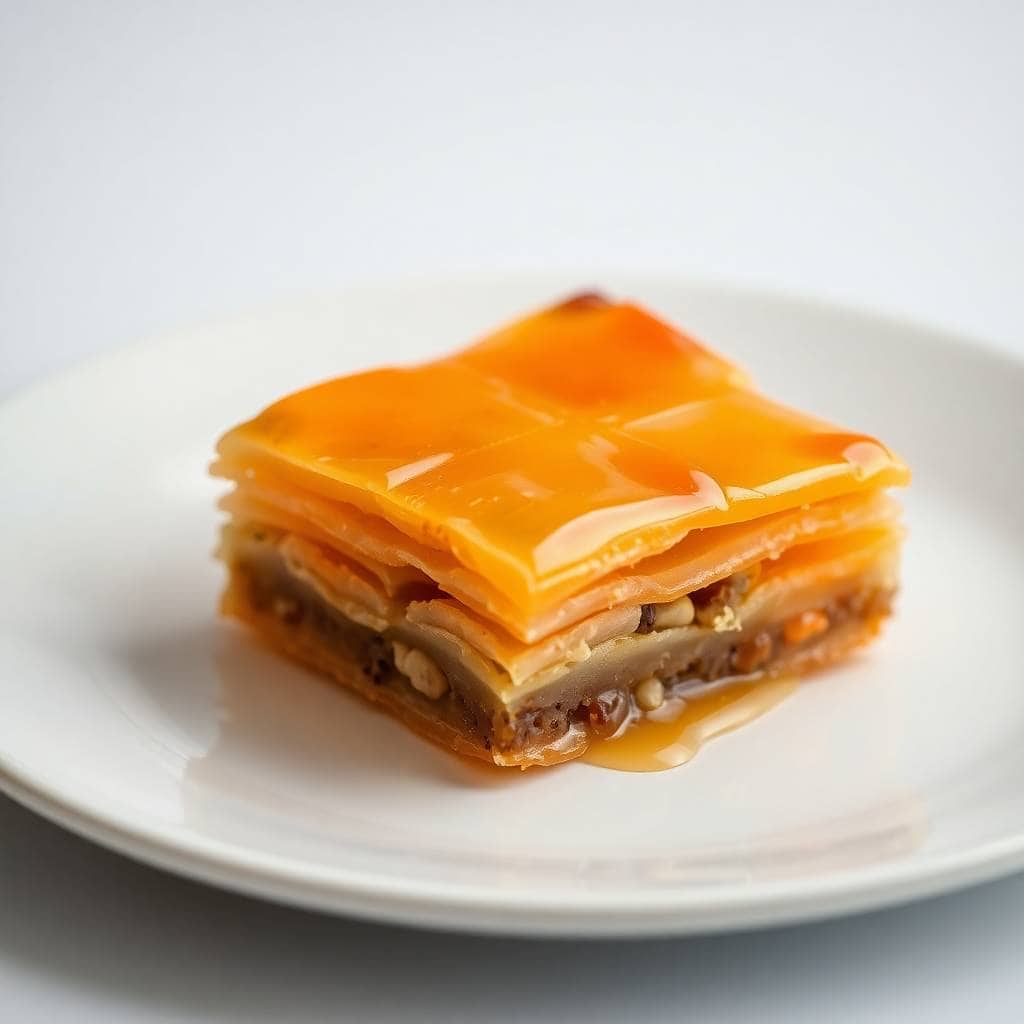
- It smells like the holidays while it bakes: The combination of cinnamon, cloves, and orange peel in the syrup fills the kitchen in a way that no candle can replicate. I've had neighbors text me asking what I'm cooking from across the street (not really, but it feels that way). If you're making this for a holiday gathering, bake it the morning of — the house will smell incredible when your guests arrive.
- It's a genuine make-ahead dessert: I cannot stress this enough — baklava is one of those rare sweets that you should not make the day you plan to serve it. The syrup needs hours to soak in and settle. Make it the night before, cover it loosely, leave it on the counter, and it'll be even better in the morning. No reheating, no last-minute assembly, no stress.
- It's an impressive gift that's actually affordable: A 9×13 pan cuts into roughly 24–30 pieces depending on how you slice it. A package of phyllo from Walmart or Costco runs a few dollars, walnuts and pistachios aren't expensive in bulk, and honey you likely already have. For what it costs, it looks genuinely elegant packaged up in a tin or a small box. I've given this to teachers, neighbors, and family members and gotten more compliments on it than anything I've bought from a bakery.
- The layering is meditative, not stressful: Once I got over the fear of phyllo tearing, I started to enjoy the assembly. It's repetitive in a satisfying way — lay a sheet, brush with butter, repeat. Put on a podcast or some holiday music and it goes quickly. The occasional torn sheet doesn't matter at all once it's baked; no one will ever notice.
- One pan serves a crowd: A single 9×13 pan gives you 24 to 30 small pieces, which is plenty for a dessert table. I always make a double batch in December because a single pan disappears within a day or two between the family snacking and the portions I set aside for gifting. It's one of those recipes where making more doesn't require significantly more effort.
Ingredients
- For the Filling:
- 2 cups finely chopped walnuts
- 1 cup finely chopped pistachios
- ½ cup granulated sugar
- 1 teaspoon ground cinnamon
- ¼ teaspoon ground cloves
- Zest of 1 orange (optional, but I always add it)
- For the Pastry:
- 1 package phyllo dough (16 oz), thawed overnight in the fridge
- 1 cup unsalted butter, melted (you'll use most of it)
- For the Syrup:
- 1 cup water
- 1 cup granulated sugar
- ½ cup honey (any mild honey works — clover, wildflower, whatever you have)
- 1 cinnamon stick
- 3–4 whole cloves
- 1 strip of orange peel (use a vegetable peeler)
Directions
- Make the nut filling: In a bowl, combine the chopped walnuts, pistachios, sugar, cinnamon, cloves, and orange zest. Give it a good stir and set it aside. The mixture should smell warm and spiced — if your cinnamon smells stale, this is a good reminder to replace it.
- Prep your pan and phyllo: Preheat the oven to 350°F (175°C). Brush a 9×13-inch baking pan generously with melted butter. Take your phyllo out of the package and unroll it flat. Immediately cover the stack with a damp kitchen towel — this stops it from drying out while you work.
- Layer the bottom phyllo sheets: Place one phyllo sheet in the buttered pan and brush it with melted butter. Repeat until you have 8 buttered sheets layered in the pan. Don't worry if sheets tear slightly; just patch them and keep going. No one will see it once it's baked.
- Add the first layer of filling: Spread about one-third of the nut mixture evenly over the phyllo. You want a thin, even layer — if it's too thick in spots, the layers won't compress properly when cut.
- Continue layering: Add 5–6 more phyllo sheets on top of the nuts, buttering each one as you go. Spread another third of the nut mixture. Repeat once more, finishing with 8–10 buttered phyllo sheets on top. The top layer matters most visually, so use your least-torn sheets here.
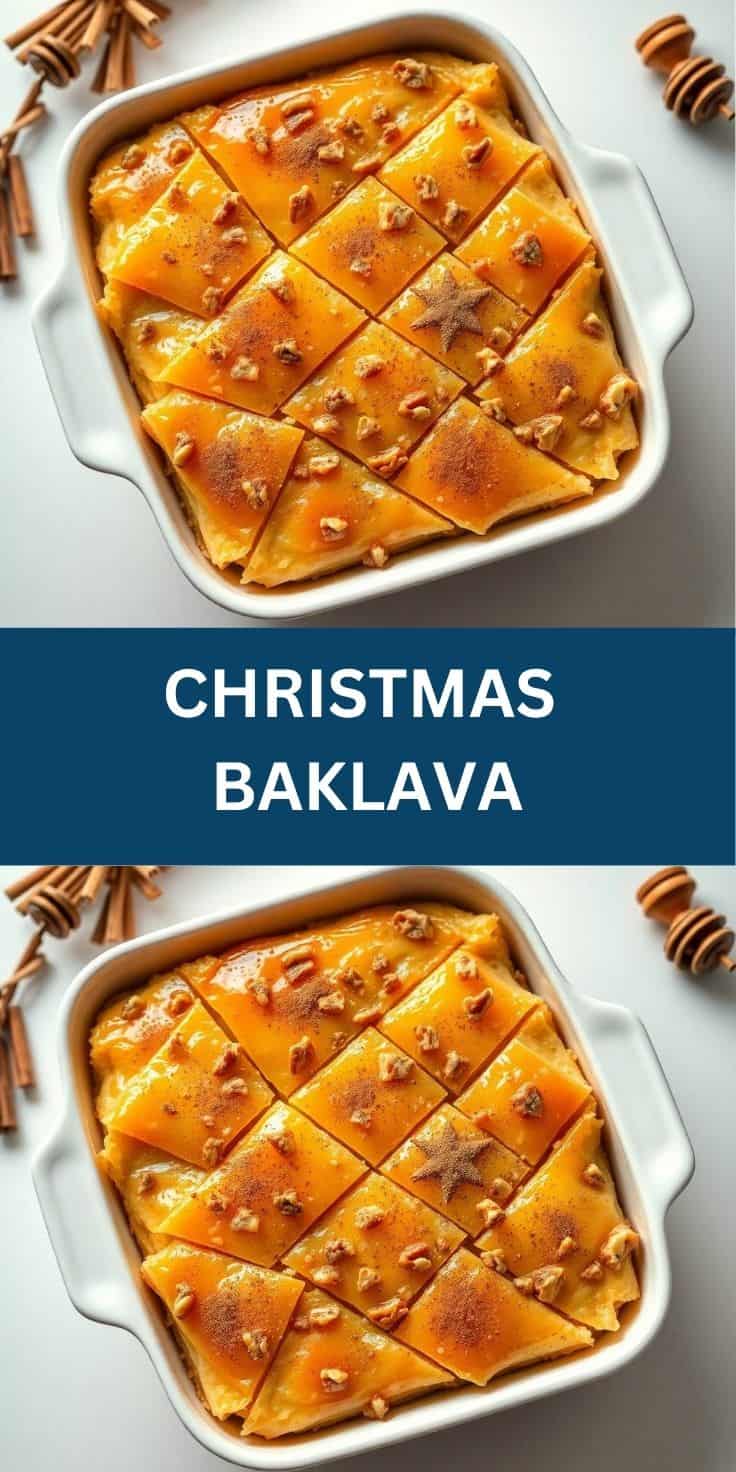
- Cut before baking: This is important — use a sharp knife to cut the baklava into diamonds or squares before it goes into the oven. Cut all the way through to the bottom. Trying to cut it after baking will shatter the layers. I do rows of parallel diagonal cuts to make the diamond shape.
- Bake until deep golden: Bake for 45–50 minutes until the top is deeply golden and crisp. If your oven runs hot, check at 40 minutes. A pale top means underbaked — you want genuine color on it.
- Make the syrup: While the baklava bakes, combine water, sugar, honey, cinnamon stick, cloves, and orange peel in a small saucepan. Bring to a boil over medium-high heat, stirring to dissolve the sugar. Reduce heat and simmer for 10 minutes. Remove from heat and fish out the cinnamon stick, cloves, and orange peel.
- Pour syrup immediately: The moment the baklava comes out of the oven, pour the warm syrup slowly and evenly over the entire surface. You'll hear it sizzle. That's exactly what you want. Don't skip steps here — hot baklava plus warm syrup is the combination that makes this work. Pour it slowly so it doesn't pool in one spot.
- Rest before serving: Leave the baklava uncovered at room temperature for at least 4 hours. Overnight is better. Resist the urge to cover it — moisture will make the top soggy. It will firm up, the syrup will settle into every layer, and the flavor will deepen significantly.
Tips for Success
- Thaw phyllo in the fridge overnight, not on the counter: I learned this the hard way when I thawed it at room temperature and found condensation had made the sheets stick together and tear in chunks. Overnight in the fridge gives you pliable, workable sheets. Take it out of the fridge about 30 minutes before you start so it's not cold-stiff when you unroll it.
- Don't drown each sheet in butter — a thin coat is enough: My first few batches came out greasy because I was over-brushing. You want each sheet lightly coated, not soaked. A pastry brush or even a folded paper towel works fine. I use a cheap silicone pastry brush I picked up for a few dollars at any grocery store.
- Chop the nuts finely and evenly: Chunky, uneven pieces mean the layers don't compress when you press down, which means the baklava falls apart when you try to serve it. A food processor makes this fast — pulse 5–6 times. If you don't have one, chop by hand with a sharp chef's knife; it takes about 5 extra minutes and works just as well.
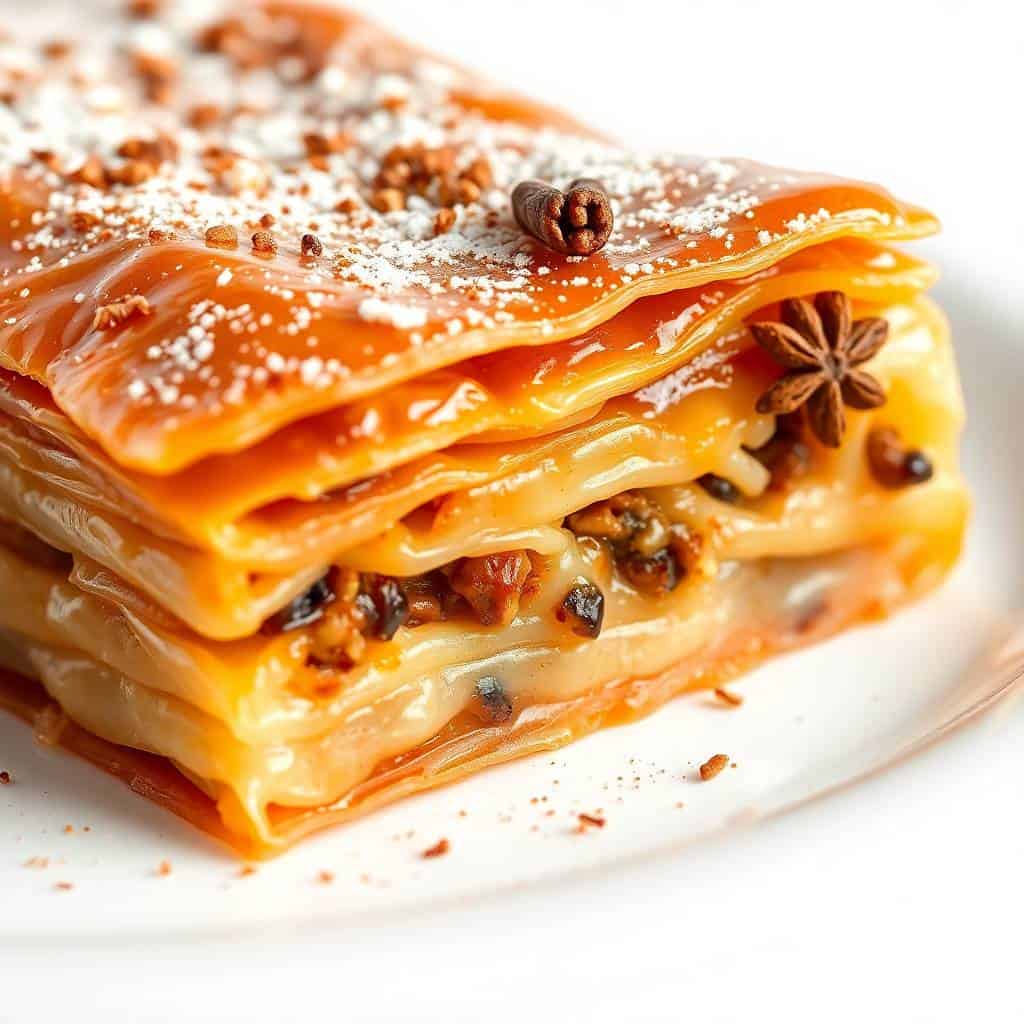
- Cut all the way to the bottom before baking: I skimped on this once and tried to finish cutting after baking. The phyllo shattered and the pieces were jagged and crumbly. A firm, confident cut with a sharp knife before going into the oven is what gives you those clean, intact pieces with visible layers.
- Never refrigerate baklava: I made this mistake once when I was worried about it sitting out too long. The fridge makes the phyllo layers go limp and slightly chewy — completely different texture from what you want. Room temperature in an airtight container (or loosely covered) is the right call for up to 5–7 days. If your kitchen is very warm, just make sure it's not in direct sunlight.
Variations
- All-walnut or all-pistachio: If you can only find one type of nut or you want to keep costs down, using just walnuts is totally fine — it's the most traditional version anyway. All-pistachio is more expensive but gives a beautiful green color peeking through the layers when you cut it. Both work. I use the walnut-pistachio combo mainly because that's what I usually have in the house.
- Add cardamom for a Middle Eastern flavor profile: This is closer to how baklava is made in many Pakistani and Arab households — swap the cloves for ¼ teaspoon ground cardamom in the filling, and add a couple of cardamom pods to the syrup while it simmers. It gives a slightly floral, aromatic note that pairs really well with the honey. This is honestly my husband's preferred version.
- Rosewater syrup: After you remove the spices from the finished syrup, stir in 1 teaspoon of rosewater before pouring. This is a classic addition in Lebanese and Turkish baklava. A little goes a long way — don't overdo it or it tastes like soap. Start with half a teaspoon if you're not sure how strong your rosewater is.
- Chocolate drizzle for a more indulgent version: Once the baklava has fully cooled and set (after several hours), melt 2 oz of dark chocolate and drizzle it over the top with a spoon. This makes it look bakery-level fancy with basically zero extra effort. My Banana Bread Brownies use a similar chocolate drizzle and it's always a crowd favorite at bake sales.
- Maple syrup instead of honey: Swap the honey for an equal amount of pure maple syrup (not pancake syrup — the real stuff). It gives the baklava a deeper, slightly smoky sweetness that works especially well in the fall and winter. The texture of the syrup is slightly different — a little thinner — but it soaks in beautifully.
Serving and Storage
Serving
Serve at room temperature, plain or with a small drizzle of extra honey. The pieces are rich, so small squares go a long way — cut smaller rather than larger if you're putting them on a dessert tray alongside other sweets. For gifting, I stack them in layers separated by parchment paper in a tin or small box, and they hold up beautifully for days. They pair really well with strong black tea or Turkish coffee, which cuts through the sweetness nicely.
Storage
Store at room temperature in an airtight container or loosely covered with foil — do not refrigerate. Cold air softens the phyllo layers and changes the texture completely. At room temperature, baklava keeps well for up to 5–7 days, and in my experience it's at its best on days 2 and 3 after baking. If you want to freeze it, wrap cooled pieces individually in plastic wrap and freeze for up to 2 months. Thaw at room temperature for a couple of hours before serving — don't microwave it.
Frequently Asked Questions
Can I make this baklava a day or two ahead?
Yes, and honestly you should. Baklava made the day before is noticeably better than baklava served the same day it's baked — the syrup has more time to soak into every layer and the flavors settle together. I make mine the evening before I need it, leave it uncovered on the counter overnight, and it's perfect by morning. It keeps well at room temperature for up to 5–7 days.
Why did my baklava turn out soggy instead of crispy?
This is almost always a syrup temperature issue. If you pour cold syrup over cold baklava, or even room-temperature syrup over baklava that's had time to sit, the layers don't absorb properly and you get a soggy result. The syrup needs to go onto the hot baklava the moment it comes out of the oven — the temperature contrast is what drives the syrup deep into the layers while keeping the top crisp. I keep my syrup on low heat on the stove while the baklava finishes baking so it's warm and ready to pour immediately.
Can I freeze baklava?
Yes. Let it cool completely and allow the syrup to fully absorb (several hours or overnight) before freezing. Wrap individual pieces in plastic wrap and place them in a freezer-safe container. They keep well for up to 2 months. Thaw at room temperature for 1–2 hours before serving — do not microwave, as it will make the phyllo soft and chewy rather than crisp.
How do I keep phyllo dough from drying out while I work?
Keep a damp (not soaking wet) kitchen towel draped over the stack of phyllo sheets you're not actively using. Phyllo dries out very quickly when exposed to air and starts to crack and crumble, which makes layering frustrating. Work quickly and replace the towel every time you pull a sheet. If a sheet tears, it's fine — just place it in the pan and keep going. Once it's baked and syrup-soaked, no one will ever notice a tear.
Can I use almonds or pecans instead of walnuts and pistachios?
Absolutely. Almonds work really well and are a common substitute — they give a slightly milder, cleaner flavor. Pecans make it taste almost like a Southern pastry, which is a fun holiday twist. I'd avoid cashews as they get too soft once the syrup soaks in. Whatever nuts you use, chop them finely and as evenly as possible so the layers compress properly and the pieces hold together when you cut and serve them.
CHRISTMAS BAKLAVA
Ingredients
For the Filling:
- 2 cups finely chopped walnuts
- 1 cup finely chopped pistachios
- ½ cup granulated sugar
- 1 teaspoon ground cinnamon
- ¼ teaspoon ground cloves
- Zest of 1 orange optional
For the Pastry:
- 1 package phyllo dough 16 oz, thawed
- 1 cup unsalted butter melted
For the Syrup:
- 1 cup water
- 1 cup granulated sugar
- ½ cup honey
- 1 cinnamon stick
- 3 –4 whole cloves
- 1 strip of orange peel
Instructions
Make Filling:
- In a bowl, mix chopped nuts, sugar, cinnamon, cloves, and orange zest. Set aside.
Layer the Phyllo:
- Preheat oven to 350°F (175°C). Brush a 9x13-inch pan with melted butter. Layer 8 phyllo sheets, brushing each with butter. Spread ⅓ of nut mixture. Repeat layers, ending with 8 buttered phyllo sheets on top.
Cut & Bake:
- Cut into diamonds or squares using a sharp knife. Bake for 45–50 minutes until golden and crisp.
Make Syrup:
- While baklava bakes, simmer water, sugar, honey, cinnamon stick, cloves, and orange peel for 10 minutes. Remove spices and peel.
Add Syrup:
- Pour warm syrup over hot baklava. Let cool completely before serving.
Notes
Gift Idea: Package pieces in decorative boxes for edible holiday gifts.
Festive Touch: Garnish with crushed pistachios and edible gold or red-green sprinkles.
Storage: Store uncovered at room temperature for crispness, up to 1 week.
Customise: Swap walnuts for almonds or pecans, or add a splash of rosewater to the syrup.

Comments
No Comments