
I made this for the first time two Christmases ago, mostly because I couldn't face another year of the same roast chicken. I'd seen salmon centerpieces online and thought — okay, let's try it. What I didn't expect was that my husband, who is firmly a meat-and-rice person, would go back for seconds. That's when I knew this one was worth keeping.
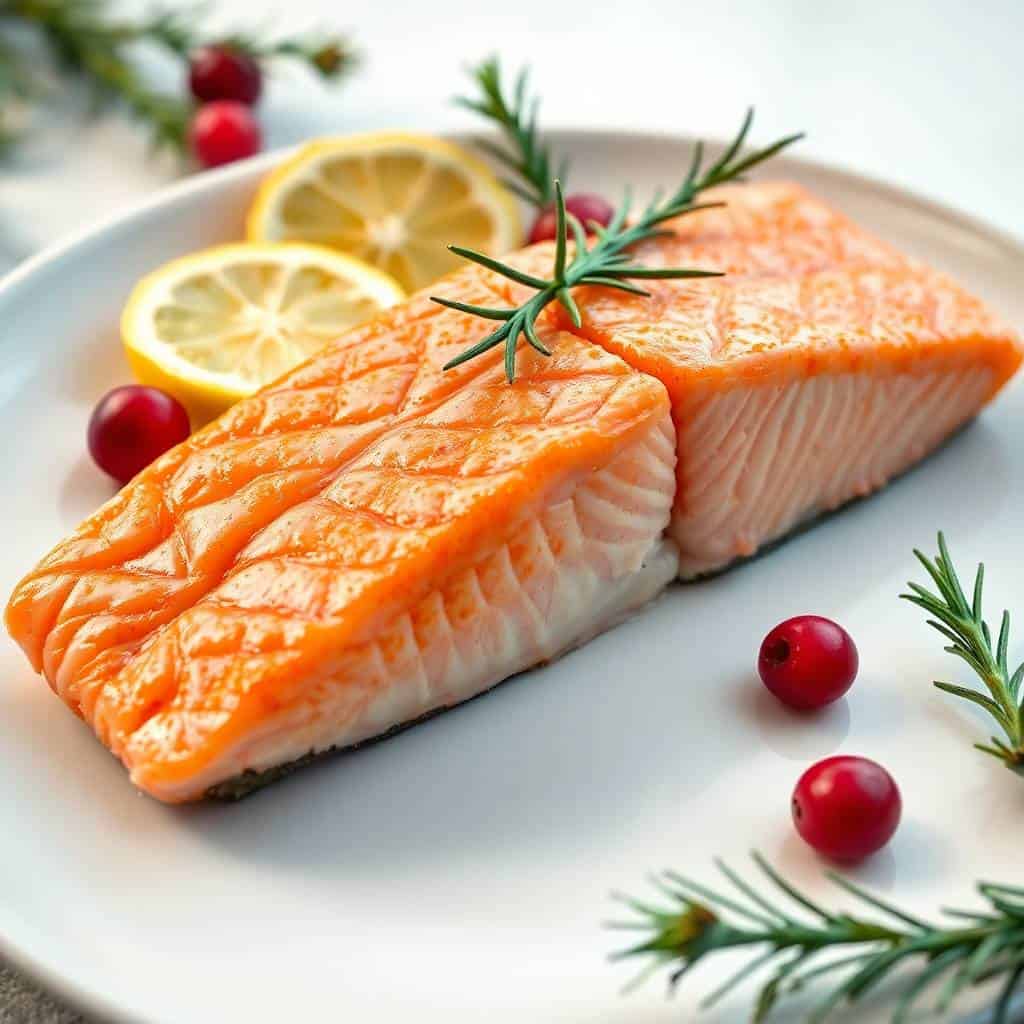
The glaze is what makes it. Maple syrup, Dijon mustard, orange juice, and garlic — it sounds simple because it is, but when it caramelizes on the salmon in the oven, it turns into something that looks and tastes far more complicated than the five minutes it took to mix together. The pomegranate seeds and pistachios on top aren't just decoration. The tartness of the pomegranate cuts through the sweetness of the glaze, and the pistachios give you something to chew into. I'd tried it without the toppings once and it wasn't the same.
This has become our Christmas Eve dinner, not Christmas Day. I save the big family spread for the 25th, but the 24th is just us — me, my husband, Saad, and Zainab — and this salmon is exactly right for that. It's on the table in under 30 minutes, which means I'm not stuck in the kitchen while the kids are watching holiday films. If you want something lighter alongside your usual Christmas desserts (we always end with something from the no-bake vanilla tiramisu roll family of recipes), this salmon holds its own without being heavy.
One thing to know before you start: the glaze goes on before baking, not after. I tried brushing some on at the end thinking it would be more vibrant, and it just sat on top wet and raw-tasting. Apply it generously before it goes in the oven and let the heat do the work. That's the whole trick.
Why You'll Love This Recipe
- It looks impressive without being difficult: The pomegranate seeds and fresh dill make this salmon look like something from a restaurant spread, but the actual hands-on time is maybe 10 minutes. You're mostly just waiting for the oven. I've served this to guests who asked for the recipe assuming it took hours — I had to be honest that it really didn't.
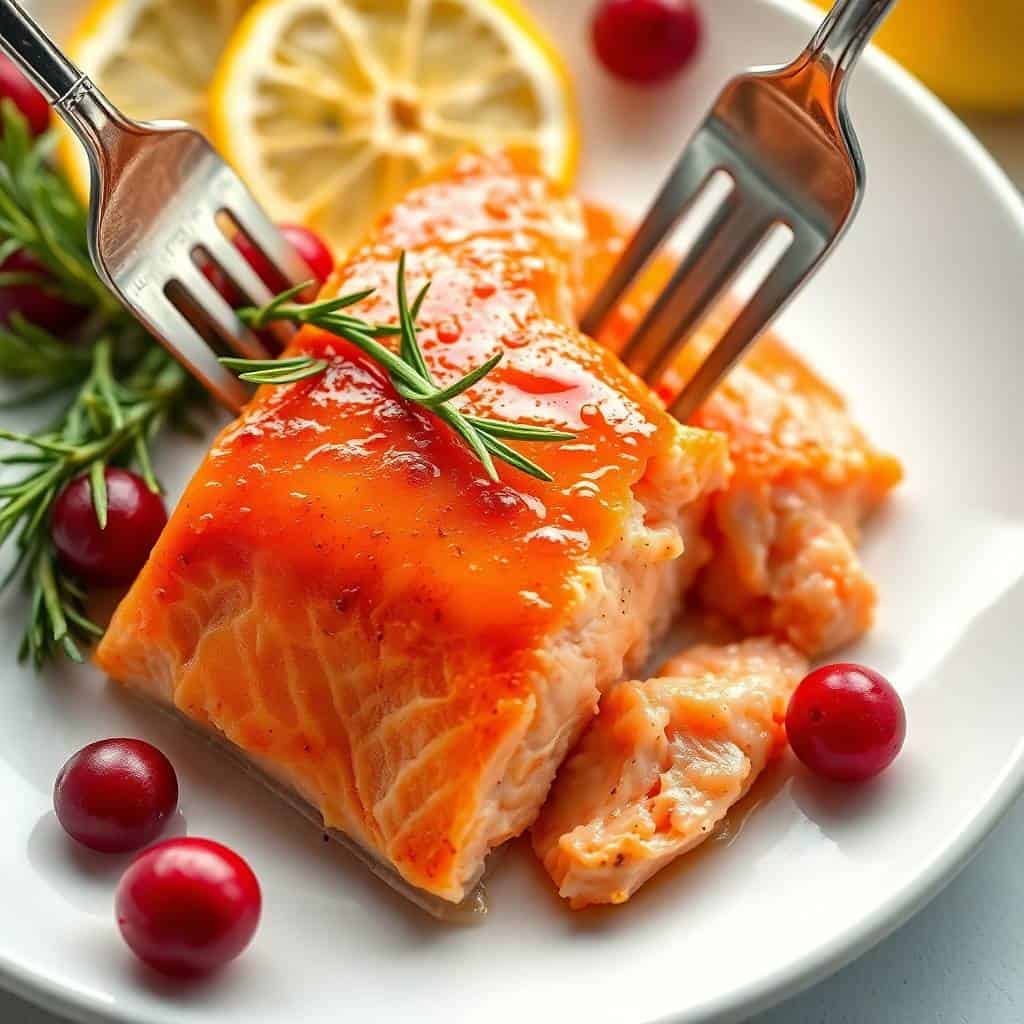
- The glaze caramelizes beautifully: Maple syrup and Dijon mustard together do something magical in a hot oven. The edges get slightly sticky and golden, and the whole surface develops this glossy finish that catches the light. I've made glazes with just honey before and they don't behave the same way — the mustard in this one gives it a little sharpness that keeps it from being cloyingly sweet.
- It's done in under 30 minutes: Including the time to mix the glaze and preheat the oven, this is genuinely a 30-minute meal. On Christmas Eve when I'm managing a dozen other things, that matters. I make a double batch if we have more than four people because a single side of salmon disappears fast.
- The leftovers are genuinely good: I know recipes always say leftovers are great and sometimes that's just filler. But this salmon cold the next day, flaked over salad or tucked into a wrap — it actually holds up. The glaze soaks in overnight and the flavor is even more concentrated. Zainab eats the leftovers straight from the fridge, which is the highest endorsement I can give.
- It fits most dietary restrictions at the holiday table: It's naturally gluten-free and dairy-free, which matters when you're cooking for a crowd and someone always has something they can't eat. I don't have to make a separate dish or modify anything — it just works as is for most guests.
Ingredients
- 1½ to 2 lb side of salmon, skin on
- 2 tablespoons maple syrup
- 1 tablespoon Dijon mustard
- 2 tablespoons orange juice (fresh squeezed or from a carton, both work)
- 2 garlic cloves, minced
- ½ teaspoon salt
- ¼ teaspoon black pepper
- ⅓ cup pomegranate seeds
- ¼ cup chopped pistachios (unsalted if you can find them)
- Fresh dill or parsley for garnish
Directions
- Preheat the oven: Set your oven to 375°F (190°C) and line a baking tray with parchment paper. Parchment is worth it here — the glaze is sticky and will make a mess of a bare pan.
- Make the glaze: In a small bowl, whisk together the maple syrup, Dijon mustard, orange juice, minced garlic, salt, and pepper. It only takes about a minute and you can do this step while the oven heats up.
- Glaze the salmon: Lay your salmon skin-side down on the lined tray. Brush the glaze all over the top — be generous and get it into any natural gaps in the flesh. If you have 10 to 15 minutes before you need to bake, let it sit and absorb. Even a short marinating time makes a difference.
- Bake: Slide the tray into the oven and bake for 18 to 22 minutes. Start checking at 18 minutes — the salmon is done when it flakes easily when you press a fork into the thickest part and the glaze has turned golden and slightly caramelized at the edges. Don't wait for it to look fully opaque on top or it'll be overdone.
- Garnish and serve: Transfer to a serving platter while it's still on the parchment (this makes it easier to move without it breaking apart). Scatter the pomegranate seeds, chopped pistachios, and fresh dill or parsley over the top right before bringing it to the table.
Tips for Success
- Don't skip the parchment paper: I made this on a foil-lined tray once and the caramelized glaze fused to the foil in patches and took chunks of the salmon with it when I tried to move it. Parchment releases cleanly every time. It costs almost nothing and saves a real headache.
- Check early, not late: Salmon goes from perfect to dry faster than almost anything else I cook. My oven runs a little hot so I start checking at 16 minutes. The internal temperature should be around 125°F to 130°F (52°C to 54°C) for moist, slightly translucent salmon, or 145°F (63°C) if you prefer it fully cooked through. A cheap instant-read thermometer from Walmart takes the guesswork out completely.
- Let the salmon come to room temperature first: I pull the salmon out of the fridge 15 to 20 minutes before baking. Cold salmon straight from the fridge cooks unevenly — the outside is done before the center has caught up. This is a small step that makes a real difference in how evenly it bakes.
- Add lemon zest to the glaze if you have a lemon on hand: The original glaze uses orange juice, but rubbing in half a teaspoon of lemon zest gives it an extra brightness that I really like. It doesn't change the character of the glaze, it just sharpens it slightly. I do this whenever I remember to.
- Add the toppings after baking, not before: The pomegranate seeds and pistachios go on at the very end. If you put them in the oven, the pistachios burn and the pomegranate seeds shrivel and lose their color. Two minutes before serving is all they need — they're garnish, not part of the cooking process.
Variations
- Swap the maple syrup for honey: Honey caramelizes a little more aggressively than maple syrup and gives the glaze a slightly darker, more intense finish. It's a little sweeter overall so I pull back on the quantity by about a teaspoon. Both versions work — it just depends what you have in the cupboard.
- Add a spicy kick: A quarter teaspoon of red chili flakes stirred into the glaze adds a low heat that works really well against the sweetness of the maple and the tartness of the pomegranate. My husband adds more — he always does. If you want the heat without the flakes, a small drizzle of sriracha in the glaze works too.
- Change up the toppings: If pomegranate seeds aren't available where you are, dried cranberries do a similar job — tart, jewel-toned, festive. Toasted sliced almonds instead of pistachios give you a different kind of crunch. In Pakistan we'd sometimes use crushed cashews on fish dishes and that works here too.
- Try different herbs: Dill is classic with salmon but fresh thyme or rosemary in the glaze itself (not just as garnish) gives it a more savory, earthy direction. I've done a rosemary-maple version that was really good — a little more wintry-feeling, which suits December.
- Grill it instead of baking: In warmer months I've made this on the outdoor grill and the char adds something the oven version doesn't have. Use a fish basket or grill mat so it doesn't fall apart. The glaze gets slightly smoky and the edges crisp up more. It's a different dish, but a good one.
Serving and Storage
Serving
Serve it warm, straight from the platter, with a big spoon so people can take their own portions without the fish breaking apart too much. It pairs well with roasted carrots, garlic green beans, mashed potatoes, or a simple citrus salad. In my house I usually serve it with rice because that's what my family defaults to — it's genuinely good over plain basmati with a spoonful of the pan juices. If you're building out a full holiday table, the onion boil works surprisingly well alongside this as a side dish.
Storage
Leftovers keep in an airtight container in the fridge for up to 3 days. I actually prefer it cold the next day — flaked over salad greens with a squeeze of lemon it makes a solid lunch. If you want to reheat it, do it gently in the oven at 275°F (135°C) for about 10 minutes rather than the microwave, which tends to make salmon rubbery. You can freeze it for up to 2 months — wrap portions tightly in plastic wrap then put them in a freezer bag. Thaw overnight in the fridge before reheating.
Frequently Asked Questions
Can I use individual salmon fillets instead of a whole side?
Yes, fillets work fine — just reduce the baking time to 12 to 15 minutes since they're thinner than a whole side. Everything else stays the same. Check them at the 12-minute mark by pressing gently with a fork; they should flake easily when they're done.
What can I use instead of maple syrup?
Honey is the closest substitute and works really well. Agave syrup also works if that's what you have. I wouldn't use regular white sugar — it doesn't dissolve the same way into the glaze and can burn more easily in the oven.
Do I have to use pomegranate seeds?
No, but they do add a lot — the tartness, the color, the little burst of juice when you bite into one. If you can't find them, dried cranberries are the best substitute for the visual effect and the sweet-tart flavor. Red currants work too if you happen to have them. Leaving the toppings off entirely gives you a simpler dish, which is also fine.
How do I know when the salmon is cooked through?
Press the thickest part with a fork — it should flake apart without much resistance and look opaque rather than translucent in the center. If you have an instant-read thermometer, 125°F to 130°F (52°C to 54°C) gives you moist, slightly pink salmon, and 145°F (63°C) is fully cooked through. I usually go somewhere in between.
Can I prepare the glaze ahead of time?
Yes — mix it up to 2 days in advance and keep it covered in the fridge. Just give it a quick stir before brushing it on since the garlic can settle. I often make the glaze the night before Christmas Eve so there's one less thing to do on the day.
This is one of those recipes I keep coming back to because the effort-to-result ratio is genuinely hard to beat. Thirty minutes, one pan, and you end up with something that looks like you spent the whole afternoon in the kitchen. My husband still doesn't quite believe how fast it comes together, which I take as a win.
If you're planning a full Christmas spread, this works really well as the main when you want something lighter than a heavy roast. And if you're looking for a dessert to follow it up, the Biscoff tiramisu is what I usually make to finish the meal — the two together feel festive without being overwhelming.
I'm not going to tell you this is a traditional Christmas dish, because it isn't. But after two years of making it every December, it's become our tradition. Sometimes that's how it works — you try something new once, it goes well, and before you know it the kids are asking for it by name. 🍋🐟✨
CHRISTMAS SALMON
Ingredients
- 4 salmon fillets 6 oz each
- 2 tablespoons olive oil
- 2 cloves garlic minced
- Zest and juice of 1 orange
- Zest and juice of 1 lemon
- 1 tablespoon fresh dill chopped
- 1 tablespoon fresh parsley chopped
- Salt and pepper to taste
Instructions
Prepare the Oven:
- Preheat oven to 400°F (200°C). Line a baking tray with parchment paper.
Make the Glaze:
- In a small bowl, whisk together olive oil, garlic, orange zest and juice, lemon zest and juice, dill, parsley, salt, and pepper.
Season the Salmon:
- Place salmon fillets on the baking tray and brush generously with the citrus herb glaze.
Bake:
- Bake for 18–20 minutes, or until the salmon is cooked through and flakes easily with a fork.
Serve:
- Serve immediately, garnished with extra fresh herbs and citrus slices if desired.
Notes
- Make Ahead: Prepare the glaze in advance and refrigerate. Apply just before baking.
- Customising the Flavour: Add a teaspoon of honey or maple syrup to the glaze for sweetness.
- Serving Suggestions: Serve with roasted vegetables, rice, or a fresh salad for a complete holiday meal.
- Allergy-Friendly Options: Gluten-free and dairy-free naturally.
- Storage Tips: Store leftovers in an airtight container in the fridge for up to 2 days. Reheat gently.
If you liked this, here are a few more recipes from the site you might want to try next:
- No-Bake Vanilla Tiramisu Roll — a great make-ahead dessert for the holiday table
- Biscoff Tiramisu — rich, creamy, and always a crowd stopper after a lighter main
- Onion Boil — a surprisingly good side dish that pairs well with glazed fish
- Old Fashioned Peanut Brittle — if you're making Christmas gifts from the kitchen, start here
- Orange Dreamsicle Salad — a festive, citrusy dessert that fits right in with a holiday spread


Comments
No Comments