
I've made a lot of baked salmon over the years, but this honey-lime garlic butter version is the one I keep coming back to on weeknights when I want something that feels a little special without actually being a lot of work. The glaze takes about two minutes to mix together, the oven does everything else, and the whole dinner is on the table in 30 minutes. That matters a lot on weeknights in my house.
What makes this version work is the balance in that glaze — honey for sweetness, fresh lime juice and zest for a bright citrus note, and garlic butter underneath it all to keep things rich and savory. It caramelizes slightly in the oven and clings to the salmon beautifully. I've tried bottled lime juice exactly once. The flavor was flat and I could tell immediately. Fresh lime is non-negotiable here.
My husband loves this with rice so he can pour the extra pan sauce all over it. Saad prefers it next to my roasted baby potatoes with rosemary and garlic, which honestly is also a great combination. I usually make both sides and let everyone pick. It's that kind of flexible dinner.
One thing I'll tell you upfront: don't skip basting halfway through. I was lazy about this the first few times and the top of the salmon looked a little dry compared to when I actually took the extra 30 seconds to spoon the pan juices back over it. It makes a real difference in the final glaze. I'll remind you again in the directions.
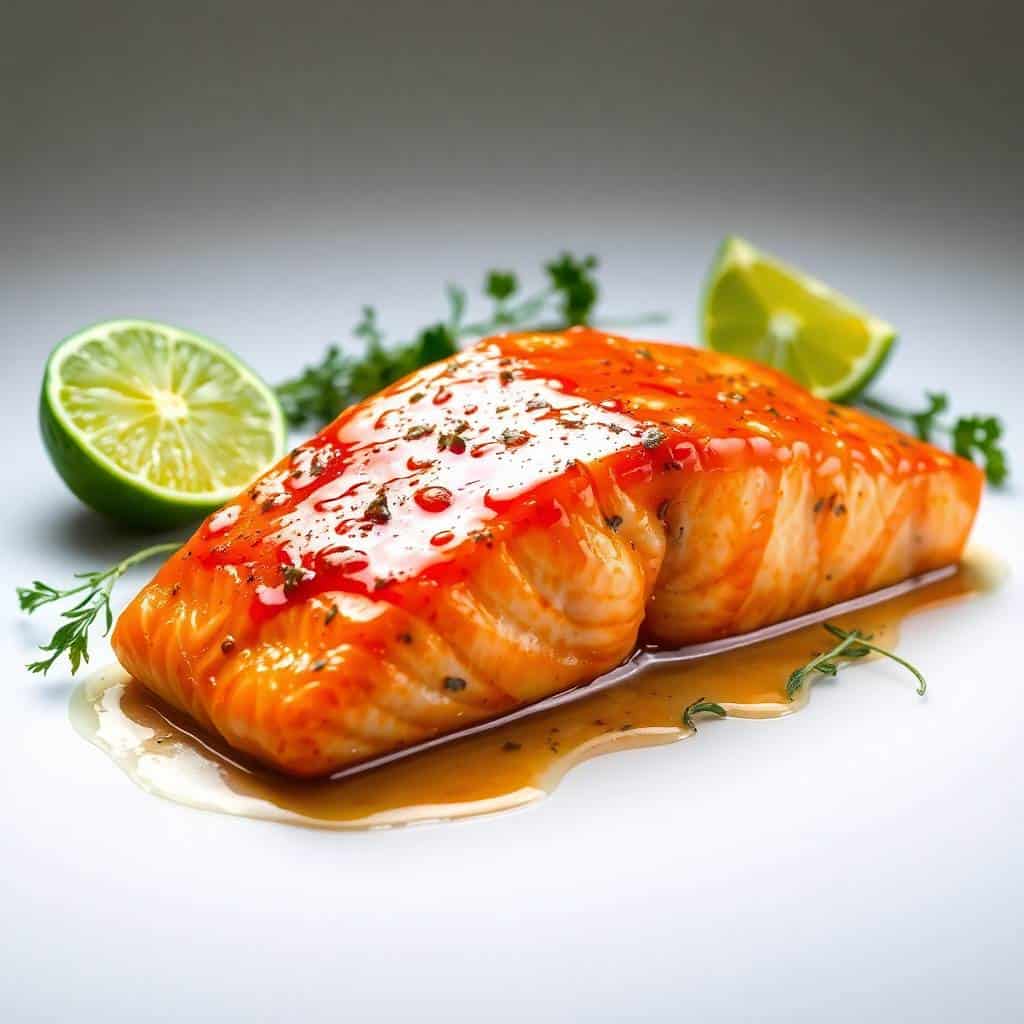
Why You'll Love This Recipe
- Done in 30 minutes flat: From cold oven to plated dinner, this genuinely takes 30 minutes. The glaze mixes while the oven preheats, the salmon bakes for 15-20 minutes, and there's almost nothing to clean up. On nights when I haven't planned dinner and it's already 6pm, this is usually what I reach for.
- One pan, almost no cleanup: Everything bakes on a single sheet pan lined with parchment or foil. The glaze gets a little sticky as it caramelizes, but if you line the pan well, cleanup is just tossing the foil. I don't have a dishwasher, so one-pan dinners are basically my love language.
- The salmon stays moist: Baking at 400°F with that buttery glaze on top keeps the fish from drying out. I've overcooked salmon in a pan on the stovetop more times than I want to admit — it goes from perfect to dry in about 60 seconds. The oven is more forgiving, especially when you're watching something else at the same time.
- Works with whatever you're serving: This salmon pairs with rice, roasted vegetables, a light salad, mashed potatoes — basically anything. The glaze is bold enough to stand up to hearty sides but not so overpowering that it clashes with something simple. It's genuinely one of the most adaptable dinners I make.
- Kids will actually eat it: The honey-lime glaze is sweet and citrusy without any strong "fishy" smell, which is always the first complaint from kids about salmon. Saad asked me to make this three weeks in a row the first time I introduced it, which in this house is basically a five-star review.
Ingredients
- 4 salmon fillets (skin-on or skinless, about 6 oz each)
- Salt and black pepper, to taste
- 1 tablespoon olive oil
- 4 tablespoons unsalted butter, melted
- 2 tablespoons honey (any mild variety — clover or wildflower works great)
- 1 tablespoon fresh lime juice (about 1 lime)
- 1 teaspoon lime zest
- 2 cloves garlic, minced
- 1 teaspoon dried oregano (optional, but I usually add it)
- Fresh parsley or cilantro, chopped, for garnish
- Lime slices, for garnish
Directions
- Preheat the oven: Set your oven to 400°F (200°C). Line a baking sheet with parchment paper or foil and lightly grease it with olive oil. Getting the oven fully preheated before the salmon goes in makes a real difference — don't rush this step.
- Season the salmon: Place the fillets on your prepared baking sheet, skin-side down if they have skin. Season generously with salt and black pepper, then drizzle the olive oil over each fillet. This base layer of oil helps the glaze adhere and keeps the bottom of the fish from sticking.
- Make the honey-lime garlic butter glaze: In a small bowl, whisk together the melted butter, honey, lime juice, lime zest, minced garlic, and oregano if you're using it. It should come together into a smooth, glossy sauce in about a minute. Taste it — it should be sweet, tangy, and garlicky all at once.
- Glaze the salmon: Pour the honey-lime butter evenly over the top of each fillet. Use a spoon to make sure the sides get coated too. If you have an extra 10 minutes, let this sit at room temperature before baking — the glaze soaks in a little and the flavor deepens. Not essential, but worth it when I have time.
- Bake and baste: Bake uncovered for 15–20 minutes. At the halfway point (around 8 minutes), open the oven and spoon the collected pan juices back over the tops of the fillets. This is the step I used to skip — don't. It builds the glossy, caramelized finish on top. The salmon is done when it flakes easily with a fork and the glaze looks golden.
- Rest and serve: Pull the pan from the oven and let the salmon sit for 2 minutes before serving. Spoon any remaining sauce from the pan over the fillets, then garnish with chopped parsley or cilantro and fresh lime slices.
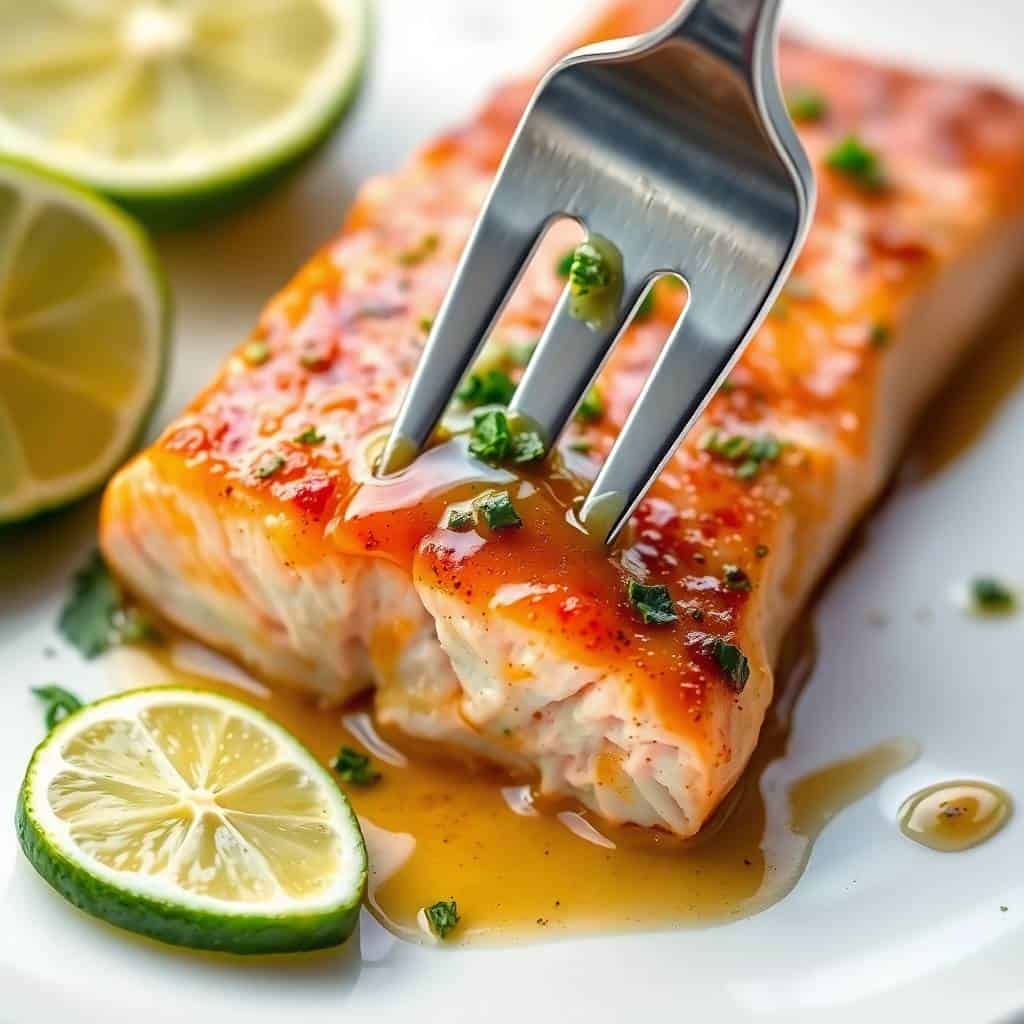
Tips for Success
- Use center-cut fillets when you can: Tail-end pieces are thinner and cook faster, which means by the time the thicker part of the fillet is done, the thin end is already overdone. Center-cut pieces are more uniform in thickness and cook more evenly. I usually grab whatever looks good at Costco or Walmart — just check that the pieces are roughly the same size.
- Don't overbake it: Salmon goes from perfectly flaky to dry faster than you'd expect, especially in a hot oven. Start checking at 15 minutes. The fish should flake when you press it gently with a fork — if it still looks translucent and resists flaking, give it 2-3 more minutes. Overcooked salmon is chalky and nobody wants that.
- Fresh lime, not bottled: I know bottled lime juice is convenient, but I tried it once and the glaze tasted weirdly flat and a little bitter. Fresh juice and zest together give you that bright, clean citrus flavor that makes this recipe actually taste like lime rather than just vaguely citrusy. One lime gives you everything you need.
- Tent with foil if the glaze browns too fast: If your oven runs hot and the honey is caramelizing faster than the fish is cooking, loosely tent a piece of foil over the top for the last 5 minutes. This protects the glaze from burning while the salmon finishes cooking through. I only need to do this in summer when my kitchen gets warmer and the oven runs a little unpredictable.
- Let it marinate if you have time: After glazing the raw salmon, I'll sometimes leave it sitting for 10 minutes before it goes in the oven — just while the oven finishes preheating. The glaze starts to absorb into the fish slightly and the garlic flavor comes through more clearly in the finished dish. It's a small thing that actually makes a noticeable difference.
Variations
- Add chili flakes for heat: My husband adds a pinch of red chili flakes to his portion of the glaze every single time. It gives the sweetness a little kick and balances out the honey really well. If your family likes heat, just stir ¼ teaspoon of chili flakes into the glaze before pouring it over the salmon.
- Swap honey for maple syrup: If you're out of honey or just want a slightly different flavor, maple syrup works really well here. It's a little less sweet and has a deeper, earthier quality that pairs nicely with the garlic and lime. I've made it this way a few times when I ran out of honey mid-recipe and it was genuinely good.
- Try lemon instead of lime: Lemon gives you a softer, more mellow citrus note compared to lime's sharpness. If you're not a big lime person or you just have lemons on hand, the swap works fine. Use the same amount of juice and zest. The dish will taste a little more classic and a little less tropical, which honestly isn't a bad thing.
- Add Dijon mustard for a tangy twist: Stir a teaspoon of Dijon mustard into the glaze before baking. It adds a sharp, slightly tangy layer that cuts through the sweetness nicely. This is a version I saw somewhere and adapted — I serve it sometimes when my husband wants something a little more grown-up tasting. Pairs really well with a Mexican cucumber salad on the side.
- Make it dairy-free: Replace the unsalted butter with a plant-based butter alternative — I've used the Walmart Great Value plant-based butter and it works well in this glaze. The texture and flavor are close enough that no one at my table has ever noticed the difference.
Serving and Storage
Serving
Serve the salmon warm, straight from the pan, with extra sauce spooned generously over the top. My family's usual rotation is white rice (so all that glaze doesn't go to waste), steamed broccoli, or roasted baby potatoes with rosemary and garlic. For a lighter dinner, a simple salad alongside is all you need. The fresh lime slices and chopped parsley on top aren't just decorative — they add a little brightness when you squeeze the lime over the finished fish right before eating.
Storage
Cool the salmon completely before storing it. It keeps in an airtight container in the fridge for up to 3 days. To reheat, I put it in the oven at 300°F for about 10 minutes rather than the microwave — the microwave tends to make it rubbery and a little steamy. If you're in a rush, the microwave on 50% power in 30-second bursts works reasonably well. I don't recommend freezing cooked salmon; the texture gets too watery once it thaws.

Frequently Asked Questions
Can I use frozen salmon for this recipe?
Yes, but thaw it completely first. I usually move it from the freezer to the fridge the night before, or put the sealed bag in a bowl of cold water for about 30-40 minutes if I forgot to plan ahead. Baking salmon that's still partially frozen gives you uneven cooking — the edges overcook while the center is still underdone. Pat it dry with paper towels after thawing too, otherwise the glaze won't stick as well.
How do I know when the salmon is done?
Press the thickest part gently with a fork — it should flake apart easily and look opaque all the way through. If it still looks a little translucent and resists flaking, give it another 2-3 minutes. I start checking at the 15-minute mark rather than waiting the full 20, just to be safe. The internal temperature should reach 145°F (63°C) if you want to be precise.
Do I need to remove the skin before baking?
No, you don't — and I'd actually recommend leaving it on. The skin acts as a natural barrier between the fish and the hot pan, which helps keep the bottom from overcooking. Once it's done, the skin peels away easily when you serve it, so you can just slide a spatula between the skin and the flesh if you don't want to eat it. I leave the decision to whoever I'm serving.
Can I make the glaze ahead of time?
Absolutely. I'll sometimes mix the honey-lime garlic butter the morning of and keep it in a small jar in the fridge. When it's time to cook, I let it sit out for 10-15 minutes to come back to room temperature — if you pour cold, solidified butter over raw salmon it doesn't spread evenly. The garlic actually gets a little more fragrant the longer it sits in the butter, which I like.
What type of honey works best in this glaze?
Any mild, everyday honey works well here — clover honey, wildflower honey, or whatever you have in the pantry. I'd avoid strongly flavored honeys like buckwheat, which has a very distinctive, almost molasses-like taste that would compete with the lime and garlic. The standard Walmart or Trader Joe's clover honey is genuinely all you need.
Final Thoughts
This is one of those recipes I made once and immediately added to the permanent rotation. I don't say that about many things. The glaze is genuinely good — not just "good for something healthy" but actually, properly good — and it comes together so fast that I can make it on the busiest school nights without any stress.
I've served this to guests a few times too and people always ask for the recipe. It looks elegant on the plate with the glossy glaze and the lime slices, and nobody needs to know it took you 30 minutes and one bowl to make. That's honestly one of my favorite things about it.
If you're looking for something to serve alongside this, my Mexican cucumber salad is a really bright, refreshing contrast to the richness of the butter glaze. And if you want to finish the meal with something easy and no-bake, my edible cookie dough cups have become a favorite dessert in my house — Zainab requests them constantly.
Give this salmon an honest try on a weeknight when you're tired and don't want to think too hard about dinner. I think it'll earn a spot in your regular rotation too. 🍋🧄✨
HONEY-LIME GARLIC BUTTER BAKED SALMON
Ingredients
For the Salmon:
- 4 salmon fillets
- Salt and pepper to taste
- 1 tablespoon olive oil
For the Honey-Lime Garlic Butter:
- 4 tablespoons unsalted butter melted
- 2 tablespoons honey
- 1 tablespoon lime juice
- 2 cloves garlic minced
- 1 teaspoon lime zest
- 1 teaspoon dried oregano optional
- Fresh parsley or cilantro for garnish optional
Instructions
Prepare the Oven:
- Preheat the oven to 400°F (200°C). Line a baking sheet with parchment paper or lightly grease it with olive oil.
Season the Salmon:
- Place the salmon fillets on the prepared baking sheet. Season them with salt and pepper, then drizzle with olive oil.
Make the Honey-Lime Garlic Butter Sauce:
- In a small bowl, whisk together the melted butter, honey, lime juice, minced garlic, lime zest, and oregano (if using).
Bake the Salmon:
- Pour the honey-lime garlic butter sauce evenly over the salmon fillets. Bake for 15-20 minutes, or until the salmon is cooked through and easily flakes with a fork.
Serve:
- Garnish with fresh parsley or cilantro if desired. Serve the salmon with a side of steamed vegetables, rice, or a light salad.
Notes
Prepare the honey-lime garlic butter sauce a day ahead and store it in the refrigerator. Bring it to room temperature before using. Customizing the Flavor:
For extra heat, add a pinch of red pepper flakes or a dash of hot sauce to the honey-lime garlic butter sauce. Serving Suggestions:
Pair the salmon with roasted vegetables, quinoa, or a fresh cucumber salad for a balanced meal. Allergy-Friendly Options:
Ensure the butter is dairy-free by substituting it with a plant-based butter alternative for a dairy-free version. Storage Tips:
Store leftovers in an airtight container in the fridge for up to 2 days. Reheat gently in the oven to preserve texture.
If you liked this salmon, here are a few more recipes from my kitchen worth trying: