
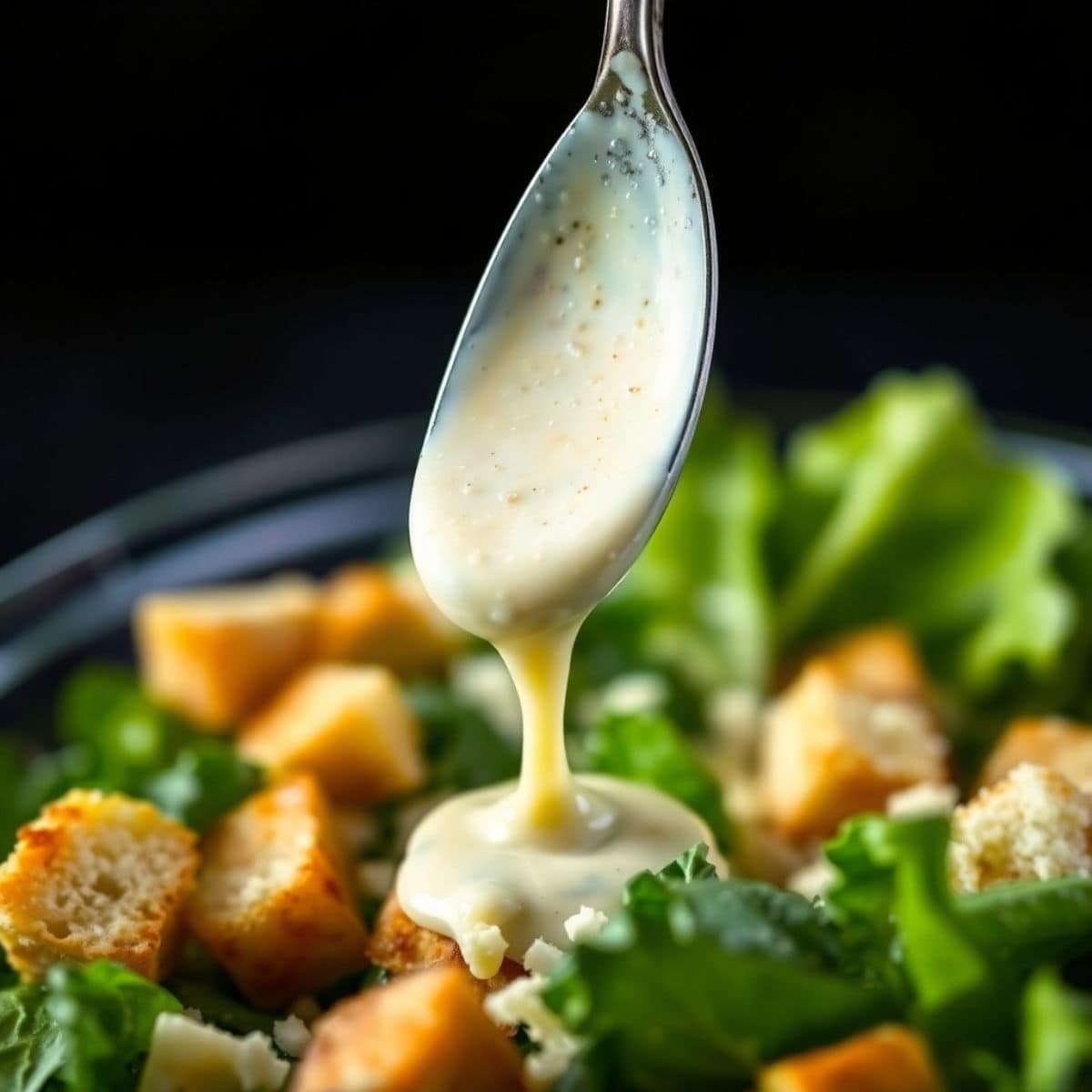
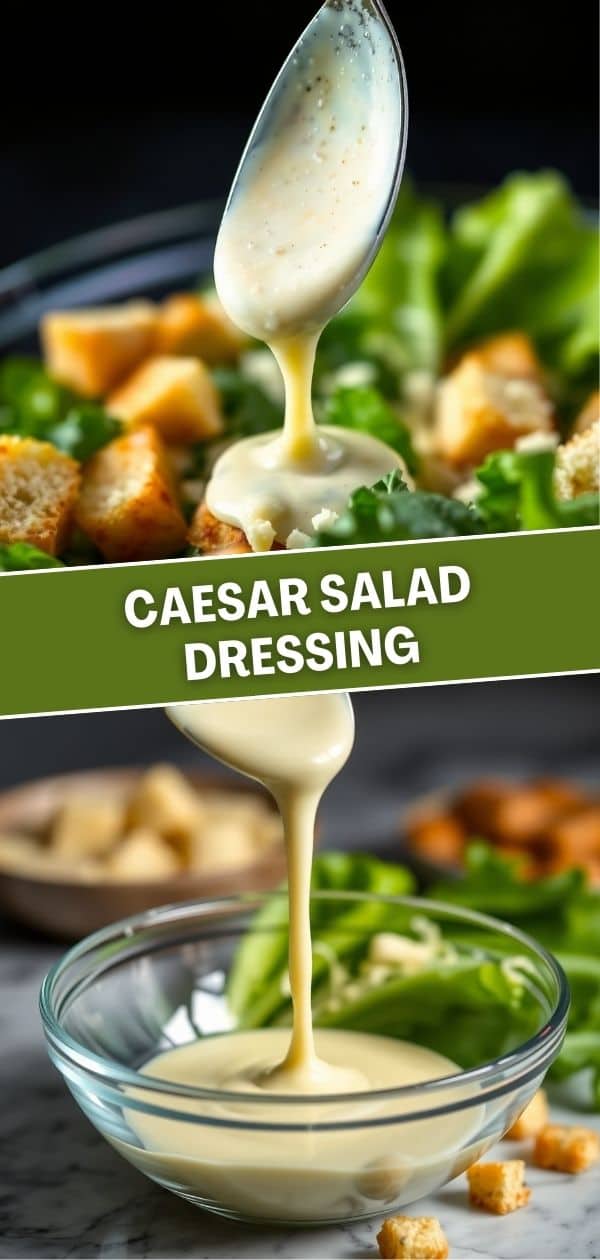
The condiment that transforms a bowl of chopped romaine from a side dish into a destination — the one recipe in my refrigerator that I make on Sunday and use all week on salads, as a dip for vegetables, as a spread on chicken sandwiches, and as the dressing for any Caesar-adjacent meal — is this homemade Caesar salad dressing: mayonnaise-based, garlic-forward, Parmesan-rich, anchovy-deepened, and brightened with fresh lemon juice, Dijon mustard, and a splash of red wine vinegar into the most complex, most satisfying, most genuinely delicious salad dressing I have ever made or tasted. It takes 10 minutes and lasts a week in the refrigerator.
What makes homemade Caesar dressing categorically better than anything in a bottle is the freshness of every flavor component — freshly squeezed lemon juice instead of citric acid, freshly grated Parmesan instead of the dried powder used in shelf-stable products, freshly minced garlic instead of garlic powder, and anchovies or anchovy paste that provide the deep, savory, umami-forward backbone that gives classic Caesar dressing its characteristic depth without tasting even slightly fishy in the finished product. The anchovy note in Caesar dressing is what makes it taste like Caesar rather than just creamy garlic dressing, and I urge anyone who thinks they do not like anchovies to try this recipe before deciding — the flavor is savory and deep, not fishy.
This post covers the classic Caesar salad dressing in full detail, plus four variations including a vegan version, a garlic-free version, a fresh herb addition, and a spicy version. All are made in under 10 minutes and keep for a week. Find more salad inspiration in our classic Caesar salad, our strawberry spinach salad, and our summer mix salad.
Let's make the best Caesar dressing your kitchen has ever produced — and never buy bottled again!
WHY YOU WILL LOVE THIS RECIPE
- Dramatically Better Than Any Bottled Dressing — Every Time: I have done the side-by-side comparison with guests who claimed to prefer their favorite bottled Caesar, and the homemade version wins every single time once people actually taste both. The difference is the freshness of the individual components — there is no substitute for freshly squeezed lemon, freshly grated Parmesan, freshly minced garlic, and quality anchovies in this dressing, and bottled products simply cannot replicate those flavors with shelf-stable ingredient alternatives. Making your own Caesar dressing takes 10 minutes and produces a result that is genuinely in a different quality category from anything premade.
- Ready in 10 Minutes with No Special Equipment: Caesar salad dressing is a whisk-and-bowl preparation — no blender, no food processor, no special equipment beyond a bowl, a whisk, and a grater for the Parmesan. Every ingredient goes into the bowl and gets whisked together into a smooth, emulsified dressing in under 10 minutes of active work. This is genuinely one of the most straightforward condiment preparations available and requires no technique beyond the ability to whisk vigorously and taste for seasoning. The 30-minute refrigerator rest before serving is the only waiting involved, and that step can be skipped in a time crunch (though the rested version is meaningfully better).
- The Anchovy Is the Irreplaceable Secret Ingredient: Anchovies are the ingredient that many Caesar dressing skeptics try to omit, and omitting them produces a pleasant creamy garlic dressing that is not, in any meaningful sense, Caesar dressing. The anchovy provides an irreplaceable layer of deep, savory, fermented umami that cannot be replicated by any substitute — it is the flavor that makes Caesar taste complex and addictive rather than flat, and it completely dissolves into the dressing when minced finely, leaving no fishiness and only depth. Every Caesar dressing professional, home cook, and restaurant chef who has thought carefully about this recipe agrees: the anchovy is non-negotiable. Try it before skipping it.
- Keeps for a Full Week — the Most Versatile Refrigerator Staple: A batch of homemade Caesar dressing made on Sunday evening produces a week's worth of the most versatile condiment in the refrigerator. It dresses the classic Caesar salad; it works as a dip for crudités, wings, and pizza crusts; it spreads beautifully on chicken sandwiches and wraps; it is an excellent drizzle over grilled chicken; and it doubles as a marinade for chicken, shrimp, or vegetables before grilling or roasting. Having a jar of homemade Caesar dressing in the refrigerator is genuinely one of the most valuable weekday cooking resources I maintain. See our Caesar salad for the classic application.
- Completely Adjustable to Personal Flavor Preferences: The base recipe produces a balanced, classic Caesar dressing, but every component can be adjusted to personal taste — more garlic for garlic lovers, more lemon for brightness, more anchovy for depth, more Parmesan for richness, more Dijon for sharpness. Making homemade dressing means you control every variable and can produce exactly the Caesar dressing you want rather than accepting whatever approximation a manufacturer decided was broadly acceptable. Taste as you go and adjust with confidence — this recipe is very forgiving and responds well to incremental adjustments.
INGREDIENTS
- 1 cup mayonnaise (full-fat for best flavor and texture)
- 2 tablespoons Dijon mustard
- 2 tablespoons fresh lemon juice
- 2 tablespoons red wine vinegar
- 2 teaspoons Worcestershire sauce
- 2 cloves garlic, minced or pressed
- 1 teaspoon anchovy paste (or 2 anchovy fillets, minced to a paste)
- ½ cup freshly grated Parmesan cheese
- ½ teaspoon salt (to taste — Parmesan and anchovies add salt, so start conservative)
- ½ teaspoon black pepper
- 1 tablespoon olive oil (optional, for extra creaminess and richness)
DIRECTIONS
- Step No.1: Combine the base
In a medium bowl, whisk together the mayonnaise, Dijon mustard, fresh lemon juice, red wine vinegar, and Worcestershire sauce until completely smooth and uniform — no streaks of mustard should remain. The mayonnaise provides the creamy, emulsified base; the Dijon adds sharpness and additional emulsifying power; the lemon and vinegar add brightness and cut through the richness; the Worcestershire adds depth and a slight savory sweetness. These five ingredients form the structural foundation of the dressing before the flavor components are added.
- Step No.2: Add the flavor components
Add the minced garlic, anchovy paste (or minced anchovy fillets), and freshly grated Parmesan cheese to the base mixture. Whisk vigorously for 60 seconds until all components are thoroughly incorporated and the Parmesan is evenly distributed throughout the dressing rather than clumped in one area. The garlic should be minced as finely as possible — a garlic press produces a very fine, almost paste-like consistency that distributes more evenly than hand-minced garlic. Anchovy fillets should be mashed to a smooth paste with the flat of a knife before adding; whole or chunky anchovy pieces do not distribute evenly and create unpleasant textural surprises in the finished dressing.
- Step No.3: Adjust consistency and season
If the dressing is thicker than you prefer — it should be creamy and pourable, similar in consistency to a slightly thick store-bought ranch dressing — whisk in the optional olive oil, which adds both creaminess and a subtle olive flavor that is particularly pleasant in Caesar. Alternatively, add water, 1 teaspoon at a time, for thinning without adding additional fat. Taste the dressing at this point — before adding salt — and assess whether it needs more of any individual component: more lemon for brightness, more garlic for punch, more anchovy for depth, more Parmesan for richness. Once the flavor balance is correct, add salt and pepper conservatively, remembering that the Parmesan and anchovy paste both contribute significant salt.
- Step No.4: Refrigerate and rest
Transfer the finished dressing to a jar or airtight container and refrigerate for at least 30 minutes before using — ideally 1–2 hours. The resting period is the step that transforms a good homemade Caesar dressing into a great one: the garlic mellows from sharp and raw to rounded and integrated; the anchovy flavor deepens and distributes throughout the entire dressing; the Parmesan softens slightly and becomes fully incorporated; and the overall flavor becomes more unified and more balanced than it is in the first 10 minutes after making. The dressing will also thicken slightly in the refrigerator — stir before serving and thin with a splash of water or lemon juice if needed.

TIPS FOR SUCCESS
- Always Use Freshly Grated Parmesan — Not Pre-Grated: Pre-grated Parmesan from a shaker or a bag contains anti-caking agents that prevent it from dissolving smoothly into the dressing and produce a slightly gritty, powdery texture. Freshly grated Parmesan from a block — the finer the grating the better — dissolves almost completely into the mayonnaise base and produces a silky, fully integrated dressing with deep Parmesan flavor throughout. The difference in flavor between fresh-grated and pre-grated Parmesan in this dressing is immediately and dramatically apparent to anyone who tastes both.
- Use Fresh Lemon Juice — Not Bottled: Bottled lemon juice has a processed, slightly flat citrus flavor that is noticeably inferior to freshly squeezed juice in a raw dressing application like Caesar where the lemon flavor is prominently featured and not cooked away. Fresh lemon juice is brighter, more aromatic, and more complex. In a cooked dish the difference is less apparent; in a raw dressing where the lemon note is unmasked by heat, the quality of the lemon juice is clearly perceptible.
- Don't Skip the Anchovy — But Anchovy Paste Is Perfectly Fine: Anchovy paste from a tube is completely interchangeable with minced fresh or canned anchovy fillets in this recipe and is significantly more convenient — no opening a can, no mincing, no fishy hands. One teaspoon of anchovy paste equals approximately 2 anchovy fillets. The paste is already smooth and distributes evenly throughout the dressing without any further processing. A tube of anchovy paste in the refrigerator means you can make excellent Caesar dressing at a moment's notice without needing to shop.
- Let It Rest for at Least 30 Minutes: The resting time is the cheapest and easiest quality improvement available for this dressing — it costs nothing, requires no effort, and produces a meaningfully better result. The raw garlic note mellows and integrates; the anchovy deepens; the Parmesan fully hydrates into the emulsion. A freshly made Caesar dressing tastes sharp and disjointed; a 30-minute-rested one tastes unified and professional. An overnight-rested one is extraordinary. Always make this dressing at least 30 minutes before you need it — ideally the day before.
- Season Last and Season Conservatively: The Parmesan, anchovy paste, and Worcestershire sauce all contribute significant salt to the finished dressing. Adding a full half-teaspoon of salt before tasting produces an oversalted dressing that cannot be fixed. Always taste the finished dressing before adding any salt, evaluate whether it needs additional seasoning, and add conservatively — a pinch at a time — tasting after each addition. Many batches of this dressing need little or no added salt beyond what is already present in the measured ingredients.
VARIATIONS
- Vegan Caesar Dressing: Replace the regular mayonnaise with vegan mayonnaise (Hellmann's, Follow Your Heart, and Sir Kensington's all produce excellent versions), omit the anchovy paste and replace with 1 teaspoon of white miso paste and ½ teaspoon of soy sauce for umami depth (the combination produces a surprisingly convincing approximation of the anchovy's savory contribution), and replace the Parmesan with nutritional yeast or a vegan Parmesan alternative. The vegan version is genuinely excellent — the miso-soy combination provides enough depth that the absence of anchovy is not obviously apparent in the finished dressing. See our vegan dinner recipes for more plant-forward ideas.
- Garlic-Free Caesar Dressing: Simply omit the garlic — the dressing without garlic is still deeply flavorful from the anchovy, Parmesan, Dijon, lemon, and Worcestershire and makes an excellent dressing for guests with garlic sensitivities. To partially replace the aromatic quality that garlic provides, add ¼ teaspoon of very finely minced shallot or 1 tablespoon of finely chopped fresh chives — neither has the sharp bite of garlic but both add a gentle allium note that prevents the dressing from feeling flat.
- Fresh Herb Caesar Dressing: Stir in 2 tablespoons of very finely chopped fresh parsley, 1 tablespoon of fresh tarragon leaves, or 1 tablespoon of fresh chives immediately before serving — fresh herbs wilt and discolor when stored in the dressing for extended periods, so add them just before tossing with the salad. The fresh herb version has a brightness and vibrancy that the plain version does not, and the parsley in particular is genuinely beautiful — specks of bright green throughout the pale creamy dressing and flecks of green on every leaf of the dressed salad. This is the most visually stunning variation and the one I make when presentation matters most.
- Spicy Caesar Dressing: Add ¼ teaspoon of cayenne pepper and ½ teaspoon of crushed red pepper flakes to the base recipe — the heat builds gradually through the creamy dressing and produces a pleasantly spicy version that is particularly excellent on a Caesar salad served alongside grilled steak or chicken. For a more subtle heat, add a small amount of your favorite hot sauce (1–2 teaspoons) rather than dry spice — the vinegar in many hot sauces adds an additional brightness that complements the existing lemon and red wine vinegar beautifully.
SERVING AND STORAGE
Serving
Toss Caesar dressing generously with freshly torn or chopped romaine lettuce, homemade or quality store-bought croutons, and a shower of additional freshly grated Parmesan over the top — this is the classic preparation and there is a reason it has never been improved upon. The dressing also works beautifully as a dip for raw vegetables, a spread on grilled chicken sandwiches, a dressing for pasta salad, and a drizzle over our baked salmon and quinoa. Serve cold — always — and stir the dressing gently before using as it will have thickened slightly during refrigeration.
Storage
Store homemade Caesar dressing in an airtight jar or container in the refrigerator for up to 1 week. The dressing thickens significantly over the first 24 hours as the garlic continues to infuse and the Parmesan fully integrates — stir before using and thin with a splash of water or lemon juice if needed. Do not freeze — the emulsion breaks during freezing and the texture becomes unpleasant after thawing. If the dressing smells or tastes off before the week is up, discard and make a fresh batch; fresh ingredients without preservatives have a shorter window than commercial products.
FAQ
Yes — bottled full-fat mayonnaise works perfectly well in this recipe and produces an excellent dressing. Hellmann's, Duke's, and Best Foods are all reliable choices that produce a neutral, creamy base that allows the other flavors to come through clearly. Homemade mayonnaise produces a slightly more complex, more eggy dressing, but the difference is subtle compared to the impact of using fresh lemon juice, fresh-grated Parmesan, and real anchovies. Focus on the quality of those components first — the mayo brand is a secondary consideration.
Yes — though the dressing will taste different, the following produce varying degrees of the savory depth that anchovies provide: 1 teaspoon of white miso paste plus ½ teaspoon of soy sauce (the best non-anchovy substitute); 1 teaspoon of soy sauce alone; or 1 teaspoon of capers, minced very fine. None of these perfectly replicates the anchovy's specific flavor, but all add enough savory complexity to produce a more interesting dressing than one made with no umami-boosting ingredient at all. The miso-soy combination is the most convincing substitute and the one I recommend for vegetarians.
Homemade Caesar dressing keeps in an airtight container in the refrigerator for up to 1 week. The flavor actually improves over the first 24 hours as the garlic mellows and the flavors integrate. After about 5–6 days the raw garlic note becomes more pronounced again and the dressing starts to taste slightly more pungent — it is still safe to eat but the flavor is past its peak. Always use a clean spoon to scoop from the jar (do not double-dip from the salad bowl) to prevent introducing bacteria that would shorten the shelf life.
Yes — Worcestershire sauce adds a subtle savory sweetness and depth that complements the anchovy and garlic but is not the primary flavor of the dressing. If you do not have Worcestershire sauce, substitute with an equal amount of soy sauce for a similar umami note (slightly saltier and less sweet), or simply omit it — the dressing will still be excellent. If substituting with soy sauce, taste before adding additional salt since soy sauce contributes significant saltiness.
This recipe does not contain raw eggs — it uses mayonnaise as the base, which is made from emulsified eggs that are commercially produced under food safety standards. Traditional tableside Caesar dressing made at restaurants uses raw egg yolks, which is what raises safety concerns. This homemade version is completely safe for pregnant women, children, elderly individuals, and anyone with egg safety concerns because the pasteurized eggs in commercial mayonnaise present no raw egg risk. It is one of the key practical advantages of the mayonnaise-based approach over the traditional raw-egg version.
Homemade Caesar dressing is the refrigerator staple that quietly transforms your weekday eating — once you have a jar of it made and chilled, every salad, every chicken breast, every vegetable platter, and every sandwich within reach of that jar becomes something worth eating with genuine enthusiasm. Make a batch this Sunday and see how many different ways you find to use it before Saturday.
Try the fresh herb version for the most vibrant presentation, the spicy version for a Caesar with heat, and the vegan version for your plant-based guests. Pair with our classic Caesar salad, our strawberry spinach salad, our baked salmon and quinoa, and our easy chicken breast recipes for the full dressing-in-action experience. 🥗🧀✨
CAESAR SALAD DRESSING
Ingredients
- 1 cup mayonnaise
- 2 tablespoon Dijon mustard
- 2 tablespoon lemon juice (freshly squeezed)
- 2 tablespoon red wine vinegar
- 2 teaspoon Worcestershire sauce
- 2 cloves garlic, minced
- 1 teaspoon anchovy paste (optional, for extra flavor)
- ½ cup grated Parmesan cheese
- ½ teaspoon salt (to taste)
- ½ teaspoon black pepper (to taste)
- 1 tablespoon olive oil (optional for extra creaminess)
Instructions
- Combine Ingredients: In a medium bowl, whisk together mayonnaise, Dijon mustard, lemon juice, red wine vinegar, Worcestershire sauce, and minced garlic.
- Add Parmesan and Seasoning: Stir in the grated Parmesan cheese, anchovy paste (if using), salt, and black pepper. Mix until smooth and well combined.
- Optional Creaminess: If you want a creamier texture, add 1 tablespoon of olive oil and mix well.
- Adjust the Flavor: Taste and adjust the seasoning, adding more salt, pepper, or lemon juice as desired.
- Serve: Toss with your favorite salad greens or store in the fridge until ready to serve.
Notes
- Make Ahead: Caesar dressing can be made ahead and stored in an airtight container in the refrigerator for up to 1 week.
- Customizing the Flavor: For a richer dressing, add more Parmesan cheese or a splash of cream. You can omit anchovy paste for a vegetarian version or adjust the garlic level to your taste.
- Serving Suggestions: Toss the dressing with fresh Romaine lettuce, croutons, and more grated Parmesan. It also works great as a dip for veggies or chips.
- Storage Tips: Store the dressing in the refrigerator for up to 1 week. Stir before using, as it may thicken slightly.



Comments
No Comments