
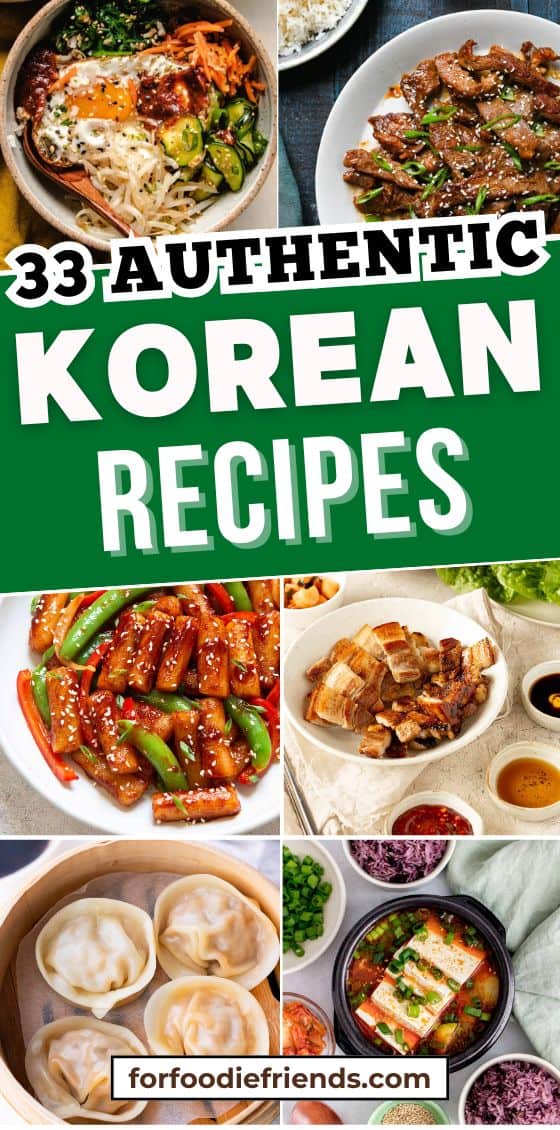
Experience the bold and dynamic flavors of Korean cuisine with these 33 authentic Korean recipes.
Known for its harmony of spicy, sweet, and savory tastes, Korean cooking offers a variety of dishes that celebrate its rich culture and traditions.
From iconic favorites like bibimbap, kimchi, and bulgogi to comfort foods like tteokbokki and japchae, this collection brings the taste of Korea right into your kitchen.
Whether you’re craving sizzling Korean BBQ, hearty stews, or refreshing side dishes like namul, there's something for everyone.
Each recipe is easy to follow, making it possible for anyone to enjoy authentic Korean meals at home.
Elevate your cooking with these vibrant and wholesome dishes that are perfect for any occasion.
33 Authentic Korean Recipes – Bold and Flavorful
33. Vegetarian Bibimbap Bowl with Bibimbap Sauce
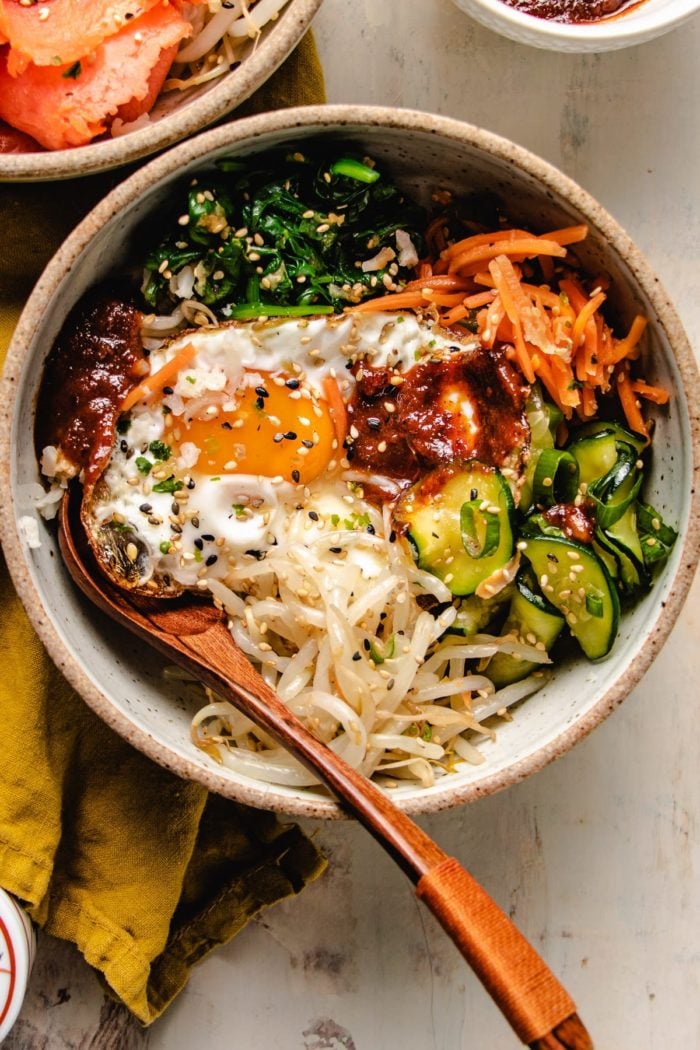
A vibrant, nourishing Korean rice bowl loaded with seasoned mixed vegetables, a perfectly fried egg, and a bold gochujang-based bibimbap sauce — all arranged beautifully over steamed rice then mixed together before eating. One of the most colourful, nutritious, and satisfying meals in Korean cuisine.
Ingredients:
- 2 cups cooked short-grain white rice
- 1 cup spinach, blanched and seasoned with sesame oil and garlic
- 1 cup bean sprouts, blanched and seasoned
- 1 medium carrot, julienned and sautéed
- 1 cup shiitake mushrooms, sliced and sautéed in soy sauce
- 1 medium zucchini, julienned and sautéed
- 2 eggs, fried sunny-side up
- Sesame oil and sesame seeds, for finishing
- Bibimbap sauce: 2 tablespoons gochujang, 1 tablespoon sesame oil, 1 tablespoon sugar, 1 tablespoon rice vinegar, 1 teaspoon soy sauce, 1 teaspoon garlic
Instructions:
- Prepare each vegetable topping separately — blanch, sauté, or season each one individually and set aside in small piles.
- Whisk together all the bibimbap sauce ingredients until combined. Taste and adjust heat and sweetness.
- Divide the cooked rice between two bowls. Arrange the seasoned vegetables in neat sections around the bowl. Place a fried egg in the centre of each.
- Drizzle with sesame oil and scatter sesame seeds. Spoon bibimbap sauce over the top. Mix vigorously before eating until everything is combined.
32. Kimchi

The cornerstone of Korean cuisine — spicy, tangy, umami-rich fermented napa cabbage made with gochugaru, fish sauce, garlic, and ginger. An essential condiment and side dish for nearly every Korean meal, and one of the most complex, probiotic-rich, and flavourful fermented foods in the world.
Ingredients:
- 1 medium napa cabbage (about 2 lbs), cut into quarters
- ¼ cup coarse sea salt
- 4 cloves garlic, minced
- 1 teaspoon fresh ginger, grated
- 2 tablespoons fish sauce (or soy sauce for vegan)
- 1–4 tablespoons gochugaru (Korean red pepper flakes), to taste
- 1 teaspoon sugar
- 4 green onions, cut into 1-inch pieces
- 1 cup daikon radish, julienned
Instructions:
- Cut the cabbage and sprinkle with salt. Toss to distribute and let sit for 1–2 hours, turning occasionally, until wilted. Rinse thoroughly three times and squeeze out all excess water.
- Mix together the garlic, ginger, fish sauce, gochugaru, and sugar into a paste.
- Combine the salted cabbage, daikon, and green onions. Add the paste and mix thoroughly with gloved hands until every piece is coated.
- Pack tightly into a clean jar, pressing down so the liquid rises. Leave at room temperature for 1–5 days until pleasantly sour, then refrigerate. Keeps for months in the fridge.
31. Beef Bulgogi
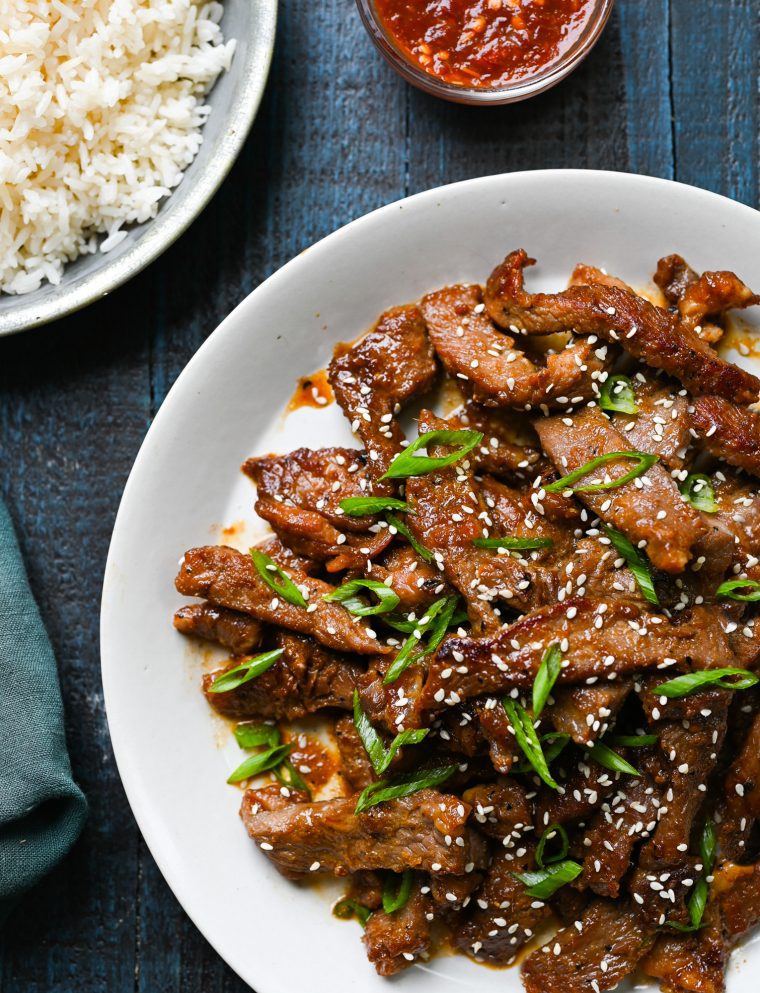
The most beloved Korean beef dish — thinly sliced ribeye marinated in a sweet and savoury blend of soy sauce, pear, garlic, and sesame, then quickly grilled or pan-fried until caramelized and tender. Serve over steamed rice with lettuce wraps and kimchi for the full experience.
Ingredients:
- 1½ lbs ribeye or sirloin, thinly sliced (freeze for 30 minutes for easier slicing)
- ½ Asian pear or kiwi, grated
- 4 cloves garlic, minced
- 1 teaspoon fresh ginger, grated
- 4 tablespoons soy sauce
- 2 tablespoons sugar or honey
- 2 tablespoons sesame oil
- 1 tablespoon rice wine (mirin)
- Cracked pepper, to taste
- 4 green onions, sliced and 1 medium onion, sliced
- Sesame seeds, for serving
Instructions:
- Combine the grated pear, garlic, ginger, soy sauce, sugar, sesame oil, rice wine, and pepper in a bowl. Add the sliced beef and onions and toss to coat. Marinate for at least 30 minutes — overnight is ideal.
- Heat a large skillet or grill pan over high heat until very hot. Cook the beef in small batches — do not crowd the pan or it will steam instead of caramelizing.
- Cook for 2–3 minutes per batch, stirring occasionally, until the meat is browned and caramelized at the edges.
- Serve immediately over steamed rice topped with green onions and sesame seeds. Excellent in lettuce wraps with ssamjang.
30. Japchae (Korean Glass Noodles Stir Fry)
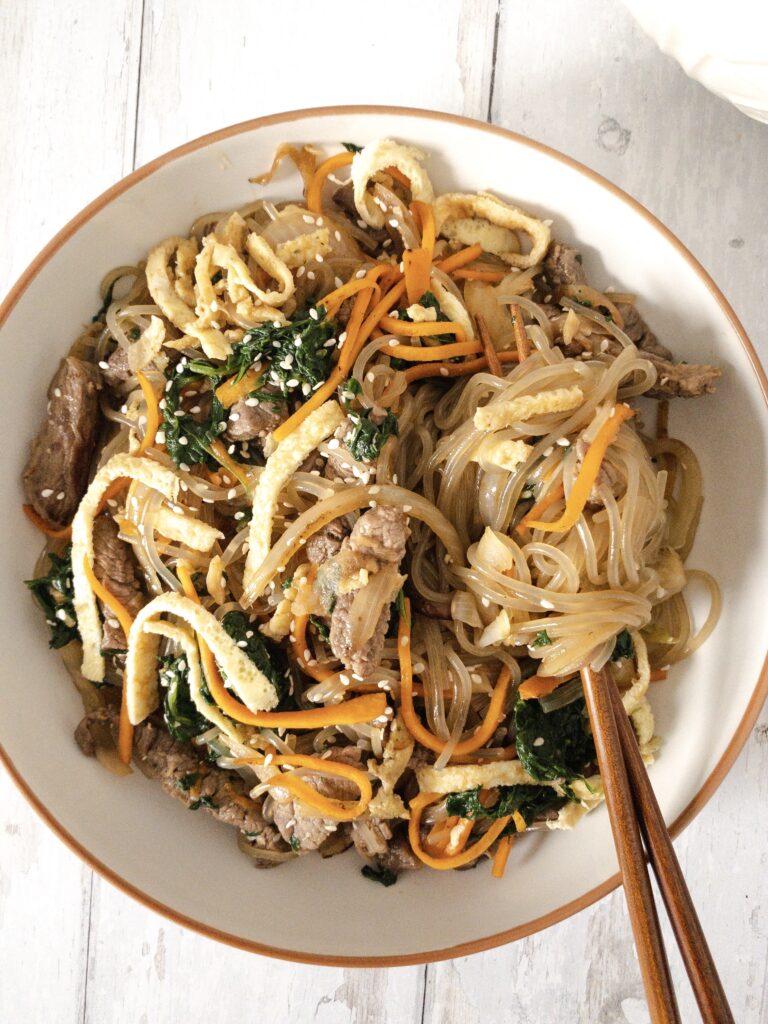
A beautifully elegant Korean celebration dish — chewy sweet potato glass noodles stir-fried with colourful julienned vegetables, beef, and a savoury soy-sesame dressing. Japchae is served at every important Korean gathering and is one of the most universally loved Korean noodle dishes.
Ingredients:
- 200g dangmyeon (Korean sweet potato glass noodles)
- 100g beef sirloin, thinly sliced and seasoned with soy sauce and sesame oil
- 2 cups spinach, blanched and squeezed dry
- 1 medium carrot, julienned
- 1 red bell pepper, julienned
- 4 shiitake mushrooms, sliced
- ½ onion, thinly sliced
- 3 tablespoons soy sauce
- 2 tablespoons sesame oil
- 1 tablespoon sugar
- 2 cloves garlic, minced
- Sesame seeds, for finishing
Instructions:
- Cook the glass noodles according to package directions. Drain, rinse with cold water, and cut into manageable lengths. Toss with a drizzle of sesame oil to prevent sticking.
- Sauté each vegetable and the beef separately in a large skillet with a little oil, seasoning each lightly with salt. Set aside.
- Whisk together the soy sauce, sesame oil, sugar, and garlic. Add the noodles to the pan with the sauce and toss over medium heat for 2–3 minutes.
- Add all the sautéed vegetables and beef. Toss everything together gently until combined. Finish with sesame seeds. Serve warm or at room temperature.
29. Tteokbokki (Stir-Fried Spicy Rice Cakes)
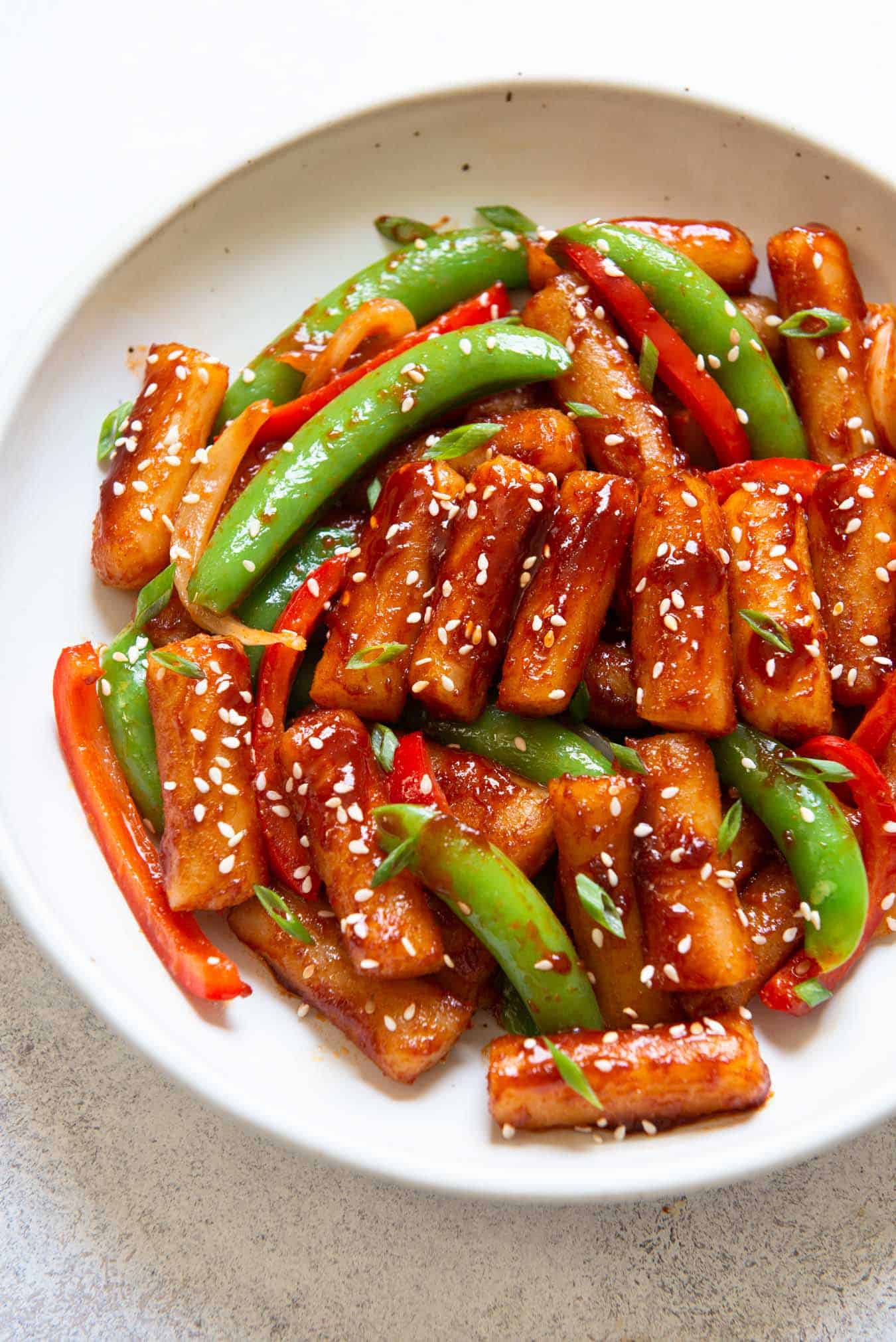
One of Korea's most beloved street foods — chewy cylindrical rice cakes simmered in a fiery, deeply savoury gochujang-based sauce with fish cakes and green onions. Absolutely addictive, satisfying, and one of the first Korean dishes most people fall completely in love with.
Ingredients:
- 1 lb cylindrical tteok (rice cakes), soaked in cold water for 30 minutes
- 4 oz fish cakes, sliced (optional)
- 3 green onions, cut into 2-inch pieces
- 2 cups anchovy or vegetable broth
- 3 tablespoons gochujang
- 1 tablespoon gochugaru
- 1 tablespoon soy sauce
- 1 tablespoon sugar
- 2 cloves garlic, minced
- Sesame seeds and green onions, for serving
Instructions:
- Bring the broth to a simmer in a wide pan over medium heat. Whisk in the gochujang, gochugaru, soy sauce, sugar, and garlic until dissolved into a sauce.
- Add the soaked and drained rice cakes. Simmer for 8–10 minutes, stirring frequently, until the rice cakes are tender and the sauce has thickened and coats them beautifully.
- Add the fish cakes and green onions in the last 2 minutes. Stir and cook until heated through.
- Transfer to a serving plate. Scatter sesame seeds and green onions over the top. Serve immediately — tteokbokki is best hot.
28. Kimchi Jjigae (Kimchi Stew)

A deeply warming, intensely flavourful Korean stew made with well-fermented kimchi, pork belly, soft tofu, and a rich spicy broth — one of the most iconic and comforting dishes in Korean home cooking. The sourer the kimchi, the better the stew. Best enjoyed with steamed rice.
Ingredients:
- 2 cups well-fermented kimchi, roughly chopped
- ½ cup kimchi juice
- 200g pork belly, sliced into bite-sized pieces
- 300g soft or firm tofu, cubed
- 1 small onion, sliced
- 2 cups anchovy broth or water
- 1 tablespoon gochujang
- 1 tablespoon gochugaru
- 1 tablespoon soy sauce
- 1 teaspoon sesame oil
- 3 green onions, sliced
Instructions:
- In a pot over medium heat, cook the pork belly pieces until lightly browned. Add the kimchi and kimchi juice and stir-fry together for 3–4 minutes.
- Add the broth, gochujang, gochugaru, soy sauce, and onion. Bring to a boil then reduce heat and simmer for 15–20 minutes until the broth is deeply flavoured.
- Add the tofu cubes carefully. Simmer for another 5 minutes.
- Finish with sesame oil and green onions. Serve hot directly from the pot with steamed rice on the side.
27. Galbi Jjim (Korean Braised Short Ribs)
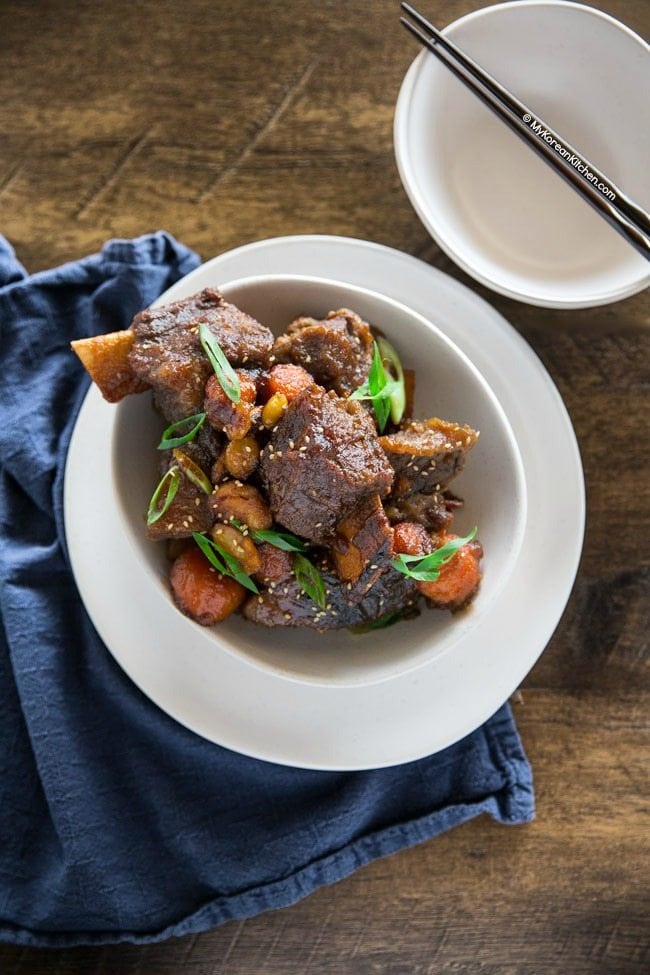
A show-stopping Korean celebration dish — beef short ribs slow-braised until fall-off-the-bone tender in a deeply rich, sweet, and savoury soy sauce with Asian pear, garlic, ginger, chestnuts, and vegetables. Served at special occasions and guaranteed to impress every single guest at the table.
Ingredients:
- 2 lbs beef short ribs, parboiled and rinsed
- ½ Asian pear, grated
- 6 cloves garlic, minced
- 1 tablespoon fresh ginger, grated
- 5 tablespoons soy sauce
- 3 tablespoons sugar or honey
- 2 tablespoons sesame oil
- 2 tablespoons rice wine (mirin)
- 2 medium potatoes, cubed
- 2 medium carrots, cut into chunks
- 10 dried jujubes or chestnuts (optional)
- 2 cups water or beef broth
- Sesame seeds and green onions, for serving
Instructions:
- Parboil the short ribs in boiling water for 5 minutes. Drain and rinse under cold water to remove impurities. Score the meat in a crosshatch pattern.
- Combine the grated pear, garlic, ginger, soy sauce, sugar, sesame oil, and rice wine into a marinade. Toss the ribs in the marinade and let sit for 30 minutes.
- Transfer the ribs and all the marinade to a large pot or Dutch oven. Add the water and bring to a boil. Reduce heat to low, cover, and braise for 40 minutes.
- Add the potatoes, carrots, and jujubes. Continue to braise for 20–25 more minutes until the vegetables are tender and the ribs are fall-off-the-bone soft. Garnish with sesame seeds and green onions.
26. Vegan Sundubu Jjigae (Korean Soft Tofu Stew)
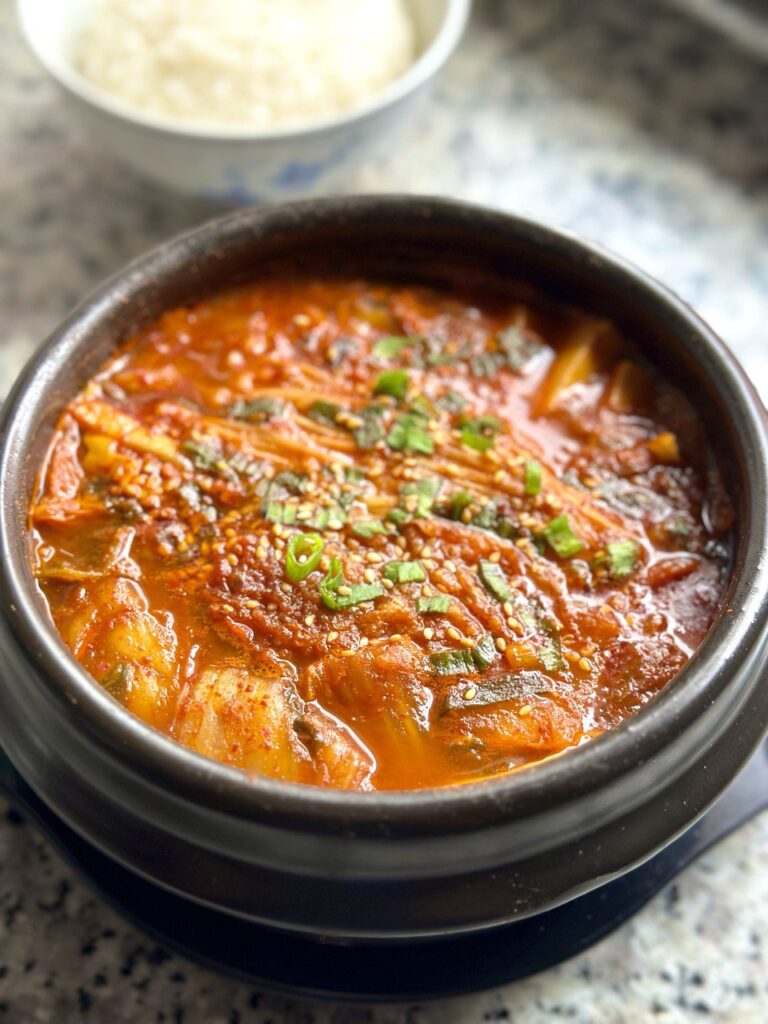
A completely plant-based version of the iconic Korean soft tofu stew — silken tofu simmered in a boldly spiced gochugaru and vegetable broth with mushrooms, zucchini, and green onions. Deeply comforting, warming, and satisfying served with steamed rice alongside.
Ingredients:
- 2 (12 oz) tubes silken or soft tofu
- 2 cups mushrooms (shiitake or oyster), sliced
- 1 medium zucchini, sliced into half moons
- 3 green onions, sliced
- 3 cloves garlic, minced
- 2 tablespoons gochugaru
- 1 tablespoon gochujang
- 1 tablespoon soy sauce
- 1 teaspoon sesame oil
- 2 cups vegetable broth
- 1 tablespoon neutral oil
Instructions:
- Heat oil in a small clay pot or saucepan over medium heat. Sauté the garlic and gochugaru for 1 minute until fragrant.
- Add the mushrooms and zucchini and cook for 3 minutes. Add the broth, gochujang, and soy sauce. Bring to a boil.
- Carefully add the soft tofu in large spoonfuls — do not stir, just nestle the pieces into the broth. Simmer for 5 minutes.
- Finish with sesame oil and green onions. Serve immediately in the pot with steamed rice. Optionally crack a raw egg into the hot stew at the table and stir to cook.
25. Samgyeopsal (Korean BBQ Pork Belly)

The ultimate Korean BBQ experience — thick-cut pork belly grilled at the table until perfectly crispy and golden, then wrapped in fresh lettuce leaves with garlic, green onion salad, and bold ssamjang sauce. An interactive, communal, festive meal that is one of the most celebrated dining traditions in Korea.
Ingredients:
- 1½ lbs thick-cut pork belly, sliced into ¼-inch pieces
- Lettuce leaves (perilla or butter lettuce), for wrapping
- 6 cloves garlic, thinly sliced
- 2 green onions, sliced into rounds
- Ssamjang sauce: 2 tablespoons doenjang, 1 tablespoon gochujang, 1 teaspoon sesame oil, 1 teaspoon sugar, 2 cloves garlic minced
- Kimchi and steamed rice, for serving alongside
Instructions:
- Mix together all the ssamjang ingredients until combined. Set out the lettuce leaves, garlic slices, green onions, kimchi, and ssamjang in small dishes on the table.
- Heat a cast iron skillet or grill pan over high heat until very hot. Grill the pork belly slices for 3–4 minutes per side until beautifully browned and crispy at the edges.
- Use scissors to cut the grilled pork into bite-sized pieces directly in the pan.
- To eat: place a piece of pork on a lettuce leaf, add a smear of ssamjang, a slice of garlic, green onion, and a piece of kimchi. Wrap and eat in one bite.
24. Extra Crispy Haemul Pajeon (Seafood Scallion Pancake)
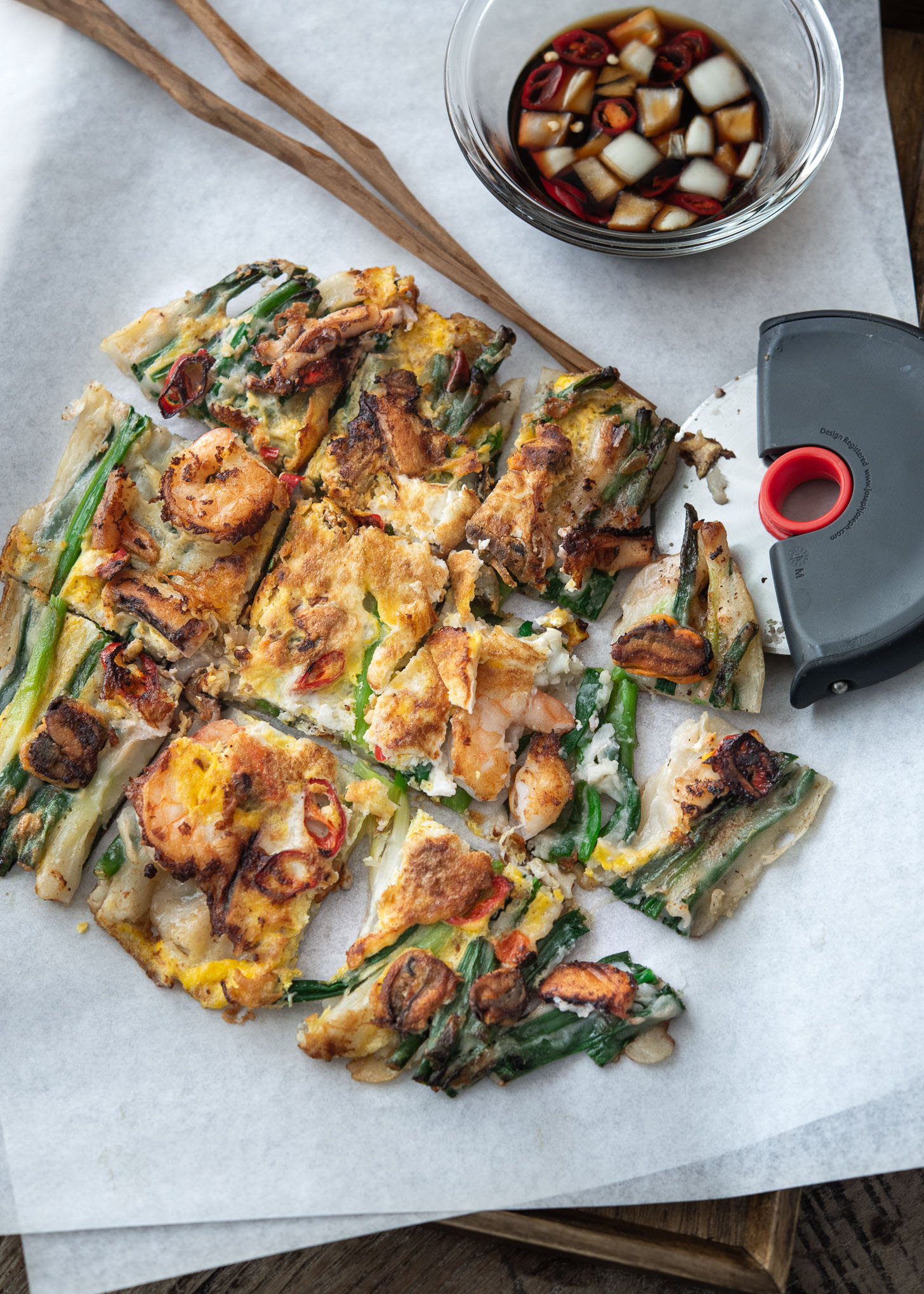
A spectacular, extra-crispy Korean seafood and scallion pancake with a golden, crunchy exterior and a tender interior packed with green onions, squid, shrimp, and scallops. Served with a soy dipping sauce, pajeon is one of the most popular Korean appetizers and rainy-day comfort foods.
Ingredients:
- 8 large green onions (scallions), ends trimmed
- ½ cup mixed seafood (squid rings, small shrimp, scallops)
- 1 cup all-purpose flour
- ¼ cup rice flour (for extra crispiness)
- 1 large egg
- ¾ cup ice-cold water
- ½ teaspoon salt
- 3 tablespoons neutral oil
- Dipping sauce: 3 tablespoons soy sauce, 1 tablespoon rice vinegar, 1 teaspoon sesame oil, ½ teaspoon gochugaru, 1 teaspoon sesame seeds
Instructions:
- Mix together the dipping sauce ingredients and set aside. Whisk together the flours, egg, ice cold water, and salt until just combined — a few lumps are fine. Do not overmix.
- Heat 2 tablespoons of oil in a large skillet over medium-high heat until shimmering. Lay the whole green onions in the pan. Scatter the seafood over the top.
- Pour the batter over the green onions and seafood evenly. Press down firmly with a spatula. Cook for 4–5 minutes until the bottom is deeply golden and crispy.
- Add the remaining oil around the edges of the pancake. Flip carefully and cook for 3–4 more minutes until the second side is equally golden. Slice into pieces and serve with the dipping sauce.
23. Dak Galbi (Spicy Stir-Fried Chicken)
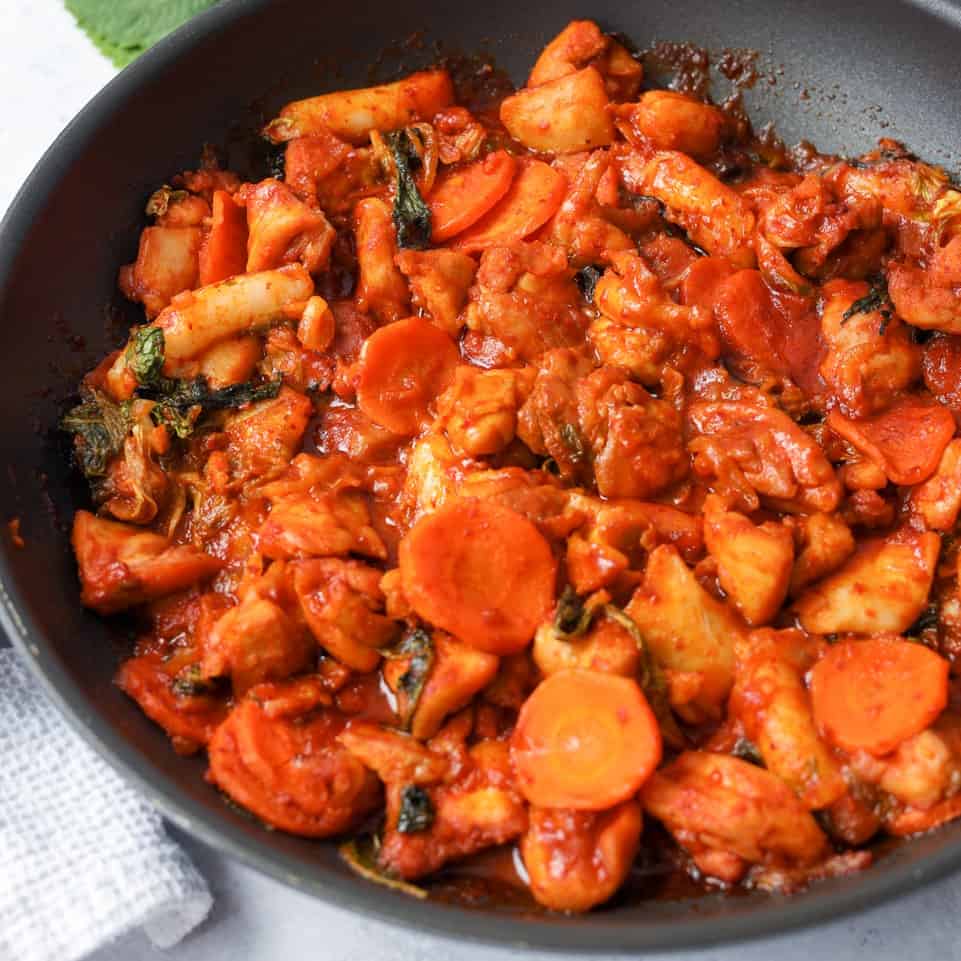
A bold, fiery, deeply satisfying Korean spicy stir-fried chicken dish — chicken pieces marinated in gochujang and rice wine, then stir-fried with sweet potato, cabbage, and green onions. A speciality of Chuncheon city in Korea and one of the most popular and beloved Korean chicken dishes.
Ingredients:
- 1½ lbs boneless chicken thighs, cut into bite-sized pieces
- 1 small sweet potato, peeled and thinly sliced
- 2 cups napa cabbage, roughly chopped
- 4 green onions, cut into 2-inch pieces
- ½ onion, sliced
- Marinade: 3 tablespoons gochujang, 1 tablespoon gochugaru, 2 tablespoons soy sauce, 1 tablespoon sesame oil, 1 tablespoon sugar, 1 tablespoon rice wine, 3 cloves garlic minced, 1 teaspoon ginger grated
- Sesame seeds, for serving
Instructions:
- Mix all the marinade ingredients together. Add the chicken pieces and toss to coat. Marinate for at least 30 minutes — up to overnight in the fridge.
- Heat a large skillet or grill pan over medium-high heat with a little oil. Add the sweet potato slices and cook for 4–5 minutes until beginning to soften.
- Add the marinated chicken and onion. Stir-fry for 6–8 minutes until the chicken is cooked through and caramelized.
- Add the cabbage and green onions in the last 2 minutes. Toss until wilted. Scatter sesame seeds over the top and serve immediately with steamed rice.
22. Korean Dumplings (Mandu)
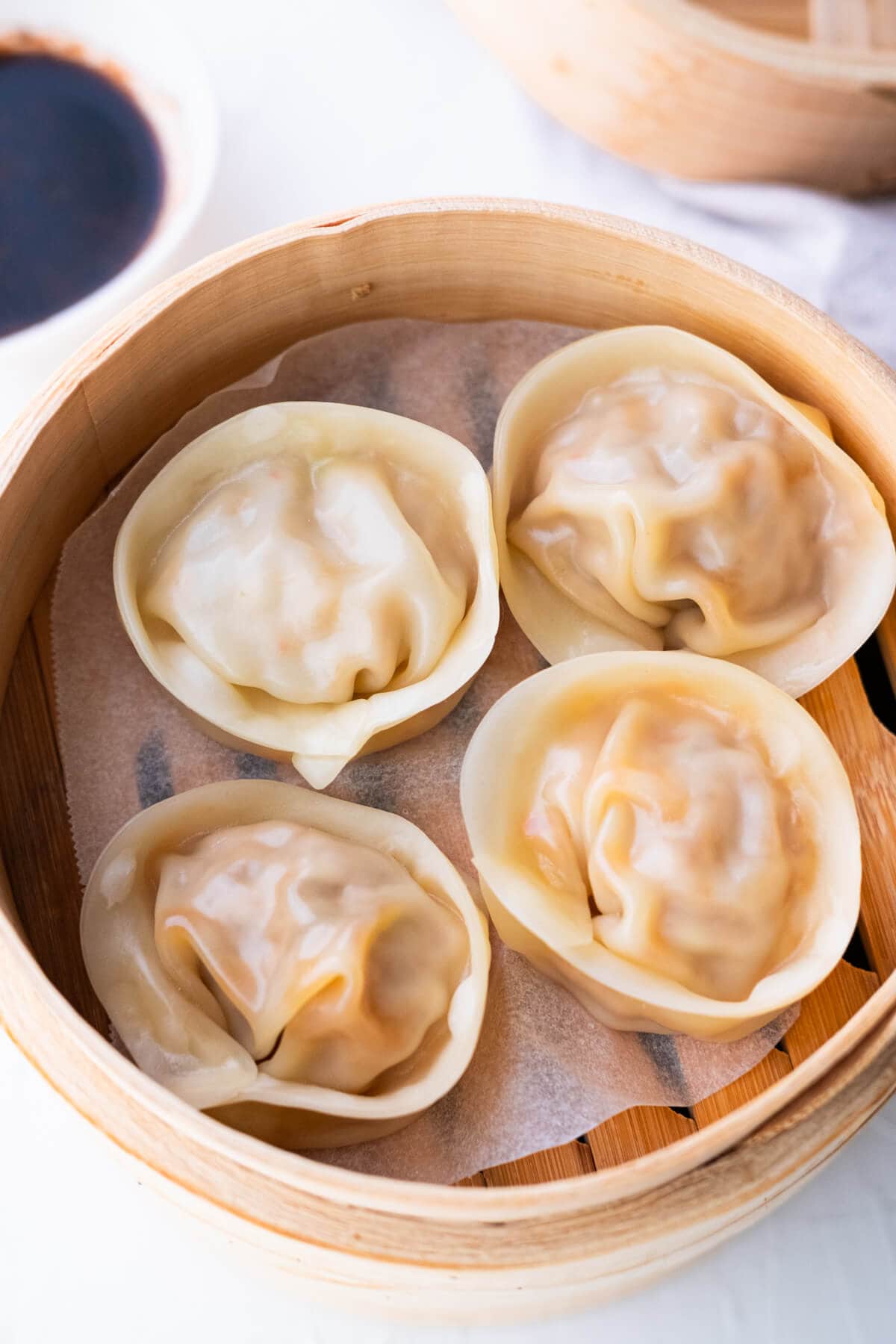
Delicate, flavourful Korean dumplings with a savoury filling of pork, glass noodles, tofu, kimchi, and vegetables — steamed, pan-fried, or boiled to your preference. Mandu are served as a snack, appetizer, or in soups, and are a beloved staple of Korean home cooking that the whole family enjoys making together.
Ingredients:
- 30 round dumpling wrappers
- 200g ground pork
- ½ cup firm tofu, crumbled and squeezed dry
- ½ cup napa cabbage, finely chopped and squeezed dry
- ½ cup kimchi, finely chopped and squeezed dry
- 50g glass noodles, cooked and finely chopped
- 3 green onions, finely sliced
- 2 cloves garlic, minced
- 1 tablespoon soy sauce
- 1 teaspoon sesame oil
- Salt and pepper, to taste
- Soy dipping sauce, for serving
Instructions:
- Combine all filling ingredients in a large bowl. Mix thoroughly until everything is evenly combined. The filling should hold together when pressed.
- Place a tablespoon of filling in the centre of each wrapper. Dip a finger in water and run it around the edge. Fold and pleat to seal tightly.
- To pan-fry: heat oil over medium-high heat, add dumplings flat-side down, cook 2 minutes until golden, add 3 tablespoons water, cover and steam for 4 minutes. To steam: steam over boiling water for 8–10 minutes. To boil: cook in boiling water for 6–8 minutes.
- Serve immediately with a soy, rice vinegar, and sesame dipping sauce.
21. Kimbap (Korean Seaweed Rice Rolls)

Korea's beloved portable rice rolls — seasoned short-grain rice spread on toasted seaweed sheets and rolled with colourful fillings of egg, spinach, carrot, cucumber, pickled daikon, and crab stick. A staple picnic and lunchbox food that is satisfying, beautiful to look at, and completely irresistible.
Ingredients:
- 3 cups cooked short-grain rice, seasoned with 1 tablespoon sesame oil and 1 teaspoon salt
- 5 sheets dried seaweed (gim/nori)
- 3 eggs, beaten and pan-fried into a thin omelette, then sliced into strips
- 1 cup spinach, blanched and seasoned
- 1 medium carrot, julienned and sautéed
- ½ cucumber, julienned
- 5 strips pickled yellow daikon (danmuji)
- 5 strips crab stick or ham
- Sesame oil, for rolling
Instructions:
- Lay a seaweed sheet shiny-side down on a bamboo rolling mat. Spread a thin, even layer of seasoned rice over ¾ of the seaweed, leaving a 1-inch border at the top edge.
- Arrange the fillings in a horizontal line across the centre of the rice — a little of each ingredient in a row.
- Using the mat, roll tightly from the bottom edge upward, pressing firmly as you roll. Seal the edge with a little water. Brush the outside with sesame oil.
- Slice into ½-inch rounds with a sharp, slightly wet knife for clean cuts. Serve immediately.
20. Doenjang Jjigae (Korean Soybean Paste Stew) — Version 1
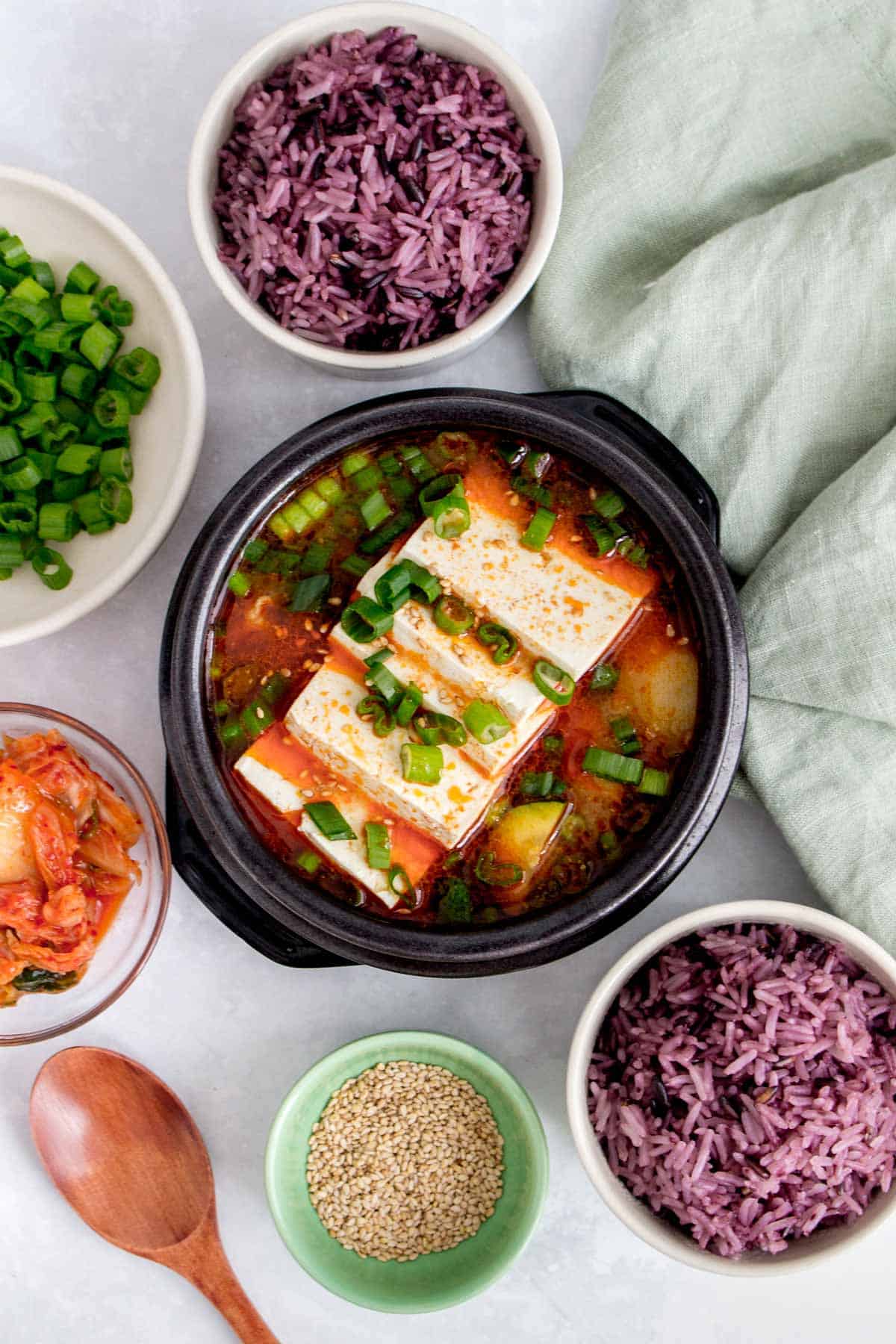
A daily Korean comfort food stew — silken tofu, zucchini, mushrooms, and onion simmered in a deeply savoury, umami-rich anchovy broth seasoned with doenjang (Korean fermented soybean paste). Mild, warming, and nourishing, doenjang jjigae is served at nearly every Korean family meal.
Ingredients:
- 1 (12 oz) block soft tofu, cubed
- 1 medium zucchini, diced
- 4 shiitake mushrooms, sliced
- ½ onion, diced
- 2 cloves garlic, minced
- 3 tablespoons doenjang (Korean soybean paste)
- 1 tablespoon gochujang (optional, for heat)
- 2½ cups anchovy or vegetable broth
- 1 teaspoon sesame oil
- 2 green onions, sliced
Instructions:
- Bring the broth to a simmer in a clay pot or small saucepan. Whisk in the doenjang and gochujang until dissolved.
- Add the garlic, onion, and mushrooms. Simmer for 5 minutes.
- Add the zucchini and tofu. Simmer for another 5–7 minutes until the zucchini is tender.
- Finish with sesame oil and green onions. Serve hot directly from the pot with steamed rice alongside.
19. Budae Jjigae (Korean Army Stew)
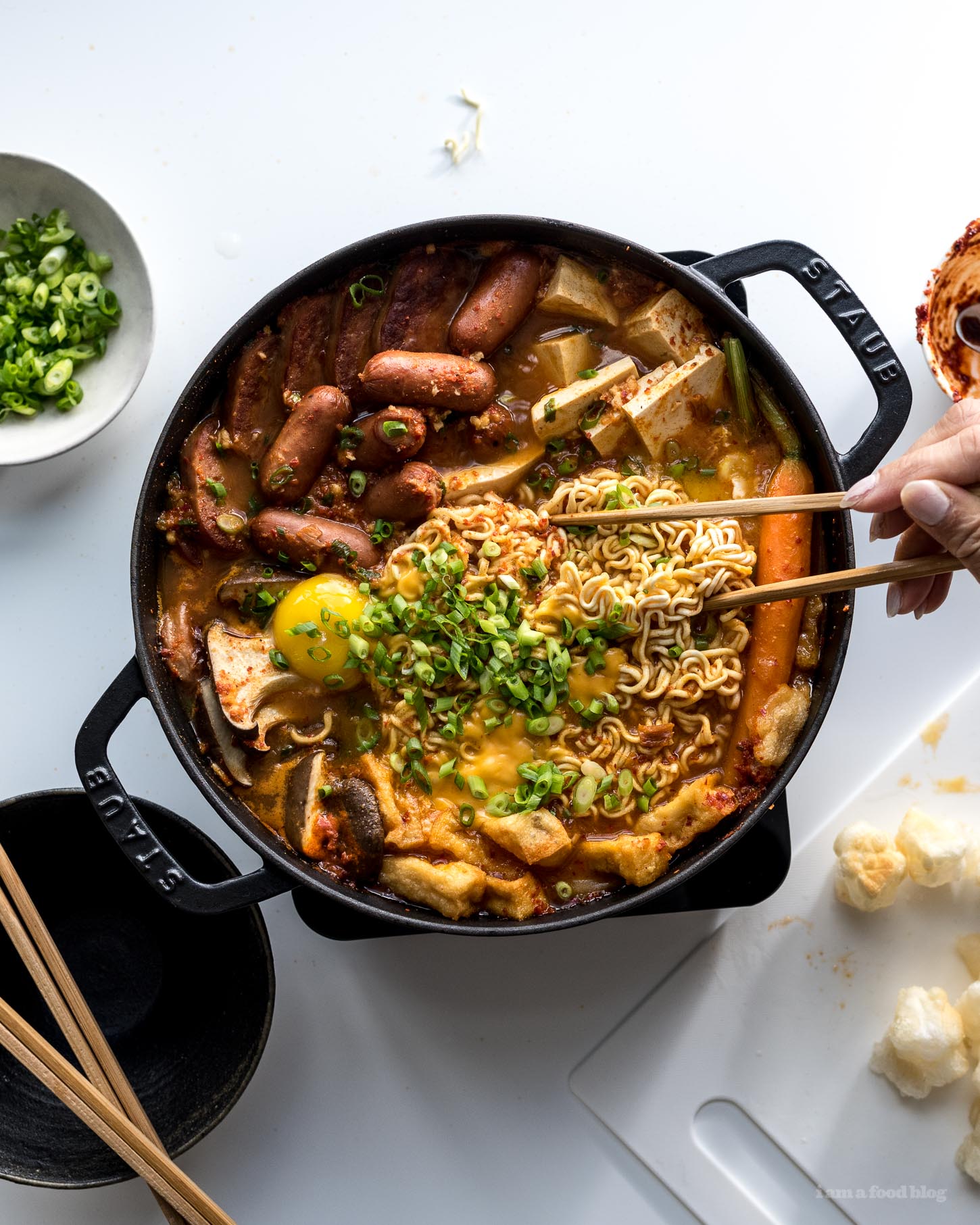
A uniquely Korean fusion stew with a fascinating post-war history — spam, hot dogs, baked beans, ramen noodles, kimchi, and tofu all simmered together in a bold gochujang broth for a rich, indulgent, comforting hot pot. Served bubbling at the table and universally loved for its bold, satisfying flavour.
Ingredients:
- ½ can Spam, sliced
- 2 hot dogs or cocktail sausages, sliced
- ½ cup baked beans (canned)
- 1 cup kimchi, roughly chopped
- 200g firm tofu, sliced
- 1 pack instant ramen noodles (discard seasoning packet)
- 4 shiitake mushrooms, sliced
- 3 green onions, cut into pieces
- 3 cups anchovy or chicken broth
- 2 tablespoons gochujang
- 1 tablespoon gochugaru
- 1 tablespoon soy sauce
- 2 cloves garlic, minced
- Sliced cheese (optional, for topping)
Instructions:
- Arrange all the ingredients in sections in a large shallow pot or wide saucepan — Spam, hot dogs, kimchi, tofu, mushrooms, baked beans, and green onions in separate sections.
- Whisk together the broth, gochujang, gochugaru, soy sauce, and garlic. Pour over all the ingredients.
- Bring to a boil over medium-high heat. Add the dry ramen noodles and push them into the broth. Cook for 3–4 minutes until noodles are tender.
- Add a slice of cheese on top if desired and let it melt into the stew. Serve immediately from the pot.
18. Jjajangmyeon (Black Bean Noodles)
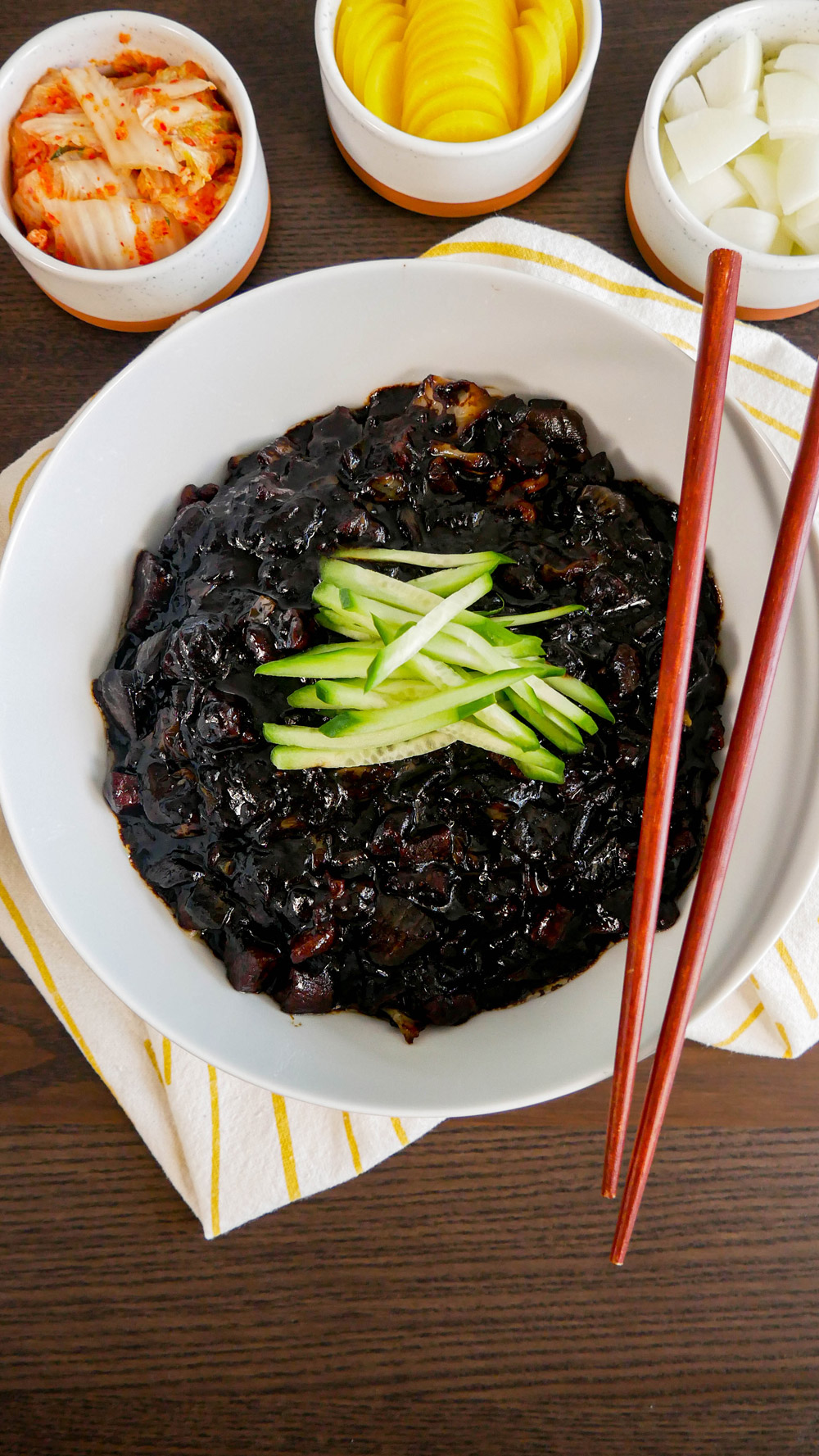
Korea's beloved black bean noodles — thick, chewy wheat noodles topped with a rich, glossy sauce of fermented black bean paste (chunjang), pork, and vegetables. A uniquely satisfying dish with a deep, savoury flavour that is completely unlike anything else, traditionally eaten on Black Day every April 14th.
Ingredients:
- 4 portions fresh or dried jjajang noodles (or thick udon noodles)
- 200g pork belly or shoulder, diced small
- ½ medium onion, diced
- 1 medium zucchini, diced
- 1 medium potato, peeled and diced
- 4 tablespoons chunjang (black bean paste)
- 1 tablespoon sugar
- 1 tablespoon oyster sauce
- 1 teaspoon sesame oil
- 1 cup water or pork broth
- 1 tablespoon cornstarch dissolved in 2 tablespoons water
- Julienned cucumber and thinly sliced raw onion, for serving
Instructions:
- Heat a wok or large skillet over high heat with oil. Stir-fry the chunjang for 2 minutes until fragrant. Remove and set aside.
- In the same pan, cook the pork until browned. Add the onion, potato, and zucchini. Stir-fry for 5 minutes.
- Return the fried chunjang to the pan. Add the water, sugar, and oyster sauce. Simmer for 10 minutes until vegetables are tender. Stir in the cornstarch slurry and cook until the sauce is thick and glossy. Finish with sesame oil.
- Cook noodles according to package directions. Divide into bowls. Spoon the sauce generously over the noodles. Top with julienned cucumber and sliced raw onion. Serve immediately — mix together before eating.
17. Kongguksu (Korean Cold Soy Milk Noodles)

A beautifully refreshing Korean summer noodle dish — thin wheat or somyeon noodles served in a creamy, chilled soy milk broth made from blended soaked soybeans. Delicately flavoured, nutty, and surprisingly light, kongguksu is one of Korea's most beloved summer dishes.
Ingredients:
- 200g somyeon (thin wheat noodles)
- 1½ cups dried soybeans, soaked overnight and skins rubbed off
- 2½ cups ice-cold water
- 1 teaspoon salt
- 1 teaspoon sesame seeds, plus more for serving
- Sliced cucumber, sliced tomato, and pine nuts, for topping
- Ice cubes, for serving
Instructions:
- Boil the soaked, skin-rubbed soybeans for 20 minutes until completely soft. Drain and cool completely.
- Blend the cooled soybeans with the ice-cold water and sesame seeds on high speed until completely smooth and creamy. Strain through a fine sieve for the silkiest texture. Season with salt. Refrigerate until very cold.
- Cook the somyeon noodles according to package directions. Rinse immediately under very cold water and drain well.
- Divide the noodles into bowls. Pour the cold soy milk broth generously over the noodles. Top with cucumber, tomato, pine nuts, and sesame seeds. Add ice cubes to keep it cold. Serve immediately.
16. Crispy Korean Fried Chicken (Yangnyeom Chicken)
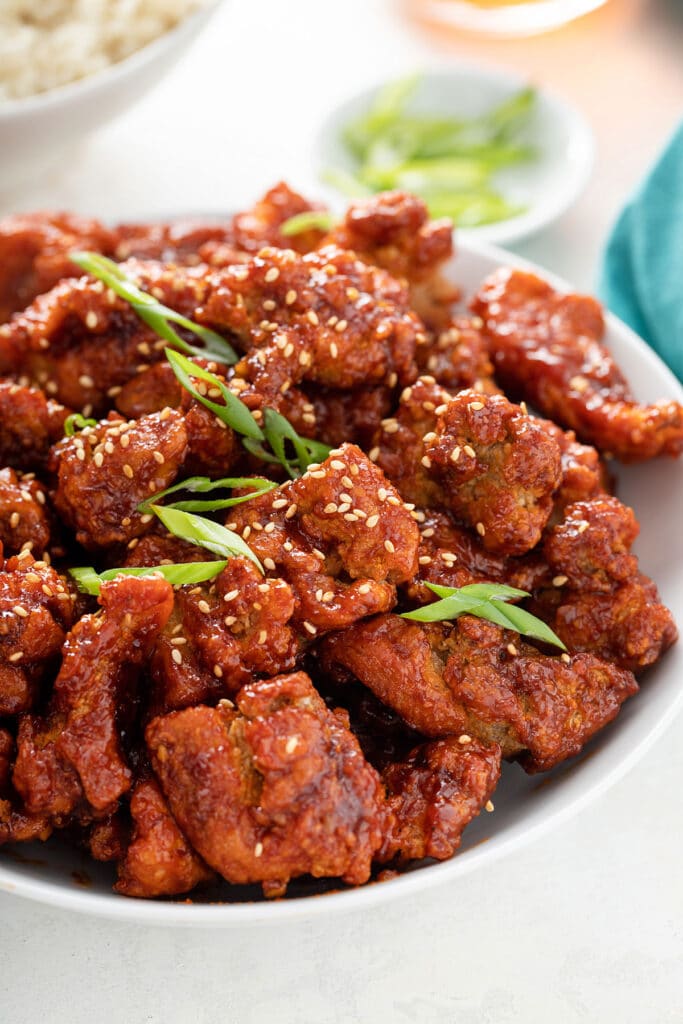
The most gloriously crispy, addictive fried chicken in the world — double-fried until shatteringly crunchy, then tossed in a sweet, spicy, sticky yangnyeom glaze made with gochujang, garlic, and honey. Served with pickled daikon cubes and beer for the ultimate Korean chimaek experience.
Ingredients:
- 2 lbs chicken wings or drumettes
- ½ cup cornstarch
- ½ cup all-purpose flour
- 1 teaspoon garlic powder
- Salt and pepper, to taste
- Oil for deep frying
- Yangnyeom sauce: 3 tablespoons gochujang, 2 tablespoons ketchup, 2 tablespoons honey, 1 tablespoon soy sauce, 1 tablespoon rice vinegar, 3 cloves garlic minced, 1 teaspoon sesame oil
- Toasted sesame seeds and pickled daikon, for serving
Instructions:
- Pat the chicken completely dry. Toss in the cornstarch, flour, garlic powder, salt, and pepper until well coated.
- Heat oil to 325°F. Fry the chicken in batches for 8–10 minutes. Remove and rest for 5 minutes — this is the first fry. Increase oil to 375°F. Fry the chicken a second time for 3–4 minutes until deeply golden and shatteringly crispy.
- Make the yangnyeom sauce: combine all sauce ingredients in a small saucepan over medium heat. Simmer for 3–4 minutes until slightly thickened.
- Toss the hot crispy chicken in the warm sauce until fully coated. Scatter sesame seeds on top. Serve immediately with pickled daikon cubes.
15. Bibim Naengmyeon (Spicy Cold Noodles)
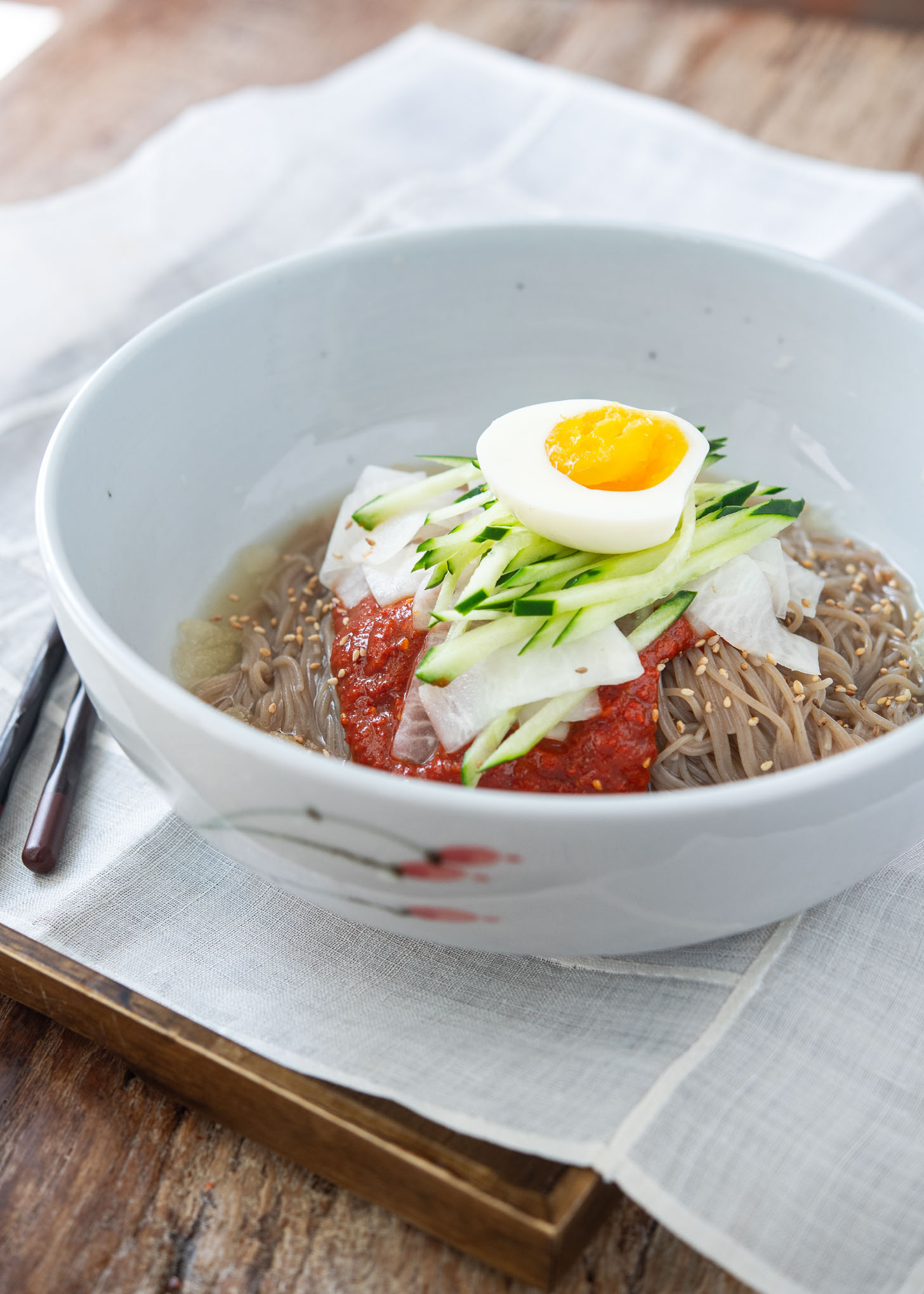
A refreshing, punchy Korean cold noodle dish — chewy buckwheat or sweet potato naengmyeon noodles tossed in a bold, tangy gochujang sauce with julienned cucumber, Korean pear, and a hard-boiled egg. Wonderfully cooling in summer and a beloved fixture of Korean cuisine year-round.
Ingredients:
- 400g naengmyeon (buckwheat or sweet potato noodles)
- 1 hard-boiled egg, halved
- ½ cucumber, julienned
- ½ Asian pear or apple, julienned
- Ice cubes, for serving
- Bibim sauce: 3 tablespoons gochujang, 1 tablespoon sugar, 1 tablespoon rice vinegar, 1 tablespoon soy sauce, 1 tablespoon sesame oil, 1 teaspoon sesame seeds, 2 cloves garlic minced
Instructions:
- Whisk all bibim sauce ingredients together until smooth. Taste and adjust balance of sweet, sour, and spicy.
- Cook the naengmyeon noodles according to package directions. Rinse aggressively under cold running water, then transfer to a bowl of ice water for 1 minute. Drain completely.
- Toss the noodles with 3–4 tablespoons of bibim sauce until every noodle is coated. Transfer to a serving bowl.
- Top with julienned cucumber, pear, and a halved hard-boiled egg. Add ice cubes around the noodles to keep them cold. Serve immediately with extra sauce on the side.
14. Gamja Tang (Korean Pork Bone Soup)

A rich, deeply warming Korean pork bone soup with tender fall-off-the-bone pork, soft potatoes, and earthy vegetables in a deeply savoury gochugaru-seasoned broth. A hearty, comforting dish that takes time to develop its spectacular depth of flavour but rewards every minute of patience.
Ingredients:
- 2 lbs pork neck bones or spare ribs, parboiled and rinsed
- 3 medium potatoes, halved
- ½ head napa cabbage, roughly chopped
- 6 dried chilli peppers
- 6 cloves garlic, minced
- 1 tablespoon gochugaru
- 2 tablespoons doenjang
- 2 tablespoons soy sauce
- 1 tablespoon sesame oil
- 6 cups water
- Perilla leaves and green onions, for serving
Instructions:
- Parboil the pork bones in boiling water for 5 minutes. Drain and rinse thoroughly under cold water.
- Place the cleaned pork in a large pot with 6 cups fresh water, garlic, dried chillies, gochugaru, doenjang, and soy sauce. Bring to a boil, then reduce heat and simmer for 1.5–2 hours until the meat is beginning to loosen from the bones.
- Add the potatoes and cabbage. Continue simmering for 25–30 minutes until the potatoes are soft and the broth is deeply flavoured.
- Finish with sesame oil. Ladle into bowls and top with perilla leaves and green onions. Serve with steamed rice and kimchi.
13. Hobakjuk (Korean Pumpkin Porridge)

A velvety, naturally sweet Korean pumpkin porridge made from pureed kabocha squash and glutinous rice balls — smooth, comforting, and beautiful in its simplicity. Enjoyed as a light dessert, snack, or healing meal, hobakjuk is naturally vegan, gluten-free, and deeply nourishing.
Ingredients:
- 1 small kabocha squash (about 2 lbs), peeled, seeded, and cubed
- 4 cups water
- 3 tablespoons sugar or honey, plus more to taste
- ½ teaspoon salt
- Rice balls: ½ cup glutinous rice flour mixed with 3–4 tablespoons warm water, kneaded into small round balls
Instructions:
- Boil the kabocha cubes in 4 cups of water for 15–20 minutes until completely soft. Cool slightly.
- Blend the cooked squash with the cooking water until completely smooth. Return to the pot over medium heat.
- Cook the small glutinous rice balls in boiling water for 3–4 minutes until they float. Drain and add to the pumpkin porridge.
- Stir in the sugar and salt. Simmer for 5 minutes until slightly thickened. Taste and adjust sweetness. Serve warm in bowls.
12. Samgyetang (Korean Ginseng Chicken Soup)
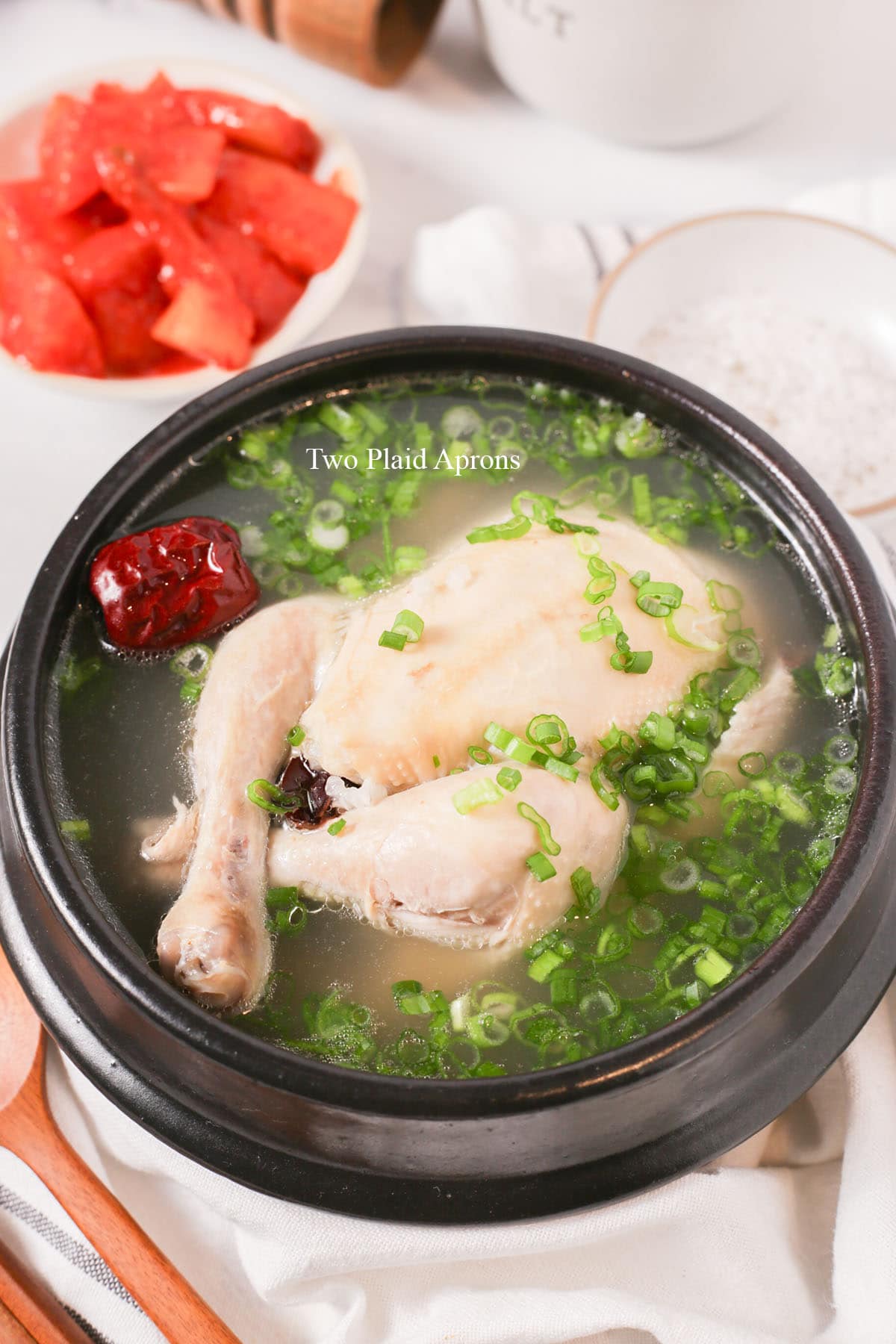
A restorative, deeply nourishing Korean chicken soup — a whole small chicken stuffed with glutinous rice, garlic, jujubes, and ginseng, then simmered for hours in a delicate, flavourful broth. Samgyetang is traditionally eaten on the hottest days of summer to replenish energy and restore vitality.
Ingredients:
- 2 small Cornish hens or 1 small whole chicken (2–3 lbs)
- ½ cup glutinous rice, soaked for 1 hour and drained
- 6 cloves garlic, peeled and left whole
- 6 dried jujubes (Korean dates)
- 2–3 fresh or dried ginseng roots
- 8 cups water
- 2 green onions, sliced
- Salt and white pepper, to taste
- Sesame oil, for finishing
Instructions:
- Rinse the chicken well. Stuff the cavity loosely with soaked glutinous rice, 4 garlic cloves, 4 jujubes, and the ginseng. Truss or secure the legs to keep the stuffing inside.
- Place the stuffed chicken in a large pot. Add the water, remaining garlic, and remaining jujubes.
- Bring to a boil, skimming the foam regularly for the first 10 minutes. Reduce heat to a gentle simmer. Cover and cook for 1.5–2 hours until the chicken is very tender and the broth is milky.
- Season the broth with salt and white pepper. Ladle into bowls and top with green onions and a drizzle of sesame oil. Serve with kimchi and extra salt on the side.
11. Godeungeo Gui (Grilled Mackerel)
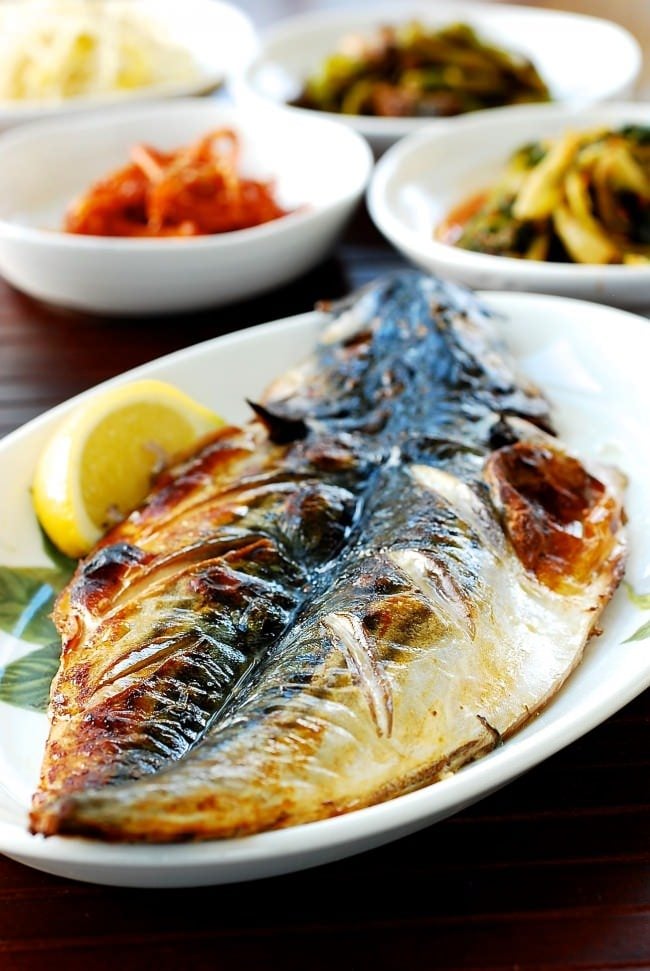
A simple, powerfully flavourful Korean grilled mackerel — salted and grilled until the skin is irresistibly crispy and the flesh is moist and smoky. One of the most popular everyday fish dishes in Korean homes, always served with steamed rice, kimchi, and a variety of banchan side dishes.
Ingredients:
- 2 whole mackerel or 4 mackerel fillets, cleaned
- 1 tablespoon coarse salt
- 1 tablespoon neutral oil
- Lemon wedges, for serving
- Steamed rice, kimchi, and banchan, for serving
Instructions:
- Score the mackerel flesh with a sharp knife in a diagonal crosshatch pattern on both sides — this helps it cook evenly and the salt to penetrate. Sprinkle salt on both sides and let sit for 20 minutes. Pat dry.
- Brush the fish with oil on both sides.
- Heat a grill pan or cast iron skillet over high heat until very hot. Grill the mackerel for 4–5 minutes per side without moving, until the skin is deeply charred and crispy and the flesh flakes easily.
- Serve immediately with steamed rice, kimchi, lemon wedges, and a selection of banchan side dishes.
10. Miyeokguk (Korean Seaweed Soup)

A mild, nourishing, deeply meaningful Korean soup made from rehydrated miyeok (wakame seaweed) in a clean beef or clam broth — traditionally eaten on birthdays to honour the mother who gave birth. Rich in iron and calcium, miyeokguk is one of the most beloved and symbolic soups in Korean culture.
Ingredients:
- 1 oz dried miyeok (wakame seaweed), soaked in cold water for 30 minutes
- 100g beef brisket or flank, thinly sliced (or clams for a different version)
- 1 tablespoon sesame oil
- 2 cloves garlic, minced
- 2 tablespoons soy sauce
- 6 cups water or light beef broth
- Salt, to taste
- Green onions, for serving
Instructions:
- Drain the soaked seaweed. Cut into bite-sized pieces if the strands are long.
- Heat sesame oil in a pot over medium heat. Sauté the beef with garlic for 2–3 minutes until browned.
- Add the seaweed and sauté for 1–2 minutes. Pour in the water or broth and soy sauce. Bring to a boil, then reduce heat and simmer for 20–25 minutes.
- Season with salt to taste. Ladle into bowls and top with sliced green onions. Serve with steamed rice and kimchi.
9. Doenjang Jjigae (Korean Soybean Paste Stew) — Version 2
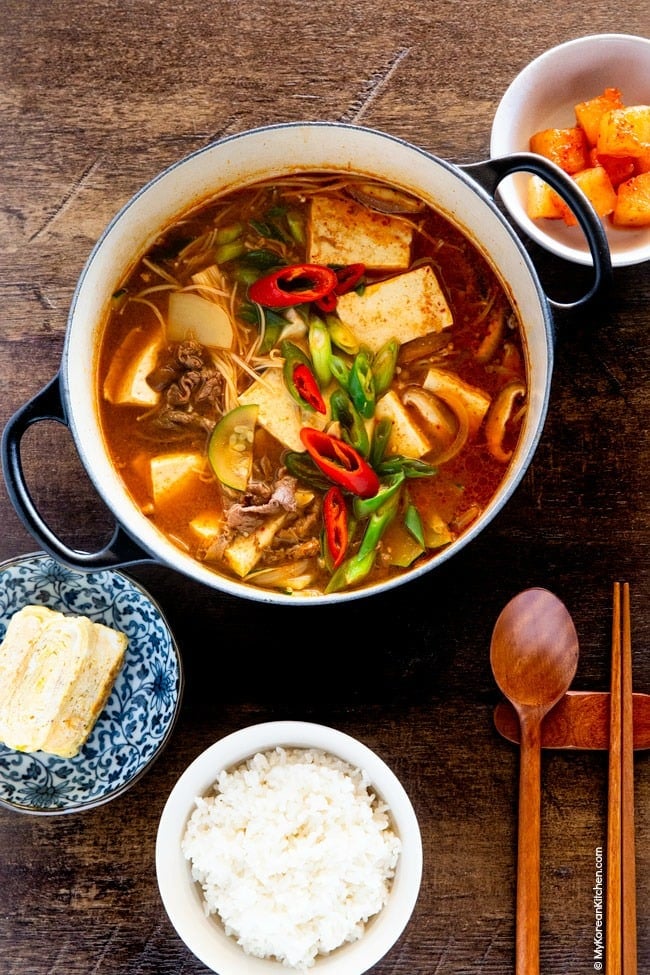
A second classic version of Korea's most comforting daily stew — doenjang soybean paste with tofu, zucchini, potatoes, mushrooms, and an anchovy broth base for an even richer, more complex umami depth. Perfect Korean comfort food that pairs beautifully with a bowl of steamed rice at any meal.
Ingredients:
- 1 (12 oz) block firm tofu, cubed
- 1 medium zucchini, diced
- 1 small potato, peeled and diced
- 4 shiitake mushrooms, sliced
- ½ onion, diced
- 1 fresh green or red chilli, sliced
- 3 tablespoons doenjang
- 1 tablespoon gochugaru
- 3 cloves garlic, minced
- 2½ cups anchovy broth (simmer 4 dried anchovies and a piece of kombu for 10 minutes, then strain)
- 1 teaspoon sesame oil
- Green onions, for serving
Instructions:
- Bring the anchovy broth to a simmer. Whisk in the doenjang, gochugaru, and garlic until dissolved.
- Add the potato and onion. Simmer for 8 minutes until the potato begins to soften.
- Add the zucchini, mushrooms, tofu, and chilli. Simmer for another 6–8 minutes until all vegetables are tender.
- Finish with sesame oil and green onions. Serve hot directly from the clay pot with steamed rice. The stew continues to bubble and deepen in flavour as you eat.
8. Haejangguk (Korean Hangover Soup)

Korea's legendary hangover-curing soup — a deeply restorative, richly flavoured bowl of tender beef, crispy coagulated ox blood, napa cabbage, and bean sprouts in a bold, spicy ox bone broth. Eaten first thing in the morning after a long night, haejangguk is designed to restore and revive completely.
Ingredients:
- 200g beef brisket or shank, boiled and thinly sliced
- 2 cups napa cabbage, roughly chopped
- 1 cup bean sprouts
- 4 cups beef bone broth (deep and rich)
- 2 tablespoons gochugaru
- 1 tablespoon doenjang
- 1 tablespoon soy sauce
- 3 cloves garlic, minced
- 1 tablespoon sesame oil
- Green onions and perilla leaves, for serving
- Steamed rice, for serving
Instructions:
- Bring the beef bone broth to a simmer. Add the garlic, gochugaru, doenjang, and soy sauce. Stir to combine.
- Add the napa cabbage and simmer for 8 minutes until softened.
- Add the bean sprouts and sliced beef. Simmer for another 5 minutes.
- Finish with sesame oil. Ladle into a large bowl. Top with green onions and perilla leaves. Serve with steamed rice. Eat while very hot.
7. Cheese Kimchi Fried Rice (Bokkeumbap)
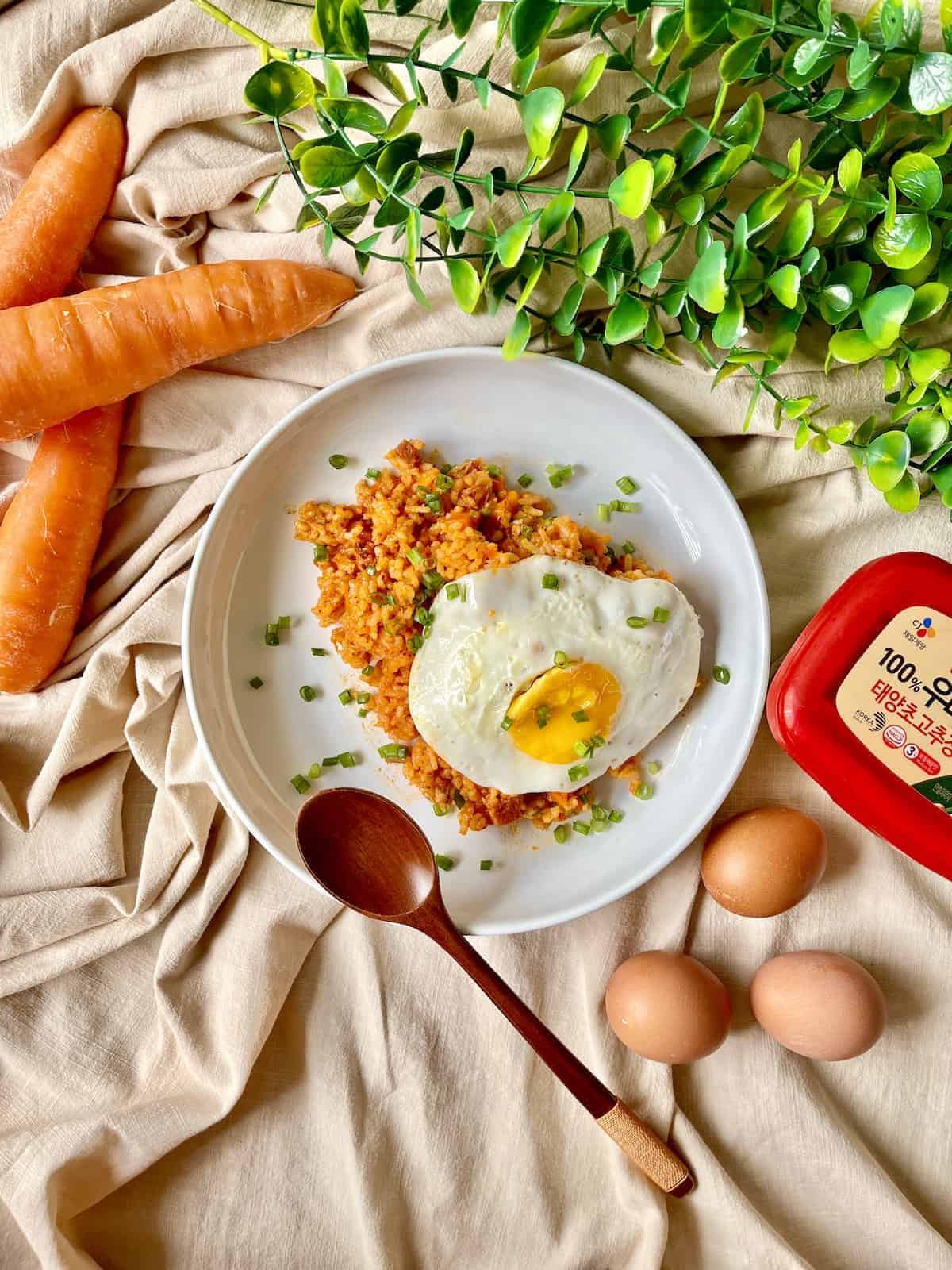
The ultimate Korean comfort food in a single pan — tangy, spicy kimchi stir-fried with day-old rice and sesame oil until everything is perfectly caramelized, then topped with melted cheese and a fried egg. Ready in 15 minutes and deeply satisfying in a way that is impossible to describe until you taste it.
Ingredients:
- 2 cups day-old cooked rice (cold rice fries much better than fresh)
- 1 cup kimchi, roughly chopped
- ¼ cup kimchi juice
- ½ small onion, diced
- 2 tablespoons butter
- 1 tablespoon sesame oil
- 1 tablespoon soy sauce
- 1 teaspoon gochugaru
- ½ cup shredded mozzarella or 2 slices American cheese
- 2 eggs, fried sunny-side up
- Sesame seeds and nori strips, for serving
Instructions:
- Melt butter in a large skillet over medium-high heat. Sauté the onion for 2 minutes. Add the kimchi and stir-fry for 3 minutes until slightly caramelized.
- Add the cold rice and break up any clumps. Stir-fry vigorously for 3–4 minutes until the rice is heated through and slightly crispy in spots. Add the kimchi juice, soy sauce, gochugaru, and sesame oil. Toss to combine.
- Flatten the rice in the pan. Scatter the shredded mozzarella over the top. Cover with a lid for 1–2 minutes until the cheese melts completely.
- Slide onto a plate. Top with a fried egg, sesame seeds, and nori strips. Serve immediately.
6. Vegan Spicy Stir-Fried Ojingeo Bokkeum (Mushroom Version)

A brilliant plant-based recreation of the Korean classic spicy stir-fried squid — king oyster mushrooms or konjac cut to mimic squid pieces and stir-fried in a bold gochujang sauce with vegetables. The texture is remarkably convincing and the flavour is deeply satisfying for anyone who loves Korean spicy dishes.
Ingredients:
- 300g king oyster mushrooms or konjac, scored and cut to resemble squid pieces
- 1 medium carrot, julienned
- ½ onion, sliced
- 3 green onions, cut into 2-inch pieces
- 2 tablespoons gochujang
- 1 tablespoon gochugaru
- 1 tablespoon soy sauce
- 1 tablespoon sugar
- 1 tablespoon sesame oil
- 2 cloves garlic, minced
- 1 teaspoon fresh ginger, grated
- Sesame seeds, for serving
Instructions:
- Score the king oyster mushroom pieces in a crosshatch pattern to mimic the texture of squid. Whisk together the gochujang, gochugaru, soy sauce, sugar, sesame oil, garlic, and ginger into the sauce.
- Heat a large skillet over high heat with a little oil. Stir-fry the mushrooms for 4–5 minutes until golden and beginning to caramelize.
- Add the carrot, onion, and sauce. Stir-fry for 3–4 minutes until everything is well coated and the vegetables are tender-crisp.
- Add the green onions and toss for 1 more minute. Scatter sesame seeds over the top. Serve immediately with steamed rice.
5. Dakjuk (Korean Chicken Rice Porridge)
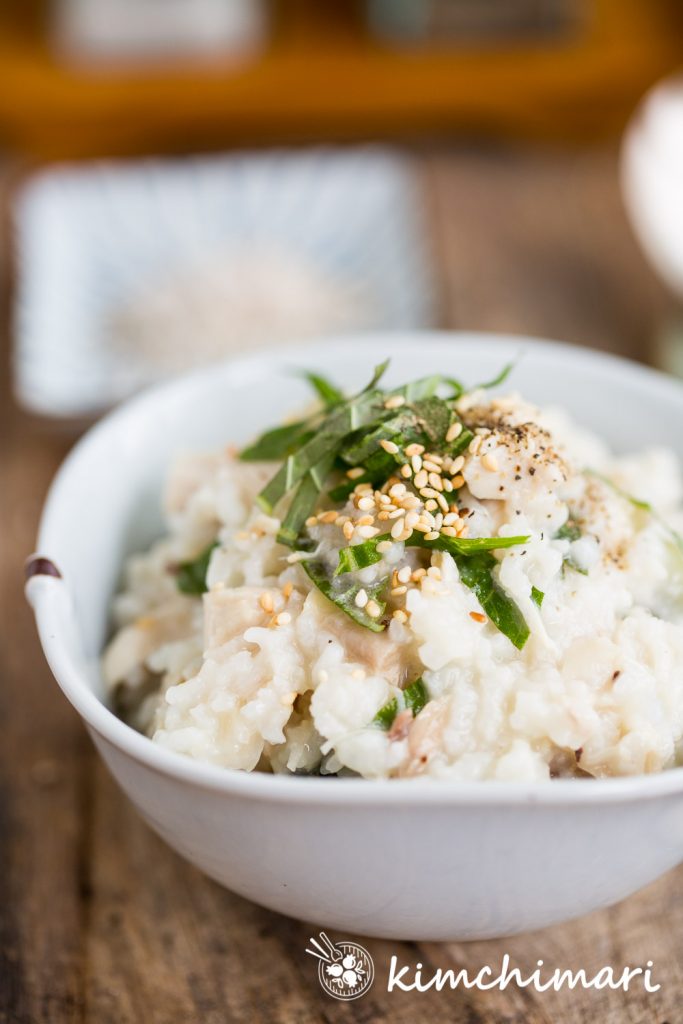
A deeply nourishing, silky Korean chicken rice porridge — short-grain rice slowly simmered in rich chicken broth until it breaks down into a creamy, comforting jook. Topped with shredded chicken, sesame oil, and green onions. The ultimate Korean healing food for cold days, illness, or whenever you need comfort.
Ingredients:
- 1 cup short-grain white rice, rinsed
- 1 lb chicken breast or thighs
- 6 cups water or chicken broth
- 4 cloves garlic, minced
- 1 tablespoon sesame oil
- 1 tablespoon soy sauce
- Salt and white pepper, to taste
- 3 green onions, sliced
- Sesame seeds and toasted seaweed strips, for serving
Instructions:
- Place the chicken in a pot with 6 cups of water or broth and the garlic. Bring to a boil, skimming any foam. Reduce heat and simmer for 20 minutes until the chicken is fully cooked. Remove the chicken and shred it. Reserve all the broth.
- Add the rinsed rice to the broth. Bring to a simmer over medium heat. Cook for 25–35 minutes, stirring frequently, until the rice has broken down into a thick, creamy porridge. Add more water if needed.
- Return the shredded chicken to the pot. Season with soy sauce, salt, and white pepper.
- Ladle into bowls. Drizzle with sesame oil and top with green onions, sesame seeds, and seaweed strips. Serve hot.
4. Korean Spinach Side Dish (Sigeumchi Namul)

One of the most common and beloved Korean banchan — blanched baby spinach seasoned simply with soy sauce, sesame oil, garlic, and sesame seeds into a tender, nutty, deeply flavourful side dish. Ready in 10 minutes and a staple accompaniment to rice, soups, and grilled meats throughout Korea.
Ingredients:
- 1 lb fresh baby spinach
- 2 cloves garlic, minced
- 1 tablespoon soy sauce
- 1 tablespoon sesame oil
- 1 teaspoon sesame seeds
- ½ teaspoon sugar
- 2 green onions, finely sliced (optional)
- Salt, for blanching
Instructions:
- Bring a large pot of well-salted water to a boil. Blanch the spinach for just 30–45 seconds until wilted. Transfer immediately to a bowl of ice water to stop the cooking and preserve the green colour.
- Drain and squeeze out every last drop of water firmly — this step is essential for the right texture and to prevent a watery result.
- Place in a bowl. Add the garlic, soy sauce, sesame oil, sugar, and green onions. Mix gently with your hands until all the spinach is evenly seasoned.
- Transfer to a plate and scatter sesame seeds over the top. Serve at room temperature or slightly chilled as a banchan side dish.
3. Quick Dongchimi (Radish Water Kimchi)
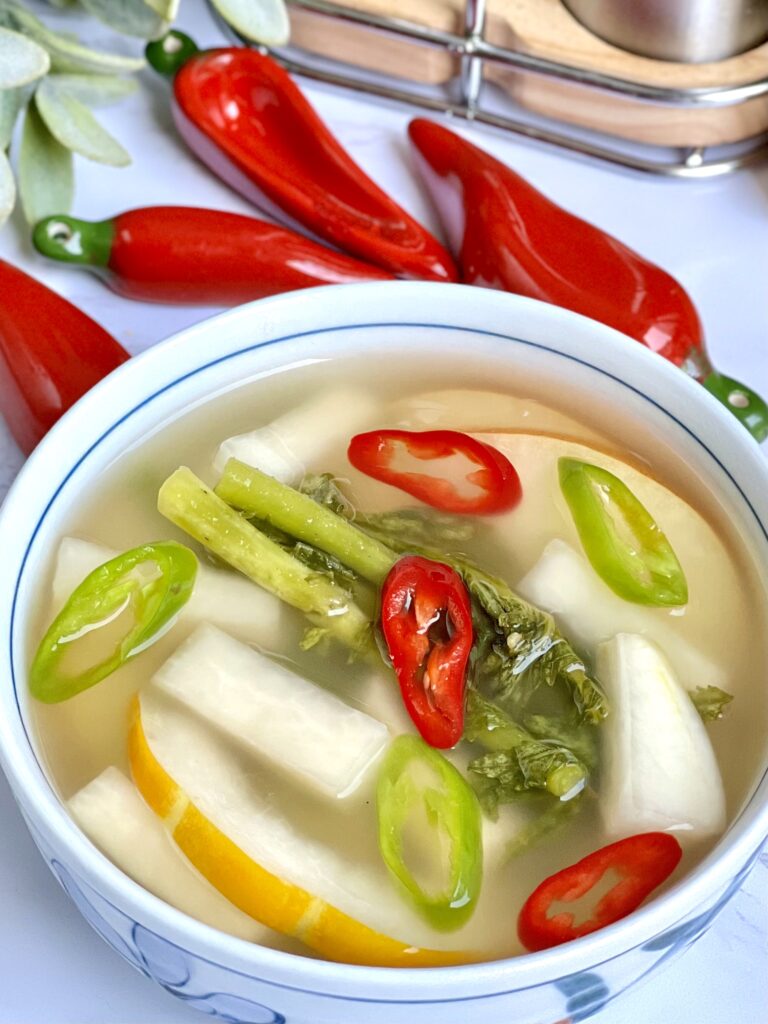
A beautifully refreshing, mild, non-spicy kimchi made with cubed Korean radish in a light, lightly fermented brine — perfect as a cooling palate cleanser alongside spicy Korean dishes or as a light side dish. The dongchimi brine itself is also drunk as a refreshing drink in Korea, especially in winter.
Ingredients:
- 1 medium Korean daikon radish (about 2 lbs), peeled and cut into 1-inch cubes
- 2 tablespoons coarse salt
- 4 cups water
- 1 tablespoon sugar
- 4 cloves garlic, thinly sliced
- 1 tablespoon fresh ginger, thinly sliced
- 3 green onions, cut into 2-inch pieces
- 1–2 fresh red chillies, sliced (optional)
Instructions:
- Toss the radish cubes with 2 tablespoons of salt. Let sit for 30 minutes. Rinse once and drain.
- Dissolve 1 teaspoon of salt and the sugar in 4 cups of cold water to make the brine.
- Pack the salted radish, garlic, ginger, green onions, and chillies into a clean jar or container. Pour the brine over until everything is submerged.
- Leave at room temperature for 1–2 days until slightly bubbly and pleasantly tangy, then refrigerate. Ready to eat after 1 day at room temperature. Keeps in the fridge for up to 2 weeks.
2. Hotteok (Korean Sweet Pancakes)

Korea's beloved street food sweet pancake — a soft, yeasted dough filled with a gooey mixture of brown sugar, cinnamon, and crushed nuts, then pressed flat and pan-fried until golden and crispy outside with a caramelized, molten sweet filling inside. Irresistible straight off the pan, especially in cold weather.
Ingredients:
- Dough: 2 cups all-purpose flour, 1 teaspoon instant yeast, 1 tablespoon sugar, ½ teaspoon salt, ¾ cup warm milk, 2 tablespoons butter
- Filling: ½ cup brown sugar, 1 teaspoon cinnamon, ¼ cup crushed walnuts or peanuts
- Oil, for pan-frying
Instructions:
- Mix the flour, yeast, sugar, and salt. Add the warm milk and melted butter. Knead into a smooth dough. Cover and let rise for 1 hour until doubled.
- Mix together the filling ingredients. Divide the risen dough into 8 equal portions. With oiled hands, flatten each portion and place a spoonful of filling in the centre. Bring the edges together and pinch tightly to seal.
- Heat a little oil in a non-stick skillet over medium heat. Place the filled dough balls sealed-side down. Press flat immediately with a spatula until about ½ inch thick.
- Cook for 2–3 minutes per side until deep golden and crispy. The sugar filling will be molten — let cool for 2 minutes before eating. Serve immediately.
1. Bossam (Korean Boiled Pork Wraps)
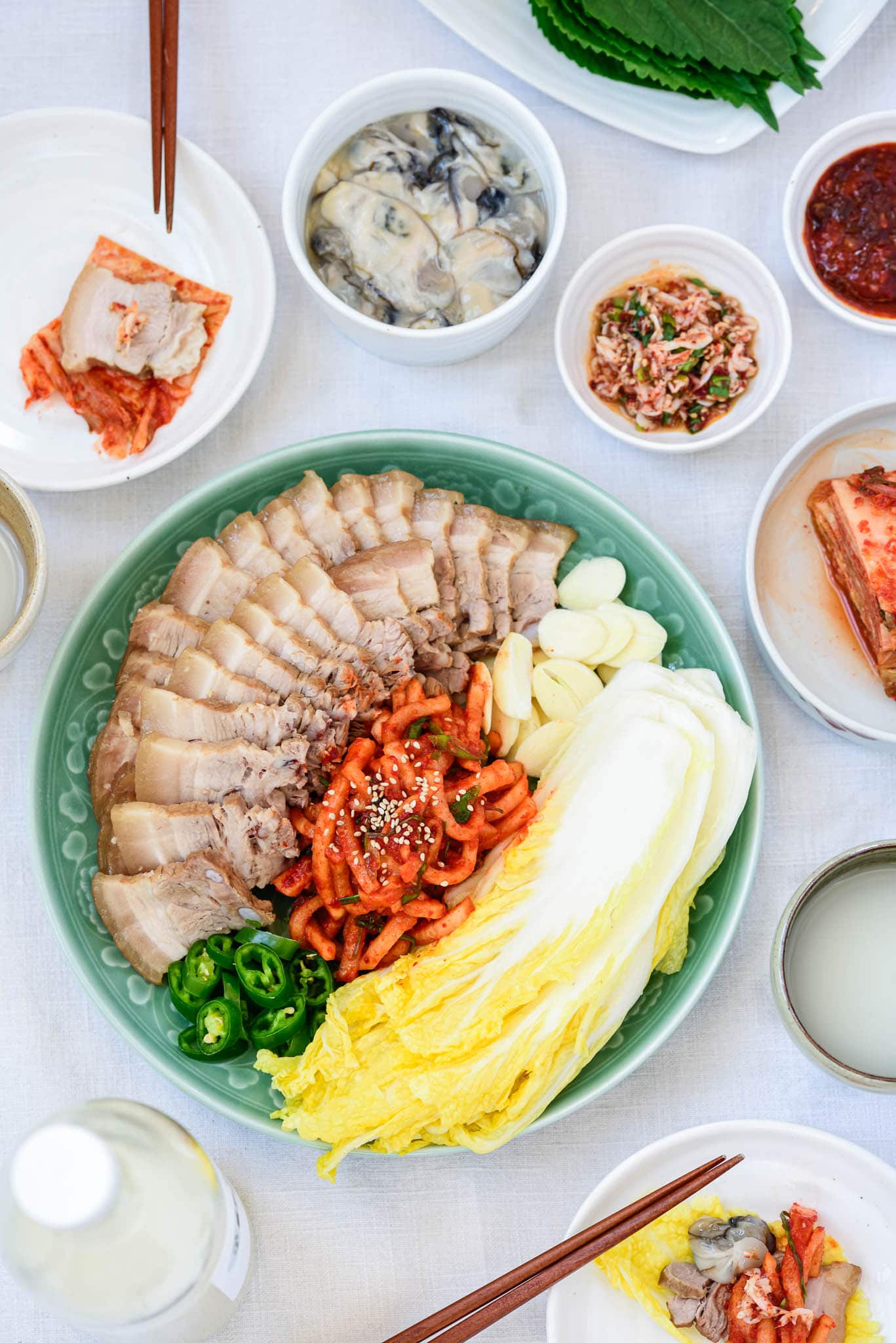
A stunning Korean table feast — pork belly slowly boiled in a beautifully aromatic broth of doenjang, ginger, garlic, and spices until perfectly tender, then sliced and wrapped in fresh crisp lettuce with kimchi, raw garlic, and bold ssamjang. Bossam is one of the most celebrated dishes in Korean cuisine.
Ingredients:
- 2 lbs pork belly, whole piece
- 6 cups water
- 2 tablespoons doenjang
- 1 tablespoon rice wine or soju
- 6 cloves garlic
- 1 tablespoon fresh ginger, sliced
- 2 green onions
- 1 tablespoon soy sauce
- 1 teaspoon black pepper
- Lettuce or perilla leaves, for wrapping
- Fresh garlic slices, for serving
- Kimchi, for serving
- Ssamjang: 2 tablespoons doenjang + 1 tablespoon gochujang + 1 teaspoon sesame oil + 1 teaspoon sugar + 2 cloves garlic minced
Instructions:
- Combine the water, doenjang, rice wine, garlic, ginger, green onions, soy sauce, and black pepper in a large pot. Bring to a boil. Add the whole pork belly.
- Reduce heat to a gentle simmer. Cover and cook for 50–60 minutes until the pork is tender and cooked through. Remove and let rest for 10 minutes.
- Mix together all the ssamjang ingredients and set out on the table with the lettuce leaves, garlic slices, and kimchi.
- Slice the pork belly thinly against the grain. To eat: place a slice of pork on a lettuce leaf, add ssamjang, a garlic slice, and kimchi. Wrap and eat in one satisfying bite.
FAQs
What are the most essential Korean ingredients to have on hand to make these recipes?
The most important pantry staples for Korean cooking are gochujang (fermented red pepper paste), gochugaru (Korean red pepper flakes), doenjang (fermented soybean paste), soy sauce, sesame oil, sesame seeds, rice wine or mirin, and fish sauce. With these eight ingredients, you can make the vast majority of the dishes on this list. Fresh aromatics — garlic, ginger, and green onions — appear in nearly every recipe. Short-grain rice and napa cabbage are the most essential fresh ingredients. All of these are readily available at Asian grocery stores and increasingly at most large supermarkets.
Which dishes on this list are completely vegan or plant-based?
The vegetarian bibimbap bowl (with egg), vegan sundubu jjigae, vegan spicy mushroom stir-fry (ojingeo bokkeum), hobakjuk pumpkin porridge, creamy dill pickle hummus, Korean spinach banchan (sigeumchi namul), quick dongchimi, and kongguksu soy milk noodles can all be made fully plant-based. The kimchi is easily made vegan by substituting soy sauce for fish sauce. The doenjang jjigae can be made vegan using vegetable broth. The everything bagel cauliflower hummus and the bibimbap bowl are also very easy to adapt.
What is banchan and how do I serve a proper Korean meal?
Banchan are the small shared side dishes served alongside rice and a main soup or stew at every Korean meal. A typical home meal includes 2–4 banchan — common ones include kimchi, spinach namul (sigeumchi namul), seasoned bean sprouts, braised potatoes, and pickled vegetables like dongchimi. All dishes are served simultaneously and shared communally from the centre of the table. The rice and soup are individual, but banchan are shared by everyone. There is no strict order of eating — you move freely between all the dishes throughout the meal.
What is the difference between doenjang jjigae and kimchi jjigae?
Both are beloved Korean stews but with distinctly different flavour profiles. Doenjang jjigae (recipes 20 and 9) is seasoned primarily with fermented soybean paste and has a mild, earthy, deeply umami flavour — it is subtle, comforting, and slightly nutty. Kimchi jjigae (recipe 28) is made with well-fermented kimchi as the main ingredient, giving it a bright, spicy, tangy, and funky flavour that is much bolder and more assertive. Doenjang jjigae is eaten almost daily in Korean homes. Kimchi jjigae is typically made with older, more sour kimchi that would otherwise not be eaten fresh.
Can I make kimchi at home if I cannot find all the traditional ingredients?
Absolutely. The two most important components are gochugaru (Korean red chilli flakes) and fish sauce — both are available online and at Asian grocery stores. Gochugaru cannot be substituted satisfactorily as it provides the specific colour, heat level, and flavour that makes kimchi distinctive. Fish sauce can be replaced with soy sauce for a vegan version. If you cannot find Asian pear for the marinade, a regular ripe pear or a small piece of kiwi works as a tenderising substitute. Napa cabbage is available at most large supermarkets. The fermentation process requires nothing special — just a clean glass jar, your kitchen counter, and patience.
Share This Post!
If you loved these authentic Korean recipes, share this post with any fellow Korean food enthusiasts! Pin it, share it on Facebook, or send it to someone who needs to discover the magic of Korean cuisine. 🇰🇷🍜





Comments
No Comments