
Japanese home cooking — washoku — is almost entirely different from the Japanese restaurant experience familiar to most Western diners. Sushi and ramen represent a narrow slice of one of the world's most sophisticated food cultures. Japanese home cooking is about dashi, miso, soy, mirin, and rice vinegar applied to simple ingredients in techniques that emphasise umami, balance, and restraint.
This collection covers the full range of Japanese home cooking that is accessible to a non-Japanese household: katsu curries, donburi rice bowls, yakitori skewers, gyoza, miso soup, takoyaki-inspired dishes, oyakodon, karaage chicken, and more. Most require only pantry staples supplemented by three or four Japanese condiments — soy sauce, mirin, sake, and miso paste — which are available at most large supermarkets.
Saad's favourite dinner is the chicken katsu curry. Zainab eats the teriyaki chicken with greater enthusiasm than any other chicken preparation I have offered her. My husband makes the oyakodon on Sunday mornings and considers it the best egg and rice dish in our household repertoire. This collection is the one that changed how our household thinks about Japanese food.
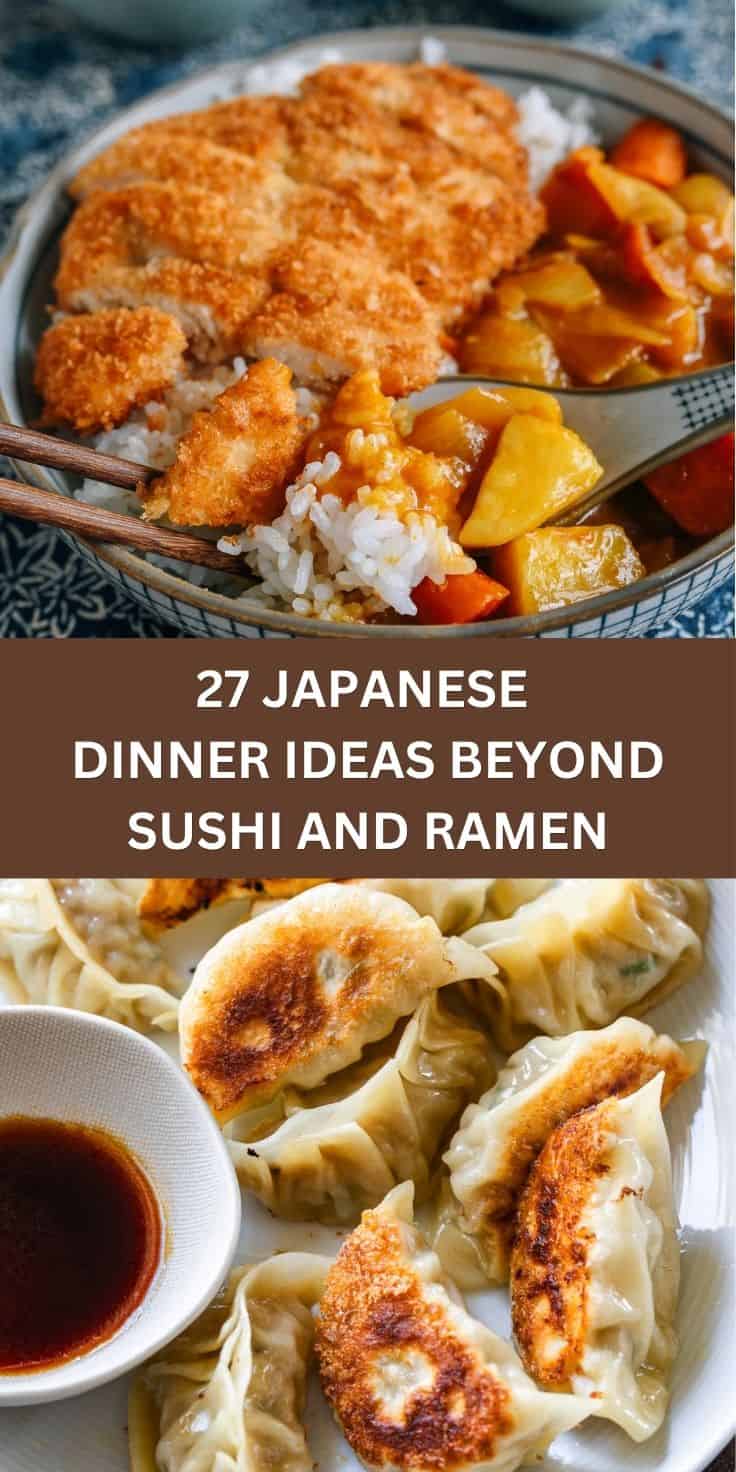
27. Chicken Katsu Curry
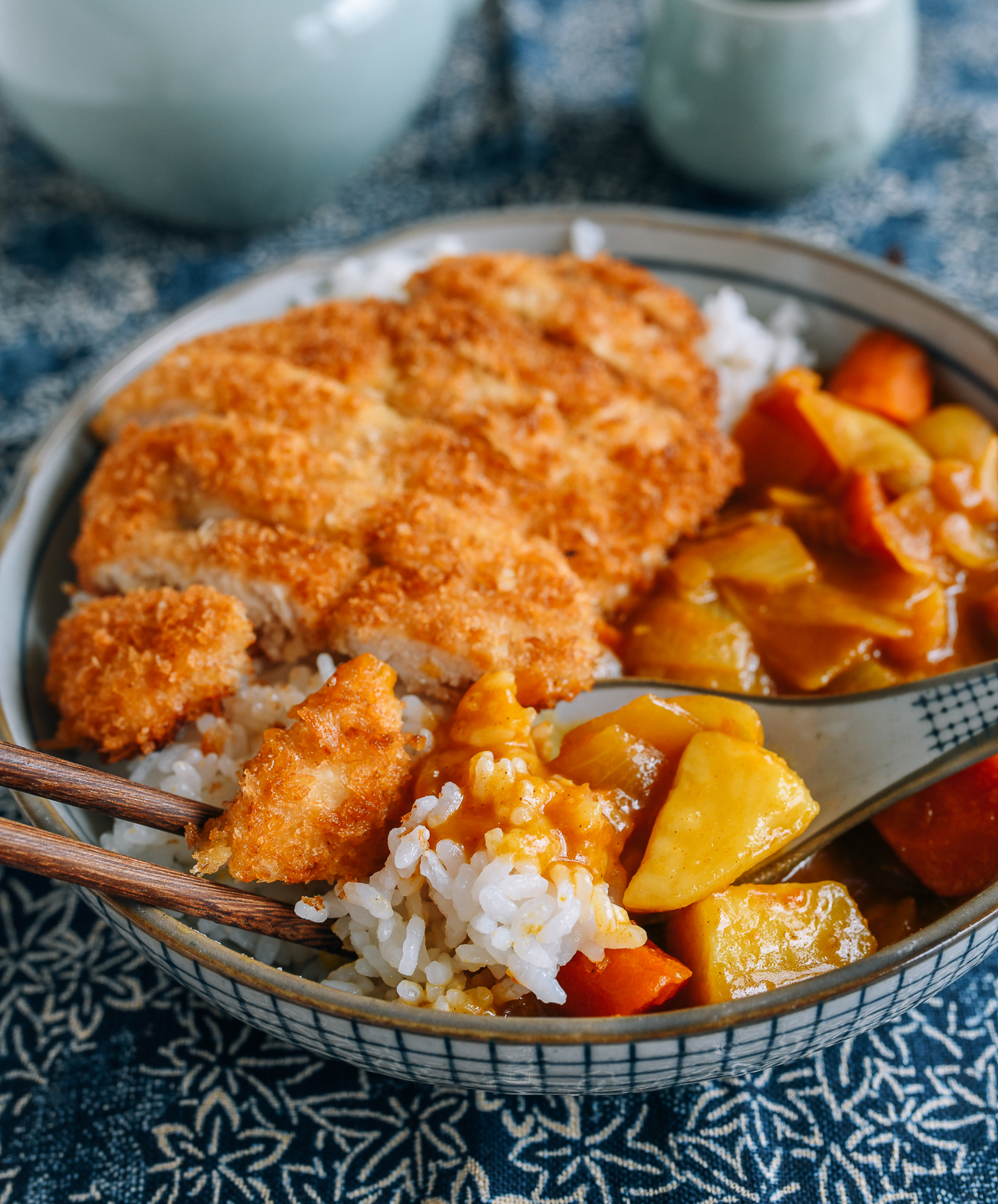
Halal chicken breast coated in panko, fried until golden, served over rice with Japanese curry sauce — the most popular Japanese comfort food outside Japan.
Ingredients
- 4 halal chicken breasts
- Breading: ½ cup flour, 2 eggs beaten, 1 cup panko
- Oil for shallow frying
- Japanese Curry Sauce: 1 onion, 1 carrot, 1 potato (all diced), 2 tablespoon Japanese curry powder or S&B curry roux, 2 cups chicken broth, 1 tablespoon soy
- Steamed rice
Instructions
- Make curry: sauté onion and carrot 5 minutes. Add potato, broth, and curry powder. Simmer 15 minutes until thick.
- Bread chicken: flour, egg, panko. Press firmly.
- Shallow fry in 1cm oil 3 to 4 minutes per side until golden. Rest on wire rack.
- Slice chicken into strips on the diagonal.
- Plate rice, spoon curry alongside.
- Lay sliced chicken over rice with curry poured over.
26. Gyoza (Pan-Fried Dumplings)

Japanese gyoza — pork and cabbage filling in thin wrappers, pan-fried until the bottom is golden then steamed.
Ingredients
- Filling: 250g ground pork (or halal ground chicken), 1 cup cabbage shredded and squeezed dry, 2 garlic cloves, 1 tablespoon ginger, 1 tablespoon soy, 1 teaspoon sesame oil, ½ teaspoon sugar
- 20 gyoza wrappers
- 2 tablespoon neutral oil, ¼ cup water for steaming
- Dipping sauce: 2 tablespoon soy, 1 tablespoon rice vinegar, chilli oil
Instructions
- Mix filling. Refrigerate 30 minutes.
- Fill each wrapper with 1 teaspoon filling. Fold and pleat.
- Heat oil in a non-stick pan over medium-high. Place gyoza flat-side down.
- Fry 2 to 3 minutes until golden.
- Add water. Cover immediately. Steam 3 to 4 minutes.
- Remove lid. Fry 1 minute more to re-crisp.
25. Oyakodon (Chicken and Egg Bowl)

Halal chicken and egg simmered together in a dashi-soy-mirin broth, served over rice — the Japanese rice bowl that Saad calls 'the egg and chicken rice.'
Ingredients
- 300g halal chicken thigh, sliced thin
- 4 eggs, lightly beaten
- Sauce: 1 cup dashi (or chicken broth), 3 tablespoon soy, 2 tablespoon mirin, 1 tablespoon sugar
- ½ onion, sliced
- Steamed rice and nori strips
Instructions
- Simmer dashi sauce with onion 3 minutes.
- Add chicken — cook 4 minutes.
- Pour beaten egg over in a circle. Do not stir.
- Cover. Cook 1 to 2 minutes until egg is just set.
- Slide over rice. Serve with nori strips.
24. Teriyaki Chicken
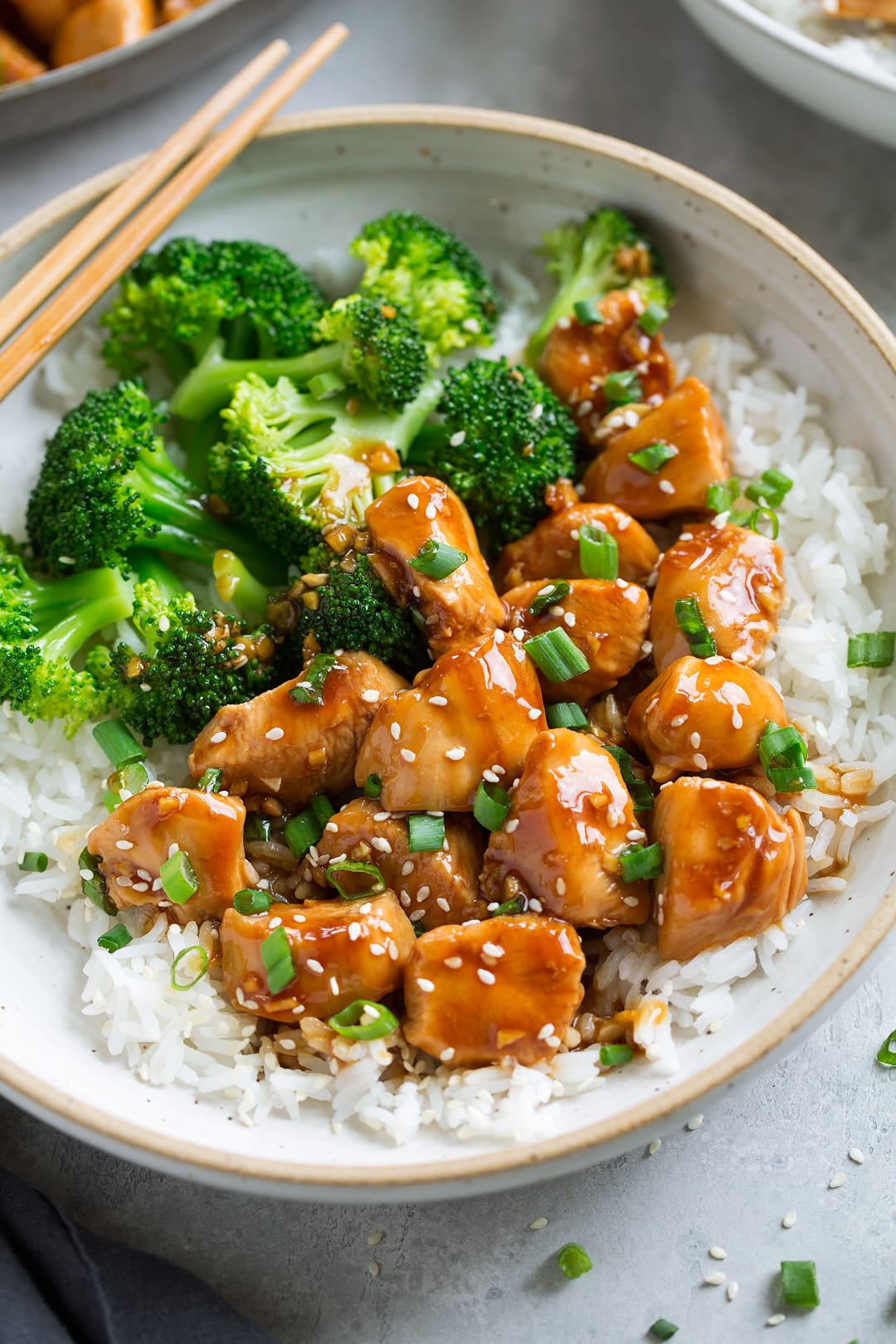
Halal chicken thighs glazed in homemade teriyaki sauce — soy, mirin, sake, and sugar caramelised until lacquered.
Ingredients
- 6 boneless halal chicken thighs
- Teriyaki: ¼ cup soy, 3 tablespoon mirin, 2 tablespoon sake or dry sherry, 2 tablespoon sugar
- 1 teaspoon cornstarch + 1 tablespoon water
- Steamed rice, pickled ginger, spring onion
Instructions
- Make teriyaki: simmer ingredients 2 minutes. Thicken with cornstarch. Cool.
- Marinate chicken in half the teriyaki 30 minutes.
- Pan-fry thighs 4 to 5 minutes per side until 165°F.
- Brush remaining teriyaki over in the last minute.
- Serve over rice with spring onion.
23. Karaage (Japanese Fried Chicken)

Japanese fried chicken — halal chicken thighs marinated in soy and ginger, coated in potato starch, and fried until juicy and shatteringly crispy.
Ingredients
- 600g boneless halal chicken thighs, cut into large pieces
- Marinade: 3 tablespoon soy, 1 tablespoon sake, 1 tablespoon mirin, 1 tablespoon fresh ginger grated, 2 garlic cloves
- Potato starch or cornstarch for coating
- Oil for deep or shallow frying
- Lemon wedges and Japanese mayo
Instructions
- Marinate chicken 30 minutes minimum.
- Drain. Coat thoroughly in potato starch.
- Fry in batches at 170°C/340°F for 4 to 5 minutes until golden.
- Rest on a wire rack 2 minutes.
- Fry a second time at 180°C/360°F for 1 minute for extra crispness.
- Serve with lemon and Japanese mayo.
22. Miso Soup

Proper miso soup — dashi base with white miso, silken tofu, and wakame seaweed.
Ingredients
- 4 cups dashi (kombu + bonito flakes, or instant dashi powder)
- 3 tablespoon white miso paste
- 150g silken tofu, cubed
- 1 tablespoon dried wakame seaweed, rehydrated
- 2 spring onions, sliced
Instructions
- Make dashi: steep kombu in cold water 30 minutes. Bring to simmer. Remove kombu. Add bonito flakes. Steep 5 minutes. Strain.
- Heat dashi over medium heat. Do not boil.
- Dissolve miso into a ladleful of dashi. Stir back into pot.
- Add tofu and wakame.
- Heat through 1 minute — do not boil miso.
- Scatter spring onion. Serve immediately.
21. Donburi (General Rice Bowl)

Gyudon — thinly sliced halal beef and onion simmered in a sweet-savoury dashi sauce over rice.
Ingredients
- 400g halal beef sirloin, very thinly sliced
- 1 onion, sliced into half-moons
- Sauce: 1 cup dashi or broth, 3 tablespoon soy, 2 tablespoon mirin, 1 tablespoon sugar
- Steamed rice
- Soft-boiled egg and pickled ginger
Instructions
- Simmer sauce in a wide pan. Add onion — cook 3 minutes.
- Add beef in a single layer. Cook 1 to 2 minutes — thin beef cooks very fast.
- Place immediately over rice.
- Top with a soft-boiled egg (6 minutes).
- Add pickled ginger alongside.
20. Yakitori (Grilled Chicken Skewers)

Japanese grilled chicken skewers basted repeatedly in tare sauce — the yakitori method produces a deep, lacquered glaze.
Ingredients
- 600g boneless halal chicken thigh, cut into bite-sized pieces
- Tare Sauce: ¼ cup soy, 3 tablespoon mirin, 2 tablespoon sake, 1 tablespoon sugar, simmered until slightly thickened
- Wooden skewers soaked in water
Instructions
- Thread chicken onto skewers.
- Grill or cook in a grill pan over high heat.
- Baste with tare after 2 minutes. Turn.
- Baste again. Turn again.
- Repeat 2 to 3 more times until deeply glazed.
- The multiple bastes build up the lacquered tare coating.
19. Beef Sukiyaki

A simplified sukiyaki — thinly sliced halal beef, tofu, noodles, and vegetables simmered in a sweet soy broth at the table.
Ingredients
- 400g halal beef sirloin, very thinly sliced
- 1 block firm tofu, cubed
- 200g shirataki noodles (or glass noodles)
- 2 cups mixed vegetables: mushrooms, cabbage, spring onion
- Sukiyaki Sauce: ½ cup soy, ½ cup mirin, 3 tablespoon sugar, ½ cup dashi
- Soft-boiled eggs for dipping (raw egg traditional, optional)
Instructions
- Mix sukiyaki sauce. Heat in a wide pan or at the table in a portable burner.
- Add tofu and noodles. Simmer 3 minutes.
- Add beef slices — they cook in under 1 minute.
- Add vegetables.
- Each person dips in beaten egg if desired.
- Serve with steamed rice.
18. Tonkatsu (Pork Cutlet)

Thick pork chops breaded in panko and fried — served with tonkatsu sauce and shredded cabbage.
Ingredients
- 4 pork chops, 1.5cm thick
- Breading: flour, 2 eggs beaten, panko
- Oil for shallow frying
- Tonkatsu sauce: 2 tablespoon ketchup, 1 tablespoon Worcestershire, 1 tablespoon soy, 1 teaspoon sugar
- Shredded cabbage and steamed rice
Instructions
- Pound pork chops slightly. Season. Bread: flour, egg, panko.
- Shallow fry in 1.5cm oil at 170°C/340°F — 3 to 4 minutes per side.
- Rest on wire rack. Mix tonkatsu sauce.
- Slice into strips.
- Serve over rice with shredded cabbage and tonkatsu sauce.
17. Japanese Curry (Veggie)

Japanese curry with potato, carrot, and onion using S&B curry roux — the weeknight Japanese curry that every Japanese household makes.
Ingredients
- 2 onions, diced
- 3 potatoes, cubed
- 2 carrots, sliced
- 3 cups chicken or vegetable broth
- ½ block S&B Japanese curry roux (or 2 tablespoon Japanese curry powder + 1 tablespoon butter)
- 1 tablespoon soy
- Steamed rice
Instructions
- Sauté onion in oil 8 minutes until golden.
- Add carrots and potatoes.
- Add broth. Bring to boil. Simmer 15 minutes.
- Break curry roux into pan. Stir until dissolved and sauce thickens.
- Simmer 5 minutes. Season with soy.
- Serve over rice.
16. Ebi Furai (Panko Prawn)
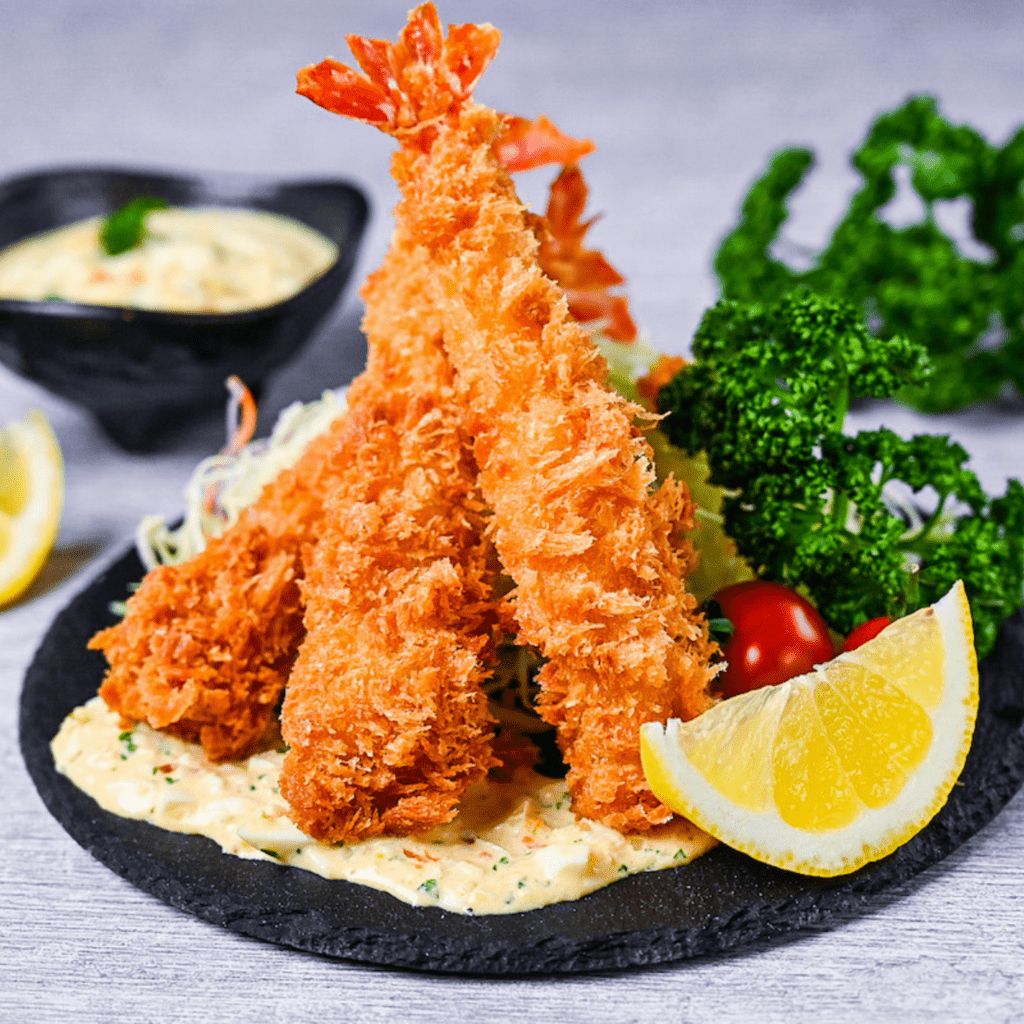
Prawns breaded in panko and fried until golden — served with Japanese mayo and tonkatsu sauce.
Ingredients
- 12 large raw prawns, peeled leaving tails on
- Breading: flour, 2 eggs, panko
- Oil for frying
- Japanese mayo (Kewpie) and tonkatsu sauce
Instructions
- Make 3 shallow cuts across the belly of each prawn to prevent curling.
- Bread: flour, egg, panko.
- Fry in oil at 170°C for 2 to 3 minutes until golden.
- Drain on wire rack.
- Serve with Kewpie mayo and tonkatsu sauce.
15. Niku Udon (Beef Udon)

Thick udon noodles in a dashi-soy broth topped with thinly sliced halal beef — the Japanese noodle soup.
Ingredients
- 300g fresh or frozen udon noodles
- 200g halal beef sirloin, thinly sliced
- Broth: 4 cups dashi, 3 tablespoon soy, 2 tablespoon mirin, 1 teaspoon sugar
- Spring onion and seven-spice powder (shichimi)
Instructions
- Simmer broth ingredients together 5 minutes.
- Cook udon per package.
- Poach beef slices in the simmering broth 1 minute.
- Divide udon between bowls.
- Ladle broth and beef over.
- Top with spring onion and shichimi.
14. Agedashi Tofu

Silken tofu dusted in potato starch, fried until crispy on the outside and custard-soft inside, served in a dashi broth.
Ingredients
- 1 block silken tofu
- Potato starch for coating
- Oil for frying
- Broth: 1 cup dashi, 2 tablespoon soy, 2 tablespoon mirin
- Grated daikon, grated ginger, spring onion
Instructions
- Press tofu gently. Cut into cubes.
- Dust generously in potato starch.
- Fry in oil at 180°C/360°F until golden and crispy — 2 to 3 minutes.
- Heat broth.
- Place fried tofu in bowls. Pour broth over.
- Top with daikon, ginger, and spring onion.
13. Tamago Kake Gohan (Egg Rice)

The Japanese raw egg over hot rice — the egg partially cooks from the heat of the rice, coated in soy and sesame.
Ingredients
- 2 cups freshly cooked hot rice (just-cooked — the heat is essential)
- 2 eggs (very fresh — food safety: some prefer this cooked)
- 2 tablespoon soy sauce
- 1 teaspoon sesame oil
- Spring onion, sesame seeds, nori strips
Instructions
- Ensure rice is freshly cooked and very hot.
- Make a well in the rice. Crack egg into the well.
- Drizzle soy sauce and sesame oil.
- The residual heat of the rice will partially cook the egg.
- Mix the egg into the rice until creamy and glossy.
- Top with spring onion, sesame, and nori.
12. Japanese Fried Rice (Chahan)

Japanese-style fried rice — the technique emphasises high heat and a light hand with the soy.
Ingredients
- 3 cups cold leftover rice
- 2 eggs
- 1 cup frozen peas
- 2 spring onions, sliced
- Seasoning: 1.5 tablespoon soy, 1 tablespoon mirin, ½ teaspoon sesame oil
- Neutral oil
Instructions
- Heat oil in a wok until smoking. Add cold rice.
- Fry over very high heat 2 minutes without stirring.
- Push to side. Scramble eggs.
- Add peas and spring onion. Toss.
- Add seasoning. Toss vigorously.
- Serve immediately.
11. Onigiri (Rice Balls)

Triangular rice balls filled with tuna mayo or pickled plum — wrapped in nori.
Ingredients
- 3 cups freshly cooked short-grain Japanese rice, seasoned with 1 tablespoon rice vinegar and 1 teaspoon sugar
- Fillings: tuna mixed with Japanese mayo, pickled plum (umeboshi), or salmon flakes
- Nori strips
Instructions
- Season hot rice. Cool to handleable temperature (not cold).
- Wet hands with salted water.
- Take a handful of rice. Press filling into the centre.
- Close rice around filling. Shape into a triangle.
- Wrap nori around the base.
- Eat immediately or wrap in cling film.
10. Miso Glazed Salmon
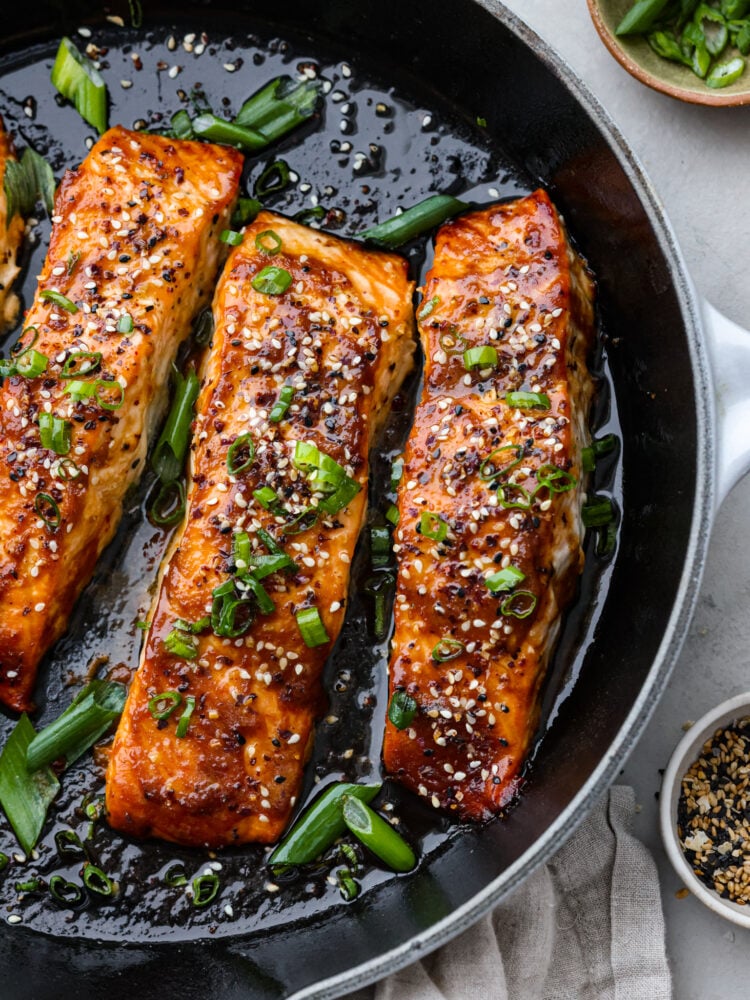
Salmon with a white miso and mirin glaze — one of the most elegant and simple Japanese dinner preparations.
Ingredients
- 4 salmon fillets
- Miso Glaze: 3 tablespoon white miso, 2 tablespoon mirin, 1 tablespoon sake, 1 tablespoon honey
- Steamed rice and pickled vegetables
Instructions
- Mix miso glaze.
- Coat salmon. Marinate 30 minutes.
- Preheat oven to 425°F.
- Roast 12 to 14 minutes until caramelised.
- Serve over rice with pickled ginger.
9. Beef Teriyaki Don
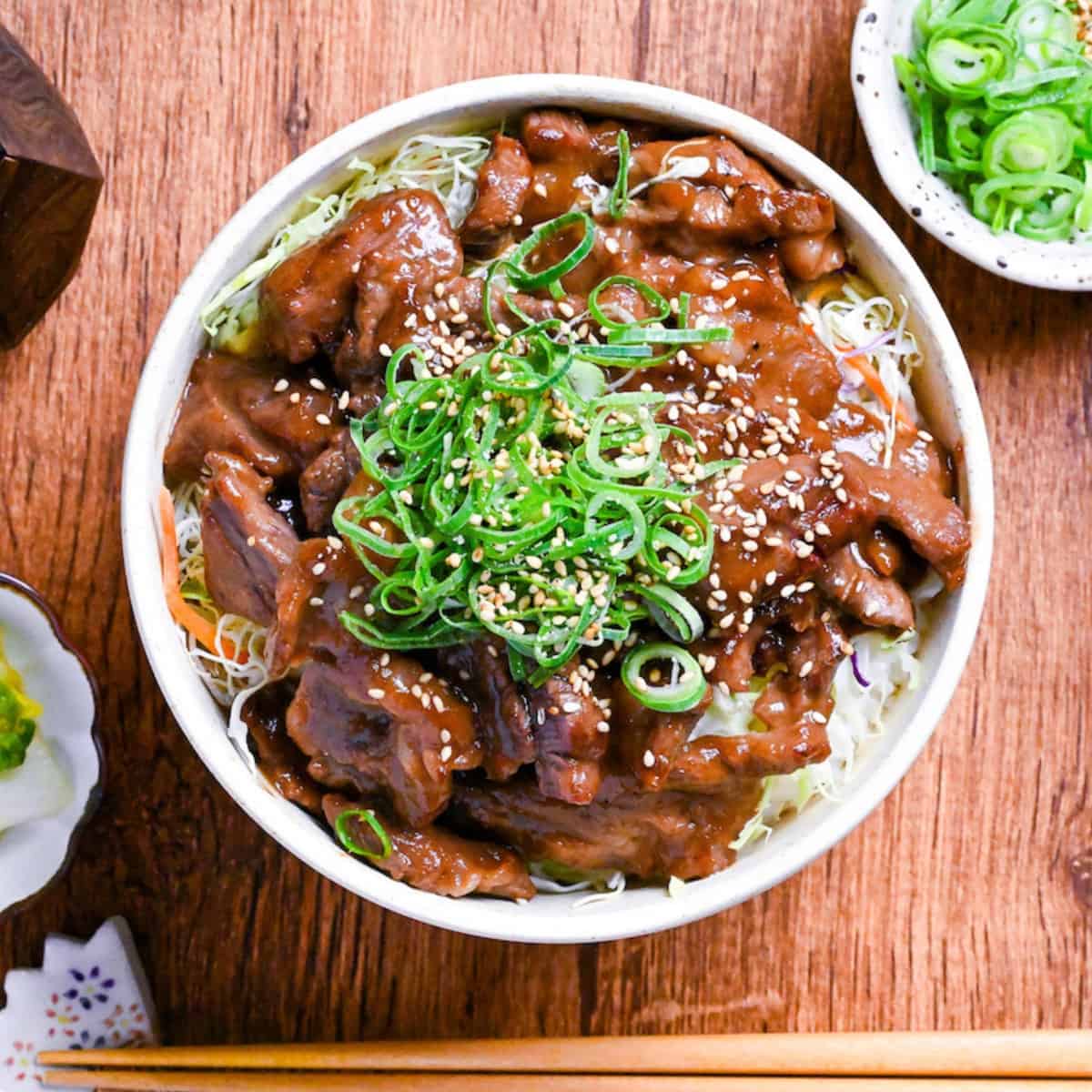
Thinly sliced halal beef glazed in teriyaki sauce, served over rice as a donburi.
Ingredients
- 400g halal beef sirloin, thinly sliced
- Teriyaki: 3 tablespoon soy, 2 tablespoon mirin, 1 tablespoon sake, 2 teaspoon sugar, 1 teaspoon cornstarch
- Steamed rice, spring onion, sesame seeds
Instructions
- Mix teriyaki sauce. Thicken with cornstarch.
- Sear beef slices in a very hot pan — 1 to 2 minutes.
- Add teriyaki sauce. Toss to coat.
- Serve immediately over rice.
- Scatter spring onion and sesame seeds.
8. Nikujaga (Meat and Potato Stew)

The Japanese comfort stew — halal beef, potato, and onion simmered in a sweet soy dashi broth.
Ingredients
- 300g halal beef, thinly sliced
- 3 potatoes, cubed
- 1 onion, sliced
- 1 carrot, sliced
- Broth: 2 cups dashi, 3 tablespoon soy, 2 tablespoon mirin, 1 tablespoon sugar
Instructions
- Sauté onion 3 minutes. Add beef — toss briefly.
- Add dashi, soy, mirin, and sugar.
- Add potatoes and carrot.
- Simmer covered 20 to 25 minutes until potatoes are tender.
- Serve over rice.
7. Yakisoba

Stir-fried wheat noodles with halal chicken or pork and vegetables in Worcestershire-based sauce — the Japanese street noodle.
Ingredients
- 400g fresh or dried yakisoba noodles
- 200g halal chicken or pork, thinly sliced
- 2 cups cabbage, shredded
- 1 carrot, julienned
- Yakisoba Sauce: 2 tablespoon Worcestershire, 1 tablespoon soy, 1 tablespoon oyster sauce, 1 teaspoon sugar
- Japanese mayo and pickled ginger
Instructions
- Cook noodles per package. Drain.
- Stir-fry meat over high heat 2 minutes.
- Add vegetables — cook 2 minutes.
- Add noodles and sauce. Toss vigorously.
- Top with Japanese mayo and pickled ginger.
6. Japanese Curry Udon

Thick udon noodles in Japanese curry sauce — the hybrid dish that combines two great Japanese comfort foods.
Ingredients
- 300g udon noodles
- Japanese Curry Sauce (from recipe #17 or jarred)
- 200g halal beef or chicken, sliced
- Spring onion and shichimi
Instructions
- Make or heat curry sauce.
- Cook udon.
- Cook meat in curry sauce 5 minutes.
- Divide noodles between bowls.
- Ladle curry and meat over.
- Scatter spring onion and shichimi.
5. Tonjiru (Pork Miso Soup)
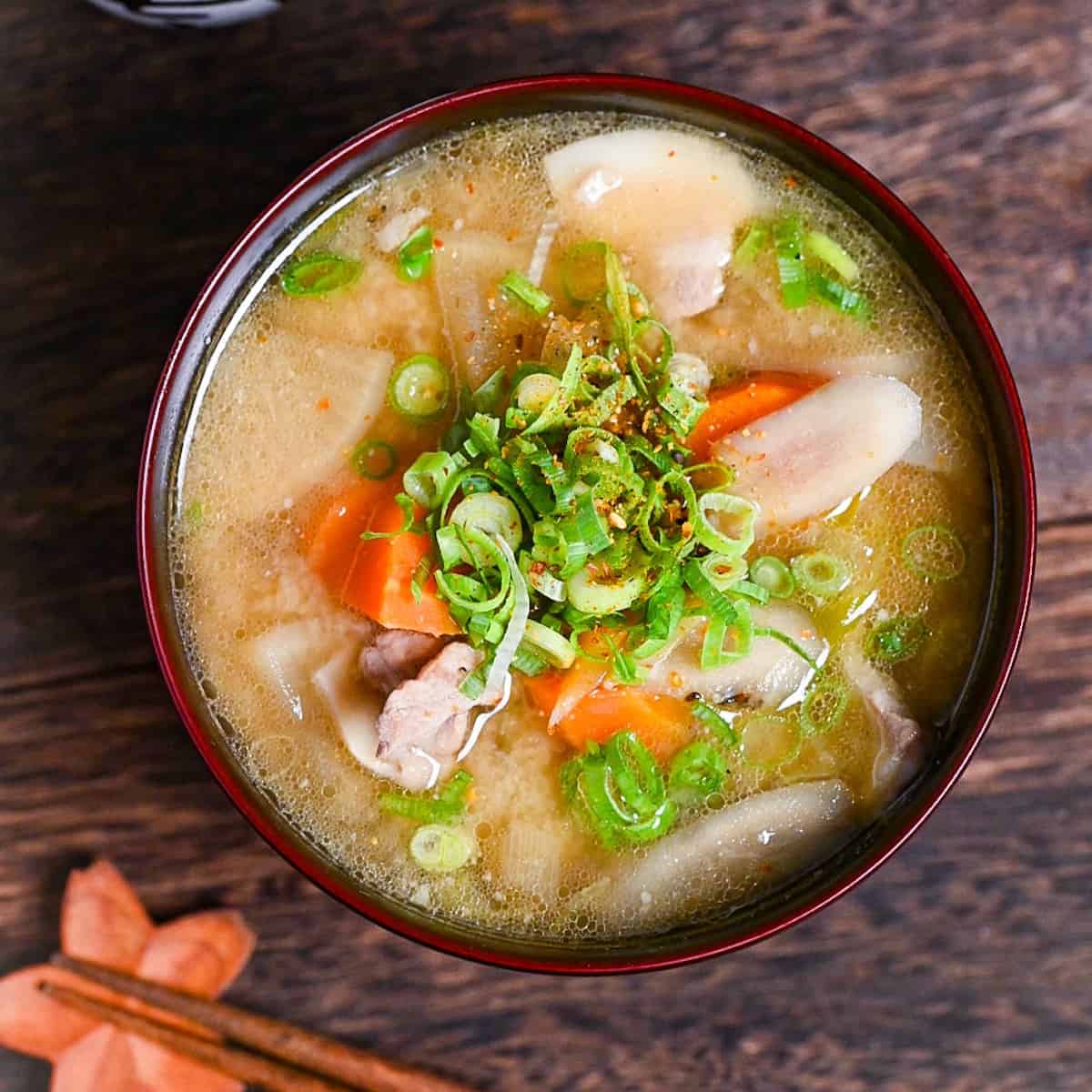
Miso soup with halal pork (or chicken) and root vegetables — a substantial soup that eats as a complete meal.
Ingredients
- 200g halal pork belly or chicken thigh, sliced
- 2 cups daikon or turnip, cubed
- 2 carrots, sliced
- 1 potato, cubed
- 4 cups dashi
- 3 tablespoon miso paste
- Spring onion
Instructions
- Simmer dashi with daikon, carrot, and potato 10 minutes.
- Add meat. Cook 5 minutes.
- Dissolve miso in a ladleful of broth. Stir back in.
- Do not boil after adding miso.
- Scatter spring onion. Serve.
4. Takikomi Gohan (Japanese Mixed Rice)

Rice cooked with mushrooms, soy, and mirin directly in the rice cooker — the flavoured Japanese rice.
Ingredients
- 2 cups Japanese short-grain rice
- Mushrooms: shiitake and enoki (or any mushrooms), sliced
- Seasoning: 2 tablespoon soy, 2 tablespoon mirin, 1 tablespoon sake
- Water to fill rice cooker to normal level
- Carrot julienned, spring onion
Instructions
- Rinse rice and place in rice cooker.
- Add mushrooms and carrot over rice.
- Mix soy, mirin, and sake. Pour over. Add water to normal rice level.
- Cook in rice cooker as normal.
- Fluff rice, mixing in mushrooms and carrot.
- Scatter spring onion.
3. Shoyu Ramen (Easy Homemade)

A simplified shoyu ramen made without days of simmering — a good halal chicken broth seasoned with soy and mirin produces a genuinely satisfying bowl.
Ingredients
- 4 cups good halal chicken broth
- 2 tablespoon soy sauce
- 1 tablespoon mirin
- 1 teaspoon sesame oil
- 300g fresh ramen noodles or dried noodles
- Toppings: soft-boiled egg, spring onion, nori, corn, halal chicken slices
Instructions
- Simmer broth with soy, mirin, and sesame oil 5 minutes.
- Cook noodles per package.
- Make soft-boiled eggs (6 to 7 minutes). Peel and halve.
- Divide noodles between bowls.
- Ladle broth over.
- Top with egg, spring onion, nori, corn, and chicken.
2. Dashi-Braised Daikon
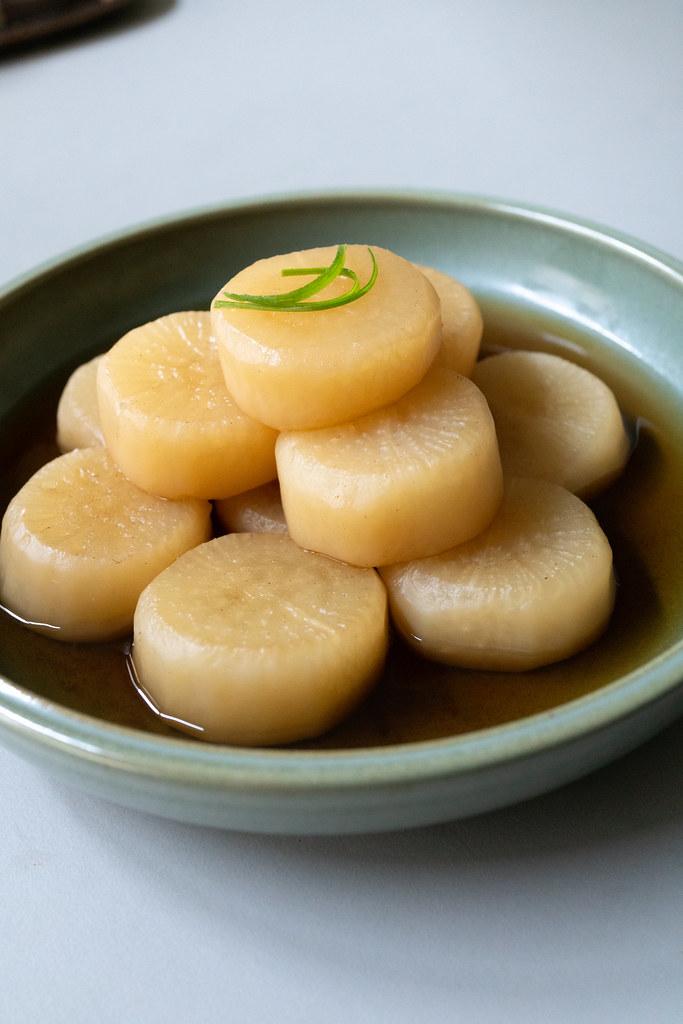
Daikon radish simmered in dashi and soy until tender and deeply flavoured — the Japanese side dish that converts every daikon sceptic.
Ingredients
- 1 large daikon radish, peeled and cut into 3cm rounds
- Braising liquid: 2 cups dashi, 3 tablespoon soy, 2 tablespoon mirin, 1 tablespoon sugar
- Yuzu or lemon zest to finish
Instructions
- Score a shallow cross in each daikon round — helps the flavour penetrate.
- Place daikon in a pot. Cover with braising liquid.
- Simmer covered 30 to 40 minutes until completely tender.
- The daikon should be translucent and absorb the colour of the broth.
- Serve with the braising liquid spooned over.
- Finish with yuzu or lemon zest.
1. Chawanmushi (Steamed Egg Custard)

Silky steamed egg custard in dashi — the Japanese egg dish that is simpler than soufflé but produces a similarly impressive result.
Ingredients
- 3 eggs
- Dashi: 1.5 cups dashi
- 1 tablespoon soy
- 1 tablespoon mirin
- Fillings: prawns, chicken pieces, mushroom, and edamame
- Spring onion to garnish
Instructions
- Whisk eggs. Mix in dashi, soy, and mirin. Strain.
- Divide fillings between ramekins.
- Pour egg mixture over.
- Cover ramekins with foil.
- Steam over simmering water on low heat 12 to 15 minutes until just set.
- Garnish with spring onion.
Frequently Asked Questions
What Japanese pantry essentials do I need?
Soy sauce (shoyu), mirin (sweet rice wine for cooking), sake (cooking sake), white miso paste, rice vinegar, sesame oil, and dashi powder or kombu for stock. With these seven ingredients, almost every recipe in this collection is achievable. Japanese mayo (Kewpie) and S&B curry roux are excellent additions that are widely available.
What is dashi and can I substitute it?
Dashi is a Japanese stock made from kombu seaweed and bonito flakes — it is the foundation of miso soup, many broths, and braising liquids. It has a clean, deeply umami flavour. For a quick substitute, instant dashi powder dissolved in hot water works well. Halal chicken broth is a reasonable substitute in most recipes though the flavour profile differs.
What makes Japanese cooking different from other Asian cuisines?
Japanese cooking emphasises umami (the fifth taste — savoury depth) achieved through fermentation (miso, soy) and dashi stock. It values balance, restraint, and the natural flavour of ingredients. Dishes are typically less heavily spiced than Thai or Indian cooking and less sweet than Chinese-American interpretations. The technique focus is on texture and freshness.
Is Japanese cooking difficult for beginners?
Several Japanese dishes are among the easiest to cook well: teriyaki chicken (a glaze applied to pan-fried chicken), miso soup (a broth with dissolved paste), gyudon (beef simmered in sauce over rice), and Japanese fried rice all require only basic cooking skills. The more technical preparations (sushi, ramen broth from scratch) are challenging but not necessary for excellent Japanese home cooking.





Comments
No Comments