

Spring in our house means I finally stop making the same heavy stews and braises I've been leaning on since October. The produce shifts — asparagus shows up, peas get sweet, herbs start looking alive again — and honestly it's like my whole cooking brain wakes up with it. Spring dinners don't need to be complicated; they just need to get out of the way and let the ingredients do the work. That's the standard I held every single recipe in this list to.
What makes a great spring dinner? For me it comes down to three things: lighter cooking methods (less braising, more roasting and sautéing), fresh or bright flavors (lemon, pesto, fresh herbs, a good vinaigrette), and meals that don't require me to stand over a stove for an hour after a full day. I've been pulling together my favorites for spring pasta recipes and spring salad recipes for a while now, and this list draws from all of it — pasta, salmon, chicken, soups, vegetarian mains, the lot.
You'll find everything from a quick 20-minute chickpea curry to a proper Finnish salmon soup, plus pasta dishes that use up whatever's in the crisper — goat cheese with spring vegetables, pesto tortellini with asparagus and peas, a ricotta lemon pasta that's become a weeknight regular here. There's a gorgeous herb butter roasted artichoke in here too, which I'd almost forgotten about until I made it again last April and remembered why it's special. If you want more ideas for lighter evenings, my vegetarian dinner recipes and quick weeknight dinners pages have a lot of overlap with what I've picked here.
Here are the 28 spring dinners I keep coming back to — pick whatever fits your week.
Top 28 Spring Dinner Ideas
27. Pesto Butter Salmon
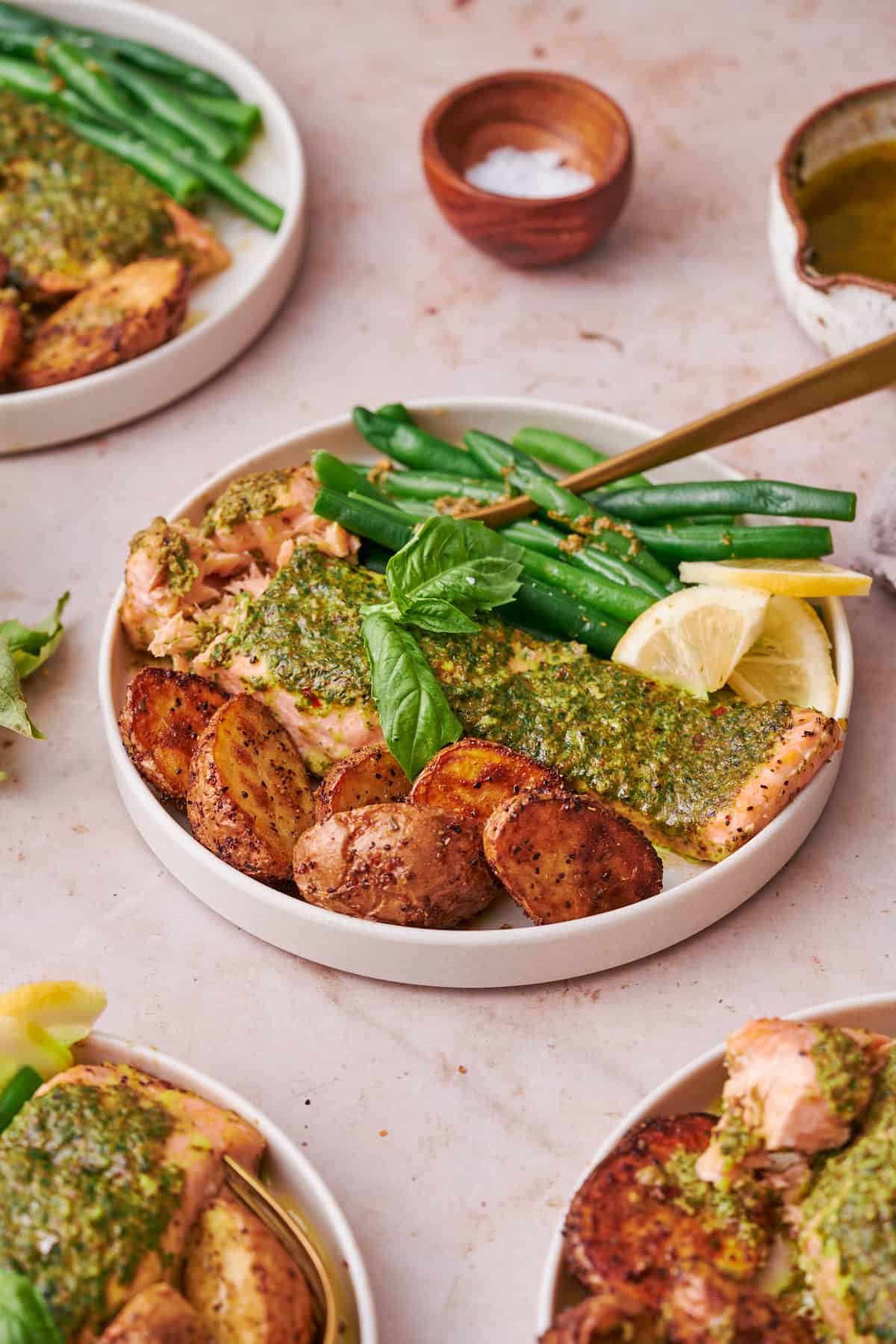
Salmon with a pesto butter crust is exactly the kind of spring dinner I want when I don't have the energy to think too hard but still want something that feels special. The pesto keeps it bright and herby, the butter makes it rich without being heavy, and the whole thing comes together in under 20 minutes. I've made this on weeknights when I've had exactly nothing planned, and it's never once let me down. If you're nervous about cooking salmon, this is honestly a forgiving recipe — the butter helps it stay moist even if you go a minute or two over.
Ingredients
- 4 salmon fillets (about 6 oz each), skin on or off
- 3 tablespoons unsalted butter, softened
- 3 tablespoons prepared basil pesto (store-bought is fine)
- 2 cloves garlic, minced
- 1 tablespoon olive oil
- ½ teaspoon salt
- ¼ teaspoon black pepper
- Lemon wedges, for serving
Instructions
- Preheat your oven to 400°F. Line a baking sheet with foil and drizzle with olive oil.
- In a small bowl, mix together the softened butter, pesto, and garlic until combined.
- Season the salmon fillets with salt and pepper, then place them on the prepared baking sheet.
- Spread the pesto butter evenly over the top of each fillet, covering it generously.
- Bake for 12–15 minutes, until the salmon flakes easily with a fork. Serve immediately with lemon wedges.
Tips
- Tip: Let your salmon sit at room temperature for 10 minutes before baking — it cooks more evenly and you avoid that dry outer edge with a cold center.
- Tip: Kirkland brand pesto from Costco works really well here and is genuinely good quality for store-bought.
- Tip: Serve over orzo or alongside roasted asparagus to make it a full spring meal without any extra effort.
26. Finnish Salmon Soup (Lohikeitto)
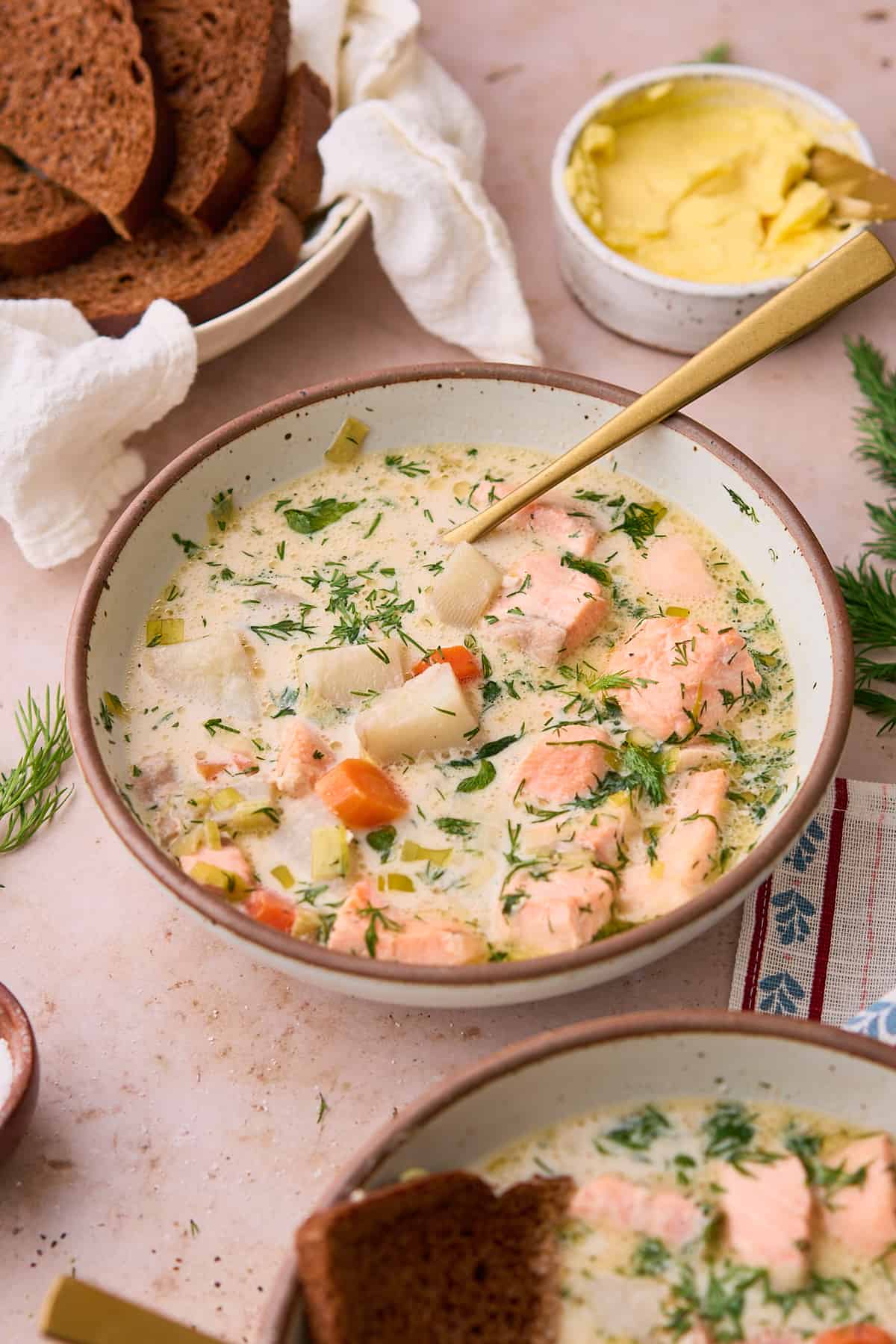
I first came across Lohikeitto scrolling through soup recipes during a rainy spring afternoon, and I was curious enough to try it that same week. It's a Finnish creamy salmon soup — potatoes, leeks, cream, dill, and chunks of salmon — and it is one of the most quietly satisfying things I've made. It doesn't shout at you with bold spices; it's gentle and clean and warm in exactly the right way. The dill is key — don't skip it or swap it.
Ingredients
- 1 lb salmon fillet, skin removed, cut into 1-inch chunks
- 2 medium Yukon Gold potatoes, peeled and diced into ½-inch cubes
- 1 large leek, white and light green parts only, sliced into half-moons
- 2 medium carrots, peeled and diced
- 3 cups fish stock (or low-sodium vegetable broth as a substitute)
- 1 cup heavy cream
- 2 tablespoons unsalted butter
- ¼ cup fresh dill, roughly chopped
- 1 teaspoon salt, plus more to taste
- ¼ teaspoon white pepper
Instructions
- Melt the butter in a large pot over medium heat. Add the leek and carrots and cook for 4–5 minutes, stirring occasionally, until the leek softens.
- Add the diced potatoes and fish stock. Bring to a gentle boil, then reduce the heat and simmer for 10–12 minutes until the potatoes are just tender.
- Pour in the heavy cream and stir gently. Add the salmon chunks and simmer on low for 5–6 minutes — don't boil hard or the salmon will fall apart and the cream may curdle.
- Season with salt and white pepper. Stir in most of the fresh dill, reserving a little for garnish.
- Ladle into bowls and top with the remaining fresh dill. Serve with crusty bread.
Tips
- Tip: Fish stock makes a real difference here — look for it in the seafood section at Walmart or Trader Joe's. If you genuinely can't find it, low-sodium vegetable broth works, but the flavor will be milder.
- Tip: Add the salmon last and keep the heat low — it only needs a few minutes and overcooking it ruins the texture completely.
- Tip: This soup tastes even better the next day once the flavors have settled, so it's great for meal prep.
25. Creamy One Pot Lemon Pasta

This is one of those recipes that looks too simple to be good and then completely surprises you. One pot, lemon, cream, pasta — that's basically it, and it comes out silky and bright and genuinely satisfying. I make a double batch because it disappears in one meal at our house, especially with some garlic bread on the side. It's the kind of thing I make when the fridge is half-empty and I need dinner in 25 minutes without making a mess of every pan I own.
Ingredients
- 12 oz linguine or spaghetti
- 3 cups low-sodium chicken or vegetable broth
- 1 cup heavy cream
- Zest and juice of 1 large lemon
- 3 cloves garlic, minced
- 2 tablespoons unsalted butter
- ½ cup freshly grated Parmesan (plus more to serve)
- ½ teaspoon salt, plus more to taste
- ¼ teaspoon black pepper
- Fresh parsley or basil, chopped, for serving
Instructions
- In a large, deep skillet or wide pot, melt the butter over medium heat. Add the garlic and cook for 1 minute until fragrant — don't let it brown.
- Add the broth and heavy cream. Bring to a gentle boil, then add the pasta, pressing it down to submerge.
- Cook over medium heat, stirring frequently, for 10–12 minutes until the pasta is al dente and the sauce has thickened to coat the noodles. If it gets too thick, add a splash of broth.
- Remove from heat. Stir in the lemon zest, lemon juice, and Parmesan. Season with salt and pepper.
- Serve immediately, topped with extra Parmesan and fresh herbs.
Tips
- Tip: Stir the pasta every couple of minutes while it cooks — this is what creates that creamy, starchy sauce rather than a clumpy mess.
- Tip: Add the lemon juice OFF the heat, not while it's still boiling — it keeps the brightness fresh rather than cooking off into something flat.
- Tip: Toss in a handful of baby spinach or frozen peas right at the end if you want to sneak some greens in — they wilt right into the sauce.
24. Goat Cheese Pasta with Spring Vegetables
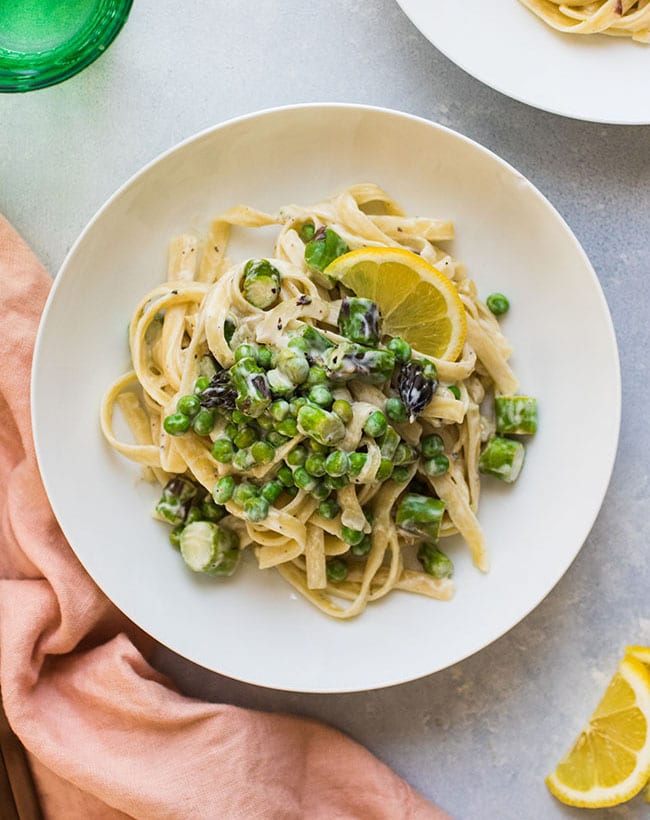
Goat cheese pasta is one of those combinations that sounds fancier than it actually is to make. You cook your pasta, toss it with softened goat cheese and a splash of pasta water, and the whole thing turns into this tangy, creamy sauce without any real effort. Adding spring vegetables — asparagus, peas, zucchini, whatever you have — makes it feel seasonal and fresh. My husband was skeptical of goat cheese the first time I made this, and then ate two bowls, which I consider a win.
Ingredients
- 12 oz fettuccine or pappardelle
- 4 oz plain goat cheese, at room temperature
- 1 bunch asparagus, woody ends trimmed, cut into 2-inch pieces
- 1 cup frozen peas, thawed
- 3 cloves garlic, minced
- 2 tablespoons olive oil
- ½ cup reserved pasta water
- Zest of 1 lemon
- Salt and black pepper to taste
- Fresh mint or basil leaves, for serving
Instructions
- Cook the pasta in well-salted boiling water according to package directions. Before draining, scoop out at least ½ cup of pasta water and set it aside.
- While the pasta cooks, heat the olive oil in a large skillet over medium heat. Add the garlic and cook for 30 seconds, then add the asparagus. Sauté for 4–5 minutes until just tender but still with some bite.
- Add the thawed peas to the skillet and toss to warm through, about 1 minute.
- Drain the pasta and add it directly to the skillet. Drop in the goat cheese in pieces and pour in ¼ cup of the reserved pasta water. Toss everything together, adding more pasta water as needed until the goat cheese melts into a loose, creamy sauce.
- Add the lemon zest, season generously with salt and pepper, and serve topped with fresh mint or basil.
Tips
- Tip: The goat cheese MUST be at room temperature — cold goat cheese from the fridge clumps instead of melting smoothly into the sauce, and you'll end up with lumpy pasta.
- Tip: Swap in whatever spring vegetables you have — zucchini, sugar snap peas, or even a handful of baby spinach all work well here.
- Tip: Don't skip the fresh herbs at the end — they're what lifts this from "good" to "really good." Mint specifically pairs surprisingly well with goat cheese and peas.
23. Incredible Chicken Piccata Pasta
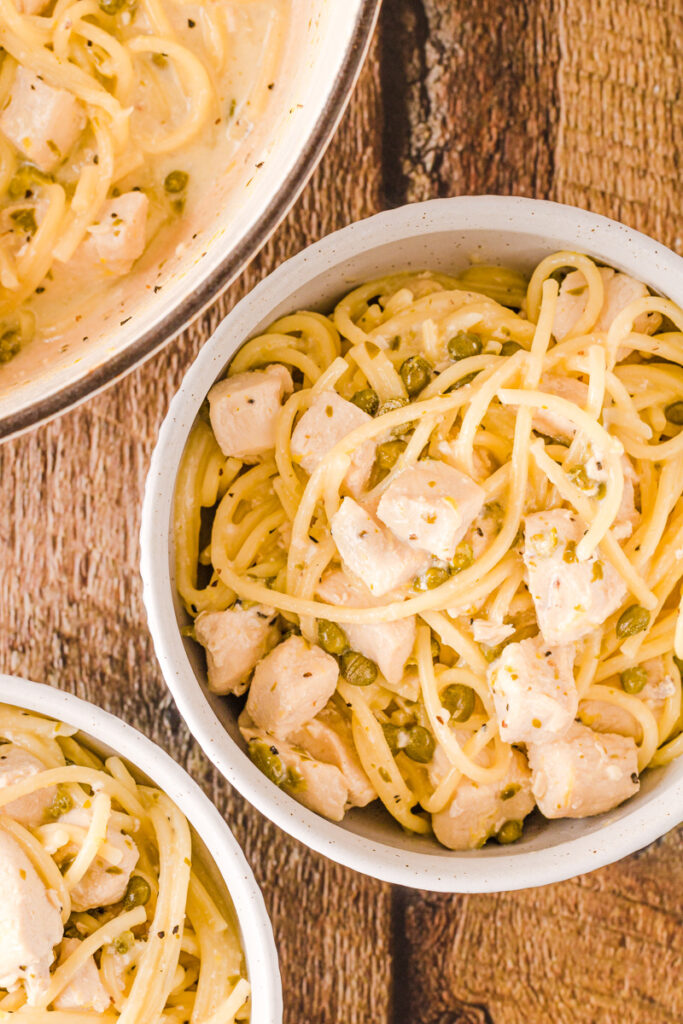
Chicken piccata is one of those dishes I always assumed was restaurant-only — too fussy, too many components. Then I tried making it tossed through pasta and realized it's actually one of the easier weeknight dinners I make. The **lemon-butter-caper sauce** coats every strand of pasta, and the chicken stays tender because you're not overcooking it. It's bright and a little tangy, which makes it feel perfect for spring. My husband asked for this two weeks in a row after I first put it on the table.
Ingredients
- 1 lb boneless, skinless chicken breasts, sliced thin
- Salt and black pepper, to taste
- ½ cup all-purpose flour, for dredging
- 3 tablespoons olive oil, divided
- 4 tablespoons unsalted butter, divided
- 4 garlic cloves, minced
- ½ cup dry white wine (or low-sodium chicken broth)
- ⅓ cup fresh lemon juice (about 2 lemons)
- 3 tablespoons capers, drained
- 12 oz linguine or spaghetti, cooked and ½ cup pasta water reserved
- Fresh parsley, chopped, for serving
Instructions
- Season chicken slices with salt and pepper, then dredge lightly in flour, shaking off any excess.
- Heat 2 tablespoons olive oil and 2 tablespoons butter in a large skillet over medium-high heat. Cook chicken in a single layer, 3-4 minutes per side until golden. Remove and set aside.
- In the same skillet, add the remaining tablespoon of olive oil and sauté garlic for 30 seconds. Pour in the wine (or broth) and scrape up any browned bits from the bottom — that's flavor.
- Stir in lemon juice and capers, then add the remaining 2 tablespoons butter and let the sauce simmer for 2-3 minutes until slightly reduced.
- Add the cooked pasta to the skillet along with a splash of reserved pasta water. Toss everything together, return the chicken, and serve topped with fresh parsley.
Tips
- Tip: Don't skip the pasta water — it helps the sauce cling to the noodles instead of pooling at the bottom of the bowl.
- Tip: If you can't find capers, a few green olives chopped fine will give you a similar briny kick.
- Tip: Slice the chicken thin and evenly so it cooks through quickly without drying out — about ½ inch thick is right.
22. Bruschetta Chicken Pasta
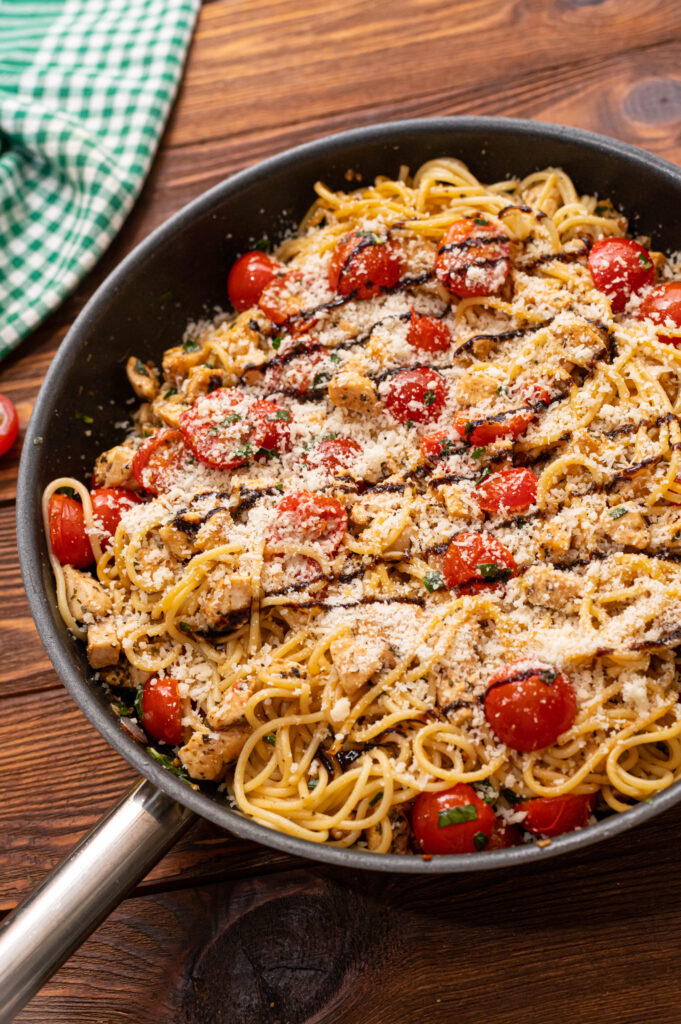
Think of everything you love about bruschetta — the garlicky tomatoes, the fresh basil, the drizzle of olive oil — and then toss it through pasta with juicy pan-seared chicken. That's this dish. It's one of those recipes that looks like you put in way more effort than you actually did, which I always appreciate on a weeknight. The **fresh tomato topping** is key here; don't use canned or the whole thing goes flat. I made a big batch of this for a friend's casual dinner last spring and everyone wanted the recipe before they left.
Ingredients
- 1 lb boneless, skinless chicken breasts
- 1 teaspoon Italian seasoning
- Salt and black pepper, to taste
- 2 tablespoons olive oil, divided
- 4 ripe Roma tomatoes, diced
- 3 garlic cloves, minced
- ¼ cup fresh basil leaves, torn
- 1 tablespoon balsamic vinegar
- 12 oz penne or angel hair pasta, cooked
- ¼ cup shaved Parmesan, for serving
Instructions
- While pasta cooks, combine diced tomatoes, garlic, basil, balsamic vinegar, 1 tablespoon olive oil, and a pinch of salt in a bowl. Let it sit for at least 10 minutes so the flavors come together.
- Season chicken with Italian seasoning, salt, and pepper. Heat remaining olive oil in a skillet over medium-high heat and cook chicken 5-6 minutes per side until cooked through. Rest for 5 minutes, then slice.
- Add cooked pasta to the skillet over low heat and pour the bruschetta tomato mixture over the top. Toss gently to coat the pasta — the residual heat warms the tomatoes without turning them mushy.
- Plate the pasta, top with sliced chicken, and finish with shaved Parmesan and extra fresh basil if you have it.
Tips
- Tip: Let the tomato mixture marinate while you cook everything else — the longer it sits, the better it tastes.
- Tip: Angel hair pasta works especially well here because it's light enough not to compete with the fresh tomato topping.
- Tip: If you want to skip the chicken, this works just as well as a vegetarian pasta — just add a handful of white beans for protein.
21. Cavolo Nero Pasta (Tuscan Kale)
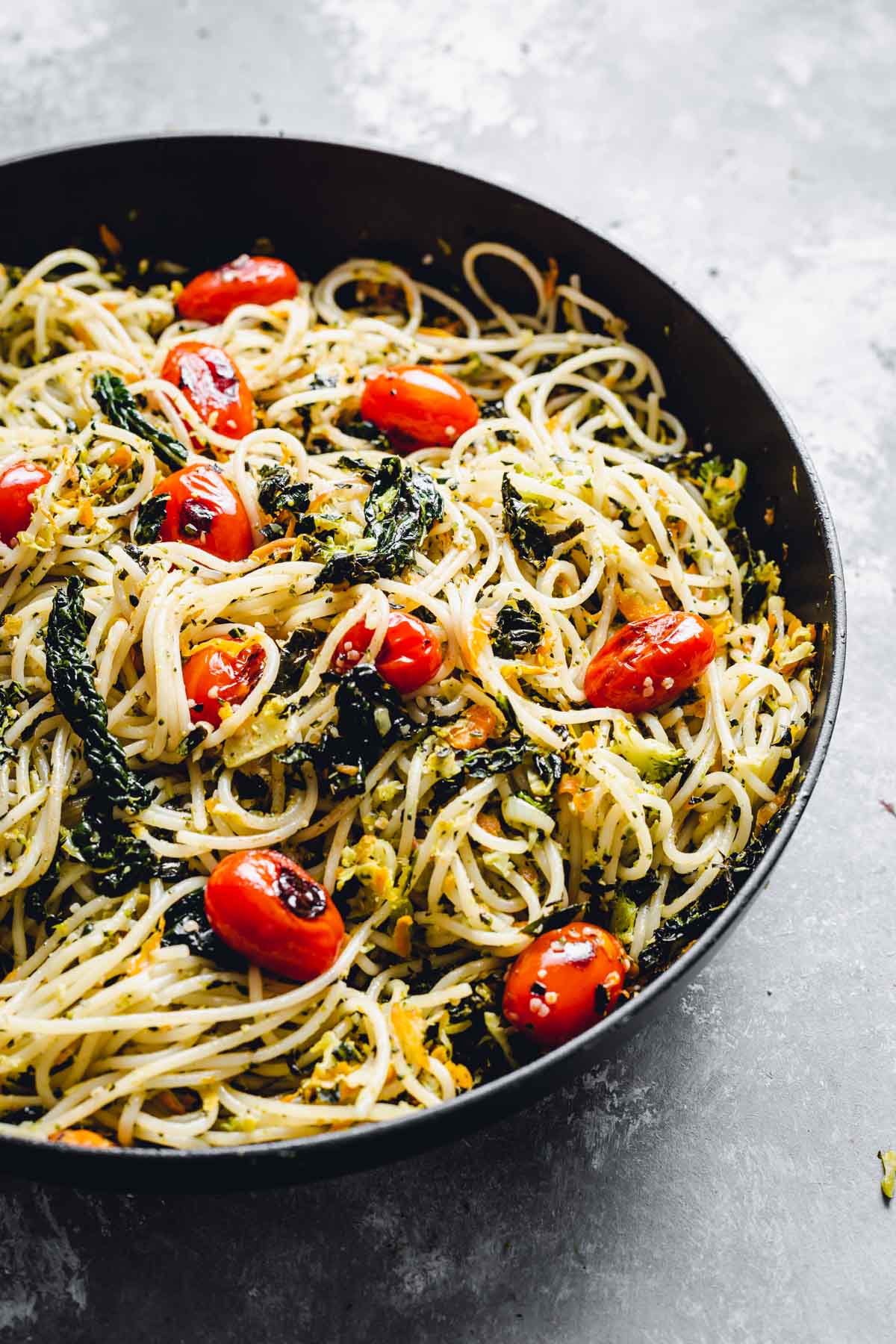
I'll be honest — I had never cooked with cavolo nero (that's Tuscan black kale) before I tried this recipe, and I wasn't sure my family would go near it. But when it's **wilted down in olive oil with garlic and chili flakes** and tossed through pasta, it becomes something completely different — earthy, a little silky, deeply savory. This is not your sad desk-lunch kale salad. It's a proper dinner, and it comes together in the time it takes to boil pasta. I substitute regular lacinato kale from Walmart when I can't find the Tuscan variety and it works perfectly fine.
Ingredients
- 12 oz orecchiette or short pasta
- 1 large bunch cavolo nero (Tuscan kale), stems removed, leaves roughly chopped
- 4 tablespoons olive oil
- 5 garlic cloves, thinly sliced
- ½ teaspoon red chili flakes
- ½ cup pasta cooking water, reserved
- Zest and juice of 1 lemon
- Salt and black pepper, to taste
- ¼ cup toasted pine nuts (or walnuts)
- Shaved Parmesan or nutritional yeast, to serve
Instructions
- Cook pasta in well-salted boiling water until al dente. Before draining, scoop out ½ cup of pasta water and set it aside.
- While pasta cooks, heat olive oil in a large skillet over medium heat. Add garlic and chili flakes and cook for 1-2 minutes, just until garlic turns golden — watch it closely, it burns fast.
- Add the chopped kale to the skillet in batches, stirring as it wilts. Add a splash of pasta water to help it steam down. Cook for about 5 minutes until tender.
- Add the drained pasta to the skillet. Squeeze in lemon juice, add the zest, and toss everything together. Add more pasta water a little at a time until the sauce coats the pasta loosely.
- Serve topped with toasted pine nuts and Parmesan (or nutritional yeast to keep it vegan). Season generously with salt and pepper.
Tips
- Tip: Regular lacinato kale from any grocery store works just as well as cavolo nero — same texture, same flavor profile.
- Tip: Toast the pine nuts in a dry pan for 2-3 minutes before using — it makes a noticeable difference in flavor.
- Tip: Salt your pasta water generously — this dish has very few ingredients, so every layer of seasoning counts.
20. Creamy Pesto Pasta with Fava Beans
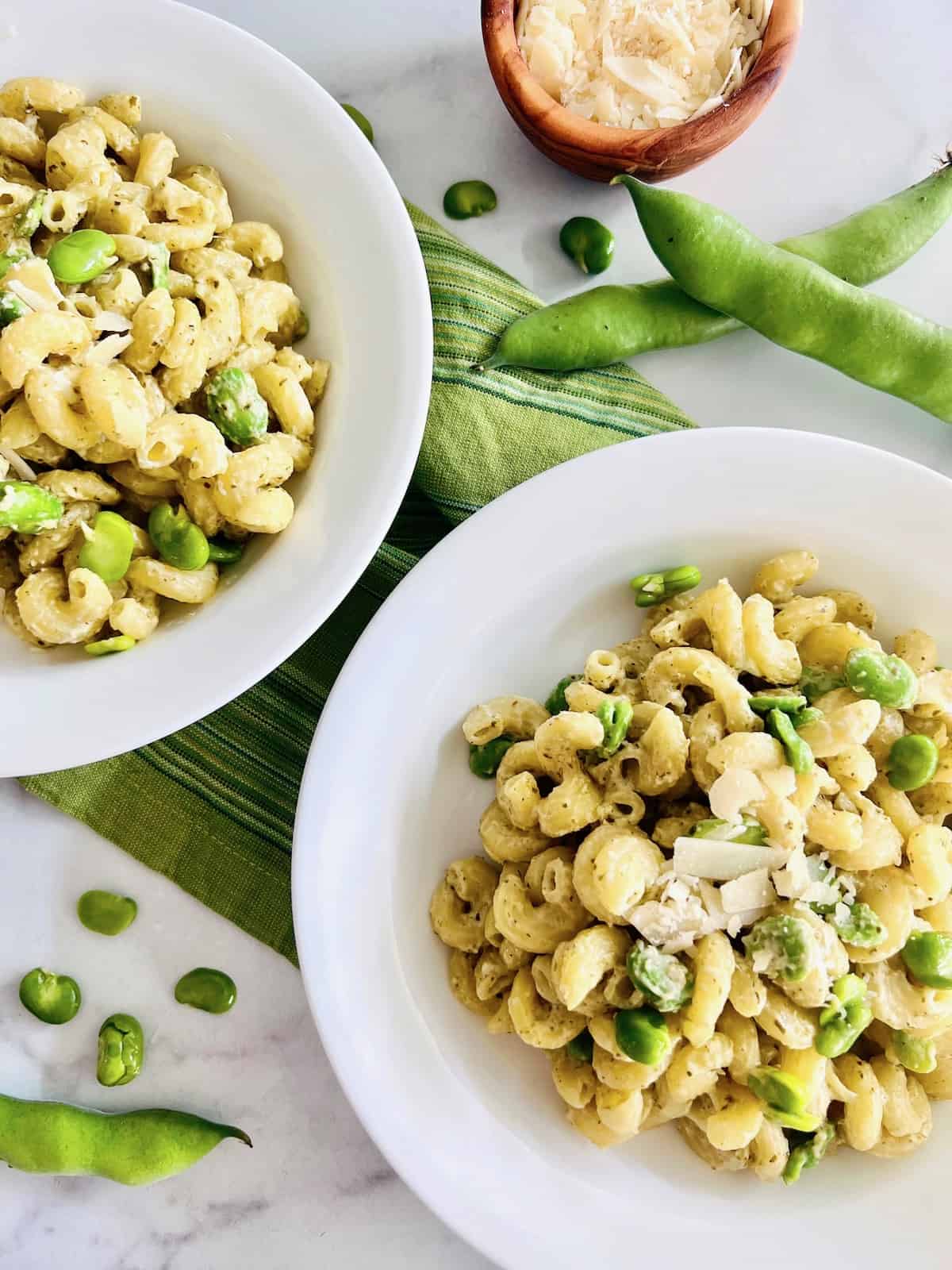
Fava beans are one of those spring vegetables I only started cooking with a couple of years ago, and this pasta made me understand why people get so excited about them. Combined with a **creamy pesto sauce** — pesto loosened with a little cream and pasta water — they turn a simple bowl of pasta into something that feels genuinely seasonal and special. Saad wasn't convinced by the fava beans at first, but once he tasted the sauce he stopped complaining pretty quickly. If fresh fava beans aren't available where you are, frozen edamame or shelled frozen peas work as a solid substitute.
Ingredients
- 12 oz fusilli or rigatoni
- 1½ cups fresh or frozen fava beans, shelled (or substitute frozen peas or edamame)
- ⅓ cup store-bought basil pesto (or homemade)
- ½ cup heavy cream (or half-and-half)
- ½ cup pasta cooking water, reserved
- 2 garlic cloves, minced
- 1 tablespoon olive oil
- Salt and black pepper, to taste
- Shaved Parmesan and fresh lemon zest, to serve
Instructions
- Cook pasta in salted boiling water until al dente. In the last 2 minutes of cooking, add the fava beans to the pot to blanch them. Drain together, reserving ½ cup pasta water. If using fresh fava beans, slip off the outer skins after blanching.
- In a large skillet over medium-low heat, warm olive oil and sauté garlic for 1 minute. Pour in the cream and let it heat through for 2 minutes, then stir in the pesto.
- Add the drained pasta and fava beans to the skillet. Toss to coat, adding pasta water a splash at a time until the sauce reaches a consistency you like — it should be creamy but not thick.
- Season with salt and pepper, then serve immediately with shaved Parmesan and a little lemon zest over the top.
Tips
- Tip: Don't skip peeling the outer skin off fresh fava beans after blanching — the inner bean is bright green and tender; the skin is tough and bitter.
- Tip: Frozen shelled edamame from Trader Joe's or Costco is the easiest substitute if fresh fava beans aren't in season near you.
- Tip: Keep the heat low when you add the pesto to the cream — high heat can make pesto turn bitter and dull its green color.
19. Creamy Coconut Lime Chicken
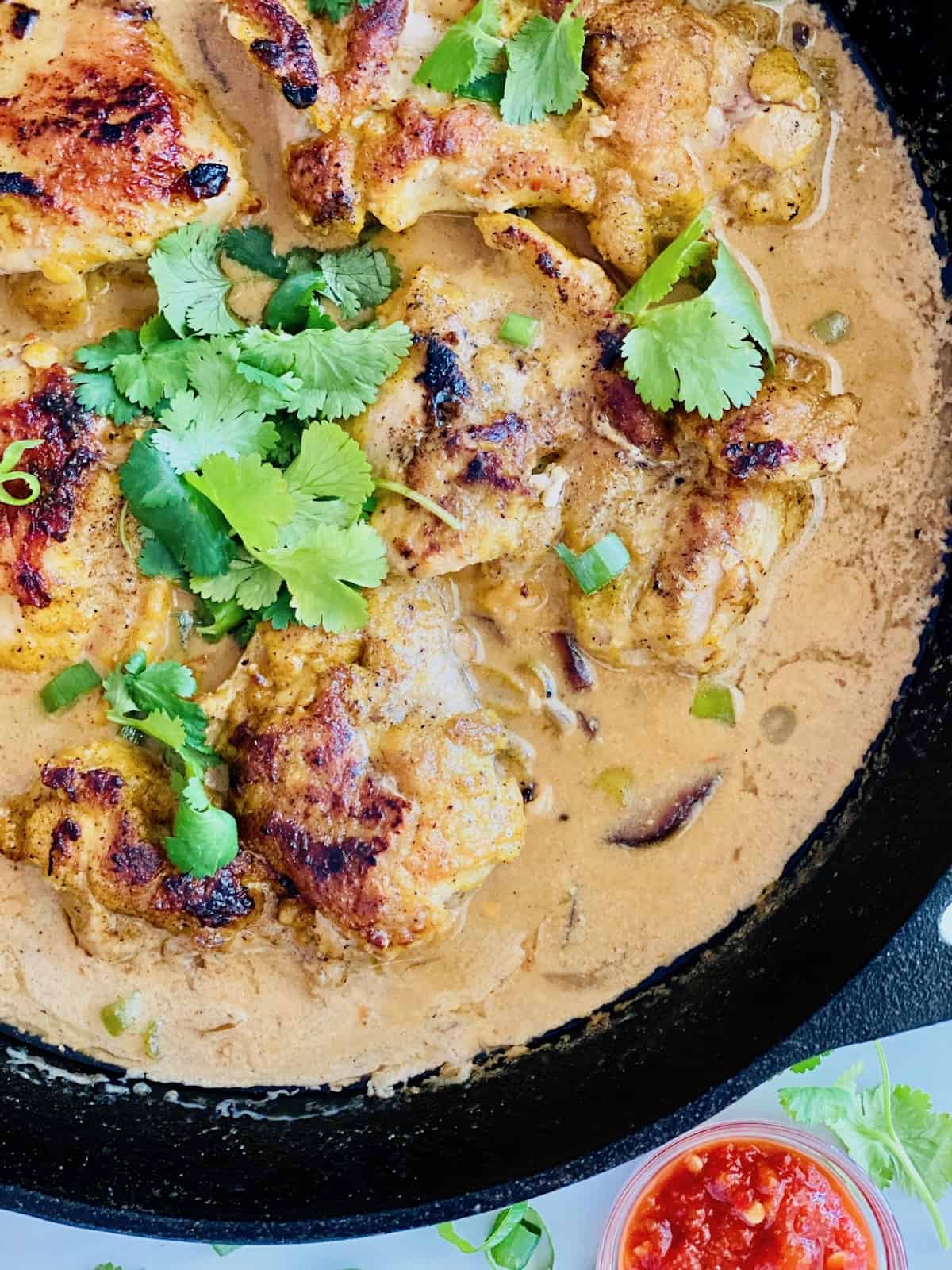
Growing up in Pakistan, coconut-based curries were always in the rotation, so this recipe felt immediately familiar the first time I made it — except the lime takes it somewhere brighter and more spring-appropriate than a heavier curry. The sauce is **coconut milk simmered down with garlic, ginger, and fresh lime juice** until it clings to the chicken like a glaze. It's one of those dishes that works over rice, over cauliflower rice, or honestly just with some crusty bread to mop up the sauce. I make a double batch of the sauce because it disappears fast and my husband uses whatever's left on everything.
Ingredients
- 1½ lbs bone-in, skin-on chicken thighs (or boneless skinless)
- Salt and black pepper, to taste
- 1 tablespoon olive oil or coconut oil
- 4 garlic cloves, minced
- 1 teaspoon fresh ginger, grated
- 1 can (13.5 oz) full-fat coconut milk
- 3 tablespoons fresh lime juice (about 2 limes)
- 1 teaspoon lime zest
- 1 tablespoon fish sauce (or soy sauce)
- ½ teaspoon red chili flakes
- Fresh cilantro and lime wedges, to serve
Instructions
- Pat chicken dry and season well with salt and pepper. Heat oil in a cast iron skillet or heavy pan over medium-high heat. Sear chicken skin-side down for 5-6 minutes until the skin is deeply golden, then flip and cook another 3-4 minutes. Remove from pan and set aside.
- Reduce heat to medium. In the same pan, sauté garlic and ginger for 1 minute until fragrant. Pour in the coconut milk and stir, scraping up any browned bits.
- Stir in lime juice, lime zest, fish sauce, and chili flakes. Let the sauce simmer for 3-4 minutes until it thickens slightly.
- Return the chicken to the pan, nestle it into the sauce, and cook covered on medium-low for 15-20 minutes until chicken is cooked through (internal temp 165°F).
- Serve over steamed rice with fresh cilantro and lime wedges on the side.
Tips
- Tip: Full-fat coconut milk gives you a richer, creamier sauce — the light version works but the sauce will be thinner.
- Tip: Don't add the lime juice too early — stir it in after the coconut milk has come to a simmer so it stays bright and doesn't turn bitter from the heat.
- Tip: Boneless skinless thighs cut the cooking time down significantly if you're short on time — just reduce the covered simmer to 10-12 minutes.
14. Sweet and Sour Salmon with Brussels Sprouts
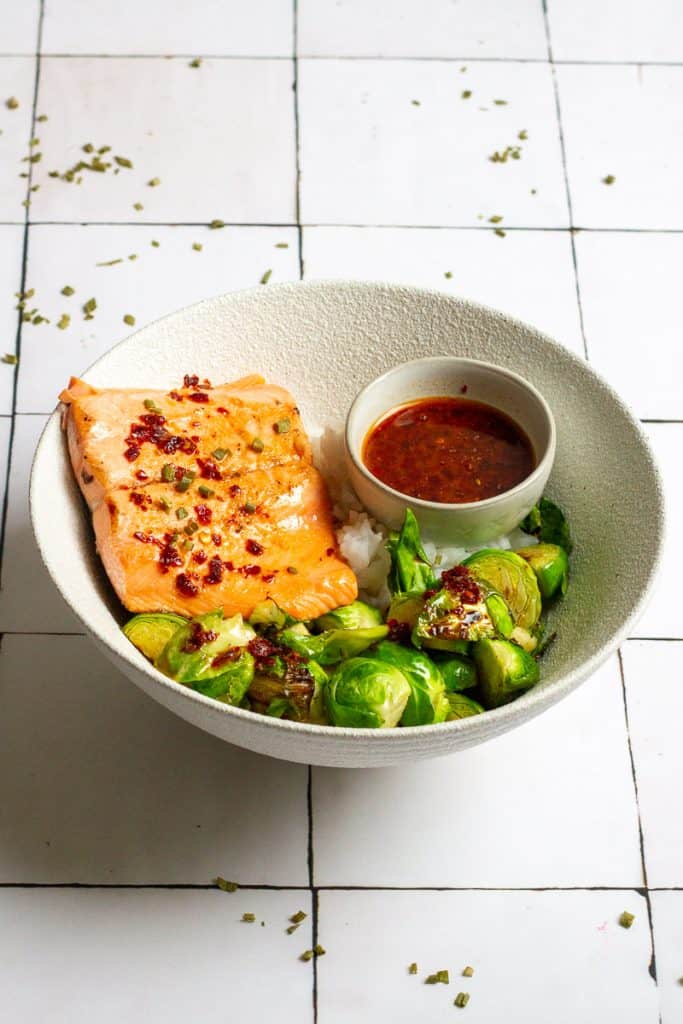
Salmon is one of those things I make differently almost every week — baked, pan-seared, with cream sauce, with soy glaze — but this sweet and sour version surprised me the most. The glaze has that punchy balance of vinegar and honey that cuts through the richness of the fish in the best way. Roasted Brussels sprouts on the same pan means the whole dinner comes together without much fuss. It's a genuinely solid spring dinner that doesn't feel like you're eating "healthy food" — it just tastes good.
Ingredients
- 4 salmon fillets (about 6 oz each), skin-on or skinless
- 1 lb Brussels sprouts, trimmed and halved
- 2 tablespoons olive oil
- Salt and black pepper to taste
- 3 tablespoons honey
- 2 tablespoons apple cider vinegar
- 1 tablespoon soy sauce
- 2 garlic cloves, minced
- 1 teaspoon red pepper flakes (optional)
Instructions
- Preheat oven to 425°F. Toss Brussels sprouts with olive oil, salt, and pepper on a large sheet pan and spread in a single layer. Roast for 15 minutes.
- While the sprouts roast, whisk together honey, apple cider vinegar, soy sauce, garlic, and red pepper flakes in a small bowl.
- Push the Brussels sprouts to the sides of the pan and place salmon fillets in the center. Spoon the glaze generously over the salmon.
- Return the pan to the oven and roast for another 12–15 minutes, until salmon flakes easily with a fork and the glaze is caramelized at the edges.
- Serve immediately, spooning any pan juices over the top.
Tips
- Tip: Pat the salmon dry before glazing — moisture on the surface prevents caramelization and you end up with a steamed texture instead of that sticky, lacquered finish.
- Tip: Pre-roasting the Brussels sprouts before adding the salmon ensures they get properly caramelized rather than soggy — don't skip that first 15 minutes alone in the oven.
- Tip: Rice wine vinegar works just as well as apple cider vinegar here if that's what you have in the pantry.
15. Scaloppine al Limone Recipe
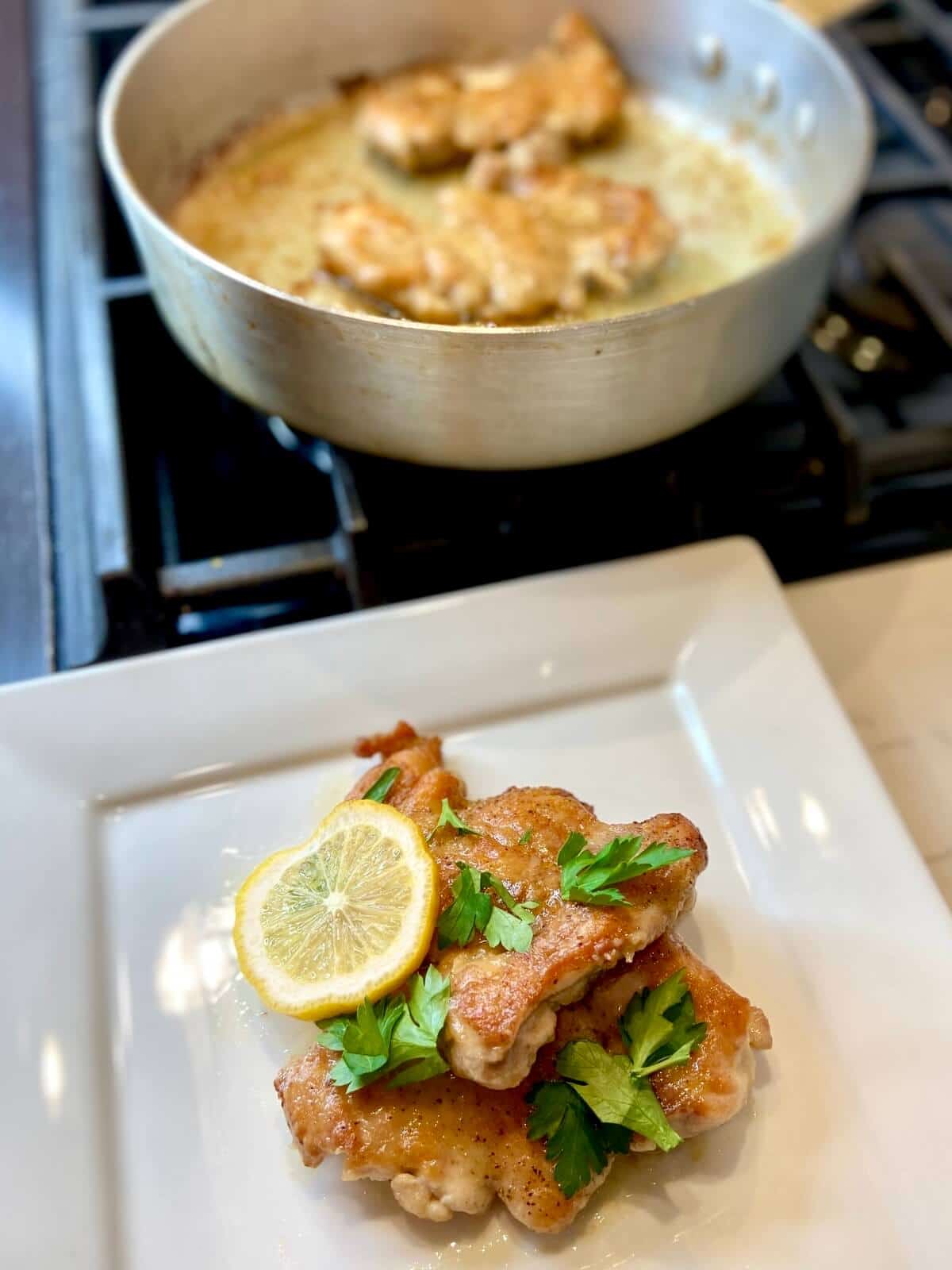
Scaloppine al Limone is Italian-style thin-pounded chicken or veal cutlets cooked in a bright lemon-butter pan sauce, and it comes together in under 20 minutes. I'm not going to claim this is restaurant-authentic — I use chicken breasts because veal is hard to find where I shop — but the result is genuinely lovely. The lemon sauce is light, silky, and just acidic enough to feel like spring. Serve it over pasta or with crusty bread to catch every drop of that pan sauce.
Ingredients
- 1½ lbs thin chicken cutlets (or veal cutlets, about ¼-inch thick)
- ½ cup all-purpose flour, for dredging
- Salt and black pepper to taste
- 3 tablespoons olive oil
- 3 tablespoons unsalted butter, divided
- 3 garlic cloves, thinly sliced
- ½ cup dry white wine (or chicken broth)
- Juice of 2 lemons (about ¼ cup)
- 2 tablespoons capers, drained (optional)
- Fresh parsley, chopped, for serving
Instructions
- Season cutlets with salt and pepper, then dredge lightly in flour, shaking off any excess.
- Heat olive oil and 1 tablespoon of butter in a large skillet over medium-high heat. Cook cutlets 2–3 minutes per side until golden. Work in batches so you don't crowd the pan. Set aside on a plate.
- In the same pan, add garlic and cook 30 seconds. Pour in white wine and let it reduce by half, scraping up any browned bits from the bottom.
- Add lemon juice and capers (if using), stir, then swirl in the remaining 2 tablespoons of cold butter to create a silky sauce.
- Return the cutlets to the pan and spoon sauce over them. Heat through for 1–2 minutes, then serve immediately with parsley scattered on top.
Tips
- Tip: Cold butter swirled in at the end is what makes the sauce glossy and emulsified — if you add hot butter or skip this step, the sauce will be thin and greasy instead of silky.
- Tip: If your chicken breasts are thick, place them between two sheets of plastic wrap and pound to ¼-inch thickness with a rolling pin — no meat mallet needed.
- Tip: Skip the wine entirely and use chicken broth if you'd prefer — the sauce still works beautifully with just the lemon and butter doing the heavy lifting.
16. Spinach Mushroom Quiche
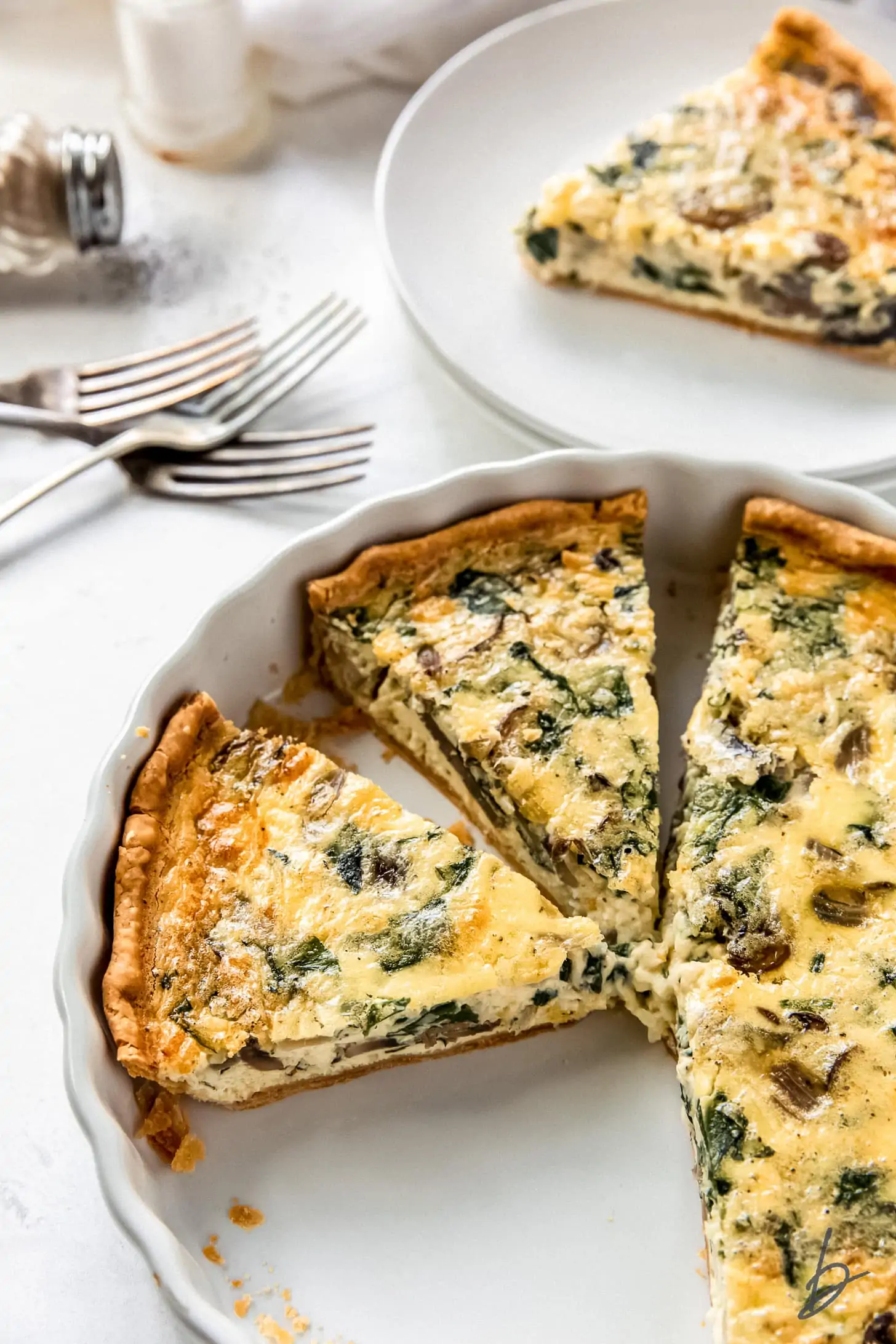
Quiche felt intimidating to me for years — I assumed the custard filling was tricky to get right and that I'd end up with something rubbery or undercooked. Turns out the ratio of eggs to cream is pretty forgiving, and this spinach mushroom version is one of the most reliable things I make now. It works for dinner with a simple salad on the side, and it reheats well the next day which is rare for egg dishes. The earthy mushrooms and wilted spinach make it feel substantial without being heavy.
Ingredients
- 1 store-bought 9-inch pie crust, unbaked (or homemade)
- 1 tablespoon olive oil
- 8 oz cremini or white button mushrooms, sliced
- 2 cups fresh baby spinach (or ½ cup frozen, thawed and squeezed dry)
- 3 garlic cloves, minced
- 4 large eggs
- 1 cup heavy cream (or half-and-half)
- 1 cup shredded Gruyère or Swiss cheese
- ½ teaspoon salt
- ¼ teaspoon black pepper
- Pinch of nutmeg
Instructions
- Preheat oven to 375°F. Press the pie crust into a 9-inch pie dish and blind bake for 10 minutes with pie weights or dried beans to prevent bubbling. Remove weights and bake 5 more minutes. Set aside.
- Heat olive oil in a skillet over medium heat. Add mushrooms and cook 5–6 minutes until they release their moisture and begin to brown. Add garlic and spinach and cook until the spinach is wilted, about 2 minutes. Season with salt and pepper. Let cool slightly.
- In a bowl, whisk together eggs, heavy cream, salt, pepper, and nutmeg until smooth.
- Scatter the mushroom-spinach mixture and half the cheese evenly over the pre-baked crust. Pour the egg mixture over the top, then sprinkle with remaining cheese.
- Bake for 35–40 minutes until the center is just set and the top is lightly golden. Let rest 10 minutes before slicing — this matters, the filling needs time to firm up.
Tips
- Tip: Squeeze every drop of moisture out of the spinach — whether fresh or frozen — or the filling will be watery and won't set properly in the center.
- Tip: The quiche is done when the edges are firm but the very center still has a slight jiggle — it will finish setting as it rests out of the oven.
- Tip: Gruyère melts beautifully here, but regular Swiss from Walmart or Aldi works just as well at a fraction of the cost.
17. Moo Nam Tok Thai Grilled Pork Salad
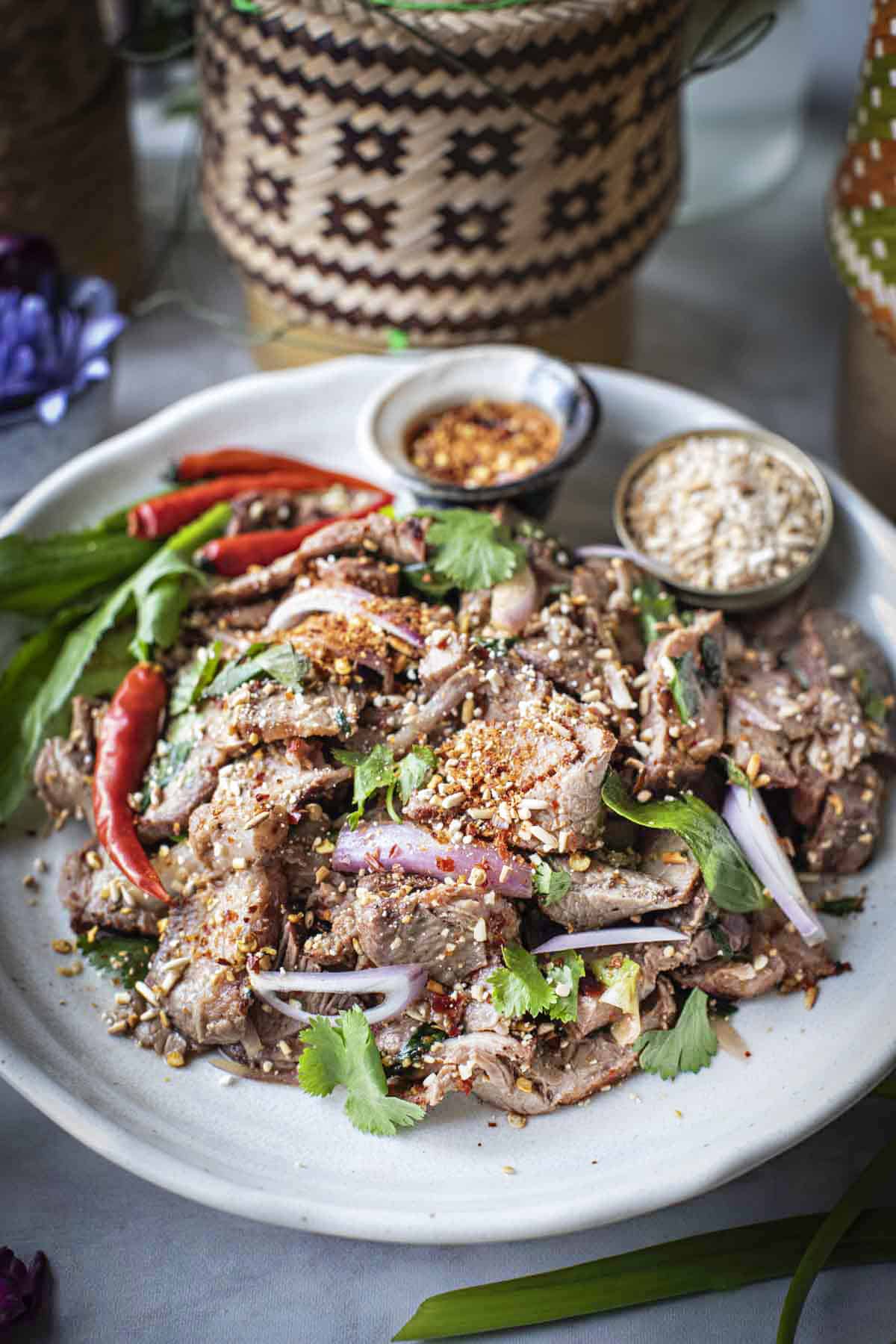
Moo Nam Tok — literally "waterfall pork" — is a Thai grilled pork salad with a dressing built on fish sauce, lime juice, toasted rice powder, and fresh herbs. It sounds like a lot, but once you've made it you'll realize how fast it comes together. The toasted rice powder is the part that trips people up the first time — I skipped it once thinking it wouldn't matter, and the texture was completely different. Don't skip it. Dry toast raw white rice in a pan until golden, then crush it with a rolling pin. It adds a nutty crunch that makes the whole thing work.
Ingredients
- 1 lb pork shoulder steaks or pork chops, about ¾-inch thick
- 2 tablespoons fish sauce
- 3 tablespoons fresh lime juice (about 2 limes)
- 1 teaspoon sugar
- 1–2 teaspoons chili flakes or fresh Thai chilies, to taste
- 2 tablespoons raw white rice (for toasted rice powder)
- 3 shallots, thinly sliced
- ¼ cup fresh mint leaves
- ¼ cup fresh cilantro leaves
- 2 green onions, sliced
Instructions
- Make the toasted rice powder: toast raw white rice in a dry skillet over medium heat, stirring constantly, for 5–7 minutes until golden and fragrant. Let cool, then crush in a mortar or place in a zip-lock bag and crush with a rolling pin until you have a coarse powder. Set aside.
- Season pork lightly with salt and grill or pan-sear over high heat for 4–5 minutes per side until cooked through with good char. Rest 5 minutes, then slice thinly against the grain.
- In a large bowl, whisk together fish sauce, lime juice, sugar, and chili flakes. Taste — it should be salty, sour, and a little spicy.
- Add the sliced pork, shallots, green onions, mint, and cilantro to the dressing and toss everything together.
- Sprinkle the toasted rice powder over the top and serve immediately with steamed jasmine rice or lettuce cups.
Tips
- Tip: Fish sauce is available at most large grocery stores — Walmart usually carries it in the Asian foods aisle. It smells strong from the bottle but mellows completely once it hits the lime juice.
- Tip: Dress and serve this salad right away — the herbs wilt quickly once they hit the dressing and the dish loses its freshness if it sits too long.
- Tip: Pork shoulder has better flavor here than pork loin — it stays juicy even with high-heat grilling and doesn't dry out the way leaner cuts can.
18. Sheet Pan Curried Chicken & Tahini Dressing

Growing up in Pakistan, curry was always a stovetop situation — slow-cooked, gravy-heavy, served with rice. This sheet pan version is nothing like that, and I mean that as a compliment. The chicken gets rubbed with curry powder, cumin, and a little yogurt, then roasted on a pan with whatever vegetables are in season. The tahini dressing drizzled at the end is the unexpected part that makes it feel complete — creamy, nutty, slightly lemony. My husband said it tasted like two cuisines decided to cooperate, which is basically how I'd describe it too.
Ingredients
- 1½ lbs bone-in, skin-on chicken thighs
- 2 tablespoons plain yogurt
- 1½ tablespoons curry powder
- 1 teaspoon cumin
- ½ teaspoon turmeric
- Salt and black pepper to taste
- 2 tablespoons olive oil
- 2 cups mixed vegetables (zucchini, bell peppers, red onion, or asparagus), cut into chunks
- 3 tablespoons tahini
- 2 tablespoons lemon juice
- 1 tablespoon water (to thin dressing)
- 1 garlic clove, grated
Instructions
- Preheat oven to 425°F. In a bowl, mix yogurt, curry powder, cumin, turmeric, salt, pepper, and 1 tablespoon of the olive oil. Add chicken thighs and coat well. If you have time, let them marinate 30 minutes — even 10 minutes makes a difference.
- Toss the vegetables with the remaining olive oil, salt, and pepper on a large sheet pan. Spread them out, then nestle the chicken thighs skin-side up among the vegetables.
- Roast for 35–40 minutes until the chicken skin is deeply golden and the internal temperature reads 165°F. The vegetables should be tender and caramelized at the edges.
- While the chicken roasts, whisk together tahini, lemon juice, grated garlic, and water until smooth and pourable. Taste and adjust salt.
- Drizzle the tahini dressing over the pan right before serving — add it at the table rather than before roasting so it stays creamy.
Tips
- Tip: Bone-in thighs stay juicier than boneless here — the longer roasting time that caramelizes the vegetables won't dry them out the way it would with chicken breasts.
- Tip: Tahini can seize up and turn thick when you first add lemon juice — keep whisking and add water a teaspoon at a time until it loosens into a smooth, drizzleable consistency.
- Tip: This works well with boneless thighs too — just reduce the roasting time to 25–28 minutes and check for doneness earlier.
10. Creamy Vegetable Pasta
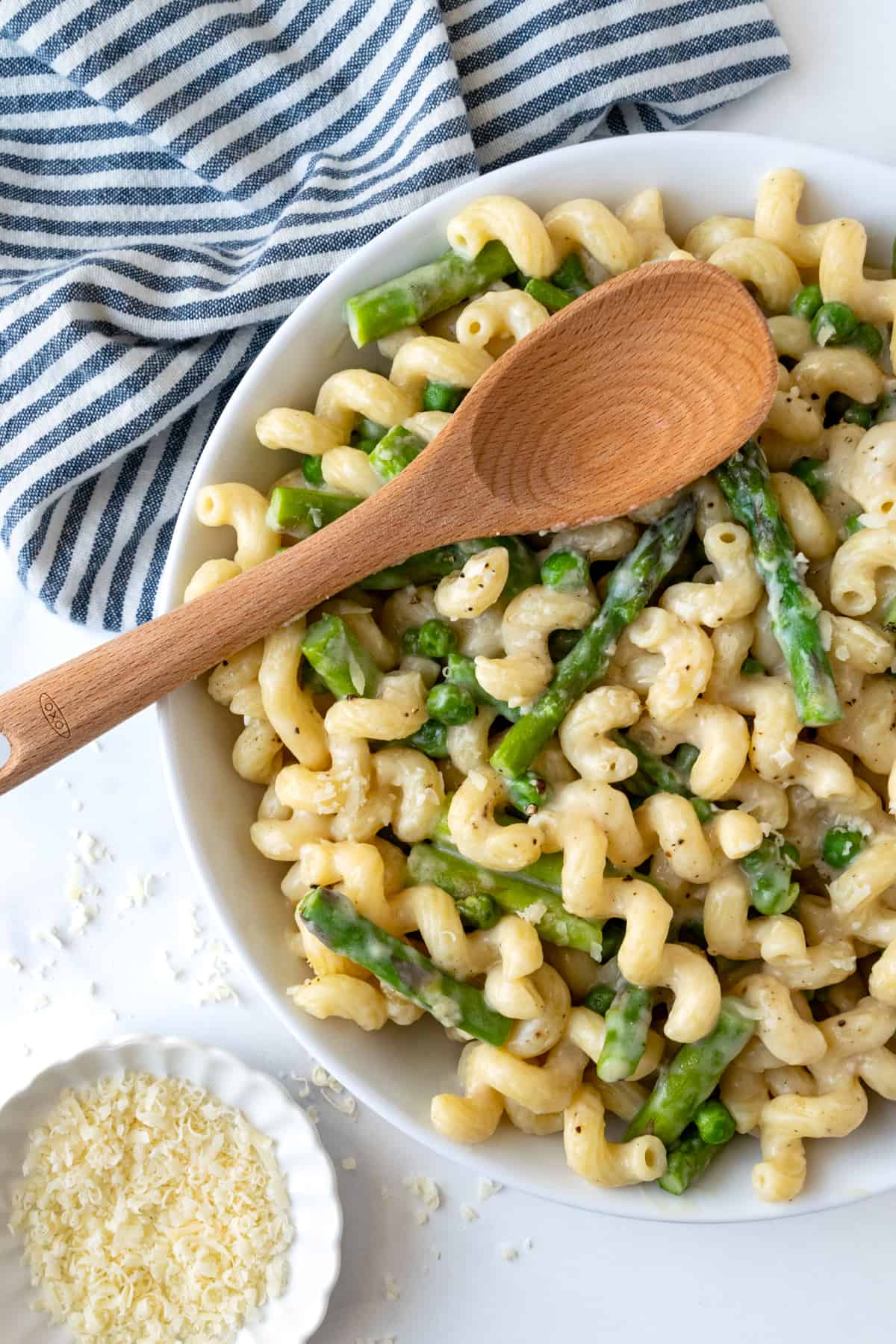
Spring is when I actually want to eat vegetables without having to convince myself, and this pasta is a big reason why. It's a simple cream-based sauce loaded with whatever fresh vegetables you have on hand — zucchini, peas, asparagus, spinach — tossed with pasta and finished with parmesan. The whole thing comes together in about 25 minutes, which on a Tuesday night feels like a miracle. My husband was skeptical the first time I put a vegetable-only pasta in front of him, but he cleaned the bowl.
Ingredients
- 12 oz penne or rigatoni
- 2 tablespoons olive oil
- 3 garlic cloves, minced
- 1 medium zucchini, diced
- 1 cup frozen peas (or fresh if you have them)
- 1 cup baby spinach
- 1 cup heavy cream (or half-and-half for a lighter version)
- ½ cup grated parmesan, plus more for serving
- Salt and black pepper to taste
- ½ teaspoon red pepper flakes (optional)
Instructions
- Cook pasta in well-salted boiling water until al dente. Reserve ½ cup pasta water before draining.
- Heat olive oil in a large skillet over medium heat. Add garlic and cook 1 minute until fragrant, then add zucchini and sauté for 3-4 minutes until just tender.
- Add peas and cream. Simmer for 3 minutes, stirring occasionally, until the cream thickens slightly.
- Stir in spinach and let it wilt for about 1 minute. Add parmesan and stir to melt into the sauce.
- Add drained pasta to the skillet. Toss everything together, adding a splash of reserved pasta water to loosen the sauce if needed. Season with salt, pepper, and red pepper flakes. Serve immediately with extra parmesan.
Tips
- Tip: Don't skip saving the pasta water — that starchy liquid is what helps the sauce cling to every piece of pasta instead of pooling at the bottom of the bowl.
- Tip: Swap in whatever vegetables are looking good at the market — asparagus cut into small pieces, cherry tomatoes, or thinly sliced bell pepper all work well here.
- Tip: Add the parmesan off the heat or on very low heat — high heat can make it clump instead of melt smoothly into the sauce.
11. Burrata Caprese
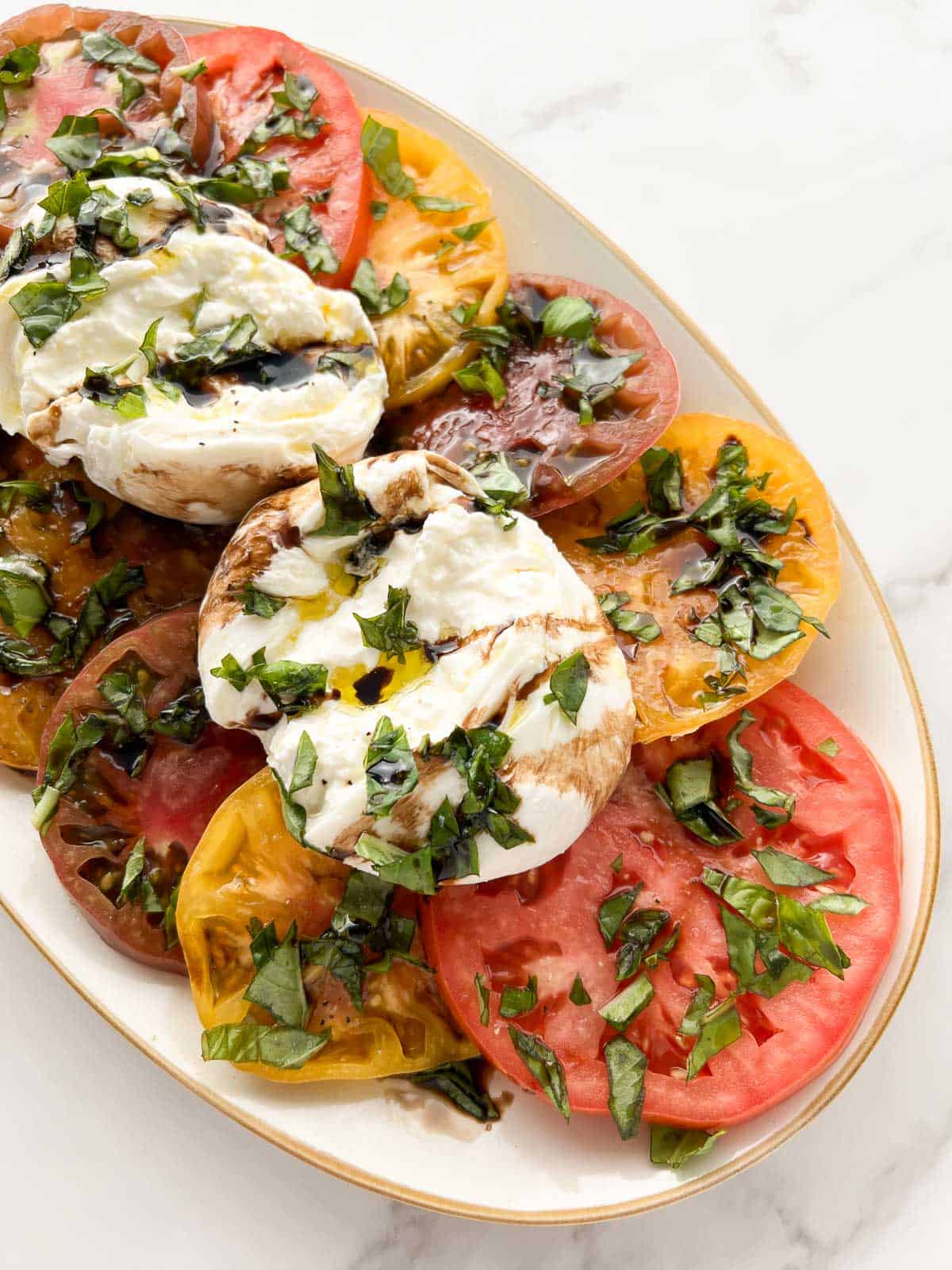
I'll be honest — I didn't grow up eating burrata. The first time I saw it at Trader Joe's I wasn't sure what to do with it, so I just put it on a plate with tomatoes and hoped for the best. It turned out to be one of the most effortless spring dinners I've ever made. Fresh burrata torn open over ripe tomatoes, drizzled with good olive oil and a little balsamic glaze — it looks like you tried hard and takes about five minutes. This isn't a full weeknight meal on its own, but paired with crusty bread and a simple soup it absolutely is.
Ingredients
- 2 balls fresh burrata (about 8 oz total — Trader Joe's or Costco carry them)
- 3-4 ripe heirloom or vine tomatoes, sliced
- 1 cup fresh basil leaves
- 3 tablespoons good-quality extra virgin olive oil
- 2 tablespoons balsamic glaze (store-bought is fine)
- Flaky sea salt and freshly cracked black pepper
- Crusty bread or crostini, for serving
Instructions
- Let the burrata sit at room temperature for about 15 minutes before serving — cold burrata doesn't have the same creamy texture when you cut into it.
- Arrange tomato slices on a large plate or platter. Season with a pinch of salt and let them sit for 2 minutes to draw out a little juice.
- Place the burrata balls on top of the tomatoes. Using a knife or your fingers, gently tear them open so the creamy center spills out.
- Scatter fresh basil leaves over everything. Drizzle generously with olive oil and balsamic glaze.
- Finish with flaky salt and cracked black pepper. Serve immediately with crusty bread to scoop up all that creamy center.
Tips
- Tip: Use the best tomatoes you can find — this dish has very few ingredients so the quality of each one really shows. Farmers market tomatoes in spring are worth the extra dollar.
- Tip: If you can't find burrata, fresh mozzarella works — just slice it instead of tearing, and drizzle with a little extra olive oil to compensate for the missing creamy center.
- Tip: Add thinly sliced prosciutto around the edges to make this more of a complete dinner plate without any extra cooking involved.
12. Easy Black Bean Soup Recipe From Scratch
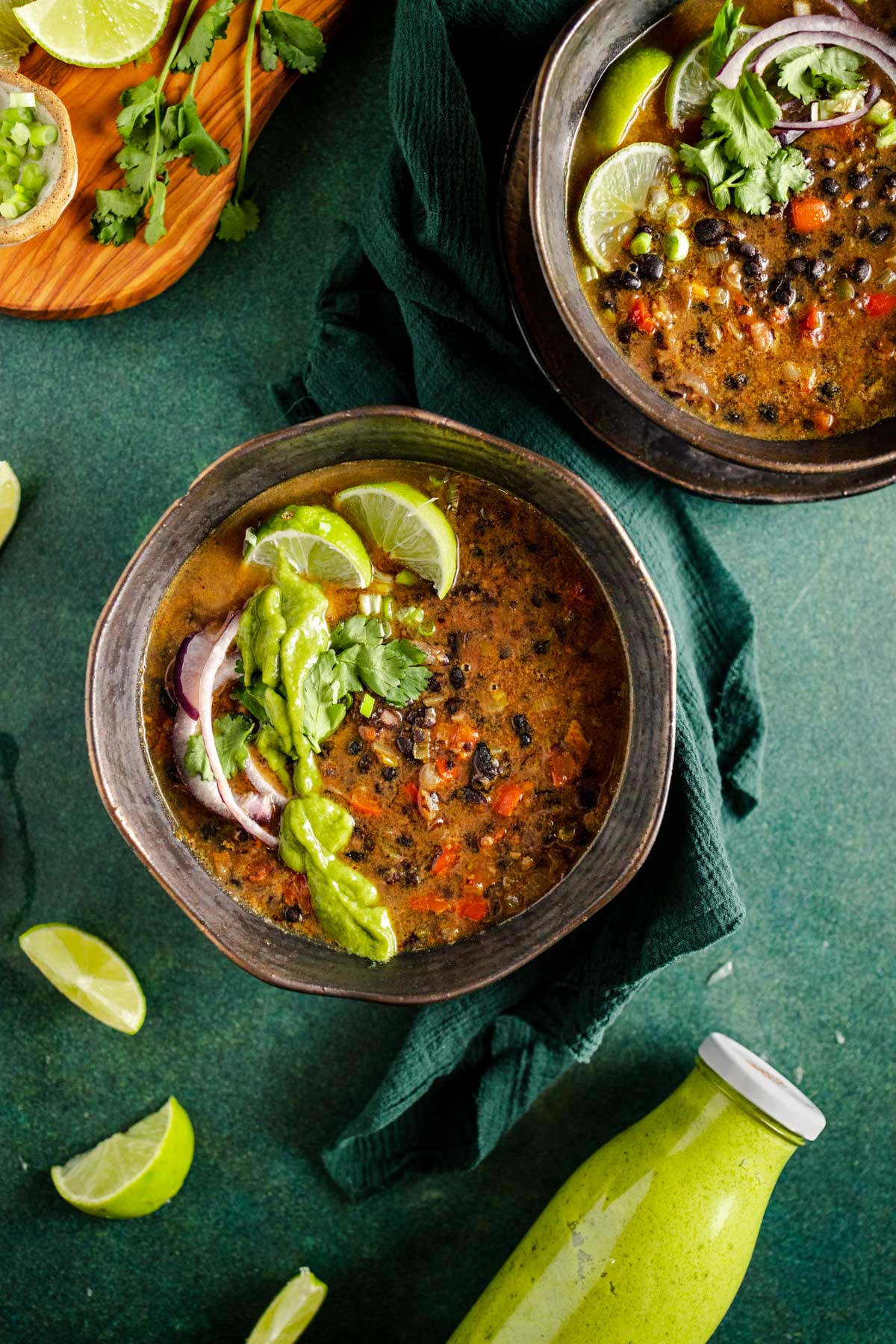
Spring nights can still be chilly enough to want something warm in a bowl, and this black bean soup hits that spot without feeling heavy. It's made entirely from pantry staples — canned black beans, onion, garlic, cumin, smoked paprika — and the whole thing is done in under 30 minutes. I blend half of it to get that thick, creamy texture while leaving some whole beans for body. Zainab is the bean fan in our house and she's approved this one multiple times.
Ingredients
- 2 cans (15 oz each) black beans, drained and rinsed
- 1 tablespoon olive oil
- 1 medium yellow onion, diced
- 4 garlic cloves, minced
- 1 teaspoon ground cumin
- 1 teaspoon smoked paprika
- ¼ teaspoon cayenne pepper (optional)
- 3 cups vegetable broth
- Juice of 1 lime
- Salt and pepper to taste
- Toppings: sour cream, fresh cilantro, sliced jalapeño, lime wedges
Instructions
- Heat olive oil in a large pot over medium heat. Add onion and cook for 5 minutes until softened and translucent. Add garlic and cook another minute.
- Stir in cumin, smoked paprika, and cayenne. Toast the spices for 30 seconds — this step makes a noticeable difference in depth of flavor.
- Add black beans and vegetable broth. Bring to a simmer and cook for 15 minutes.
- Use an immersion blender to partially blend the soup — blend about half and leave the rest chunky. If you don't have an immersion blender, carefully transfer half to a regular blender, blend, and stir it back in.
- Stir in lime juice and season with salt and pepper. Serve hot with your choice of toppings.
Tips
- Tip: This soup thickens as it sits, so if you're reheating leftovers the next day, add a splash of broth or water to loosen it back up.
- Tip: A spoonful of sour cream or plain Greek yogurt swirled on top right before serving cuts through the earthiness of the beans and makes the whole bowl feel more balanced.
- Tip: Make a double batch — this freezes really well in individual portions, and having it ready on a cold spring evening when you don't feel like cooking is genuinely useful.
13. Ricotta Lemon Pasta
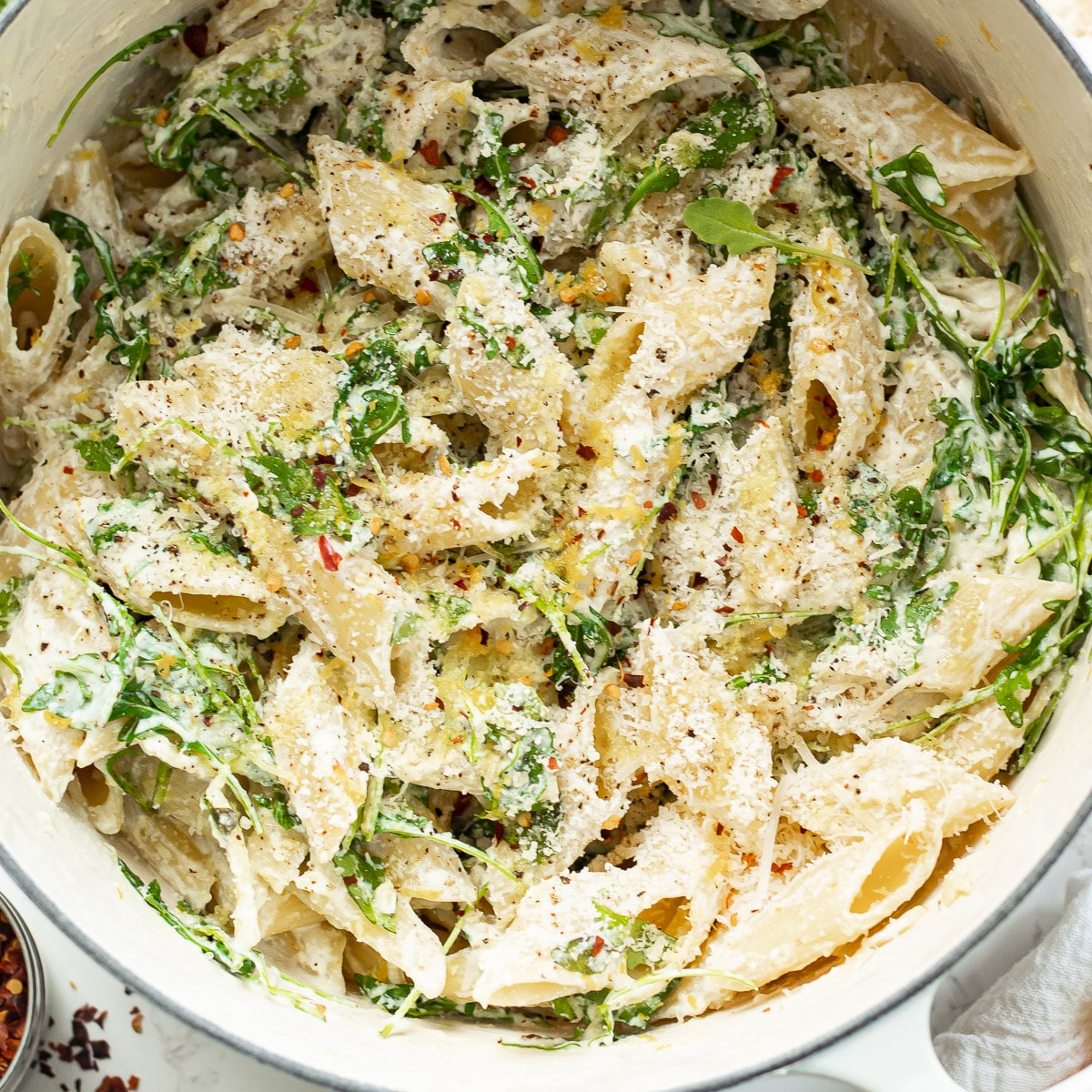
This is one of those pastas that sounds too simple to be worth making until you actually make it and realize it's brilliant. Ricotta stirred into hot pasta with lemon zest, lemon juice, a little pasta water, and parmesan creates a sauce that's creamy without being heavy — which is exactly what I want in spring. It takes less time than boiling the pasta itself. I've made this on evenings when I had nothing planned and it felt like a real dinner, not a last-minute scramble.
Ingredients
- 12 oz spaghetti or linguine
- 1 cup whole-milk ricotta
- Zest of 2 lemons
- 3 tablespoons fresh lemon juice
- ½ cup grated parmesan, plus more for serving
- 2 tablespoons olive oil
- 2 garlic cloves, minced
- ½ cup reserved pasta water
- Salt and black pepper to taste
- Fresh basil or parsley, for garnish
Instructions
- Cook pasta in heavily salted boiling water until al dente. Reserve at least ½ cup of pasta water before draining.
- While pasta cooks, warm olive oil in a large skillet over medium-low heat. Add garlic and cook gently for 1-2 minutes — don't let it brown.
- In a bowl, mix ricotta with lemon zest, lemon juice, and parmesan. Stir until smooth. Season with salt and pepper.
- Add drained pasta to the skillet with the garlic oil. Remove from heat and add the ricotta mixture, tossing quickly. Add pasta water a few tablespoons at a time until you get a loose, creamy sauce that coats every strand.
- Serve immediately topped with extra parmesan, fresh herbs, and another crack of black pepper.
Tips
- Tip: Take the skillet off the heat before adding the ricotta mixture — residual heat is enough to warm it through, and high heat can make the ricotta grainy instead of silky.
- Tip: Whole-milk ricotta gives the creamiest result — part-skim works but the sauce will be a little thinner. Worth the small extra cost for a dish this simple.
- Tip: Stir in a handful of wilted spinach or some sautéed cherry tomatoes at the end if you want to turn this into a more complete one-bowl dinner.
9. Mediterranean Arugula Quinoa Salad

Growing up in Pakistan, salads were not dinner — they were something you ate alongside dinner, mostly as an afterthought. But this Mediterranean quinoa salad genuinely changed my mind about salad as a main course. Peppery arugula, fluffy quinoa, cucumber, olives, cherry tomatoes, and feta in a simple lemon-oregano vinaigrette — it's filling enough to stand alone and light enough to feel right for spring. I make a big bowl of this on Sunday and it holds up well in the fridge for two days of lunches too.
Ingredients
- 1 cup quinoa, rinsed
- 2 cups water or vegetable broth (for cooking quinoa)
- 3 cups baby arugula
- 1 cup cherry tomatoes, halved
- 1 English cucumber, diced
- ⅓ cup Kalamata olives, halved
- ½ cup crumbled feta cheese
- 3 tablespoons extra virgin olive oil
- 2 tablespoons fresh lemon juice
- 1 teaspoon dried oregano
- Salt and black pepper to taste
Instructions
- Cook quinoa: combine rinsed quinoa and water (or broth) in a saucepan. Bring to a boil, reduce heat to low, cover, and cook for 15 minutes. Remove from heat and let it sit covered for 5 minutes, then fluff with a fork. Let it cool to room temperature.
- Make the dressing: whisk together olive oil, lemon juice, oregano, salt, and pepper in a small bowl or shake in a jar.
- In a large bowl, combine cooled quinoa, arugula, cherry tomatoes, cucumber, and olives. Pour dressing over and toss gently to coat everything.
- Top with crumbled feta and serve. If making ahead, keep the dressing and arugula separate and toss just before serving so nothing gets soggy.
Tips
- Tip: Cooking quinoa in vegetable broth instead of plain water adds a quiet depth of flavor that makes the whole salad taste more put-together with zero extra effort.
- Tip: Add grilled chicken or chickpeas on top if you want more protein — both work well with these flavors and turn this into a heartier dinner plate.
- Tip: If arugula is too sharp for your taste, use baby spinach or a mix of both — the salad still holds up and the dressing ties everything together either way.
8. Spring Spaghetti Aglio Olio e Peperoncino with Blistered Tomatoes

Aglio olio is one of those pasta dishes I always come back to when I want something that feels effortless but still looks like you put in real effort. The base is just garlic, olive oil, and red chili flakes — but adding blistered cherry tomatoes in spring transforms it completely. The tomatoes get jammy and slightly sweet in a hot pan, and that sweetness cuts right through the heat of the peperoncino. It's a 20-minute dinner that genuinely doesn't need anything else.
Ingredients
- 12 oz spaghetti
- ⅓ cup good olive oil
- 6 cloves garlic, thinly sliced
- 1 teaspoon red chili flakes (adjust to taste)
- 1½ cups cherry tomatoes
- ½ cup pasta water, reserved
- Salt and black pepper to taste
- Handful of fresh parsley, roughly chopped
- Grated Parmesan or Pecorino, to serve (optional)
Instructions
- Cook spaghetti in heavily salted boiling water until al dente. Before draining, scoop out ½ cup of pasta water and set aside.
- In a large skillet over medium-high heat, add 1 tablespoon of the olive oil and toss in the cherry tomatoes. Let them sit undisturbed for 2-3 minutes until they blister and start to burst. Season with salt and set aside.
- Reduce heat to medium-low, add the remaining olive oil and the sliced garlic. Cook gently for about 2 minutes — you want the garlic golden and fragrant, not brown. Add the chili flakes and stir for 30 seconds.
- Add the drained pasta to the skillet along with a splash of pasta water. Toss everything together, adding more pasta water a little at a time until the sauce coats the noodles loosely.
- Fold in the blistered tomatoes and most of the parsley. Taste for salt. Serve immediately with remaining parsley on top and cheese if using.
Tips
- Tip: Don't rush the garlic — low and slow is the difference between sweet golden garlic and bitter burnt garlic. Keep the heat gentle.
- Tip: The pasta water is not optional here. The starch in it is what makes the oil and water emulsify into a light sauce that clings to the noodles.
- Tip: Blister the tomatoes in a separate step so they hold their shape and don't disappear into the oil — you want pockets of sweet, jammy tomato in every bite.
7. Minty Pea Soup

I wasn't sure about a cold-weather soup showing up on a spring dinner list until I made this one. Minty pea soup is genuinely a spring thing — the color alone looks like April, and the fresh mint keeps it tasting light rather than heavy and starchy. It comes together fast, works warm or at room temperature, and is one of those soups that actually gets better with a drizzle of good olive oil and some crusty bread on the side. My husband had two bowls the first time I made it, which is his version of a compliment.
Ingredients
- 1 tablespoon olive oil
- 1 medium onion, diced
- 2 cloves garlic, minced
- 4 cups frozen peas (no need to thaw)
- 3 cups vegetable broth (low sodium)
- ¼ cup fresh mint leaves, packed
- 2 tablespoons lemon juice
- Salt and black pepper to taste
- Plain yogurt or sour cream, to serve (optional)
Instructions
- Warm the olive oil in a medium pot over medium heat. Add the onion and cook for 4-5 minutes until softened but not browned. Add garlic and cook for 1 more minute.
- Add the frozen peas and vegetable broth. Bring to a gentle boil, then reduce heat and simmer for 5 minutes — just enough to heat the peas through without losing their bright green color.
- Remove from heat. Add the fresh mint leaves and lemon juice. Use an immersion blender to blend until completely smooth. If using a regular blender, work in batches and leave the lid slightly ajar to vent steam.
- Taste for seasoning — it usually needs a generous pinch of salt and a bit more lemon. Serve warm with a swirl of yogurt or sour cream if you like.
Tips
- Tip: Don't overcook the peas. The moment they're heated through, pull the pot off the heat — the vibrant green color is everything with this soup.
- Tip: Frozen peas actually work better than fresh here — they're picked and frozen at peak sweetness, which makes the soup taste brighter.
- Tip: This soup keeps well in the fridge for 3 days. It thickens as it sits — just stir in a splash of broth when reheating to loosen it up.
6. Pesto Tortellini with Asparagus and Peas

Cheese tortellini with pesto is already a crowd-pleaser in my house, but tossing in asparagus and peas makes it feel specifically spring — not just a pasta you'd eat any time of year. The asparagus gets a quick blanch so it stays tender-crisp, the peas add sweetness, and the pesto pulls it all together in under 20 minutes. Zainab asks for this regularly, usually because she can pick out all the peas and leave them on the side of her plate, but at least she eats the rest of it.
Ingredients
- 20 oz refrigerated cheese tortellini (found at Costco or Trader Joe's)
- 1 bunch asparagus, woody ends trimmed, cut into 1-inch pieces
- 1 cup frozen peas
- ⅓ cup prepared basil pesto (store-bought is fine)
- 2 tablespoons olive oil
- 2 cloves garlic, minced
- ¼ cup pasta water, reserved
- Salt and black pepper to taste
- Grated Parmesan and lemon zest, to finish
Instructions
- Cook tortellini according to package directions in salted boiling water. In the last 2 minutes of cooking, add the asparagus pieces and frozen peas directly to the pot. Reserve ¼ cup pasta water before draining.
- In a large skillet over medium heat, warm the olive oil and sauté the garlic for about 1 minute until fragrant.
- Add the drained tortellini, asparagus, and peas to the skillet. Spoon in the pesto and toss gently, adding pasta water a splash at a time to loosen the sauce so it coats everything evenly.
- Taste for seasoning. Plate and finish with freshly grated Parmesan and a little lemon zest — the zest really brightens the whole dish.
Tips
- Tip: Cooking the asparagus and peas directly in the pasta water for the last couple of minutes saves a pot and keeps things simple — they cook perfectly in that short time.
- Tip: Don't add the pesto over high heat — it can turn dark and slightly bitter. Keep the pan on medium or lower when you toss everything together.
- Tip: Add a handful of halved cherry tomatoes when serving for extra color and a bit of acidity that balances the richness of the pesto and cheese.
5. Vegan Lo Mein with Crispy Tofu
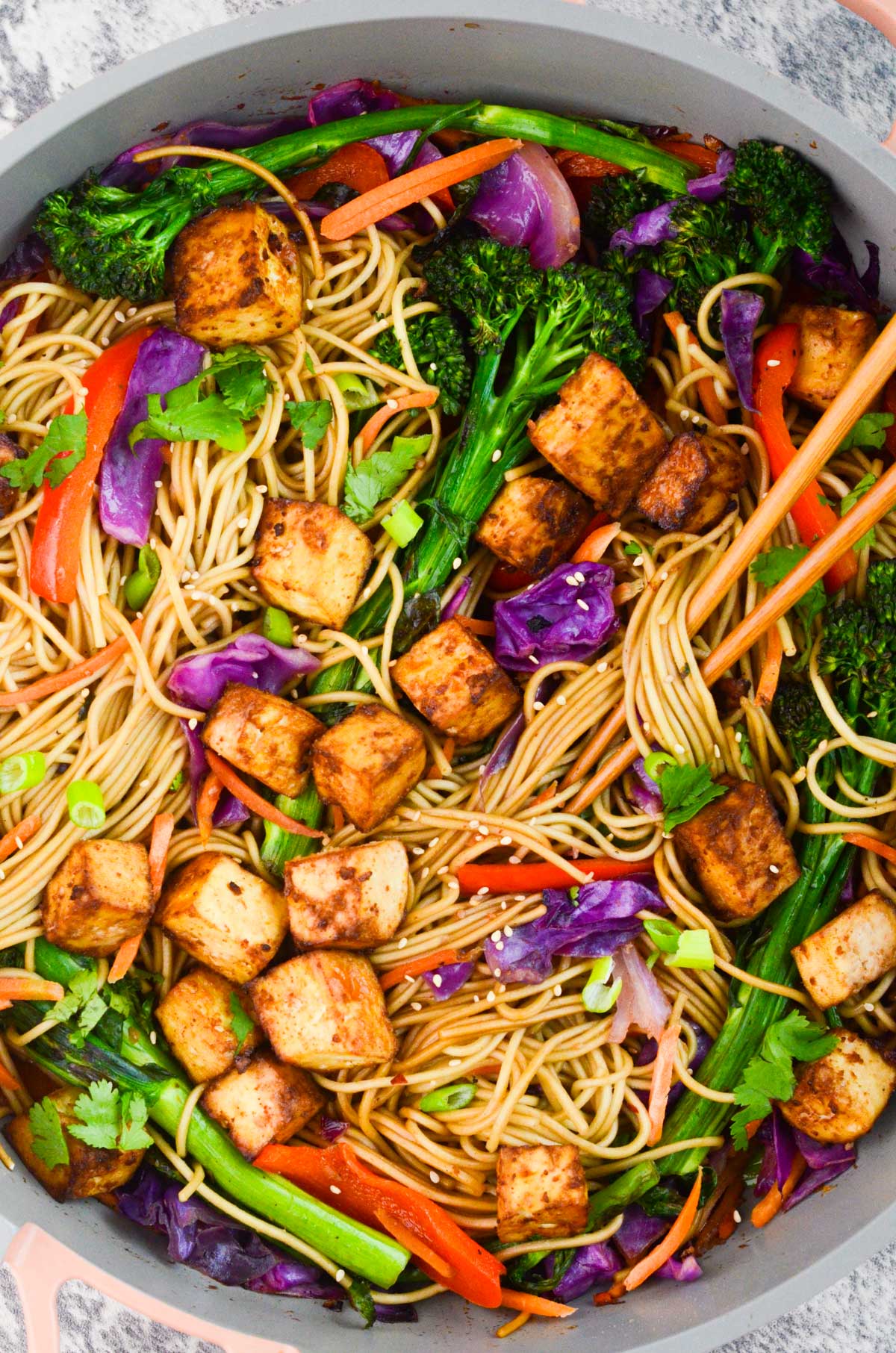
I make lo mein more than I probably admit because it's one of those dinners that comes together in the time it takes to boil noodles. This vegan version with crispy tofu works especially well in spring when I want something satisfying but not heavy — the tofu gets properly golden when you press it well and don't crowd the pan, and the sauce is that familiar lo mein balance of soy, sesame, and a little sweetness. Load it with whatever vegetables you have: snap peas, shredded carrots, bell peppers, or spinach all work.
Ingredients
- 14 oz firm tofu, pressed and cut into 1-inch cubes
- 8 oz lo mein noodles (or spaghetti as a substitute)
- 2 tablespoons vegetable oil, divided
- 3 cloves garlic, minced
- 1 teaspoon fresh ginger, grated
- 2 cups snap peas or shredded cabbage
- 1 large carrot, julienned
- 3 tablespoons soy sauce (or tamari for gluten-free)
- 1 tablespoon sesame oil
- 1 tablespoon hoisin sauce
- 1 teaspoon sriracha (optional)
- Sesame seeds and sliced green onions, to serve
Instructions
- Cook noodles according to package directions, drain, and toss with a tiny drizzle of sesame oil to prevent sticking. Set aside. Mix the soy sauce, hoisin, sesame oil, and sriracha in a small bowl.
- Heat 1 tablespoon of vegetable oil in a large skillet or wok over medium-high heat. Add the tofu in a single layer — don't touch it for 3-4 minutes. Flip and cook the other sides until golden all over. Remove from pan and set aside.
- In the same pan, add the remaining oil. Sauté garlic and ginger for 30 seconds, then add the carrots and snap peas. Stir-fry on high heat for 2-3 minutes until just tender but still with a bite.
- Add the cooked noodles to the pan, pour the sauce over everything, and toss to coat. Return the crispy tofu and fold in gently. Taste and adjust — more soy if it needs salt, more hoisin if you want it sweeter.
- Serve immediately topped with sesame seeds and sliced green onions.
Tips
- Tip: Pressing the tofu is non-negotiable for crispiness — wrap it in a clean kitchen towel, set something heavy on top, and leave it for at least 20 minutes before cooking.
- Tip: Cook on high heat for the stir-fry portion. A hot pan is what keeps vegetables crisp-tender instead of soggy and steamed.
- Tip: If lo mein noodles aren't available at your grocery store, regular spaghetti cooked to al dente works perfectly — I've used it plenty of times without any complaints.
4. 20 Minute Chickpea Curry
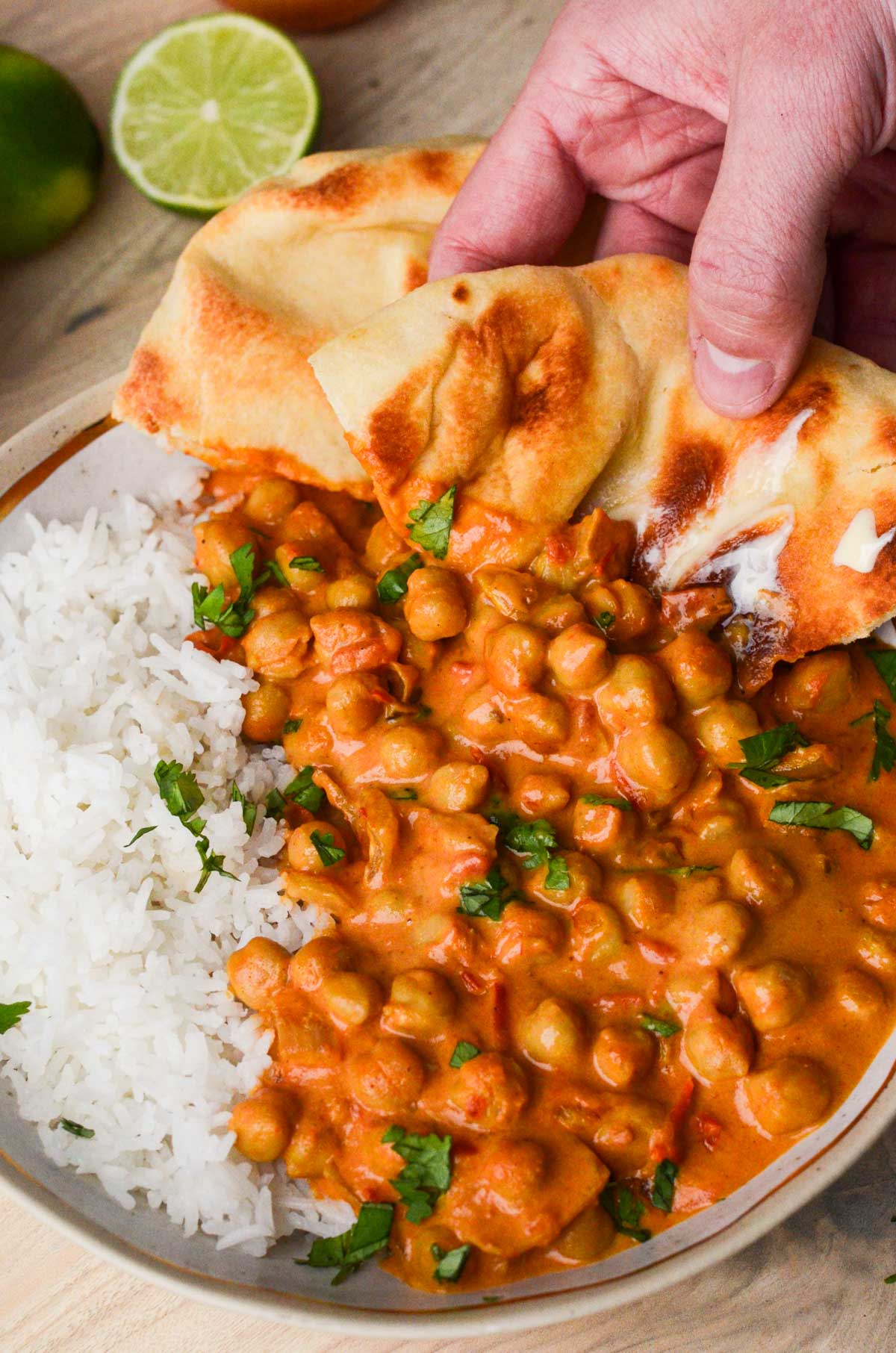
I'll be honest — chickpea curry is basically a weekly staple in my kitchen regardless of season, but the lighter, coconut-milk based version I make in spring feels different from the heavier, tomato-forward ones I lean toward in winter. This one comes together in 20 minutes flat using pantry ingredients: canned chickpeas, coconut milk, and a handful of spices. It's the recipe I reach for when I haven't planned dinner and the fridge is looking sad. Serve it over rice or scoop it up with flatbread — both work.
Ingredients
- 1 tablespoon coconut oil or vegetable oil
- 1 medium onion, finely diced
- 3 cloves garlic, minced
- 1 teaspoon fresh ginger, grated
- 1½ teaspoons ground cumin
- 1½ teaspoons ground coriander
- 1 teaspoon turmeric
- ½ teaspoon cayenne pepper (adjust to taste)
- 1 can (14 oz) diced tomatoes
- 2 cans (15 oz each) chickpeas, drained and rinsed
- 1 can (13.5 oz) full-fat coconut milk
- Salt to taste
- Fresh cilantro and lemon juice, to serve
Instructions
- Heat oil in a large skillet or pot over medium heat. Add the onion and cook for 4-5 minutes until soft and translucent. Add garlic and ginger and stir for 1 minute.
- Add cumin, coriander, turmeric, and cayenne. Stir the spices into the onion mixture for about 60 seconds — this blooms the spices and deepens the flavor significantly.
- Pour in the diced tomatoes and stir to combine. Let it cook for 2-3 minutes until the tomatoes break down slightly and the mixture looks jammy.
- Add the chickpeas and coconut milk. Stir everything together and bring to a gentle simmer. Cook uncovered for 8-10 minutes, stirring occasionally, until the sauce thickens slightly.
- Taste for salt. Finish with a squeeze of lemon juice and plenty of fresh cilantro. Serve with rice or flatbread.
Tips
- Tip: Don't skip blooming the spices — that 60-second step of cooking the dry spices in the oil with the onion before adding anything wet is what separates a flat-tasting curry from one with real depth.
- Tip: Use full-fat coconut milk for the best texture. Light coconut milk makes the sauce thinner and less satisfying — it's worth the extra calories here.
- Tip: This curry freezes beautifully. I make a double batch whenever I have time and freeze half in portions — it reheats on the stove in about 10 minutes straight from frozen.
25. Bright Spring Mix Salad

This is one of those salads that looks like you put in more effort than you actually did. A handful of spring mix, some sliced strawberries, candied pecans, and a quick homemade lemon vinaigrette — done in about ten minutes flat. I make a double batch of the dressing because it disappears fast, and it keeps well in the fridge for the week. It's bright, it's fresh, and it works equally well as a side alongside grilled chicken or as a light standalone dinner when it's warm outside and nobody wants anything heavy.
Ingredients
- 5 oz spring mix salad greens
- 1 cup fresh strawberries, sliced
- ½ cup cucumber, thinly sliced
- ¼ cup candied pecans (or walnuts)
- ¼ cup crumbled feta cheese (skip for dairy-free)
- 3 tablespoons olive oil
- 2 tablespoons fresh lemon juice
- 1 teaspoon honey
- ½ teaspoon Dijon mustard
- Salt and black pepper to taste
Instructions
- In a small jar or bowl, whisk together the olive oil, lemon juice, honey, Dijon mustard, salt, and pepper until well combined. Taste and adjust seasoning.
- Add the spring mix to a large salad bowl. Top with sliced strawberries, cucumber, candied pecans, and crumbled feta.
- Drizzle the lemon vinaigrette over the salad just before serving and toss gently to coat. Serve immediately.
Tips
- Tip: Don't dress the salad until right before serving — spring mix wilts quickly once it hits the vinaigrette.
- Tip: Store the dressing separately in the fridge for up to 5 days. Give it a good shake before using.
- Tip: Add grilled chicken or chickpeas on top to turn this into a complete dinner.
26. Herb Butter Roasted Artichokes

Artichokes used to intimidate me — I genuinely didn't know what to do with them the first time I picked one up at the store. Turns out, roasting them with herb butter is one of the most forgiving things you can do. You halve them, rub them with a mix of softened butter, garlic, lemon, and fresh herbs, then roast until the edges get caramelized and the leaves pull off easily. They feel fancy enough for a spring dinner party but the actual work is minimal. Serve them with a simple yogurt dipping sauce and people act like you've done something extraordinary.
Ingredients
- 2 large artichokes
- 4 tablespoons unsalted butter, softened (or olive oil for dairy-free)
- 3 cloves garlic, minced
- 2 tablespoons fresh parsley, finely chopped
- 1 tablespoon fresh thyme leaves
- 2 tablespoons fresh lemon juice, plus lemon halves for roasting
- ½ teaspoon salt
- ¼ teaspoon black pepper
- ½ cup plain Greek yogurt (for dipping)
- 1 teaspoon lemon zest (for dipping sauce)
Instructions
- Preheat your oven to 400°F. Trim the artichokes: cut off the top inch, snap off the tough outer leaves, and halve them lengthwise. Use a spoon to scoop out the fuzzy choke from the center.
- Mix the softened butter with garlic, parsley, thyme, lemon juice, salt, and pepper. Rub the herb butter generously over the cut sides of each artichoke half, working it in between the leaves as much as you can.
- Place the artichokes cut-side down on a baking sheet. Tuck the lemon halves alongside them. Cover tightly with foil and roast for 25 minutes.
- Remove the foil, flip the artichokes cut-side up, and roast uncovered for another 15-20 minutes until the edges are golden and caramelized.
- While they roast, stir together the Greek yogurt and lemon zest for the dipping sauce. Serve the artichokes warm alongside the sauce.
Tips
- Tip: Rub the cut sides of the artichoke with a lemon half immediately after cutting — they brown fast once exposed to air.
- Tip: The foil-covered first phase steams them through so the inside is tender before the outside caramelizes. Don't skip it.
- Tip: Swap the dipping sauce for garlic aioli or a simple lemon-olive oil drizzle if you prefer something richer.
27. Easy Crustless Spinach Quiche (Gluten-Free, Dairy-Free)
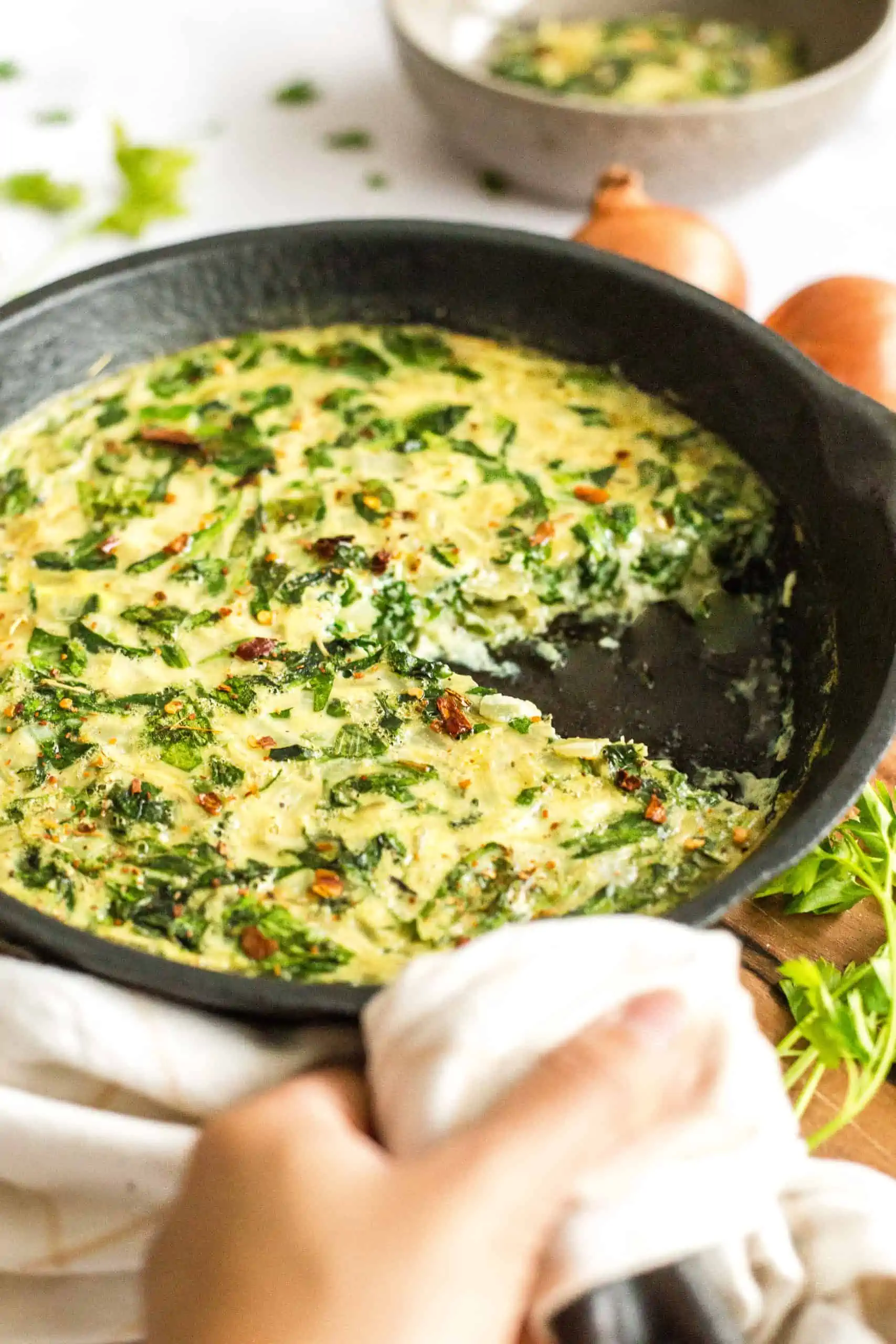
This one rounds out the list perfectly because it works for so many different situations — weeknight dinner, Sunday brunch, meal prep for the week, feeding someone with dietary restrictions. No crust means no pastry stress, and skipping the dairy doesn't mean skipping the richness. You get a custardy, savory egg base loaded with wilted spinach, sautéed onions, and garlic, and it holds together beautifully when sliced. Zainab actually requested this two weeks in a row, which tells you everything. It reheats well the next day too, which is a bonus I didn't expect.
Ingredients
- 6 large eggs
- 1 cup unsweetened almond milk (or any non-dairy milk)
- 10 oz frozen spinach, thawed and squeezed very dry
- 1 medium onion, finely diced
- 3 cloves garlic, minced
- 1 tablespoon olive oil
- ½ teaspoon salt
- ¼ teaspoon black pepper
- ¼ teaspoon nutmeg
- ¼ teaspoon red pepper flakes (optional)
- Cooking spray or olive oil for greasing the pan
Instructions
- Preheat your oven to 375°F. Grease a 9-inch pie dish or oven-safe skillet well with cooking spray or olive oil.
- Heat olive oil in a skillet over medium heat. Add the diced onion and cook for 5-6 minutes until soft and translucent. Add the garlic and cook for 1 more minute. Remove from heat and let cool slightly.
- Make sure your thawed spinach is squeezed as dry as possible — wrap it in a clean kitchen towel and wring hard. Excess moisture will make the quiche watery.
- In a large bowl, whisk together the eggs and almond milk until smooth. Stir in the salt, pepper, nutmeg, and red pepper flakes. Fold in the spinach and the sautéed onion and garlic mixture.
- Pour the egg mixture into the prepared pie dish. Bake for 35-40 minutes, until the center is just set and the top is lightly golden. A toothpick inserted in the center should come out clean. Let it rest for 10 minutes before slicing.
Tips
- Tip: Squeezing the spinach really, truly dry is the most important step here — I cannot stress this enough. If there's extra moisture, your quiche won't set properly.
- Tip: This keeps covered in the fridge for up to 4 days and reheats well in a 300°F oven for about 10 minutes, or a quick 60 seconds in the microwave.
- Tip: Add sun-dried tomatoes, roasted red peppers, or dairy-free cheese if you want to change it up — the base egg mixture handles additions well.
Twenty-eight recipes later and I still can't pick a favorite. That's the thing about spring cooking — everything feels lighter, brighter, easier to pull together on a weeknight without feeling like you're cutting corners. Whether you're leaning toward something lemony and fresh or just want a quick stir-fry that comes together in under 30 minutes, this list has a starting point for every kind of evening.
My husband gravitates toward the heartier options on this list — anything with chicken or a good sauce. Saad and Zainab want pasta or tacos, always. So spring dinners in our house end up being this mix of "technically seasonal" and "whatever gets everyone to the table without complaints." I make a double batch of anything I know will disappear, and at least half these recipes are that kind.
If you're stuck in a dinner rut as the weather warms up, bookmark a few of these and try one this week. Start wherever your fridge is right now — odds are you're closer to one of these meals than you think. For more meal inspiration year-round, check out some related posts below. 🌿🍋✨
More Dinner Inspiration on Forfoodiefriends.com
- Easy Weeknight Chicken Dinners — quick, reliable chicken recipes for when you need dinner on the table fast
- One Pan Dinner Recipes — fewer dishes, same great meal, perfect for busy spring evenings
- Healthy Dinner Recipes — lighter meals that actually taste like something you'd want to eat
- Pasta Dinner Recipes — weeknight pasta ideas from creamy to tomato-based, all tested in my kitchen
- Browse All Recipe Roundups — if you want to keep exploring, the full roundup archive is here
Frequently Asked Questions
What makes a good spring dinner recipe?
For me it comes down to three things: it should feel lighter than a heavy winter braise, it should come together in a reasonable amount of time on a weeknight, and it should use produce that's actually good right now — think asparagus, peas, lemon, fresh herbs. That doesn't mean it has to be a salad. A bright lemony pasta or a quick stir-fry counts just as much as a bowl of greens.
Can I make any of these spring dinners ahead of time?
Most of the protein-based dishes — anything with chicken, shrimp, or beans — hold up well if you prep the components ahead and assemble closer to dinner. Marinated proteins can sit in the fridge overnight, and grain-based dishes like rice or quinoa keep well for 3-4 days. I'd avoid prepping anything with fresh herbs or avocado too far ahead — those go downhill fast.
Which of these recipes is easiest for a beginner cook?
Honestly, any of the one-pan or stir-fry options are the most forgiving. You're not baking anything, so there's no precision required — if something looks done, it probably is. Sheet pan dinners are my personal recommendation for beginners because you can prep everything, slide it in the oven, and walk away. The timing is flexible and cleanup is easy.
How do I make these recipes work for picky eaters?
I live this question daily with two kids who have strong opinions. My approach: keep sauces and toppings on the side whenever possible, and build the base of the dish from something everyone already likes. Most of these recipes have a simple protein-plus-starch foundation that's easy to customize — pile on the vegetables for adults, keep it plain for the pickier eaters at the table.
Can I substitute seasonal vegetables if I can't find what's listed?
Almost always, yes. Spring vegetables are fairly interchangeable in most of these dishes — if you can't find asparagus, broccolini or green beans work in the same cooking time. Snap peas swap easily for frozen peas. Fresh spinach wilts in where zucchini doesn't quite fit. Don't let an unavailable ingredient stop you from making a recipe — most substitutions work better than skipping the dish entirely.
Share This Post!
If this list helped you figure out dinner for the week, pin it or share it with someone who's also staring into their fridge wondering what to make. 🌿📌
View More Recipes here Recipe Roundups



Comments
No Comments