
Easter in our house means I'm usually juggling three things at once: a ham that needs basting, kids asking if they can eat their chocolate eggs before noon, and a table that somehow has to look like I planned it weeks in advance. The Easter side dishes are where I actually get to have fun. The main protein almost takes care of itself — it's the sides that make the table feel full, bright, and worth all the fuss. Over the years I've figured out which ones are actually worth the effort and which ones just look pretty in photos but fall flat on the plate.
A good Easter side dish should do a few things: it should hold its own next to a rich, savory main, it should be manageable enough that you're not still in the kitchen when everyone else sits down, and it should feel like spring — bright flavors, fresh vegetables, nothing too heavy. I leaned hard into roasted vegetables, crisp salads, and a few potato dishes that I know from experience will get scraped clean. If you're already planning your Easter menu, you might also want to check out my recipe roundups for more seasonal ideas.
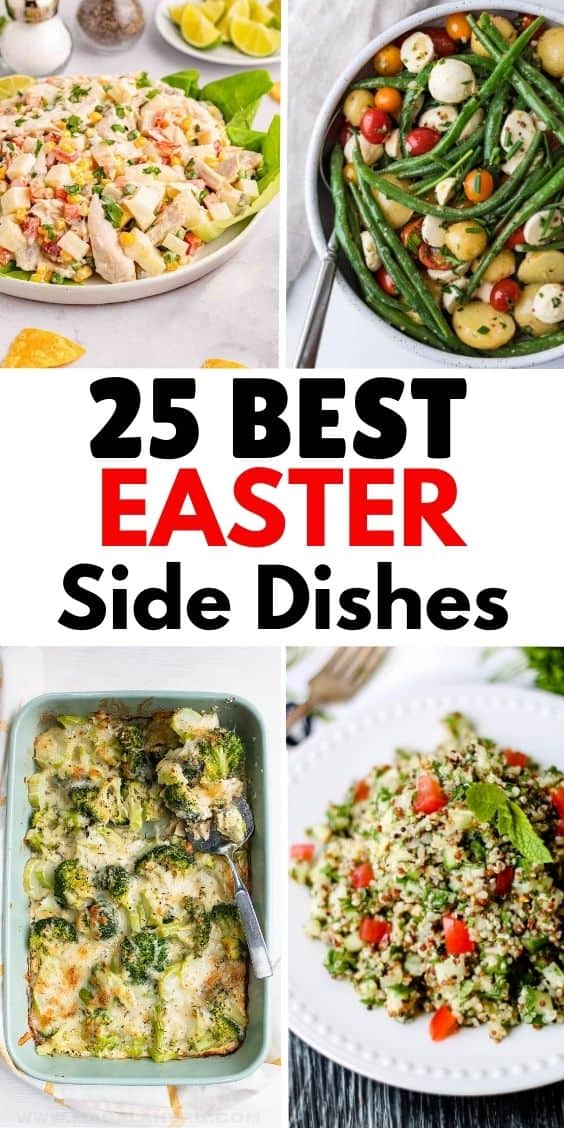
This list has something for every kind of table. There are crowd-pleasers like Cheesy Scalloped Potatoes and Crispy Parmesan Oven Roasted Potato Wedges, lighter options like Lemon Arugula Salad with Parmesan and Quinoa Tabbouleh Salad, and a few unexpected ones like Prosciutto Wrapped Asparagus and Brabant Potatoes that always get people asking for the recipe. There's also a good mix of make-ahead options and last-minute dishes that come together in under 30 minutes — because Easter Sunday is already a lot without a complicated side dish adding to it. If you're thinking about the full spread, my post on easy spring salads and vegetable dishes might also be useful alongside this one.
Here are the 25 Easter side dishes I keep coming back to — pick two or three that fit your menu and you'll be in good shape.
25. Lemon Arugula Salad with Parmesan Cheese
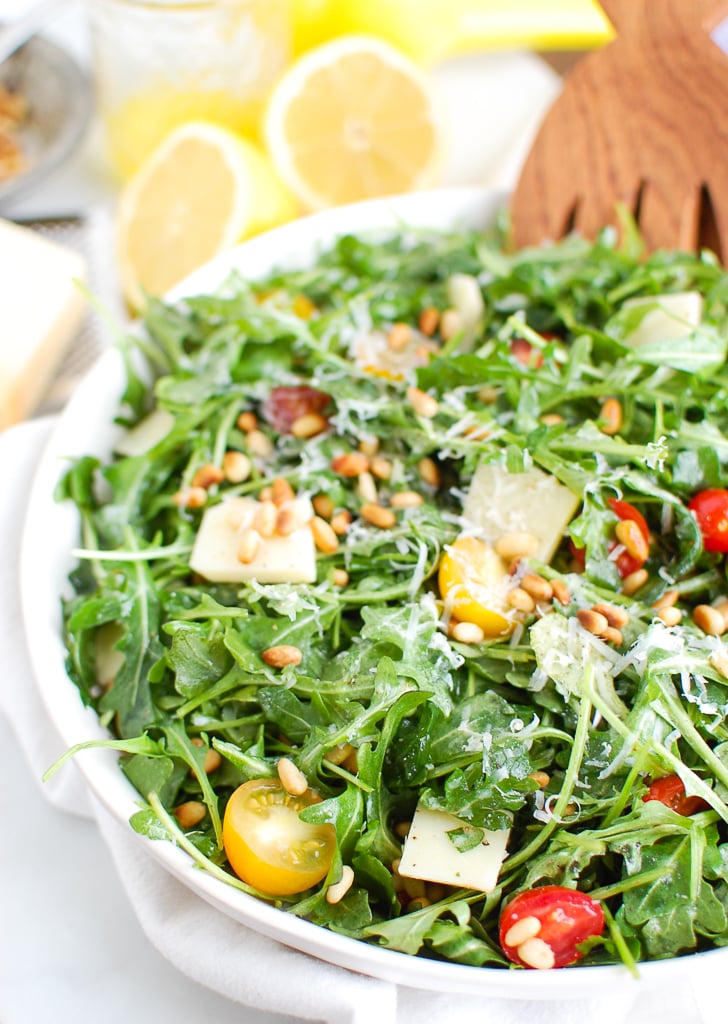
This salad looks like it belongs on a restaurant table, but it takes maybe ten minutes to put together. Peppery arugula, shaved Parmesan, a sharp lemon dressing, and pine nuts for crunch — it's one of those sides that feels fancy without asking much of you. I started making it when I needed something green on the Easter table that wasn't just a bowl of lettuce, and it's been on the menu every spring since. The lemon dressing is the thing — don't skip it or water it down.
Ingredients
- 5 oz fresh arugula (about 4-5 packed cups)
- ⅓ cup shaved or coarsely grated Parmesan
- ¼ cup pine nuts, lightly toasted
- 3 tablespoons fresh lemon juice (about 1 large lemon)
- 3 tablespoons extra virgin olive oil
- 1 teaspoon lemon zest
- ½ teaspoon Dijon mustard
- Salt and black pepper to taste
Instructions
- Toast the pine nuts in a dry skillet over medium heat for 2-3 minutes, stirring constantly, until golden. Watch them closely — they go from toasted to burnt fast. Set aside to cool.
- Whisk together the lemon juice, lemon zest, olive oil, and Dijon mustard in a small bowl. Season with salt and pepper.
- Place the arugula in a large salad bowl. Drizzle the dressing over the top and toss gently to coat.
- Top with shaved Parmesan and toasted pine nuts. Serve immediately — arugula wilts quickly once dressed.
Tips
- Tip: Use a vegetable peeler to shave the Parmesan into thin ribbons — it looks much nicer than crumbled cheese and the texture is better in every bite.
- Tip: If pine nuts aren't available or feel too pricey, slivered almonds toasted the same way work just fine.
- Tip: Dress this right before serving, not ahead of time — the arugula loses its bite and goes limp if it sits in dressing too long.
24. Mexican Chicken Salad
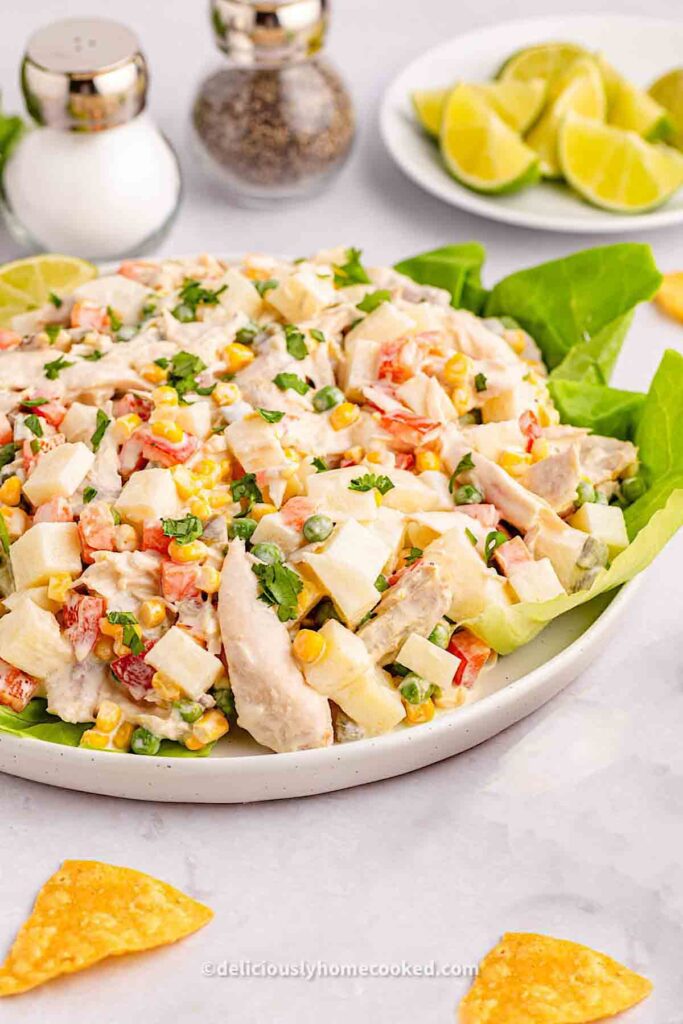
I know Mexican chicken salad sounds like an odd pick for Easter, but hear me out — when you've got a table full of heavy sides like mashed potatoes and casseroles, something with this much brightness and crunch is exactly what balances things out. Black beans, corn, shredded chicken, avocado, lime — it's filling enough to hold its own but fresh enough that it doesn't weigh you down. This isn't authentic Mexican food, it's the kind of salad that borrows those flavors and makes them work for a crowd.
Ingredients
- 2 cups cooked shredded chicken (rotisserie works great)
- 1 can (15 oz) black beans, drained and rinsed
- 1 cup corn kernels (fresh, frozen and thawed, or canned drained)
- 1 large avocado, diced
- 1 cup cherry tomatoes, halved
- ¼ cup red onion, finely diced
- ¼ cup fresh cilantro, chopped (optional — skip if your crowd isn't a fan)
- 3 tablespoons fresh lime juice
- 2 tablespoons olive oil
- 1 teaspoon cumin
- ½ teaspoon chili powder
- Salt and pepper to taste
Instructions
- In a small bowl, whisk together lime juice, olive oil, cumin, chili powder, salt, and pepper to make the dressing.
- In a large bowl, combine the shredded chicken, black beans, corn, cherry tomatoes, and red onion.
- Pour the dressing over the salad and toss everything together until well coated.
- Add the diced avocado and cilantro last, and fold in gently so the avocado doesn't get mashed up.
- Taste, adjust salt or lime, and serve at room temperature or slightly chilled.
Tips
- Tip: Add the avocado right before serving if you're making this ahead — it browns quickly once cut.
- Tip: A store-bought rotisserie chicken from Costco or Walmart makes this practically effortless on a busy holiday morning.
- Tip: For extra crunch, toss in a handful of crushed tortilla chips right before serving — Saad thinks this is mandatory, and honestly he's not wrong.
23. Caramelized Onions and Mushrooms
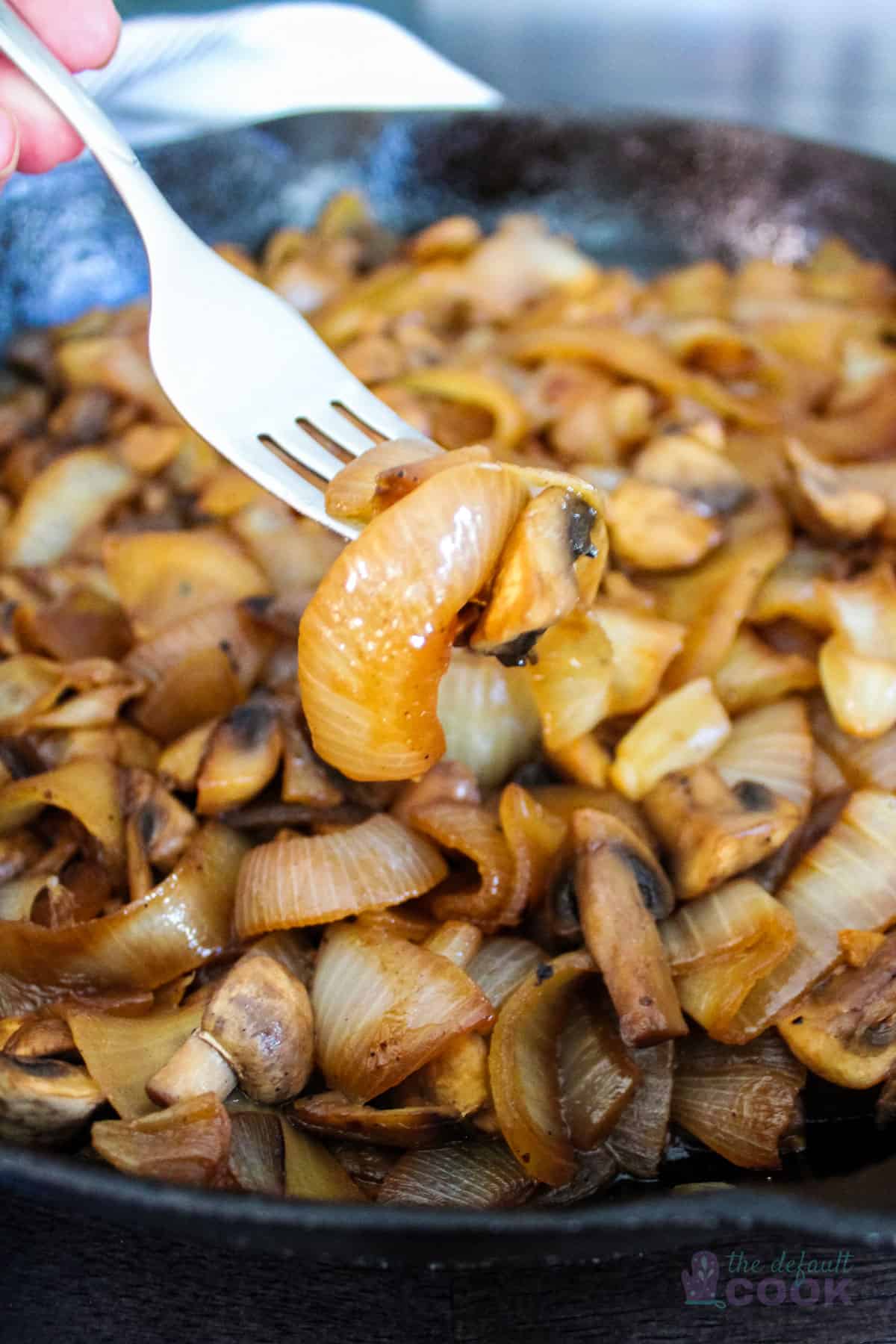
This one is deceptively simple and wildly good. Onions cooked low and slow until they're jammy and sweet, combined with earthy mushrooms that soak up all those deep savory flavors — it's the kind of side dish that disappears before the main course even hits the table. The key is patience: you cannot rush caramelized onions. The first time I tried, I cranked the heat to save time and ended up with burnt onions and a sad pan. Low heat, a good heavy skillet, and about 40 minutes is what it actually takes.
Ingredients
- 3 large yellow onions, thinly sliced
- 16 oz cremini or baby bella mushrooms, sliced
- 3 tablespoons unsalted butter
- 1 tablespoon olive oil
- 3 cloves garlic, minced
- 1 teaspoon fresh thyme leaves (or ½ teaspoon dried)
- 2 tablespoons dry white wine or vegetable broth (optional, for deglazing)
- Salt and black pepper to taste
Instructions
- Heat butter and olive oil together in a large heavy skillet over medium-low heat. Add the sliced onions and a pinch of salt. Stir to coat.
- Cook the onions on low heat, stirring every 5-7 minutes, for 35-40 minutes until deeply golden and jammy. Don't rush this step — low and slow is the whole point.
- Push the onions to the side of the pan and add the mushrooms. Cook for 5-6 minutes until they release their moisture and start to brown.
- Add the garlic and thyme, stir everything together, and cook another 2 minutes.
- If there are any browned bits on the bottom of the pan, add the wine or broth and scrape them up — that's all flavor. Season with salt and pepper and serve warm.
Tips
- Tip: Don't crowd the mushrooms or they'll steam instead of brown — if your skillet is small, cook them in two batches.
- Tip: This reheats beautifully, so you can make it a day ahead and warm it gently on the stovetop before serving.
- Tip: Serve over toasted bread, alongside grilled meat, or piled on top of mashed potatoes — it works with almost everything on an Easter table.
22. Healthy Broccoli Casserole
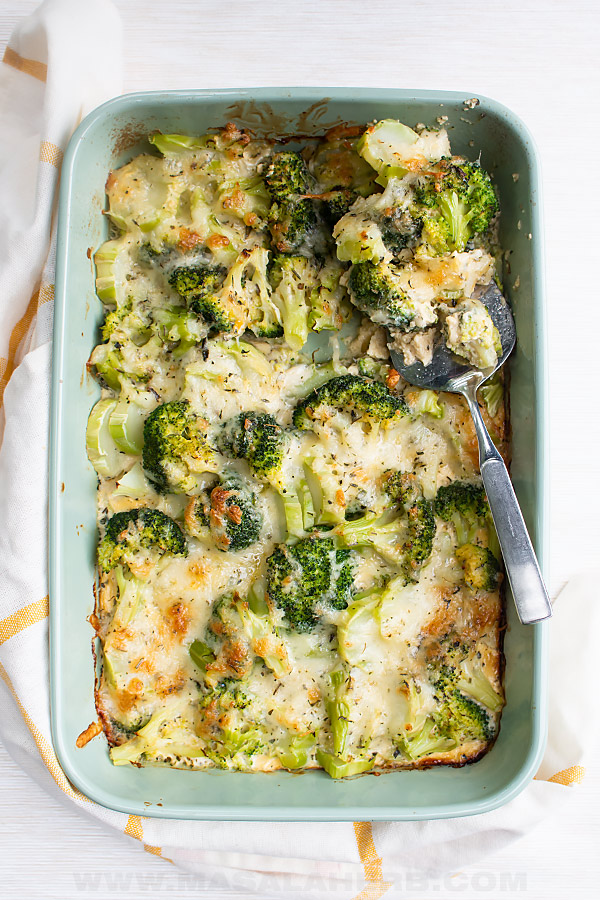
Classic broccoli casserole usually involves a can of cream of mushroom soup and a mountain of shredded cheese, which is delicious but heavy. This version gets you that same comfort-food feeling with a lighter touch — real ingredients, a proper cheese sauce, and broccoli that actually keeps some texture instead of going completely soft. It bakes up golden on top and creamy inside, and it holds its shape when you serve it, which matters when you're plating for a crowd. It earns its spot on the Easter table.
Ingredients
- 4 cups broccoli florets (about 1 large head), cut into bite-sized pieces
- 2 tablespoons butter
- 2 tablespoons all-purpose flour
- 1½ cups low-fat milk
- 1 cup shredded sharp cheddar, divided
- ½ cup plain Greek yogurt
- 2 cloves garlic, minced
- ½ teaspoon onion powder
- Salt, black pepper, and a pinch of nutmeg
- ¼ cup whole wheat breadcrumbs (for topping)
Instructions
- Preheat oven to 375°F. Lightly grease an 8x8 or 9x9 baking dish. Blanch the broccoli in boiling salted water for 2 minutes, then drain and pat dry — you want it just slightly undercooked since it will continue baking.
- In a medium saucepan, melt butter over medium heat. Add garlic and cook 30 seconds. Whisk in flour and cook 1 minute to get rid of the raw flour taste. Gradually whisk in the milk and cook, stirring, until the sauce thickens, about 4-5 minutes.
- Remove from heat and stir in ¾ cup of the cheddar, Greek yogurt, onion powder, salt, pepper, and nutmeg until smooth.
- Fold the broccoli into the cheese sauce and pour into the prepared baking dish. Top with the remaining cheddar and the breadcrumbs.
- Bake uncovered for 25-30 minutes until bubbly and the top is golden. Let it rest 5 minutes before serving so it sets up properly.
Tips
- Tip: Make sure the broccoli is dried well after blanching — excess water will make the sauce runny.
- Tip: You can assemble this the night before, refrigerate it covered, and bake it fresh on Easter morning — just add 5-10 minutes to the bake time since it's going in cold.
- Tip: Sharp cheddar gives the best flavor here — mild cheddar tends to get lost. I usually grab the Tillamook sharp from Costco when I can find it.
21. Quinoa Tabbouleh Salad
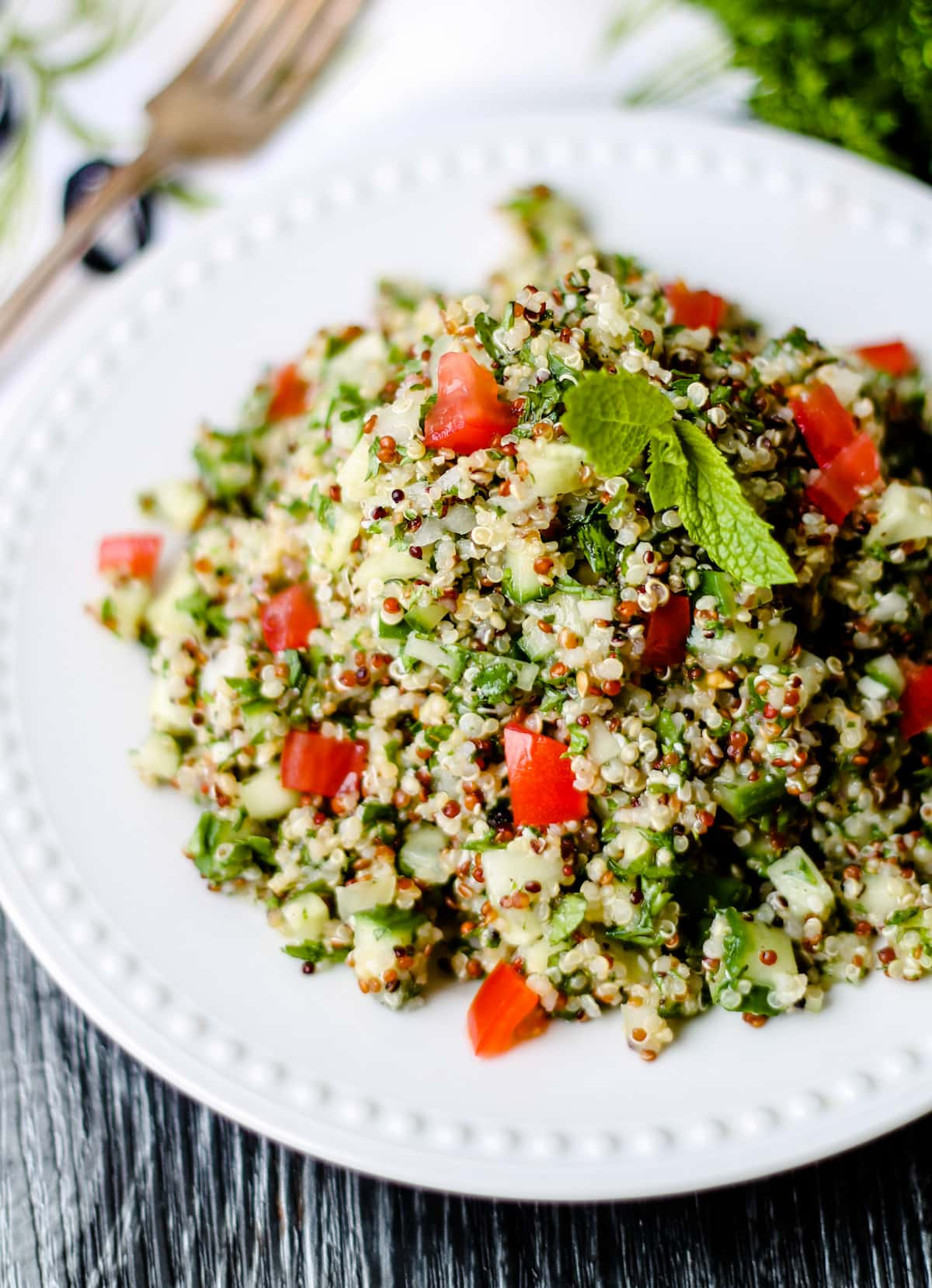
Traditional tabbouleh is made with bulgur wheat, and I grew up eating versions of it at family gatherings. This quinoa swap makes it gluten-free and adds a little extra protein, while keeping all the fresh herb flavor that makes tabbouleh worth eating. Lots of parsley, cucumber, tomato, lemon, and good olive oil — it's light and bright and genuinely refreshing next to heavier Easter mains. I'll be honest: I was skeptical about quinoa in place of bulgur the first time, but the texture works surprisingly well.
Ingredients
- 1 cup dry quinoa
- 2 cups water or vegetable broth
- 2 cups fresh flat-leaf parsley, finely chopped (about 2 large bunches)
- ¼ cup fresh mint leaves, finely chopped
- 2 medium tomatoes, finely diced and drained of excess juice
- 1 English cucumber, finely diced
- 3 green onions, thinly sliced
- ¼ cup fresh lemon juice (about 2 lemons)
- 3 tablespoons extra virgin olive oil
- Salt and black pepper to taste
Instructions
- Rinse the quinoa under cold water, then cook it in 2 cups of water or broth over medium heat. Bring to a boil, reduce to low, cover, and cook 15 minutes. Remove from heat and let it steam covered for 5 more minutes, then fluff with a fork.
- Spread the cooked quinoa on a sheet pan or large plate to cool completely. Don't add the fresh ingredients to warm quinoa — they'll wilt.
- Once the quinoa is fully cooled, combine it in a large bowl with the parsley, mint, tomatoes, cucumber, and green onions.
- Whisk together the lemon juice and olive oil, pour over the salad, and toss well. Season generously with salt and pepper.
- Refrigerate for at least 30 minutes before serving — this salad genuinely improves as it sits and the flavors come together.
Tips
- Tip: The parsley needs to be finely chopped — not roughly torn. Take the time to chop it small and the texture of the whole salad will be better.
- Tip: This keeps well in the fridge for up to two days, so it's a great make-ahead option for Easter weekend when your oven is already busy with other things.
- Tip: Drain your diced tomatoes briefly on a paper towel before adding — watery tomatoes will make the whole salad soggy by the time you serve it.
20. Lemon Pearl Couscous

Pearl couscous — sometimes called Israeli couscous — is one of those ingredients I ignored for years, then discovered and immediately wondered why it took me so long. The little toasted pearls have this slightly chewy bite that regular couscous just doesn't give you, and when you cook them in broth and finish with fresh lemon and herbs, the whole thing feels much fancier than the effort involved. This is the kind of side dish that travels well to the Easter table because it looks polished, holds at room temperature, and pairs with almost anything — roasted lamb, glazed ham, or just a big pile of spring vegetables.
Ingredients
- 1½ cups pearl (Israeli) couscous
- 1 tablespoon olive oil
- 2 cups chicken or vegetable broth
- 2 cloves garlic, minced
- Zest and juice of 1 large lemon
- 2 tablespoons fresh parsley, chopped
- 1 tablespoon fresh dill or chives, chopped (optional but good)
- Salt and black pepper to taste
- 1 tablespoon unsalted butter
Instructions
- Heat olive oil in a medium saucepan over medium heat. Add the pearl couscous and toast for 2–3 minutes, stirring frequently, until lightly golden. This toasting step gives the couscous a nuttier flavor — don't skip it.
- Add the minced garlic and stir for 30 seconds, then pour in the broth. Bring to a boil, then reduce heat to low, cover, and simmer for 10–12 minutes until the liquid is absorbed and the couscous is tender.
- Remove from heat. Stir in the butter, lemon zest, and lemon juice until the butter melts through.
- Fold in the fresh parsley and dill or chives. Taste and adjust salt and pepper. Serve warm or at room temperature.
Tips
- Tip: Pearl couscous is at most major grocery stores — Walmart, Trader Joe's, and Whole Foods all carry it, usually near the rice and grains aisle.
- Tip: If you want to make this ahead, cook the couscous and store it plain. Add the lemon juice and herbs right before serving so nothing wilts or goes dull.
- Tip: A handful of baby arugula or spinach stirred in at the end adds color and a peppery edge that works really well with the lemon.
19. Indian Lemon Rice

I know rice might seem like an unexpected Easter side, but hear me out — this South Indian lemon rice is the kind of thing that disappears from the table before the main course is even served. The base is cooked rice tempered in oil with mustard seeds, curry leaves, turmeric, and fresh lemon juice, and the result is bright yellow, fragrant, and genuinely unlike anything else on a typical Easter spread. It's the dish I bring when everyone else is doing the usual green bean casseroles, and it always gets asked about. Curry leaves can be found at South Asian grocery stores, but if you can't find them, just skip them — the lemon and mustard seeds still carry the dish.
Ingredients
- 2 cups basmati or long-grain white rice, cooked and cooled
- 2 tablespoons vegetable oil or coconut oil
- 1 teaspoon black or yellow mustard seeds
- 10–12 fresh curry leaves (optional — skip if unavailable)
- 2 dried red chilies or ½ teaspoon red chili flakes
- ½ teaspoon turmeric powder
- ¼ cup roasted peanuts or cashews
- 3 tablespoons fresh lemon juice (about 1 large lemon)
- Salt to taste
- 2 tablespoons fresh cilantro, chopped (for garnish)
Instructions
- Make sure your rice is fully cooled before you start — warm, freshly cooked rice turns mushy when you toss it. Day-old rice from the fridge works best.
- Heat oil in a large skillet or wok over medium-high heat. Add mustard seeds and let them pop for about 30 seconds — stand back, they jump. Add curry leaves (careful, they'll splatter), dried chilies, and peanuts or cashews. Stir for 1 minute until the nuts are lightly golden.
- Reduce heat to medium. Add turmeric and stir for 15 seconds, then add the cooked rice. Toss everything together until the rice is evenly coated in the yellow-tinted oil.
- Remove from heat, pour in the lemon juice, and season with salt. Toss once more, taste, and adjust lemon or salt as needed. Garnish with fresh cilantro and serve.
Tips
- Tip: The tempering step — oil, mustard seeds, aromatics — is what makes this dish. Don't rush it and don't skip it; it's where all the flavor is built.
- Tip: Add the lemon juice off the heat. Cooking the lemon juice in a hot pan makes it taste bitter instead of bright.
- Tip: This doubles well and keeps in the fridge for up to 3 days — I make a big batch because it disappears fast at any gathering.
18. Easy Garlic Crostini with Olive Oil
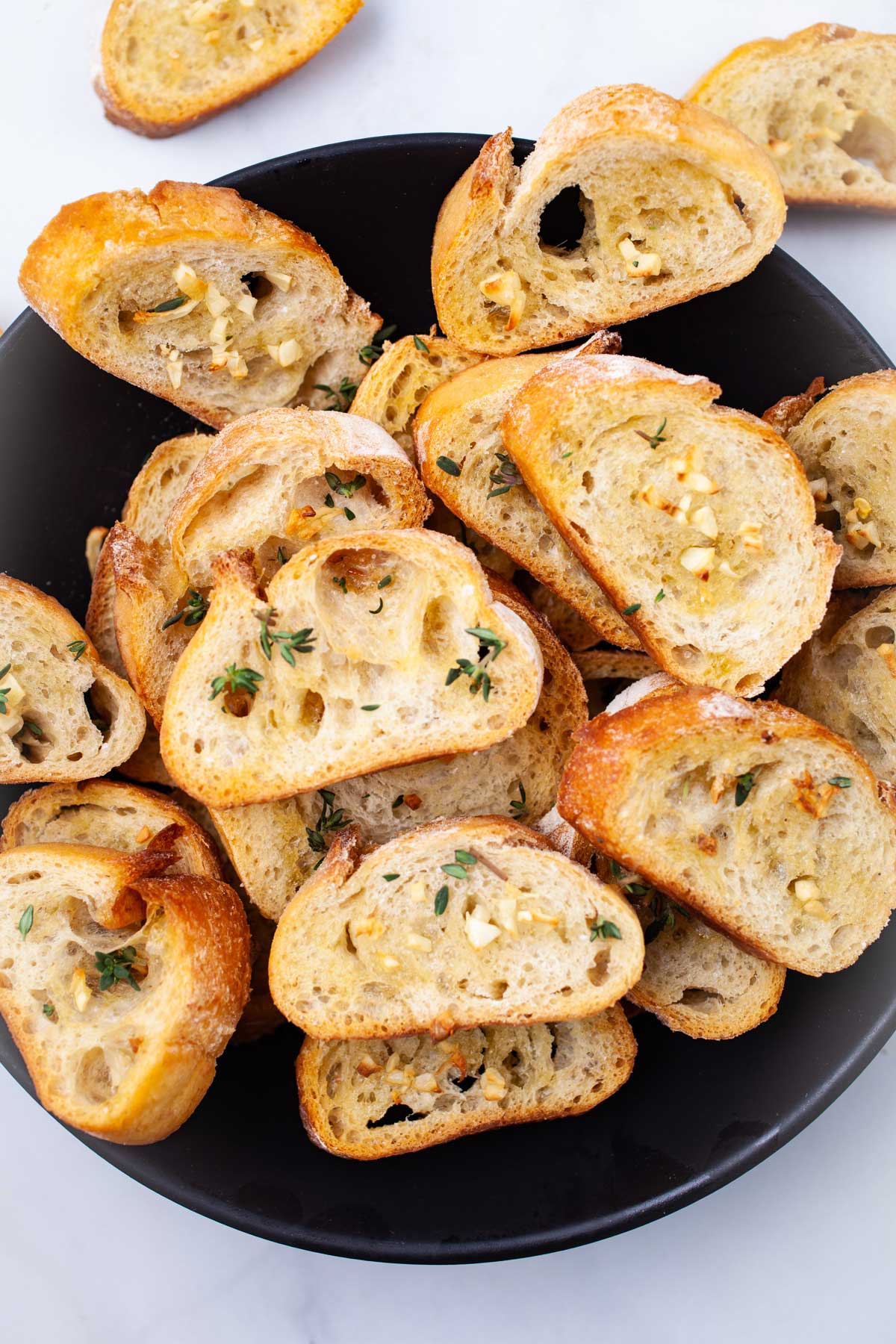
Crostini are one of those things that seem too simple to bother explaining, and yet every time I put a basket of them on the table, people eat them down to the last crumb. A good baguette, decent olive oil, fresh garlic, and a hot oven — that's genuinely it. For Easter, I like to set these out while people are still arriving and the main dishes are finishing up, because a warm, crispy, garlic-rubbed piece of bread buys you at least fifteen minutes of goodwill. They're also a great base for toppings if you want to go that route — whipped ricotta, roasted tomatoes, smashed peas.
Ingredients
- 1 French baguette, sliced into ½-inch rounds
- 3–4 tablespoons good-quality extra virgin olive oil
- 2 large cloves garlic, peeled and halved
- Flaky sea salt (like Maldon) for finishing
- Fresh parsley or rosemary, finely chopped (optional)
Instructions
- Preheat your oven to 400°F. Arrange baguette slices in a single layer on a sheet pan.
- Brush each slice generously with olive oil on one side — don't be stingy here, the oil is what makes them golden rather than just dry and hard.
- Bake for 8–10 minutes until the edges are golden and the tops are crisp. Keep an eye on them after the 8-minute mark — they go from golden to burnt faster than you'd think.
- Remove from oven and immediately rub the top of each crostini with the cut side of a garlic clove. The heat of the bread blooms the garlic flavor without any bitterness. Finish with a pinch of flaky salt and herbs if using. Serve right away.
Tips
- Tip: Slice the baguette on a slight diagonal — you get a larger surface area and the crostini look more elegant on a platter.
- Tip: These can be baked up to 2 hours ahead and kept uncovered at room temperature. Re-warm in a 325°F oven for 3–4 minutes before serving to bring back the crunch.
- Tip: A day-old baguette actually works better than a fresh one — it's drier and crisps up more evenly.
17. Easy Prosciutto Wrapped Asparagus with Cheese

Asparagus is basically the official vegetable of Easter in my house — it shows up in some form every single year — but wrapping the spears in prosciutto and roasting them with cheese takes the whole thing to a different level. The prosciutto crisps up in the oven and essentially becomes a salty, porky shell around the tender asparagus, and if you add a little shaved parmesan or gruyère on top before roasting, you get these gorgeous little bundles that look like they took serious effort. They did not. Saad eats asparagus exactly zero ways — except this one, somehow. I'll take it.
Ingredients
- 1 lb fresh asparagus, tough ends trimmed (about 20–24 spears)
- 4–5 thin slices prosciutto, each cut in half lengthwise
- 1 tablespoon olive oil
- ¼ cup finely shaved parmesan or gruyère cheese
- Black pepper to taste (hold the salt — prosciutto is already very salty)
- ½ teaspoon lemon zest for finishing (optional)
Instructions
- Preheat oven to 425°F. Line a sheet pan with parchment paper or foil.
- Lightly toss the asparagus spears with olive oil and a few cracks of black pepper. Group them into bundles of 3–4 spears each.
- Wrap each bundle with a half-strip of prosciutto, starting at the base and spiraling up toward the tip. Place seam-side down on the prepared pan so the prosciutto holds in place during roasting.
- Scatter the shaved cheese over the tops of the bundles. Roast for 12–15 minutes until the asparagus is tender and the prosciutto is crisp and golden at the edges.
- Finish with a little lemon zest if you like and serve immediately.
Tips
- Tip: Use medium-thickness asparagus spears — very thin ones overcook and go limp before the prosciutto crisps up properly.
- Tip: You can assemble the bundles up to a day ahead and keep them covered in the fridge. Just pop them in the oven when you're ready — no need to bring them to room temperature first.
- Tip: Can't find prosciutto? Thin-sliced bacon works — just adjust the roasting time down slightly since bacon releases more fat and can get greasy if it goes too long.
16. Creamy and Cheesy Cauliflower Casserole

If anyone at your Easter table is skeptical about cauliflower, this casserole is the one that changes minds. The florets get roasted until they're just starting to turn golden, then they go into a creamy, cheesy sauce and get baked under a bubbly, browned top — it's closer to a gratin than anything austere or virtuous. This is not diet food. It is, however, the kind of side dish that makes people go back for seconds when they thought they were done. The first time I made it I used pre-shredded cheese and the sauce went a little grainy — shred your own cheese for this one, it melts much smoother.
Ingredients
- 1 large head cauliflower, cut into medium florets (about 6 cups)
- 2 tablespoons olive oil
- 2 tablespoons unsalted butter
- 2 tablespoons all-purpose flour
- 1½ cups whole milk
- ½ cup sour cream or cream cheese, softened
- 1½ cups sharp cheddar cheese, freshly shredded and divided
- ½ cup gruyère or mozzarella, shredded
- 2 cloves garlic, minced
- ½ teaspoon onion powder
- Salt, black pepper, and a pinch of paprika to taste
Instructions
- Preheat oven to 400°F. Toss cauliflower florets with olive oil, salt, and pepper on a sheet pan. Roast for 20–22 minutes until the edges are lightly browned. This pre-roasting step concentrates the flavor and keeps the cauliflower from turning watery in the casserole.
- While the cauliflower roasts, melt butter in a medium saucepan over medium heat. Add garlic and cook for 1 minute. Whisk in the flour and cook for another minute to get rid of the raw flour taste. Gradually whisk in the milk, keeping the heat at medium, until the sauce thickens — about 4–5 minutes.
- Remove sauce from heat. Stir in sour cream or cream cheese, 1 cup of the cheddar, gruyère or mozzarella, onion powder, and paprika. Season with salt and pepper. Stir until smooth.
- Add the roasted cauliflower to a greased 9×13-inch baking dish. Pour the cheese sauce over the top and gently toss to coat. Scatter the remaining ½ cup cheddar over the surface.
- Bake at 375°F for 20–25 minutes until the top is bubbling and golden. Let it rest for 5 minutes before serving.
Tips
- Tip: Shred your cheese from a block rather than using the bagged pre-shredded kind — the anti-caking coating on pre-shredded cheese can make the sauce grainy instead of silky.
- Tip: This can be assembled the day before and refrigerated unbaked. Add an extra 10 minutes to the baking time if it's going in cold from the fridge.
- Tip: For a crunchy topping, mix ¼ cup panko breadcrumbs with a tablespoon of melted butter and scatter over the cheese before baking.
11. Broccoli and Guacamole Plateau (Vegan)
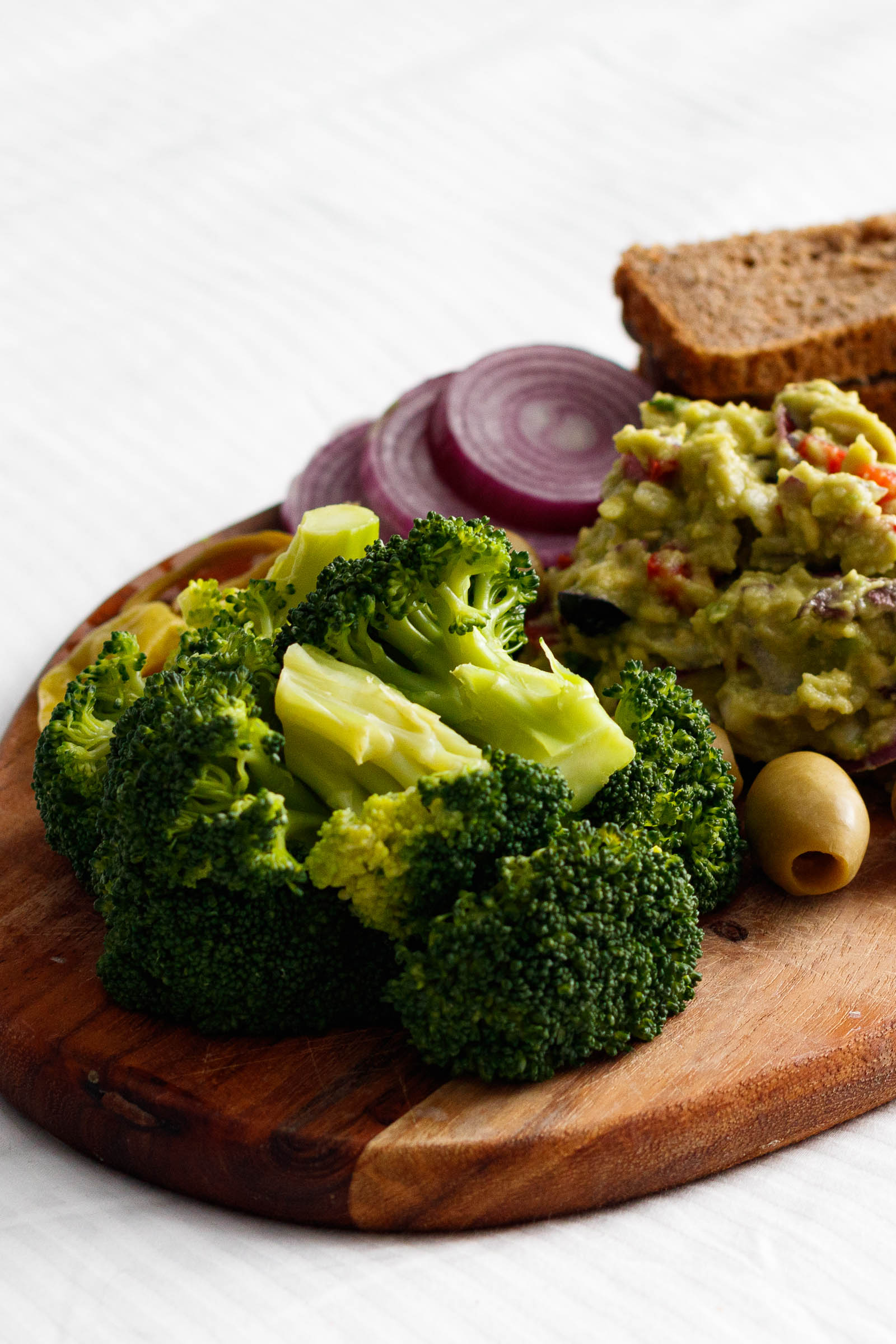
This one surprised me. I put it together for a Easter gathering where a couple of guests were vegan, and honestly it got more attention than I expected — people kept going back for the guacamole. The concept is simple: lightly blanched broccoli florets arranged around a generous bowl of fresh guacamole, almost like a crudité platter but with a lot more personality. It's dead easy to pull off, looks beautiful on the table, and takes maybe 20 minutes start to finish. If you've got avocados that need using up before Easter Sunday, this is the answer.
Ingredients
- 1 large head broccoli, cut into florets
- 3 ripe avocados
- 1 lime, juiced
- 1 small garlic clove, minced
- ¼ cup red onion, finely diced
- 1 small tomato, seeded and diced
- 2 tablespoons fresh cilantro, chopped (optional — skip if your crowd doesn't like it)
- Salt and black pepper to taste
- Pinch of red pepper flakes (optional)
Instructions
- Bring a large pot of salted water to a boil. Add the broccoli florets and blanch for 2 minutes — you want them bright green and just tender, not soft. Immediately transfer to a bowl of ice water to stop the cooking, then drain and pat dry.
- Scoop the avocado flesh into a bowl and mash with a fork to your preferred consistency — I like mine a little chunky. Stir in the lime juice, garlic, red onion, tomato, and cilantro. Season with salt, pepper, and red pepper flakes if using.
- Spoon the guacamole into a serving bowl and place it in the center of a large plate or platter. Arrange the broccoli florets all around it. Serve immediately or refrigerate with plastic wrap pressed directly onto the guacamole surface to prevent browning.
Tips
- Tip: Make sure the broccoli is completely dry before arranging — wet florets water down the guacamole fast.
- Tip: You can add other vegetables to the plateau — sliced bell peppers, cucumber spears, or cherry tomatoes all work well alongside the broccoli.
- Tip: If you're prepping ahead, keep the blanched broccoli and guacamole separate in the fridge and assemble just before serving.
12. Green Bean, Potato & Tomato Salad
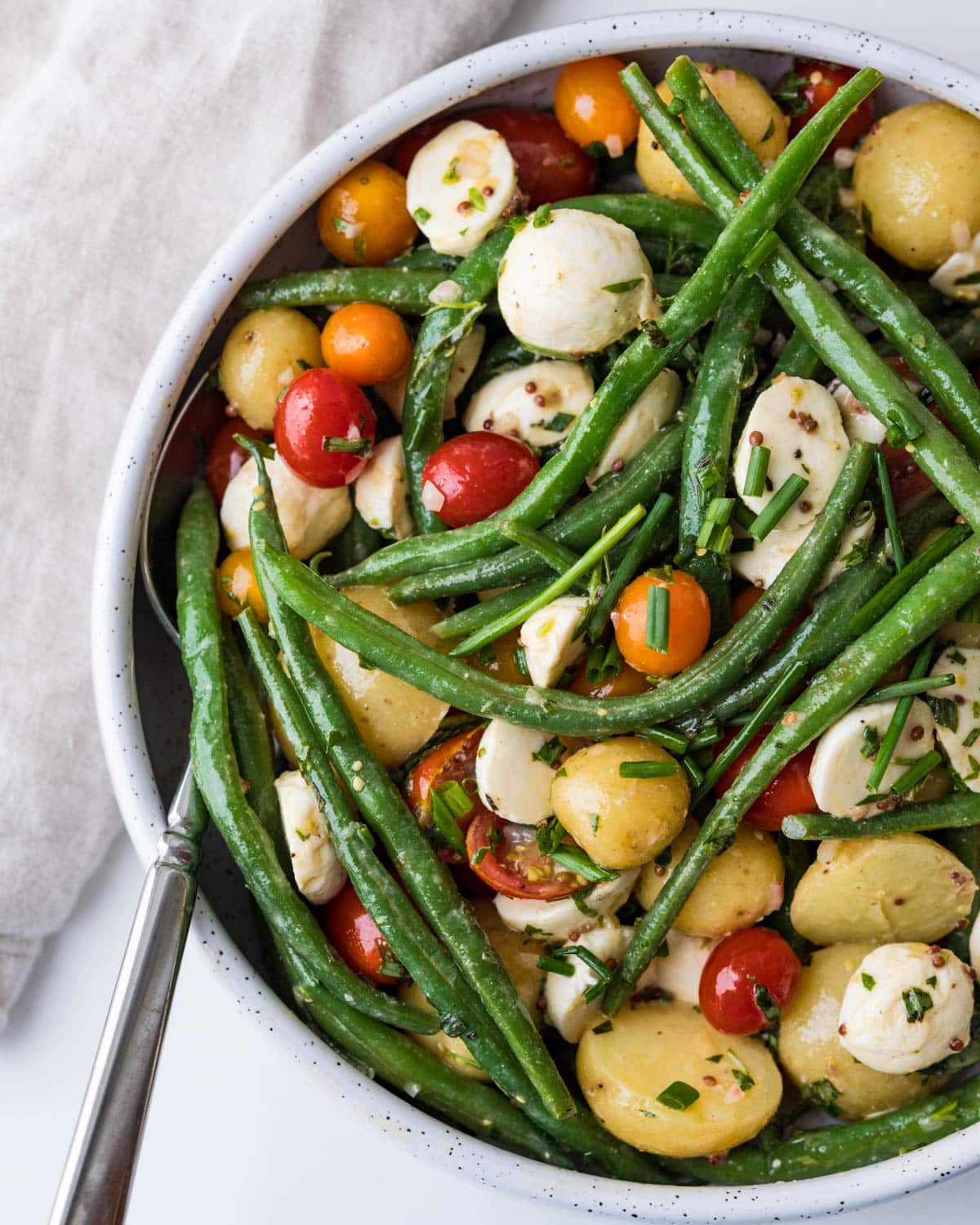
This is the kind of salad that holds up on a buffet table without wilting into sadness an hour in — which matters a lot at Easter when food sits out while everyone catches up. You've got tender green beans, waxy potatoes, and juicy tomatoes all tossed in a sharp vinaigrette that gets better as it sits. It's hearty enough to actually feel like a side dish rather than an afterthought. I make a double batch because it disappears completely and I always wish I had more for the next day's leftovers.
Ingredients
- 1 lb small waxy potatoes (Yukon Gold or red potatoes), halved
- ¾ lb fresh green beans, trimmed
- 1 cup cherry tomatoes, halved
- ¼ red onion, thinly sliced
- 3 tablespoons olive oil
- 2 tablespoons red wine vinegar
- 1 teaspoon Dijon mustard
- 1 small garlic clove, minced
- Salt and black pepper to taste
- Fresh parsley, chopped, for serving
Instructions
- Place the potatoes in a pot of cold salted water and bring to a boil. Cook until just fork-tender, about 12–15 minutes. Drain and let cool slightly.
- While the potatoes cook, blanch the green beans in a separate pot of boiling salted water for 3–4 minutes until bright green and just tender. Drain and transfer immediately to ice water, then drain again and pat dry.
- In a small bowl, whisk together the olive oil, red wine vinegar, Dijon mustard, garlic, salt, and pepper to make the dressing.
- In a large serving bowl, combine the warm potatoes, green beans, cherry tomatoes, and red onion. Pour the dressing over and toss gently. The warm potatoes will absorb the dressing beautifully — this is intentional.
- Taste and adjust seasoning. Scatter fresh parsley over the top and serve warm or at room temperature.
Tips
- Tip: Dress the salad while the potatoes are still warm — they soak up the vinaigrette much better than cold potatoes do.
- Tip: This salad holds well at room temperature for up to 2 hours, which makes it perfect for Easter buffet-style spreads.
- Tip: Add a handful of pitted Kalamata olives or crumbled feta if you want to give this a more Mediterranean lean.
13. Cheesy Scalloped Potatoes
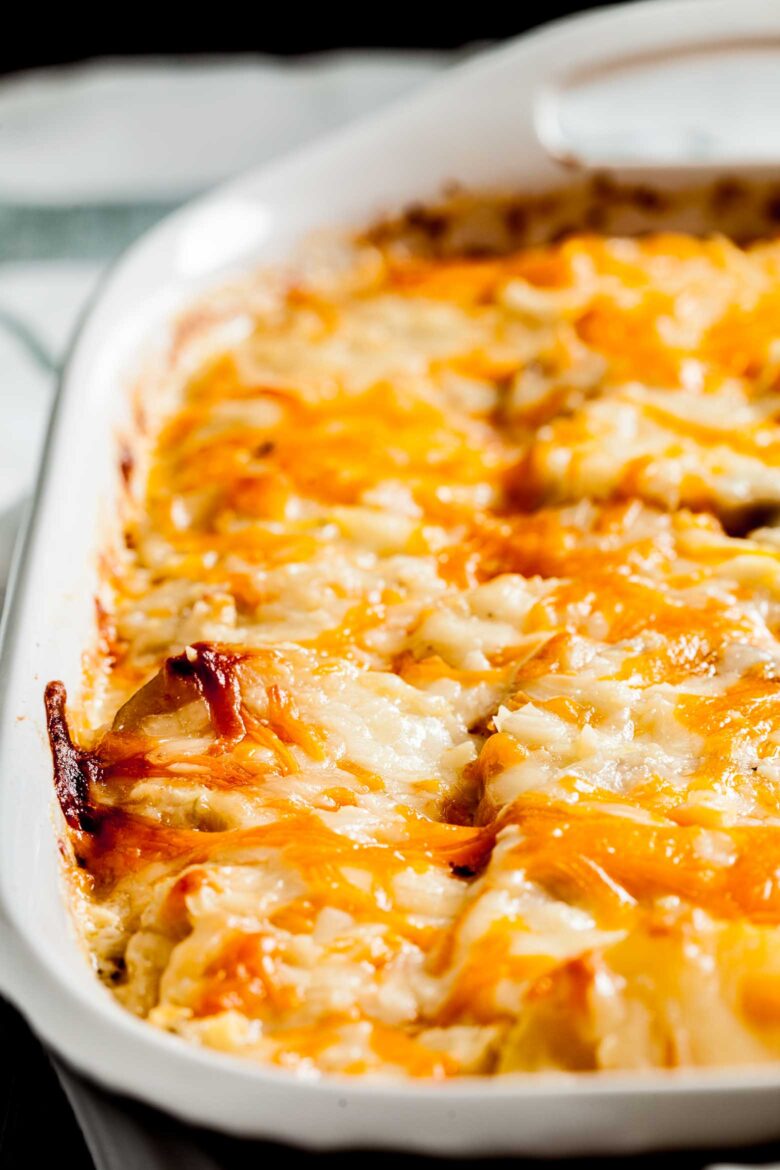
If there's one side dish that makes Easter dinner feel genuinely special, it's a pan of proper scalloped potatoes — thin layers of potato baked in a creamy, cheesy sauce until the edges are golden and the middle is completely molten. My husband would eat this as a main course if I let him. The key technique here is slicing the potatoes thin and even — a mandoline makes this fast, but a sharp knife works fine if you take your time. I learned the hard way that thick uneven slices mean some pieces stay half-raw in the middle, which is not what you want at Easter dinner.
Ingredients
- 3 lbs Yukon Gold potatoes, peeled and sliced ⅛-inch thick
- 3 tablespoons unsalted butter
- 3 cloves garlic, minced
- 3 tablespoons all-purpose flour
- 2 cups whole milk
- 1 cup heavy cream
- 1½ cups shredded sharp cheddar cheese, divided
- ½ cup shredded Gruyère cheese (or more cheddar if unavailable)
- 1 teaspoon salt
- ½ teaspoon black pepper
- ¼ teaspoon ground nutmeg
Instructions
- Preheat your oven to 375°F. Grease a 9x13-inch baking dish with butter.
- Melt the butter in a saucepan over medium heat. Add garlic and cook for 1 minute until fragrant. Whisk in the flour and cook for another minute to get rid of the raw flour taste. Gradually pour in the milk and cream, whisking constantly, until the sauce thickens — about 5 minutes. Season with salt, pepper, and nutmeg. Remove from heat and stir in 1 cup of the cheddar and all of the Gruyère until melted.
- Layer half the potato slices in the prepared baking dish, overlapping slightly. Pour half the cheese sauce over them. Add the remaining potato slices, then pour over the rest of the sauce. Sprinkle the remaining ½ cup cheddar evenly on top.
- Cover tightly with foil and bake for 45 minutes. Remove the foil and bake for another 25–30 minutes until the top is golden and bubbling and a knife slides through the potatoes with no resistance. Let rest for 10 minutes before serving — this helps the sauce set slightly.
Tips
- Tip: Let cheese come to room temperature before adding it to the sauce — cold cheese straight from the fridge can make the sauce go grainy.
- Tip: You can assemble this the night before and refrigerate unbaked — just add 10–15 minutes to the covered baking time if going in cold.
- Tip: Don't skip the resting time after baking — it makes a real difference in whether the sauce stays runny or firms up into something sliceable.
14. The Best Dairy Free Alfredo Sauce with Cashews
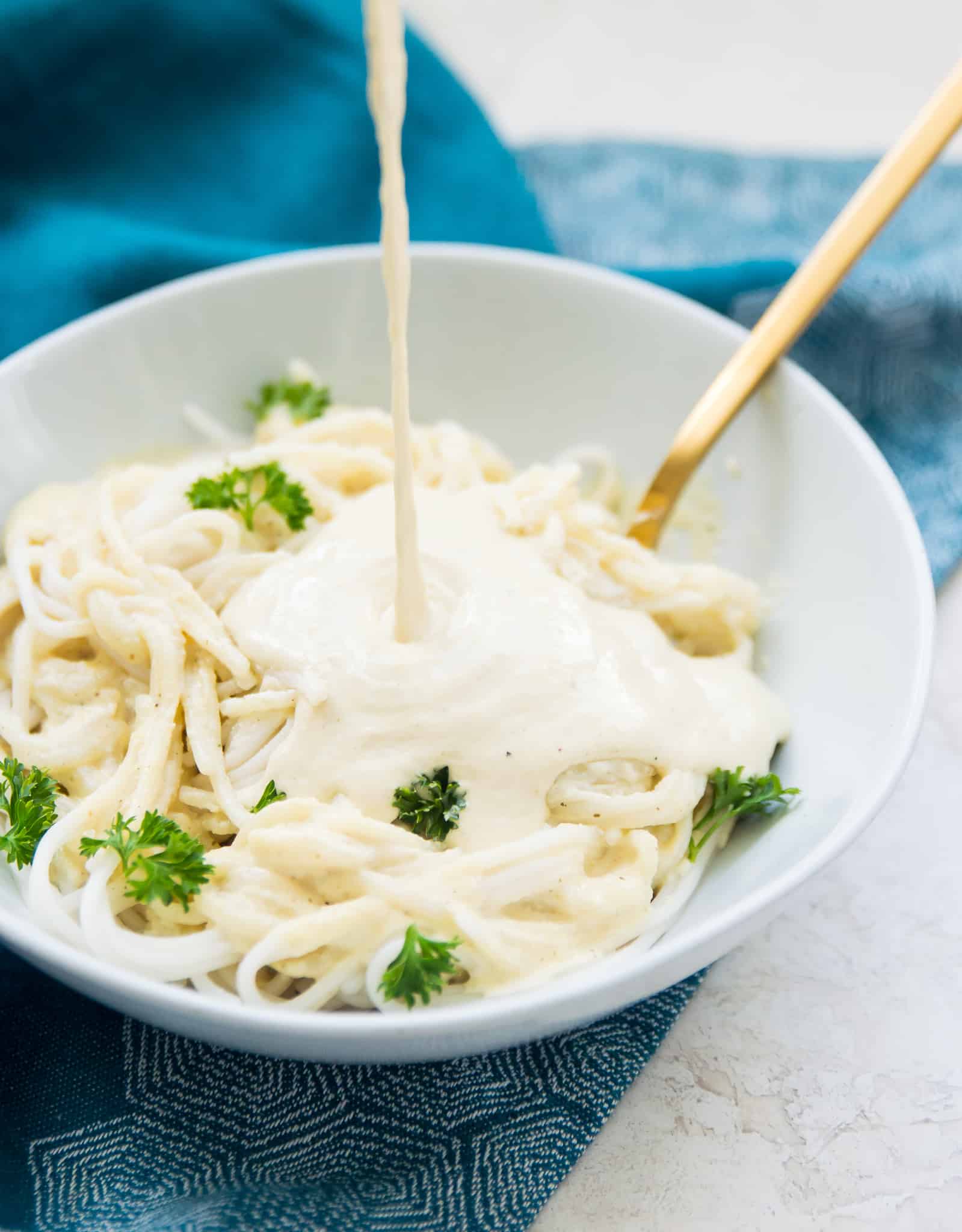
I was genuinely skeptical about this one — I've had enough watery, sad "dairy-free" sauces to be cautious. But this cashew-based Alfredo is thick, creamy, and rich in a way that doesn't feel like a compromise at all. It works beautifully as an Easter side when tossed with fettuccine or spooned over roasted vegetables for guests who don't eat dairy. The trick is soaking the cashews long enough — at least four hours, overnight if you can — so they blend completely smooth without any graininess. If you have a high-powered blender (even a Ninja from Walmart works), this comes together in about 15 minutes.
Ingredients
- 1½ cups raw cashews, soaked in water for at least 4 hours, then drained
- 1 cup unsweetened cashew milk (or any unsweetened plant-based milk)
- ½ cup water (more as needed to adjust consistency)
- 3 cloves garlic, minced
- 2 tablespoons nutritional yeast
- 1 tablespoon olive oil
- 1 tablespoon lemon juice
- 1 teaspoon onion powder
- ¾ teaspoon salt, or to taste
- ¼ teaspoon black pepper
- 12 oz fettuccine or pasta of choice, cooked, to serve
Instructions
- Drain and rinse the soaked cashews. Add them to a blender along with the cashew milk, water, garlic, nutritional yeast, olive oil, lemon juice, onion powder, salt, and pepper. Blend on high for 2–3 minutes until completely smooth and creamy — stop and scrape down the sides once halfway through.
- Pour the blended sauce into a saucepan over medium-low heat. Warm gently, stirring frequently, for about 5 minutes. The sauce will thicken slightly as it heats. If it gets too thick, add a splash of water or pasta cooking water to loosen it up.
- Taste and adjust salt and lemon juice. Toss immediately with hot cooked pasta and serve, garnished with fresh parsley or a crack of black pepper.
Tips
- Tip: If you forgot to soak the cashews overnight, pour boiling water over them and let them sit for 1 hour — it's not quite the same but gets you close enough.
- Tip: Nutritional yeast is what gives this sauce its savory, slightly cheesy flavor — don't skip it. You can find it at Trader Joe's, Whole Foods, or in the natural foods aisle at most Walmarts.
- Tip: This sauce also works spooned over roasted asparagus or broccoli for guests who want a lighter, grain-free option at the Easter table.
15. Blood Orange Salad With Belgian Endive And Nuts
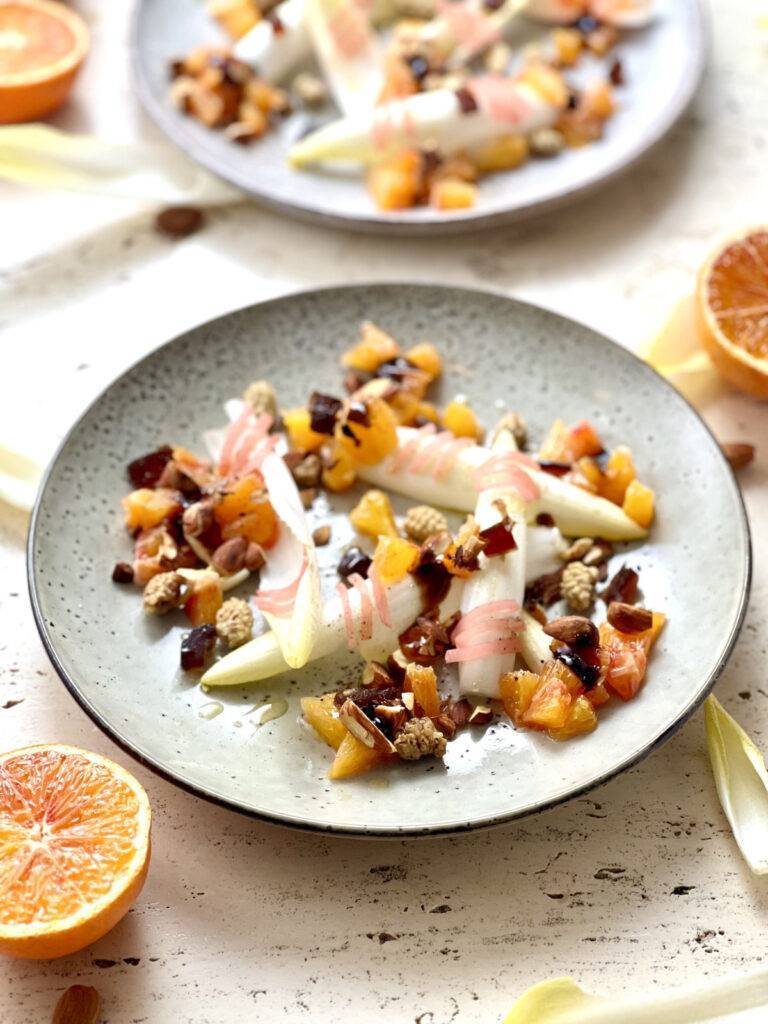
This is the salad that makes people stop and actually look at the plate before eating — the deep crimson of blood oranges against the pale, slightly bitter endive leaves is genuinely striking. It's also one of those recipes where the ingredient list is short but the result feels considered and elegant, which is exactly what you want at Easter. Belgian endive can be found at most Trader Joe's or Whole Foods in spring; if you can't track it down, radicchio or even butter lettuce works in a pinch. The toasted nuts are non-negotiable — they add the crunch that ties everything together.
Ingredients
- 3 blood oranges (or navel oranges if blood oranges aren't available)
- 2 heads Belgian endive, leaves separated
- ⅓ cup walnuts or pecans, roughly chopped and toasted
- 2 tablespoons olive oil
- 1 tablespoon fresh orange juice (from the oranges you're already cutting)
- 1 teaspoon honey
- 1 teaspoon white wine vinegar
- Salt and black pepper to taste
- Fresh mint leaves, for garnish (optional but worth it)
Instructions
- Slice the tops and bottoms off the blood oranges, then cut away the peel and pith following the curve of the fruit. Slice into rounds or cut into segments over a bowl to catch any juice. Set aside.
- Toast the nuts in a dry skillet over medium heat for 3–4 minutes, shaking the pan frequently, until fragrant and lightly golden. Keep an eye on them — they go from toasted to burnt faster than you'd think. Remove from heat and let cool.
- In a small bowl, whisk together the olive oil, fresh orange juice, honey, white wine vinegar, salt, and pepper to make the dressing.
- Arrange the endive leaves on a serving platter. Layer the blood orange slices over and around the leaves. Scatter the toasted nuts on top, drizzle the dressing over everything, and finish with fresh mint if using. Serve immediately.
Tips
- Tip: Dress this salad right before serving — the endive wilts quickly once it hits the acid in the dressing.
- Tip: A handful of crumbled goat cheese or shaved Parmesan scattered over the top takes this into dinner-party territory if you want to elevate it further.
- Tip: If you can't find blood oranges at your local grocery store, check Trader Joe's or Aldi in late winter and early spring — they tend to stock them seasonally.
10. Orange Creamsicle Fluff

This one is technically a dessert salad, but I put it on the Easter table every year and nobody complains. It's that creamy, dreamy orange-and-vanilla thing that tastes exactly like a Creamsicle from the ice cream truck — cold, fluffy, and just sweet enough. The best part is that it takes maybe 10 minutes to throw together, and you can make it the night before so one less thing to stress about on Easter morning. Kids go absolutely wild for it, and honestly so do the adults.
Ingredients
- 1 package (3.4 oz) instant vanilla pudding mix
- 1 package (3 oz) orange gelatin mix (like Jell-O)
- 1 cup boiling water
- 1 container (8 oz) frozen whipped topping (Cool Whip), thawed
- 1 cup vanilla yogurt (or sour cream for a tangier version)
- 1 can (11 oz) mandarin oranges, drained well
- 1 cup mini marshmallows
Instructions
- Dissolve the orange gelatin in 1 cup boiling water, stirring for about 2 minutes until completely dissolved. Let it cool to room temperature — don't skip this or it will melt your whipped topping.
- Whisk the dry vanilla pudding mix and vanilla yogurt into the cooled gelatin until smooth and combined.
- Fold in the thawed Cool Whip gently — you want to keep it light and fluffy, so don't stir aggressively.
- Add the drained mandarin oranges and mini marshmallows, folding them in carefully so the orange segments don't break apart too much.
- Cover and refrigerate for at least 2 hours, or overnight. It thickens up beautifully as it chills. Serve cold straight from the bowl.
Tips
- Tip: Drain the mandarin oranges really well — pat them dry with a paper towel if you need to. Extra liquid makes the fluff watery by the next day.
- Tip: Make this the night before. It tastes even better after sitting overnight in the fridge — the flavors settle and it firms up to that perfect fluffy texture.
- Tip: If you can't find Cool Whip, whip 1½ cups of heavy cream with 2 tablespoons powdered sugar to stiff peaks — works just as well.
9. Air Fryer Baby Potatoes
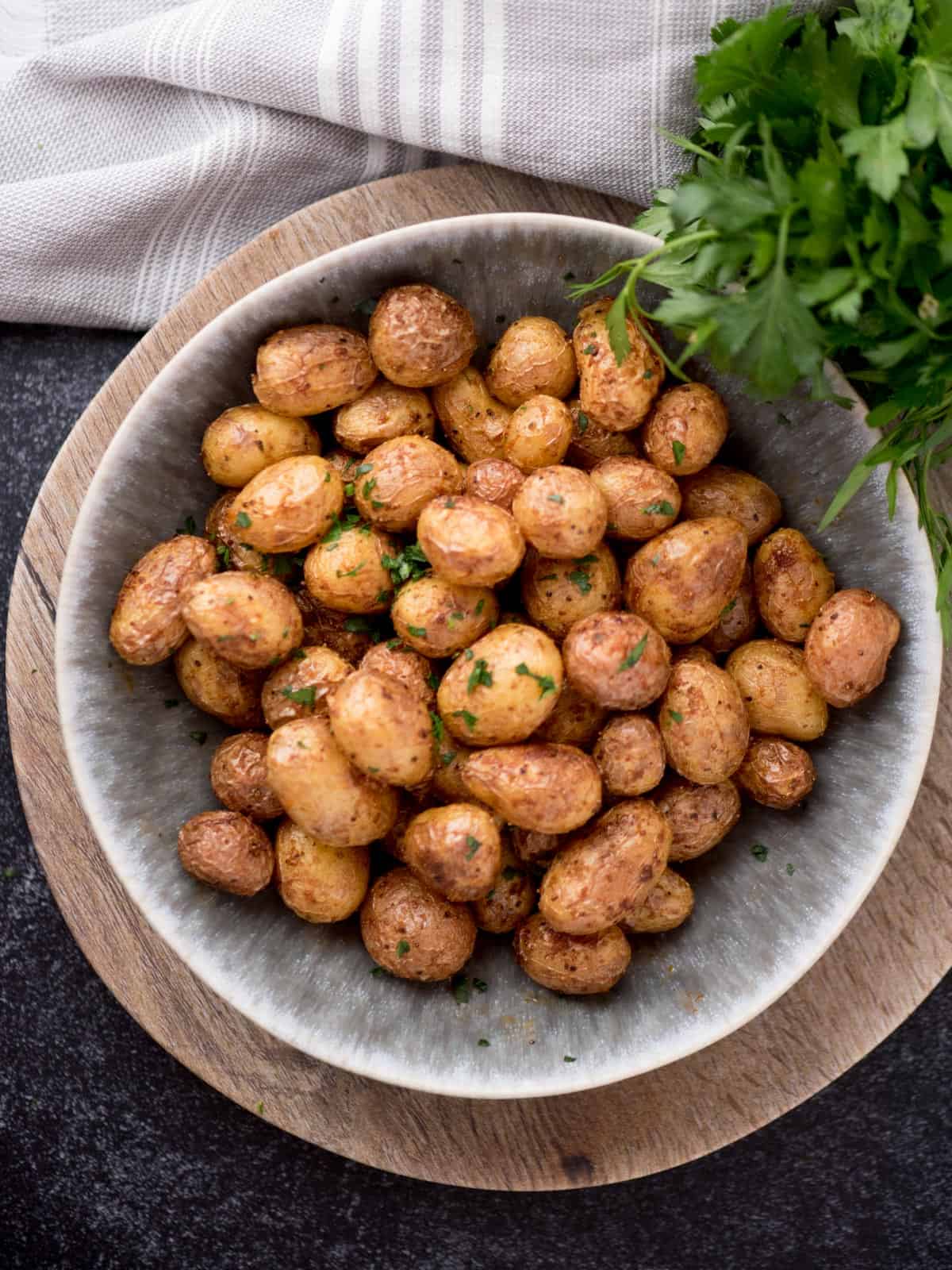
I make a double batch of these every time because they disappear before I even get to sit down at the table. Baby potatoes in the air fryer come out with this incredible crispy exterior and fluffy, almost creamy inside — no oven hogging required. On Easter when the oven is packed with the main dish and a dozen other things, the air fryer is a lifesaver for a side this good. Season them simply and let the potato do the work.
Ingredients
- 1½ lbs baby potatoes (any color — I like the tri-color bags from Walmart or Costco)
- 2 tablespoons olive oil
- 1 teaspoon garlic powder
- 1 teaspoon onion powder
- ½ teaspoon smoked paprika
- ¾ teaspoon salt
- ¼ teaspoon black pepper
- 2 tablespoons fresh parsley, chopped (for serving)
Instructions
- Wash the baby potatoes and pat them dry. Halve any that are larger than an inch across so everything cooks evenly — smaller ones you can leave whole.
- In a large bowl, toss the potatoes with olive oil, garlic powder, onion powder, smoked paprika, salt, and pepper until every piece is well coated.
- Preheat your air fryer to 400°F for 3 minutes. Add the potatoes in a single layer — don't pile them up or they'll steam instead of crisp. Work in batches if needed.
- Air fry for 18–20 minutes, shaking the basket halfway through. They're done when the outsides are golden and a fork slides in easily.
- Transfer to a serving dish and scatter fresh parsley on top. Serve immediately while they're still hot and crispy.
Tips
- Tip: Dry the potatoes thoroughly before tossing in oil — any surface moisture works against crisping in the air fryer.
- Tip: Don't skip the shake halfway through. It makes a real difference in getting even browning on all sides.
- Tip: A squeeze of fresh lemon juice right before serving brightens everything up — especially nice on an Easter table alongside richer dishes.
8. Asparagus Tart
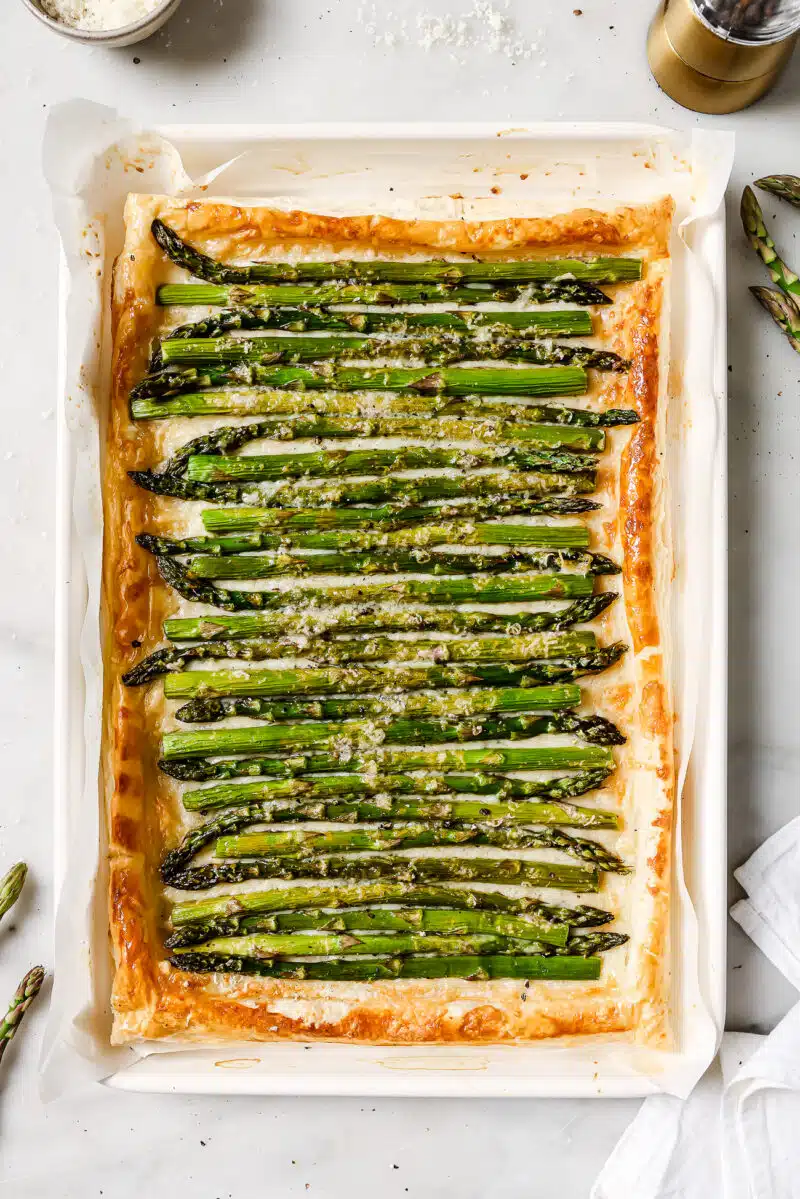
This asparagus tart looks like something from a fancy brunch spread, but it comes together with a sheet of store-bought puff pastry and a handful of ingredients. I'm not going to pretend it's the kind of thing I grew up with — it's very much a Western spring recipe — but the first time I made it, my husband asked if I'd taken a cooking class. I hadn't. The flaky pastry base topped with a creamy cheese layer and arranged asparagus spears is genuinely stunning on the Easter table, and the effort is maybe 20 minutes of actual work.
Ingredients
- 1 sheet frozen puff pastry (from a 17 oz package like Pepperidge Farm), thawed
- 4 oz cream cheese, softened
- ½ cup ricotta cheese
- 1 clove garlic, minced
- ¼ cup grated Parmesan
- Salt and black pepper to taste
- 1 bunch asparagus (about 1 lb), woody ends trimmed
- 1 tablespoon olive oil
- 1 egg, beaten (for egg wash)
- Lemon zest, for finishing (optional but worth it)
Instructions
- Preheat oven to 400°F. Unfold the thawed puff pastry onto a parchment-lined baking sheet. Score a ¾-inch border all the way around without cutting through — this lets the edges puff up while the center stays flat.
- Mix the cream cheese, ricotta, garlic, Parmesan, salt, and pepper together until smooth. Spread this evenly inside the scored border.
- Toss the trimmed asparagus with olive oil and a pinch of salt. Lay the spears in a single layer over the cheese filling, alternating directions if needed to fit neatly.
- Brush the pastry border with the beaten egg. Bake for 20–22 minutes until the pastry is deep golden and the asparagus has some color at the tips.
- Remove from the oven, zest a little lemon over the top, and let it cool for 5 minutes before slicing and serving.
Tips
- Tip: Let the cream cheese sit out for at least 15 minutes before mixing — cold cream cheese stays lumpy and is a pain to spread evenly.
- Tip: Thin asparagus spears work better here than thick ones — they cook through in the same time it takes the pastry to brown.
- Tip: This can be assembled up to an hour ahead and kept in the fridge unbaked — just add the egg wash right before it goes in the oven.
7. Sautéed Bok Choy
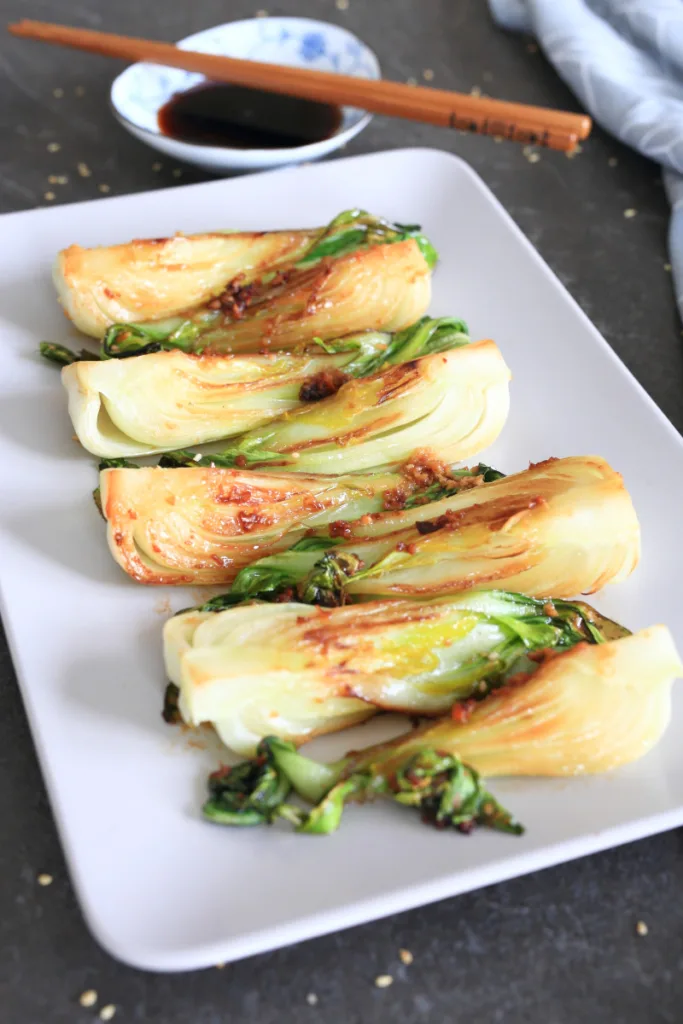
Bok choy is one of those vegetables I started cooking at home because I loved it at Chinese restaurants, and it turns out it's incredibly easy to do well. A quick sauté in a hot pan with garlic and a splash of soy sauce is genuinely all it takes. It brings something different to the Easter table — light, slightly savory, with a little crunch from the stems — and it's a nice break from all the heavy, creamy sides. This whole dish is done in under 10 minutes, which on a busy holiday is basically gold.
Ingredients
- 1½ lbs baby bok choy (about 6–8 heads), halved lengthwise
- 2 tablespoons neutral oil (vegetable or avocado oil)
- 4 cloves garlic, thinly sliced
- 1 teaspoon fresh ginger, grated (optional but recommended)
- 2 tablespoons soy sauce (use low-sodium if you prefer)
- 1 teaspoon sesame oil
- ¼ teaspoon red pepper flakes (optional)
- 1 teaspoon sesame seeds, for garnish
Instructions
- Rinse the bok choy halves well and shake off excess water. Pat them as dry as you can — water in a hot pan causes dangerous splattering.
- Heat a large skillet or wok over high heat until very hot. Add the oil and swirl to coat. Place the bok choy cut-side down in a single layer — you want direct contact with the hot pan for good color.
- Cook without moving for 2 minutes until the cut sides are lightly golden. Flip and cook the other side for 1 minute.
- Push the bok choy to the edges of the pan. Add garlic and ginger to the center and cook for 30 seconds, stirring, until fragrant — watch it carefully so the garlic doesn't burn.
- Pour the soy sauce over everything and toss to combine. Remove from heat, drizzle with sesame oil, scatter red pepper flakes and sesame seeds over the top, and serve immediately.
Tips
- Tip: High heat is non-negotiable here — a properly hot pan is what gives you that slightly caramelized edge on the bok choy instead of steamed, soggy leaves.
- Tip: Baby bok choy is usually available at larger grocery stores, Walmart, or any Asian market. If you can only find large bok choy, quarter it lengthwise instead of halving.
- Tip: Serve this right away — bok choy wilts quickly after cooking and loses that satisfying crunch if it sits too long.
6. Broccoli Bacon Salad
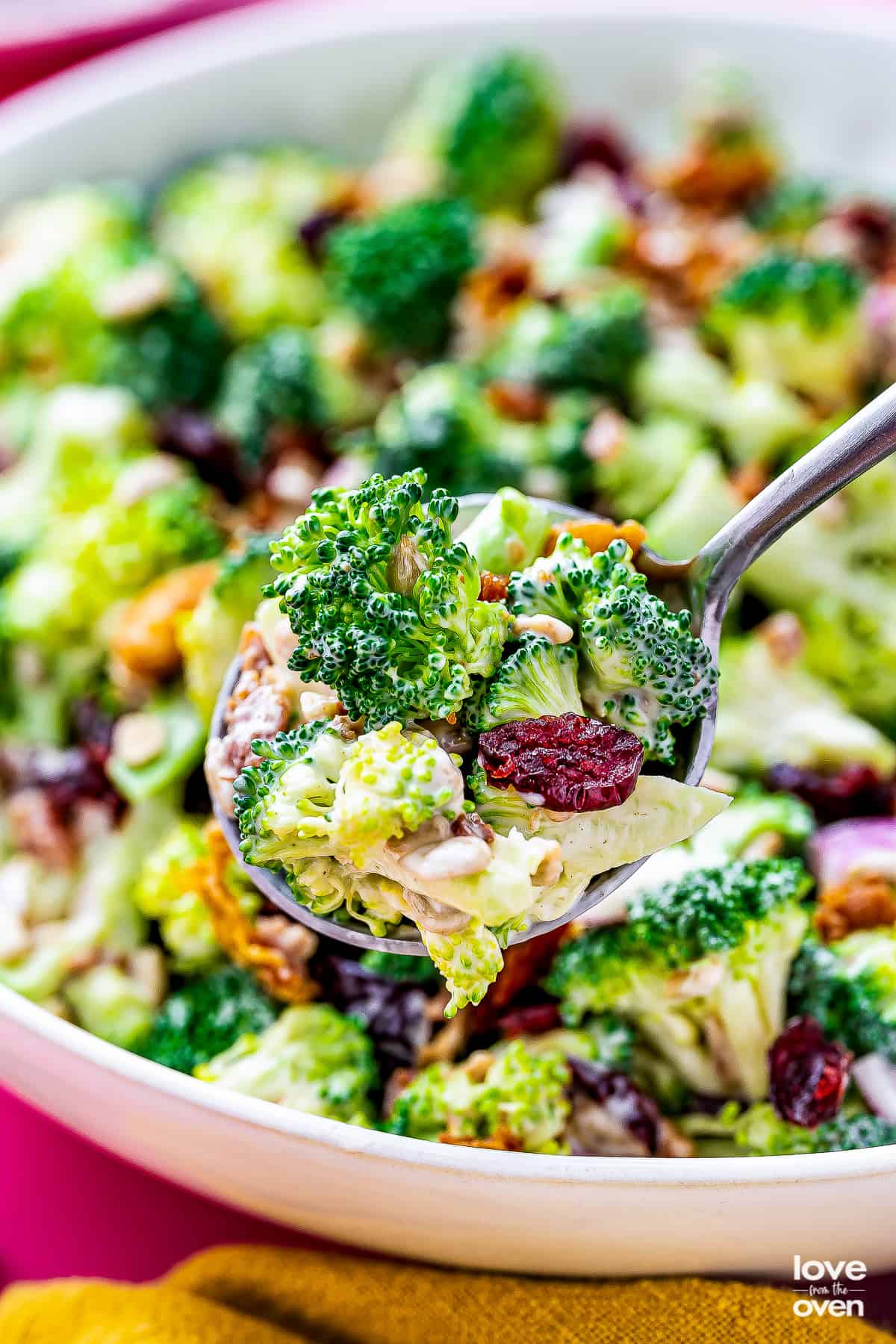
I was skeptical about raw broccoli in a salad the first time I tried this — in Pakistan we always cooked our vegetables, and eating broccoli raw felt very strange to me. But this creamy, sweet-tangy dressing with crispy bacon completely won me over. The broccoli stays crunchy, the dressing coats everything, and the salty bacon against the sweet raisins is one of those combinations that just works. It's a cold salad that can sit out on the table for a while without suffering, which makes it ideal for Easter when the timing of everything is slightly unpredictable.
Ingredients
- 6 cups fresh broccoli florets (about 2 medium heads), cut small
- 6 slices bacon, cooked crispy and crumbled
- ½ cup red onion, finely diced
- ½ cup raisins (or dried cranberries for a slightly tarter version)
- ½ cup sharp cheddar, shredded
- ¾ cup mayonnaise
- 2 tablespoons apple cider vinegar
- 2 tablespoons granulated sugar
- Salt and black pepper to taste
Instructions
- In a large bowl, whisk together the mayonnaise, apple cider vinegar, sugar, salt, and pepper until the dressing is smooth and the sugar has dissolved.
- Add the broccoli florets, red onion, raisins, and shredded cheddar to the bowl. Toss everything well until the dressing coats all the broccoli evenly.
- Cover and refrigerate for at least 30 minutes — the broccoli softens very slightly and the dressing soaks in. An hour is even better.
- Right before serving, add the crumbled bacon and toss once more. Adding it at the end keeps it crispy instead of soggy.
Tips
- Tip: Cut the broccoli florets on the smaller side — bite-sized pieces pick up more dressing and are easier to eat without looking like you're fighting your food.
- Tip: Bacon bits from a bag work in a pinch, but nothing beats freshly cooked and crumbled bacon for flavor and crunch here.
- Tip: This keeps well in the fridge for up to two days — just store the bacon separately and add it when you're ready to serve so it stays crispy.
21. Easy Air Fryer Carrots Recipe
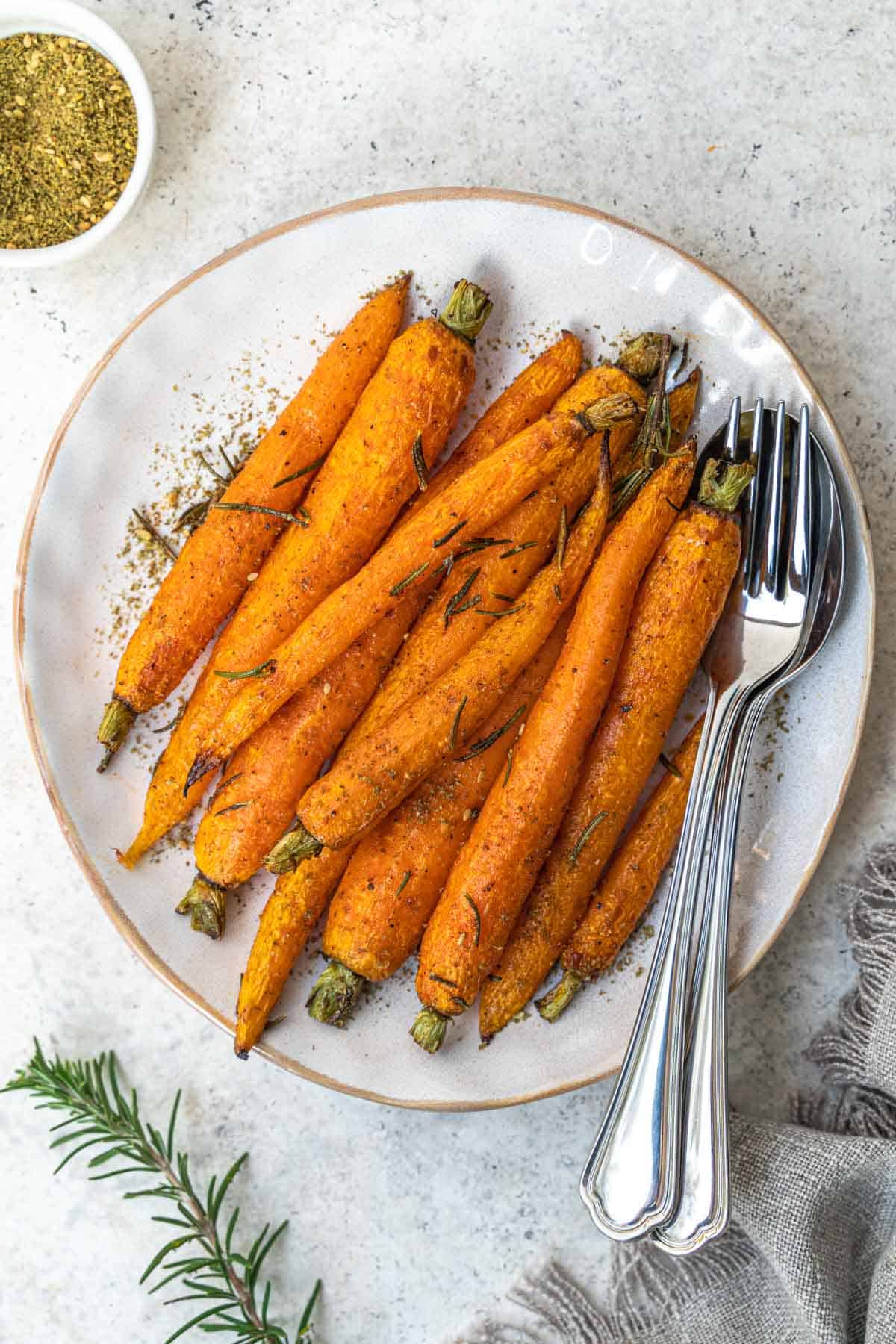
I resisted making vegetables in the air fryer for a long time — seemed unnecessary when I had a perfectly good oven. Then I tried carrots in it and now I don't go back. The edges get slightly caramelized, the insides stay tender, and the whole thing is done in under 15 minutes. For an Easter table where your oven is already packed with the main dish and other sides, having a vegetable that cooks quickly in the air fryer is genuinely useful. Season them simply or dress them up with honey and herbs — either way, they disappear fast.
Ingredients
- 1 lb carrots, peeled and cut into ½-inch rounds or diagonal slices
- 1½ tablespoons olive oil
- 1 tablespoon honey (or maple syrup)
- ½ teaspoon garlic powder
- ½ teaspoon dried thyme (or Italian seasoning)
- ¼ teaspoon salt
- ¼ teaspoon black pepper
- Fresh parsley, chopped, for garnish (optional)
Instructions
- Preheat your air fryer to 380°F for 3 minutes.
- In a bowl, toss the sliced carrots with olive oil, honey, garlic powder, thyme, salt, and pepper until evenly coated.
- Arrange carrots in a single layer in the air fryer basket — don't pile them or they'll steam instead of roast.
- Air fry at 380°F for 10–13 minutes, shaking the basket halfway through, until the carrots are fork-tender with caramelized edges.
- Transfer to a serving dish and garnish with fresh parsley if using. Serve immediately.
Tips
- Tip: Cut your carrot pieces as uniformly as possible so they finish cooking at the same time — thick pieces will still be hard when the thin ones are done.
- Tip: If your air fryer runs hot, check at the 8-minute mark — honey can burn quickly in some models.
- Tip: Baby carrots work here too if that's what you have — just halve them lengthwise and add 2–3 extra minutes of cook time.
22. Easy Maple Glazed Oven Roasted Carrots

Maple and carrots is one of those combinations that sounds almost too simple to be worth making, and then you eat them and understand. The maple syrup deepens into something almost nutty in the oven, and the carrots go from ordinary to genuinely craveable. This is the version I make when I want a vegetable side that feels a little special without any real extra effort. The whole-carrot presentation — halved lengthwise and roasted until golden — also looks beautiful on an Easter table, which never hurts.
Ingredients
- 1½ lbs whole carrots, peeled and halved lengthwise
- 2 tablespoons pure maple syrup
- 1½ tablespoons olive oil (or melted butter)
- ½ teaspoon cinnamon
- ¼ teaspoon salt
- ¼ teaspoon black pepper
- Fresh thyme or rosemary sprigs, for garnish (optional)
Instructions
- Preheat oven to 400°F. Line a large sheet pan with parchment paper or foil.
- In a large bowl, whisk together the maple syrup, olive oil, cinnamon, salt, and pepper. Add the carrots and toss to coat thoroughly.
- Arrange carrots cut-side down in a single layer on the prepared sheet pan — cut-side down gives you better caramelization on the flat surface.
- Roast for 20–25 minutes, flipping once halfway through, until the carrots are tender and the glaze has thickened and browned at the edges.
- Transfer to a serving platter, drizzle with any remaining pan juices, and garnish with fresh thyme if desired.
Tips
- Tip: Real maple syrup matters here — the pancake syrup kind is mostly corn syrup and won't give you the same depth of flavor. Costco sells a large jug of pure maple syrup for a reasonable price.
- Tip: Don't crowd the pan — if the carrots are touching and overlapping they'll steam. Use two sheet pans if needed.
- Tip: A pinch of cayenne in the glaze adds a subtle warmth that balances the sweetness nicely if your family likes a little kick.
23. Roasted Sweet Potato Fries
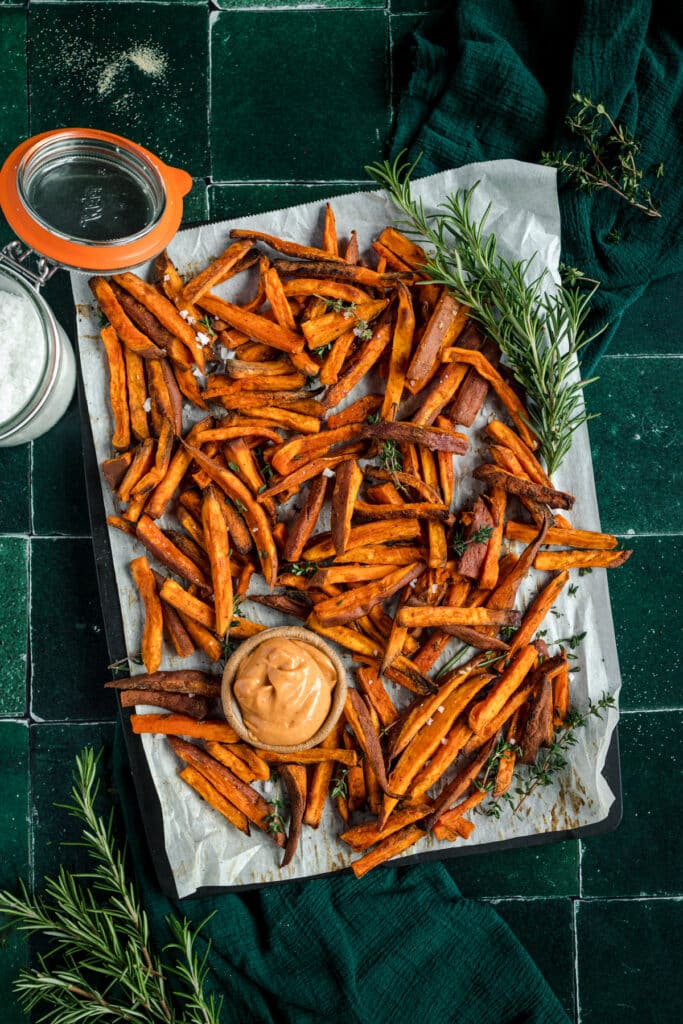
Saad would eat these every single day if I let him — he discovered sweet potato fries at a restaurant and now requests them constantly. The oven-roasted version at home gets crispier than you'd expect if you follow two rules: dry your sweet potatoes thoroughly after cutting, and don't skip the cornstarch. That thin coating is what pulls the moisture out and gives you real crisp edges instead of soggy ones. These are casual enough for a weeknight but the color alone makes them feel festive on an Easter spread.
Ingredients
- 2 large sweet potatoes, peeled and cut into ¼-inch thick fries
- 2 tablespoons olive oil
- 1 tablespoon cornstarch
- ½ teaspoon smoked paprika
- ½ teaspoon garlic powder
- ½ teaspoon salt
- ¼ teaspoon black pepper
Instructions
- Preheat oven to 425°F. Line two sheet pans with parchment paper.
- Pat the cut sweet potato fries completely dry with paper towels — this step is not optional if you want crispy edges.
- In a large bowl, toss the dried fries with olive oil first, then sprinkle over the cornstarch, paprika, garlic powder, salt, and pepper. Toss again until every piece is evenly coated.
- Spread fries in a single layer across both pans — give each fry space. Crowded fries steam; spaced fries crisp.
- Roast for 15 minutes, flip, then roast another 10–15 minutes until the edges are golden and crisp. Watch carefully in the last few minutes — they can go from perfect to overdone quickly.
Tips
- Tip: Try to cut your fries as uniform in thickness as possible — a mandoline makes this easier, but a sharp knife and patience works fine too.
- Tip: Serve immediately after roasting — sweet potato fries soften as they sit, so time them to come out of the oven close to when you're ready to eat.
- Tip: A dipping sauce of Greek yogurt mixed with a little lime juice and honey is a nice pairing that takes about 30 seconds to put together.
24. Crispy Parmesan Oven Roasted Potato Wedges
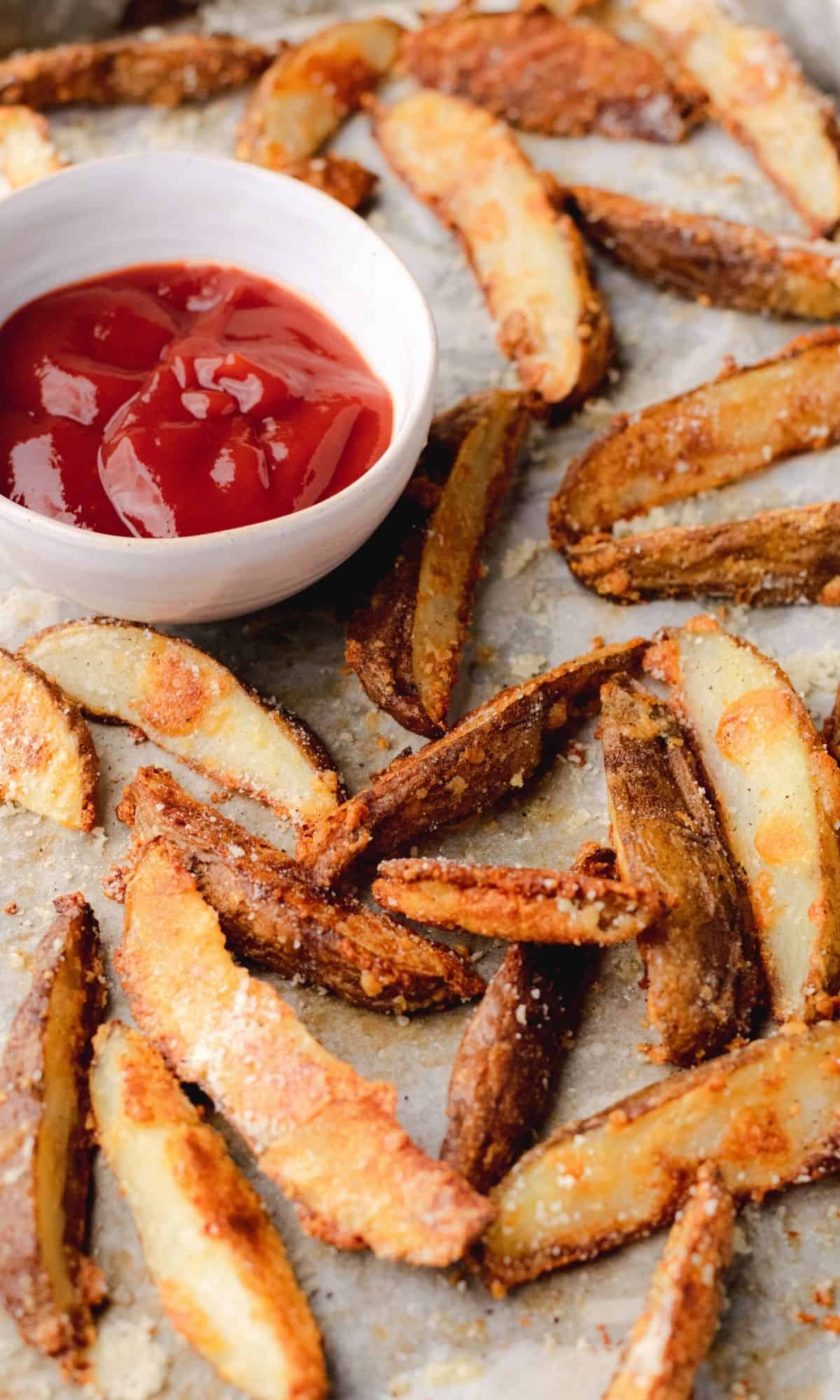
Potato wedges are one of those sides that feel more substantial than fries but less formal than roasted potatoes — they land exactly where you want them for a holiday table that also has kids at it. The parmesan crust here is what makes them worth including in this list: it forms a slightly salty, savory shell around each wedge that holds up even after they've been sitting for a few minutes. I make a double batch of these because they vanish before I've even finished setting the table. The key is soaking the cut potatoes first to pull out excess starch — it makes a real difference in how crispy they get.
Ingredients
- 2 lbs russet potatoes (about 3–4 medium), scrubbed and cut into wedges
- 3 tablespoons olive oil
- ½ cup finely grated parmesan cheese
- 1 teaspoon garlic powder
- 1 teaspoon Italian seasoning
- ½ teaspoon smoked paprika
- ¾ teaspoon salt
- ¼ teaspoon black pepper
- Fresh parsley, chopped, for serving
Instructions
- Preheat oven to 400°F. Soak the cut potato wedges in cold water for at least 20 minutes, then drain and dry them thoroughly with paper towels.
- In a large bowl, toss the dried wedges with olive oil. Add the parmesan, garlic powder, Italian seasoning, paprika, salt, and pepper, and toss again until every wedge is coated.
- Arrange wedges skin-side down on a parchment-lined sheet pan in a single layer, leaving space between each one.
- Roast for 30–35 minutes, flipping halfway through, until deep golden and crisp with the parmesan forming a crust on the outside.
- Sprinkle with fresh parsley and serve hot. These are best right out of the oven.
Tips
- Tip: Pre-grated parmesan from a bag can work but freshly grated parmesan sticks better and melts into a crispier crust — worth the extra two minutes.
- Tip: Don't skip the soak — 20 minutes in cold water removes surface starch and is the single biggest factor in getting crispy rather than soft wedges.
- Tip: Serve with sour cream or a quick garlic aioli (mayo + minced garlic + lemon juice) for dipping — both work well with the parmesan crust.
25. Brabant Potatoes
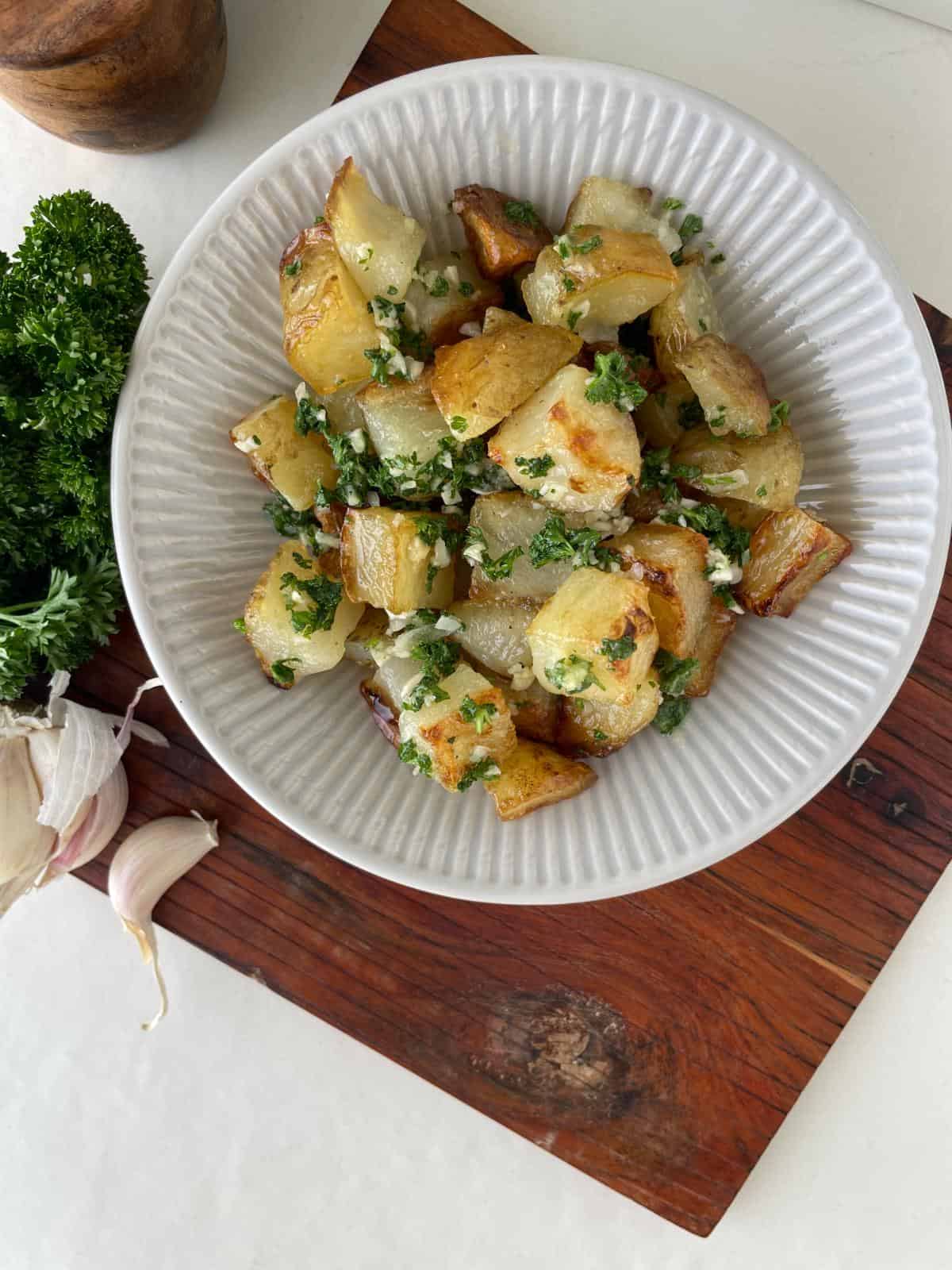
Brabant potatoes are a New Orleans classic that I had never heard of until a few years ago, and now I wonder how I made Easter dinners without them. They're small cubed potatoes that get par-cooked first, then pan-fried until every side is genuinely crispy, then finished with a butter, garlic, and parsley sauce that soaks into all the crunchy edges. The double-cooking method — boil briefly, then fry — is what separates these from regular roasted potatoes. They hold their crispiness better, the garlic butter clings to the crust, and the result is something that tastes far more indulgent than the ingredient list suggests. This is the last recipe in this list and honestly one of the best ones to end on.
Ingredients
- 2 lbs Yukon Gold potatoes, cut into ¾-inch cubes (no need to peel)
- 3 tablespoons vegetable oil (for frying)
- 3 tablespoons unsalted butter
- 4 cloves garlic, minced
- ¼ cup fresh parsley, finely chopped
- 1 teaspoon salt, plus more for boiling water
- ½ teaspoon black pepper
- ¼ teaspoon cayenne pepper (optional but traditional)
Instructions
- Bring a large pot of salted water to a boil. Add the cubed potatoes and cook for exactly 5 minutes — you want them just barely tender but not fully cooked. Drain well and let them air-dry on a clean towel for 10 minutes. Dry potatoes fry better.
- Heat the vegetable oil in a large heavy skillet (cast iron works great here) over medium-high heat until shimmering. Add the potato cubes in a single layer — work in batches if needed.
- Fry without moving for 3–4 minutes until a golden crust forms on the bottom, then turn and repeat on the remaining sides. Total frying time is about 10–12 minutes. Season with salt and pepper as they cook.
- Reduce heat to medium-low. Push the potatoes to the side and add the butter to the pan. Once melted, add the garlic and cook for 30–45 seconds until fragrant — don't let it brown.
- Toss the potatoes in the garlic butter to coat, add cayenne if using, then remove from heat and stir in the fresh parsley. Serve immediately.
Tips
- Tip: The drying step after boiling is non-negotiable — wet potatoes hitting hot oil will splatter and steam instead of fry. Give them the full 10 minutes.
- Tip: Don't overcrowd the pan or the potatoes will steam each other. Two batches in a 12-inch skillet is better than one crowded batch — the crust is worth the extra few minutes.
- Tip: You can par-boil the potatoes up to a day ahead and refrigerate them — cold, dry potatoes actually fry up even crispier than freshly boiled ones.
Twenty-five Easter side dishes is a lot to scroll through, I know. But that's kind of the point — Easter is one of those meals where the sides ARE the meal. The honey-glazed carrots, the creamy potato gratin, the deviled eggs that disappear before anyone even sits down. I've made most of these at some point over the years, some of them many times over, and every single one here has earned its place at our table at least once. Pick two or three that fit what your family actually eats and build your menu around those.
If you're feeding a crowd, I'd suggest leaning toward the make-ahead options — the casseroles, the roasted vegetables, anything that can sit in the oven while you're not watching it. The first Easter I hosted on my own, I tried to do everything fresh on the day and completely lost track of timing. The green beans were cold by the time the lamb was done. Now I do at least half the sides the night before and I actually enjoy the meal instead of just surviving it. Learn from my mistake on that one.
I hope this list gives you somewhere to start, whether you're doing a big family gathering or just a quiet Sunday lunch at home. Bookmark the ones that catch your eye, check what you already have in your fridge, and don't overthink it. A good Easter spread doesn't need to be perfect — it just needs to be on the table. 🐣🌷✨
More Recipes You Might Like
- Browse All Recipe Roundups — a good starting point if you're planning meals for any occasion
- Back to the Homepage — new recipes go up regularly, worth a look
- Holiday Dinner Roundups — if Easter is your thing, chances are you're also planning ahead for other holidays
- Easy Vegetable Side Dishes — great if you want to expand your vegetable side game beyond just Easter
Frequently Asked Questions
Which Easter side dishes can I make the day before?
Most casseroles, roasted root vegetables, and potato-based dishes hold up really well overnight in the fridge. I'd say anything with a cream or cheese sauce actually tastes better the next day after the flavors have had time to settle. Just reheat covered in the oven at 325°F so they don't dry out. Salads and anything with fresh herbs are better made day-of.
How many side dishes do I need for an Easter dinner?
For a typical Easter table with a main like ham or lamb, I'd say three to four sides is plenty. One starchy side (potatoes, rolls, or a grain), one or two vegetable dishes, and something fresh like a salad or a spring slaw. If you're going more of a buffet-style spread, you can stretch it to five or six — just don't exhaust yourself trying to do ten things at once.
What are good Easter sides for a crowd of 20 or more?
Go for dishes that scale easily and don't need last-minute attention — big casseroles, sheet pan roasted vegetables, and cold salads that can be made in bulk. I always double my scalloped potatoes recipe for large gatherings because it's the one thing that consistently disappears first. Deviled eggs are also a smart move since you can make several dozen ahead and they travel well.
Are there Easter side dishes that work for vegetarians or vegans?
Quite a few of the 25 in this list are naturally vegetarian — roasted asparagus, spring salads, glazed carrots, roasted beets, most potato sides. For vegan guests, the main swaps are usually butter for olive oil and cream for full-fat coconut milk or oat cream. These substitutions work well in roasted and sautéed dishes; they're a bit trickier in gratins but still doable.
Which side dish from this list is easiest for a beginner cook?
Honestly, roasted vegetables are where I'd start anyone who's new to cooking for a holiday. Toss with olive oil, salt, pepper, and a little garlic, roast at 400°F until the edges caramelize — that's it. Asparagus, carrots, green beans, even radishes transform completely in a hot oven with minimal effort. It's the kind of side that looks impressive and takes almost no skill to pull off.
Share This Post!
If this list helped you figure out your Easter menu, save it to Pinterest or share it with whoever's in charge of the potluck this year. 🌷📌
View More Recipes here Recipe Roundups



Comments
No Comments