
Lo mein is one of those meals that sounds like takeout but is honestly faster to make at home than to wait for delivery. I started making it regularly after I realized how much money we were spending on Chinese takeout every month — Saad could eat noodles every single day if I let him, and lo mein was always his first choice. Once I figured out that the sauce is mostly pantry staples — soy sauce, sesame oil, a little oyster sauce — and the noodles cook in minutes, I stopped ordering it and started making it myself. The results were almost always better than the container that showed up at the door.
A good lo mein comes down to a few things: high heat, a sauce that clings to the noodles, and vegetables that still have some texture when they hit the plate. The biggest mistake I made early on was overcrowding the pan — everything steamed instead of stir-frying, and the noodles turned mushy and sad. Now I know to work in batches if I need to, and to get the pan genuinely hot before anything goes in. I also learned that lo mein noodles and chow mein noodles aren't the same thing, though you can often swap them in a pinch. If you want more background on noodle-based dinners that come together fast, my easy pasta recipes post has a lot of the same weeknight logic.
This list covers a wide range — there's a classic 15-Minute Lo Mein for nights when you have almost no time, a Whole30 Shrimp Lo Mein for when someone in the house is eating cleaner, a Beef Lo Mein that my husband requests pretty regularly, and even an Instant Pot Chicken Lo Mein for days when I genuinely don't want to stand at the stove. I also included a couple of vegetarian options — the Quick Homemade Vegetable Lo Mein has become my go-to meatless weeknight dinner. If you're building out your Asian-inspired dinner rotation, check out my easy Chinese recipes and my stir fry recipes roundups too — lots of overlap in technique and ingredients.
Here are the 20 lo mein recipes I keep coming back to — pick whichever fits your week.
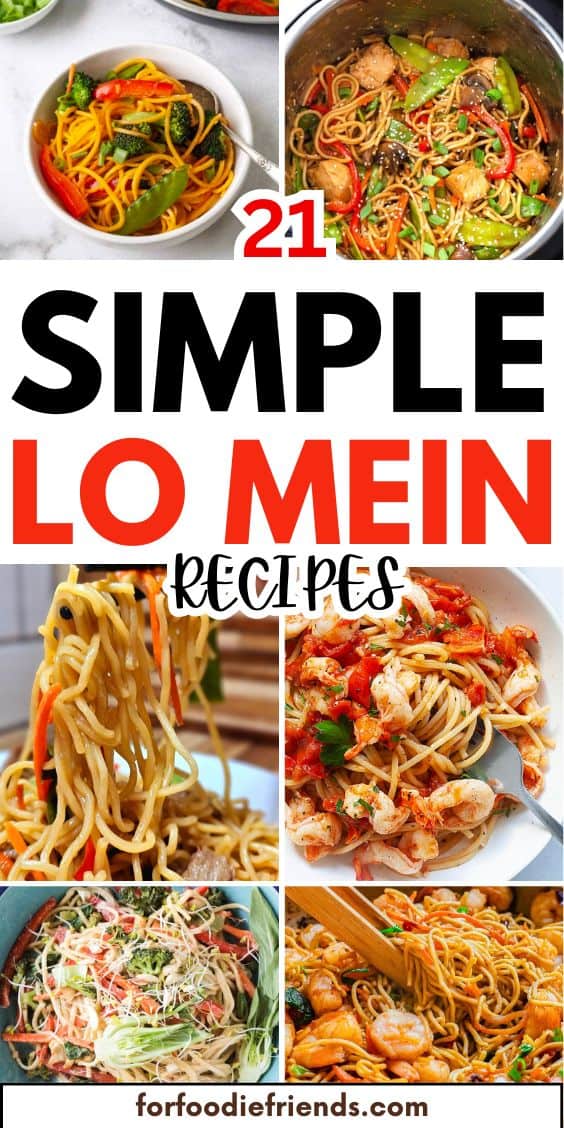
21. Lo Mein Noodles
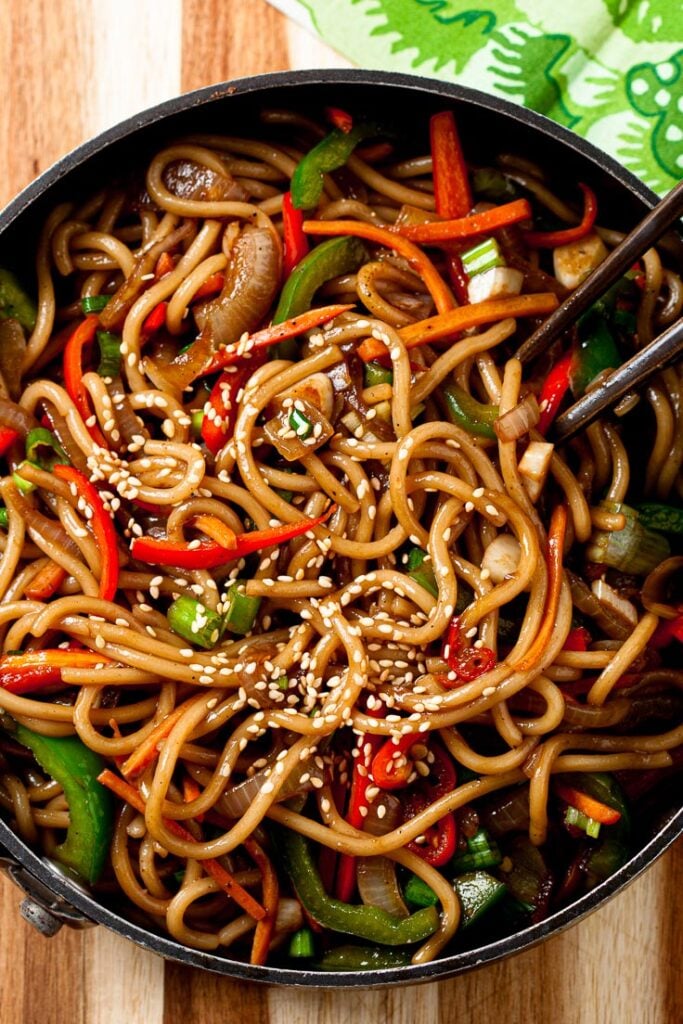
This is the recipe I come back to when I need something on the table in 20 minutes and I haven't thought about dinner until 6pm. Lo mein noodles with a savory sauce, whatever vegetables are in the crisper drawer, and your protein of choice — it's one of those recipes that works whether you're feeding a crowd or just two people. I've made it with shredded rotisserie chicken more times than I can count. It reheats well the next day too, which means it earns its spot in my meal prep rotation without any argument from me.
Ingredients
- 8 oz lo mein noodles (or spaghetti in a pinch)
- 2 tablespoons sesame oil
- 3 cloves garlic, minced
- 1 cup shredded cabbage
- 1 medium carrot, julienned
- 3 tablespoons soy sauce
- 1 tablespoon oyster sauce
- 1 teaspoon sugar
- 2 green onions, sliced, for serving
Instructions
- Cook noodles according to package directions until just al dente. Drain and toss with 1 teaspoon of sesame oil to prevent sticking. Set aside.
- In a small bowl, whisk together soy sauce, oyster sauce, and sugar. Set the sauce aside.
- Heat remaining sesame oil in a large skillet or wok over medium-high heat. Add garlic and stir-fry for 30 seconds until fragrant.
- Add cabbage and carrot to the pan. Stir-fry for 2–3 minutes until just tender but still with a little bite.
- Add the cooked noodles and pour the sauce over everything. Toss well over high heat for 1–2 minutes until the noodles are coated and slightly caramelized. Top with green onions and serve immediately.
Tips
- Tip: Don't overcook the noodles — they'll continue cooking in the pan, so pull them out while they still have a little chew to them.
- Tip: A very hot pan is the difference between lo mein that tastes like takeout and lo mein that tastes like sad noodles. Get the skillet properly hot before adding anything.
- Tip: This works great with leftover teriyaki beef sliced thin and tossed in at the end.
20. Whole30 Vegan Lo Mein
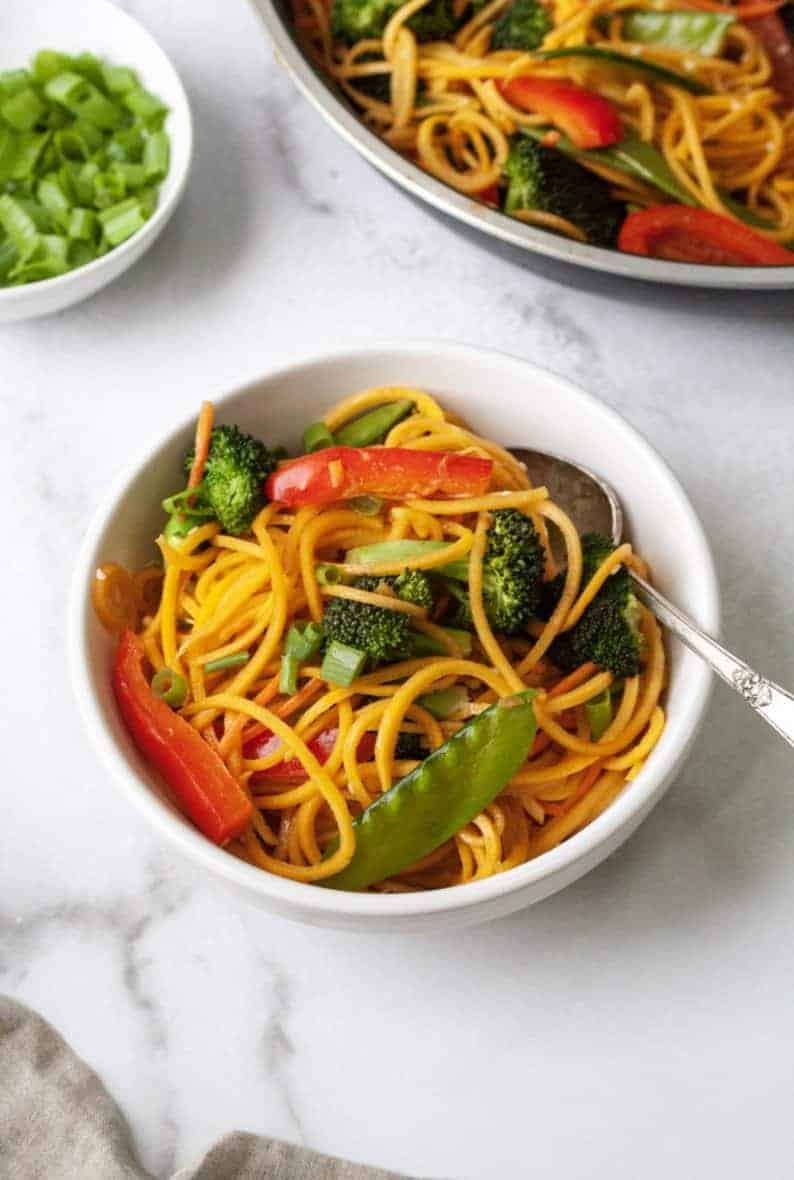
I'll be honest — I was skeptical the first time I heard "lo mein with butternut squash noodles." That doesn't sound like lo mein, that sounds like a salad wearing a disguise. But I tried it, and the natural sweetness of the squash noodles actually works really well against a savory, ginger-forward sauce. This version is Whole30-compliant, vegan, gluten-free, and dairy-free, so it covers a lot of dietary bases without sacrificing the thing that makes lo mein worth eating. If you have a spiralizer at home, use it — if not, most Walmart and Trader Joe's locations sell pre-spiralized butternut squash in the produce section.
Ingredients
- 4 cups butternut squash noodles (spiralized, or store-bought pre-spiralized)
- 2 tablespoons coconut aminos (Whole30-compliant soy sauce substitute)
- 1 tablespoon sesame oil
- 1 teaspoon fresh ginger, grated
- 2 cloves garlic, minced
- 1 cup snap peas, trimmed
- 1 red bell pepper, thinly sliced
- 1 cup shredded purple cabbage
- 1 tablespoon toasted sesame seeds, for garnish
Instructions
- In a small bowl, mix coconut aminos, sesame oil, ginger, and garlic together to form the sauce.
- Heat a large skillet over medium-high heat with a drizzle of avocado oil. Add snap peas, bell pepper, and cabbage. Stir-fry for 3–4 minutes until slightly softened.
- Add the butternut squash noodles to the pan. Toss gently with the vegetables and cook for 2–3 minutes — you want them tender but not mushy, so watch them carefully.
- Pour the sauce over the noodles and vegetables. Toss everything to coat and cook for another 1–2 minutes.
- Serve immediately topped with toasted sesame seeds.
Tips
- Tip: Butternut squash noodles release water as they cook, so don't cover the pan — keep it open to let moisture evaporate and avoid a watery sauce.
- Tip: Coconut aminos are slightly sweeter than soy sauce, so taste before adding more — you usually don't need much.
- Tip: Add cubed baked tofu or shredded rotisserie chicken (if not keeping it vegan) to make this a full meal with more staying power.
19. Beef Lo Mein

Beef lo mein is one of those dishes that feels indulgent but comes together on a weeknight without much fuss. Thinly sliced beef, bell peppers, carrots, snap peas, and noodles all tossed in a soy-based sauce — it scratches that takeout itch without the wait or the expense. The key is slicing the beef thin against the grain so it stays tender, not chewy. My husband always asks for extra sauce with his, so I usually make a little extra on the side. Serve it with egg rolls if you have them, or just eat it straight from the pan — no judgment.
Ingredients
- 8 oz lo mein noodles, cooked and drained
- ¾ lb flank steak or sirloin, sliced very thin against the grain
- 1 red bell pepper, sliced
- 1 large carrot, julienned
- 1 cup snap peas
- 3 cloves garlic, minced
- 3 tablespoons soy sauce
- 1 tablespoon oyster sauce
- 1 teaspoon dark soy sauce (for color — optional but worth it)
- 1 tablespoon sesame oil
- 1 tablespoon vegetable oil, for cooking
Instructions
- Whisk together soy sauce, oyster sauce, dark soy sauce, and sesame oil in a small bowl. Set aside.
- Heat vegetable oil in a large skillet or wok over high heat. Add beef in a single layer and sear for 1–2 minutes without moving it, then stir and cook another minute. Remove beef from pan and set aside.
- In the same pan, add garlic and stir-fry for 30 seconds. Add bell pepper, carrot, and snap peas. Stir-fry for 2–3 minutes until just tender.
- Return the beef to the pan along with the cooked noodles. Pour the sauce over everything and toss over high heat for 1–2 minutes until well combined and slightly glossy.
- Taste, adjust seasoning, and serve immediately.
Tips
- Tip: Pop the beef in the freezer for 20 minutes before slicing — it firms up just enough to make getting those paper-thin slices much easier.
- Tip: Don't crowd the beef in the pan or it'll steam instead of sear. If your skillet is small, cook it in two batches.
- Tip: Leftovers keep well in the fridge for up to 3 days and reheat quickly in a skillet with a splash of water to loosen the noodles.
18. Instant Pot Lo Mein with Beef and Broccoli
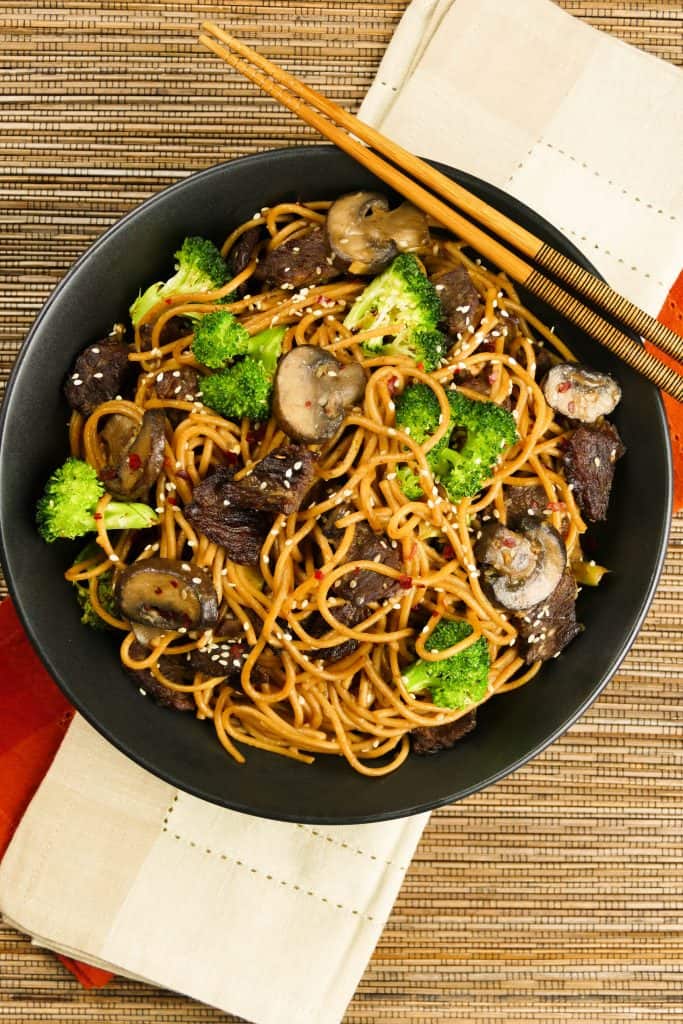
This one surprised me. I didn't think pressure-cooked noodles would have the right texture for lo mein — I expected mush — but the trick here is using spaghetti, which holds up better under pressure than traditional lo mein noodles. The beef comes out tender, the broccoli stays bright green (you add it at the end with a quick sauté), and the sauce is rich and deeply savory. It's a true one-pot dinner, which means one pot to wash, and on a Tuesday night that matters more than I'd like to admit.
Ingredients
- ¾ lb beef sirloin, thinly sliced
- 8 oz spaghetti, broken in half
- 2 cups broccoli florets
- 3 cloves garlic, minced
- 1 teaspoon fresh ginger, grated
- 3 tablespoons soy sauce
- 1 tablespoon oyster sauce
- 1 tablespoon sesame oil
- 1 teaspoon brown sugar
- 2 cups low-sodium beef broth
Instructions
- Set Instant Pot to Sauté. Add a little oil and brown the beef slices in batches for 1–2 minutes. Remove and set aside. Add garlic and ginger, cook for 30 seconds.
- Pour in the beef broth and scrape up any browned bits from the bottom — this step prevents the burn warning. Add soy sauce, oyster sauce, sesame oil, and brown sugar. Stir to combine.
- Add the broken spaghetti in a loose crisscross pattern on top of the liquid — don't pile it all in one spot. Return the beef on top. Do NOT stir.
- Seal the lid and cook on High Pressure for 5 minutes. Quick release the pressure.
- Open the lid, switch back to Sauté, and stir in the broccoli florets. Cook for 3–4 minutes until broccoli is tender-crisp. Taste and adjust seasoning. Serve immediately.
Tips
- Tip: Crisscrossing the spaghetti before pressure cooking prevents it from clumping into one solid mass — this small step makes a real difference.
- Tip: Always scrape the bottom thoroughly after the sauté step. Any stuck bits will trigger the burn notice on most Instant Pot models.
- Tip: The noodles will absorb more sauce as the dish sits, so if you're serving it a few minutes after cooking, add a small splash of broth to loosen everything up.
17. Instant Pot Lo Mein
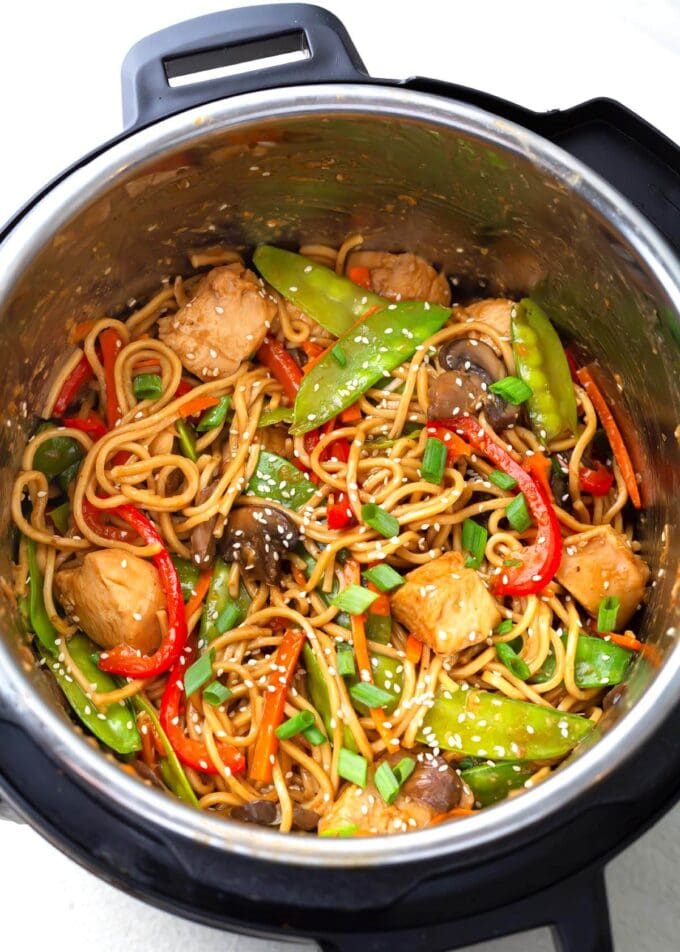
Where the beef and broccoli version above leans hearty, this Instant Pot lo mein is lighter and more versatile — think of it as the base recipe you can take in any direction. Chicken works great here, but so does shrimp added right at the end, or even just extra vegetables if you want to keep it meat-free. The "dump and go" approach is real: you layer the ingredients in a specific order, press a button, and 30 minutes later dinner is done. Saad was skeptical the first time I made this in the pressure cooker — he kept asking why I wasn't using a wok — but he ate two bowls, so the Instant Pot won that argument.
Ingredients
- 1 lb boneless skinless chicken breast, cut into thin strips
- 8 oz spaghetti or lo mein noodles, broken in half
- 1 cup shredded carrots
- 1 cup snap peas or frozen peas
- 3 cloves garlic, minced
- ¼ cup soy sauce
- 2 tablespoons hoisin sauce
- 1 tablespoon sesame oil
- 1¾ cups low-sodium chicken broth
- 2 green onions, sliced, for garnish
Instructions
- Pour chicken broth into the Instant Pot. Stir in soy sauce, hoisin sauce, sesame oil, and garlic.
- Layer the broken noodles in a crisscross pattern over the liquid. Place chicken strips on top of the noodles. Scatter carrots and snap peas over the chicken. Do not stir — layering prevents the burn notice.
- Seal the lid, set valve to sealing, and cook on High Pressure for 5 minutes. Once done, quick release the pressure immediately.
- Open the lid and stir everything together. The noodles will look a bit clumped at first — just keep stirring and they'll loosen up as everything combines.
- Taste and adjust with more soy sauce if needed. Serve topped with sliced green onions.
Tips
- Tip: The layering order matters — liquid on the bottom, noodles next, protein on top. This keeps the noodles from sitting directly on the heating element and triggering a burn warning.
- Tip: Quick release is important here — leaving it on natural release will overcook the noodles and turn them soft.
- Tip: Hoisin sauce can vary a lot in sweetness between brands. Taste before serving and balance with a little extra soy sauce if it tastes too sweet.
11. Instant Pot Chicken Lo Mein
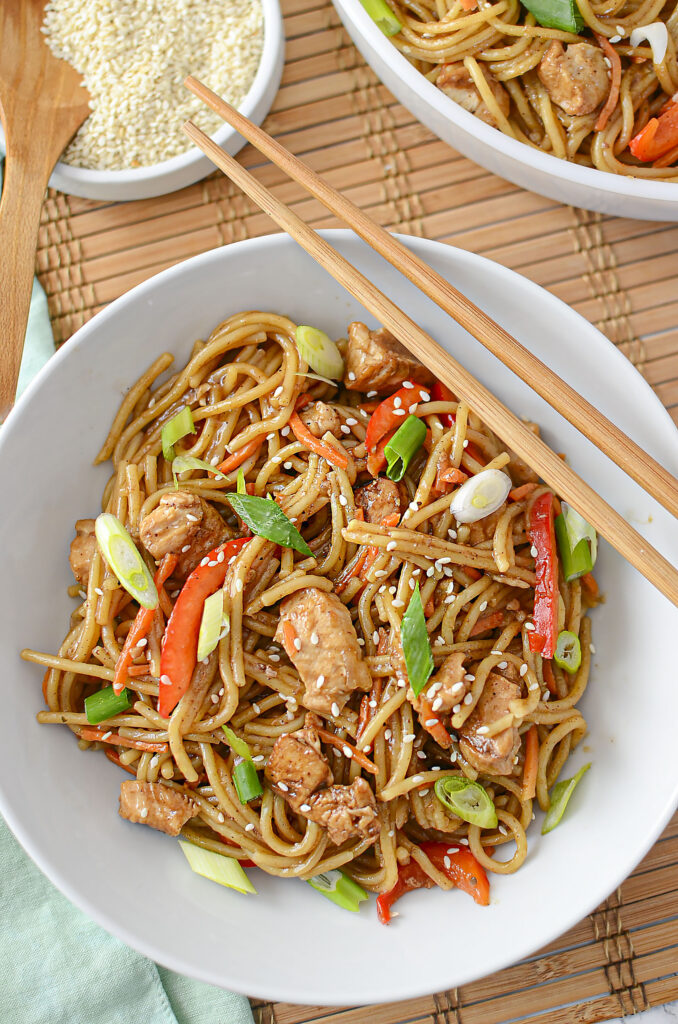
I'll be honest — I was skeptical about making lo mein in an Instant Pot the first time I tried it. Lo mein is a stir-fry dish, and pressure cookers feel like the opposite of that. But this version actually works, and on nights when I don't want to stand over a wok, it saves me completely. You get tender chicken, soft noodles, and a deeply savory sauce without babysitting the stove. One pot, minimal cleanup — that's the whole appeal here.
Ingredients
- 1 lb boneless skinless chicken breast, cut into bite-sized pieces
- 8 oz lo mein noodles (or spaghetti if that's what you have)
- 1 cup chicken broth
- 3 tablespoons soy sauce
- 1 tablespoon oyster sauce
- 1 tablespoon sesame oil
- 1 teaspoon garlic powder
- 1 cup shredded coleslaw mix (or thinly sliced cabbage and carrots)
- ½ cup frozen peas (optional)
- 2 green onions, sliced, for garnish
Instructions
- Add chicken pieces to the Instant Pot. Pour in chicken broth, soy sauce, oyster sauce, sesame oil, and garlic powder. Stir to combine.
- Break the lo mein noodles in half and push them down into the liquid, making sure they're mostly submerged. Don't stir — just press them under.
- Seal the lid and set to Manual/Pressure Cook on High for 5 minutes. When done, do a quick release.
- Open the lid and stir everything together. The noodles may look clumped — just keep stirring and they'll loosen. Add the coleslaw mix and frozen peas now; the residual heat will soften them perfectly without making them mushy.
- Taste and adjust soy sauce if needed. Top with green onions and serve immediately.
Tips
- Tip: Don't skip the quick release — natural release will overcook the noodles and turn them into mush.
- Tip: Spaghetti broken in half works just as well as lo mein noodles here — I've done it plenty of times and nobody complained.
- Tip: Add a drizzle of chili oil at the end if you want a little heat — it makes a big difference.
12. Shrimp Lo Mein
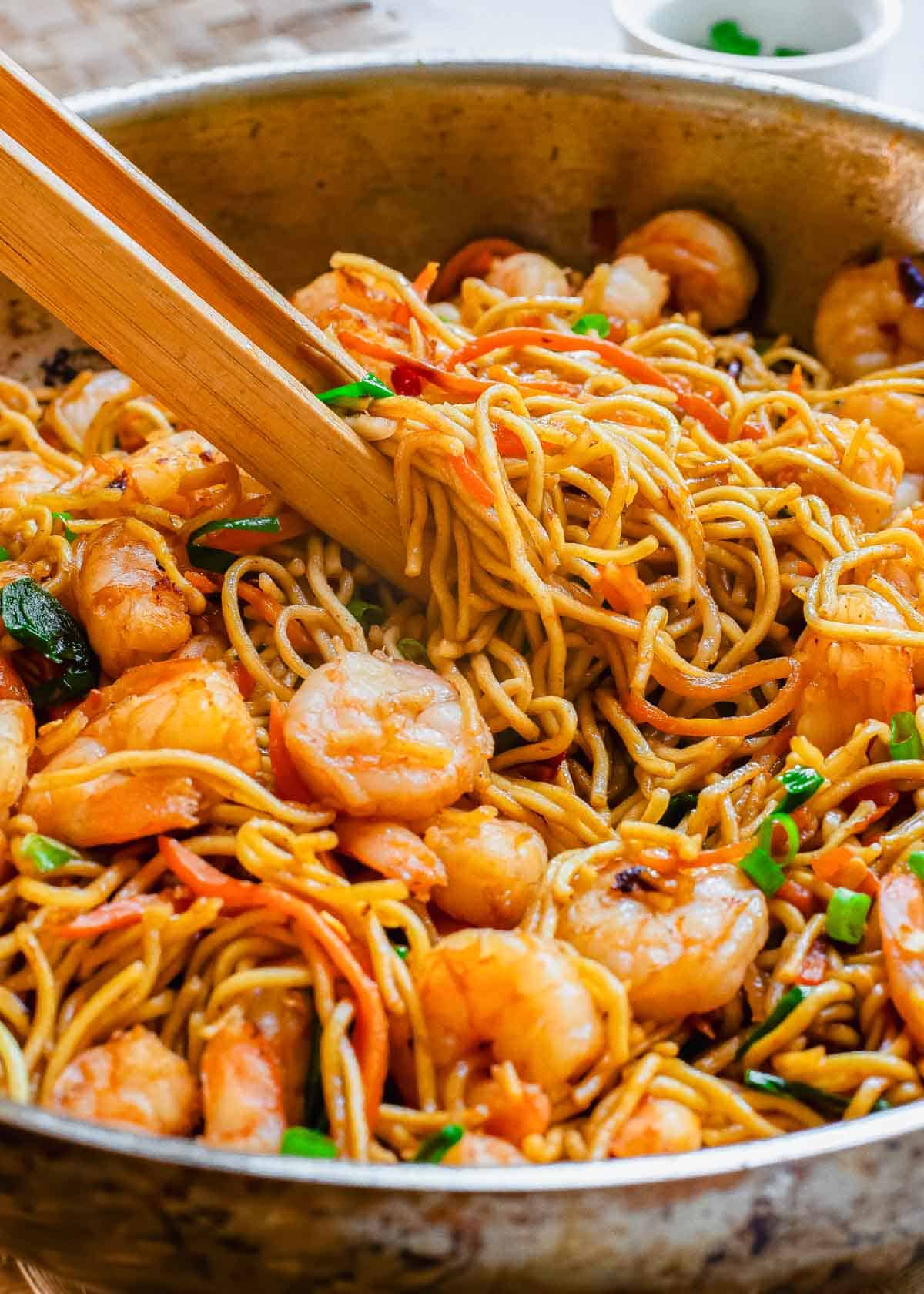
Shrimp lo mein cooks so fast it almost feels like cheating. The shrimp are done in two minutes, the noodles take five, and if you have your sauce mixed ahead of time you're eating in under 20 minutes total. I like this version because the shrimp stay juicy and slightly crisp at the edges rather than rubbery — the key is high heat and not overcrowding the pan. This is the one I make on Friday nights when everyone is hungry and nobody wants to wait.
Ingredients
- 1 lb large shrimp, peeled and deveined (fresh or thawed from frozen)
- 8 oz Chinese egg noodles (or thin spaghetti)
- 2 tablespoons vegetable oil, divided
- 3 cloves garlic, minced
- 1 cup snap peas
- 1 cup shredded carrots
- 3 tablespoons soy sauce
- 1 tablespoon oyster sauce
- 1 teaspoon sesame oil
- ½ teaspoon white pepper
- 2 green onions, sliced
Instructions
- Cook noodles according to package instructions, drain, and toss with a tiny bit of oil so they don't stick together while you work.
- Mix together soy sauce, oyster sauce, sesame oil, and white pepper in a small bowl. Set aside.
- Heat 1 tablespoon oil in a large skillet or wok over high heat. Add shrimp in a single layer and cook 1 minute per side until pink. Remove to a plate.
- Add remaining oil to the same pan. Stir-fry garlic for 30 seconds, then add snap peas and carrots. Cook 2 minutes, keeping the heat high.
- Add noodles and sauce to the pan. Toss everything together for 1-2 minutes. Return shrimp to the pan, toss once more, and top with green onions before serving.
Tips
- Tip: Pat the shrimp completely dry before they go in the pan — wet shrimp steam instead of sear and you lose all that color and flavor.
- Tip: Don't add the shrimp back in too early or they'll overcook. Return them right at the end, just long enough to reheat.
- Tip: Frozen shrimp from Costco or Walmart work perfectly here — just thaw them overnight in the fridge or under cold running water for 10 minutes.
13. Whole30 Shrimp Lo Mein (Paleo, Keto)
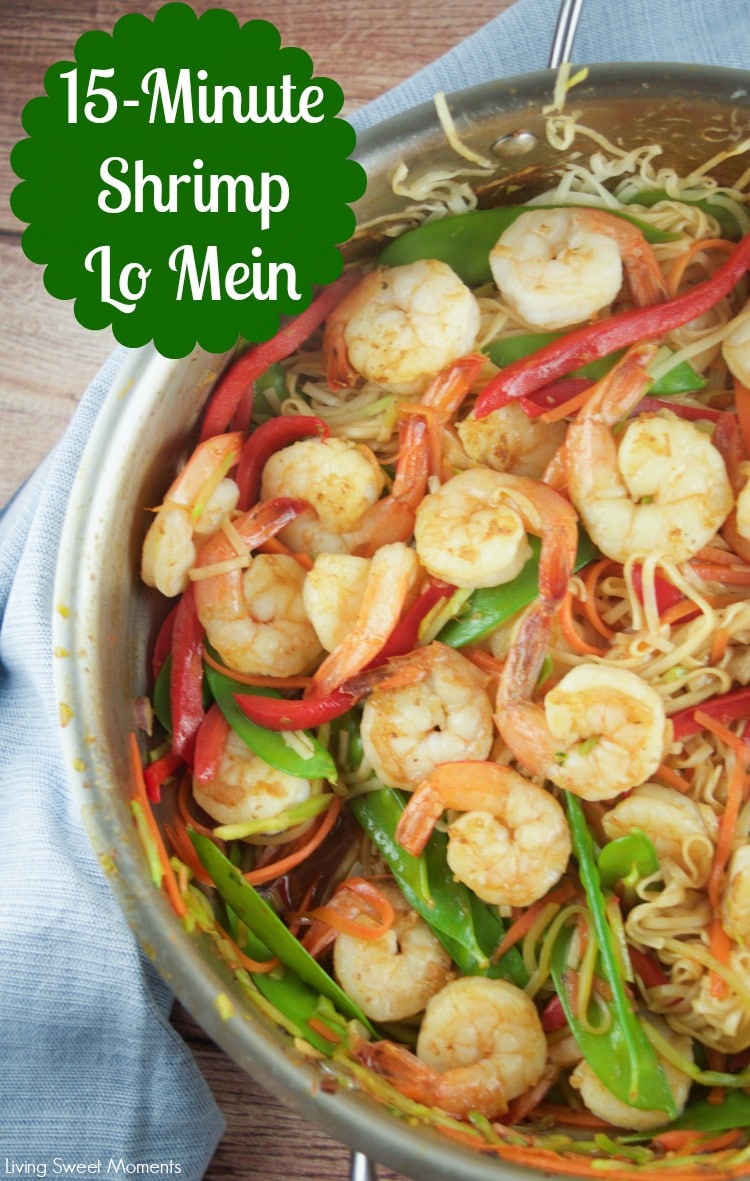
This one surprised me. I don't eat Whole30 or keto, but a friend asked me to test a version for her and I ended up making it twice more just because I liked it. Instead of regular noodles, it uses hearts of palm noodles — which you can find at Trader Joe's or on Amazon — and coconut aminos in place of soy sauce. The texture is different from traditional lo mein, lighter and a bit more delicate, but the flavors are genuinely good. Worth trying even if you're not following any particular diet.
Ingredients
- 1 lb large shrimp, peeled and deveined
- 2 cans (14 oz each) hearts of palm noodles, drained and rinsed (or zucchini noodles)
- 2 tablespoons coconut aminos
- 1 tablespoon fish sauce (check label for Whole30 compliance)
- 1 teaspoon sesame oil
- 2 cloves garlic, minced
- 1 teaspoon fresh ginger, grated
- 1 cup broccoli florets
- 1 cup shredded red cabbage
- 2 tablespoons avocado oil or coconut oil
- Sesame seeds and sliced green onion to finish
Instructions
- Drain and rinse hearts of palm noodles well. Pat them dry with a paper towel — this step matters or the pan will steam instead of stir-fry.
- Mix coconut aminos, fish sauce, and sesame oil in a small bowl. Set aside.
- Heat avocado oil in a large skillet over high heat. Cook shrimp 1-2 minutes per side until pink. Remove and set aside.
- In the same pan, cook garlic and ginger for 30 seconds. Add broccoli and cabbage and stir-fry 3 minutes until just tender.
- Add hearts of palm noodles and sauce. Toss everything together for 2 minutes. Return shrimp, toss once more, and top with sesame seeds and green onion.
Tips
- Tip: Hearts of palm noodles are sold at Trader Joe's and most health food stores — if you can't find them, zucchini noodles are a fair substitute though they release more water.
- Tip: Coconut aminos taste slightly sweeter than soy sauce — if you want more depth, add a small splash of fish sauce to balance it out.
- Tip: This dish is best eaten immediately — the hearts of palm noodles get a bit soft if they sit in sauce for too long.
14. Quick Homemade Vegetable Lo Mein (Vegan Option)
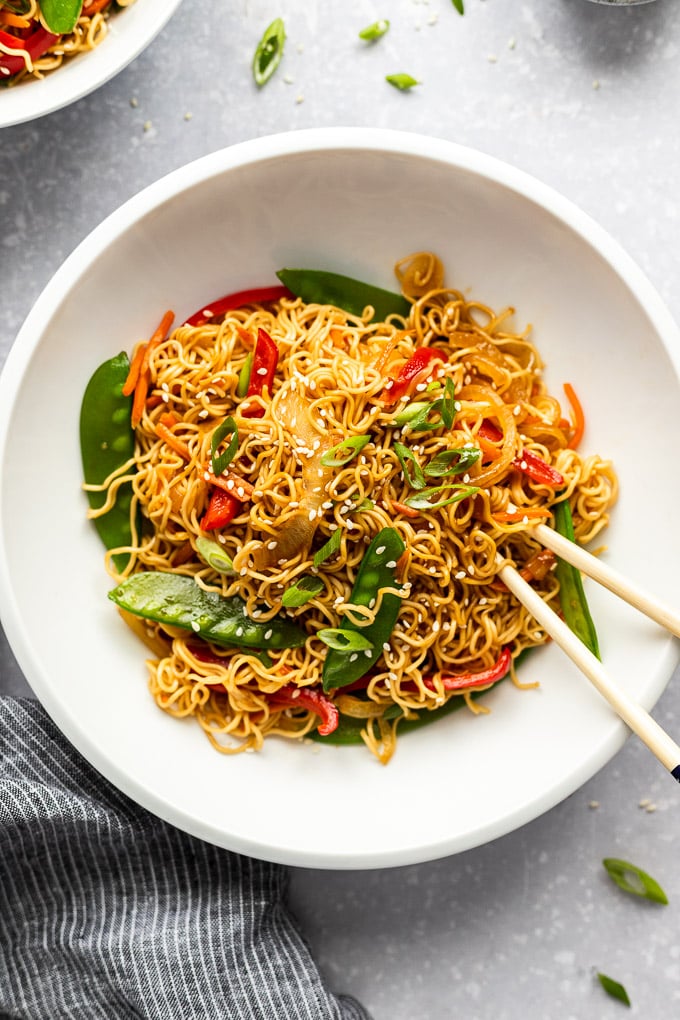
This is my go-to when the fridge has random vegetables that need to be used up. Bell peppers, mushrooms, whatever wilting spinach is left — it all works. The sauce is simple: soy sauce, a little hoisin, garlic, and sesame oil. What makes it genuinely good is not overcrowding the pan and keeping the heat high enough to get some color on the vegetables rather than just steaming them. To make it fully vegan, swap oyster sauce for hoisin or a vegan oyster-style sauce, which you can find at most Asian grocery sections now.
Ingredients
- 8 oz lo mein noodles (or spaghetti)
- 2 tablespoons vegetable oil
- 3 cloves garlic, minced
- 1 cup mushrooms, sliced
- 1 bell pepper, thinly sliced
- 1 cup shredded cabbage
- 1 cup bean sprouts (optional)
- 3 tablespoons soy sauce
- 1 tablespoon hoisin sauce (use vegan hoisin to keep it fully plant-based)
- 1 teaspoon sesame oil
- ½ teaspoon sugar
- 2 green onions, sliced
Instructions
- Cook noodles according to package directions, drain, rinse with cold water, and set aside. Rinsing stops them from cooking further and prevents clumping.
- Whisk together soy sauce, hoisin, sesame oil, and sugar in a small bowl.
- Heat oil in a large skillet or wok over high heat. Add garlic and stir-fry 30 seconds. Add mushrooms and cook 2 minutes until they start to brown.
- Add bell pepper and cabbage. Stir-fry another 2 minutes. You want the vegetables to have some bite still — don't go to mush.
- Add noodles and sauce, toss everything together over high heat for 1-2 minutes until the sauce coats every strand. Top with bean sprouts and green onions and serve hot.
Tips
- Tip: Cook the mushrooms first and alone for a minute — they release water and need a head start to actually brown rather than steam.
- Tip: If you want to add protein, pan-fried tofu cubes tossed in a little soy sauce fit perfectly into the vegan version.
- Tip: I make a double batch of this on Sunday and it reheats well in a skillet with just a splash of water to loosen the noodles.
15. Chinese Vegetable Lo Mein Noodles (Easy and Quick Recipe)

This version leans into the classic Chinese-American takeout style — garlicky, saucy, with just enough vegetables to feel balanced without being a salad. The sauce hits that familiar dark, slightly sweet, deeply savory note that makes you want to eat it straight from the pan. It's the recipe I'd give someone who's never made lo mein before, because the technique is forgiving and the result is consistently good. Simple, fast, and exactly what lo mein is supposed to taste like.
Ingredients
- 8 oz lo mein noodles or thin spaghetti
- 2 tablespoons vegetable oil
- 4 cloves garlic, minced
- 1 teaspoon fresh ginger, grated
- 2 cups mixed vegetables (bok choy, snap peas, shredded carrots — whatever you have)
- 3 tablespoons soy sauce
- 1 tablespoon dark soy sauce (for color — regular soy works if you don't have it)
- 1 tablespoon oyster sauce
- 1 teaspoon sesame oil
- 1 teaspoon sugar
Instructions
- Boil noodles until just cooked — al dente, not soft. Drain, rinse with cold water, and toss with a few drops of oil to prevent sticking.
- Mix soy sauce, dark soy sauce, oyster sauce, sesame oil, and sugar together in a small bowl. This is your sauce — have it ready before you start stir-frying.
- Heat vegetable oil in a wok or large skillet over high heat until it shimmers. Add garlic and ginger and stir-fry for 30 seconds.
- Add vegetables and stir-fry 2-3 minutes. They should be just tender with a little crunch still in them.
- Add noodles and pour sauce over everything. Toss with tongs or two spoons over high heat for 1-2 minutes until every noodle is coated and the sauce has reduced slightly. Serve immediately.
Tips
- Tip: Dark soy sauce is what gives lo mein that deep brown color you see at restaurants — a small bottle from the Asian aisle at Walmart or Aldi is worth picking up.
- Tip: Mix your sauce before you start cooking — stir-frying moves fast and you don't want to be measuring soy sauce while garlic is burning.
- Tip: For extra flavor, add a small knob of butter right at the end and toss it in — it sounds odd but it rounds out the sauce beautifully.
16. Chicken Lo Mein Recipe (Gluten-Free Option)
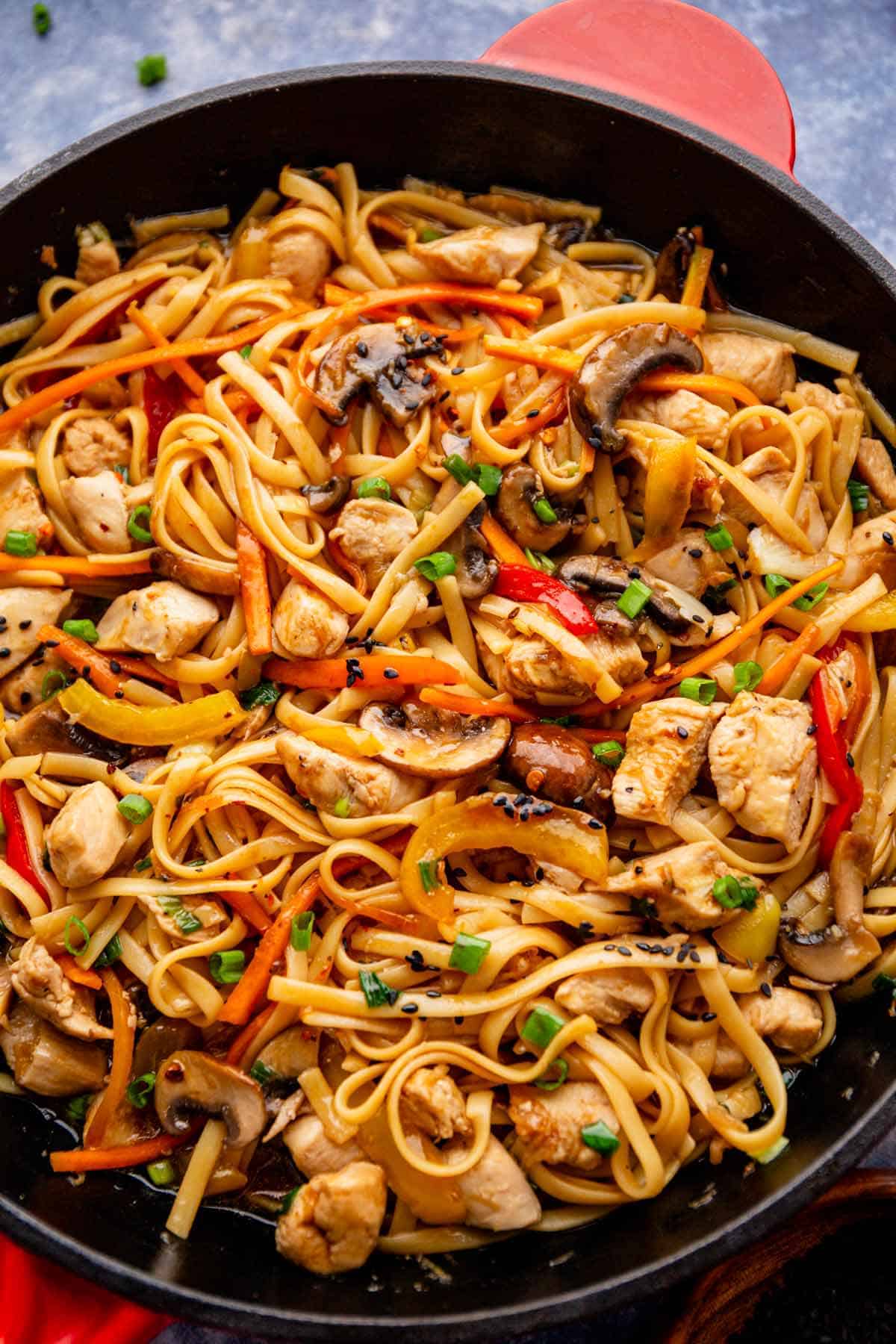
Making lo mein gluten-free used to feel like a compromise — you'd swap the noodles and the sauce and end up with something that barely resembled the original. This version fixes that. Use rice noodles in place of egg noodles and tamari instead of regular soy sauce, and the rest of the recipe stays the same. The chicken is marinated, the sauce is rich and dark, and honestly if you didn't tell someone it was gluten-free they might not notice. I've served it to my family without mentioning it and nobody said a word.
Ingredients
- 1 lb boneless chicken thighs, sliced thin
- 8 oz rice noodles (or certified gluten-free lo mein noodles)
- 3 tablespoons tamari (gluten-free soy sauce)
- 1 tablespoon gluten-free oyster sauce (Lee Kum Kee makes one)
- 1 teaspoon sesame oil
- 1 teaspoon cornstarch
- 2 tablespoons vegetable oil
- 3 cloves garlic, minced
- 1 cup broccoli florets
- 1 cup shredded carrots
- 2 green onions, sliced
Instructions
- Toss sliced chicken with 1 tablespoon tamari and cornstarch. Let it sit for 10-15 minutes while you prep everything else — this quick marinade makes the chicken noticeably more tender.
- Cook rice noodles according to package directions (usually just soaking in hot water for 8-10 minutes). Drain and set aside.
- Mix remaining tamari, oyster sauce, and sesame oil in a small bowl to make the finishing sauce.
- Heat oil in a large skillet over high heat. Cook chicken in a single layer for 3-4 minutes until cooked through and slightly golden. Remove and set aside.
- In the same pan, stir-fry garlic for 30 seconds, then add broccoli and carrots. Cook 2-3 minutes. Add noodles and sauce, toss well. Return chicken to the pan, toss everything together, top with green onions, and serve.
Tips
- Tip: Check your oyster sauce label carefully — most standard oyster sauces contain wheat. Lee Kum Kee's gluten-free version is easy to find at Walmart in the international aisle.
- Tip: Rice noodles go from perfectly cooked to mushy quickly — pull them out of the water a minute early since they'll keep cooking when you toss them in the hot pan.
- Tip: Chicken thighs stay juicier than breast in this recipe — if you only have breast, cut it a bit thicker and don't overcook it.
10. 10-Minute Easy Beef Lo Mein
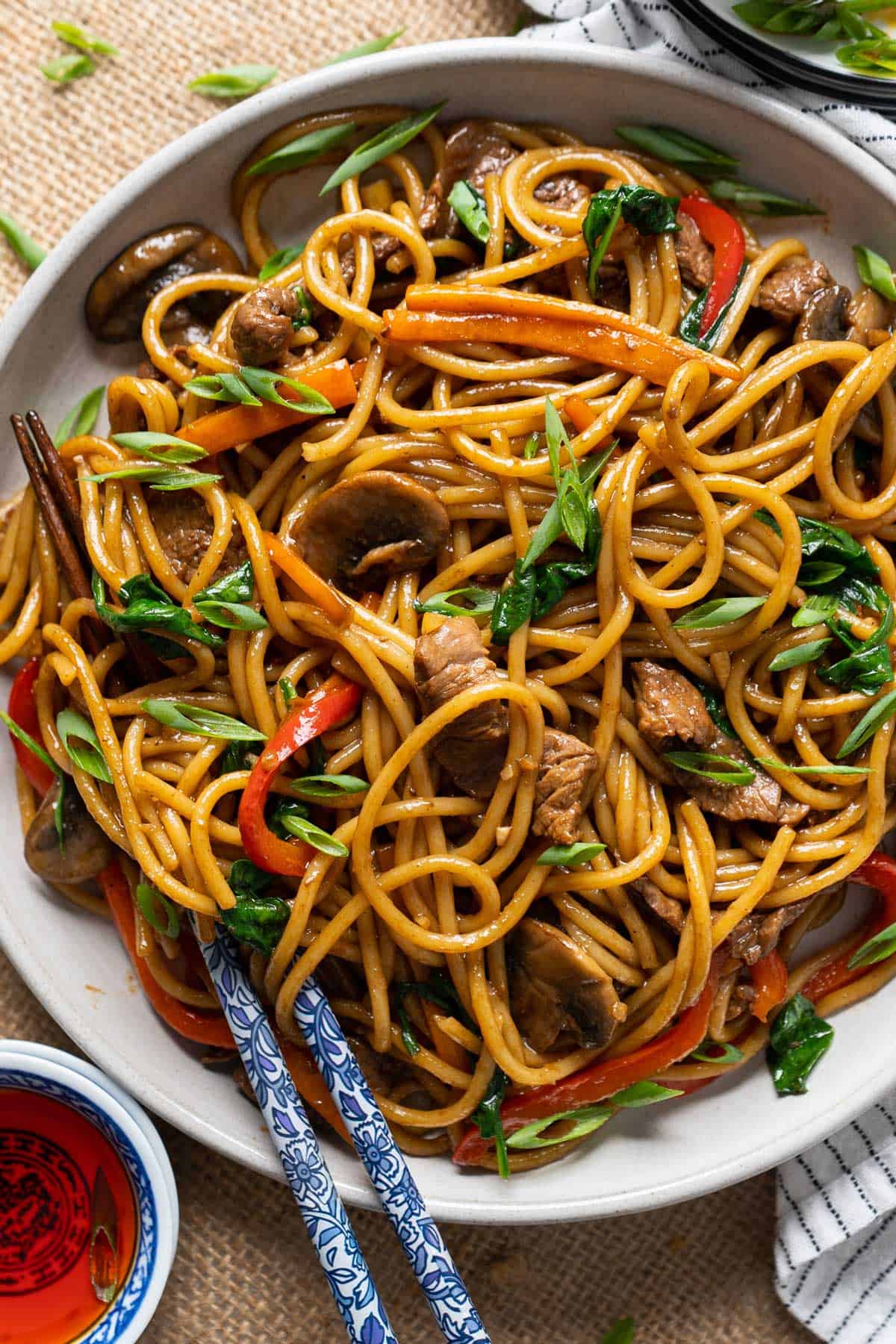
Ten minutes sounds like a stretch until you actually time yourself making this — and then you realize it's real. This beef lo mein is built on thinly sliced beef, chewy noodles, and a savory sauce that comes together while everything else is still hot in the pan. I keep thinly sliced beef strips in the freezer specifically for recipes like this. What makes it work on a weeknight is the quick-cooking technique: high heat, fast toss, done before you've had time to second-guess anything.
Ingredients
- 8 oz lo mein noodles (or spaghetti in a pinch)
- ½ lb beef sirloin or flank steak, thinly sliced against the grain
- 2 tablespoons soy sauce
- 1 tablespoon oyster sauce
- 1 teaspoon sesame oil
- 1 teaspoon cornstarch
- 2 cloves garlic, minced
- 1 cup shredded cabbage
- 1 medium carrot, julienned
- 2 tablespoons vegetable oil, divided
- 2 green onions, sliced (for garnish)
Instructions
- Cook noodles according to package directions, drain, and toss with a tiny drizzle of oil so they don't stick together while you prep everything else.
- Toss sliced beef with cornstarch, 1 tablespoon soy sauce, and sesame oil. Let it sit for 5 minutes while the noodles cook — this quick marinade keeps the beef tender.
- Heat 1 tablespoon oil in a large skillet or wok over high heat. Add beef in a single layer and cook 2 minutes without stirring, then flip and cook 1 more minute. Remove and set aside.
- Add remaining oil to the same pan. Stir-fry garlic, cabbage, and carrots for 2 minutes over high heat.
- Add noodles, beef, oyster sauce, and remaining soy sauce to the pan. Toss everything together for 1–2 minutes until the sauce coats every strand. Top with green onions and serve immediately.
Tips
- Tip: Freeze the beef for 15 minutes before slicing — it firms up just enough to get those thin, even strips without fighting it.
- Tip: Don't crowd the beef in the pan or it'll steam instead of sear. If your pan is small, cook the beef in two batches.
- Tip: Oyster sauce is what gives this its restaurant depth — you can find it at Walmart in the Asian foods aisle, usually near the soy sauce.
9. Vegetarian Chow Mein with Cabbage
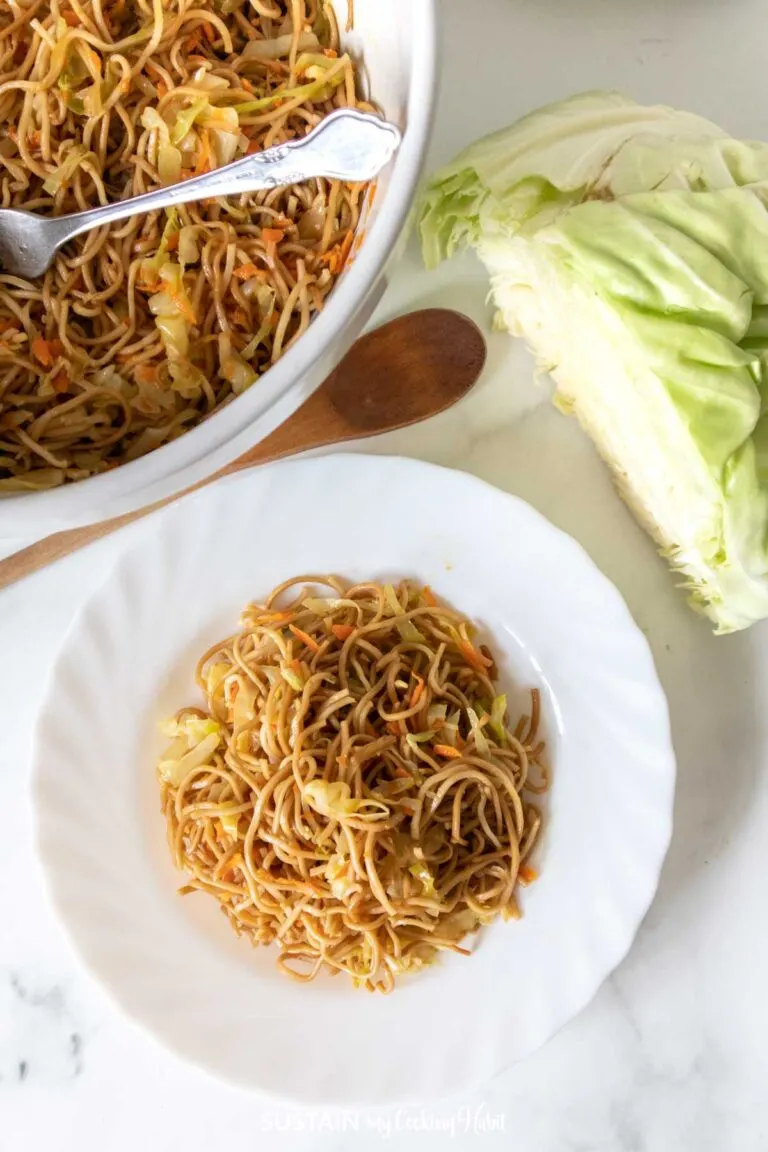
I make this one when I want something meatless that doesn't feel like a compromise. Chow mein noodles with shredded cabbage and carrots — it's simple, but when the wok is hot enough and the sauce is right, it tastes like something you'd order. The cabbage is the surprise here: it adds this soft, slightly sweet bulk that makes the dish feel substantial without adding much cost at all. A bag of shredded coleslaw mix from the store does the job perfectly if you don't want to chop.
Ingredients
- 8 oz chow mein noodles (or thin spaghetti)
- 2 cups shredded green cabbage
- 1 cup shredded carrots
- 3 cloves garlic, minced
- 3 tablespoons soy sauce
- 1 tablespoon oyster sauce (omit for vegan, add extra soy sauce)
- 1 teaspoon sesame oil
- ½ teaspoon sugar
- 2 tablespoons vegetable oil
- 2 green onions, sliced
Instructions
- Cook noodles until just al dente — slightly underdone is fine because they'll finish cooking in the pan. Drain and set aside.
- Mix soy sauce, oyster sauce, sesame oil, and sugar in a small bowl. Set the sauce aside so it's ready to go when you need it.
- Heat vegetable oil in a large wok or non-stick skillet over high heat. Add garlic and stir-fry for 30 seconds until fragrant.
- Add cabbage and carrots. Stir-fry for 2–3 minutes, keeping the heat high so the vegetables soften but still have a little bite to them.
- Add noodles and pour the sauce over everything. Toss continuously for 2 minutes until well combined and glossy. Scatter green onions on top and serve hot.
Tips
- Tip: A bag of pre-shredded coleslaw mix from Walmart or Aldi saves all the chopping and is exactly the right combination of cabbage and carrots.
- Tip: High heat is what gives stir-fried noodles that slightly smoky, restaurant quality — don't turn it down out of habit.
- Tip: To make this fully vegan, swap oyster sauce for hoisin sauce or just use an extra splash of soy sauce with a tiny pinch more sugar.
8. Whole30 Shrimp Lo Mein
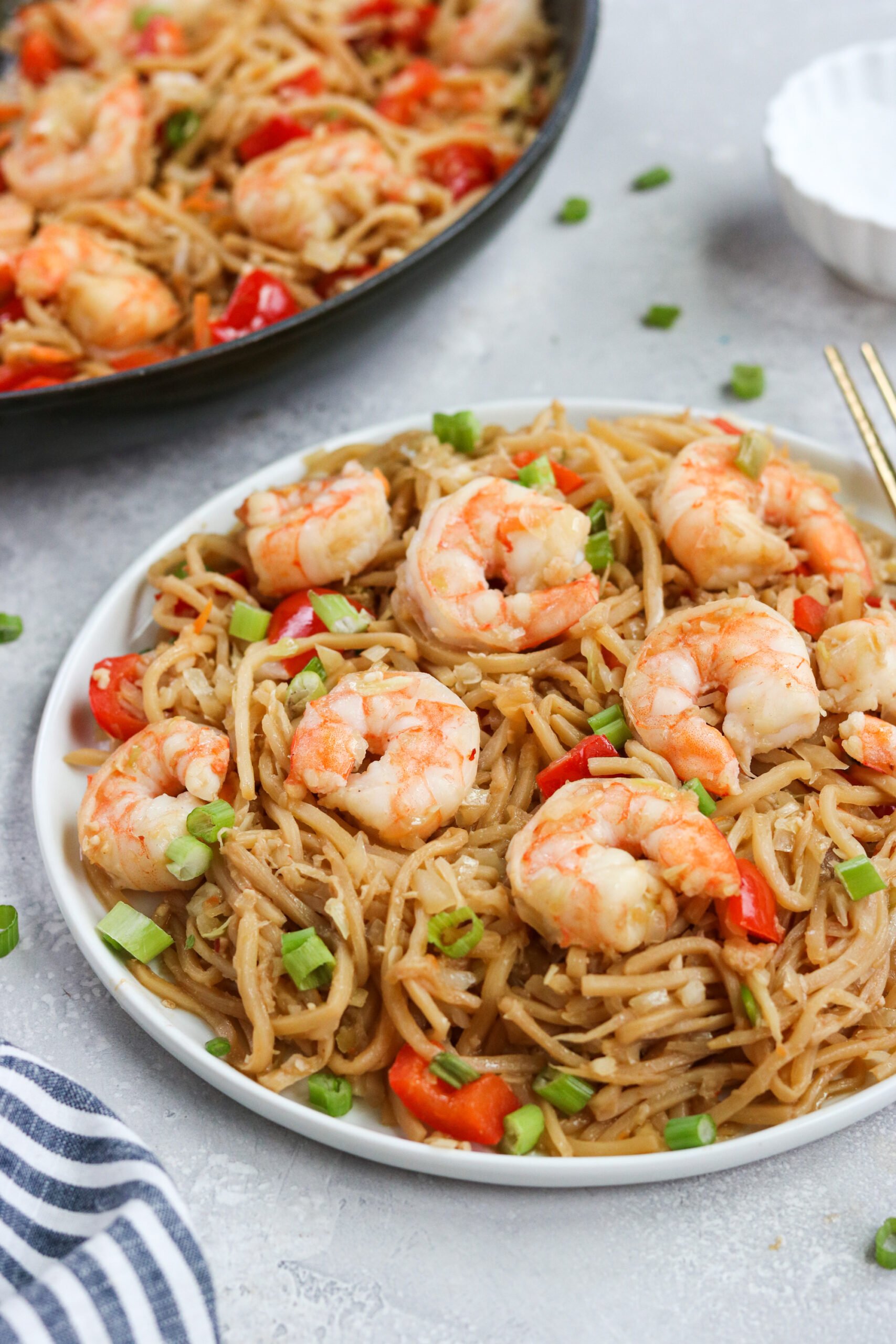
I'll be honest — I wasn't familiar with hearts of palm noodles until I started getting requests from readers doing Whole30 or cutting back on carbs. The first time I cooked them, I wasn't sure what to expect. But in a dish like this, with shrimp and a bold sauce built from coconut aminos, they hold up surprisingly well. This isn't traditional lo mein at all — it's a low-carb, gluten-free riff that scratches the same itch when you're eating clean and craving takeout. Hearts of palm noodles are available at Trader Joe's and Whole Foods, and increasingly at regular grocery stores too.
Ingredients
- 2 cans (14 oz each) hearts of palm noodles, drained and patted dry
- 1 lb large shrimp, peeled and deveined
- 1 red bell pepper, thinly sliced
- 1 cup shredded carrots
- 3 cloves garlic, minced
- 1 teaspoon fresh ginger, grated
- 3 tablespoons coconut aminos (Whole30-compliant soy sauce substitute)
- 1 tablespoon fish sauce
- 1 teaspoon sesame oil (check label for Whole30 compliance)
- 2 tablespoons avocado oil or coconut oil
- 2 green onions, sliced
Instructions
- Drain hearts of palm noodles thoroughly and pat dry with paper towels — removing as much moisture as possible helps them sear rather than steam in the pan.
- Mix coconut aminos, fish sauce, and sesame oil in a small bowl. Set aside.
- Heat oil in a large skillet over medium-high heat. Add shrimp in a single layer, cook 1–2 minutes per side until pink and just cooked through. Remove and set aside.
- In the same pan, add garlic and ginger. Stir-fry 30 seconds, then add bell pepper and carrots. Cook 2–3 minutes.
- Add hearts of palm noodles and pour sauce over everything. Toss well for 2 minutes. Return shrimp to the pan, toss once more, and top with green onions before serving.
Tips
- Tip: Pat those hearts of palm noodles really dry — if they go into the pan wet, they turn mushy fast and the whole texture falls apart.
- Tip: Not doing Whole30? Regular soy sauce works fine here instead of coconut aminos — use slightly less since soy sauce is saltier.
- Tip: Don't overcook the shrimp — they only need about 2 minutes total. Rubbery shrimp is the one thing that can bring an otherwise good dish down.
7. Easy Chicken Lo Mein
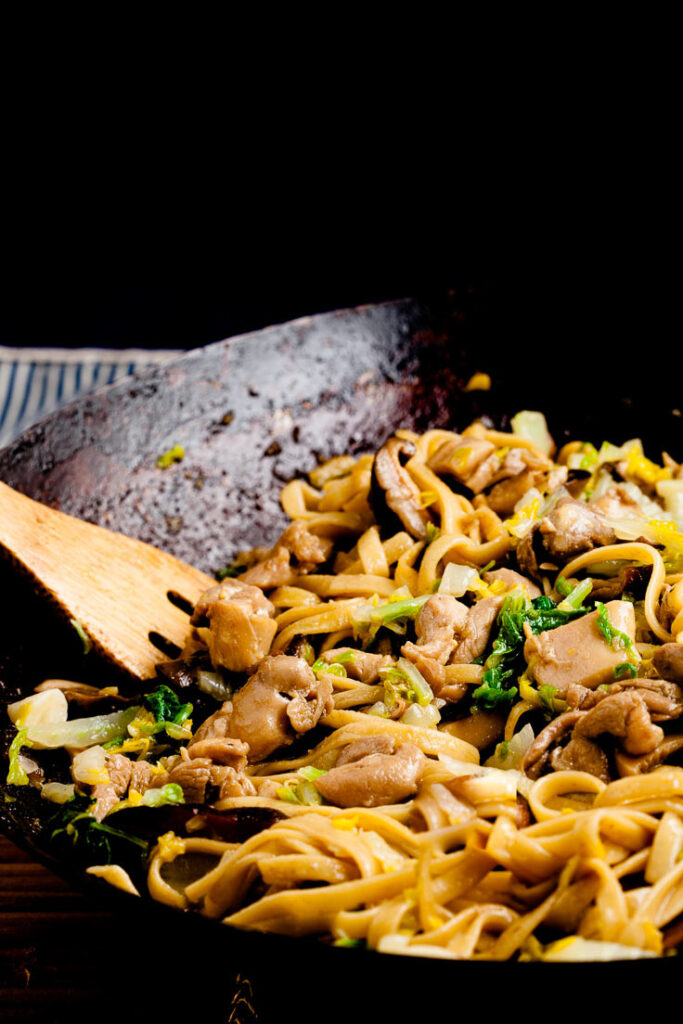
This is the lo mein my kids actually ask for by name. Saad specifically requests this one — he likes that the chicken stays tender and the noodles aren't too saucy. The trick is velveting the chicken with a little cornstarch before it hits the pan, which sounds fancier than it is. It just means the chicken stays juicy instead of turning into dry little bits. Fresh lo mein noodles are ideal here, but linguine works when you can't find them, and honestly the sauce is good enough that it carries either option.
Ingredients
- 8 oz lo mein noodles or linguine
- ¾ lb boneless skinless chicken breast or thighs, thinly sliced
- 1 teaspoon cornstarch
- 3 tablespoons soy sauce, divided
- 1 tablespoon oyster sauce
- 1 teaspoon dark soy sauce (for color — regular soy sauce works if you don't have it)
- 1 teaspoon sesame oil
- 3 cloves garlic, minced
- 1 cup snow peas or broccoli florets
- 1 medium carrot, julienned
- 2 tablespoons vegetable oil, divided
Instructions
- Cook noodles until al dente, drain, and toss with a small drizzle of oil to prevent sticking. Set aside.
- Toss chicken slices with cornstarch and 1 tablespoon soy sauce. Let sit 5–10 minutes while you prep everything else.
- Whisk remaining soy sauce, oyster sauce, dark soy sauce, and sesame oil together in a small bowl. Set the sauce aside.
- Heat 1 tablespoon oil in a wok or large skillet over high heat. Cook chicken 3–4 minutes, stirring occasionally, until cooked through and slightly golden. Remove from pan.
- Add remaining oil to the pan. Stir-fry garlic, carrots, and snow peas for 2 minutes. Add noodles, chicken, and sauce. Toss everything together over high heat for 1–2 minutes until well coated. Serve immediately.
Tips
- Tip: Chicken thighs stay juicier than breasts in high-heat stir-frying — if you have the option, use thighs.
- Tip: This reheats well the next day with a splash of water stirred in before microwaving — the noodles absorb the sauce overnight so they need just a little moisture to loosen up.
- Tip: Dark soy sauce adds that deep brown color you see in restaurant lo mein. You can find it at Walmart or Amazon — a bottle lasts ages.
6. Easy Vegetable Lo Mein
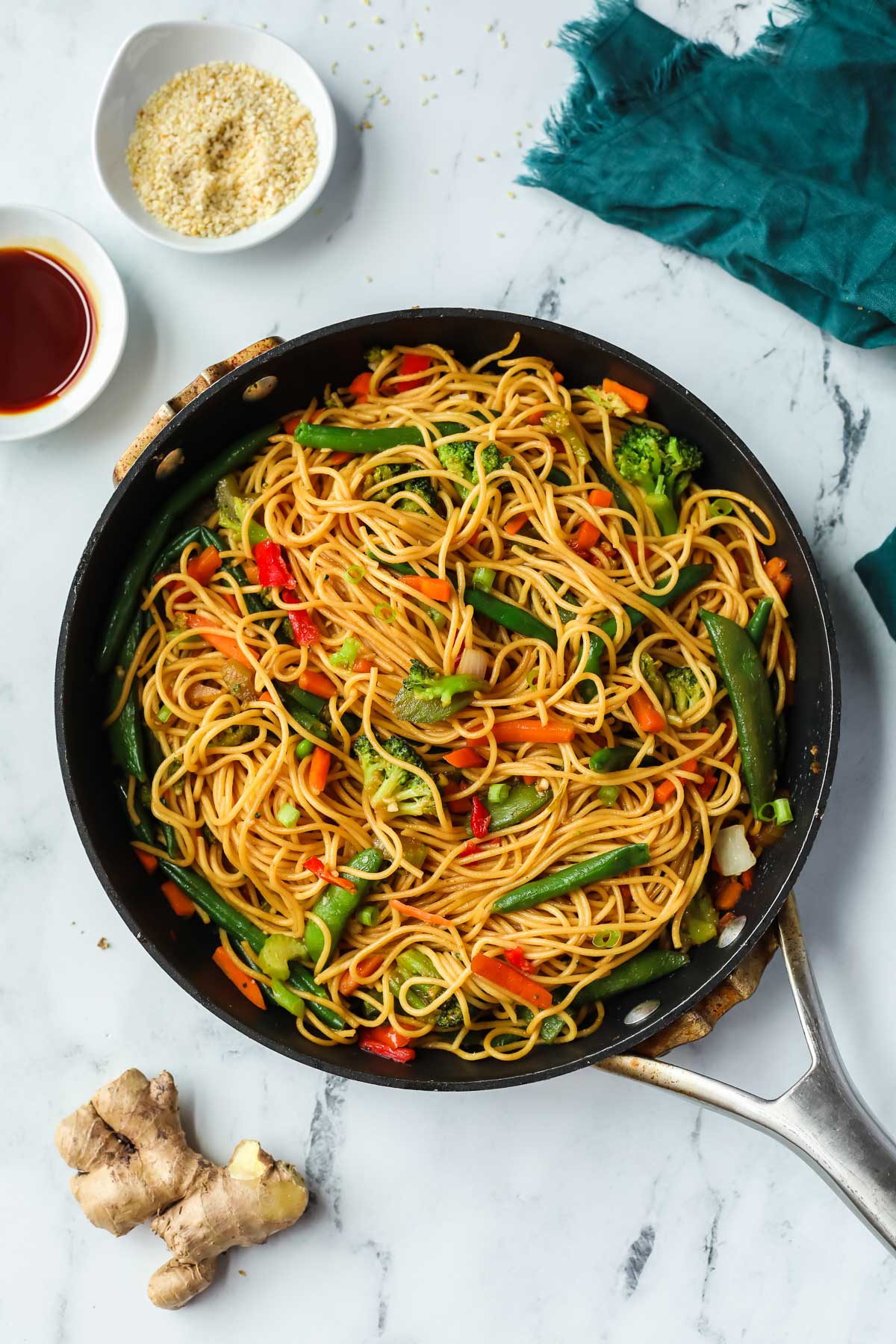
On nights when the fridge has more vegetables than protein, this is what I make. It comes together in about 15 minutes and it's the kind of thing that works differently every time depending on what you have — bell peppers, broccoli, snap peas, mushrooms, whatever needs using up. The homemade sauce is the backbone of the whole dish, and once you have those pantry staples stocked, you can pull this off on any weeknight without planning ahead. Even without meat, this doesn't feel like a side dish — it's a full meal.
Ingredients
- 8 oz lo mein noodles (or spaghetti)
- 1 cup broccoli florets
- 1 medium carrot, julienned or thinly sliced
- 1 red bell pepper, thinly sliced
- 1 cup snap peas or snow peas
- 3 cloves garlic, minced
- 3 tablespoons soy sauce
- 1 tablespoon hoisin sauce
- 1 teaspoon sesame oil
- ½ teaspoon sugar
- 2 tablespoons vegetable oil
Instructions
- Cook noodles until just tender, drain, and toss lightly with oil. Set aside.
- Whisk soy sauce, hoisin sauce, sesame oil, and sugar together in a small bowl. Taste and adjust — add more soy if you want more salt, a pinch more sugar if it's too sharp.
- Heat vegetable oil in a large skillet or wok over high heat. Add garlic and stir for 30 seconds. Add carrots and broccoli first — they take the longest — and cook 2 minutes.
- Add bell pepper and snap peas. Stir-fry another 1–2 minutes until everything is just tender but still has color and crunch.
- Add noodles and pour sauce over the top. Toss everything together for 1–2 minutes over high heat until the sauce coats the noodles evenly. Serve immediately.
Tips
- Tip: Add vegetables in order of cooking time — dense ones like carrots and broccoli go in first, delicate ones like snap peas go in last so they don't go limp.
- Tip: Want to make this a full protein meal without meat? Toss in a drained can of chickpeas or add a fried egg on top — both work well with this sauce.
- Tip: Hoisin sauce adds a slightly sweet depth here that plain soy sauce alone doesn't give you — don't skip it if you have it in the pantry.
17. Panda Express Chow Mein
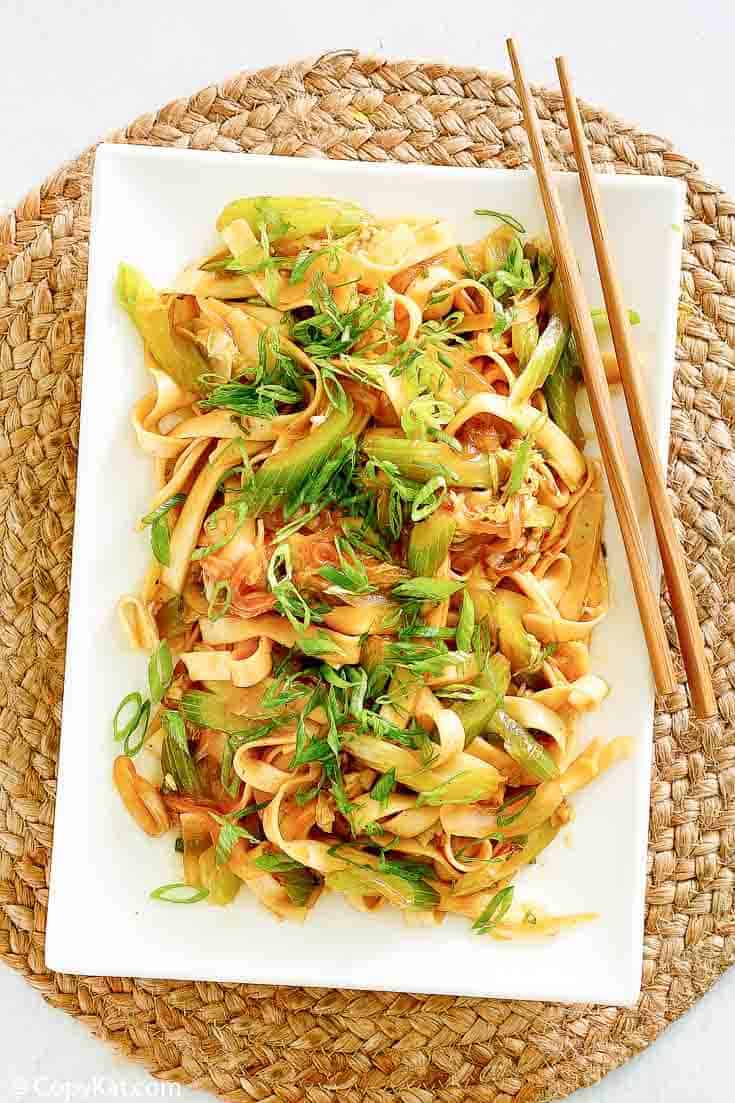
Okay, I know chow mein and lo mein aren't identical — chow mein uses fried noodles, lo mein uses softer tossed ones — but this Panda Express copycat is close enough in spirit that it belongs here. My kids have been obsessed with Panda Express since we visited a mall food court a couple of years ago, and Saad specifically asks for "the noodles from that orange restaurant." This version gets the flavors right: the slightly caramelized cabbage, the celery, the glossy soy-oyster sauce clinging to every strand. I make it as a side when I'm doing orange chicken at home and it pulls the whole meal together.
Ingredients
- 8 oz Chinese egg noodles (or thin spaghetti as a substitute)
- 2 tablespoons vegetable oil
- 2 stalks celery, sliced diagonally
- 2 cups green cabbage, roughly chopped
- 3 tablespoons soy sauce
- 1 tablespoon oyster sauce
- 1 tablespoon hoisin sauce
- 1 teaspoon sesame oil
- ½ teaspoon sugar
Instructions
- Cook noodles according to package directions, drain, and toss with a tiny bit of oil so they don't stick together while you prep everything else.
- In a small bowl, whisk together soy sauce, oyster sauce, hoisin sauce, sesame oil, and sugar. Set aside.
- Heat vegetable oil in a large wok or skillet over high heat until it just starts to shimmer. Add the celery and cook for 2 minutes, stirring constantly.
- Add the cabbage and stir-fry another 2-3 minutes until it softens slightly but still has a little bite — you don't want it mushy.
- Add the cooked noodles to the pan, pour the sauce over everything, and toss well using tongs for 1-2 minutes until the noodles are evenly coated and heated through. Serve immediately.
Tips
- Tip: High heat is everything here — don't lower it when the vegetables go in. That's what gives you the slightly charred, restaurant-style flavor.
- Tip: If you can't find oyster sauce, use an extra tablespoon of soy sauce with a tiny pinch of sugar — not identical but it works in a pinch.
- Tip: Make the sauce ahead and store it in a small jar — it keeps in the fridge for a week and you can toss it into any noodle or stir-fry situation.
18. Teriyaki Beef and Noodles (15 Minute Recipe)
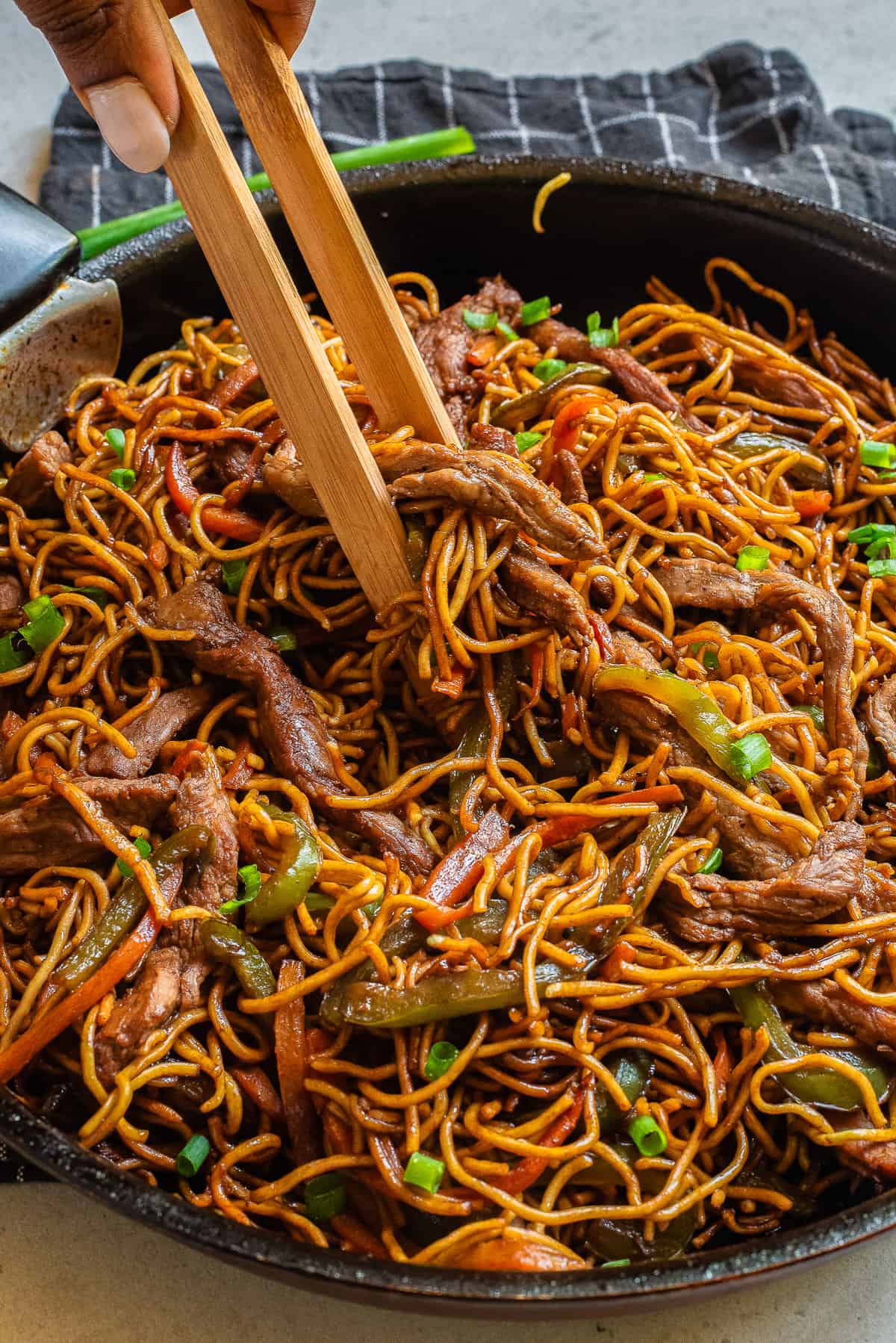
Fifteen minutes is an audacious claim for a beef noodle dish, but this one actually delivers. The key is using thin-sliced beef — I grab a pack of pre-sliced bulgogi beef from the Asian grocery section at Walmart or H Mart when I can find it, or I slice regular sirloin thin myself against the grain. The teriyaki sauce here is sweet and sticky without being cloying, and the noodles soak it up beautifully. This is the kind of weeknight dinner where everyone gets to the table fast because they can smell it from the other room.
Ingredients
- 8 oz lo mein noodles (or ramen noodles, cooked and drained)
- ¾ lb sirloin beef, sliced very thin against the grain
- 2 tablespoons vegetable oil, divided
- 3 tablespoons soy sauce
- 2 tablespoons brown sugar
- 1 tablespoon rice vinegar
- 1 teaspoon sesame oil
- 2 cloves garlic, minced
- 1 teaspoon cornstarch mixed with 2 teaspoons cold water
- 2 green onions, sliced, and sesame seeds for garnish
Instructions
- Cook noodles according to package instructions, drain, and set aside. Whisk together soy sauce, brown sugar, rice vinegar, sesame oil, garlic, and the cornstarch slurry in a small bowl.
- Heat 1 tablespoon of oil in a large skillet or wok over high heat. Add the beef in a single layer — don't crowd it — and cook 1-2 minutes without stirring so it gets a little color. Stir and cook another 30 seconds, then remove to a plate.
- In the same pan, add the remaining oil, then pour in the sauce. Let it bubble for about 1 minute until it thickens slightly from the cornstarch.
- Add the noodles and beef back to the pan. Toss everything together for 1-2 minutes until well coated and heated through. Top with green onions and sesame seeds and serve right away.
Tips
- Tip: Pop your beef in the freezer for 15-20 minutes before slicing — it firms up just enough to make thin slicing much easier without a super sharp knife.
- Tip: Don't skip the cornstarch slurry — it's what turns a thin sauce into something that actually coats the noodles instead of pooling at the bottom of the bowl.
- Tip: Add a handful of snap peas or shredded carrots when you return the beef to the pan for extra color and crunch without adding cooking time.
19. Veggie Lo Mein
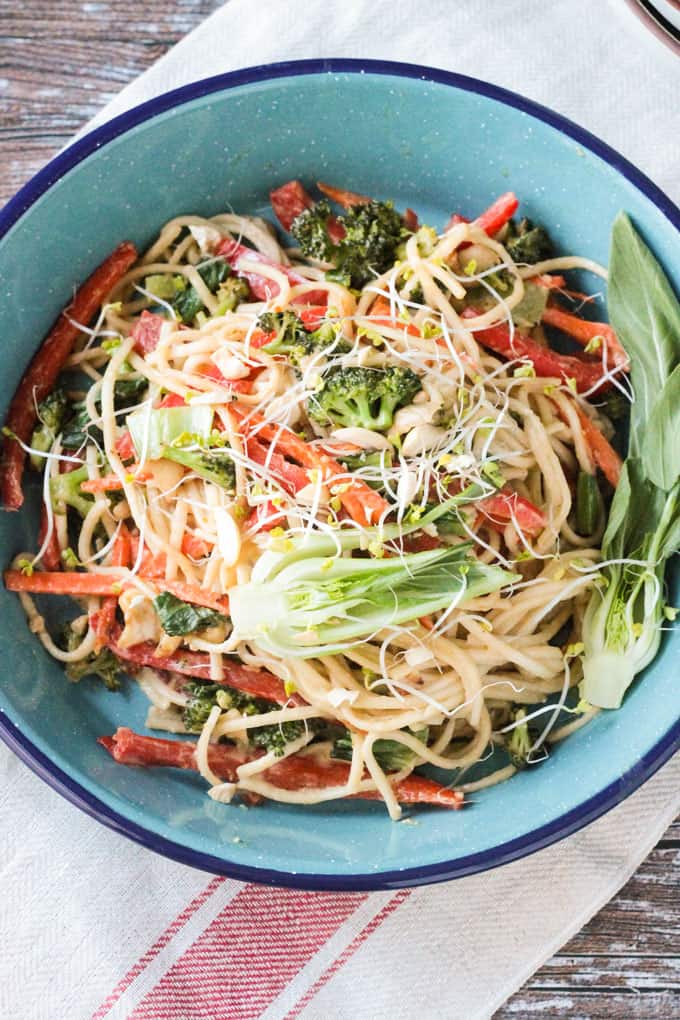
This is the recipe I reach for on nights when the fridge has random vegetables that need to be used up. Broccoli, bell peppers, carrots, whatever's there — it all works. The sauce is simple and savory, the noodles are soft and satisfying, and the whole thing comes together in under 30 minutes without any fuss. I've made this meatless version for guests who don't eat meat and they always go back for seconds, which tells you everything. It's also completely customizable — swap in zucchini, mushrooms, snap peas, corn, whatever you like.
Ingredients
- 8 oz lo mein noodles (or spaghetti)
- 2 tablespoons sesame oil, divided
- 1 cup broccoli florets, cut small
- 1 medium carrot, julienned or thinly sliced
- 1 red bell pepper, thinly sliced
- 3 cloves garlic, minced
- 3 tablespoons soy sauce
- 1 tablespoon oyster sauce (or hoisin for vegetarian)
- 1 teaspoon sugar
- ¼ teaspoon white pepper
Instructions
- Cook noodles according to package directions until just al dente — not soft. Drain, rinse with cold water to stop cooking, and toss with 1 teaspoon of the sesame oil to prevent sticking.
- Mix soy sauce, oyster sauce (or hoisin), sugar, and white pepper together in a small bowl and set aside.
- Heat remaining sesame oil in a large wok or skillet over high heat. Add the carrots first and stir-fry for 2 minutes, then add the broccoli and bell pepper. Cook another 3 minutes, stirring frequently.
- Add garlic and stir for 30 seconds until fragrant — watch it closely because garlic burns fast on high heat.
- Add the noodles and pour the sauce over everything. Toss well with tongs for 2 minutes until the sauce is evenly distributed and the noodles are heated through. Serve hot.
Tips
- Tip: To keep this fully vegetarian, use hoisin sauce instead of oyster sauce — it's a little sweeter but still gives you that deep savory quality.
- Tip: Cut all your vegetables roughly the same size so they cook evenly — uneven pieces mean some will be mushy while others are still raw.
- Tip: I sometimes add a soft-boiled egg on top when serving — it makes this feel more substantial and adds protein without any extra cooking time in the stir-fry itself.
20. Italian Shrimp Pasta
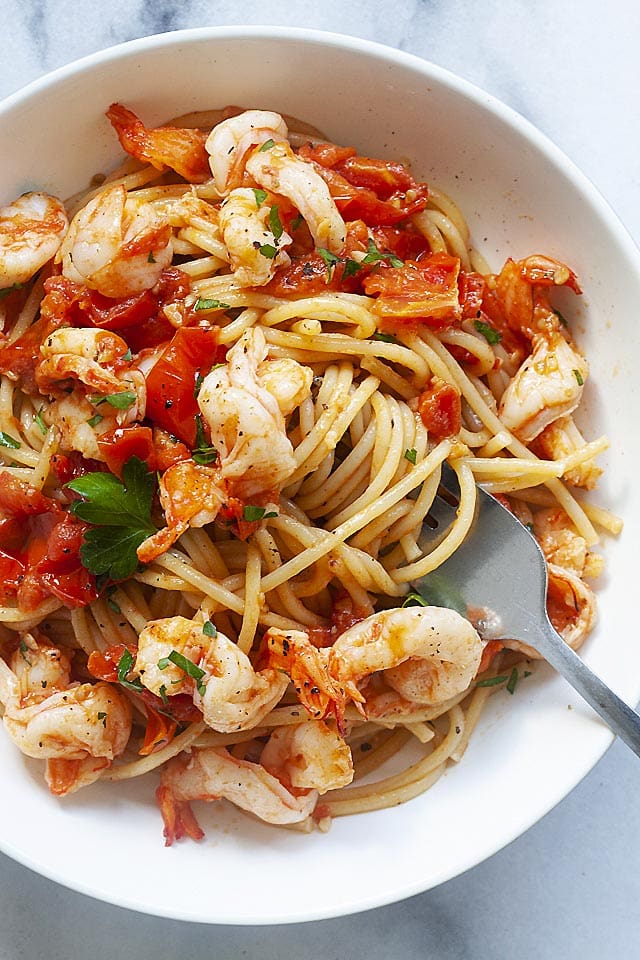
I'll be upfront — this isn't lo mein, it's Italian, and it sneaks into this roundup as the wildcard. But hear me out: if you're already comfortable tossing noodles in a sauce and cooking protein quickly in a hot pan, this recipe is a natural next step. It's spaghetti with shrimp in a simple fresh tomato and garlic sauce, done in under 20 minutes. My husband eats this happily alongside all the Asian noodle dishes I make, and I love how clean and bright the flavors are after a week of deeper, soy-heavy sauces.
Ingredients
- 8 oz spaghetti
- ¾ lb large shrimp, peeled and deveined
- 3 tablespoons extra-virgin olive oil, divided
- 4 cloves garlic, thinly sliced
- 1½ cups cherry tomatoes, halved (or 1 can 14 oz diced tomatoes, well drained)
- ¼ teaspoon red pepper flakes
- Salt and black pepper to taste
- ¼ cup fresh Italian parsley, roughly chopped
- ¼ cup reserved pasta cooking water
Instructions
- Cook spaghetti in well-salted boiling water until al dente. Before draining, scoop out ¼ cup of pasta water and set it aside — this is your sauce insurance.
- While pasta cooks, heat 2 tablespoons olive oil in a large skillet over medium-high heat. Season shrimp with salt, pepper, and red pepper flakes. Cook shrimp 1-2 minutes per side until pink and just cooked through. Remove to a plate.
- In the same skillet, add remaining olive oil and the sliced garlic. Cook on medium heat for about 1 minute — just until it turns golden at the edges, not brown.
- Add the tomatoes and cook 3-4 minutes until they soften and release their juices. Pour in the reserved pasta water and stir to combine.
- Add drained spaghetti and shrimp to the pan. Toss everything together over medium heat for 1-2 minutes. Finish with chopped parsley, taste for salt, and serve immediately.
Tips
- Tip: Don't overcook the shrimp — the moment they curl into a C shape and turn fully pink, they're done. An O shape means overcooked and rubbery.
- Tip: The pasta water is starchy and helps the sauce cling to the noodles — don't skip it even if the sauce looks fine without it.
- Tip: Fresh parsley really does make a difference here — dried won't give you that clean, bright finish that makes this dish feel light and restaurant-quality.
21. 15 Minute Lo Mein
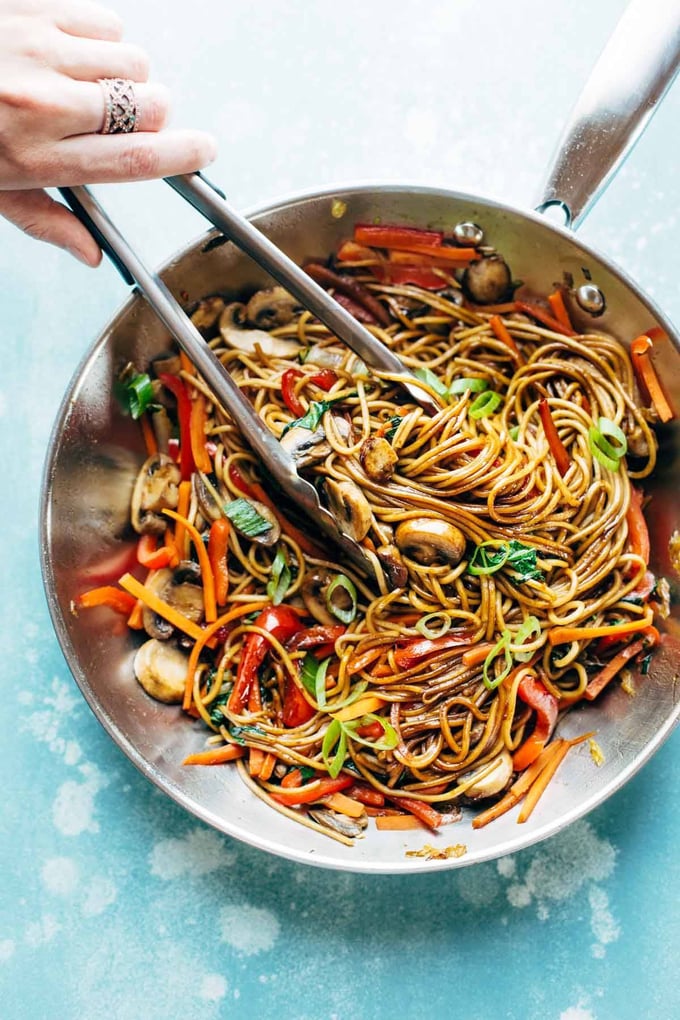
We end the list with the recipe I probably make more than any other on here. Fifteen minutes, one pan, whatever noodles and vegetables I have — this is the formula. The sauce is soy sauce plus sesame oil plus a little garlic, and it works every single time. I've made it with ramen noodles when I ran out of lo mein noodles, with spaghetti when that was all in the pantry, and with every combination of vegetables imaginable. It never fails. This is the lo mein I'd tell a complete beginner to start with, because once you nail the sauce ratio, the rest is just cooking whatever's in front of you.
Ingredients
- 8 oz lo mein noodles, ramen noodles, or spaghetti
- 1 tablespoon vegetable oil
- 2 cups mixed vegetables (whatever you have — shredded cabbage, carrots, snap peas, bell pepper)
- 3 cloves garlic, minced
- 3 tablespoons soy sauce
- 1½ teaspoons sesame oil
- 1 teaspoon brown sugar
- Optional: 1 cup cooked protein — leftover chicken, shrimp, or scrambled egg
Instructions
- Cook noodles according to package directions until just tender. Drain and toss with a drizzle of sesame oil so they don't clump. While noodles cook, whisk together soy sauce, sesame oil, and brown sugar in a small bowl.
- Heat vegetable oil in a large skillet or wok over high heat. Add your vegetables and stir-fry for 3-4 minutes until tender-crisp. Add garlic in the last 30 seconds and stir constantly.
- Add the cooked noodles to the pan along with any leftover protein if using. Pour the sauce over everything and toss well for 1-2 minutes until evenly coated. Taste and add more soy sauce if needed, then serve immediately.
Tips
- Tip: This is the perfect leftover rescue recipe — cold rice, cooked chicken, random half vegetables in the fridge. It all goes in and comes out tasting intentional.
- Tip: I make a double batch of the sauce and keep it in a small jar in the fridge — it lasts two weeks and means dinner is genuinely 10 minutes away on the laziest nights.
- Tip: If you want a little heat, add ½ teaspoon of chili garlic sauce or a few drops of sriracha to the sauce mixture — it lifts the whole dish without overpowering the other flavors.
Twenty lo mein recipes and I still can't pick a favorite — that's the honest truth. Some weeks I want the classic beef version with a heap of vegetables, other weeks Saad asks for the garlic butter shrimp one and I make a double batch because it disappears before I've even sat down. Lo mein is one of those dishes that looks like it requires takeout skills, but once you learn the basic sauce ratio and get comfortable with a hot pan, it comes together faster than ordering delivery. These recipes cover everything from five-ingredient weeknight versions to more loaded noodle bowls when you have a little extra time.
If you're new to cooking lo mein at home, my one piece of advice is this: don't fear the high heat. The first time I made lo mein, I kept the flame on medium because I was nervous about burning things, and I ended up with soggy noodles and watery sauce. Crank the heat, keep things moving, and trust the process. Every recipe on this list works in a regular skillet — no wok required, no specialty equipment. A heavy pan and a wooden spoon will get you there.
I hope at least one of these recipes becomes a regular in your kitchen rotation. Whether you go vegetarian, load it with chicken, or raid the freezer for whatever protein needs using up, lo mein is forgiving and fast. Bookmark this page, pick one for tonight, and let me know in the comments which one you tried. 🍜🥢✨
More Recipes You Might Like
- Easy Fried Rice Recipes — if you love lo mein, fried rice is the natural next step for using up leftover rice and vegetables
- Chicken Stir Fry Recipes — same weeknight energy, same hot pan, just swapped noodles for a lighter sauce over rice
- Easy Noodle Recipes — more noodle ideas beyond lo mein, from ramen bowls to pasta-noodle crossovers
- Easy Weeknight Dinner Recipes — a broader roundup of 30-minute meals when you need something fast and reliable
- Easy Shrimp Recipes — if the shrimp lo mein caught your eye, here are more shrimp dinners that come together quickly
Frequently Asked Questions
What kind of noodles work best for lo mein?
Fresh lo mein noodles from an Asian grocery store are ideal, but they're not always easy to find depending on where you live. I use dried spaghetti or linguine most of the time and honestly the difference is smaller than you'd think once the sauce coats everything. If you can find yakisoba noodles or even ramen-style noodles at a regular grocery store, those work beautifully too. Just cook them slightly underdone — they'll finish in the pan.
Can I make lo mein ahead of time?
Yes, but with one caveat: noodles absorb sauce as they sit, so lo mein made ahead tends to be drier than freshly cooked. I usually toss leftovers with a tiny splash of water or extra soy sauce before reheating in a hot pan. It comes back to life pretty well. I wouldn't make it more than two days ahead if you want good texture.
What's the difference between lo mein and chow mein?
The main difference is in how the noodles are cooked. Lo mein uses soft, boiled noodles that get tossed with the sauce and vegetables at the end — they stay soft and saucy. Chow mein typically uses noodles that are stir-fried longer so they get a little crispy, or sometimes they're served with a sauce poured over fried noodles. Both are great, but lo mein is more forgiving for home cooking because you're not trying to get a crisp on the noodle.
Which lo mein recipe on this list is the easiest for a beginner?
Start with a simple vegetable lo mein or a basic chicken lo mein — both have short ingredient lists and teach you the core technique without much pressure. Once you've done it once, the other recipes on this list will feel much less intimidating. The sauce formula (soy sauce, sesame oil, oyster sauce, a little sugar) is consistent across almost all of them, so once you've got that down you can swap proteins and vegetables freely.
Can I make lo mein without oyster sauce?
Yes. Oyster sauce adds a deep, slightly sweet savory flavor, but you can substitute hoisin sauce in the same quantity for a similar effect. If you need it to be fully vegan, most grocery stores now carry mushroom-based oyster sauce that works perfectly. In a real pinch, a mix of soy sauce and a tiny bit of Worcestershire sauce gives you some of that depth without a specialty ingredient.
Share This Post!
If this roundup helped you figure out what's for dinner tonight, pin it or share it with someone who's also stuck in




Comments
No Comments