
Last spring I needed a side dish that could travel with us on a 4-hour road trip to visit my Maryland cousin's family, and most of my regular pasta salad recipes felt too soggy or fragile for the cooler-bag situation we'd be dealing with during the drive.
This Mediterranean orzo salad emerged as the road-trip winner because orzo's small grain-like shape holds dressing without absorbing it into mushy oblivion, the cucumber and tomatoes stay surprisingly crisp even after 4 hours in a cooler, and the lemon-garlic vinaigrette actually deepens in flavor during the drive instead of degrading.
My Maryland cousin's wife was so impressed with this salad that she asked for the recipe before we left her house that weekend, and it has since become my go-to contribution for any family event that involves transporting food — birthday parties at parks, picnic days at the beach, summer Eid gatherings at my husband's parents' house.
Saad eats this salad almost more enthusiastically than my regular pasta dishes because the small orzo size feels novel and fun to him (he calls them "rice-pasta"), and Zainab eats the orzo and tomatoes portions while picking around the cucumber and olives with her characteristic precision.
My mother in Pakistan would recognize orzo as similar to the "siwian" or vermicelli-style pastas that exist in South Asian cooking traditions — different cuisine but same underlying principle of small pasta shapes that distribute flavor more evenly than larger noodle shapes.
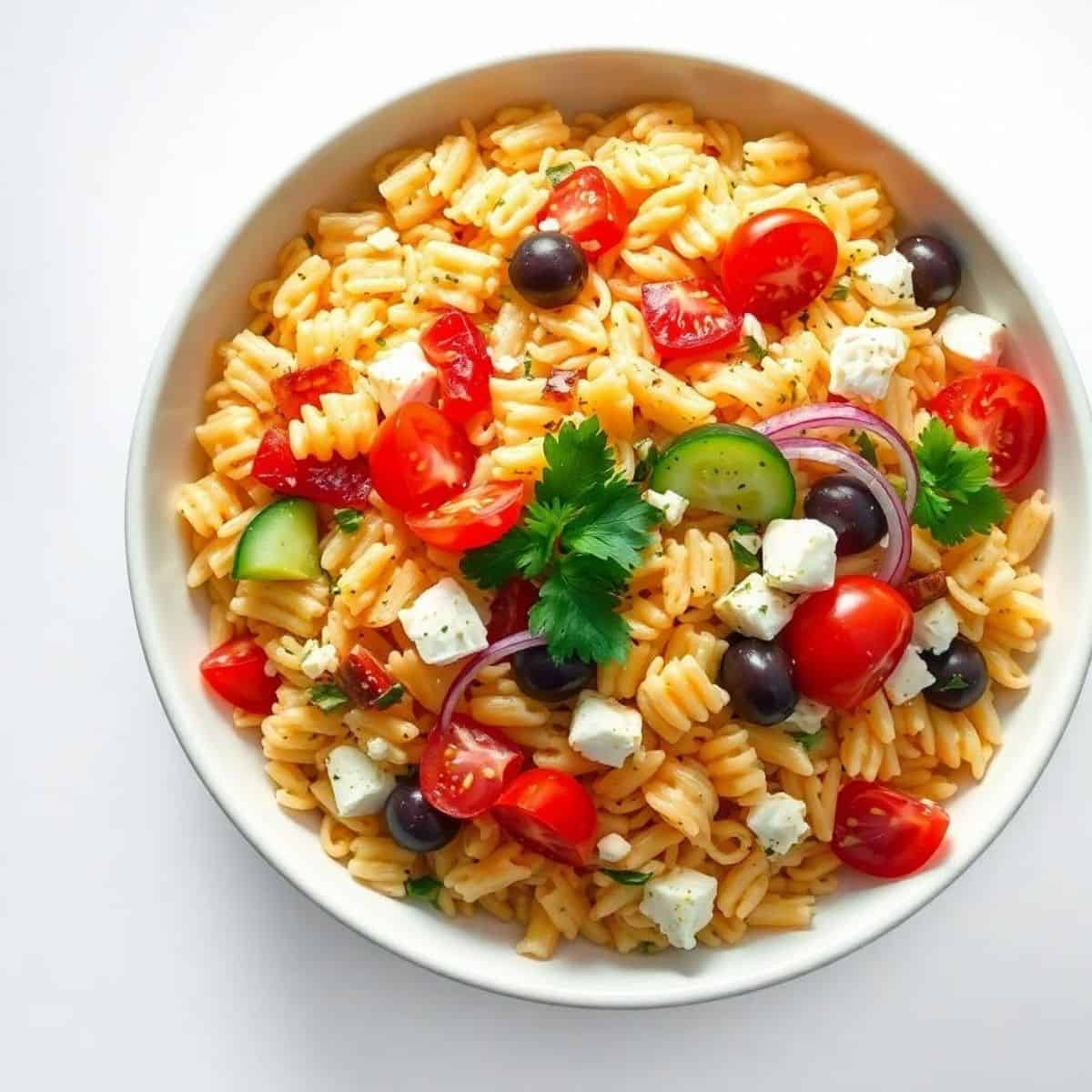
Why You'll Love This Recipe
- Orzo's small grain-like shape distributes flavor more evenly than larger pasta: The single biggest advantage of orzo over rotini, penne, or other short pasta shapes is the proportion of dressing-to-surface-area in every bite. Orzo's rice-grain size means every spoonful contains pasta, vegetables, dressing, and herbs in balanced proportions — there's no "this bite is mostly pasta" or "this bite is mostly olives" disappointment that can happen with larger pasta shapes. For salads where the goal is harmonious, balanced bites rather than dramatic ingredient contrasts, orzo is genuinely the better choice. The flavor distribution makes this salad feel more sophisticated and well-integrated than its quick prep time suggests.
- Travels exceptionally well — the road-trip and picnic champion: Unlike larger pasta shapes that can shift, settle, or release liquid during transit, orzo's small grain-like shape stays beautifully distributed throughout the salad container even after hours of travel. The cucumber and tomatoes stay surprisingly crisp (much longer than they do in larger-pasta versions), the dressing doesn't pool at the bottom of the container, and the visual appearance stays vibrant. For road trips, picnic destinations, beach outings, or any scenario where the salad needs to travel and look good upon arrival, this recipe genuinely outperforms other pasta salads. My Maryland cousin trip experience confirmed this property in real-world conditions.
- Make-ahead friendly — overnight rest deepens the Mediterranean flavors: Like other oil-and-vinegar pasta salads, this Mediterranean orzo benefits from overnight refrigeration. The lemon-garlic vinaigrette penetrates the small orzo grains thoroughly (small surface area + high dressing contact = excellent absorption), the cucumber stays crisp, the feta firms up to perfect crumble texture, and the entire dish develops a cohesive Mediterranean character. For party-hosting realism, prep the entire salad the night before, refrigerate overnight, drizzle with reserved fresh dressing just before serving, and arrive at the party with a perfect dish requiring zero last-minute work. This is genuinely the make-ahead approach that hosts need.
- 25 minutes total — quick enough for weeknight side dishes: Orzo cooks faster than larger pasta shapes (about 8-10 minutes for al dente) and chopping the Mediterranean vegetables takes about 10 minutes. The total active time from "I'm starting" to "salad is in the bowl" is about 25 minutes, which makes this realistic for weeknight side dishes alongside grilled chicken or fish — not just a special-occasion preparation. The "25-minute Mediterranean side" math is what separates this recipe from more elaborate Mediterranean preparations that require an hour or more. Same flavor results, dramatically less time investment.
- Nutritionally balanced — pasta, vegetables, protein, and healthy fats in one dish: Each serving contains complex carbs from the orzo, fiber and vitamins from the cucumber and tomatoes, plant protein from chickpeas (if added per the variation), healthy fats from olive oil and Kalamata olives, calcium and protein from feta cheese, and antioxidant-rich herbs throughout. For families trying to get balanced nutrition into a single dish (especially when serving alongside a single grilled protein), this Mediterranean orzo salad covers a remarkable nutritional range in one preparation. My husband appreciates this because his lunch boxes often consist of just this salad and a piece of fruit — complete nutrition in one container.
Ingredients
- For the Orzo Salad:
- 1.5 cups dry orzo pasta (will yield about 4 cups cooked)
- 2 pints cherry tomatoes, halved (or 1 pint quartered if larger)
- 1 large English cucumber, halved lengthwise and sliced into half-moons
- 1 cup pitted Kalamata olives, halved (real Kalamata, not canned black olives)
- ½ medium red onion, very finely diced (small dice to distribute strong flavor)
- 6 oz block feta cheese, crumbled by hand
- ¼ cup fresh flat-leaf parsley, chopped
- 2 tablespoon fresh oregano leaves (or 2 teaspoon dried oregano)
- 2 tablespoon fresh dill, chopped (optional)
- 2 tablespoon fresh mint, chiffonaded (optional, adds brightness)
- For the Lemon-Garlic Vinaigrette:
- ⅔ cup extra-virgin olive oil (good Greek or Italian)
- ⅓ cup fresh lemon juice (about 3 lemons)
- Zest of 2 lemons
- 4 garlic cloves, finely minced or grated
- 1 tablespoon Dijon mustard (acts as emulsifier and adds depth)
- 1 teaspoon honey or maple syrup (balances acidity)
- 1 teaspoon salt + ½ teaspoon freshly cracked black pepper
- 1 teaspoon dried oregano (in addition to fresh, deepens the dried-herb flavor)
- ¼ teaspoon red pepper flakes (optional)
- Optional Add-Ins (for variations):
- 1 (15 oz) can chickpeas, drained and rinsed (for protein)
- 1 cup quartered marinated artichoke hearts
- ½ cup sun-dried tomatoes, sliced
- ½ cup toasted pine nuts or slivered almonds
- 1 cup cooked diced chicken or shrimp (for main dish version)
Directions
- Step 1: Cook the orzo properly al dente (8-10 minutes). Bring a large pot of HEAVILY salted water to a rolling boil (1 tablespoon kosher salt per quart of water). Add the dry orzo and cook according to package directions, but pull it 30 SECONDS BEFORE the package's al dente time. Orzo cooks quickly and continues cooking from residual heat after draining, so slightly under-cooking is the right move. Drain WELL through a fine-mesh sieve (orzo can slip through a regular colander) and rinse briefly under cold running water to stop the cooking. Let drip-dry for 2-3 minutes.
- Step 2: Prep the vegetables while orzo cools (10 minutes). Halve the cherry tomatoes through their equator. Halve the English cucumber lengthwise and slice into ¼-inch half-moons. Halve the Kalamata olives. Very finely dice the red onion (smaller than the other vegetables — about ¼-inch dice — to distribute the strong onion flavor evenly without any one bite being overwhelming). Chop the parsley, oregano, dill, and mint (if using). Set all prepared vegetables and herbs aside on the cutting board.
- Step 3: Crumble the feta by hand (3 minutes). Crumble a block of feta by hand into rough ½-inch chunks. Do NOT use pre-crumbled feta from the dairy section (the anti-caking coating affects texture and flavor). The hand-crumbled chunks should vary slightly in size — small bits will integrate into the dressing, larger chunks will provide distinct feta moments in each bite. Set the crumbled feta aside in a small bowl.
- Step 4: Make the lemon-garlic vinaigrette (3 minutes). In a small bowl or measuring cup, whisk together the olive oil, fresh lemon juice, lemon zest, minced garlic, Dijon mustard, honey, salt, pepper, dried oregano, and red pepper flakes (if using). Whisk vigorously for 30-45 seconds until uniformly combined and slightly emulsified. The dressing should taste bright, lemony, and assertive on its own — it will mellow when tossed with the orzo and vegetables.
- Step 5: Toss orzo with ⅔ of the dressing FIRST (2 minutes). Transfer the cooled drained orzo to a large mixing bowl. Pour ⅔ of the vinaigrette over the orzo (reserve the remaining ⅓ for adding just before serving). Toss thoroughly with a large rubber spatula until every grain of orzo is coated. The orzo's small surface area means it absorbs dressing quickly and thoroughly, which is exactly what makes this salad's flavor distribution so effective.
- Step 6: Fold in vegetables, olives, herbs, and feta (3 minutes). Add the cherry tomatoes, cucumber half-moons, halved Kalamata olives, finely diced red onion, chopped parsley, fresh oregano, dill, and mint (if using) to the bowl with the dressed orzo. Fold gently with a rubber spatula — do NOT vigorously toss, because aggressive mixing breaks the tomatoes and bruises the herbs. Once vegetables are distributed evenly, add the hand-crumbled feta last and fold once or twice more (gentle handling preserves the chunks).
- Step 7: Cover and refrigerate AT LEAST 30 minutes (preferably overnight). Cover the bowl tightly with plastic wrap or transfer to an airtight container. Refrigerate for at least 30 minutes (minimum for basic flavor melding), 2-4 hours (good), or overnight (optimal). The Mediterranean flavor profile genuinely benefits from extended rest — the lemon-garlic vinaigrette penetrates the orzo thoroughly, the cucumber stays crisp, the feta firms up, and the entire dish develops a cohesive Mediterranean character.
- Step 8: Refresh and serve (5 minutes). Remove from refrigerator 15-20 minutes before serving to take the chill off (very cold food mutes the bright Mediterranean flavors). Drizzle the reserved ⅓ of dressing over the top and gently fold to refresh — the orzo absorbs dressing during refrigeration, so the fresh dressing at serving time brings back the bright vinaigrette flavor. Taste and adjust seasoning. Garnish with extra crumbled feta, a few whole Kalamata olives, fresh herb sprigs, and a final pinch of dried oregano. Serve cold or at slightly cool room temperature.
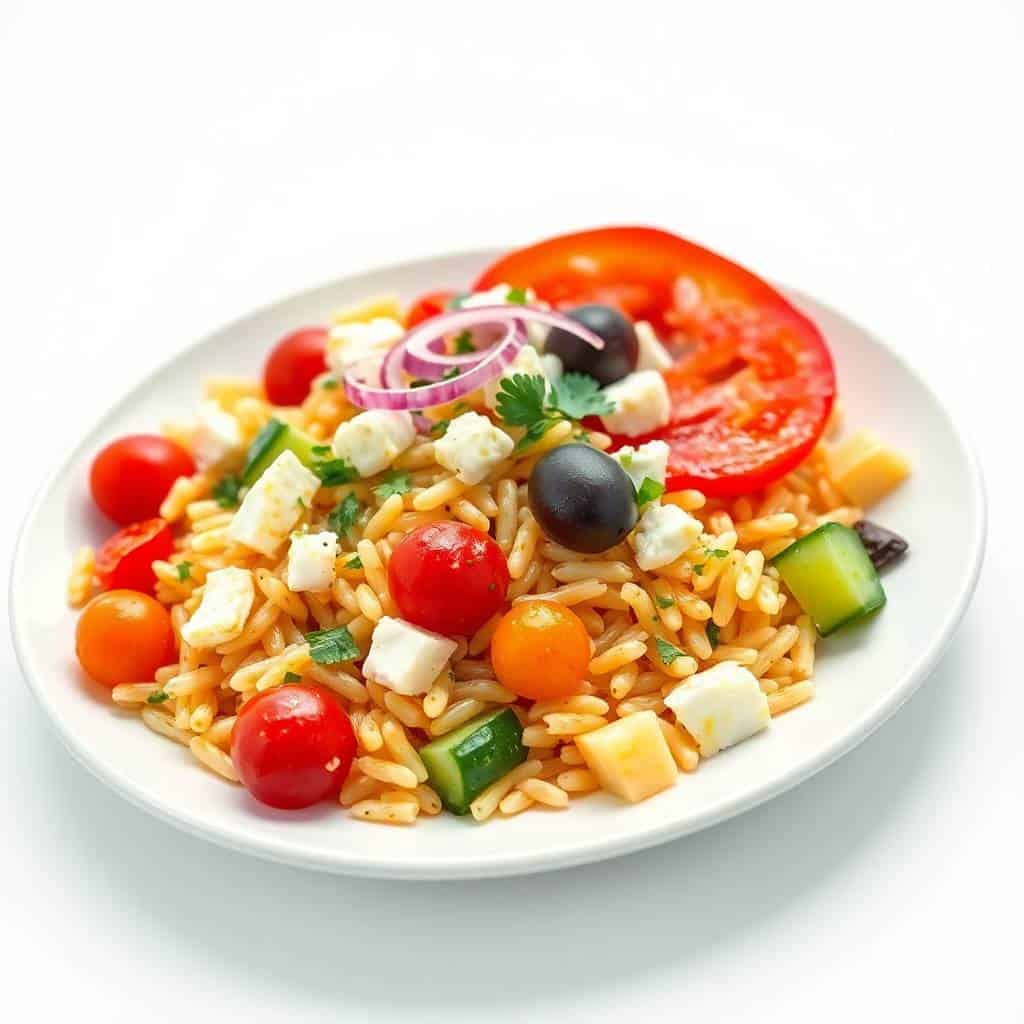
Tips for Success
- Use a FINE-MESH SIEVE to drain orzo — not a regular colander. Orzo's small rice-grain size means it slips through the holes of a standard pasta colander, which results in lost orzo and orzo stuck in the colander drains. The proper tool is a fine-mesh sieve (the kind used for sifting flour or straining sauces) which catches every grain of orzo and drains the water cleanly. If you don't own a fine-mesh sieve, this is a $10 kitchen tool purchase that genuinely upgrades many cooking operations beyond just orzo — straining sauces, sifting powdered sugar, rinsing rice and quinoa, draining canned beans. For orzo specifically, the fine-mesh sieve is essential equipment, not optional.
- Cook orzo IN HEAVILY SALTED WATER — orzo absorbs salt during cooking. Like all pasta, orzo absorbs salt from the cooking water, and this is the only opportunity to season the pasta itself from the inside out. Most home cooks under-salt their pasta water dramatically — the water should taste like sea water (about 1 tablespoon kosher salt per quart of water). With orzo's small grain size and large surface area, properly salted cooking water is even more impactful than with larger pasta shapes. The seasoning difference between properly salted orzo and under-salted orzo is noticeable in every bite of the finished salad. Don't skip this step.
- Rinse orzo under COLD water briefly after draining — stops the cooking. Unlike most pasta where rinsing is discouraged (because it removes the starch that helps dressing cling), orzo specifically benefits from a brief cold-water rinse after cooking. The rinse stops residual cooking immediately, prevents the orzo from clumping into a starchy mass, and cools it quickly so you can start assembling the salad without waiting 30 minutes for hot orzo to cool to room temperature. Rinse for just 30-45 seconds under cold running water, then let drip-dry for 2-3 minutes before adding to the bowl. The cold rinse is the small technique that prevents orzo from turning into a sticky clump.
- Use REAL Kalamata olives — NOT canned black California olives. Same rule as in greek pasta salad: Kalamata olives are the authentic Mediterranean choice and have complex briny-fruity flavor that defines the dish. Canned black California olives ("ripe olives") taste flat, oily, and metallic. Buy Kalamata olives from the deli olive bar, from a jar, or from a vacuum-sealed pouch in the international food section. The cost difference is small ($1-2 more) but the flavor difference is dramatic. This substitution is non-negotiable for authentic Mediterranean flavor.
- Buy BLOCK feta and crumble by hand — pre-crumbled is the wrong choice. Pre-crumbled feta from the dairy section is coated with anti-caking starch that prevents crumbles from sticking together in the package. This coating affects flavor (slightly chalky) and texture (doesn't break down cleanly when bitten). Block feta has dramatically better texture, flavor, and structure. Crumble it by hand into rough ½-inch chunks just before adding. Greek imported feta (from a block in brine) is the gold standard. Bulgarian or French feta also work beautifully. The block-vs-pre-crumbled difference is one of the easiest upgrades for any feta-containing recipe.
Variations
- Chickpea-protein vegetarian deluxe version: Add 1 (15 oz) can of chickpeas (drained and rinsed) to the salad. The chickpeas add 15g of plant protein per serving and significantly increase satiety, transforming this salad from a side dish into a vegetarian main course. The chickpeas integrate beautifully with the Mediterranean flavor profile and don't require any technique changes. Also consider adding ½ cup of toasted pine nuts or slivered almonds for additional protein and crunch. This is the version I make for my Maryland cousin's vegetarian wife when we visit them, and it's also a great option for meatless Monday family dinners that don't feel like sacrifice meals.
- Grilled chicken or shrimp main dish version: Add 2 cups of cooked diced chicken (souvlaki-style marinated and grilled) OR 1 lb of cooked grilled shrimp to transform this from side dish to complete main course. For souvlaki chicken: marinate 1.5 lbs cubed chicken in ¼ cup olive oil + ¼ cup lemon juice + 4 garlic cloves + 1 tablespoon dried oregano + 1 teaspoon salt for 30 minutes, then grill. The result is a Mediterranean main dish that works for picnic lunches, weeknight dinners, and casual entertaining. My husband requests this version for his lunch boxes when he wants something more substantial than the vegetarian version. For halal households, the chicken souvlaki is the obvious choice.
- Pakistani-American hybrid (Sana's adaptation): Add ½ cup pomegranate seeds (for tart-sweet bursts), 1 teaspoon sumac, ¼ cup chopped fresh mint, and 2 tablespoons of pistachios (chopped). Replace the regular dried oregano with za'atar herb blend. Add a pinch of saffron to the vinaigrette (steep saffron threads in 1 tablespoon warm water before adding). The result is a Pakistani-American take on Mediterranean orzo salad that bridges the Greek/Italian flavor profile with the Middle Eastern/South Asian flavor sensibilities my husband and I grew up with. My mother in Pakistan would recognize the pomegranate-sumac-pistachio-saffron combination from her own salad preparations and Eid celebrations. My husband requests this version for our extended family gatherings.
- Roasted vegetable autumn version: Add 1 cup of roasted vegetables (cubed zucchini, eggplant, bell peppers, and red onion roasted at 425°F for 25 minutes with olive oil and salt) along with the regular fresh vegetables. The roasted vegetables add caramelized sweetness, deeper flavor, and substantial heft. Reduce the cherry tomatoes by half if using this version (the roasted vegetables add similar bulk). Garnish with extra fresh basil and a drizzle of balsamic reduction. The result is a fall/winter version that bridges Mediterranean summer flavors with cooler-weather roasted vegetable abundance.
- Lemony herby light version (peak summer freshness): Double the fresh herbs (use ½ cup parsley, ¼ cup dill, ¼ cup mint, 2 tablespoons fresh oregano). Reduce the feta by half (use 3 oz instead of 6 oz). Add zest from 1 additional lemon. Skip the olives if you want maximum herb-forwardness. The result is a lighter, fresher, more herbaceous version perfect for hot summer days when you want maximum brightness and minimum heaviness. Pairs beautifully with grilled fish and seafood rather than heavier meats.
Serving and Storage
How to Serve
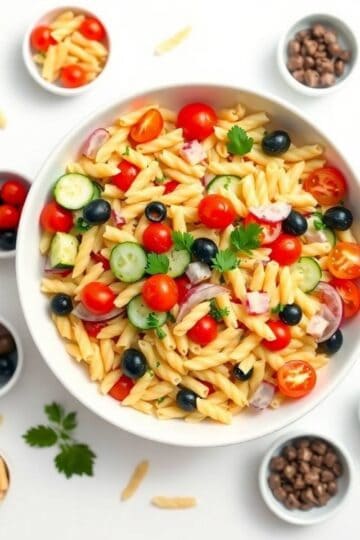
Serve chilled or at slightly cool room temperature (remove from refrigerator 15-20 minutes before serving). Transfer to a wide shallow serving bowl that showcases the colors — pale orzo, red tomatoes, green cucumber and herbs, dark olives, white feta. Garnish with extra crumbled feta on top, a few whole Kalamata olives arranged artfully, fresh oregano and parsley sprigs, lemon wedges around the edge of the bowl, and a final drizzle of olive oil for visual shine. For drinks: iced tea with lemon, sparkling water with mint and cucumber, lemonade for kids; chilled white wine, rosé, ouzo, or sparkling water for adults. For multi-dish Mediterranean-inspired spreads: pair this orzo salad alongside grilled chicken souvlaki or lamb chops, hummus and pita bread, tzatziki sauce, fresh tomato-cucumber salad, and stuffed grape leaves for a complete Mediterranean meal. For potluck-bringing: orzo salad holds beautifully at room temperature for 2-3 hours and travels exceptionally well (the small grain size doesn't shift or settle during transit like larger pasta does). For road trip and picnic packing: orzo's travel-friendly properties make this genuinely the best pasta salad for moving food around — my Maryland trip experience confirmed this in real-world conditions. For lunch-pack applications: portion into individual containers with warm pita bread on the side for a complete portable Mediterranean lunch.
How to Store
Store leftovers in an airtight container in the refrigerator for up to 4 days. The flavors actually IMPROVE on days 2 and 3 as the lemon-garlic vinaigrette penetrates deeper into the orzo. The cucumber stays remarkably crisp even on day 3 thanks to orzo's lower water-release properties compared to larger pasta. To refresh leftovers: drizzle with a tablespoon of fresh olive oil and a squeeze of fresh lemon juice, then gently fold to redistribute moisture. Add a few fresh herb leaves at serving time for visual freshness. Skip freezing — the texture of cucumber, tomatoes, and feta doesn't survive freezing and thawing well. For meal-prep applications, this Mediterranean orzo salad transforms into multiple weekday meal applications: portion into individual containers for weekday lunches (days 2 and 3 are often even better than day 1), serve alongside leftover grilled chicken or fish for quick Mediterranean dinners, stuff into pita pockets with hummus and tzatziki for portable lunches, fold into a wrap with extra herbs and feta for a Mediterranean lunch sandwich, top with a fried egg for breakfast-for-dinner Mediterranean applications, mix with mixed greens for a salad-over-salad combination. One batch easily transforms into 5-6 different meal applications across the week. For party hosting where you've made a large batch: orzo salad keeps better than other pasta salads, so leftovers can extend serving life across multiple days of gatherings without significant quality degradation.
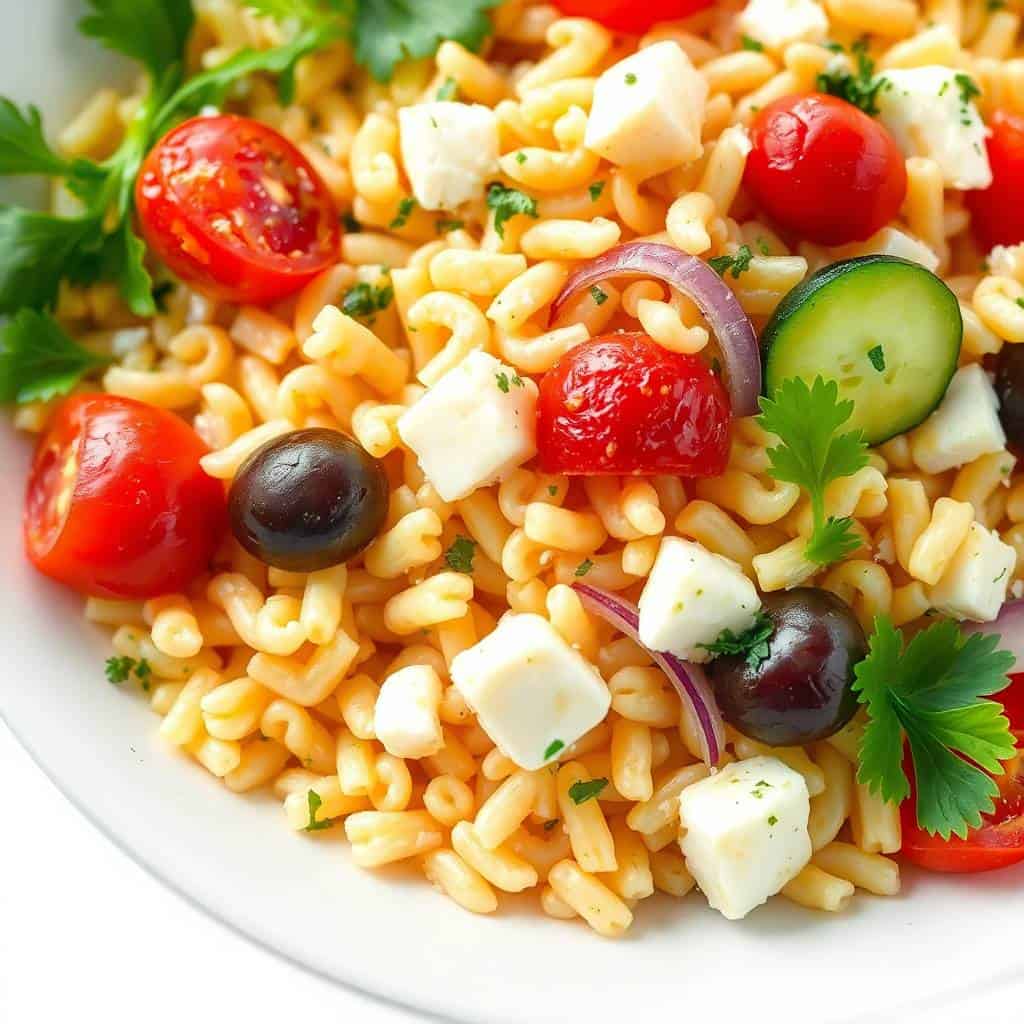
Related Recipes You Might Like
If you loved this Mediterranean orzo salad, here are more curated Mediterranean-inspired and summer entertaining recipe collections from the site that pair beautifully with road trips, picnics, potlucks, and family gatherings:
- Best Memorial Day Pasta Salad — another summer pasta salad winner
- Mexican Street Corn Pasta Salad — bold summer pasta side alternative
- 31 Best Salad Recipes — more salad inspiration
- Caprese Skewers 10-Minute Appetizer — Mediterranean-inspired starter
- Watermelon Feta Skewers — summer appetizer with similar feta flavor profile
Frequently Asked Questions
Can I make Mediterranean orzo salad ahead of time?
Absolutely yes — and it's the recommended approach. This salad genuinely tastes BETTER after overnight refrigeration. The lemon-garlic vinaigrette penetrates the orzo thoroughly during rest (orzo's small surface area means excellent dressing absorption), the cucumber stays surprisingly crisp, the feta firms up to perfect crumble texture, and the entire Mediterranean flavor profile develops a cohesive character. Prep the complete salad the night before, refrigerate overnight, drizzle with reserved fresh dressing just before serving, and arrive at the party with a perfect dish requiring zero last-minute work. The salad can be made up to 24 hours in advance for peak flavor and texture. For party hosting, this make-ahead approach genuinely eliminates day-of stress.
Is this recipe vegetarian and can it be made vegan?
The base recipe is naturally vegetarian. To make it fully vegan: skip the feta cheese, OR replace with vegan feta-style alternatives (Violife, Daiya, or homemade tofu-feta). For protein and substantial heft in the vegan version, add 1 (15 oz) can of chickpeas (drained and rinsed) — this is the chickpea-protein variation mentioned in the Variations section. The chickpea addition makes the vegan version more nutrition informationally complete and satisfying as a main dish. Also consider adding ½ cup of toasted pine nuts or slivered almonds for additional protein and texture contrast. The vegan version retains all the bright Mediterranean flavors from the lemon-garlic vinaigrette and fresh herbs.
Can I use another type of pasta instead of orzo?
Yes, but the texture and flavor distribution will be different. Closest substitutes: ditalini (tiny tube pasta), tubetti (slightly larger than orzo), or pearl couscous (Israeli couscous — similar size to orzo). These small shapes maintain the even flavor distribution that makes orzo so effective in this salad. Acceptable substitutes: small rotini, fusilli, or farfalle — these are larger shapes but still work in a pinch. Avoid: long pasta like spaghetti or linguine (completely wrong for this preparation), large shells (too big), or filled pasta like ravioli (wrong texture). For gluten-free options: use gluten-free orzo (made from rice flour or chickpea flour — both available at well-stocked grocery stores) or gluten-free pearl couscous. The recipe scales identically with these substitutions.
How do I keep the salad from drying out?
Three techniques together prevent dry orzo salad. First, cook orzo 30 seconds BEFORE the package's al dente time — slightly under-cooked orzo absorbs dressing during the rest period without becoming mushy or dry. Second, reserve ⅓ of the dressing to add just before serving — orzo absorbs dressing during refrigeration, so adding fresh dressing at serving time brings back the bright lemon-garlic flavor. Third, store the salad in an airtight container to prevent moisture loss to the dry refrigerator air. With all three techniques, the orzo stays beautifully tender and well-dressed for up to 4 days of refrigerator storage. If leftovers seem dry after 2+ days, drizzle with a tablespoon of fresh olive oil and a squeeze of fresh lemon juice to refresh — this restores the dressing-to-orzo ratio that may have shifted during storage.
What proteins pair best with this salad?
Grilled chicken souvlaki is the most authentic Mediterranean pairing — chicken marinated in lemon-garlic-oregano-olive oil and grilled. Grilled shrimp (with the same souvlaki marinade) works beautifully for seafood lovers. Grilled salmon adds healthy fats and pairs surprisingly well with the Mediterranean flavor profile. Lamb chops or lamb kofta (Mediterranean-style meatballs with mint and garlic) provide substantial Mediterranean protein. Chickpeas (1 can drained and rinsed) work for vegetarian/vegan diet protein. For lighter proteins: grilled white fish like cod or tilapia. For halal households, the chicken souvlaki, grilled shrimp, or lamb options all work. The salad's bright lemon-garlic flavor profile complements virtually any grilled protein with Mediterranean seasoning.
This Mediterranean orzo salad has earned its permanent rotation status in our household specifically because of its road-trip and picnic credentials — most pasta salads degrade significantly during 4-hour transport in a cooler, but this one genuinely arrives looking and tasting like it just left the kitchen.
My Maryland cousin's wife's reaction at our spring visit confirmed what I had been suspecting about orzo's travel properties, and the recipe has since become my standard contribution for any family event that involves transporting food significant distances.
Saad's "rice-pasta" nickname for orzo has become permanent family vocabulary, and he genuinely eats this salad more enthusiastically than my regular pasta dishes — the novelty of the small grain-like shape seems to bypass his usual texture preferences that affect other pasta preparations.
My mother in Pakistan would recognize orzo as similar to siwian (vermicelli-style pastas) from South Asian cooking traditions, and the underlying principle of small pasta shapes distributing flavor more evenly than larger noodles is genuinely universal across cuisines. The Pakistani-American variation with pomegranate, sumac, fresh mint, pistachios, and saffron deserves special mention because it bridges authentic Mediterranean flavors with Middle Eastern/South Asian sensibilities — creating a cross-cultural fusion that works beautifully when serving our extended family. 🌿🍋🫒✨
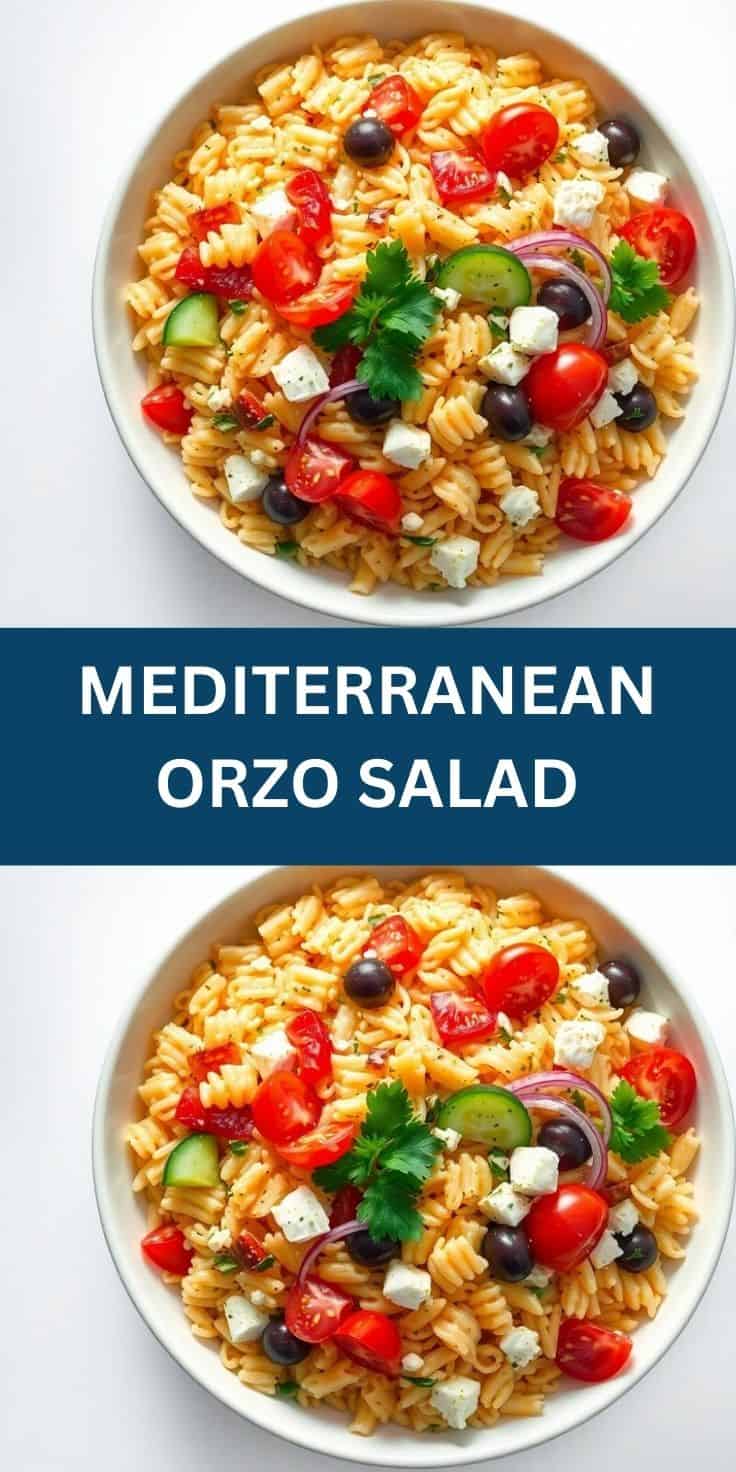
Mediterranean Orzo Salad Recipe (Bright, Make-Ahead, Crowd-Pleasing)
Ingredients
For the Salad
- 2 cups orzo pasta uncooked
- 2 cups cherry tomatoes halved
- 1 medium cucumber diced
- 1 small red onion thinly sliced
- 1 cup kalamata olives pitted and halved
- 1 cup crumbled feta cheese
- ¼ cup fresh parsley chopped
For the Lemon-Garlic Vinaigrette
- ¼ cup extra virgin olive oil
- 3 tablespoons fresh lemon juice
- 2 cloves garlic minced
- 1 teaspoon dried oregano
- ½ teaspoon salt
- ¼ teaspoon black pepper
Instructions
- Bring a large pot of salted water to a boil. Add the orzo pasta and cook according to package directions until al dente, about 8-10 minutes. Drain in a colander and rinse briefly with cool water to stop the cooking process. Transfer to a large mixing bowl.
- While the pasta cooks, prepare the vinaigrette by whisking together olive oil, fresh lemon juice, minced garlic, dried oregano, salt, and black pepper in a small bowl. Set aside.
- Add the halved cherry tomatoes, diced cucumber, sliced red onion, kalamata olives, crumbled feta cheese, and fresh chopped parsley to the cooled orzo pasta.
- Pour the lemon-garlic vinaigrette over the salad and toss gently but thoroughly until all ingredients are evenly coated. The orzo should glisten with dressing.
- Cover and refrigerate for at least 30 minutes before serving, or up to 3 days ahead. This waiting time allows the flavors to meld and develop beautifully.
- Before serving, give the salad a gentle stir and taste for seasoning. Add extra salt, pepper, or lemon juice as needed. Serve chilled or at room temperature.
Notes


Comments
No Comments